Get in touch with Yun-Sculpture company
Custom Bronze Horse Sculpture for a Client in Kuwait
CUSTOM BRONZE HORSE PROJECT · KUWAIT
A custom bronze horse sculpture developed from concept design to clay modeling, bronze casting, patina finishing and export packing by Yun Sculpture.
PROJECT AT A GLANCE
Project
Custom Horse Sculpture
Material
Cast Bronze
Destination
Kuwait
Production
Custom Made
Design
Original Development
Modeling
Clay Sculpture
Finish
Hand Patina
Manufacturer
Yun Sculpture
01 · PROJECT CONCEPT
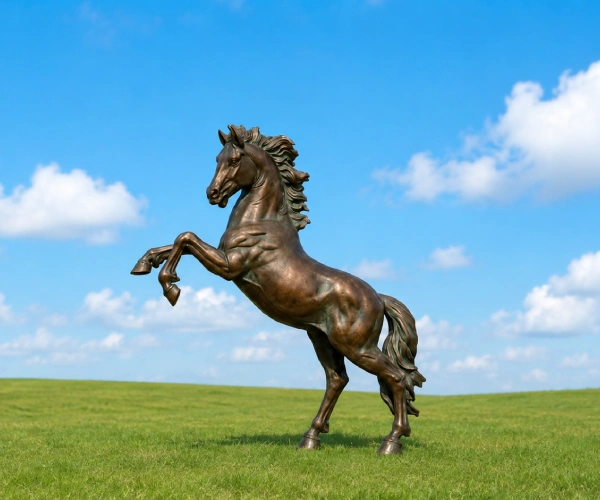
The sculpture begins with the pose
For a horse sculpture, the pose determines much of its character before any surface detail is added. The direction of the head, the curve of the neck, the position of the legs and the distribution of body weight all influence whether the horse appears calm, alert, powerful or in motion.
For this project, our design work focused on creating a pose that looked elegant from the main viewing angle while still remaining convincing when seen from the sides and rear. The goal was not to make the horse exaggerated, but to give it a natural sense of presence and strength.
For this project, our design work focused on creating a pose that looked elegant from the main viewing angle while still remaining convincing when seen from the sides and rear. The goal was not to make the horse exaggerated, but to give it a natural sense of presence and strength.
02 · DESIGNING A NATURAL HORSE POSE
Balance, rhythm and anatomy
A beautiful horse sculpture is not created by making every muscle larger or every movement more dramatic. What matters is the relationship between the major forms. The neck must connect naturally with the shoulders, the chest must support the front of the body, and the legs must visually carry the horse’s weight.
The line from the head through the neck and back creates the main visual rhythm of the sculpture. At the same time, the placement of the legs prevents the pose from appearing stiff. Small changes in these angles can completely change the feeling of the finished work.
The line from the head through the neck and back creates the main visual rhythm of the sculpture. At the same time, the placement of the legs prevents the pose from appearing stiff. Small changes in these angles can completely change the feeling of the finished work.
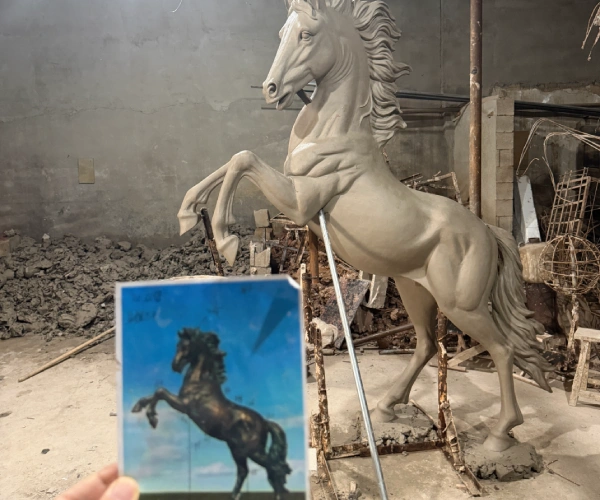
03 · CLAY MODELING
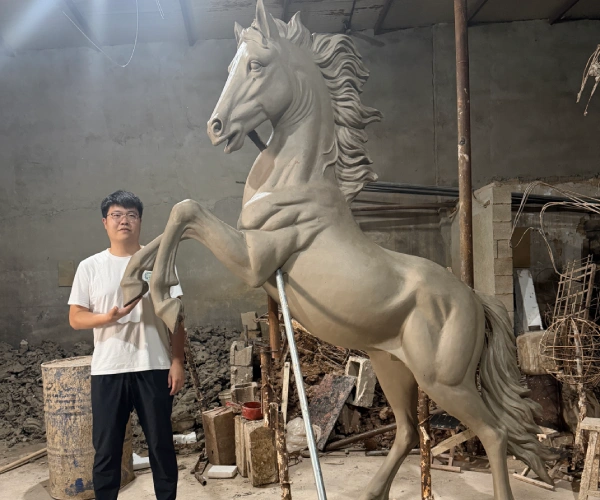
Building the horse from large forms to fine details
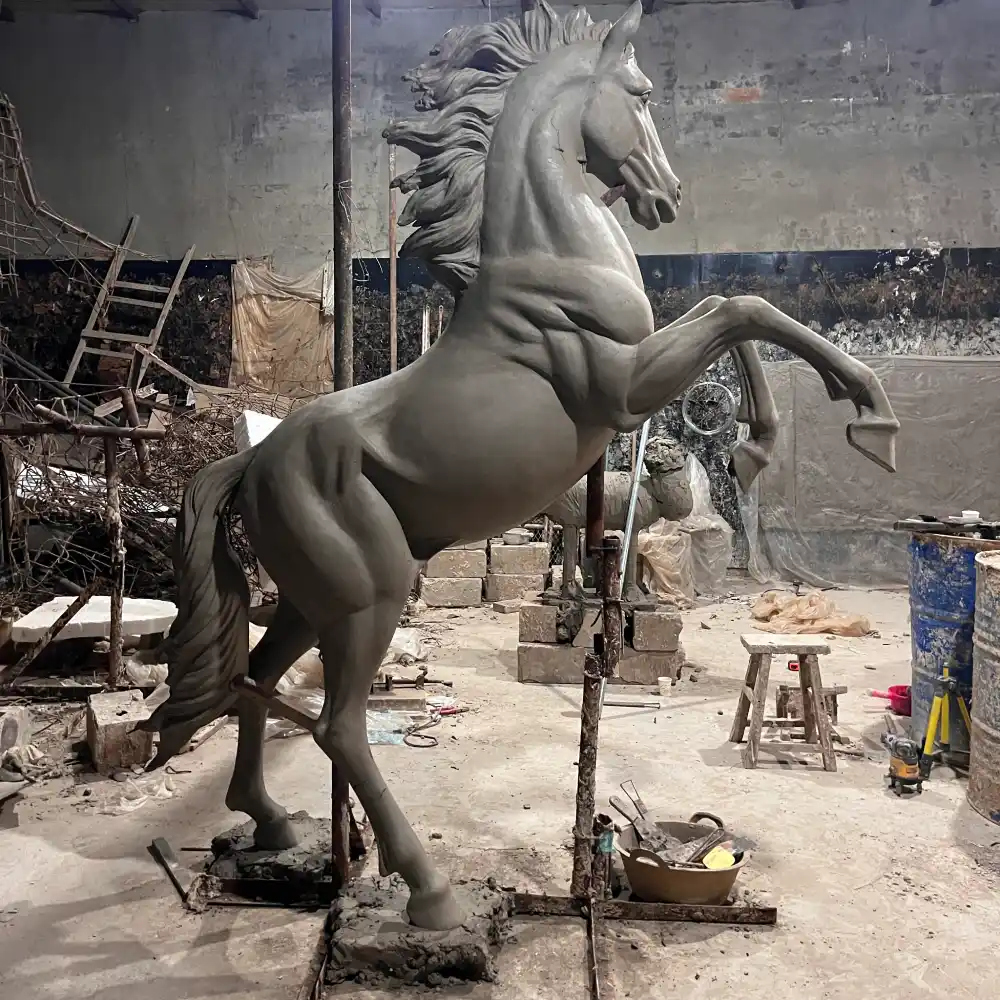
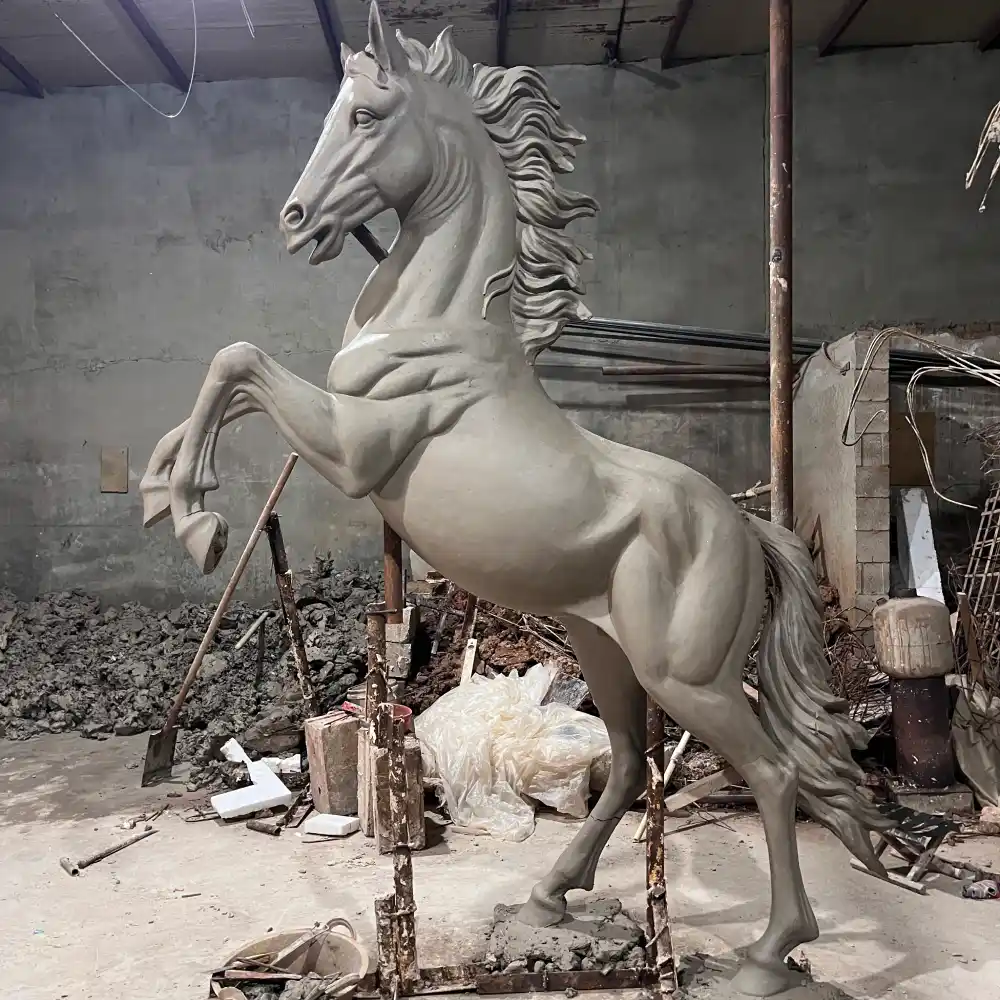
Once the general design was established, the horse was developed as a full three-dimensional clay sculpture. At this stage, we first concentrated on the large proportions: body length, chest volume, neck angle, leg position and the relationship between the head and torso.
Only after the overall structure looked correct did we refine the muscles, facial expression, eyes, nostrils, ears, mane, tail and hoof details. Working in this order helps avoid a common problem in sculpture: spending too much time on small details before the overall form is right.
Only after the overall structure looked correct did we refine the muscles, facial expression, eyes, nostrils, ears, mane, tail and hoof details. Working in this order helps avoid a common problem in sculpture: spending too much time on small details before the overall form is right.
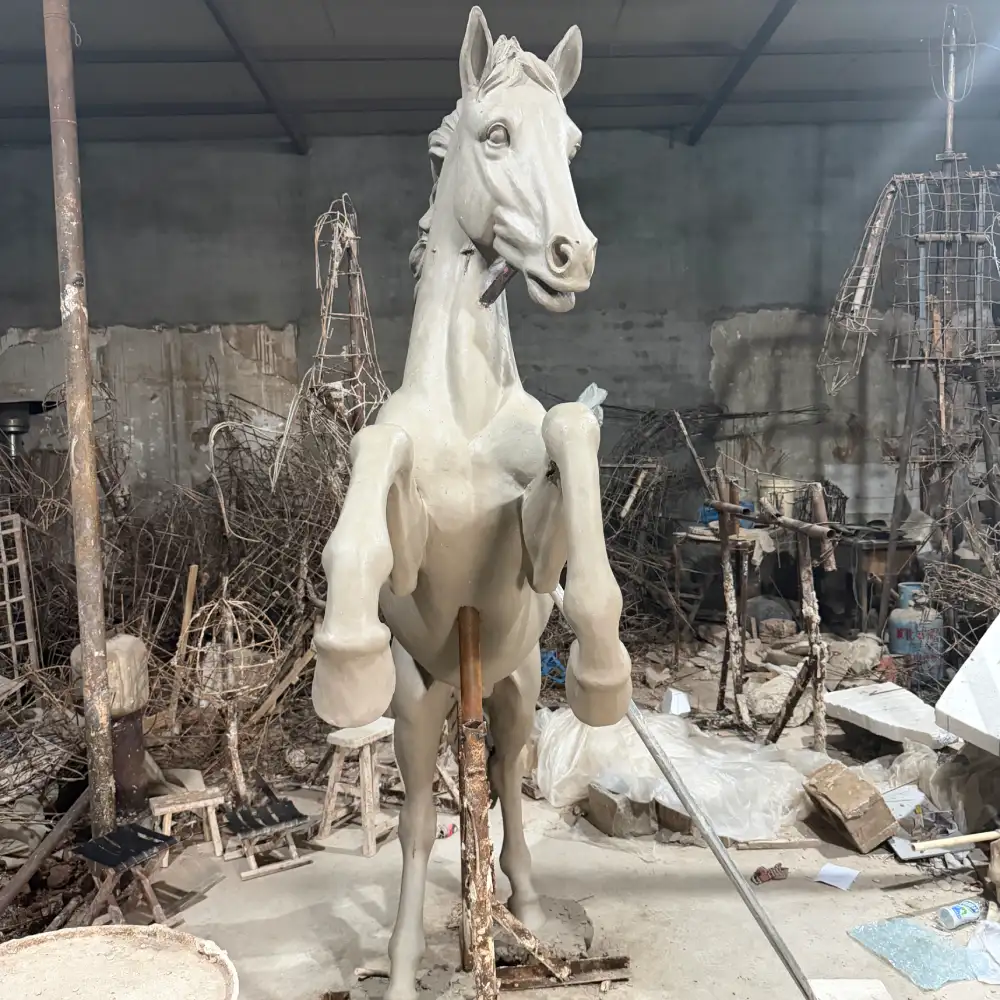
04 · FROM CLAY TO BRONZE
Preserving the sculpted form through the casting process
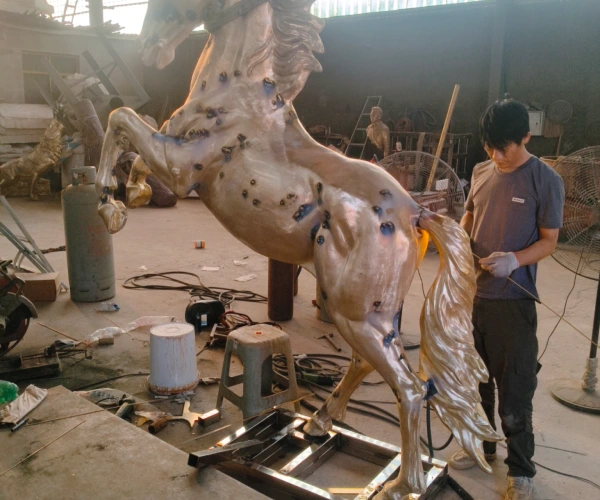
After the clay sculpture was completed, the project moved into mold making and bronze production. The purpose of the casting process is not simply to reproduce the outline of the horse. It must preserve the sculpted volumes, muscle transitions and surface details created during the modeling stage.
Following casting, the bronze sections are assembled and welded. The seams are then chased and refined so that the final sculpture reads as one continuous form rather than a group of separate cast pieces.
Following casting, the bronze sections are assembled and welded. The seams are then chased and refined so that the final sculpture reads as one continuous form rather than a group of separate cast pieces.
05 · BRONZE BEFORE PATINA
Seeing the sculpture before color is applied
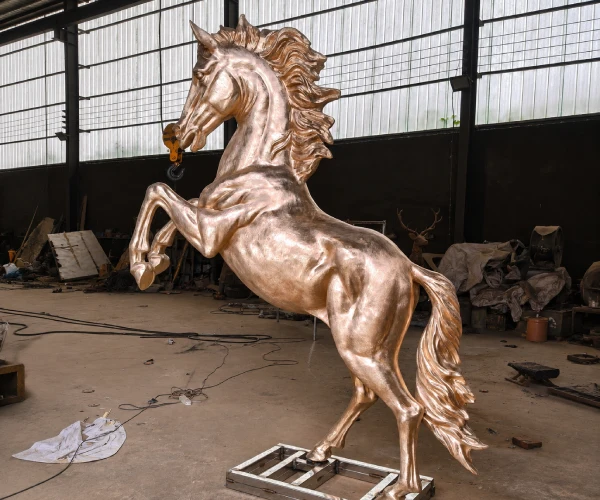
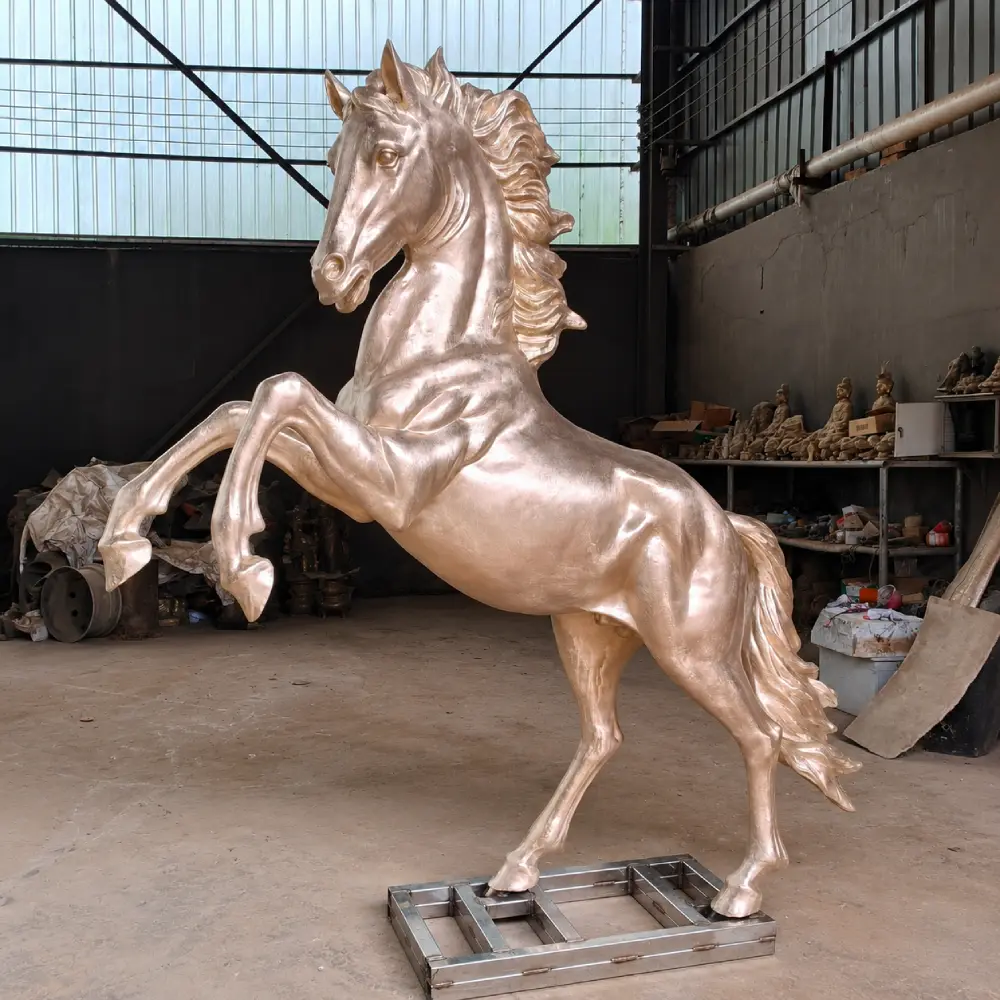
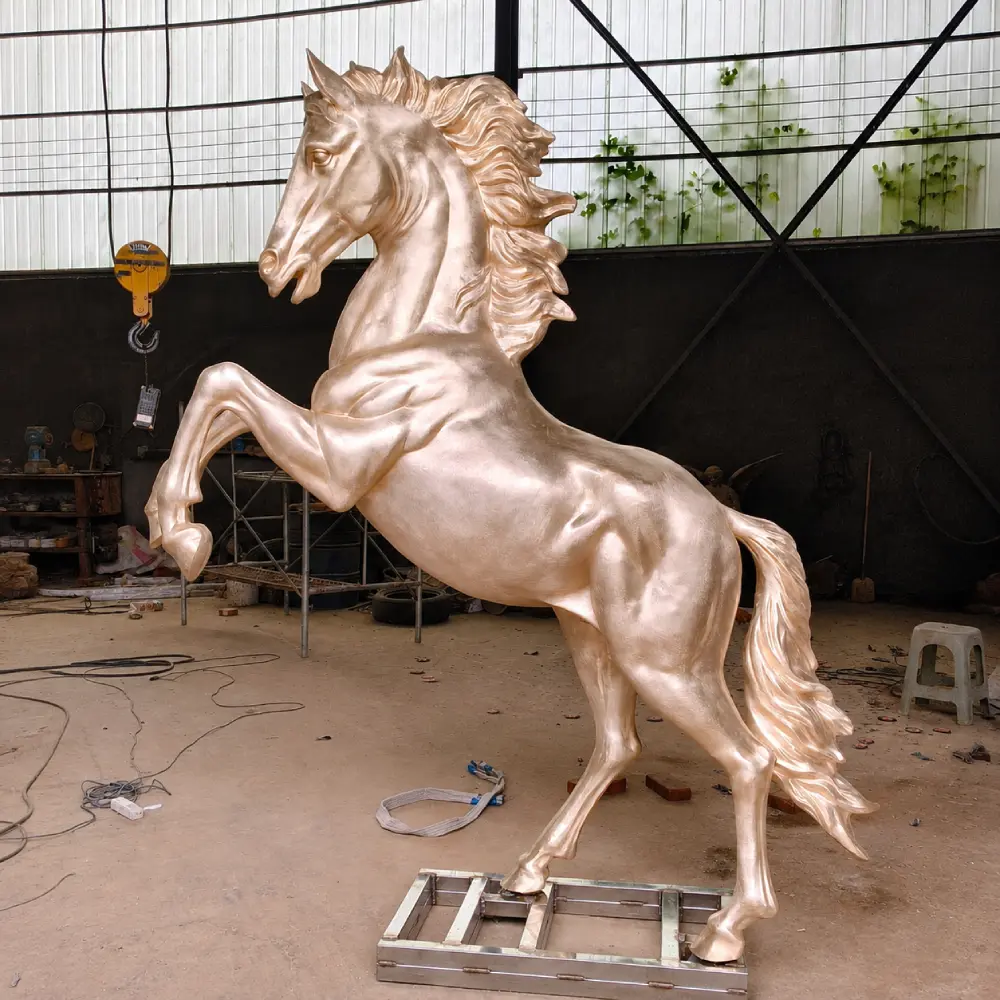
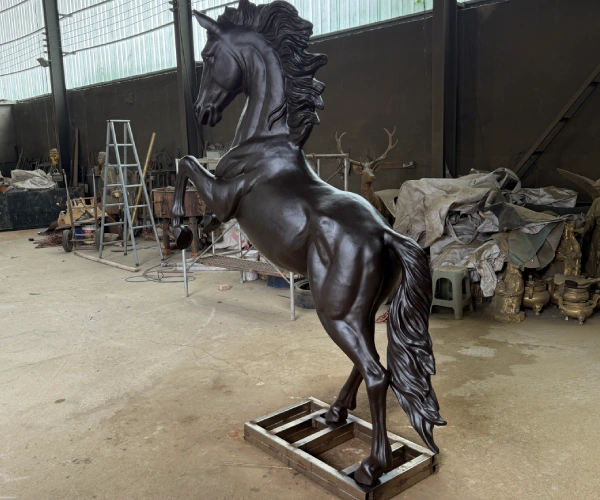
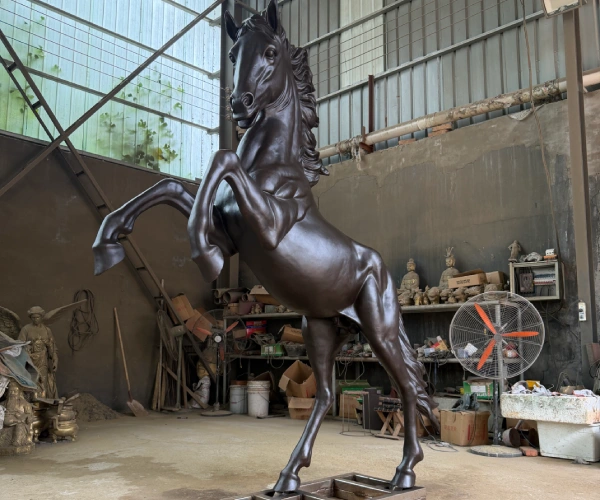
The uncolored bronze stage is useful because it allows the quality of the form to be seen without the visual influence of the final patina. The anatomy, proportions, muscle structure and transitions between surfaces can all be inspected clearly at this point.
A good patina can enhance a sculpture, but it should not be used to hide weak modeling. The strength of the finished horse still comes from the underlying sculptural form.
A good patina can enhance a sculpture, but it should not be used to hide weak modeling. The strength of the finished horse still comes from the underlying sculptural form.
06 · PATINA & FINAL APPEARANCE
Using color to strengthen the horse’s form
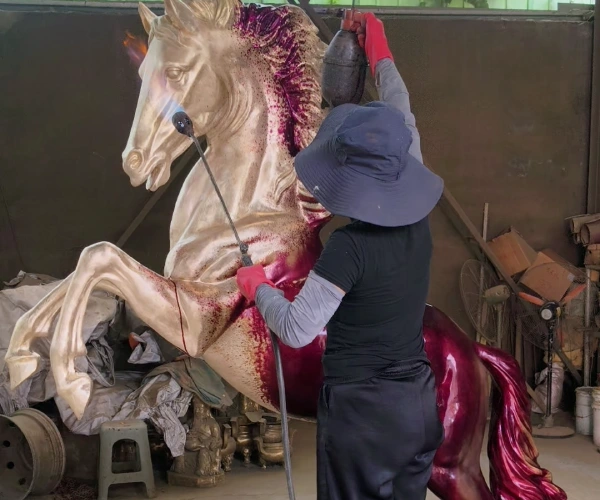
Patina is not only a color layer. On a figurative bronze sculpture, different tones can help emphasize the depth of the muscles, the direction of the mane and tail, and the transition between raised and recessed areas.
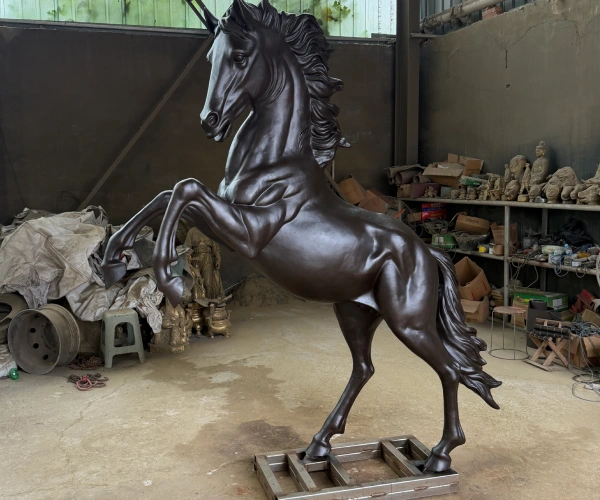
For this horse, the final surface treatment was intended to complement the sculpted anatomy rather than overpower it. Under changing light, highlights naturally appear on the more prominent areas while deeper tones remain in recessed details, giving the bronze greater visual depth.
For this horse, the final surface treatment was intended to complement the sculpted anatomy rather than overpower it. Under changing light, highlights naturally appear on the more prominent areas while deeper tones remain in recessed details, giving the bronze greater visual depth.
07 · WHAT MAKES A GOOD BRONZE HORSE SCULPTURE?
Four elements we pay particular attention to
1. Proportion
The relationship between the head, neck, torso and legs must feel believable as a whole.
2. Natural posture
The horse needs a clear center of gravity and a pose that does not feel mechanically arranged.
3. Anatomical structure
Muscles should follow the movement of the body rather than being added simply for decoration.
4. Surface and patina
Texture and color should support the form and remain readable under natural light.
The relationship between the head, neck, torso and legs must feel believable as a whole.
2. Natural posture
The horse needs a clear center of gravity and a pose that does not feel mechanically arranged.
3. Anatomical structure
Muscles should follow the movement of the body rather than being added simply for decoration.
4. Surface and patina
Texture and color should support the form and remain readable under natural light.
08 · FINAL INSPECTION
Reviewing the sculpture before packing
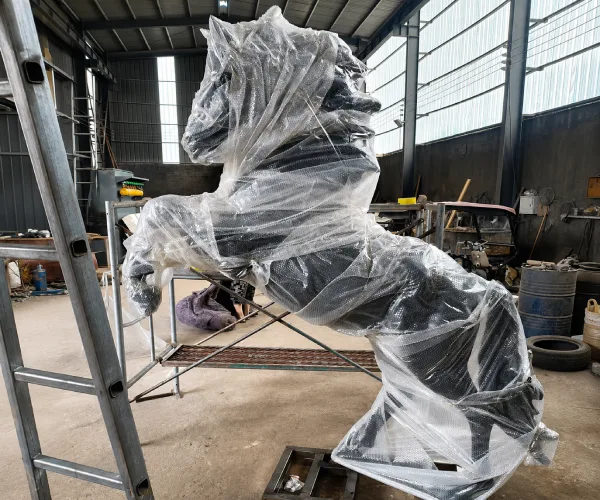
Before export packing, the completed horse was checked again for its overall appearance, patina condition and visible surface details. At this stage, we look at the sculpture from multiple angles rather than judging it from a single photograph.
For overseas custom work, this final review is important because any adjustment is much easier to make before the sculpture enters international transportation.
For overseas custom work, this final review is important because any adjustment is much easier to make before the sculpture enters international transportation.
09 · EXPORT PACKING FOR KUWAIT
Preparing the finished horse for international shipment
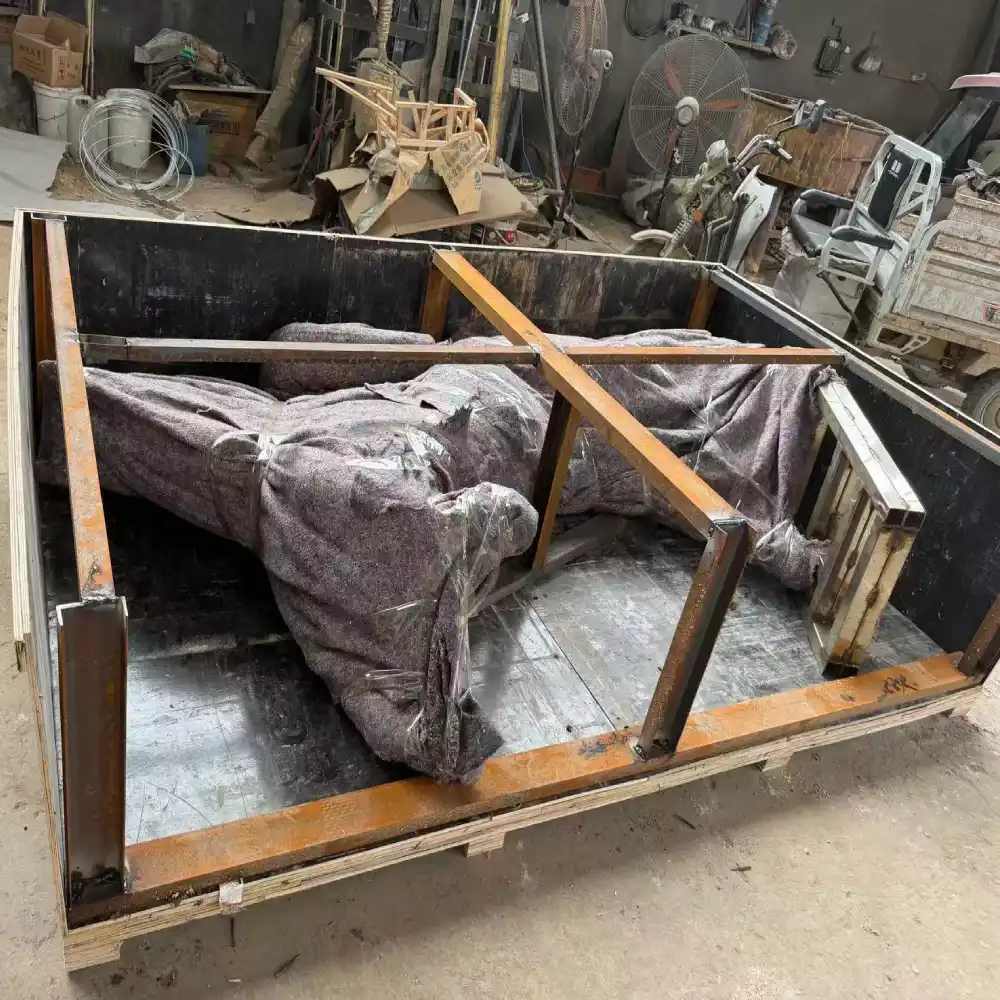
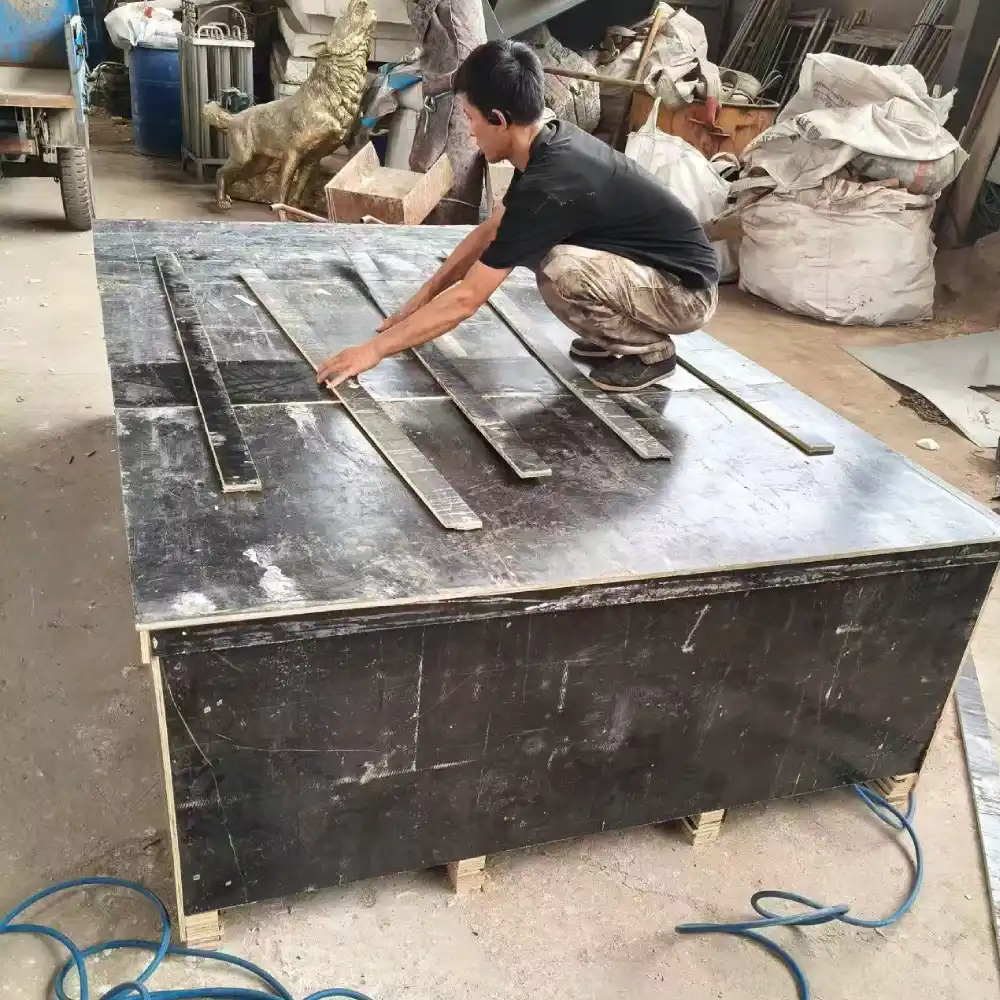
After final inspection, the bronze horse was securely packed for international transportation to the client in Kuwait. For a sculpture with projecting parts such as the ears, legs and tail, packing needs to limit movement while avoiding unnecessary pressure on vulnerable details.
Export packing is therefore treated as part of the project itself. The purpose is simple: the sculpture should leave the workshop in good condition and remain properly protected throughout handling and transportation.
10 · WHAT THIS PROJECT SHOWS
Design matters as much as casting
This Kuwait project is a good example of why custom bronze sculpture is more than a metal casting process. The quality of the final horse began much earlier—with the choice of pose, the control of proportions and the development of the clay model.
Casting, welding and patina are essential production stages, but they can only preserve and enhance the sculptural decisions already made. For us, the most important part of a custom horse project is creating a form worth casting in bronze in the first place.
Casting, welding and patina are essential production stages, but they can only preserve and enhance the sculptural decisions already made. For us, the most important part of a custom horse project is creating a form worth casting in bronze in the first place.
11 · CUSTOM BRONZE HORSE SCULPTURE SERVICE
Planning a custom horse sculpture?
Yun Sculpture can develop custom bronze horse sculptures from photographs, drawings, concept images or a new design idea. The sculpture can be adjusted according to the required pose, size, style and intended installation environment.
For an initial quotation, send us your preferred design or reference image, the approximate sculpture size and the final delivery location.
Contact with us
Start Your Custom Bronze Horse Project
Send us your reference image, desired size and delivery location.
We will review the project and prepare a custom quotation.
We will review the project and prepare a custom quotation.
