Get in touch with Yun-Sculpture company
Outdoor lion sculpture · Made to order
Modern Lion Statues for Entrances, Estates & Gardens
Choose a lion that fits the architecture, not simply an image that looks impressive on a screen. We create custom outdoor lion statues in carved natural stone, cast bronze and stainless steel, with the pose, scale, base and finish developed around your entrance, landscape or commercial project.
- Natural stone
- Cast bronze
- 304 or 316L stainless steel
- Custom sizes and finishes
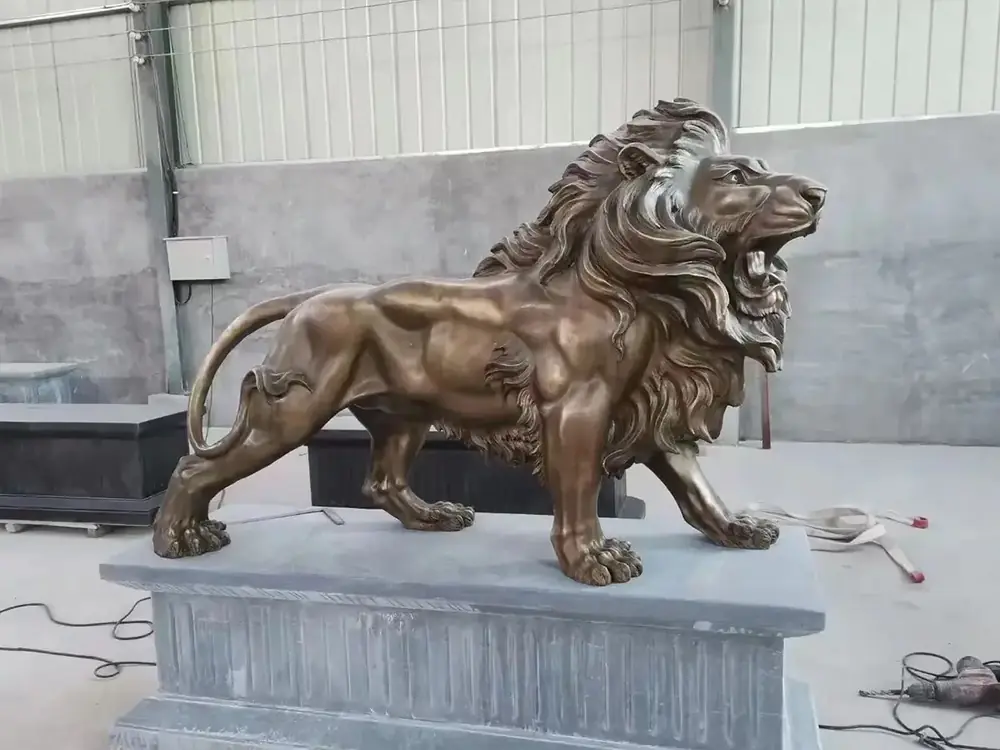
Design collection
Choose the lion that fits your setting
Use these pieces as design references rather than fixed inventory listings. We can adjust the dimensions, material, direction of the head, expression, mane, pedestal and surface finish before production. The reference number helps us identify your starting point when you request a quotation.
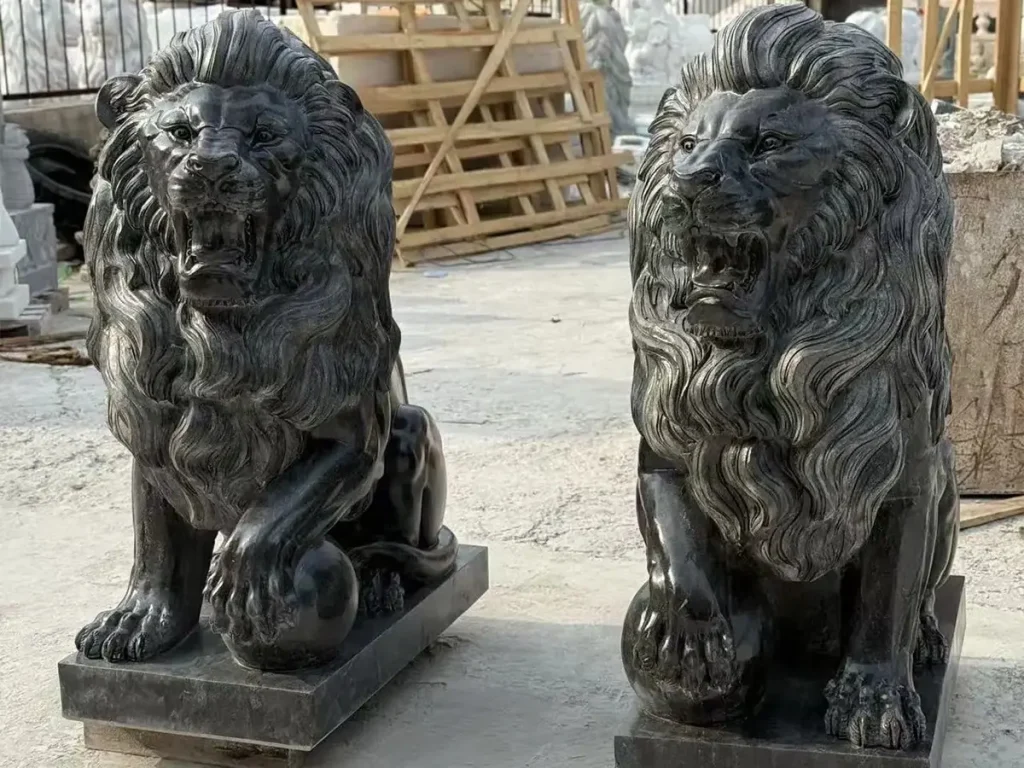 L01
L01 Natural stoneSitting pair
Black granite entrance lions
A symmetrical seated pair creates a formal gateway with strong contrast against pale masonry, metal gates or light landscaping. Granite is particularly effective where the design calls for a dense, polished or finely honed surface.
Ask about L01 →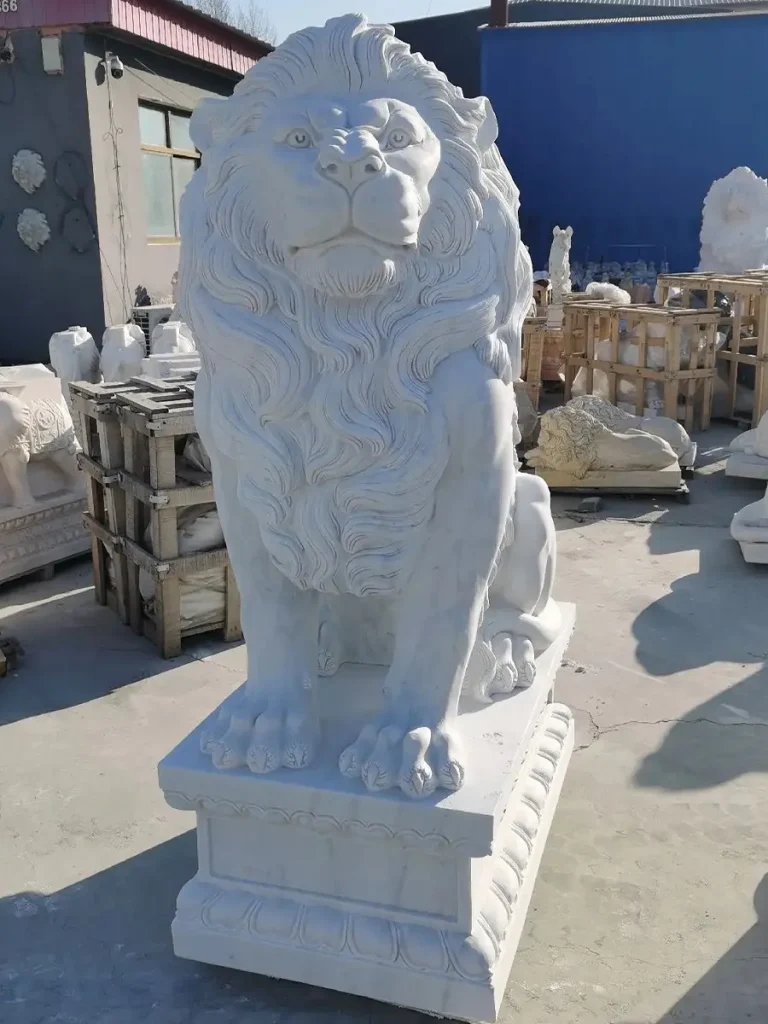 L02
L02 Natural stoneSitting
European-style white marble lion
An upright body, broad chest and layered mane give this design a classical architectural presence. White marble works well beside stone columns, balustrades and villas where the sculpture should look integrated rather than visually separate.
Ask about L02 → L03
L03 Natural stoneStanding pair
Gray marble standing lions
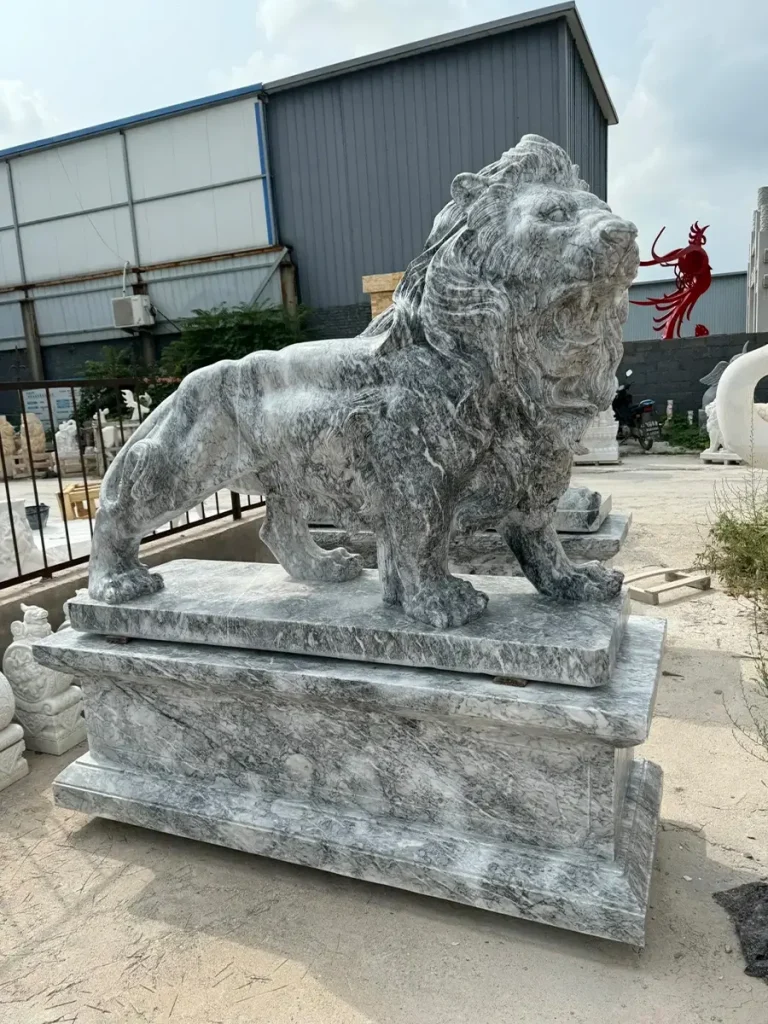
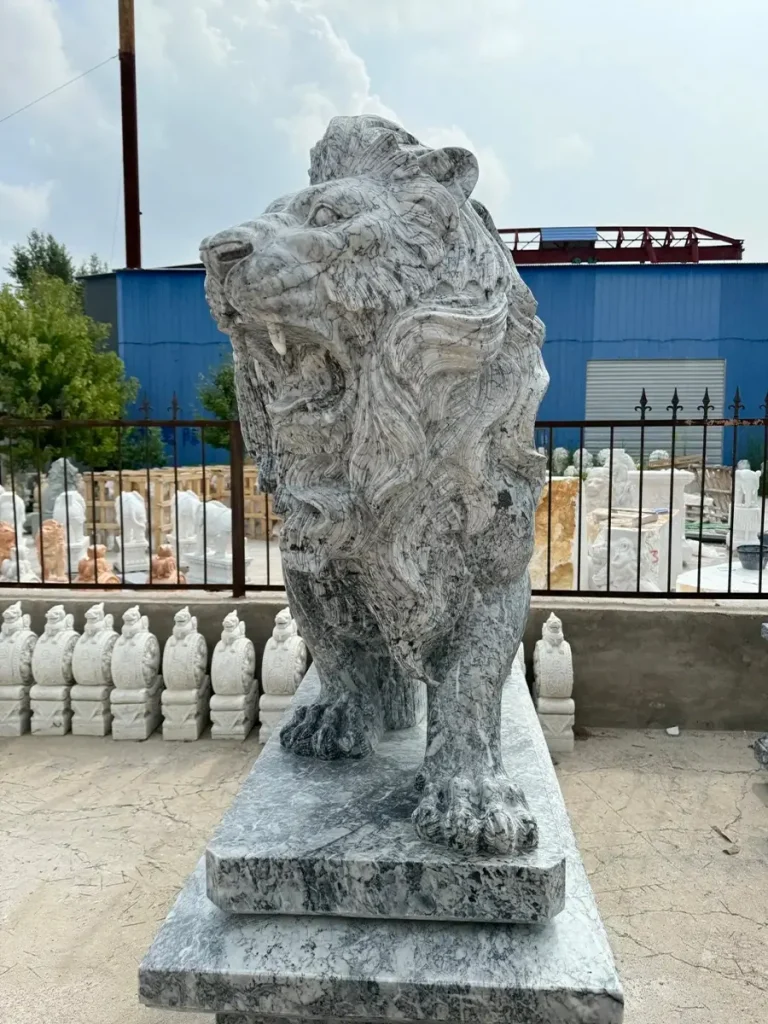
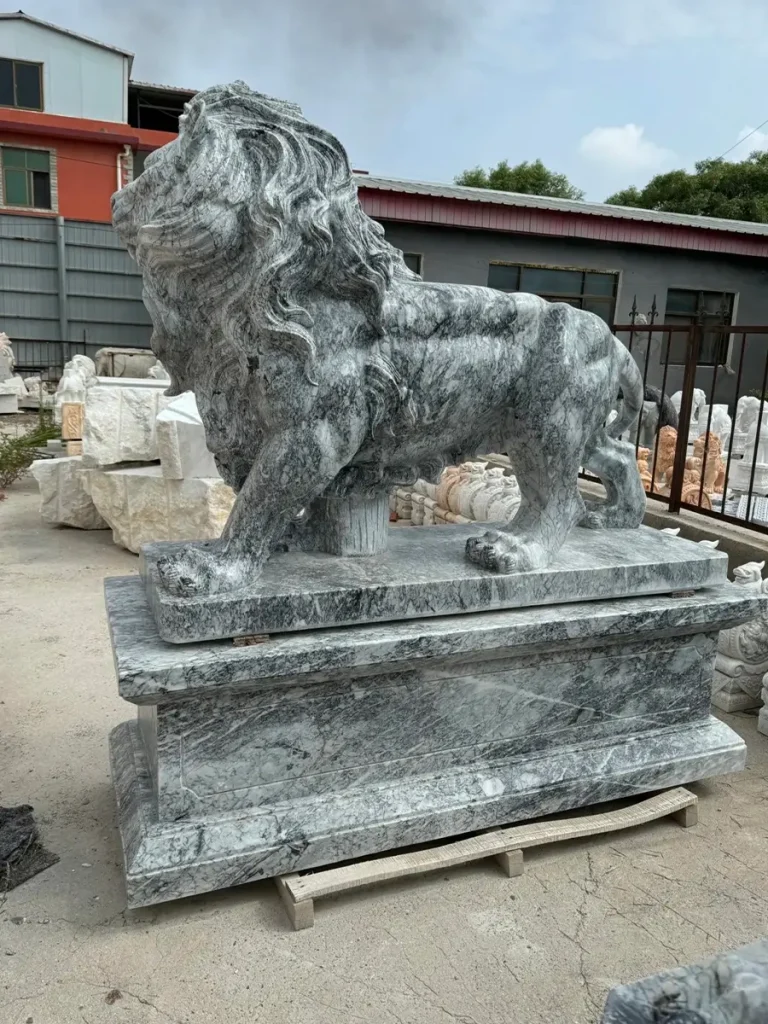
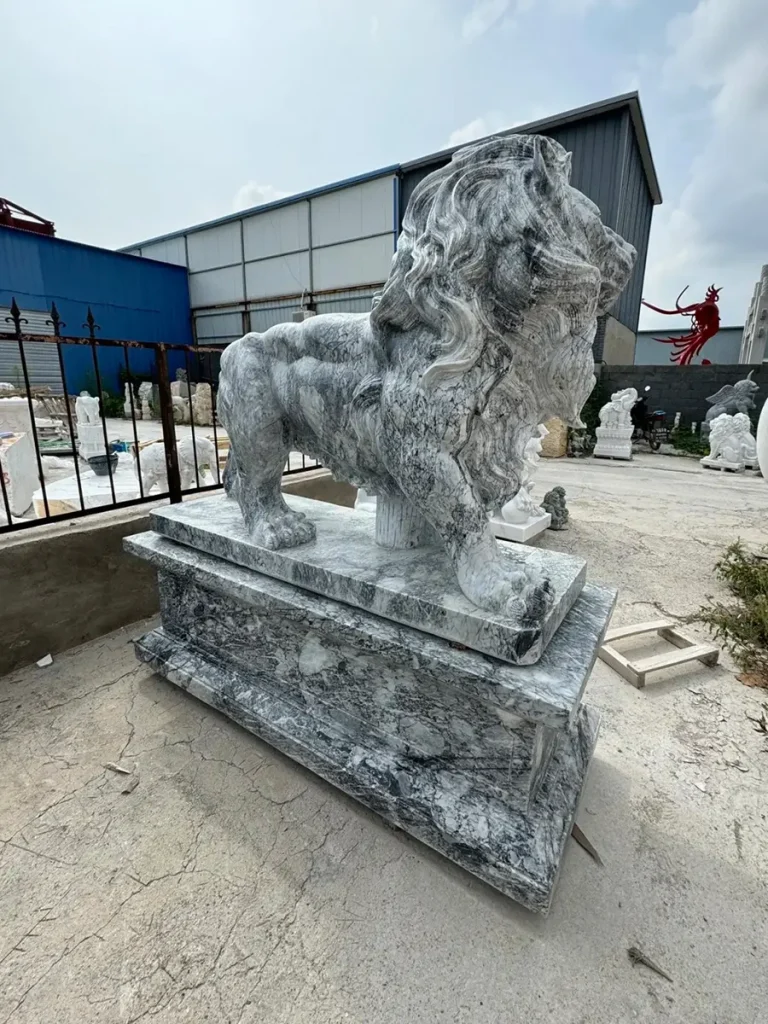
Forward movement and a raised head make a standing pair feel more active than seated guardians. Natural gray veining adds visible variation, while the integrated rectangular bases make the sculptures easier to align with gate piers or prepared plinths.
Ask about L03 →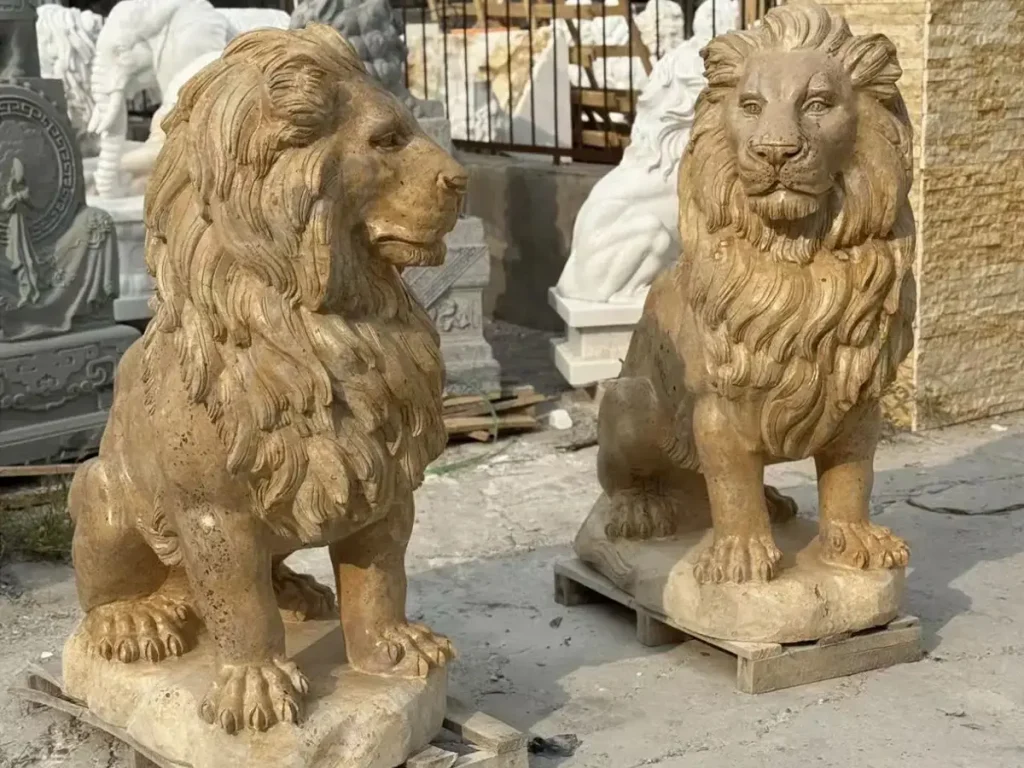 L04
L04 Natural stoneSitting pair
Warm natural-stone lion pair
A beige or warm yellow stone softens the form and suits Mediterranean, rustic and traditionally landscaped properties. Natural pores, veins and tonal variation remain part of the material, giving each sculpture a character that cast replicas cannot repeat exactly.
Ask about L04 →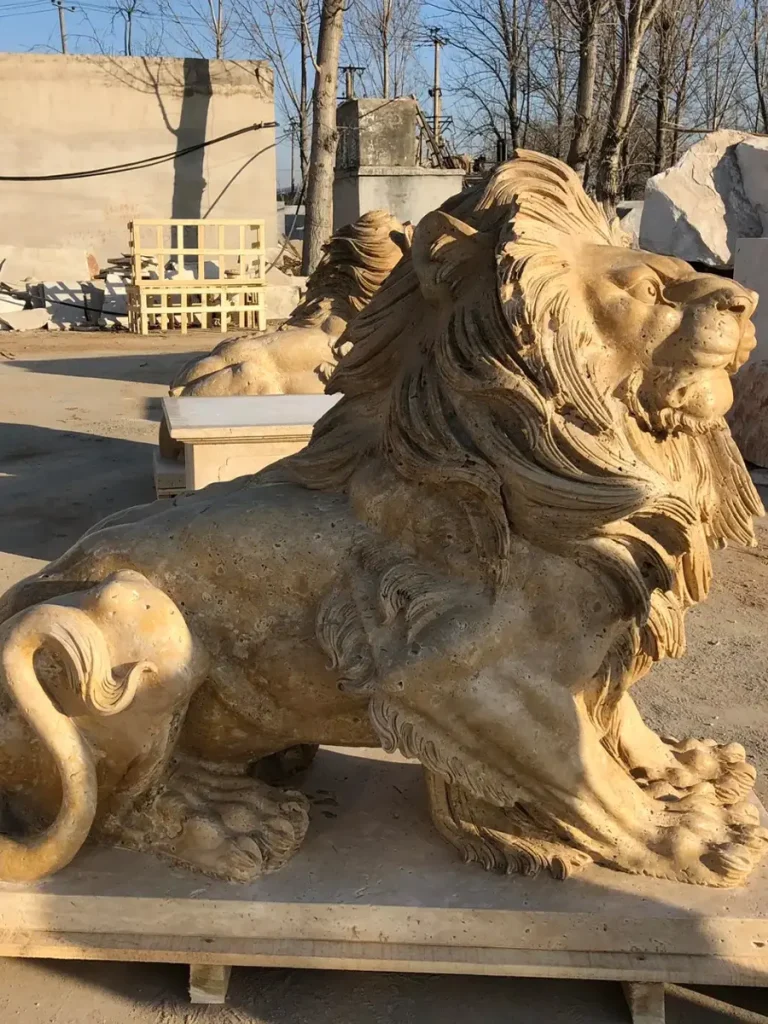 L05
L05 Natural stoneReclining
Reclining garden lion
A low reclining pose keeps the landscape open while still providing a strong focal point. It can suit terraces, lawns, steps and garden walls where a tall standing sculpture would interrupt the view or compete with nearby planting.
Ask about L05 →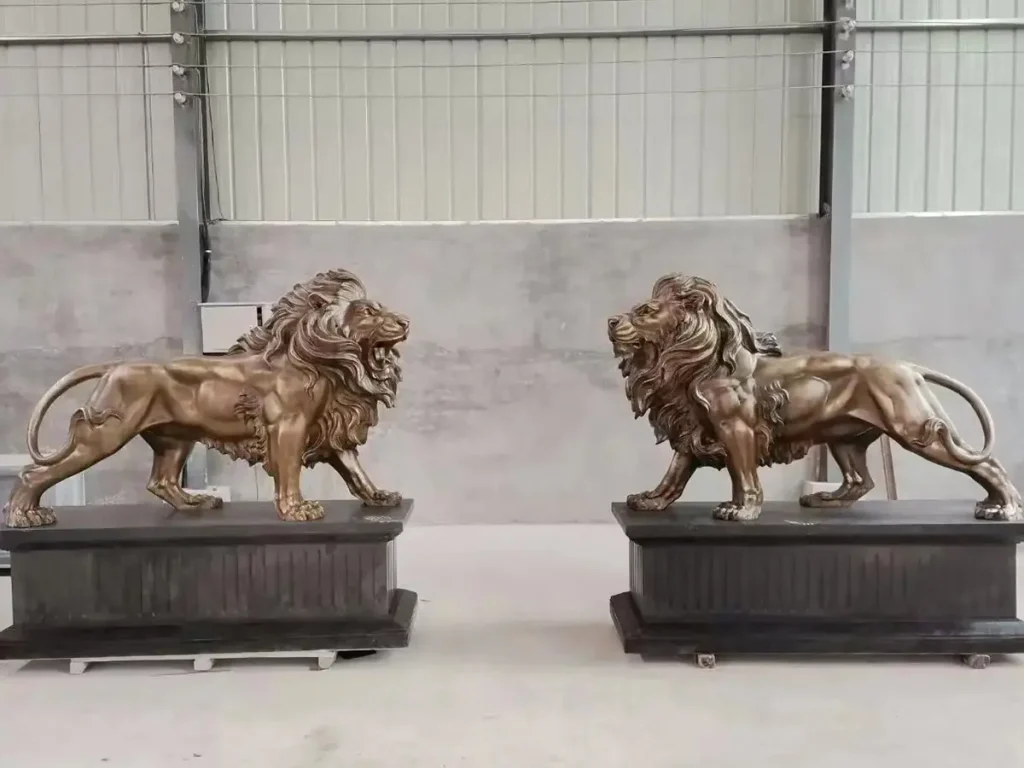 B01
B01 Cast bronzeMatched pair
Bronze estate lion pair
A matched pair gives a driveway or building entrance deliberate symmetry. Bronze carries layered mane and facial detail clearly, while a brown, dark antique or green-toned patina can be selected to relate to doors, railings, lighting and surrounding stone.
Ask about B01 →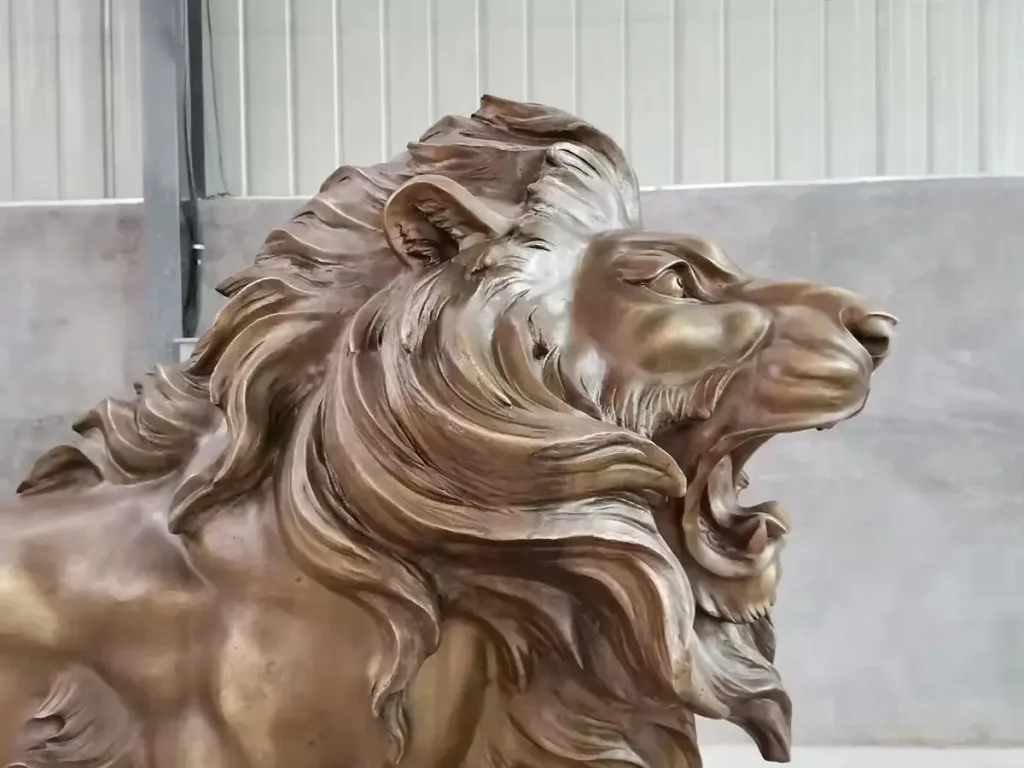 B02
B02 Cast bronzeRealistic detail
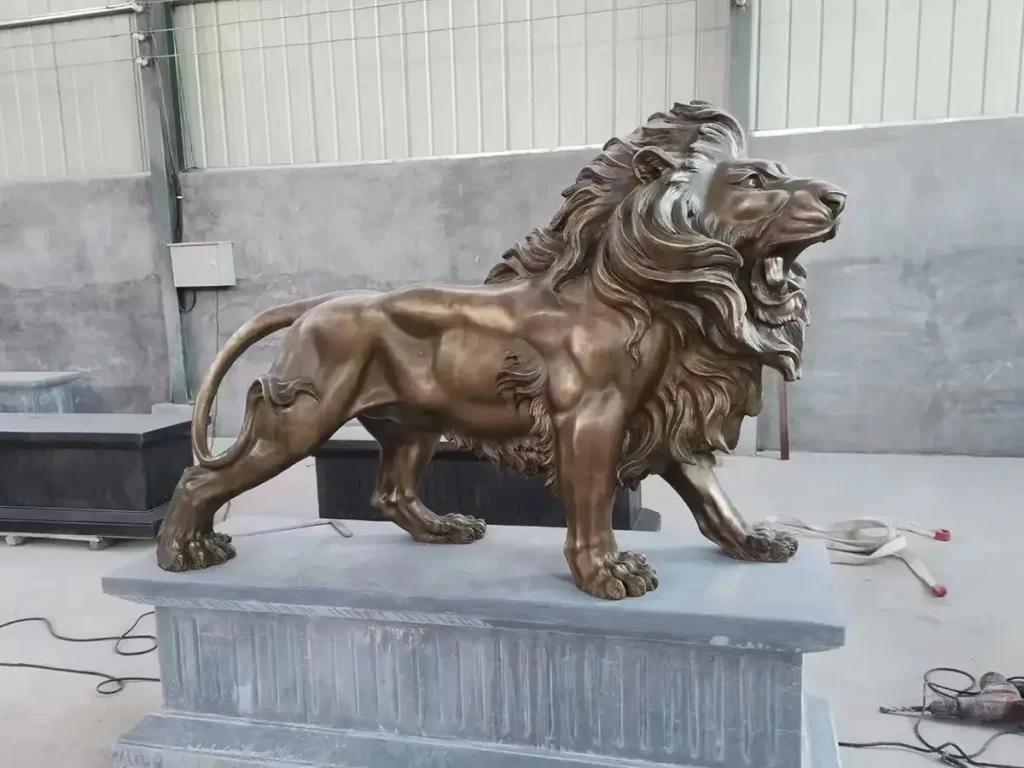
Realistic bronze lion sculpture
This direction prioritizes anatomical modeling: the brow, muzzle, jaw, neck and mane must work together from both close range and a driveway sightline. Choose a calm closed mouth or a more dramatic open-mouth expression before the model is approved.
Ask about B02 →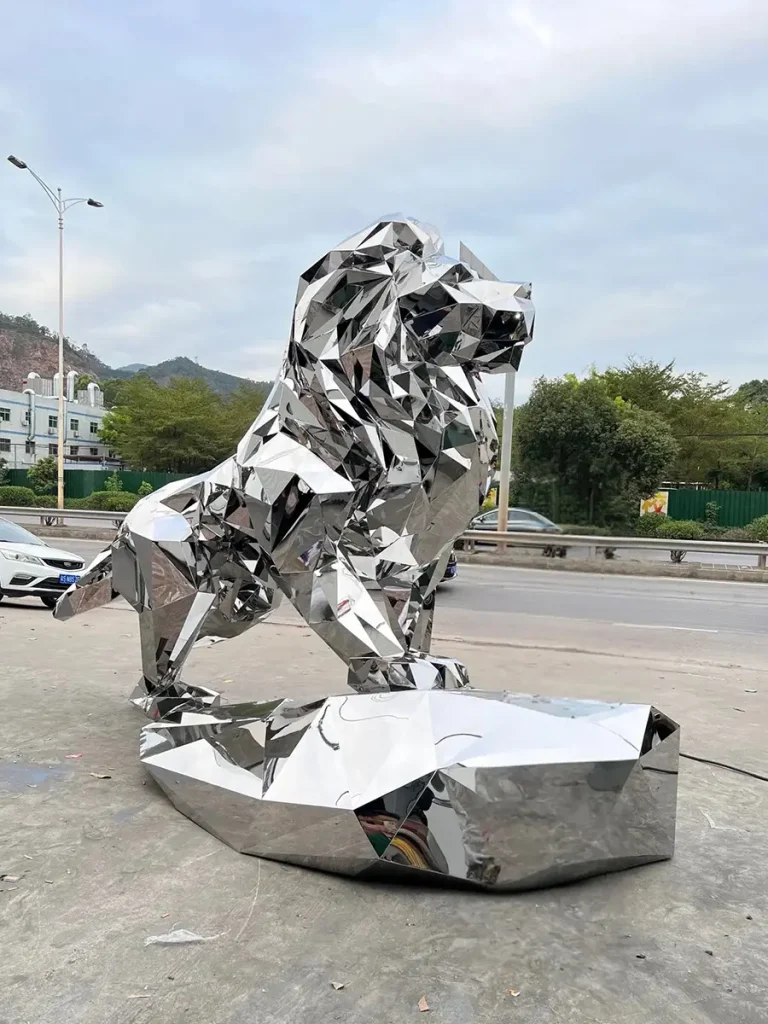 S01
S01 Stainless steelGeometric
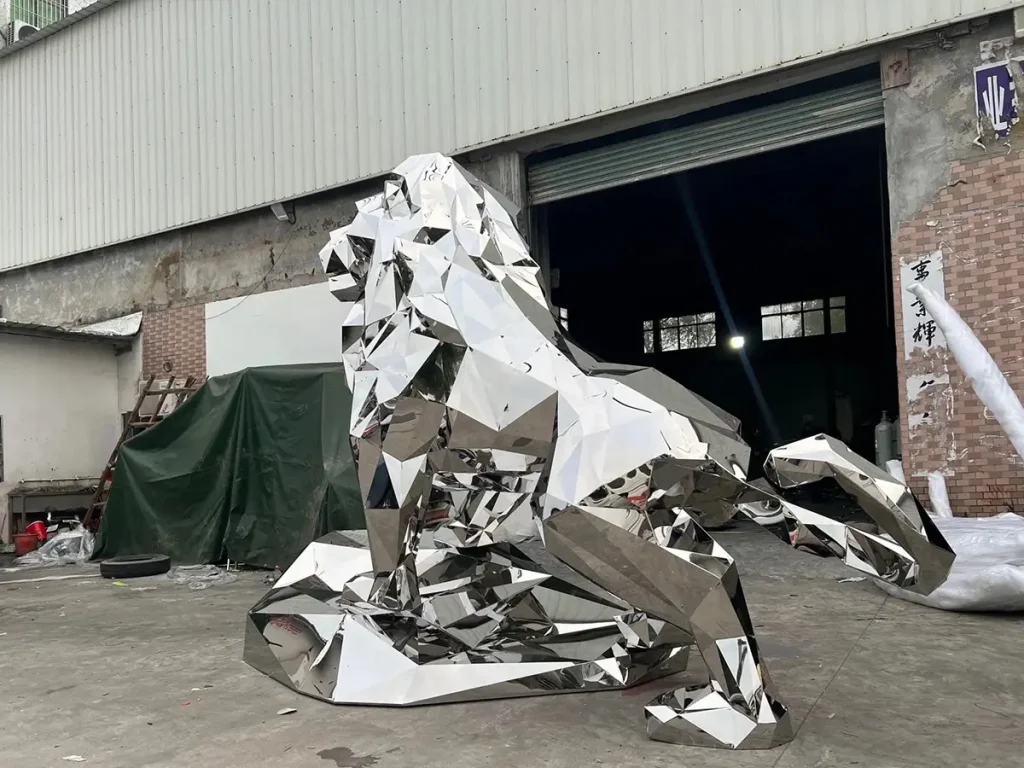
Mirror-polished modern lion
Faceted planes and a reflective finish turn the lion into a contemporary architectural object. This option is well suited to modern villas, hotels and commercial landscapes where classical carved detail would feel too ornate.
Ask about S01 → Have another lion in mind? A front, side or installation reference is enough to begin a custom discussion. Discuss your own design →
Form before finish
Judge the sculpture from every side
A strong front photograph is not enough for a freestanding lion. The shoulder line, rib cage, back, rear legs, tail and mane must remain convincing as a visitor drives past or walks around it. For custom work, multi-angle review also helps us identify exactly which proportions you want to keep.
- Compare front, side and rear silhouettes
- Check the eye line from the main approach
- Review how paws meet the base
- Confirm tail, mane and rear-body detail
Calm, balanced and formal
A sitting lion concentrates visual weight in a compact footprint. It is often the easiest pose to coordinate as a left-and-right pair beside gates, steps or a portico. Because the body is upright, the sculpture remains visible behind low planting without projecting too far into a driveway.
Active and directional
A standing lion creates movement along the approach. It needs more length than a sitting design, so confirm both the full body length and the safe clearance around the base. The head can face forward, slightly inward toward the entrance or outward toward arriving visitors.
Low, quiet and landscape-led
A reclining pose gives the lion presence without blocking windows, railings or long garden views. It works especially well on broad steps, terraces and retaining walls. The horizontal body also lets the sculptor emphasize shoulder tension, the curve of the spine and a relaxed but alert expression.
Contemporary and architectural
A faceted lion uses planes rather than carved fur to define the body. It belongs naturally beside glass, steel and clean concrete. The number and direction of facets affect both the silhouette and reflections, so the digital model should be reviewed in the intended orientation before fabrication.
Material selection
Stone, bronze or stainless steel?
The correct material is not only a style choice. It changes the surface detail, structural planning, weight, maintenance and way the sculpture ages outdoors. Tell us the climate and placement before the finish is finalized.
Carved from natural blocks
Natural stone lions
Marble, granite and limestone each produce a different character. Marble supports refined carving and a classical surface. Granite is visually denser and can be polished, honed or textured. Limestone and warm-toned stones suit softer landscapes but their pores, color and outdoor care must be considered. We use real natural stone rather than FRP or a thin imitation shell. For a large carved lion, the block is selected for color, major veins and sound structure before carving begins.
- Best for
- Classical homes, stone gates, gardens and settings where permanence and material mass matter.
- Can change
- Stone type, body proportions, mane, expression, pedestal, inscription and surface polish.
- Plan early
- Foundation capacity, access for lifting, natural variation and the final base footprint.
Modeled and cast
Cast bronze lions
Bronze is well suited to expressive anatomy and layered surface detail. A model is developed first, then the sculpture is produced through traditional casting and metal finishing stages. The finished work is normally hollow cast rather than a solid block of metal; the internal structure, wall thickness, joins, drainage and mounting details are developed for the size and installation. Patina can begin warm brown, dark antique, green-toned or another approved direction. Outdoors, the color continues to respond to weather and maintenance instead of remaining permanently identical to a digital sample.
- Best for
- Estate entrances, memorial settings and projects seeking detailed modeling with a traditional metal surface.
- Can change
- Pose, expression, anatomy, mane, patina, base, crest, inscription and mounting points.
- Plan early
- Patina expectations, drainage, anchoring, contact between unlike metals and local lifting access.
Fabricated and finished
Stainless steel lions
Stainless steel is the clearest choice for a highly contemporary lion. The form can be realistic, simplified or sharply geometric, but it is built from shaped metal plates rather than cast like bronze. Welds are joined, ground and finished so the final surface reads as one sculpture. Mirror polishing reflects the sky, planting and architecture; brushed finishing produces a quieter result. We commonly discuss 304 stainless for standard environments and 316 or 316L where stronger corrosion resistance is needed, especially around salt or water exposure.
- Best for
- Modern villas, hotels, public landscapes and architectural entrances with clean lines.
- Can change
- Scale, stance, facet pattern, mirror or brushed finish, color coating and base integration.
- Plan early
- Viewing reflections, grade selection, access panels, internal support and coastal conditions.
| Decision | Natural stone | Cast bronze | Stainless steel |
|---|---|---|---|
| Visual character | Architectural, substantial and naturally varied. | Modeled, detailed and capable of rich patina. | Clean, reflective, geometric or minimalist. |
| Construction | Hand-carved from selected natural stone blocks. | Model, mold, casting, welding, chasing and patina. | Plate forming, internal structure, full welding and surface finishing. |
| Outdoor change | Color and markings vary by stone; surface care depends on porosity and climate. | Patina naturally develops and can darken or shift with exposure. | Requires the right grade and finish for pollution, salt and water conditions. |
| Project planning | Highest lifting and foundation demand for the same volume. | Confirm anchors, drainage and protection of the chosen patina. | Confirm grade, internal support and acceptable reflection direction. |
Material recommendations are project-specific. Climate, nearby irrigation, coastal salt, freeze–thaw conditions, the supporting structure and expected maintenance can all affect the final specification. The quotation should identify the agreed material and finish rather than relying only on a reference photograph.
Scale and proportion
Choose the size from the space—not from a catalog
A lion can be accurately carved and still look wrong if it is too small for the gate or too large for the available landing. Overall height is only one number. Body length, chest width, pedestal footprint and the distance from which the sculpture is first seen matter just as much.
For an early recommendation, send one straight entrance photograph and mark a known measurement such as the gate opening, pillar height or paving width. A second photograph from the normal approach helps us understand the sightline. We can then discuss whether a sitting, standing or reclining pose creates the right amount of visual weight.
As a broad starting point, garden lions are often discussed around 80–120 cm overall height; residential entrance pieces around 120–160 cm; large driveway or estate lions around 160–220 cm; and monumental work above that. These are not engineering rules or fixed product sizes. A low reclining lion may be visually powerful because of its length, while a narrow standing lion can feel undersized despite being tall.
Always state whether your target dimension includes the pedestal. For a pair, also give the available space on both sides, because walls, gates, planting, vehicle turning areas and pedestrian routes may not be symmetrical.
Five details make the first quotation more accurate
Design reference
Choose a gallery number or send your own image. Tell us what you like about it: the pose, expression, mane, material, surface color or complete composition.
Finished size
Provide the preferred overall height and clarify whether it includes the base. For standing or reclining designs, body length is equally important.
Available footprint
Measure the clear width and depth on each side. Include nearby walls, gate movement, steps, planting and the safe path for vehicles and people.
Placement and climate
Tell us whether the piece is outdoors, coastal, near a fountain, in a freezing winter or exposed to strong sun. This helps define material and finish choices.
Delivery destination
Send the country and postcode. Large sculpture shipping depends on crate dimensions, weight, destination access and the quoted delivery scope.
Entrance photograph
A photograph with one known measurement lets us discuss proportion more usefully. It does not replace a local structural or installation survey.
What determines the price?
There is no reliable single price for every modern lion statue. The main variables are material, finished dimensions, whether you need one sculpture or a coordinated pair, the complexity of the mane and anatomy, model development, pedestal design, surface finish, internal structure, packing and destination. A highly detailed custom bronze pair and a simpler carved stone lion of similar height can require very different work. We therefore quote the specification you intend to buy instead of advertising a misleading starting price.
Prepare a quote for my lion →Custom modeling
A lion should look convincing before it looks large
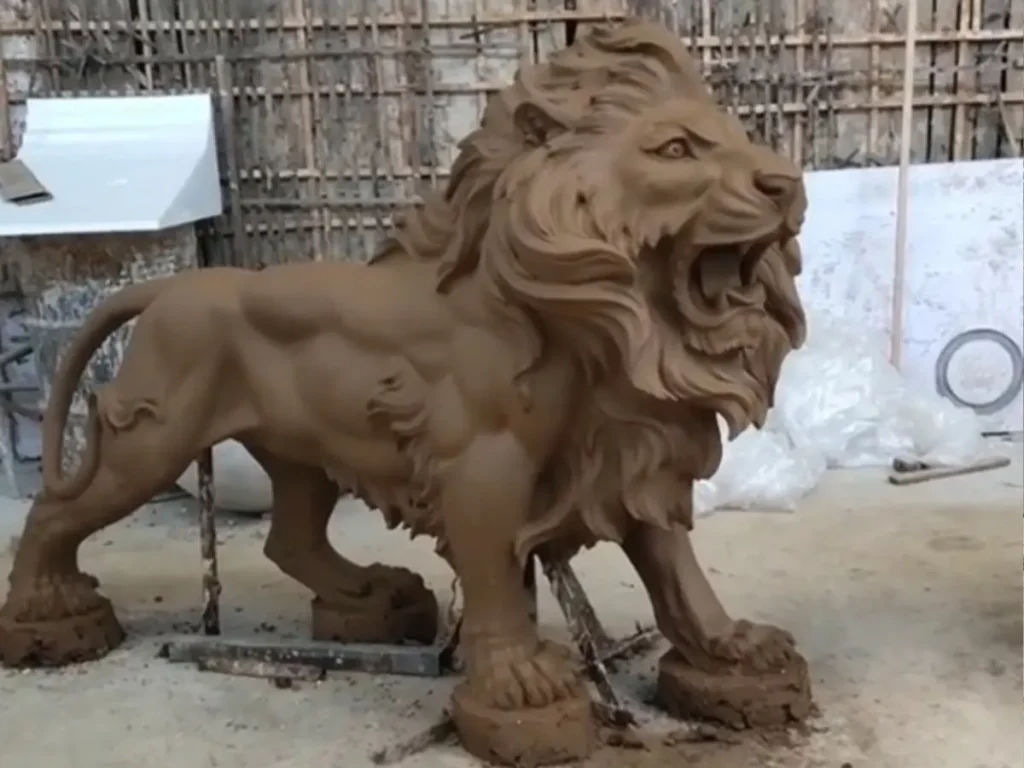
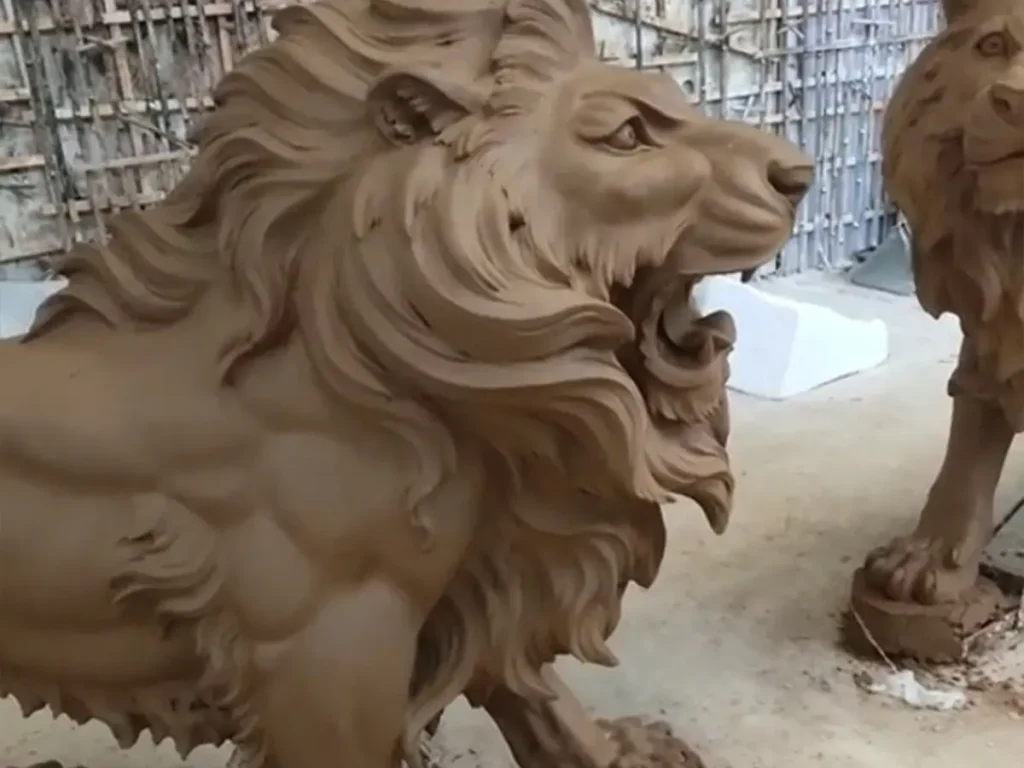
Size attracts attention, but anatomy holds it. The silhouette should read clearly from a distance, while the face, paws and mane must still reward a close view. We develop the sculpture around the visual priorities of the project rather than adding detail randomly.
- Silhouette and balanceThe head, neck, rib cage and hindquarters should feel connected. In a standing pose, the weight distribution must support the direction of movement; in a seated pose, the chest and front legs should not look compressed.
- Expression and eye lineA closed mouth can communicate calm control; an open mouth creates more drama. The gaze should relate to the primary approach rather than pointing without purpose.
- Mane, skin and muscleThe mane needs large readable groups before small strands. Shoulder and leg muscles should follow the structure beneath the surface instead of appearing as separate decorative bumps.
- Paws, tail and basePaws must sit naturally on the ground plane. The tail should work in three dimensions and avoid fragile projections. The pedestal needs enough visual mass to support the lion without overwhelming it.
- Pairing and directionTwo lions can mirror one another, face straight ahead or turn slightly toward the entrance. We confirm left and right orientation before production so the pair frames the space intentionally.
Details that can be developed for your project
Pose and expression
Standing, sitting or reclining; calm or roaring; head forward or turned; realistic anatomy or a simplified contemporary interpretation.
Crest, emblem or inscription
A family crest, estate name, corporate emblem or engraved plaque can be discussed for the pedestal when the artwork and rights are supplied by the client.
Mirrored or coordinated lions
A pair can share one body concept while using opposite leg, head or tail directions. Exact mirroring is not always the most natural solution.
Stone and metal finishes
Polished, honed or textured stone; warm brown, dark or green-toned bronze patina; mirror, brushed or colored stainless steel.
Integrated or separate pedestal
The base can be kept visually quiet or developed as part of the composition. Its final design must also support anchoring and handling.
3D or clay model review
The modeling route depends on the material and design. We agree on the approval stages before production and revise the model within the agreed scope.
Prepare the site
Foundation, anchoring and delivery need early decisions
The sculpture is only one part of a safe outdoor installation. Your local contractor or engineer should confirm the foundation, lifting plan and anchors for the actual site, loads and local requirements.
01 · Supporting surface
Do not plan from height alone
A heavy stone lion needs a level supporting surface with adequate capacity. Bronze and stainless steel pieces are lighter than equivalent solid stone, but still require a stable base and correctly positioned anchors. Send the available plinth dimensions before we finalize the sculpture footprint. A decorative paver or thin topping should not be assumed to be the structural foundation below it.
02 · Mounting details
Coordinate anchors with the base
Anchor positions, access openings and drainage depend on the material and pose. They should be discussed before completion, not improvised after delivery. Where metal meets another material, the local installer should use compatible fasteners and isolate dissimilar metals when required. Final structural design and installation responsibility remain with the qualified local team.
03 · Unloading and access
Plan how the crate reaches the site
Large sculptures normally require mechanical unloading and lifting. Check truck access, turning space, gate width, overhead obstructions and the route from the delivery point to the foundation. Our quotation states the shipping scope. Unloading, foundations, lighting and installation are not included unless they are specifically written into the agreed quotation.
From enquiry to delivery
How a custom lion order takes shape
The exact route changes with stone carving, bronze casting and stainless steel fabrication, but the important decisions are made in the same order: specification, approval, production, finishing and delivery preparation.
- 01
Share the project
Send a design reference, required quantity, preferred material, approximate overall size, placement photograph and delivery postcode. Mention any opening date or installation deadline.
- 02
Define the specification
We discuss pose, dimensions, base, material, surface finish and the quoted delivery scope. Your quotation records the agreed basis so different options are not confused later.
- 03
Review the model
Where a new design is required, we prepare the agreed 3D or clay model and share views for review. Proportion, expression and important details are corrected before the main production stage.
- 04
Produce the sculpture
Stone is carved and refined; bronze moves through molding, casting, welding and chasing; stainless steel is formed, welded and ground. We share relevant progress images during production.
- 05
Confirm the finish
We complete the approved stone texture, bronze patina or stainless steel surface. Finished photographs or video allow you to review the visible result before protective packing.
- 06
Pack and arrange shipping
The sculpture is protected and secured for the agreed transport method. We confirm packing information and coordinate dispatch while you prepare unloading, local handling and installation.
Practical trust
Evidence you can review during the order
You may not be able to visit the workshop, so the order should not depend on a single promise. We build review points into the process. The exact records depend on the project, but the purpose is consistent: help you confirm what is being made before it is packed and shipped.
Approved reference
Key dimensions, visible details, material and finish direction are recorded so production follows an agreed target.
Workshop updates
Relevant photographs or short videos show modeling, carving, casting or fabrication progress at useful stages.
Pre-packing review
Finished views help confirm the overall appearance, surface and major dimensions before the crate is closed.
Packing information
Crate details and dispatch information help your receiving team prepare appropriate access and unloading equipment.
What does “modern lion statue” mean on this page?
It refers to Western-style or anatomically recognizable lion sculpture rather than traditional Chinese Foo Dogs. The range includes realistic European-style lions, simplified contemporary forms and geometric stainless steel interpretations. If you want the symbolic male-and-female Chinese guardian pair with a ball and cub, visit our Foo Dog statues page.
Should I order one lion or a matching pair?
A pair is usually stronger when the purpose is to frame a gate, driveway or symmetrical building entrance. One sculpture can work better as a garden focal point, on an asymmetrical approach or where only one safe foundation is available. A pair does not have to be perfectly mirrored; coordinated differences in the head, legs or tail can make the composition feel more natural.
Which material is best for an outdoor lion statue?
There is no universal best material. Natural stone provides mass and an architectural relationship with masonry. Bronze supports detailed modeling and develops a changing patina outdoors. Stainless steel provides a distinctly contemporary appearance and can be specified in 316 or 316L for more demanding salt or water exposure. Climate, design, available lifting access and maintenance expectations should guide the choice.
Can you make a lion from my photograph or drawing?
Yes, we can discuss a custom design from suitable reference material. Multiple views are much more useful than one front image. Tell us whether you want to reproduce the complete lion, borrow only the pose, or combine features from several references. We will confirm the modeling route, approval stages and permitted revision scope before production.
Can the pedestal include a crest, estate name or inscription?
Yes. A crest, emblem or inscription can be developed as carved relief, engraving, a separate plaque or part of a metal base, depending on the material and detail. Please provide clear artwork and confirm that you have permission to use it. Text spelling, capitalization and layout should be approved before carving or casting.
How do I choose the correct size for an entrance?
Begin with the gate opening, pillar height, clear space on each side and the distance from which visitors first see the lions. Send a straight photograph with one known measurement. We can discuss visual proportion, but the final foundation and installation must be checked locally. Always clarify whether the requested height includes the pedestal and provide the allowable base footprint.
Will I see the design before the sculpture is made?
For a new custom form, yes: the quotation should state whether approval uses a 3D model, clay model or another agreed reference. We review the overall form before the main carving, casting or fabrication stage. Natural stone markings and hand-finished patina cannot be identical to a computer rendering, so model approval defines the form while material samples and finish references guide the surface.
Are your stone lions cast stone or solid natural stone?
Our stone sculptures are carved from natural stone rather than made from FRP or a thin artificial shell. The selected stone, block arrangement and number of pieces depend on the design, scale, transport and structural requirements. If a one-block body is important to your project, state that requirement before quotation so it can be confirmed in the specification.
How will bronze and stainless steel surfaces change outdoors?
Bronze patina reacts to air, moisture, handling and maintenance, so its color gradually evolves. A waxed or coated finish still needs appropriate care. Stainless steel is more stable in appearance, but water spots, airborne salt and pollution can mark the surface; grade, finish direction and cleaning matter. Mirror polish also reflects its surroundings, so nearby paving, traffic and planting become part of the visual result.
How long do production and shipping take?
Timing depends on material, size, modeling revisions, quantity, surface finish and destination. Many custom projects require several weeks of production, followed by international transport that may take additional weeks. We provide the working estimate with the quotation. Approval delays, holidays, weather, port congestion and customs inspection can affect the schedule, so tell us about fixed dates before ordering.
Can you ship lion statues to the United States and other countries?
Yes. We regularly discuss international delivery for large sculptures. Send the delivery country and postcode so the available service and cost can be checked. Your quotation will state the delivery scope. Large crates may arrive on a truck without unloading equipment, so the receiver normally needs to prepare a forklift, crane or other suitable lifting plan unless a different service is specifically agreed.
Do you provide foundations and installation?
Foundations, local engineering, lighting, unloading and installation are not included unless they are specifically written into the quotation. We can provide relevant sculpture dimensions, approximate weight, base information and agreed mounting details for your local contractor. The qualified local engineer and installer must evaluate the real site, local codes, wind, seismic conditions, soil and supporting structure.
What maintenance does an outdoor lion need?
Maintenance depends on the material, finish and environment. Keep irrigation chemicals and standing water away where possible. Stone may need periodic cleaning and a compatible sealer depending on porosity. Bronze may need cleaning and wax or coating maintenance. Stainless steel benefits from fresh-water cleaning, especially near salt. Always test products on a small area and follow the care advice for the agreed finish.
What should I send to receive a price?
Send the preferred gallery number or your reference image, quantity, material, finished height, whether the height includes the base, available footprint, delivery country and postcode. An entrance photograph is helpful. If you are unsure about material or size, send the space first and explain the visual effect you want; we can narrow the options before preparing the quotation.
Continue your research
Choose the right type of guardian
This commercial page helps you choose and order a sculpture. Use the related pages when you need deeper placement guidance or prefer the symbolism of traditional Chinese guardian lions.
Start with the space or the sculpture
Tell us which lion caught your eye
Send a gallery reference or your own image. We will discuss the material, finished dimensions, base, surface finish and delivery destination, then prepare a quotation for that specification. If you are unsure about scale, include an entrance photograph and one known measurement.
- 01Design reference, drawing or entrance photo
- 02Natural stone, bronze or stainless steel
- 03One lion or a coordinated pair
- 04Finished height and available base footprint
- 05Delivery country and postcode
Custom lion statues by Yun Sculpture · Natural stone · Bronze · Stainless steel Back to Safari & Jungle Animals