Get in touch with Yun-Sculpture company
The Ultimate Guide to Driveway Lion Statues: Elevating Your Estate’s Entrance

The entrance of an estate is not simply a driveway. It is the handshake of the property—the first statement of authority before a guest ever reaches the front door. Every architectural decision at this threshold communicates power, taste, and permanence.
This is why lion statues for driveway installations have endured for centuries. From European palaces to modern luxury estates, placing lion statues in front of house entrances transforms a simple path into a ceremonial approach. The driveway becomes a deliberate spatial composition rather than a strip of pavement.
A well-placed statue of a lion functions as a structural design element. In architectural terms, it acts as an architectural accent—a sculptural anchor that organizes space, frames sightlines, and signals arrival.
When executed correctly, the result is immediate:
- The driveway gains a focal point visible from the street.
- The entry sequence feels intentional rather than accidental.
- Visitors experience a sense of scale and prestige before reaching the door.
This is not decoration. It is architectural theater.
Luxury estates rarely rely on a single object to create presence. Instead, they use symmetry, proportion, and material weight. Lion sculptures accomplish all three in a single move. Two lions positioned at the driveway gate instantly create a symmetrical layout that signals formality and authority.
The effect is subtle but powerful. Guests slow down. The property feels established, guarded, and important.
From a design standpoint, driveway lions solve a practical problem as well. Large homes often have long driveways that feel visually empty. Sculptural guardians fill that void while guiding the eye toward the residence.
For this reason, the lion remains one of the most enduring estate symbols in the world.
Table of Contents
Table of Contents
Why Entrance Lion Statues are the Ultimate Symbol of Status and Security
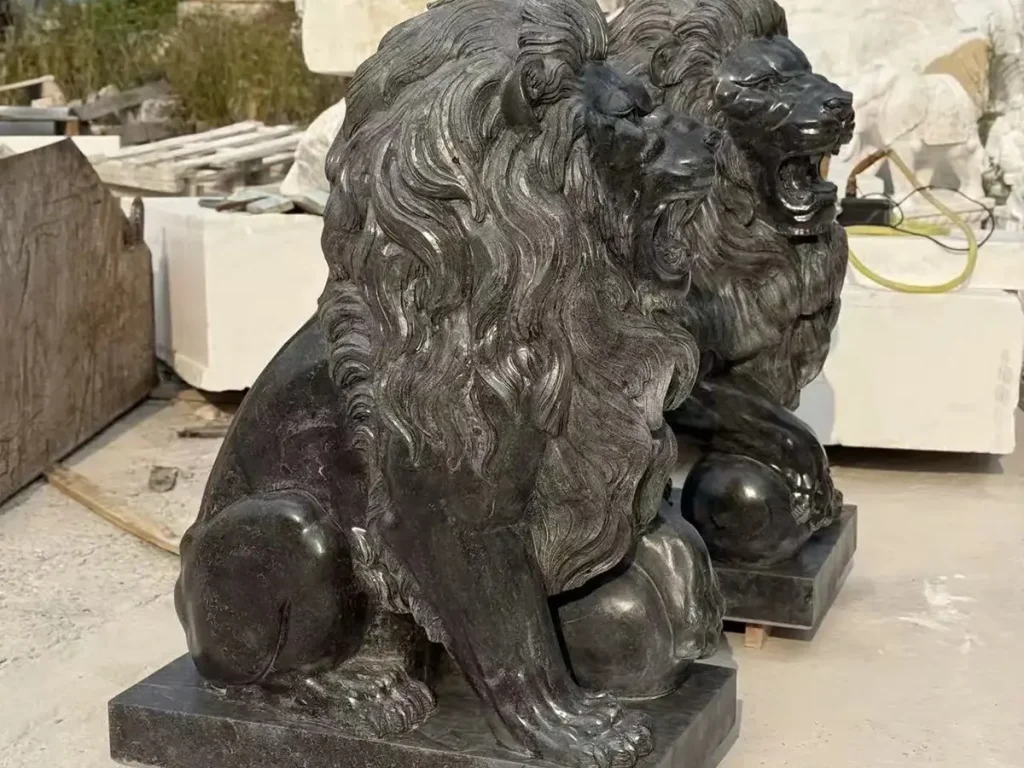
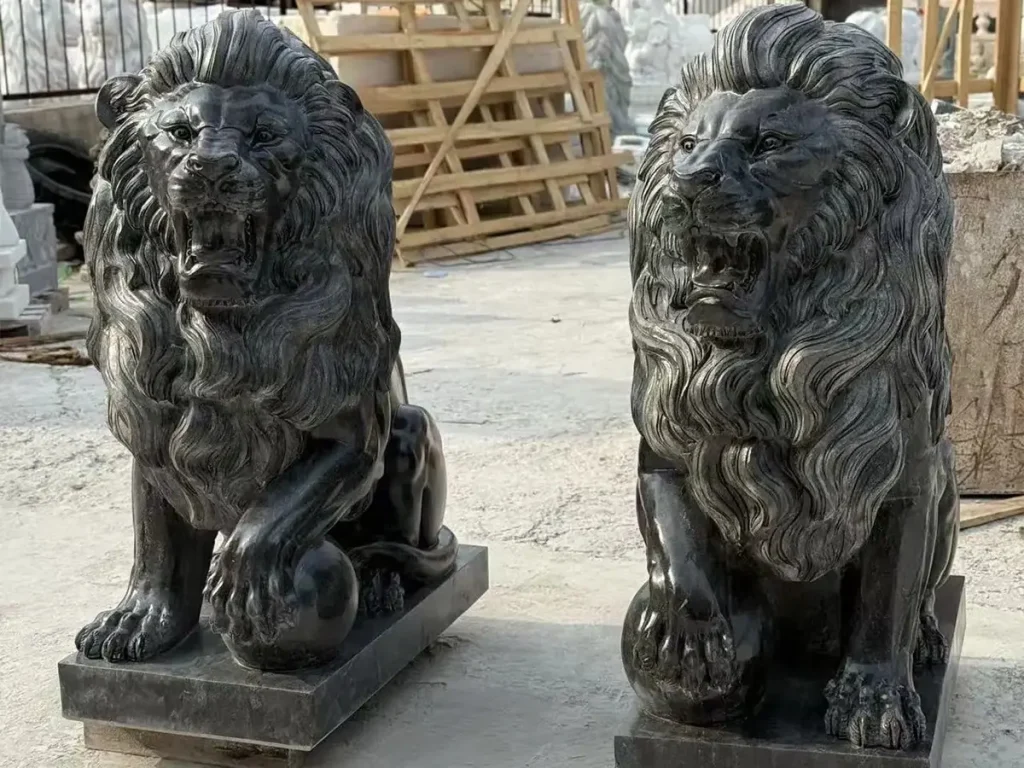
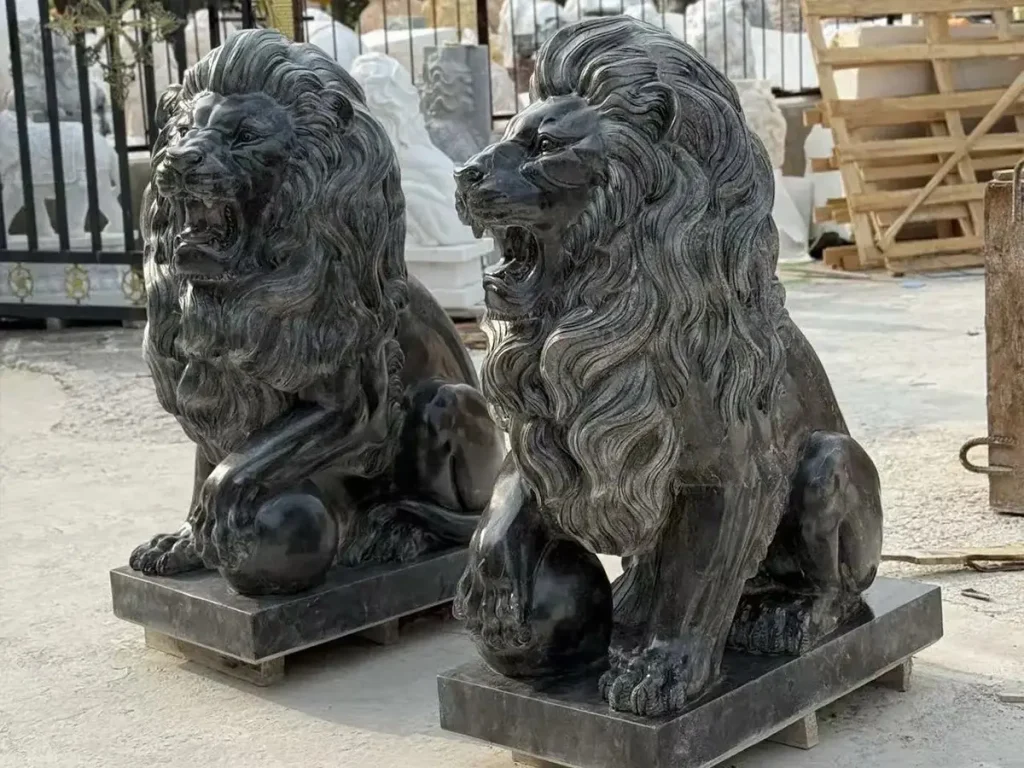
Across cultures and centuries, lions have represented dominance, vigilance, and sovereignty. This is the core answer to the question many clients ask: what do lion statues represent?
They represent control over territory.
In architectural design, a guardian lion statue signals that the space beyond the gate belongs to someone of authority. Historically, lions guarded temples, palaces, and government buildings. Today, they guard estates, corporate headquarters, and luxury resorts.
Their message remains the same: strength and protection.
When developers install lion sculptures at a property entrance, they are not simply adding decoration. They are shaping the psychological perception of the entire property. Visitors subconsciously interpret the message before they even realize it.
Well-designed garden statues lions provide several advantages to a luxury entrance:
- Authority: Lions instantly project strength and permanence.
- Symmetry: A paired installation creates a balanced architectural frame.
- Property value: Sculptural focal points increase perceived estate value.
- Visual hierarchy: They guide the eye directly toward the home or gate.
This is especially important for large estates where the house sits far from the street. Without a defined focal point, the entrance can feel visually weak.
Two properly scaled lions solve this problem immediately. They establish a gateway effect—even when no physical gate exists.
Material choice further amplifies the impact. Bronze lions create a sense of heritage and craftsmanship. Stone lions emphasize permanence and classical tradition. Stainless steel interpretations introduce modern luxury.
Regardless of material, the role of the lion remains constant: it commands the entrance.
Decoding the Posture: Sitting vs. Standing Lion Sculptures
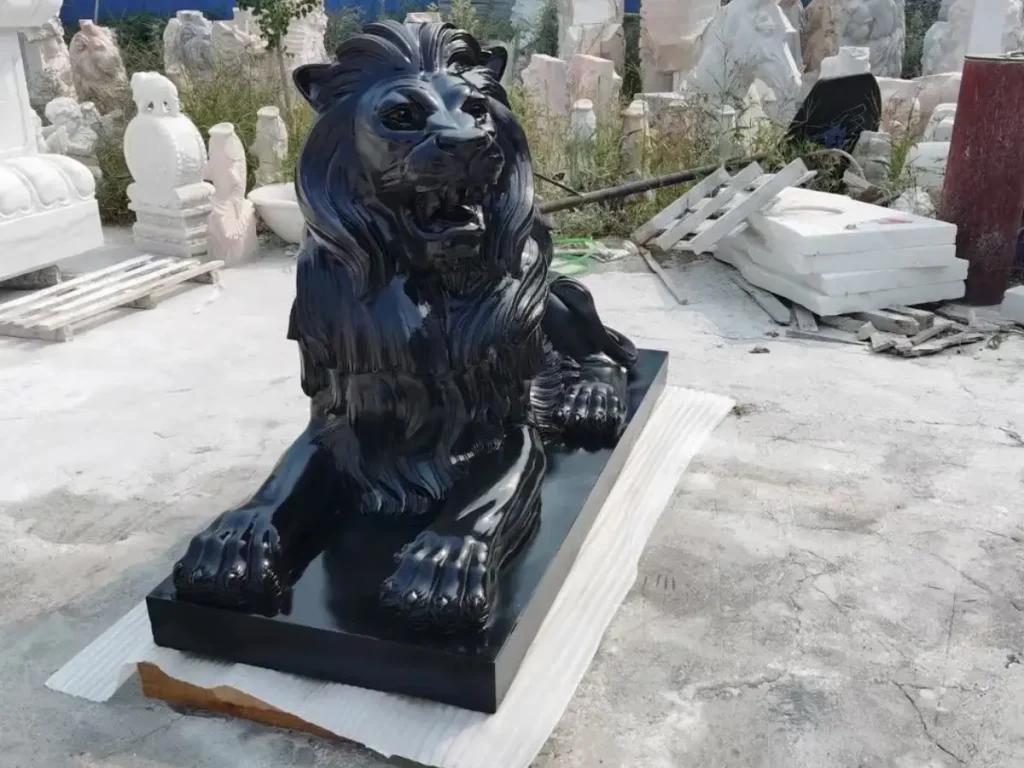
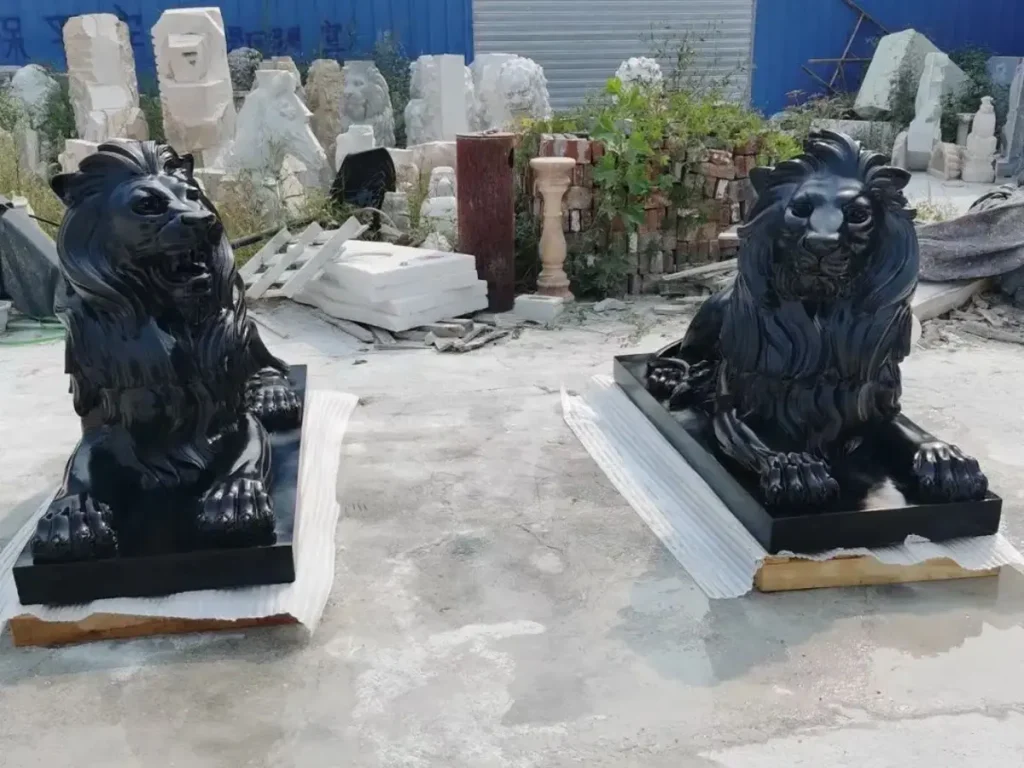
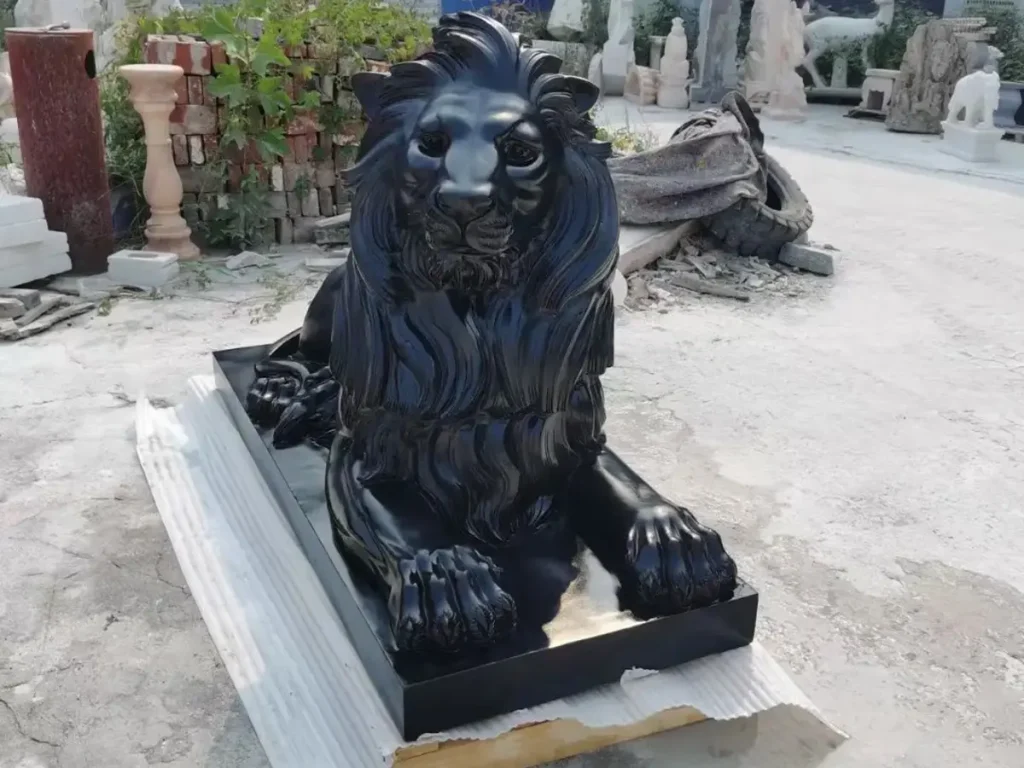
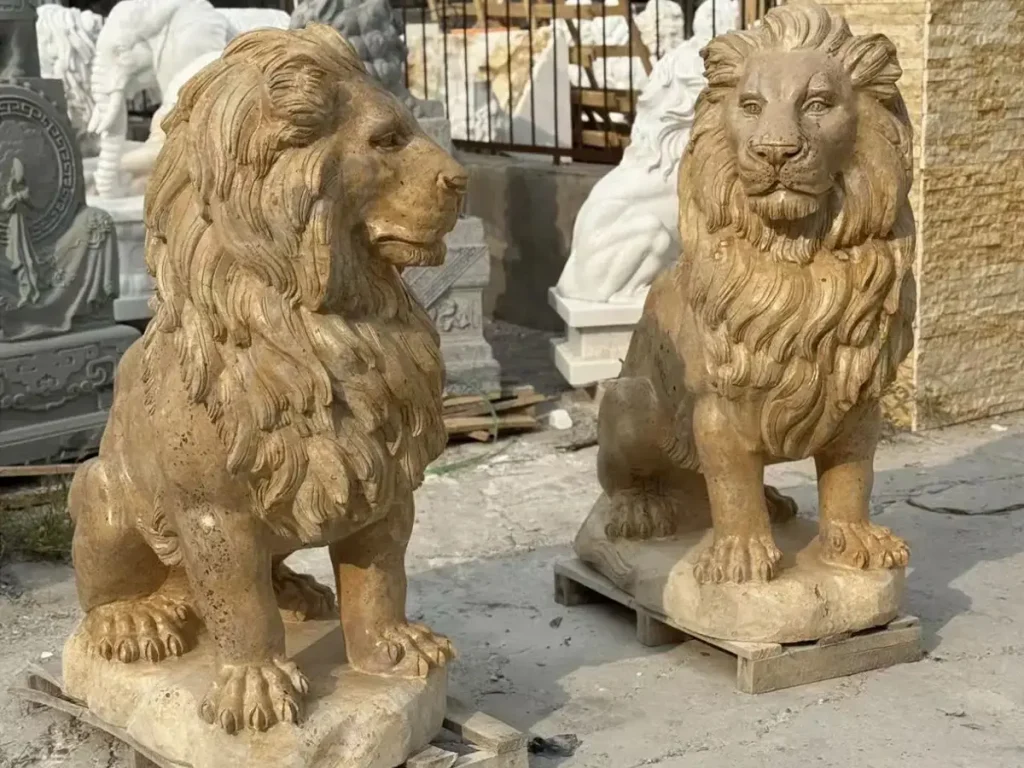
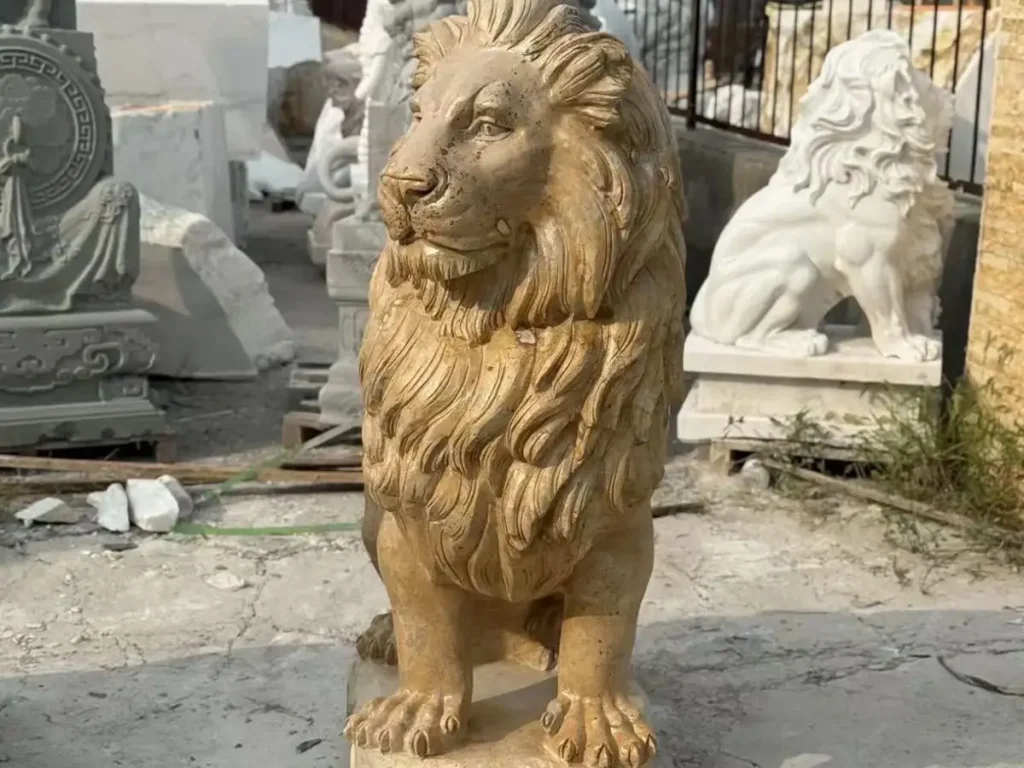
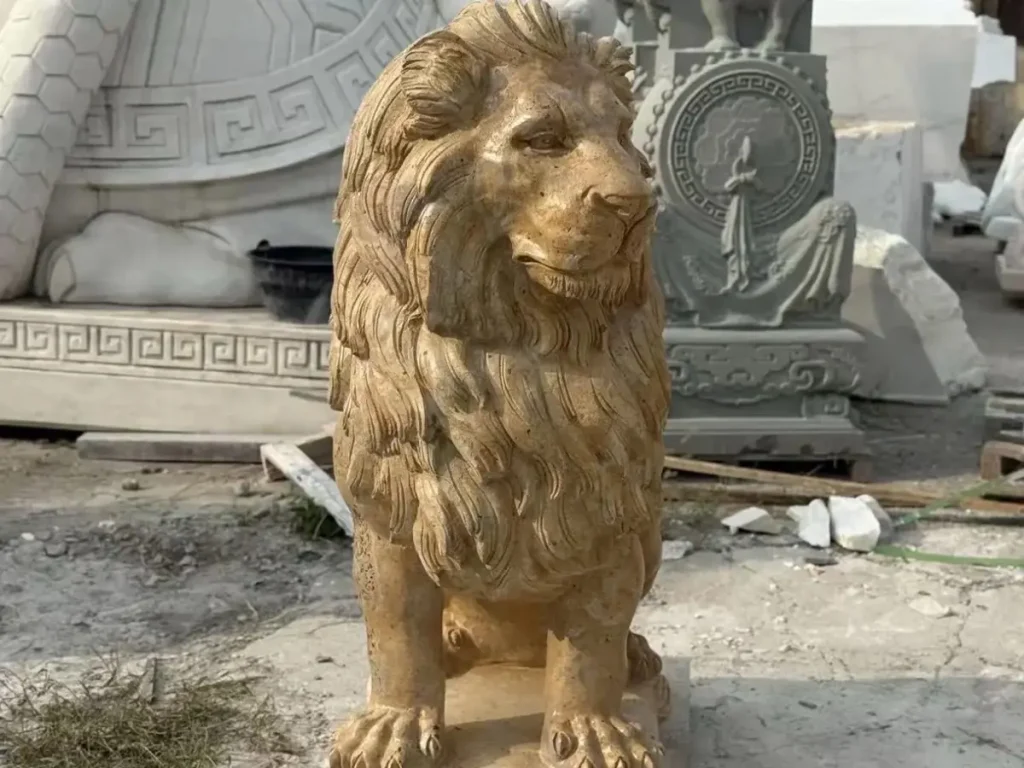
Not all lions communicate the same message. Posture dramatically changes the emotional tone of the installation.
The most common configuration is the sitting bronze lion statue. This posture conveys calm authority. The lion is relaxed but alert—watchful without aggression. It is the posture most commonly seen in European estates and classical architecture.
A sitting lion communicates control. The estate feels secure because the guardian does not need to roar.
Standing lions, by contrast, create a more aggressive statement. A standing statue of a lion projects dominance and readiness. The body weight shifts forward, the chest expands, and the stance feels confrontational.
Developers often choose standing lions for:
- Large commercial entrances
- Hotel driveways
- Government buildings
- Grand estate gates
The psychological message is clear: approach with respect.
However, posture alone does not determine quality. True sculptural authority comes from anatomical accuracy and artistic realism.
As I often tell my clients:
“A driveway lion shouldn’t just look big; it should look like it’s breathing. Muscular definition and eye-line alignment are key.”
Cheap mass-produced lions fail because they ignore anatomy. Their bodies look inflated rather than muscular. Their faces lack expression. Their proportions are distorted.
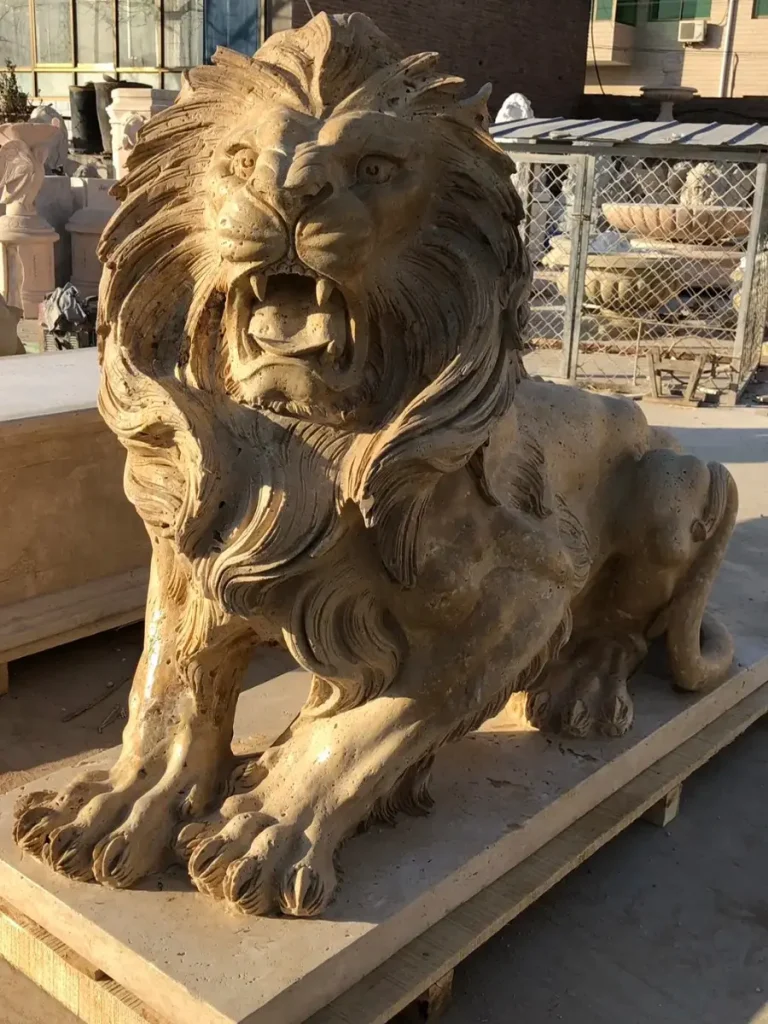
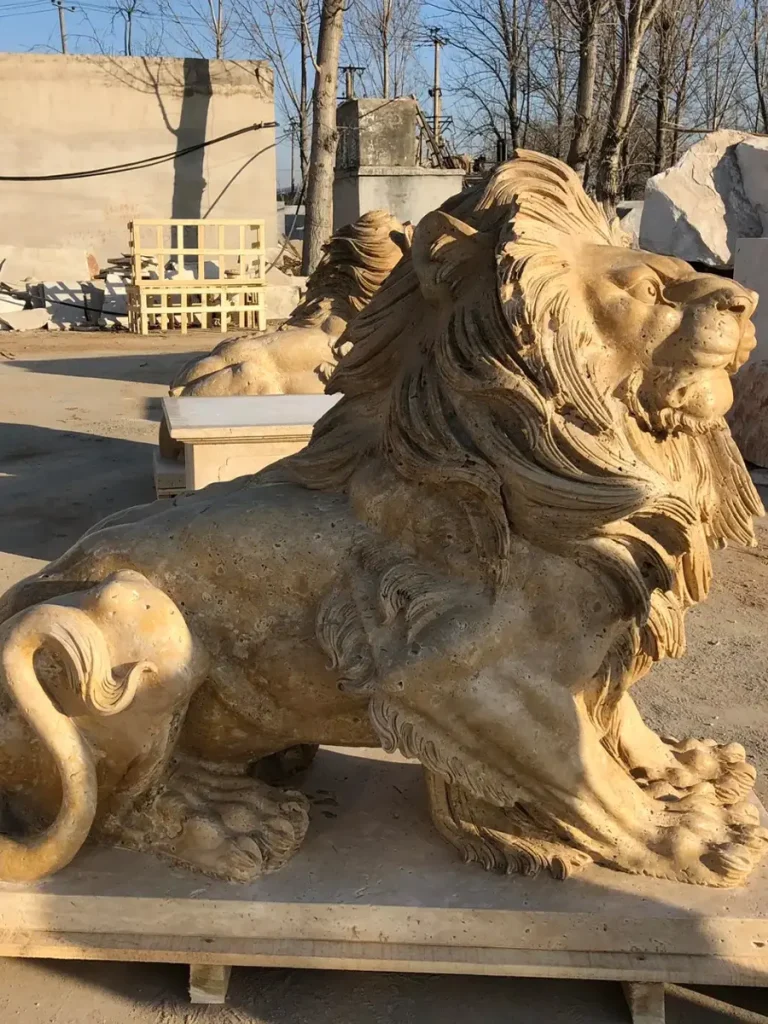
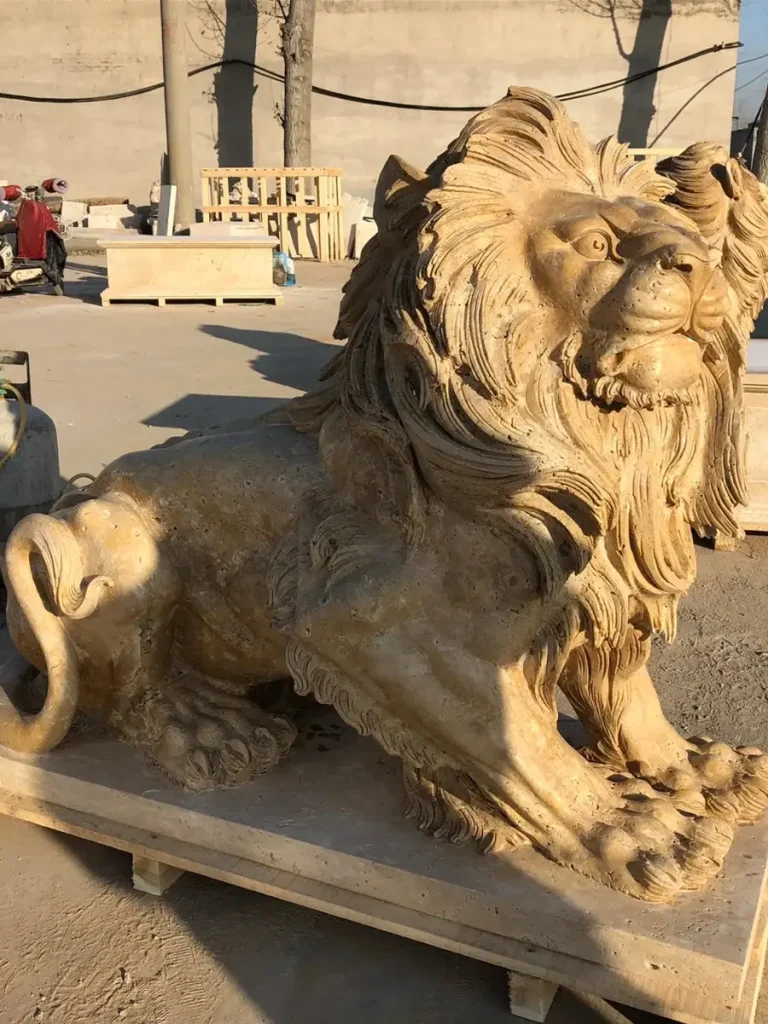
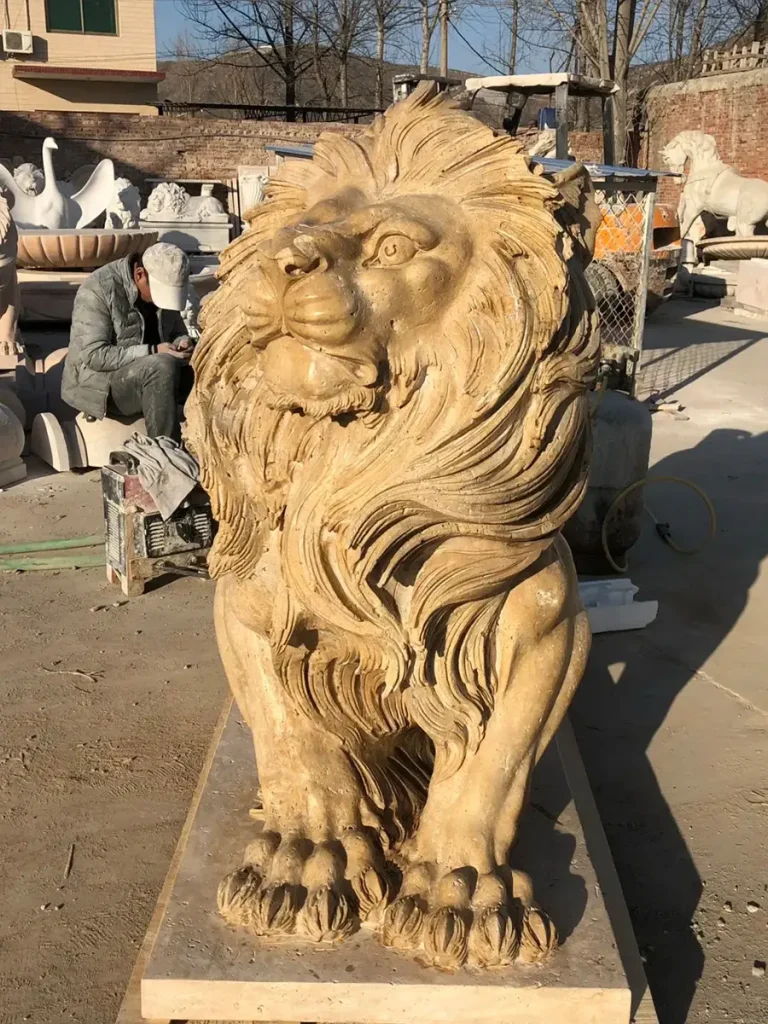
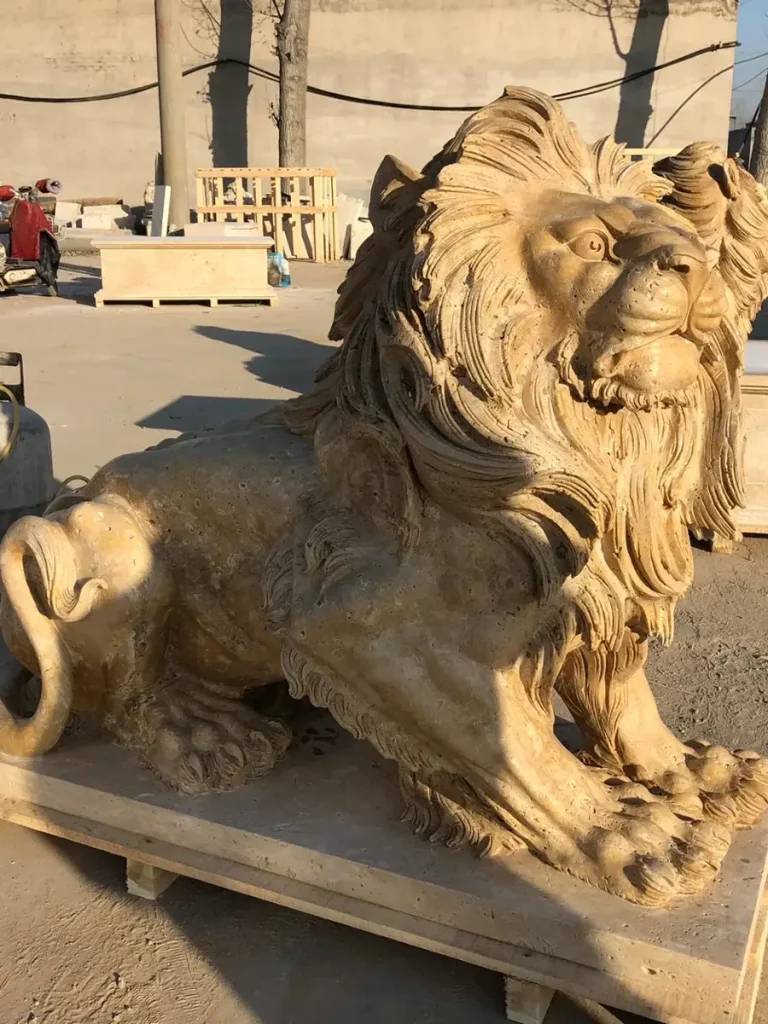
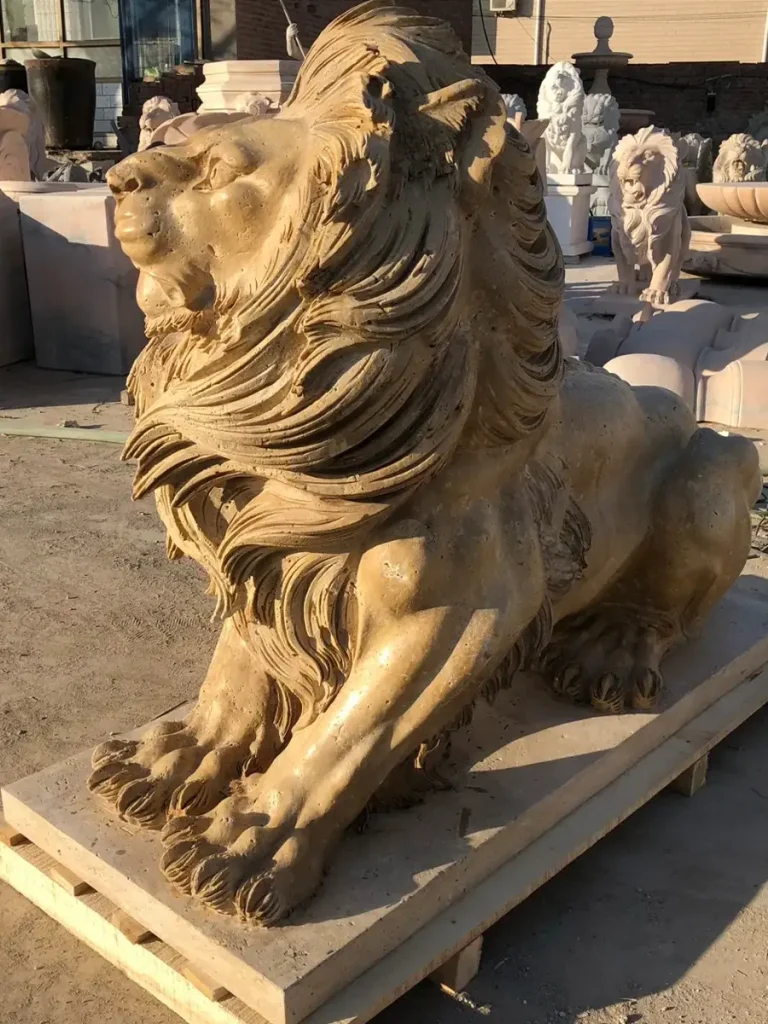
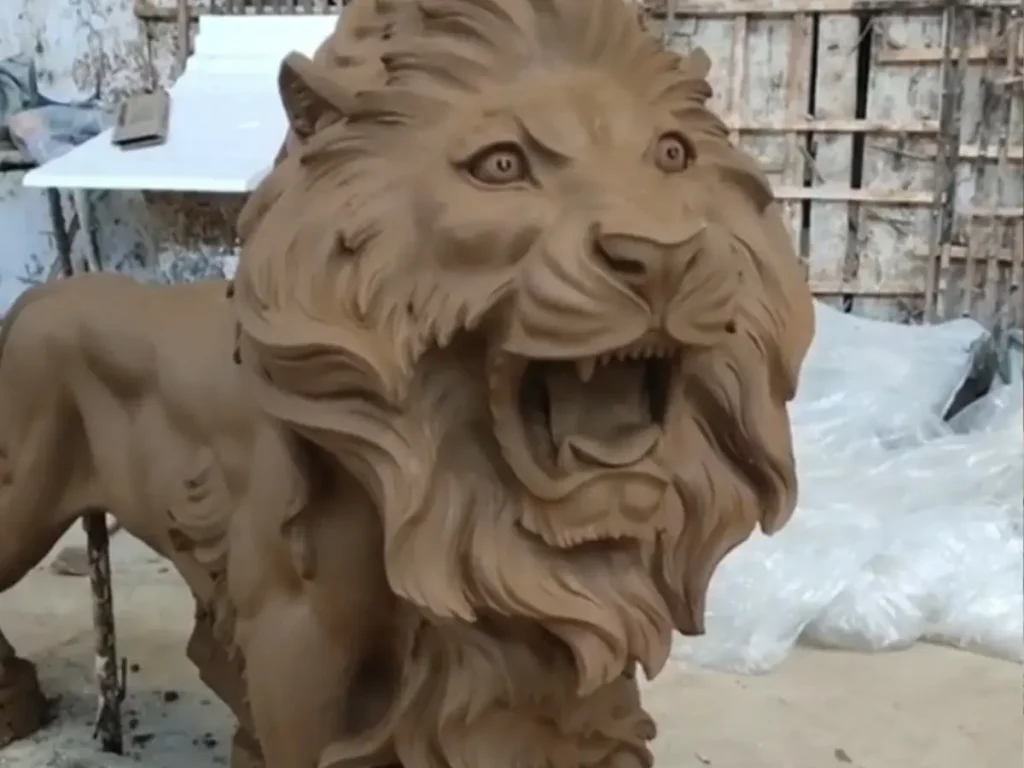
Museum-quality lions rely on Classical realism. The sculptor studies real lion anatomy—the rib cage, shoulder tension, and skeletal structure. Every muscle must read correctly from a distance.
Several artistic details separate exceptional work from concrete yard ornaments:
- A forward-focused majestic gaze that aligns with approaching visitors
- Deep carving around the eyes and jaw to create shadow and expression
- Intricate mane detailing that captures the layered texture of real fur
- Natural muscle transitions along the shoulders and back
When these elements come together, the lion stops looking like an object.
It begins to look alive.
And that is when the sculpture truly becomes part of the architecture.
Selecting the Right Scale: Large Outdoor Lion Statues for Grand Entrances
Scale is the most common mistake I see when clients install entrance sculptures. A lion that is too small disappears against the architecture. A lion that is too large overwhelms the approach and disrupts the visual balance.
The goal is proportional authority.
For secondary spaces—garden paths or courtyard entrances—medium-sized lions work well. These statues complement landscaping without dominating it. In those settings, the lions behave more like decorative garden guardians rather than structural design elements.
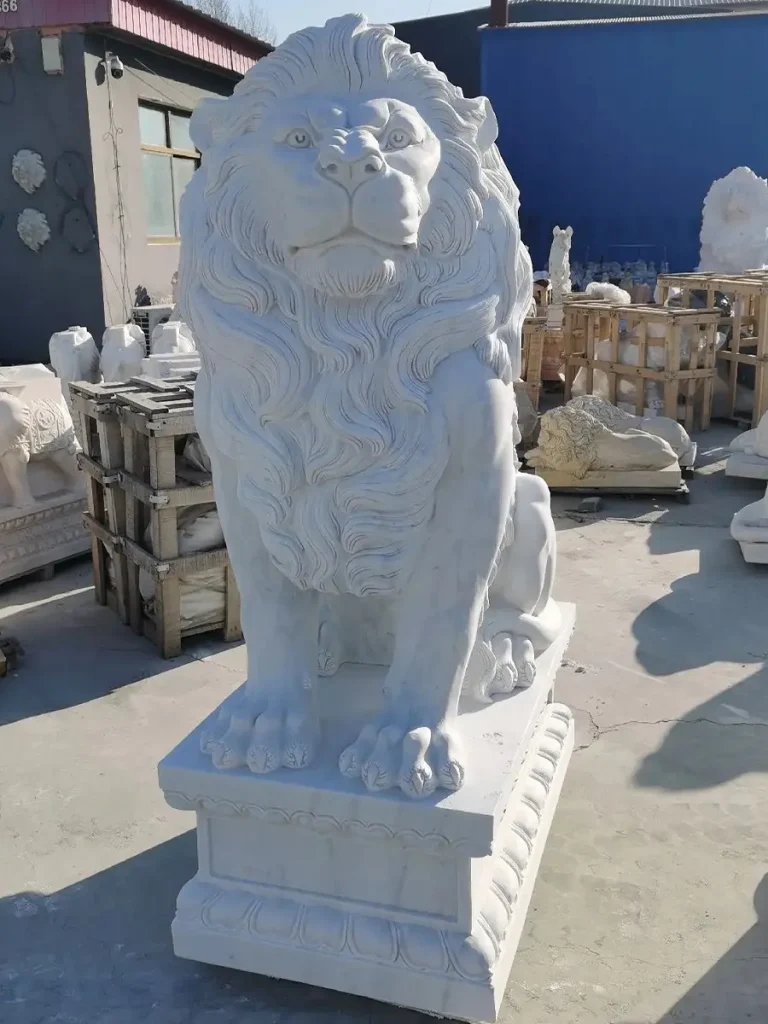
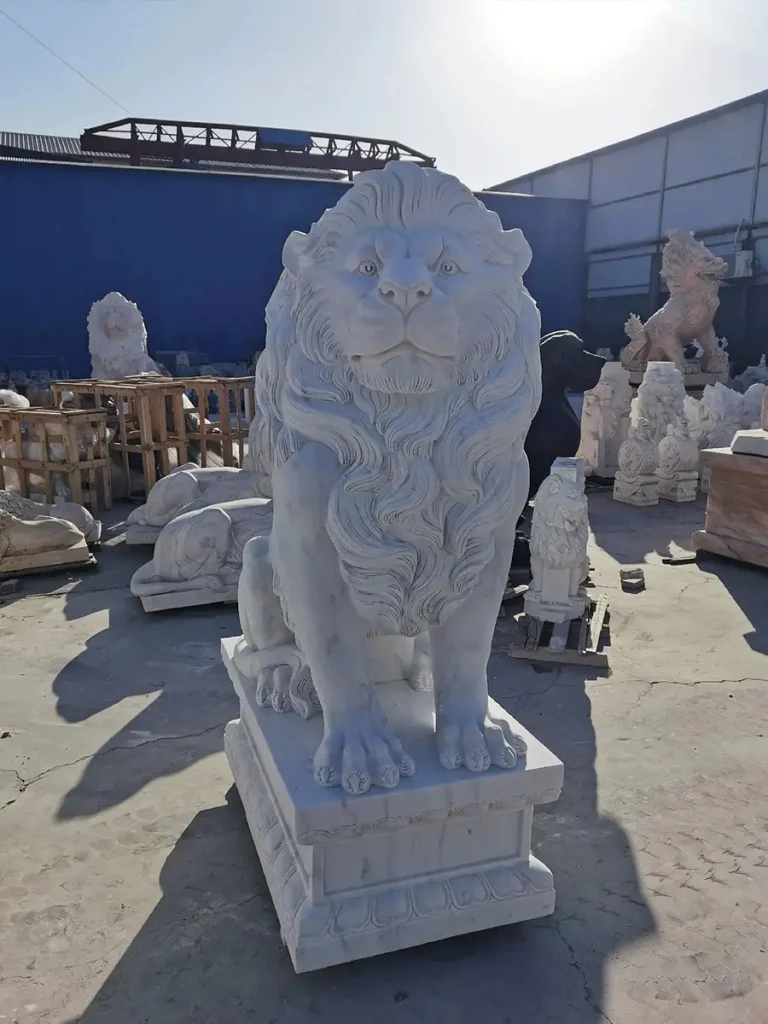
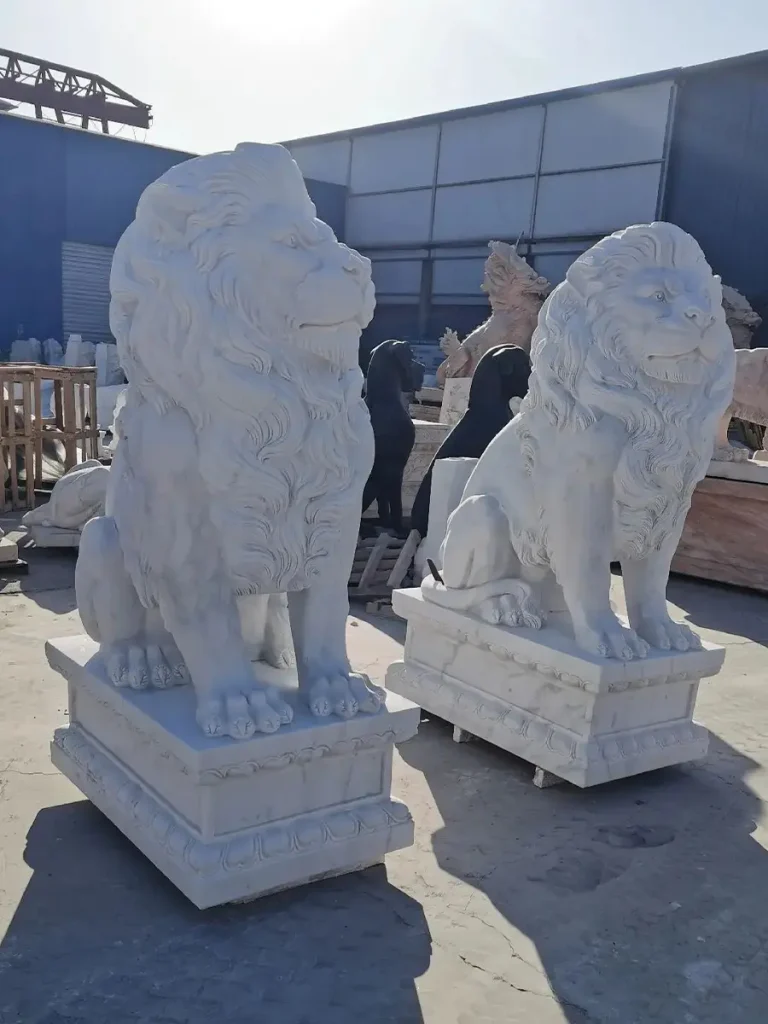
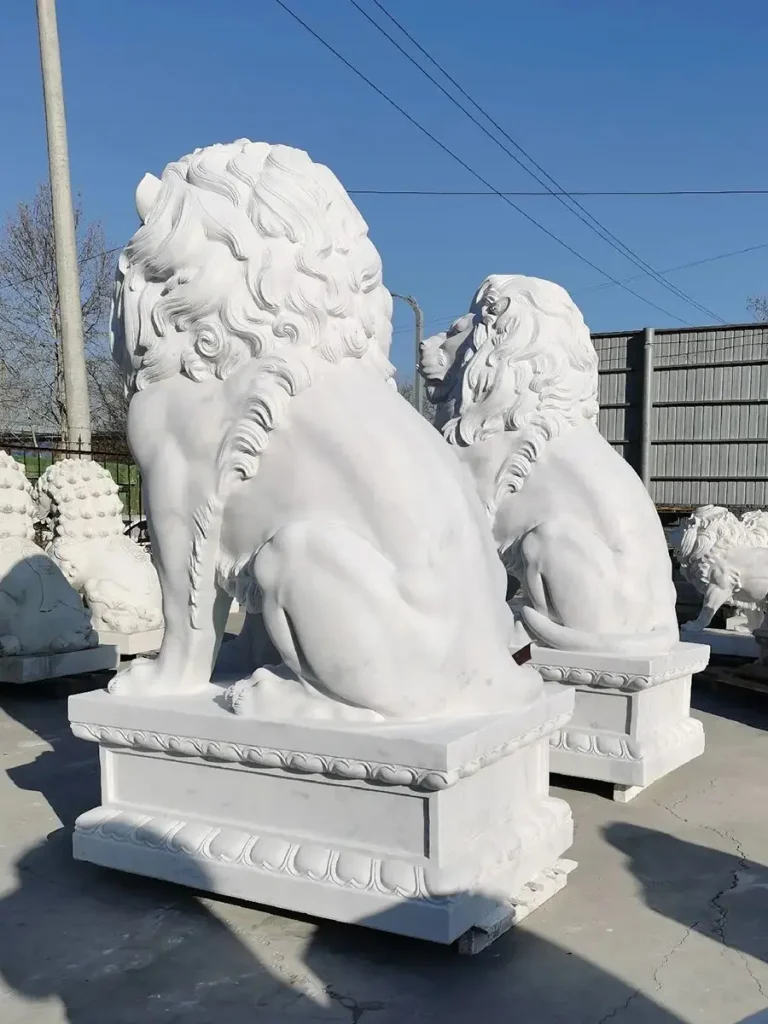
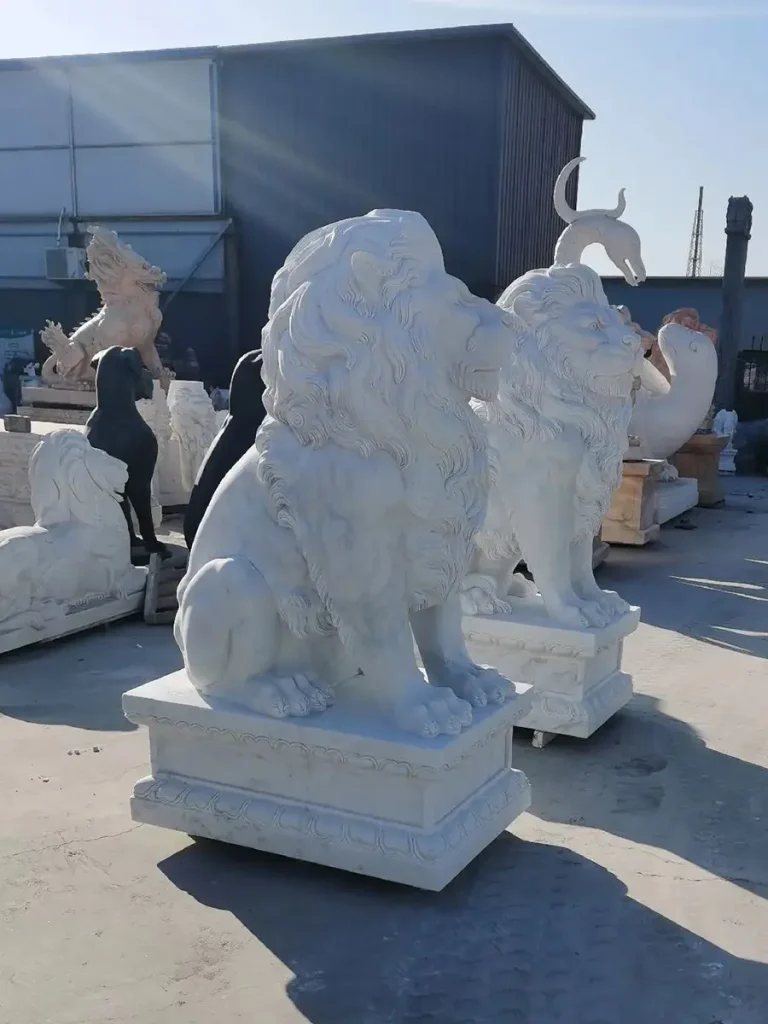
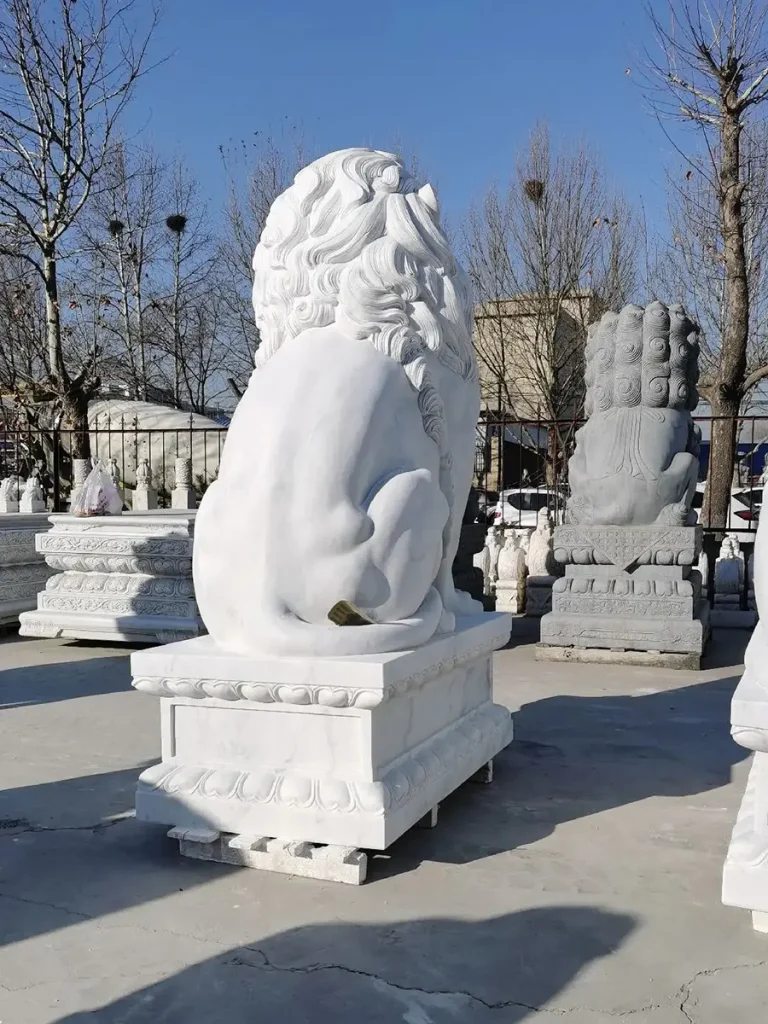
Driveway entrances are different. The scale must match the mass of the house, gate pillars, and surrounding landscape. This is where large outdoor lion statues become essential.
A properly scaled installation creates a clear spatial hierarchy:
- Small lions for garden pathways
- Medium lions for patios and terraces
- Large outdoor lion statues for driveway gates
- Monumental lions for defining estate boundaries
For luxury estates with long driveways, a stone lion statue big enough to command attention from the street is critical. If guests cannot immediately recognize the sculptures from a distance, they are not performing their architectural role.
Height alone is not the only factor. Mass and visual weight matter equally. A lion with thick shoulders, deep carving, and a full mane holds visual power even at moderate height.
Architects often follow a simple rule: the lions should visually align with the lower third of the gate pillars. This creates a balanced composition where the sculptures anchor the structure without competing with it.
When done correctly, the lions feel inevitable—like they were always meant to stand there.
Material Matters: Granite, Stone, and Bronze, Stainless Steel Lion Statues
Once scale is determined, the next decision is material. This choice defines the lifespan, maintenance requirements, and visual character of the sculpture.
In my professional experience, three materials dominate estate installations:
- Natural granite
- Carved natural stone
- Cast bronze
Each carries its own architectural personality.
Granite and Natural Stone
Among traditional materials, stone granite lion statues are the most durable option available. Granite forms under extreme geological pressure, which gives it extraordinary density and structural stability.
For outdoor installations, this density matters. Granite offers exceptional freeze-thaw stability, meaning it does not absorb water that later expands and cracks during winter cycles.
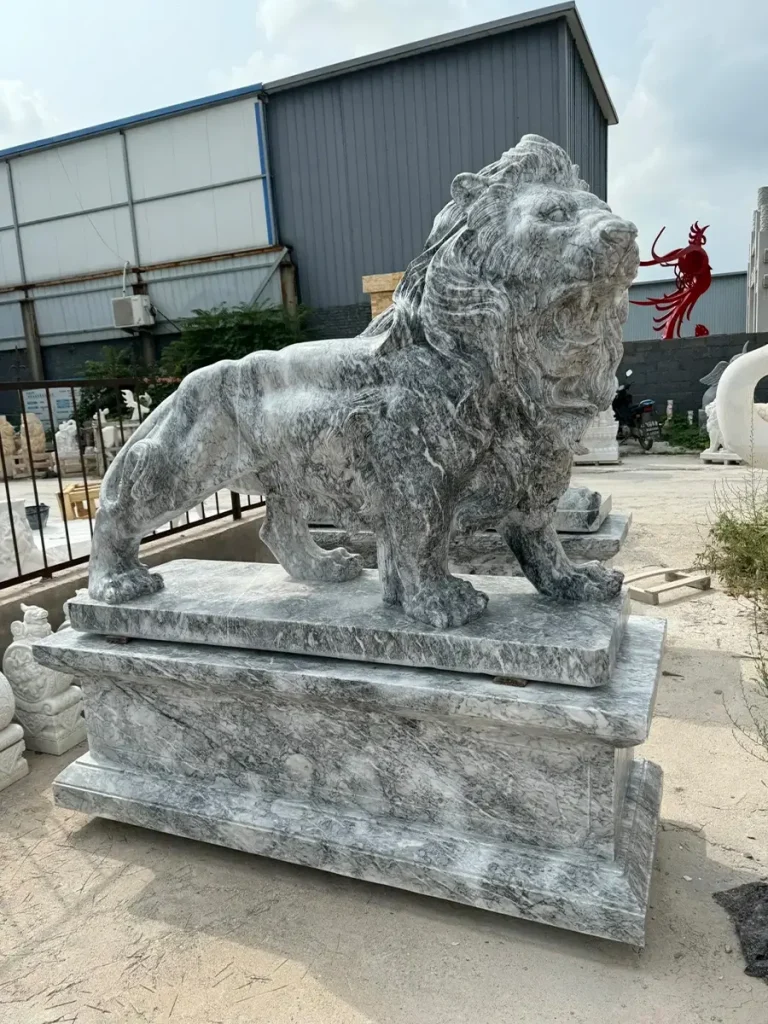
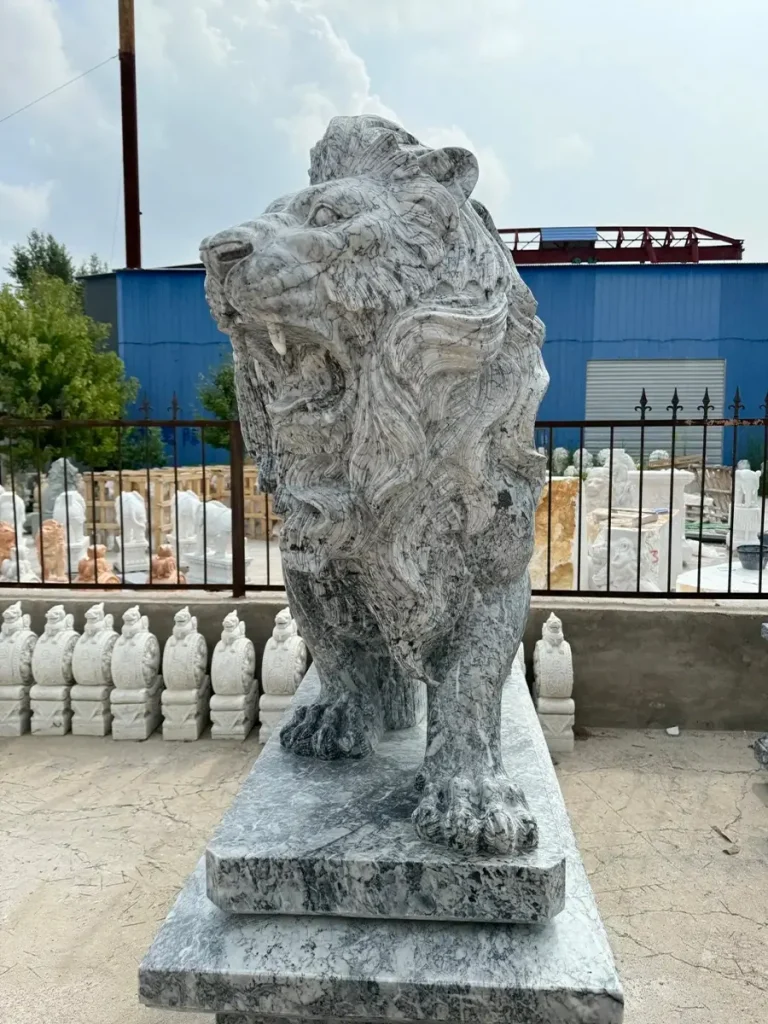
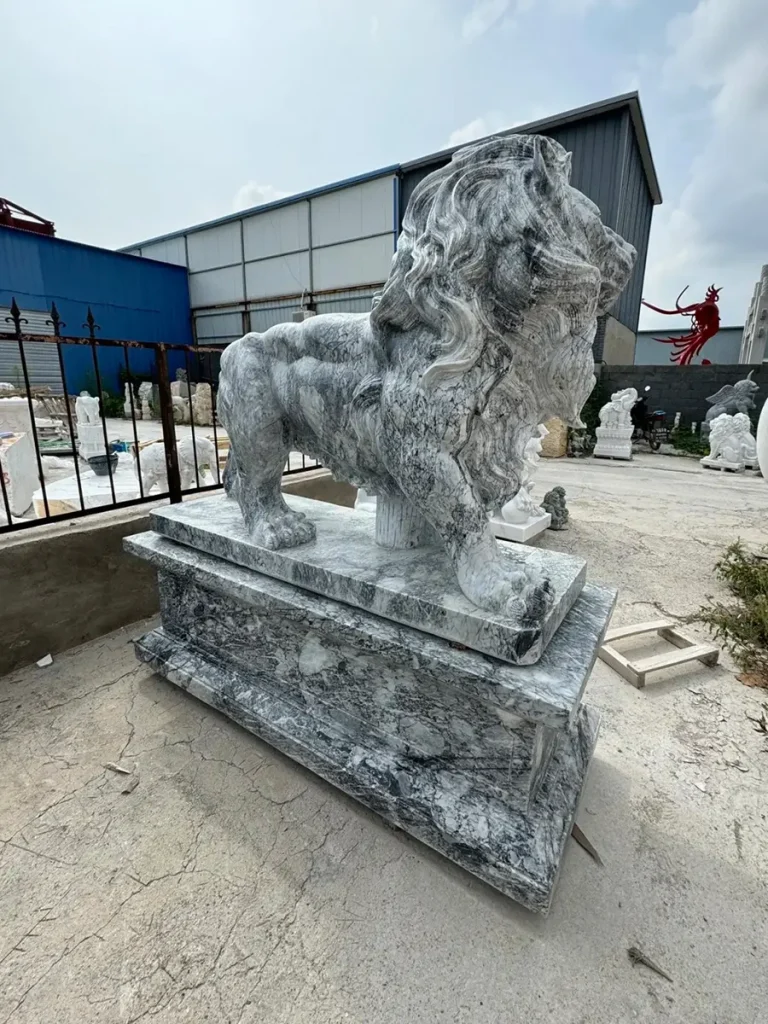
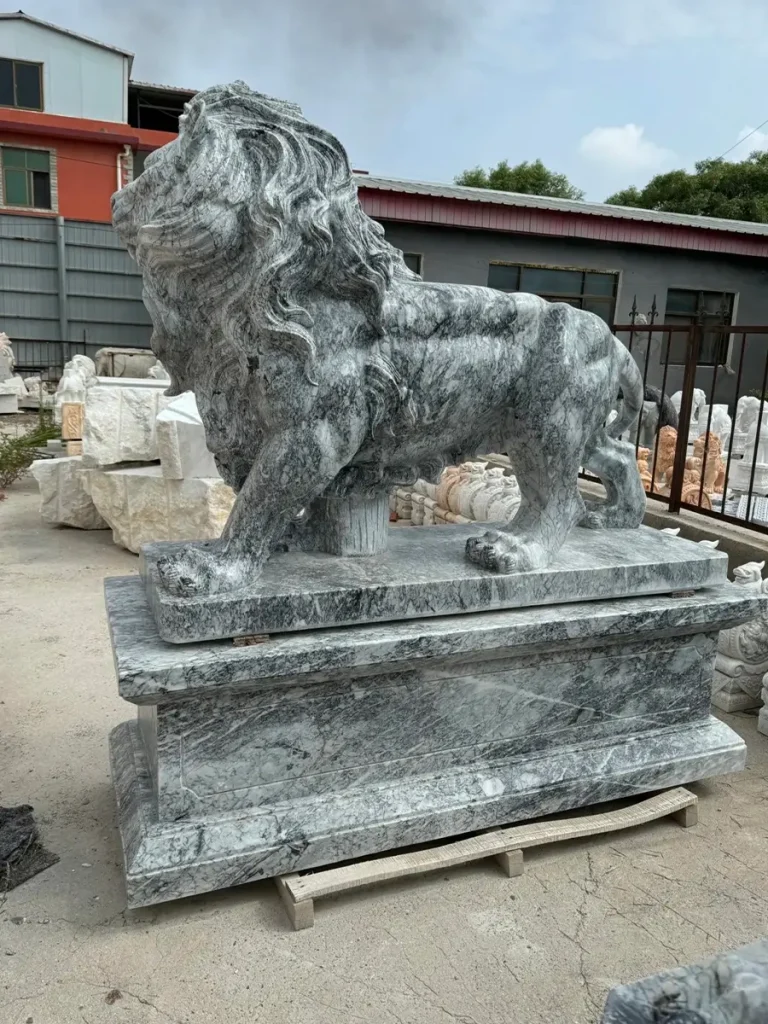
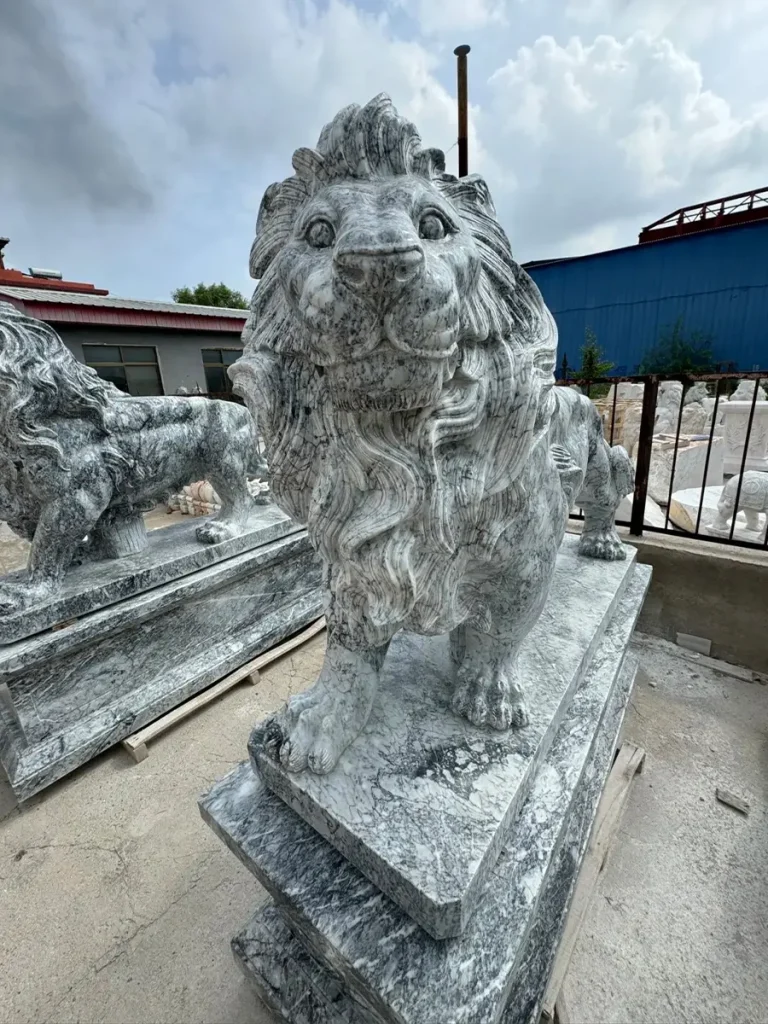

This is where many inexpensive statues fail.
Mass-produced concrete lions are typically made from porous cast stone. Water seeps into the material, freezes, and gradually fractures the surface. Within a few seasons, cracks appear around the mane and facial details.
Natural granite does not suffer from this weakness.
The result is unmatched toughness and durability, which is why granite lions have survived centuries in historic estates and temple complexes.
Carved limestone and marble also remain popular choices for estates seeking a softer classical appearance. These materials allow for extremely refined carving in the mane and facial features, giving the sculpture a more artistic presence.
Regardless of the stone type, a well-proportioned stone statue lion delivers the sense of permanence that luxury architecture demands.
Bronze
If stone represents permanence, bronze represents prestige.
High-quality bronze lion statues are created using traditional foundry techniques where molten metal is poured into molds. The best examples use solid casting methods that produce dense, structurally stable sculptures capable of lasting generations.
Bronze offers another advantage: it evolves over time.
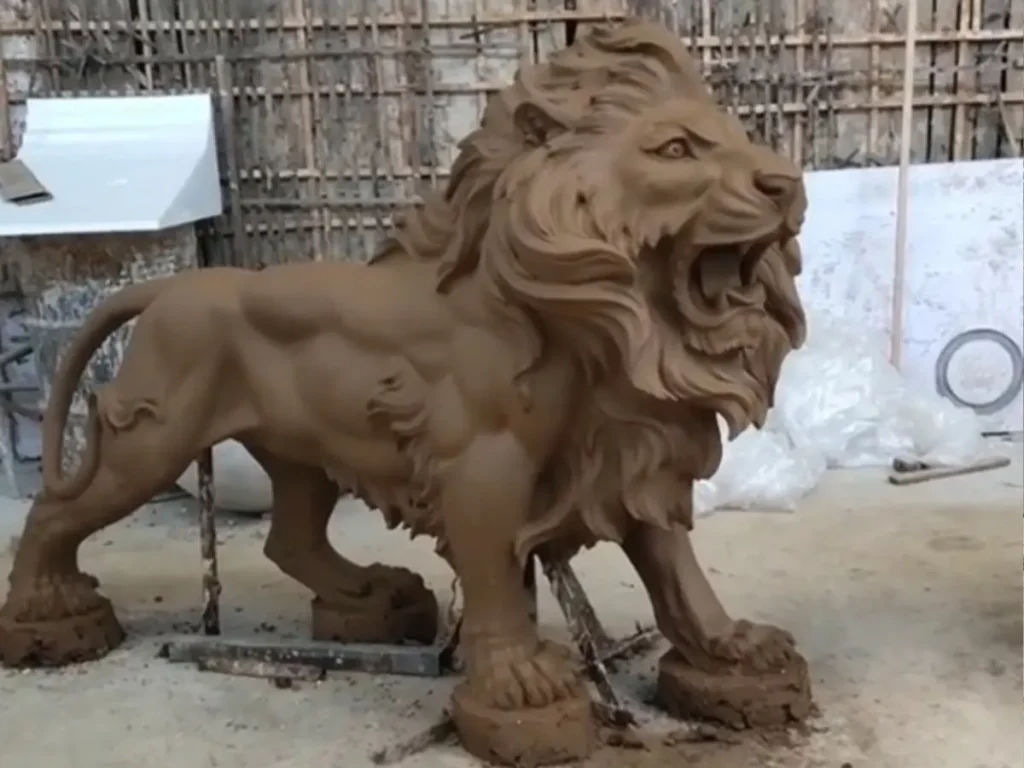
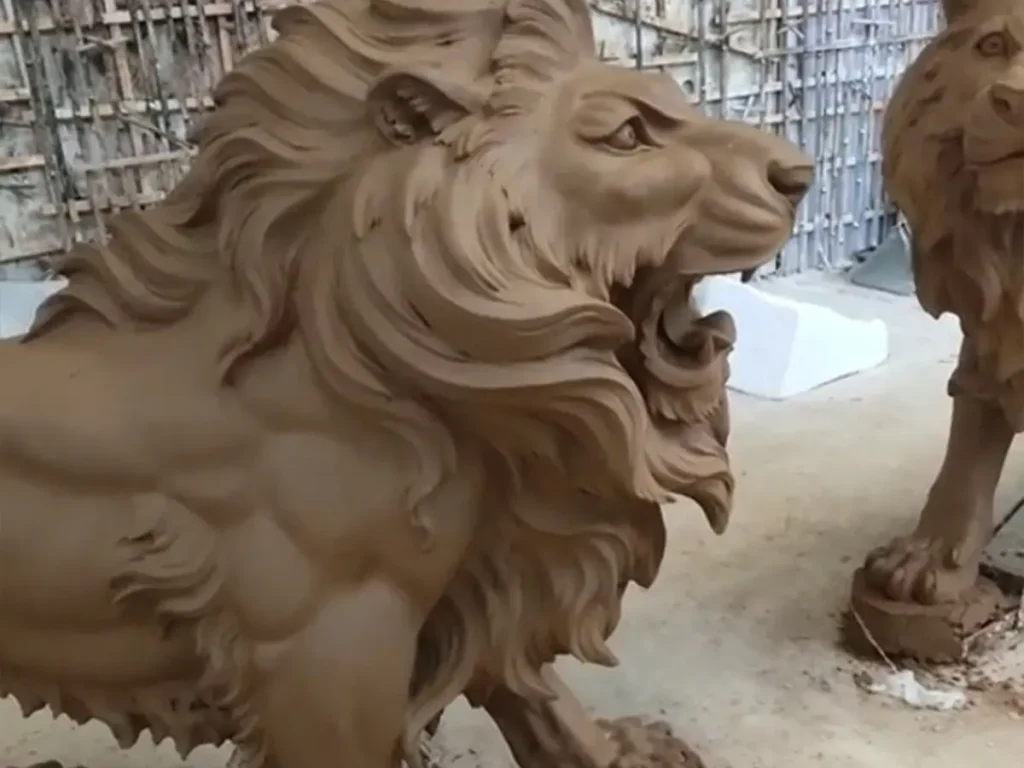
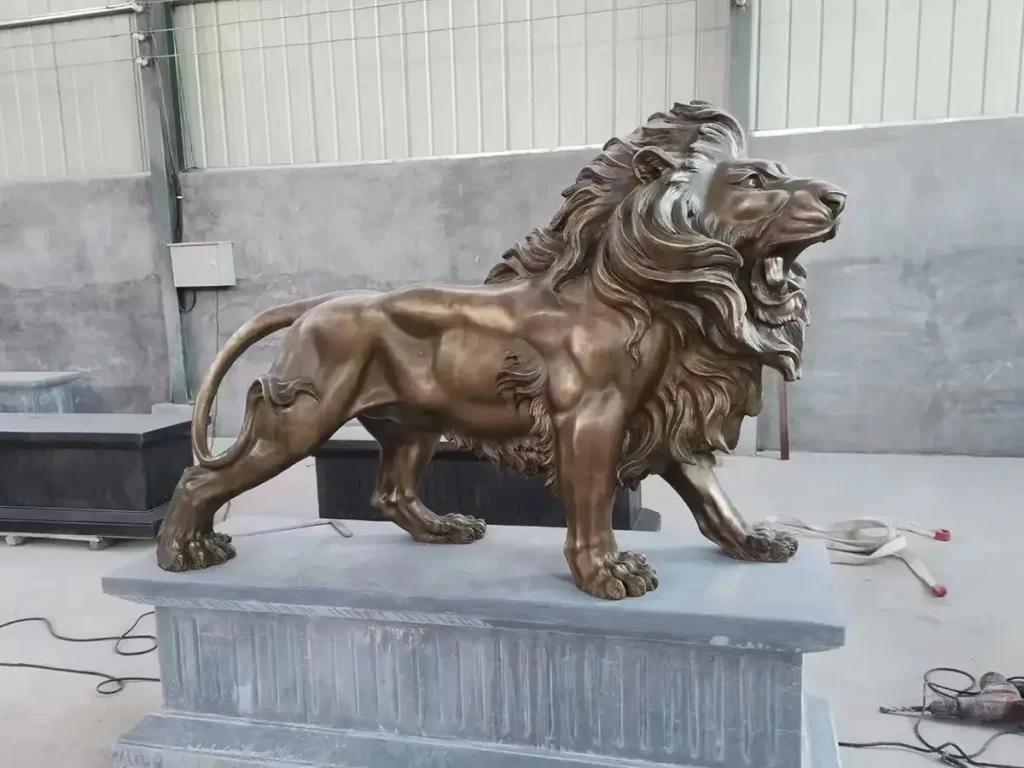
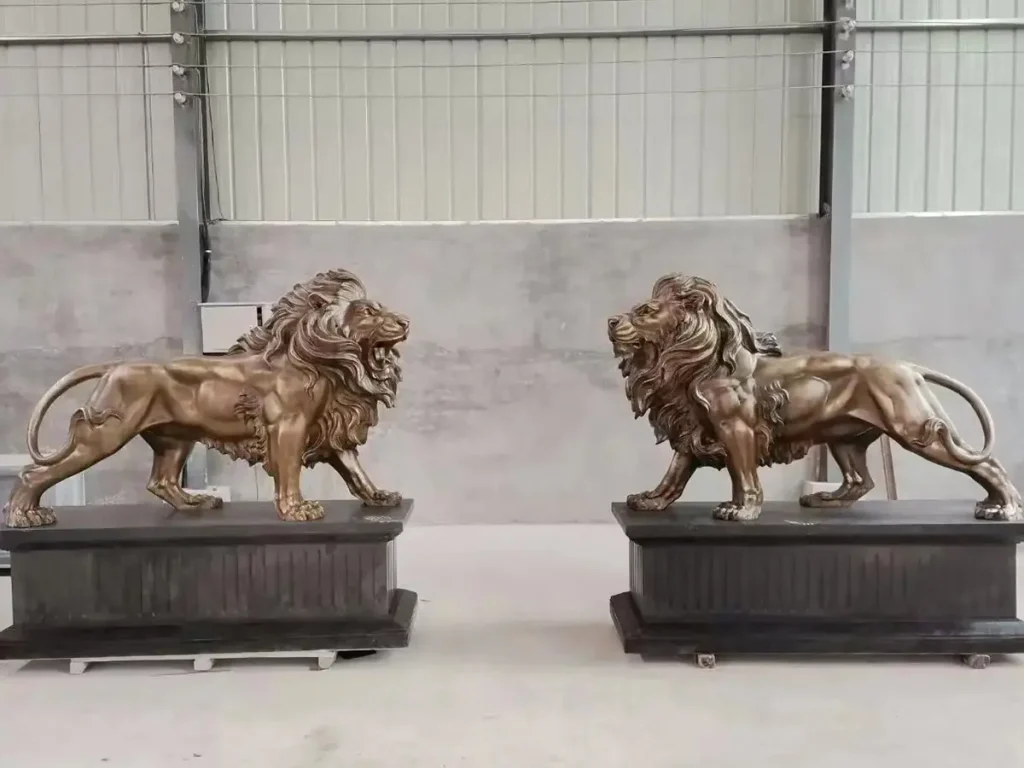
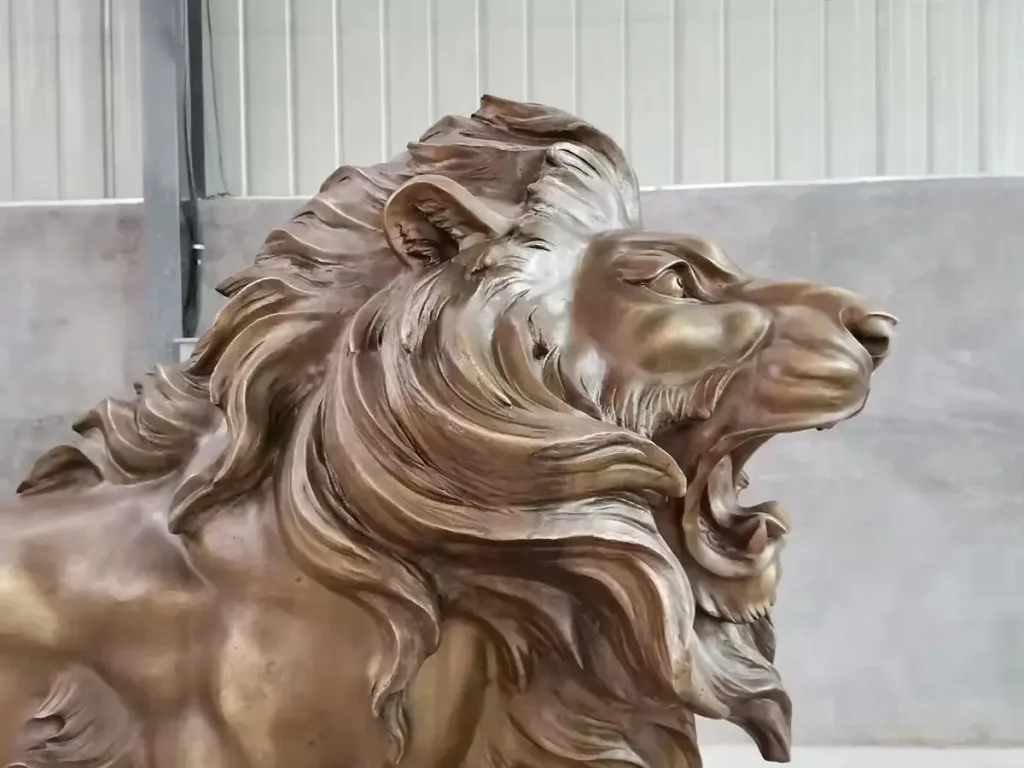
Exposure to air and moisture slowly transforms the surface through patina development. The metal deepens from golden tones to rich browns and greens, creating a natural aged character that collectors and architects value.
This aging process gives bronze sculptures a sense of heritage, even in modern developments.
Bronze also allows sculptors to capture incredibly subtle anatomical detail—the tension in the paws, the ripple of muscle along the shoulders, the layered texture of the mane.
For clients seeking the highest level of craftsmanship, bronze remains the benchmark.
Stainless Steel
While natural stone and bronze dominate classical estates, many contemporary properties now prefer stainless steel lion sculptures for their entrances. These statues preserve the timeless symbolism of the lion while introducing a distinctly modern architectural language.
Unlike traditional materials, stainless steel interacts with light and surrounding architecture. A mirror-polished surface reflects the driveway, landscaping, and sky, turning the sculpture into a dynamic visual element rather than a static object.
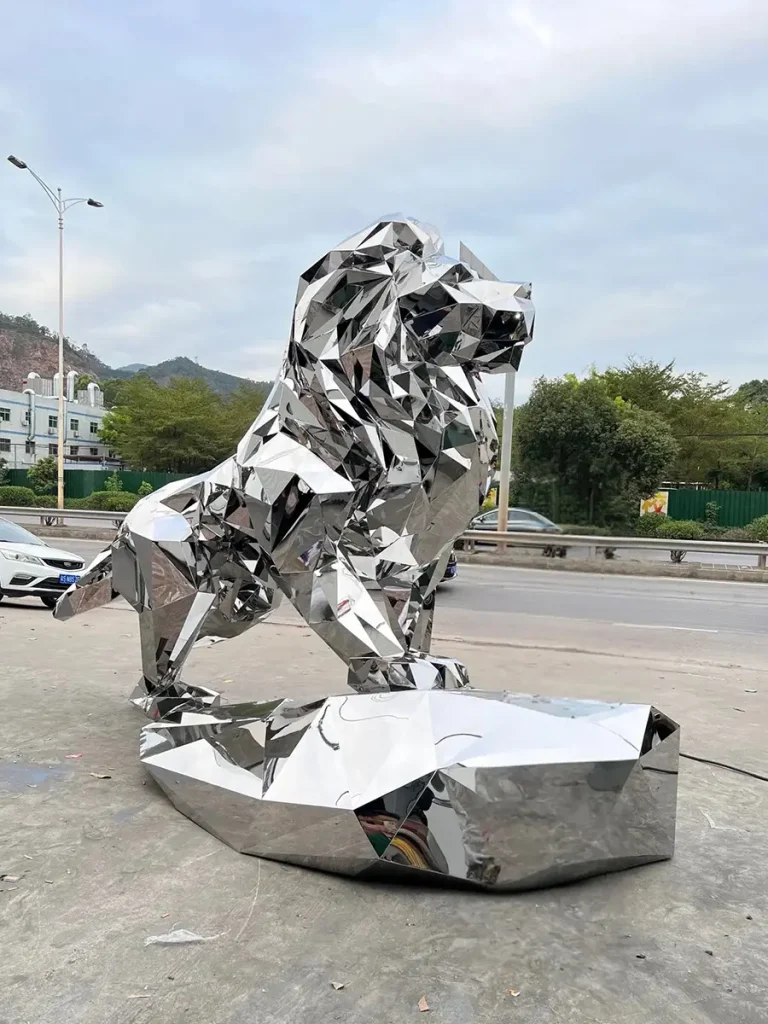
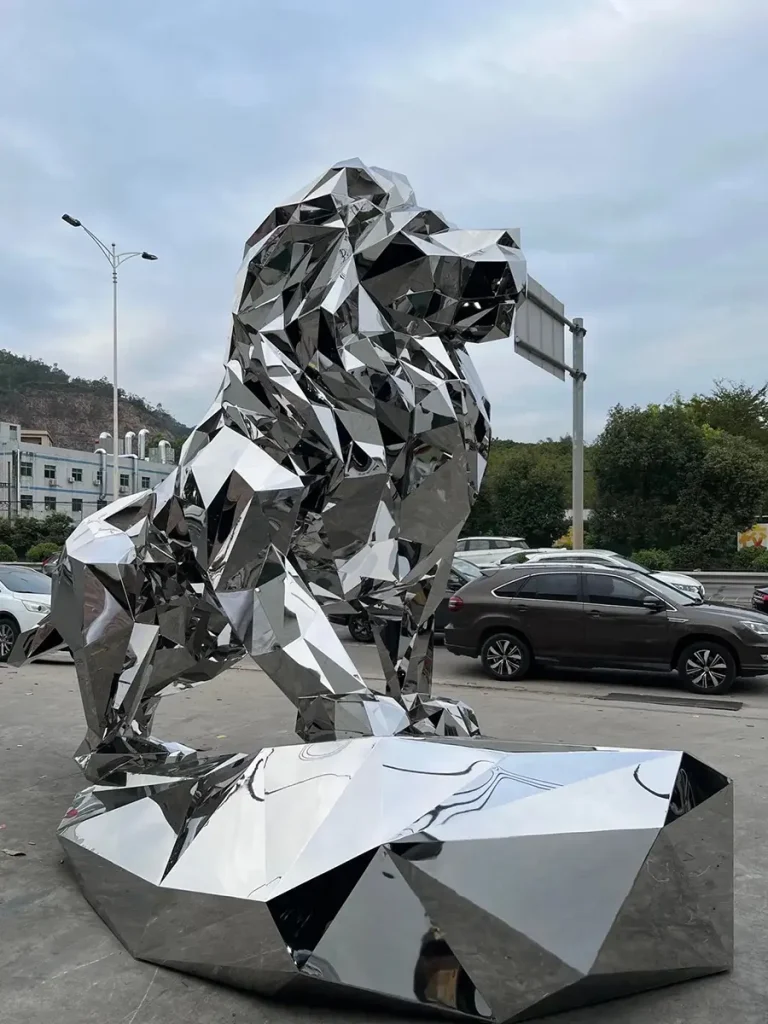
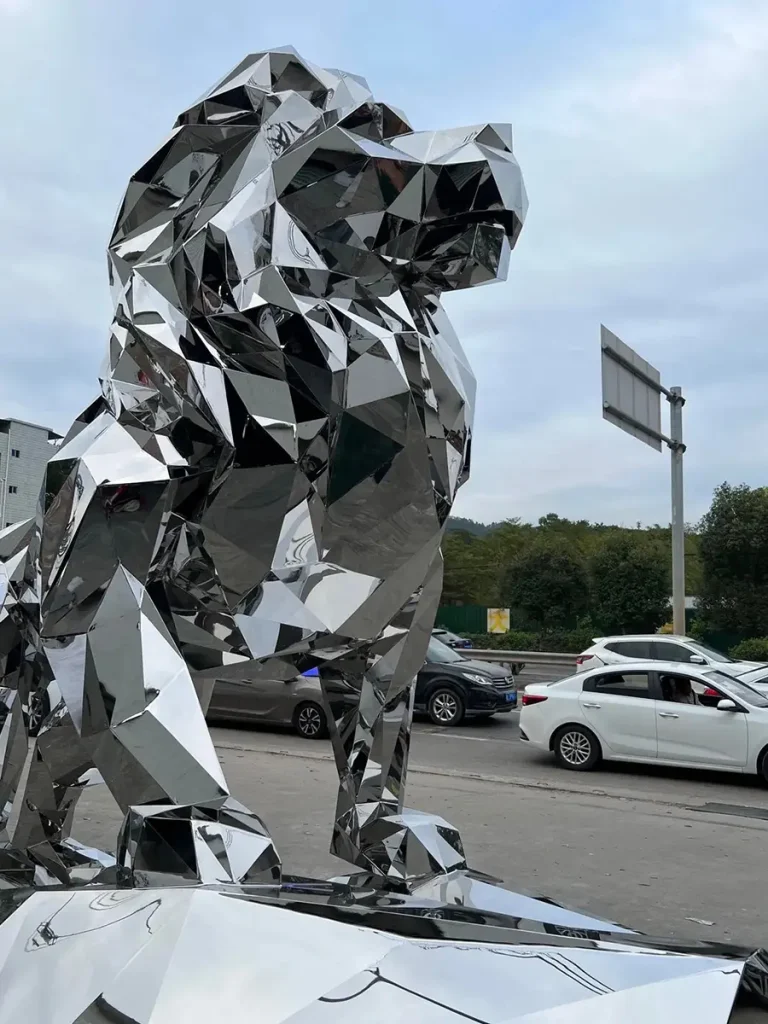
For large estates and modern villas, stainless steel lions offer several engineering advantages:
- Exceptional corrosion resistance in outdoor environments
- Structural strength for large-scale sculptures
- Minimal maintenance compared to painted metal statues
- A clean, contemporary aesthetic that complements modern architecture
Many designers choose brushed stainless steel for subtle elegance, while others prefer mirror-polished surfaces that create dramatic reflections at the estate entrance.
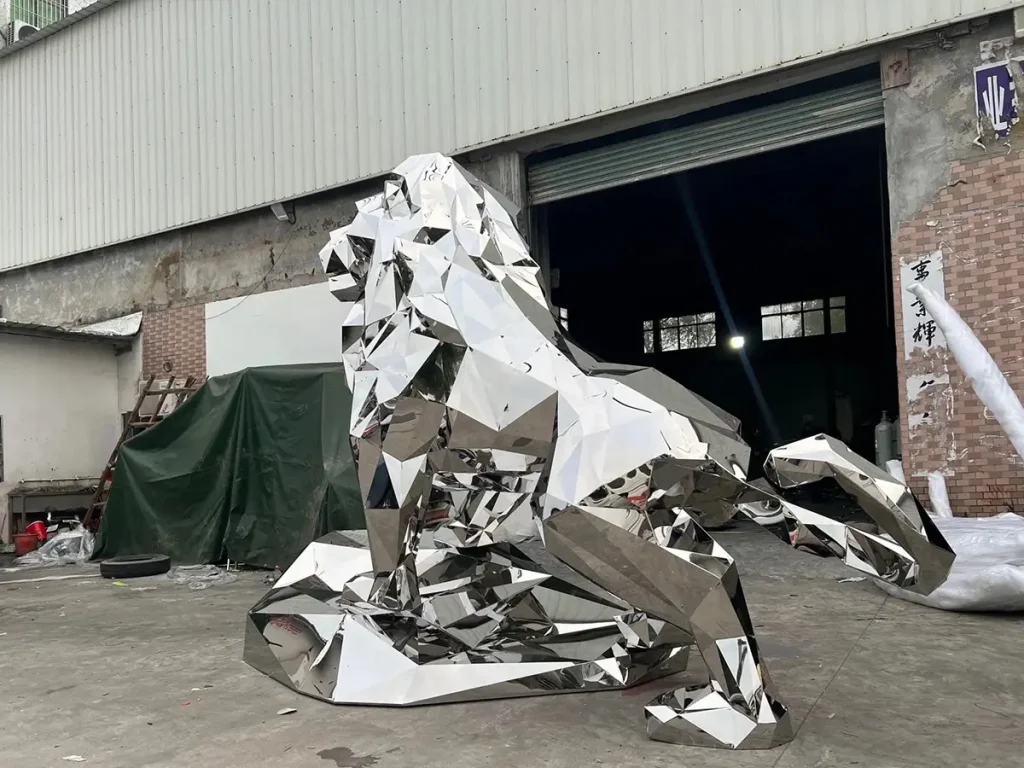
When properly engineered, stainless steel lions can reach monumental scales while maintaining precise anatomical details and structural stability.
Customization
Many estate owners go beyond standard designs. They commission custom outdoor statues tailored to their personal or corporate identity.
Common customization requests include:
- A stone lion statue with shield featuring family heraldry
- Corporate emblems integrated into the base
- Unique mane designs reflecting regional styles
- Personalized inscriptions or estate names
These details transform a sculpture into something more than decoration. The lions become symbols tied directly to the identity of the property.
For large estates, that symbolism matters.
Durability & Weight: Engineering the Perfect Base for Heavy Sculptures
Beautiful sculptures are meaningless if the structural engineering beneath them fails.
A full-scale stone statue lion can weigh anywhere from 800 pounds to several tons depending on size and material. That mass must integrate correctly with surrounding hardscape elements such as stone driveways, gate pillars, and retaining walls.
This is where engineering becomes non-negotiable.
Every large sculpture requires a reinforced foundation designed specifically for its weight and environmental conditions. The base typically consists of a reinforced concrete footing buried beneath the surface paving.
This footing must account for several structural variables:
- Total sculpture weight
- Soil bearing capacity
- Wind load forces
- Seismic considerations in certain regions
Without proper calculation, heavy sculptures can gradually tilt or sink as soil compresses over time.
The base also protects the sculpture itself. Bronze statues often include internal steel armatures or mounting rods. These components must use materials with strong corrosion resistance to prevent long-term structural failure.
Professional installations typically anchor the statue using stainless steel threaded rods embedded into the concrete base. This system locks the sculpture securely in place while allowing precise alignment with the driveway axis.
From the outside, guests only see two majestic lions guarding the entrance.
Underneath, there is serious engineering holding everything in perfect balance.
Installation & Maintenance: How to Preserve Your Lion’s Majesty
A luxury sculpture should never look like it was casually placed in the yard. When installed correctly, a lion statue appears to rise naturally from the landscape—as if the estate was designed around it.
This effect requires professional installation.
Large driveway lions often weigh hundreds or thousands of pounds. Moving them safely requires cranes, rigging straps, and experienced operators who understand how to handle sculptural loads without damaging delicate details like the mane or paws.
Professional installation typically follows several controlled steps:
- Crane placement with padded lifting straps
- Precision alignment with driveway centerlines
- Anchoring to pre-installed threaded rods in the concrete base
- Final leveling to maintain symmetrical positioning
This process ensures the lions integrate seamlessly with surrounding stonework, gate pillars, and landscape design.
A sculpture should never look “dropped” onto the grass. It should feel anchored—visually and structurally—to the architecture.
Once installed, preservation becomes the priority.
Maintenance: Protecting Stone and Bronze for Decades
High-quality sculptures require surprisingly little maintenance. The key is protecting the material rather than constantly altering its appearance.
For stone lions, the most important step is sealing.
Natural stone is durable, but it still contains microscopic pores that can absorb moisture and environmental contaminants. Applying a breathable stone sealer every one to two years prevents staining while allowing the material to release trapped moisture naturally.
This is where many homeowners make a costly mistake.
They search online for how to paint a lion statue.
Painting a natural stone sculpture is almost always a mistake. Paint traps moisture inside the stone, preventing it from breathing. Over time, this leads to peeling, discoloration, and even surface damage.
From an artistic perspective, painting also destroys the sculptural depth created by carving. The subtle shadows in the mane, eyes, and muscle contours disappear under a flat layer of color.
The same rule applies to high-end bronze sculptures. Painting them erases their natural finish and drastically reduces their value.
Professional collectors and architects preserve the original material instead of covering it.
Bronze lions require a different but equally simple care routine.
Proper cleaning bronze statues involves three basic steps:
- Rinse the sculpture with clean water to remove dust and debris.
- Wash gently with mild soap and a soft cloth or natural bristle brush.
- Rinse thoroughly and allow the surface to dry.
Once the statue is completely dry, a thin layer of high-quality paste wax can be applied on a warm day. The wax creates a protective barrier against moisture and pollution while enriching the natural tones of the bronze.
Over time, bronze will naturally develop a patina. This gradual transformation is not damage—it is one of the most valued characteristics of the material.
A well-maintained bronze lion becomes more beautiful with age.
Stone gains character. Bronze gains depth.
And the entrance of the estate continues to project the same message it did on the day the lions first arrived: power, permanence, and presence.
Frequently Asked Questions About Estate Lion Statues
1. What is the significance of placing lion statues at the entrance or driveway?
The lion has long been known as the “King of Beasts,” a symbol of power, courage, and vigilance. Placing lion statues at an entrance transforms them into symbolic gatekeepers that guard the property and announce the authority of the estate owner.
From an architectural perspective, paired lions establish symmetry and visual balance along the driveway axis. This symmetrical layout elevates curb appeal, strengthens the perception of prestige, and often increases the perceived value of the property itself.
2. Why is natural stone (like granite) better than cast stone/concrete?
Natural granite is significantly denser and less porous than cast stone or concrete. Because concrete absorbs moisture, it becomes vulnerable to cracking and surface spalling during winter freeze–thaw cycles when trapped water expands.
Granite, by contrast, resists water penetration and fading, making it exceptionally durable for outdoor installations. It also allows sculptors to carve sharper anatomical features—capturing muscle definition, facial expression, and intricate mane details that cheaper cast molds cannot replicate.
3. How do I choose the right size sculpture for my estate?
Scale should always match the architecture and viewing distance of the property. Medium statues, typically between 24–48 inches, are ideal for gardens, courtyards, or smaller landscape entrances where intimacy matters more than monumentality.
For main gates or formal driveway entrances, statues in the 48–72 inch range create the proper visual authority. Monumental lions measuring 72 inches or larger are used when the sculptures must be visible from long distances or when defining expansive estate boundaries.
4. What are the foundation and structural safety requirements for heavy sculptures?
Large sculptures can weigh hundreds or even thousands of pounds, which means improper installation can lead to foundation failure or gradual tilting over time. Before installation, the soil type and bearing capacity must be evaluated to ensure the ground can safely support the load.
Engineers then design reinforced concrete footings that account for both weight and wind load forces. Tall or hollow sculptures often require internal steel armatures and precision anchor bolts to ensure the structure remains stable for decades.
5. How should outdoor sculptures be routinely maintained?
Routine maintenance is simple but essential. Once a year, wash the sculpture gently using clean water and mild, unscented soap to remove dirt, dust, and environmental residue. Avoid harsh chemicals or abrasive brushes that could damage the surface finish.
Stone and marble sculptures should be sealed every one to two years to protect against staining and moisture absorption. Bronze sculptures should be cleaned, dried thoroughly, and protected with a thin layer of paste wax applied on a warm, sunny day.
6. How should I choose metal sculpture materials for coastal or desert areas?
Environmental conditions play a major role in material selection. Coastal properties expose sculptures to salt air, while desert climates experience extreme temperature shifts that accelerate surface degradation.
In these environments, upgrading to 316-grade stainless steel is highly recommended instead of the more common 304 grade. Proper passivation treatments and protective coatings further enhance corrosion resistance and ensure the sculpture retains its structural integrity.
7. Can I customize a lion with a “family crest” or specific posture?
Yes, high-end sculpture workshops routinely create fully customized lions tailored to the identity of the estate. Clients can modify posture—choosing between sitting guardians that convey calm authority or standing lions that project dominance and vigilance.
Many estates incorporate heraldic symbolism as well. A lion may hold a shield engraved with a family crest, motto, or corporate emblem, transforming the sculpture into a personalized architectural signature.
8. What is the production cycle and logistics for these large artworks?
Production timelines depend on the complexity and size of the sculpture. Custom stone carving typically requires five to eight weeks, allowing artisans time to refine anatomical details and surface finishing.
Once completed, the sculptures are carefully protected with soft foam and secured inside heavy-duty wooden crates. Life-size pieces usually ship via ocean freight for safety and cost efficiency, while smaller or urgent pieces can be transported by air freight or courier services such as DHL or UPS.
9. How can landscape lighting enhance the sculpture at night?
Lighting dramatically transforms the presence of a sculpture after sunset. Ground-based uplighting positioned near the base highlights the depth of the mane, facial expression, and muscular contours of the lion.
When lighting is arranged symmetrically along the driveway axis, the effect becomes both dramatic and dignified. The entrance develops a strong nighttime focal point that reinforces the estate’s architectural presence.
10. Why must a professional engineer be involved in the installation of large sculptures?
A beautiful sculpture alone does not guarantee a safe installation. Engineers evaluate the structural forces involved—calculating base dimensions, anchoring systems, and safe rigging methods for lifting and positioning the statue.
They also identify environmental risks that may not be obvious to property owners. For example, sculptures should never be placed beneath constant water drip zones or near areas where pool chlorine vapors could accelerate corrosion. Professional engineering ensures the artwork remains secure, stable, and visually perfect for decades.