Get in touch with Yun-Sculpture company
Custom Memorial Statue: Commission Guide — Planning, Process & Cost

A custom memorial statue commission has two problems that no other type of bronze commission shares. The first is the deadline: a dedication ceremony is scheduled months in advance, and it does not move. The second is the reference material: the subject is almost always deceased, which means what you have at the start of the commission is all you will ever have. No follow-up photography session. No 3D scan. No corrections from the subject themselves. Every memorial commission is won or lost on how these two problems are handled before a single pound of clay is touched — and most of the foundries that take these commissions do not address either problem clearly enough at the outset.
Table of Contents
Table of Contents
Five Types of Memorial Bronze Commission
Memorial commissions cover a wider range of subjects and contexts than most buyers realize when they begin the inquiry process. Understanding which type of commission you are placing affects scale, timeline, approval complexity, and what reference material is actually required.
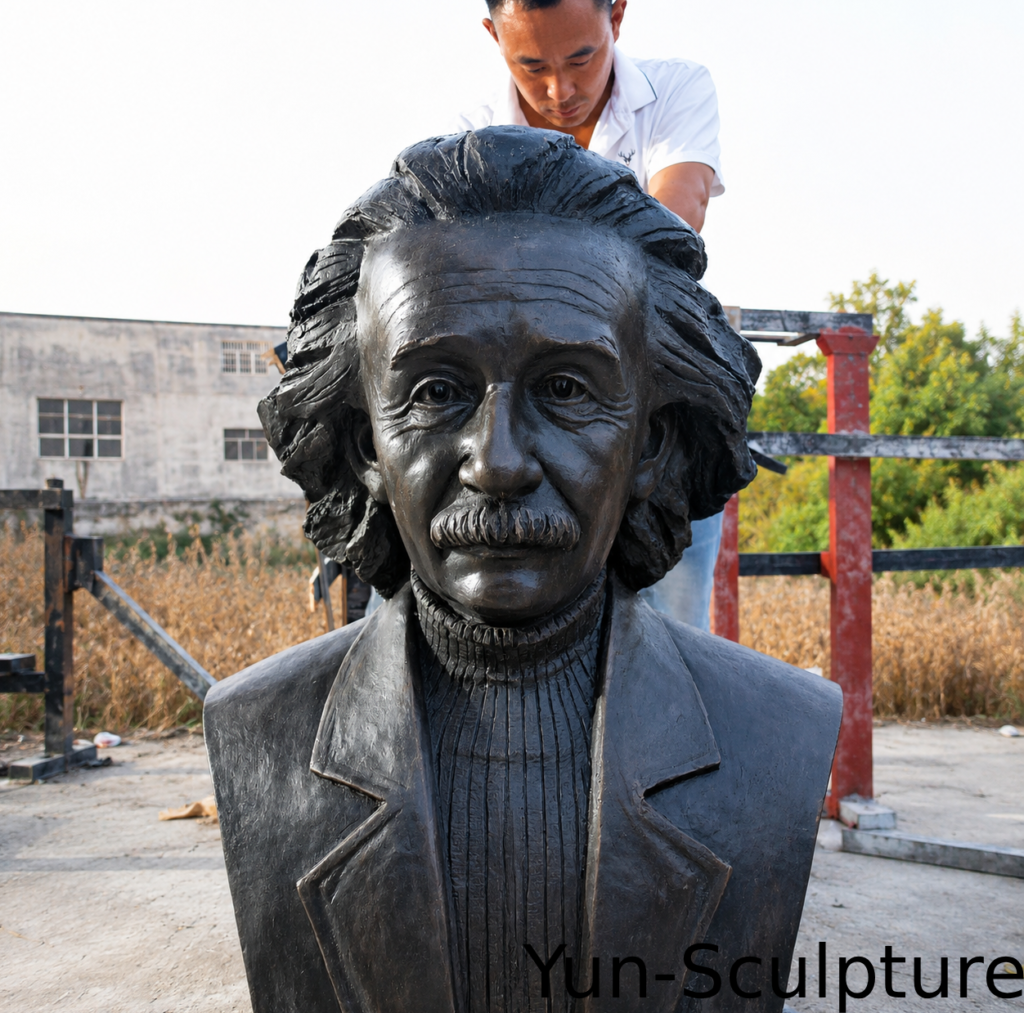
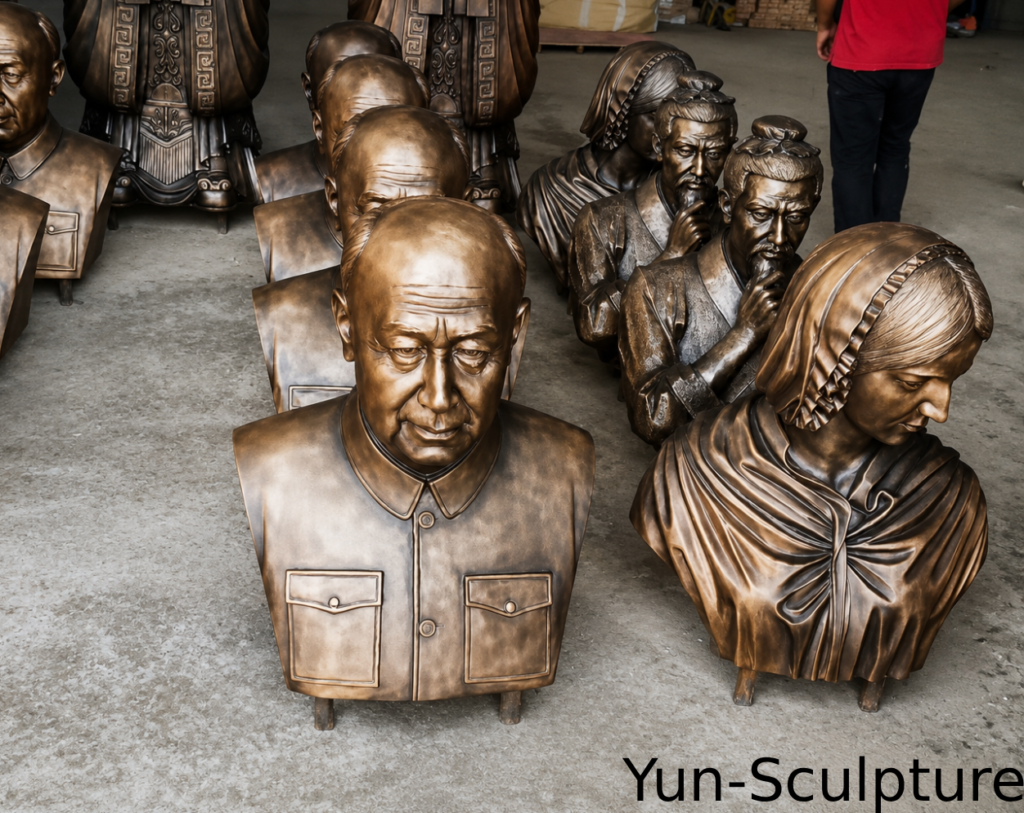
An individual portrait memorial reproduces a specific person — a community leader, a fallen first responder, a family patriarch, a military figure — in permanent bronze. This is the highest-stakes memorial type because the standard of success is external and unambiguous: the people who knew the subject will evaluate the likeness. Reference photography requirements are the most demanding of any commission type, and the clay approval stage typically involves more stakeholders than a private commission.
A group or institutional memorial represents a category of service rather than a specific individual — a firefighter, a soldier, a nurse, a teacher — depicted in a way that honors all who served in that capacity. These commissions are typically placed by municipalities, fire departments, veterans organizations, schools, or hospitals. Because no specific facial likeness is required, the clay approval stage is less complex, but the institutional approval process — involving committees, boards, and sometimes elected officials — often adds timeline considerations that individual commissions do not have.
A child memorial commission is placed most often by families, hospitals, pediatric healthcare organizations, or memorial gardens. The subject matter requires specific sensitivity in scale, pose, and surface treatment. I approach child memorial commissions with the same technical standards as any other portrait work, but with the understanding that the approval stage often involves family members for whom the review process is emotionally significant. Timeline extensions at the approval stage are always accommodated without penalty for this type.
A cemetery or religious memorial is installed in a churchyard, a memorial garden, a cemetery, or on a family grave marker. This type often involves a plaque component as well as a sculptural element, and the installation environment requires specific attention to base engineering — the statue must be anchored into existing ground rather than a purpose-built concrete foundation, which changes the hardware specifications. Religious subject matter may also involve institutional review by a diocese, a cemetery board, or a memorial garden committee.
A commemorative event memorial marks a historical event, a founding anniversary, or a moment in institutional history rather than a specific person. These commissions are often the most creatively open of the five types — the brief is conceptual rather than likeness-based — and they require the most sustained client involvement in the design stage before clay work begins.
Type 01
Individual Portrait Memorial
Specific person reproduced — highest likeness standard
Reference required
20+ photographs all angles; military records; family archive
Approval complexity
High — family and commissioning body both review clay model
Typical commission
Community leaders, first responders, military figures, family legacy
Type 02
Group / Institutional Memorial
Category of service honored — no specific facial likeness
Reference required
Accurate uniform, equipment, and service context documentation
Approval complexity
Medium — institutional committee review; timeline buffer required
Typical commission
Fire departments, veterans organizations, hospitals, schools
Type 03
Child Memorial
Placed by families, hospitals, or memorial gardens
Reference required
Family photographs; approval stage accommodates extended timelines without penalty
Approval complexity
Sensitive — family emotional process accommodated at every stage
Typical commission
Private family memorial, pediatric hospital, children’s memorial garden
Type 04
Cemetery / Religious Memorial
Churchyard, memorial garden, or grave installation
Reference required
Subject reference plus site survey for base anchoring specifications
Approval complexity
May require diocese, cemetery board, or memorial garden review
Typical commission
Family grave markers, church garden figures, religious institution memorials
Type 05
Commemorative Event Memorial
Historical event or institutional milestone — concept-driven, not likeness-based
Reference required
Written brief, historical documentation, conceptual references — most creative latitude of all five types
Approval complexity
Design iteration stage added before clay work begins; sustained client involvement required
Typical commission
Founding anniversaries, historical events, institutional milestones, public art installations
Reference Material for a Deceased Subject
When the subject of a memorial commission is living, reference gaps can be filled: additional photographs can be taken, a 3D scan can be scheduled, the subject can be consulted about the likeness at the clay approval stage. None of these options are available when the subject is deceased. This makes the initial reference collection the most critical single step in a memorial commission — more critical than in any other type of bronze work.
The minimum useful reference set for a portrait memorial of a deceased subject is twenty photographs distributed across all viewing angles. Families typically begin with formal portraits and official photographs — military service photos, ID photographs, professional headshots — but these often share the same single angle and lighting condition. I ask families to search specifically for informal photographs taken from the side, from slightly above or below, outdoors in natural light, at different ages. A candid photograph taken at an angle that no formal portrait covers is often the most valuable reference in the entire set.
For subjects who served in the military, official service records sometimes include profile photographs taken for identification purposes. These are among the most useful references available because they were taken with documentation rather than aesthetics in mind — they show the subject’s actual face without the flattering adjustments of a professional portrait. Families should request these records through the appropriate military archive if they are not already in family possession.
For institutional memorial commissions where no specific individual is depicted, reference material takes a different form: detailed documentation of the uniform, equipment, posture, and context of the service being honored. A firefighter memorial requires accurate SCBA equipment, turnout gear, and tool references specific to the era and department being depicted. Getting these details correct is what separates a memorial that the honored community recognizes as their own from a generic figure in approximate costume.
Planning Your Memorial Commission — Work Back From the Ceremony Date
Day 0
Dedication Ceremony
The date that does not move. Every interval below is calculated from this point.
−1 week
Installation Complete
Statue anchored to base, site prepared, final inspection done before ceremony.
−2 to −7 wks
Statue Arrives at Site
International freight to North America: 25–45 days. Allow buffer for customs clearance.
−8 to −14 wks
Production Complete & Shipped
25–40 working days from approved clay model, depending on scale and complexity.
−14 to −18 wks
Clay Model Approved
Written approval from all stakeholders (family, commissioning body, institution). Allow 1–2 weeks for institutional review rounds.
−18 to −21 wks
Clay Modeling Begins
3–4 weeks for portrait memorial clay work. Reference gaps identified here cannot be filled retroactively.
−21 to −24 wks
First Inquiry & Reference Submission
Reference collection, brief confirmed, commission type and scale agreed. This is when the process must begin.
Minimum lead time: 5 months before the ceremony date. For heroic-scale or multi-figure installations, plan for 6–7 months. Inquiries received with less than 4 months to ceremony will be assessed individually — some timelines cannot be compressed without affecting quality.
Planning the Timeline — Working Backward from the Ceremony
The most common reason a memorial commission fails to arrive on time is not production delay. It is that the inquiry was placed too late for any realistic production and shipping timeline to meet the ceremony date. I see this regularly: a client contacts us four months before a dedication ceremony expecting a life-size bronze portrait, and the math does not work.
The correct approach is to work backward from the ceremony date, assigning minimum time to each stage and building in a buffer at every transition. Reference review and brief confirmation require at least one to two weeks. Clay modeling for a portrait memorial requires three to four weeks. Client approval — which for institutional commissions may involve multiple rounds with multiple stakeholders — requires one to two weeks that cannot be predicted precisely. Production from approved clay to shipping-ready runs forty-five to eighty working days depending on scale and complexity. International shipping to North American destinations requires fifteen to twenty-five days under normal freight conditions.
Adding these together and including a two-week installation buffer before the ceremony date, the minimum lead time from first inquiry to installed memorial is five months for a standard life-size commission. For heroic-scale or complex multi-figure installations, six to seven months is more realistic. The timeline component above shows these intervals as a planning tool — any ceremony date should be mapped against these minimum intervals before an order is placed.
Inscription and Base Integration
Most memorial statues include text — a name, dates of service, a branch insignia, a tribute phrase, a dedication. How that text is integrated into the commission affects both the visual character of the final installation and specific production decisions that must be made before the base is cast.
Raised bronze lettering cast directly into the base or plaque is the most permanent and visually integrated option. The letters are part of the casting — they cannot be damaged by weathering, vandalism, or cleaning in the way that applied lettering can. Text must be confirmed and proofread before the mold is made; changes after casting require a new pour of the affected section. This is the correct choice for permanent public installations where the text is not expected to change.
A separate bronze plaque attached to the base or pedestal allows the text to be produced independently of the figure, with its own approval process. This approach is useful when the inscription involves complex graphic elements — branch insignia, portrait medallions, QR codes linking to memorial content — that are easier to handle as a separate flat casting. It also allows the plaque to be replaced or updated after installation if the memorial is extended to include additional honorees.
Base engraving — text cut into granite, marble, or concrete after installation — is the least integrated option and the least weather-resistant. It is appropriate for temporary or low-budget memorial installations but not for permanent public bronze commissions where the base and statue are expected to endure together for decades.
| Memorial Type | Scale | Price Range (USD) | Min. Lead Time |
|---|---|---|---|
| Bronze memorial plaque | Standard (30×45 cm) | $800 – $2,500 | 3–4 weeks |
| Portrait bust | Life-size head (30 cm) | $2,500 – $8,000 | 10–12 weeks |
| Individual portrait figure | Life-size (~175 cm) | $6,000 – $25,000 | 5–6 months |
| Group / institutional figure | Life-size (~175 cm) | $6,000 – $25,000 | 4–5 months |
| Multi-figure installation | Life-size (2–3 figures) | $20,000 – $80,000 | 6–8 months |
| Heroic / monumental | 250 cm+ | $30,000 – $100,000+ | 6–7 months |
Frequently Asked Questions
When should the commissioning process for a memorial statue begin?
A minimum of five months before the dedication ceremony date for a life-size memorial. This allows time for reference review, clay modeling, stakeholder approval, production, shipping, and installation. Heroic-scale or multi-figure installations require six to seven months. Inquiries received with less than four months to the ceremony may not be achievable without compromising quality at one or more stages.
How long do bronze statues last?
A properly cast bronze memorial — lost-wax process, 5 to 8mm wall thickness, chemically bonded patina — will last indefinitely under normal outdoor conditions. Ancient bronze sculptures from 2,500 years ago survive intact today. Bronze forms a stable oxide layer (patina) that protects the metal beneath from further oxidation. A memorial bronze properly specified and installed should outlast the institution that commissioned it.
How much does a bronze memorial plaque cost?
A standard bronze memorial plaque (approximately 30×45 cm) with raised lettering typically costs $800 to $2,500. Larger plaques with portrait medallions, insignia, or complex graphic layouts run $2,500 to $6,000. Plaques accompanying a full figure memorial are usually quoted as part of the combined commission. Production time is 3 to 4 weeks — significantly shorter than full figure work.
What statue material lasts the longest?
For permanent outdoor memorials, cast bronze is the most proven material over time. Bronze sculptures from ancient Greece and Rome, cast over 2,000 years ago, survive today — the historical record is unambiguous. Bronze forms a self-protective patina layer that halts further oxidation, making it genuinely self-preserving outdoors. Granite is also highly durable and commonly used for memorial bases. Resin, fiberglass, and zinc alloy composites are not appropriate for permanent memorial installations — they degrade under UV exposure over years, not centuries.
Can you commission a custom memorial statue?
Yes. Custom memorial bronze statues are commissioned by families, municipalities, fire departments, veterans organizations, schools, hospitals, and religious institutions. The process begins with reference material and a brief establishing commission type, scale, subject, and ceremony date. A clay model is produced for client approval before any metal is committed. Factory-direct commissioning eliminates intermediary markup and allows direct involvement at every production stage.
Factory Direct · Quyang, China
Start Your Memorial Commission
Five memorial types. Any scale. Timeline planned around your ceremony date. Reference review at no obligation — tell us the subject, the setting, and the date.