Get in touch with Yun-Sculpture company
Custom Bronze Statue: Commission Guide — Process, Cost & What Foundries Don’t Tell You

A custom bronze statue commission fails at one of three points: inadequate reference material at the start, a skipped clay model approval stage, or a patina color chosen without understanding what it looks like after three years outdoors. I have seen all three. Most foundries will not raise these issues before an order is placed — they are simpler to manage after the client has committed. This guide covers what to have clear before you contact a foundry, what you are actually approving at each stage of production, and what a commission costs at different scales and levels of complexity.
Table of Contents
Table of Contents
Three Types of Custom Bronze Commission — Which One Are You Placing?
Not all custom bronze commissions are the same type of project, and the differences between them affect reference requirements, production timeline, and cost significantly. Most buyers do not know which type they are placing until a foundry asks — and some foundries do not ask clearly enough.
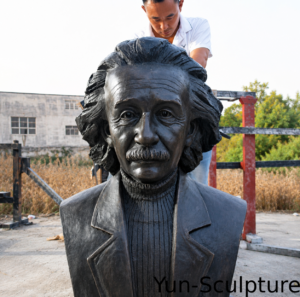
A portrait or likeness commission reproduces a specific person in bronze. This is the most technically demanding type because the standard of success is external and fixed: the finished piece must resemble the subject. The clay modeling stage for a portrait commission requires more time, more reference material, and more client involvement in approval than any other type. Reference photography is the minimum; a 3D scan of the subject produces considerably better results for facial accuracy.
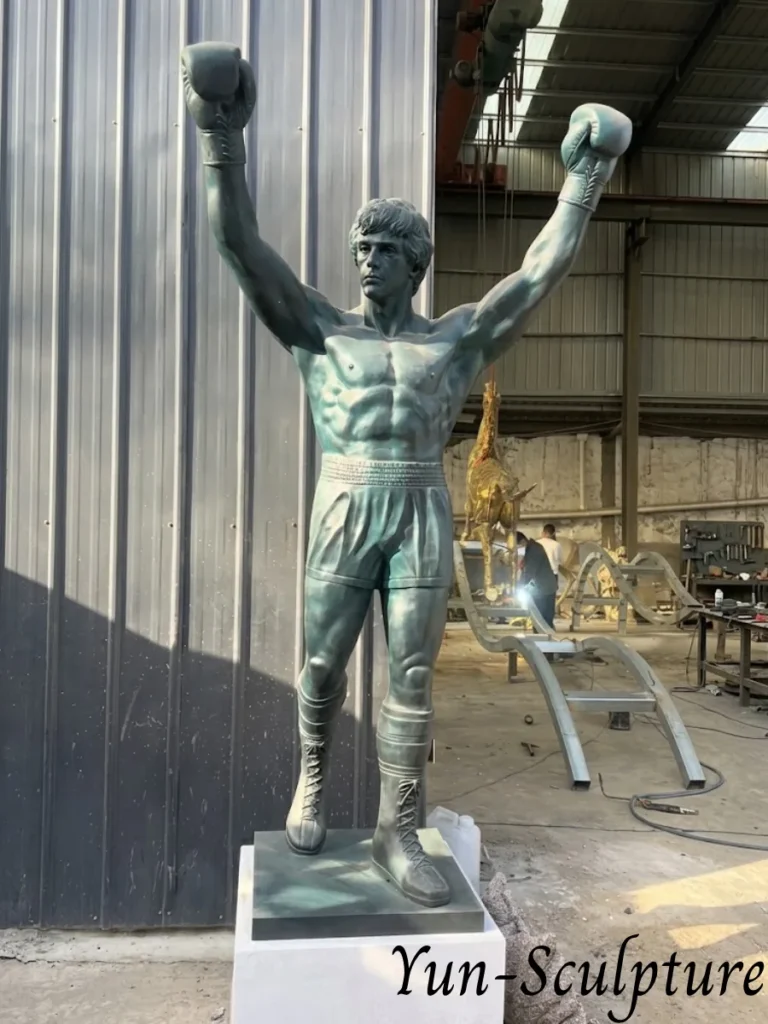
A custom pose commission reproduces a figure type — an athlete in a specific action, a professional in a working posture, a commemorative figure in a symbolic stance — without requiring an exact facial likeness. This type allows more creative latitude in the clay stage and tolerates a wider range of reference material. The standard of success is the quality of the pose and the craftsmanship of the surface, not the accuracy of a specific face.
An original design commission begins from a concept rather than a reference. The client provides a brief — a description, a sketch, an existing artistic reference — and the sculptor interprets it in clay before any metal is committed. This type adds a design and iteration stage before the clay model approval, which extends the timeline and requires the most sustained client involvement of the three.
Type 01
Portrait / Likeness
A specific person reproduced in bronze — judged against a fixed external standard
Reference needed
20+ photographs from all angles, or 3D scan — front-only photos are not sufficient
Clay stage
Most intensive — likeness approval requires careful client review before casting
Common uses
Memorials, honorific portraits, commemorative figures, family legacy commissions
Typical lead time
60–80 working days from approved clay model
Type 02
Custom Pose / Activity
A figure type in a pose you specify — no exact facial likeness required
Reference needed
Action photography, pose references, equipment or clothing details — concept sketches welcome
Clay stage
Moderate — pose, proportion, and surface detail reviewed at approval
Common uses
Sports figures, professional tributes, athletic club commissions, golf and equestrian subjects
Typical lead time
45–65 working days from approved clay model
Type 03
Original Design
Concept-to-bronze from a brief — no existing reference subject
Reference needed
Written brief, sketches, or artistic references — the more specific the concept, the fewer the revisions
Clay stage
Includes design iteration before approval — adds 2–4 weeks to the clay stage
Common uses
Public art, architectural installations, symbolic or allegorical figures, abstract bronze works
Typical lead time
70–90 working days from final brief approval
Reference Material — What Actually Determines the Outcome
The quality of reference material submitted at the start of a portrait commission is the single greatest determinant of the final likeness. This is not a statement about our sculptors’ skill — it is a statement about physics. A sculptor working from a single front-facing photograph cannot resolve what the subject’s profile looks like, how the ears sit, how the jaw reads from below, or how the back of the head is shaped. He will make reasonable decisions based on general human anatomy. Those decisions will not produce a specific face.
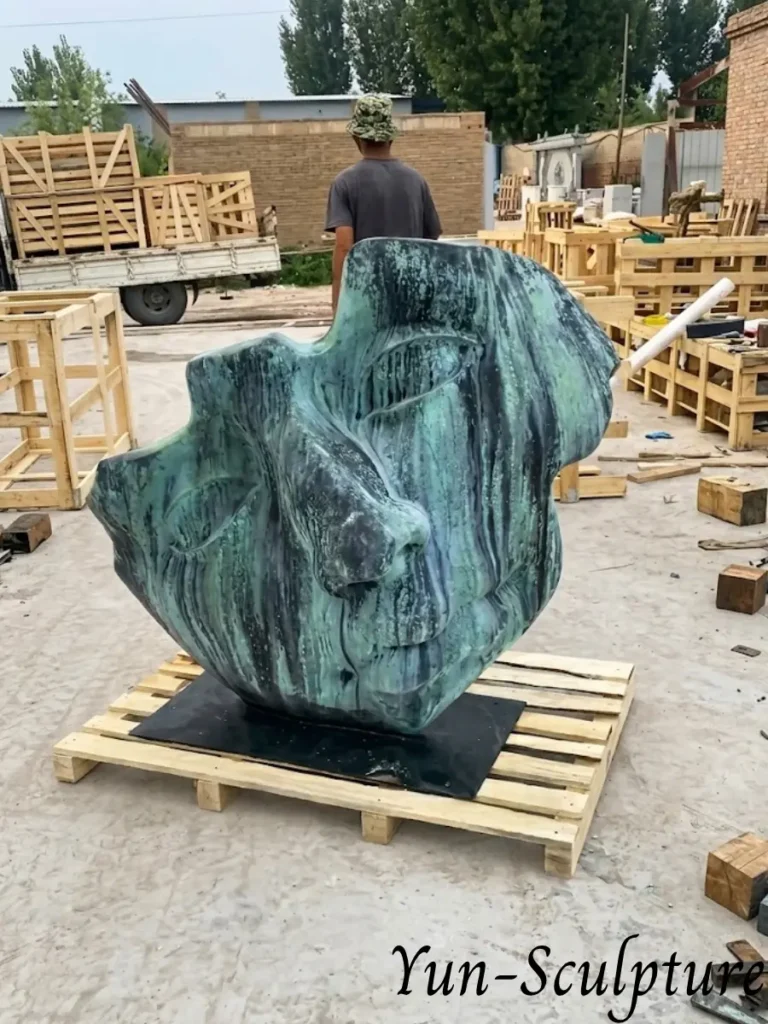
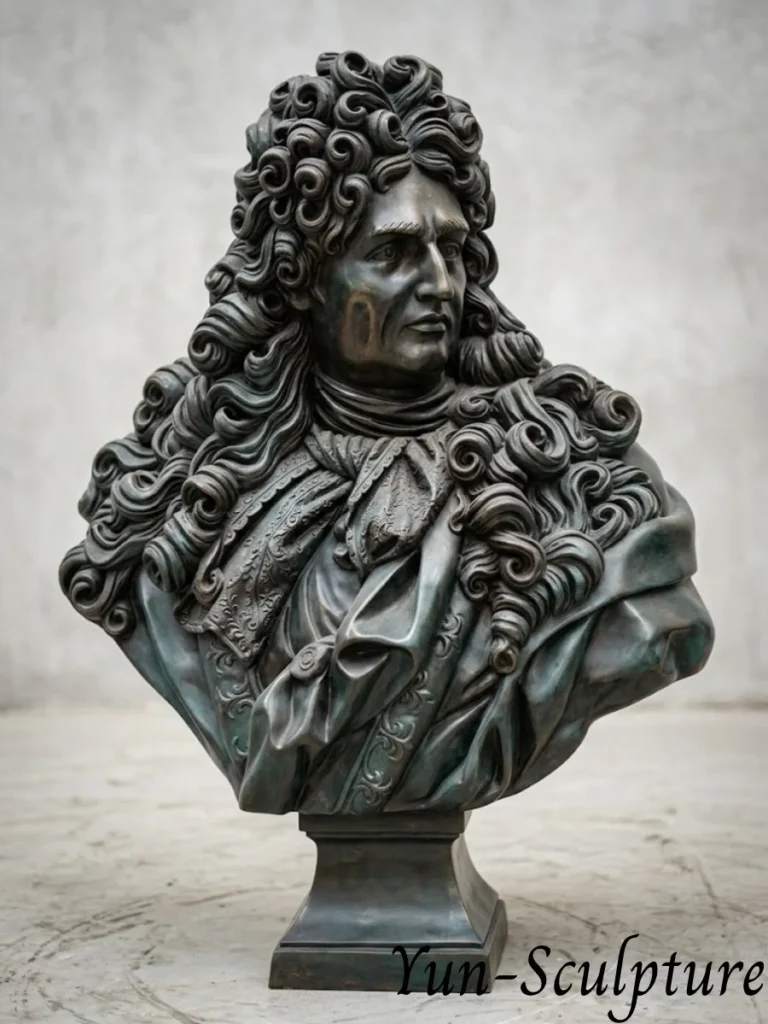
For a portrait commission, the minimum useful reference set is twenty photographs covering all viewing angles: straight front, both profiles, three-quarter views from the front-left and front-right, rear view, and looking slightly up and down at the subject’s face. The subject should be photographed in neutral lighting that reveals form rather than creates dramatic shadow. Photographs taken with a flash flattening the face are among the least useful references a sculptor can receive.
A 3D scan of the subject is more accurate than photography for facial likeness and significantly reduces iteration time at the clay approval stage. Where portrait accuracy is the primary standard of success — a memorial commission, a likeness of a prominent individual, a piece that will be evaluated by people who knew the subject — I recommend 3D scanning over photography. The additional cost of scanning is recovered in reduced clay model revision time.
For custom pose commissions without a specific likeness requirement, reference material serves a different purpose: establishing the pose, the clothing, the equipment, and the activity with enough specificity that the sculptor is not inventing details that the client will later want changed. Action photography, reference to existing sculptures, and sketches all work for this type. The more specific the brief, the fewer the revisions at clay approval.
Six Production Stages — Two Points Where Your Decisions Matter
A bronze commission involves six production stages. Most of them do not require client involvement. Two of them do — and the quality of the client’s decision at each of those two points determines the outcome of the entire commission.
1
Reference Review & Clay Brief
Reference material is reviewed and a clay modeling brief is agreed. For portrait commissions, reference gaps are identified before clay work begins — not after.
2
Clay Model Production ⚑ Client Approval Required
Full-scale clay model hand-built to exact dimensions. Likeness, pose, proportion, and surface detail are all established here. Written approval required before proceeding — no exceptions.
3
Mold Making & Wax Casting
Silicone mold taken from the approved clay original. Molten wax poured to produce an exact replica of the final figure. Wax model refined by hand before shell production.
4
Ceramic Shell & Bronze Pour
Wax model coated in layers of ceramic slurry. Shell fired, wax melted out. Molten bronze poured at 5–8mm wall thickness. Ceramic shell broken away to reveal the raw casting.
5
Chasing & Surface Finishing
Casting lines removed, surface detail refined entirely by hand. The chasing stage is where surface quality is established — compressed chasing time produces visible results in the finished piece.
6
Patination & Shipping Preparation ⚑ Client Color Selection Required
High-temperature chemical patina applied to the heated bronze surface. Color selection confirmed before application — patina cannot be reversed without full refinishing. Crated and insured for international freight.
The first client decision point is clay model approval. This is where likeness is established, pose is confirmed, and surface detail is reviewed. Changes at this stage cost time and may cost additional fees depending on the scope of revision, but they cost significantly less than changes after casting — which can require producing a new mold and new wax, or accepting a finished piece that does not meet the original brief. We do not proceed to mold-making without written approval of the clay model. No exceptions.
The second client decision point is patina selection. Patina is the chemically bonded surface color applied to the bronze through high-temperature application. The four most common options for custom commissions are statuary brown — a warm medium brown that is the most widely used finish for portrait and figurative work; verde green — the fully weathered outdoor patina associated with historic bronzes, best chosen when the piece will live outdoors for decades; two-tone — darker in recessed areas, lighter on high points, which emphasizes surface modeling and reads well from a distance; and black patina — a contemporary finish suited to architectural or modern settings. The patina choice cannot be reversed after application without refinishing the entire surface.
What a Custom Bronze Commission Costs
Bronze commission pricing has three primary variables: commission type, scale, and surface complexity. Of these, scale is the most significant driver because both material cost and labor time increase with size — a heroic-scale figure requires more bronze, more mold-making, more chasing time, and more patination time than a life-size piece.
| Commission Type | Scale | Price Range (USD) | Production Time |
|---|---|---|---|
| Portrait bust | 40–60 cm | $2,500 – $4,000 | 30–45 working days |
| Portrait bust | Life-size head (~30 cm) | $2,500 – $8,000 | 30–45 working days |
| Custom pose figure | Life-size (~170–185 cm) | $5,000 – $20,000 | 30–45 working days |
| Portrait figure | Life-size (~170–185 cm) | $5,000 – $20,000 | 30–50 working days |
| Custom pose figure | Heroic (250 cm+) | $20,000 – $80,000 | 60–80 working days |
| Original design | Any scale | Quote on request | +2–4 weeks for design stage |
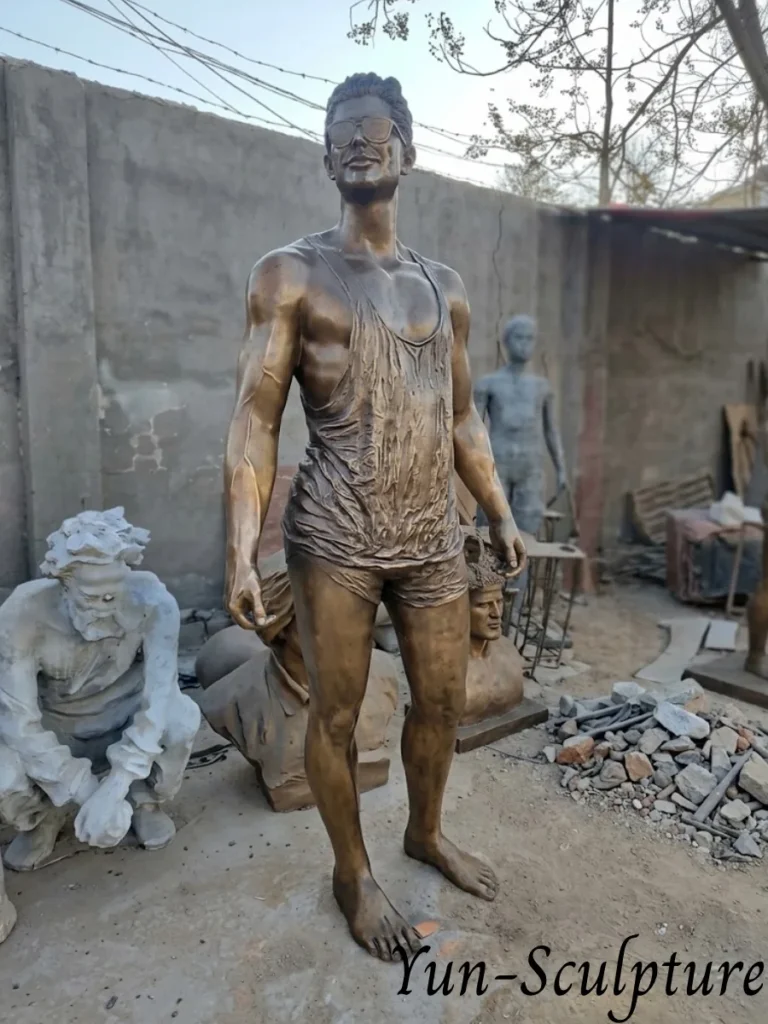
These ranges reflect our foundry’s direct pricing for single commissions. Shipping is quoted separately by destination — a life-size bronze figure ships in a custom wooden crate with full insurance and requires specialized freight handling. We provide a delivered cost estimate to any North American or European destination at inquiry. Lead time shown is production time from approved clay model; add 2 to 4 weeks for the clay modeling stage itself and 15 to 25 days for international shipping.
Frequently Asked Questions
How much does it cost to commission a bronze statue?
A custom bronze statue commission ranges from approximately $1,500 for a portrait bust to $100,000 or more for a heroic-scale monumental figure. The three primary cost variables are commission type, scale, and surface complexity. A life-size full-figure portrait commission typically runs $5,000 to $20,000 including production and crating. Shipping and installation are quoted separately by destination.
How long does it take to make a life-size bronze statue?
A life-size custom bronze figure takes 25 to 40 working days from approved clay model to shipping-ready, depending on commission type and complexity. The clay modeling stage adds 1 to 2 weeks before production begins. International shipping to North American and European destinations adds 25 to 45 days. For commissions with a specific installation deadline, begin the inquiry at least five months in advance.
Are bronze statues solid or hollow?
Properly cast bronze statues are hollow. The lost-wax process produces a bronze shell whose wall thickness determines quality and outdoor longevity. Our standard is 5 to 8mm wall thickness. A life-size figure at this specification weighs approximately 120 to 150 kilograms — substantial, but manageable with proper rigging. A solid bronze figure at life-size would weigh several tons and serve no structural purpose. The hollow construction also allows internal support armature and anchor hardware to be integrated during production.
Can I get a statue made of myself?
Yes. A portrait commission requires at minimum 20+ photographs from all angles — front, both profiles, three-quarter views, and shots from slightly above and below. For maximum facial accuracy, a 3D scan of the subject produces better results than photography alone. The clay model stage is where likeness is established and client-approved before any metal is committed. Changes at this stage extend the timeline; changes after casting are not possible. The finished piece is a permanent bronze portrait — the same material that has preserved likenesses for over three thousand years.
Why are bronze statues so expensive?
Every production stage is labor-intensive and cannot be compressed without visible consequences. Clay modeling, mold making, wax casting, ceramic shell building, bronze pouring, chasing, and patination all require skilled hands. Material cost is a relatively small proportion of total — what a quote represents is primarily skilled labor time: 30 to 80 working days for a life-size piece. Foundries quoting significantly below market are compressing stages — most commonly chasing, which affects surface quality, or wall thickness, which affects outdoor longevity.
Factory Direct · Quyang, China
Start Your Custom Bronze Commission
Portrait, custom pose, or original design — every commission begins with a reference review and a no-obligation quote. Clay model approval before any metal is committed.