Get in touch with Yun-Sculpture company
Custom stone & bronze sculpture
Elephant Statues in Bronze & Natural Stone
Choose a single elephant, a coordinated entrance pair or a family group made for your actual space. Yun Sculpture hand-carves natural stone and casts bronze elephant statues in custom dimensions for estates, gardens, hotels, resorts and public landscapes.
- Real bronze or natural stone
- Custom scale and base
- Design and progress review
- International delivery planning
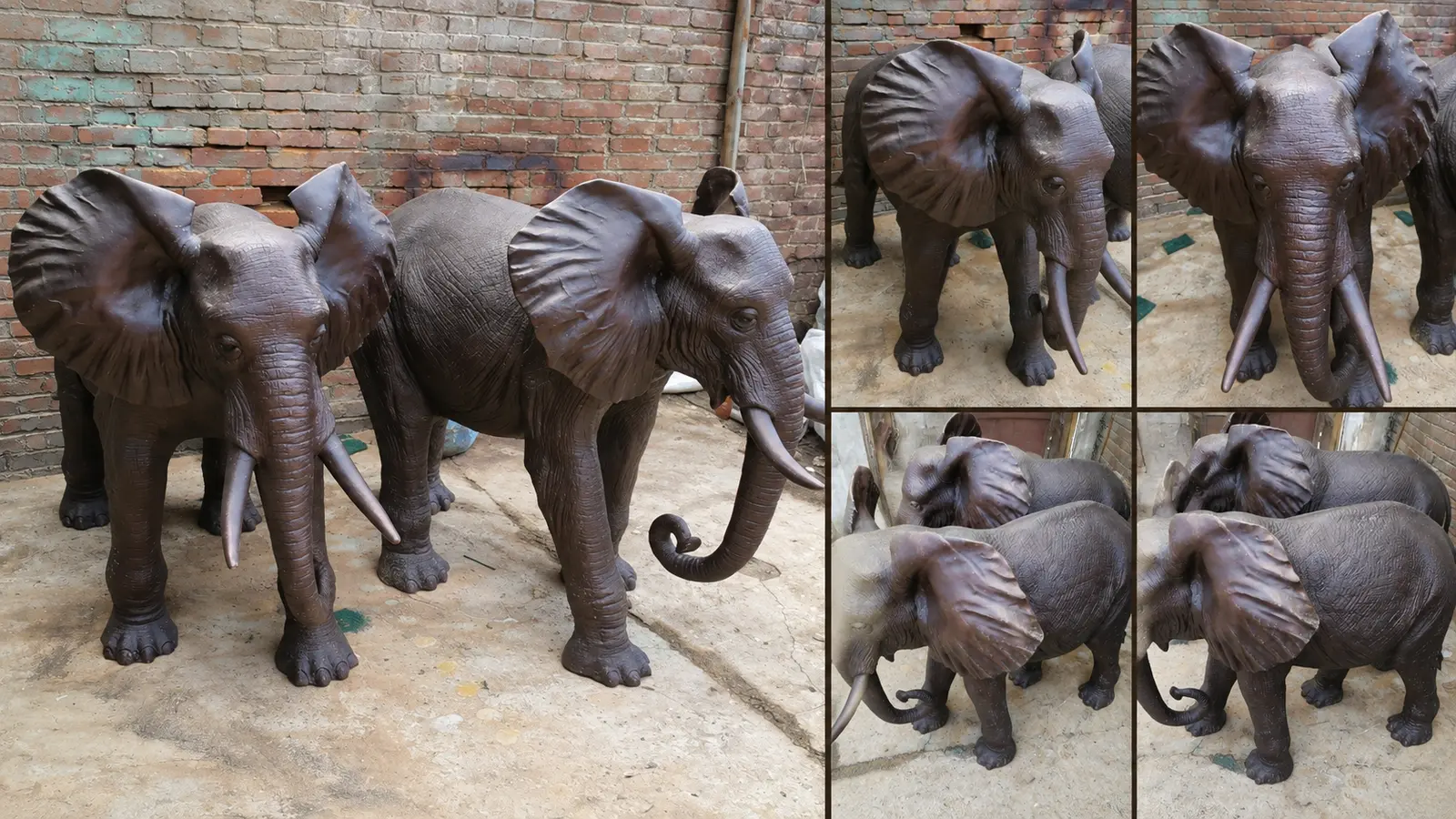
Design references
Start with the elephant that fits your project
Use the filters to compare natural-stone and cast-bronze directions. These photographs are design references, not fixed stock listings: posture, size, finish, base and quantity can be discussed for your site.
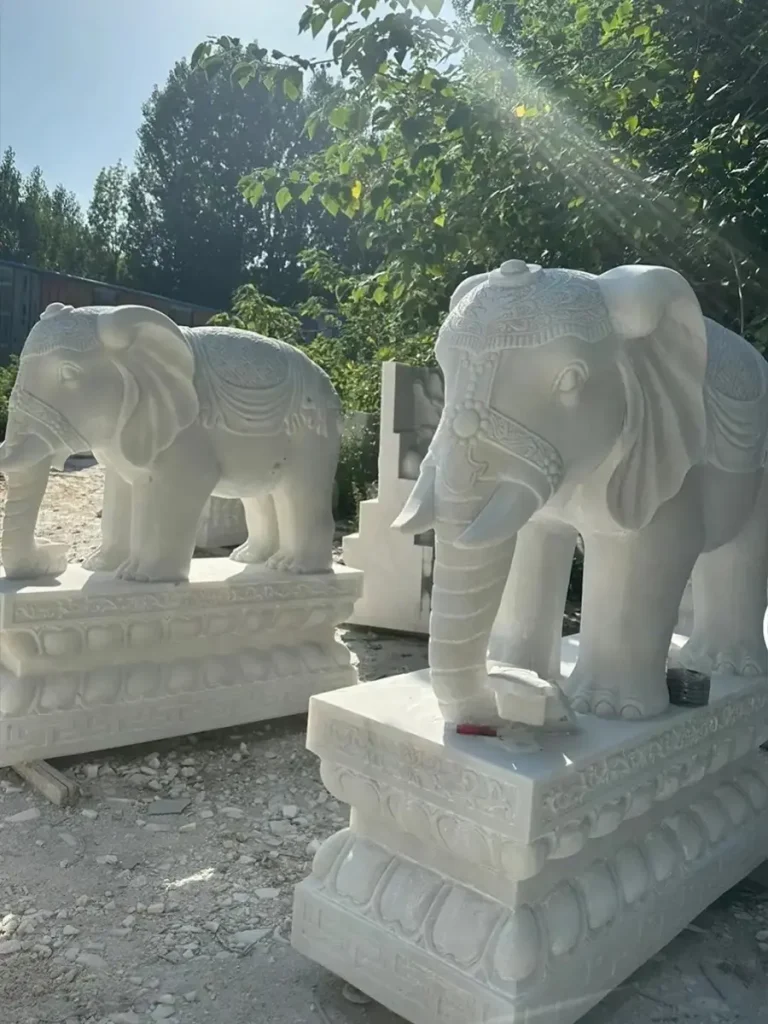 E01
E01 Natural stoneEntrance pair
Monumental marble elephant pair
A symmetrical pair with carved ceremonial blankets and substantial bases for estate gates, hotel approaches and formal courtyards.
Ask about E01 →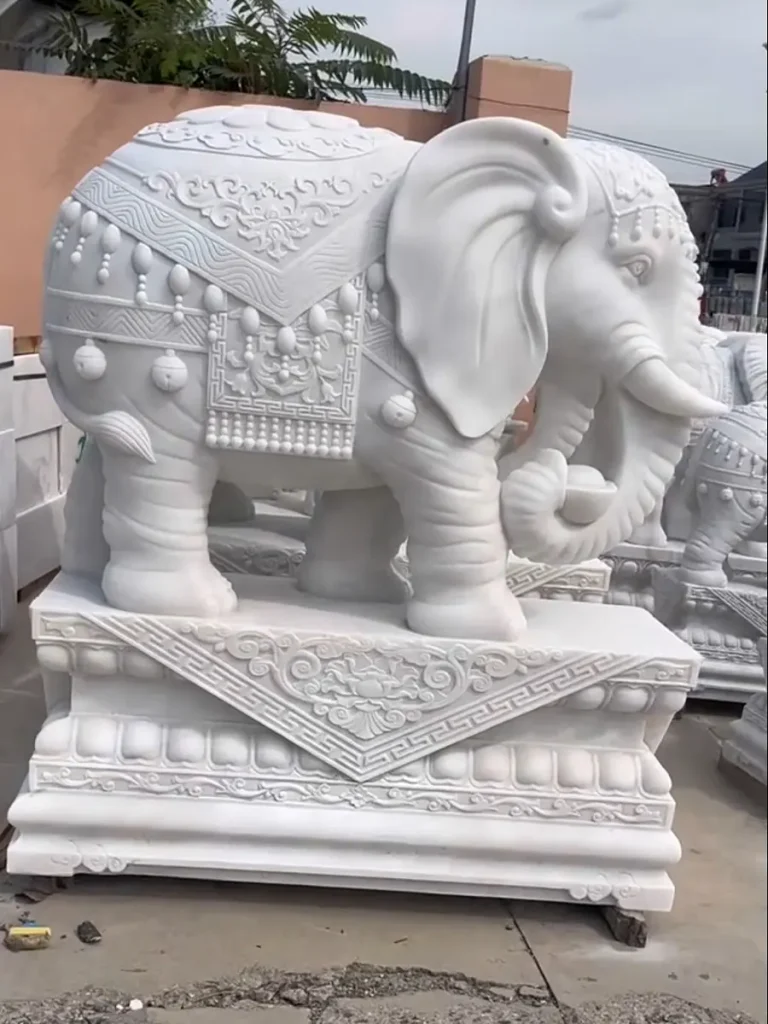 E02
E02 White marbleDecorative detail
Ceremonial carved stone elephant
A richly detailed direction for villas, cultural spaces and clients who want the blanket, headdress and base to carry ornamental carving.
Ask about E02 →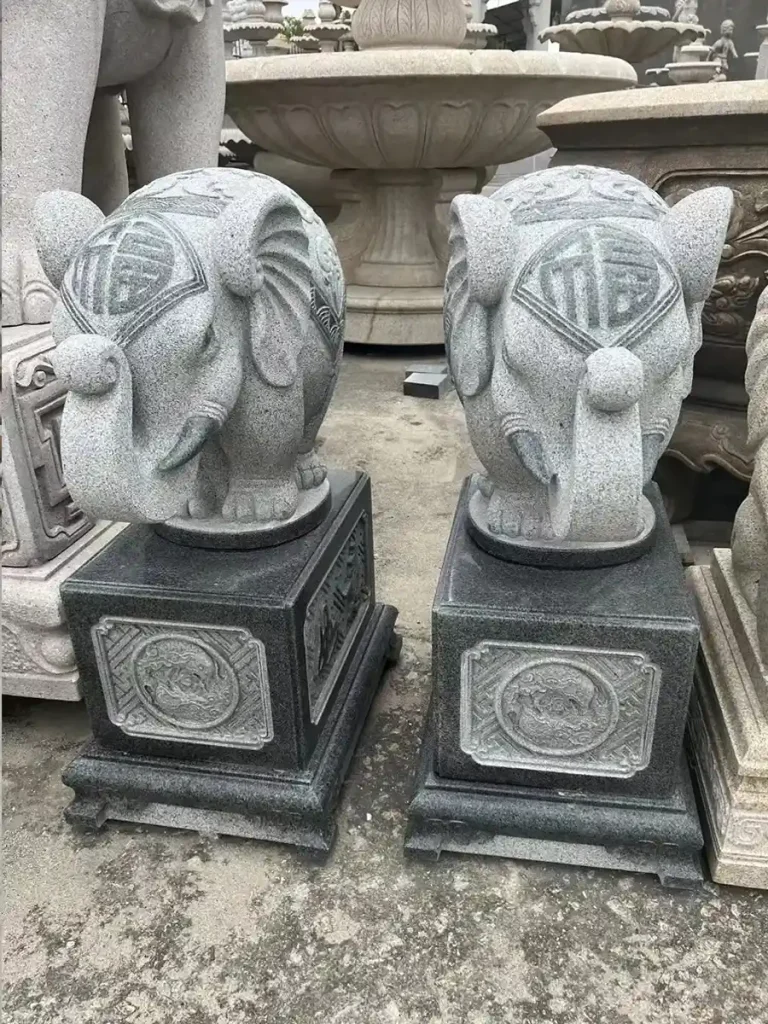 E03
E03 Grey stoneTrunk up
Raised-trunk blessing elephant pair
Compact paired guardians with contrasting bases. Symbols, inscriptions and relief details can be developed from approved artwork.
Ask about E03 →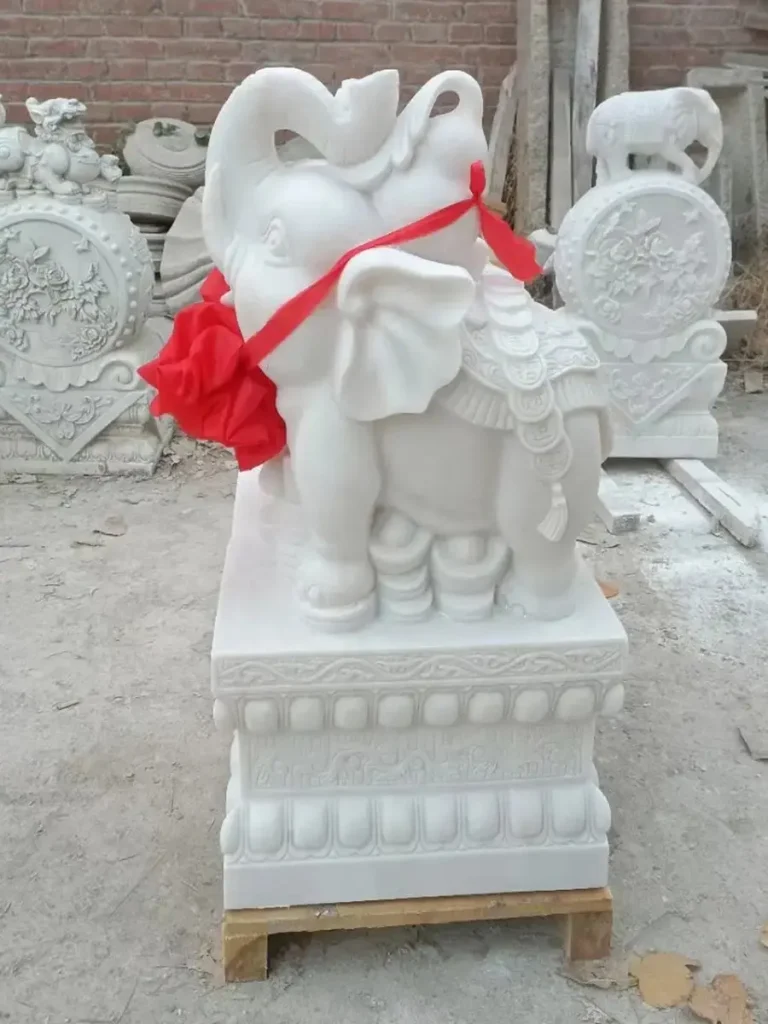 E04
E04 White marbleCompact scale
Small trunk-up marble elephant
A friendlier scale for foyers, terraces, garden corners and gifting projects where a monumental sculpture would overwhelm the setting.
Ask about E04 →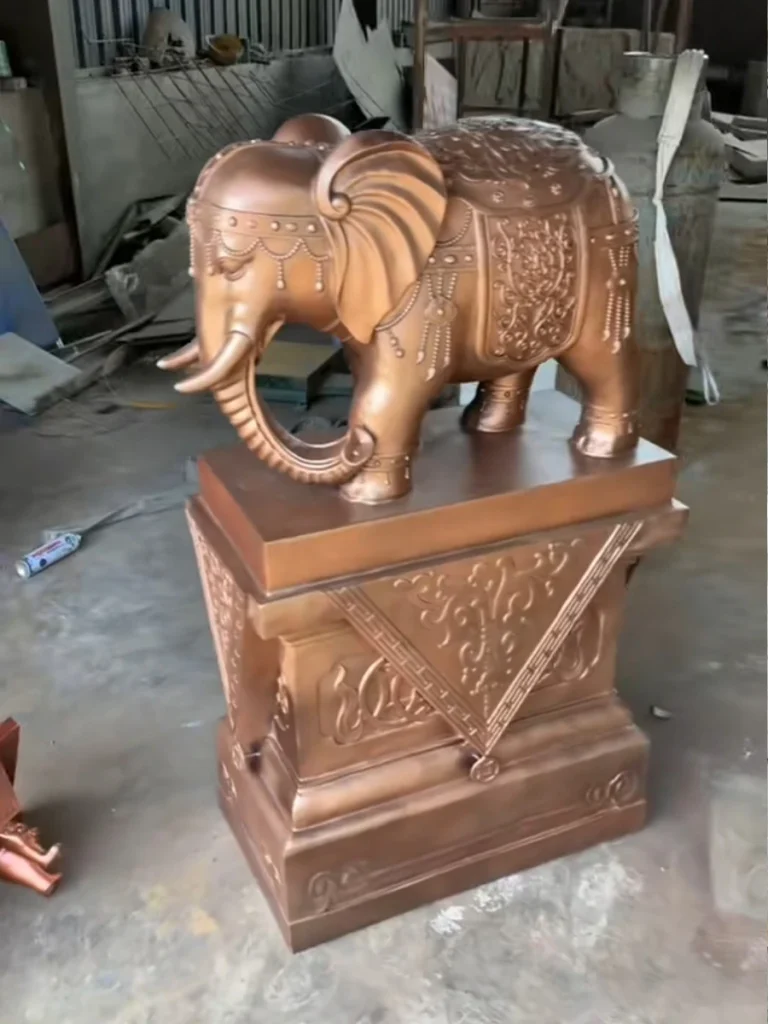 E05
E05 Cast bronzeTrunk down
Traditional bronze elephant on a base
A compact, formal sculpture with a lowered trunk and decorated pedestal for entrance halls, libraries, offices or sheltered courtyards.
Ask about E05 →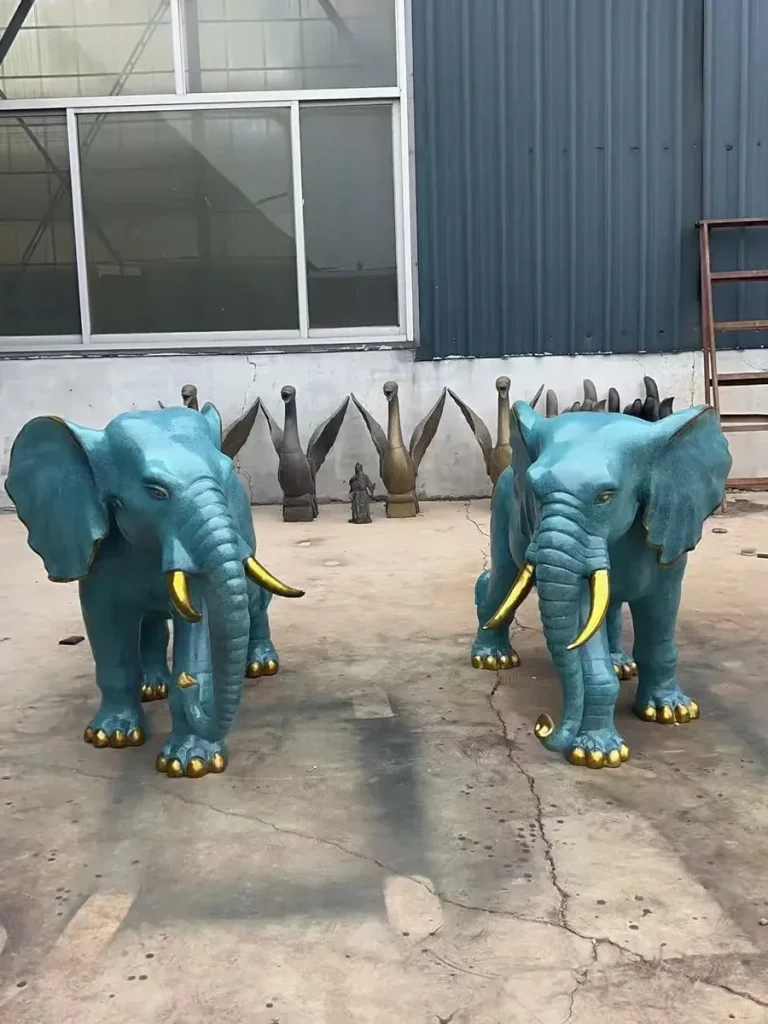 E06
E06 Cast bronzeColored patina
Teal-patina bronze elephant pair
A coordinated pair with a blue-green patina and contrasting tusks, suitable when the sculpture needs stronger color against stone or planting.
Ask about E06 →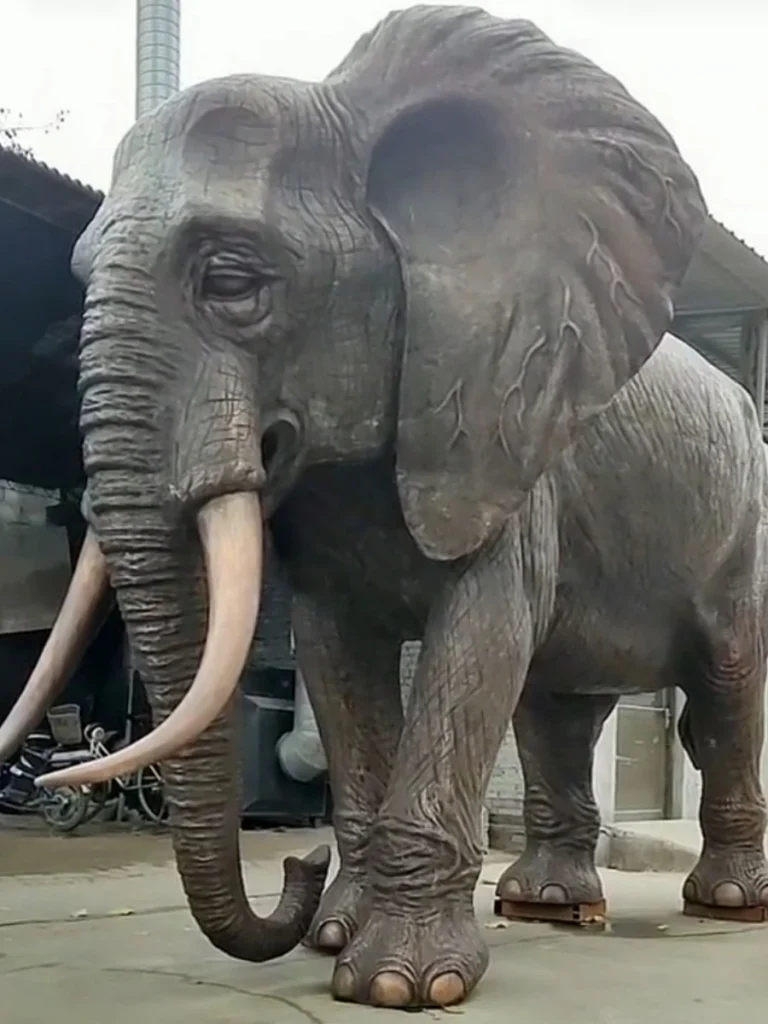 E07
E07 Cast bronzeLarge outdoor
Realistic garden elephant sculpture
A lifelike direction for lawns, botanical gardens, resorts and landscape projects where skin texture and natural anatomy matter.
Ask about E07 →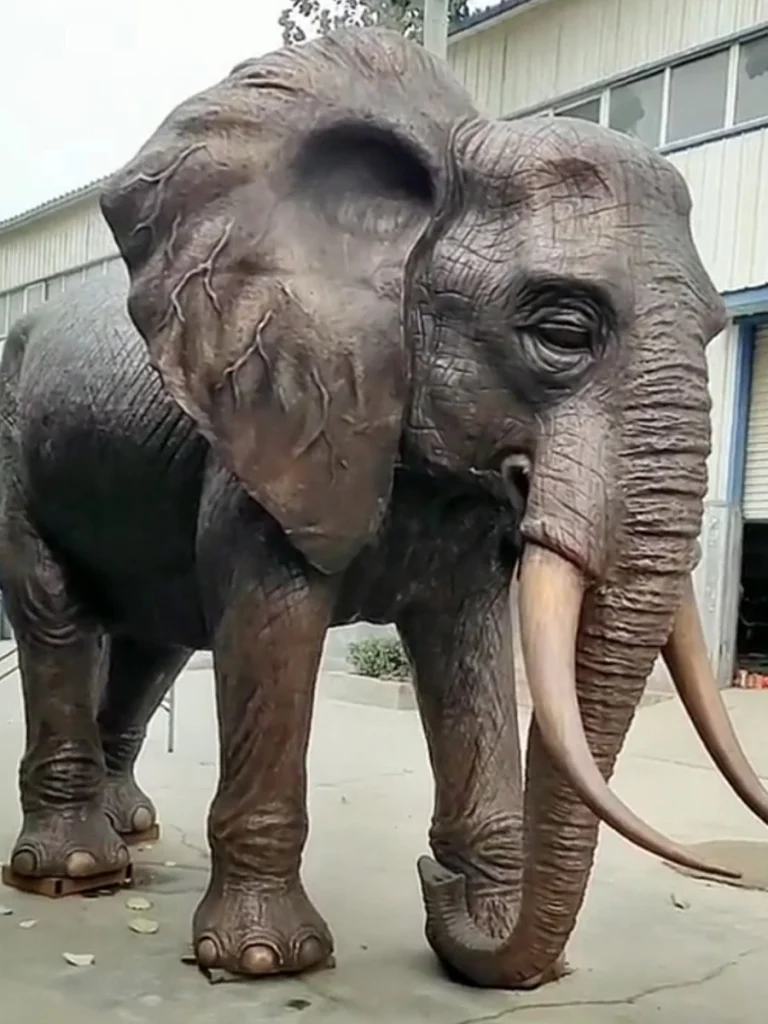 E08
E08 Cast bronzeMonumental scale
Monumental bronze landscape elephant
A commanding focal point for large estates, hotel grounds, roundabouts and public landscapes with suitable access, foundation and lifting plans.
Ask about E08 → Do not see the exact pose you want? Send your own photograph, sketch or design reference. Discuss a custom elephant →
Plan the composition first
One elephant, a pair or a family?
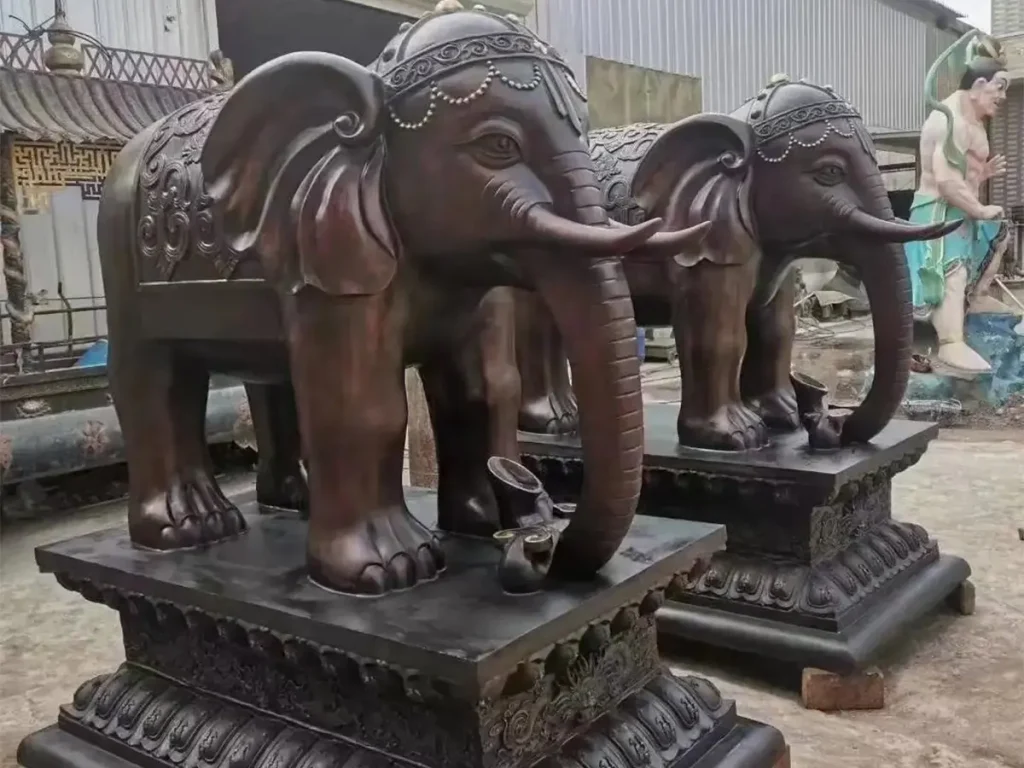
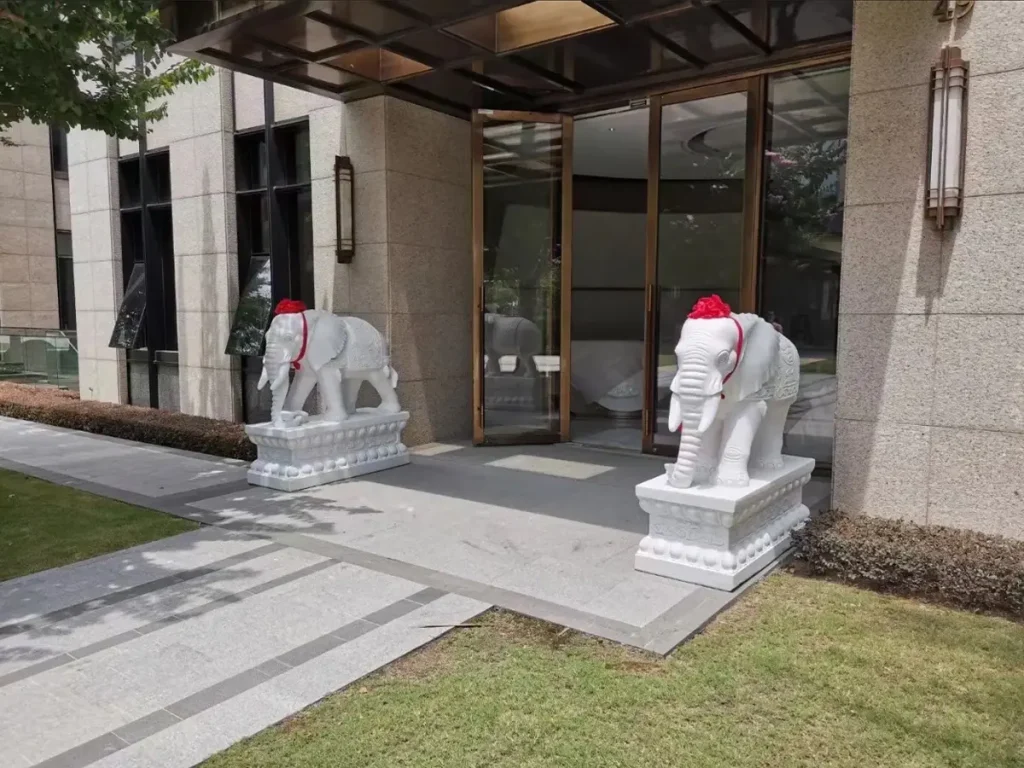
The best arrangement begins with the way people approach the site. A matched pair can frame a formal entrance. One large elephant can become a landmark. A mother-and-calf group creates a warmer narrative for a resort, garden or family property.
- Match the sculpture to the viewing distance
- Keep doors, paths and vehicle sightlines clear
- Confirm both body height and trunk projection
- Plan the base, unloading route and foundation early
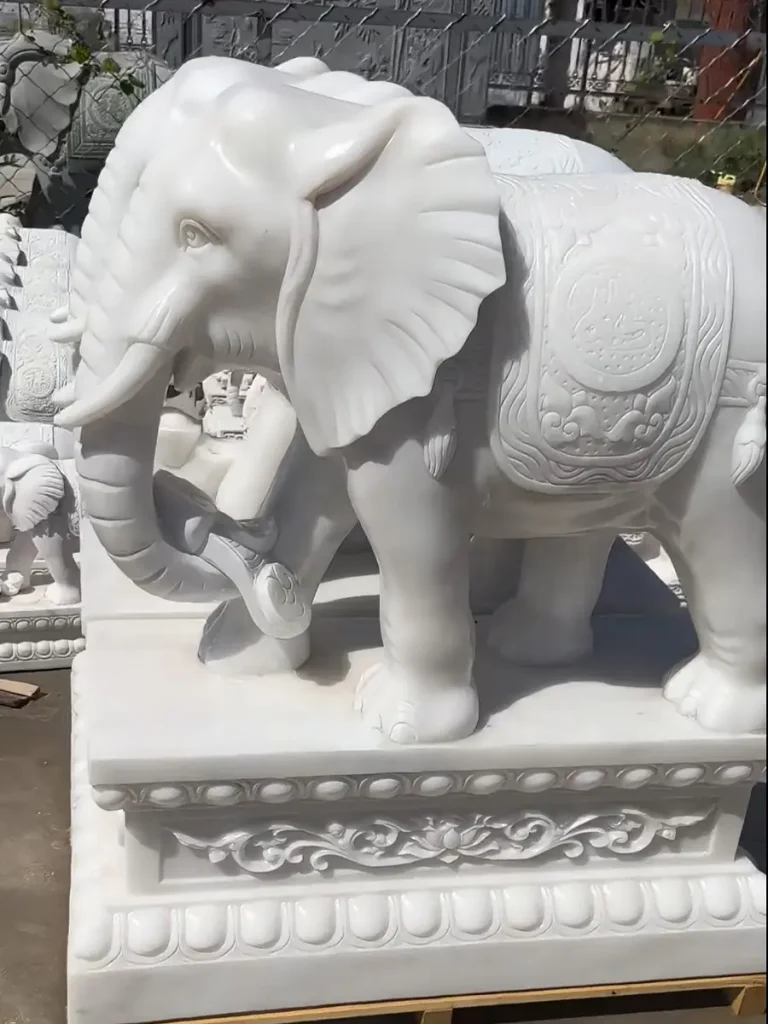
Coordinated entrance pair
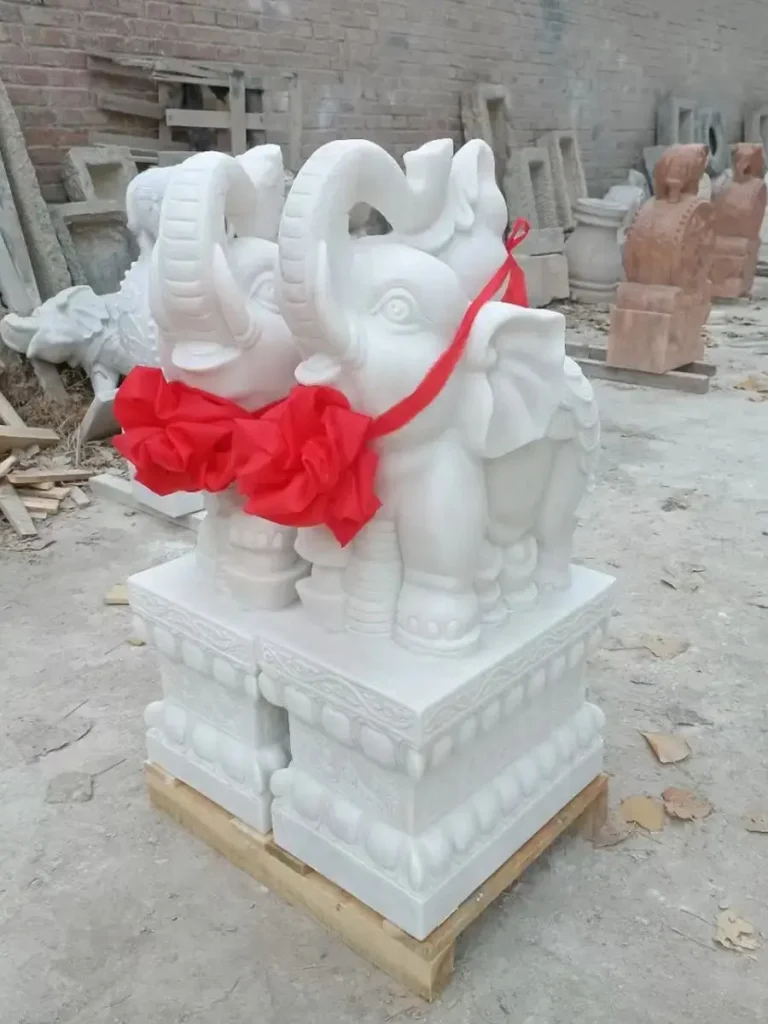
Use two elephants to define a gate, portico or driveway. They may mirror each other or share the same direction, depending on the architecture and traffic flow.
One statement elephant
A single sculpture works well on a lawn, at a curved drive, beside water or at an asymmetrical entrance. It also needs only one foundation and one lifting position.
Mother-and-calf group
A family composition suggests care and continuity. It suits resorts, family estates, zoos and gardens where a softer emotional character is more appropriate.
Raised or lowered trunk
Choose the direction for appearance, symbolism and available clearance. The trunk changes the overall height, reach, packing volume and vulnerability during handling.
Material decision
Natural stone or cast bronze?
Both materials can be used outdoors, but they create different visual weight, detail and maintenance expectations. Choose for the site and design—not from color alone.
Architectural and substantial
Natural-stone elephant statues
Marble and granite connect naturally with gates, paving, columns and masonry. Stone gives an elephant convincing mass and is especially effective for formal pairs, decorated ceremonial figures and carved pedestals. Each block has its own veins, mineral marks and tonal variation.
- Best visual character
- Solid, formal, architectural and traditionally carved.
- Detail options
- Skin folds, blanket patterns, relief borders, inscriptions and integral bases.
- Planning issue
- Weight, safe block selection, lifting access and a load-bearing foundation.
- Outdoor care
- Keep drainage clear; use compatible cleaning and sealing methods for the selected stone.
Modeled detail and color
Cast-bronze elephant statues
Bronze is well suited to natural anatomy, thin ear edges, long tusks and extended trunks. A hollow lost-wax casting can achieve a large visual scale without the mass of equivalent solid stone. Brown, black, green and layered patinas can be discussed from physical references.
- Best visual character
- Lifelike modeling, expressive movement and nuanced surface color.
- Detail options
- Realistic skin, fine wrinkles, decorative harnesses, separate tusks and complex groups.
- Planning issue
- Internal support, welded sections, base access and correctly located anchors.
- Outdoor care
- Patina changes gradually; cleaning and wax or coating maintenance depend on the agreed finish.
| Decision | Natural stone | Cast bronze |
|---|---|---|
| Visual weight | Monumental and grounded; particularly compatible with stone architecture and formal gate pillars. | Can appear substantial while allowing more movement, thinner projections and open space between forms. |
| Surface | Polished, honed, fine-tooled or textured according to the stone and design. | Brown, black, green or layered patina; high points can be subtly highlighted. |
| Color variation | Natural veins and mineral markings cannot be made perfectly uniform or duplicated exactly. | Hand-applied patina varies slightly and continues to respond to weather and maintenance. |
| Complex projections | Long trunks and tusks require careful design, sufficient thickness and protected handling. | Extended trunks, tusks, ears and dynamic poses are generally easier to engineer as cast sections. |
| Weight and handling | Usually heavier and more demanding for foundations and lifting. | Hollow casting is usually lighter than the same volume of solid stone, but large work still requires mechanical lifting. |
| Best starting point | Send architecture and stone-color references plus the permitted base footprint. | Send the desired pose, patina direction and any requirements for touchable or public areas. |
Material names alone do not define performance. The stone variety, thickness, grain and joint strategy matter; for bronze, casting thickness, internal structure, welding, anchoring and patina system matter. These project details are confirmed in the quotation and production specification.
Size and placement
Specify the finished size—not only “life size”
Elephants vary greatly in nature, and sculpture proportions vary too. A useful quotation needs measurable dimensions: the finished height, body length, widest point, trunk projection and base footprint.
Begin with the site. Measure the clear width beside the gate, the height of nearby pillars and the distance from the sculpture to people or vehicles. Then decide whether the quoted height includes a pedestal. For a pair, confirm whether the second sculpture is mirrored, coordinated or identical.
A straight site photograph with one known measurement is more useful than a heavily angled image. We can help judge visual proportion from that information, while your local engineer remains responsible for foundation design and code compliance.
| Scale direction | Common starting range | Typical use | Check before choosing |
|---|---|---|---|
| Compact accent | About 60–90 cm overall height | Interior, terrace, sheltered courtyard, small garden or decorative pedestal. | Eye-level view, sharp projections, base stability and safe circulation. |
| Entrance or garden | About 100–150 cm overall height | Residential gates, hotel entries, lawns and medium landscape focal points. | Pillar proportion, pedestrian clearance, trunk reach and foundation footprint. |
| Large estate | About 160–240 cm overall height | Estate drives, resort landscapes and life-size-impression installations. | Truck and crane access, total weight, viewing distance and wind/interaction risks. |
| Monumental | About 250 cm and above | Public landscapes, large developments, roundabouts and destination projects. | Engineering, sectioning, permits, transport route, lifting plan and protected public access. |
These ranges are orientation only, not fixed product sizes or engineering advice. A raised trunk may increase overall height while a forward trunk increases length. The approved drawing and written quotation control the final dimensions.
Six details that prevent an inaccurate quotation
Show the placement
Send a front or approach photograph and mark the intended position. Include one known measurement for scale.
Include or exclude the base
State whether your dimension covers only the elephant or the complete sculpture and pedestal.
Measure usable ground
Give the maximum length and width available without narrowing a path, drive or doorway.
Single, pair or group
For pairs, explain the viewing direction and whether you need mirrored or coordinated figures.
Share the appearance
Select natural stone or bronze and attach a color, texture or patina reference if you have one.
Provide country and postcode
The receiving location is needed to check transport options and define what the shipping price includes.
A useful price has a specification
Why we do not publish one universal elephant-statue price
Material volume, model development, carving or casting complexity, overall dimensions, quantity, base construction, finish, packing and delivery destination all change the cost. Two elephants with the same height may have very different body lengths, trunk projections and production requirements. We therefore quote the agreed design and delivery scope rather than advertise a number that may not describe your project.
For the fastest comparison, ask for one clear base specification and then request named alternatives—for example, natural stone versus bronze, or 150 cm versus 200 cm. This keeps the options comparable and shows which decision changes the budget.
Send the details for a project quotation →Custom design
Change the pose, proportions, decoration and base
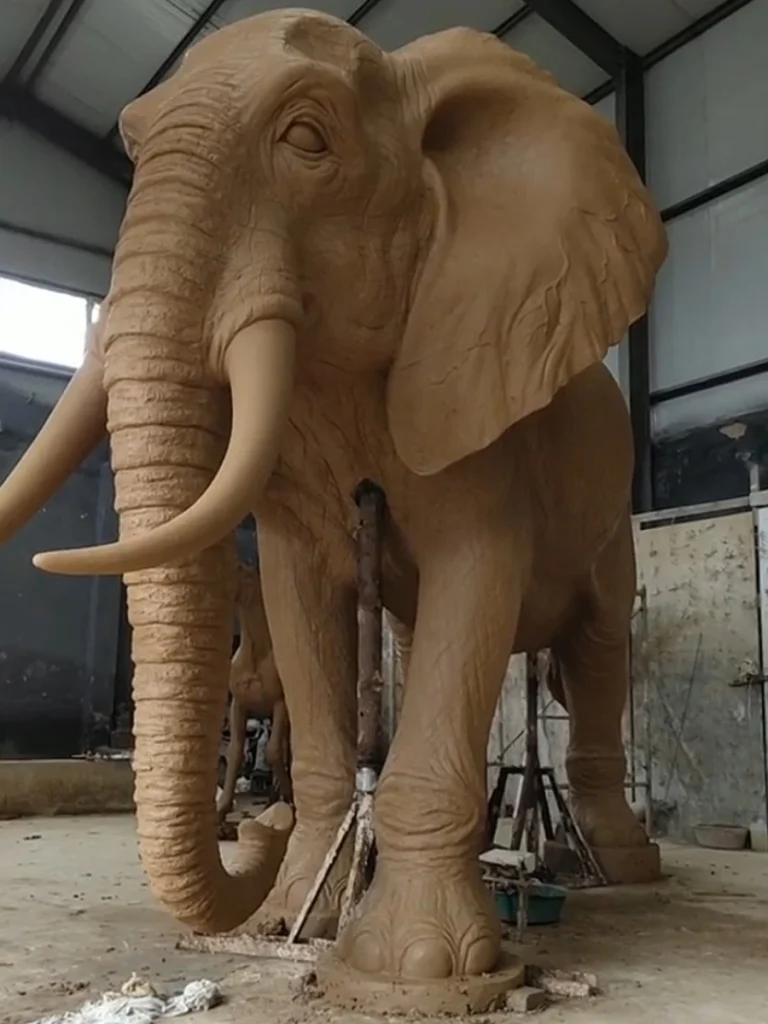
A reference photograph is a starting point, not a requirement to copy every detail. Tell us what must stay and what should change. For an original form, the approval route can include drawings, 3D work or a clay model as written in the quotation.
- Pose and anatomyStanding, walking, seated or family-group composition; African- or Asian-elephant features can be developed from clear references.
- Trunk, ears and tusksDirection, reach and expression affect symbolism, silhouette, packing and the amount of public clearance required.
- Ceremonial decorationBlankets, harnesses, relief borders, bells and culturally specific motifs can be modeled or carved from approved artwork.
- Stone or bronze finishChoose an appropriate stone and surface texture, or discuss a brown, black, green or layered bronze patina.
- Base and identityCoordinate the pedestal with the building and add an estate name, date, emblem or inscription when permission and suitable artwork are available.
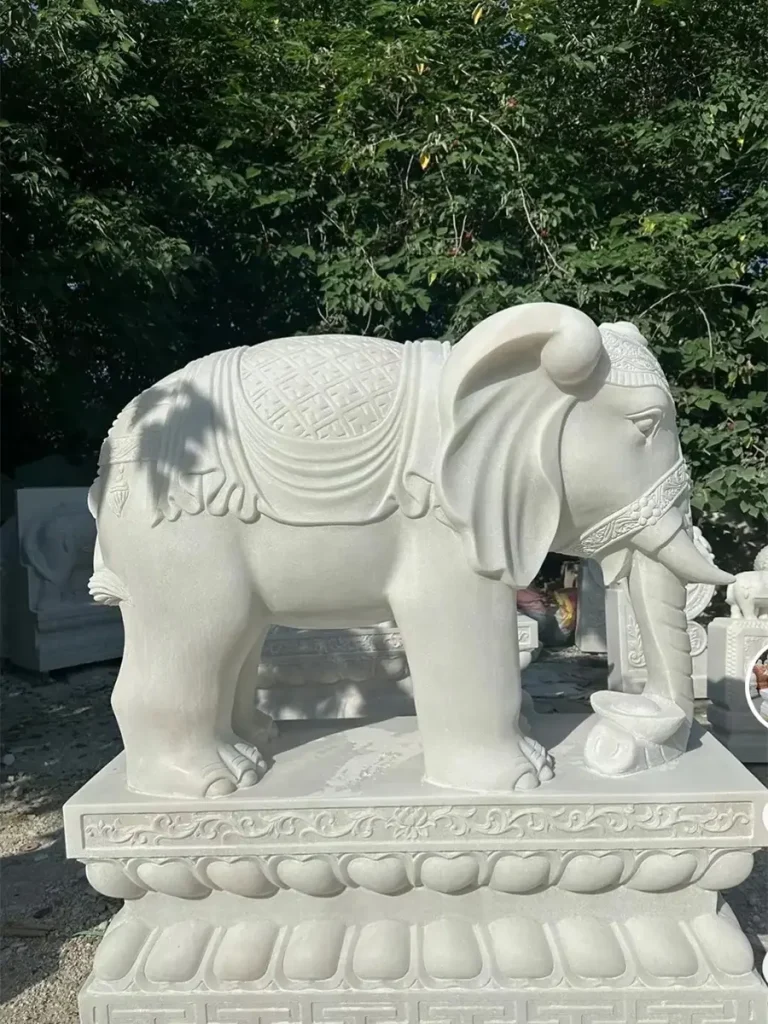
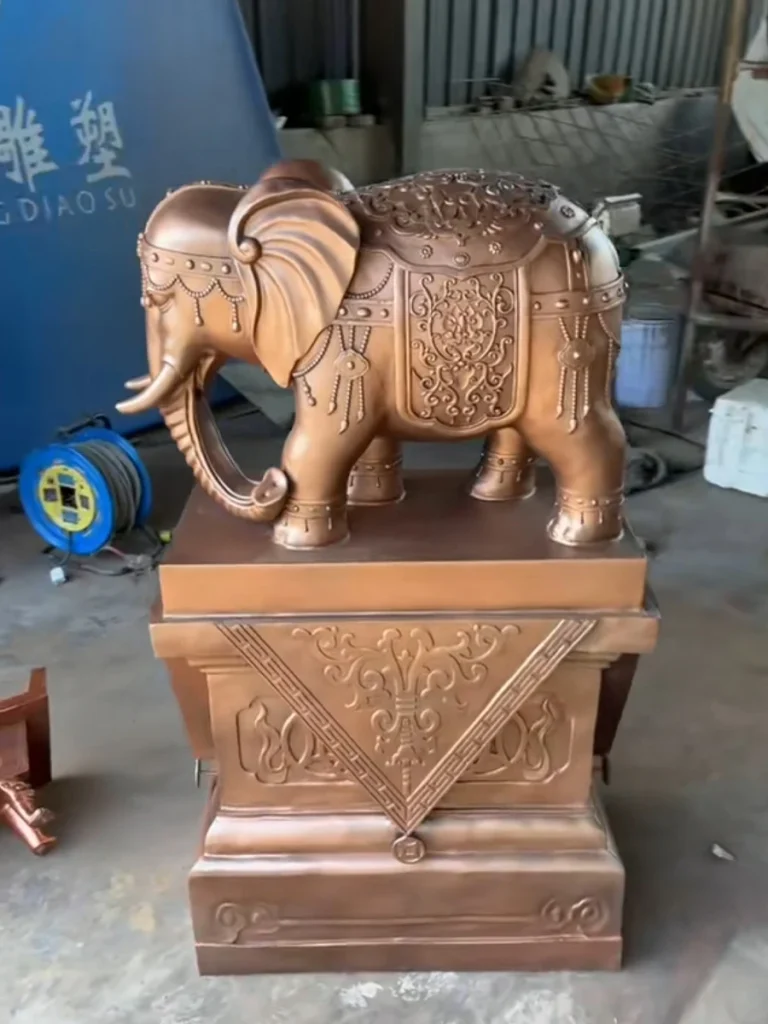
Before production finishes
Prepare the foundation, mounting and delivery route
A large sculpture is not complete when it leaves the workshop. The receiving site must be ready to unload, move and secure it without damaging the sculpture or surrounding property.
01 · Support and drainage
Build for the real load
Stone elephants are heavy and need a level structure with adequate capacity. Bronze work is hollow but can still be substantial. The foundation should account for the actual sculpture, base, soil, drainage and local conditions. Decorative paving should not be assumed to be structural support.
02 · Base and anchors
Coordinate mounting before shipment
Anchor positions, access openings and drainage depend on the material and pose. Share the plinth dimensions before production is finalized. Your qualified local engineer and installer should select the foundation and fasteners for the site, local code, wind, seismic and public-access conditions.
03 · Access and lifting
Plan the crate’s entire route
Check truck access, gate width, turning space, overhead obstacles and the route from unloading point to foundation. Large crates normally need a forklift or crane. Foundations, unloading, local handling and installation are not included unless they are specifically written into the agreed quotation.
From reference to delivery
How a custom elephant order takes shape
The making method differs between hand-carved stone and lost-wax bronze, but every reliable order needs the same control points: a clear specification, design approval, production review, finish confirmation and shipping preparation.


- 01
Share the project
Send the design reference, quantity, preferred material, approximate finished size, site photograph and delivery postcode. Explain what the sculpture should do for the space.
- 02
Agree the specification
We discuss pose, dimensions, base, stone or bronze, surface direction, approval method and shipping scope. The quotation records the agreed basis for the order.
- 03
Review the form
When a new design is required, the agreed drawing, 3D model or clay model is reviewed before main production. This is the time to correct proportion, expression and essential details.
- 04
Carve or cast
Stone is selected, roughed out, carved and refined. Bronze follows modeling, molding, wax work, casting, welding and chasing. Relevant workshop images can be shared during production.
- 05
Confirm the finish
The approved stone texture or bronze patina is completed. Finished photographs or video provide a practical review before protective packing begins.
- 06
Pack and coordinate dispatch
The sculpture is supported and protected for the agreed transport method. Packing and dispatch information help your receiving team prepare equipment and site access.
Practical trust
Review evidence before the crate is closed
An international custom order should not depend on a single promise. Useful review points help you see whether the design, scale and visible finish follow the approved direction while there is still time to discuss them.
Recorded specification
Material, key dimensions, quantity, base and visible design requirements are written down before production.
Workshop updates
Relevant photographs or short videos can show modeling, stone carving, bronze casting or surface work at useful stages.
Pre-packing review
Finished views help confirm the overall appearance, main details and visible surface before protective packing.
Packing and dispatch information
Crate and dispatch details help the receiver arrange access, lifting equipment and a safe route to the foundation.
Are these fixed products or custom elephant statues?
The gallery photographs are useful design references rather than a promise that every piece is sitting in stock. We can discuss the material, quantity, pose, dimensions, base and finish for your project. When a design requires new modeling, the quotation should identify the approval method and production scope.
Should I order one elephant or a matching pair?
A pair is strongest when the purpose is to frame a symmetrical gate, drive or portico. One elephant often works better as a lawn focal point, beside a curved path or where there is only one suitable foundation. A family group creates a more narrative result. Send the site view so the arrangement can be considered with the architecture and approach.
Should an elephant’s trunk point up or down?
Both directions can be used. A raised trunk creates an energetic silhouette and is widely associated with welcome or good fortune; a lowered trunk can feel calm and grounded. The practical difference is just as important: trunk direction changes the height, projection, clearance and packing. For more cultural context, read our elephant statue Feng Shui placement guide.
Which is better outdoors: natural stone or bronze?
There is no universal winner. Natural stone gives architectural mass and works especially well with masonry. Bronze supports fine anatomy, longer projections and expressive poses with less weight than the same solid-stone volume. The correct choice depends on design, climate, finish expectations, foundation capacity, access and maintenance—not only the initial color.
Can you make an elephant from my photograph or drawing?
Yes, subject to a usable reference and an agreed design process. Multiple views are better than one front image. Explain whether you want the whole design reproduced, only the pose, or a new elephant combining several references. You should also confirm that you have permission to use any protected artwork, brand mark or third-party design.
Can you customize the size?
Yes. State the finished height, whether it includes the base, maximum footprint and any limit on trunk projection. “Life size” is not precise enough because real elephants and sculptural proportions vary. A site photo with one known measurement helps us discuss visual scale, but final foundation and installation decisions must be checked locally.
Are the stone elephants natural stone or cast stone?
The stone work described on this page is carved from natural stone rather than being a thin FRP shell. The selected stone, block arrangement and number of pieces depend on design, scale, stone availability, transport and structural needs. If a one-block body is essential, state that before quotation so feasibility can be checked and written into the specification.
Can a base include a name, crest or special pattern?
Yes. An inscription, date, estate name, emblem or decorative relief can be carved, engraved, cast or applied as an appropriate plaque depending on material and detail. Provide high-quality artwork and confirm permission to use it. Text spelling, capitalization, dates and layout should be approved before irreversible carving or casting.
Will I review the elephant before full production?
For a new custom form, the quotation can specify review by drawing, 3D model, clay model or another agreed reference. The main form should be approved before the principal carving or bronze-production stage. Natural stone markings and hand-applied patina cannot be identical to a digital rendering, so model approval governs form while finish references guide the surface.
How long do production and shipping take?
Timing depends on size, material, quantity, modeling revisions, stone availability, casting or carving complexity, finish and destination. Many custom sculptures require several weeks in production, and international transport may require additional weeks. We provide a working estimate with the quotation. Approval delays, holidays, weather, port congestion and customs inspection can affect the schedule, so disclose fixed dates early.
Can you ship large elephant statues internationally?
Yes, international delivery can be discussed. Send the destination country and postcode so an appropriate route and cost can be checked. The quotation will state the shipping scope. Large crates may arrive without unloading equipment, so the receiver normally prepares a suitable forklift, crane or other lifting arrangement unless a different service is specifically agreed.
Do you provide the foundation and installation?
Foundations, local engineering, permits, unloading, lighting and installation are not included unless specifically written into the quotation. We can provide relevant sculpture dimensions, approximate weight, base information and agreed mounting details for your local team. A qualified local professional must assess soil, support, wind, seismic, public-access and code requirements.
How do I maintain an outdoor elephant sculpture?
Keep standing water, aggressive chemicals and direct irrigation away where possible. Natural stone may require compatible cleaning and, depending on porosity and climate, an appropriate sealer. Bronze patina gradually changes outdoors and may need cleaning plus wax or coating maintenance. Use the care guidance for the agreed finish and test any product on a discreet area first.
What should I send to receive an accurate price?
Send the preferred gallery reference or your own images, quantity, material, finished height, whether the height includes the base, maximum footprint, desired finish and delivery country plus postcode. Include a placement photograph if possible. If you are undecided, send the site and the effect you want; we can narrow the options before preparing a quotation.
Continue your research
Placement meaning or another entrance animal?
Use the guide for cultural placement questions. Compare the modern lion collection if you want a Western guardian with a more heraldic or estate-entrance character.
Start with the site or the sculpture
Tell us which elephant caught your eye
Send a gallery reference or your own image. We will discuss material, finished dimensions, quantity, base, surface finish and delivery destination, then prepare a quotation for that specification. If you are unsure about scale, include a site photograph and one known measurement.
- 01Design reference, drawing or site photograph
- 02Natural stone or cast bronze
- 03One elephant, a pair or a family group
- 04Finished height and available base footprint
- 05Delivery country and postcode
Custom elephant statues by Yun Sculpture · Natural stone · Cast bronze Back to Safari & Jungle Animals