Get in touch with Yun-Sculpture company
Elephant Statue Feng Shui & Placement Guide: Trunk Up or Down for Luck, Wealth, and Home Decor

Walk into a well-designed home in Asia, and you will often find a quiet guardian standing near the entrance — a noble elephant statue. It may appear decorative at first glance, yet in the language of traditional spatial design, it serves a deeper purpose. An elephant statue is widely regarded as a Spiritual protector, a silent sentinel believed to stabilize energy and attract harmony.
For centuries, homeowners, temple builders, and palace architects have used Elephant Statues for Luck to shape the atmosphere of a space. In the philosophy of Elephant Statue Feng Shui, sculptures are not passive objects. They interact with movement, direction, and intention. When placed thoughtfully, they are believed to encourage prosperity, wisdom, and emotional stability within the household.
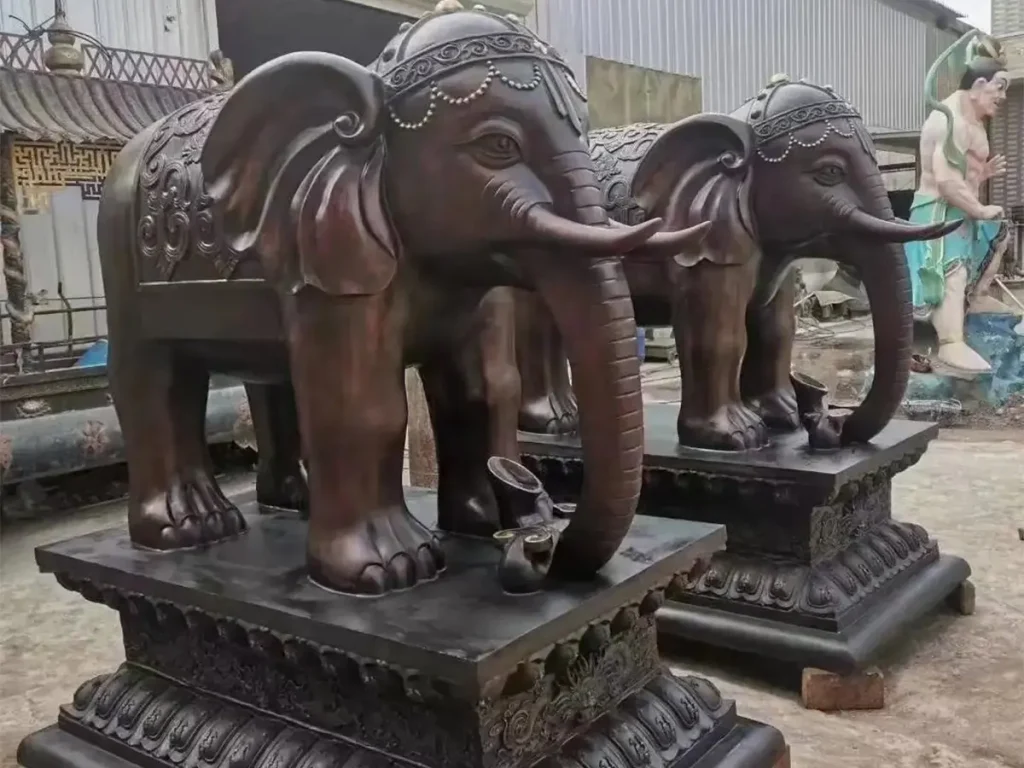
The elephant itself carries extraordinary symbolism. Its immense physical presence reflects power and dignity, while its calm temperament represents patience and intelligence. This rare balance between strength and serenity is why the elephant has become a universal emblem of protection and abundance.
Yet one subtle detail often sparks curiosity among collectors and homeowners alike: the trunk position. Should it be raised toward the sky, or gracefully lowered toward the earth? The difference between Trunk Up or Down carries distinct meanings within traditional symbolism.
Understanding these distinctions allows a sculpture to become more than art. It becomes an intentional element of the home’s energetic landscape.
Table of Contents
Table of Contents
What do Elephant Statues Represent? Symbolism Across Cultures
Across civilizations, elephants have long been revered as creatures of extraordinary presence. Their immense size, remarkable intelligence, and powerful memory gave rise to layers of symbolic meaning that continue to influence sculpture and decorative art today. When people ask about the elephant statue meaning or wonder what do elephant statues symbolize, the answer is deeply rooted in cultural history.
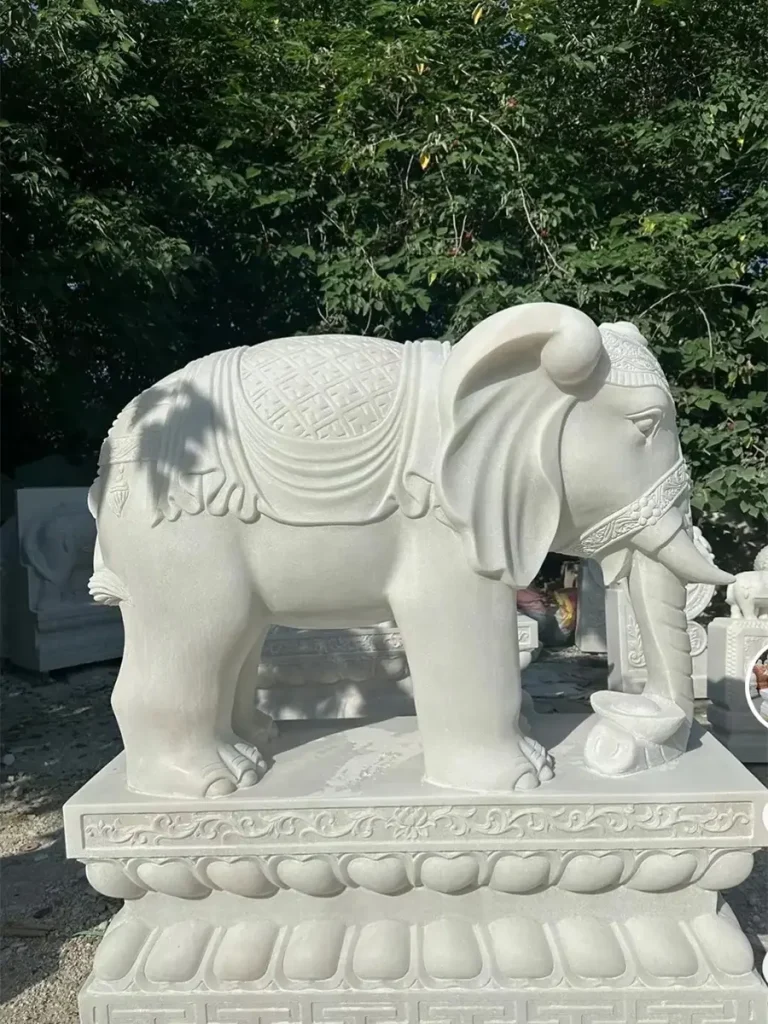
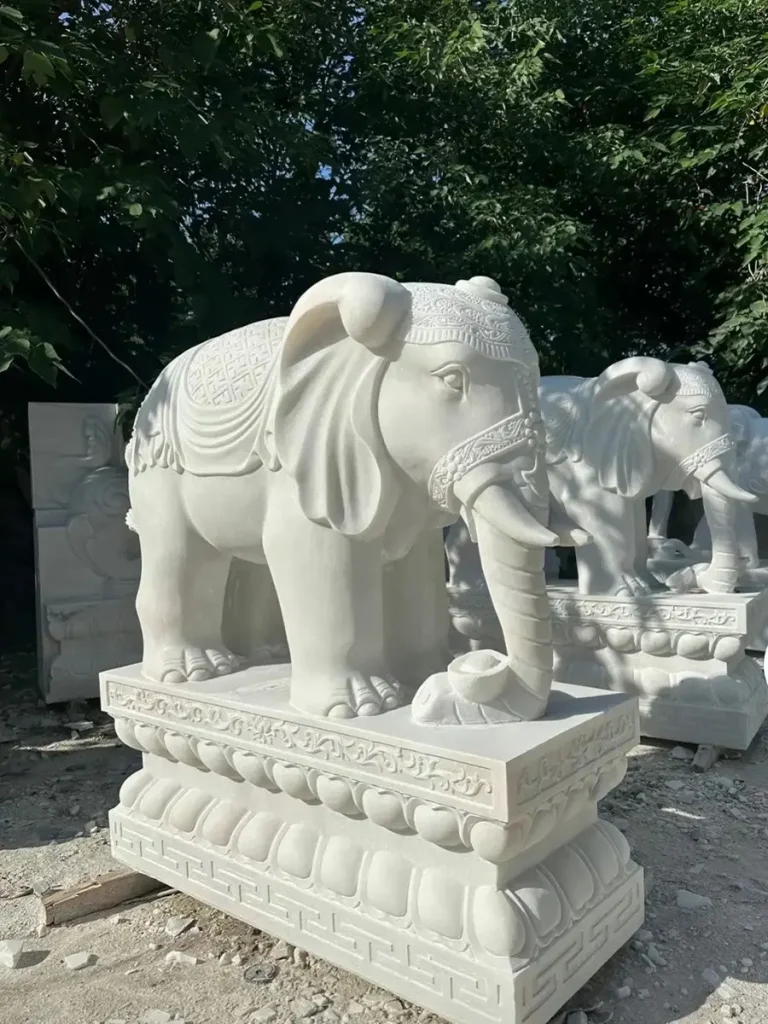
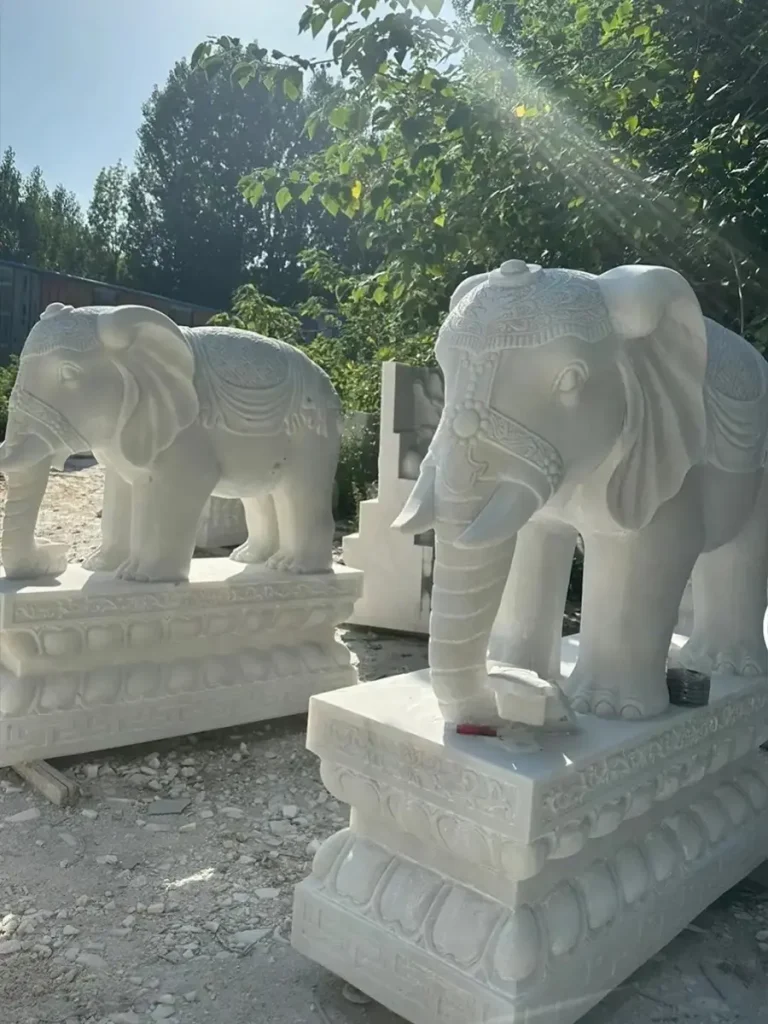
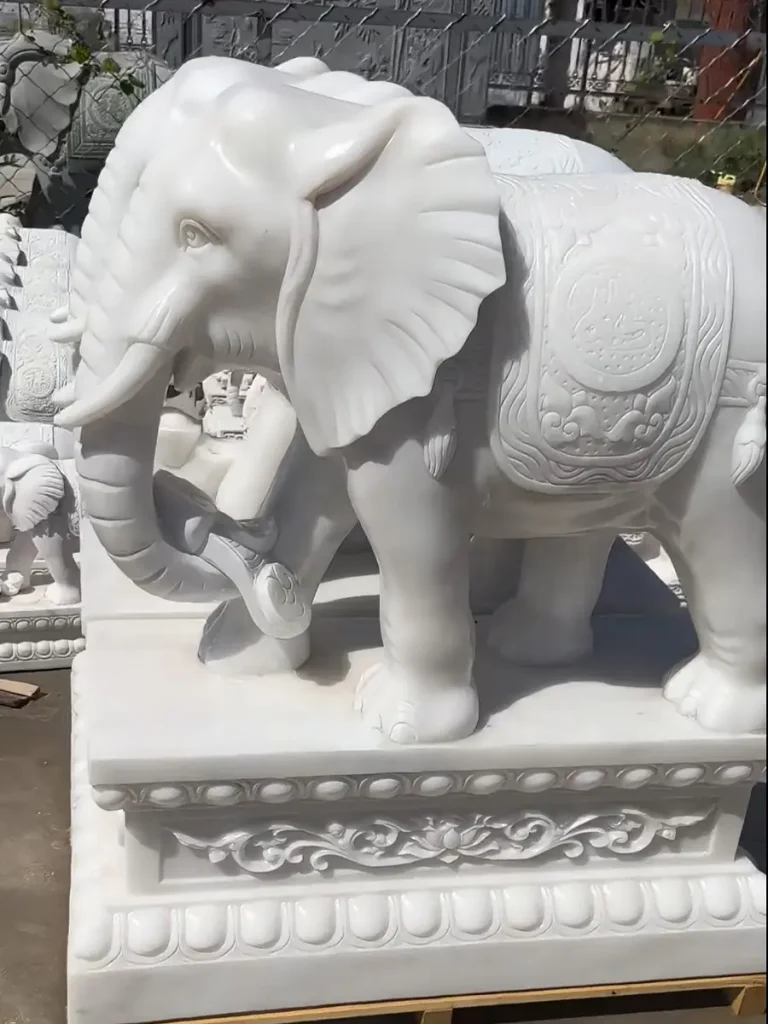
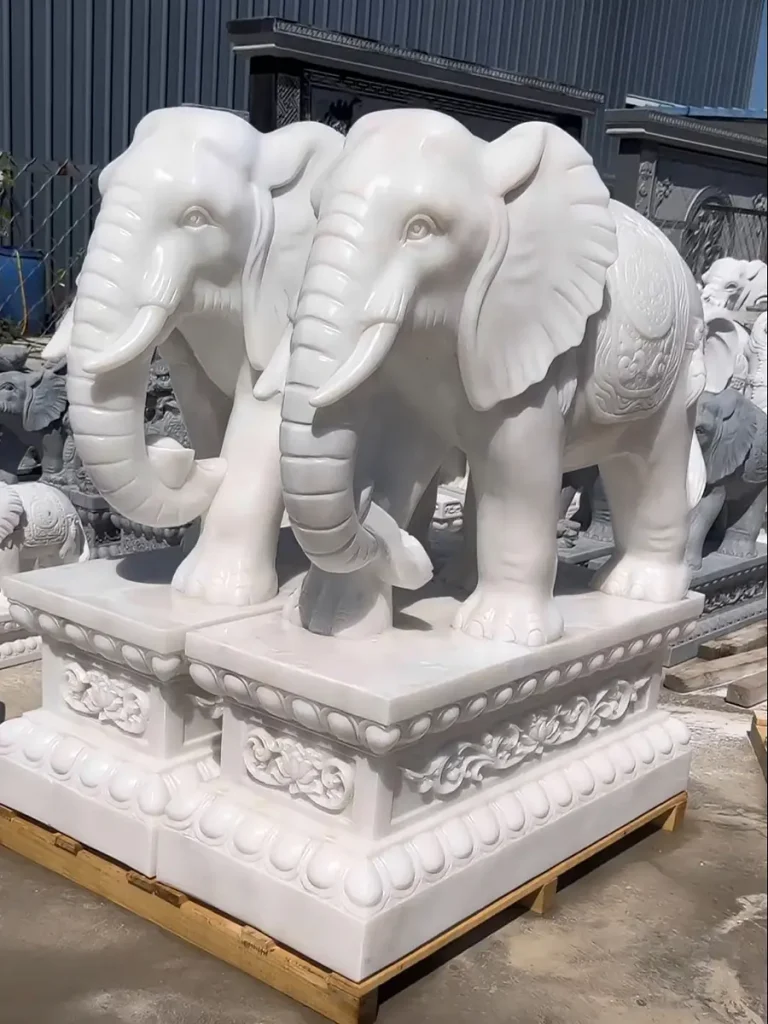
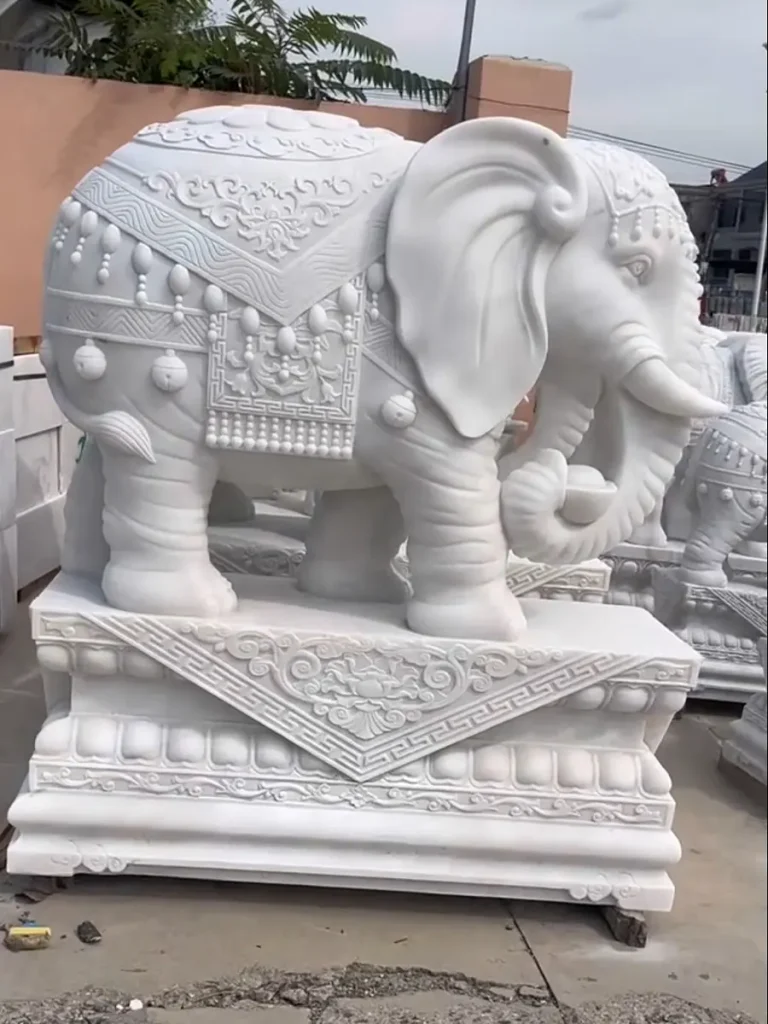
Asian Symbolism: Prosperity, Longevity, and Sacred Blessings
In much of Asia, the elephant is considered a sacred animal associated with stability, prosperity, and long life. Its symbolism is closely connected with spiritual wisdom and the protection of sacred spaces.
One of the most beautiful stories tied to this symbolism is the legend of the white elephant. In Buddhist tradition, Queen Maya — the mother of the Buddha — dreamed of a radiant white elephant descending from heaven and entering her womb. This vision was interpreted by sages as a sign that her child would become a great spiritual leader.
Because of this story, white elephants became powerful symbols of divine blessing and enlightened wisdom. Royal courts in Thailand, Myanmar, and Laos historically regarded them as sacred creatures worthy of ceremonial protection.
Within Feng Shui practice, elephant statues therefore represent more than simple decoration. They embody stability, noble character, and benevolent strength. Their presence is believed to anchor a home with calm, grounded energy while attracting wealth and harmony.
Elephants are also admired for their longevity and memory. These qualities have transformed the animal into a symbol of generational wisdom — an ideal representation for families seeking stability and continuity across generations.
African & Western Symbolism: Royal Strength and Majestic Power
In African traditions, elephants are often viewed through a slightly different symbolic lens. Rather than focusing on spiritual blessing alone, the elephant is celebrated as the ultimate ruler of the wild landscape.
An african elephant sculpture frequently emphasizes physical grandeur: massive shoulders, sweeping tusks, and powerful movement. These sculptures reflect the commanding presence of a Majestic creature that dominates its environment with quiet authority.
In many African cultures, elephants symbolize leadership, memory, and strategic intelligence — traits that mirror the wisdom required of great tribal leaders. The elephant’s ability to remember migration routes across vast landscapes has also made it a symbol of ancestral knowledge and survival.
Western symbolism, influenced by both African heritage and modern psychology, often merges these interpretations. Today, elephant sculptures in Western estates and gardens typically represent Wisdom and Strength, stability in leadership, and the quiet power of patience.
Across these traditions, one truth remains consistent: elephants symbolize a harmonious union of strength and intelligence. Their cultural significance spans continents, transforming them into universal emblems of protection, prosperity, and dignified power.
The Great Trunk Debate: Elephant Statue Trunk Up vs. Down Meaning
One of the most frequently asked questions in decorative symbolism concerns the position of the elephant’s trunk. The debate surrounding Trunk Up or Down is not simply aesthetic. Each position carries a distinct energetic interpretation within Feng Shui and cultural tradition.
Understanding this difference allows homeowners to select a sculpture that aligns with the intention of their space.
The Trunk Up: Radiating Fortune and Victory
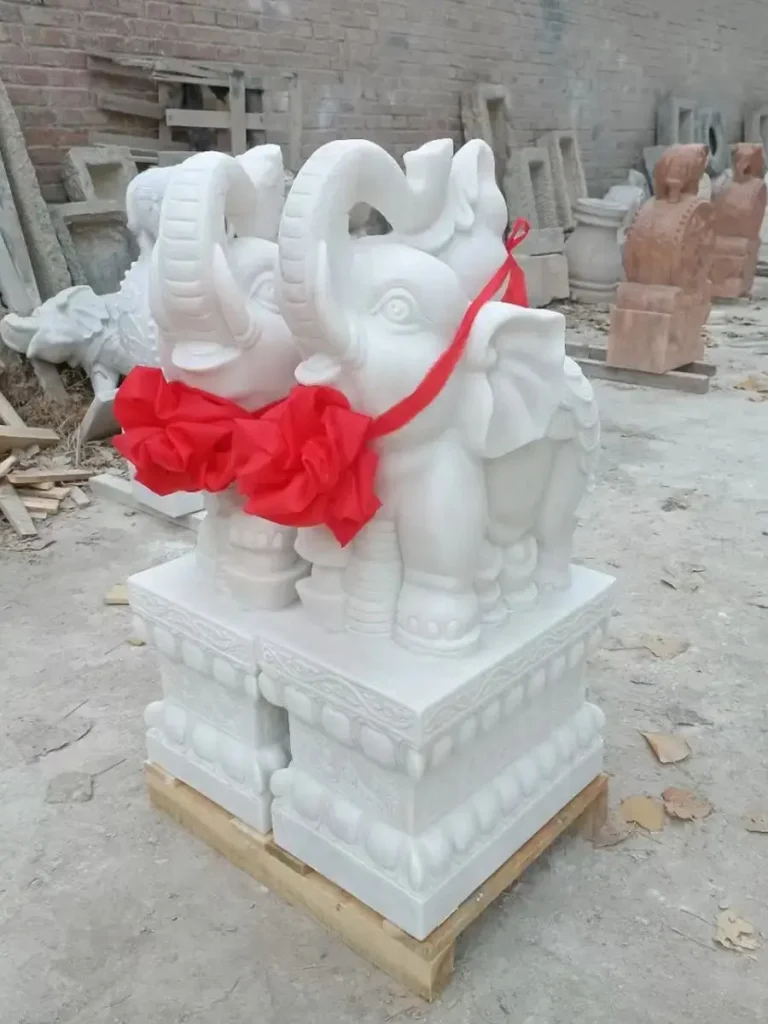
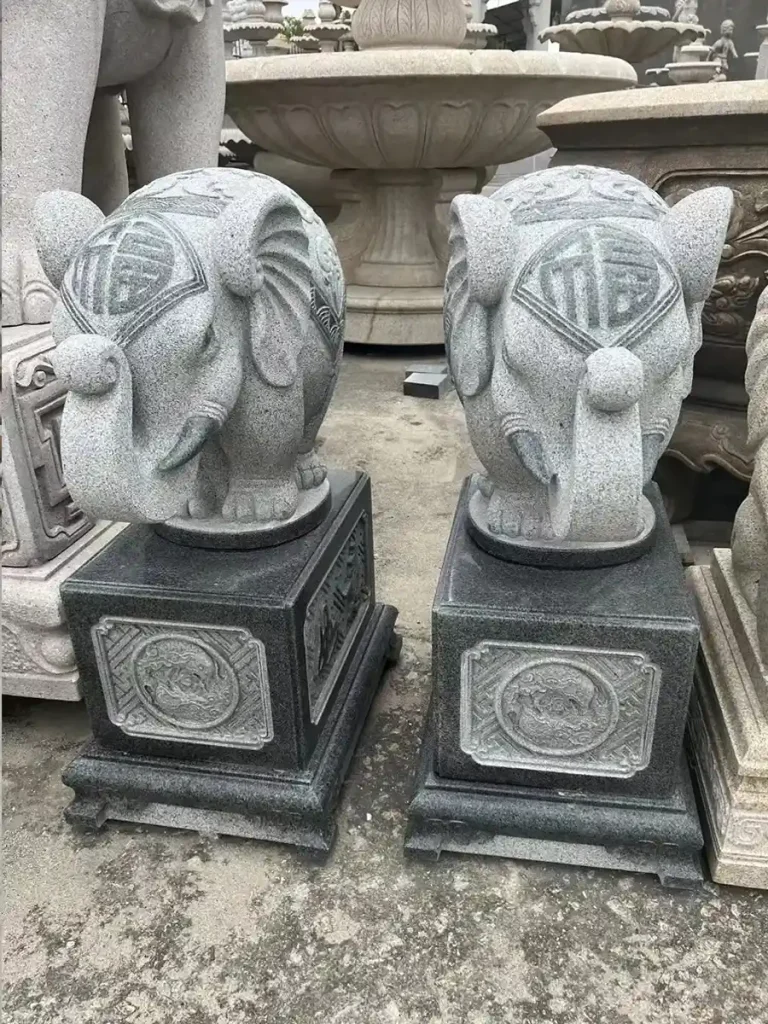
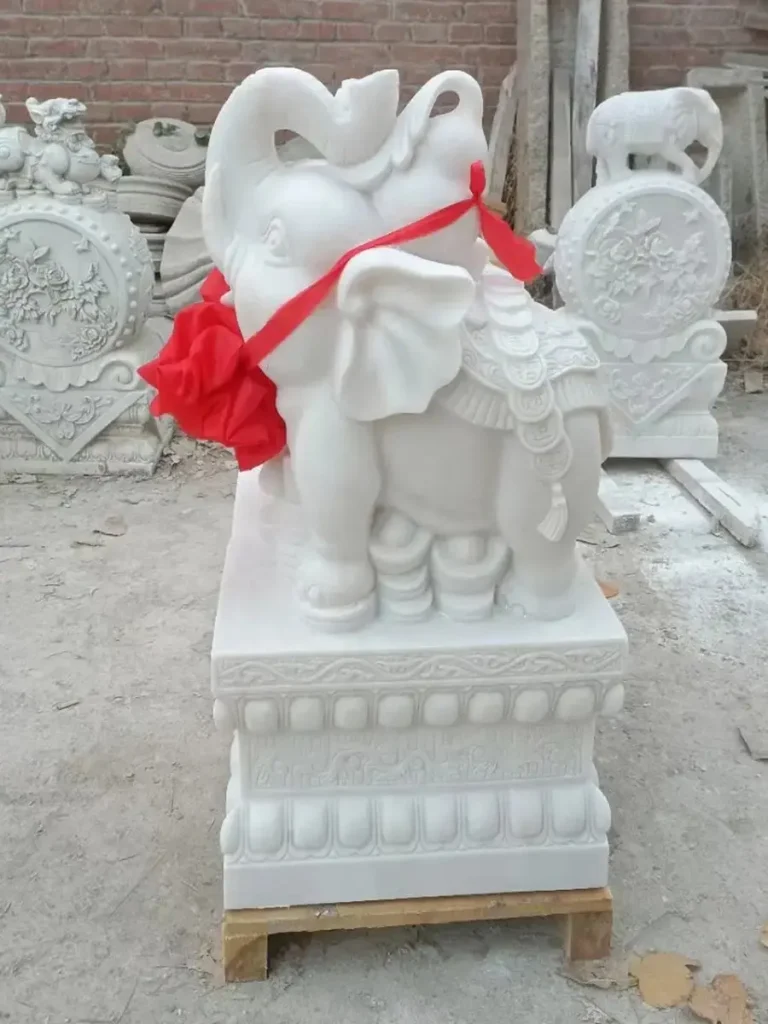
The elephant statue trunk up meaning is perhaps the most widely recognized interpretation.
When the trunk rises upward, the elephant is believed to be showering blessings upon the environment. In traditional symbolism, the raised trunk resembles a fountain releasing good fortune into the space. It represents celebration, triumph over obstacles, and the welcoming of new opportunities.
Because of this uplifting symbolism, a trunk-up elephant is commonly called a good luck elephant. It is frequently placed in entryways, offices, or living areas where its upward gesture symbolizes prosperity entering the home.
Many homeowners choose this form when they wish to invite success, career growth, or joyful milestones into their lives. The upward trunk acts almost like an antenna — radiating positive energy outward while welcoming abundance inward.
The Trunk Down: Gathering Wealth and Inner Strength
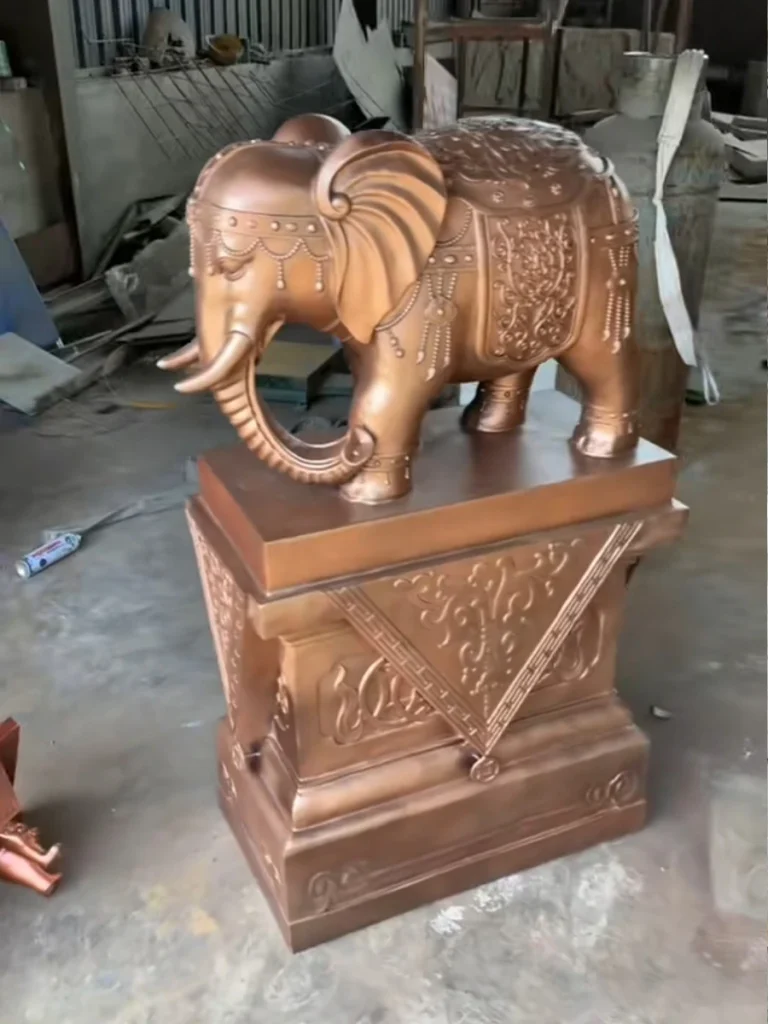
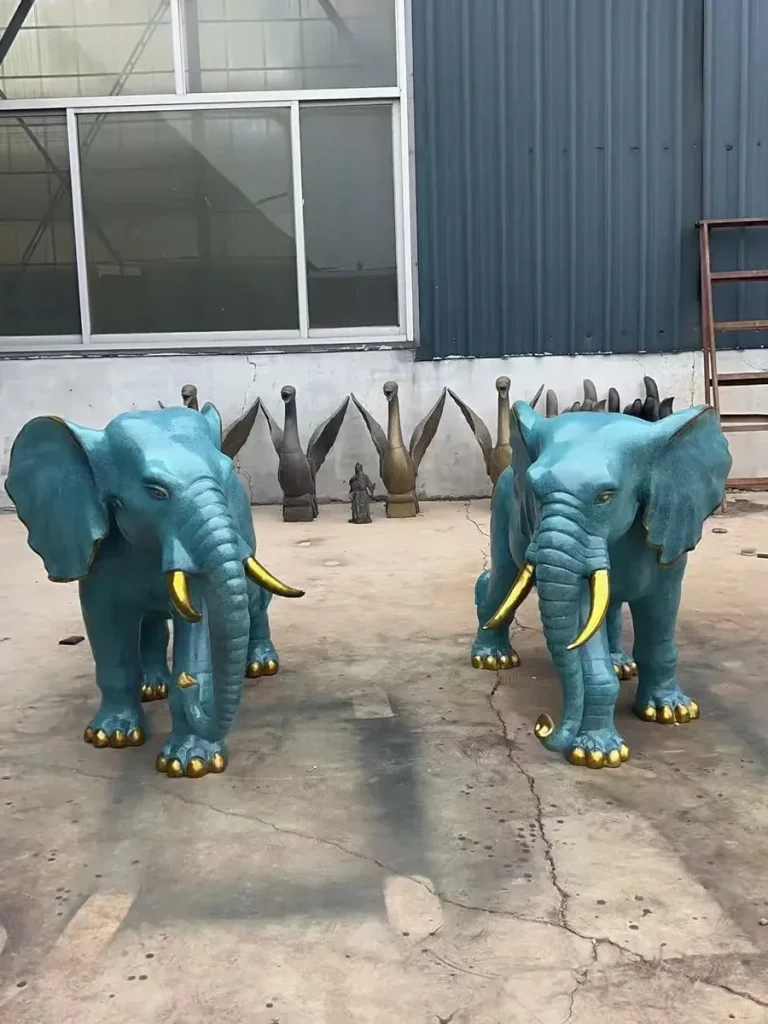
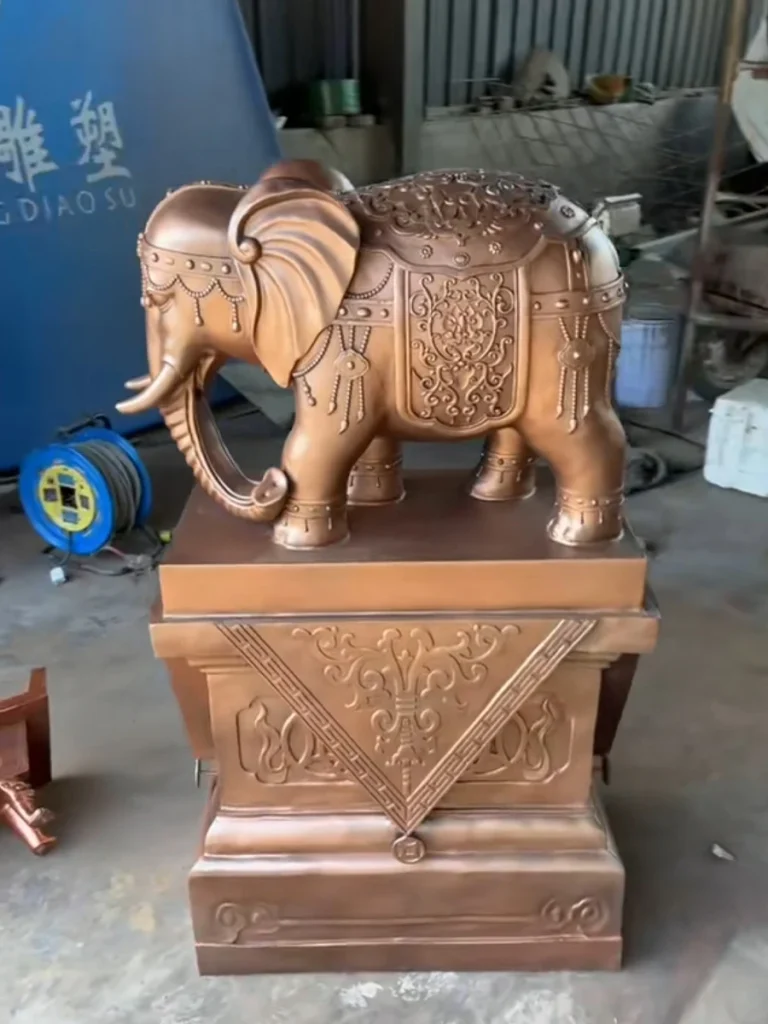
In contrast, the elephant statue trunk down meaning reflects a quieter, more introspective form of energy.
Rather than projecting fortune outward, the downward trunk is associated with accumulation and stability. Within Feng Shui philosophy, the downward trunk symbolizes the gathering of resources — particularly water energy, which is traditionally linked to wealth.
This posture also reflects the elephant’s natural behavior in the wild. Elephants lower their trunks to drink, to nurture their young, and to interact with the earth. Because of this, the downward trunk is often associated with fertility, longevity, and grounded strength.
Homeowners seeking financial stability, family growth, or emotional balance often prefer this style of sculpture.
Direction and Placement
The meaning of a statue is shaped not only by Trunk Up or Down, but also by its orientation within the home. In Feng Shui, direction matters deeply.
A particularly important concept involves whether the elephant is facing the door or facing inward toward the home. This directional symbolism influences whether the statue is believed to attract external opportunities or protect the energy already present inside the space.
Placement strategies will be explored in detail in the next section of this guide.
How to Place Elephant Statues in Your House for Maximum Feng Shui Benefit
Once you understand the symbolism of the elephant, the next question naturally follows: how to place elephant statue in house so its energy truly supports the home.
Placement is the essence of Feng Shui. A sculpture does not merely occupy space; it participates in the movement of energy throughout the environment. When clients ask me where to put elephant statues, I often explain that elephants behave like wise guardians. Their direction, pairing, and environment determine how they influence the flow of prosperity, protection, and harmony.
Below are the most traditional and effective placement strategies used in Feng Shui interior design.
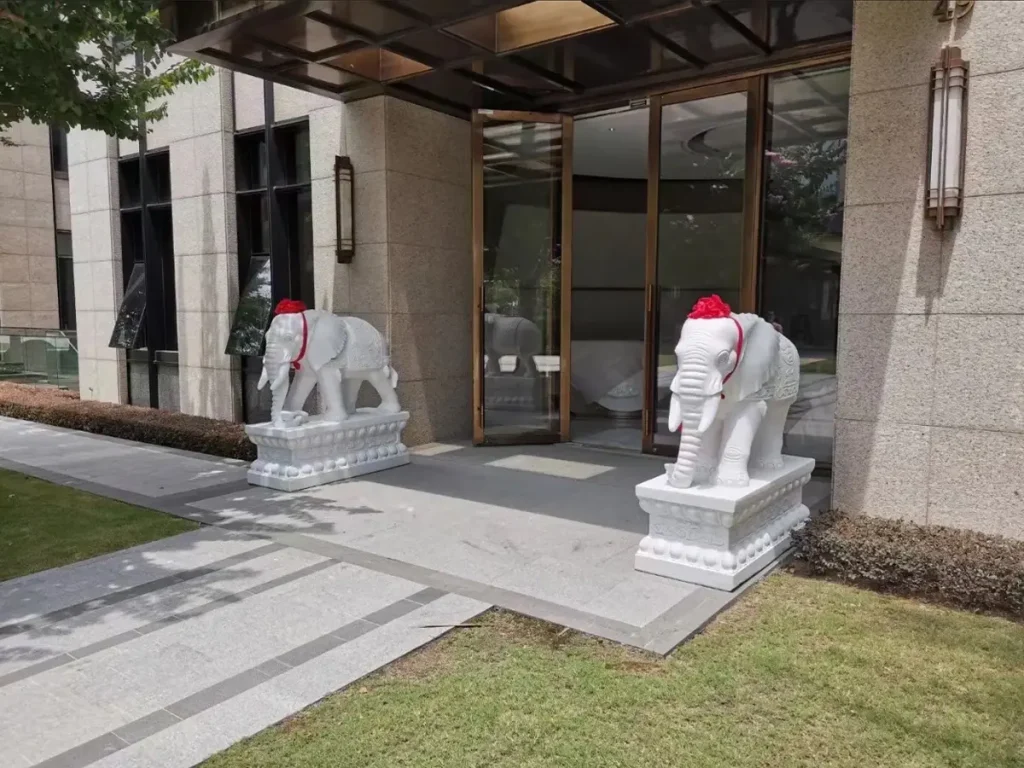
The Entrance or Foyer: Guardian of the Home
The entrance is one of the most powerful locations for an elephant statue because it represents the threshold between the outside world and the private sanctuary of the home.
A carefully positioned elephant statue facing door can influence how energy enters the space.
Two common placements are used:
- Facing inward toward the house
This position symbolizes welcoming wealth, opportunity, and good fortune into the home. The elephant appears to be carrying blessings inside. - Facing outward toward the door or exterior
In this orientation, the elephant acts as a guardian. It symbolically protects the household from negative influences and unwanted energy.
In grand estates or large foyers, elephants are often placed in pairs on each side of the entrance. This creates balance and amplifies the protective symbolism. The visual effect is also powerful — guests feel the dignified presence of guardians before they even step fully inside.
Even a single statue placed on a console table near the entrance can create a sense of grounded stability.
The Bedroom: Harmony, Fertility, and Emotional Balance
In Feng Shui, the bedroom represents the most intimate and sensitive energy of the home. Objects placed here influence emotional connection, fertility, and long-term harmony between partners.
For this reason, elephants in the bedroom are traditionally placed in pairs.
Two elephants symbolize partnership, loyalty, and mutual support. Their calm and nurturing nature reflects the behavior of elephant families in the wild, where herds are known for their deep social bonds and protective instincts.
Common placements include:
- On a dresser or cabinet facing the bed
- On bedside tables as symmetrical decorative pieces
- On a shelf that overlooks the room
Many homeowners ask: can we keep single elephant statue at home?
The answer is yes. A single elephant can absolutely be placed in a home and still carry meaningful symbolism. However, Feng Shui traditions often recommend pairs in relationship spaces such as bedrooms to strengthen unity and emotional connection.
A single statue is usually better suited for professional or financial areas of the home.
The Office: Strengthening Leadership and Career Stability
In a home office or executive workspace, elephant statues symbolize strategic intelligence and leadership.
Elephants are creatures known for their remarkable memory and long-term awareness. Within Feng Shui symbolism, this translates into career stability, wise decision-making, and steady professional growth.
Ideal placements include:
- Behind the desk, symbolizing strong support in one’s career
- On a bookshelf or display cabinet representing knowledge and wisdom
- On a desk corner facing inward toward the workspace
For entrepreneurs and executives, an elephant positioned behind the chair can symbolically represent a powerful supporter standing at one’s back.
This placement encourages confidence, resilience, and clear thinking when making important decisions.
Choosing the Right Material: Bronze, Stone, Stainless Steel, Weathering Steel and Artistic Elephant Sculptures
Beyond placement, the material of the sculpture also influences its visual presence and symbolic energy.
In both classical art traditions and Feng Shui philosophy, materials carry their own elemental qualities. Choosing the right sculpture means balancing artistic beauty with the energetic character of the material itself.
Bronze and Metal: Authority, Strength, and Timeless Craftsmanship
A bronze elephant sculpture carries a powerful sense of authority and permanence.
Bronze has been used for thousands of years to create royal monuments and sacred statues. Its weight, color, and durability evoke leadership and stability — qualities naturally aligned with the symbolism of the elephant.
Many traditional bronze sculptures are created using Lost-wax casting, an ancient metalworking technique developed over 5,000 years ago. This method allows artists to capture extremely fine details, from the folds of the elephant’s skin to the subtle curve of the trunk.
Metal sculptures also offer excellent Corrosion resistance, making them suitable for both interior spaces and outdoor landscapes. A well-crafted metal elephant sculpture can stand gracefully in a garden courtyard or near a grand entry path for decades.
In luxury estates, bronze elephants are often used as statement pieces in entrances, libraries, or executive offices. Their visual weight conveys quiet power without overwhelming the room.
Stainless Steel & Weathering Steel: Modern Landscape Elephant Sculptures
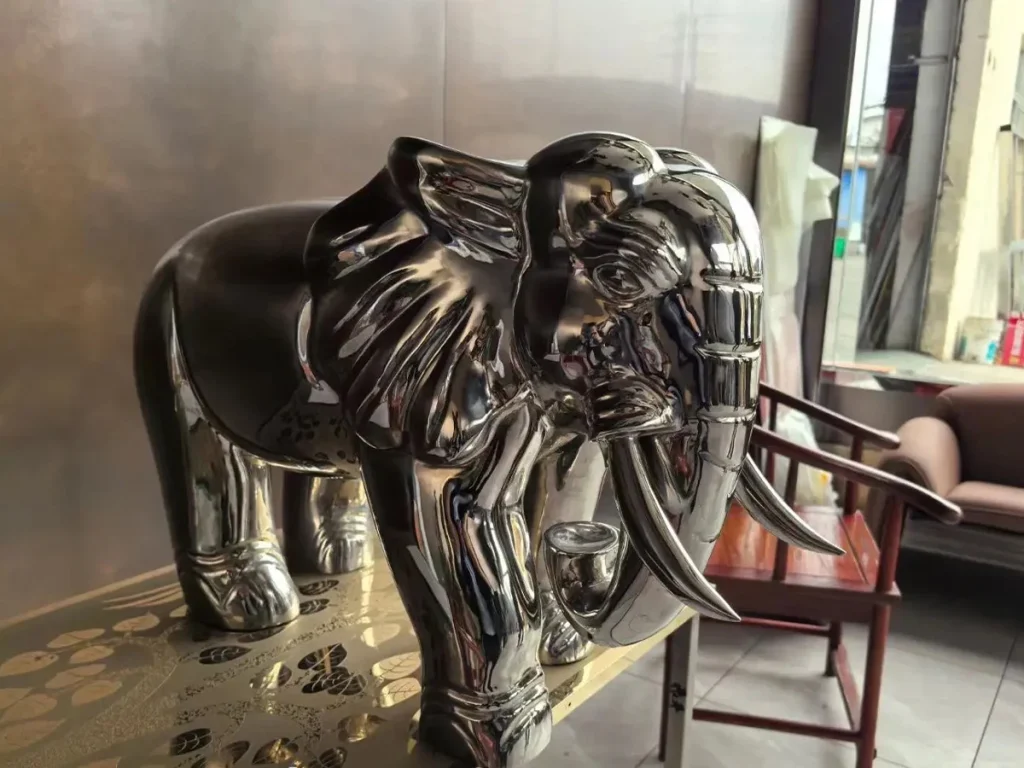
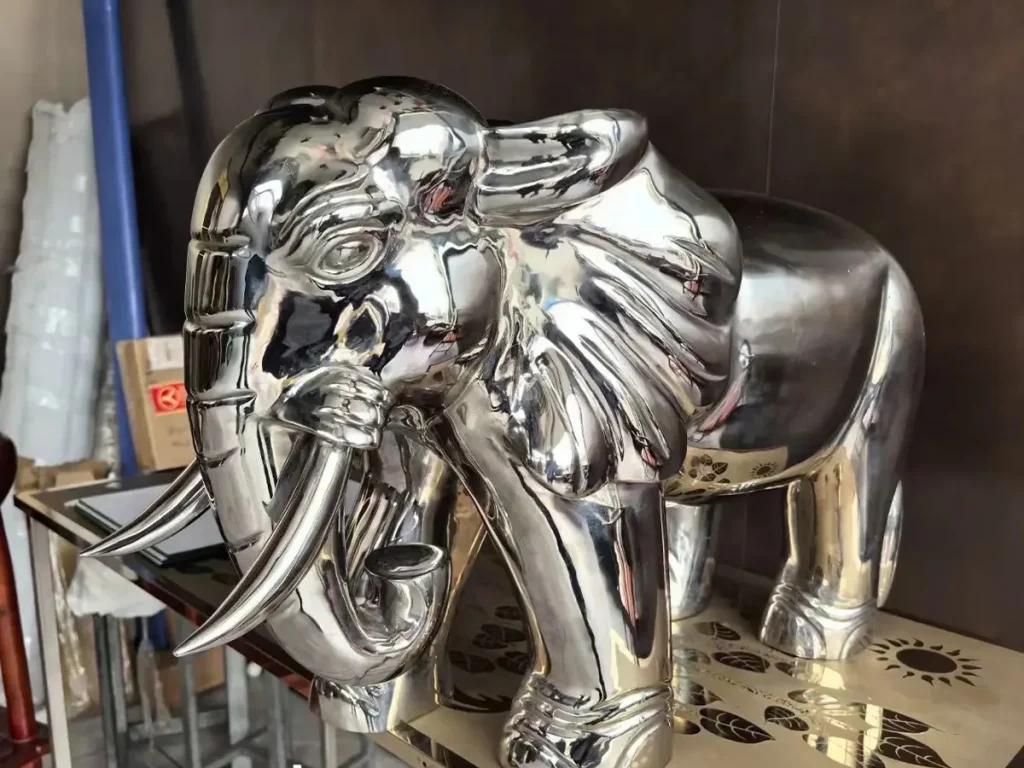
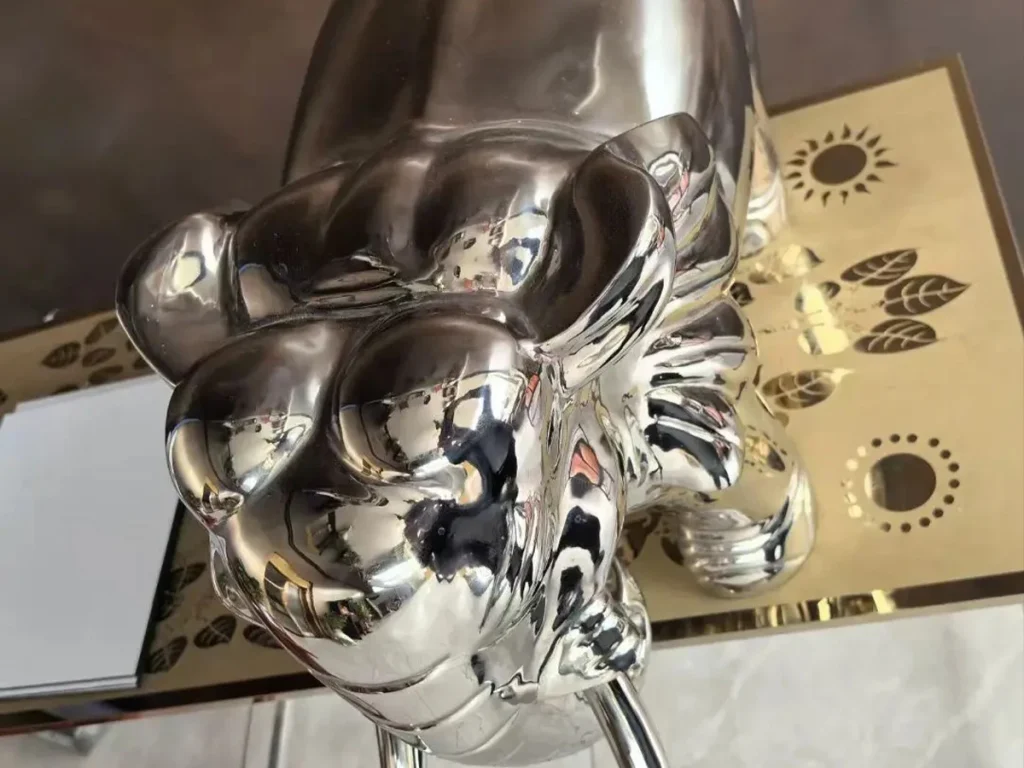
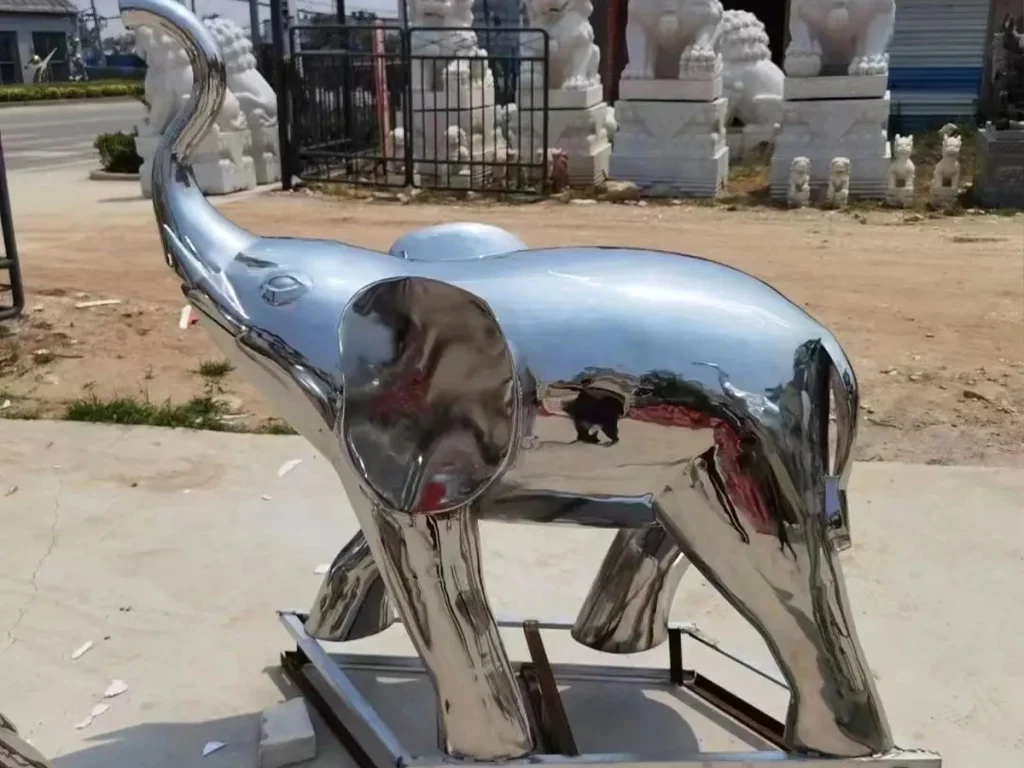
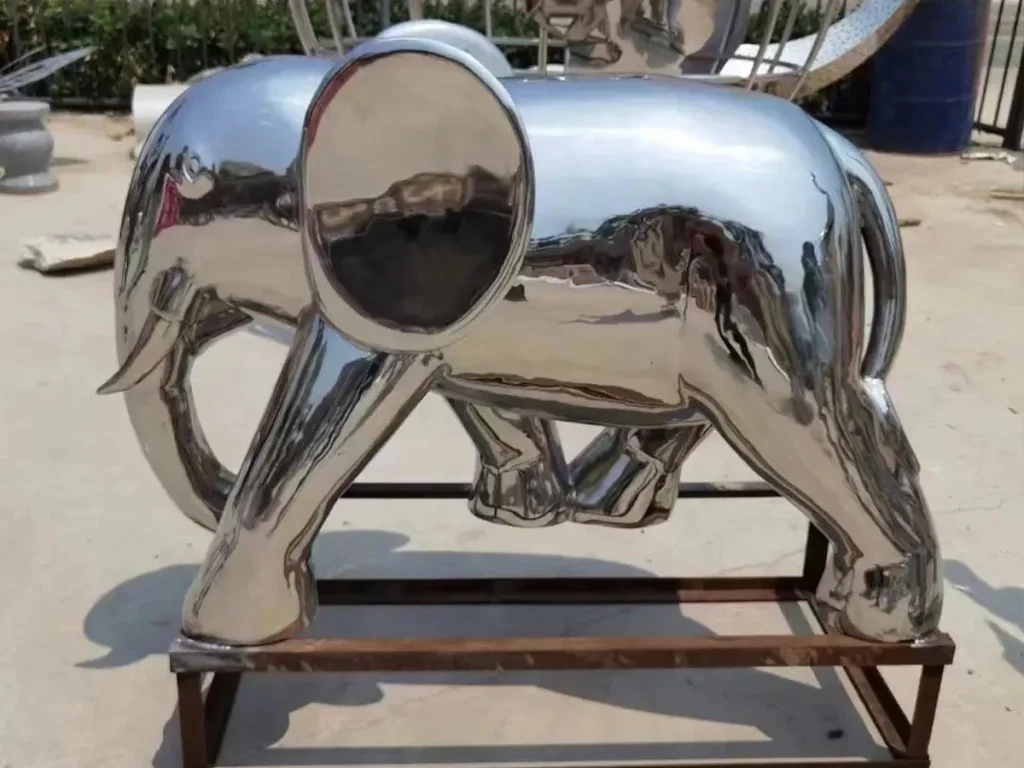
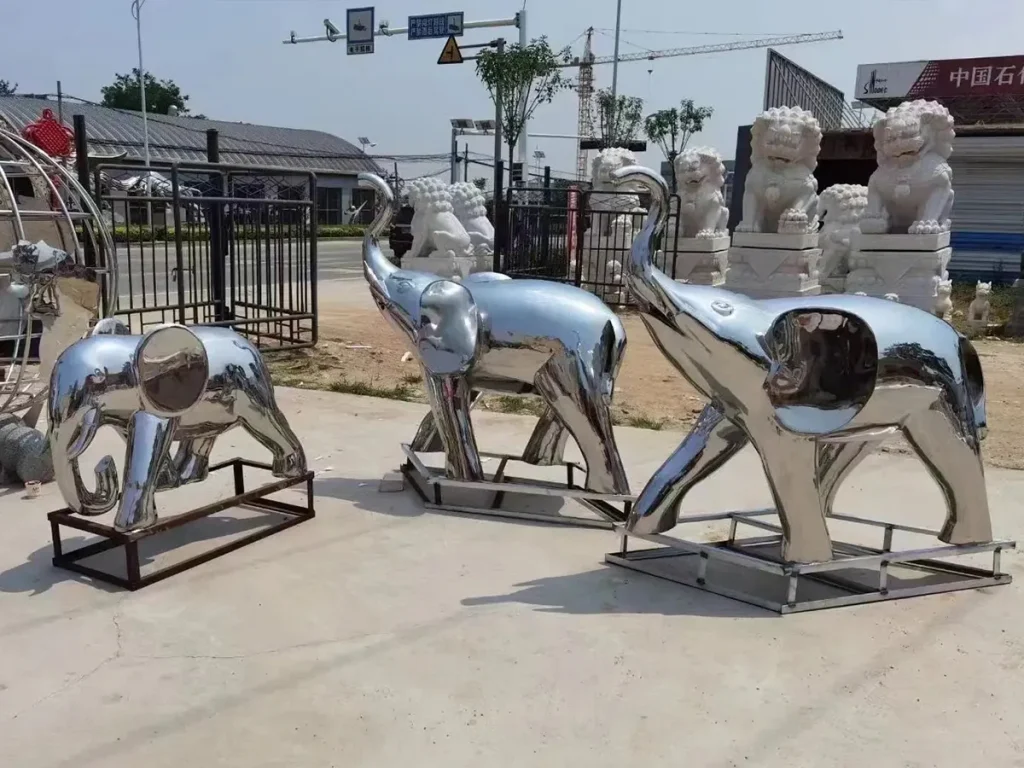
In contemporary landscape design, stainless steel elephant sculptures and weathering steel (Corten steel) elephants have become increasingly popular for modern architecture and public art spaces. A polished stainless steel elephant reflects light and surroundings like a mirror, creating a striking visual presence in plazas, hotel gardens, and modern residential courtyards. This material is also valued for its excellent corrosion resistance, making it ideal for large outdoor installations that must withstand rain, sunlight, and seasonal weather changes.

In contrast, Corten steel elephant sculptures develop a warm, natural rust-colored patina over time. This protective surface gives the sculpture an earthy, organic character that blends beautifully with contemporary landscapes and natural environments. Designers often choose weathering steel elephants for parks, sculpture gardens, and large estate landscapes where the artwork can age gracefully while maintaining strong structural durability.
Stone and Marble: Grounded Energy and Natural Beauty
If bronze represents authority, stone represents endurance and grounding.
A carved marble elephant carries the calm stability of the earth itself. Stone sculptures have a tactile presence that modern synthetic materials cannot replicate. The subtle variations of Natural stone texture give each sculpture a unique personality.
Marble elephants are particularly popular in classical gardens, terraces, and entry courtyards where they echo the traditions of European and Asian palace architecture.
Another revered material in Asian art is jade. A jade elephant sculpture is often associated with prosperity and purity. Jade has long been considered a stone of wealth and spiritual refinement, making it a meaningful decorative piece for offices, wealth corners, or family living spaces.
Stone elephants bring a sense of permanence to a home. Their presence feels steady and reassuring — like a quiet mountain anchoring the surrounding landscape.
Modern Artistic Interpretations
In contemporary luxury design, elephant sculptures have also evolved into striking artistic statements.
A dramatic example is the surrealist salvador dali elephant sculpture, inspired by the dreamlike paintings of Salvador Dalí. These sculptures depict elephants with impossibly long, delicate legs supporting massive bodies.
The visual contrast between weight and fragility creates a fascinating artistic tension. Rather than traditional symbolism, these pieces focus on imagination and surreal beauty.
In modern interiors, such sculptures often function as an Artistic centerpiece — a conversation piece that bridges classical symbolism with contemporary art.
For collectors and designers, the beauty of elephant sculpture lies in this diversity. From ancient bronze guardians to avant-garde interpretations, the elephant continues to evolve as both a cultural symbol and a powerful sculptural form.
In the final section of this guide, we will explore how elephant statues function in outdoor spaces, gardens, and large estate landscapes — and how they can transform an ordinary setting into a place of quiet majesty.
Large Outdoor Elephant Statues: Grand Statements for Gardens and Parks
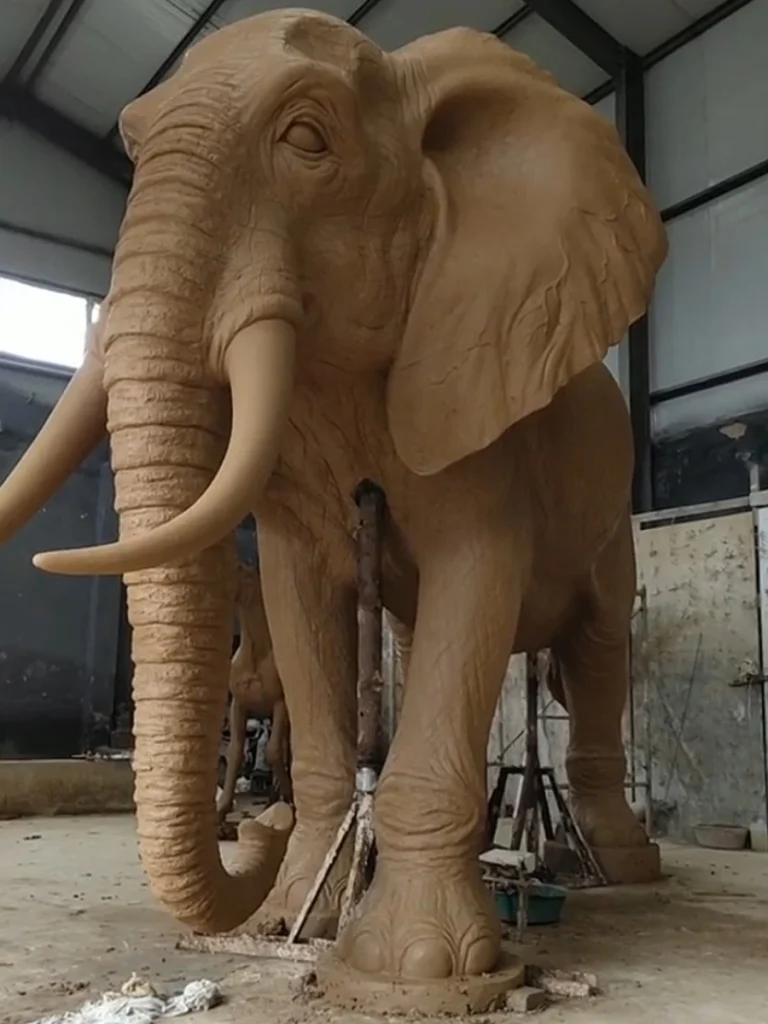

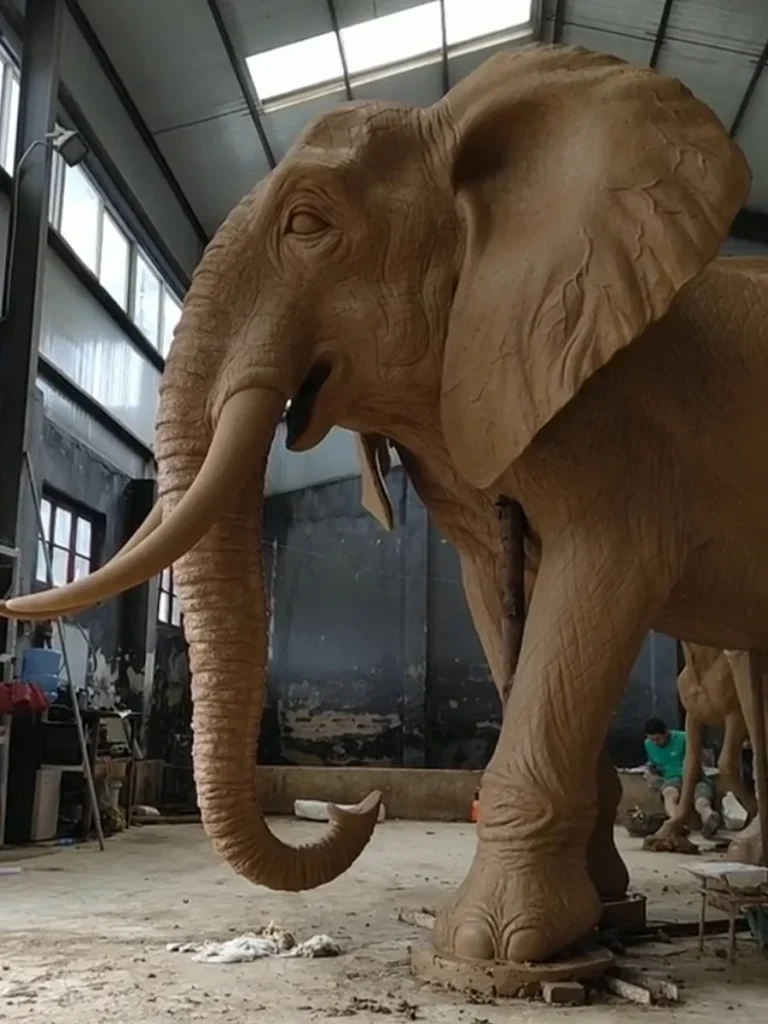

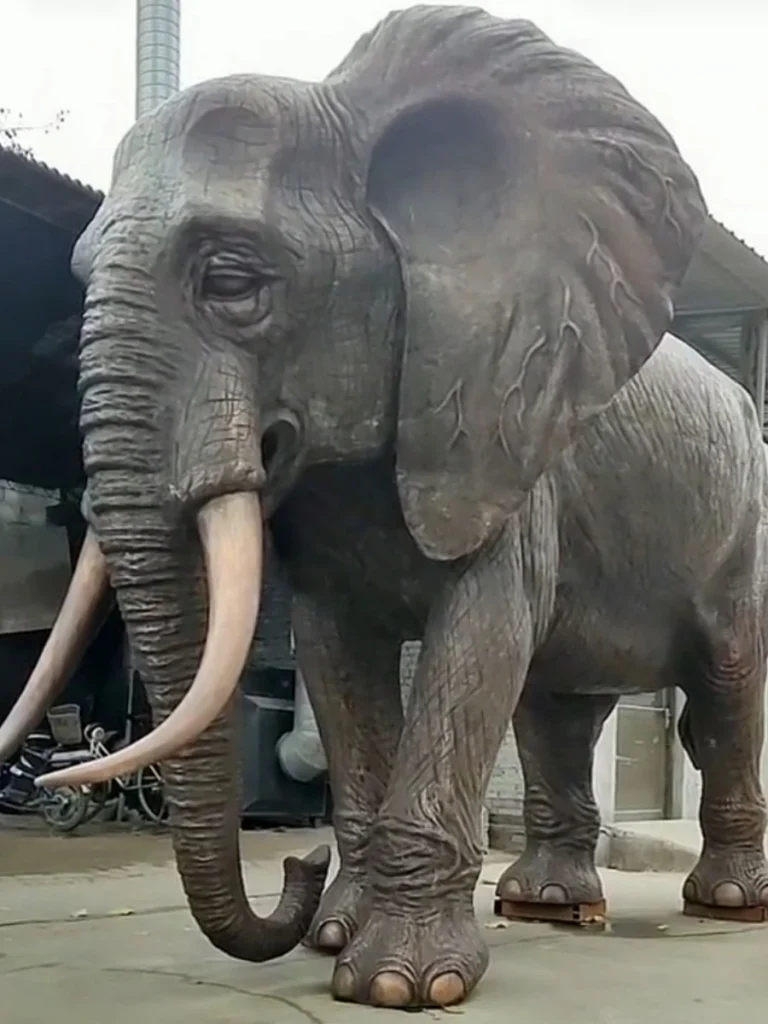
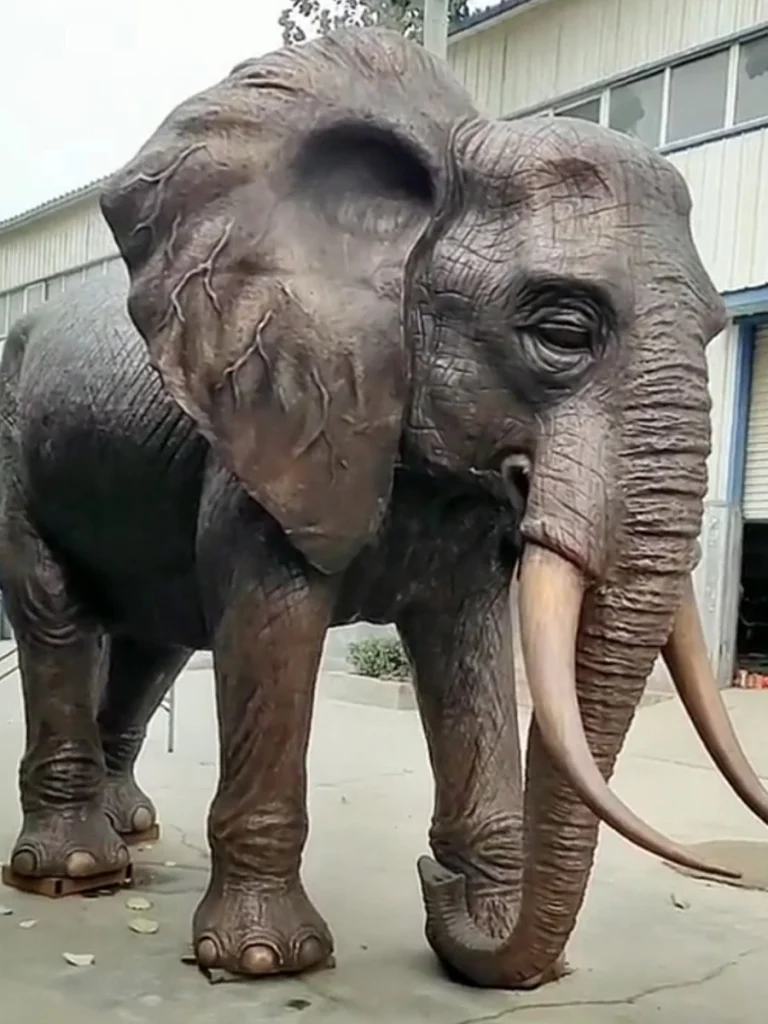
In landscape design, scale has emotional power. A carefully positioned elephant sculpture can transform an ordinary garden into a space of majesty and symbolic presence.
Many luxury estates choose large ornamental elephants as focal points for driveways, courtyards, and garden axes. The size of the sculpture immediately establishes a sense of grandeur. When guests arrive and encounter a life-sized elephant, the effect is unforgettable — a moment where art, nature, and architecture meet.
A big elephant statue placed at the end of a driveway or beside a reflecting pool creates a strong visual anchor. Designers often use pairs to frame entrances or pathways, guiding visitors naturally toward the main residence.
Public spaces frequently use elephants in a similar way. Botanical gardens, sculpture parks, and resort landscapes often feature monumental elephant forms because they communicate strength, stability, and calm dignity.
From a Feng Shui perspective, large elephants placed outdoors symbolize protection of the entire property. Their commanding presence suggests that the land itself is guarded by a wise and powerful force.
Yet behind this beauty lies an important technical reality.
An outdoor elephant sculpture must be engineered carefully to withstand environmental forces. Large sculptures are exposed to wind loads, ground moisture, and seasonal temperature shifts. Without proper structural planning, even the most beautiful statue can become unstable.
For this reason, professional installations require:
- Reinforced internal armatures for metal sculptures
- Deep concrete foundations for heavy stone pieces
- Anchoring systems designed to resist wind pressure
A life-sized bronze elephant, for example, may weigh several hundred kilograms. Proper anchoring ensures that the sculpture remains stable even in strong storms.
Many homeowners initially search online for elephant statues near me, hoping to find local retailers. In reality, high-quality monumental sculptures are rarely purchased from local stores. Most are factory-cast or hand-carved by specialized sculpture studios, where artists and engineers collaborate to produce custom sizes and materials.
This factory-direct approach allows collectors to control scale, posture, and material — whether the project requires a garden centerpiece or a monumental public artwork.
When designed thoughtfully, a large elephant sculpture does more than decorate a landscape. It establishes a sense of narrative and permanence, turning the garden into a place of quiet power.
Gifting Elephant Statues: Is it Good Luck to Give an Elephant as a Gift?
Throughout Asia and many parts of the world, elephant statues are considered one of the most meaningful symbolic gifts.
People frequently ask: can we gift elephant statue to someone?
The answer is yes — and in many traditions it is considered extremely auspicious.
Elephants symbolize wisdom, protection, and prosperity. Because of this, they are often given during important life transitions such as:
- Housewarming celebrations
- Business openings
- Promotions or career milestones
- Weddings or anniversaries
Giving an elephant statue in these situations represents a blessing for long-term stability and success. The symbolism suggests that the recipient’s life will be supported by wisdom and strength, just as an elephant supports its herd.
Smaller sculptures are especially popular as office gifts. Placed on a desk or shelf, they symbolize strategic intelligence and leadership — qualities valued in professional environments.
Another question often appears in cultural discussions: is it bad to keep elephant statue at home?
This belief occasionally surfaces in online forums, yet it has no foundation in traditional Feng Shui or historical symbolism. In fact, the opposite is true. Elephant statues have long been used as protective and auspicious symbols within the home.
In many cultures they are placed near entrances specifically to guard the household from negative influences.
Confusion sometimes arises because of a Western phrase: the white elephant gift meaning.
In Western culture, a “white elephant gift” refers to something expensive but impractical — a gift that becomes a burden to maintain. The phrase originates from a historical legend about Southeast Asian kings gifting rare white elephants to courtiers they wished to ruin financially, because the animals were sacred and extremely costly to care for.
However, in Eastern spiritual symbolism, the white elephant is profoundly sacred. It represents divine wisdom, purity, and royal blessing — a meaning rooted in the legendary dream associated with the birth of the Buddha.
Understanding this distinction helps clarify that elephant statues, when given as gifts, are overwhelmingly positive symbols of prosperity and protection.
Maintenance Guide: How to Care for Your Elephant Sculptures
A well-crafted sculpture can last for generations, but proper care is essential to preserve its beauty.
Fortunately, maintaining elephant statues is relatively straightforward when a few simple principles are followed.
Bronze Care
Bronze sculptures develop a natural surface patina over time. This protective layer gives the metal its rich color and shields it from environmental damage.
Routine cleaning bronze statues requires only gentle treatment.
A typical care process includes:
- Rinsing the sculpture with clean water to remove dust and debris
- Washing lightly with mild soap and a soft cloth
- Drying the surface thoroughly
- Applying a thin layer of protective wax to maintain the patina
This waxing process helps preserve color and improves resistance to moisture and oxidation.
Outdoor bronze statues may develop subtle tonal changes over the years. Many collectors actually value this aging process, as it adds character and depth to the sculpture.
Stone Care
Stone sculptures require a different approach.
The primary goal when preserving stone sculptures is preventing moisture infiltration and structural cracking. Natural stone expands and contracts slightly with temperature changes, so protection from excessive water exposure is important.
Basic outdoor statue maintenance for stone includes:
- Periodic gentle washing with water and a soft brush
- Avoiding harsh chemical cleaners
- Ensuring proper drainage around the base
- Inspecting for small cracks that may develop over time
In colder climates, freeze-thaw cycles can be particularly damaging. Sealing porous stone surfaces can help reduce moisture penetration and extend the life of the sculpture.
With thoughtful care, both bronze and stone elephants can endure for decades — even centuries. Their presence becomes part of the architectural memory of a place, quietly witnessing the lives and stories that unfold around them.
Stainless Steel and Weathering Steel Care
Modern stainless steel elephant sculptures are prized for their durability and minimal maintenance requirements. Thanks to their excellent corrosion resistance, these sculptures typically require only occasional cleaning with water and a soft cloth to remove dust or environmental residue. For highly polished mirror surfaces, a gentle stainless steel cleaner can help maintain the reflective finish and keep the sculpture looking pristine in outdoor landscapes.
Weathering steel (Corten steel) elephant sculptures require a different approach. Unlike other metals, Corten steel is designed to develop a stable rust-like patina that protects the internal structure from further corrosion. Because this protective layer is intentional, it should not be polished or sealed in the same way as bronze. Routine outdoor statue maintenance simply involves ensuring proper drainage around the sculpture base and occasionally removing debris that may trap moisture against the surface.
Frequently Asked Questions About Elephant Sculptures
1. Do elephant statues really bring good luck?
Yes, elephant statues have long been regarded as powerful symbols of good fortune across many cultures. In Feng Shui philosophy, the elephant is believed to attract positive chi, the life energy that supports prosperity, harmony, and protection within a space. Because elephants embody calm strength and wisdom, they are often positioned near entrances or in key areas of the home to invite abundance and guard against negative influences.
Beyond spiritual symbolism, the presence of an elephant sculpture also influences the emotional atmosphere of a space. Its steady and dignified posture subtly communicates stability and confidence, qualities that naturally support success and well-being.
2. What is the symbolism and meaning of an elephant statue?
The symbolism of an elephant statue is remarkably rich. Across Asia, Africa, and many Western traditions, elephants represent wisdom, strength, longevity, fertility, and royal authority.
Their extraordinary memory and intelligence made them symbols of strategic leadership and knowledge. Their immense physical presence represents protection and resilience. In many royal courts throughout history, elephants were associated with kingship and power, which is why elephant imagery frequently appears in palaces, temples, and ceremonial art.
When placed thoughtfully in a home or garden, an elephant sculpture carries this long cultural heritage of dignity, protection, and enduring strength.
3. What does a trunk up vs. trunk down statue mean?
The position of the trunk significantly influences the symbolic meaning of an elephant statue.
A trunk-up elephant represents celebration, victory, and the release of blessings. In Feng Shui, it is believed to shower the surrounding space with good fortune and attract new opportunities. This form is commonly associated with joyful milestones and success.
A trunk-down elephant, by contrast, symbolizes the quiet accumulation of wealth and stability. The downward trunk reflects grounding energy, longevity, and the storing of internal strength. Many people choose this posture when they wish to create financial stability and emotional balance within the household.
4. What are the specific requirements for placing an elephant statue according to Vastu/Feng Shui?
Both Feng Shui and Vastu traditions emphasize that sacred or symbolic objects should be placed in clean, balanced environments. An elephant statue should be displayed in a well-lit area where it can be appreciated and where energy flows freely.
Avoid placing elephant sculptures in bathrooms, storage rooms, or areas with heavy clutter. These environments disrupt the calm and dignified energy associated with the elephant.
It is also recommended not to position them facing dark corners or obstructed spaces. Instead, allow the sculpture to interact with open, harmonious surroundings where its symbolic presence can fully express its protective and prosperous qualities.
5. Where is the best place to put an elephant statue in a house?
The most powerful placement for an elephant statue is usually near the front door or foyer, where it can act as a guardian welcoming prosperity into the home.
In bedrooms, elephants placed in pairs symbolize fertility, loyalty, and harmonious relationships between partners. This placement is especially meaningful for couples seeking to strengthen emotional bonds.
In a home office or workspace, elephant sculptures represent leadership, intelligence, and strategic thinking. Placing one near the desk or behind the chair symbolically reinforces career stability and strong professional support.
6. Which direction should an elephant statue face? (Should it face the door?)
Direction plays an important role in Feng Shui symbolism. When an elephant statue is facing inward toward the door, it symbolically draws wealth and positive opportunities into the home.
When the elephant faces outward toward the entrance, it functions more like a protective guardian. In this orientation, the sculpture symbolically shields the household from negative energy or disruptive influences.
Both directions are valid, and the choice depends on the intention of the homeowner. Some grand entrances even feature paired elephants, one welcoming abundance inward while the other guards the threshold.
7. Are elephant statues suitable as gifts?
Elephant sculptures are widely considered excellent symbolic gifts. In many cultures, they represent prosperity, wisdom, and protection — all qualities people wish to share with loved ones during important life events.
They are particularly appropriate for housewarming celebrations, weddings, anniversaries, or business grand openings. The symbolism suggests that the recipient’s home or enterprise will be blessed with stability and long-term success.
Because elephants are also associated with loyalty and family bonds, smaller sculptures can be meaningful personal gifts that express lasting friendship and support.
8. Are elephant statues a good investment?
High-quality elephant sculptures can indeed be valuable long-term investments, especially when crafted by skilled artisans using premium materials.
Pieces made from foundry bronze using traditional casting methods or hand-carved natural marble often retain or increase their value over time. These works are not merely decorative objects; they are collectible art pieces that reflect craftsmanship and cultural history.
Many collectors view them as heirloom sculptures that can be passed down through generations, carrying both artistic and symbolic significance.
9. What is the special meaning of a mother and baby elephant statue?
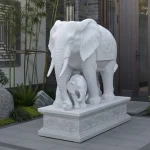
A mother and baby elephant sculpture carries one of the most touching symbolic messages in art.
Elephants are famous for their deep family bonds and nurturing social structures. A sculpture depicting a mother guiding her calf represents maternal protection, unconditional love, and the strength of family unity.
In Feng Shui design, this motif is often recommended for couples hoping to conceive or families wishing to strengthen emotional harmony within the household. The image of the mother protecting the calf reflects a powerful promise of care and continuity across generations.
10. Does the color of the elephant statue matter in Feng Shui?
Yes, the color or material tone of an elephant statue can subtly influence its symbolic effect within Feng Shui.
Gold or bronze elephants are often associated with prosperity, financial success, and authority. Their warm metallic tones amplify wealth-attracting energy.
White elephants symbolize purity, spiritual elevation, and divine blessing. Their meaning is deeply connected to sacred traditions and royal symbolism in Asia.
Black or dark stone elephants provide grounding and strong protection. Their heavier visual presence stabilizes the energy of a room and creates a sense of quiet strength.
When selecting a sculpture, the ideal choice is one that resonates both aesthetically and symbolically with the environment in which it will live.
With their rich cultural history, profound symbolism, and commanding beauty, elephant sculptures remain one of the most meaningful decorative forms in both interior and landscape design. Whether placed at a home’s entrance, within a tranquil garden, or displayed as a refined artistic centerpiece, they continue to embody wisdom, strength, and the quiet promise of prosperity.