Get in touch with Yun-Sculpture company
Atlas Greek God Statue: The Titan Who Holds the World

Atlas is a Titan in Greek mythology condemned by Zeus to bear the weight of the heavens on his shoulders for eternity, following the defeat of the Titans in their war against the Olympian gods. The image of Atlas straining beneath a celestial globe — muscles taut, head bowed under the load — is one of the most frequently sculpted subjects in Western art, appearing everywhere from second-century Roman marble to the 45-foot bronze colossus outside Rockefeller Center. This guide covers the mythology behind the figure, the most significant historical Atlas statues, and what to consider when commissioning one in bronze or marble.
Table of Contents
Table of Contents
Who Is Atlas in Greek Mythology?
Atlas was one of the Titans — the generation of primordial gods who ruled before the Olympians. He was the son of the Titan Iapetus and the Oceanid Clymene, and he led the Titans in the Titanomachy, the decade-long war against Zeus and the Olympian gods for control of the cosmos.
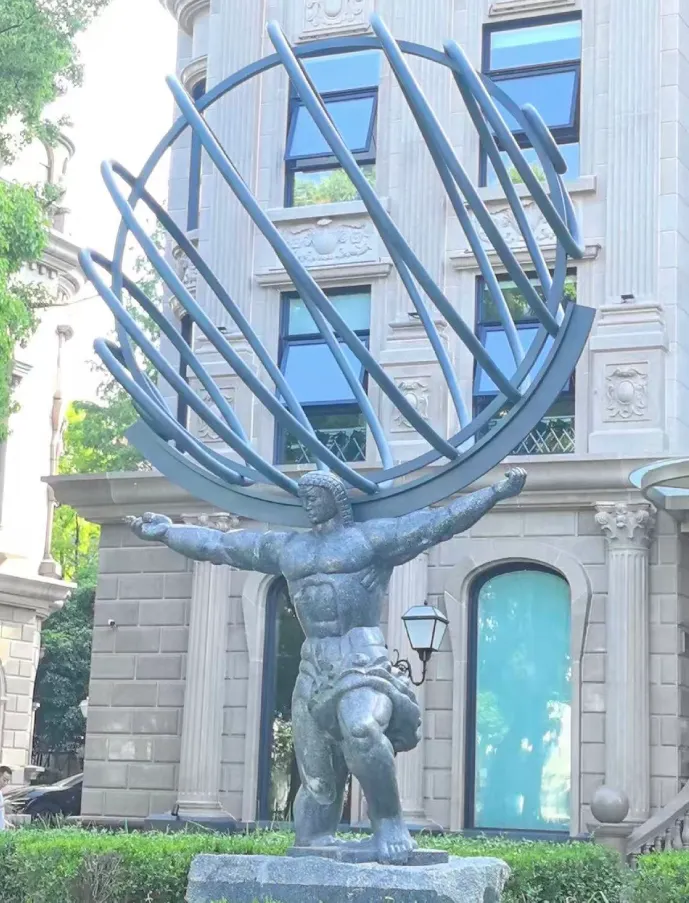
When the Titans lost, Zeus distributed punishments to the defeated leaders. Atlas received a sentence unlike any other: he was condemned to stand at the western edge of the world and hold up the sky, preventing it from collapsing onto the earth below. This was not a temporary punishment but an eternal one — Atlas bears his burden permanently, without rest or release.
It is worth noting a detail that most sculptural representations simplify: ancient sources describe Atlas supporting the celestial sphere — the dome of the heavens and the rotating sky — not the physical planet Earth. The image of Atlas holding a globe representing the Earth itself is a later artistic convention that became so widespread it eclipsed the original meaning. Today, “Atlas holding the world” is the standard visual shorthand, even though the mythology technically describes him holding up the sky.
Why Was Atlas Cursed to Hold the World?
Atlas was punished for his role as a leader of the Titans in their rebellion against Zeus. The Titanomachy was the foundational conflict of Greek cosmology — the war that determined whether the older generation of gods (the Titans) or the younger generation (the Olympians, led by Zeus) would rule the universe.
When the Olympians won, most defeated Titans were imprisoned in Tartarus, the deep abyss beneath the underworld. Atlas received a different and arguably crueler sentence: visible, eternal, physical labor at the edge of the known world, holding apart the two halves of the cosmos that, according to early Greek cosmology, would otherwise collapse into each other.
The punishment carries clear symbolic weight: Atlas represents the old order, defeated but not destroyed, forced into permanent service supporting the very structure of the world that the new order now governs.
Why Is Atlas So Important in Mythology and Art?
Atlas occupies a unique position in Greek mythology: he is neither hero nor villain, neither triumphant nor entirely tragic. He simply endures — a figure defined by permanent, uncomplaining physical burden. This quality is precisely what has made him one of the most enduringly sculpted subjects in Western art for over two thousand years.
The pose itself — a figure straining under an impossible weight, muscles engaged, head bowed but not broken — gives sculptors a single, immediately legible image that communicates endurance, burden, and stoic strength without requiring any narrative context. A viewer who has never heard the word “Titanomachy” instantly understands what an Atlas statue depicts and what it means.
This is why Atlas appears not just in classical and Renaissance sculpture but in modern architectural and civic contexts: he has become a universal visual metaphor for bearing weight — physical, institutional, or metaphorical — with dignity.
What Was Atlas’s Connection to Hercules?
Atlas appears in one of the Twelve Labors of Hercules — the eleventh labor, to retrieve the golden apples of the Hesperides, which were guarded in a garden near where Atlas stood his eternal post.
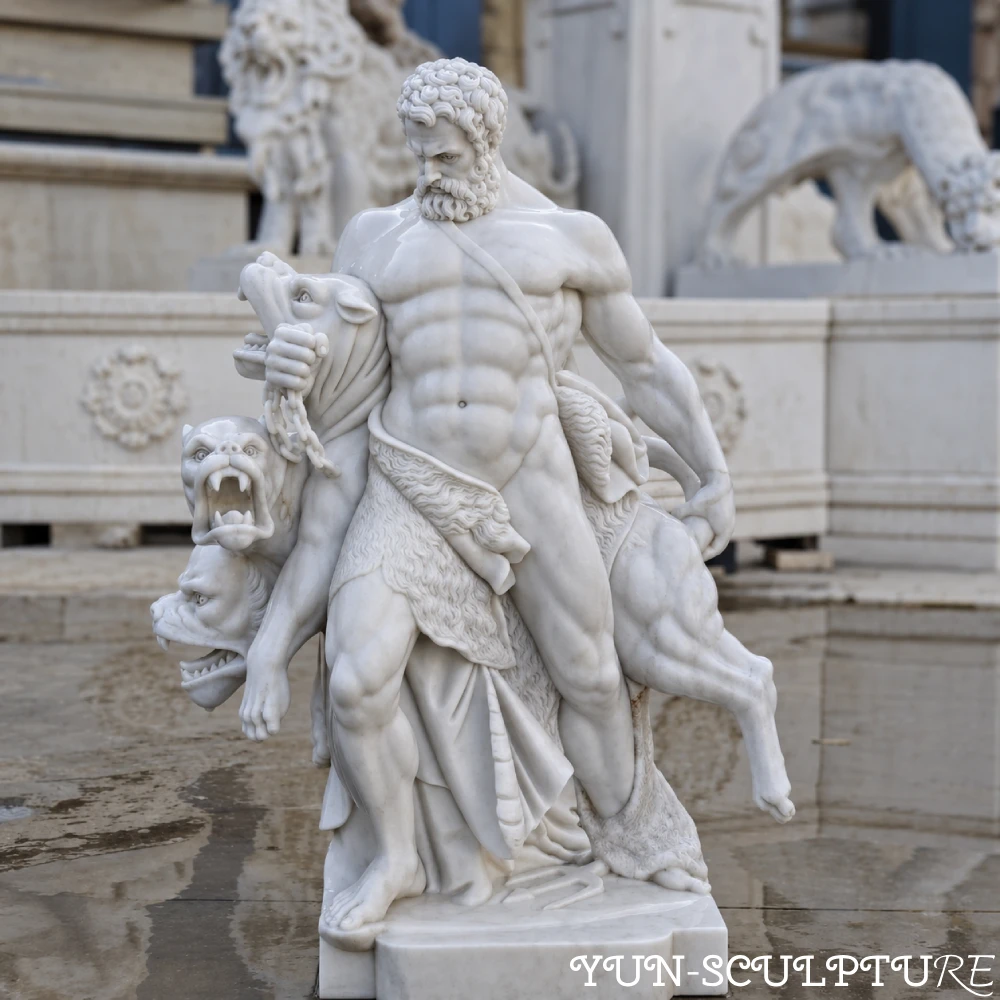
In most versions of the myth, Hercules approaches Atlas and offers to hold up the sky temporarily if Atlas will retrieve the apples himself, since Atlas alone knows their location among his daughters, the Hesperides. Atlas, eager for any relief from his burden, agrees and sets off to gather the apples — leaving Hercules holding the sky.
When Atlas returns, he is reluctant to take back his burden, suggesting instead that he deliver the apples himself while Hercules continues to hold the sky. Hercules, recognizing the trick, agrees — but asks Atlas to hold the sky again briefly so he can adjust his cloak for better support. The moment Atlas takes the weight back, Hercules picks up the apples and leaves, restoring the original arrangement.
The episode reinforces Atlas’s defining characteristic: he is eternally, inescapably bound to his task. Even a demigod’s cleverness cannot permanently free him from it.
The Most Famous Atlas Statues
The Farnese Atlas (2nd century CE) — A Roman marble sculpture, now in the Naples National Archaeological Museum, believed to be the oldest surviving depiction of Atlas bearing the celestial sphere. What makes this piece exceptional is the detail carved into the globe itself: the sculptor included representations of ancient constellations based on contemporary astronomical knowledge, making it one of the earliest surviving celestial globes in any form. Unlike the dramatic public monuments that came later, the Farnese Atlas rewards close, intimate viewing — a reminder that Atlas imagery works at every scale, not only the monumental.
The Atlas of Rockefeller Center (1937) — Without question the most recognized Atlas statue in the world. Created by sculptor Lee Lawrie and installed in front of the International Building on Fifth Avenue, this 45-foot bronze titan holds the celestial spheres aloft in the angular, muscular style of Art Deco design. Conceived and completed during the Depression era, the statue’s imagery of strength under impossible burden carried particular resonance for its time, and it remains one of the most photographed sculptural landmarks in New York City.
Farnese-tradition garden and architectural Atlas figures — Throughout European garden and architectural sculpture from the Renaissance forward, Atlas figures (sometimes called “atlantes” when used architecturally to support a building’s structure) appear holding up balconies, porticos, and decorative globes. This architectural use — Atlas literally supporting a structural element — extends the mythological metaphor into functional building design.
Bronze or Marble for an Atlas Statue?
Both materials suit the subject, though they communicate Atlas’s burden differently.
Bronze is the better choice for capturing the dynamic tension of Atlas’s pose — the strained musculature, the specific angle of the bent knee, the engaged shoulders bearing the load. Bronze also handles the cantilevered weight distribution of a globe resting on raised arms or shoulders more reliably than carved stone, since the casting process allows internal structural support that a single block of marble cannot accommodate at certain poses. For outdoor installation — garden, courtyard, or architectural setting — bronze is the standard recommendation. The dark patina of an aged bronze Atlas also reinforces the gravity of the subject.
Marble suits an Atlas figure intended for indoor display or a more classical, restrained interpretation of the pose — closer to the Farnese tradition than the dynamic Art Deco energy of the Rockefeller Center version. The cool surface and natural veining of marble create a different emotional register: more contemplative endurance than visible strain. For a marble Atlas supporting a globe, the globe itself is sometimes executed in a contrasting material — stainless steel or a different stone — both for structural reasons and to create visual interest between the figure and his burden.
For life-size Greek statues and monumental commissions, the structural engineering of the pose — particularly how the globe’s weight is distributed and supported — is a critical conversation to have with your foundry before production begins.
What Scale Is Right for an Atlas Statue?
Desktop (20–40 cm) — Office and library display. The pose reads clearly even at small scale because of its strong silhouette; appropriate for desk accessories with hidden compartments inside the globe, a common decorative feature at this size.
Tabletop to pedestal (60–100 cm) — Entrance console, mantelpiece, or covered terrace display. Sufficient scale to show muscular detail and the texture of the celestial sphere.
Garden and courtyard scale (150–200 cm) — Life-size to slightly above; the pose’s drama fully resolves at this scale, particularly with the figure elevated on a plinth.
Monumental (300 cm+) — Architectural or civic installation, referencing the Rockefeller Center tradition. Requires significant structural engineering for the globe’s cantilevered weight and is typically quoted as an individual commission.
See our monumental bronze commissions guide for structural and base requirements at large scale.
Frequently Asked Questions
Where is the statue of Atlas holding the world?
The most famous Atlas statue is the 45-foot bronze figure at Rockefeller Center in New York City, created by sculptor Lee Lawrie and installed in 1937 in front of the International Building on Fifth Avenue. The oldest surviving depiction is the Farnese Atlas, a 2nd-century CE Roman marble sculpture housed in the Naples National Archaeological Museum, notable for its detailed carving of ancient constellations on the celestial globe.What does it mean when Atlas is holding the world?
The image represents Atlas’s eternal punishment from Zeus following the Titans’ defeat in the Titanomachy — the war between the Titans and the Olympian gods. Ancient sources describe Atlas as supporting the celestial sphere (the dome of the sky) rather than the physical Earth, though this distinction has largely been absorbed into the popular image of Atlas holding a globe representing the planet. Symbolically, the image represents permanent, uncomplaining endurance under an impossible and inescapable burden.Why was Atlas cursed to hold up the sky?
Atlas was punished for leading the Titans in the Titanomachy, the war against Zeus and the Olympian gods for control of the cosmos. When the Titans lost, most were imprisoned in Tartarus, but Zeus gave Atlas a different sentence: standing at the edge of the world, eternally holding apart the sky and the earth to prevent them from collapsing into each other. The punishment symbolizes the permanent subjugation of the old divine order beneath the new.Is Atlas good or evil in Greek mythology?
Atlas is neither clearly heroic nor villainous in Greek mythology. He led the Titans against Zeus and was punished as a defeated enemy, but ancient sources do not depict him as malevolent — he is portrayed as enduring his eternal burden without complaint, which has led to his cultural reputation as a symbol of stoic strength rather than wickedness. His role in the Hercules myth, where he briefly attempts to trick the hero into permanently taking his burden, shows a more self-interested side, but he is generally remembered as a figure of endurance rather than evil.Who is Atlas to Hercules?
Atlas appears in the eleventh labor of Hercules, in which the hero must retrieve the golden apples of the Hesperides — guarded near where Atlas stood his post. Hercules offers to hold the sky temporarily while Atlas retrieves the apples, since only Atlas knows their location. When Atlas returns and tries to avoid resuming his burden, Hercules tricks him into briefly taking the sky back so he can “adjust his cloak,” then escapes with the apples, leaving Atlas to resume his eternal task.Why is Atlas so important in art and mythology?
Atlas is one of the most frequently sculpted figures in Western art because his pose — a body straining under an impossible weight — communicates endurance and burden instantly, without requiring narrative context. The image has been used continuously from Roman marble (the Farnese Atlas) through Renaissance architecture (where Atlas figures, called atlantes, support buildings) to modern civic sculpture (the Rockefeller Center Atlas). He has become a universal visual metaphor for bearing weight with dignity.Did Atlas have any children?
Yes. Atlas fathered the Hesperides (nymphs who guarded the golden apples sought by Hercules), the Hyades and Pleiades (star clusters personified as nymphs in Greek mythology), and, in some traditions, Calypso, the nymph who detained Odysseus on her island in the Odyssey. His children are frequently associated with celestial and natural phenomena, echoing his own connection to the sky and cosmos.What was Atlas’s weakness?
Atlas’s defining weakness in mythology is his inescapable bondage to his punishment — he has no path to release and, as shown in the Hercules myth, can be tricked even when offered temporary relief. Unlike many mythological figures who have a specific vulnerability (a physical weak point or a fatal flaw), Atlas’s weakness is structural: his punishment is permanent by design, and every attempt to escape it, including the trick he tries on Hercules, ultimately fails.Commission an Atlas Statue from Quyang
Bronze or marble, desktop to monumental scale. The Titan who bears the heavens — cast or carved to your specification, factory direct from Quyang.