Get in touch with Yun-Sculpture company
Greek Gods Statues: Complete Buyer’s Guide to All 12 Olympians

The 12 Olympian gods represent 12 distinct domains of human experience — and 12 different sets of structural requirements in bronze or marble. A buyer who understands what each god carries, and what those attributes demand from the material, can evaluate any Zeus, any Athena, any Poseidon commission with technical clarity rather than guesswork. This guide is that reference: every Olympian covered, with material recommendations, placement logic, and scale guidance for each. It is also the index to our individual god guides, where any subject covered briefly here is treated in full detail.
Table of Contents
Table of Contents
The 12 Olympians — A Complete Buyer’s Reference
The twelve gods who occupied Mount Olympus in Greek theological tradition — Zeus, Hera, Poseidon, Demeter, Athena, Apollo, Artemis, Ares, Aphrodite, Hephaestus, Hermes, and Dionysus — each carried specific attributes that identified them in art: a weapon, an instrument, an animal, a tool. These attributes are not decorative details. They are the iconographic program of the figure — the visual system that tells a viewer which god is present and what domain they represent. In a sculpture commission, each attribute has physical weight, structural geometry, and material implications that affect how the piece is produced and how long it survives in its installation environment.
The table below is a buyer’s technical reference for all twelve. It covers each god’s domain, their primary attributes as they appear in classical sculpture, our material recommendation based on structural requirements, the settings where each god belongs, and the scale range appropriate to different installation contexts. Individual guides — linked in the internal links section below — cover each subject in the detail that a single article cannot.
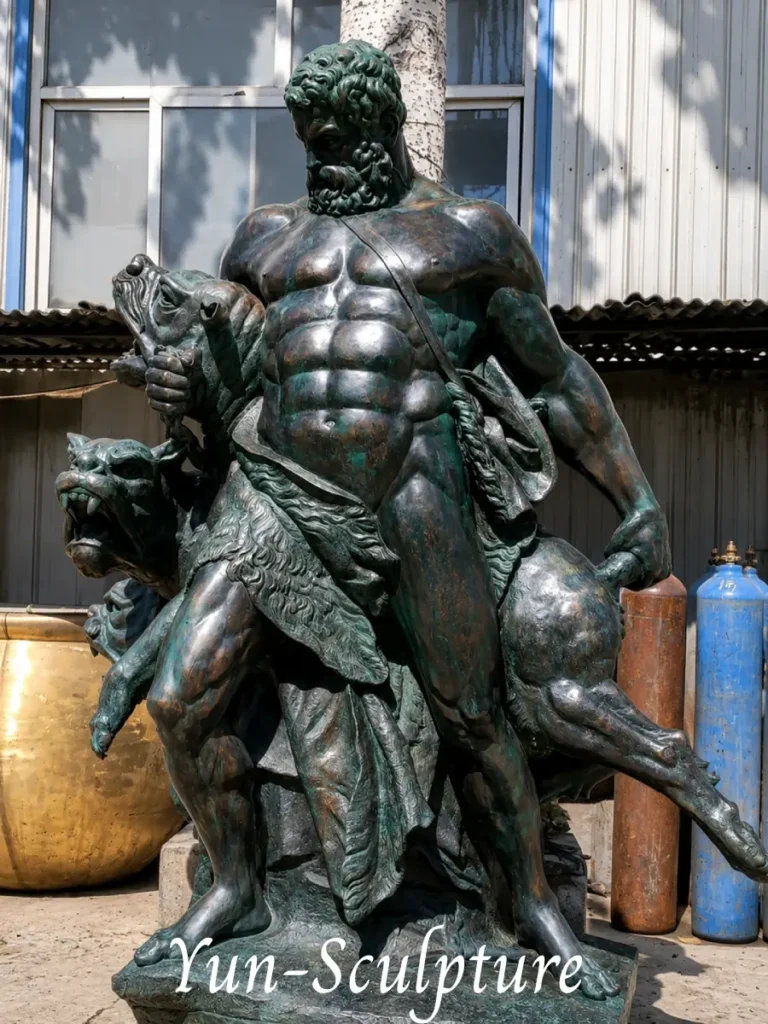
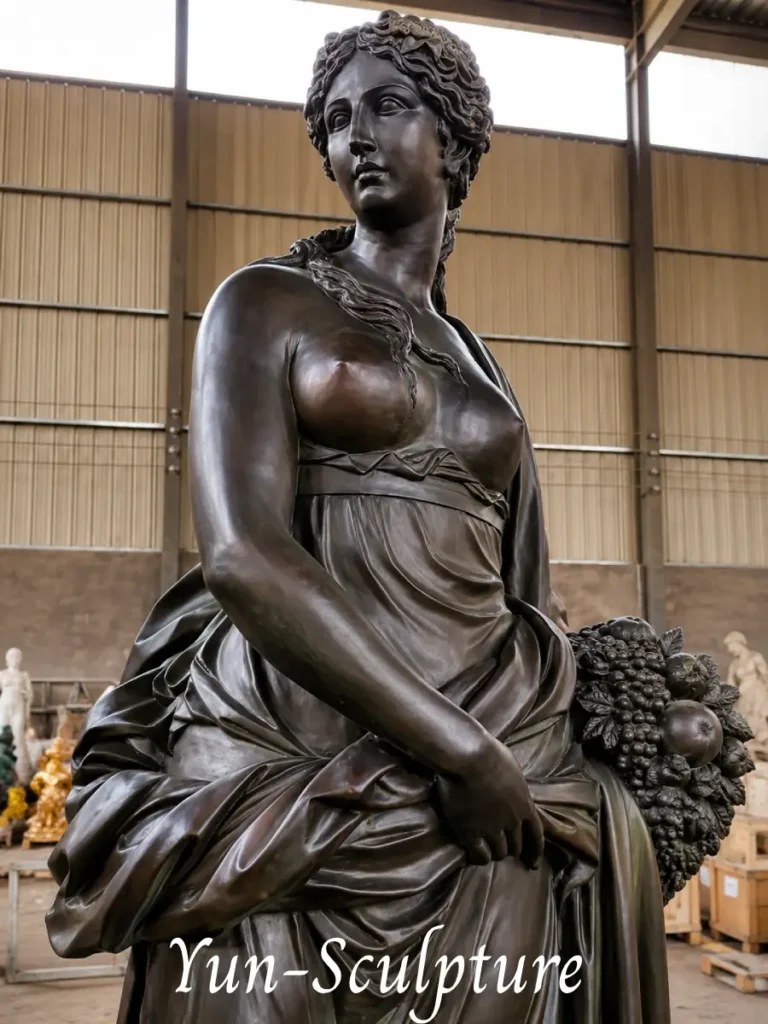
| God | Domain | Key Attributes in Sculpture | Material | Best Setting |
|---|---|---|---|---|
| Zeus | Authority, justice, sky | Thunderbolt, eagle, scepter | Bronze Thunderbolt projects at angle — fracture risk in marble | Estate entrance, corporate plaza, large garden axis |
| Hera | Marriage, queenship, family | Peacock, crown, scepter, pomegranate | Marble Fully draped; scepter held close to body reduces stress | Formal garden, covered loggia, estate courtyard |
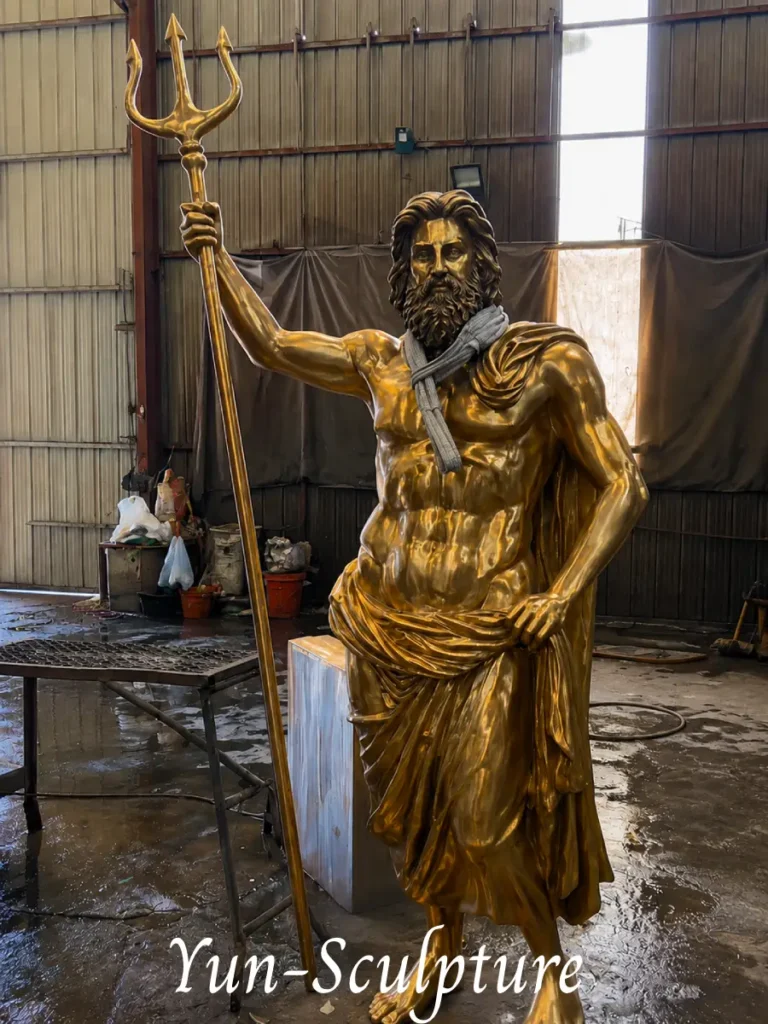
| Poseidon | Sea, water, earthquakes, horses | Trident, dolphin, horse | Hybrid Marble body + bronze trident for outdoor; bronze throughout for water-contact | Pool surround, fountain centerpiece, coastal garden |
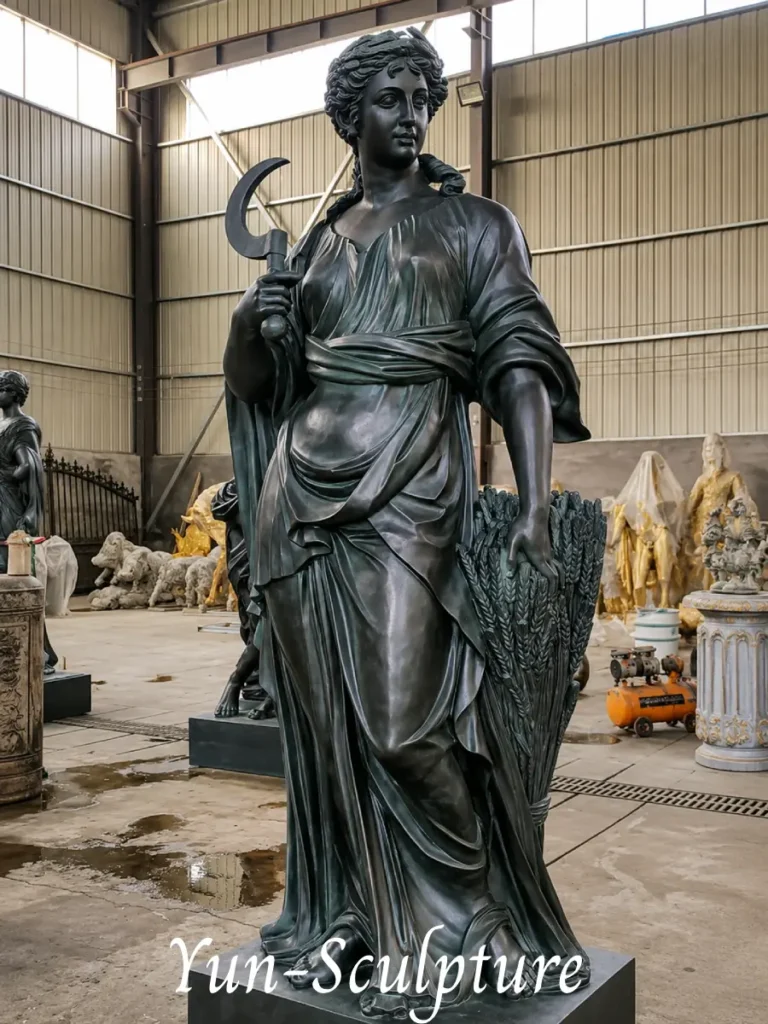
| Demeter | Harvest, agriculture, seasons | Sheaf of wheat, torch, cornucopia, serpent | Marble Draped agricultural figure; torch held close to body | Kitchen garden, estate ground, covered garden shelter |
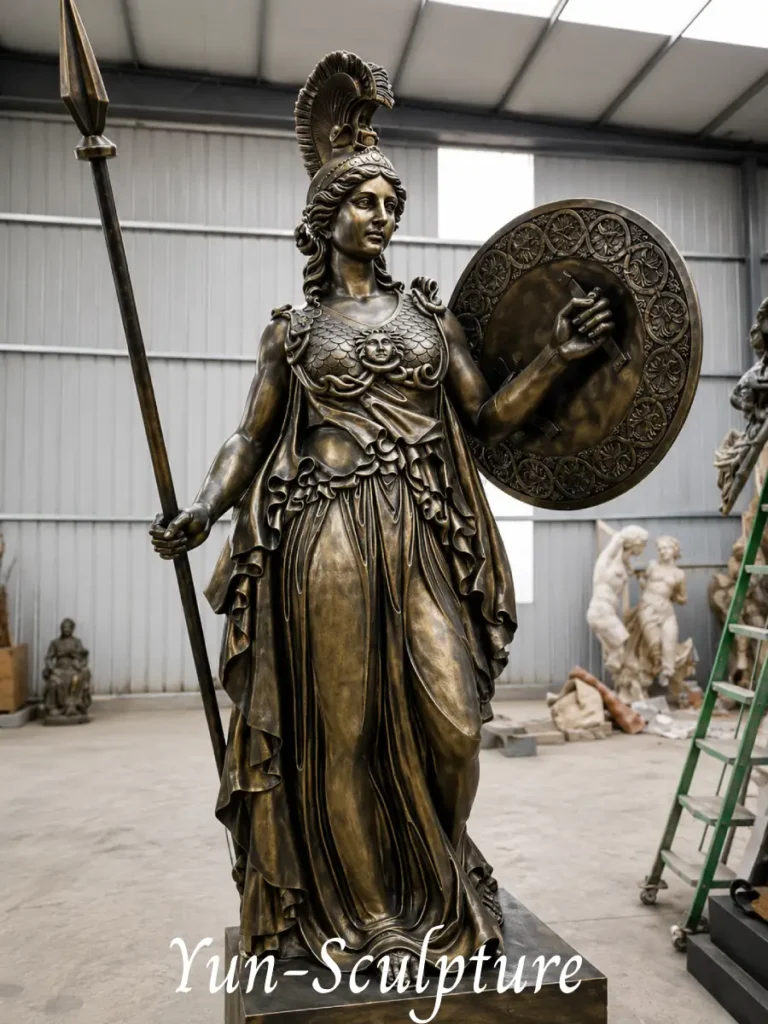
| Athena | Wisdom, strategy, crafts, justice | Spear, shield, helmet, owl, aegis (Gorgoneion) | Hybrid Marble body + bronze spear and shield; all marble for sheltered interior | Library, law firm, academic institution, private study |
| Apollo | Sun, music, poetry, healing, prophecy | Lyre, bow, laurel wreath, sun rays | Marble indoor / Bronze open garden; bow is a projecting element — outdoor bronze preferred | South-facing garden, music room, art studio, library |
| Artemis | Moon, hunt, wilderness, childbirth | Bow, quiver, crescent moon, hunting dog, deer | Bronze Bow and drawn arrow are projecting elements requiring bronze for outdoor | Wild or wooded garden, hunting estate, outdoor woodland setting |
| Ares | War, strength, courage | Spear, shield, helmet, armor | Bronze All attributes are weapons; bronze throughout for structural integrity | Private gym, security or military institution, strong garden axis |
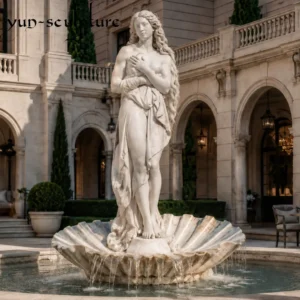
| Aphrodite | Love, beauty, desire | Mirror, rose, dove, scallop shell (partially draped or nude) | Marble No projecting weapons; marble’s translucency suits the subject | Private garden, fountain surround, covered loggia, spa |
| Hephaestus | Fire, metalwork, crafts, volcanoes | Hammer, tongs, anvil, flame | Bronze Fittingly made of what he masters; tools are structural elements | Forge, studio, workshop, craft institution entrance |
| Hermes | Commerce, travel, communication, thieves | Caduceus (winged staff), winged sandals, petasus (winged hat) | Bronze Caduceus and wing attributes require bronze for structural stability | Business entrance, reception hall, garden path threshold |
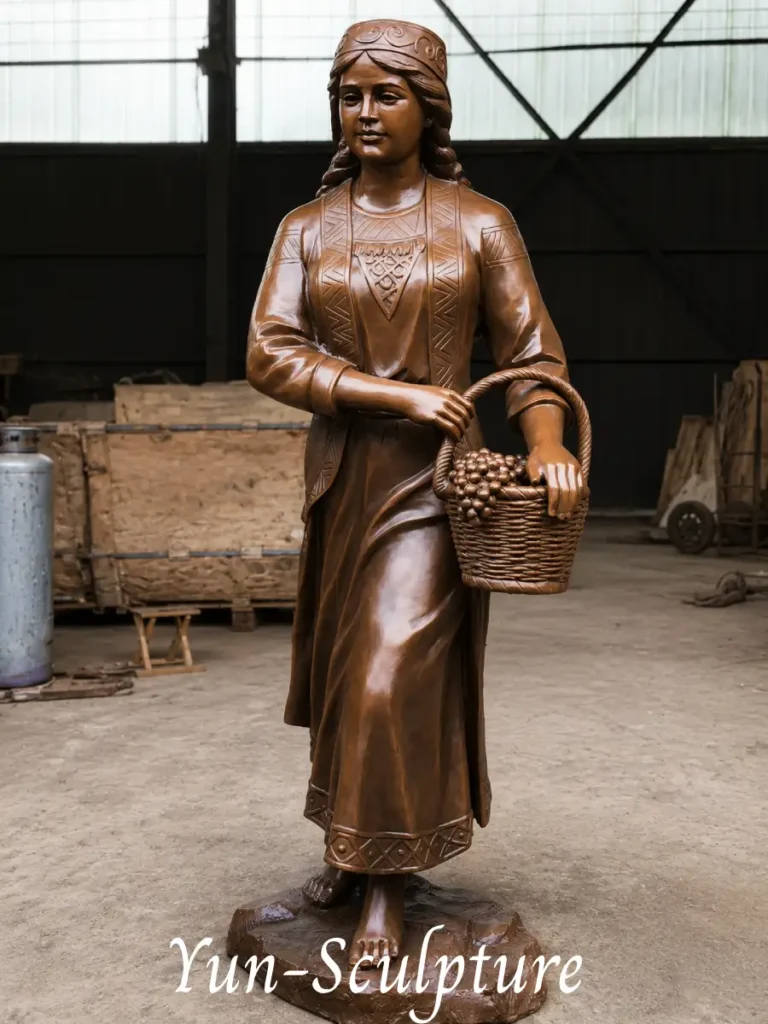
| Dionysus | Wine, theater, celebration, ecstasy | Thyrsus (fennel staff), grapevine, kantharos (wine cup), ivy crown | Marble or Bronze — relaxed figure suits both; thyrsus is lighter than a spear | Outdoor dining terrace, wine cellar entrance, hospitality garden |
Material Selection — The Technical Framework That Applies to Every God
Across all twelve Olympians, material selection follows the same structural logic. Understanding this framework makes every god’s recommendation in the table above immediately legible — and allows buyers to evaluate any Greek god commission, from any foundry, with the same technical standard.
The first rule is structural: any attribute that projects away from the figure’s body at an angle creates a lever. The longer and thinner the projecting element, the greater the stress concentrated at the join point. Zeus’s thunderbolt. Poseidon’s trident. Ares’s spear. Hermes’s caduceus. Artemis’s bow. In natural marble, these forms are fracture risks — not immediately, but progressively, as thermal cycling, vibration, and moisture work on the stone’s microfractures over years. In cast bronze, the same forms are structurally sound because bronze’s tensile properties resist the leverage forces that stone cannot. The rule is simple: if the god carries a weapon or staff that projects at an angle, bronze is required for that element at minimum, and often for the entire figure in outdoor installations.
The second rule is aesthetic: draped fabric is marble’s finest subject. The flowing peplos of Athena, the robes of Hera, the agricultural dress of Demeter — these forms require a material that can be carved with deep undercuts, that catches light differently in the recesses than on the high points of the cloth, and that has the slight translucency that gives carved drapery the visual weight of actual fabric. Bronze drapery is technically competent. Marble drapery is superior, and the difference is visible at close range. For figures whose primary visual element is the drapery rather than the weapons, marble is the correct first choice for any protected or interior installation.
The third rule resolves conflicts between the first two: when a figure needs both elaborate drapery and projecting weapons — as Athena does, combining the carved marble peplos with the bronze spear and shield — the correct solution is a mixed-material commission. Marble for the robed body; bronze for the structural attributes. This approach is historically correct: the original Athena Parthenos by Phidias was itself a mixed-material figure in gold, ivory, and bronze. We execute this integration routinely for Athena, Hera-with-scepter, and Demeter-with-torch commissions.
1
Projecting weapons or staffs → Bronze required
Any attribute extending away from the body at an angle concentrates stress at the join point. In marble, thermal cycling and vibration work progressively on this point. Bronze’s tensile strength maintains these forms under load conditions that fracture stone. For outdoor installations, this rule is non-negotiable.
Applies to: Zeus (thunderbolt), Poseidon (trident), Ares (spear), Hermes (caduceus), Artemis (bow), Apollo in open garden (bow)
2
Draped or robed figures → White marble preferred
Marble captures carved fabric with a fluidity and translucency that bronze cannot match. Deep fold shadows, high-point lightness, and the visual weight of actual cloth are marble’s finest qualities. For figures where drapery is the primary visual element, marble is the correct first choice for any protected or interior installation.
Applies to: Athena (peplos), Hera (robes), Demeter (agricultural dress), Hestia (veiled figure)
3
Both drapery and weapons → Hybrid commission
When a figure needs carved marble drapery and bronze weapon attributes, both can be integrated in a single commission. The marble body is carved first; the bronze attributes are cast separately and integrated at the final stage. This is the historically correct solution — the original Athena Parthenos by Phidias was itself a mixed-material figure.
Applies to: Athena (peplos + spear/shield), Hera with scepter, Demeter with torch, any robed figure with projecting attributes
Scale Guide — What Every Olympian Needs to Read Correctly
Greek god figures have one scale requirement that human portrait commissions do not: they must read as presiding over a space rather than simply occupying it. The distinction is visible immediately — a figure that is correctly scaled for its setting commands the viewer’s attention before anything else is considered; an undersized figure is processed as decoration. Getting scale right is the single most common error in Greek god statue commissions, and it almost always runs in the same direction: too small.
The minimum scale at which any standing Olympian reads as a divine figure rather than a decorative accent is approximately 100 centimeters, and only in enclosed settings where the viewing distance is short — a covered loggia, a library alcove, a garden niche with a dark hedge immediately behind. In open garden settings, the minimum useful scale rises to 130 to 150 centimeters. For any installation where the figure will be seen against open sky, a pool surface, an architectural facade, or a large garden expanse, life-size (roughly 175 to 185 centimeters for a standing adult figure) is the correct starting point. Heroic scale — 200 to 300 centimeters — is the correct choice for institutional settings, large estate gardens, and any installation where the figure must hold its own against significant architectural or landscape scale.
| Scale | Setting | How the Figure Reads | Price Range (USD) |
|---|---|---|---|
| 40–80 cm | Desktop, mantelpiece, bookshelf alcove | Decorative presence; attribute detail readable at close range; not commanding at distance | $1,500 – $5,000 |
| 80–120 cm | Garden niche, covered loggia, interior pedestal | Presence established; composition fully readable; suitable for enclosed or sheltered spaces | $4,000 – $12,000 |
| 130–160 cm | Home entrance hall, garden focal point, courtyard | Authority begins at this scale; reads correctly from 4–6 meters in open settings | $6,000 – $25,000 |
| 175–185 cm (life-size) | Institutional entrance, estate garden, pool surround | Full presence; commands the space; correct for most outdoor institutional commissions | $8,000 – $40,000 |
| 200–300 cm (heroic) | Large plaza, public garden, architectural approach | Monumental authority; holds its own against large-scale architecture and landscape | $35,000 – $100,000+ |
Garden Placement — Three Principles That Apply to Every God
Regardless of which Olympian is being placed, three structural principles govern every successful garden installation. Violate any one of them and the commission will underperform regardless of its quality.
The first principle is elevation. A Greek god statue at grade level — standing directly on the garden surface, at the same height as the surrounding planting — loses authority. The figure needs height: a stone, granite, or marble pedestal that raises the base of the statue 40 to 80 centimeters above the surrounding grade, bringing the figure’s face to approximately eye level for a viewer standing at the primary viewing distance. This elevation separates the figure from the garden visually, gives it a platform of authority, and allows the base inscription or dedication to be read without crouching. No Greek god commission in a garden setting is complete without a correctly proportioned pedestal.
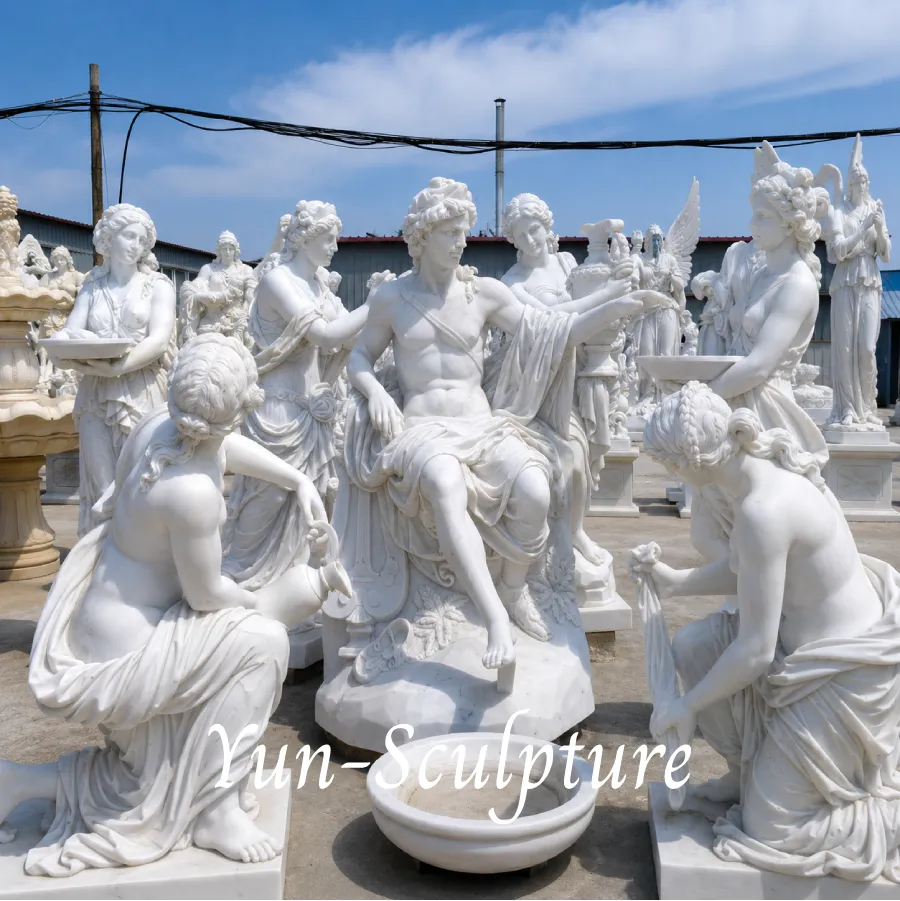
The second principle is contrast. White marble disappears against light-colored stone, pale gravel, or open sky. It reads powerfully against dark foliage — a clipped yew hedge, a mass of box, a dark green ivy wall. Bronze reads well against almost any background but is most powerful against pale stone or bright water. When siting a Greek god commission, the background condition at the primary viewing angle should be confirmed before the figure is installed, not after. Repositioning a 150-kilogram marble figure because the background does not provide adequate contrast is an expensive correction.
The third principle is viewing axis. Every Greek god statue has a primary face — the angle from which the figure’s expression, pose, and attribute composition reads most completely. This angle should be aligned with the garden’s primary approach: the path a viewer takes when entering the garden, moving toward the statue’s position. A figure facing away from the primary approach, or placed at an angle that shows only its profile to arriving viewers, is working against its own composition. Before final installation, confirm the viewing axis with the statue temporarily positioned and viewed from the garden’s entry point.
Commissioning Individual Gods — Where to Start
For buyers who have identified a specific Olympian for their commission, our individual god guides cover each subject in the depth this reference cannot. The Athena guide covers the three major iconographic types — Parthenos, Promachos, Lemnia — and the mixed-material solution for her spear and shield in detail. The Poseidon guide addresses the trident problem and the specific requirements of water feature integration. The Greek God Statues for Sale guide covers the broader selection logic across the pantheon, including the eight most commonly commissioned figures and their material requirements.
For buyers who are still determining which Olympian belongs in their space, the table in this guide is the correct starting point. Match the god’s domain to the space’s function: what is the space for, what quality is it meant to embody, what activity happens there? The answer to those questions will identify the god more reliably than personal mythology preference, and it will produce a commission that gives the space meaning rather than simply decoration.
For institutional buyers — municipalities, schools, hospitals, fire departments, golf clubs, corporations — the selection process involves an additional consideration: which god’s domain aligns with the institution’s values and public identity? A law firm and a hospital are both serious institutions but they belong to different Olympians. A school and a library share an affinity with Athena that a winery or a hospitality venue does not. Getting this alignment right is what separates a commission that becomes part of an institution’s identity from one that simply occupies space at the entrance.
Production and Pricing — What a Greek God Commission Costs
Production timelines for Greek god statues run 30 to 80 working days from approved clay model, depending on scale, material, and the complexity of the figure’s attributes. Gods with projecting weapons in bronze — Zeus, Poseidon, Ares, Hermes, Artemis — add chasing time for the weapon elements. Gods with elaborate drapery in marble — Athena, Hera, Demeter — add carving time for the fabric detail. Mixed-material commissions add integration time at the final stage.
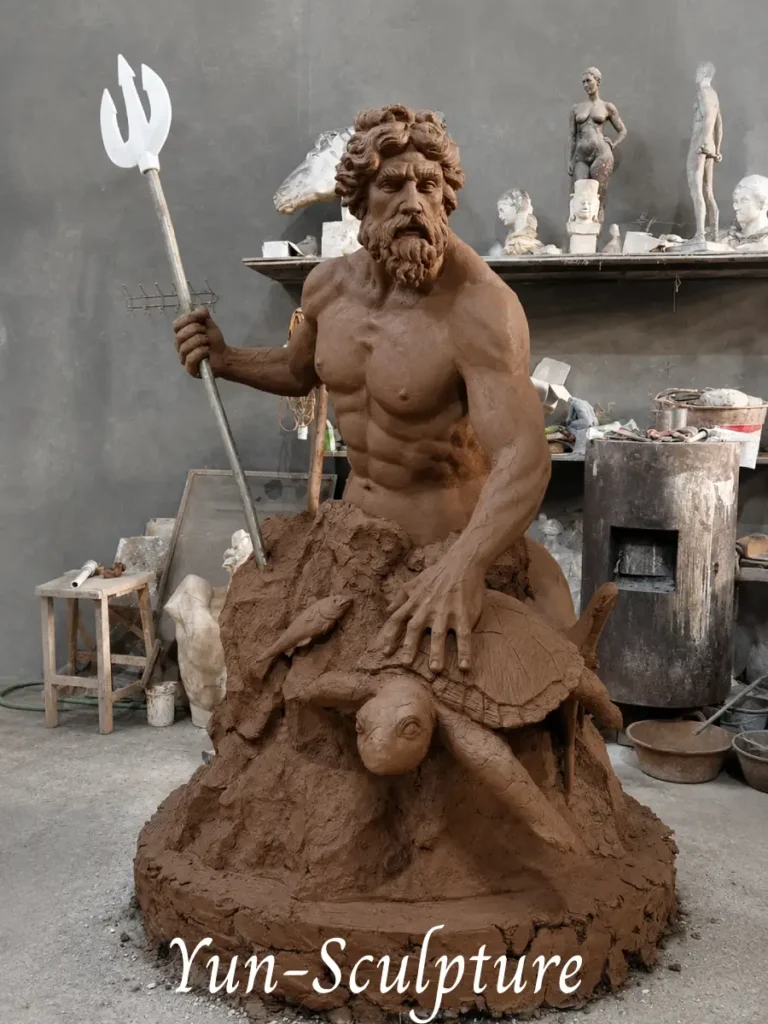
Pricing spans $1,500 for a small single-material figure at 40 to 60 centimeters to $100,000 or more for a heroic-scale mixed-material installation with a custom base and inscription. Life-size single-figure commissions in either natural white marble or lost-wax bronze — the most common institutional purchase — typically run $8,000 to $35,000 depending on material, complexity of attributes, and production timeline. All commissions begin with a clay model approval stage before any material is committed. We provide a full production specification and timeline with every quote.
Frequently Asked Questions
What do Greek statues symbolize?
Greek statues symbolize the specific domain of the deity depicted with precision. Zeus symbolizes sovereign authority. Poseidon symbolizes command over water. Athena symbolizes wisdom applied to action. Apollo symbolizes light and creative intelligence. Each god’s attributes — the thunderbolt, the trident, the owl, the lyre — are the visual vocabulary that communicates exactly what the figure represents. In a modern installation, a Greek god statue in a specific setting symbolizes that the space is governed by that deity’s values.
What is the best material for a garden statue?
For permanent outdoor Greek god statues, material choice depends on what the figure carries. Gods with projecting weapons — Zeus, Poseidon, Ares, Hermes — require cast bronze for the weapon elements at minimum, as marble fractures at these stress points outdoors. Gods without projecting weapons — Aphrodite, Hera, Demeter — can be executed in natural white marble for sheltered positions. The hybrid commission — marble body, bronze weapon attributes — is the correct solution when a figure needs both elaborate drapery and structural weapon forms.
Where should you place garden statues?
Three principles govern placement. First, elevation: every Greek god belongs on a pedestal 40 to 80 cm above grade — a figure at ground level loses authority regardless of quality. Second, contrast: white marble reads clearly against dark foliage but disappears against pale stone or open sky. Third, viewing axis: the figure’s primary face should align with the garden’s primary approach path. A figure facing away from arriving viewers works against its own composition.
Which Greek god statue is lucky for home?
Among the twelve Olympians, Hermes is most associated with good fortune at thresholds — his image at a business entrance or home doorway was understood to invite favorable outcomes in commerce and travel. Zeus brings the protection of divine authority. Athena brings the fortune of wise decisions. The most useful framework is domain alignment: place the god whose domain matches what you want the space to support. A home office benefits from Hermes or Athena; a garden for beauty and pleasure belongs to Aphrodite.
Are there any real statues of Zeus?
The most famous Zeus — the chryselephantine cult statue by Phidias at Olympia, one of the Seven Wonders of the Ancient World — was destroyed in late antiquity. The Cape Artemision Bronze in the National Archaeological Museum in Athens depicts either Zeus or Poseidon in a throwing pose and is the most significant surviving ancient bronze of either deity. Several Roman marble copies of Zeus figures survive in museum collections. Modern commissions draw on classical typology from these surviving sources.
What are the three types of Greek statues?
Classical Greek sculpture divides into three historical periods. The Archaic style (700–480 BCE) features rigid frontal poses and the characteristic Archaic smile. The Classical style (480–323 BCE) achieves naturalistic proportions, contrapposto stance, and idealized anatomy — what most buyers picture as Greek sculpture. The Hellenistic style (323–31 BCE) introduces dramatic poses and emotional expression. Most garden commissions draw on the Classical style, though Hellenistic poses are available for figures requiring more dynamic compositions.
Factory Direct · Quyang, China
Commission Any of the 12 Olympians
Zeus to Dionysus. Natural marble, lost-wax bronze, or hybrid commission. Every god available at any scale from 40 cm to 5 meters. Clay model approval before any material is committed.