Get in touch with Yun-Sculpture company
The familiar trim. The individual beneath it.
Custom Poodle Statues for Gardens
Choose an outdoor Poodle statue around the coat shape and expression you recognise. A softly trimmed companion and a more sculpted grooming silhouette can represent the same breed in very different ways.
Explore bronze design directions, identify your Standard, Miniature or Toy Poodle reference, and decide how large the artwork should be. Natural marble and simplified stainless steel provide separately developed options.
Send your reference on WhatsApp ↗A photograph showing your preferred coat length is a useful starting point. The sculpture can preserve that familiar appearance even if later photographs show a different trim.
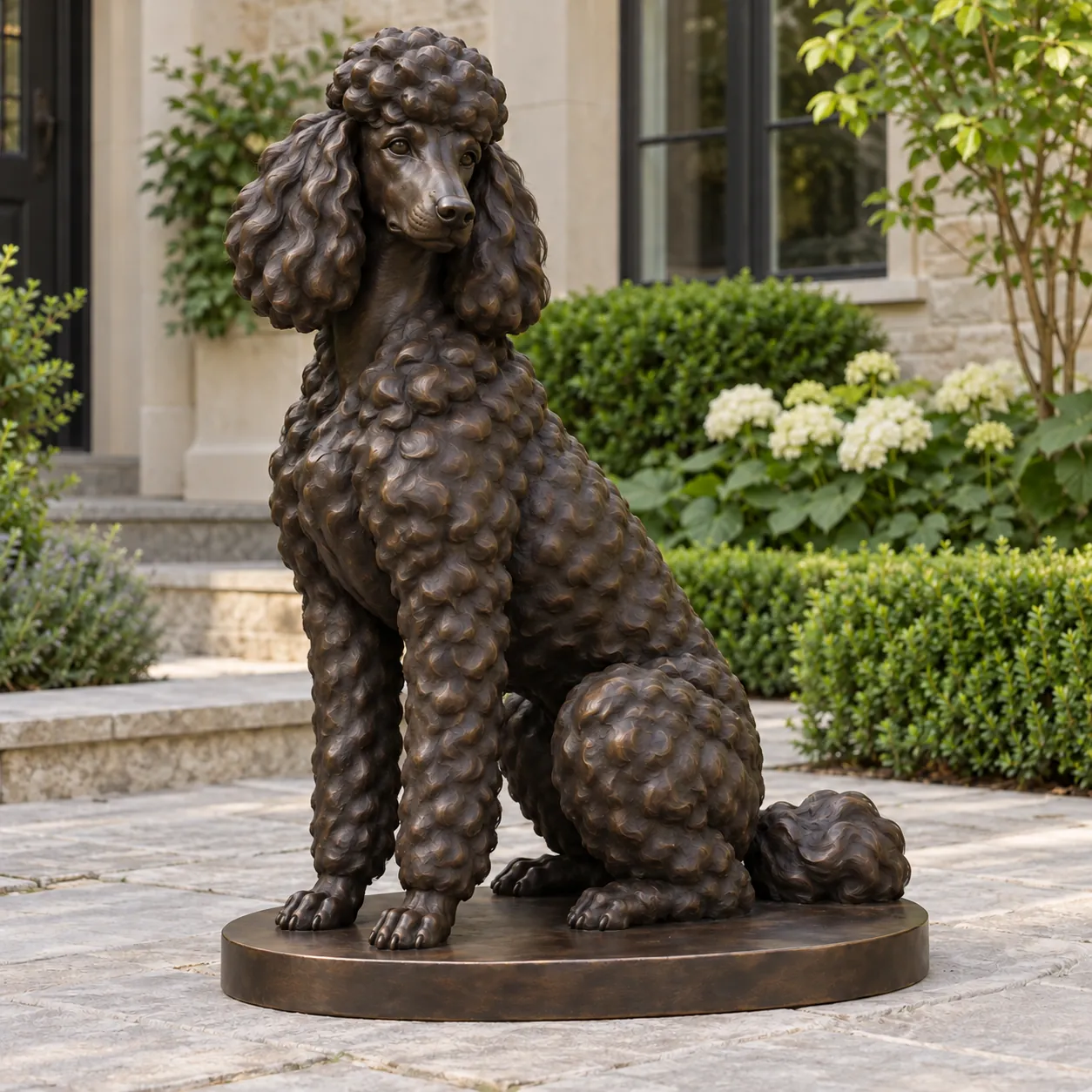
Dog variety and sculpture size stated separatelyCoat outline before individual curlsYour familiar trim can guide the portrait
Compare the grooming outline
Poodle statue design ideas for your garden
These concepts explore an even everyday coat, a more sculpted trim and a softer small-Poodle portrait direction. They offer choices in the shape of the coat, not a fixed catalogue of dog sizes.
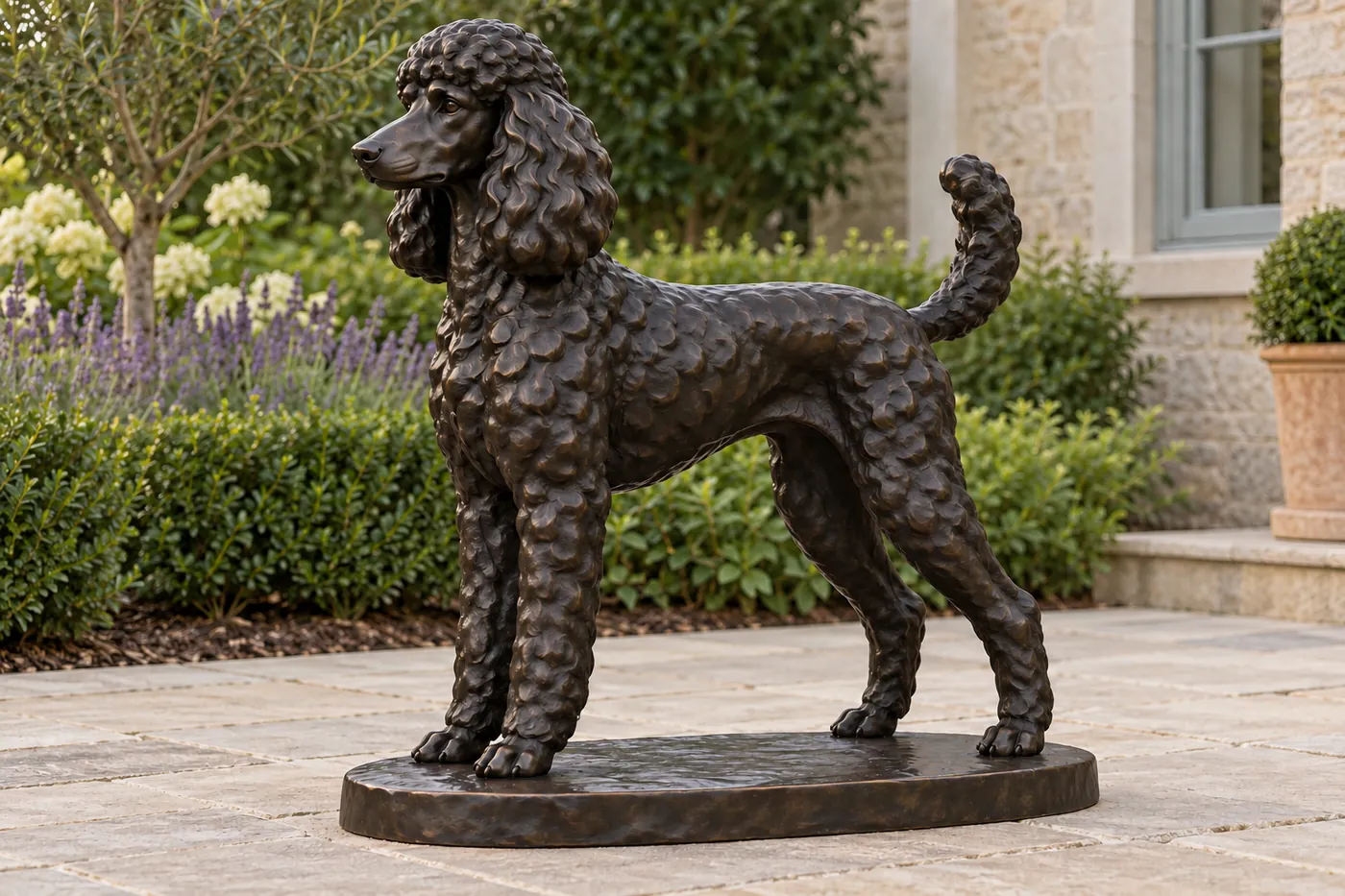
Standing even-coat Poodle
An even coat leaves a clear full-body profile. Review the ear length, leg openings and tail shape alongside the underlying posture.
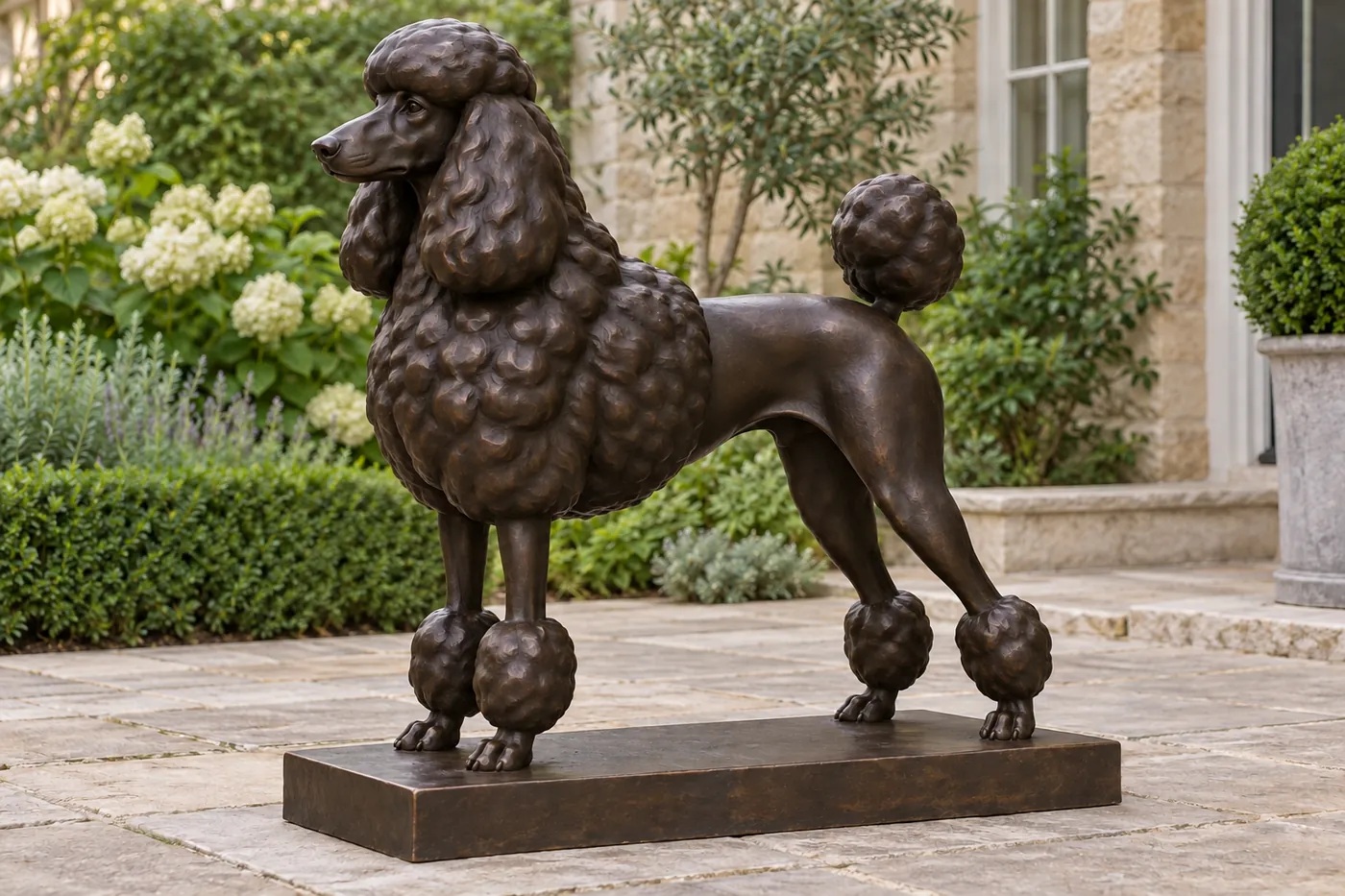
Sculpted grooming silhouette
Fuller and shorter areas create a patterned outline. This is a design interpretation; agree the exact arrangement from your own grooming reference.
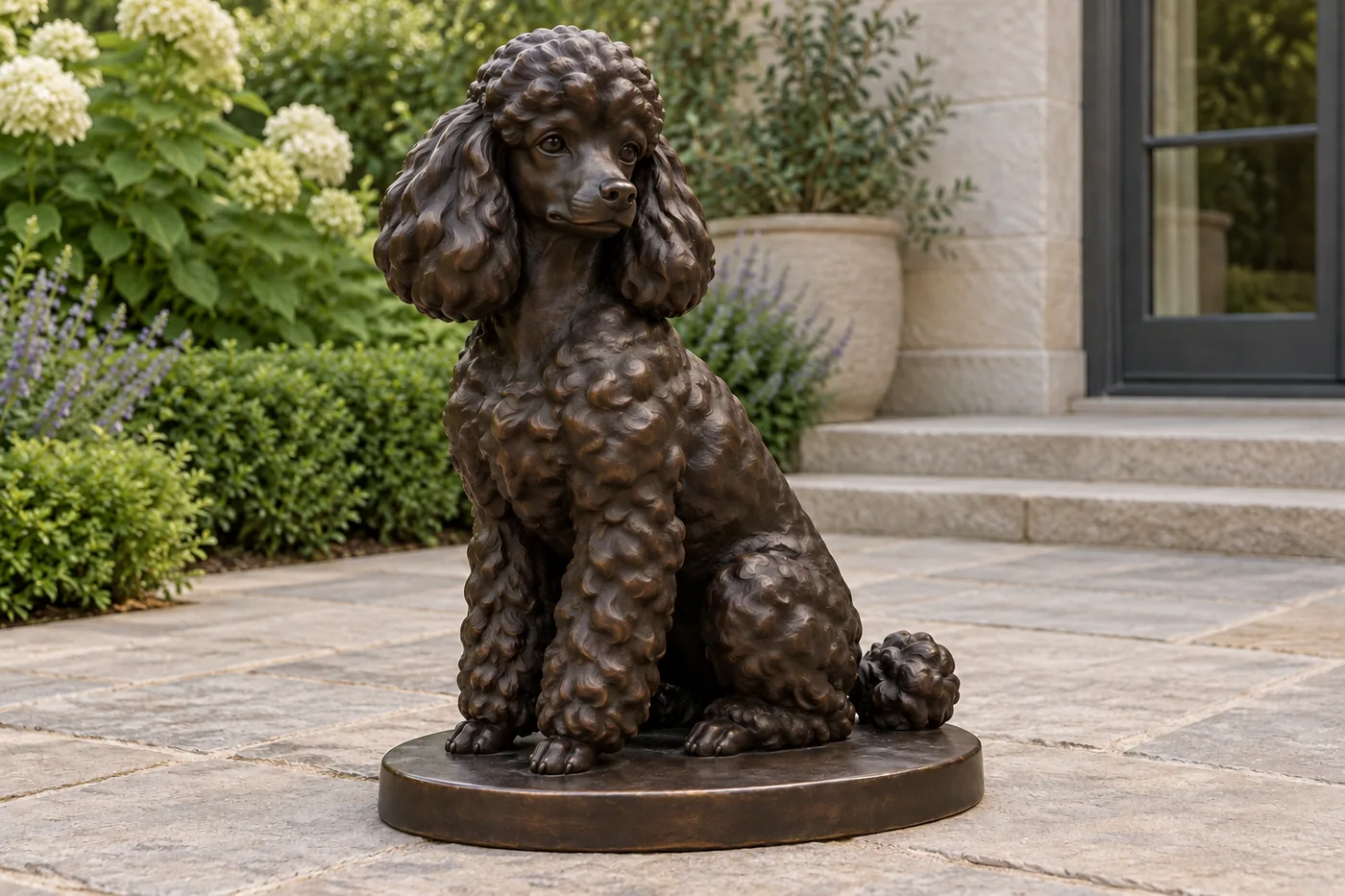
Toy Poodle portrait direction
The softer face is a separate portrait choice. Define the individual dog and artwork size without reading a precise scale from this scene.
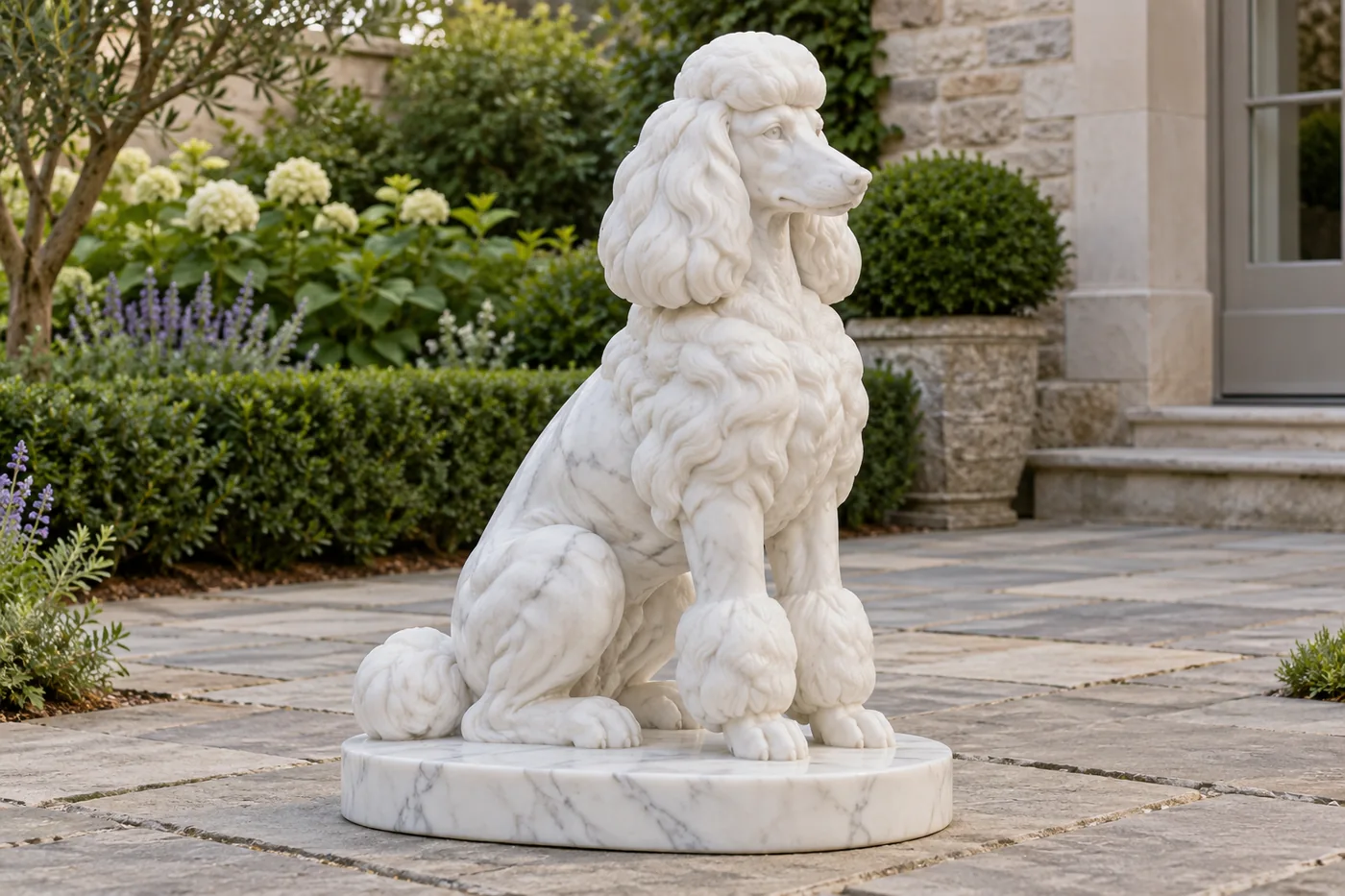
White marble Poodle
Broader carving carries the ear and coat shapes. Review the stone, support and face before deciding how much surface relief to include.
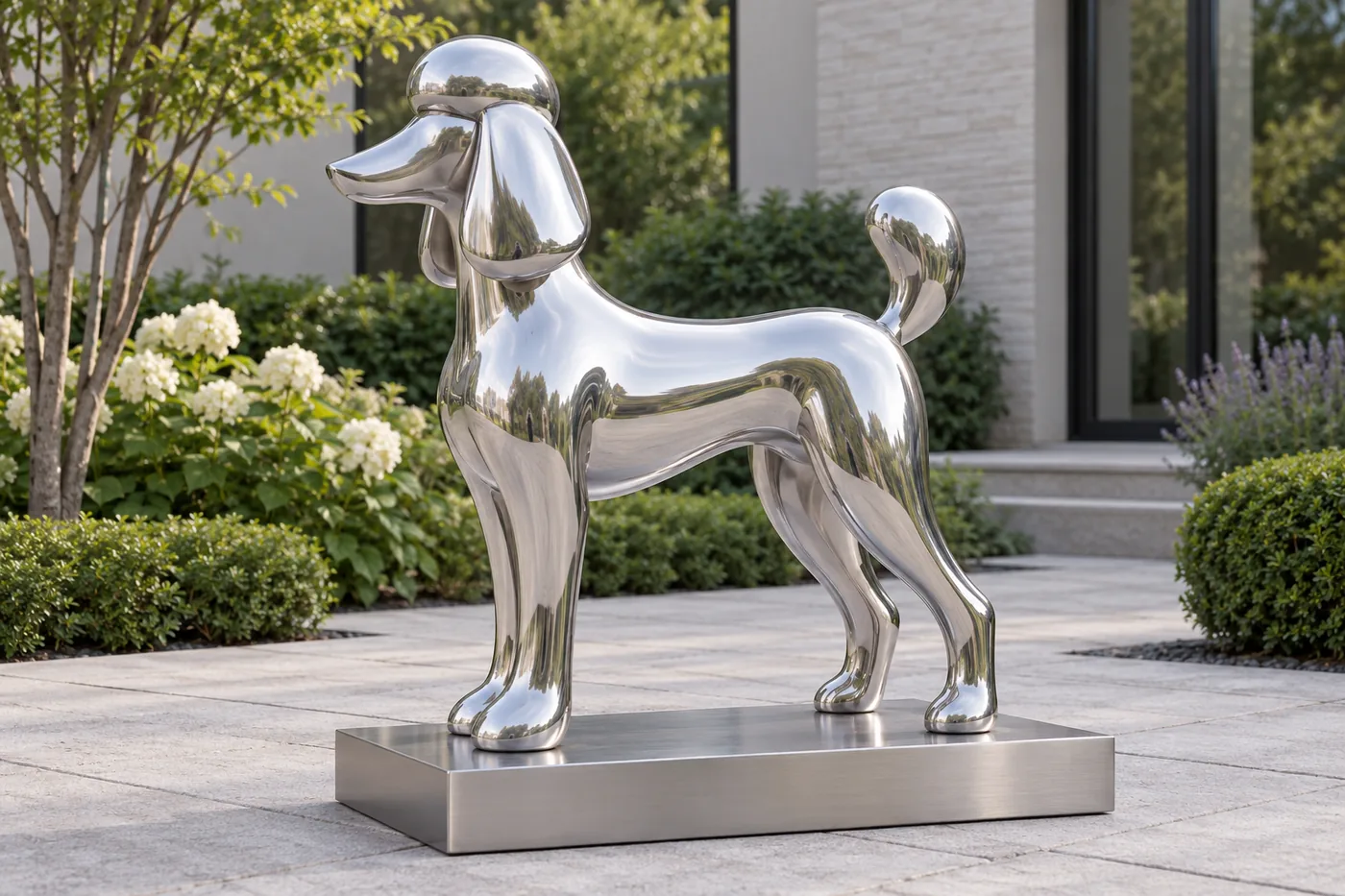
Abstract mirror-steel Poodle
A recognisable crown and ears replace detailed curl texture. The simplified fabricated form is its own design rather than a bronze model in another colour.
Each image is an AI design by Yun Sculpture. Customer-created AI references are welcome too. For suitable designs, we target visual reproduction above 90%, with the material interpretation and model agreed for the commission.
Your photographs decide which details belong to your dog. Read our individual dog portrait guide for the wider process, then use the choices below to define the Poodle’s specific appearance.
The dog’s size is one question; the artwork’s size is another
Standard, Miniature or Toy Poodle—and the scale you want
The AKC Poodle standard distinguishes Standard, Miniature and Toy varieties by height while sharing the basic breed description. For a portrait, identify your own dog and provide its proportions; the variety name alone does not supply a finished sculpture dimension.
| Dog reference | Artwork choice | What the modeller needs |
|---|---|---|
| Standard Poodle | Individual life size, a reduced sculpture or an enlarged decorative figure. | The selected dog, pose and coat outline, followed by the intended sculpture dimensions. |
| Miniature Poodle | Its own portrait scale or another agreed display size. | Photographs of the individual rather than dimensions borrowed from a generic Standard Poodle model. |
| Toy Poodle | Individual life size, or enlargement to remain visible in the setting. | The familiar head and body proportions to preserve when the artwork becomes larger. |
| General Poodle design | A selected overall size for a garden or entrance. | An agreed reference and grooming direction, with no claim that it matches an unnamed live dog. |
A larger Toy Poodle portrait remains that dog’s portrait
You can choose an enlarged sculpture of a small companion without replacing its appearance with a larger dog’s model. Agree the reference first and review how the head, neck, legs and coat volumes are carried into the artwork.
Conversely, a reduced Standard Poodle design is a smaller sculpture of that reference. It does not become a Toy Poodle simply because its finished height is small. Keeping those two labels separate makes the brief easier to understand.
Recognisable Poodle form or a balloon-dog composition?
This page concerns a dog represented through its anatomy and grooming outline. A balloon-style dog uses a different construction of shapes and is another design brief. The terms should not silently replace one another in an enquiry.
Our steel concept is abstract, with a recognisable crown, dropped ears and body outline. It is not intended as a balloon figure. If a stylised reference is your preference, show which forms you like and discuss it as its own original composition.
Choose the appearance you want remembered
The coat outline matters before the grooming name
A recently trimmed Poodle can look different from the same dog with a fuller face, longer ears or more body coat. Choose the appearance you want the sculpture to preserve, then identify photographs that show it clearly.
| Area | Choice to show in a photograph | What to review on the model |
|---|---|---|
| Crown and topknot | A modest rounded cap, a taller shape or your dog’s familiar outline. | Its height and transition into the forehead, without treating extra coat as a larger skull. |
| Muzzle and cheeks | A closely trimmed face or a softer coat around the mouth. | The underlying muzzle length and the amount of coat that surrounds it. |
| Ear coat | How full the ears appear and where the coat finishes. | Visible width, length and separation from the neck and cheeks. |
| Body and legs | An even pet coat or deliberately fuller and shorter areas. | The overall body shape, leg openings and transitions between coat masses. |
| Tail | The particular tail outline and coat treatment you want kept. | Its connection, direction and full projection in the selected posture. |
An everyday pet trim can be the most personal choice
A familiar family dog does not need to wear a formal show silhouette in its portrait. The shape you recognise from daily life may be a more useful reference than the most elaborate Poodle image in a catalogue.
Use a grooming name as a starting description, then attach the actual look. Terms can be used differently in casual conversation, and two photographs carrying the same label can still show different face or ear treatment.
If you want the face from one image and the body coat from another, say that explicitly. The modeller can develop the combination without assuming both photographs depict the same coat length or the same moment.
A sculpted trim needs an arrangement, not just extra curls
Fuller chest, head or lower-leg coat areas can create a stronger patterned silhouette. Their placement matters. Enlarging every rounded area equally may bury the neck, hide the feet or make the dog look heavier than intended.
The gallery’s more sculpted grooming concept is a visual interpretation, not a claim that it meets a competition clip specification. A portrait can follow your photographs even when its appearance differs from that concept.
Choose the main coat volumes before approving the smaller texture. If the fuller chest is in the wrong place, adding more curl detail will not correct the outline.
Do not let the coat replace the face
Keep the muzzle, eyes and dropped ears readable
A soft face still has a muzzle beneath it
A rounded trim can soften the edge of the face without making the underlying muzzle short and flat. Review the nose, chin and cheek relationship together, especially if the front photograph hides the side profile.
A closely trimmed reference can help explain the head underneath a fuller coat. Mark it as an anatomical reference if you do not want that shaved appearance reproduced in the artwork.
For a small-Poodle portrait, explain the expression you recognise rather than asking for larger eyes simply to make it look appealing. The eye area should belong to the chosen face, not to a generic stuffed-animal expression.
Separate the ear shape from the hair around it
The coat on dropped ears can merge into the cheek and neck in a front photograph. A side view helps establish where the ear ends and how its outer mass sits against the head.
If the ears look too wide on a model, decide whether the concern is their position or the amount of surrounding coat. These are different changes. Shortening the whole ear may remove a familiar feature when reducing the hair volume would resolve the issue.
A head turn changes the visible separation on each side. Ask for the face at the angle you will usually see it, as well as a clearer model view for checking the two ears.
Check what the topknot does to the expression
A taller crown changes the upper silhouette and can shade the eyes differently in a rendering. Look at its relationship to the forehead, eye line and muzzle, not only whether the rounded top looks attractive by itself.
When a head feels unfamiliar, compare a simple outline view and a normally lit close-up. A dramatic shadow under the coat can obscure the eye area without explaining whether its actual shape is correct.
For broader breed comparisons, use our outdoor dog breed guide. A Poodle portrait here is judged against the individual references, including the chosen face trim.
Overall volume, grouped curls, then small detail
Model Poodle curls at a scale that suits the artwork
A curly coat can be communicated through a clear outer shape and grouped surface forms. It does not require every visible hair in a photograph to become a separate groove in the sculpture.
Review the coat in three stages
First, inspect the large volumes around the head, ears, chest and legs. Next, look at how the curl groups flow within them. Finally, decide whether additional shallow detail helps at the chosen sculpture size and viewing distance.
These checks answer different questions. A correctly textured ear can still be too bulky, while a well-proportioned head may need a little more grouped coat to convey the chosen trim. Distinguish those requests instead of calling every concern more detail.
The bronze concepts use quiet grouped modelling, with smoother transitions between the main masses. This approach can preserve the coat’s character without a dense field of tiny repeated spirals.
Dense texture can hide features you want to recognise
If the eye, mouth or ear edge is a priority, check that the surrounding relief does not obscure it. Similar-sized curls across the entire face and body can compete with those features rather than making the portrait more specific.
Compare the full model and a close detail at useful lighting. A strongly lit render may make shallow texture appear deep; a small thumbnail may hide it altogether. Choose the amount of relief around the real viewing use.
Changing size calls for a new texture review
When an artwork is reduced, coat groups and face details need to remain readable. When it is enlarged, simply stretching a repeated curl pattern may make the surface look decorative rather than like the reference dog.
Review the selected-sized model and discuss which areas should simplify or become broader. The intention is to preserve the chosen coat impression, not to promise that every photograph’s hair can survive in any size and material.
Find the posture beneath the coat
A seated companion or standing garden Poodle
Seated: concentrate the portrait around the face
A seated Poodle brings the head, ears and chest together in the main view. Look at whether a fuller ear coat or chest mass overlaps the front legs, and whether the familiar mouth remains visible from the approach.
The gathered rear body is part of the model even when the coat conceals its joints. A portrait should show a believable resting arrangement rather than a rounded coat shape placed on unrelated paws.
A softer pet trim can suit this familiar companion direction. Use a seated photograph to explain the body and a separate close-up to clarify the face.
Standing: see the coat and body in profile
A standing Poodle makes the back, neck and leg placement easier to compare. An even coat offers a different outline from a sculpted trim with fuller chest or lower-leg areas.
Check the spaces between the legs as well as the coat around them. A large lower-leg mass can conceal a foot or make two limbs appear joined from one view.
Keep the stance and head angle connected to your reference. A show-inspired surface treatment does not require an exaggerated posture if you want a quieter family portrait.
A reclining reference is another specific moment
If you remember your dog lying beside a chair or waiting near a doorway, share that position. The body coat, ear contact and paw arrangement will be developed for the resting pose rather than copied unchanged from a standing model.
Accessories such as a collar or a name on the base are separate choices. They can contribute to the story without deciding the dog’s coat length or obscuring the face.
Measure the coat, not only the body beneath it
Plan your outdoor Poodle statue around its full outline
At a garden border or entrance, the finished coat masses, head turn, tail and base all contribute to the space occupied. A body measurement taken beneath the coat will not establish the outer dimensions of the proposed sculpture.
| Feature | Dimension or view to ask for | Why it matters here |
|---|---|---|
| Topknot | Height to the highest point of the approved coat shape. | Extra head coat affects finished height without changing the dog’s shoulder reference. |
| Full ear coat | Outside width and its projection at the chosen head angle. | The coat can extend beyond the apparent cheek or neck outline. |
| Chest and lower-leg masses | A front and angled view, with the support dimensions. | They can affect the visible openings and the maximum outline around the paws. |
| Tail and coat treatment | The furthest point behind or beside the body. | Its position may extend the arrangement beyond the torso. |
| Base and separate plinth | Each support’s size and the combined installed height. | The displayed figure occupies more than the dog alone. |
A small dog can need a clearer display position
Decide whether the sculpture will be seen close by, from a window or along the garden approach. A life-size small companion can disappear among planting even when its model is accurate.
Consider a clearer position or a separately agreed support before assuming that all the proportions should change. If you prefer enlargement, keep that decision explicit and review the coat at the new size.
Choose the position and care conditions together
Tell us about direct weather exposure, nearby irrigation, coastal conditions and the intended support. The material and protective surface should be proposed for that setting; the word outdoor alone does not describe all those conditions.
Leave access around the modelled coat relief for the care agreed for the finish. Avoid making a maintenance plan depend on a deeply recessed detail that the actual artwork will not have.
For the wider entrance check, follow our front-porch sculpture planning guide. Confirm the complete display area and delivery route, including door or gate movement.
A different medium changes the coat interpretation
Bronze, natural marble and abstract stainless steel
Bronze with grouped modelling
Agree the coat volumes for lost-wax casting, then specify the metal and surface. A dark patina with restrained highlights gives a different appearance from painted coat colour.
Use our bronze care guide for fuller maintenance information.
Marble with broader carved forms
Translate the ear coat and curl groups into a supported carving for the selected stone. Our concept uses white carved eyes and nose, broad relief and a tail close to the body.
Confirm the stone and veining around the portrait.
Steel through simple volumes
The mirror-steel concept uses a rounded crown, dropped ears and broad body surfaces. It represents an abstract Poodle without engraved curls or realistic small facial details.
Review it as a separate fabrication through our stainless steel designs.
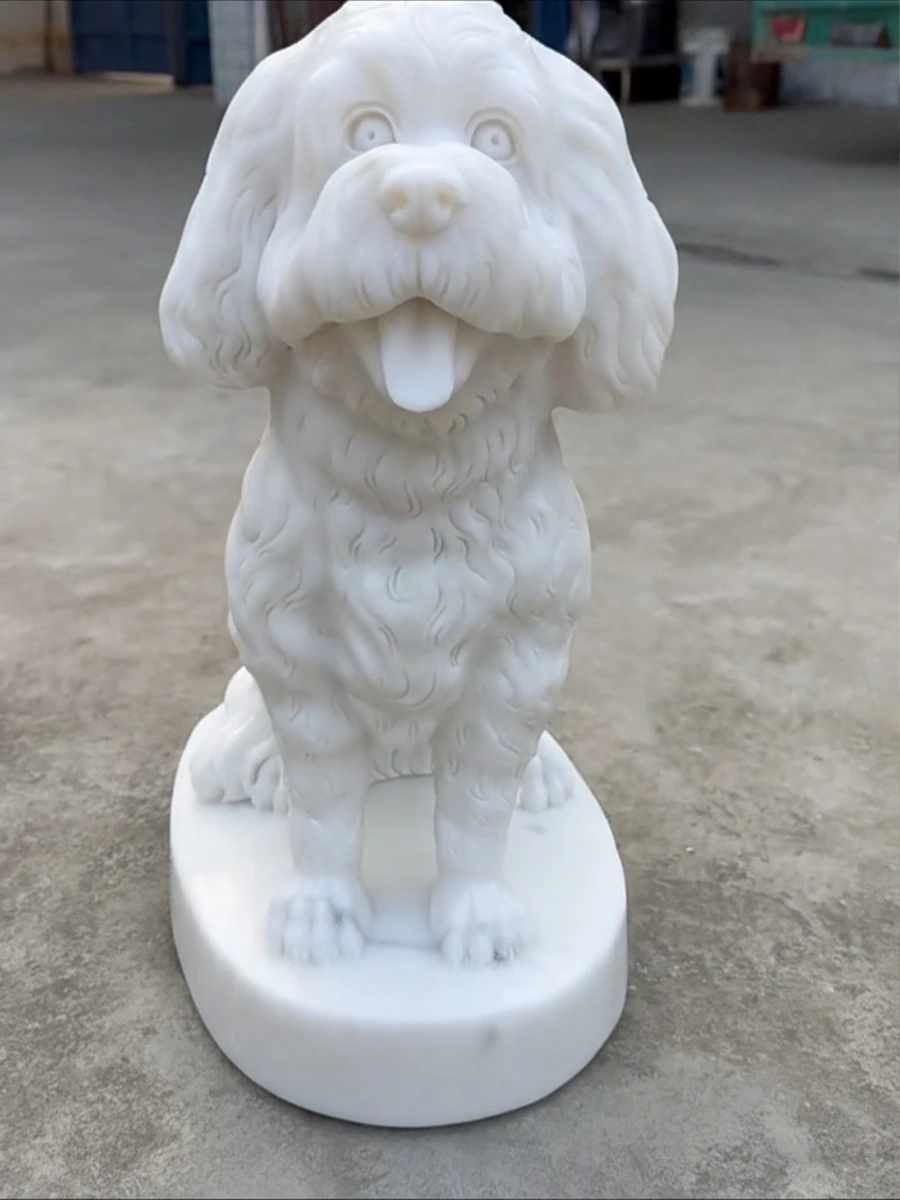
Grouped coat on a real white-stone dog
The photographed white marble dog is another design, not an identified Poodle commission. It shows broad carved coat groups, a readable face and a complete round base. Those provide a useful material reference when choosing how much of your Poodle coat outline to retain, with the individual trim and carving connections reviewed in the agreed model.
Make each photograph’s role clear
Review the chosen trim and the individual portrait together
Gather a full-body reference in the intended pose, the face from useful angles and photographs showing the coat appearance you want kept. If those come from different grooming stages, identify the job of each image.
Choose one main coat reference
A useful brief can say: “Use this photograph for the overall pet trim, the side image for the muzzle, and this close-up for the expression.” That makes a coherent portrait easier to develop than combining every feature automatically.
A closely trimmed body image can help establish the form underneath a fuller coat, but it need not define the finished appearance. Label it accordingly so it does not replace the reference you chose for the coat.
Separate the outline from the texture at approval
If the head looks too round, identify whether the skull, muzzle or surrounding coat mass needs attention. If the shape is right but the curls appear too busy, discuss relief and grouping. These changes should not be treated as interchangeable.
After the ear or topknot is revised, check the complete face and maximum dimensions again. A quieter curl pattern should preserve the selected grooming outline, while a new outline may need a separate space check.
Your own AI image can illustrate a preferred direction. For an individual pet, connect it to the photographs and mark the features you want retained. Unseen sides and material-specific details still need model development.
Agree the commission before the model stage
We discuss the dog, artwork size, material and delivery scope, then agree payment arrangements and the model review stage. Manufacture follows the form and finish approved for the project.
The quotation confirms the actual construction, packing, shipment and responsibility for unloading or local installation. No standard weight or fixed delivery schedule is inferred from a Poodle variety or a design render.
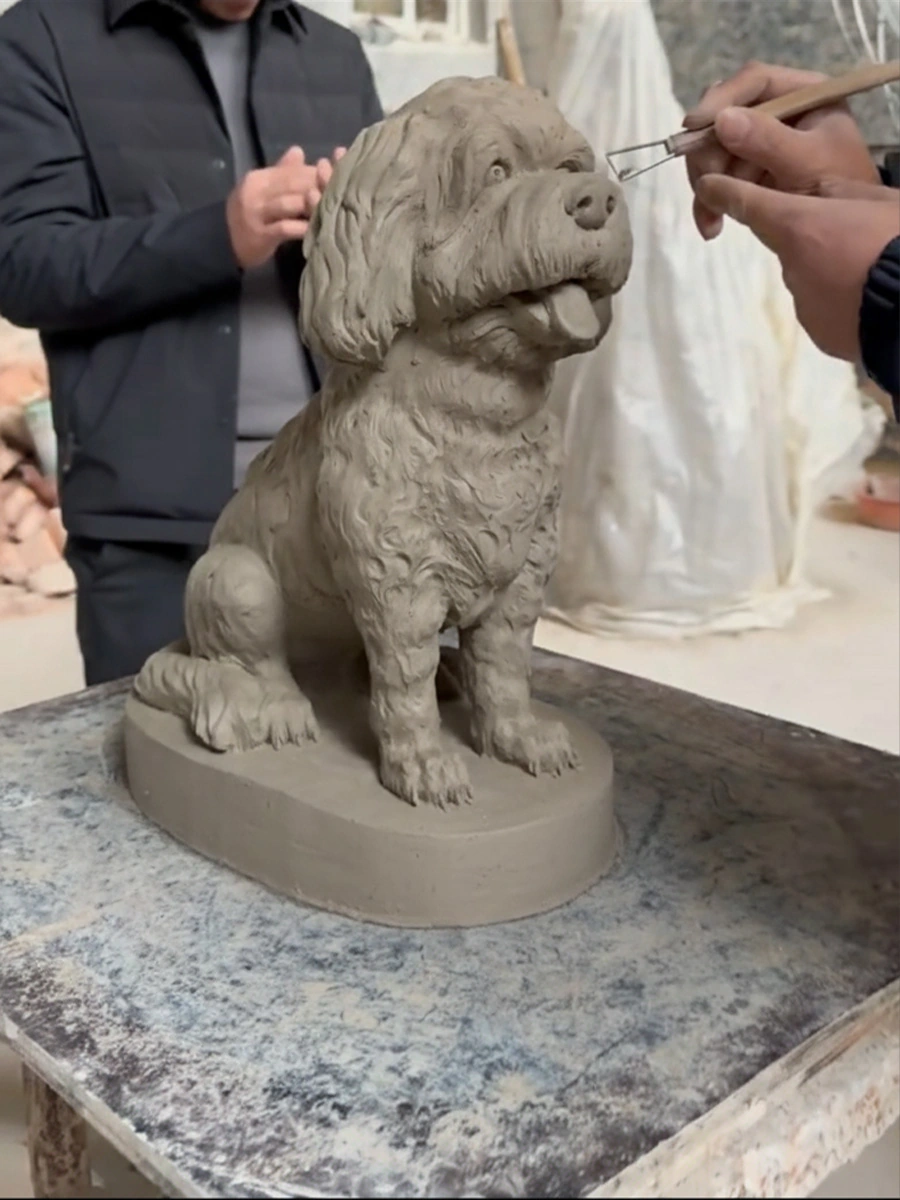
Hand refinement during modelling
This photograph records hand work on the face of another dog model. The tools and contour make the refinement stage tangible. In a Poodle portrait, the preferred muzzle, eyes and ear shape need to be resolved alongside the coat volume; adding curl texture alone would not correct the underlying face. The model-review method for your commission is agreed separately.
Questions about your Poodle’s appearance
Outdoor Poodle statue questions
Can a Toy Poodle portrait be made larger for a garden?
Yes. Identify the actual dog and choose the artwork’s size separately. Its familiar proportions and coat need review at the selected scale.
Does a small Standard Poodle sculpture become a Miniature Poodle?
No. A reduced sculpture still represents its chosen reference. The dog’s variety and the dimensions of the artwork are different parts of the brief.
Can you preserve my dog’s ordinary pet trim?
Yes. Show the appearance you recognise, including the face, ear coat and body outline. A portrait does not need to adopt the gallery’s more sculpted grooming direction.
Is a grooming name enough to specify the coat?
No. Add photographs showing the actual outline. Similar labels can still leave the muzzle, topknot, ears and leg coat open to interpretation.
Can photos taken after different haircuts be used together?
Yes, if their roles are clear. Identify one for the intended coat, and mark others as references for anatomy, posture or expression rather than combining them without instruction.
Will every individual curl be copied?
The coat is developed through its overall volumes, grouped curls and an agreed degree of relief. Fine detail is reviewed for the artwork’s size, material and viewing use.
Can the sculpture have a fuller, softer face?
Yes. Provide the chosen trim and a profile that helps explain the muzzle underneath. Review both the coat’s outer shape and the individual face.
Is the abstract steel design a balloon Poodle?
No. It uses simplified Poodle crown, ear and body forms. A balloon-style composition is a separate original design discussion.
Are the pictured Poodles finished sculptures in stock?
They are labelled AI design directions for custom enquiries. The images do not establish completed orders, inventory or fixed dimensions.
What should I send for an outdoor Poodle proposal?
Send the dog or design reference, preferred coat appearance and pose, approximate artwork size, material direction, display photograph and delivery country with postcode.
Start with the coat and expression you know
Plan your Poodle sculpture with Yun Sculpture
Send a favourite photograph or a design you like. Tell us which coat appearance should stay, and where you would enjoy seeing the sculpture. We can develop the remaining choices with you.
You can begin before knowing the exact sculpture height. A useful reference and intended setting help define it.
The first choices to share
- Your Standard, Miniature or Toy Poodle reference.
- The coat length and face trim to preserve.
- Seated, standing or a particular resting moment.
- Approximate artwork size and material preference.
- Display setting and destination country with postcode.