Get in touch with Yun-Sculpture company
The Ultimate Guide to Cleaning & Maintaining Outdoor Bronze Sculptures

This guide is written by the Yun Sculpture production team in Quyang, China —
a region responsible for a large percentage of the world’s exported bronze sculptures.
From a factory perspective, the biggest mistake buyers make is assuming bronze is “maintenance-free.”
It isn’t. But when maintained correctly, bronze outlasts stone, steel, and resin by decades.
Many of our clients at Yun Sculpture ask us: “Will my bronze statue rust?” or “How do I keep it shiny?”
The short answer is: Bronze does not rust like iron, but it does change. With simple, regular maintenance, your bronze sculpture will not only last for generations but will grow more beautiful with age.
We have restored hundreds of statues in our Quyang workshop. Below is the exact process our artisans use—and how you can do it at home.
Table of Contents
Understanding Patina: It Is Not Dirt
Before you start cleaning, you need to understand what you are looking at.
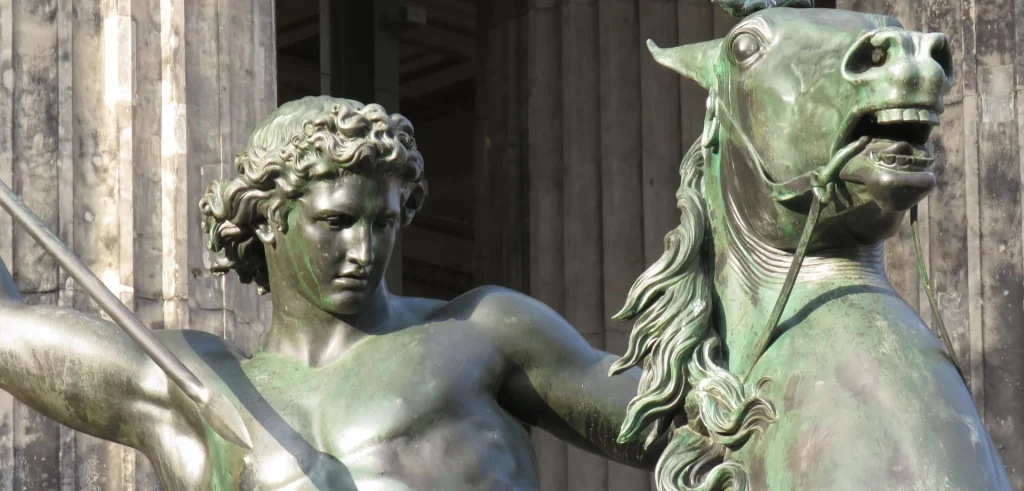
Most bronze garden statues come with a chemical finish called a Patina. This is the color (brown, black, or green) we apply using heat and chemicals in the factory. It acts as a protective layer.
Over time, air and moisture will cause natural oxidation. This might darken the bronze or add streaks of green (verdigris). In reality, most clients panic the first time they see green streaks.From our workshop experience, 80% of these cases require no intervention at all.
However, if you see powdery, bright green spots that flake off, that is “Bronze Disease” (a harmful reaction usually caused by chlorides). That needs professional repair. But for 99% of outdoor statues, simple cleaning is all you need.
Routine Cleaning: The Water & Soap Method
The Professional Tool Kit: Do’s and Don’ts
Using the wrong tools is the #1 reason why sculptures get damaged. Here is what our factory artisans use:
The “Green” List (Safe to Use):
- Microcrystalline Wax (e.g., Renaissance Wax): This is the museum standard. It is expensive but worth it.
- Distilled Water: Better than tap water as it has no minerals to leave spots.
- Soft Bristle Paintbrushes: Perfect for getting dust out of the eyes, hair, or deep textures of the statue.
- Cotton or Microfiber Towels: To avoid scratching the surface.
The “Red” List (Never Use):
- WD-40 or Car Wax: These can turn yellow over time and trap dirt.
- Steel Wool or Sandpaper: These will scratch off the patina and expose raw metal.
- Kitchen Cleaners: Anything with lemon, vinegar, or ammonia will eat away the color.
Step-by-Step Process:
- Rinse: Gently hose down the statue to remove loose dust, bird droppings, and leaves.
- Scrub: Mix the soap with warm water. Dip your soft brush in and gently scrub the surface in a circular motion. Pay attention to deep details where dirt collects.
- Rinse Again: Thoroughly rinse off all soap residue. Soap left on the surface can cause streaking.
- Dry: This is crucial. Use a dry cotton towel to wipe the surface. Pro Tip: If it’s a sunny day, let the statue sit in the sun for 1-2 hours before waxing. The heat will evaporate invisible moisture trapped in the deep textures, ensuring you don’t seal water under the wax (which causes white spots later).
Once the original patina is scratched off, it cannot be “cleaned back.”
Re-patination requires heat and chemicals and must be done in a workshop.
Advanced Care: Waxing Your Sculpture
If you ask “how do you shine bronze” or protect it from turning green too fast, the answer is Wax.
Wax creates a barrier between the metal and the oxygen/water in the air.
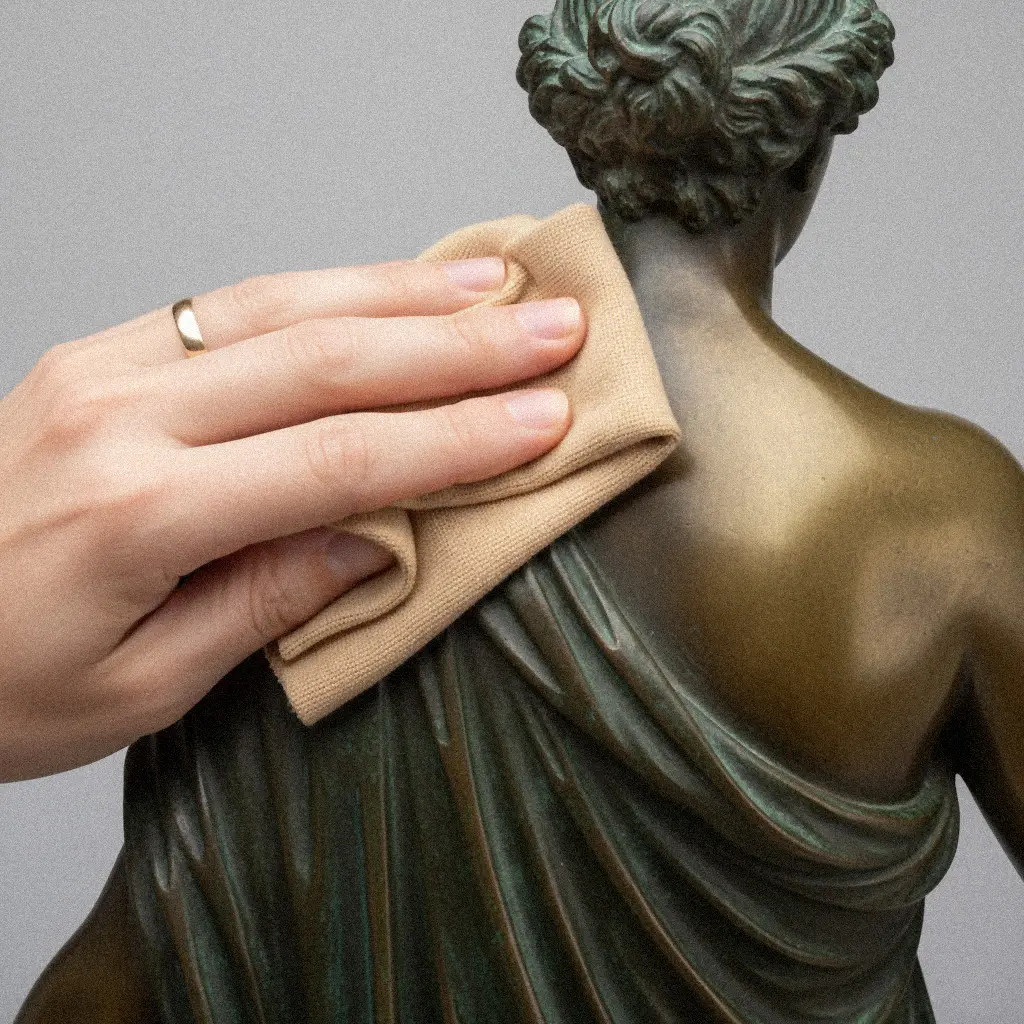
We recommend applying a thin layer of microcrystalline wax (or clear paste wax) once a year after cleaning.
- Ensure the statue is warm (a sunny day is perfect). The warmth helps the wax penetrate the pores.
- Apply a thin coat using a clean paintbrush.
- Let it sit for 20 minutes until hazy.
- Buff it with a clean, soft rag until it shines.
Over-waxing is just as bad as not waxing.
A thick layer will attract dust and turn dull within months.
Winter Care: Protecting Bronze from Snow and Ice
If you live in a region with freezing winters (like Canada, Northern Europe, or Northern USA), your [outdoor garden statues] face extra challenges.
1. The Freeze-Thaw Cycle
Bronze itself is fine, but water is not. If water gets into a hollow part of the statue (like a cup held by a figure) and freezes, it expands. This can crack the metal.
Solution: Cover your statue with a breathable waterproof cover during heavy snow, or ensure drainage holes are clear.
2. Avoid Road Salt
Salt is the enemy of bronze. If your statue is near a driveway, salt spray from passing cars can cause rapid corrosion (green spotting).
Solution: Cover your statue with a breathable waterproof cover. Crucially, check the “weep holes” (drainage holes) at the base. Insects often nest there in autumn, blocking the flow. Use a wire to clear them so water can escape. If water gets trapped inside the legs, the ice will split the bronze open.
FAQ: Common Questions About Bronze Maintenance
Q1: Can I use lemon juice to clean bronze?
No! Lemon juice is acidic. While it works for cleaning raw copper pots in a kitchen, it will destroy the artistic patina (the dark color) on your sculpture, leaving ugly bright orange spots.
Q2: How often should I wax my statue?
For most climates, once a year is enough. If you live near the ocean (salty air) or in a very polluted city, we recommend waxing twice a year (Spring and Fall).
Q3: How do I remove bird droppings?
Bird droppings are acidic and can damage the finish. Do not scrape them dry! Soak them with warm water and a wet towel for 10 minutes to soften them, then wipe away gently with soap.
Q4: Will poor maintenance void my warranty?
Improper cleaning (acids, abrasives) is the #1 reason for irreversible damage we see.
Conclusion
Bronze is durable, noble, and timeless. A little care goes a long way.
At Yun Sculpture, every piece we cast is treated with high-quality patina and a protective wax coating before it leaves our factory, giving you the best start.
Looking for a low-maintenance masterpiece for your garden?
Browse our Bronze Sculpture Catalog or Contact Us for advice.