Get in touch with Yun-Sculpture company
A familiar companion. A considered commission.
Custom German Shepherd Statues in Bronze
Choose a German Shepherd statue around the posture, expression and individual features you want to preserve. Explore real workshop photographs and custom design directions for a garden, entrance or personal memorial.
A reclining companion, an attentive seated portrait or a naturally standing figure can tell different stories. We help turn the image you like into an agreed pose, size, surface finish and base.
Discuss your German Shepherd on WhatsApp ↗Start with a favourite dog photograph or a design direction. You can decide the remaining details with us.
Real German Shepherd workshop photographsIndividual likeness and pose reviewSingle figures or separately planned pairs
See the work in the workshop
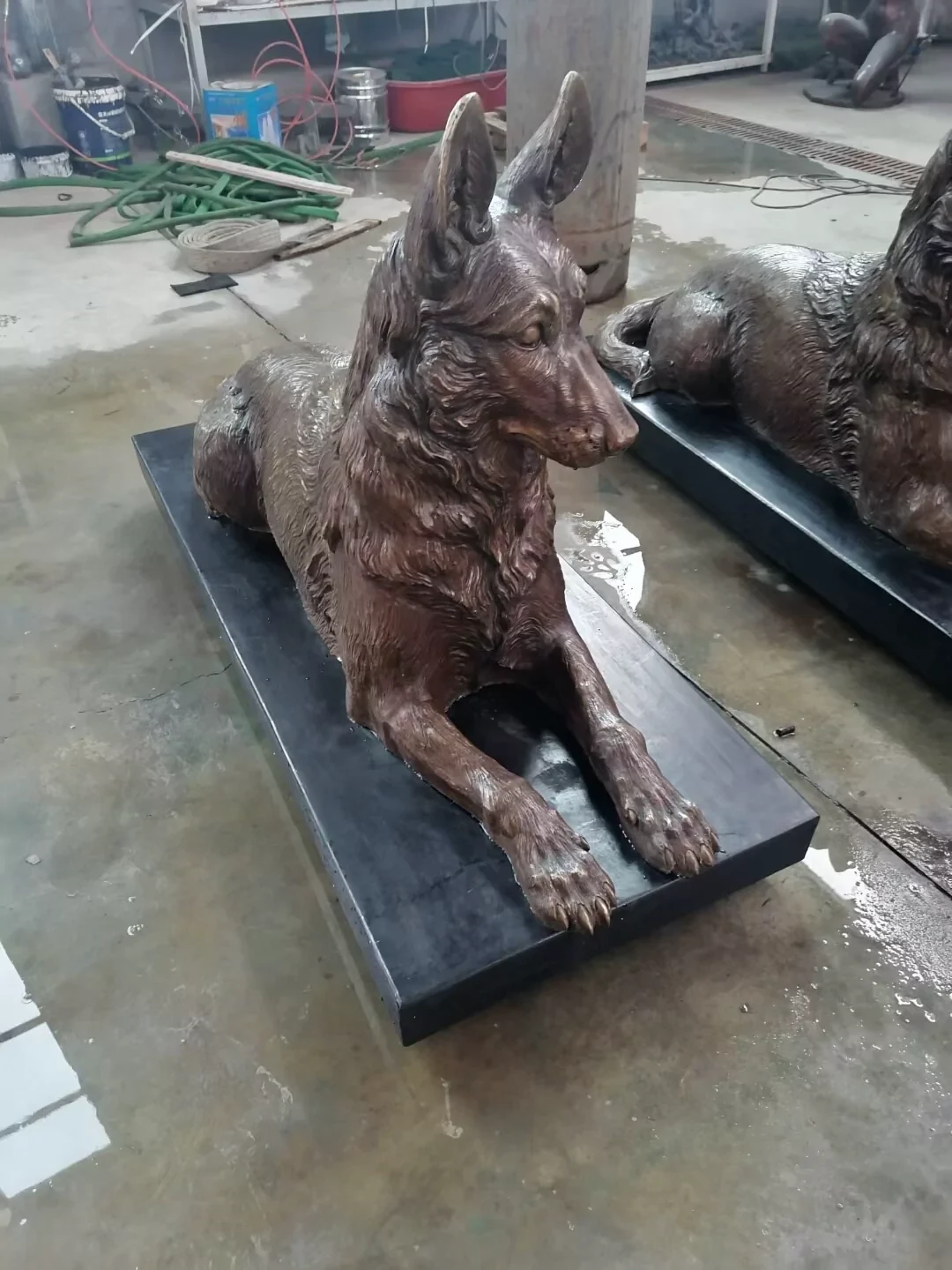
Reclining bronze German Shepherds: factory photographs
These photographs show actual German Shepherd sculptures in our workshop. Look beyond the front view: the extended forelegs, body length, neck modelling and tail position explain how a reclining design occupies its space.
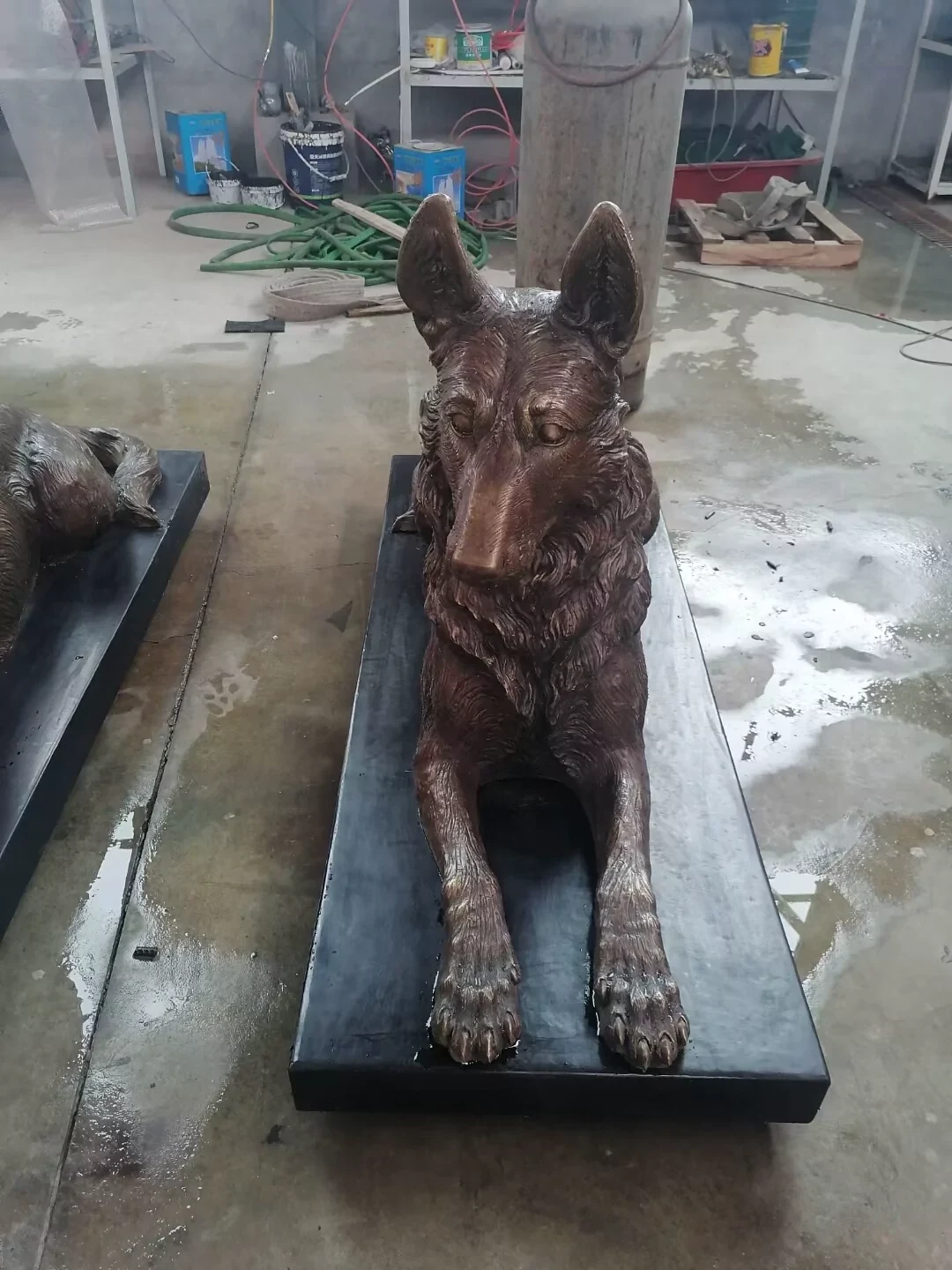
Front: head, chest and paws
Use this view to discuss the ear spacing, muzzle, chest and relationship between the two front paws.
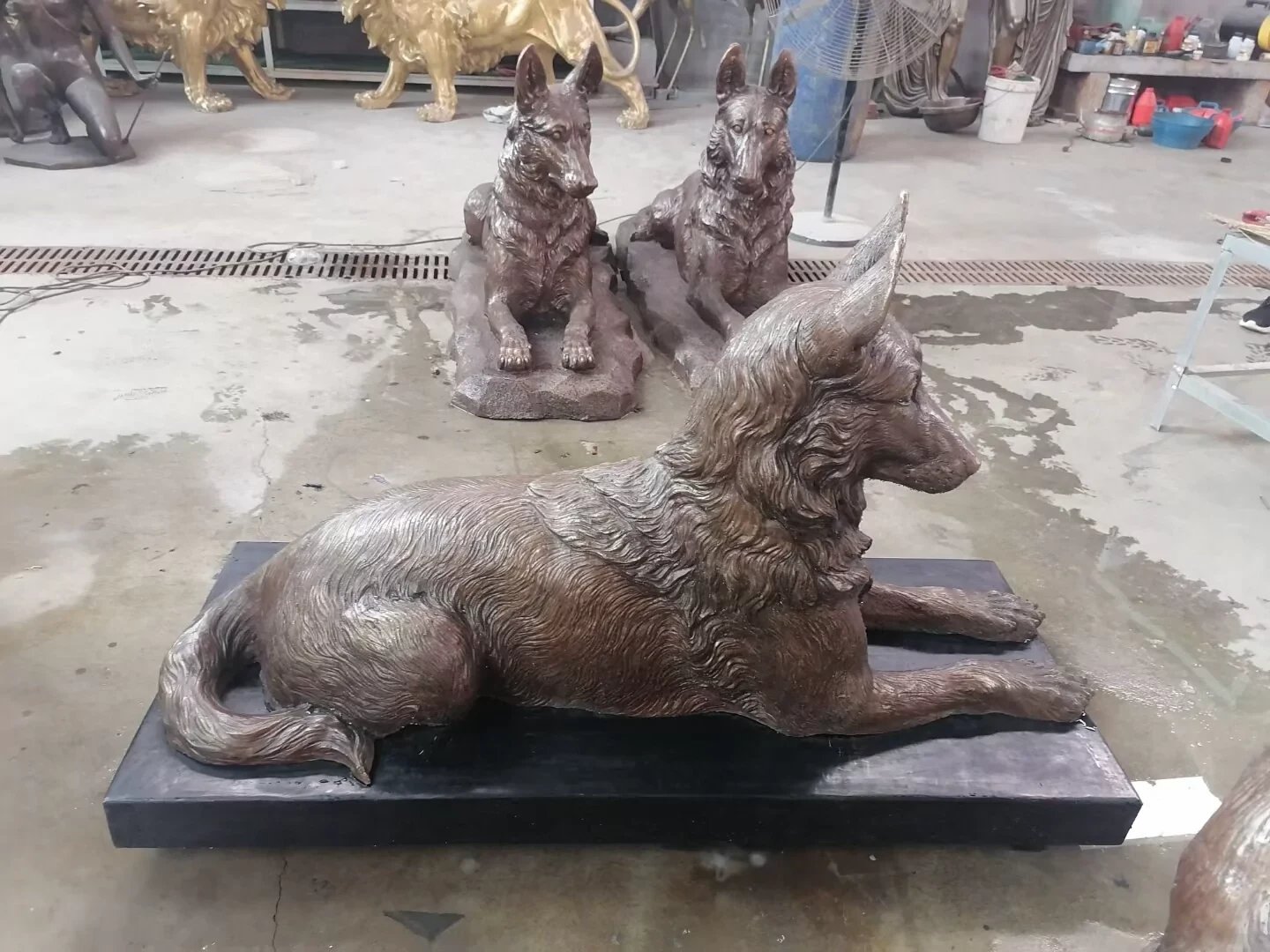
Side: body length and tail
The side outline shows how the resting body, extended forelegs and tail occupy the display space.
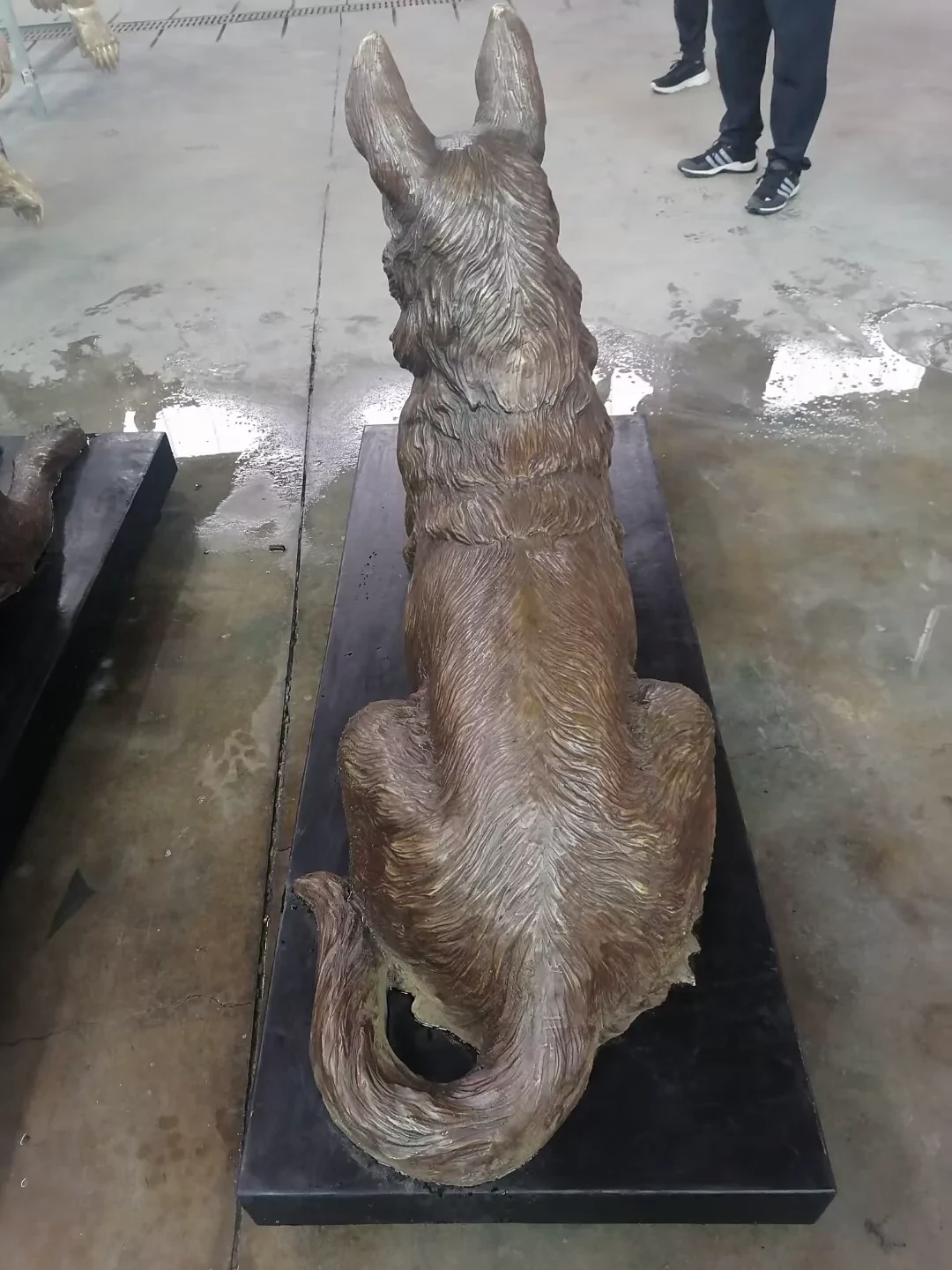
Rear: back and hindquarters
Review the back and tail if the figure will be seen from a window, path or seat behind it.
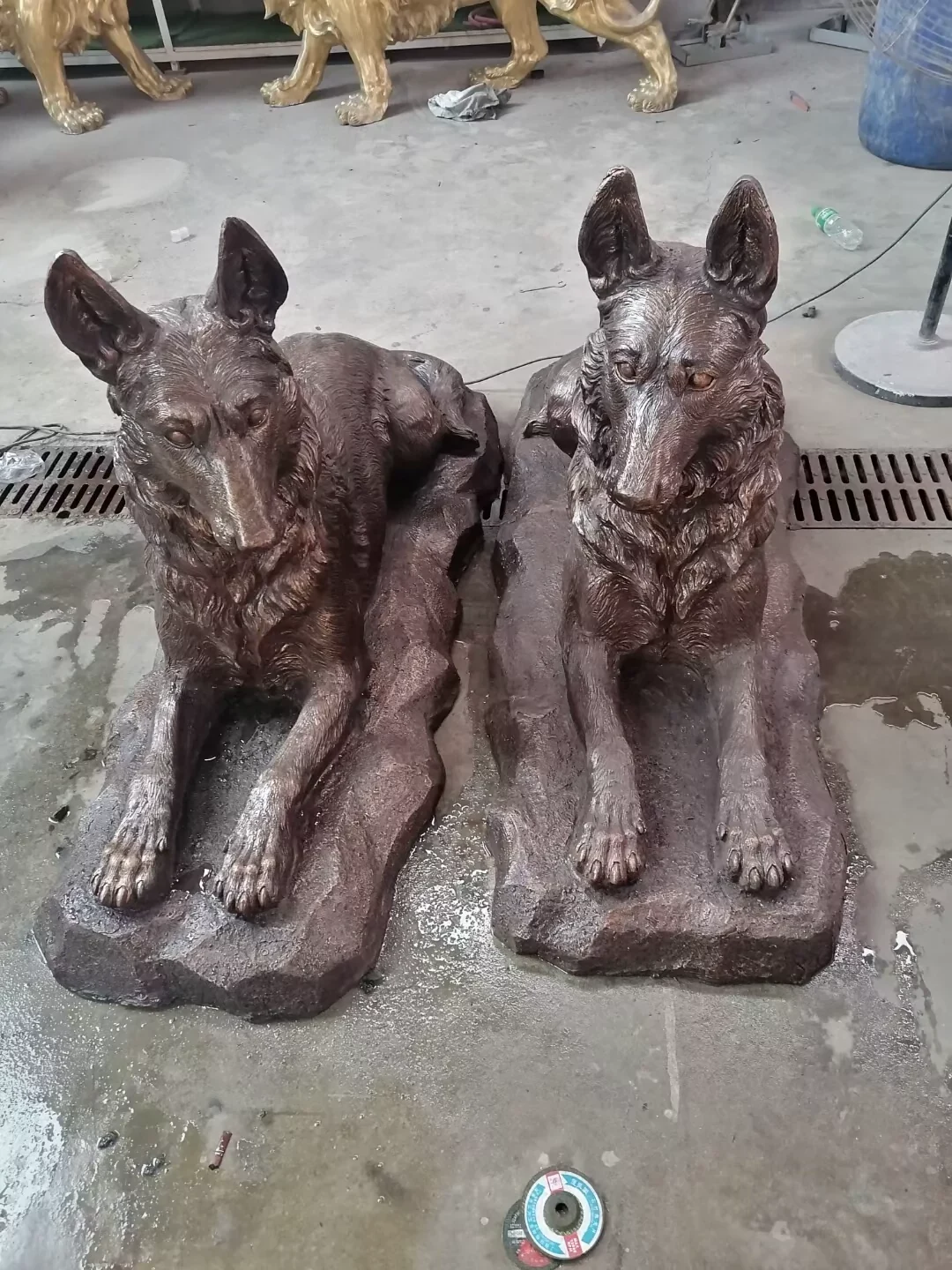
Two reclining workshop figures
A pair needs its own decision about relative size, head direction and the two bases. This photograph does not establish a standard entrance set.
Use a photograph to explain the direction you like, then identify what should be different for your commission. You may want another head angle, a less full neck, an individual ear position or a different base. The photographs show work examples; they do not establish a stocked size, current availability or a price for your project.
Our personalized dog statue guide covers the wider portrait process. Here, the focus is choosing a German Shepherd composition and preparing specific, useful model feedback.
Other directions to discuss
Seated, standing and alternative material concepts
Compare these ideas with the factory photographs. A new pose or material should be developed as its own design, rather than assumed to be an available version of a pictured workshop sculpture.
All five images in this section are AI design concepts, not completed commissions. The bronze, marble and steel examples are independent proposals, not verified views or material swaps of one existing sculpture.
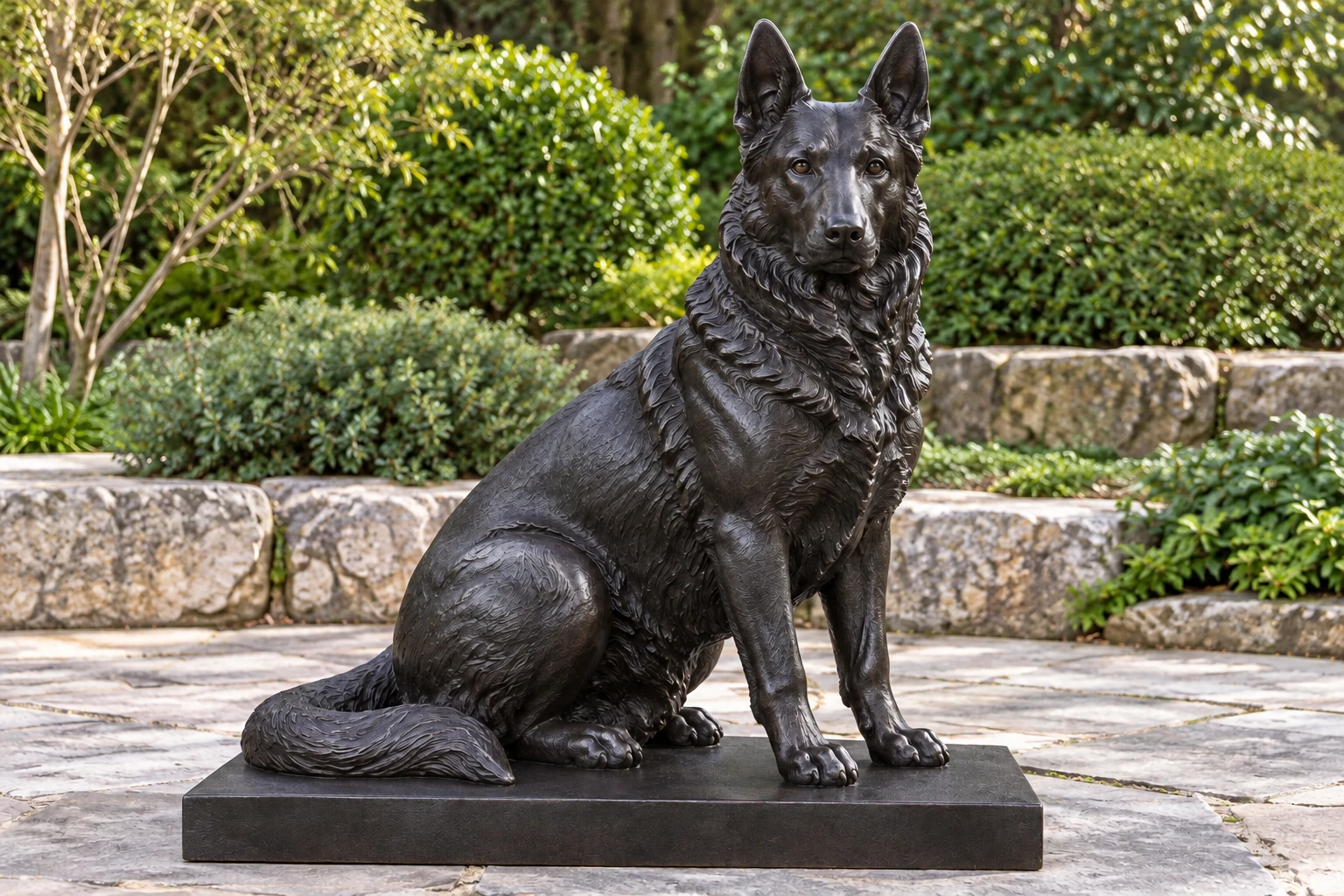
Seated and attentive
A seated direction puts emphasis on the head and chest. Confirm the face direction and tail placement around your preferred viewing position.
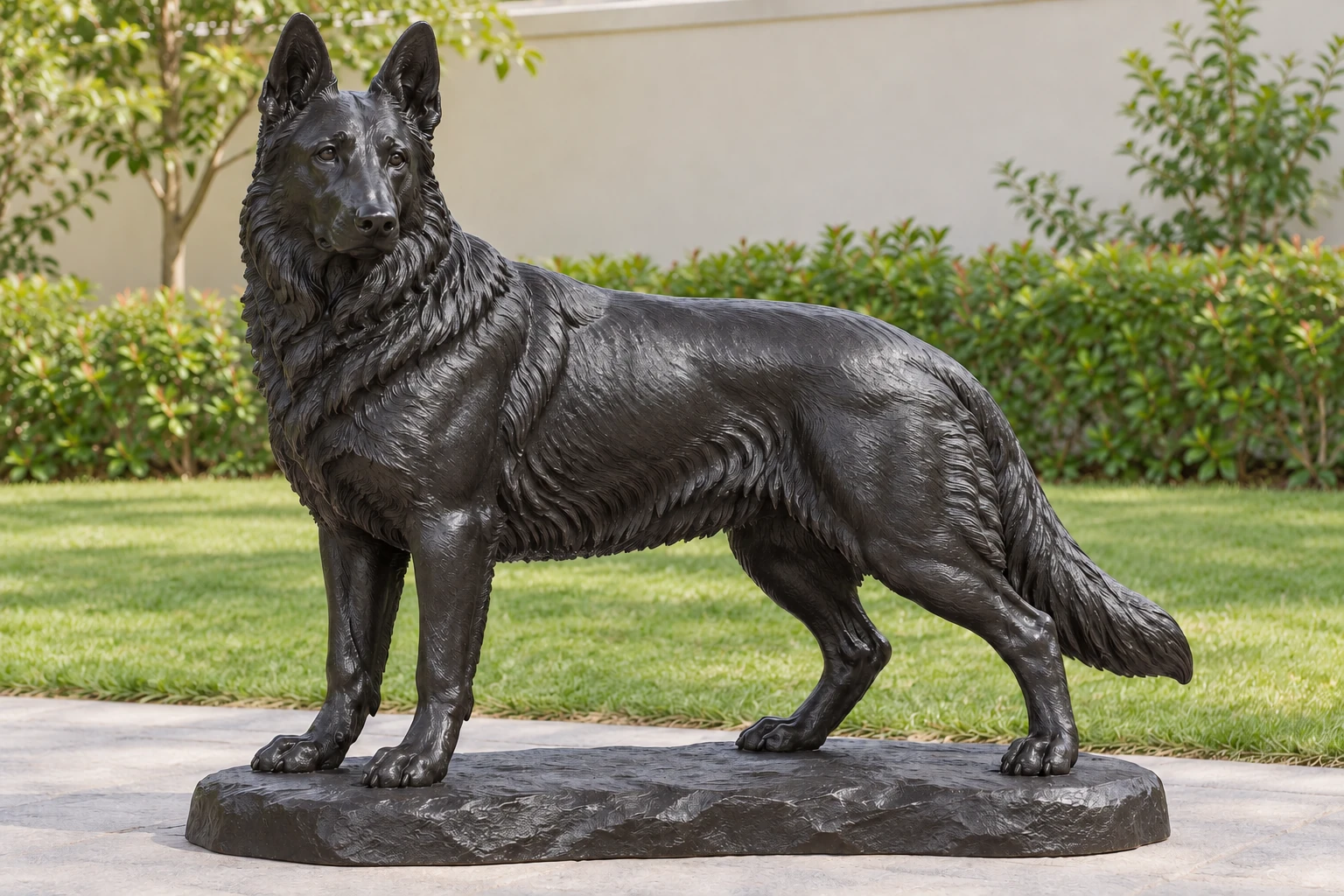
Standing body outline
Compare the body length, back line and leg arrangement with your dog. The entire nose-to-tail envelope belongs in the placement decision.
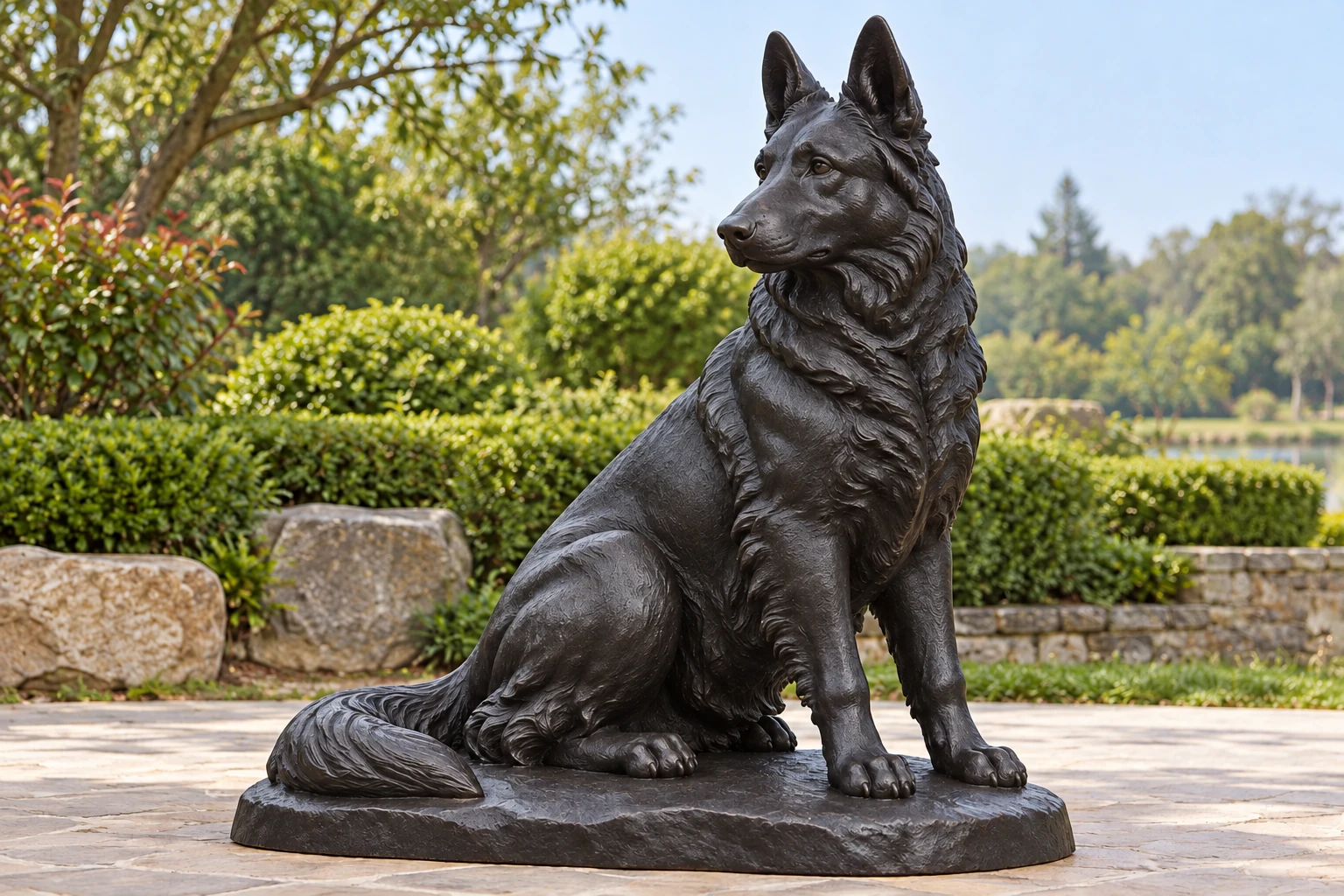
Long coat and head turn
Identify where your dog’s coat is fuller. Keep the individual muzzle and head angle readable beneath the grouped neck and chest relief.
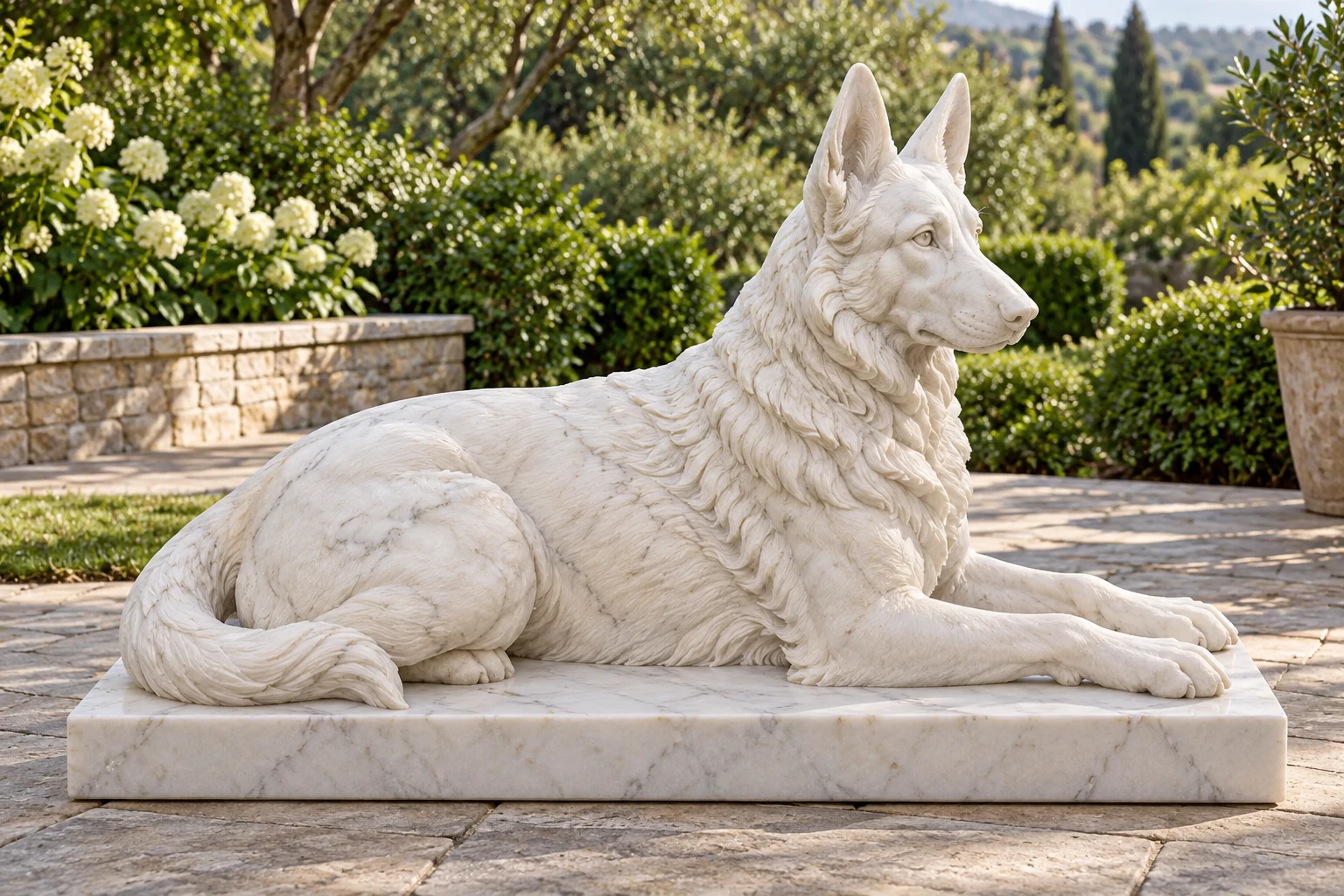
Reclining white marble
A carved direction brings the body, paws and support together. Stone selection and the projecting ears need their own design review.
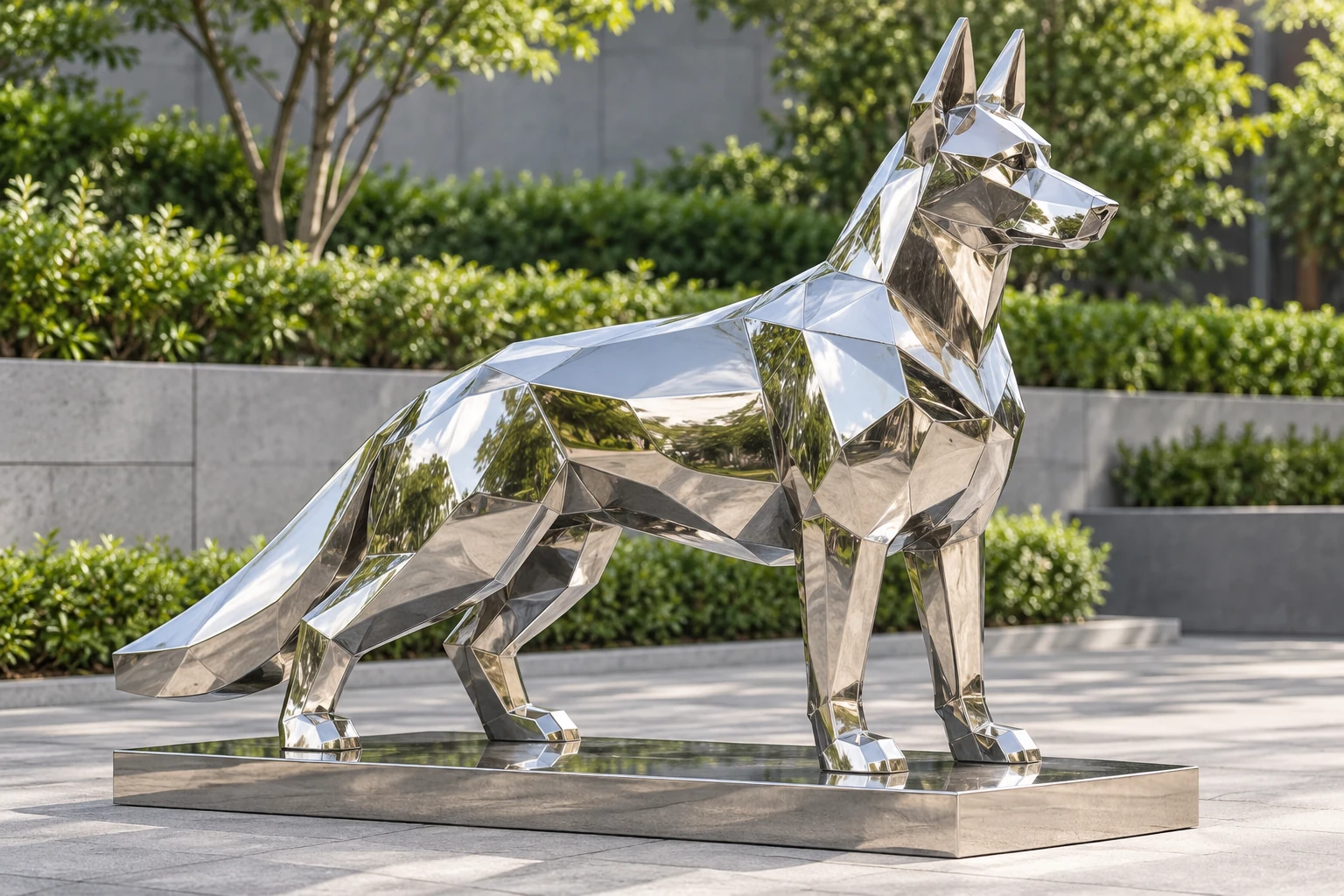
Abstract mirror steel
Broad surfaces carry the German Shepherd silhouette. This is a simplified fabricated design, with the steel grade and finish agreed for the location.
If you recognise your dog in part of a concept, tell us which part: the quieter mouth, the head turn, a fuller coat or the overall stance. Keep your own photographs as the reference for an individual portrait.
The posture changes the whole composition
Which German Shepherd pose belongs in your setting?
A German Shepherd dog statue does not have to look as though it is on duty. Choose the moment that belongs to the dog or place: watching an entrance, waiting beside a path, or resting near a favourite seat. A calm posture can still feel attentive.
| Pose | What it brings to the composition | What to check in the model and setting |
|---|---|---|
| Seated | The head, upright ears and chest form the main vertical impression. | Ear-tip height, front-paw spacing, tail beside the hindquarters and whether the face points toward the viewer. |
| Standing | The full body line, stance and relationship between shoulders and hindquarters become prominent. | Foreleg and rear-leg positions, individual topline, nose-to-tail envelope and how the figure reads from both sides. |
| Reclining | The extended forelegs and resting body create a lower, longer composition. | Projection of the front paws, chest support, body width, tail outline and whether planting or a wall hides the face. |
Decide what the dog is looking toward
Photograph the location from the route people actually take. A seated figure that looks straight ahead on a catalogue page may face away from someone approaching along a side path. Head direction can be more important than adding another surface detail.
Describe the direction using a site photograph: “toward the gate in this picture” is clearer than “turn left.” If left or right matters, state whether you mean the dog’s side or the viewer’s side. A marked reference photograph can prevent a reversed instruction.
Choose the mouth and expression deliberately
A closed mouth can create a quiet, composed portrait. An open mouth may preserve the familiar look of your dog, but it changes the silhouette of the muzzle and the amount of modelling around the jaw and tongue.
Do not ask for an aggressive expression simply because the breed is associated with guarding. Use the expression you remember or the impression you want at the site. Review the eye area, mouth and head angle together before approving them.
Keep the familiar posture of an older dog
A memorial may refer to a particular period of your dog’s life. Identify that period when sending photographs. A youthful standing image may help explain body proportions without being the posture you want recreated; a later reclining image may hold the expression you remember most.
If the preferred photograph hides a rear leg or tail, add another view and explain which features should remain from the main reference. This is more useful than asking a generic breed model to represent every age or posture at once.
Approve your dog, not just a breed symbol
The German Shepherd model review: ears, muzzle, back and hindquarters
Breed recognition starts with the outline, but an individual portrait needs more than two upright ears and a long muzzle. The distance between the ears, the shape of the forehead, the body line and the way the tail rests can make the sculpture feel familiar.
A general breed figure and a portrait of your own German Shepherd are different briefs. For a portrait, explain the individual features you want kept, including asymmetry. One ear that leans, a less pronounced coat ruff or a distinctive resting posture should not be automatically replaced with an idealised catalogue version.
| Feature | Reference that helps | Useful feedback to give |
|---|---|---|
| Ear carriage and spacing | A level front view with both ear tips visible. | “Keep the right ear leaning slightly outward; it should not match the left exactly.” |
| Muzzle and forehead | A clear side photograph plus a front view. | “The muzzle looks too short in this side view; please compare it with this photograph.” |
| Neck and coat outline | A three-quarter view showing where the neck meets the chest. | “Reduce the fullness below the cheeks, while keeping the longer coat at the chest.” |
| Topline and body length | A side view in the intended posture, with shoulders and hindquarters visible. | “Please follow this dog’s back line rather than exaggerating the drop toward the rear.” |
| Rear-leg arrangement | A side and rear view of the standing, seated or reclining reference. | “The rear paw should sit farther forward, as it does in the preferred pose.” |
| Tail and base outline | A rear or opposite-side view, including the complete tail. | “Keep the tail against the body on this side; do not extend it into the path.” |
A dramatic sloping back is not a default requirement
A stance can change the apparent line of a German Shepherd’s body. Compare the model with a photograph in a similar posture and from a similar viewpoint. A low, angled phone photograph is a poor match for a level side model view.
The AKC breed standard describes the German Shepherd as longer than tall, with coordinated body proportions and a defined head and ear shape. It provides a breed reference, not a requirement to remodel your pet into a show example. For a personal commission, the agreed individual photographs guide the likeness.
Let the coat outline lead the texture
For a shorter coat, keep the shoulders, chest and hindquarters readable. For a longer coat, identify where the fullness belongs: around the neck, behind the legs or along the tail. A full coat over the entire body can hide the proportions you are trying to preserve.
Broad grouped relief can describe that distribution without making every hair a projecting strand. Ask to see the model from the main viewing distance as well as close up. More visible texture does not automatically mean a more accurate German Shepherd.
For further breed comparisons, our outdoor dog statue guide explains the wider silhouettes. The checklist here turns those observations into a commission brief and model revisions.
Body, support and site are separate measurements
Specify a life-size German Shepherd statue clearly
A life size German Shepherd statue should refer to a selected dog or an agreed breed-scale design. It is not one universal sculpture height. Shoulder height on a standing dog, height to the ears on a seated figure and overall height including a base describe different things.
For a standing figure
Confirm shoulder height and the highest point of the sculpture. Then record maximum length from the forward-most point to the furthest tail point, plus the maximum width. A lifted head, a turned muzzle or a tail beside the body can change the overall envelope without changing shoulder height.
The model should show the feet and support within those dimensions. Do not use a body-length measurement alone to assume that the sculpture will fit between two planters or against a boundary wall.
For seated or reclining figures
A seated design puts attention on the height of the ears and the width of the chest and tail. A reclining design needs enough room for the extended front paws, hindquarters and any base projecting beyond them.
Ask for a dimensioned outline of the chosen pose. In a low position, check whether the face can be seen above planting or furniture. Raising a separate support changes the display height; enlarging the dog changes the figure itself.
Measure the support as well as the dog
Separate the sculpture’s own integral base from a display platform or stone plinth. Confirm the figure dimensions, base footprint and overall installed height. The rectangular platforms in the workshop photographs are not a promise that every commission includes the same support.
For a German Shepherd garden statue beside a path, mark the complete proposed footprint, including the paws and tail. View the marker from the entrance and your usual window or seating position. Allow working space around it for gardening and care. Our front porch dog statue guide covers the fuller entrance measurement process.
Agree the fixing and access with the quotation
An outdoor figure needs a support and fixing arrangement appropriate to the agreed sculpture and location. Photographs of a dog standing on four feet do not establish its centre of gravity, weight or mounting design. Confirm these details for the final version, including whether fixings are visible or concealed.
Tell us about doorways, gates, steps and the final unloading point. A delivery to an address and placing the sculpture on its foundation are separate parts of the project. For a German Shepherd yard statue on a raised support, decide who provides the support, who unloads the crate and who installs the sculpture.
Two figures need a shared plan
One German Shepherd or a pair at the entrance?
The workshop pair photograph shows two reclining bronze German Shepherds. A pair can create a balanced entrance or represent two companions, but those are different design goals. Decide whether you want repeated forms, coordinated opposing directions or two individual portraits.
| Pair direction | What to agree | What can otherwise be missed |
|---|---|---|
| Repeated breed figures | Same general scale and pose, with the intended finish and support for each. | Identical head directions may make one figure look away from the approach. |
| Coordinated entrance pair | Which dog occupies each side and whether heads, tails and bases turn inward or outward. | Opposing directions may require separately developed forms rather than rotating one figure. |
| Two individual dog portraits | Each dog’s photographs, relative size, expression and posture. | Matching overall height can erase a genuine difference between the two dogs. |
Send one site photograph showing both positions. Label them from a defined viewpoint, such as “left when approaching from the street.” Check the open door or gate, the walking route and any nearby planting for both bases.
For two personal portraits, label the reference folders with each dog’s name. Mirroring a photograph can reverse an uneven ear, markings or a familiar collar detail. Use separate model references when those features matter, even if the finished pair is intended to look balanced.
Agree the same finish direction across the pair if you want visual consistency, while keeping each dog’s own proportions. A shared surface treatment should not turn two distinct companions into copies of one model.
The surface should support the form
Bronze German Shepherd statues and other material directions
Cast bronze with restrained coat modelling
A bronze German Shepherd statue can retain the ears, muzzle, chest and coat outline in an expressive portrait. Our bronze work uses lost-wax casting; the model and final construction are agreed around the commission.
The factory photographs show a brown-toned surface with sculpted coat relief. The new concepts use a darker blackened direction and calmer highlights. Choose a reference for the form and a reference for the finish separately, so the preferred colour does not accidentally determine the wrong pose.
For a black-and-tan or sable dog, decide whether recognisable shape carries the portrait or whether a separately discussed colour treatment is important. Bronze surface tones do not behave like a living coat; review the intended finish in ordinary light.
Satin, polished areas and the sculpture’s expression
A low satin sheen keeps more attention on the silhouette. Stronger polished areas produce brighter reflections, particularly around the muzzle, cheeks and ears. Compare the face under daylight before choosing how reflective it should be.
Keep the eyes and nose coherent with the sculpted bronze if that is the intended style. A dark eye area can be modelled and finished within the metal; it does not require a glass eye or a painted wet nose to create an attentive expression.
Confirm the actual material, patina and protective finish in the quotation. A warm reflection does not identify an alloy, and a blackened bronze dog remains bronze rather than becoming a different metal.
For a German Shepherd outdoor statue, describe irrigation, drainage, coastal exposure and access for cleaning when choosing the finish. Care depends on the actual material and protective treatment; our bronze maintenance guide provides further reading.
A natural-stone workshop reference
This white marble dog photograph adds a real stone reference beside the carved interpretation above. The ears, face and complete base can be examined as an object rather than inferred from a render. It is a separate dog design with an unconfirmed breed; your German Shepherd would still need its own reference, carving model and agreed dimensions.
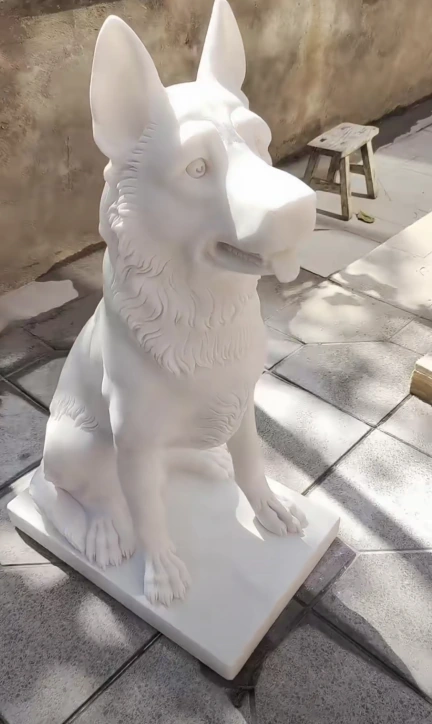
Personal portraits and institutional tributes
A German Shepherd memorial with the right identity
Remembering a family companion
Choose the familiar posture first, then decide whether a name, dates or a short inscription belongs on the sculpture’s base or on a separate plaque. The face should remain the focus if you want a quiet personal memorial.
Send the inscription exactly as it should read, including spelling and punctuation. Confirm the layout independently from the dog model. If you want an ashes compartment, discuss its capacity, access and closure as a separate feature; it is not assumed from a reclining body or broad base.
Our pet memorial statue guide covers the wider memorial planning choices.
A working-dog or institutional tribute
A named working dog needs a clear identity brief as well as a breed likeness. Supply the dog’s photographs, the intended posture and the exact collar, harness or other equipment that should be represented. Generic equipment can make the portrait feel like a different dog or assignment.
Confirm the name, unit or organisation wording, dates and any emblem artwork with the person approving the project. Decide which details are part of the sculpture and which belong on a separate plaque. Review that information in one proof rather than leaving it scattered across messages.
If the tribute includes a handler or another figure, it becomes a separately developed composition with its own references, dimensions and quotation. The individual German Shepherd designs here do not establish a completed handler-and-dog project.
For a public setting, identify who approves the dog model, who approves the inscription and who confirms the support and installation. A target ceremony date is useful, but the modelling review, production and delivery schedule must be agreed for the actual scope.
Before you choose
German Shepherd statue questions
Can you make a portrait of my own German Shepherd?
Yes. Send photographs and explain the posture and features you want preserved. Your references guide the model review, including ear position, muzzle, back line and coat outline. A general breed design is a different option if you do not need an individual portrait.
Can I choose seated, standing or lying down?
These poses can be discussed for your commission. Reclining workshop examples and new AI concepts are shown separately on this page. The dimensions, support, head direction and actual production scope are confirmed for the selected design.
Does every German Shepherd need a strongly sloping back?
No. Use the individual dog and intended posture as the reference. A dramatic catalogue stance should not replace the body line you want preserved. Compare side model views with photographs taken at a similar angle.
Can you keep an uneven ear or a relaxed expression?
Yes, those can be important features of a personal portrait. Identify them clearly in the reference photographs. We do not need to make both ears identical or turn a calm companion into a generic guard-dog expression.
How large is a life-size German Shepherd sculpture?
It depends on the selected dog and pose. Confirm shoulder height where relevant, ear-tip height, nose-to-tail length, maximum width and the base separately. “Life size” alone does not identify the installed height or space needed.
Can you make a long-coated German Shepherd?
A longer coat can be developed around the neck, leg and tail outline in your photographs. The relief and modelling are reviewed at the intended scale. The long-coat image in the design section is an AI concept, not an existing stock sculpture.
Can I order a pair for a gate or entrance?
Yes, a pair can be discussed. Confirm the two positions, head directions, relative size and whether these are repeated breed figures or portraits of two different dogs. Opposing directions may require separately developed models.
Are bronze and brass German Shepherd statues the same?
No. Bronze and brass are different copper-alloy categories, and colour alone cannot identify either. This page focuses on cast bronze. If you specifically require a brass German Shepherd statue, state that material requirement so availability and the appropriate production scope can be confirmed separately.
Do you supply a small German Shepherd statuette?
Send the required size and material for review. We do not present the images here as a stocked miniature range. A reduced figure needs its own confirmation of modelling detail, support and feasible production scope.
Can you include a collar, name plaque or unit details?
These can be discussed in the brief. Supply the actual equipment references and exact inscription text. Agree the dog model and the plaque layout separately, including whether the plaque is integral or fitted to another support.
Is a German Shepherd garden statue solid or hollow?
The construction is specified for the chosen design and scale. We do not assign one universal weight or solid-casting claim to every German Shepherd statue. The quotation should state the agreed construction, support and fixing information.
What determines the quotation and delivery time?
The portrait modelling, pose, size, material, finish, base, accessories and destination affect the scope. Model revisions and transport affect timing. Share any target date, and we will confirm arrangements for your project rather than attaching a fixed promise to a concept image.
Begin with the dog and the place
Plan your German Shepherd statue with us
Send the workshop photograph or concept you like, a few photographs of your dog if you want a portrait, and the intended display location. You can compare pose and size options before deciding every detail.
Every commission is confirmed around its own model, dimensions, material and finish. Choose an image as a starting direction, then make the brief specific.
Helpful details when you have them
- Individual portrait or general breed figure.
- Preferred pose, head direction and coat outline.
- One dog or a planned pair.
- Actual size, enlargement or available display space.
- Delivery country and postcode, plus any inscription or target date.