Get in touch with Yun-Sculpture company
The face you know. The form that belongs in your space.
Custom Labrador Garden Statues & Portrait Busts
A Labrador garden statue can preserve the whole companion: the familiar stance, strong body and rounded tail. A portrait bust concentrates the artwork around the face, neck and shoulders.
Explore seated, standing and resting bronze designs, including dark Black Lab directions. Choose a full figure or a bust, then develop the individual expression, size and surface for your setting.
Share your idea on WhatsApp ↗Begin with a photograph or a favourite direction below. Tell us whether you want the whole dog or a head-and-shoulders portrait.
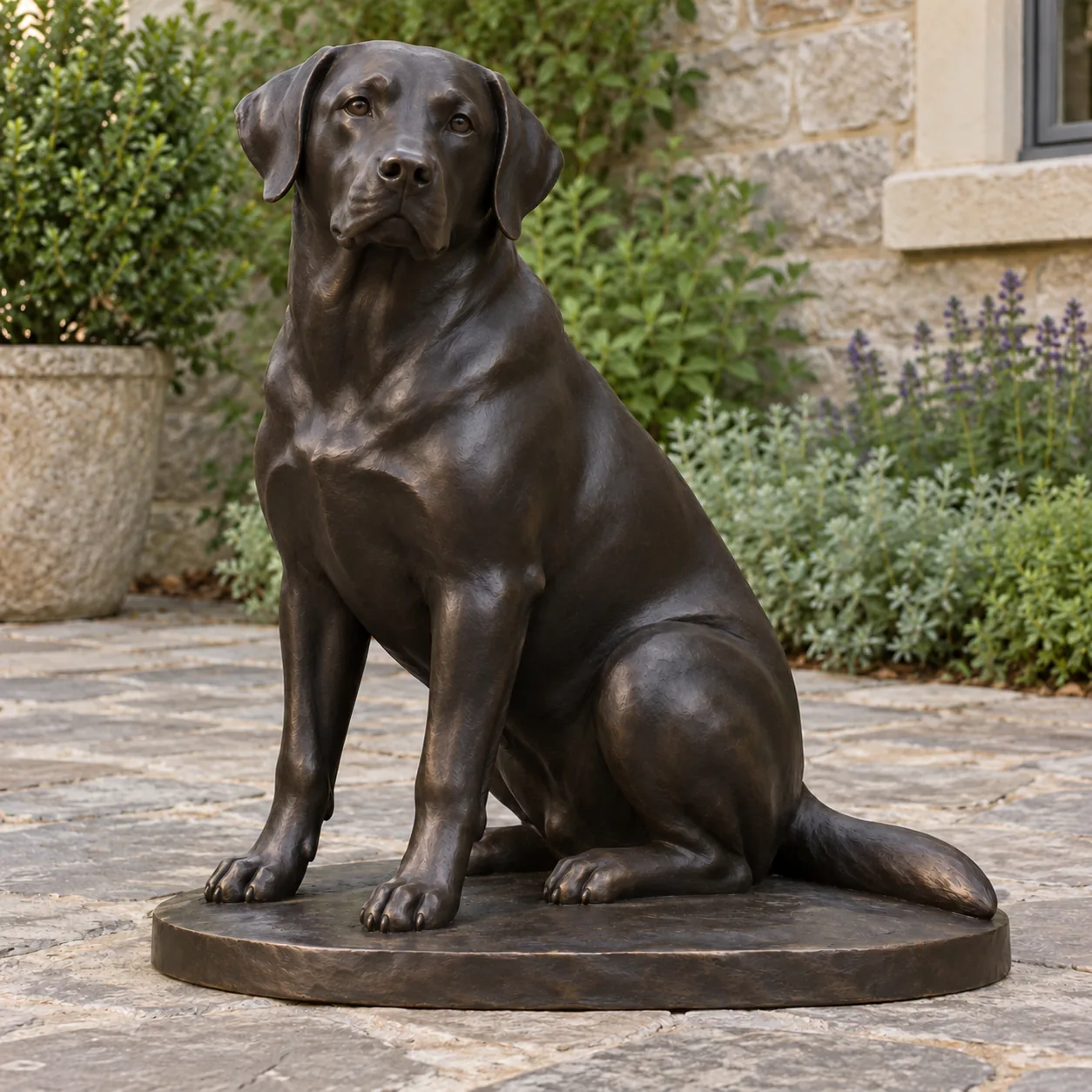
Black Lab references with a specified surfaceFull figures and head-and-shoulders portraitsFace, tail and display position reviewed together
Choose the portrait format first
Labrador statue and bust design ideas
The gallery compares a complete standing outline, quieter seated and resting figures, and portraits that finish at the shoulders. Bronze, carved marble and abstract steel each offer their own interpretation.
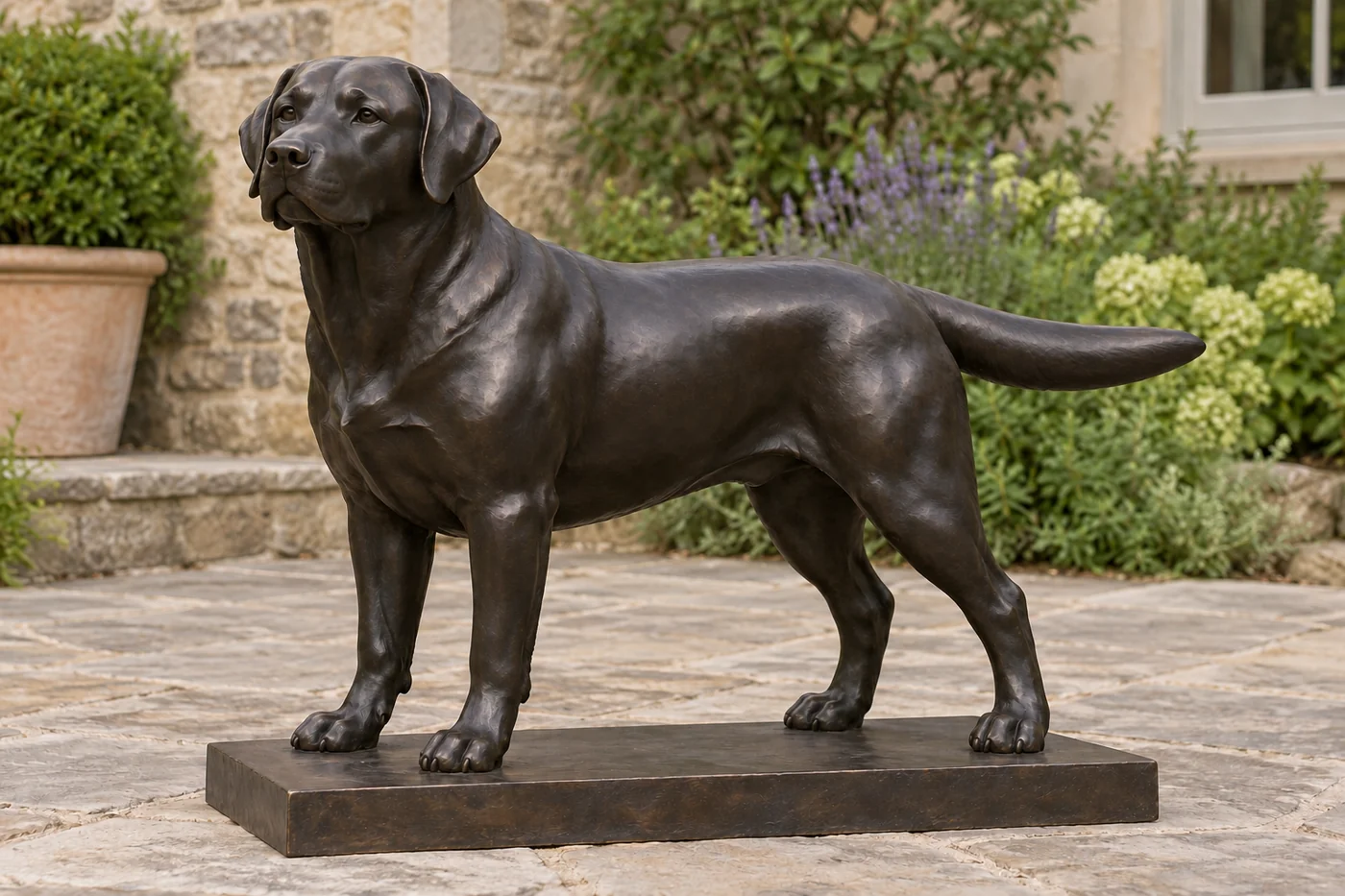
Standing Black Lab direction
The complete standing outline includes the tail beyond the torso. Confirm its outside dimensions and the near-black finish separately.
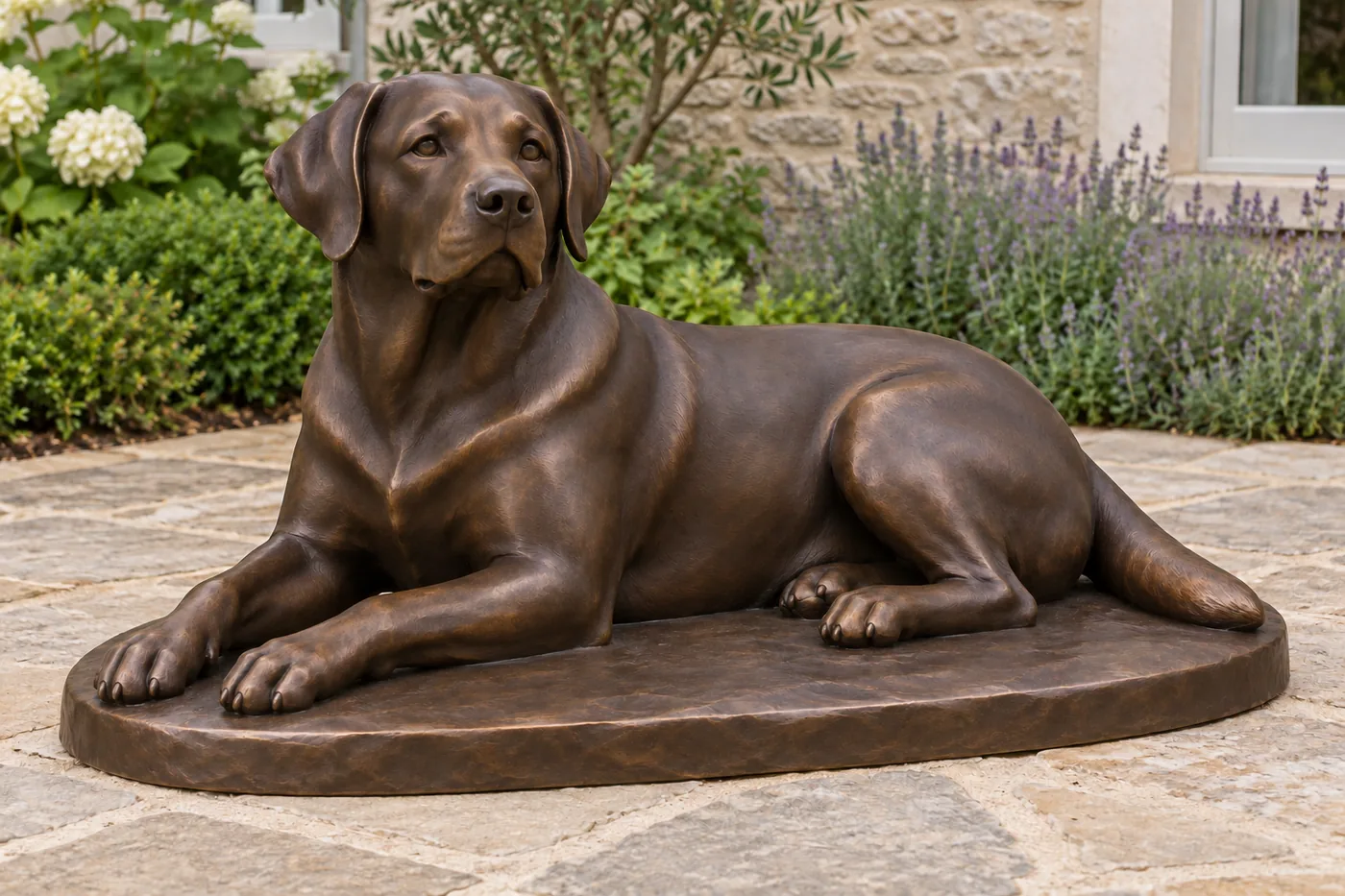
Resting Labrador in bronze
A lower portrait preserves a familiar resting moment. Check the full paw-to-rear layout and the face from the planned viewing height.
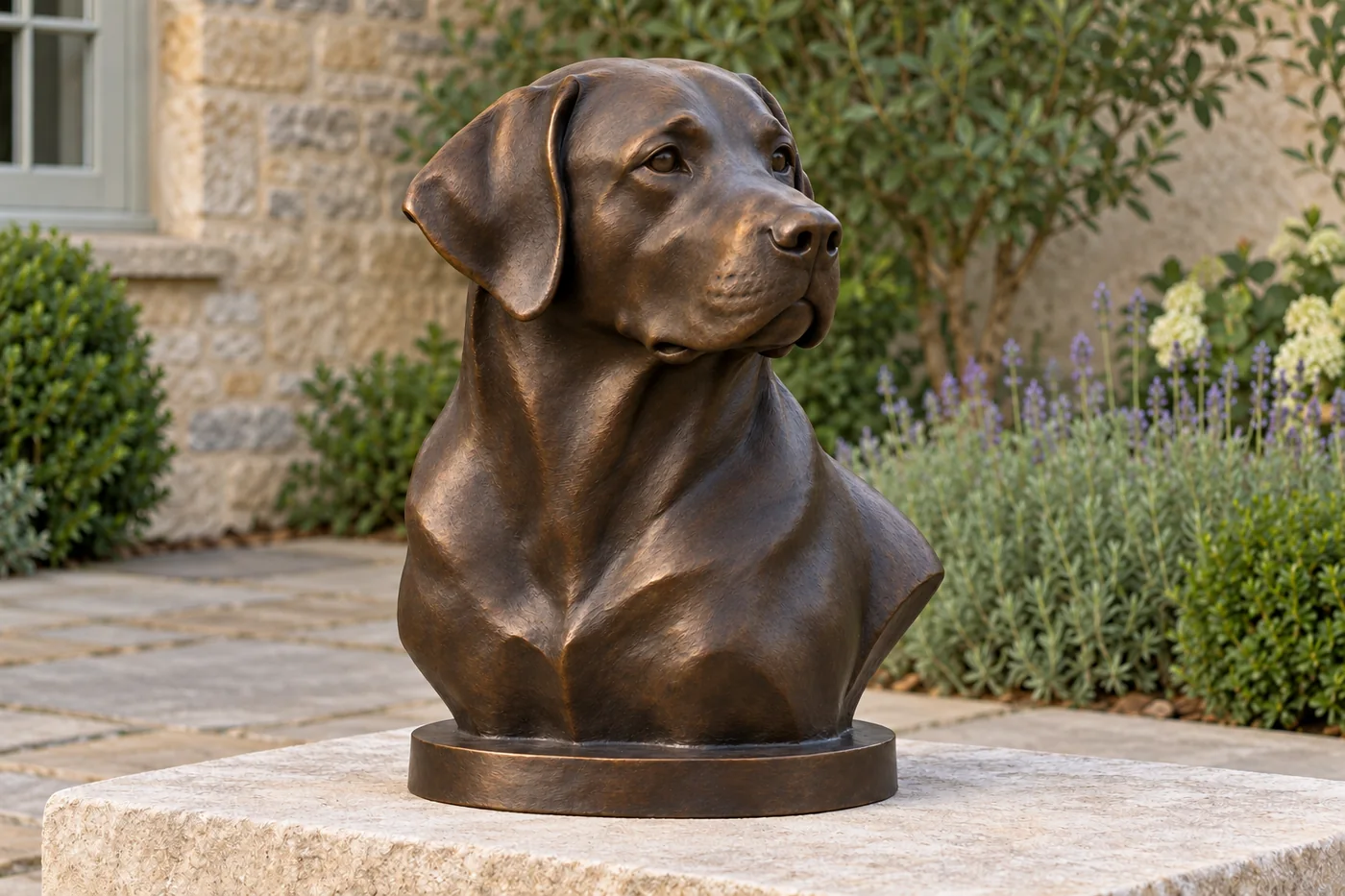
Head-and-shoulders bronze bust
The shoulders and lower edge are part of the portrait. Agree their extent, the rear treatment and the base with the individual head reference.
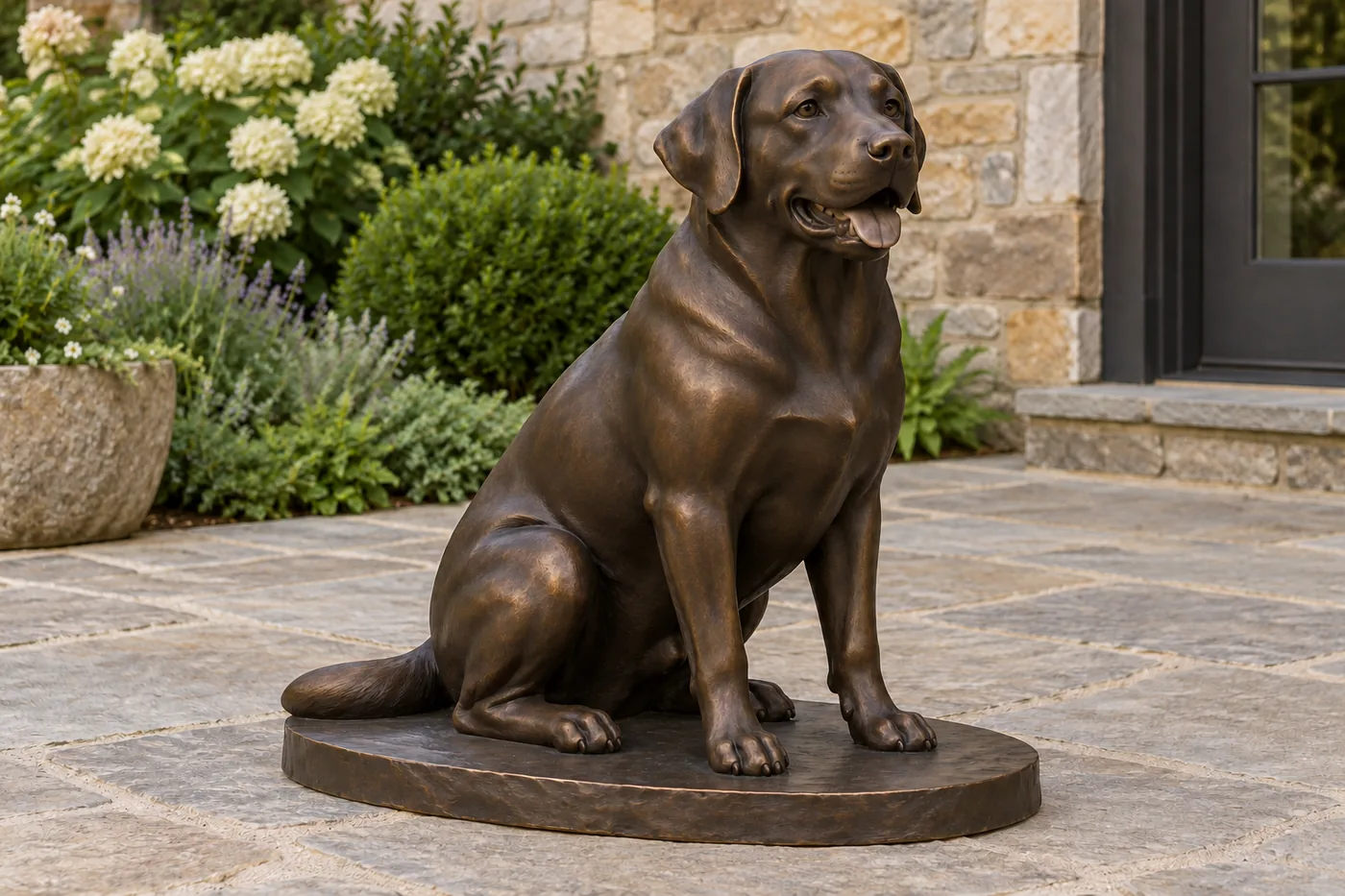
Relaxed open-mouth Labrador
Choose the mouth and tongue interpretation from your dog. A warmer bronze surface is a separate decision from its coat colour.
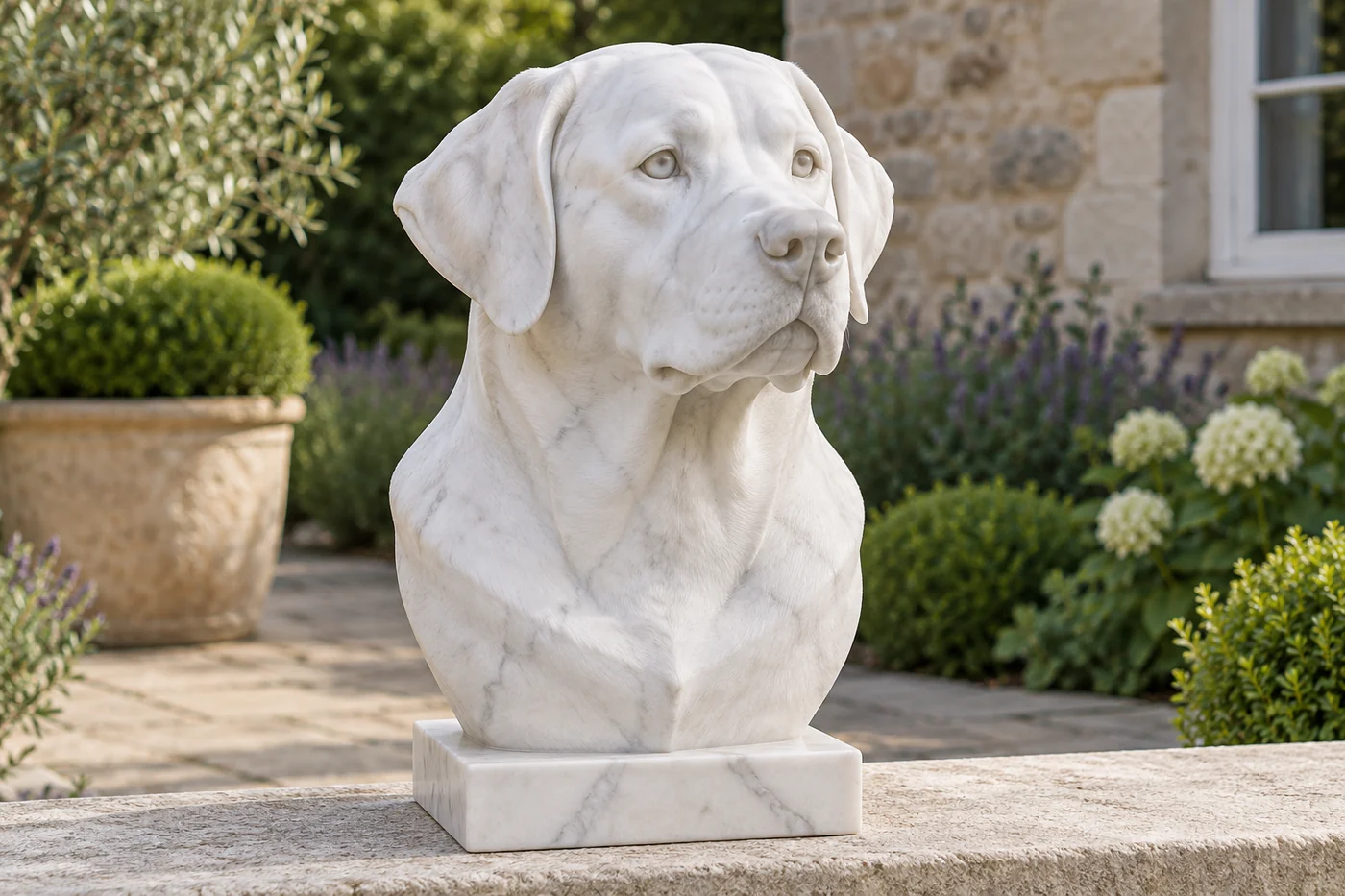
White marble Labrador bust
A carved portrait with supported ears and broad shoulder forms. Review the chosen block, the back and its display ledge as its own arrangement.
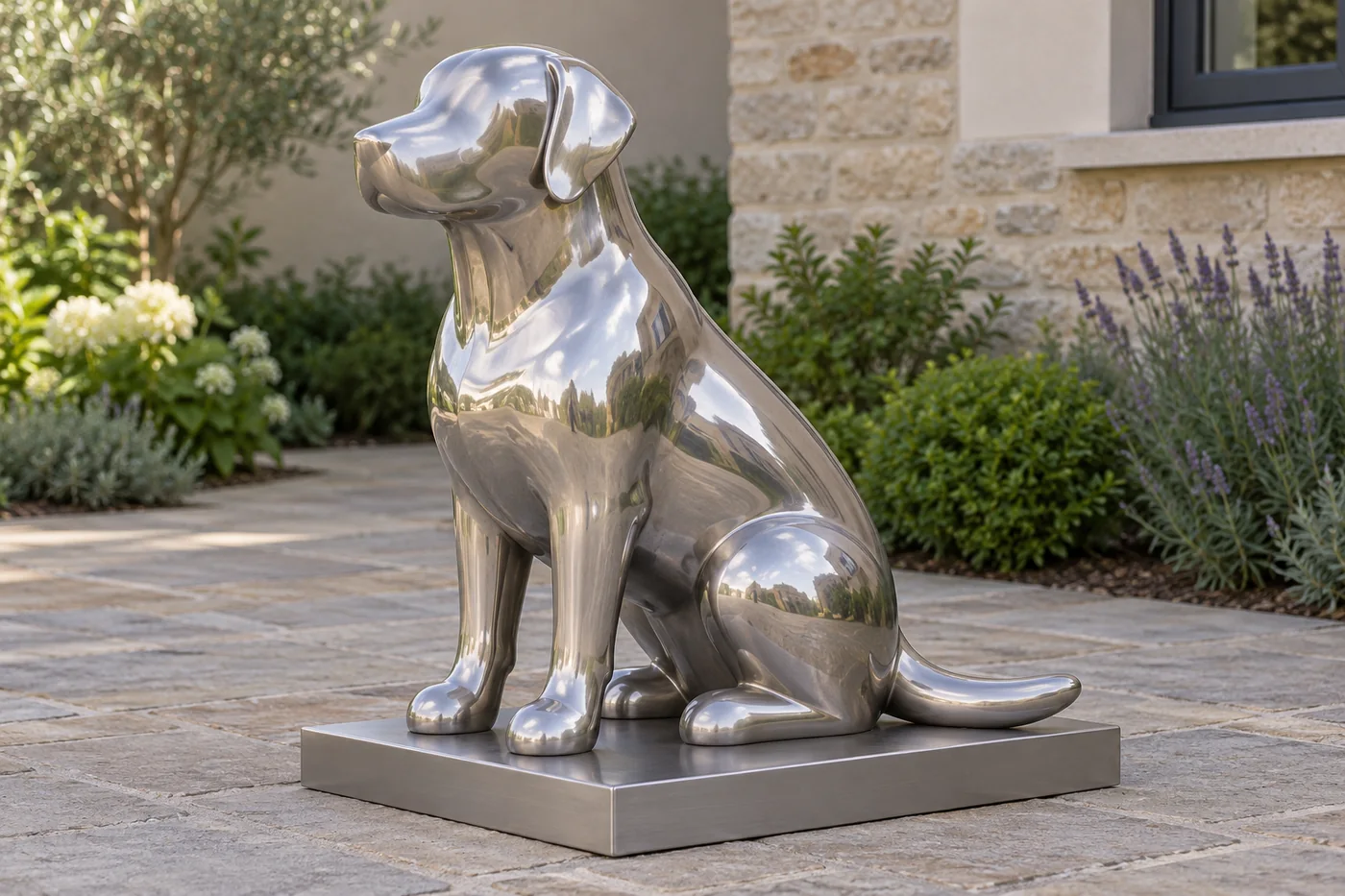
Abstract mirror-steel Labrador
Large curves carry the head and compact body outline. This simplified fabricated design has its own metal and reflective finish agreement.
AI designs by Yun Sculpture for discussing custom work. You can submit an AI design of your own. Above 90% visual reproduction is our target for suitable references, with material choices and the model reviewed before manufacture.
For an individual dog, connect a design direction to photographs of your companion. Our personalized dog portrait guide covers the wider brief; this page helps choose the Labrador’s form and display.
A dark colour does not identify the dog
The short coat, head and rounded Labrador tail
The AKC Labrador standard identifies a short dense coat, a clean broad head and a rounded tapering “otter” tail as characteristic features. Your own photographs decide the individual portrait; those features provide a useful starting check for a general breed design.
Review the head without adding bulk everywhere
Compare the skull, cheeks and muzzle in front and side views. If the face seems too heavy, identify where the extra width appears rather than asking for the entire head to shrink.
Check the mouth and dropped ears against the same reference. A head can look familiar in profile yet lose that character when its ear position or cheek width is seen from the front.
Close photographs may make the nose seem disproportionately prominent. Include a more complete face or full-body image so the preferred expression is not developed from one distorted angle alone.
Give the tail its own reference
Show the full tail in the posture you want kept. Its thickness near the body, taper and position are part of the individual outline, not a detail to invent after the torso has been approved.
A side image can leave the connection hidden behind the rear leg. Add another angle if the tail matters to the portrait, especially when it rests beside a seated or reclining body.
Its complete shape also enters the outside dimensions. A thick tail close to the base and a tail extending behind a standing figure occupy different space.
Labrador and Golden Retriever are not interchangeable coat models
A Labrador direction should not acquire a long fringed neck or plume-like tail simply because another retriever model looks attractive. The Golden Retriever standard describes feathering; the Labrador reference on this page has a different coat outline.
If the dog’s identity is uncertain, identify the actual pet rather than selecting it by bronze colour. A brown surface does not make the sculpture a Chocolate Lab, and a black one does not establish a Labrador rather than another breed.
Our outdoor dog breed guide provides the wider comparison. Keep this commission anchored to the dog or breed reference you chose.
Decide which part of the presence you want
Full-body Labrador statue or portrait bust?
A full figure carries a posture and the complete body. A Labrador bust gives the face and neck a larger role in a smaller composition. Neither format automatically offers a closer likeness; both need the right reference and intended viewing position.
| Format | What the artwork can preserve | What needs its own review |
|---|---|---|
| Standing figure | The whole body, stance and tail, with a clear side or angled profile. | All paws, body orientation and the outside nose-to-tail layout. |
| Seated figure | The face above the chest, along with a familiar seated posture. | Gathered rear legs, tail position and the complete support footprint. |
| Reclining figure | A resting moment, including the head above extended paws. | Body length and the facial view from a lower display level. |
| Head-and-shoulders bust | The head, neck and selected part of the shoulders or chest. | Lower edge, rear treatment, head turn, plinth and viewing height. |
A bust is a composed portrait, not an arbitrary crop
Where the artwork finishes below the neck affects its character. A very narrow termination gives a different impression from a broader shoulder portrait. Decide how much of the dog’s chest should be present.
Look at the lower silhouette alongside the face. A head that you like may still need a different neck length or shoulder transition when it becomes a bust rather than a complete seated dog.
Choose a whole figure when posture carries the memory
If you recognise your companion through the way it waited, stood or rested, a full-body sculpture can preserve that part of the relationship. A face-only emphasis would leave those details out.
A bust can be appropriate when the face is the main priority or when it will sit on a display ledge. It still needs enough depth, width and a suitable support; the format name alone does not establish that it will fit.
Review every side of the smaller composition
Define the shoulders, back and base of a Labrador bust
Mark the intended lower edge
Use a reference or model view to show whether the portrait includes mainly the neck, upper shoulders or more of the chest. The sculptural termination should feel deliberate from the front and sides.
A rounded finish, a cleaner plane or another agreed treatment can change the composition. Ask to see it with the base rather than approving the head while the lower part remains unresolved.
If a collar is included, decide whether it sits fully within that composition. A low cut through the collar or tag may create a different appearance from the complete feature in your photograph.
The back matters even when the face is the focus
A bust displayed against a wall may mostly be seen from the front, while one on a freestanding plinth can be viewed from behind. Tell us which arrangement you are planning before the rear is developed.
Confirm whether the back is modelled as a complete neck-and-shoulder form or another intentionally finished treatment. Do not infer it from a front-only image. The back can affect depth, weight and the way the portrait meets its support.
The bronze and marble concepts are separate design directions. They are not a pair of exact front-and-back manufacturing views. The actual commission needs its own complete model review.
Compose the head turn with the shoulders
A turned head can create a more personal moment, but check how it rises from the shoulder form. A strong turn without the appropriate neck transition can make the bust feel assembled from unrelated parts.
Identify the main face view at the display position. If the plinth faces forward while the dog looks to one side, confirm that relationship deliberately. Rotating the entire bust is a different decision from changing the head in the model.
Keep the plinth a separate decision
Agree the integral support and any additional display pedestal separately. Their widths, heights and surface treatments contribute to the portrait without becoming part of the dog’s anatomy.
A name or dates can be placed on an agreed base or plaque. Show where you want them and review their layout alongside the lower edge of the bust. Avoid letting a text panel obscure the shoulder form you chose.
Use the dimensions of the selected format
Measure the complete figure or the head-and-shoulders portrait
For a full figure, individual life size refers to the dog in an agreed posture. For a bust, specify both the head scale and the extent of the neck and shoulders. The same head scale does not give every bust the same overall height.
| Item | Full-body sculpture | Portrait bust |
|---|---|---|
| Reference scale | The chosen dog and its standing, seated or resting posture. | The chosen head scale and the selected neck/shoulder extent. |
| Maximum dimensions | Height, outside width and complete nose-to-tail or paw-to-rear length. | Height to the head, shoulder/ear width and the full depth including nose and rear treatment. |
| Support | Integral base dimensions plus any separate plinth. | Integral plinth and additional display support dimensions. |
| Main viewing level | The face’s position relative to a doorway, path or nearby seat. | The face above the ledge or pedestal, seen from the intended visitor position. |
| Weight and handling | Confirmed for the selected material and construction. | Confirmed for this bust; not estimated as a fixed fraction of a whole dog. |
Specify what is included in the height
List the figure or bust, its integral support and the separate display pedestal. A taller base raises the face without enlarging the head; a larger model changes both its appearance and other dimensions.
For a portrait on a ledge, show the ledge height and the usual viewing distance. A high display can direct the visitor’s view toward the underside of the muzzle even when a straight-on render looks balanced.
Do not infer a bust’s weight from a full statue
Its shoulder extent, rear form, material and construction all matter. An identical face in two differently composed busts can belong to objects with different dimensions and handling needs.
Request the project-specific figures in the proposal. A concept render cannot establish a net weight, packing size or the capacity of an existing garden shelf.
The individual Black Lab and the finished surface
Choose a black Labrador statue with the finish clearly specified
A Black Lab reference describes your dog. A near-black sculpture surface describes the appearance of the artwork. Decide how the portrait should represent that coat while keeping the material and treatment explicit.
Show the amount of reflection you prefer
You may like a quieter dark surface or smoother high points on the cheeks and shoulders. Compare them in ordinary lighting. A strong reflection can make a dark bronze plane look much lighter without changing its colour specification.
Use an agreed finish reference or sample to describe the effect. The proposal should identify the metal, patina or coating and protective finish for the commission; a dark photograph does not supply those details.
Decide whether individual markings need representation
An older dog’s greying muzzle, a small contrasting area or a familiar marking can matter to the portrait. Identify it from photographs and discuss whether it is represented through the surface or whether a monochrome interpretation is preferred.
Do not assume that warm bronze highlights will reproduce those markings. They describe a finish on the sculpted planes. The colour reference and the approved form answer different parts of the brief.
Keep the Black Lab identity separate from a generic black dog
If your reference is another breed or an individual mixed-breed companion, say so. We can develop that portrait without calling it a Labrador because its coat or sculpture surface is dark.
The gallery’s dark concepts are design starting points, not a promise that the surface will remain unchanged outdoors. Agree care for the actual treatment and setting.
Choose the familiar expression, not the most dramatic image
A closed mouth or a relaxed open-mouth portrait
A closed mouth can give the head a quieter outline. A gently open mouth and visible tongue can preserve another familiar moment. Select from your references rather than treating either expression as the default for every Labrador.
The expression changes more than the mouth opening
Review the jaw position, cheeks and eye area together. If the dog appears to smile too broadly or looks unfamiliar, identify the reference that explains the intended expression before asking for additional detail.
For an open-mouth design, agree how simply the interior and tongue should be modelled. Increasing the number of tiny tooth details does not automatically improve the likeness and can distract from the face you want remembered.
Short-coat modelling can stay restrained
Use the face and body planes to express the portrait, with a chosen level of short-coat texture. Dense hair scratches may compete with the brow and muzzle instead of explaining them.
A bust puts those features close to the main view, while a full figure must read as a whole. Review the amount of relief in the selected format rather than applying the same close-up treatment everywhere.
Give the face an appropriate position
Place a Labrador figure or bust in the garden
For a full figure at ground level
Mark the outside silhouette and the base together. A seated dog’s tail or gathered rear body can extend beyond what its front view suggests; a standing figure needs its complete long axis checked.
A resting portrait can work beside a seat where the face remains visible at a lower height. Consider planting around that view, especially where an upright seated design would stay visible but a reclining one would be hidden.
Use our dog statue entrance-planning guide for the wider clearance and delivery-route check.
For a bust on a ledge or pedestal
Show the support surface, its depth and whether visitors can move behind it. The shoulder width and rear projection must fit the intended arrangement, not just the head seen in a thumbnail.
Review the face from the normal viewing height. The head angle, bust height and pedestal all contribute; tilting an otherwise upright object is not a substitute for an agreed model and mounting arrangement.
The support and fixing need confirmation for the actual piece. The gallery scene does not verify an existing ledge’s capacity or establish a standard mounting detail.
Share the weather exposure, nearby irrigation and coastal conditions when selecting the material and finish. Confirm shipment, unloading and movement to the display position as distinct parts of the delivery scope.
Interpret the selected format in its material
Bronze, marble and a simplified steel Labrador
Cast bronze
Agree the model for lost-wax casting and specify the metal and surface. A dark Black Lab direction and warmer bronze portrait can use different finish references.
See our bronze maintenance guide for fuller care information.
Natural marble
The marble bust uses broad carved head and shoulder forms with white stone eyes and nose. Review ear connections, rear treatment and the selected block’s veining.
Confirm the carving and support for that particular portrait.
Abstract stainless steel
The seated steel direction uses simplified ears, head and body curves with plain feet. It omits detailed coat and facial engraving.
Develop the metal and fabrication as a separate design through our stainless steel sculpture options.
Workshop processing and a natural-stone example
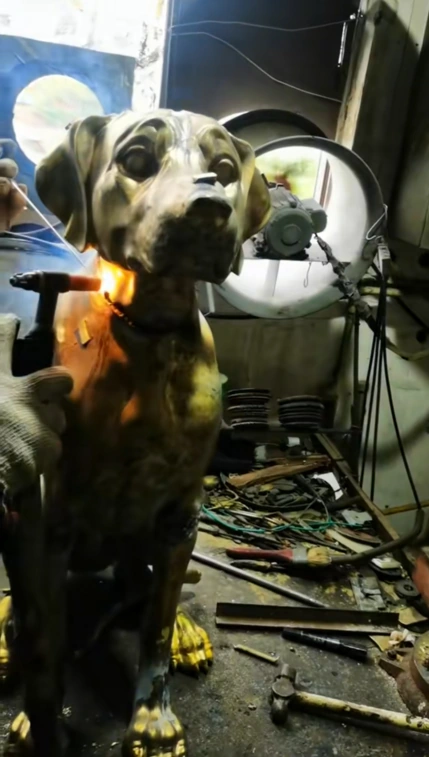
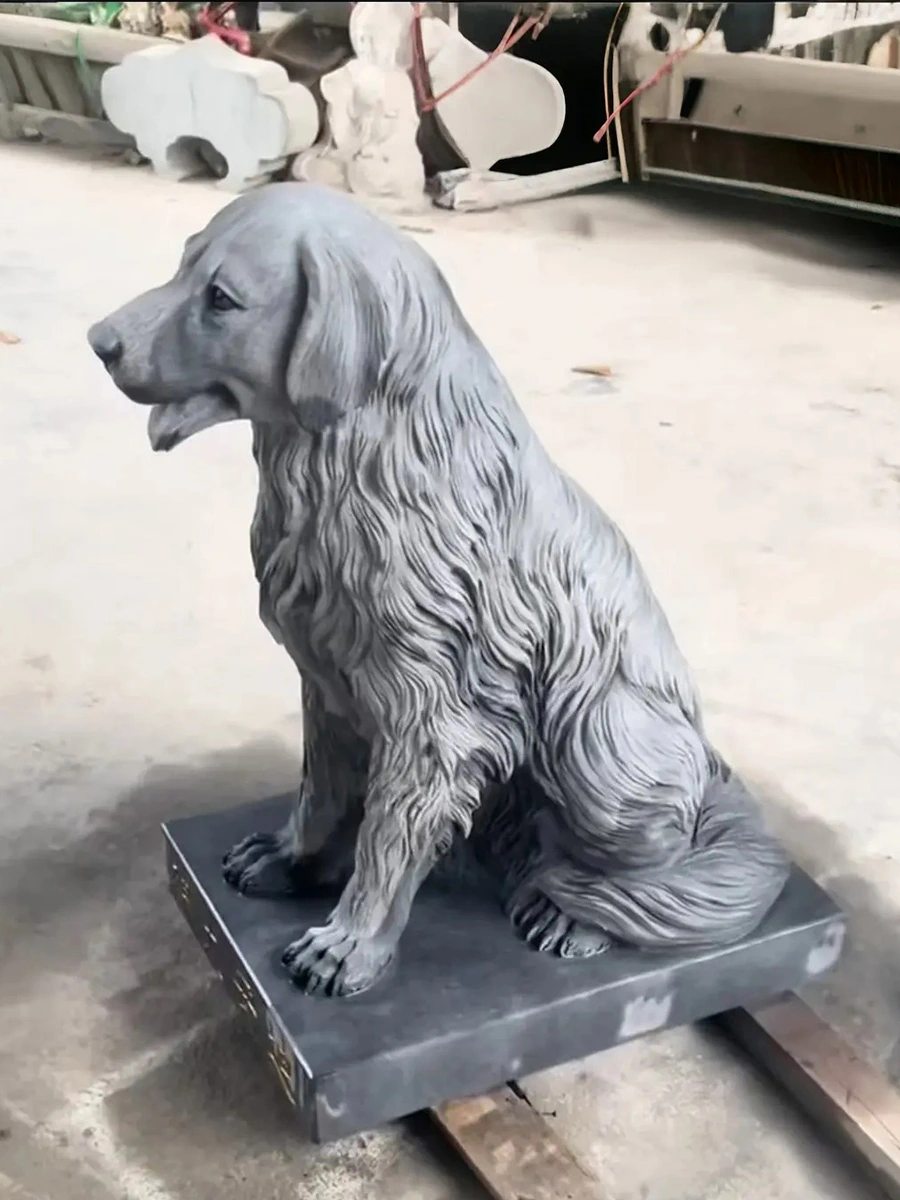
The joining photograph and the grey marble dog belong to other projects. Together they add real processing and material references alongside the Labrador concepts. They do not establish a finished Labrador order or the unseen back of a bust. The Labrador short-coat form, head-and-shoulder extent or whole-body pose would still be developed and approved for the specific commission.
Give each reference a purpose
Prepare the Labrador portrait and approve its complete form
For a full-body portrait, provide the face, side outline, selected posture and complete tail. For a bust, add useful head, neck and shoulder views, and describe the lower edge and display position you want.
Choose form, expression and surface references separately
A clear profile can establish the muzzle; a favourite photograph can explain the expression; a finish image can show the intended sheen. Label their roles so a bronze-colour reference does not silently replace your dog’s anatomy.
If photographs show different periods of the dog’s life, choose which appearance to preserve. An older face and a younger body should only be combined if that is your deliberate brief.
Review what the front view cannot show
For a bust, check the rear, shoulder depth and base as well as the face. For a figure, check the hidden limbs and the tail connection. The model views should resolve those questions before manufacture.
An AI concept, including your own design, can start the composition. It does not establish an unseen side or a ready-made production model. The individual references and material choices guide that development.
Confirm the scope of the commission
We agree the brief, payment arrangements and model-review stage, then manufacture the approved form and finish. The proposal records actual dimensions, construction, packing and delivery terms.
A name, dates or a collar can be included as agreed portrait details. They do not establish an urn or an internal compartment; if another function matters, discuss it explicitly before the construction is decided.
Questions about your Labrador commission
Labrador garden statue and bust questions
Can you make a black Labrador statue in bronze?
Yes, we can discuss a dark surface direction for a bronze Labrador commission. Agree the material, actual treatment, sheen and protective finish rather than relying on the colour of a render.
Can my Labrador be represented with warmer bronze colour?
Yes. A monochrome bronze portrait can preserve the form without copying the live dog’s coat colour. Select the finish you want as a separate reference.
How do I choose between a full-body statue and a bust?
Choose a full figure if the posture and complete body carry the memory. A bust emphasises the face, neck and selected shoulders; review its lower edge, back and support for the display.
Does a Labrador bust include the shoulders?
The extent is agreed. Mark whether you want mainly neck, upper shoulders or more chest, then review the complete termination and base in the model.
Should I approve the back of a portrait bust?
Yes. Confirm its finished rear treatment, particularly if it can be seen from behind. A front-only concept does not establish that side or its depth.
Can the sculpture show a relaxed open mouth?
Yes. Provide the expression reference and agree the mouth opening and tongue interpretation. Keep the face and degree of interior detail under review together.
Can a bust’s weight be estimated from a full Labrador statue?
Not as a fixed proportion. Its shoulder extent, rear treatment, material and construction need their own assessment and confirmed figures.
Does a black sculpture image always show a Black Lab?
No. Colour does not establish the breed. Identify the actual dog or Labrador reference and check the head, coat and tail as part of the portrait.
Are the designs on this page completed Labrador commissions?
They are labelled AI concepts for custom discussion. They do not establish finished orders, inventory, exact dimensions or material performance.
What should I send for a Labrador quotation?
Send the individual reference, full figure or bust preference, pose or expression, approximate size, finish direction and delivery country with postcode. A display photograph helps explain the support and viewing position.
Begin with the companion you want to recognise
Discuss your Labrador sculpture with Yun Sculpture
Show us a photograph of your Labrador or a design that appeals to you. Tell us whether the full posture or the face is your priority, and share where the sculpture will be displayed.
You do not need to decide the exact shoulder extent or finish before making the first enquiry.
The first decisions to share
- Your dog or general Labrador reference.
- Full figure or a head-and-shoulders bust.
- Posture, head turn and mouth expression.
- Approximate size, material and surface direction.
- Display setting and delivery country with postcode.