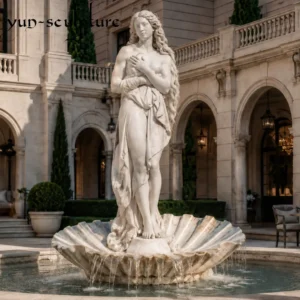
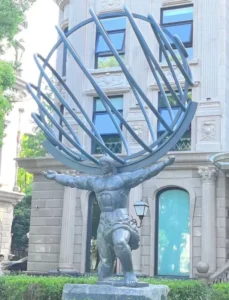
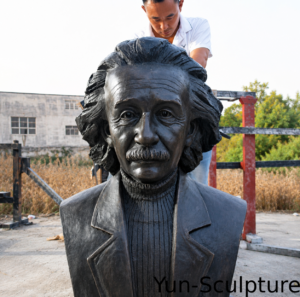
Get in touch with Yun-Sculpture company
What Is Figurative Sculpture? Definition, History & Three Major Traditions

The oldest figurative sculpture in the world is approximately 40,000 years old. The Lion Man of Hohlenstein-Stadel — a figure carved in mammoth ivory, found in a cave in what is now southern Germany — depicts a human body with a lion’s head. It is not a realistic animal. It is not a pure abstract form. It is a figure: something recognizable, something that commits to showing a being that exists in the world, or in the imagination of the being who carved it. The impulse to make what is figurative sculpture — to carve, cast, or model forms that can be recognized as persons, animals, or gods — is 40,000 years old and shows no sign of exhausting itself. This guide covers what the term means, why it has mattered across that full span of time, and how its three major traditions define the choices available to anyone who commissions or buys figurative sculpture today.
Table of Contents
Table of Contents
What Figurative Sculpture Is — and What It Isn’t
The word “figurative” derives from the Latin figura — a shape, a form, a visible configuration. In the context of sculpture, it describes any work that represents a recognizable subject from the visible world: a human being, an animal, a deity, a figure from mythology. What makes a sculpture figurative is not its degree of realism — a figure can be highly stylized and still be figurative — but its commitment to legibility. The viewer should be able to identify what the figure is without needing a title or explanation.
The opposite of figurative sculpture is abstract sculpture — work that does not represent a recognizable subject but instead explores form, space, texture, and material for their own sake. The distinction between the two is not always precise; many works occupy the space between them. A Brancusi bird is a simplified, nearly abstract form that nonetheless reads as a bird. A Henry Moore reclining figure is highly abstracted but unmistakably human. The distinction is best understood as a continuum rather than a boundary: pure abstraction at one end, photographic realism at the other, and a vast productive middle territory between them.
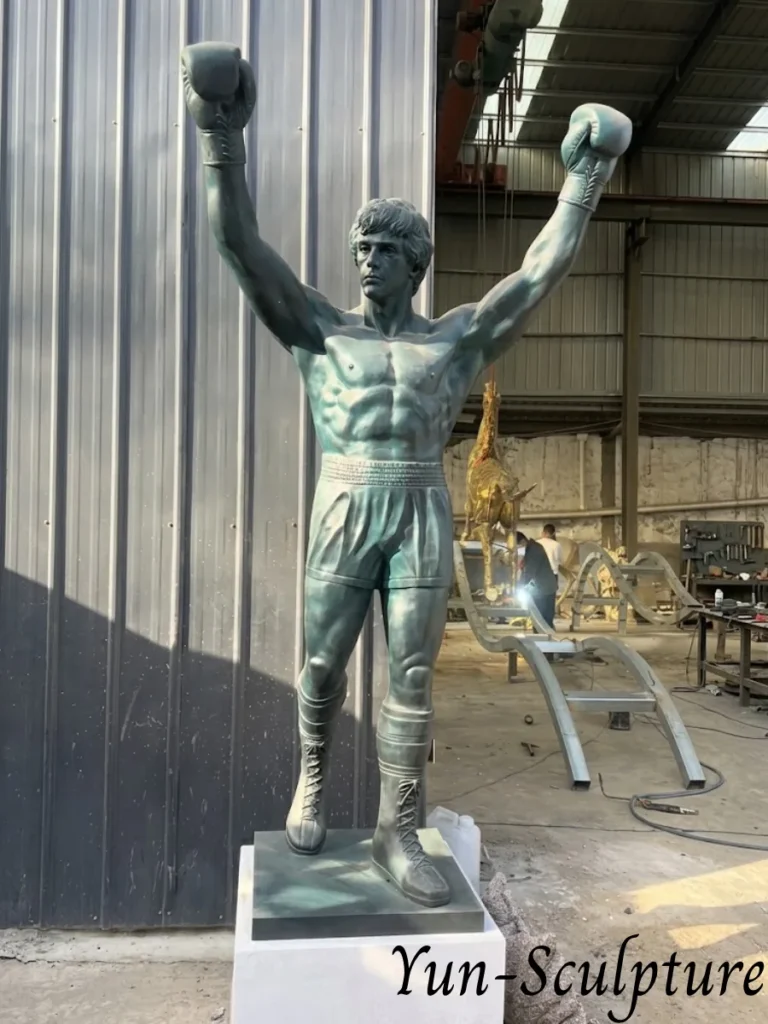
Figurative sculpture encompasses several overlapping categories. Classical figurative sculpture represents idealized human figures in the tradition of Greek and Roman antiquity. Representational sculpture aims for anatomical accuracy and realistic proportion. Symbolic figurative sculpture uses recognizable figures to carry meanings beyond their literal subjects — a god, a goddess, a hero. Contemporary figurative sculpture may combine realistic human forms with non-realistic settings, materials, or scales. What all of these share is the commitment to the recognizable figure as the primary vehicle of meaning.
500 BCE – 200 CE
Classical Greek-Roman — The Ideal Form
The human body as a philosophical proposition: proportion, reason, and beauty as expressions of divine order. Figures are idealized — not any specific person but the perfect form of a type. The body’s beauty is inseparable from its moral meaning; ugliness and virtue are mutually exclusive. Marble and bronze are the primary materials; the life-size or larger-than-life scale establishes the figure’s authority over the viewer.
Key artists: Phidias, Praxiteles, Lysippos · Key works: Apollo Belvedere, Venus de Milo, Cape Artemision Bronze
1300 – 1600 CE
Renaissance Humanist — Body and Soul Together
The classical ideal returns, transformed by Christian theology and scientific anatomy. The figure is both a physical specimen — dissected, measured, understood in its mechanics — and a spiritual entity whose body expresses its inner life. For the first time, suffering and physical imperfection become valid sculptural subjects alongside the ideal. Marble carving reaches its technical peak; Carrara marble becomes the standard for serious figurative work.
Key artists: Michelangelo, Donatello, Verrocchio · Key works: David, Pietà, Moses, Saint George
1880 – Present
Psychological Realism — The Figure as Emotional Document
Rodin’s decisive break with idealization: the figure shown not as it should be but as it is — scarred, exhausted, caught in effort, grief, or contemplation. The body is no longer a vehicle for beauty or theology but for psychological truth. Surface texture, incomplete forms, and deliberate departures from proportion become tools rather than failures. This tradition informs all serious contemporary figurative work.
Key artists: Rodin, Giacometti, Mueck, Quinn · Key works: The Thinker, Gates of Hell, Walking Man, Ghost
Famous Figurative Sculptors — The Canon That Defines the Tradition
The figurative sculpture tradition is inseparable from a series of specific artists whose work has defined what the human figure can mean and do in permanent material.
Phidias of Athens — working in the 5th century BCE — produced the two most famous sculptures of the ancient world: the chryselephantine Zeus at Olympia, which ancient sources described as capable of making anyone forget their troubles by simply looking at it, and the Athena Parthenos inside the Parthenon. Neither survives, but Roman copies and ancient descriptions establish Phidias as the sculptor who defined the classical Greek ideal: the figure as the embodiment of divine order, beauty, and reason.
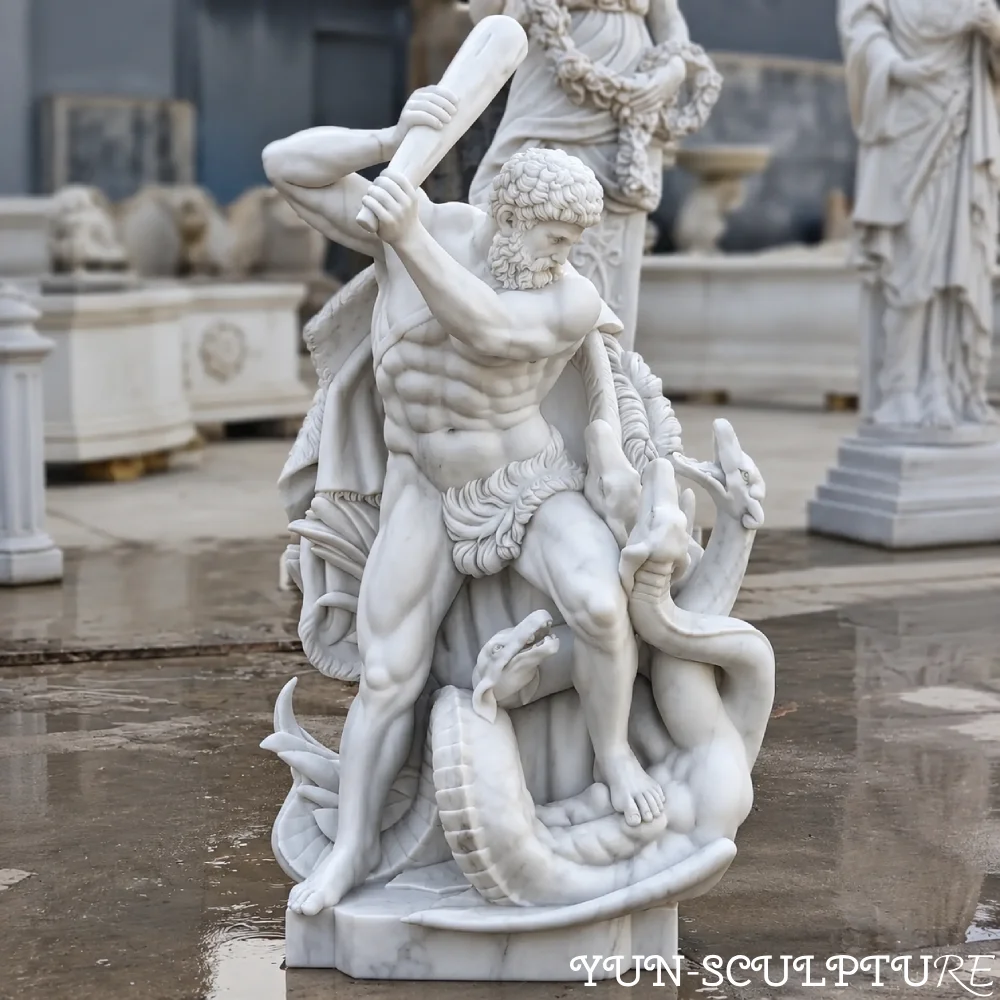
Praxiteles, working in the 4th century BCE, introduced something new: the S-curve, or contrapposto — the figure standing with weight shifted to one leg, creating a gentle torque through the body that makes the figure appear caught mid-movement rather than frozen. His Aphrodite of Knidos was the first full-scale nude female figure in the Western tradition, and his Apollo — copied in the Apollo Belvedere that became the canonical ideal of classical beauty for the Renaissance — established the contrapposto as the defining gesture of classical male beauty.
Michelangelo Buonarroti, working in Florence and Rome between 1490 and 1564, brought the classical tradition into contact with Christian theology and the insights of Renaissance anatomy. His David — four meters of Carrara marble in the Galleria dell’Accademia — remains the most visited sculpture in the world. His Pietà in St. Peter’s Basilica remains the most technically demanding carved marble figure in the tradition: a full-grown adult male body draped across a woman’s lap, carved from a single block at precisely the scale where the two figures appear not tragic but peaceful.
Auguste Rodin, working in Paris between 1870 and 1917, broke the classical ideal deliberately. Where the Greeks idealized and the Renaissance perfected, Rodin chose to show the body as a psychological document — scarred, incomplete, caught in effort or grief or contemplation. The Thinker is not a beautiful figure; he is a figure under strain, the musculature of his back and shoulders showing what thinking costs. The Gates of Hell, his major work, is a vision of human torment so specific and so detailed that it required thirty-eight years of production. Rodin’s achievement is the one that most directly informs contemporary figurative sculpture: the idea that the figure does not need to be ideal to be true.
Techniques — How Figurative Sculpture Is Made
Figurative sculpture is produced through three primary technical traditions, each of which has been in continuous use for thousands of years and each of which produces a different range of possible forms.
| Technique | How It Works | Primary Material | What It Produces | Famous Example |
|---|---|---|---|---|
| Carving | Material removed from a block — the figure exists within the block and is revealed | Marble, limestone, granite, wood | Unique works — each carving is unrepeatable from the same block | Michelangelo’s David; Venus de Milo |
| Lost-Wax Casting | Figure modeled in clay, mold taken, wax cast, ceramic shell built, wax melted out, molten bronze poured in | Bronze (copper alloy) | Edition works possible; extraordinary surface detail; projecting forms structurally sound | Rodin’s The Thinker; Farnese Hercules |
| Clay Modeling | Figure built up from a pliable material over an armature — the primary stage before casting | Clay (then cast in bronze or plaster) | The starting point for most bronze commissions; allows revision before material commitment | All Rodin bronzes; all custom commissions begin here |
Why Figurative Sculpture Survives Every Declaration of Its Death
The 20th century declared figurative sculpture obsolete on at least three separate occasions. Modernism, beginning in the early 1900s, established abstraction as the dominant mode of serious sculptural practice — the idea being that pure form and material were sufficient subjects for sculpture and that representation was a crutch. Conceptualism, dominant from the 1960s onward, argued that the idea behind a work mattered more than its material form, making the skilled production of figurative sculpture seem beside the point. Postmodernism added the argument that historical figurative traditions were complicit in particular power structures and therefore suspect.
Each of these arguments was made seriously and has had lasting effects on the history of art. And yet figurative sculpture has survived all of them and returned more strongly in each subsequent generation. Ron Mueck, working in hyper-realistic silicone and fiberglass, produces figures that are recognizably human and viscerally present in ways that no abstract form has matched. Marc Quinn’s work on the human body — including a self-portrait cast from his own frozen blood — is explicitly figurative. Kiki Smith’s figures deal with the body’s vulnerability and mortality in a way that pure abstraction cannot approach.
The reason figurative sculpture survives these declarations is not stylistic stubbornness. It is that the recognizable human figure carries a category of authority that no abstract form has managed to replicate over the same period. When you encounter a figurative sculpture, you bring the full context of your own embodied experience to the encounter: you know what a human body is, how it moves, what it weighs, what it costs to hold a posture. This knowledge makes the encounter with a figurative sculpture different in kind from the encounter with an abstract form, and that difference is why collectors, institutions, and private buyers have continued to commission figurative work through every fashion that declared it finished.
Figurative Sculpture Today — From Museum to Garden to Commission
The figurative tradition today operates across an extremely wide range of contexts — from contemporary art museums acquiring works by Mueck and Quinn to private collectors commissioning garden sculptures in the classical tradition to institutions placing commemorative portrait bronzes at their entrances. What these contexts share is the recognition that the figure — human, animal, or divine — remains the most efficient and most durable vehicle for communicating specific meanings in permanent material.
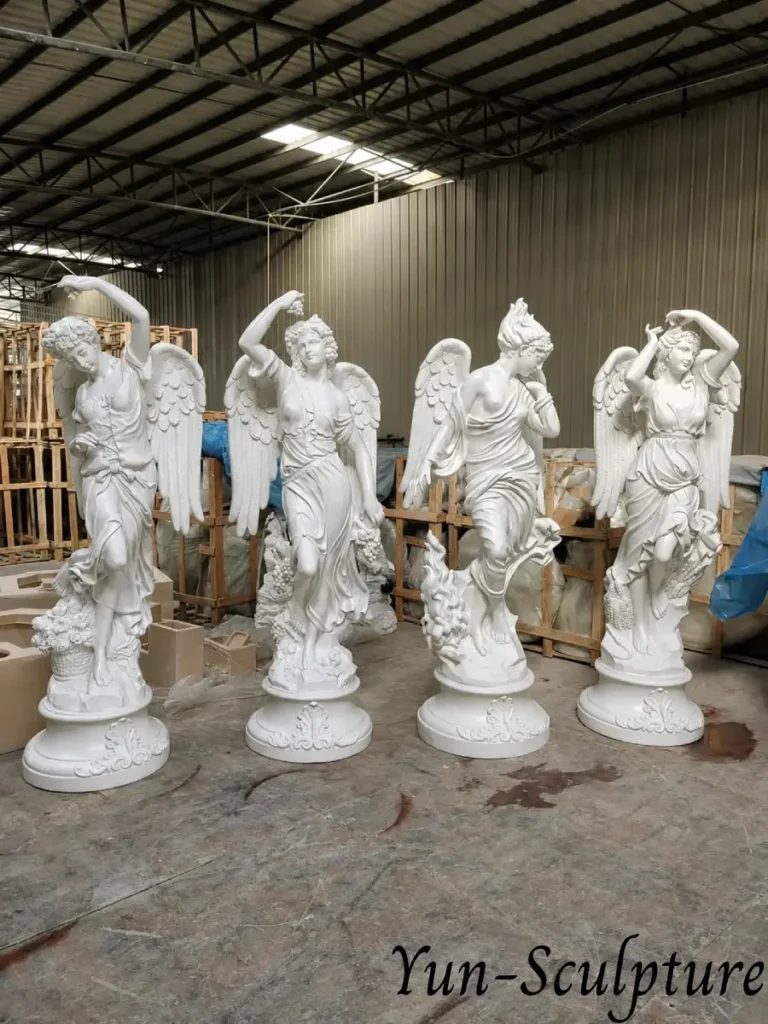
For private buyers and institutions commissioning figurative sculpture in the classical and Renaissance traditions — gods and goddesses, heroes, portrait figures, animals — the same production process that Phidias and Michelangelo’s workshops used remains the standard: hand-modeling in clay, mold-making, casting in lost-wax bronze or carving in natural white marble, and surface finishing by hand. Our foundry in Quyang produces figurative sculpture in bronze and marble across the full range of classical and contemporary subject matter — from life-size Greek gods and goddess replicas to custom portrait commissions and commemorative memorial figures. The figurative tradition that is 40,000 years old continues in the same materials, the same process, and the same commitment to the recognizable figure as a vehicle of permanent meaning.
Frequently Asked Questions
What is the difference between abstract and figurative sculpture?
Figurative sculpture represents recognizable subjects — human beings, animals, deities — in a way the viewer can identify without explanation. Abstract sculpture explores form, space, and material for their own sake. The distinction is a continuum: Brancusi’s birds are highly simplified but still recognizable; Henry Moore’s figures are heavily abstracted but unmistakably human. The defining question is legibility: can the viewer identify what the sculpture represents? If yes, it is figurative; if the form is self-referential, it is abstract.
What is the oldest figurative sculpture in the world?
The oldest confirmed figurative sculpture is the Lion Man of Hohlenstein-Stadel — carved from mammoth ivory approximately 40,000 years ago, found in southern Germany. It depicts a human body with a lion’s head: a recognizable, intentional hybrid figure. The Venus of Hohle Fels (35,000–40,000 years old) is the oldest known figurative sculpture of a purely human form. Both predate the Lascaux cave paintings by approximately 20,000 years, establishing figurative sculpture as potentially the oldest form of human art-making.
Who are the most famous figurative sculptors?
The canon spans three major traditions. Classical Greek-Roman: Phidias (Zeus at Olympia, Athena Parthenos), Praxiteles (contrapposto, first nude female figure), Lysippos (Farnese Hercules original). Renaissance: Michelangelo (David, Pietà), Donatello (Saint George). Modern psychological tradition: Auguste Rodin (The Thinker, Gates of Hell), Alberto Giacometti (Walking Man). Contemporary: Ron Mueck, Marc Quinn. Michelangelo and Rodin are the two names most widely recognized and whose work most directly informs contemporary figurative sculpture production.
Why is figurative art important?
Figurative art is important because it uses the recognizable human figure — the subject every viewer brings their full embodied experience to — as the vehicle for meaning. When you encounter a figurative sculpture, you know what a human body weighs, how it moves, what specific postures communicate. This embodied knowledge makes the encounter different in kind from abstract art. The tradition has persisted for 40,000 years across every culture and survived every fashion that declared it obsolete, because the recognizable figure remains the most efficient and durable way to communicate specific meanings in permanent material.
What techniques are used in figurative sculpture?
Three primary techniques have been in continuous use for thousands of years. Carving removes material from a block to reveal the figure within — used in marble and stone, producing unique unrepeatable works. Lost-wax casting models the figure in clay, takes a mold, casts a wax positive, builds a ceramic shell, melts the wax out, and pours bronze into the cavity — unchanged in fundamentals for 4,000 years, producing extraordinary surface detail. Clay modeling builds the figure from pliable material over an armature — the primary stage before casting for most bronze commissions.
Factory Direct · Quyang, China
Commission Figurative Sculpture in the Classical Tradition
Lost-wax bronze and hand-carved marble. Greek gods and goddesses, Renaissance replicas, custom portrait figures, and memorial commissions. The same techniques, the same materials, the same 40,000-year tradition.