Get in touch with Yun-Sculpture company
What Is a Figurative Marble Sculpture? Types, History & How to Buy

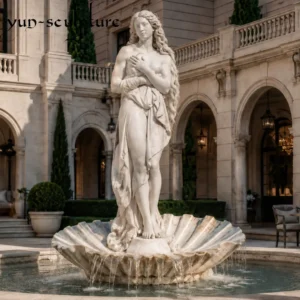
Marble looks like skin. Not because it is the same color, but because light behaves in it the way light behaves in living tissue: it penetrates the surface slightly before reflecting back, producing a warmth and depth that no opaque material can replicate. This is the physical reason that Phidias chose marble for the Athena Parthenos, that Praxiteles chose it for the Aphrodite of Knidos, that Michelangelo chose it for the Pietà and the David, and that Canova chose it for his Three Graces. What is a figurative marble sculpture? At the most basic level, it is a representation of a recognizable subject — a person, a god, an animal — carved from natural marble. But the more complete answer is that it is a specific kind of object that takes advantage of marble’s unique optical property to make stone appear, briefly, alive.
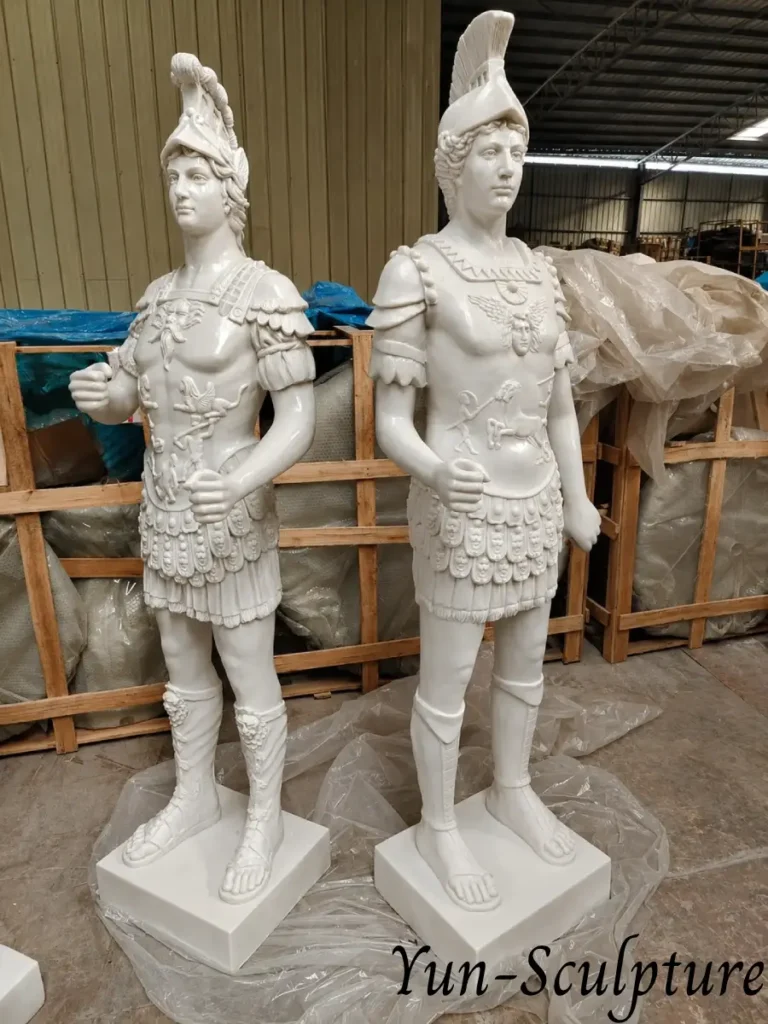
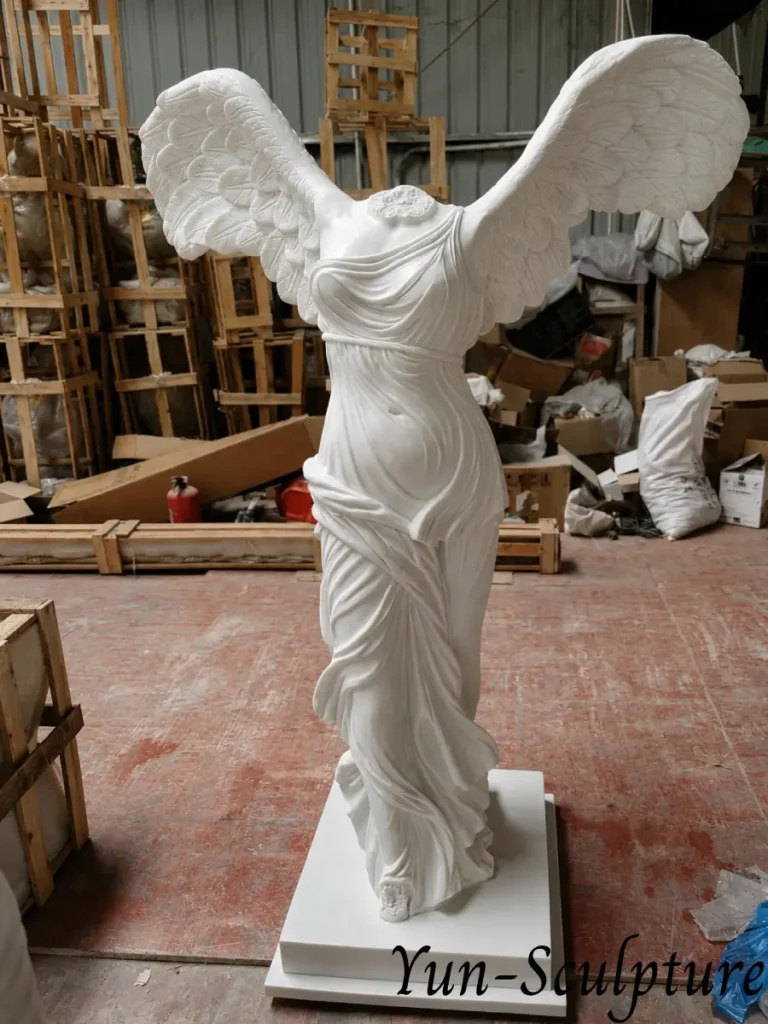
Table of Contents
Table of Contents
What Makes Marble the Right Material for Figurative Sculpture
The choice of marble for figurative sculpture is not aesthetic preference. It is a response to a specific physical property that no other stone shares in the same degree. Marble is translucent — light enters the surface to a depth of approximately a few millimeters before reflecting back. In a carved human figure, this translucency creates a quality that ancient and Renaissance viewers described as “softness” or “warmth”: the surface of a marble figure appears to hold light rather than simply reflect it, in a way that is sufficiently similar to the behavior of light in human skin to produce, in the right conditions, a brief and uncanny impression of living presence.
Carrara marble — the specific stone quarried in the Apuan Alps of northern Tuscany — has been the primary material for European figurative sculpture for two and a half thousand years, for exactly this reason. Its calcium carbonate structure, compressed under heat and pressure over geological time, produces a crystal grain that diffracts light in the specific way that creates translucency. Other stones — granite, limestone, sandstone — are opaque: light reflects from their surfaces without penetrating. Only marble, among the common stones used for large-scale sculpture, has this property in sufficient degree to produce the skin-like optical effect that has made it the preferred material for the representation of the human figure since antiquity.
The practical consequence of this property is visible in any museum that holds both marble and bronze figurative works: the marble figures read as warmer, closer, more present. The bronze figures are more technically precise — bronze casting captures detail that carving cannot always achieve — but they do not produce the same impression of proximity to living tissue. For sculptures whose primary subject is the idealized human form — classical gods and goddesses, portrait figures in the Renaissance tradition, draped allegorical subjects — marble remains, after 2,500 years of comparison with every alternative material, the correct first choice.
Finest Grade
Statuario
Pure white with minimal veining, the highest-grade Carrara marble. Crystal grain is finest at this grade, producing the highest translucency and the best capacity for fine surface detail. Michelangelo’s David is Statuario — the stone chosen specifically because it allowed him to work the hair, the veins in the hands, the texture of the skin without grain interrupting the surface. Most expensive; quarried in limited quantities.
Best for: Major figurative commissions where detail quality and translucency are the primary requirements. Portrait figures, classical goddess commissions, any work where the surface will be closely examined.
Working Grade
Carrara Bianco
White with subtle grey veining, the most widely used marble for figurative sculpture worldwide. Excellent translucency and good capacity for fine detail; the slight grey veining adds visual depth without competing with figure detail at most scales. The material used for the majority of classical marble replicas and custom figurative commissions. The standard against which other marbles are measured.
Best for: Life-size and larger figurative commissions; garden focal points; institutional settings; any commission where consistent quality and good detail are required at reasonable cost.
Dramatic Veining
Calacatta
White with bold gold and grey veining — more dramatic visually than Carrara Bianco or Statuario. The veining pattern is a design element in itself, which can be used effectively in larger, simpler figurative works but competes with fine surface detail in complex figure carving. More appropriate for contemporary figurative works where the stone’s visual character is intended as part of the aesthetic.
Best for: Contemporary figurative works; simpler classical figures at larger scale; settings where the stone’s visual drama is a deliberate part of the commission’s character.
Which Subjects Are Best in Marble — and Which Belong in Bronze
Marble and bronze are not interchangeable materials for figurative sculpture. Each has specific structural and aesthetic properties that suit certain subjects and pose specific problems for others. Understanding which material belongs to which subject is the most important buying decision in a figurative sculpture commission.
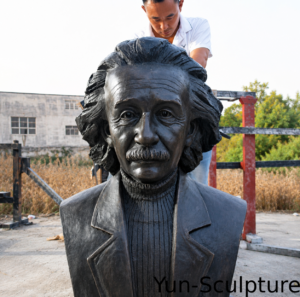
Marble is the correct material for figures whose primary visual character is the quality of their surface and the depth of their drapery. The flowing peplos of Athena, the draped robes of the Muses, the translucent veil of the Veiled Virgin — these are marble’s finest subjects because marble allows the carver to work deep undercuts and fine surface transitions that read differently under light than any other material. For serene contemplative figures — a Venus at rest, a seated philosopher, an Athena Lemnia in a library — marble’s interior warmth suits the emotional register of the subject. For portrait busts and life-size portrait figures in controlled interior conditions, marble produces a quality of presence that bronze, even at its finest, does not quite match.
Bronze is the correct material for figures whose primary visual character is dynamic movement and whose attributes include projecting structural elements. Zeus’s thunderbolt, Poseidon’s trident, Hermes’s caduceus, Artemis’s bow: these are thin forms extending at angles from the figure’s body, creating leverage stress at their join points that marble cannot maintain indefinitely in outdoor conditions. Bronze’s tensile strength handles this geometry structurally. For outdoor installations in any climate with genuine temperature variation — which includes most of the United States and northern Europe — bronze is the preferred material for any figure with projecting elements, and the better choice for most outdoor commissions even without projecting elements, because bronze weathers gracefully while marble can be vulnerable to freeze-thaw damage in exposed positions.
| Subject / Figure Type | Recommended Material | Reason |
|---|---|---|
| Draped / robed figures (Athena, Hera, Muses) | White Marble | Carved fabric drapery with deep undercuts is marble’s finest subject — translucency makes fabric appear to fall naturally |
| Classical goddess figures (Venus, Aphrodite, Persephone) | White Marble | Marble’s warmth and translucency suit the aesthetic register of beauty and contemplative presence |
| Portrait busts — interior use | White Marble | At close range under interior light, marble produces a quality of presence no other material matches for the human face |
| Athletic / heroic nude figures (outdoor) | Either (site-dependent) | Marble for sheltered outdoor positions in mild climates; bronze for exposed outdoor positions or freeze-thaw climates |
| Figures with projecting weapons (Zeus, Poseidon, Ares) | Bronze | Thin projecting elements (thunderbolt, trident, spear) create leverage stress marble cannot maintain outdoors over decades |
| Action / combat poses (Hercules in combat, Artemis archer) | Bronze | Dynamic poses with projecting limbs and attributes require bronze’s tensile properties for structural integrity |
| Fountain-integrated figures (direct water contact) | Bronze | Continuous water contact deteriorates marble surface; bronze develops a stable patina in water environments |
Outdoor vs. Indoor — What Marble Can and Cannot Do
The most common question about figurative marble sculpture from buyers who are new to the material is whether it can be placed outdoors. The answer is yes — marble has been used for outdoor sculpture in northern climates for centuries — but with specific conditions that determine the outcome.
In Mediterranean climates and most of the American South and Southwest, outdoor marble installation is unproblematic. The stone does not experience the freeze-thaw cycling that is marble’s primary outdoor vulnerability. Natural marble absorbs water in its microfractures; when that water freezes and expands, it widens the fractures progressively over years of repeated cycling. In climates where this cycling occurs — most of the northern United States, Canada, northern Europe — outdoor marble requires specific siting to minimize moisture exposure: a protected position, a base that drains rather than retains water, and ideally a covered or sheltered position that limits direct precipitation on the stone’s surface.
For outdoor installations in cold climates where these conditions cannot be guaranteed, bronze is the more conservative choice. Bronze is immune to freeze-thaw damage — it has no microfractures to widen and no calcium carbonate structure to be disrupted by ice expansion. For buyers who specifically want marble outdoors in a challenging climate, the solution is usually a siting adjustment rather than a material change: a covered niche, a south-facing position that dries quickly after rain, or a sheltered garden alcove that reduces direct weather exposure.
Indoors, marble is the superior material without qualification. A controlled interior environment — consistent temperature, no freeze-thaw, stable humidity — allows marble to perform at its absolute best. The translucency that makes marble appear warm and alive is most fully visible under gallery lighting, natural light from high windows, or controlled artificial light at an angle to the surface. A marble figurative sculpture in a library, entrance hall, music room, or covered loggia, under good light: this is the setting for which the material was developed over 2,500 years of European sculptural tradition, and it performs there without equal.
How to Commission or Buy a Figurative Marble Sculpture
A figurative marble sculpture commission begins with four decisions made in sequence: the subject, the marble type, the scale, and the surface finish. Each subsequent decision is constrained by the preceding ones, which is why the order matters.
The subject determines the marble type and the scale range that will work. A draped classical figure — Athena, Hera, a robed Muse — benefits from Statuario or high-quality Carrara Bianco, where the stone’s minimal veining allows the carver to work fine surface transitions without the grain of the stone competing with the fabric detail. A contemporary portrait figure or abstract-leaning figurative work might benefit from Calacatta’s dramatic veining, which adds visual interest but reduces the stone’s capacity for fine detail.
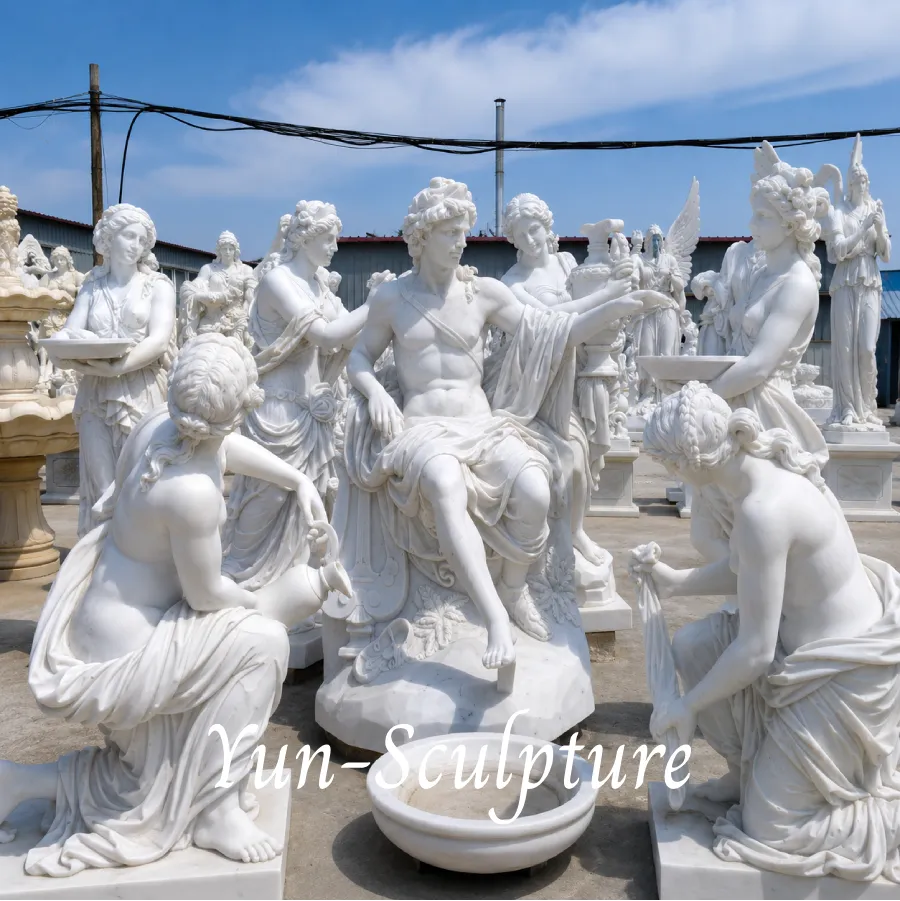
The scale determines the level of detail that is achievable and the viewing distance for which the figure should be designed. A figure at 80 centimeters in a library alcove will be viewed at arm’s length; the carver can resolve fine surface details — the folds of fabric at the hem, the modeling of the fingers, the specific expression of the face — that a figure at 200 centimeters in a garden, viewed from ten meters, does not need and cannot effectively use. Our workshop produces figurative marble sculpture from 40 centimeters to 300 centimeters, with production running 30 to 65 working days depending on scale and the complexity of the surface work.
The surface finish is the final decision. High-polish marble reads as classical and reflective — the treatment most associated with the great Renaissance and Neoclassical works. A honed or matte finish reads as more contemporary and absorbs light more softly, reducing the contrast between lit and shadow surfaces. For outdoor placements, I recommend a honed finish over polish: polished marble dulls unevenly with weathering, and uneven dulling looks worse than a consistent matte surface from the start.
Frequently Asked Questions
What is the difference between bronze and marble sculptures?
Bronze and marble produce fundamentally different results. Marble has translucency that gives figurative work a warm, skin-like quality — the premier material for draped figures, classical goddesses, and portrait figures in interior settings. Bronze handles projecting forms — weapons, staffs, dynamic poses — structurally, and is more durable outdoors in cold climates. For indoor figurative work at close range, marble produces a quality of presence that bronze does not match. They are suited to different subjects, not competing alternatives.
Can you put marble statues outside?
Yes, with conditions. In Mediterranean climates and most of the American South and Southwest, outdoor marble is unproblematic. In climates with genuine freeze-thaw cycling (northern US, Canada, northern Europe), marble requires protected siting: a covered position, a base that drains, ideally a south-facing exposure that dries quickly after rain. Marble’s primary outdoor vulnerability is water in microfractures that expands when frozen. Where freeze-thaw cannot be avoided and protection is not possible, bronze is the more durable choice.
How much do marble sculptures cost?
Figurative marble sculptures range from approximately $1,500 for small pieces at 40–60 cm to $50,000+ for life-size custom commissions in high-grade Statuario marble. Factory-direct pricing for a life-size classical figure (160–185 cm) in natural white Carrara marble typically runs $6,000 to $20,000 for standard subjects, and $15,000 to $35,000 for custom portrait figures. Primary cost variables: marble grade, scale, and complexity of surface carving.
What kind of marble did Michelangelo use?
Michelangelo used Statuario marble — the finest grade of Carrara marble — for his most important works including the David and the Pietà. Statuario has the purest white color, finest crystal grain, and highest translucency, allowing the finest surface detail and warmest optical quality. For modern commissions where detail quality and translucency are primary requirements, Statuario remains the correct choice. High-quality Carrara Bianco produces very similar results at lower cost.
Does anyone still make marble statues?
Yes. Hand-carved marble figurative sculpture continues to be produced in China (primarily in Quyang, Hebei province — the center of Chinese marble carving for over 1,500 years), Italy (around Carrara), Greece, and India. The production process is unchanged from the Renaissance: block selection, hammer and chisel carving, hand finishing of all detail surfaces. Factory-direct prices are significantly below what gallery retail used to require, making custom marble figurative commissions accessible to private buyers and institutions who previously assumed them out of reach.
Factory Direct · Quyang, China
Commission a Figurative Marble Sculpture
Carrara Bianco or Statuario. Classical gods and goddesses, portrait figures, garden subjects. Hand-carved in the same tradition Michelangelo worked in — at factory-direct prices. Every commission from stone selection to shipping.