Get in touch with Yun-Sculpture company
Aquatic Elegance: The Ultimate Guide to Modern Pool Statues and Water Features

A swimming pool can be more than a place to cool off in summer. With the right sculptural presence, it becomes a stage for atmosphere, storytelling, and quiet luxury. Thoughtfully chosen Pool statues turn still water into a reflective gallery—where light, movement, and art exist together.
In contemporary landscape design, Modern pool statues are increasingly used to transform private gardens into resort-like sanctuaries. The shimmer of water across bronze, marble, or stainless steel surfaces creates an environment that feels both architectural and alive. A carefully positioned sculpture introduces a focal point that anchors the entire outdoor composition.
Some homeowners prefer bold modern abstractions, but many gravitate toward mythic aquatic figures. A Mermaid statue for pool area evokes romance and mystery, while Dolphin pool statues bring energy and motion to the water’s edge. These figures appear almost as if they emerged naturally from the pool itself.
At Yun Sculpture, we often describe this transformation as creating a “private staycation resort.” The right sculpture does not merely decorate the pool—it gives the space a soul.
Table of Contents
Table of Contents
Timeless Myth: Bronze Mermaids and Classical Fountain Statues
Across centuries of European garden design, water and sculpture have formed an inseparable partnership. From Renaissance fountains in Italy to seaside villas along the Mediterranean, mythological figures have long been guardians of water.
Bronze remains the most enduring material for this tradition. The warmth of patinated metal interacts beautifully with sunlight, reflections, and flowing water. Over time, Bronze fountain statues develop deeper character as their surfaces mature naturally outdoors.
For poolside settings, aquatic mythology feels particularly appropriate. Mermaids, dolphins, and sea nymphs appear as if they belong to the water, reinforcing a sense of harmony between landscape design and nature.
These figures are not simply decorative elements. They are narrative anchors that quietly transform the emotional atmosphere of a space.
The Enchantment of Large Bronze Mermaid Statues
Few figures capture the imagination quite like the mermaid. Half human and half ocean spirit, she symbolizes the meeting of two worlds—land and sea, civilization and nature.
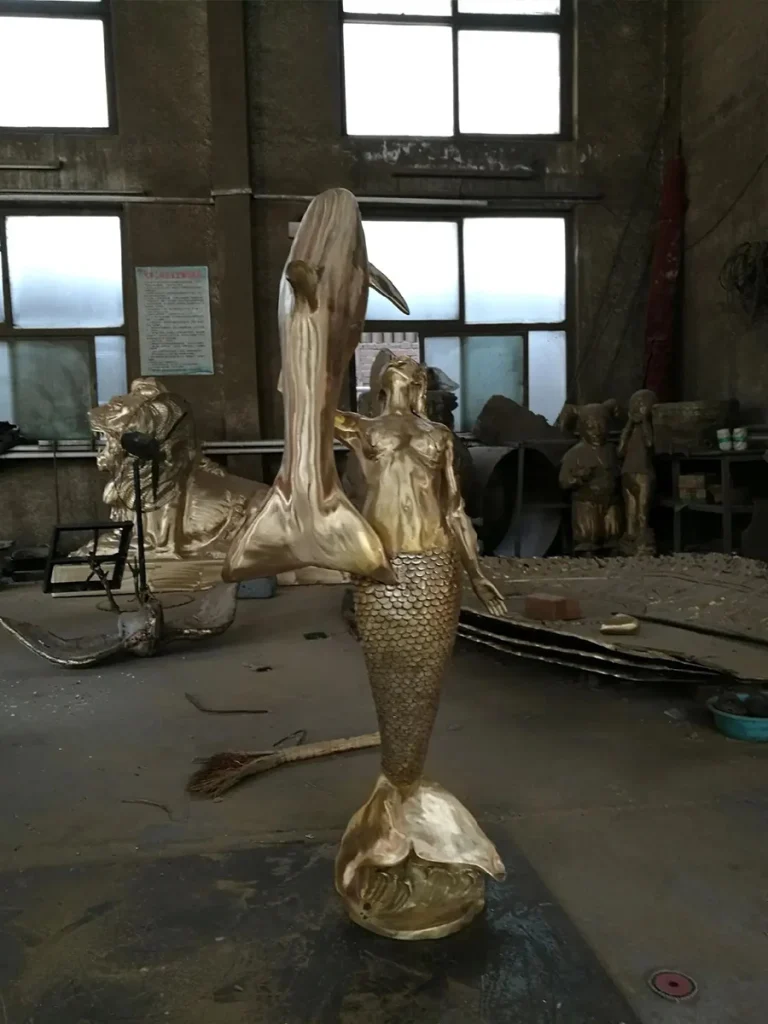
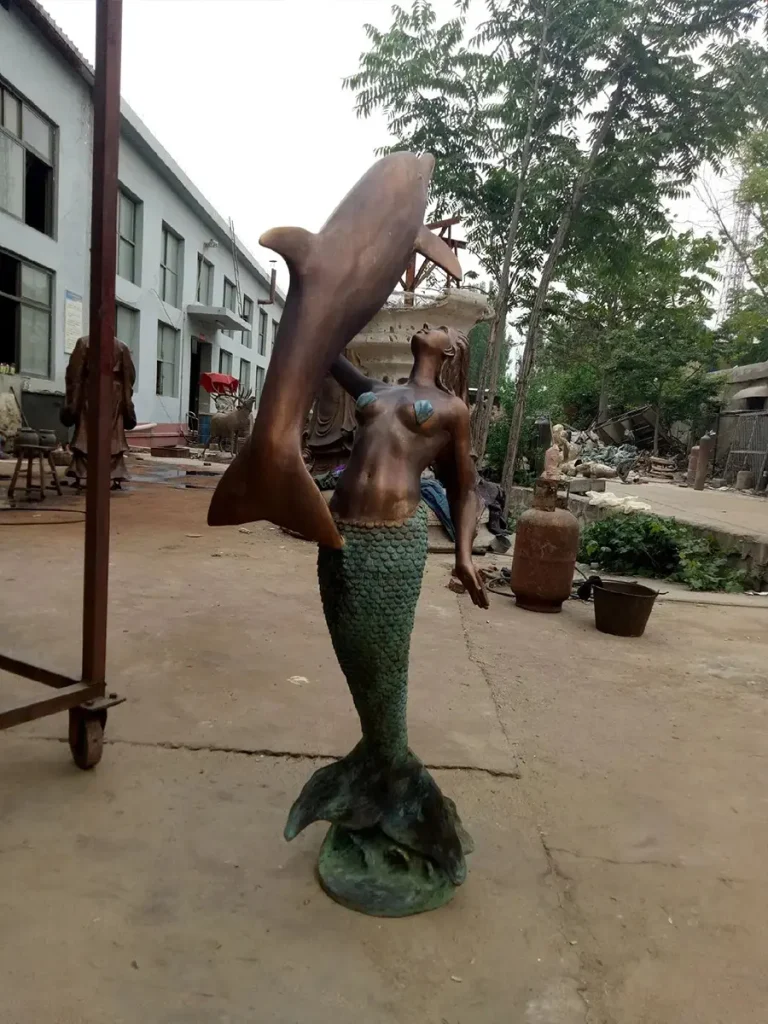
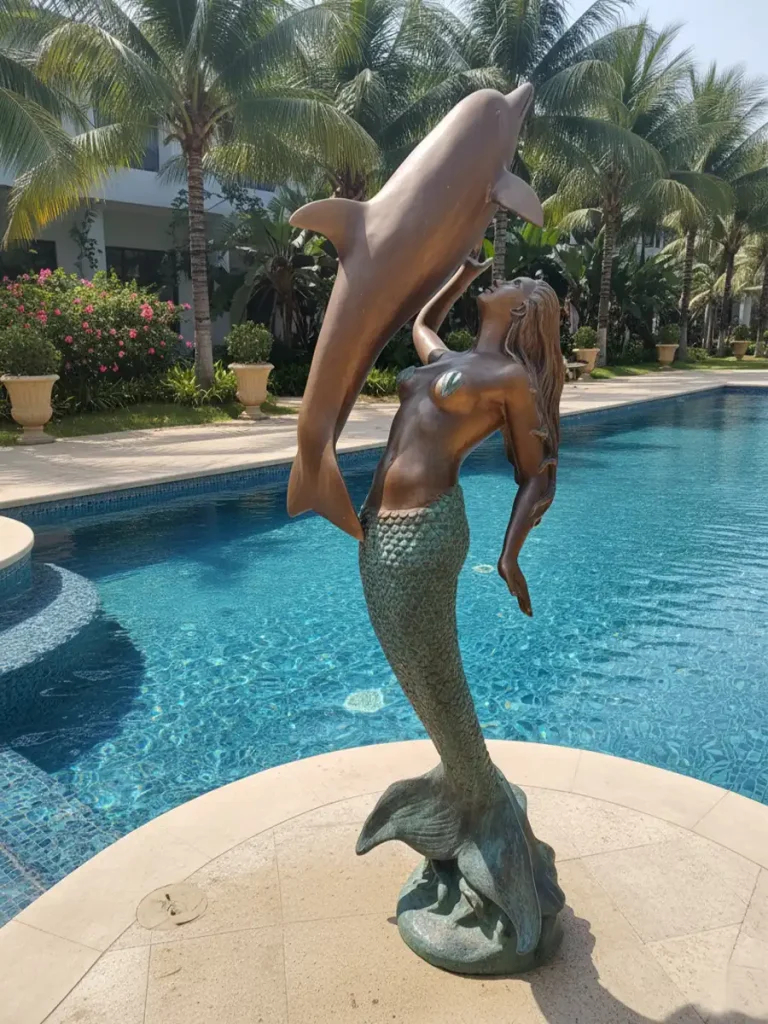
In sculpture, a Large mermaid statue often serves as the visual centerpiece of a poolscape. Her posture may be serene and contemplative, sitting on a rock beside the water, or dynamic—arching gracefully as water pours from a seashell or vessel she holds. The presence of flowing water turns the figure into a living fountain.
From a spatial design perspective, mermaid sculptures introduce elegant vertical movement near the pool’s surface. Elena often advises clients to position them where sunlight will strike the bronze during late afternoon. At that moment, the sculpture reflects golden tones across the water, creating an almost cinematic effect.
The allure of mermaids has also captivated celebrity homeowners. In several high-end estates—including a well-known pool sculpture installed at actor Sylvester Stallone’s residence—large aquatic figures are used to elevate private pools into artistic courtyards.
Beyond status or decoration, however, the symbolism is deeper. A mermaid represents curiosity, freedom, and the mystery of the ocean. When placed beside water, she appears less like an object and more like a guardian spirit emerging from the pool itself.
For homeowners seeking a poetic focal point, mermaids remain among the most captivating choices in poolside sculpture.
Dolphin Pool Statues: Symbols of Protection and Harmony
If mermaids represent mystery, dolphins represent joy.
For centuries, dolphins have appeared in maritime art and mythology as companions of sailors and guides through uncertain waters. This symbolic heritage makes Dolphin pool statues particularly meaningful additions to aquatic spaces.
In ancient Greco-Roman culture, dolphins were believed to be messengers of Poseidon, the god of the sea. Sculptures of dolphins often appeared in fountains and bathhouses, celebrating the harmony between humans and the ocean.
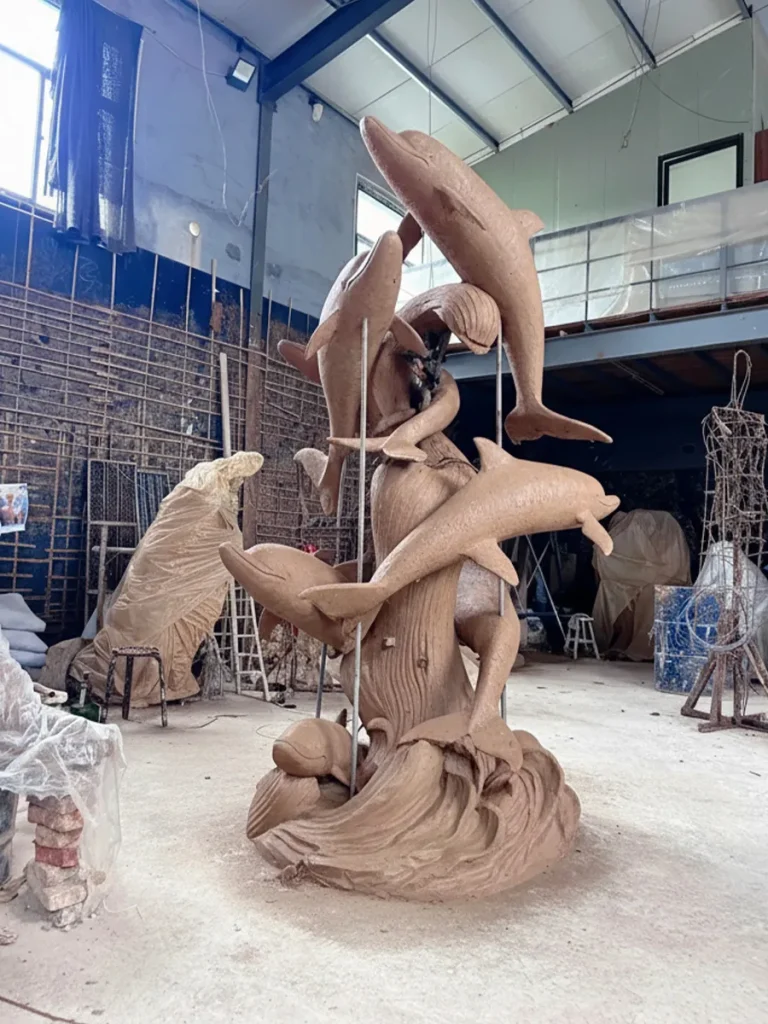
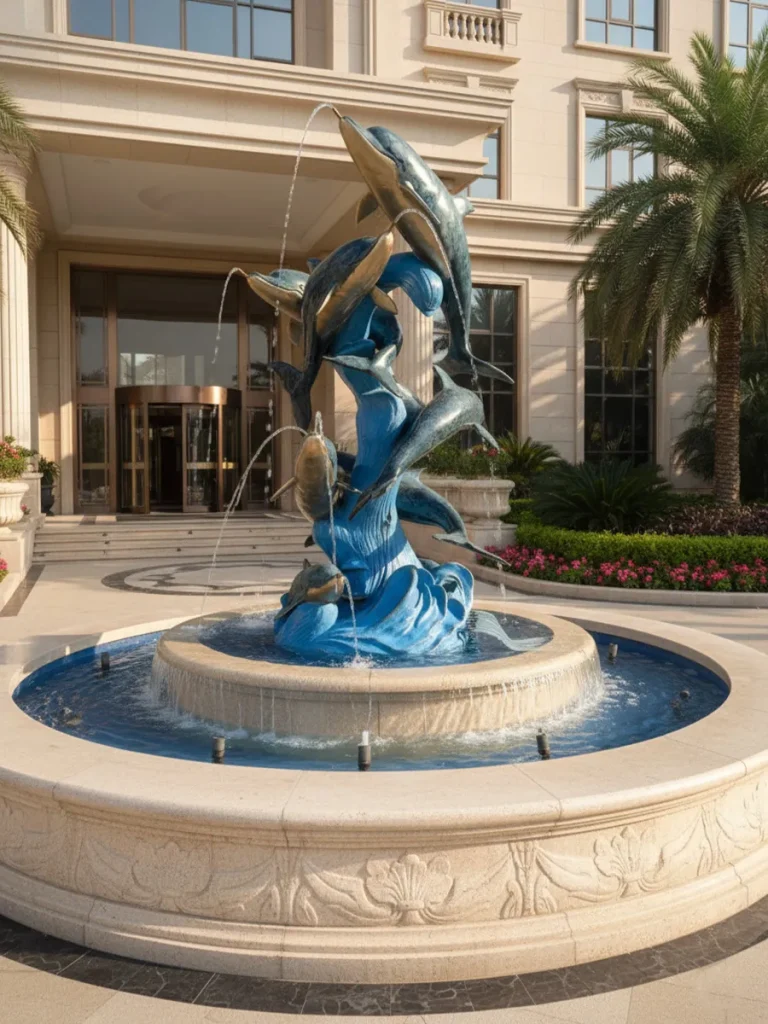
Other cultures share similar interpretations. In Māori tradition, powerful guardian spirits known as taniwha were sometimes associated with protective sea creatures. In Celtic folklore, dolphins were believed to guide lost sailors safely to shore.
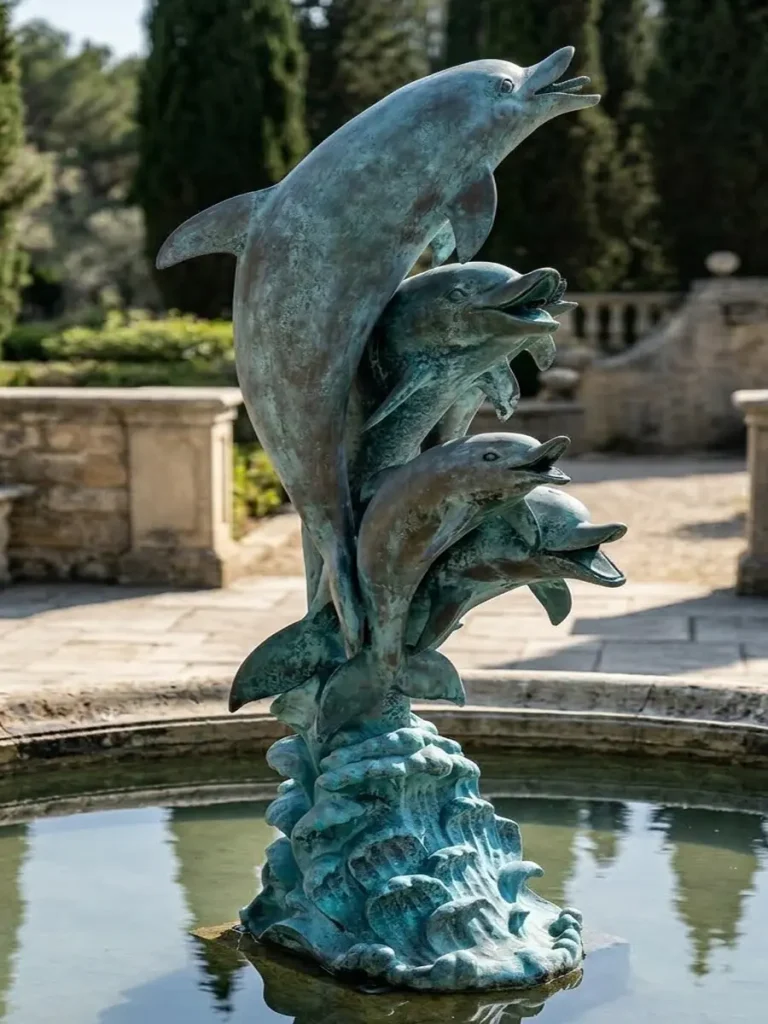
Because of these cross-cultural meanings, dolphins symbolize protection, guidance, and joyful movement. Their arched forms also work beautifully in sculptural design. Water flowing from their mouths or tails creates natural arcs that animate the pool environment.
From a design standpoint, dolphin sculptures introduce motion into still spaces. When two or three dolphins are arranged together—leaping in a circular fountain composition—they produce a sense of rhythm and playfulness.
For homeowners searching for Dolphin sculptures for sale, the appeal is both aesthetic and symbolic. They are not simply buying decoration for their pool. They are inviting a timeless symbol of joy, guidance, and harmony into their landscape.
The Modern Edge: Stainless Steel Dolphin & Abstract Pool Sculptures
As outdoor architecture evolves, many designers are moving beyond classical mythology toward sleek contemporary forms. Clean lines, reflective surfaces, and minimalist silhouettes now define a new generation of Contemporary swimming pool statues.
Metal sculpture plays a central role in this shift. Sculptures created from polished stainless steel or weathering steel introduce a distinctly architectural character to pool environments. These works are not merely decorative—they interact dynamically with water, sunlight, and surrounding structures.
In modern landscape design, Modern metal pool art often becomes the visual anchor of the entire outdoor space. The sculpture reflects the sky, the pool surface, and surrounding vegetation, creating a constantly changing visual composition.
Among these designs, dolphins remain a favorite motif—but interpreted through a contemporary lens.
Why Mirror-Polished Stainless Steel is the Professional Choice for Saltwater Pools
From an engineering standpoint, the pool environment is extremely demanding. Water chemistry, chlorine exposure, and salt systems can rapidly degrade many materials if they are not selected carefully.
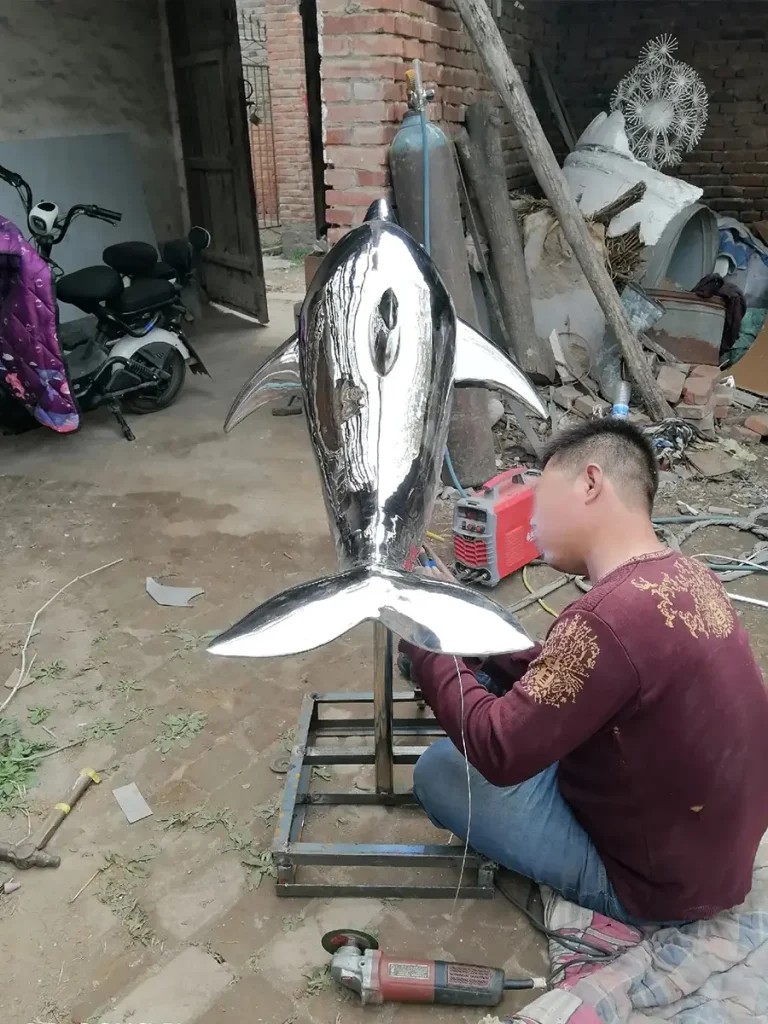
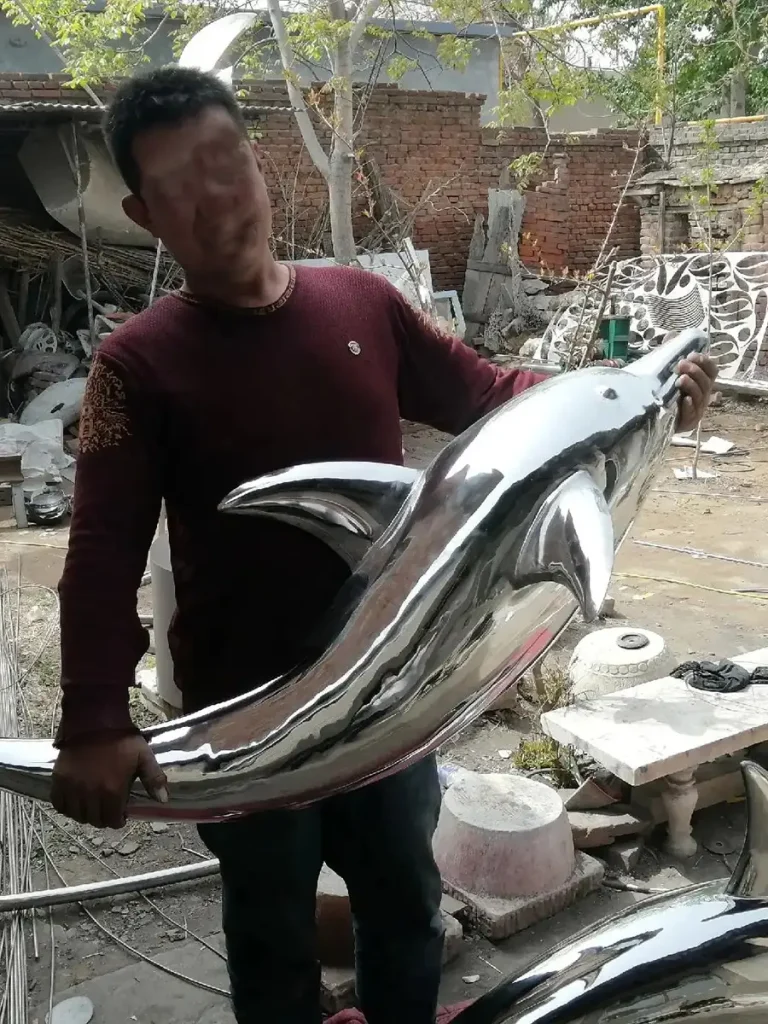

For this reason, Donghui Zhang strongly recommends 316 Marine-grade stainless steel for all high-end Contemporary swimming pool statues.
This alloy contains molybdenum, which dramatically increases corrosion resistance in aquatic environments. When properly fabricated and finished, it becomes both Chlorine-resistant and Saltwater-safe, making it ideal for modern pools.
Key engineering advantages include:
- 316 Marine-grade stainless steel resists corrosion from chlorine and saltwater systems
- Fully Chlorine-resistant surface suitable for continuous pool exposure
- Structurally stable for long-term outdoor installations
- Compatible with both freshwater and saltwater pool systems
- Minimal maintenance requirements compared to painted metals
Beyond durability, the visual effect is equally important.
A Mirror-polished finish transforms the sculpture into a reflective surface that captures its surroundings. Water ripples distort reflections of clouds, trees, and sunlight, creating a constantly shifting visual texture.
When applied to a Stainless steel dolphin sculpture, this finish produces an extraordinary illusion of motion. The dolphin appears to emerge from the water itself, its polished surface reflecting both the pool’s blue tones and the sky above.
In luxury pool design, this reflective quality is often what elevates the sculpture from object to atmosphere.
Dynamic Dolphins: Capturing Fluidity in Metal
Creating a convincing dolphin sculpture requires more than simply shaping metal. The form must convey movement—an impression of momentum frozen in time.
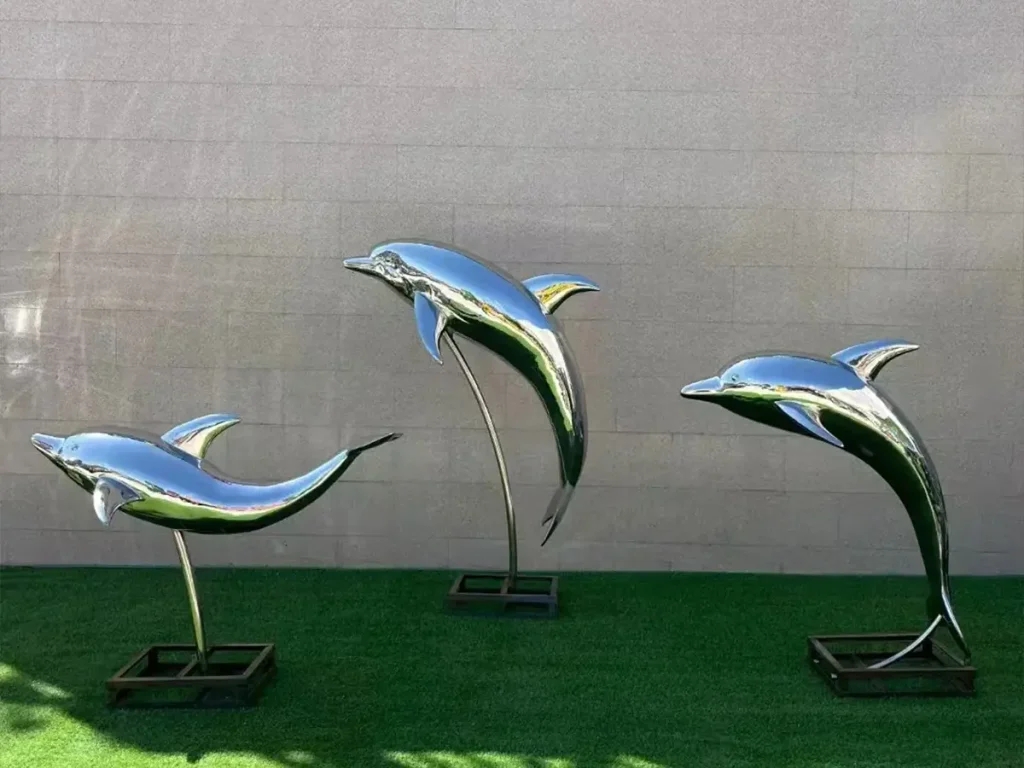
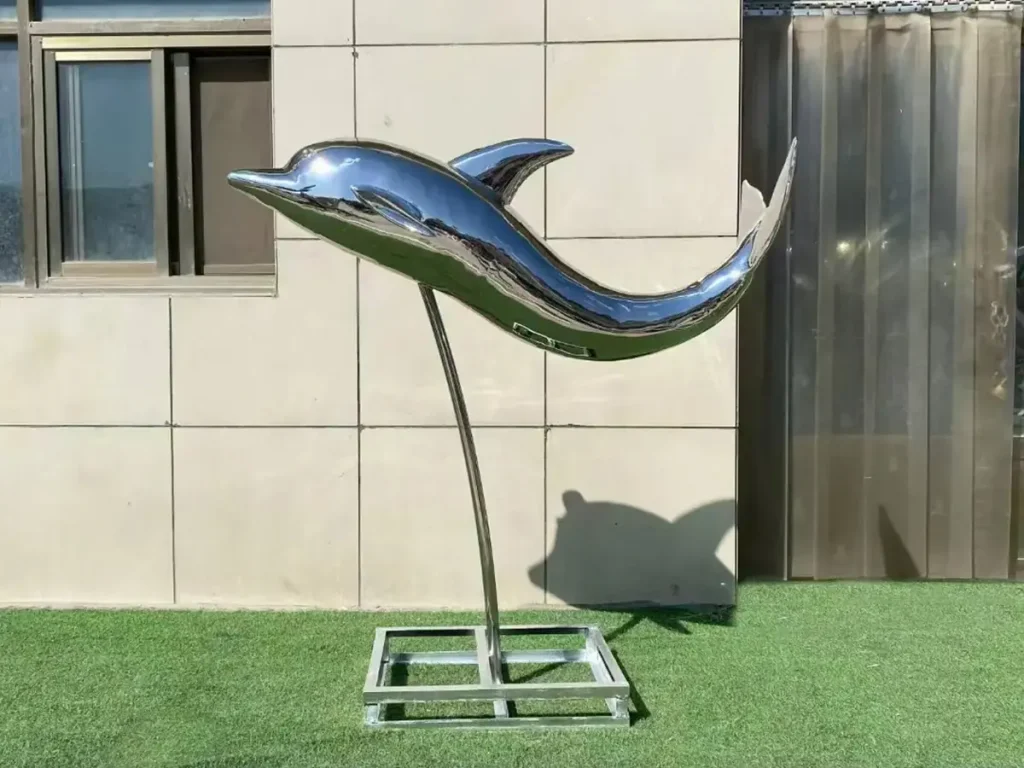
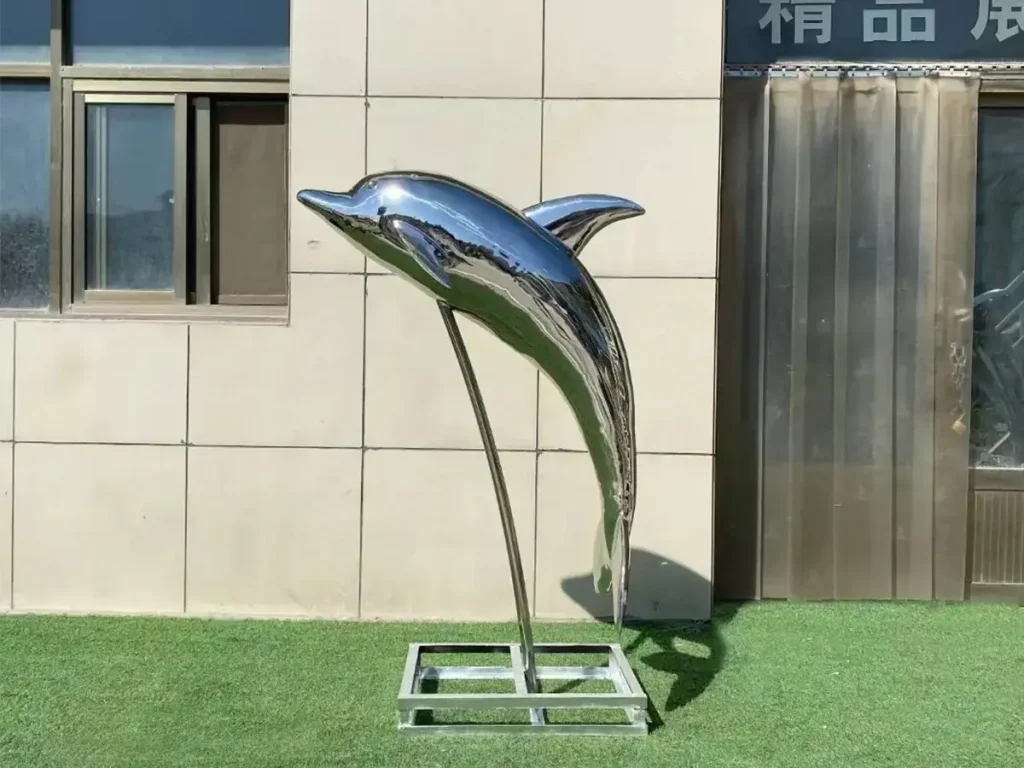
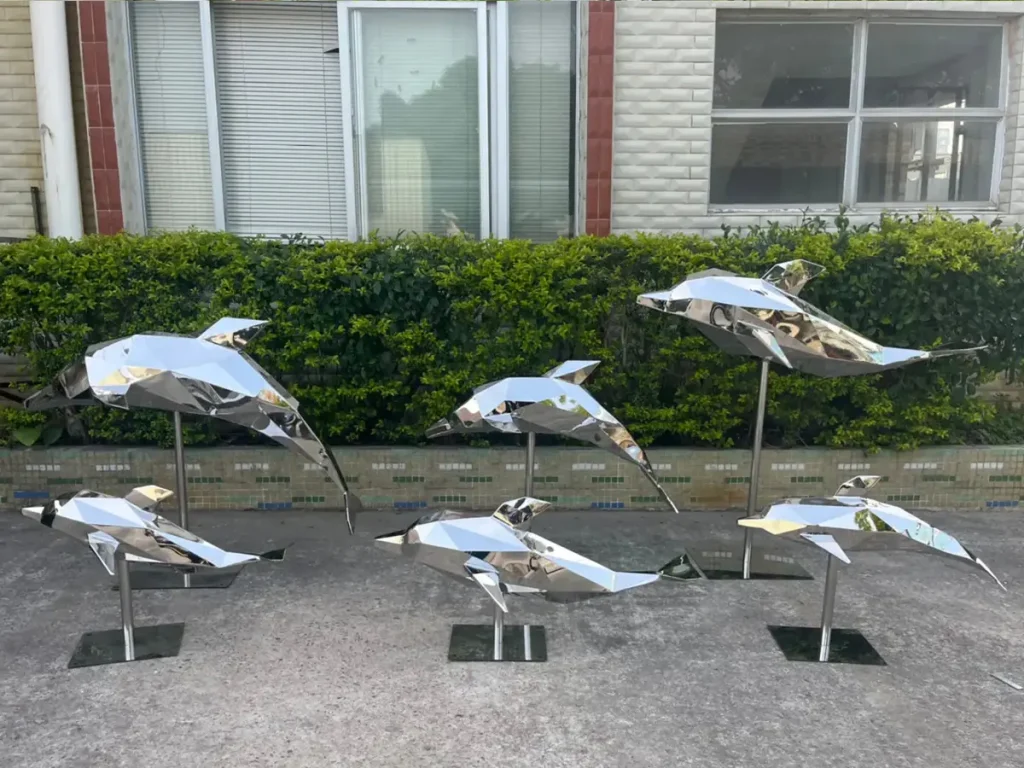
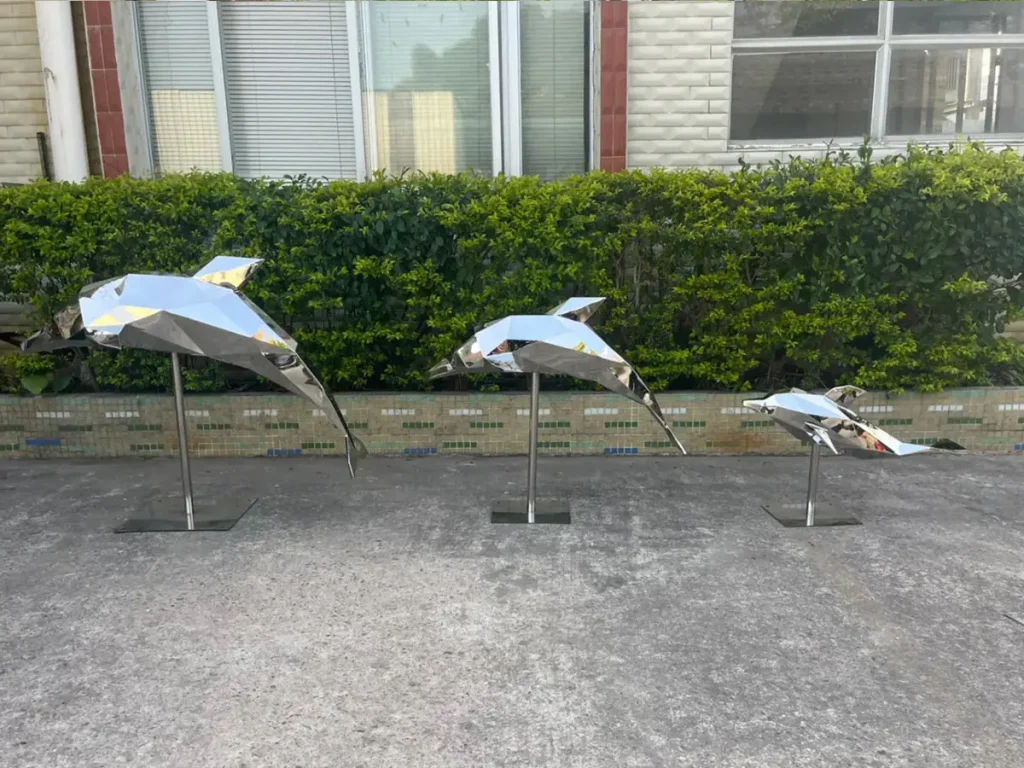
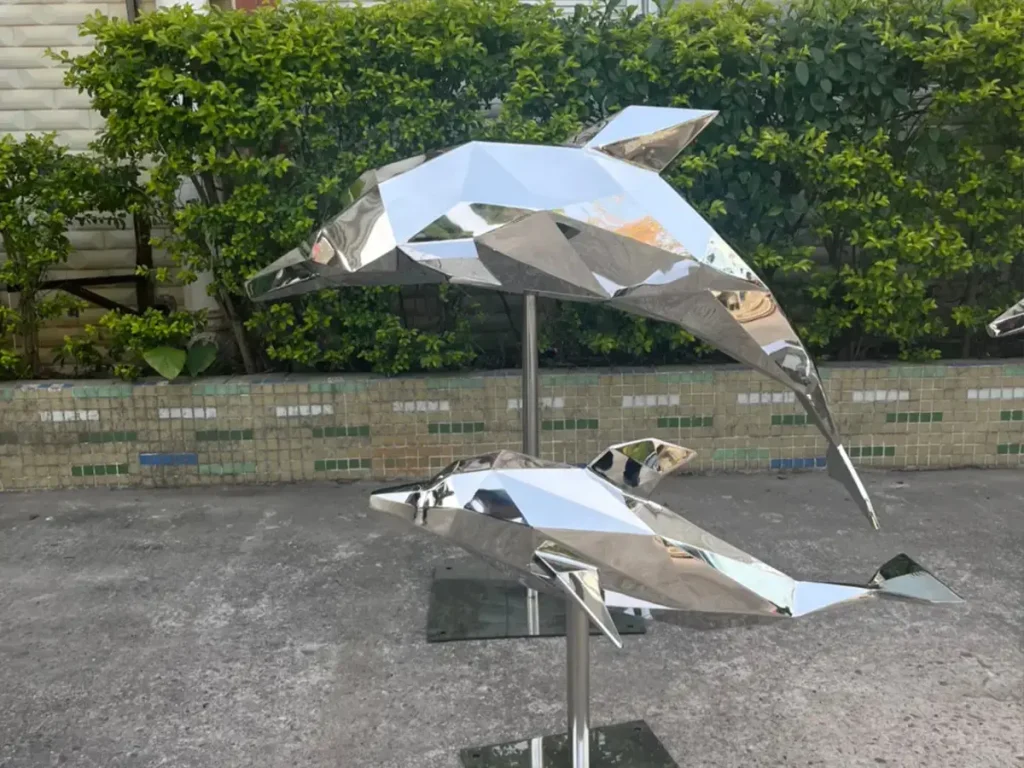
At Yun Sculpture, artisans rely on advanced forging and welding techniques to achieve this effect. Each sculpture begins with carefully shaped stainless steel plates, which are gradually formed to follow the natural curves of a dolphin’s body.
The fabrication process typically includes:
- Precision metal forging to achieve smooth anatomical curvature
- Full-welding construction to create seamless structural strength
- Hand grinding and polishing to eliminate visible joints
- Final mirror finishing to emphasize flowing contours
This process allows the sculpture to capture Fluid motion aesthetics—the graceful arc of a dolphin leaping above water.
In modern design settings, these sculptures often appear as if they are suspended in mid-air above the pool surface. Water jets may be integrated into the design, allowing streams to flow from the dolphin’s mouth or tail, enhancing the illusion of movement.
The result is sculpture that feels alive with motion—an ideal expression of contemporary aquatic design.
Rustic Waterfalls: Corten Steel Accents for Naturalistic Pools
Not every poolscape aims for polished minimalism. Many landscape architects prefer a warmer, more organic atmosphere—especially in garden settings designed to blend with nature.
This is where weathering steel becomes exceptionally effective.
A Weathering steel water feature, often known as Corten steel, develops a distinctive rust-like surface that protects the metal beneath. Rather than deteriorating, the material forms a stable patina that deepens in color over time.
These surfaces introduce warmth and texture that contrast beautifully with smooth pool finishes.
The Warmth of Rust: Using Corten Steel to Contrast Blue Waters
Elena often describes Corten steel as “earth meeting water.”
A Weathering steel water feature creates a striking visual dialogue with the pool’s blue surface. The rich reddish-brown patina provides a natural counterbalance to the cool tones of water and sky.
Over time, the material undergoes a natural oxidation process that forms a protective outer layer. This layer stabilizes the surface and prevents deeper corrosion—often described as a self-healing patina.
Design advantages include:
- Natural rust patina that evolves beautifully over time
- Strong visual contrast with blue pool water
- Minimal maintenance requirements
- Excellent durability in outdoor landscapes
For contemporary gardens, Modern metal pool art made from Corten steel can take many forms—waterfall walls, abstract sculptures, or geometric panels that release gentle streams of water.
The overall effect feels grounded and architectural. Instead of shining like stainless steel, the sculpture becomes part of the landscape itself, blending seamlessly with stone, wood, and greenery.
Functional Art and Landscape Integration: Spitter Statues and Fountains
The most successful pool sculptures do more than sit beside the water. They interact with it.
This interaction is achieved through carefully engineered fountain systems that integrate sculpture with the pool’s circulation infrastructure.
When designed correctly, the sculpture becomes both artwork and water feature.
Functional Art: Pool Spitter Statues and Fountains
Modern Pool spitter statues, Pool fountain statues, and Swimming pool fountain statues combine sculpture with hydraulic engineering.
These features use a concealed Circulation pump connection to move water through internal tubing hidden inside the sculpture. The water then exits through a precisely designed outlet, producing a controlled Spray pattern.

Typical system components include:
- Internal stainless steel piping for water delivery
- Secure Circulation pump connection linked to the pool system
- Adjustable nozzle tips to control the Spray pattern
- Integrated drainage channels to manage splash control
Advanced installations often incorporate smart technology.
Bluetooth-controlled pumps allow homeowners to adjust water flow directly from a mobile device. RGB LED lighting systems can also be embedded near the sculpture’s base, illuminating water streams at night and enhancing the Aquatic ambiance.
The result is a multisensory environment where sculpture, water, and light operate together.
Placement Strategies: Pool Deck vs. Tanning Ledge vs. Centerpiece
The placement of a sculpture dramatically influences how it interacts with the pool environment.
Elena approaches each project as a spatial composition rather than simply choosing decorative objects.
Pool deck statues are often used to frame the pool perimeter. Positioned near seating areas or garden paths, they guide the visual flow of the landscape and create subtle focal points.
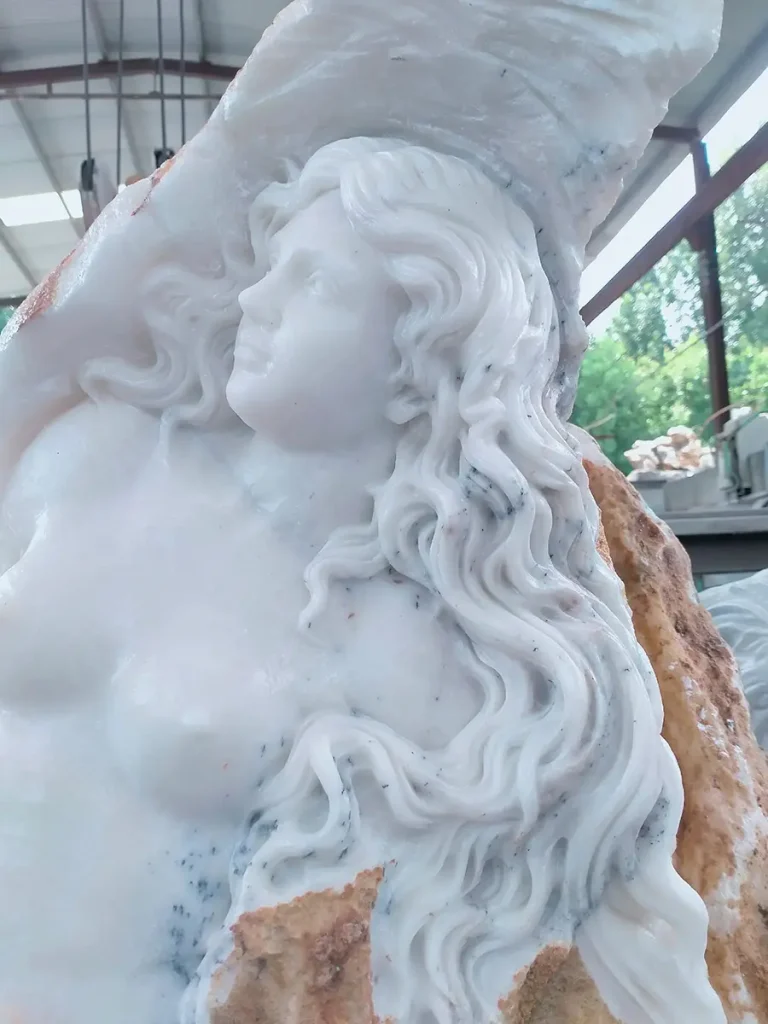
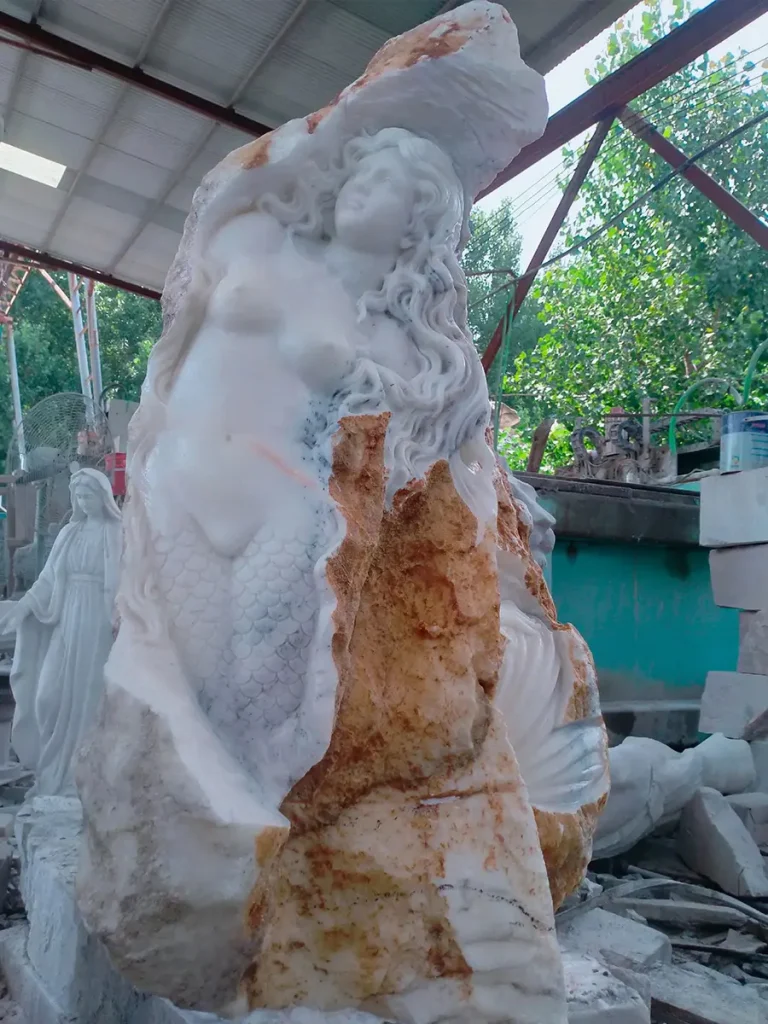
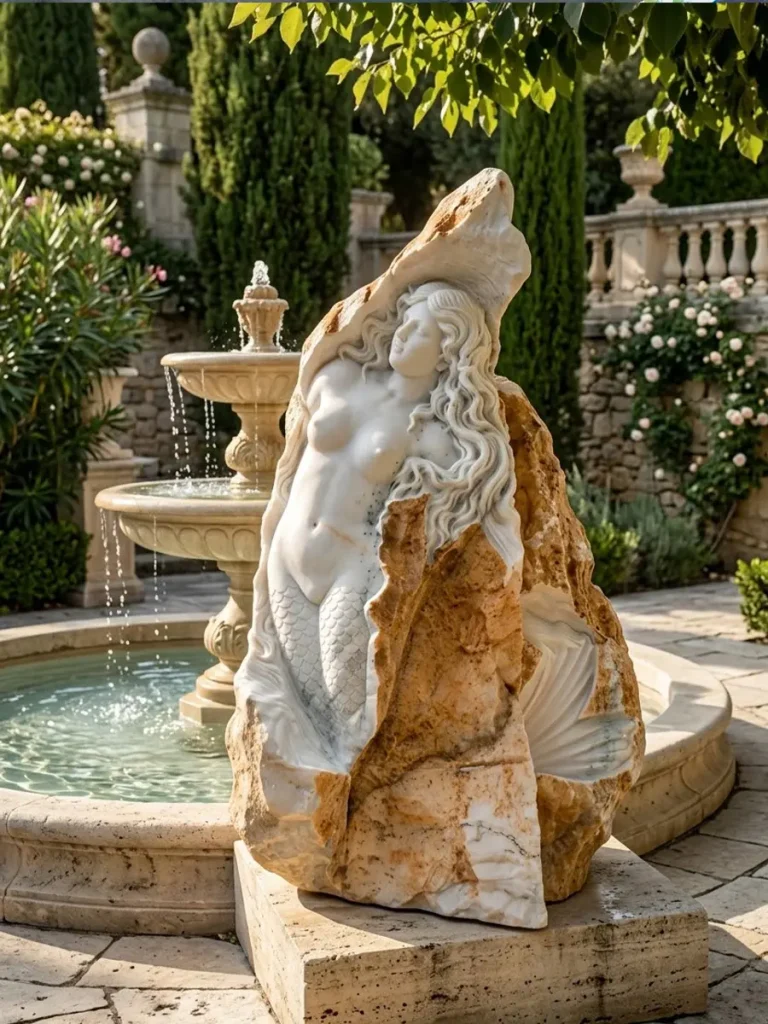
A second option is Tanning ledge placement—a shallow platform within the pool where water depth may be only a few inches. Sculptures installed here appear partially surrounded by water, producing an elegant resort-style atmosphere.
Finally, large sculptures can serve as an Infinity pool centerpiece. Positioned at the visual axis of the pool, they become the defining landmark of the entire outdoor space.
Popular choices for this role include elegant Dolphin statues for pool, especially multi-dolphin compositions that create dramatic fountain arcs above the water.
Today, many landscape designers use augmented reality (AR) visualization tools to preview sculpture placement before installation. This allows homeowners to see exactly how a statue will appear from different viewing angles—whether from a patio, inside the house, or across the water.
When sculpture, architecture, and water are aligned correctly, the pool becomes more than a recreational space.
It becomes a living gallery.
Material Selection Guide: What to Put IN or AROUND Your Pool?
Choosing the right sculpture material is not only an aesthetic decision—it is also a technical one. Pools contain chemicals, constant moisture, and fluctuating temperatures that place significant stress on materials.
Some sculptures are ideal around the pool but unsuitable inside the water. Others are engineered specifically for full aquatic exposure.
Understanding this difference helps homeowners avoid costly mistakes while preserving both the sculpture and the pool system.
Donghui Zhang often summarizes it simply:
“Water is beautiful, but it is also a powerful chemical environment.”
Safety and Maintenance: Can I put a cement statue IN my pool?
Many homeowners ask the same question: Can i put a cement statue in my pool?
Technically, it is possible—but it is rarely recommended. Cement and many Concrete pool statues are naturally porous materials. When submerged, they absorb water and pool chemicals, which can gradually degrade the surface.
This leads to the second common concern: Will cement statue be ok in chlorine pool?
In most cases, the answer is no for long-term installation. Chlorine and other pool treatment chemicals can react with the minerals inside cement or concrete. Over time, this interaction may cause discoloration, surface erosion, or chemical imbalance within the pool water.
For sculptures that will sit inside the pool, Donghui Zhang strongly recommends using materials that are far more stable in aquatic conditions.
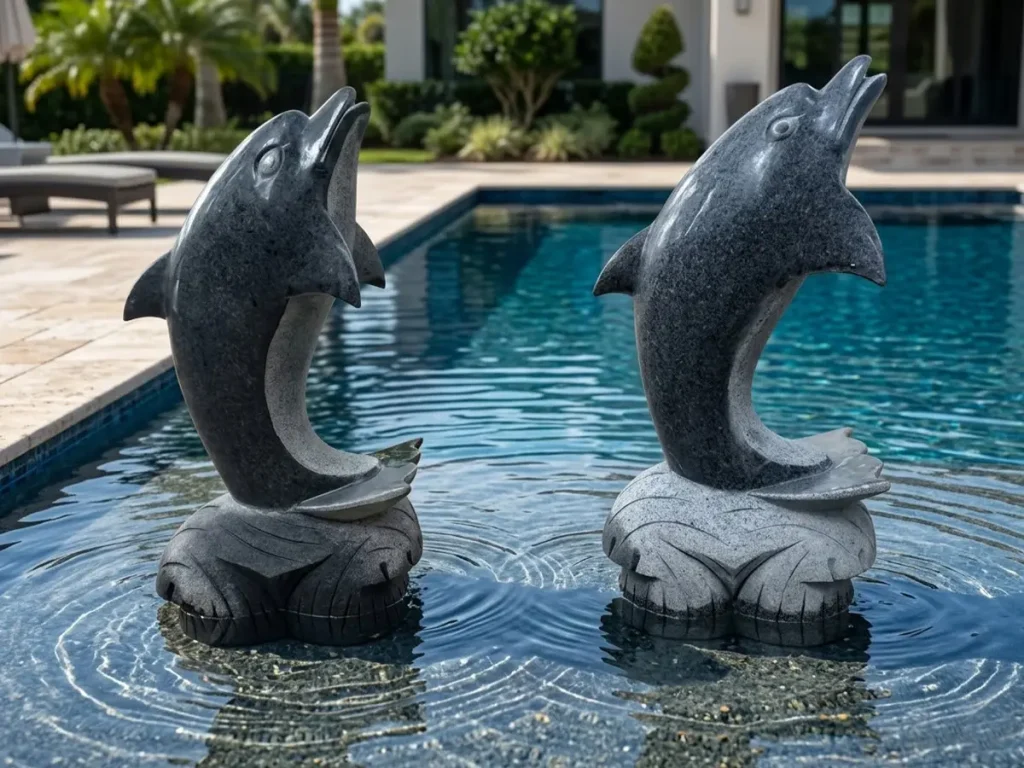
Granite is one of the best choices.
Granite is a dense Non-porous material, meaning it does not absorb water or pool chemicals. This makes it highly resistant to chlorine exposure and ideal for submerged sculptures or waterline installations.
Other natural stones can also work well in specific locations:
Marble
- Elegant classical appearance
- Suitable for poolside statues and fountains
- Requires professional sealing to prevent water penetration
Travertine
- Naturally textured stone commonly used in pool decks
- Stays cooler under direct sunlight compared to darker stone
- Ideal for sculptures placed near walkways or seating areas
For this reason, many designers use Concrete pool statues only for dry placement zones—such as garden beds, patios, or decorative areas around the pool deck.
Donghui Zhang summarizes the hierarchy clearly:
- Inside the pool: Granite or 316 stainless steel
- Waterline or splash zone: Sealed marble or stainless steel
- Pool deck / garden: Concrete, marble, bronze, or travertine
Selecting the right material from the beginning ensures the sculpture remains stable, safe, and visually beautiful for decades.
FAQ: Frequently Asked Questions about Aquatic Statues
Can a bronze statue be placed in a chlorinated pool?
No. Chlorine is highly corrosive to bronze and will gradually destroy the sculpture’s protective patina. Over time, the chemical reaction can cause discoloration and structural degradation.
For sculptures that will be submerged or partially submerged, Donghui Zhang recommends 316 stainless steel or dense granite instead. These materials are far more stable in chlorinated environments.
How do you prevent a heavy sculpture from sinking into the ground?
Large sculptures require proper foundation engineering.
A reinforced concrete pad must be installed beneath the sculpture. This pad typically extends below the local frost line, preventing seasonal freeze–thaw cycles from lifting or shifting the structure.
Steel anchor bolts are often embedded into the foundation during the pour. The sculpture base is then securely fixed to these anchors to ensure long-term stability.
Is “Life Size” a standard measurement in the sculpture industry?
No. “Life size” is a flexible term and varies depending on the subject being sculpted.
For example, a life-size mermaid sculpture is typically between 150–180 cm tall. Dolphins, however, are naturally much larger animals, so a life-size dolphin sculpture often ranges from 180–250 cm or more.
Because of these variations, buyers should always verify the exact dimensions before commissioning or purchasing a sculpture.
Will the sun fade the color of my mermaid statue?
High-quality bronze sculptures use a chemical patina that bonds directly with the metal surface. This patina is extremely stable under sunlight and outdoor conditions.
In fact, natural UV exposure can enhance the depth and richness of the bronze surface over time.
Lower-cost materials tell a different story. Painted resin or fiberglass statues often begin to chalk, fade, or peel after three to five years of sun exposure.
Why must 316 grade stainless steel be chosen for coastal or pool environments?
Chief Engineer Donghui Zhang emphasizes this point frequently.
316 stainless steel contains the alloying element molybdenum, which significantly improves corrosion resistance. This addition protects the metal from pitting corrosion and crevice corrosion, both of which occur frequently in chloride-rich environments.
Pools, saltwater systems, and coastal air all contain high levels of chlorides.
Compared with standard 304 stainless steel, 316 grade stainless steel offers dramatically better durability in these conditions. For aquatic sculptures, it is the professional standard used by architects and marine engineers alike.
Where is the famous Little Mermaid statue located and what does it symbolize?
The most famous mermaid sculpture in the world stands in Copenhagen, Denmark. Inspired by Hans Christian Andersen’s fairy tale, the statue sits quietly on a seaside rock overlooking the harbor. Over time, it has become a national cultural symbol of Denmark and one of the most photographed sculptures in Europe.
Other cities have created their own interpretations. In Užupis, the artistic district of Vilnius in Lithuania, a whimsical mermaid statue represents creativity and freedom. Warsaw, Poland, also features a powerful mermaid figure known as the city’s legendary protector.
Across cultures, mermaid sculptures symbolize the mystery of the ocean and the delicate balance between humanity and nature. When placed beside a pool or fountain, the figure evokes that same timeless dialogue between water and imagination.
What do dolphin statues represent in different cultures?
Dolphins appear in the mythology and folklore of many maritime cultures.
In Greco-Roman mythology, dolphins were sacred companions of Poseidon, the god of the sea. They were believed to guide ships safely through dangerous waters and often appeared in temple carvings and ancient fountain sculptures.
In Māori culture, powerful spiritual guardians known as taniwha are sometimes associated with protective sea creatures. These beings were believed to watch over travelers and protect important waterways.
Across the world, dolphins consistently symbolize positive qualities. They represent joy, intelligence, protection, and guidance. This is one reason dolphin sculptures remain among the most popular figures used in aquatic landscape design.
When placed near water, the symbolism feels especially appropriate—playful, protective, and alive with movement.
How often should outdoor bronze sculptures be waxed?
Outdoor bronze sculptures require periodic waxing to maintain their protective surface.
For most garden sculptures, waxing every 6 to 12 months is recommended. The process is simple but important for preserving the patina and protecting the metal from environmental exposure.
The standard maintenance routine is:
Wash the sculpture gently with warm water and mild soap.
Rinse thoroughly and dry the surface completely.
Apply a thin layer of microcrystalline wax using a soft cloth.
Buff lightly to restore the sculpture’s natural sheen.
Fountain sculptures require more frequent care. Because water constantly washes across the surface, the wax layer wears away faster. In these cases, applying wax approximately every two months helps maintain long-term protection.
This small amount of maintenance dramatically extends the life and beauty of outdoor bronze artwork.
How much does a custom life-size bronze sculpture cost?
The price of a custom bronze sculpture depends on several technical factors: the size of the piece, the complexity of the design, and the amount of bronze required for casting.
In the 2025–2026 international sculpture market, a life-size bronze sculpture typically ranges between $5,000 and $15,000 or more.
Several elements influence the final price:
Complexity of the original sculpture model
The lost-wax casting process required for bronze
Weight and thickness of the metal
Surface finishing and patina treatments
Installation requirements
Highly detailed sculptures or multi-figure fountain compositions can exceed this range due to the increased craftsmanship and metal volume required.
Despite the cost, bronze remains one of the most valued materials in outdoor sculpture because of its durability, prestige, and ability to last for generations.
How to clean calcium deposits off my stainless steel dolphin?
Mineral deposits sometimes appear on sculptures installed in pools or fountains, especially in areas with hard water.
Chief Engineer Donghui Zhang recommends a gentle cleaning method to protect the reflective finish of stainless steel sculptures.
Mix a mild solution of white vinegar and water, then apply it to the affected area using a soft microfiber cloth. The vinegar helps dissolve calcium buildup without damaging the metal surface.
After cleaning:
Rinse the sculpture thoroughly with clean water.
Dry the surface with a soft cloth to prevent new water spots.
It is extremely important not to use abrasive scrubbers or harsh chemicals. Materials such as steel wool or strong acids like muriatic acid can scratch the mirror-polished surface and permanently damage the finish.
With proper care, stainless steel sculptures can maintain their reflective beauty for decades.
A pool is often the heart of an outdoor space. Yet without artistic presence, even a beautiful pool can feel incomplete.
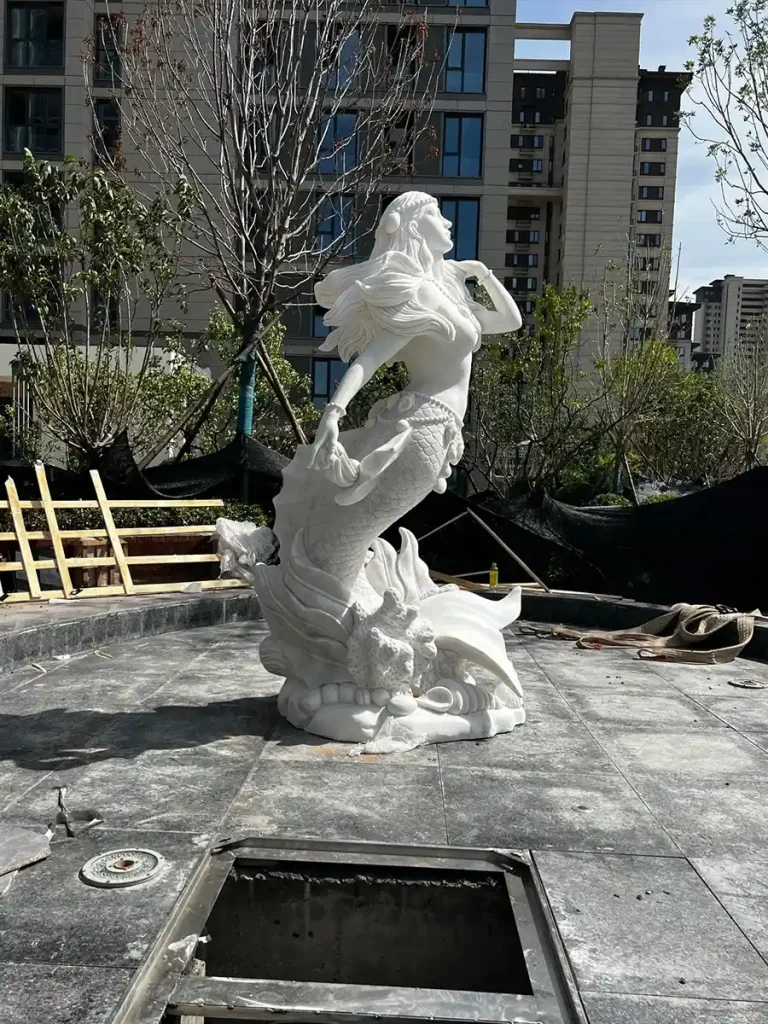
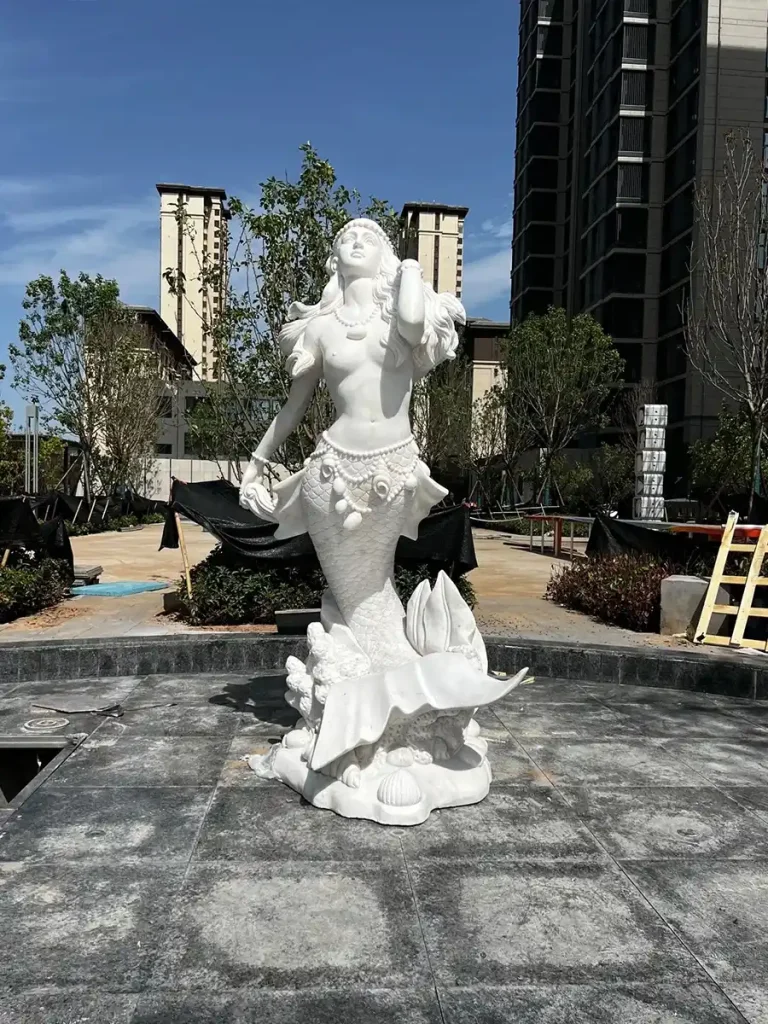
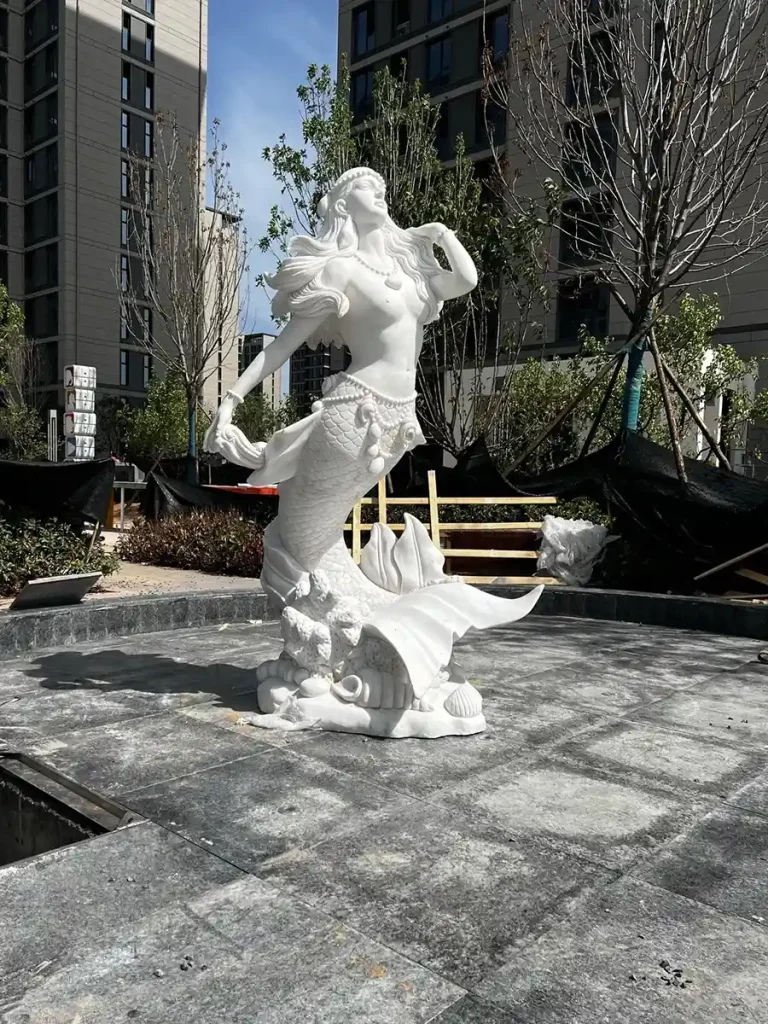
Sculpture introduces personality and narrative. The graceful arc of a dolphin fountain, the quiet elegance of a mermaid resting beside the water, or the reflective shimmer of stainless steel interacting with the sky—these elements transform the environment.
What begins as a simple swimming pool becomes something richer: a personal retreat, a visual landmark, and a place where art and water coexist.
Whether you choose the timeless mythology of a bronze mermaid, the architectural clarity of stainless steel dolphins, or the natural warmth of weathering steel accents, the right sculpture elevates the entire landscape.
A thoughtfully designed aquatic sculpture does not simply decorate the pool.
It defines the atmosphere of the space.
– Elena Zhang & Donghui Zhang, Yun Sculpture