Get in touch with Yun-Sculpture company
Our Lady of Guadalupe Outdoor Statue: A Complete Guide to Large-Scale Custom Commissions

The our lady of guadalupe outdoor statue is more than a religious sculpture. It is a visible declaration of faith, a sacred presence that transforms open space into a place of prayer. Across the Americas, communities have turned to this image of the Queen of Heaven to anchor courtyards, gardens, and pilgrimage routes with spiritual meaning.
From a historical perspective, the image of Our Lady of Guadalupe carries unmatched devotional power. Since the 1531 apparition to Saint Juan Diego on Tepeyac Hill, her presence has been associated with protection, mercy, and unity. When a parish or institution commissions a large custom statue, the act becomes a continuation of this sacred tradition—faith expressed through material, scale, and landscape.

From an engineering perspective, an outdoor statue is also an architectural decision. Wind loads, foundation depth, material durability, and long-term maintenance must be calculated with precision. A well-designed statue is not only spiritually inspiring; it must stand securely for decades under sun, rain, and seasonal change.
This is why commissioning a custom Our Lady of Guadalupe statue is never a simple purchase. It is a collaboration between theology, art, and structural science. Every dimension, every fold of the mantle, and every pedestal height must align with both devotion and environment.
The result is a sacred monument that becomes part of the landscape—an enduring sign of prayer, protection, and presence.
Table of Contents
Table of Contents
Why Our Lady of Guadalupe Belongs Outdoors
Theology & Space
The story of Our Lady of Guadalupe begins in the open air.
In December 1531, the Virgin Mary appeared to Saint Juan Diego on Tepeyac Hill, outside the walls of the city. The encounter did not happen inside a cathedral or monastery. It took place on a hillside path, under the sky, within the natural world. This detail is not incidental—it defines the spiritual identity of the Guadalupe devotion.
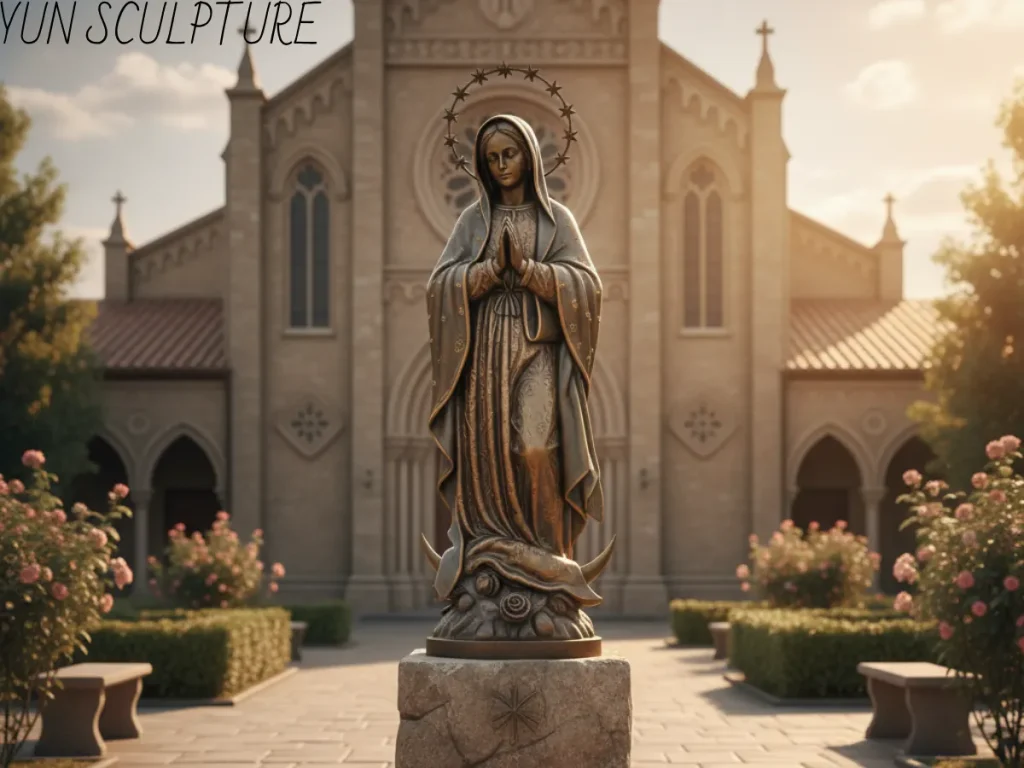
The outdoor setting symbolizes accessibility. The Mother of God appeared not within stone walls but in a place where ordinary people walked, worked, and prayed. Her message was meant for everyone, especially the humble and the poor. Placing an our lady of guadalupe garden statue in an open courtyard continues this theological tradition by bringing sacred presence into daily life.
Outdoor placement also creates a spiritual pathway.
A parish courtyard with a statue becomes a silent chapel under the sky. Visitors approach slowly, light candles, kneel, or sit in quiet reflection. The environment encourages contemplation without the formal structure of indoor worship. In this way, an our lady of guadalupe yard statue becomes a living extension of the church itself.
Landscape design plays a crucial role in this sacred experience.
Trees provide shade and frame the statue. Stone walkways guide pilgrims toward the figure. Benches allow moments of rest and prayer. At night, soft lighting transforms the sculpture into a luminous spiritual beacon. The statue becomes not just an object, but the center of a sanctuary.
From a structural perspective, outdoor placement requires careful planning.
Materials must resist corrosion and weathering. The statue must be anchored to a stable foundation that prevents movement or tilting over time. Drainage systems ensure that water does not accumulate around the base. These invisible engineering decisions protect the sacred image and preserve its dignity.
When theology and engineering work together, the result is powerful.
The statue stands where faith meets landscape—under the sky, in the open air, exactly as the apparition itself first unfolded.
Choosing the Right Size: From 24 Inches to Monumental Scale
Size determines presence.
A statue’s height directly shapes how people experience it. Small statues invite intimate prayer, while large statues create public devotion and visual authority. The choice of scale must match the environment, the viewing distance, and the spiritual purpose of the installation.
Retail stores often limit options to standard sizes. Custom sculpture removes this limitation entirely. Every Our Lady of Guadalupe statue can be designed to match the precise needs of a home, parish, or pilgrimage site.
The result is a statue that feels naturally integrated into its surroundings rather than forced into a predetermined dimension.
Home Garden & Private Shrines
The 24 inch and 36 inches statue sizes are ideal for personal devotion.
In private gardens or small courtyards, intimacy matters more than monumentality. A statue at this scale allows families to create a quiet prayer corner near flowers, trees, or a small fountain. The presence is gentle and contemplative rather than overwhelming.
A 24 inch statue works beautifully on a stone pedestal or garden table. It becomes a focal point for daily prayer, rosary recitation, or candle lighting. The smaller size allows it to blend naturally into residential landscapes.
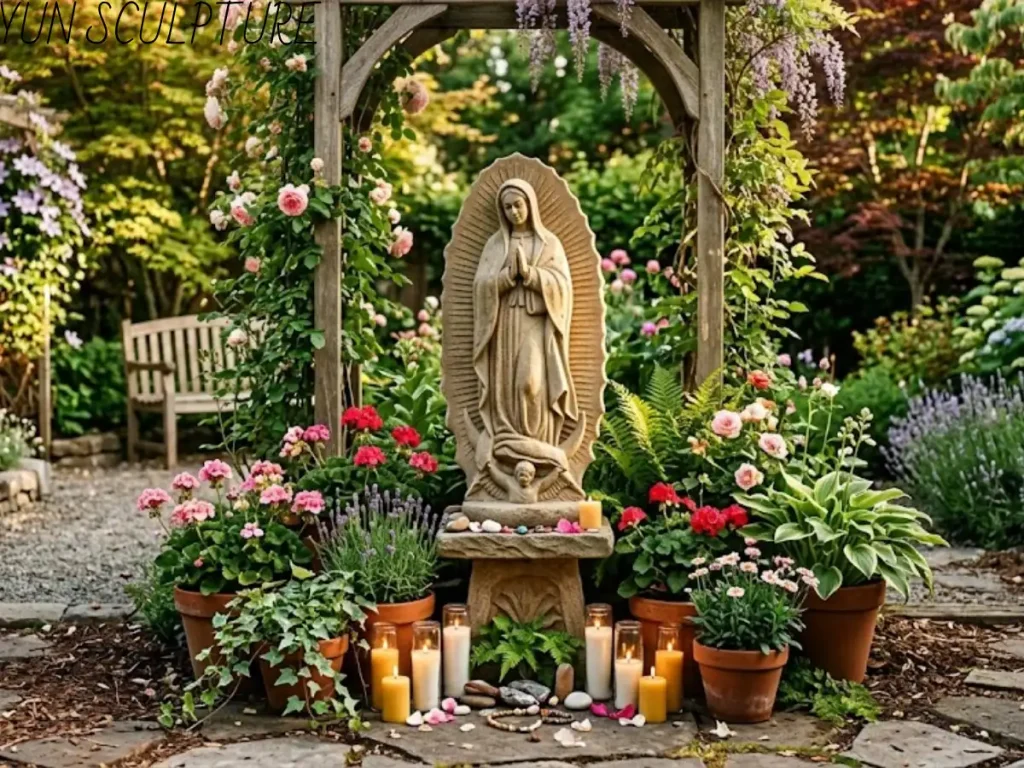
The 36 inches version offers slightly stronger visual presence while remaining personal and approachable.
From an engineering perspective, these sizes are relatively simple to install. A small concrete base or stabilized stone platform is usually sufficient. The weight remains manageable, and transportation is straightforward. Durability remains essential, especially for outdoor exposure to rain and sunlight.
These statues create sacred space within everyday life.
A backyard becomes a place of devotion. A garden becomes a sanctuary. The statue becomes a quiet companion in prayer.
Parish Courtyards & Memorial Gardens
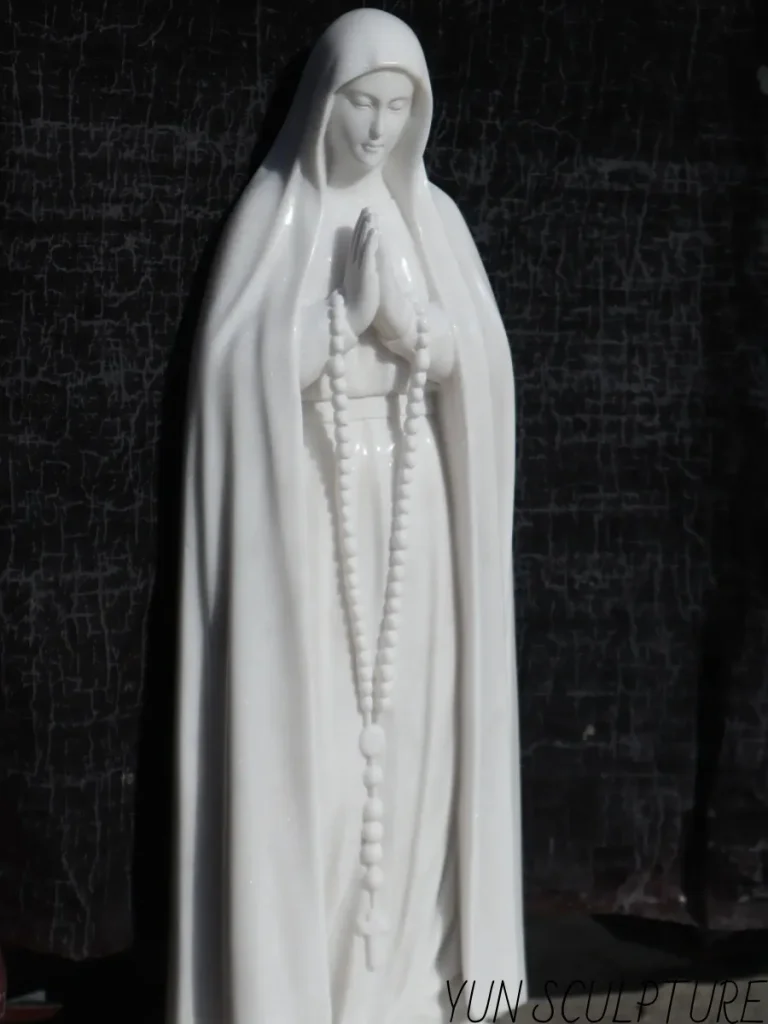
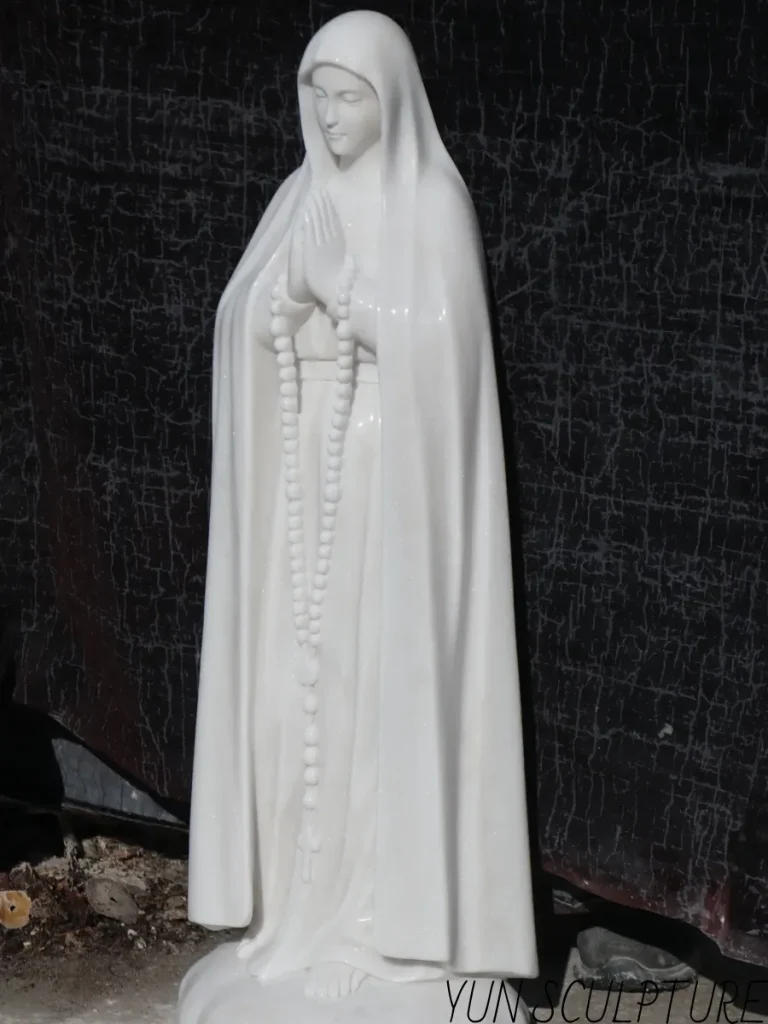
The 5 feet Our Lady of Guadalupe statue approaches life-size scale.
At this height, the statue becomes a public devotional presence rather than a private object. Parishioners can clearly see facial expression, mantle details, and symbolic elements from a moderate distance. The sculpture becomes a visual anchor in a church courtyard or memorial garden.
Pedestal height becomes critically important at this scale.
A 5-foot statue is typically placed on a pedestal ranging from 1.5 to 3 feet. This elevates the figure to eye level and ensures visibility across open spaces. The pedestal also creates a respectful separation between the sacred image and the ground.

Viewing distance must be considered carefully.
If the courtyard is wide, the pedestal may need to be higher to maintain visual impact. If the space is intimate, a lower pedestal creates a more personal connection. These adjustments ensure that the statue harmonizes with the surrounding architecture.
From a structural standpoint, foundation stability becomes essential.
Wind resistance increases with height. The statue must be securely anchored to prevent movement. Internal reinforcement and proper base design ensure long-term safety and durability. Engineering calculations determine the appropriate anchoring system based on location and environmental conditions.
When properly designed, a 5-foot statue becomes the heart of a parish courtyard.
It invites prayer, guides processions, and creates a sacred gathering point for the community.
Landmark & Pilgrimage Sites
Monumental statues transform religious landscapes.
At this scale, the Our Lady of Guadalupe statue becomes a regional or national symbol. Religious parks, pilgrimage centers, and city landmarks often seek the largest statue of our lady of guadalupe or even the tallest statue to create a powerful spiritual and visual statement.
The purpose of monumental scale is visibility and presence.
Pilgrims approaching from a distance should immediately recognize the sacred figure. The statue becomes a beacon of faith, guiding visitors toward a place of prayer and reflection. It defines the identity of the entire site.
Engineering becomes the foundation of artistic expression.
Large-scale statues require internal steel frameworks, deep reinforced concrete foundations, and precise wind-load calculations. Every structural component must ensure stability under extreme weather conditions. Transportation and installation logistics must be carefully planned to protect both the sculpture and the surrounding environment.
Material selection is equally critical.
Bronze, stainless steel, and reinforced stone structures are commonly used for monumental installations because of their strength and durability. Surface treatments protect the statue from corrosion, temperature changes, and long-term environmental exposure.
The goal is permanence.
A monumental Our Lady of Guadalupe statue is designed to stand for generations, welcoming pilgrims, inspiring faith, and shaping the spiritual identity of a place for decades to come.
This is where devotion meets architecture, and where sacred art becomes a lasting landmark.
Material Guide: Stone, Bronze, or Wood?
A sacred image must endure not only in spirit, but in structure.
When a parish or institution commissions an outdoor statue, the first engineering decision is material. Weather, temperature fluctuation, moisture, and long-term exposure to sunlight place constant stress on any sculpture placed outside. A devotional image that cracks, fades, or deteriorates loses both its dignity and its purpose.
At Yun Sculpture, material selection follows one principle: permanence.
Cheap cast stone—typically a mixture of resin and stone powder—is often used in retail statues because it reduces cost and weight. However, it lacks structural integrity, absorbs moisture, and degrades under long-term outdoor exposure. For a sacred image intended to stand for decades, such materials are unsuitable.
Only solid natural materials can provide the strength, stability, and visual dignity required for a permanent Our Lady of Guadalupe installation. Stone and bronze remain the most reliable options for outdoor shrines, parish courtyards, and pilgrimage landmarks.
Each material carries its own structural and aesthetic advantages, and choosing correctly ensures the statue will remain beautiful and stable for generations.
Natural Stone
The our lady of guadalupe stone statue represents the closest connection to permanence and tradition.
Natural stone has been used in sacred sculpture for thousands of years because of its durability and quiet spiritual presence. Marble, granite, and limestone resist weathering, maintain structural integrity, and age with dignity. Unlike artificial materials, stone does not rely on chemical binders that weaken over time.
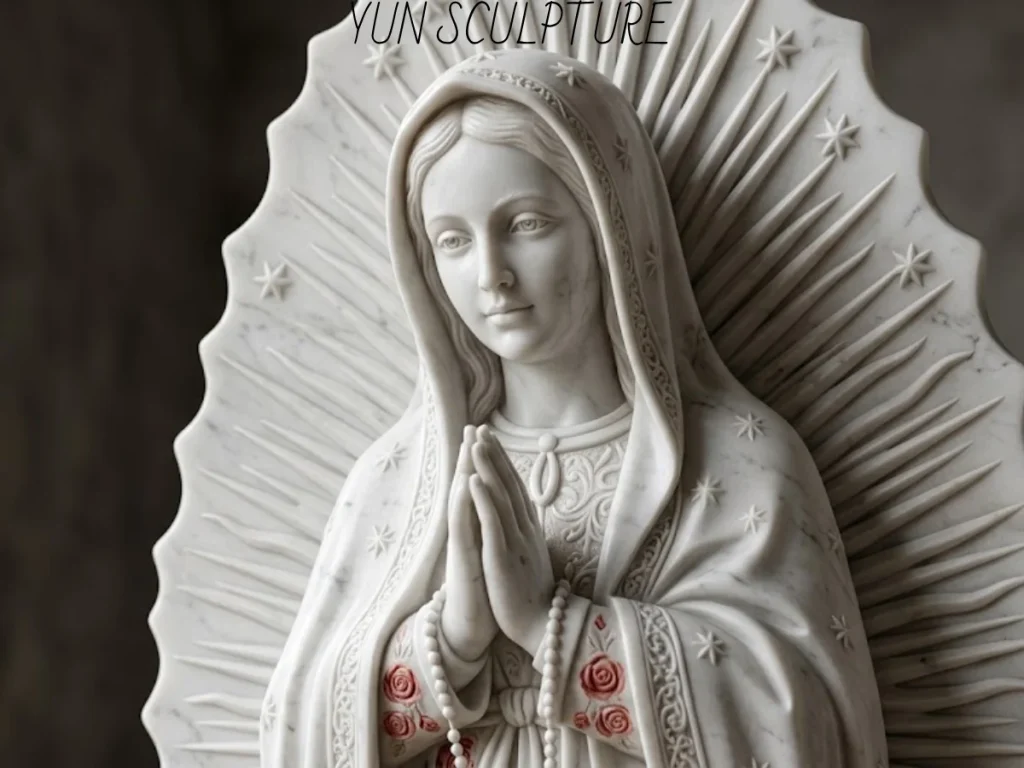
From an engineering standpoint, stone performs exceptionally well outdoors.
Its density provides natural resistance to wind and movement. Temperature changes have minimal structural impact when the stone is properly carved and sealed. Surface erosion occurs slowly and evenly, allowing the statue to maintain its form for decades or even centuries.
The visual quality of stone is equally important.
Soft natural tones reflect sunlight gently, creating a calm and contemplative atmosphere in gardens and courtyards. The material does not shine aggressively; instead, it harmonizes with trees, grass, and architectural surroundings. This makes a stone statue particularly suitable for prayer gardens and outdoor sanctuaries.
Stone also conveys spiritual humility.
The quiet texture and natural color echo the simplicity of Tepeyac Hill, reinforcing the theological message of Our Lady’s appearance to Juan Diego. The statue feels grounded, stable, and timeless.
For long-term outdoor placement, natural stone remains one of the most reliable and spiritually appropriate materials available.
Cast Bronze
The bronze statue of our lady of guadalupe represents strength, prestige, and classical permanence.
Bronze has been the preferred material for monumental religious sculpture for centuries. Churches, cathedrals, and public religious parks often select bronze because it combines artistic detail with exceptional structural stability. The material allows sculptors to capture delicate folds of the mantle, facial expressions, and symbolic elements with precision.
From an engineering perspective, bronze offers superior durability.
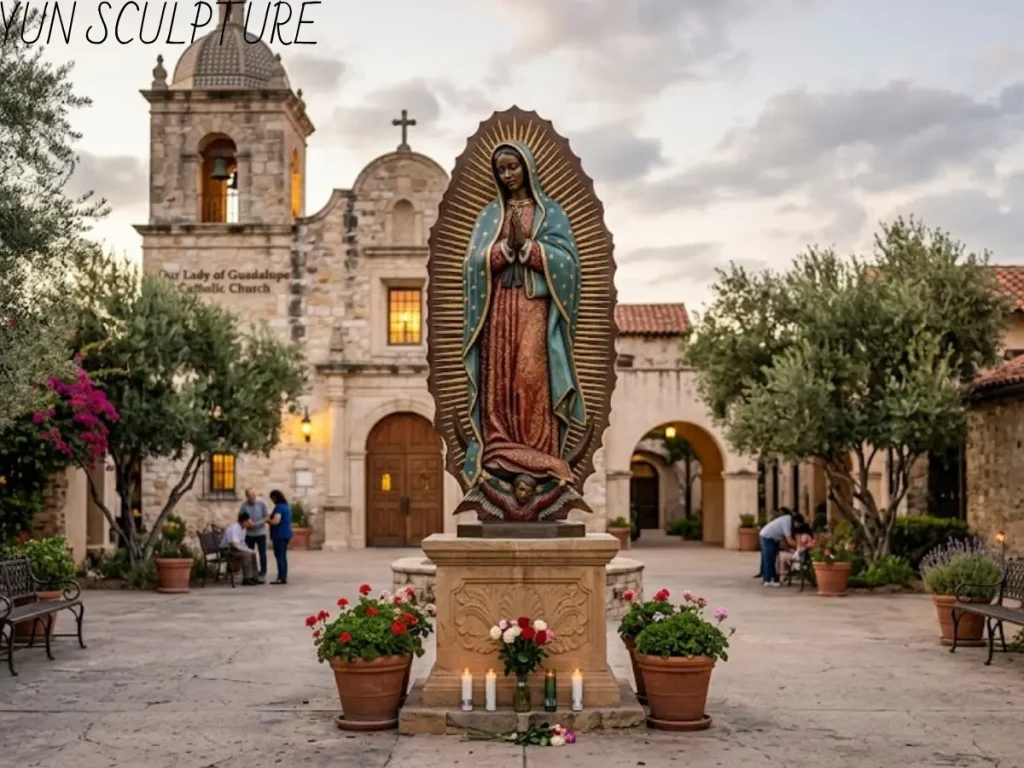
It resists corrosion, withstands extreme weather conditions, and maintains structural integrity under wind and temperature stress. Proper casting and internal reinforcement ensure that even large-scale statues remain stable for generations. Bronze is particularly suitable for monumental installations and high-visibility church landmarks.
The patina is a defining feature.
Over time, bronze develops a natural oxidation layer that protects the surface and enhances visual depth. This patina—often in warm brown or soft green tones—gives the statue a sacred and historical character. Rather than deteriorating, the material matures and becomes more visually powerful with age.
Bronze also communicates authority and reverence.
Its weight and presence create a sense of permanence that aligns with the spiritual significance of Our Lady of Guadalupe. In parish courtyards, memorial gardens, and pilgrimage sites, bronze statues often become central devotional landmarks.
For institutions seeking durability, prestige, and long-term structural security, bronze remains one of the strongest and most respected material choices.
What About Wood?
The our lady of guadalupe wooden statue holds a respected place in religious art, but its use outdoors requires careful consideration.
Wood has traditionally been used for indoor devotional sculptures because of its warmth and handcrafted character. Inside churches and chapels, wooden statues create an intimate and human connection with the sacred image. The natural grain and texture enhance emotional and spiritual resonance.
Outdoors, however, wood faces serious limitations.
Moisture can penetrate the surface and cause swelling or rot. Temperature changes lead to expansion and contraction, which creates cracks over time. Sunlight gradually fades and weakens the material. Even with protective coatings, long-term outdoor exposure significantly reduces the lifespan of wooden sculptures.
From a structural standpoint, wood requires constant maintenance.
Protective varnishes must be reapplied regularly. Environmental damage must be monitored and repaired. Without continuous care, deterioration becomes inevitable. This makes wood unsuitable for permanent outdoor shrines or large-scale installations.
For this reason, wooden statues are best reserved for indoor devotional spaces.
For exterior installations such as gardens, courtyards, and pilgrimage sites, natural stone or bronze provides the durability and structural reliability required to protect the sacred image for generations.
Choosing the right material is ultimately an act of stewardship—ensuring that the statue remains beautiful, stable, and spiritually dignified long into the future.
The Symbolism Behind the Statue: What Every Detail Means
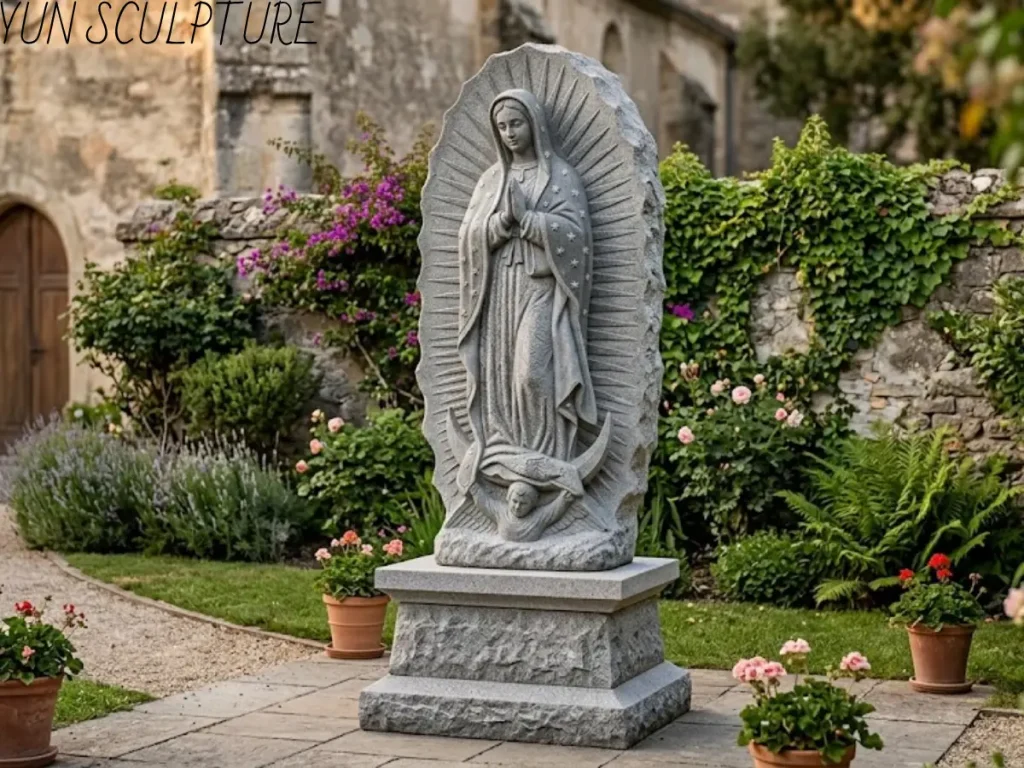
The our lady of guadalupe statue meaning is not simply artistic decoration. Every visual element carries theological and historical significance rooted in the 1531 apparition and the sacred image preserved on Juan Diego’s tilma.
As a religious art historian, I approach each sculpture as a sacred text carved in three dimensions. The symbolism must be accurate, respectful, and faithful to the original description of the image, because every detail communicates a message of faith and divine presence.
The statue becomes a visual theology—an image that teaches without words.
Below are the essential symbolic elements that must be carefully preserved in every Our Lady of Guadalupe sculpture.
The Stars
- The mantle contains 428 stars, arranged to reflect the winter solstice sky of December 1531.
- This celestial pattern symbolizes Mary as Queen of Heaven.
- The stars connect the apparition to the cosmic order, showing that her message transcends earthly boundaries.
- Accurate star placement is critical in high-quality sculptures because it preserves theological authenticity.
The mantle becomes a visual map of heaven itself.
The Crescent Moon
- Our Lady stands upon a crescent moon, a powerful biblical symbol.
- The moon represents darkness and instability.
- Standing above it symbolizes triumph over evil and the victory of divine light.
- It also reflects imagery from the Book of Revelation, reinforcing her identity as the Woman clothed with the sun.
This element communicates protection and spiritual authority.
The Angel
- A small angel supports her mantle and robe from below.
- The angel connects heaven and earth, acting as a divine messenger.
- The figure also symbolizes that Mary is elevated and carried by divine grace.
- The upward gaze of the angel directs attention toward her sacred presence.
The angel becomes the bridge between the human world and the divine realm.
Folded Hands
- Our Lady’s hands are gently folded in prayer.
- This posture represents humility and intercession.
- She is not presented as a distant queen, but as a compassionate mother praying for humanity.
- The gesture invites believers to pray with her and through her.
The folded hands express the heart of Guadalupe devotion—mercy, compassion, and quiet intercession.
Every line, every fold, and every symbol must be carved with reverence and precision.
Because in the end, the statue is not merely a sculpture.
It is a sacred language of faith, translated into stone or bronze, standing silently in the open air and speaking to every pilgrim who approaches.
The Miracle Factor: Why These Statues Endure
Sacred statues often become part of stories that travel far beyond their physical location.
Across the Americas, reports of unusual phenomena surrounding Guadalupe statues have captured public attention. These accounts are shared in parishes, on news platforms, and through social media, where believers see signs of divine presence expressed through material objects. Whether viewed as faith-filled testimony or symbolic interpretation, these stories reveal something profound: the deep spiritual bond between the faithful and the image of Our Lady of Guadalupe.
From a historical perspective, such narratives are not new.
Religious art has always been surrounded by accounts of protection, survival, and unexplained endurance. The faithful interpret these moments as reminders that sacred images are not merely decorative objects, but visible signs of devotion and divine protection. The statue becomes a focal point for collective faith, prayer, and hope during times of crisis.
One widely discussed example is the our lady of guadalupe statue weeping in new mexico.
Reports described a statue appearing to show moisture or tear-like traces, which believers interpreted as a spiritual message. The phenomenon sparked prayer gatherings and renewed devotion among local communities. Whether understood as a miracle or a symbolic moment, the event strengthened the emotional and spiritual connection between believers and the sacred image.
Another powerful story involves the well-known statue survives harvey fire incident.
During a destructive fire, a Guadalupe statue reportedly remained standing while surrounding structures were damaged or destroyed. Images of the surviving statue circulated widely, becoming a symbol of hope and resilience. For many believers, the survival represented divine protection and a reminder of faith in the face of disaster.
These stories resonate because they reflect a deeper truth.
People look to sacred images for reassurance, especially in moments of uncertainty. When a statue appears to endure extreme conditions or display unusual phenomena, it reinforces the belief that faith is present and active in the world. The statue becomes a spiritual anchor in times of fear, loss, or recovery.
From an engineering perspective, these events also highlight something essential.
A crying, weeping, or miracle statue draws attention not only because of the story surrounding it, but because it physically remains intact under challenging conditions. Fire, heat, moisture, and environmental stress test the structural limits of any material. When a statue survives, it demonstrates the strength of its construction and the quality of its materials.

This is where faith and engineering quietly meet.
Solid bronze resists extreme temperatures and does not easily melt or collapse. Natural stone maintains structural stability even under severe environmental pressure. Reinforced internal structures protect the sculpture from cracking or deformation. These technical realities explain why certain statues remain standing while weaker materials fail.
Cheap resin or cast stone behaves differently.
Under high heat, resin softens and melts. Under moisture and stress, low-quality materials crack and deteriorate. In extreme weather, lightweight structures can collapse or shift. What appears to be miraculous endurance is often directly connected to material strength and engineering precision.
This does not diminish the spiritual meaning of survival.
Instead, it reinforces the responsibility of those who commission sacred art. Choosing durable materials ensures that the statue will remain present for future generations, continuing to inspire prayer and devotion even in difficult circumstances.
In this sense, endurance itself becomes a form of testimony.
A statue that stands through storms, heat, and time becomes a silent witness to faith. Its presence communicates stability, protection, and continuity. The material holds the image, and the image holds the devotion of the people.
True sacred art does not fade quickly.
It stands, quietly and firmly, as a sign of faith that continues long after the moment of installation.
How to Commission a Custom Our Lady of Guadalupe Outdoor Statue
Many clients begin with a simple question: where to buy our lady of guadalupe statue.
The answer depends on what they truly seek.
Retail stores offer standard models with fixed sizes and limited materials. Religious galleries often provide higher-quality pieces, but with significant markups and limited customization. For parishes, institutions, and serious collectors, the goal is usually different—they want a sacred statue designed specifically for their space, their community, and their devotional needs.
This is where the concept of an our lady of guadalupe statue for sale changes from a product into a commissioning process.
Factory-direct commissioning allows clients to work directly with artists and engineers, ensuring full control over size, material, and symbolic accuracy. The result is a statue that is both spiritually authentic and structurally reliable, without unnecessary intermediary costs.
The process is structured into four clear and transparent steps.
1. Consult
Every project begins with dialogue.
Clients provide reference photos, preferred artistic style, and installation environment details. Size, material, and placement location are carefully discussed to ensure the statue fits both spiritual and architectural needs. Garden shrines, parish courtyards, and pilgrimage landmarks each require different design approaches.
This stage defines the vision.
Engineering considerations such as wind exposure, foundation requirements, and pedestal height are also evaluated early, preventing costly revisions later in the process.
The consultation transforms an idea into a structured project plan.
2. Model
The clay model is the heart of the commissioning process.
A full-scale 1:1 clay model is created based on the approved design. Every detail—facial expression, mantle folds, star placement, and symbolic elements—is carefully sculpted. Clients review photos and videos or request adjustments to ensure theological and artistic accuracy.
This approval stage is critical.
No bronze casting or stone carving begins until the model is fully approved. This guarantees that the final statue matches the client’s expectations and preserves the sacred iconography correctly.
The clay model becomes the blueprint for the final sculpture.
3. Create
Once approved, the statue enters the production phase.
For bronze statues, the traditional lost-wax casting method is used. This process captures every sculptural detail and creates a durable metal structure capable of lasting for generations. Surface finishing and patina application complete the sacred image.
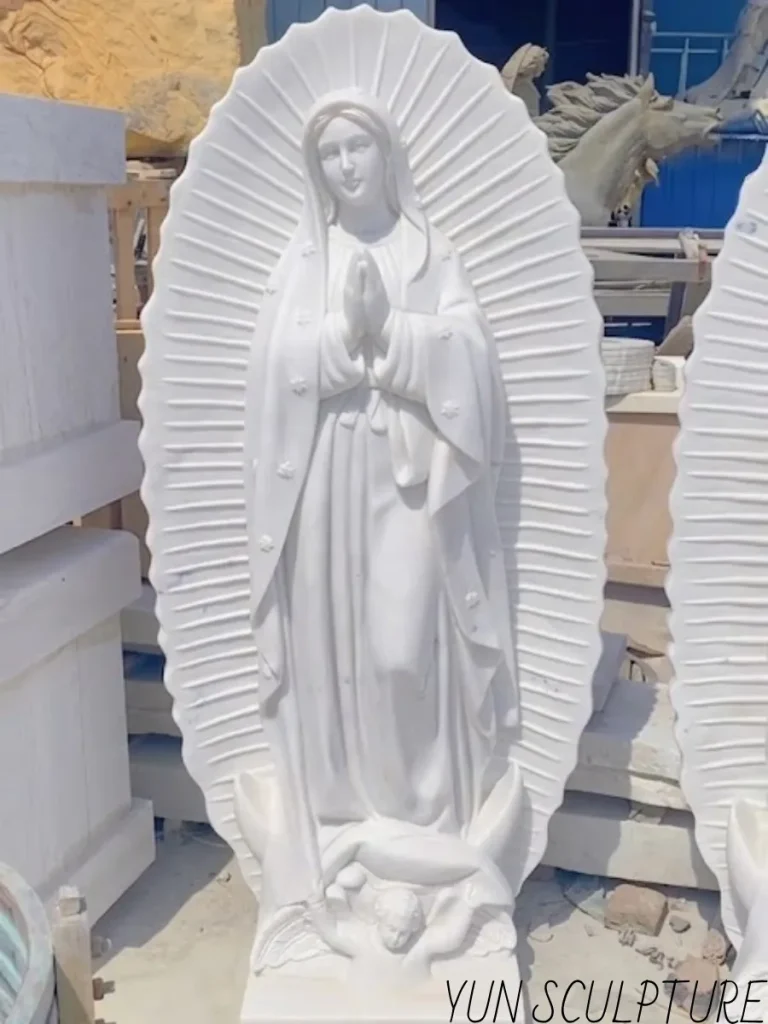
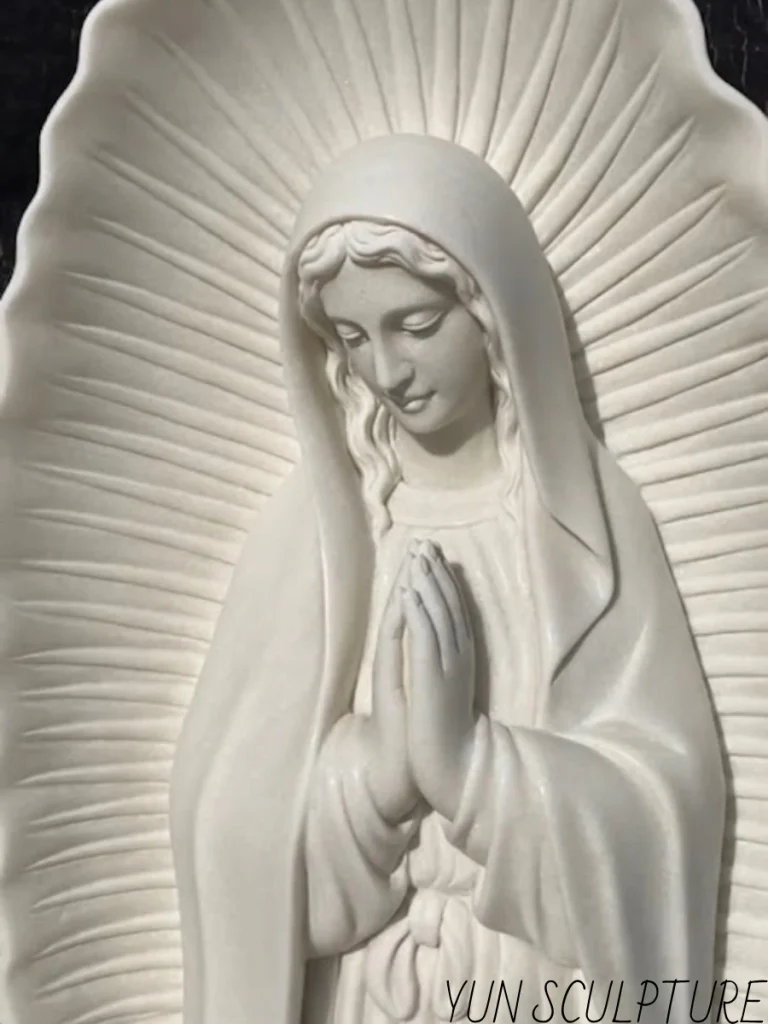
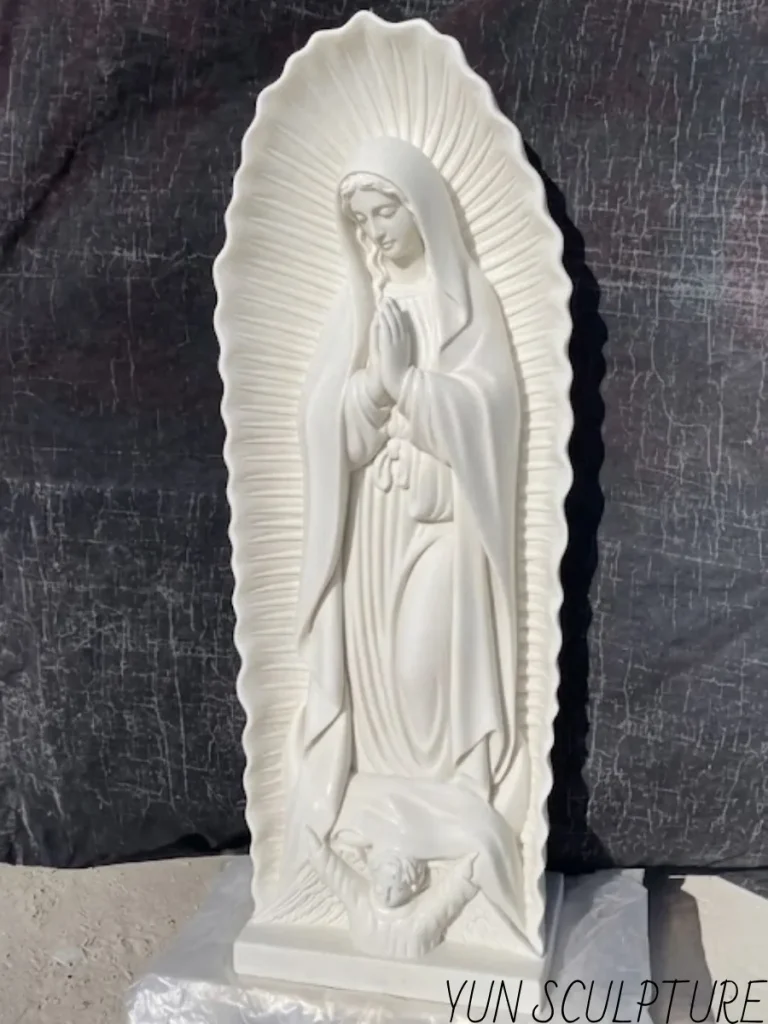
For stone statues, master craftsmen hand-carve the sculpture from solid natural stone blocks. Each detail is shaped manually, ensuring structural strength and artistic precision. The carving process respects both the material and the sacred symbolism.
This phase transforms the model into permanent sacred art.
Every step is guided by craftsmanship, engineering, and devotion.
4. Deliver
The final stage is safe and reliable delivery.
DDP (Delivered Duty Paid) door-to-door global shipping ensures that the statue arrives directly at the client’s location without logistical complications. Packaging, customs clearance, and transportation are handled professionally to protect the sculpture throughout the journey.
Installation guidance is also provided.
Foundation preparation, pedestal placement, and anchoring instructions ensure that the statue is installed safely and correctly upon arrival. The transition from factory to sacred space is carefully managed to preserve both structural stability and artistic integrity.
The statue moves from workshop to sanctuary, ready to serve its spiritual purpose.
Commissioning a custom Our Lady of Guadalupe statue is not simply a purchase.
It is a carefully guided journey—from vision to clay, from material to monument, from workshop to sacred ground—ensuring that the final sculpture stands with dignity, strength, and enduring faith.
Frequently Asked Questions (FAQ)
Q: What is the meaning of the Our Lady of Guadalupe statue?
The Our Lady of Guadalupe statue represents the Queen of the Americas and the miraculous 1531 apparition to Saint Juan Diego on Tepeyac Hill. It symbolizes maternal protection, compassion, and divine intercession for all believers.
Every visual element carries theological significance, from the stars on her mantle to the crescent moon beneath her feet and the angel supporting her robe. These details form a sacred visual language that communicates mercy, humility, and heavenly authority.
For a deeper understanding of the our lady of guadalupe statue meaning, the Symbolism section above explains each element in detail and shows how theology is expressed through sculpture.
The statue ultimately serves as a visible reminder of faith, protection, and spiritual presence in daily life.
Q: Where can I buy a large Our Lady of Guadalupe outdoor statue?
Many buyers begin by searching where to buy or looking for a statue near me, hoping to find a reliable supplier quickly.
Local religious stores and garden centers typically offer mass-produced resin statues in limited sizes. These products are designed for short-term decorative use and often lack the durability, material quality, and theological accuracy required for permanent outdoor placement.
For a large Our Lady of Guadalupe outdoor statue, the recommended approach is to commission directly from a professional sculpture foundry or manufacturer. Working factory-direct ensures control over size, material, and craftsmanship while avoiding high gallery markups and limited retail options.
A custom commission through a professional studio like Yun Sculpture provides museum-quality natural stone or bronze, engineered for long-term outdoor installation and spiritual dignity.
This approach ensures that the statue becomes a lasting sacred landmark rather than a temporary decorative object.
Q: What sizes are available for outdoor placement?
Outdoor Guadalupe statues can be created in a wide range of sizes depending on the intended environment and spiritual purpose.
Common options include:
24-inch statues for private gardens and personal prayer spaces
36-inch statues for home courtyards and small shrines
5-foot life-size statues for parish courtyards and memorial gardens
Monumental landmark statues for pilgrimage parks and public religious spaces
Each size creates a different spiritual and visual impact.
Smaller statues invite quiet personal devotion, while larger statues serve as community gathering points and architectural focal elements. Monumental installations create regional landmarks that guide pilgrims and visitors toward sacred spaces.
Custom production allows complete flexibility, ensuring the statue fits the environment perfectly and integrates naturally with surrounding architecture and landscape.
Q: What material is best for an outdoor Our Lady of Guadalupe statue?
For permanent outdoor placement, only two materials consistently provide long-term durability and structural stability: solid foundry bronze and natural stone such as marble or granite.
Bronze offers exceptional strength, resistance to corrosion, and the ability to capture fine sculptural details. Its protective patina develops naturally over time, enhancing both durability and visual character.
Natural stone provides timeless beauty, weather resistance, and structural stability that can last for generations. It harmonizes naturally with gardens, courtyards, and religious landscapes while maintaining a calm and sacred presence.
Resin or cast stone alternatives may appear affordable initially, but they are vulnerable to cracking, fading, and weather damage.
Choosing bronze or natural stone ensures that the statue remains stable, dignified, and spiritually meaningful for decades of outdoor exposure.
Q: Is it true that Our Lady of Guadalupe statues have been seen crying?
There have been many documented reports of statues appearing to be crying or weeping, including well-known stories shared in religious communities and media.
For many believers, these events are seen as signs of divine presence or spiritual messages. Such accounts often inspire prayer gatherings, renewed devotion, and deeper emotional connection to the image of Our Lady of Guadalupe.
From an objective standpoint, these phenomena remain matters of personal faith and interpretation.
What is undeniable is the profound emotional and spiritual bond that people feel toward these sacred images. A statue becomes more than a sculpture—it becomes a symbol of hope, protection, and maternal care.
Because of this deep connection, it is essential that an our lady of guadalupe outdoor statue be created from permanent and dignified materials, ensuring it can stand faithfully for generations and continue inspiring devotion.
Start Your Custom Commission Today
A sacred statue begins with a conversation.
If you are planning an our lady of guadalupe outdoor statue for a garden, parish courtyard, memorial site, or pilgrimage landmark, the first step is to define the vision—size, material, and placement. Once these elements are clear, a professional team can transform the concept into a permanent work of sacred art.
Path A
Tell us your size, material, and placement — we will prepare a free quote within 24 hours.
Clear communication allows us to recommend the appropriate structure, material, and installation plan for your project.
Path B
Browse our full religious sculpture catalog for inspiration and explore different styles, materials, and scale options before starting your custom commission.
A true large scale Guadalupe statue is never a standard product. It is a carefully designed custom commission, created to harmonize with its environment and serve as a lasting symbol of faith.
Such a sculpture does more than decorate a space.
It blesses the land, welcomes pilgrims, and stands quietly for generations as a sign of protection, mercy, and devotion.
– Elena Zhang & Donghui Zhang, Yun Sculpture