Get in touch with Yun-Sculpture company
Military Dog Memorials: How Sculpture Honors Dogs and Their Handlers

A military dog memorial can honor a single animal, a dog-and-handler partnership, the losses of a particular campaign, or generations of working-dog service. Those are different stories. The sculpture, dedication and setting need to work together to tell visitors which story they are encountering.
An alert dog may draw us closer, but its ears and posture cannot identify a unit, a mission or a name. A soldier beside it makes the partnership visible, but does not automatically explain whether the figure represents a real person. The historical meaning becomes clearer when we read the artwork alongside its inscription and the record kept by its artist or memorial institution.
The examples below show how established memorials approach that task. They also offer a practical way to look beyond a dramatic photograph: identify the people and animals being remembered, distinguish documented facts from visual interpretation, and understand what a public memorial adds to an ordinary dog sculpture.
Start with three questions: Who is being remembered? What history establishes their service? How do the sculpture, words and place make that history understandable?
What makes a dog sculpture a military memorial?
A memorial’s dedication establishes its purpose. A bronze German Shepherd in a garden might be decoration, a portrait of a companion, or a tribute to a working dog. The same recognizable breed can appear in all three contexts. Military meaning comes from a documented connection to armed-forces service and an explicit act of remembrance.
This matters because working-dog memorials do not all cover the same community. Military dogs serve with the armed forces; police K-9 memorials commemorate law-enforcement service. A broader service-dog memorial may include several kinds of work. Shared remembrance is possible, but visitors should be able to tell which groups the dedication includes.
For example, the Michigan War Dog Memorial’s stated mission includes the interment of retired military working dogs and retired service dogs. Its purpose extends beyond a single sculptural tribute. A site’s name alone therefore gives an incomplete picture of what it does.
A particular life, a representative figure, or a collective tribute?
A portrait memorial asks us to remember an identifiable animal or team. Distinctive markings, a familiar expression and an accurate name can be central to that purpose. A representative figure does different work: one sculpted dog stands for many animals whose individual appearances cannot all be included.
A collective tribute may use several figures, a list of names or a historical wall. It need not depict every dog to honor each one. The important question is whether visitors can understand the relationship between the visible figure and the wider dedication.
Keep three categories separate when reading a memorial: a named subject, a symbolic representative, and the people or animals covered by the dedication. They can overlap, but they are not interchangeable. A statue based on one dog can commemorate many; a soldier in period uniform can represent handlers without portraying one specific veteran.
Lackland: remembering military working dog teams across generations
The Military Working Dog Teams National Monument at Joint Base San Antonio–Lackland, Texas, was unveiled on October 28, 2013. The Airman Heritage Foundation’s account describes a bronze handler with four dog breeds: the Doberman Pinscher, German Shepherd, Labrador Retriever and Belgian Malinois. A granite history wall supplies context beyond the figures.
The base’s tenth-anniversary report identifies Vietnam veteran and dog handler John Burnam as the person who spearheaded the monument’s development. Sculptor Paula Slater documents her work on the bronze figures.
Why several breeds change the story
Seen as a composition, the group offers a useful contrast with an individual dog portrait. Different canine bodies remain recognizable, while their shared platform and accompanying handler bring them into one account of service. The viewer sees variety within a common purpose.
This is a reading of the composition, rather than a claim that each figure records a particular named dog. Nor should the four breeds be treated as an exhaustive list of every breed ever used by the military. They are the selected representatives in this work.
The history wall matters for the same reason. A sculpted group can establish presence and scale, but cannot carry an entire chronology through body language. Written interpretation gives visitors information that a silhouette cannot supply. Looking only at the dogs would leave out an important part of the monument.
The Not Forgotten Fountain adds a quieter encounter
Nearby, Slater’s Not Forgotten Fountain depicts a Vietnam-era handler pouring water from a canteen into his helmet for a German Shepherd to drink. The artist describes the composition as an expression of the bond between dog and handler.
The gesture is specific enough to make care visible. Instead of relying on a general symbol of courage, it gives the viewer a recognizable action: one partner attending to another’s needs. Our interpretation is that this domestic scale of attention complements the more formal main group. The two encounters allow a visitor to consider institutional service and personal attachment within the same memorial grounds.
What to notice: read the standing group, the historical wall and the fountain together. Each carries a different part of the story; no single photograph explains the whole monument.
Guam: one dog figure, a cemetery, and twenty-five remembered lives
At the Marine Corps War Dog Cemetery on Guam, Susan Bahary’s Always Faithful places a bronze Doberman at the center of remembrance. Bahary’s account of the work records its installation in 1994 and identifies the sculpted dog as Kurt. The University of Tennessee’s account of the memorial explains that the original includes the names of twenty-five war dogs killed during the liberation of Guam in 1944.
One visible dog does not mean only one dog is commemorated
This is an important distinction between the subject of a figure and the scope of a dedication. Kurt gives the viewer an identifiable presence. The names connect that presence to a wider group of losses. Reading both prevents the sculpture from being reduced to either an anonymous breed study or a memorial to only one animal.
The reclining pose also deserves careful attention. A low body can appear calm or watchful; it does not, by itself, tell us whether the dog is resting, grieving or guarding. Here the cemetery, recorded history and dedication guide the encounter. We should avoid presenting a guessed emotion as an established historical fact.
The difference is visible in ordinary dog sculptures too: an upright head on a reclining body can suggest attention without showing action. But that formal resemblance does not turn another reclining bronze dog into a copy of this memorial or give it the same history.
The surrounding graves are part of the memorial
The U.S. Navy’s account of a 2015 clean-up describes sailors maintaining the site and cleaning its headstones. It also records the wartime dogs’ duties as sentries, messengers and scouts, among other tasks. This supports a reading of the site as a place of continuing remembrance, rather than an isolated bronze object.
For a visitor, the individual headstones and the central figure offer different scales of attention. The sculpture can gather the scene into one visual focus; the graves invite attention to separate lives. This is our interpretation of how the setting works. It should be considered alongside the institution’s historical record, not substituted for it.
What to notice: distinguish the represented dog, the names honored by the monument and the cemetery surrounding it. All three contribute to the memorial’s meaning.
Knoxville: how the same sculpture gains a different setting
The University of Tennessee has a replica of Always Faithful outside its Veterinary Medical Center. The university library’s record dates its dedication to July 17, 1998. The veterinary college’s 2023 anniversary account confirms the relationship to the Guam memorial and discusses remembrance of the dogs and their wartime service.
This comparison shows why identical sculptural designs should not be treated as identical memorial sites. The original is encountered within a war-dog cemetery. The Knoxville version is encountered at a veterinary institution, where animal care, teaching and the human-animal relationship form part of the visitor’s surroundings.
The design’s historical reference remains important in both places. What changes is the context in which people meet it. A student walking into a veterinary building and a visitor moving between cemetery headstones arrive with different immediate concerns. The same dog figure can connect those concerns to a shared history.
When identifying a casting or replica, record the place and its own dedication date. A photograph taken in Knoxville should not be labeled as a photograph of the Guam cemetery. Likewise, the original installation date should not be used as though it were the date of every later casting.
What to notice: ask not only which sculpture is present, but why this institution has chosen to place it here. Location can broaden the conversation without changing the identity of the artwork.
New Jersey and Washington: two ways to make the handler visible
Holmdel: a kneeling soldier and dog in a collective tribute
The New Jersey Vietnam Veterans Memorial & Museum describes its US War Dogs Memorial as Bruce Lindsay’s bronze sculpture of a kneeling soldier and dog on a black granite base. It was dedicated on June 10, 2006, and honors the nation’s war dogs and handlers, past, present and future.
The American Legion’s memorial record adds a useful distinction: the scene directly represents Vietnam War dog teams while the dedication extends more broadly. The era shown and the community honored are therefore related, but not identical.
Our reading of the kneeling composition is that lowering the human figure brings the partners into a closer visual relationship. The soldier remains identifiable as a service member, but posture lets viewers attend to proximity as well as rank or uniform. This is one way a human figure can express partnership without requiring a battle scene.
Washington: a named person and dog carry a broader dedication
At the United States Navy Memorial, Service and Sacrifice by Susan Bahary features Petty Officer First Class John Douangdara and his dog Bart. The Navy Memorial’s exhibition information identifies them and records that both were lost in Afghanistan in 2011. The U.S. War Dogs Association records the work’s public unveiling on November 11, 2021, and its broader tribute to military working dog teams and the sea services.
A named partnership changes the viewer’s task. Instead of recognizing only a general type of soldier and dog, we are asked to remember particular lives. The broader dedication then connects that portrait to a wider community of service.
This creates two responsibilities for interpretation: preserve the identity of the subjects and explain the inclusive purpose of the memorial. Neither should erase the other. An accurate caption can identify John and Bart while still explaining that the work honors more than those two individuals.
What to notice: the New Jersey and Washington works both make human-canine partnership visible, but they do not make the same historical claim. Read the identity of the figures separately from the scope of each dedication.
How to read pose, breed, equipment and inscription
The following approach is an interpretive guide, not a universal dictionary of symbols. A seated dog does not always mean loyalty; a standing dog does not always mean readiness. The most useful reading combines visible choices with the memorial’s documented purpose.
Pose establishes an encounter, not a biography
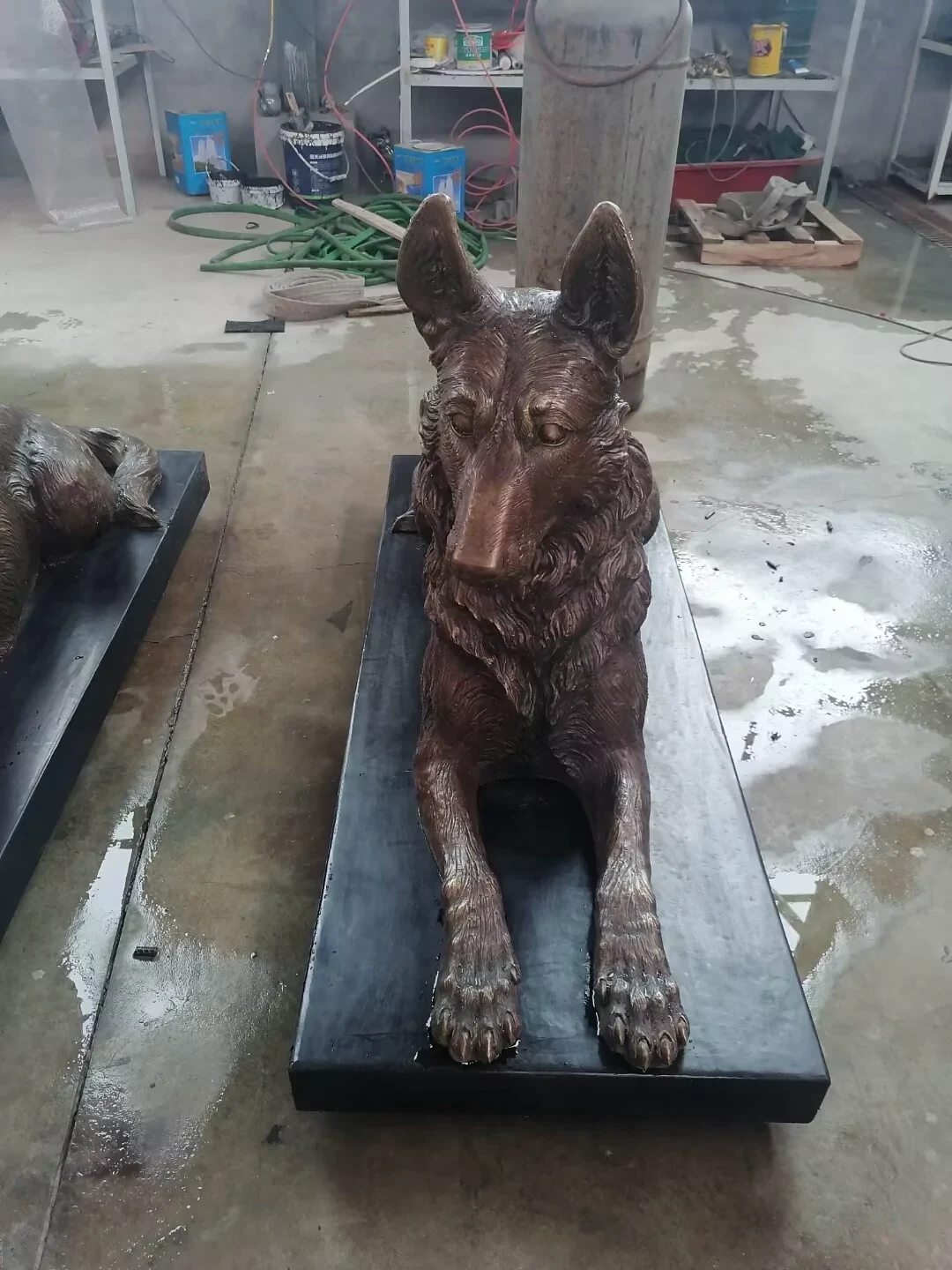
Look first at the relationship between the body and the head. A reclining dog with its head lifted presents a different silhouette from a sleeping dog with its chin down. A standing dog with a forward gaze creates another encounter. These are visible differences; the animal’s actual wartime actions need separate evidence.
Now consider the human figure, if there is one. Are the partners facing the same direction? Does the handler touch, guide or attend to the dog? Is one figure visually isolated from the other? These questions help describe what the artwork makes visible without inventing an event behind it.
A useful description starts with an observable action, such as a hand touching a shoulder or water being offered. It can then explain a possible emotional reading. Reversing that order often produces unsupported statements about what the dog felt or what the artist intended.
Breed recognition is only the beginning
A German Shepherd can help viewers recognize a familiar working-dog type. That recognition does not identify its actual task, dates of service or handler. The same breed can have many roles, and an ordinary portrait sculpture may have no military connection at all.
For a named animal, individual features matter more than a generic idea of the breed. A particular ear carriage, muzzle shape or body proportion can distinguish a portrait from an idealized example. For a historical representative, the period matters too: Slater’s account of sculpting the Lackland dogs specifically discusses the challenge of representing a Vietnam-era German Shepherd.
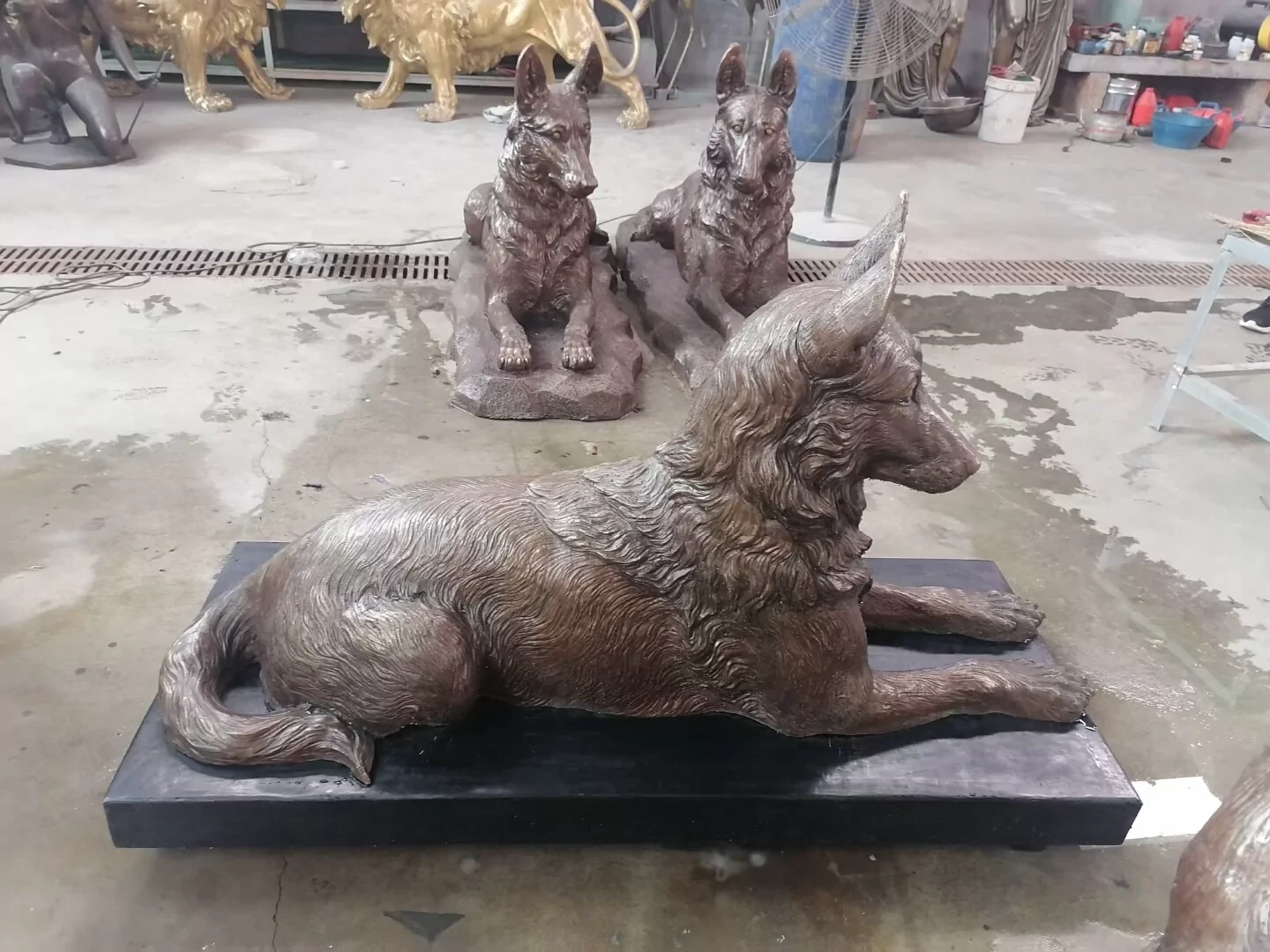
Different views answer different questions. The front may show expression and symmetry; the side clarifies posture; the back can reveal the tail and the relationship to the base. A compelling face should not distract from an unclear or inconsistent body.
Equipment needs a historical reason
A collar, harness, helmet, weapon or uniform can help place a scene in a particular context. Each addition also introduces a factual claim. When a sculpture represents a real team or era, the details should have a basis in reference material rather than being added simply to make the image look more military.
An unmarked concept can explore the relationship between figures before those details are settled. It cannot stand in for a historically verified depiction. In particular, an AI-generated uniform or harness should be treated as a visualization choice until someone with the relevant evidence has checked it.
The inscription connects recognition with remembrance
A dedication should help a newcomer understand who is included, what service is being acknowledged and whether the figures are named individuals or representatives. A short title alone may leave those questions unanswered.
Separate the visible dedication from longer background information. The first needs to be understandable at the monument; the second can explain a campaign, a program or the circumstances behind an individual team. A well-written interpretation panel can add this history without asking the sculpture to carry details that cannot be seen.
| Visible feature | What it can help communicate | What still needs documentary support |
|---|---|---|
| Several recognizable dog breeds | A collective tribute with visible variety | Why these breeds were selected and who the dedication includes |
| A named dog or handler | Attention to a particular life or partnership | Identity, service record and portrait references |
| A caring gesture between partners | Proximity, trust or mutual dependence | Whether it depicts a recorded moment or a representative scene |
| Period equipment | A possible historical setting | The accuracy of the item, configuration and period |
| Names, dates and unit references | The scope and specificity of remembrance | Correct spelling, attribution and the underlying records |
The memorial includes the place around the sculpture
A public memorial can operate as sculpture, written record and shared space at the same time. Those layers let it serve people who approach it with different levels of knowledge. One visitor may recognize the dog immediately; another may look for a name; another may come for a ceremony.
Consider the sequence of attention. What can be recognized from a distance? Where does the visitor stop to read? Can someone who has never heard of the subject find enough context to understand the dedication? These questions help evaluate the whole encounter rather than the attractiveness of the central figure alone.
A cemetery emphasizes individual remembrance. A training institution can connect past service with people entering the profession. A museum can place an artwork within a longer historical account. A veterinary setting can bring animal care into that account. These are possible contextual effects, not fixed meanings guaranteed by an address.
The useful distinction is between what the site actually provides and what a viewer infers from it. A maintained list of names is a historical resource. A contemplative atmosphere is an experience that may differ from visitor to visitor. Both matter, but they should be described honestly.
A public dedication also does not guarantee unrestricted public access. Lackland is an active military installation; the Airman Heritage Foundation publishes visitor arrangements. Before planning a visit, check the responsible institution’s current access information. Historical accounts and old travel reviews are useful context, but do not establish today’s admission conditions.
What craftsmanship and finish contribute to the story
The surface of a sculpture affects how a viewer encounters its details. A dark finish may let highlights concentrate on ears, brows and raised folds. A smoother surface may read as a broader shape; a strongly modeled surface may make fur or fabric more visible at close range. These are visual effects to examine in the actual work, rather than guarantees of quality.
For a handler-and-dog composition, compare the treatment of the two figures. Does the human face have the same level of attention as the dog’s face? Do hands read clearly where they touch the animal? Do the dog’s shoulders, legs and paws support a coherent posture? The partnership can become less convincing if one figure is carefully resolved and the other feels generic.
Finished photographs and process photographs answer different questions
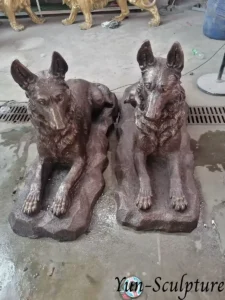
A finished view shows the final appearance in that light. A process photograph may show work that is still being joined, shaped or refined. Visible seams at an intermediate stage should not automatically be judged as the intended finished surface.
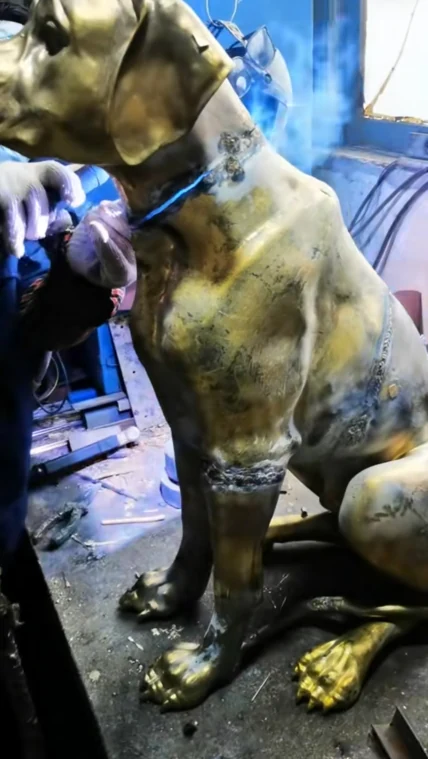
Conversely, a process photograph is not evidence that a particular finished monument came from that workshop. Linking the two requires a documented project relationship. This distinction helps readers assess portfolios without confusing a useful production reference with proof of authorship.
The same care applies to color. Photographs taken under different light can make a dark surface appear warmer, cooler or more reflective. Judge finish from more than one view when possible. A photograph alone cannot establish the alloy composition, coating system or maintenance history.
A concept image can explain composition, but cannot document history
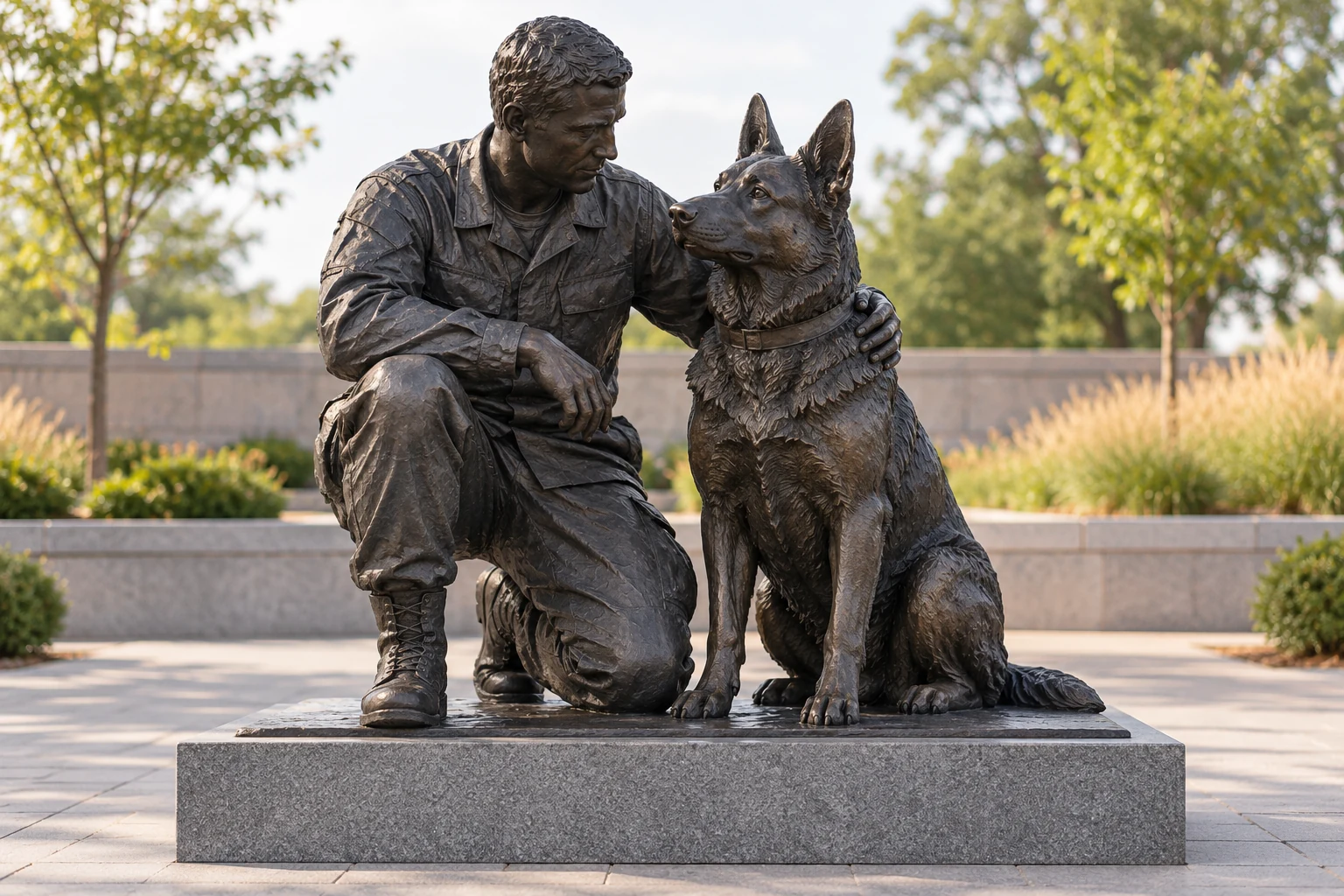
The opening illustration was generated to show a possible relationship between a kneeling handler and seated dog. Its dark bronze appearance was guided by a workshop portrait-sculpture reference. It is useful for discussing proximity, touch and overall form.
It cannot prove that this sculpture exists, that its uniform is historically correct, or that it represents a particular military team. Keeping that distinction visible lets a concept do its proper job: explain an idea while real photographs and reliable records establish what has actually been made or commemorated.
A practical way to compare military dog memorials
Instead of asking only which sculpture looks most impressive, compare the relationship between the subject, the dedication and the setting. A large group is not automatically more meaningful than one dog above a carefully preserved list of names. The relevant question is whether the chosen form makes the intended remembrance understandable.
| Example | Primary visual approach | Distinction worth keeping clear |
|---|---|---|
| Military Working Dog Teams National Monument, Lackland | One handler, four breed representatives, with a history wall and separate fountain | A collective program of remembrance; the selected breeds are not a complete census |
| Always Faithful, Guam | A Doberman figure within a war-dog cemetery | The represented dog and the wider group of remembered losses |
| Always Faithful, Knoxville | A replica at a veterinary institution | The artwork’s original history and this site’s separate dedication |
| US War Dogs Memorial, Holmdel | A kneeling soldier and dog | The era represented and the broader community honored |
| Service and Sacrifice, Washington | A named handler-and-dog partnership | The individual subjects and the inclusive dedication |
After looking at a work, try to describe it in two sentences. In the first, identify the documented subject and dedication. In the second, explain one visual choice and how you read it. If those sentences require guessed names, an invented mission or an unverified location, more evidence is needed.
This approach is also helpful for communities discussing remembrance. Begin with the history they want visitors to understand, then consider which visual relationship best expresses it. Production methods and ordering arrangements belong to a later, separate conversation. Yun Sculpture’s military and war memorial sculpture page covers that different purpose.
Frequently asked questions
Is every German Shepherd statue a military dog memorial?
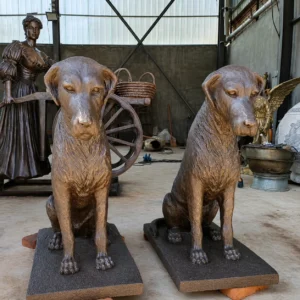
No. Breed and pose cannot establish military service. A statue becomes a military memorial through its documented subject, dedication and context. The factory photographs in this article illustrate sculptural choices; they are not presented as portraits of identified military dogs.
Does a military dog memorial need a human figure?
No. A dog figure, names and historical interpretation can carry a clear dedication without a sculpted handler. Including a person makes the partnership physically visible, but adds responsibility for identifying whether that figure is a real individual or a representative.
Can one dog statue honor many dogs?
Yes. The figure can provide a visual focus while the inscription explains the wider group being honored. Always check whether the represented dog is named and whether the dedication includes additional animals, handlers or generations of service.
Are military dog and police K-9 memorials the same?
They honor different service communities. A joint memorial can include both, but its wording should make that scope explicit. Do not infer the service branch or organization from the dog’s breed, a generic harness or the letters K-9 alone.
What is the difference between a military memorial and a pet memorial?
A military memorial commemorates armed-forces service. A personal pet memorial centers on an individual companion and the relationship with its family. These purposes can intersect when a working dog becomes a family companion, but each dedication should explain the actual story. For private remembrance, see Yun Sculpture’s pet memorial page.
Can AI images be used to illustrate a memorial idea?
Yes, with a clear concept-image caption. They can help discuss form, posture and the relationship between figures. They should not be used as photographs of historical monuments, evidence of completed projects or verified portrayals of named service members and dogs.
About the examples: the established memorials discussed here are credited historical works, not Yun Sculpture projects. Their factual descriptions are linked to memorial institutions, official military reporting and the artists’ own records. Interpretations of composition are identified as such.