Get in touch with Yun-Sculpture company
The Estate Icons: A Guide to Custom Cast Iron Horse and Eagle Statues for Classic Landscapes

The most enduring landscapes are not defined by planting schemes alone, but by the objects that hold time in place. Cast iron garden statues and iron wall sculptures function as these anchors. They establish permanence, giving an estate the quiet authority of something that has always belonged.
In this tradition, two forms rise above all others. The cast iron eagle statue and the cast iron horse statue are not simply decorative—they are estate icons. Each carries a symbolic language that transcends fashion, rooted in centuries of European and American estate design.
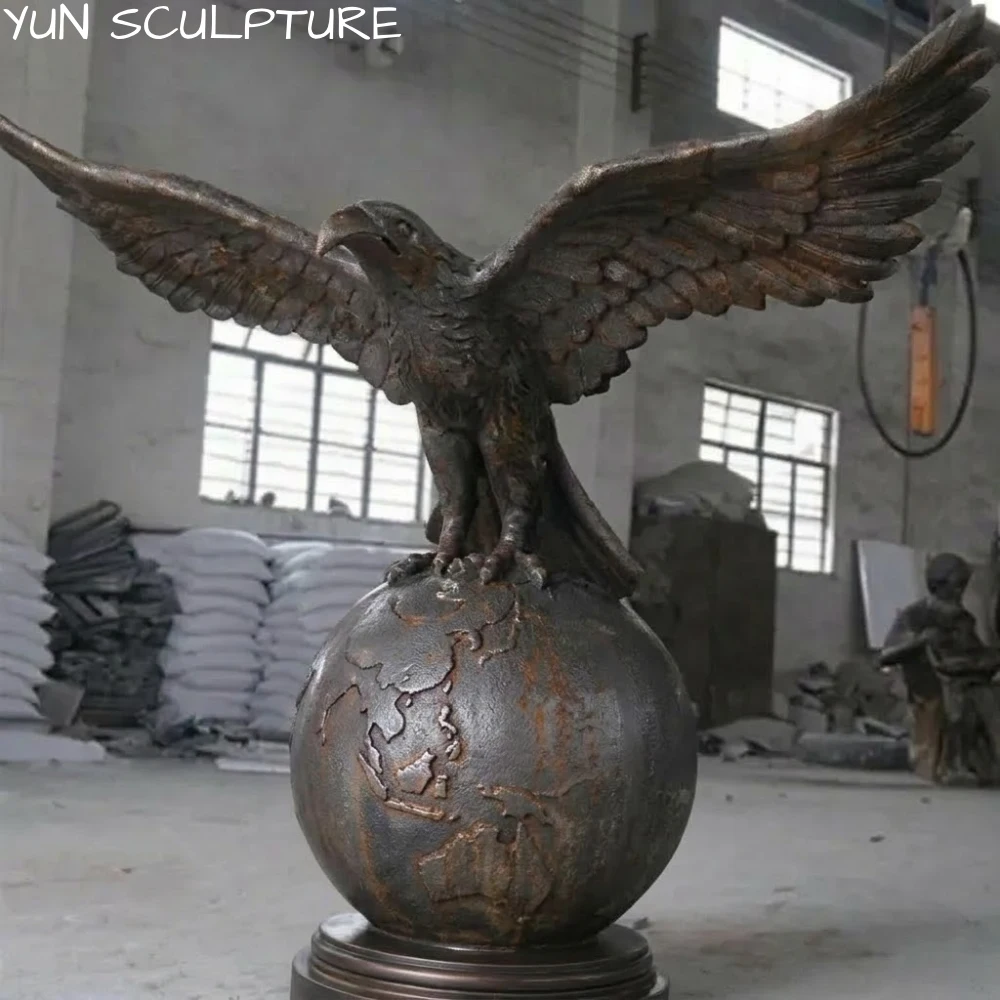
The eagle commands elevation. It embodies power, vision, and divine protection, often positioned to oversee entrances, gates, or axial vistas. Its wings, whether extended or folded, create a sense of vigilance that defines the boundary between the private domain and the outside world.
The horse, by contrast, introduces movement into stillness. A cast iron horse statue captures dynamism, spirit, and the vitality of lineage. Whether depicted rearing, striding, or at rest, it reflects the energy of life within the estate—strength, continuity, and presence.
Together, these forms create a dialogue. One watches. One moves. Both possess a majestic aura that cannot be replicated by lighter materials or temporary installations. They are not seasonal accents; they are declarations of identity.
Table of Contents
Table of Contents
The Metallurgical Foundation: Why Cast Iron?
Physical Superiority
The authority of cast iron begins at the microscopic level. Grey cast iron, the material most commonly used for sculptural casting, contains a carbon content around 4%. This high carbon presence forms a distinct crystalline structure, where graphite flakes are distributed throughout the iron matrix.
This internal structure defines its behavior. Cast iron is brittle by nature when subjected to tensile stress, meaning it does not bend or stretch easily. However, this characteristic is often misunderstood. In compressive conditions—where forces push inward rather than pull apart—it performs exceptionally well.
Its compressive strength can reach up to 150,000 psi. This makes it uniquely suited for monumental sculptures that bear their own weight over decades, even centuries. A properly designed cast iron eagle statue or cast iron horse statue is not dependent on internal frameworks or hidden supports. The material itself carries the load with quiet reliability.
For estate-scale installations, this matters. Sculptures positioned on plinths, flanking entrances, or integrated into masonry require stability under constant gravitational force. Cast iron delivers this with a density and solidity that lighter alloys cannot match.
There is also a psychological dimension. The weight of cast iron is perceptible, even without touch. It communicates permanence. It resists the ephemeral quality that undermines many contemporary materials.
Detail Capture
The second defining advantage of cast iron lies in its ability to capture detail with extraordinary fidelity. This is a direct result of the casting iron process itself.
The workflow begins with a full-scale clay model. This clay model is not an approximation; it is the final sculptural expression, developed with the precision of traditional Animalier art. Every anatomical nuance—muscle tension in a horse’s flank, the layered structure of an eagle’s feathers—is resolved at this stage.
From this model, a sand mold is created. The mold records every surface condition of the clay, from broad forms to the smallest textural transitions. Unlike fabrication methods that rely on cutting, welding, or assembly, casting preserves the artist’s hand without interruption.
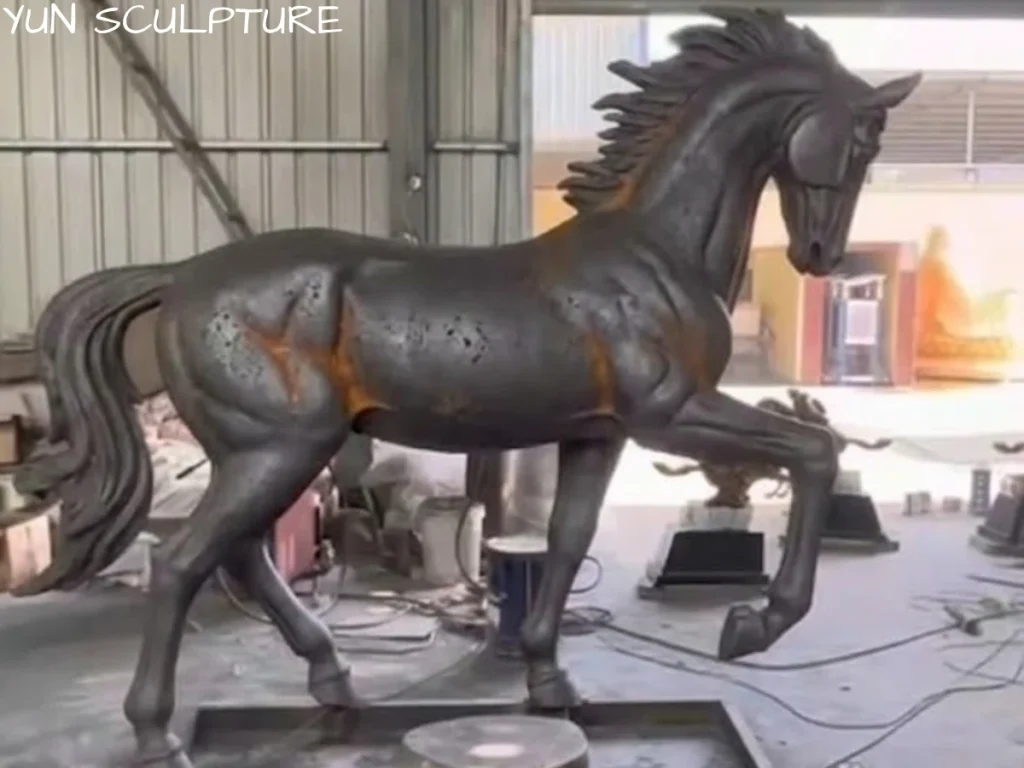
Molten iron, heated to a highly fluid state, is then poured into this mold. Its fluidity is critical. It allows the metal to flow into every recess, filling negative spaces and capturing undercuts that would be impossible with stiffer materials.
As the iron cools, it solidifies into the exact geometry of the mold. What emerges is not an interpretation, but a direct translation of the original sculpture. Fine details—vein lines, hair strands, feather barbs—are retained with remarkable clarity.
This is where cast iron distinguishes itself from materials like weathering steel. While weathering steel excels in planar forms and architectural surfaces, it cannot replicate the sculptural depth required for expressive figurative work. It is shaped through cutting and welding, not poured into form.
For estate icons, this distinction is decisive. A cast iron horse statue must convey anatomical truth and motion. A cast iron eagle statue must express tension, balance, and precision in every feather. These are not abstract gestures; they are highly resolved forms rooted in centuries of sculptural tradition.
Casting makes this possible. It bridges the gap between artistic intent and material reality, ensuring that what is conceived in clay is preserved in iron—unchanged, enduring, and exact.
From Clay to Eternity: The Collector-Grade Casting Process
The Process
The permanence of cast iron sculpture is not accidental. It is engineered through a sequence that respects both artistic authorship and metallurgical precision. Each stage is controlled, repeatable, and unforgiving of shortcuts.
- Art Modeling
The process begins with a full-scale, 1:1 model executed in clay or wax. This is where proportion, anatomy, and gesture are resolved with absolute clarity. For highly customized commissions, investment casting may be introduced to capture even finer detail, particularly in smaller or intricate components. The model is not a draft—it is the definitive form from which all subsequent steps derive. - Mold Engineering
From this model, a sand mold is constructed. This is a technical discipline in itself. Engineers must design precise parting lines—the boundaries where mold sections separate—so that the sculpture can be released without damaging critical details. Complex forms, such as outstretched wings or raised limbs, require multi-part molds with internal cores to preserve hollow sections and manage material thickness. - Melting & Pouring
Iron is heated until it becomes fully molten, reaching a state of high fluidity. At this stage, temperature control is critical. If the metal is too cool, it will not fully occupy the mold; too hot, and it risks structural inconsistency. The molten iron is then poured into the mold cavity in a continuous, controlled flow, minimizing turbulence and air entrapment. The goal is complete saturation of every detail encoded in the mold. - Precision Finishing
Once cooled, the sand mold is broken away, revealing the raw casting. This is not the final surface. Skilled technicians remove gating systems, grind connection points, and refine transitions. Any seams created by parting lines are carefully blended. Surface textures are then re-articulated by hand, restoring the fidelity of the original model. What emerges is a unified form—structurally integral, visually continuous, and ready for protection.
This sequence transforms a temporary clay model into a permanent object. The process is subtractive in error tolerance: any flaw introduced early will be preserved in iron. That is why collector-grade casting demands discipline at every stage.
Defending Against Time: The “Protection Protocol” for Outdoor Iron
Coating Battle
Cast iron’s strength must be paired with a robust surface defense. Exposure to oxygen, moisture, and ultraviolet radiation will degrade unprotected iron over time. The solution is not decorative—it is technical.
Two primary systems are used: powder coating and traditional liquid paint. Their performance difference is significant.
Powder coating is applied as a dry electrostatically charged powder, which adheres uniformly to the metal surface. The coated piece is then cured in an oven at approximately 400°F (204°C). During this process, the powder melts and chemically cross-links, forming a continuous, sealed shell.
This shell is not a surface layer in the conventional sense. It is a bonded barrier that resists moisture ingress, ultraviolet degradation, and mechanical abrasion. Properly applied, it delivers long-term rust prevention and corrosion resistance, maintaining integrity for 10 to 20 years or more—even under intense sun exposure and temperature variation.
Liquid paint, by contrast, is limited by its solvent-based chemistry. It forms a thinner film, more vulnerable to ultraviolet breakdown and micro-cracking. In high-exposure environments, fading and surface degradation can appear within one to two years. Once compromised, moisture penetrates quickly, initiating corrosion beneath the paint layer.
For estate installations, the choice is clear. Powder coating is not an upgrade—it is the baseline for durability.
Rust Management
Even with advanced coatings, vigilance is required. Early-stage corrosion presents in subtle ways. Two indicators are critical:
- Pitting: Small, localized cavities forming on the surface, often where the coating has been breached.
- Blistering: Raised bubbles beneath the coating, signaling trapped moisture and active oxidation.
These are not cosmetic defects. They are entry points for accelerated deterioration. Addressing them early—through localized sanding, sealing, and recoating—prevents structural compromise.
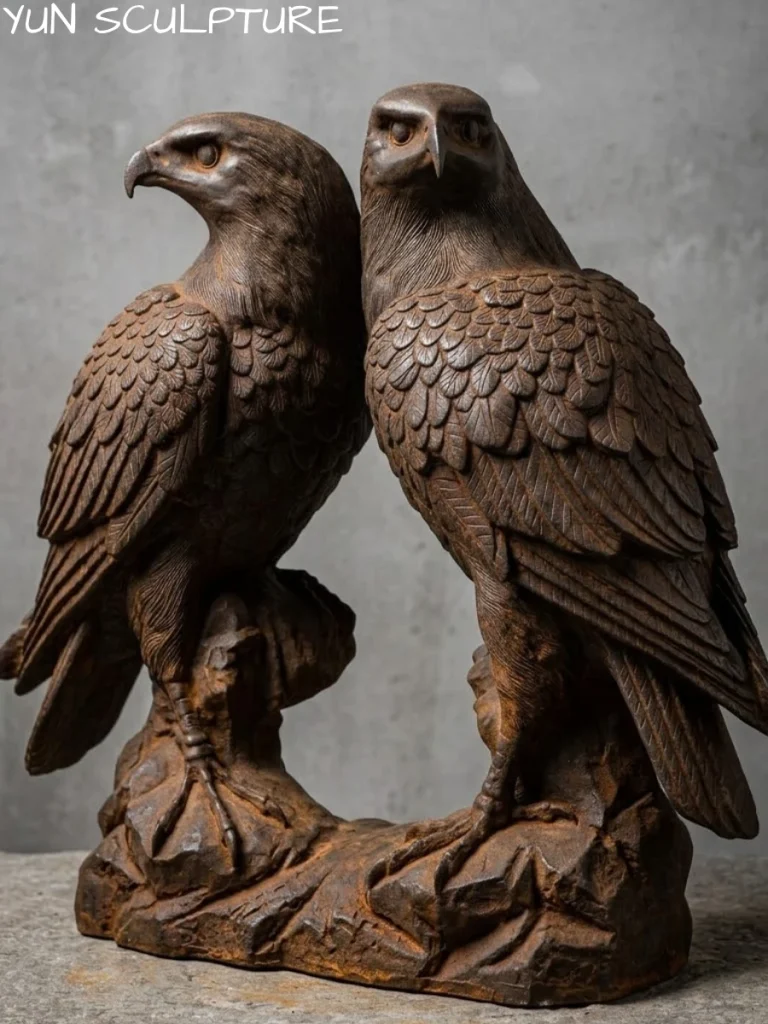
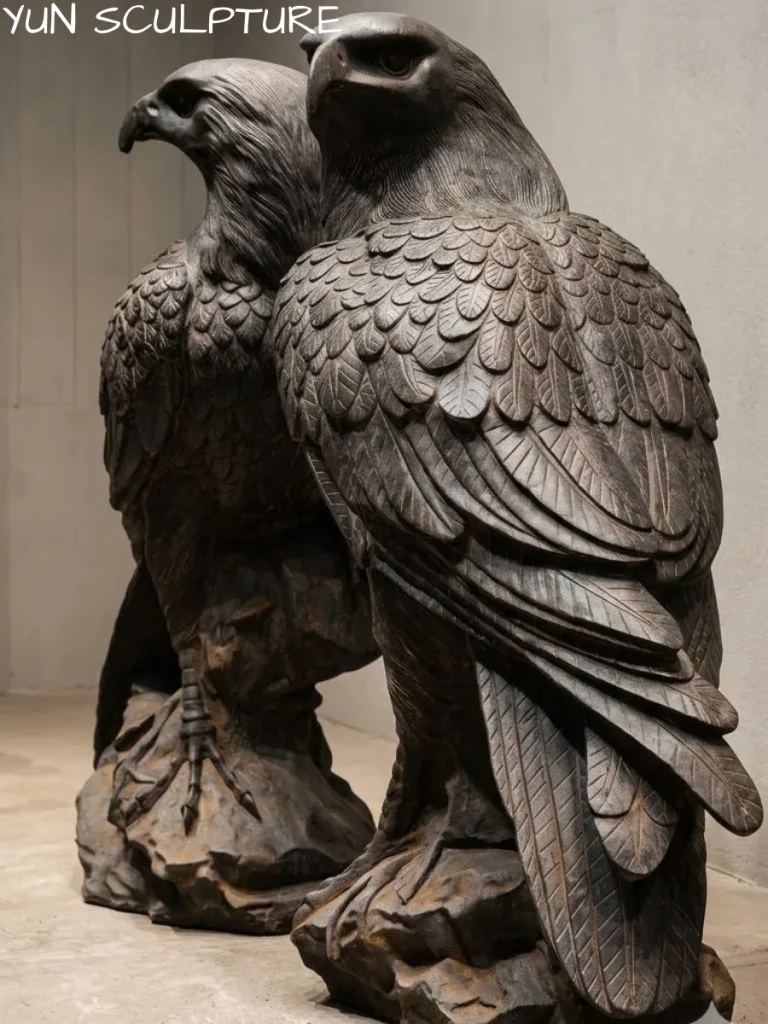
Special caution applies when working with antique cast iron statues. Many historic pieces were coated with paints containing high concentrations of lead, sometimes up to 75%. Before any restoration or surface preparation, a lead-based paint test is mandatory.
This is a safety requirement, not a recommendation. Disturbing lead-containing coatings without proper containment introduces serious health risks. Professional assessment ensures that restoration preserves both the artifact and the people handling it.
Coastal Warning
For estates located near the ocean, the environment changes the rules entirely. Salt-laden air accelerates corrosion at a chemical level, attacking even well-coated surfaces through microscopic imperfections.
In these conditions, a standard coating system is insufficient. A zinc-rich primer must be introduced as the first layer in the protection protocol. This primer functions as a sacrificial zinc anode. Instead of the iron oxidizing, the zinc layer corrodes preferentially, absorbing the electrochemical damage.
This is not theoretical. Without this layer, salt spray will penetrate coatings over time, initiating corrosion beneath the surface. With it, the lifespan of the sculpture is extended significantly, even in aggressive coastal climates.
For collectors and estate planners, this is a decisive specification. Location dictates protection strategy. In coastal zones, zinc is not optional—it is the front line of defense.
Gravity Engineering: Installation and Logistics of Large Sculptures
Packaging
The journey of a cast iron sculpture begins long before installation. Transport is a structural event, not a logistical afterthought. Improper handling introduces stress concentrations that can compromise even the most robust casting.
We specify what we call Structured Packaging. Each component is secured within a custom-built slat crate, designed to match the geometry of the sculpture. Internal supports are positioned at critical load-bearing نقاط—under torsos, along limbs, beneath wings—so that no unsupported span absorbs vibration during transit.
This is not about cushioning. It is about controlling force pathways. Every three-dimensional stress point must be stabilized, ensuring that dynamic loads encountered during shipping do not translate into micro-fractures or surface fatigue.
For large estate icons, packaging is an extension of engineering discipline. If the object arrives compromised, no installation protocol can correct it.
Foundation Engineering
Once on site, gravity becomes the primary design force. A cast iron sculpture does not “sit” on the ground—it transfers load continuously into the earth. This transfer must be calculated, controlled, and permanent.
The first step is determining the total static load. This includes not only the weight of the sculpture itself, but also any integrated elements—internal armatures, mounting plates, or adjacent architectural components. For composite installations, such as those incorporating water or mechanical systems, all additional mass must be included in the calculation.
This total load dictates the foundation design. A reinforced concrete foundation is mandatory for estate-scale sculptures. The purpose is not only to bear weight, but to distribute it evenly across the soil substrate, preventing differential settlement.
Uneven settling is the silent failure mode of outdoor sculpture. A slight tilt, introduced over time, disrupts alignment, stresses connection points, and ultimately compromises structural integrity. Once this process begins, correction is costly and invasive.
The foundation must therefore match the lifespan of the sculpture itself. Proper depth, steel reinforcement, and soil preparation are non-negotiable. In essence, the visible sculpture is only half the object—the rest is embedded below grade, unseen but essential.
Hoisting & Fixing
Positioning a large cast iron sculpture is a controlled operation requiring precision equipment and strict safety protocols. Cranes are typically employed, with lifting points pre-engineered into the sculpture or attached via certified rigging systems.
Balance is the governing principle. The sculpture must be lifted in a way that maintains equilibrium, preventing rotational forces that could damage protruding elements. This requires a clear understanding of the object’s center of gravity, established during fabrication.
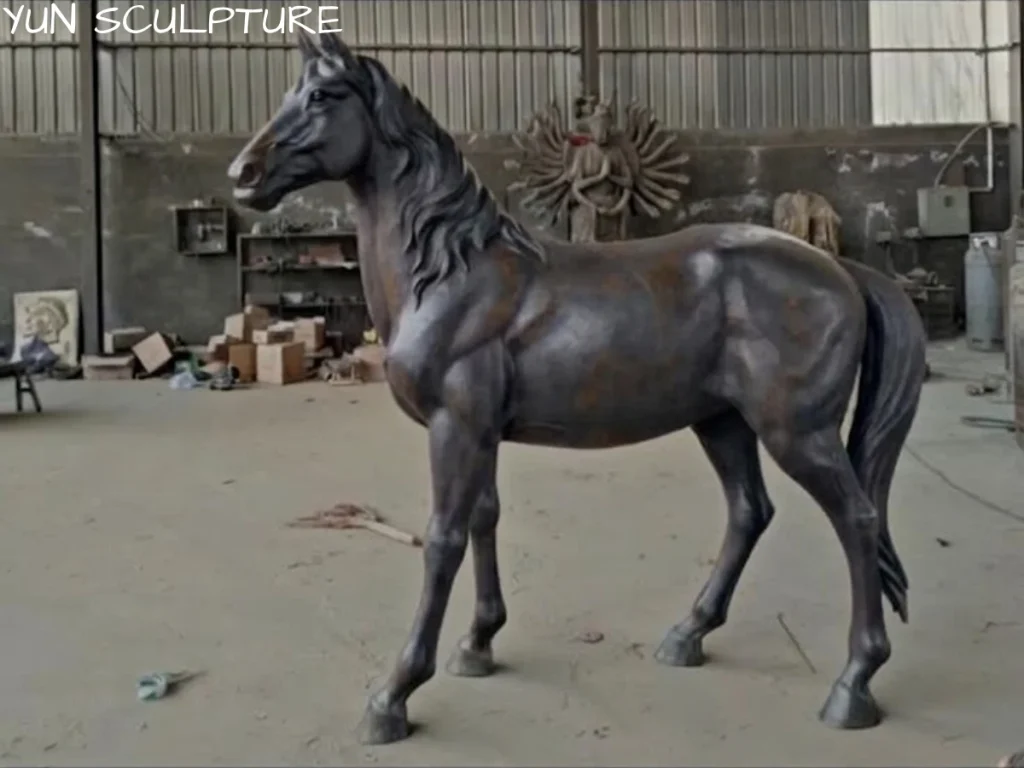
Once positioned, the sculpture is secured using structural fixings. These are not generic anchors. They are engineered connections—often stainless or galvanized steel—designed to transfer loads from the sculpture into the foundation without introducing stress concentrations.
Proper weight distribution is critical at this stage. Fixings must be aligned and tensioned so that no single point bears disproportionate force. When executed correctly, the sculpture becomes an integrated part of the site—resistant to wind, vibration, and long-term environmental stress.
Installation is not the final step. It is the moment where engineering, material, and landscape converge into a single, stable system.
Landscape Integration: Defining the Estate’s Visual Axis
Entrance Narrative
An estate reveals itself through sequence. The entrance is not a threshold; it is the opening statement. Cast iron eagle statues, placed symmetrically atop gate pillars, establish this narrative with clarity and authority.

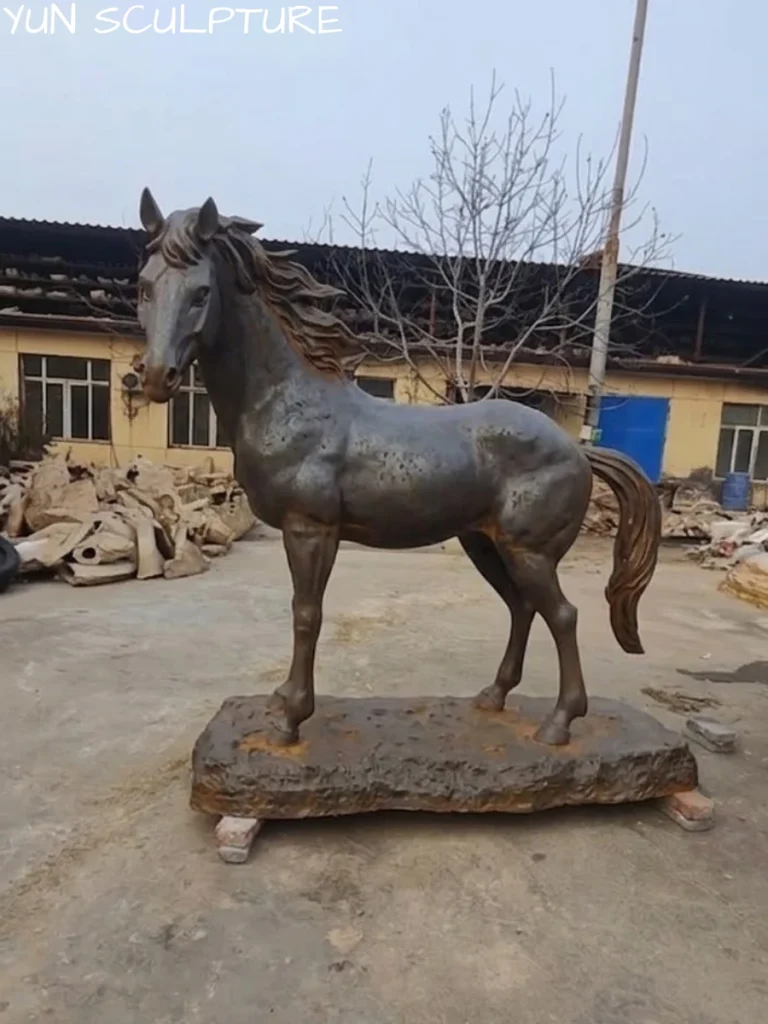
Their elevated position allows them to command both approach and departure. The symmetry reinforces order, while the form of the eagle introduces vigilance and protection. This is not decorative symmetry—it is psychological framing.
As visitors pass through the gate, they are no longer in neutral space. The presence of these forms signals entry into a defined domain, one governed by intention and continuity.
Axis Terminus
Every classical landscape is organized around an axis—a controlled line of sight that guides movement and perception. At the end of this axis, a focal point must exist. Without it, the space dissolves into ambiguity.
A cast iron horse statue serves this role with exceptional clarity. Positioned at the terminus—whether in an open paddock, a circular drive, or beyond a reflecting lawn—it draws the eye forward and anchors the entire composition.
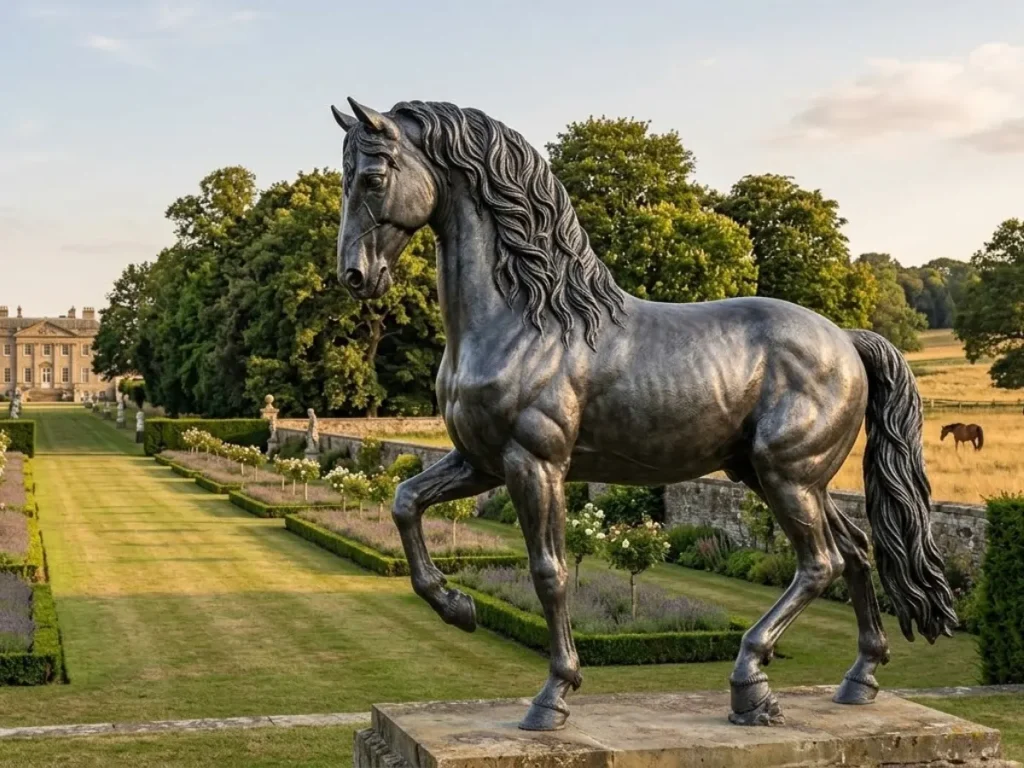
The horse introduces tension into the landscape. Even at rest, it suggests motion. This dynamic quality prevents the axis from feeling static or overly rigid. Instead, it becomes a corridor of energy, culminating in a form that embodies strength and continuity.
Scale is critical. The sculpture must be large enough to hold visual weight at distance, yet proportionate to its surroundings. When correctly placed, it does not compete with the landscape—it completes it.
Light & Shadow Management
Cast iron is a material that reveals itself through light. Its surface, though solid, responds to illumination with subtle variation—edges sharpen, textures deepen, silhouettes emerge.
Night lighting is therefore not an accessory. It is a second design layer. By controlling color temperature and الضوء direction, the sculpture’s presence can be transformed after sunset.
Warm lighting emphasizes mass and solidity, enhancing the sculpture’s connection to the earth. Cooler tones sharpen edges, highlighting anatomical detail and surface articulation. The choice depends on the desired atmosphere—intimate or monumental.
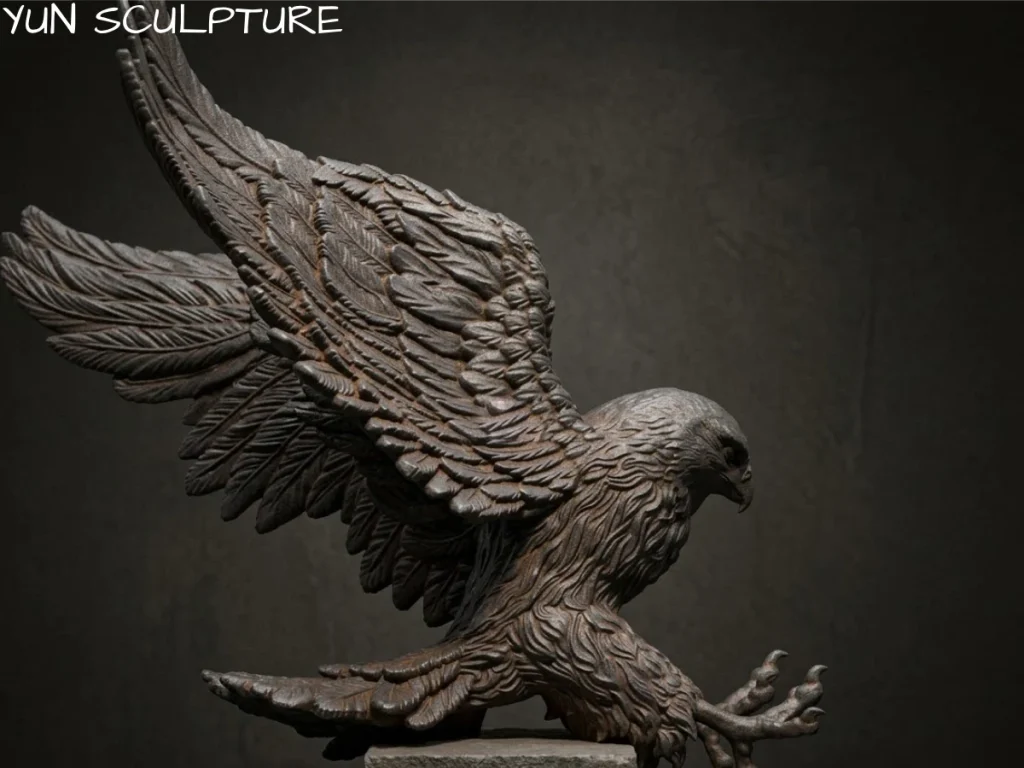
Equally important is shadow. Strategic placement of الضوء creates contrast, allowing negative space to define form. The gap between a horse’s legs, the underside of an eagle’s wing—these become active elements in the composition.
When properly managed, light does not simply illuminate the sculpture. It redefines it, extending its presence into the surrounding space and ensuring that its impact endures, day and night.
10 Core Questions Answered (FAQ)
What is the fundamental difference in maintenance between cast iron and stainless steel sculptures?
Stainless steel protects itself through a self-passivating chromium oxide film. This invisible layer regenerates when exposed to oxygen, giving the material its well-known resistance to corrosion.
Cast iron operates under a completely different principle. It is a non-self-protecting metal and must rely on external systems. High-standard powder coating or professional sealants are essential to block oxygen and moisture. Without this barrier, corrosion will initiate and progress.
My estate is by the sea. Will cast iron garden statues rust quickly?
Coastal environments introduce a high concentration of salt in the air. Salt accelerates electrochemical reactions on metal surfaces, making it the primary threat to cast iron installations.
For seaside estates, enhanced protection is required. A marine-grade system—specifically a zinc-rich primer beneath the topcoat—is strongly recommended. In addition, quarterly rinsing with fresh water helps remove salt deposits and extend coating life.
Why is the surface of my sculpture peeling off like “scars”?
This condition is typically the result of coating failure. The most common cause is applying new paint over an unstable or incompatible existing layer.
Moisture intrusion is another factor. When water penetrates beneath the coating and freezes, it expands, forcing the surface layer to separate. This creates the characteristic “peeling” or blistered appearance.
The solution is not superficial repair. It requires complete removal of the compromised coating—usually through sandblasting—followed by a full reapplication of a proper powder coating system.
Does the “brittleness” of cast iron mean it breaks easily?
Brittleness in cast iron refers specifically to its behavior under tensile or impact stress. It does not deform like steel when subjected to sudden force.
However, under compressive conditions, cast iron is exceptionally strong. Its compressive strength makes it ideal for supporting its own mass over long periods without deformation.
The key consideration is impact. In extreme events, such as a vehicle collision, cast iron is more likely to fracture than bend. For this reason, sculptures should be positioned away from active traffic zones.
How can I tell if I bought real cast iron and not a plastic fake?
There are several practical verification methods. The simplest is the magnet test. Real cast iron will strongly attract a magnet, while plastic replicas will not.
Weight is another indicator. Cast iron has significant mass. Even smaller pieces feel dense and substantial compared to imitations.
Sound also reveals the truth. When lightly tapped, cast iron produces a clear, crisp metallic resonance. Plastic materials produce a dull, muted response.
Can I install a large cast iron horse statue on a rooftop terrace?
Installation on elevated structures requires careful evaluation. A structural assessment is mandatory before proceeding.
Rooftop terraces are not typically designed for concentrated loads of this magnitude. To make installation viable, shock-absorbing pads and weight distribution plates are required. These elements disperse the static load across a broader surface, reducing stress on the structure.
Without proper engineering validation, installation should not proceed.
Can cast iron rust naturally like Corten weathering steel?
While cast iron will rust when exposed to the elements, this process is fundamentally different from weathering steel.
Weathering steel forms a stable, protective patina that slows further corrosion. Cast iron does not. Its rusting process is uncontrolled and progressive, leading to ongoing material loss.
For this reason, natural rusting is not recommended. If an aged appearance is desired, an “antique oxidation” faux finish can be applied. This achieves the visual effect without compromising structural integrity.
Do I need to cover the sculpture with a plastic tarp in winter?
Covering cast iron sculptures with plastic tarps is not advisable. Plastic traps moisture and condensation, creating an environment that accelerates corrosion rather than preventing it.
A properly applied powder coating is designed to withstand extreme cold without degradation. The more important factor is site drainage. The base of the sculpture must not allow standing water to accumulate, particularly during freeze-thaw cycles.
Can I commission a 1:1 custom sculpture based on photos of my own horse?
Yes, this is a well-established process. Using a combination of 3D modeling and traditional sculptural techniques, a highly accurate representation can be developed from photographic references.Once the model is approved, it is translated into a full-scale form and cast using established methods, including investment casting where appropriate. The result is a personalized sculpture that retains both anatomical accuracy and artistic expression.
How deep does the installation foundation for a cast iron sculpture need to be?
Foundation depth is determined by two primary factors: the local frost line and the total weight of the sculpture.
In most cases, the foundation must extend below the frost line to prevent movement caused by freeze-thaw cycles. This ensures long-term stability.
The structure typically consists of a reinforced concrete pad with pre-embedded stainless steel anchors. These anchors integrate with the sculpture’s structural fixings, creating a secure and permanent connection between object and ground.
A cast iron eagle or horse is not an accessory. It is a declaration—of permanence, of lineage, of intent. It stands through seasons, through generations, holding its position as both object and guardian.
In the language of landscape, these forms do not speak loudly. They endure. And in that endurance, they define the estate itself.
– Elena Zhang & Donghui Zhang, Yun Sculpture