Get in touch with Yun-Sculpture company
A long silhouette. A familiar companion.
Custom Dachshund Statues in Bronze
Bring your Dachshund’s unmistakable outline into the garden: the long body, short legs, dropped ears and face you recognise. Choose a design direction or commission a portrait of your own dog.
Explore smooth-haired, longhaired and wirehaired bronze designs, with separately developed white marble and simplified stainless steel options. We help you agree the pose, full footprint and surface before production.
Discuss your Dachshund on WhatsApp ↗Start with your favourite image, a photograph of your dog or the place where you want the sculpture. We can refine the size and material together.
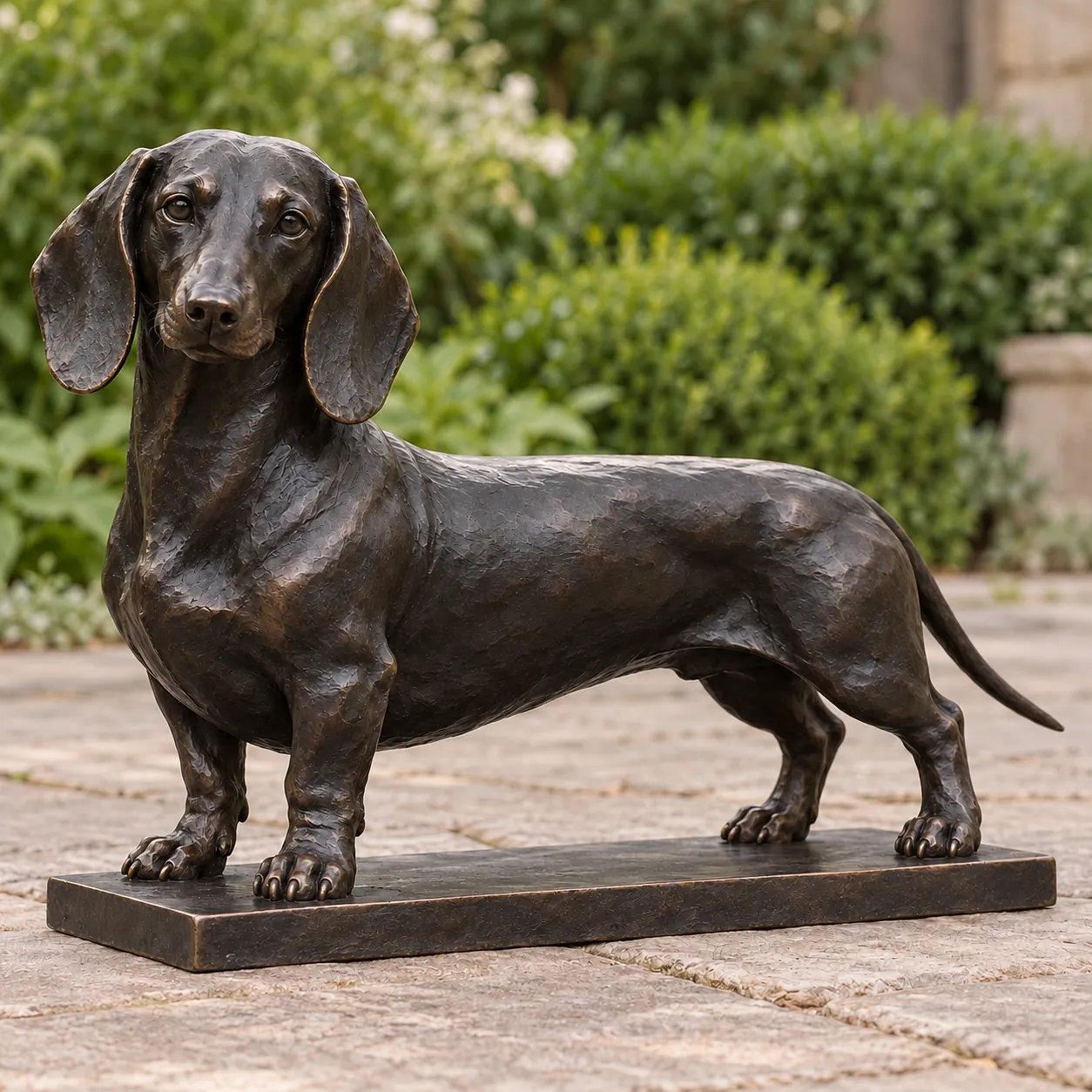
Three coat directionsLength and height confirmed togetherYour own AI design can start the commission
Choose the outline you love
Dachshund sculpture design ideas
A standing dog makes the long body especially clear. A seated companion brings its face higher; a reclining one preserves a familiar resting moment. Compare the posture and coat before choosing the final surface.
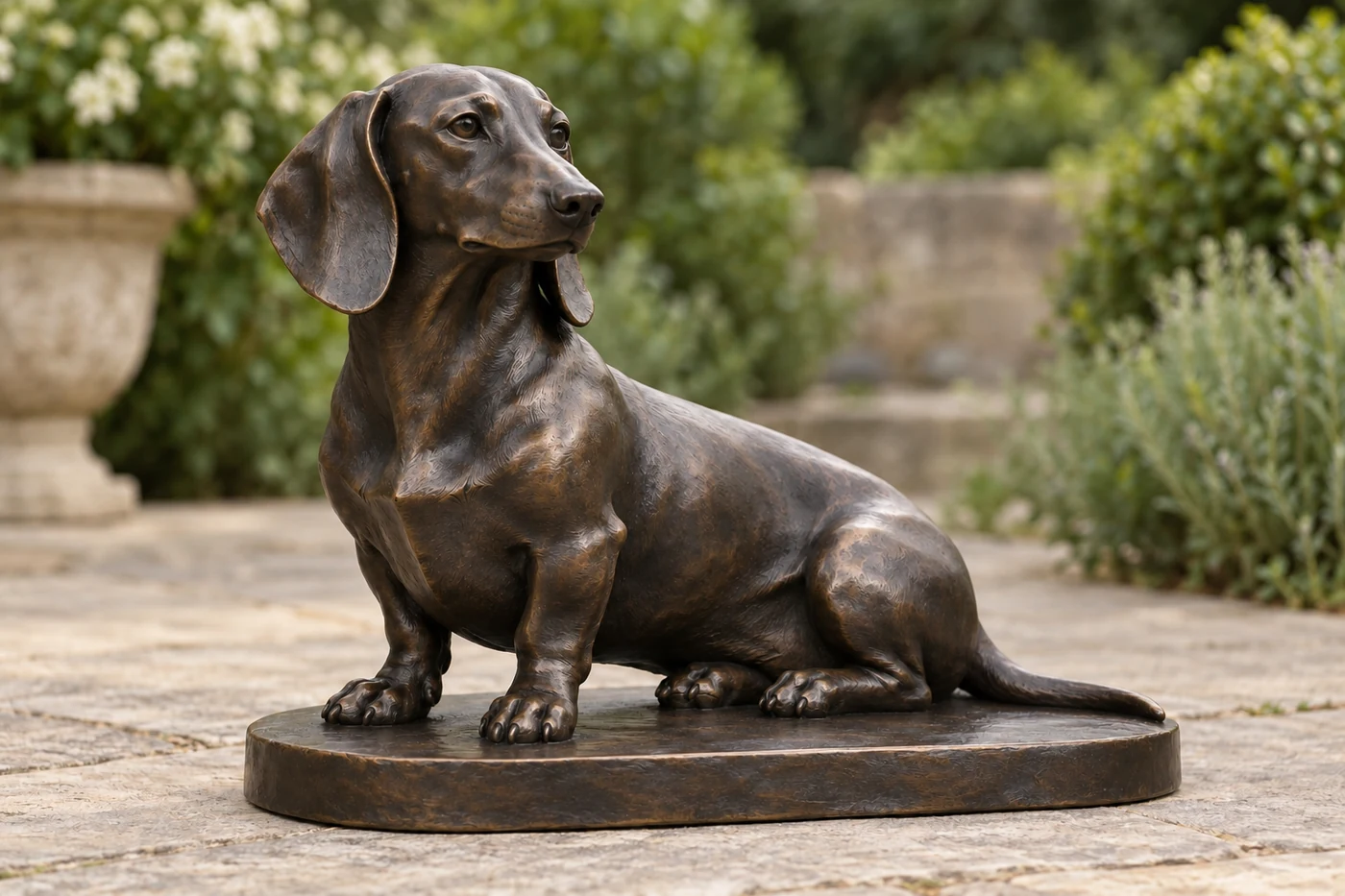
Seated warm bronze
A seated pose brings the face higher. Include the tail beside the body when you compare the width and choose the surface separately.
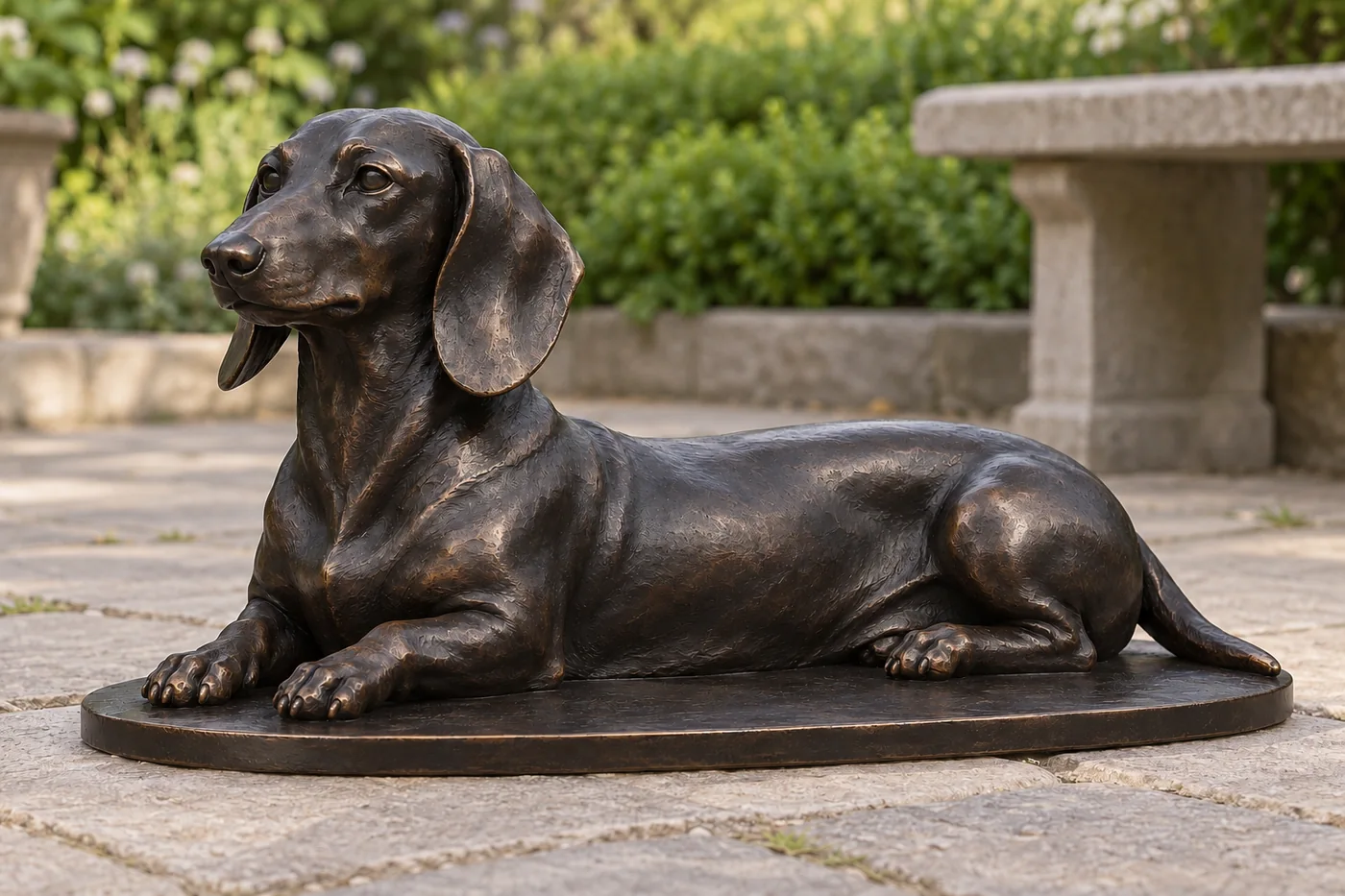
Reclining dark bronze
A quiet resting companion suits a close viewing position. Check the face from your seat and the full length against surrounding planting.
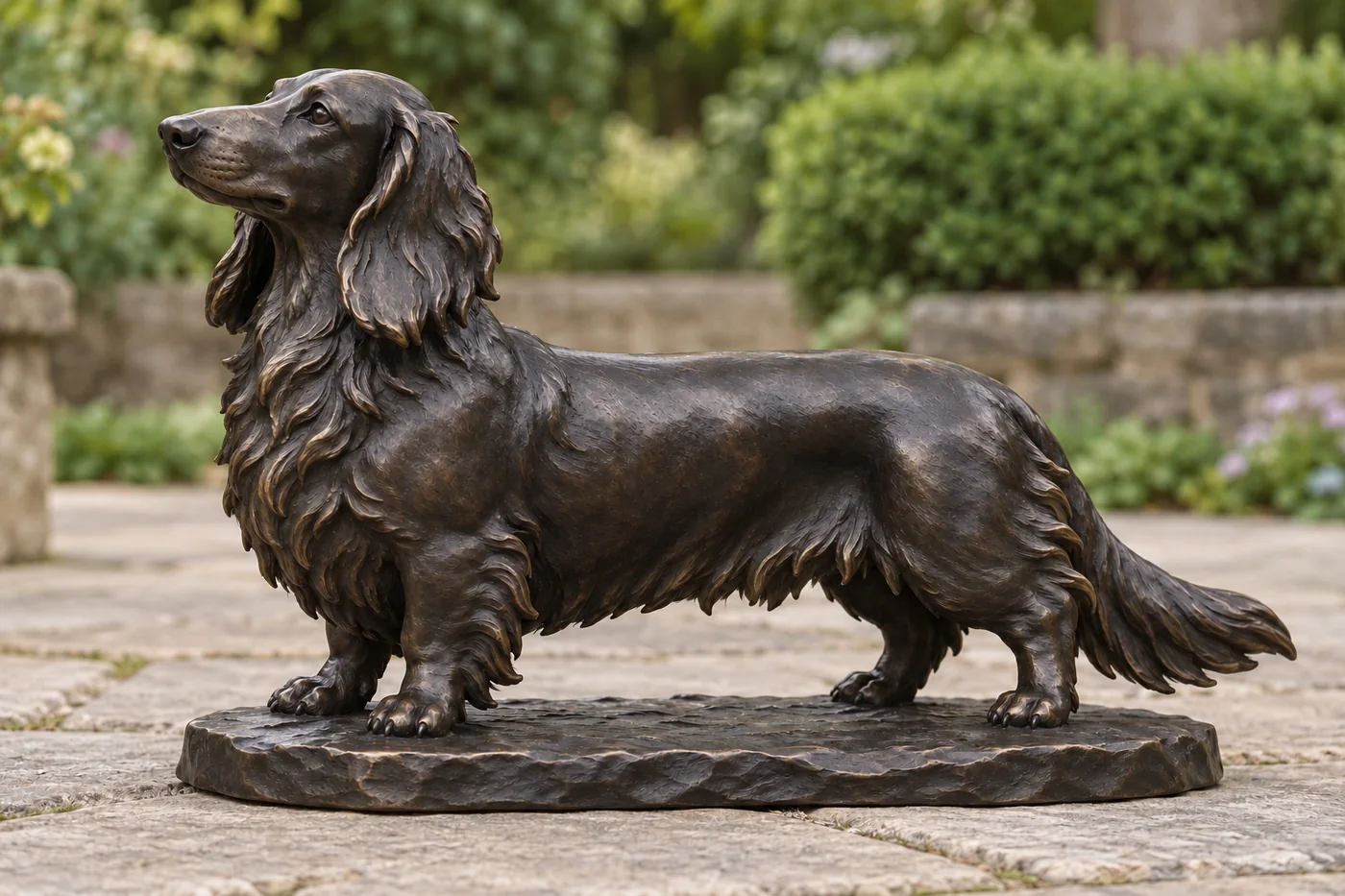
Longhaired standing bronze
The ears, underside and tail use fuller grouped relief. Review the short legs and long torso so the coat does not hide the familiar silhouette.
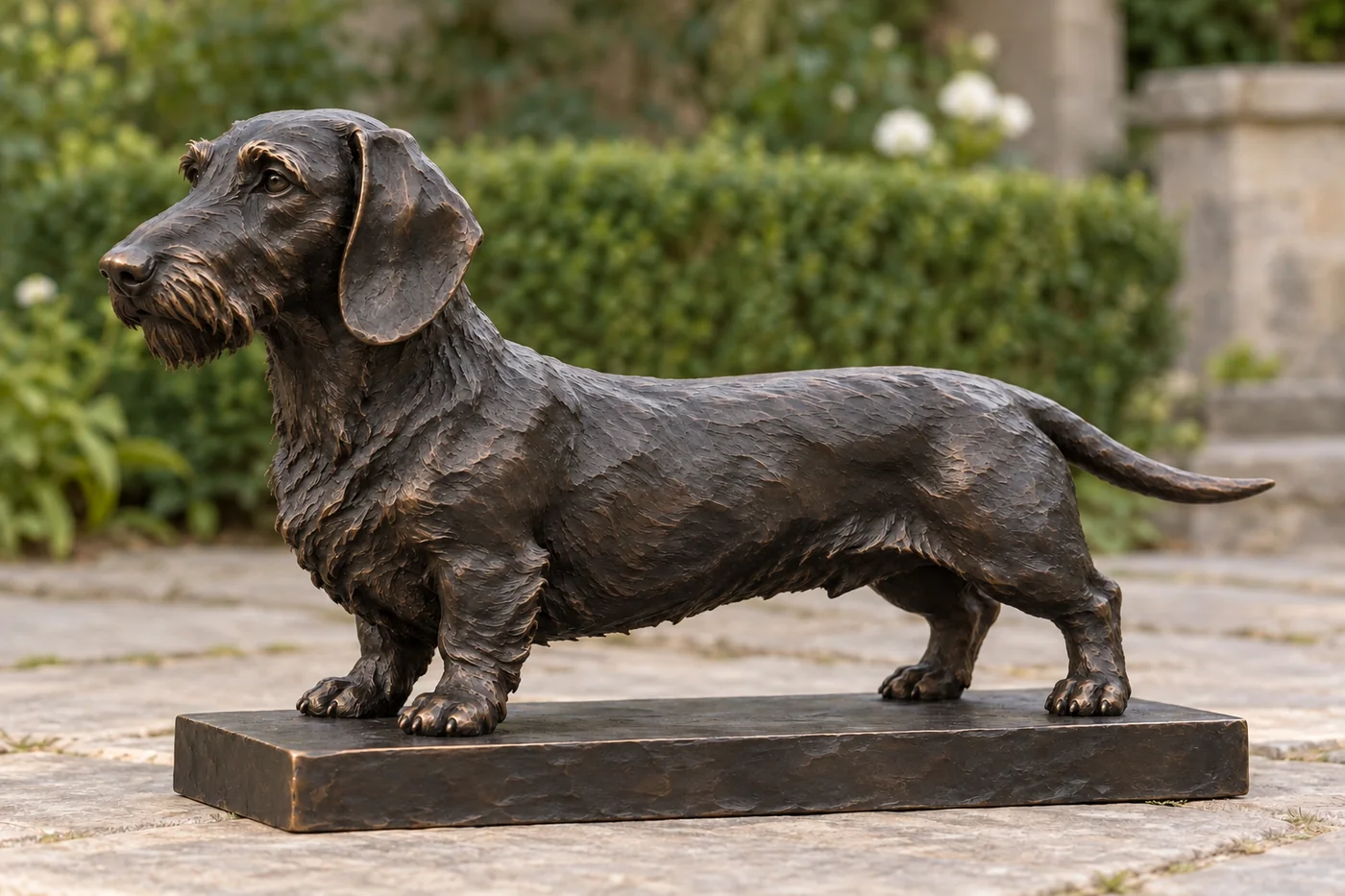
Wirehaired standing bronze
The muzzle furnishings give this direction its character. Confirm the beard and brows with your dog's photographs before increasing coat texture.
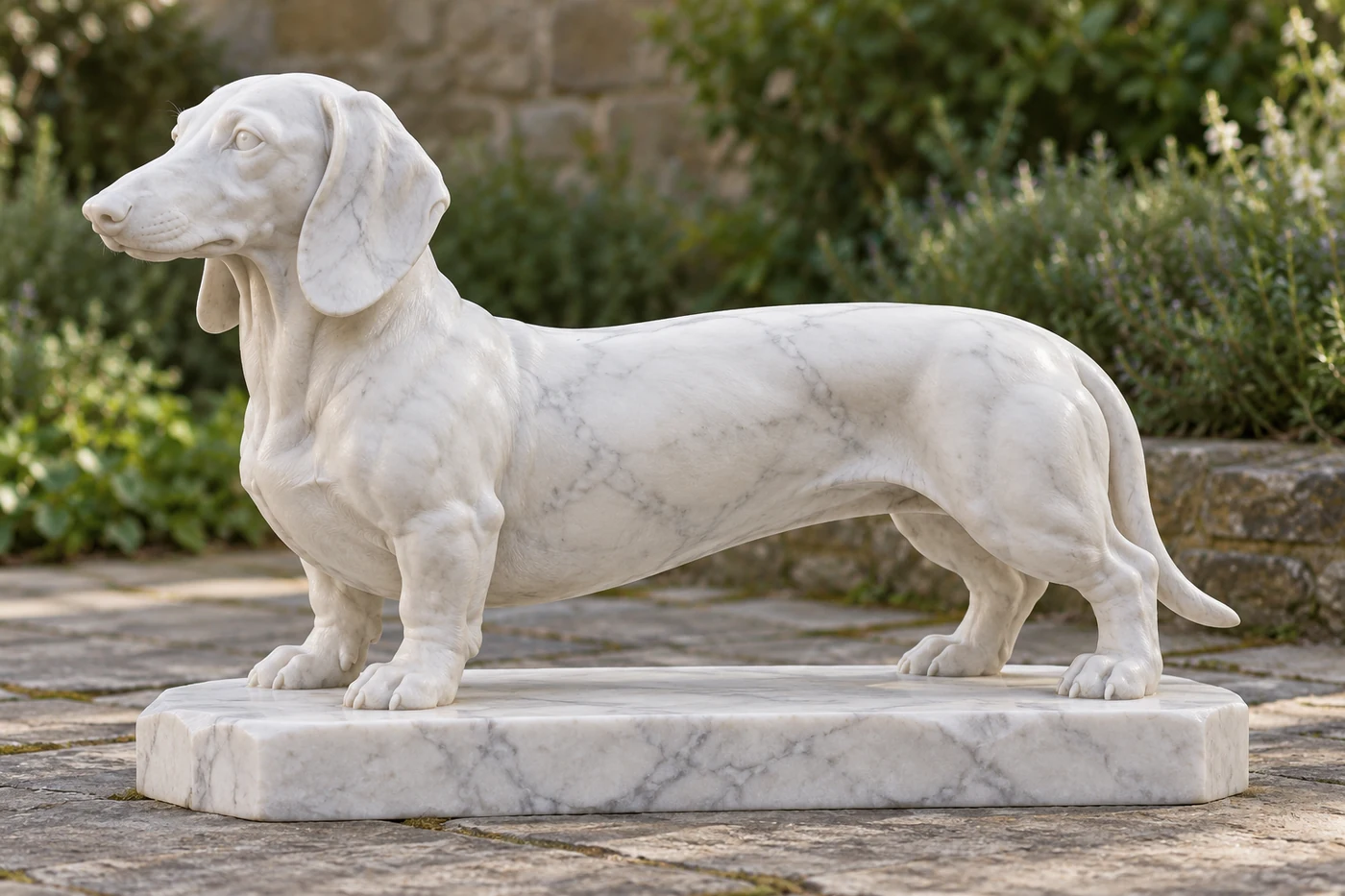
White marble interpretation
A stone design uses supported ears, tail and leg transitions. Agree the block, carving treatment and base rather than copying every bronze detail.
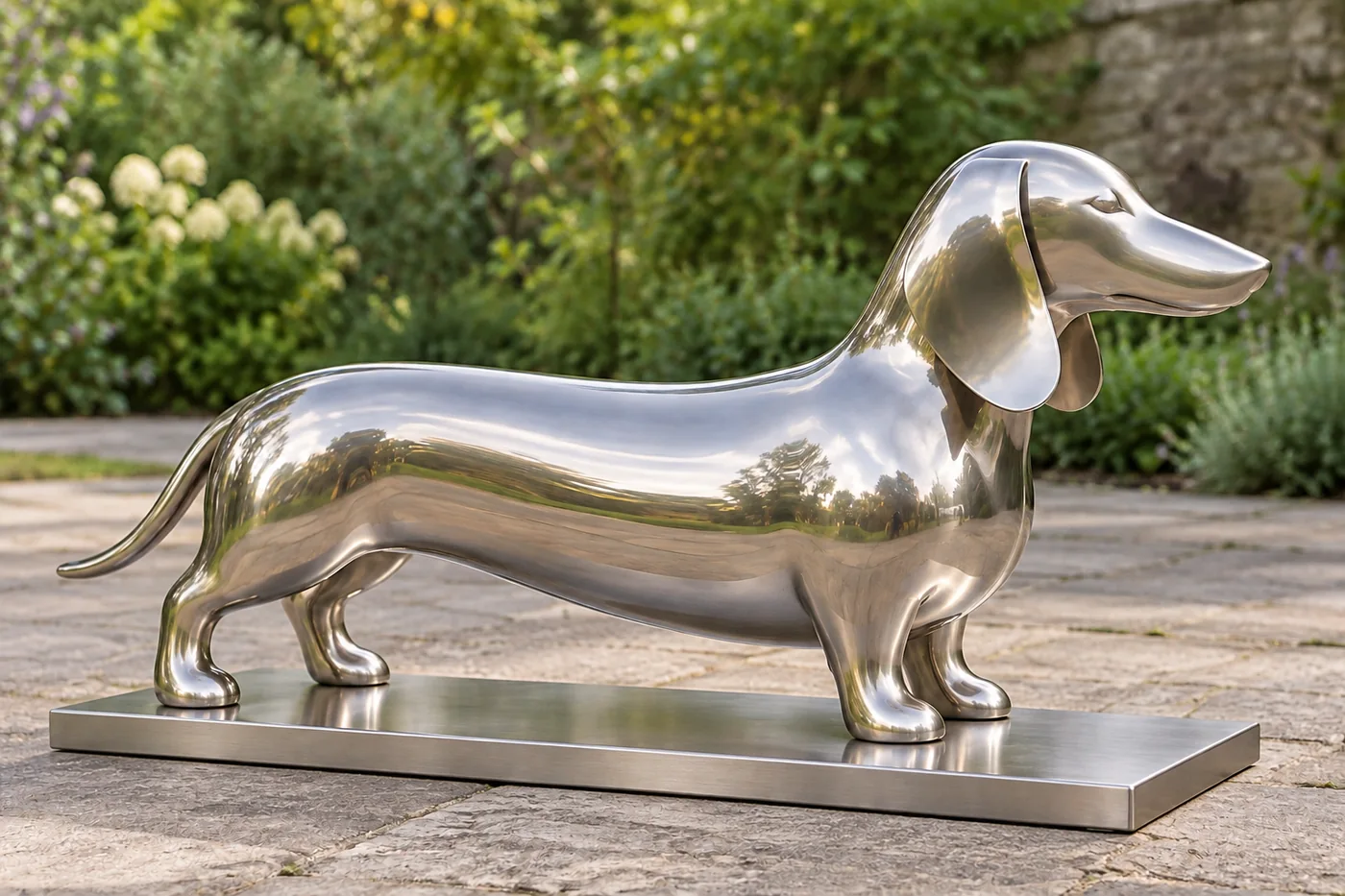
Abstract mirror steel
Broad curves and short simple legs describe the breed. Choose this as an abstract interpretation with its own fabrication and surface agreement.
These are AI designs created by Yun Sculpture. You can also send an AI design you have made yourself. For suitable designs, our visual-reproduction target is above 90% against the agreed reference, with the pose, proportions and details confirmed during model review. Material-specific adjustments are discussed before approval.
Each image is a separate design direction for a custom commission. For an individual portrait, add photographs that show your own dog’s face and body. Our personalized dog statue guide explains the wider photo-to-sculpture process.
Recognisable as yours
A Dachshund portrait, not just a long dog
A Dachshund dog statue can have short legs and a long body yet still miss the companion you remember. The face, ear placement, chest shape and resting posture need to work together. Identify the features you notice first when you look at your own dog.
Start with the head and ears
Compare the muzzle in a side view and the ears in a clear front or three-quarter view. Tell us whether the familiar expression comes from the head angle, a gentle look upward or an ear sitting closer to the cheek.
A photograph taken very close to the nose can make the muzzle dominate the picture. Include a view from farther away so that the model does not accidentally follow that perspective. A favourite close photograph is still useful for expression when its purpose is clear.
Keep the body substantial beneath the outline
The long torso should connect naturally with the chest, shoulders and hindquarters. Making a generic dog’s middle longer can leave an awkward transition or legs that feel too tall. Review the whole profile with your dog’s reference.
For an older companion or a dog with a particular body shape, decide which stage of its life you want remembered. The portrait can preserve individual proportions; it does not need to replace them with an idealised catalogue outline.
Dachshund, wiener dog or sausage dog?
A wiener dog statue refers to the same breed direction here. You may also see sausage dog or the spelling “weiner dog statue” when browsing. The name does not decide the coat, size or posture; your chosen reference does.
The AKC Dachshund breed page identifies the long, low form and the standard and miniature sizes, with three coat varieties. The official breed standard provides further coat references. These support breed recognition; photographs of your dog guide its individual likeness.
For broader comparisons, see our outdoor dog breed guide. The choices below concentrate on making a Dachshund portrait fit the space and look familiar from more than one angle.
Length matters as much as height
Define a life size Dachshund statue by the reference and pose
“Life size” needs a reference: your miniature Dachshund, a larger standard dog or a general breed design. It is not one universal sculpture measurement. A standing and a seated version of the same dog also have different overall heights and lengths.
Describe whether you want the familiar scale of your own dog, a smaller display piece or an enlarged garden figure. Then confirm the selected pose and all outer dimensions. A catalogue’s height alone tells you very little about how much of a flower-bed edge the sculpture will occupy.
| Measurement | What it means for this commission | What it prevents |
|---|---|---|
| Figure length | The full outer length, including the nose and the furthest part of the tail or paws in the chosen pose. | Judging space from the torso or the distance between the feet alone. |
| Figure height | The highest point of the finished dog, which may be its head rather than its shoulder. | Using a living dog’s shoulder height as the installed sculpture height. |
| Figure width | The widest outer point, including an angled head, paws, coat or tail. | Overlooking a sideways tail or head turn beside a narrow path. |
| Integral base | The base’s own length, width and height, stated separately from the dog. | Assuming that the visible paws define the support footprint. |
| Separate support | Any plinth or site pedestal, its dimensions and the combined installed height. | Confusing a higher display position with an enlarged dog. |
Agree the measuring direction
Label the maximum outside dimensions on the model view. A tail that turns sideways adds width, while one extending behind the body adds length. The furthest point can change after a pose adjustment, even if the torso remains the same size.
For a narrow border, make clear which edge of the base will run parallel to the path. A sculpture can fit when aligned along that edge yet extend into the route when rotated toward the doorway. Confirm its intended orientation before the footprint is finalised.
Enlarge the entire form coherently
An enlarged version should retain the agreed proportions. Raising only the legs can make the figure easier to see while losing the Dachshund’s low silhouette. If you love the original scale but need more visibility, discuss support height or a different position instead.
As a scale example only, a 60 cm reference length enlarged uniformly to 75 cm uses a factor of 1.25. The model’s other figure dimensions would follow that factor before any deliberate design changes. Those numbers are not a stocked size or quotation; they illustrate how to communicate proportional enlargement.
Base thickness, stone supports, fabrication details and transport planning still require their own review. A scale factor does not establish the finished weight or a price multiplier.
Share the available display area even if you do not know the ideal sculpture size yet. A photograph with a measured nearby object and a simple length-and-width sketch is often more useful than an isolated request for “medium” or “large.”
Three coats, three modelling directions
Smooth-haired, longhaired and wirehaired Dachshund statues
Choose the coat from your dog’s photographs. A change in surface colour cannot turn a smooth-haired sculpture into a longhaired portrait. The relief and outer silhouette need to be developed around the selected coat.
| Coat direction | Sculptural interpretation | What to review before approval |
|---|---|---|
| Smooth-haired | Calmer surfaces that let the chest, shoulder, back and short legs read through their form. | Whether surface grooves overwhelm the smooth outline or disguise the body. |
| Longhaired | Grouped flowing relief at the ears, chest, underside, behind the legs and tail. | Whether the extra relief preserves the long torso and separation of the short paws. |
| Wirehaired | Restrained rougher relief, with the beard and eyebrow area defining the familiar face. | Whether the head has become too bulky or the coat too shaggy for your reference. |
For a smooth coat, review the planes rather than counting marks
A smooth-haired bronze Dachshund can have slight modelling texture without being covered in hair lines. The cheek, ear fold and shoulder should connect clearly. Look at the model in ordinary lighting as well as a dramatic render.
If the surface looks too busy, point out the area and ask for a calmer transition. If it feels featureless, identify the body shape or fold that needs definition. Texture and the shape underneath it are different adjustments.
For long haired Dachshund statues, keep the low outline readable
The longer coat can make the ears and tail especially expressive. Decide how full those areas should be from your own photographs, then check that the chest and underside do not become one continuous curtain hiding the short legs.
Ask to see the side outline with the paws visible and a three-quarter view of the tail. Broad flowing groups can communicate the coat more coherently than many thin projecting strands. The amount of relief must also suit the final scale and selected material.
A useful instruction is: “Keep this ear’s outer shape, reduce the fullness below the chest, and follow this photograph for the tail.” It tells the modeller which parts to preserve and which parts to change.
For a wire coat, start with the expression around the muzzle
The beard and eyebrow forms can change the impression of the face. Review them together with muzzle length and ear placement before increasing texture across the rest of the body.
The wirehaired concept uses grouped relief rather than a tangle of separate metal strands. If your dog has a smaller beard or a quieter brow, say so. A coat label alone cannot capture the difference between two individual dogs.
Coat colour and coat type belong in separate parts of the brief. If you want markings reflected in the finished surface, discuss the intended treatment explicitly rather than expecting a monochrome bronze patina to reproduce a photograph’s colours.
The posture changes the footprint
Compare standing, seated and reclining Dachshunds
Standing: the complete long profile
A standing dog makes its body length and short-legged stance easy to recognise. It works best where you can see enough of its side, rather than only the narrow end of the sculpture.
Agree the head direction, position of each paw and tail. A quiet four-paw stance and a walking pose are different compositions, with different support requirements.
Seated: a face closer to the viewer
A seated Dachshund can bring the face higher and suit an entrance where visitors approach from the front. Its gathered body still needs a believable chest and rear shape.
Do not assume it uses less ground space until the tail and base are included. A tail laid beside the body may add width even when the nose-to-rear length becomes shorter.
Reclining: a familiar resting moment
A reclining dog is naturally low and can feel like a companion beside a seat. The front paws, body and tail together determine the layout.
Check the view from the bench as well as while standing. The head may be visible from nearby but disappear behind the front edge of a planting bed.
Change the view before changing the sculpture
If you love a standing side profile, begin by placing the long axis across your main line of sight. If the entrance presents only the nose, a modest head turn or a revised orientation may give a better result than enlarging the entire dog.
Choose the expression alongside the posture. A relaxed closed mouth, a slightly lifted head or a familiar attentive tilt should be specified in the references. Accessories such as a collar, ball or lead need their own design confirmation; they are not included merely because you describe the dog as playful.
Let a low sculpture be seen
Place a Dachshund garden statue where the outline stays visible
A Dachshund yard statue needs a position that respects its low height. The placement can be attractive in an empty flower bed and become almost invisible once the front planting grows. Consider the whole garden scene, including the season when you will most often see it.
| Position | Main question | Useful check |
|---|---|---|
| Along a flower-bed edge | Will the paws, belly line and tail remain visible? | View from the path with planting at a representative height. |
| Beside a bench | Will the face feel close enough from a seated viewpoint? | Check face height and angle while sitting in the actual place. |
| Near a doorway | Does the full nose-to-tail layout leave the approach clear? | Mark the entire footprint and check door movement and the walking route. |
| Seen across a lawn | Is the low outline distinct from the background? | Compare a clearer position, modest support or enlarged form from the main viewing point. |
Mark the whole footprint temporarily
Use removable markers to show the proposed outer length and width, including the base. Add a simple height marker at the intended head position. This is a visual planning exercise, not a structural test of the support.
Walk the normal route past it. Check whether the nose, rear edge or tail would extend into the path and whether you can still reach adjacent planting. Keep enough access to care for the sculpture without moving it repeatedly.
A plinth changes the relationship to the dog
A low support can bring a figure clear of surrounding plants. A much taller pedestal can turn the familiar ground-level companion into a more formal display. Decide which experience you want before selecting the installed height.
The support must suit the agreed piece and site. Give us photographs of the mounting surface, then confirm the fixing arrangement and local installation responsibilities. Our front porch dog statue guide covers entrance planning in greater detail.
If you arrived while browsing Dachshund lawn decorations or yard decor, decide whether a made-to-order sculpture is the kind of piece you want. Here the discussion centres on a model, material and finish developed for your space, rather than a standard lightweight seasonal ornament.
Confirm the material behind the colour
Bronze, carved marble or abstract stainless steel
Dark or gently burnished cast bronze
Our main direction is cast bronze developed from the approved model through the lost-wax process. The metal specification, construction and finish are confirmed in the quotation for that piece.
Our German Shepherd sculpture page includes factory photographs of bronze dog sculptures, useful for comparing workshop surfaces with the design concepts here.
A dark antique surface can bring out the ear edges and body modelling with subtle highlights. The warmer seated concept gives another appearance through a brown patina and gently burnished raised forms. Neither surface is meant to replace the actual likeness.
A smooth coat leaves larger calm surfaces visible. Discuss how reflective those areas should be so the shoulder or cheek does not become much brighter than you expected in daylight.
Brass is a separate material question
If you are looking for a brass Dachshund, tell us that you mean the metal rather than a golden or brown colour. Bronze and brass are different material specifications, and their names should not be inferred from a photograph’s highlights.
This page’s bronze designs are not presented as confirmed brass products. Any brass request needs its own availability, material and finish confirmation. Vintage collectible figurines also have a different buying purpose from a new commissioned garden sculpture.
For the chosen bronze surface, share the display conditions, including irrigation or coastal exposure. Our bronze maintenance guide explains the care discussion beyond this selection page.
Choose detailed likeness and abstract interpretation deliberately. A simplified steel figure can be an attractive breed tribute, while a bronze portrait allows a different treatment of coat and expression. Changing material may change the modelling approach as well as the surface.
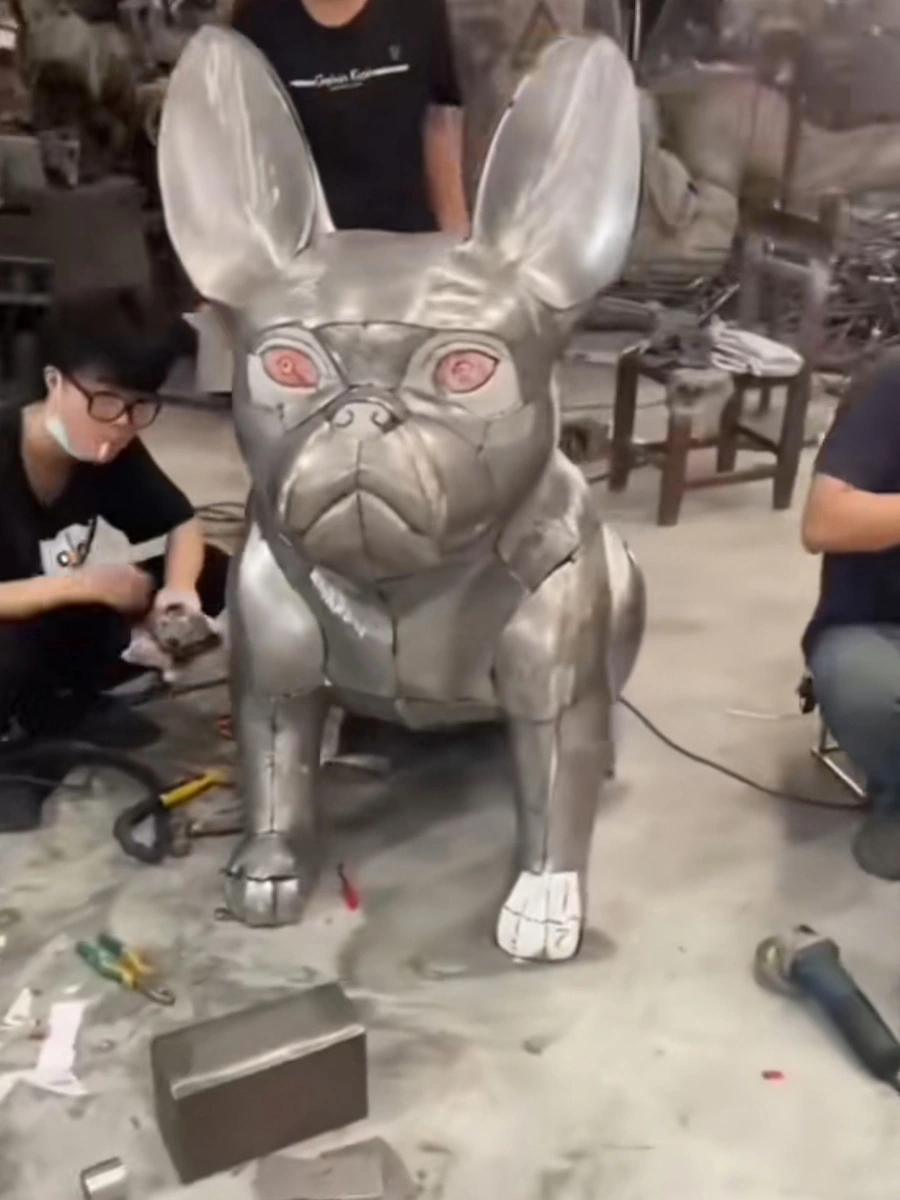
Real joining and shell-assembly references
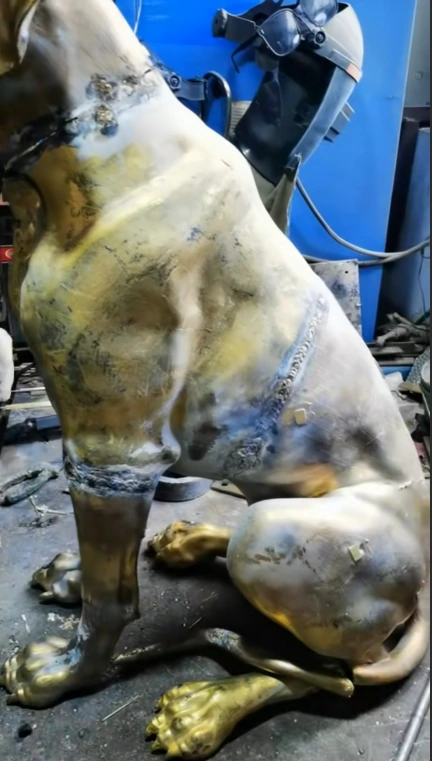
These photographs show processing on two other dog designs: visible joining work on a metal figure and the assembly of a steel shell. They help explain why the form and final surface are reviewed at different stages. For a Dachshund, the long body, low clearance and short legs need their own agreed construction. The detailed steel dog in the photograph is a separate project from the simplified Dachshund concept.
A reference becomes a form you can review
Review your Dachshund model before final production
Send your own AI design, one of the directions above or photographs of your dog. Identify which parts you want retained and which can change. A striking reference image is the start of a brief; the agreed model defines the complete sculpture.
Ask for the view that answers the question
Use a side view to check body length, leg height and the back-to-tail relationship. Use a front or three-quarter view for ear spacing, the face and chest. A rear view helps confirm the tail and hindquarters that an attractive front image may hide.
Compare similar viewpoints before requesting changes. A foreshortened three-quarter render can make the torso look shorter than a true side view. If the concern is a measurement, ask for a labelled model dimension alongside the image.
Keep changes specific
“It does not look quite right” is a useful first reaction; a marked area and reference make the next change clearer. For example: “Keep the head, shorten the visible legs to match this side photo, and bring the tail closer to the base.”
After that change, review the whole dog again. Altering the chest relief or coat underneath the body can also change how low it appears. Confirm both the likeness and the updated outer footprint.
Confirm form, surface and inscription separately
For suitable AI designs, the above-90% visual-reproduction target is assessed against the reference agreed for the project. The model review confirms the visible proportions and details; missing rear views and material-related adjustments are developed with you. It is not a substitute for approving the actual model.
Then agree the finish reference. Reflected plants, shadows and dramatic render lighting can affect how an AI image’s metal appears. State whether you want the dark surface, the warmer highlights or another treatment rather than asking the workshop to reproduce the garden reflections.
A name or memorial inscription can be placed on an agreed base or separate plaque. Approve exact wording and a lettering proof, and give the support its own dimensions. Our pet memorial statue guide covers the broader memorial choices.
Use the agreed scope for the quotation
Approximate size, preferred design and delivery country with postcode are enough to begin. As the proposal develops, confirm model review, material, surface, base, packaging and shipping responsibilities. Tell us about gate clearances, steps and the intended unloading point.
Delivery to an address, unloading and installing the sculpture are different services. Agree which are included and which your local installer will arrange. A target date should also allow for the design-review stage before the production and shipping plan is finalised.
Questions before choosing
Dachshund statue questions
Can you make a sculpture of my own Dachshund?
Yes. Share photographs and the pose you want remembered. We develop the individual face, body and coat in a model for review before final material production.
What does life size mean for a miniature or standard Dachshund?
It means the agreed scale of the chosen reference, not a universal catalogue size. Identify your dog or breed reference, then confirm the complete length, height, width and separate base for the selected pose.
Should I specify the statue’s length or height first?
Provide both, plus width when possible. The long body, nose, tail and base affect the space it needs; a low height alone cannot establish whether it fits beside your path.
Can I choose a smooth, longhaired or wirehaired version?
Yes. Use your dog’s coat references to agree the relief and outline. The longhaired and wirehaired designs have different modelling priorities; changing patina alone does not change coat type.
Is a wiener dog statue the same Dachshund direction?
Yes. Wiener dog and sausage dog are common names for the Dachshund. The spelling “weiner” also appears in searches. Choose the size, coat and pose from the actual reference rather than the nickname.
Can the statue stand, sit or lie down?
All three can be discussed. Review the altered face height and complete footprint before confirming. A seated figure may still need extra width for its tail, while a reclining one may be hidden by planting.
Are the pictured designs completed sculptures or stocked models?
They are AI design references created for custom discussion, as identified in the captions. They do not establish a stocked size, current availability or a completed Dachshund commission.
Can you work from an AI design I created?
Yes. Mark the features to keep and add your dog photographs if likeness matters. We review feasibility in the chosen material and develop the missing views and support details in the model.
Can an AI design be reproduced with over 90% similarity?
That is our visual-reproduction target for suitable designs against the agreed reference. Material-specific changes are discussed, and the pose, proportions and detail are confirmed through model review. The surface is approved separately.
Does a warm golden surface mean the dog is brass?
No. Colour does not establish the alloy. Our bronze direction is specified as bronze in the project quotation. If you require brass, ask for separate material and supply confirmation.
Can I choose marble or stainless steel?
Yes, as separately reviewed interpretations. Marble needs a suitable carving and support design. Stainless steel uses a simplified abstract long-body silhouette rather than realistic coat detail.
Can a low Dachshund statue work outdoors?
Choose the material and finish for the site, and check visibility at the actual location. Review planting height, full footprint, mounting surface and access for care. The fixing and installation scope are agreed for the project.
What information is needed for a quotation?
A preferred design or dog photographs, approximate size or available space, and delivery country with postcode are a useful start. Add a material preference, inscription or target date when you have one.
Start with your dog and your place
Discuss your custom Dachshund statue
Send the design you like, your own AI idea or photographs of your Dachshund. If you are unsure of the right size, share the display position and the space available along the dog’s length.
Begin with the image and location. We can help you refine the remaining choices.
Useful details as the brief develops
- Your own portrait or a general breed tribute.
- Smooth, longhaired or wirehaired reference.
- Standing, seated or reclining pose.
- Approximate full length, width and height.
- Material, surface, base or inscription preferences.
- Delivery location and any target date.