Get in touch with Yun-Sculpture company
The expression, stance and companion you remember
Custom Boxer Dog Statues for Gardens
Commission a Boxer dog statue with the familiar face and athletic outline that make your companion recognisable. Explore standing, seated and resting directions, then choose the expression, scale and finish for your space.
Develop a life-size portrait from your own dog, or discuss a smaller custom sculpture. Bronze is the main direction here, alongside carved marble and a simplified stainless steel interpretation.
Share your idea on WhatsApp ↗A favourite photograph and a preferred posture are enough to start. The detailed model and dimensions belong to the agreed commission.
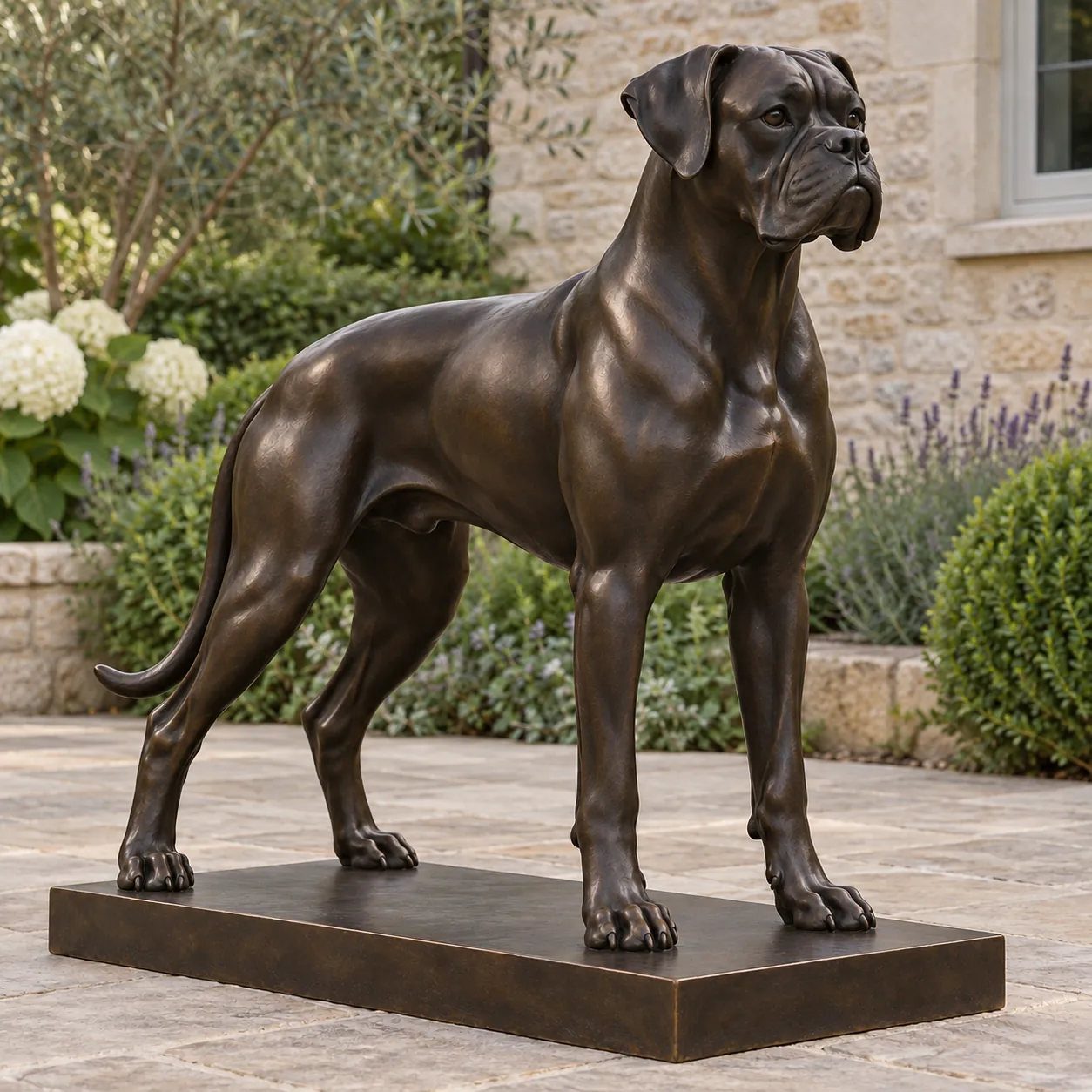
Head and body reviewed as one portraitIndividual ears, tail and expressionLife-size and smaller custom directions
Compare the character before choosing the size
Boxer dog statue design ideas
The main design shows an attentive standing Boxer with folded ears. The gallery adds a quieter seated portrait, a different ear-and-tail reference, a relaxed resting figure, and two material interpretations.
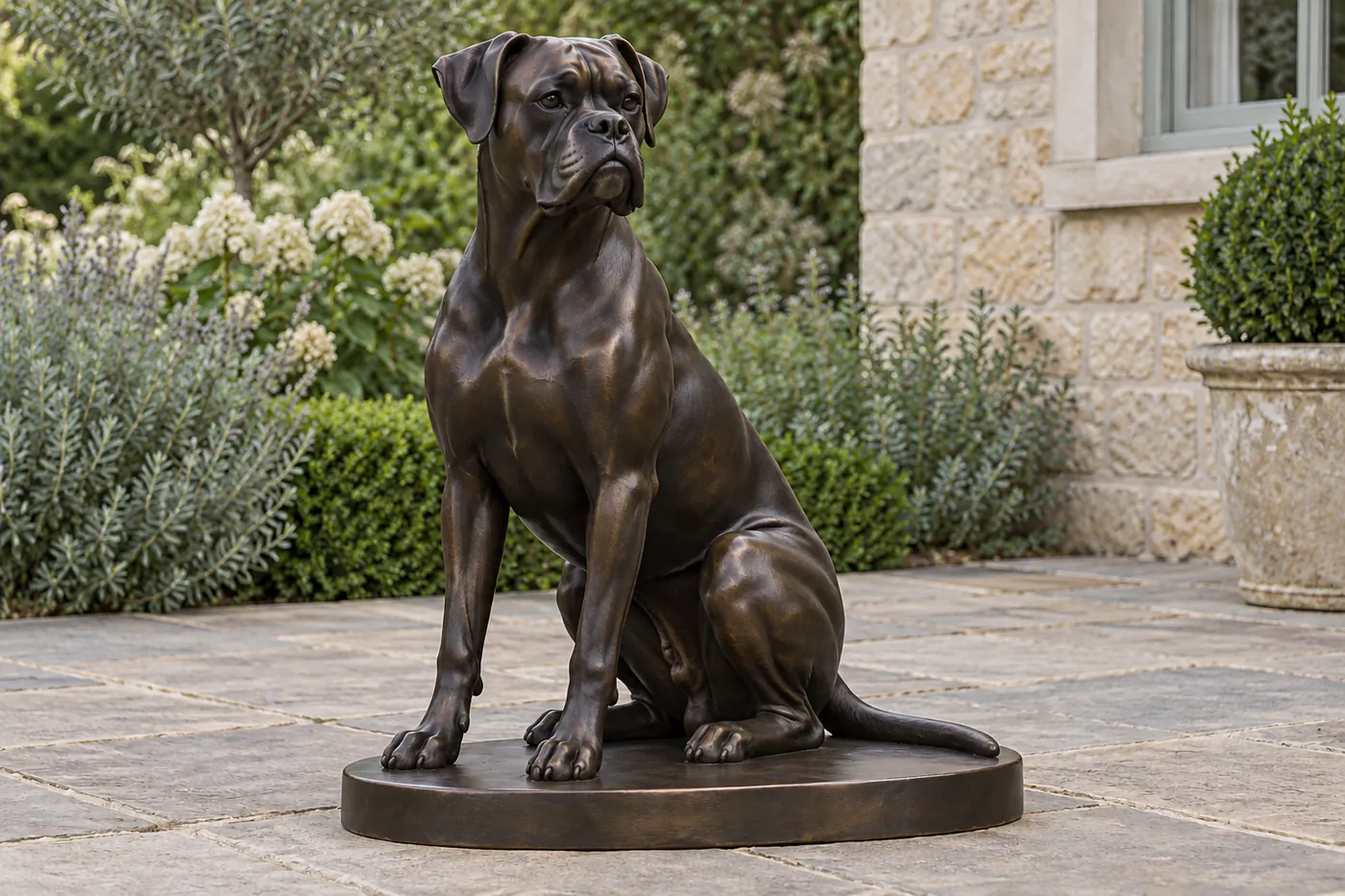
Composed seated bronze Boxer
A seated portrait puts the face above the chest and forelegs. Review the lip and chin outline, gathered rear body and complete depth.
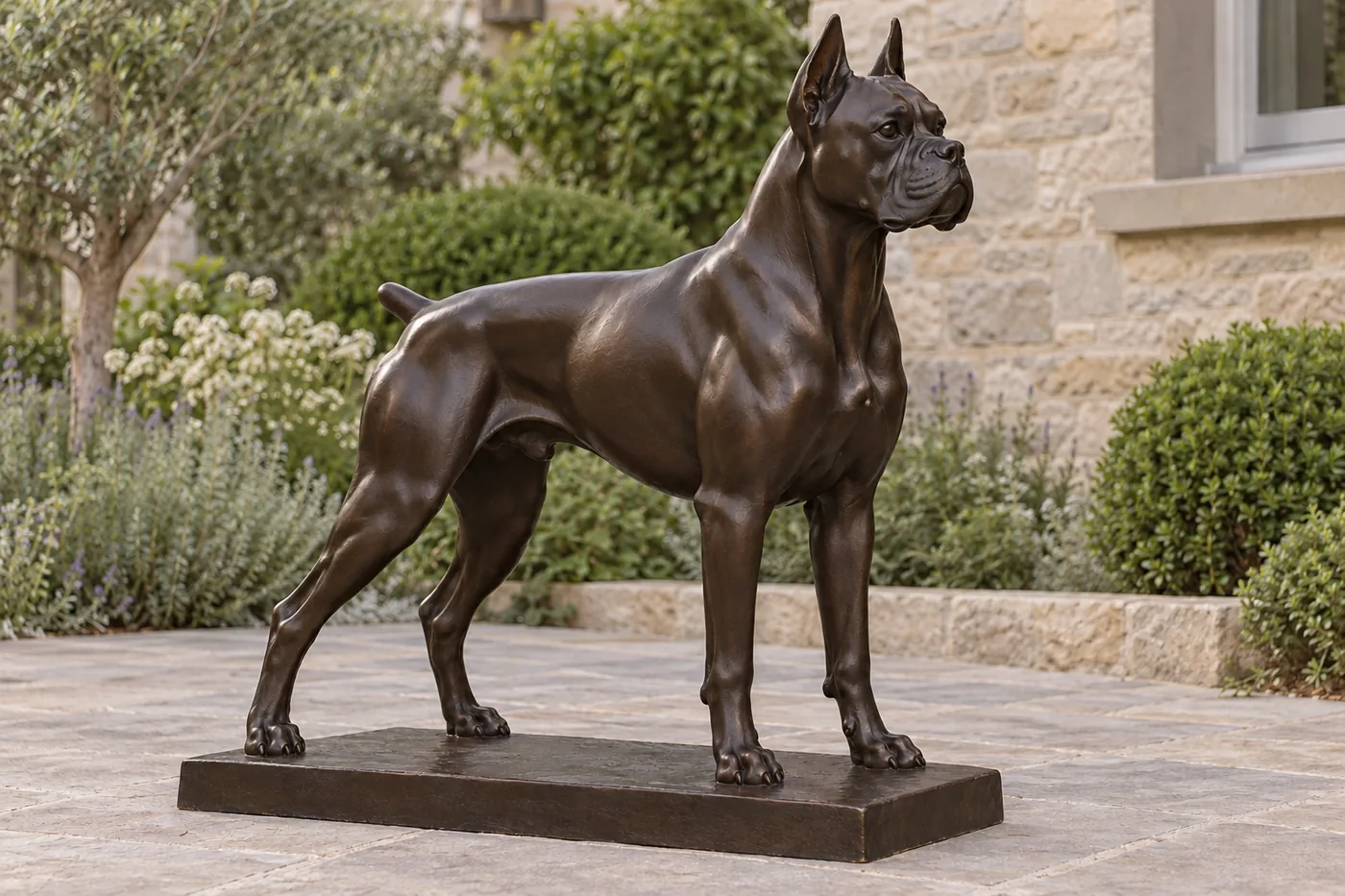
Upright-ear standing reference
Choose this ear-and-tail appearance only when it matches the dog you want depicted. It is a separate portrait reference rather than a breed requirement.
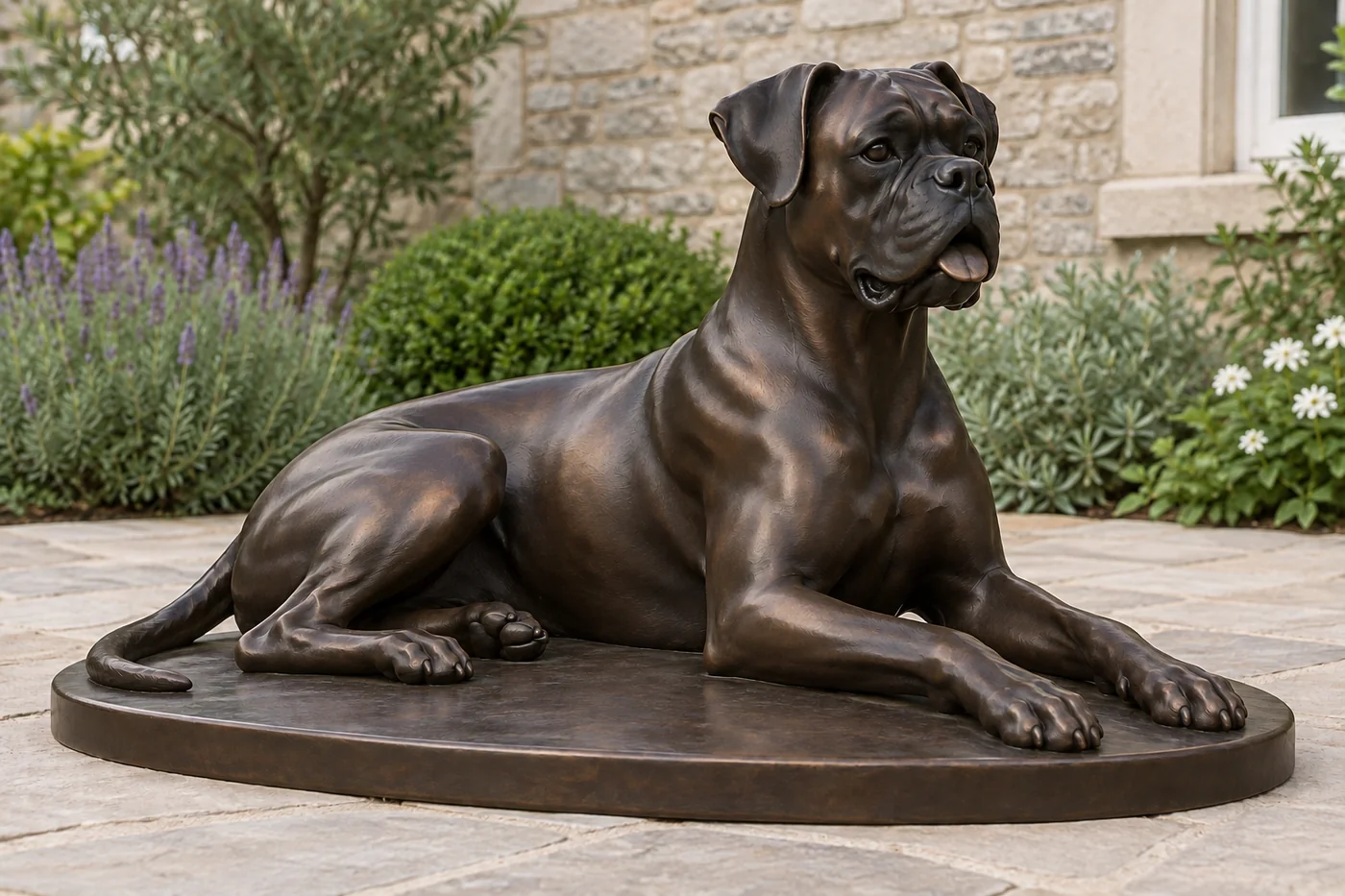
Relaxed resting bronze Boxer
The lower body and raised face capture a resting moment. Agree the mouth opening, simplified interior and full paw-to-rear layout.
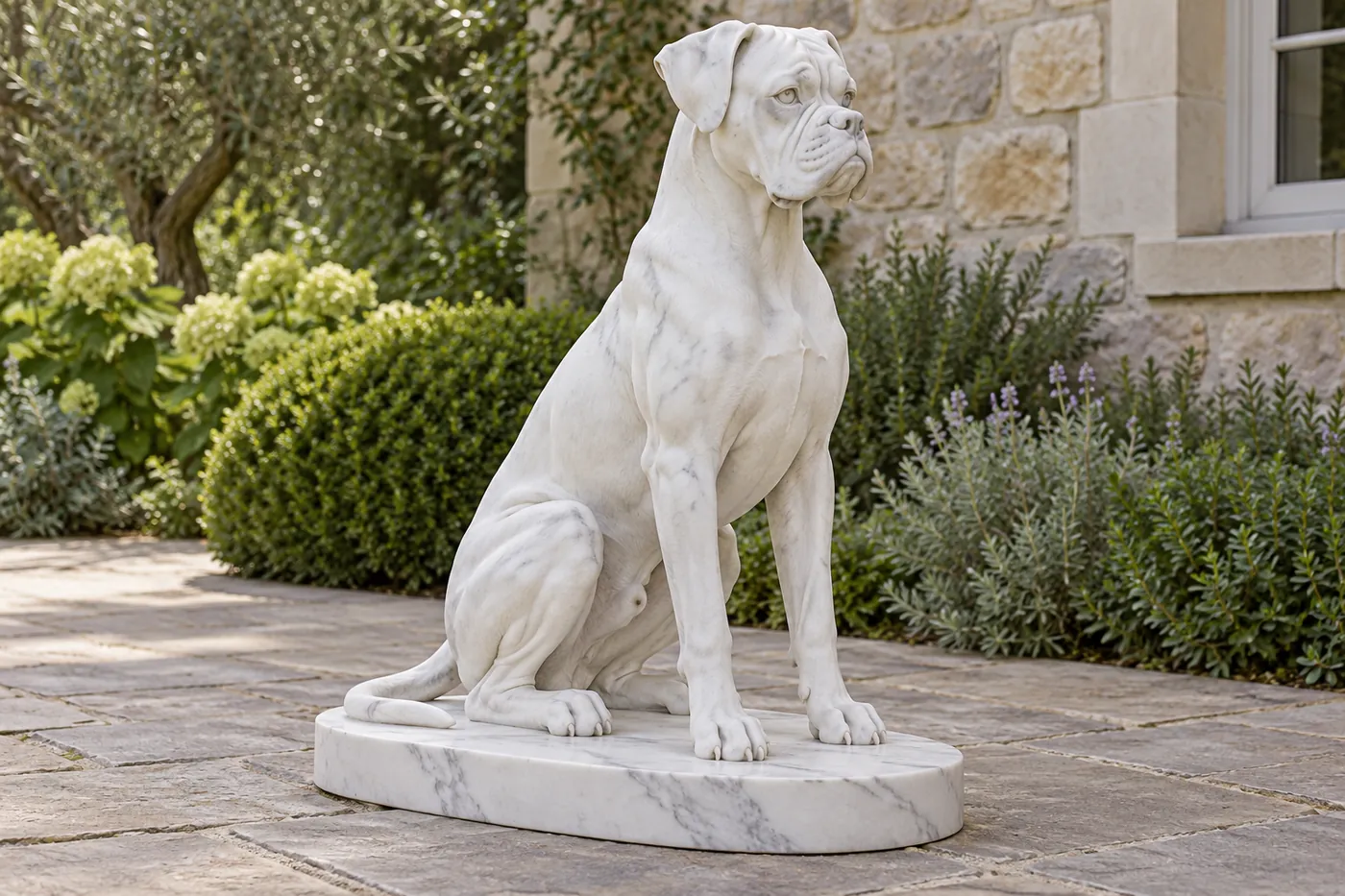
White marble seated Boxer
This carving direction keeps the head and chest readable through broad forms. Confirm the stone, veining and ear, leg and tail connections for the actual piece.
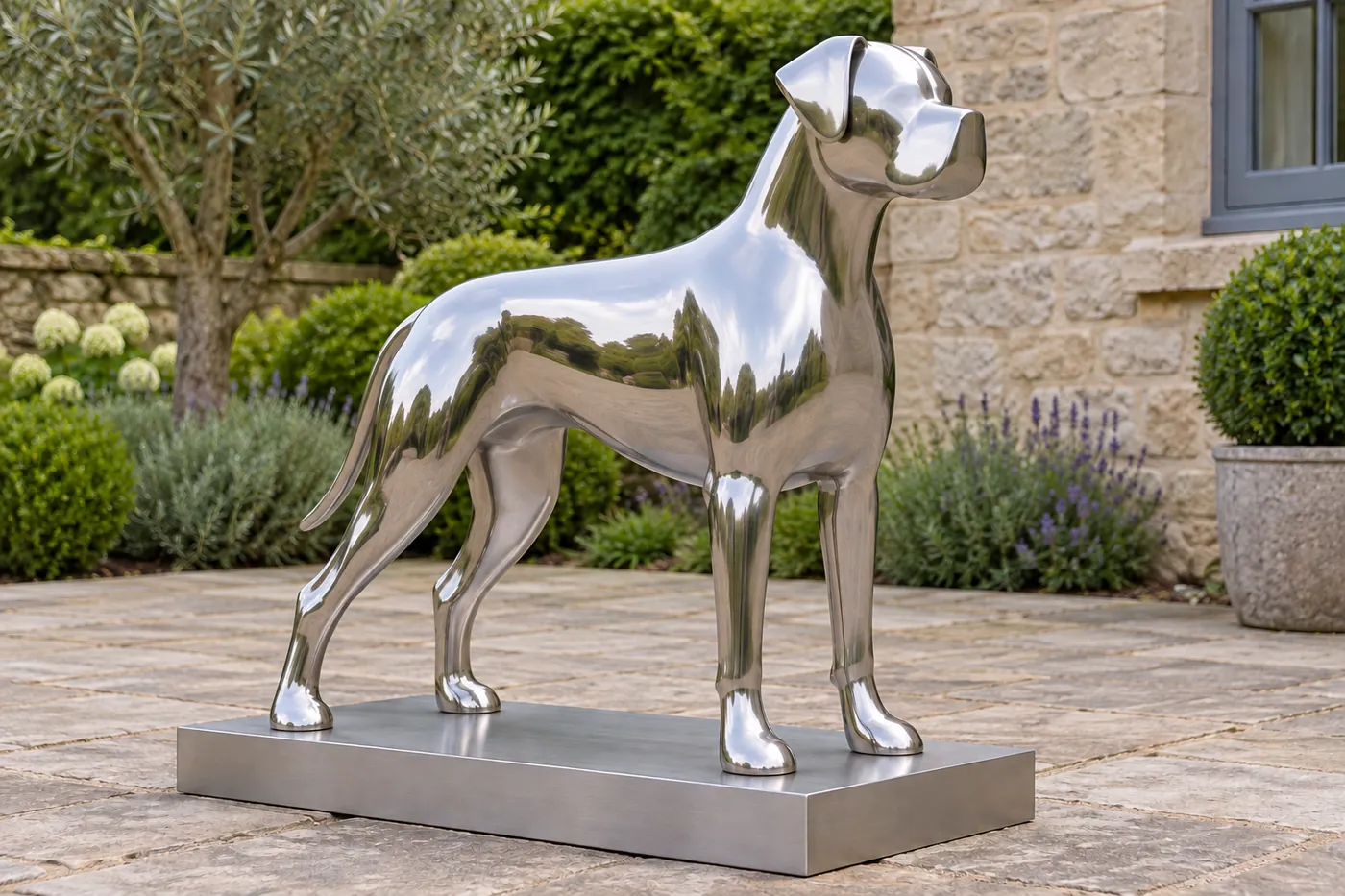
Abstract mirror-steel Boxer
The steel direction uses the square body, short muzzle and folded-ear shapes without realistic facial detail. Develop its fabricated form separately from the bronze portrait.
AI designs by Yun Sculpture for custom discussion. You can send an AI design of your own. Above 90% visual reproduction is our target for suitable references, with material adaptation and model review agreed before manufacture.
For an individual companion, begin with photographs that explain the face and posture you want preserved. Our personalized dog statue guide covers the wider portrait brief; the choices below concentrate on the Boxer.
Check the complete dog, not only its short muzzle
Choose a Boxer form rather than a Bulldog substitute
A short-faced dog sculpture can look attractive without depicting the breed you intended. Check the body as well as the head: the leg length, neck, chest and overall balance should belong to your chosen reference.
The AKC Boxer standard describes a square body outline, short coat and distinctive blunt muzzle. The Bulldog standard describes a lower, heavier-built form. These are useful starting points for breed interpretation; an individual portrait follows your dog’s actual features.
Look at the silhouette before the fine detail
View the model without relying on the surface colour. Does the neck connect naturally to the chest? Can you read the legs and the space beneath the torso? Does the head belong to that body?
If the figure looks too low or too broad, ask which part has changed. A wider chest, enlarged head and shortened limbs can each push the composition in that direction. Adding more facial wrinkles would not answer those proportion questions.
Use a full side photograph as a body reference, even if your favourite portrait is a close-up. The model needs enough information to connect the familiar face to the correct companion.
Identify which dog you actually want represented
For a general breed piece, choose a coherent Boxer reference. For a pet portrait, name the individual and show its own outline, including any features that differ from an ideal breed illustration.
A Boxer mix can be represented as that individual. There is no need to change its muzzle or body merely to make the sculpture match a generic label.
If a Bulldog is your intended subject, use our Bulldog garden statue guide. The broader outdoor dog breed guide supports other breed comparisons.
Turn “the face is wrong” into a useful model correction
Review the Boxer muzzle, chin and expression together
Start with a clear front view, a profile and the expression photograph you like most. Each explains a different part of the face. A model that seems convincing from one angle can still need work in another.
Approve the larger forms before deciding how much surface texture to add. The amount of relief should explain the portrait, with the most important features remaining readable at the intended viewing distance.
| If the portrait feels unfamiliar | Compare in the reference | Give this feedback |
|---|---|---|
| The muzzle appears too round | Its front width, lower outline and connection to the cheeks. | Mark the area that needs a different shape rather than enlarging the whole head. |
| The face appears too flat | A side view showing the muzzle, nose and chin. | Identify the intended projection; a front photograph cannot establish all of it. |
| The chin seems lost | The lower lip and chin from front and side views. | Clarify their separation without automatically exposing the teeth. |
| The expression looks severe | The preferred brow, eyelids, head angle and mouth position. | Show which expression to preserve before requesting extra creases. |
| The mouth looks too busy | The actual opening, tongue and lip outline in the chosen photograph. | Agree which interior details matter and which can stay simple. |
Separate muzzle shape from forehead texture
A deeper brow crease can change the expression, but it does not correct a muzzle whose projection or width is wrong. Review those requests separately so one change does not conceal another.
Mark the preferred muzzle outline on a model image and supply the profile that explains it. If the desired forehead appearance comes from another photograph, label that image’s role. This is more useful than asking the sculptor to combine every visible crease from several expressions.
A visible chin does not require a row of teeth
The Boxer reference standard describes the projecting lower jaw and a perceptible chin, while keeping teeth and tongue hidden when the mouth is closed. For sculpture, compare your own dog’s lip and chin contour rather than turning that description into an exaggerated grimace.
A closed-mouth portrait can express character through the outer forms. An open-mouth portrait needs its own reference and a deliberate treatment of the interior. Neither is automatically more accurate or more expressive.
Check expression with the head at the agreed angle
A lifted head may show more of the underside of the muzzle. A slight turn can change which cheek or eye dominates. Compare the model in the chosen pose before judging it against a photograph taken from a different direction.
If the face seems too stern, a change to the eyelids, brow or head angle may be more appropriate than opening the mouth. Choose the familiar moment you want the finished piece to hold.
Athletic presence without overstating every muscle
Connect the chest, neck and stance to the chosen face
Review the whole figure at the same stage as the head. A convincing face on an unfamiliar body is still an incomplete portrait. A favourite head photograph should not silently determine the chest width or leg position.
Check chest width and depth from different views
A front view helps explain how the forelegs relate to the chest. A side view explains the front of the chest and its depth. Widening a model everywhere is different from correcting one of those relationships.
If the figure seems overly bulky, compare the shoulder area, ribs and abdomen separately. Ask for the specific area to change instead of reducing all of the dog’s substance.
With a standing pose, inspect the four feet and leg connections. A turned body can hide a rear limb in one image; another model view should show how that limb is actually arranged.
Preserve the chosen condition and posture
Select the age and appearance of your companion that the portrait should depict. A leaner young dog and a fuller older dog can be recognisable in different ways; choose the intended reference before model revisions begin.
The sculpture can show athletic shape through broad transitions. Strong engraved lines around every muscle may make it look more diagrammatic without making it more personal.
For a seated figure, use a seated reference if that particular posture matters. The gathered rear legs and chest presentation need to belong to the pose, rather than being inferred entirely from a standing photograph.
Confirm a deliberate head-to-body relationship
Show whether the dog looks toward the visitor, along a path or to one side. Review the head turn through the neck and shoulders. Turning the entire sculpture after manufacture would change its footprint and view without reproducing the same pose.
Ask to see the figure as a whole after a head correction. Changes that look subtle in a close-up can affect the balance of the complete portrait, especially when the head is held high.
Represent the companion in your photographs
Specify the ears and tail from the individual dog
The design gallery includes folded ears and a separate upright-ear, short-tail interpretation. Choose the appearance that belongs to your reference. These are sculpture choices depicting existing features, not instructions to change a real animal.
Review ear position along with the expression
Show both ears where possible. Their angle and fold can differ between an attentive photograph and a resting one. Select the reference that matches the portrait’s intended mood.
If only one side is clear, supply another image before the opposite ear is invented from a generic design. Where one ear has an individual feature, identify it and the dog’s left or right side explicitly.
An upright-ear concept is not a requirement for a Boxer sculpture. A portrait with folded ears can be developed just as deliberately. Confirm the complete ear shape in the model, including its connection to the head.
Give the complete tail a reference
Indicate the existing tail length and how it should sit in the chosen posture. A naturally longer tail extending behind the figure changes the outside layout compared with a shorter tail.
For a resting or seated design, a tail near the body can participate in the composition. Confirm its attachment and complete course, particularly where it disappears behind a rear leg in a front image.
If two photographs show different tail positions, select the one to preserve. A stance reference does not automatically explain the tail, and a gallery thumbnail does not establish its unseen side.
Choose the moment before the measurements
Standing, seated or resting Boxer?
Standing and attentive
This direction gives the complete body profile a prominent role. It can suit a portrait in which the dog’s stance and head carriage are part of the memory.
Choose which side faces the main view, then review the four limbs, head direction and tail. The complete outside length matters as much as height.
Seated and composed
A seated Boxer brings the face above the chest and straight forelegs. Use the individual sitting posture to decide whether the portrait should feel attentive or quieter.
Check the gathered rear body in side and rear views. A front-facing thumbnail can understate the depth behind the forelegs.
Resting with raised head
A reclining portrait can preserve a relaxed familiar moment. The lower head position should suit the display and the way visitors approach it.
Review the paw-to-rear layout and mouth expression together. Keep planting from obscuring the face if the sculpture sits near ground level.
Use the main viewing position to settle a close choice
Mark where someone normally stands or sits when seeing the sculpture. A profile seen across a garden and a face seen near an entrance emphasise different parts of the portrait.
Share a photograph of that position. If you prefer a specific head turn, check its effect from there before locking the model. The best-looking isolated render is not always the most useful view in your actual setting.
Our dog statue entrance-planning guide covers wider clearances and movement to the display area. Here, use the chosen Boxer pose to decide which complete footprint to measure.
A portrait scale and an overall object size are different records
Life-size Boxer statues and smaller custom sculptures
For a life-size Boxer dog statue, choose the individual or breed reference and the posture first. One catalogue model’s height is not a universal size for every Boxer, and a seated head height is not the standing dog’s shoulder height.
| Decision | Life-size portrait | Smaller custom piece |
|---|---|---|
| Reference | Your dog at the selected age and in the agreed pose. | The same individual or a general breed interpretation at a reduced scale. |
| Height | Agree the scale reference, then record the top of the sculpture. | Specify the finished artwork height and whether the base is included. |
| Outside layout | Include muzzle, ears, feet and tail in maximum dimensions. | Confirm the full width and depth for the shelf, table or display area. |
| Details | Review the face at the expected viewing distance. | Reconsider fine relief, ear edges and mouth detail at the smaller scale. |
| Support and handling | Confirm actual base, construction, weight and fixing arrangements. | Confirm the particular piece; small dimensions do not establish a ready-stock product. |
Define what “life size” refers to
If reproducing your own dog, provide any useful measurements you already have and photographs that explain their reference points. We can discuss what further information is needed for the selected pose.
List the sculpture’s height and its integral base separately from an additional display plinth. Raising the base changes where the face is seen; enlarging the dog changes the portrait scale.
Do not select a dimension merely because a render appears to show a life-size dog beside a wall. The concept scene is not a measuring instrument. The proposal and approved model establish the actual object.
For searches about Boxer dog figurines
If you want a small decorative piece, tell us its intended dimensions and whether it should be a general breed figure or an individual portrait. That helps distinguish a small custom commission from a ready-made collectible.
We assess smaller commissions by design and material. The word “figurine” does not establish an inexpensive stocked item, a batch of identical toys or immediate retail dispatch.
A reduced-size sculpture also deserves a model designed to read at that scale. Features that work in a large face may become too busy when reduced. Review the outline and essential expression before deciding how much fine relief to retain.
Decide which information belongs to shape and which to surface
Translate the Boxer portrait into a bronze surface
A dark bronze interpretation can preserve the face and stance without reproducing every coat colour. If a particular marking is important, identify its location and agree how it will be represented.
Keep a facial marking separate from a groove
A light area on the face is surface information, while the muzzle and brow have their own shapes. Identify these separately in the brief so a marking is not turned into an unintended deep cut in the model.
For a monochrome sculpture, decide whether the form alone carries the likeness. If a contrasting treatment is requested, agree its actual finish and review it alongside the model rather than inferring it from reflected light.
Choose a controlled level of short-coat texture
The bronze concepts use broad smooth planes with restrained tool texture. They allow the cheeks, chin and chest to remain readable without covering the figure in dense hair lines.
Compare the face from a close view and from the planned display distance. Fine marks that are prominent close up may contribute little to the complete sculpture, while a change in the lip contour can be noticeable from much farther away.
A sheen reference should explain how reflective you want the surface. Confirm the metal, treatment and protective finish in the project specification. Care depends on that actual treatment and exposure; our bronze maintenance guide provides the wider explanation.
Keep the portrait appropriate to the material
Bronze, natural marble or abstract stainless steel
Bronze portrait
Develop the face and stance for lost-wax casting, with the surface agreed separately. The proposal confirms the chosen metal and construction.
Carved marble
Use broad head and body forms with stone eyes and nose. Review the ears, limb connections, tail support and actual block’s veining for the selected carving.
Simplified steel
The steel concept carries Boxer character through a compact outline, blunt muzzle and folded-ear shapes. It uses broad fabricated curves and plain feet, without detailed facial engraving.
See our stainless steel sculpture options to develop that separate interpretation.
Real steel and marble dog examples
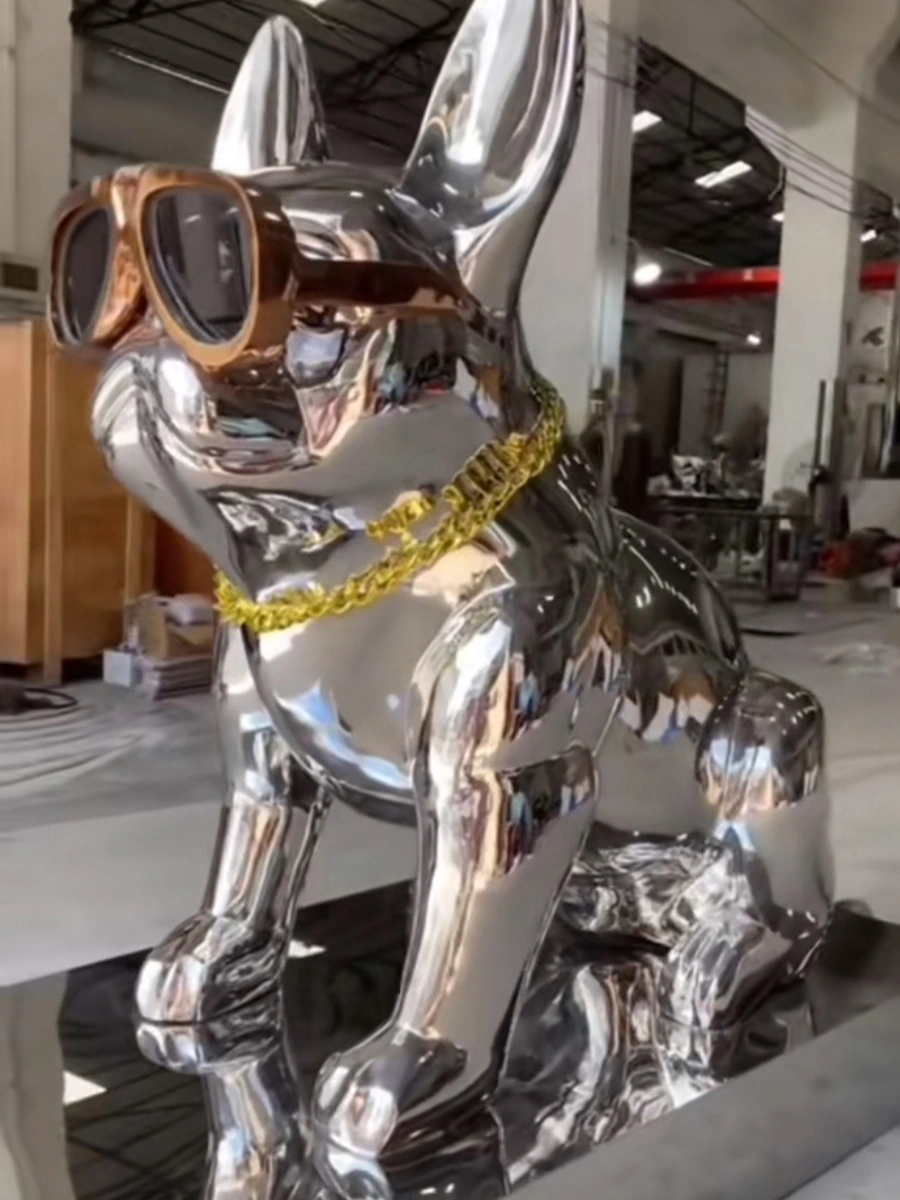
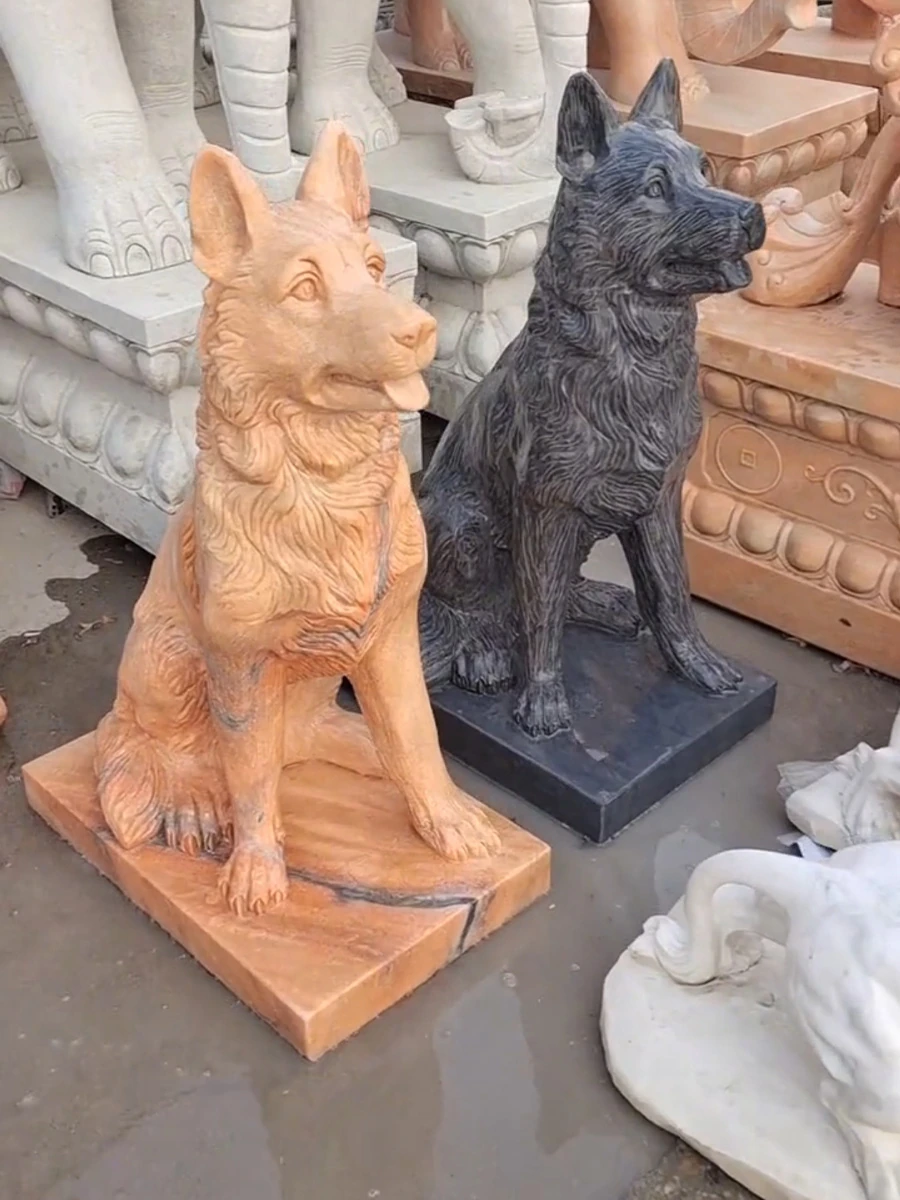
These are separate dog designs showing a detailed decorative steel surface and two marble appearances. The steel example includes accessories and facial modelling beyond the simplified Boxer direction on this page; choose the detail level explicitly. The marble view helps discuss colour and stone variation, with the actual block and carving specified for your Boxer. Neither photograph substitutes for the agreed Boxer face and body model.
Bring the references together without losing their purpose
Prepare your Boxer portrait for model review
Label a small set of useful images: front and profile for the face, the chosen expression, body and stance, ears and tail, and a separate finish reference. Explain which image should lead if they show different moments.
Choose the appearance you want remembered
An older face, younger stance and different head angle should only be combined deliberately. If one photograph captures the personality and another explains an unseen feature, state that difference.
Where references are incomplete, we can discuss which areas require interpretation. Do not approve a hidden limb or an opposite ear just because the visible side is attractive.
Make corrections specific and review their effect
Mark the requested change on a model image: for example, the chin needs more definition, the brow needs less relief, or the front of the chest needs a different profile. Include the photograph that explains it.
Review the complete figure again after the revision. The goal is a coherent portrait, with head, body and selected posture working together, rather than a collection of separately attractive details.
Record the agreed commission
Agree the scope, payment and model-review arrangements before manufacture of the approved form. The project proposal records dimensions, material, surface, packing and delivery responsibilities.
A name or dates can be developed on an agreed base or plaque without obscuring the feet or chest. If the sculpture is a memorial, explain which personal details matter; the artwork is not assumed to include an urn compartment.
For the display location, provide the support surface and access information. Weather exposure, unloading and installation need their own confirmation for the actual piece, beyond what an attractive garden render can establish.
Questions for a Boxer commission
Boxer dog statue questions
How can I tell whether a sculpture is a Boxer or a Bulldog?
Compare the complete reference: body height and balance, neck, chest, limbs and head. A short muzzle alone does not identify the dog. For your own companion, use its photographs to guide the portrait.
Can the portrait have natural folded ears?
Yes. Supply the ear reference and choose the attentive or resting appearance you want preserved. The upright-ear concept is another design interpretation, not a requirement.
Can you represent my Boxer’s existing long tail?
Yes. Show its complete length and the intended position. Review its attachment, unseen course and effect on the full outside dimensions in the model.
Should a closed-mouth Boxer sculpture show its teeth?
A closed-mouth direction can retain the muzzle and visible chin without exposed teeth. Follow the intended expression photograph. If an open mouth is wanted, agree that design and its interior detail separately.
Does adding deeper wrinkles improve the likeness?
Only if they serve the selected reference and expression. First check muzzle shape, chin, head angle and body balance; extra forehead texture cannot correct those proportions.
Is there one standard height for a life-size Boxer statue?
No. Define the reference dog and posture, then confirm the sculpture’s overall dimensions. Standing shoulder height, seated head height and height including a base are different measurements.
Do you offer ready-stock Boxer dog figurines?
This page presents custom design directions. If you want a small sculpture, send the size, subject and material so we can assess the commission. The gallery does not establish stock or immediate dispatch.
Can I keep an important facial marking?
Identify its location and discuss the intended surface interpretation. A marking should not automatically become a deep model groove; confirm its treatment alongside the form.
Are these completed Boxer sculptures?
The images are labelled AI designs for discussion, with bronze, marble and simplified steel directions. They do not establish actual inventory, finished orders or confirmed specifications.
What should I send for an initial quotation?
Send the dog or design reference, preferred posture, approximate size, material and delivery country with postcode. Add the ear-and-tail reference or a display photograph if it explains a priority.
Start with the companion and the moment
Discuss your Boxer sculpture with Yun Sculpture
Send a favourite photograph or a design you like. Tell us whether the portrait should feel attentive, composed or relaxed, and share the setting where it will be seen.
The first enquiry can begin before you settle every face detail or exact dimension.
Useful first information
- Your Boxer or general breed reference.
- Standing, seated or resting posture.
- Ear, tail and expression priorities.
- Approximate size and material direction.
- Display setting and delivery country with postcode.