Get in touch with Yun-Sculpture company
Why the British Bulldog is the King of Garden Statues: A Breed-Specific Guide

Walk through the grounds of a traditional English estate and certain figures appear again and again. The lion stands at the gate, radiating aristocratic authority. The garden gnome hides among flowers, injecting a touch of humor and folklore.
Yet neither truly commands the garden.
The British bulldog does.
A well-crafted Bulldog garden statue carries a different type of symbolism—less theatrical than the lion, less playful than the gnome. It embodies resilience, loyalty, and the quiet stubbornness that defines the English countryside. In sculpture, the bulldog represents domestic guardianship: a steadfast presence watching over the home and garden.
In landscape design, this symbolism matters.
A thoughtfully placed Bulldog outdoor statue immediately becomes a Focal point. The stocky silhouette contrasts beautifully with hedges, gravel paths, and low stone walls. Visitors notice it instinctively. The form is familiar, emotionally resonant, and unmistakably strong.
For homeowners who value a Curated garden, the bulldog provides character without theatrical excess. It feels grounded. Authentic. As if it has always belonged there.
The appeal extends far beyond private estates.
In hospitality spaces—country inns, brewery courtyards, and English-style pubs—a Bulldog sculpture has become a recognizable element of Commercial garden decor. The breed communicates reliability and tradition. Guests subconsciously associate the figure with warmth, loyalty, and a sense of welcome guarded by quiet strength.
Unlike mythological creatures or abstract modern sculptures, the bulldog is deeply human in spirit. It looks stubborn, patient, slightly grumpy—and oddly comforting.
That emotional balance is precisely why the bulldog has become the undisputed sovereign of garden statues.
Table of Contents
Table of Contents
Capturing the Bulldog Spirit: What Makes This Breed a Garden Favorite?

The history and personality of the British Bulldog
The bulldog’s story begins in a far darker place than the serene lawns where its sculpted likeness now rests.
Medieval England cultivated a brutal sport known as bull-baiting. Records trace organized baiting events as early as the reign of King John in the 13th century. Dogs bred for the arena required extraordinary courage. They needed low centers of gravity, powerful jaws, and a fearless temperament.
The early bulldog was engineered for combat.
Its broad chest kept it stable beneath the bull’s horns. The pushed-in nose allowed it to breathe while maintaining a grip. The muscular shoulders and thick skull gave it remarkable durability.
When Britain outlawed bull-baiting in 1835, the breed faced extinction.
Victorian breeders made a remarkable decision. Instead of allowing the bulldog to disappear, they reshaped its temperament. Aggression was deliberately bred out. Calmness, patience, and companionability were encouraged.
The result was one of the most dramatic transformations in canine history.
The modern British Bulldog retained its physical power but developed a gentle, almost philosophical personality. Calm. Loyal. Slightly stubborn. Perfectly content to sit beside its owner like a quiet bodyguard.
Then came the twentieth century.
During the dark years of the Second World War, the bulldog acquired a new symbolic role. The resolute face of British Prime Minister Winston Churchill bore an uncanny resemblance to the breed—jowled, determined, immovable.
The public embraced the comparison immediately.
Churchill’s speeches carried the same spirit associated with the bulldog: defiance, endurance, and an almost stubborn refusal to yield. Posters, cartoons, and wartime propaganda began depicting Britain itself as a bulldog standing firm against tyranny.
Historians sometimes call this transformation the Churchillian synthesis.
The bulldog evolved from a fighting animal into a national metaphor for resilience. It represented the hardworking outsider—scarred perhaps, but utterly unbreakable.
That cultural memory still echoes today.
A Bulldog sculpture placed in a garden quietly communicates the same message: steadfastness, loyalty, and quiet strength.
From grumpy to charming: Sculpting the Bulldog’s iconic expressions

Few animals possess a face as sculpturally distinctive as the bulldog.
The breed’s features read almost like a checklist of artistic challenges:
- Deep facial folds
- A pronounced undershot jaw
- Heavy shoulders and compact torso
- Short legs with immense muscle mass
- A pushed-in nose framed by wrinkled jowls
Capturing these details requires extraordinary Anatomical accuracy.
A poorly executed Bulldog sculpture often looks cartoonish. The wrinkles become exaggerated. The skull becomes too round. The body loses its dense, grounded posture.
A master sculptor approaches the bulldog differently.
Every wrinkle must follow the tension lines of the face. The jaw must protrude slightly, but not grotesquely. The shoulders must carry visible weight, giving the statue the impression that gravity itself is pressing down on the dog’s powerful frame.
The result should feel solid and believable—almost as though the dog might snort and shift its weight at any moment.
Just as important as anatomy is Pose and expression.
Bulldog statues typically fall into three classical guardianship archetypes.
1. The Alert Sentinel
This is the most traditional stance.
The dog stands upright, legs braced, chest forward. Ears tilt slightly toward the front as if detecting movement beyond the garden gate.
Characteristics include:
- Forward gaze
- Balanced weight across all four legs
- A slightly raised head
Designers often place this version near entrances or pathways. It signals watchfulness without aggression.
2. The Protective Warning
Here the bulldog lowers its head slightly, creating a sense of readiness.
The shoulders appear heavier. The eyes focus forward. The mouth may be partially open, as though the dog is about to bark.
This posture creates a subtle psychological effect in landscape design. Visitors feel observed. Guarded. The statue functions almost like a silent gatekeeper.
3. The Docile Welcome
The most charming interpretation shows the bulldog reclining.
Paws crossed. Head lifted gently. The expression softens into a relaxed, almost amused look.
This pose works beautifully in seating areas, terraces, and courtyard gardens. It communicates friendliness rather than authority.
In sculpture, this balance between strength and charm is the essence of the bulldog’s appeal.
The breed can appear stubborn, humorous, intimidating, and lovable all at once. A skilled sculptor captures that delicate emotional spectrum through posture alone.
When executed correctly, the statue becomes more than decoration.
It becomes personality carved in natural stone or cast in bronze.
Choosing the Right Bulldog Garden Statue: Style and Placement
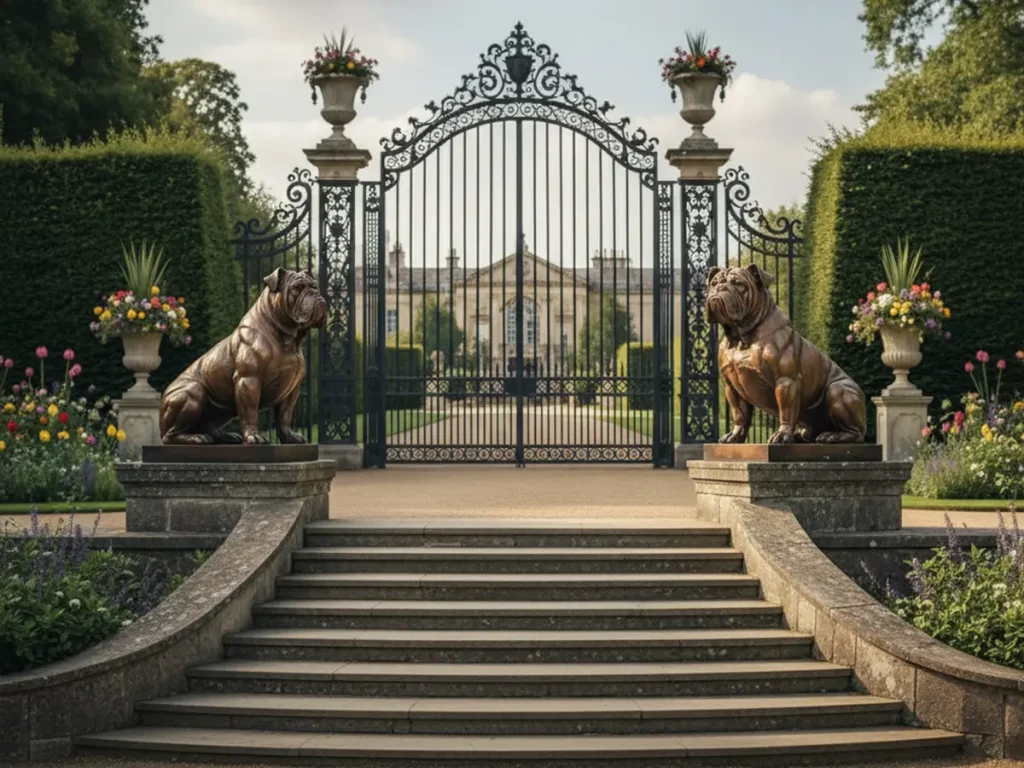
Positioning a bulldog sculpture in the landscape is not merely decorative. It is an architectural decision that influences how visitors experience the entire garden.
In Western landscape traditions, the bulldog often plays a role similar to the Chinese guardian lion—commonly known as the “Foo Dog” or Shishi. These figures traditionally stand at entrances, watching over thresholds and symbolically protecting the household.
A Bulldog garden statue performs a similar cultural function.
Placed near a gate, staircase, or front path, the dog becomes a quiet sentinel. It suggests vigilance without aggression. Guests feel welcomed, but they also sense the presence of guardianship.
This is why bulldog sculptures appear so frequently in classical courtyard designs, country manor entrances, and even upscale hospitality landscapes. The breed’s visual language—muscular, grounded, unpretentious—communicates stability.
For designers working with an Estate garden, the bulldog can serve as a subtle anchor within the composition. Unlike mythical creatures or elaborate fountains, the dog feels approachable and emotionally familiar.
The key question then becomes scale.
Life-size vs. miniature: Finding the perfect scale for your space
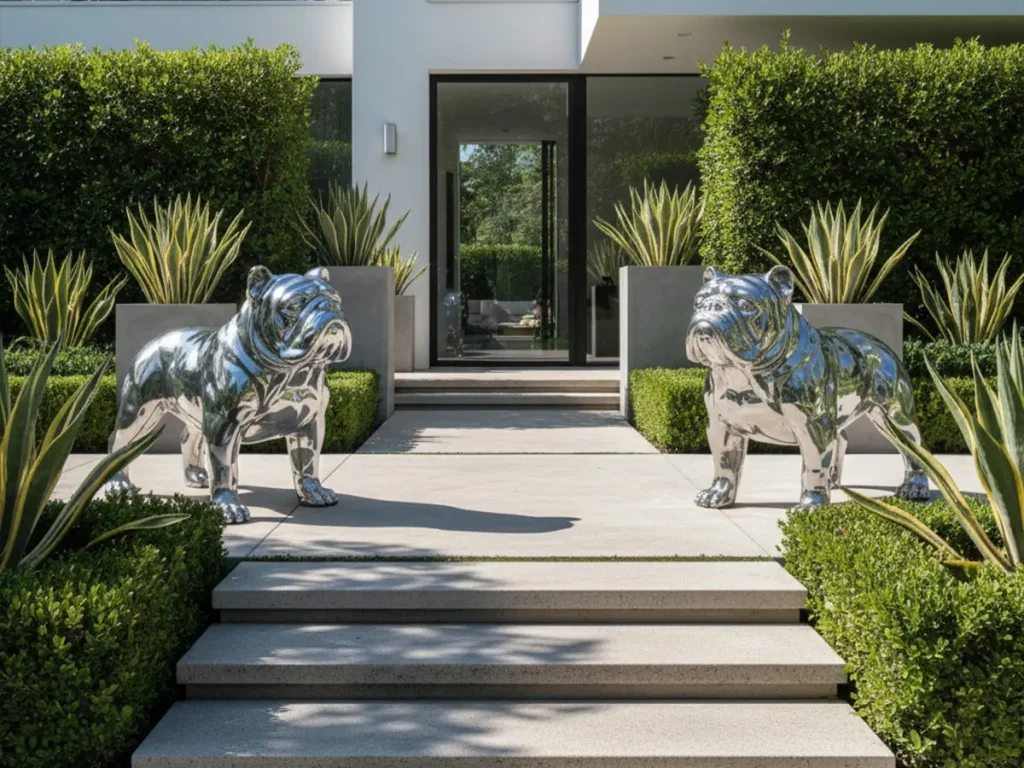
Scale determines whether a sculpture quietly complements a garden or completely dominates it.
A large english bull terrier statue or traditional British bulldog sculpture can weigh 60–80 kilograms when carved from dense natural stone. At this scale, the statue carries real visual gravity. The thick shoulders and heavy paws appear convincingly powerful, especially when viewed from a distance.
Designers often use life-size statues in architectural positions such as:
- Flanking a front door or stone staircase
- Guarding the entrance to a driveway
- Standing beside wrought-iron gates leading into an Estate garden
- Anchoring the end of a long gravel path
These placements allow the sculpture to function as a landmark within the landscape.
The viewer encounters the bulldog almost as if it were a real animal standing watch.
Miniature statues serve a completely different purpose.
Smaller bulldog sculptures—often 25–40 cm tall—work beautifully when tucked into intimate garden spaces. They appear unexpectedly among flowers, beside low hedges, or at the corner of a patio.
Ideal locations include:
- Flower beds with layered planting
- Small courtyard corners
- Herb gardens and brick pathways
- Seating areas where guests notice subtle details
The effect feels more personal than monumental.
Another fascinating phenomenon occurs with highly realistic sculptures.
Many owners purchase a life size bull terrier statue or bulldog figure as a tribute to a beloved pet. The anatomical detail can be so convincing that real dogs sometimes react to the statue as if it were another animal.
Owners frequently report amusing moments:
- Dogs cautiously sniffing the statue
- Circling it as if meeting a new companion
- Sitting beside it in quiet curiosity
The sculpture becomes a symbolic twin—an enduring presence in the garden.
For grieving owners, this realism carries genuine emotional value. The statue preserves the familiar posture, the broad shoulders, and the distinctive stance of the breed.
Over time, it stops feeling like an object.
It simply feels like the dog is still there, patiently watching the garden it once roamed.
Selecting the best material: Natural Stone, Bronze, or Stainless Steel?
Material defines the personality of a garden sculpture.
During the 17th and early 18th centuries, England experienced what historians often call the Golden Age of English Lead. Aristocratic estates commissioned fountains, urns, and animal sculptures cast in heavy lead. The material allowed delicate modeling but proved vulnerable to weathering and structural fatigue over time.
Modern sculpture workshops gradually moved toward more durable and versatile options.
Today, the most respected bull terrier garden statues and bulldog sculptures are typically produced in three primary materials:
- Natural stone
- Cast bronze
- Stainless steel
Each offers distinct advantages in durability, artistic expression, and how the sculpture interacts with the surrounding landscape.
For designers, the choice often depends on the architectural language of the garden itself. Traditional estates often favor stone or bronze, while contemporary landscapes increasingly incorporate stainless steel sculptures for a more modern visual statement.
Why a stone bulldog statue adds timeless character to pathways
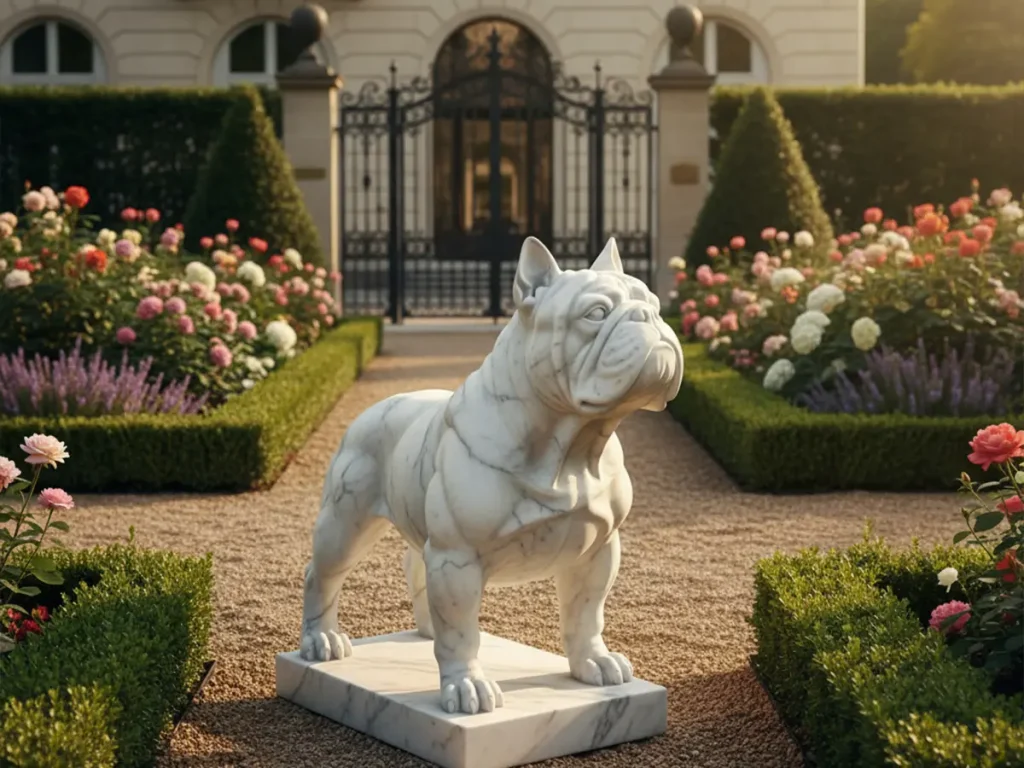
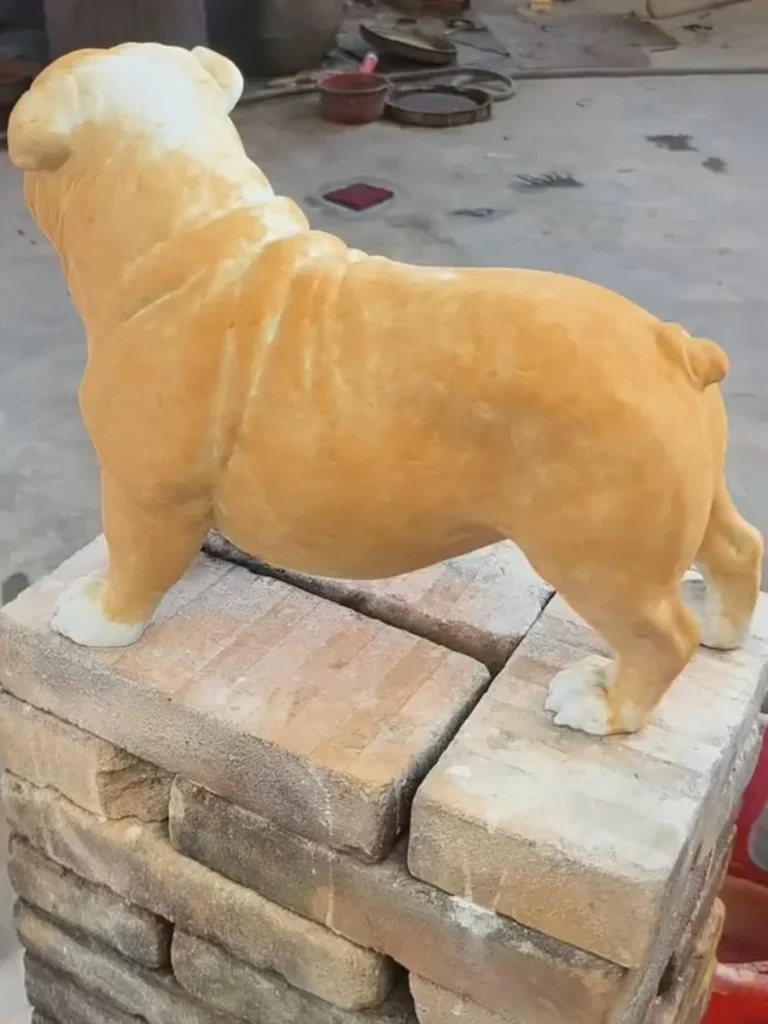
Natural stone remains the most traditional choice for garden animals.
A well-crafted english bull terrier stone statue carries the same visual weight as classical European garden sculpture. The surface feels authentic and organic. The silhouette reads clearly against greenery, and the material ages in harmony with the surrounding landscape.
Unlike molded composite materials, sculptures carved or shaped from natural stone possess unique mineral textures and tonal variations. These subtle details give the statue a sense of permanence and authenticity.
Equally important is landscape integration.
A stone bulldog sits naturally beside Hardscape elements such as:
- Limestone paving
- Brick garden walls
- Gravel pathways
- Weathered stone steps
The statue appears grounded, as though it has belonged to the garden for decades.
This quiet authenticity explains why natural stone remains one of the most respected materials for traditional British garden sculpture.
The prestige of a bronze bull terrier statue for luxury estates

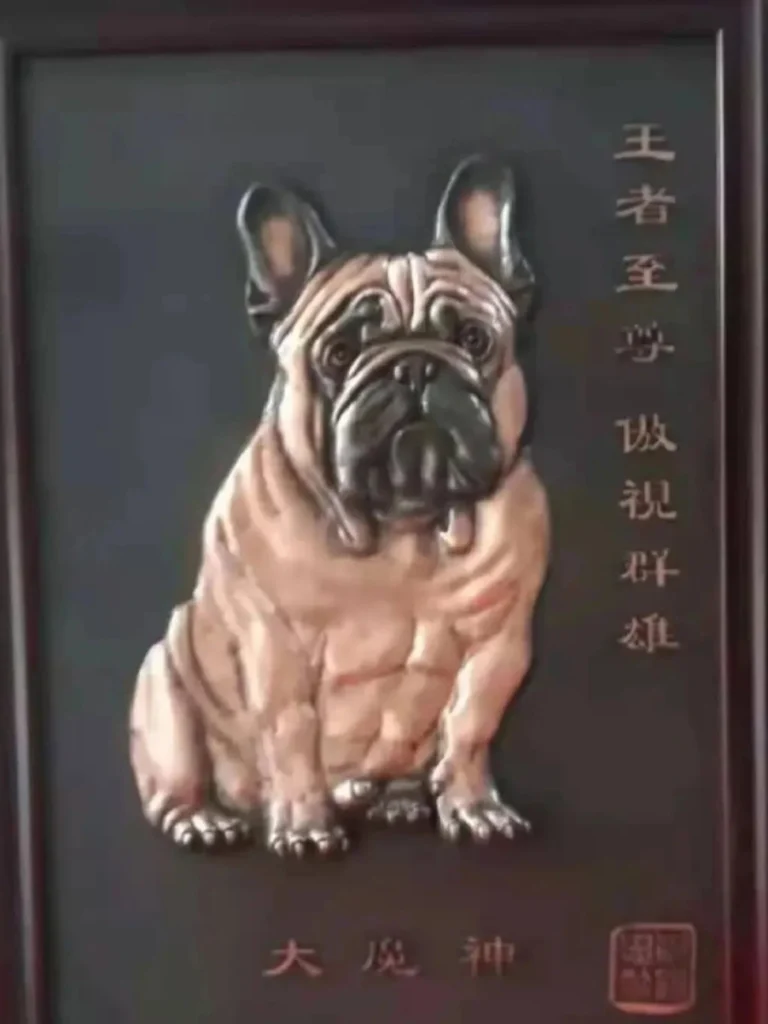
Bronze occupies a completely different category.
Where natural stone feels rustic and timeless, bronze conveys prestige and permanence. A staffordshire bull terrier bronze statue immediately signals craftsmanship, investment, and artistic ambition.
Luxury properties often choose bronze for statement sculptures.
A large bull terrier statue cast in bronze can transform a courtyard or terrace into a gallery-like environment. The metal catches light differently throughout the day, giving the sculpture a dynamic presence.
One of bronze’s greatest strengths is its evolving surface.
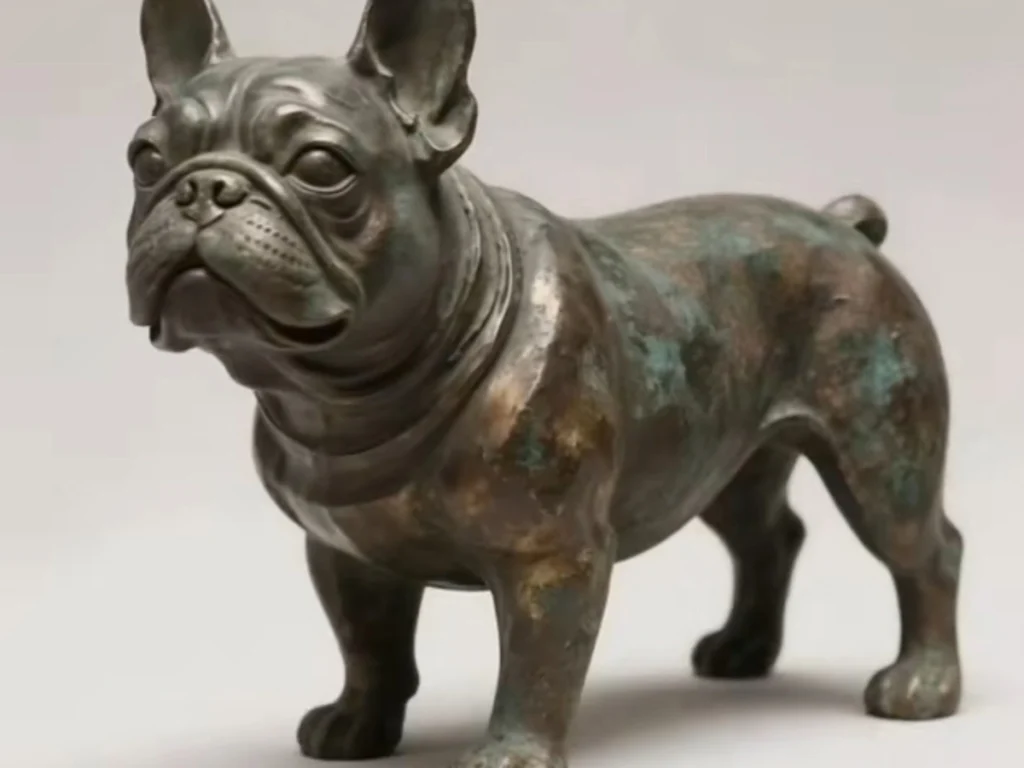
Freshly cast bronze carries a warm golden tone. Over time, exposure to air and moisture creates a natural patina—a living surface that gradually deepens into olive greens, rich umbers, and dark chocolate hues.
Collectors prize this transformation.
No two sculptures age in exactly the same way.
Bronze also allows extraordinary Sculptural detail. Because molten metal flows into even the smallest crevices of a mold, artists can capture incredibly subtle features:
- The tension of shoulder muscles beneath short fur
- The folds around the bulldog’s muzzle
- The slight texture of a leather collar or harness
- Individual claw shapes pressing into the base
This precision creates a level of realism that natural stone rarely achieves.
For historic estates, boutique hotels, and refined courtyards, a bronze terrier sculpture becomes more than decoration.
It becomes a permanent work of art—one that grows more beautiful with every passing season.
Why stainless steel bulldog sculptures suit modern landscapes

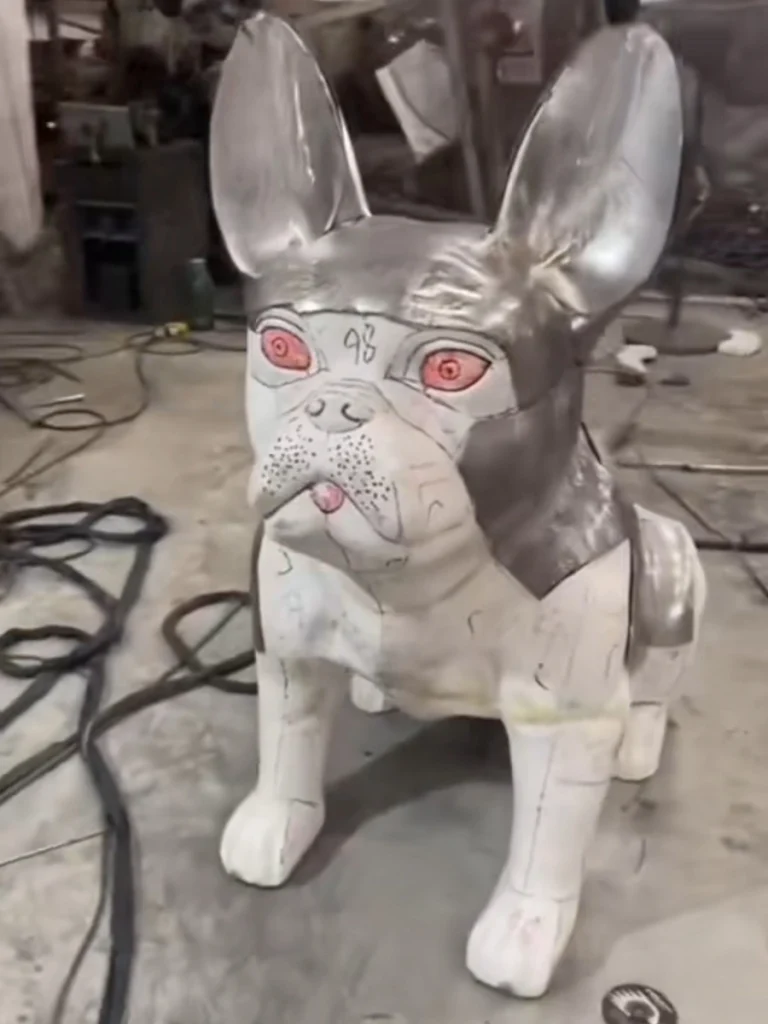
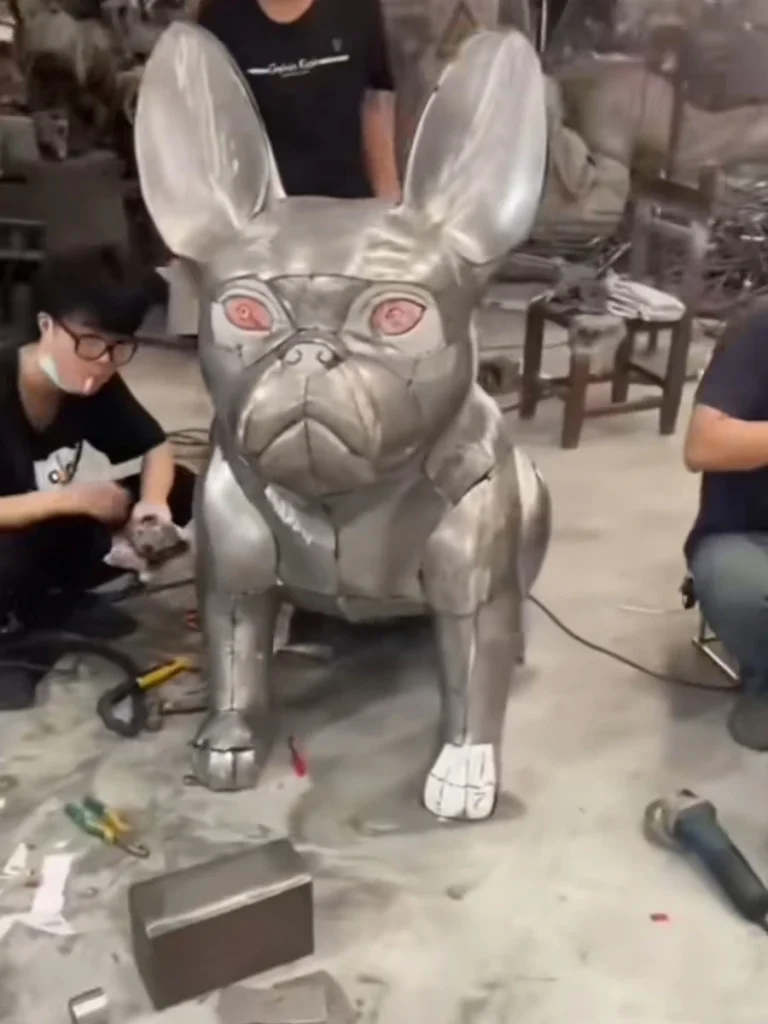
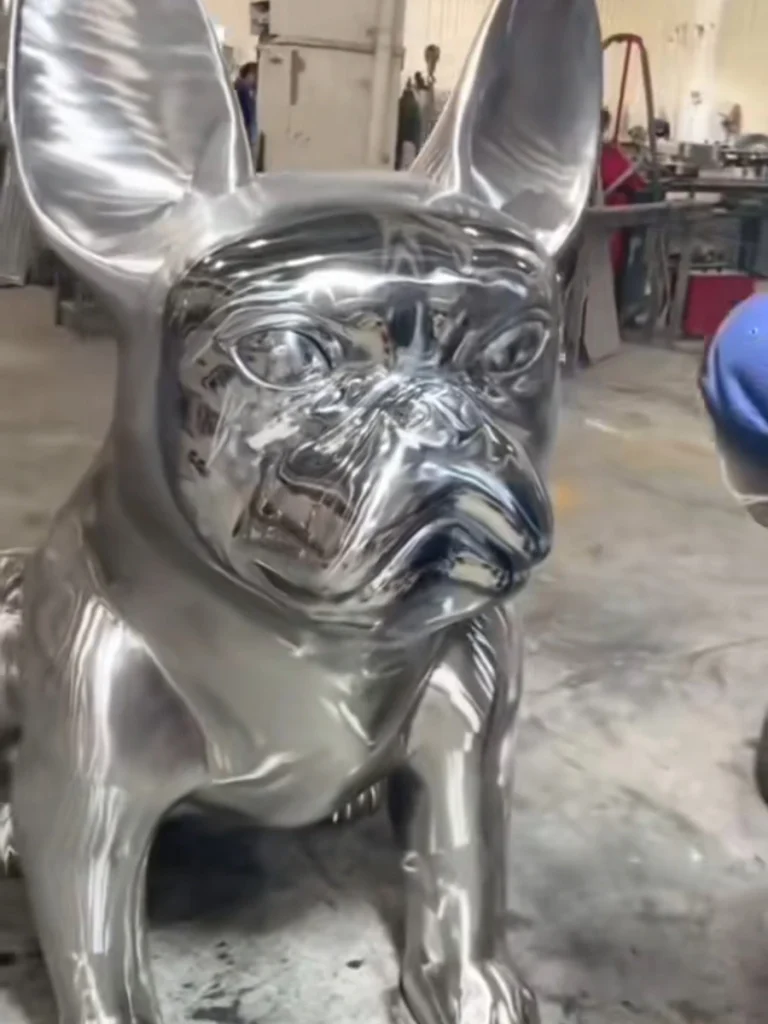
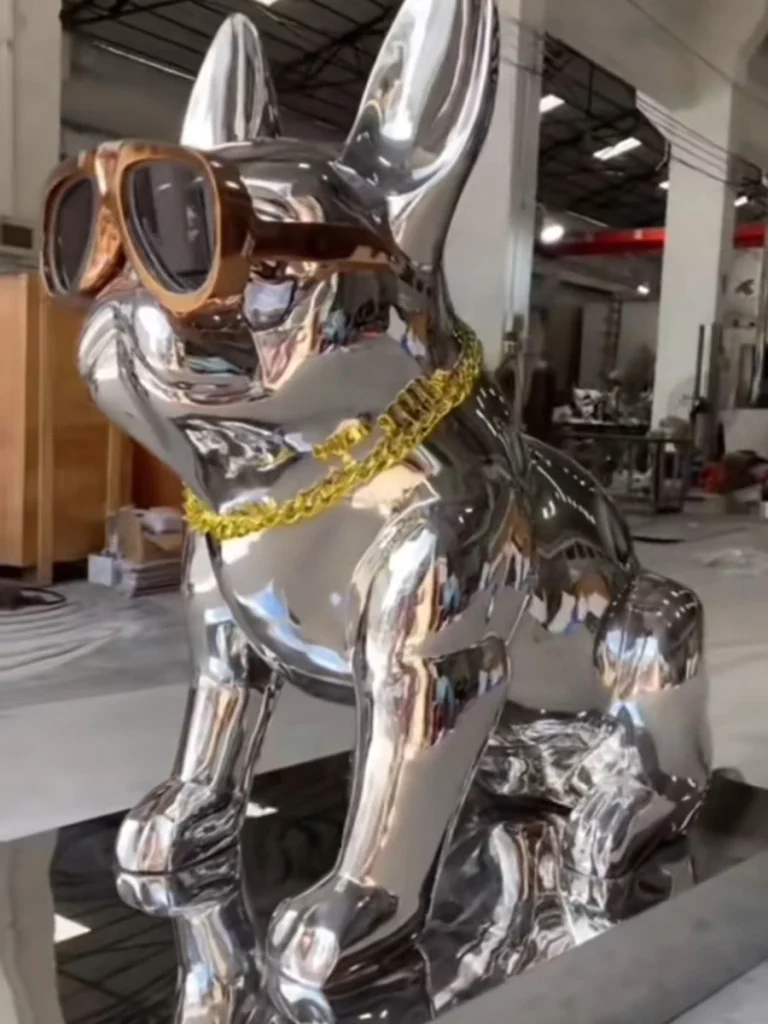
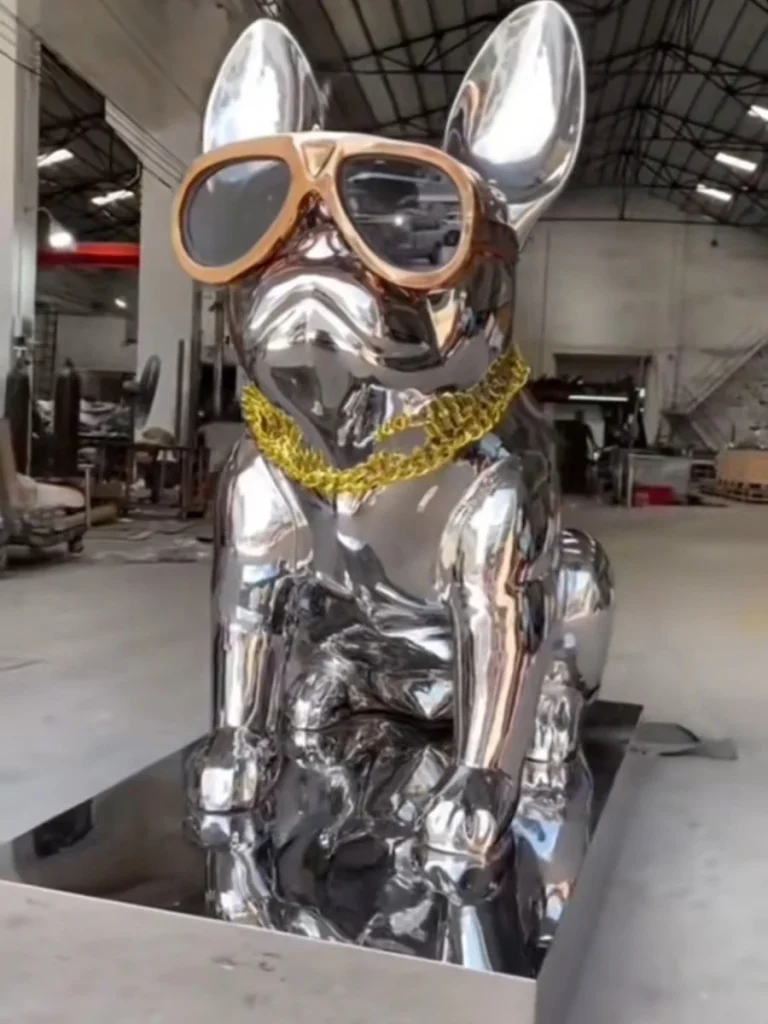
While stone and bronze dominate traditional gardens, stainless steel has become increasingly popular in contemporary landscape design.
A stainless steel bulldog sculpture introduces a completely different aesthetic language. Instead of rustic warmth or classical weight, the material delivers clean lines, reflective surfaces, and architectural clarity.
This makes stainless steel particularly well suited for modern settings such as:
- Minimalist courtyards
- Contemporary villa gardens
- Hotel plazas and commercial landscapes
- Urban rooftop terraces
The reflective surface interacts dynamically with its environment. Sunlight, greenery, and surrounding architecture are mirrored across the polished metal, allowing the sculpture to change visually throughout the day.
From a technical perspective, stainless steel also offers exceptional durability.
High-grade stainless steel—such as 304 or 316—provides excellent corrosion resistance and long-term structural stability. Unlike painted metals, it does not peel or flake, and it requires minimal maintenance beyond occasional cleaning.
Another advantage lies in fabrication possibilities.
Modern metalworking techniques allow artists to create highly stylized forms, geometric interpretations, or mirror-polished animal sculptures. These designs often emphasize silhouette and proportion rather than traditional surface texture.
The result is a bulldog that feels both iconic and futuristic.
In contemporary landscapes where glass, concrete, and steel dominate the architecture, a stainless steel bulldog sculpture becomes a striking focal point—bridging art, engineering, and modern garden design.
Maintaining Your Outdoor Bulldog Sculpture for Decades

A well-made garden sculpture is not a disposable decoration. It is an outdoor artwork designed to age gracefully alongside the landscape that surrounds it.
Fortunately, a high-quality Bulldog statue requires very little intervention.
The secret lies in understanding how materials behave outdoors. Natural stone and bronze are engineered for Long-term resilience, but small preventative steps can dramatically extend their beauty and lifespan.
Think of maintenance not as constant work, but as thoughtful stewardship. A few minutes of care each season ensures that the sculpture retains its character, stability, and presence for decades.
Weatherproofing your stone and metal statues

Outdoor sculpture must survive the most unpredictable conditions nature can offer.
Rain, frost, sun exposure, and temperature fluctuations all place stress on materials. The good news is that quality statues are designed to withstand these forces.
For natural stone sculptures, the greatest concern is the freeze-thaw cycle.
Water can collect beneath a statue or inside microscopic pores in the material. When temperatures drop below freezing, that moisture expands. Over time, repeated freezing and thawing may create tiny fractures.
Fortunately, high-quality natural stone possesses excellent Structural integrity.
A few simple precautions help protect the sculpture:
- Elevate the statue slightly on a stone plinth or pedestal
- Avoid placing it directly on soil that retains moisture
- Ensure water can drain freely around the base
These steps reduce prolonged water contact with the statue’s underside.
Metal sculptures behave differently.
True bronze is naturally Weather-resistant. It was used in ancient outdoor monuments precisely because it tolerates rain, heat, and seasonal changes extremely well.
Over time, bronze forms a stable patina that actually protects the metal beneath.
However, occasional waxing helps preserve surface richness. A thin layer of clear sculpture wax applied once or twice a year protects the patina and enhances color depth.
For painted metal or resin sculptures, UV protection becomes more important. Sunlight gradually fades pigments, particularly in very bright climates.
Positioning the statue where it receives partial shade—or applying protective sealants recommended by the manufacturer—can significantly slow this process.
How to clean outdoor garden statues without damaging the patina
Cleaning garden sculpture requires restraint.
Many well-meaning owners damage their statues by using harsh chemicals or pressure washers. These methods strip protective finishes and destroy subtle surface textures developed over time.
Gentle cleaning is always the safest approach.
Most outdoor statues only need occasional washing to remove natural buildup such as dust, bird droppings, pollen, or light algae.
A simple method works best:
- Rinse the statue lightly with clean water.
- Mix a small amount of mild soap with warm water.
- Use a soft brush or sponge to clean the surface gently.
- Rinse thoroughly and allow the statue to air dry.
This technique removes grime while preserving delicate finishes.
For natural stone statues, this process maintains the natural texture and coloration. For bronze sculptures, it protects the living patina that gives the metal its depth and character.
Avoid abrasive tools, chlorine-based cleaners, or high-pressure hoses. These can strip protective layers and permanently alter the sculpture’s appearance.
In most cases, a statue cleaned two or three times per year will remain in excellent condition.
The British bulldog has endured centuries of cultural transformation—from medieval fighting dog to national emblem of resilience. Its sculpted form now stands peacefully in gardens across the world.
Yet the symbolism remains powerful.
A bulldog statue represents loyalty, quiet strength, and the steadfast guardianship of home. It anchors a landscape with personality while offering a touch of humor and warmth.
Whether carved in dense natural stone or cast in luminous bronze, the figure carries a timeless presence. It watches over pathways, welcomes visitors, and silently keeps memories alive.
Long after trends in garden design come and go, the bulldog remains.
Solid. Patient. Unmoved.
And on porches, terraces, and garden gates around the world, this determined little guardian will continue to stand watch for generations to come. 🐾
Frequently Asked Questions About Bulldog Garden Statues
1. Which material is best for long-term outdoor display?
For long-term outdoor display, bronze and natural stone are widely considered the most reliable and prestigious materials used in traditional garden sculpture. Bronze is exceptionally durable and develops a protective patina over time, making it highly resistant to harsh weather conditions.
Natural stone—such as marble, limestone, or granite—is another excellent option. These statues are extremely heavy and stable, often weighing around 80 kg per piece, giving them the structural mass needed to withstand decades of outdoor exposure. When properly maintained, both materials can last for generations.
2. Are these sculptures frost-proof? Do they need to be moved indoors during extreme weather?
High-quality natural stone and bronze sculptures are generally frost-resistant and designed to remain outdoors throughout the year. Their dense structure allows them to tolerate rain, snow, and temperature fluctuations without major damage.
However, in regions with very severe winters, it is still wise to prevent sculptures from sitting directly in standing water, heavy snow accumulation, or prolonged ice contact. Elevating the base slightly or temporarily relocating the statue to a sheltered area can further extend its lifespan.
3. How do I maintain bronze or stone sculptures to preserve their beauty?
Maintenance is straightforward and minimal. Bronze sculptures benefit from occasional waxing, which protects the surface and enhances the richness of the natural patina that develops over time. This patina is considered part of the sculpture’s artistic value.
For natural stone sculptures, regular cleaning with water and a soft brush is usually enough. Removing dirt, algae, or bird droppings periodically helps maintain the stone’s natural texture and appearance.
4. Why should I choose a “hand-dyed” sculpture instead of a painted one?
Hand-dyed finishes penetrate into the material rather than sitting on the surface. This technique allows color to become part of the stone itself, producing a natural tone that ages gracefully over time.
Painted sculptures, on the other hand, rely on a thin external coating. After years of sunlight and temperature changes, painted surfaces often begin to crack or peel, leading to visible flaking and uneven coloration.
5. How are large sculptures delivered, and what should I prepare?
Large stone sculptures are typically shipped on pallets using freight trucks equipped with pallet jacks. Delivery is usually made to the nearest accessible flat surface on the property, such as a driveway or loading area.
Because these statues are extremely heavy—often around 80 kg each—the driver usually does not move them into the garden itself. It is recommended to arrange extra help or lifting equipment to move the sculpture safely to its final position.
6. What should I do if the sculpture arrives damaged?
Inspection during delivery is extremely important for large, high-value sculptures. Some suppliers require the customer to unpack and inspect the shipment within 10 minutes of unloading to confirm that no damage occurred during transport.
If any damage is discovered, it should be reported to the driver and recorded before signing the delivery receipt. Once the shipment is accepted without remarks, submitting a successful damage claim may become much more difficult.
7. Is there symbolic meaning behind placing dog statues at the entrance?
In Western culture, dog sculptures traditionally symbolize loyalty, protection, and guardianship. Placing a bulldog statue at the entrance of a home or garden subtly conveys the idea of a faithful guardian watching over the property.
In Eastern traditions, guardian figures known as Foo Dogs are typically placed in pairs. One represents strength and authority, while the other symbolizes nurturing and balance. Together they are believed to protect the entrance and prevent negative energy from entering the home.
8. Did Winston Churchill actually own a British Bulldog?
Interestingly, no. Although the public strongly associates Winston Churchill with the bulldog image, his favorite pet was actually a poodle named Rufus.
The bulldog became symbolically connected to Churchill during World War II because his determined personality and leadership style reflected the breed’s reputation for resilience and stubborn courage.
9. Do you offer custom sculptures based on a pet photo?
Yes. Many high-end sculpture studios accept custom commissions based on photographs of a beloved pet. Skilled artists can recreate the exact posture, proportions, and facial expression of the dog.
The process typically begins with a clay model for approval. Once finalized, the sculpture can be carved from natural stone or cast in bronze using traditional techniques such as the lost wax process, allowing for remarkable detail and long-term durability.
10. How can I distinguish a “heritage-grade” solid sculpture from a cheap resin imitation?
The most reliable indicators are weight, material authenticity, and finishing technique.
True heritage-quality sculptures—especially those carved from natural stone—are extremely heavy and solid. A single statue may weigh around 80 kg (160 kg per pair) because it is made from dense stone rather than hollow synthetic materials. This mass gives the sculpture strong architectural presence and excellent structural integrity.
Craftsmanship also reveals clear differences:
High-end sculptures
Solid natural stone or bronze construction
Hand-dyed or naturally finished surfaces
Colors that age naturally without peeling
Low-cost imitations
Lightweight resin or fiberglass
Hollow construction
Surface paint that can chip or crack over time
Bronze sculptures created using the lost wax casting method represent the highest level of craftsmanship. They are highly weather-resistant and gradually develop a beautiful patina that enhances their visual depth.
While resin statues may be useful in locations where weight is restricted—such as rooftop terraces—serious landscape projects and long-term installations almost always favor natural stone or bronze, which offer superior durability, authenticity, and lasting value.