Get in touch with Yun-Sculpture company
Commissioning Outdoor Stations of the Cross: A Buyer’s Guide to Bronze & Stone Sets (2026)

Introduction: Why Outdoor Stations of the Cross Fail So Often
Problem.
Most outdoor stations of the cross were never engineered for decades of exposure.
Paint peels.
Figures crack.
Faces lose their meaning.
Agitation.
When statues decay, it’s not just a maintenance issue.
It’s a spiritual disappointment—for the congregation, and for the committee who approved the purchase.
Solution.
This guide exists to prevent that mistake.
It explains how to commission heritage-grade Stations of the Cross that will still inspire prayer 50+ years from now.
I’m writing this as the Factory Director and Senior Project Manager at Yun Sculpture, with 20 years managing large-scale outdoor religious projects for cathedrals, shrines, and cemeteries worldwide.
Table of Contents
What This Guide Covers
This is not a catalog.
It is a buyer’s protection manual.
You will learn:
- Why sets of 14 statues fail more often than single figures
- The real difference between bronze, stone, and resin outdoors
- How professional foundries engineer anti-theft mounting
- Why inconsistent artistic style destroys devotion
- The true cost of commissioning a complete outdoor set
- How to plan spacing, installation, and long-term maintenance
Understanding the Outdoor Stations of the Cross
What Are the Stations of the Cross?
The Stations of the Cross represent 14 moments from Christ’s Passion.
Each station must function independently.
But spiritually, they must read as one continuous journey.
That is where most projects fail.
Why Outdoor Sets Are Different from Indoor Sets
Indoor stations are protected.
Outdoor stations are punished.
They face:
- UV radiation
- Freeze–thaw cycles
- Acid rain
- Snow accumulation
- Vandalism and theft
If the material or engineering is wrong, failure is guaranteed.
The #1 Risk When Buying a Set of 14 Statues: Inconsistency
Why Consistency Is Everything
This is the biggest mistake committees make.
They focus on material.
They focus on price.
They ignore artistic continuity.
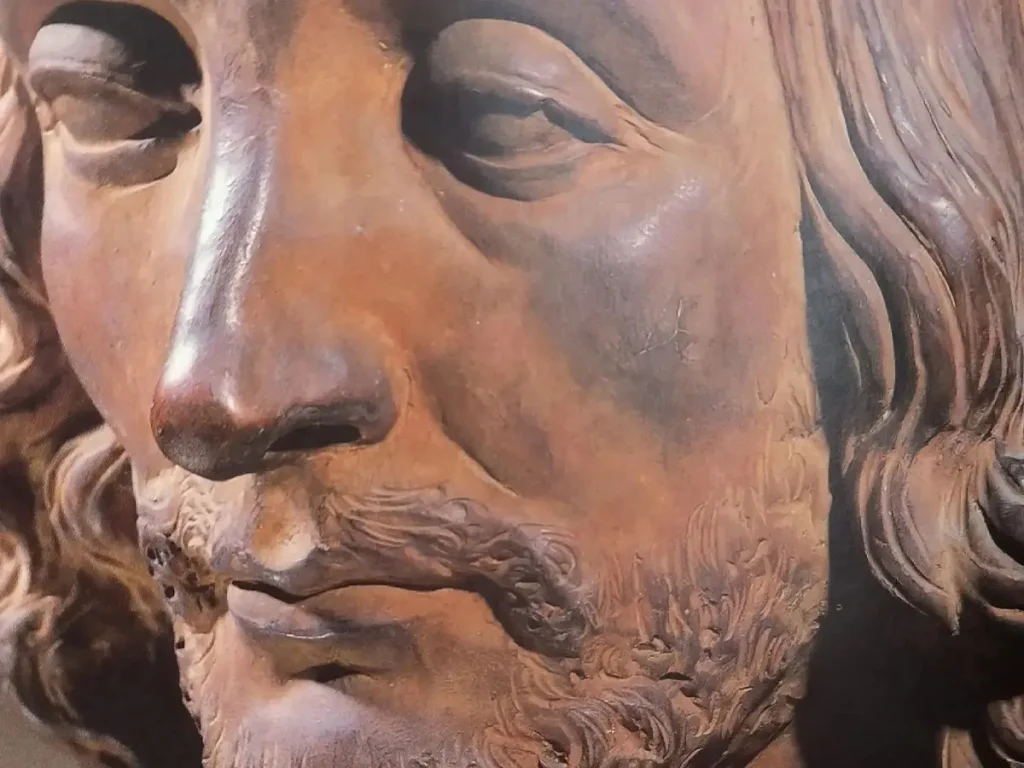
When Jesus’ face looks different in Station I and Station XIV, the devotion breaks.
The Way of the Cross becomes a gallery of unrelated sculptures.
The Yun Sculpture Consistency Guarantee
At Yun Sculpture, we treat a set of 14 stations as one single artwork.
Engineering Truth:
- ONE Master Sculptor oversees all 14 clay models
- Facial proportions are measured and referenced
- Anatomical tension evolves naturally across stations
- Drapery language remains consistent
This ensures:
Jesus in Station I is unmistakably the same Christ in Station XIV.
This is non-negotiable for serious churches.
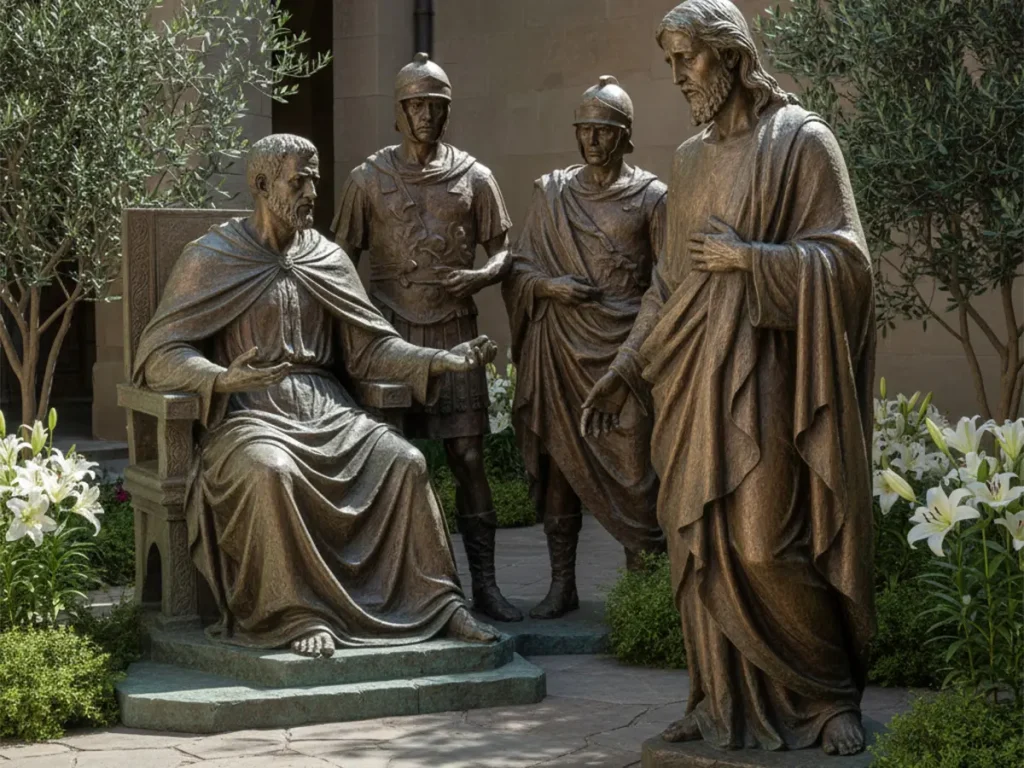
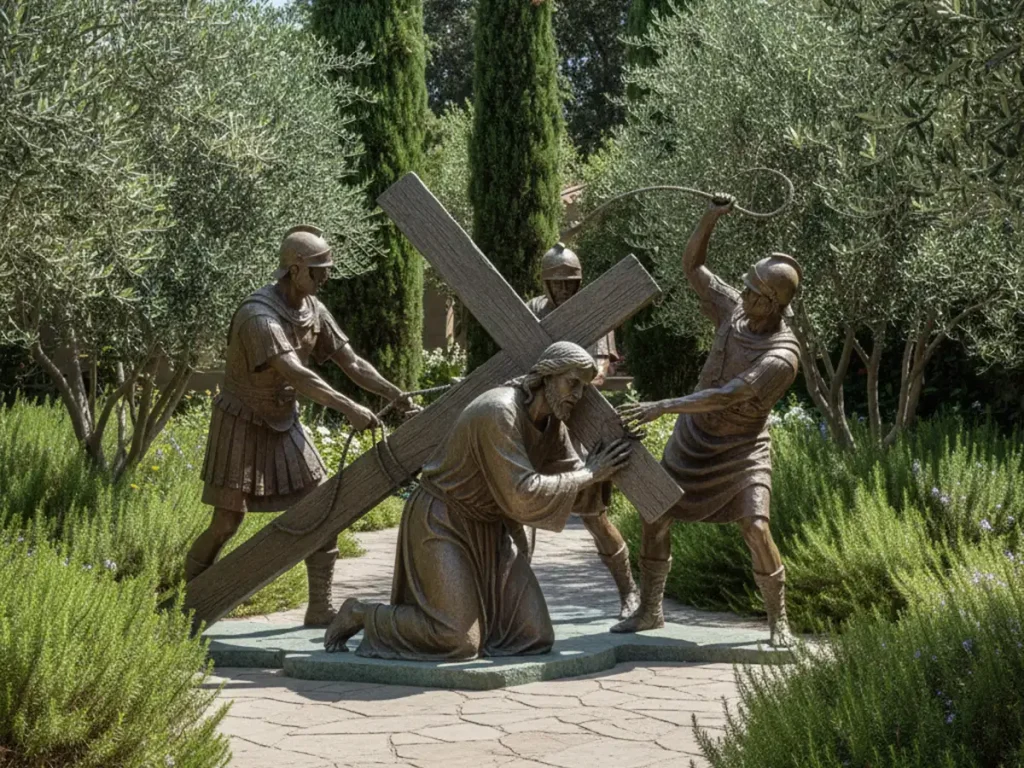
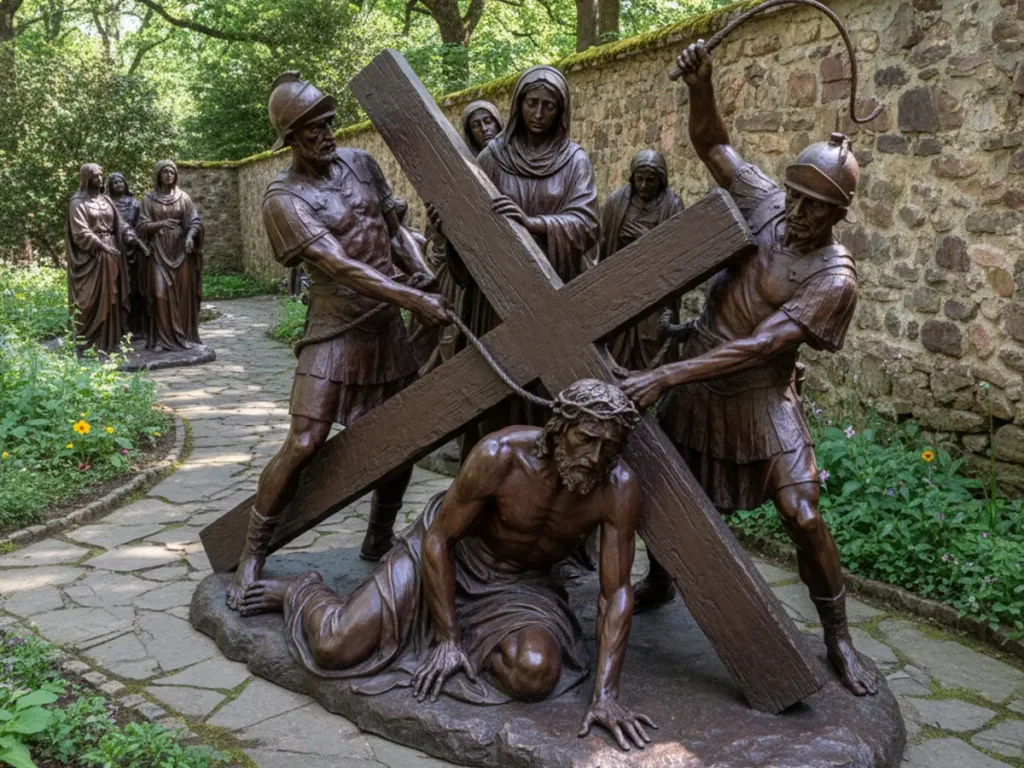
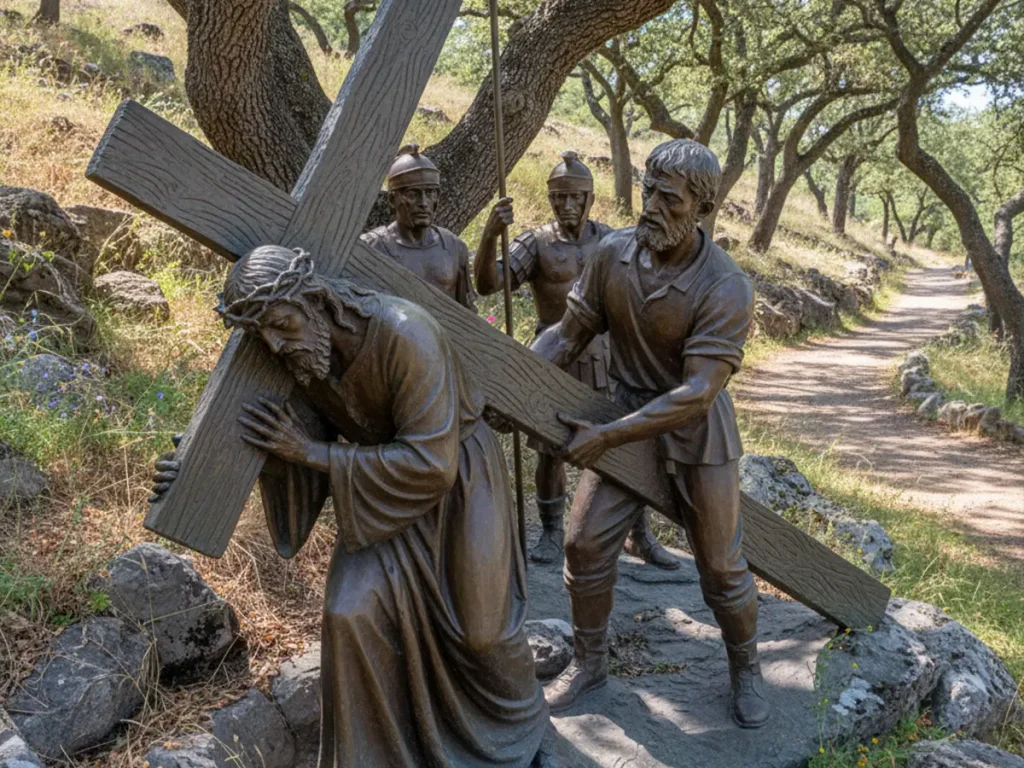
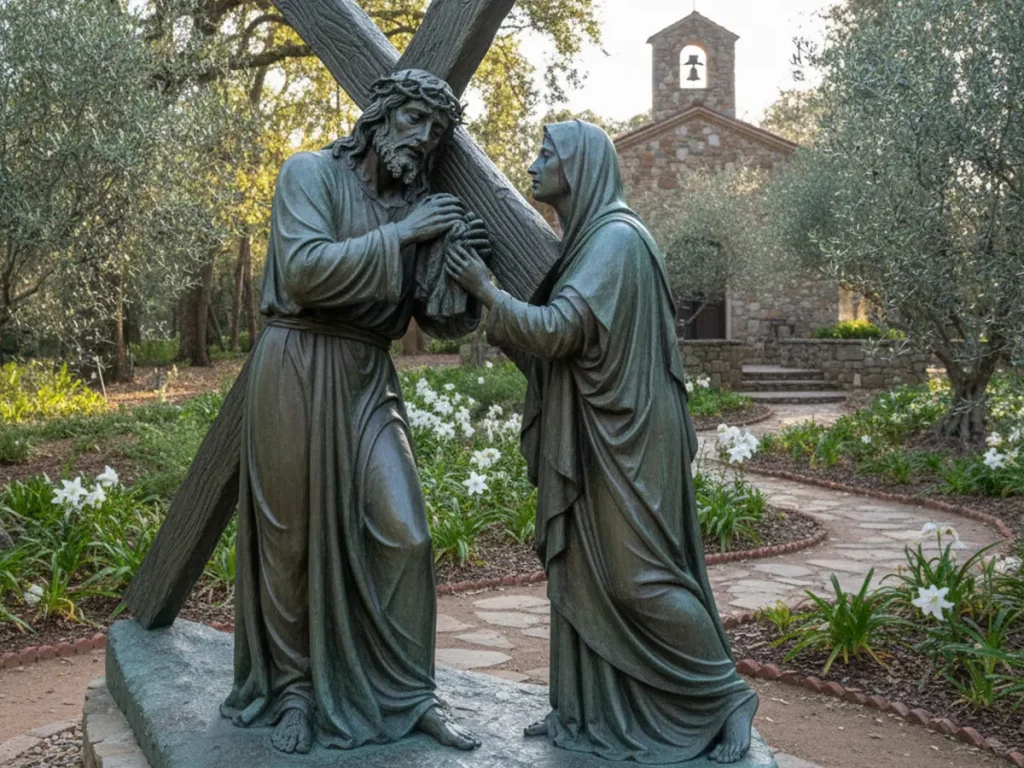
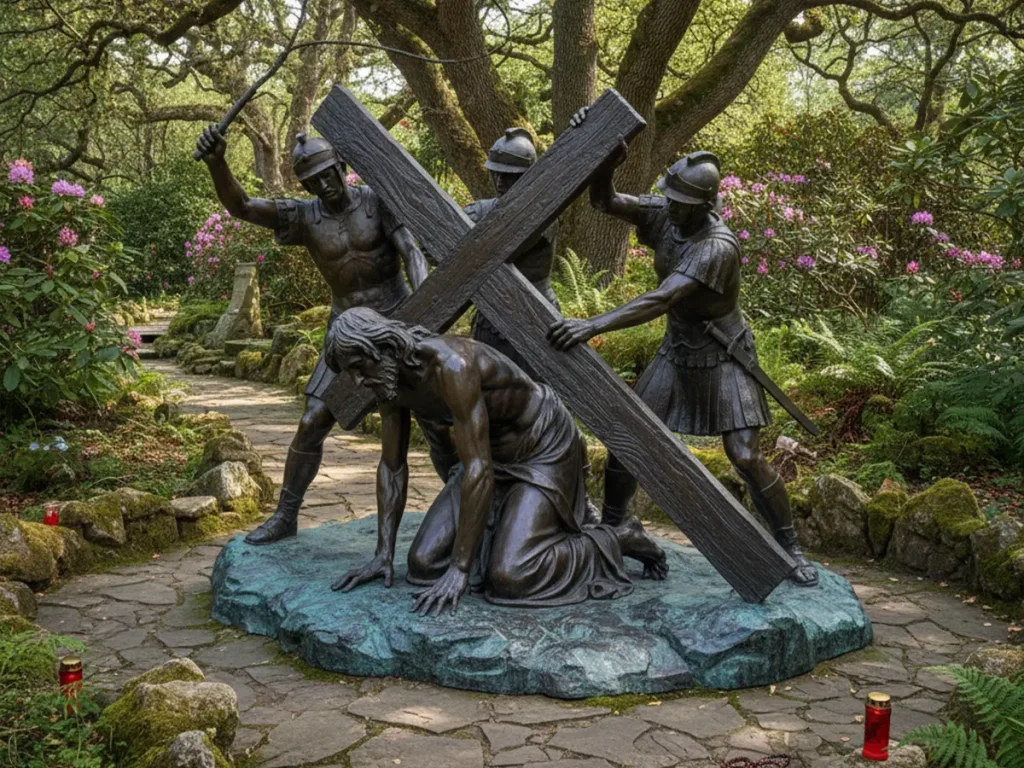
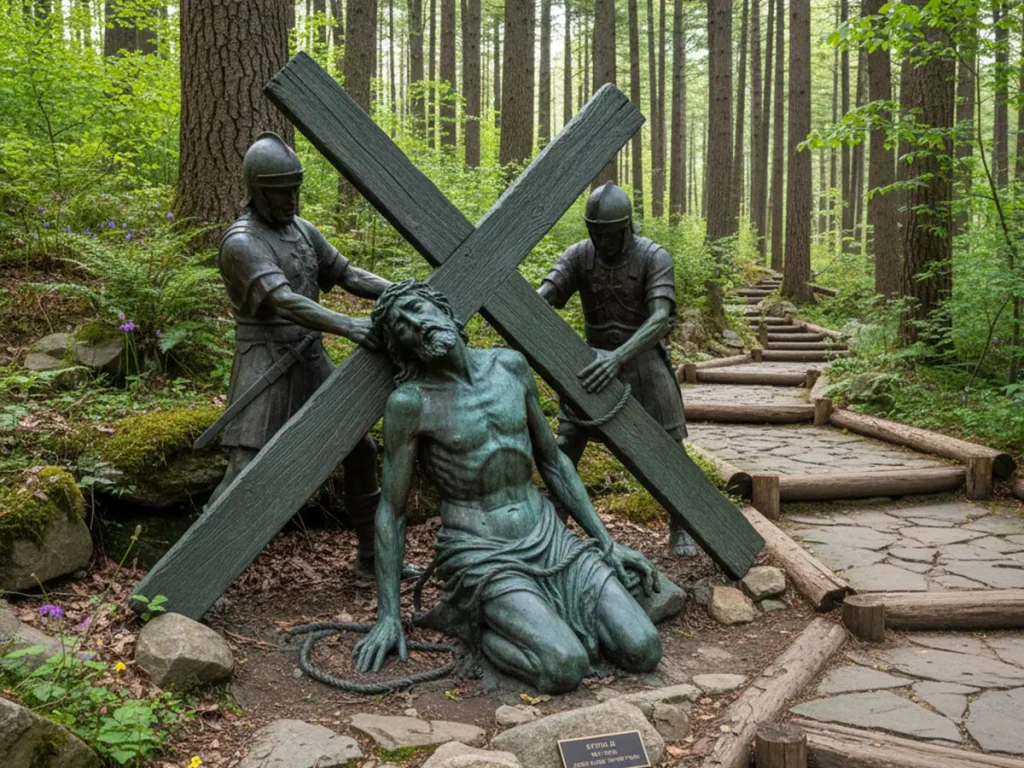
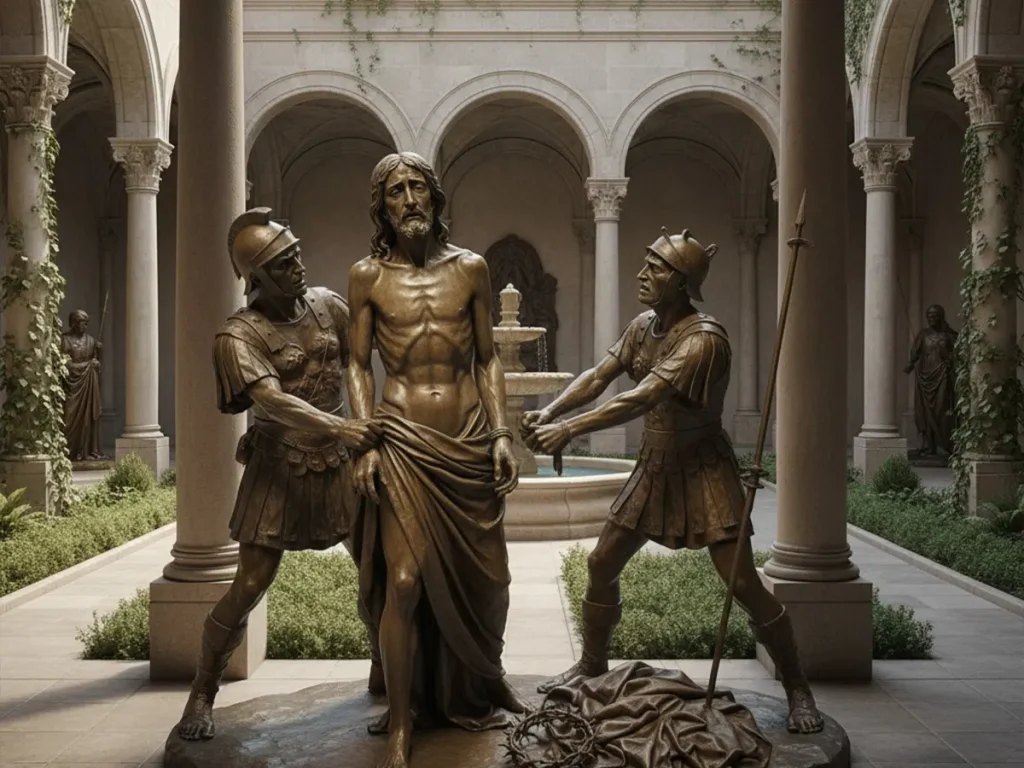
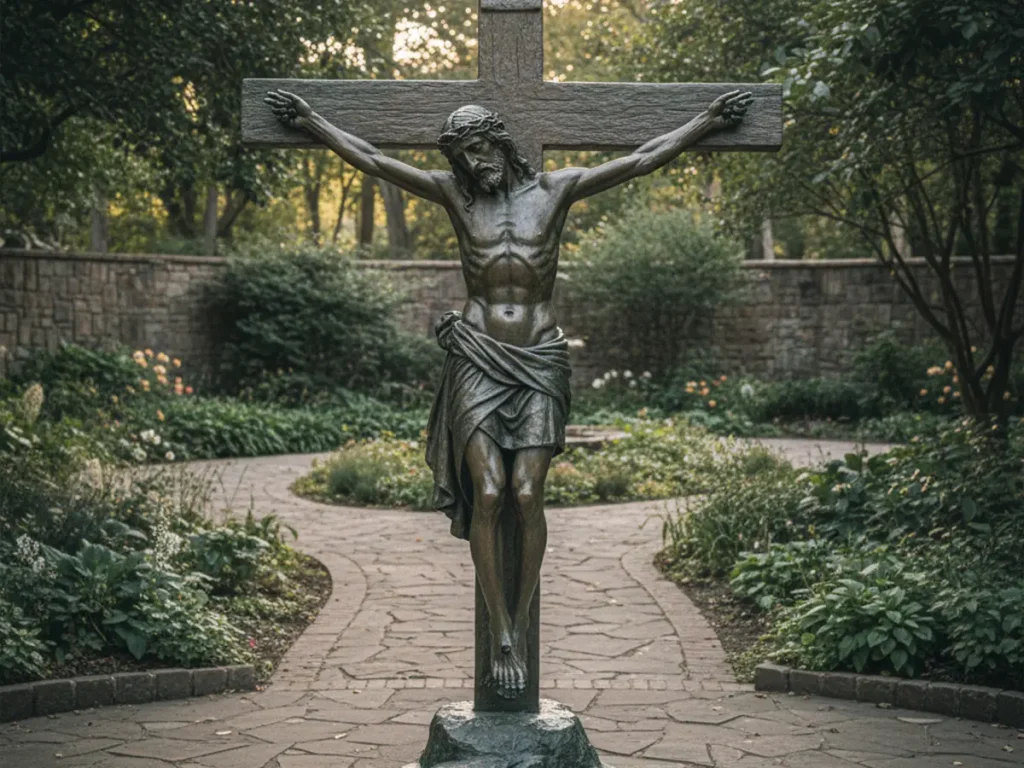
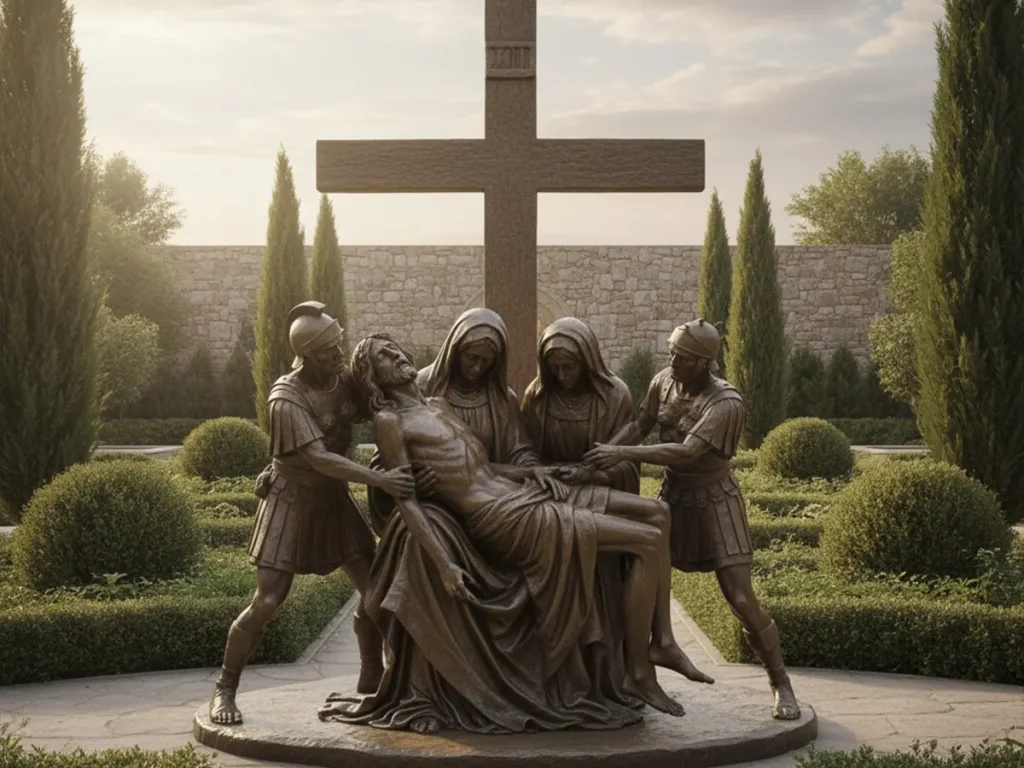
Caption: Full Stations of the Cross set showing consistent proportions, facial features, and drapery style across all 14 stations.
Choosing the Right Material for Outdoor Stations of the Cross
The Three Materials You Will Encounter
Most vendors offer three options.
Only two are appropriate for permanent outdoor use.
Comparison Table: Bronze vs. Stone vs. Resin
| Material | Lifespan Outdoors | Maintenance | Risk Level | Verdict |
|---|---|---|---|---|
| Silicon Bronze | 100+ years | Low | Very Low | Best Overall |
| Natural Marble / Stone | 50–100 years | Medium | Low | Excellent (Site Dependent) |
| Painted Resin / Fiberglass | 3–7 years | High | Very High | DO NOT BUY |
Bronze Stations of the Cross (The Gold Standard)
Why Churches Choose Bronze
Bronze has been used for sacred sculpture for thousands of years.
Not because it’s cheap.
Because it survives.
Our Bronze Specification (Engineering Detail)
At Yun Sculpture, we use:
- Silicon Bronze (not architectural scrap bronze)
- High copper content for corrosion resistance
- Structural wall thickness designed for outdoor loads
This matters when statues weigh 300–800 kg each.
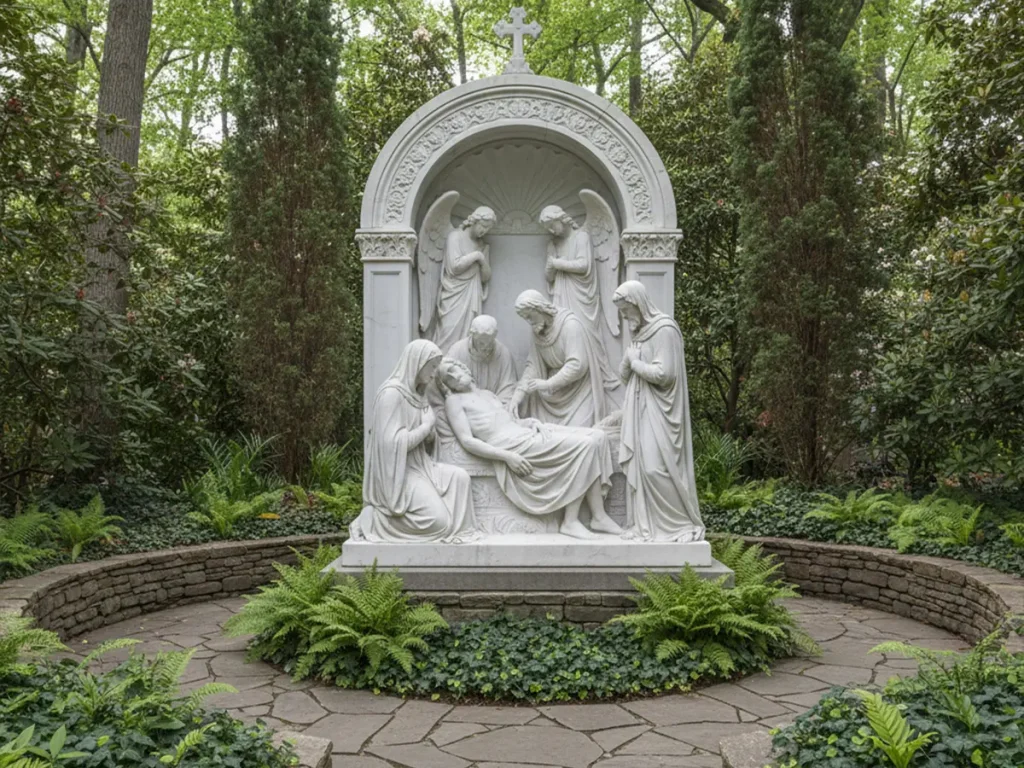
Hot Chemical Patina (Not Paint)
Critical Warning:
Painted bronze is a failure waiting to happen.
We use Hot Chemical Patina, bonded at high temperature.
Benefits:
- Color penetrates the metal surface
- Self-healing oxidation over time
- Scratches blend naturally
- No peeling, no flaking
Bronze Maintenance Reality
Annual maintenance:
- Gentle washing with water
- Optional wax every 1–2 years
That’s it.
No repainting.
No restoration cycles.
Stone & Marble Stations of the Cross (Solemn and Traditional)
When Stone Is the Right Choice
Stone communicates permanence.
It feels biblical.
It feels ancient.
Stone is ideal when:
- The site is contemplative
- The climate is moderate
- The church desires a lighter visual presence
Our Stone Specification
We use:
- Natural White Marble or dense limestone
- Hand-carved or CNC-rough + hand-finished
- Weather-oriented carving depth
Shallow carving erodes.
Deep carving survives.
Important Stone Limitations
Stone is honest—but unforgiving.
- Acid rain can soften detail
- Freeze–thaw requires proper drainage
- Marble demands thoughtful siting
Stone is not wrong.
But it is site-sensitive.

Why We Aggressively Warn Against Resin & Fiberglass
This Is the Hard Truth
Painted resin will fail outdoors.
Always.
What happens:
- UV breaks down paint in 2–3 years
- Water infiltrates micro-cracks
- Winter freezes cause structural cracking
- Color mismatch becomes obvious
By year five, the statues look abandoned.
The Real Cost of “Saving Money”
Cheap statues do not save money.
They delay regret.
Replacing a full set costs more than doing it right once.
Anti-Theft Engineering (An Unspoken Reality)
Outdoor Religious Statues Are Targets
This is uncomfortable—but real.
Bronze has scrap value.
Stone can be vandalized.
Security must be engineered invisibly.
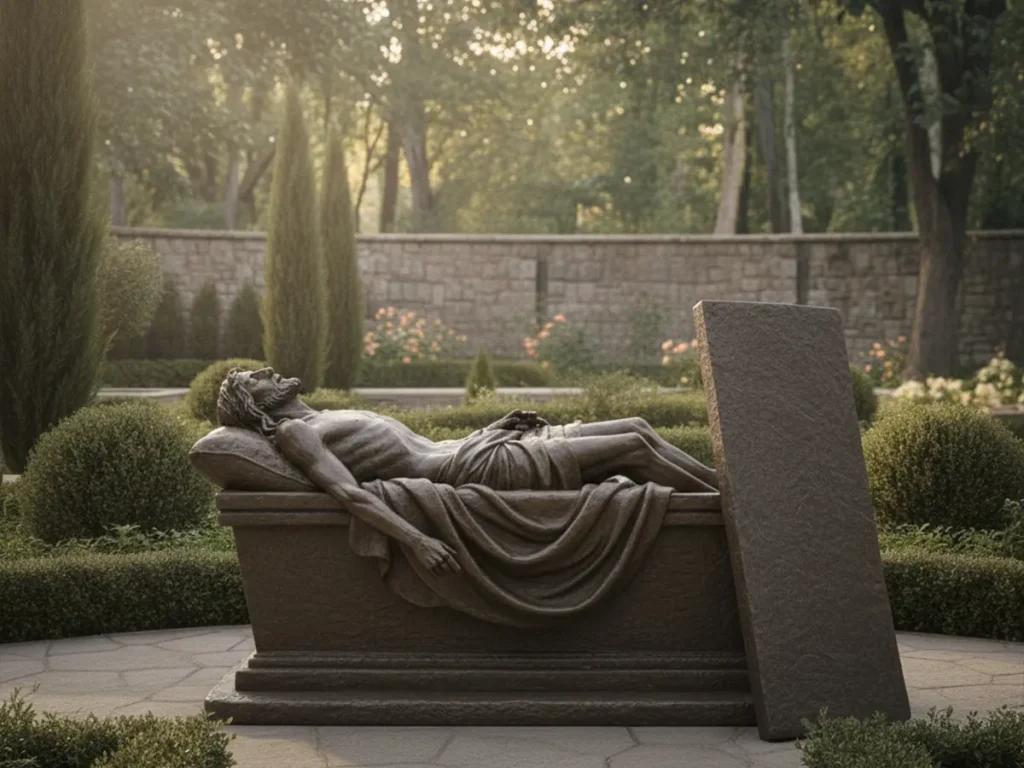
Our Anti-Theft Mounting System
Every outdoor station we produce includes:
- Welded stainless steel mounting plates
- Hidden anchor sleeves
- Bolting into reinforced concrete pads
The statue cannot be removed without heavy equipment.
This is not optional.
It is responsible stewardship.
Buying a Full Set vs. Individual Stations
Can You Buy Individual Stations?
Yes.
But we strongly advise against mixing suppliers.
Why?
- Different sculptors = different Christ
- Different foundries = different patinas
- Different scales = visual chaos
For committees planning long-term, a full set is the only safe approach.
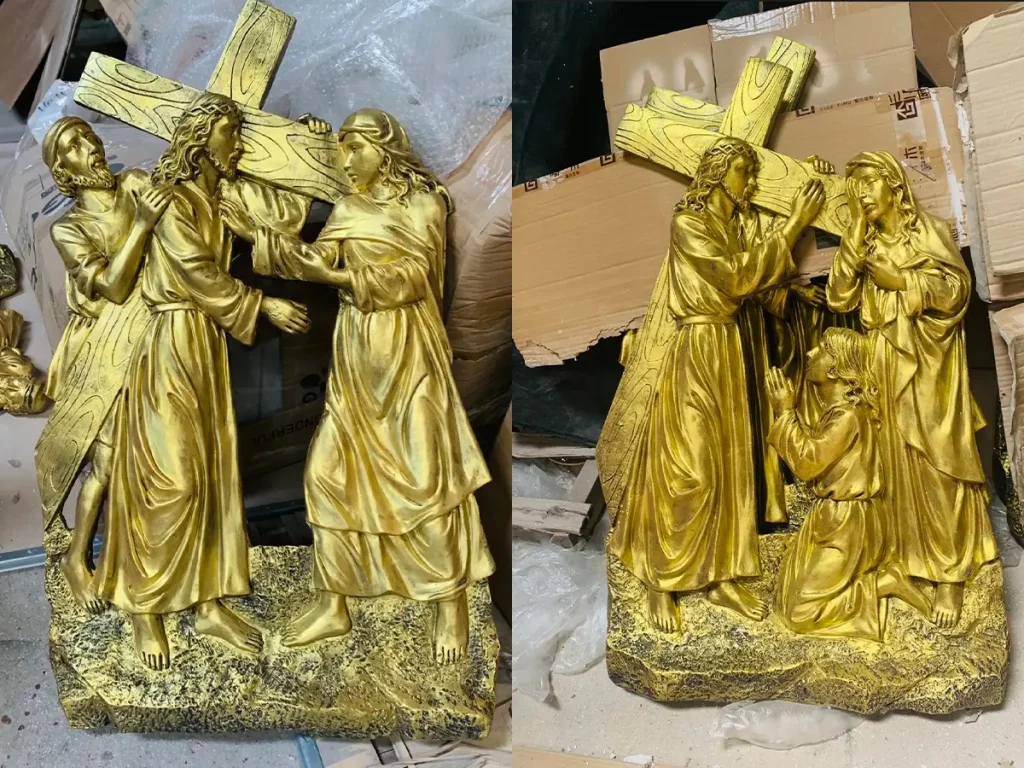
You may want to see the comparison between the reliefs and three-dimensional statues at the 14 Stations of the Cross.
Customization: Making the Stations Right for Your Church
What Can Be Customized Safely
Responsible customization includes:
- Scale (life-size vs. larger-than-life)
- Base height for accessibility
- Material choice (bronze or stone)
- Subtle iconographic adjustments
What Should NOT Be Customized
Avoid:
- Mixing artistic styles
- Over-modernization
- Theatrical exaggeration
The Stations are not a stage.
They are a prayer path.
This is where experienced custom church projects matter.
Installation Planning (Often Overlooked, Always Critical)
Spacing Between Stations
There is no single rule.
But there are best practices.
“For large pilgrimage sites or cemeteries, we recommend spacing stations 15–30 meters apart. This allows for a meditative walk between prayers.”
The goal is rhythm, not crowding.
Foundation Requirements
Each station requires:
- Reinforced concrete footing
- Proper drainage
- Leveling for visual alignment
Skipping this step destroys longevity.
Cost Transparency: What a Full Outdoor Set Really Costs
Let’s Talk Numbers
A complete outdoor Stations of the Cross set typically costs:
$50,000 – $150,000+ USD
This is not arbitrary.
Why the Cost Is High
You are commissioning:
- 14 individual sculptures
- 14 molds
- Tons of bronze or stone
- Months of sculpting
- Structural engineering
- Crating and logistics
There are no shortcuts without consequences.
Red Flags in Low Quotes
Be cautious if:
- The price seems “too good”
- Material specs are vague
- Sculptor attribution is unclear
- Installation is “not included”
Those savings reappear later as problems.
Future Pacing: Think 50 Years Ahead
Close your eyes.
Imagine your prayer garden 50 years from now.
The trees are taller.
The path is worn smooth.
Children walk the same stations their grandparents prayed.
The statues should still speak.
Still move hearts.
Still look intentional—not tired.
That is the real benchmark.
Why Committees Choose Yun Sculpture
Church committees don’t choose us because we are cheap.
They choose us because we are careful.
Because we understand:
- Donated money deserves respect
- Sacred art must outlast leadership terms
- Engineering is part of faithfulness
High-Ticket CTA: Plan Before You Purchase
Planning a Prayer Garden? Don’t Just Buy Off the Shelf.
Every site is different.
Every congregation has a story.
We offer:
- Free site planning consultation
- Material recommendations
- Budget range estimates
- Installation guidance
Button Text:
👉 Get My Church Project Quote
Frequently Asked Questions
1. How much space do I need between stations?
Most projects use 20–40 meters between stations.
The ideal spacing depends on land size and desired contemplation time.
2. Do you sell individual stations or only full sets?
We offer both.
However, for artistic consistency, we strongly recommend commissioning all 14 stations together.
3. How are outdoor stations installed?
Each station is bolted into reinforced concrete using concealed stainless steel plates.
This ensures stability and theft resistance.
4. What maintenance is required for bronze stations?
Minimal maintenance.
Annual washing and optional waxing every 1–2 years.
5. How long does production take?
A full set typically requires 6–10 months, depending on size and material.
Final Thought for Church Committees
This decision will outlast you.
Choose materials that endure.
Choose artists who respect consistency.
Choose engineering that protects your investment.
If you do, your outdoor stations of the cross will not just survive.
They will continue to serve.