Get in touch with Yun-Sculpture company
Figurative Sculpture: A Collector’s Guide to Styles, Materials & Periods

From the Archaic korai of ancient Greece to Rodin’s fractured modernity — a cultural and practical guide to understanding figurative sculpture for collectors, designers, and serious buyers.
Table of Contents
Table of Contents
What Is Figurative Sculpture?
Figurative sculpture is three-dimensional art that depicts recognizable subjects from the visible world — primarily the human body, but also animals, mythological beings, and occasionally objects rendered with sufficient specificity to be identified. The term distinguishes this tradition from abstract sculpture, which prioritizes form, geometry, and spatial relationships over recognizable representation.
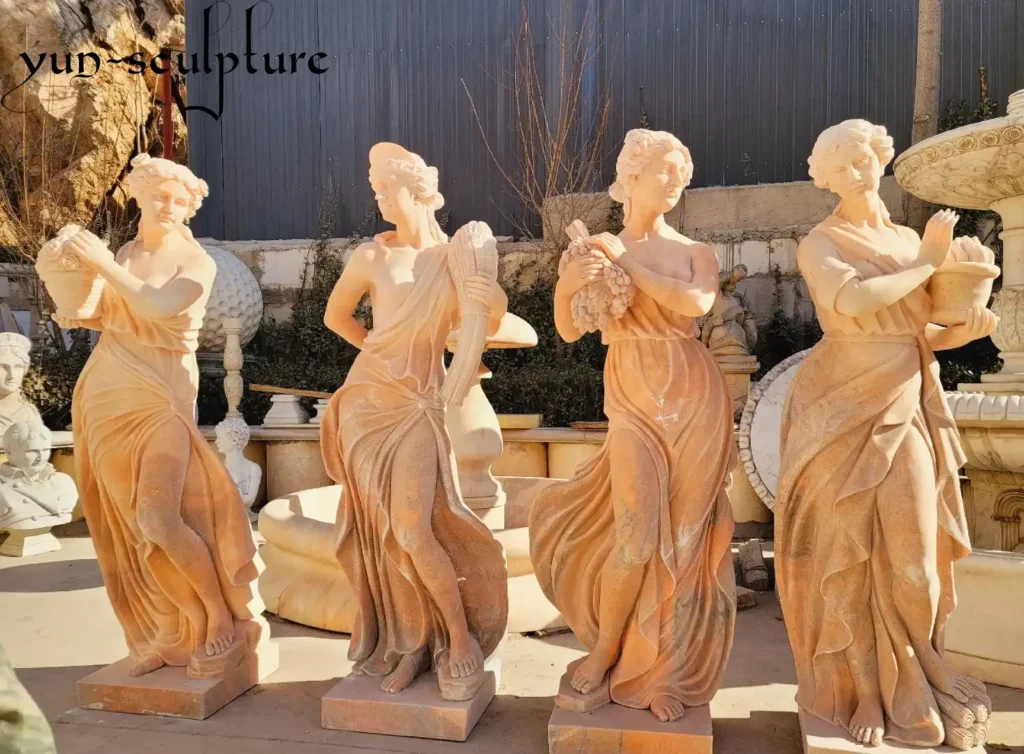
The word “figurative” comes from the Latin figura, meaning form or shape. In art historical usage it carries a specific implication: that the work maintains a relationship to observable reality, however idealized, stylized, or distorted that relationship might be. A perfectly proportioned Greek Apollo and a deliberately elongated Gothic Madonna are both figurative sculpture — one pursues idealization, the other spiritual transcendence, but both began from a human referent.
This breadth is what makes figurative sculpture so enduring as a collecting category. The tradition spans more than 40,000 years of human artistic production, encompasses every major civilization and culture, and continues generating significant contemporary work. A collector who understands figurative sculpture has access to one of the longest and richest continuous traditions in all of art.
Six Periods Every Collector Should Know
Figurative sculpture does not develop in a straight line. Each period responds to the one before it — sometimes reverently, sometimes in outright rejection. Understanding these relationships is what allows a collector to look at an unfamiliar piece and begin placing it in time, culture, and meaning.
Ancient Greek: The Foundation of Western Figurative Tradition (700–31 BCE)
Greek figurative sculpture evolves through three distinct phases, each with recognizable visual characteristics. The Archaic period (700–480 BCE) produces the kouros and kore — standing male and female figures whose frontal rigidity and enigmatic smiles reflect Egyptian influence and a world still working out how stone could embody a living body. These are sculptures of formula, beautiful in their repetition and strange in their stillness.
The Classical period (480–323 BCE) breaks the formula. Contrapposto — the distribution of the figure’s weight onto one leg, causing a subtle S-curve through the torso — arrives and transforms everything. Figures breathe. Drapery moves. The body is understood as a system of tension and release rather than a surface to be decorated. This is the period that produces the Doryphoros, the Discobolus, and the original of the Athena Parthenos.
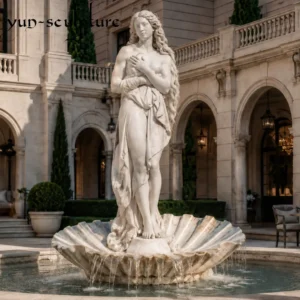
The Hellenistic period (323–31 BCE) takes Classical achievement and amplifies it toward the dramatic. Figures twist, strain, suffer, and triumph. The Laocoön group writhes in agony. The Nike of Samothrace lunges forward into an imaginary wind. Hellenistic figurative sculpture — including the Venus de Milo — reaches for emotional states that the Classical period deliberately held in restraint.
For collectors: Greek-style figurative sculpture in bronze or marble remains the most consistently requested category in the Western market. The visual language is immediately legible, the historical associations carry weight, and the range of available subjects — from deity portraits to athletic figures — is vast.
Roman: Portraiture and the Politics of Likeness (509 BCE–476 CE)
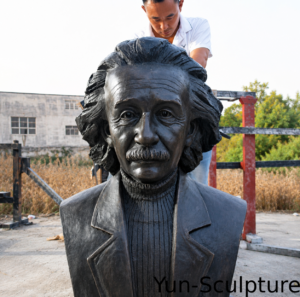
Rome inherits Greek figurative vocabulary and deploys it for political purposes that Greece never imagined. The portrait bust — a head and upper chest, mounted for display — becomes the primary vehicle for communicating power, lineage, and dynastic legitimacy. Roman portrait sculpture achieves a verism that Greek idealism resisted: warts, wrinkles, sagging jowls, and broken noses are rendered in stone with remarkable precision, because in Rome, the aged face signals experience and authority rather than aesthetic failure.
Public figurative sculpture in Rome serves propaganda functions explicitly. The Augustus of Prima Porta presents the emperor in a pose derived directly from Greek Classical models — the same contrapposto, the same idealized proportions — while the reliefs on his breastplate narrate specific political events. Figurative sculpture here is state communication as much as art.
For collectors: Roman-style portrait busts are among the most practical figurative commissions for corporate and institutional settings. The format communicates authority without ostentation, has immediate visual legibility, and is entirely appropriate for boardrooms, reception halls, and academic buildings.
Renaissance: The Rediscovery of the Human Body (1300–1600 CE)
After a millennium in which Christian Europe largely subordinated the body to spiritual meaning — elongating figures, flattening space, denying anatomy — the Renaissance rediscovers classical figurative sculpture and uses it to reframe what the human body means. Donatello’s David (c. 1440) is the first freestanding nude figure in Western sculpture since antiquity. It does not simply revive a classical pose; it introduces a psychological complexity — a slight downward gaze, an almost adolescent vulnerability — that classical sculpture rarely attempted.
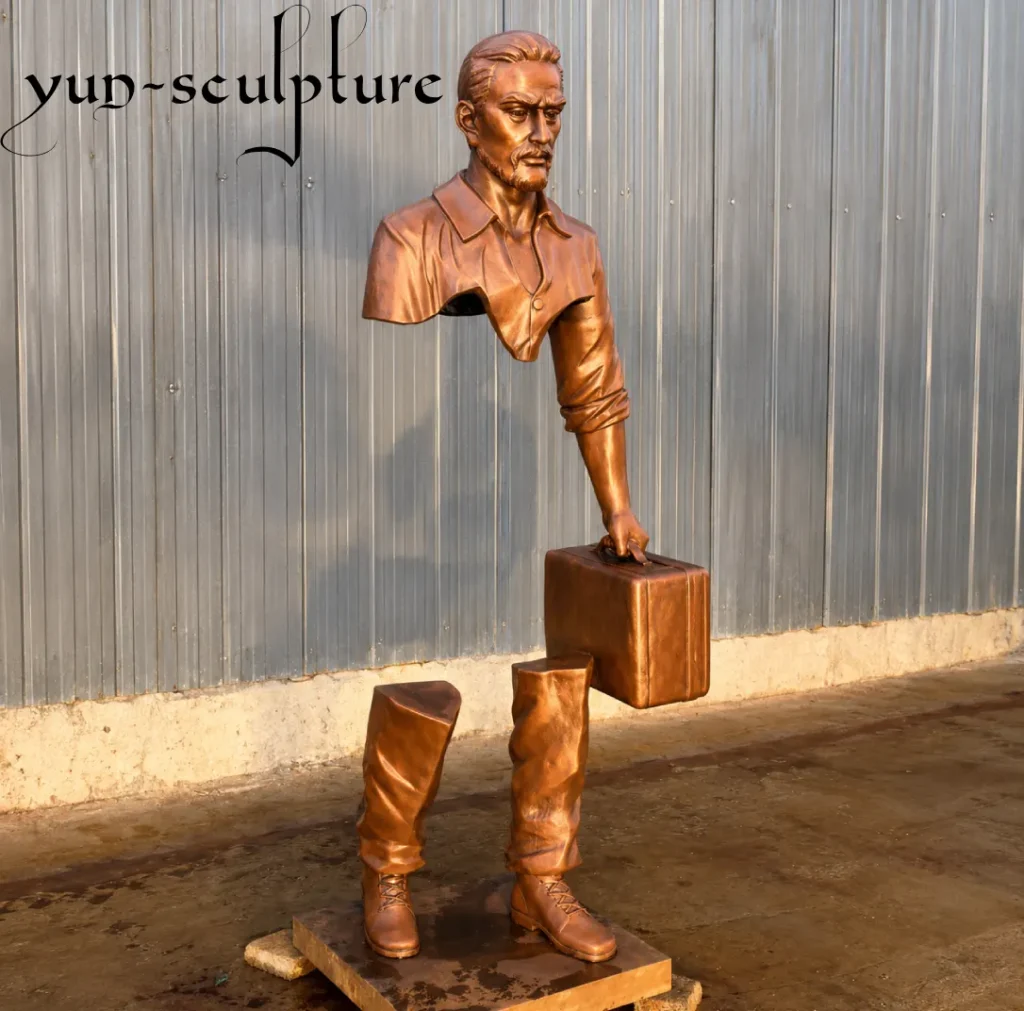
Michelangelo’s contribution is the concept of figura serpentinata: the spiraling figure, its body rotating through space so that no single viewpoint exhausts it. His David (1501–1504) and the Pietà (1498–1499) represent the synthesis of classical technical mastery with Renaissance spiritual and humanistic content.
For collectors: Renaissance-style figurative sculpture in marble is one of the great permanent investments in interior architecture. A well-executed marble figure in the Renaissance tradition brings centuries of accumulated cultural weight to any space it inhabits. Our figurative marble sculpture guide covers material selection and placement in detail.
Baroque: Drama, Movement, and the Conquest of Stone (1600–1750 CE)
Baroque sculpture takes the figura serpentinata and pushes it to its expressive limit. Gian Lorenzo Bernini — the defining figure of the period — produces work in marble that appears impossible: hair blown by wind, fabric caught mid-flutter, skin yielding to a grasping hand. His Apollo and Daphne (1622–1625) freezes a moment of metamorphosis in Carrara marble with a precision that still seems implausible three centuries later.
The Baroque period is also the moment when figurative sculpture fully integrates with architecture and landscape. Fountains, garden programs, altarpiece ensembles — Baroque figurative sculpture is designed to be experienced within an environment, not simply viewed on a pedestal. This legacy shapes how we think about placing figurative sculpture in designed spaces today.
For collectors and landscape designers: Baroque-influenced figurative sculpture — characterized by dynamic poses, flowing drapery, and emotional intensity — translates exceptionally well to formal garden settings, entrance halls, and large interior volumes where scale and drama are appropriate.
Neoclassical and Romantic: Idealism in Dialogue with Feeling (1750–1900 CE)
The Neoclassical period returns, self-consciously, to Greek and Roman models — partly in response to archaeological discoveries at Pompeii and Herculaneum, partly as a reaction against what critics saw as Baroque excess. Antonio Canova’s marble figures achieve a surface refinement that arguably exceeds even classical originals: his Psyche Revived by Cupid’s Kiss (1787–1793) renders flesh in Carrara marble with a delicacy that remains unmatched.
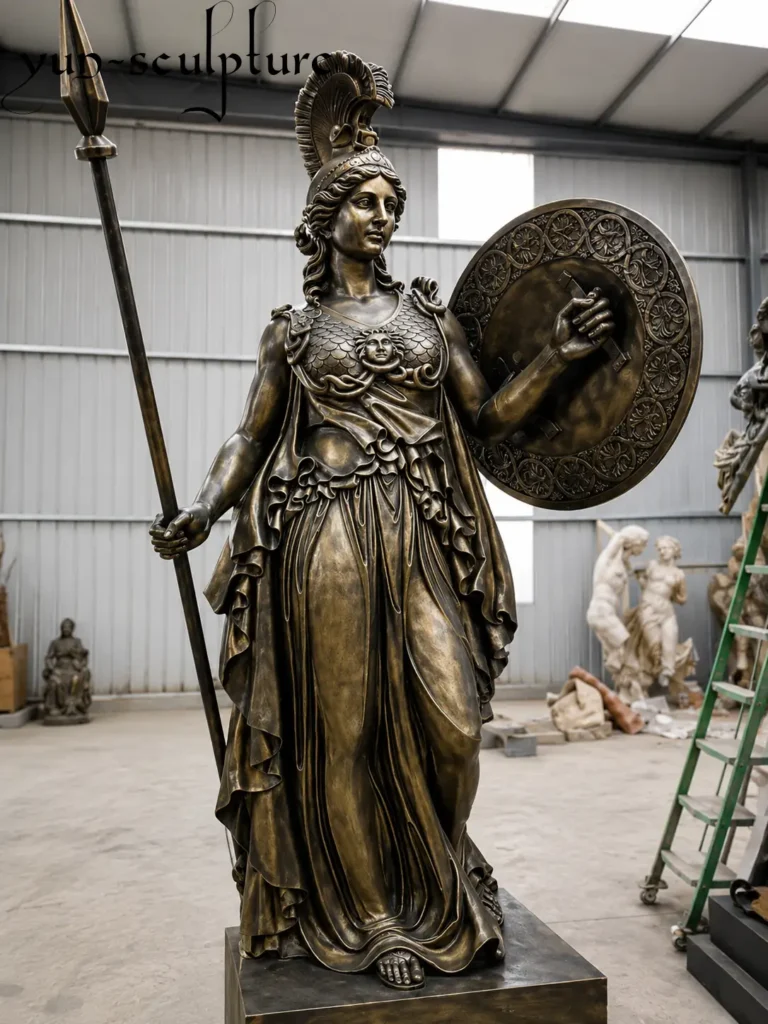
Romanticism runs parallel and in tension with Neoclassicism, insisting on emotional authenticity over formal idealization. François Rude’s La Marseillaise (1833–1836) and Auguste Préault’s Ophelia (1876) are figurative sculptures in which feeling overwhelms form — where the internal state of the subject matters more than the proportional correctness of the body depicting it.
For collectors: Neoclassical figurative sculpture — particularly in white marble — remains the most versatile period style for high-end residential and institutional interiors. Its restraint reads as sophisticated rather than decorative, and its historical associations with Enlightenment values align well with academic, legal, and civic environments.
Modern and Contemporary: Breaking and Remaking the Figure (1880–Present)
Rodin fractures the Neoclassical consensus. His figures are unfinished, partial, psychologically raw. The surfaces of his bronzes — deliberately rough, retaining the marks of modeling tools — reject the idea that figurative sculpture should aspire to the smooth perfection of classical marble. Modern figurative sculpture, from The Thinker (1880) onward, is as much about process and interiority as it is about the external human form.
The twentieth century produces a spectrum of figurative approaches: the compressed, textured figures of Alberto Giacometti; the monumental, simplified forms of Henry Moore; the hyperrealist bronze tableaux of Duane Hanson and John De Andrea; the Neo-Expressionist figuration of Georg Baselitz and Markus Lüpertz. What unites these otherwise disparate practices is the insistence that the human figure remains a valid and inexhaustible subject — that abstraction has not replaced figuration but exists alongside it.
Contemporary figurative sculpture in bronze continues this tradition. Work produced today in the lost-wax tradition by skilled foundry sculptors draws on the full depth of this history while responding to contemporary subjects and commissions. The tradition is not historical artifact — it is a living practice.
Materials and What They Signal
The material of a figurative sculpture is not neutral. Each carries historical associations, aesthetic implications, and practical characteristics that determine where the work can live, how it ages, and what cultural weight it carries into a space.
| Material | Historical Association | Aesthetic Character | Collector Consideration |
|---|---|---|---|
| Marble (white) | Greek/Roman antiquity, Renaissance, Neoclassical | Cool, luminous, formal | Interior; sheltered outdoor; classical or academic settings |
| Bronze | All periods; dominant for outdoor public sculpture | Warm, weighty, patinated | Indoor and outdoor; portrait and figurative; permanent |
| Terracotta | Ancient Mediterranean; decorative traditions | Warm, matte, informal | Indoor only; decorative rather than monumental |
| Stone (limestone, granite) | Medieval, architectural, funerary | Dense, matte, permanent | Architectural integration; garden; memorial |
| Resin / cold-cast bronze | Contemporary; reproduction market | Lightweight, variable finish | Decorative; not appropriate for permanent installation |
| Stainless steel | Late 20th century contemporary | Reflective, industrial, contemporary | Contemporary architectural settings; public art |
For serious collectors, the material question is inseparable from the placement question. A figurative bronze figure in a formal garden has a 200-year life expectancy with minimal maintenance. The same figure in cold-cast resin — bronze powder mixed into polyester resin — may look identical in photographs but will fail structurally within decades and cannot be patinated in the same way. The distinction matters, and understanding it separates informed buyers from uninformed ones.
When commissioning or purchasing figurative sculpture in bronze, the key technical markers of quality are: silicon bronze alloy (85%+ copper content), lost-wax casting rather than sand casting or cold-casting, wall thickness of 5–8mm for freestanding figures, and chemically applied rather than painted patina. Our figurative sculpture overview covers these distinctions in practical detail.
Styles Within Figurative Sculpture
Within the broad category of figurative sculpture, collectors and buyers encounter a range of stylistic approaches that cut across historical periods. Understanding these styles helps clarify what you are responding to in a piece — and what to look for when sourcing work that fits a specific environment or intention.
Idealized Figurative Sculpture
The dominant tradition of Western figurative sculpture from ancient Greece through the Neoclassical period pursues an idealized human form — proportions refined beyond natural occurrence, surfaces perfected beyond biological reality. The goal is not photographic accuracy but the body as it would look if anatomy expressed its own highest potential. Idealized figurative sculpture is appropriate for settings where aspiration, authority, and cultural continuity are the intended messages: institutional buildings, formal gardens, commemorative monuments.
Naturalistic and Portrait Figurative Sculpture
Roman portraiture and its descendants pursue the opposite goal: the subject as they actually appear, with individual specificity that makes the work legible as a record of a particular person. Portrait figurative sculpture requires the sculptor to balance likeness (the work must be recognized) with dignity (the work must honor the subject). This is technically the most demanding form of figurative sculpture and the most personal in its outcome. Greek figurative sculpture in the idealized tradition and Roman-style portrait busts represent two poles of the figurative tradition that remain equally relevant for contemporary commissions.
Expressive and Psychological Figurative Sculpture
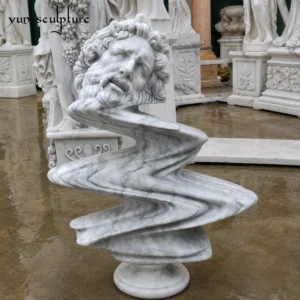
From Rodin onward, a strand of figurative sculpture prioritizes the subject’s interior state over external accuracy. Surfaces are deliberately rough, proportions deliberately distorted, poses deliberately unstable — all in service of conveying psychological or emotional content that idealized surfaces would suppress. This style reads well in contemporary private collections and corporate art programs where the goal is to signal cultural sophistication and engagement with twentieth-century art history.
How to Read a Figurative Sculpture
Standing before an unfamiliar figurative sculpture, a collector can develop an immediate working understanding by moving through four questions in sequence.
- What is the pose saying? Weight distribution (contrapposto vs. frontal rigidity), the direction of the gaze, and the position of the hands are the primary carriers of meaning in figurative sculpture. A figure looking downward carries interiority; one looking upward suggests aspiration or appeal to divine authority; one gazing at the viewer establishes direct relationship. These choices are never accidental.
- What does the surface tell you? A smooth, polished surface signals idealization and control — the sculptor has worked to eliminate evidence of process. A rough, tool-marked surface signals process and authenticity — the sculptor wants you to see how the work was made. Patina color in bronze (warm brown versus cool black versus weathered green) signals different historical associations and environmental histories.
- What is the relationship to the body’s natural proportions? Classical Greek sculpture uses a canon of approximately 7–8 head-heights for the standing figure. Gothic sculpture deliberately elongates to 9–10 head-heights for spiritual emphasis. Mannerist sculpture goes further, to 10–12, for elegance and tension. A figure that looks “wrong” proportionally is almost always making a deliberate statement — understanding what statement requires knowing the period.
- What environment was this made for? Figurative sculpture designed for outdoor public display reads differently at close range than work designed for intimate indoor viewing. Scale, surface texture, and the complexity of detail are all calibrated to the expected viewing distance and context. A piece that seems crude in a gallery may be exactly right at 30 feet in a public square.
Collecting Figurative Sculpture: Practical Guidance
Start with Period and Material, Not Subject
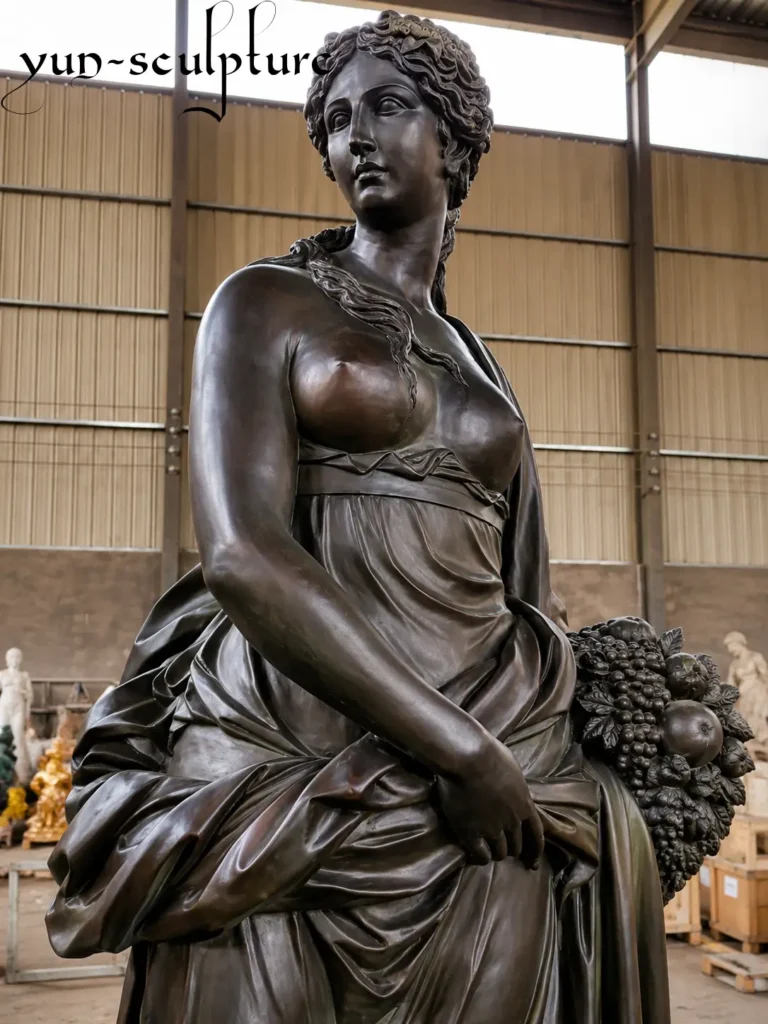
New collectors often begin by searching for a specific subject — a particular deity, a specific pose, a named work. More experienced collectors begin with period and material, because these determine the long-term character of the piece in its environment. A Greek Classical bronze reads differently in a space than a Baroque marble, regardless of what either depicts. Clarifying the aesthetic register you want — formal and restrained, or dramatic and expressive; warm bronze or cool marble — before narrowing to subject produces more coherent collections.
Commission vs. Purchase
The figurative sculpture market divides between existing works (purchased from galleries, dealers, or auction) and commissioned works (produced to specification by a foundry or sculptor). For collectors whose specific requirements — scale, subject, patina, installation environment — are not met by available inventory, commissioning from a quality foundry is often the more satisfying route. A commission guarantees exact dimensions, material specifications, and subject matter, and at factory-direct pricing from a Quyang foundry, the cost differential between purchasing existing inventory and commissioning is smaller than most buyers expect.
What Quality Actually Looks Like
In bronze figurative sculpture, quality markers visible without specialist equipment include: the consistency and depth of the patina (uneven, painted-on color is a warning sign); the crispness of surface detail at close range (hair, fabric texture, facial features should remain precise); the weight of the piece relative to its size (lightweight bronze suggests thin casting); and the quality of the base or pedestal integration (hasty base work usually accompanies hasty casting). In marble, the grain consistency of the stone, the precision of tool marks at transitions between planes, and the accuracy of surface polish are reliable quality indicators.
Frequently Asked Questions
What is figurative sculpture? +
Figurative sculpture is three-dimensional art that depicts recognizable subjects from the visible world — primarily the human body, but also animals, mythological beings, and other identifiable forms. The term distinguishes this tradition from abstract sculpture, which prioritizes form and geometry over recognizable representation. Figurative sculpture spans more than 40,000 years of human artistic production, from prehistoric ivory carvings through ancient Greek marble, Renaissance bronze, and contemporary lost-wax casting. It remains one of the most consistently collected categories in fine art and decorative sculpture worldwide.
What are the 4 types of sculpture? +
The four primary types of sculpture are typically defined by their relationship to space and form: relief sculpture (figures carved into or raised from a flat background surface, as in architectural friezes and commemorative plaques); freestanding sculpture (works that exist fully in three dimensions and can be viewed from all sides); kinetic sculpture (works incorporating movement, either mechanical or responsive to environmental forces); and installation sculpture (large-scale works designed to transform or define a specific space). Within these categories, figurative and abstract are the two primary stylistic distinctions — figurative work depicts recognizable subjects, while abstract work prioritizes form and spatial relationships.
What is the oldest known figurative art? +
The oldest confirmed examples of figurative art are small carved figures dating to approximately 40,000–35,000 BCE, found in cave sites in southern Germany. The Lion-Man of Hohlenstein-Stadel — a figure with a human body and lion head carved from mammoth ivory — dates to approximately 40,000 BCE and is considered the oldest known figurative sculpture. The Venus of Hohle Fels, a female figurine also carved from mammoth ivory, dates to approximately 35,000–40,000 BCE. These works demonstrate that figurative representation — the human impulse to create recognizable images of living beings — is among the oldest activities of our species.
What are the three types of Greek sculpture? +
Greek figurative sculpture is divided into three historical periods, each with distinct visual characteristics. The Archaic period (700–480 BCE) produces frontal, rigidly posed figures — the kouros and kore types — influenced by Egyptian conventions. The Classical period (480–323 BCE) introduces contrapposto (weight shifted onto one leg, creating a natural S-curve through the body), achieving naturalistic movement and idealized proportions. The Hellenistic period (323–31 BCE) amplifies Classical achievement toward the dramatic and emotional — figures twist, strain, and express psychological states rarely attempted in the Classical period. The Venus de Milo and the Laocoön group are among the most recognized Hellenistic works.
Which artists were part of figural expressionism? +
Figural expressionism — also called Neo-Expressionist figuration — emerged prominently in the 1970s and 1980s as a reaction against conceptual and minimal art movements. Key figures include Georg Baselitz (Germany), whose inverted figures challenged conventions of pictorial logic; Markus Lüpertz (Germany), known for mythologically charged figurative work; Anselm Kiefer (Germany), whose monumental figurative works engage German history; and Francesco Clemente (Italy) and Julian Schnabel (United States) in the broader Neo-Expressionist movement. In sculpture specifically, the figural expressionist tradition connects to earlier twentieth-century precedents in Alberto Giacometti’s elongated figures and Germaine Richier’s rough-surfaced bronze figures, both of which prioritize psychological intensity over formal perfection.
What is figurative art also known as? +
Figurative art is also referred to as representational art — the terms are largely interchangeable in contemporary usage. Both describe art that maintains a recognizable relationship to visible subjects from the real world, as distinguished from abstract or non-objective art. In sculpture specifically, the terms figurative sculpture, representational sculpture, and figural sculpture are all used to describe three-dimensional works depicting human or animal subjects. The term figurative carries a slight emphasis on the human figure as the primary subject, while representational is broader and encompasses landscapes, still life, and other identifiable subjects. In auction and gallery contexts, figurative is the more commonly used term for sculpture depicting the human body.
Commission a Figurative Sculpture from Quyang
Whether you are drawn to the idealized calm of classical Greece or the psychological intensity of modern bronze, our foundry produces figurative sculpture across the full range of Western tradition — in bronze and marble, to your specifications.
Commission a Figurative Sculpture from Quyang
Whether you are drawn to the idealized calm of classical Greece or the psychological intensity of modern bronze, our foundry produces figurative sculpture across the full range of Western tradition — in bronze and marble, to your specifications.