Get in touch with Yun-Sculpture company
The Miraculous Infant Jesus of Prague Statue: History, Symbolism, and Custom Bronze & Stone Replicas

In the quiet radiance of devotional art, few sacred images carry the profound mystery of the Infant Jesus of Prague statue, a figure both tender and sovereign. Known also as The Child of Prague, this 19-inch statue presents a theological paradox: the eternal ruler revealed in the form of a child—Christ the King clothed in innocence.
This sacred form is not merely an object of beauty. It is a visual theology of the Divine Infancy, where divine authority is expressed through humility, and omnipotence through gentleness. The Statue of the Infant Jesus of Prague has, for centuries, inspired devotion, trust, and quiet miracles among the faithful.
As a sculpture foundry devoted to sacred artistry, we understand that to recreate an Infant Jesus statue is to participate in a lineage of faith. Whether cast in enduring bronze or carved in solemn stone, each Jesus of Prague statue becomes a vessel—preserving both history and reverence across generations.
Table of Contents
Table of Contents
A Legendary History: From the Spanish Court to the Ruins of Prague
Spanish Roots
The origins of this sacred image trace back to the grandeur and spiritual devotion of the Habsburg Empire, where faith and monarchy were deeply intertwined. According to tradition, the statue was first associated with the Carmelite mysticism of St. Teresa of Ávila, whose devotion to the Child Jesus shaped the spiritual imagination of the era.
The statue was eventually given as a wedding gift to Doña María Manrique de Lara, a noblewoman of the Spanish court. It was later passed to her daughter, Princess Polyxena von Lobkowicz, upon her marriage into Bohemian nobility. In this انتقال—from Spain to Prague—the statue carried not only artistic craftsmanship but a deeply rooted devotional lineage.
The Donation & The Tragedy
In 1628, moved by faith and compassion, Princess Polyxena donated the Jesus of Prague statue to the Carmelite monastery at the Church of Our Lady Victorious in Prague. The monastery, at that time, lived in poverty and hardship. Her gift was not merely material—it was spiritual, accompanied by the belief that this sacred image would bring protection and blessing.
Yet history soon turned violent. During the turmoil of the Thirty Years’ War, in 1631, invading Swedish forces stormed Prague. The monastery was plundered, and the sacred statue was desecrated. Its delicate hands were broken, and the figure itself was discarded—thrown into a pile of debris and forgotten.
For seven long years, the Miraculous Infant Jesus of Prague lay hidden among ruins. Silence replaced devotion. Absence replaced presence.
The Promise
In 1637, a Carmelite friar named Father Cyrillus returned to the devastated monastery. Amid the remnants of destruction, he discovered the damaged statue of the Child Jesus—its hands broken, its form neglected, yet its presence unmistakably sacred.
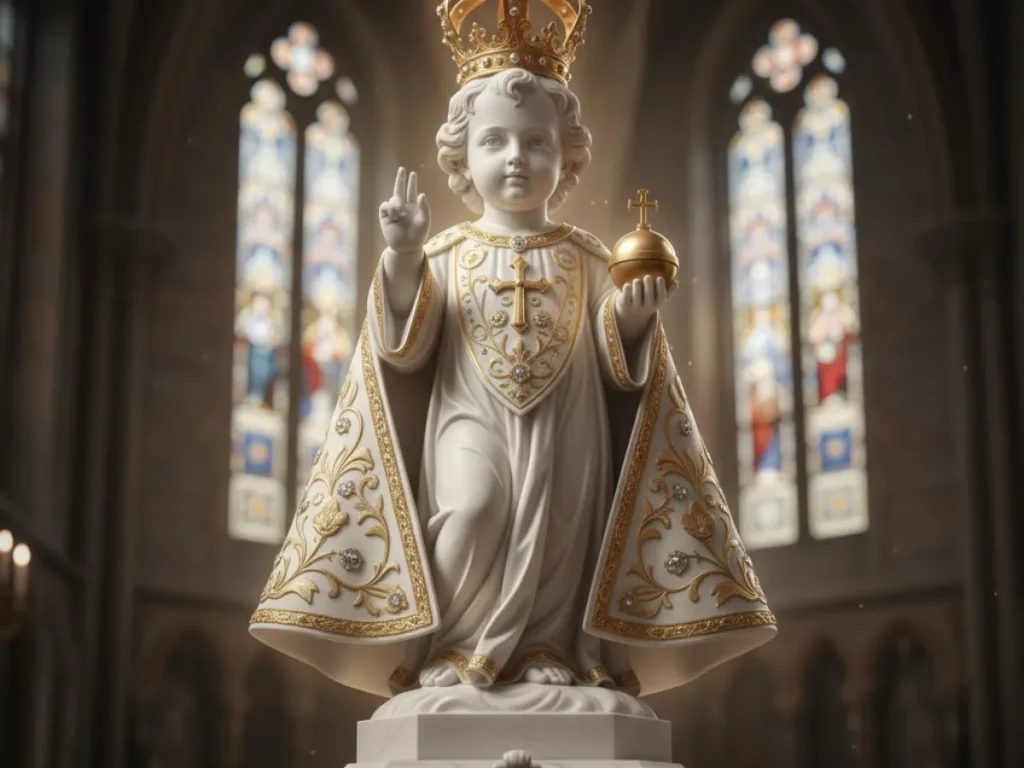
As tradition recounts, it was here that the statue revealed its enduring spiritual message. In prayer, Father Cyrillus heard the words that would define centuries of devotion:
“The more you honor me, the more I will bless you.”
This moment transformed loss into renewal. The act of restoring the Infant Jesus of Prague statue became more than physical repair—it became an act of faith itself. To recreate, to honor, to preserve this sacred image is to enter into that same promise—a quiet covenant between the divine and the devoted.
Decoding the Divine: The Royal Symbolism of the Infant Jesus
The Hands
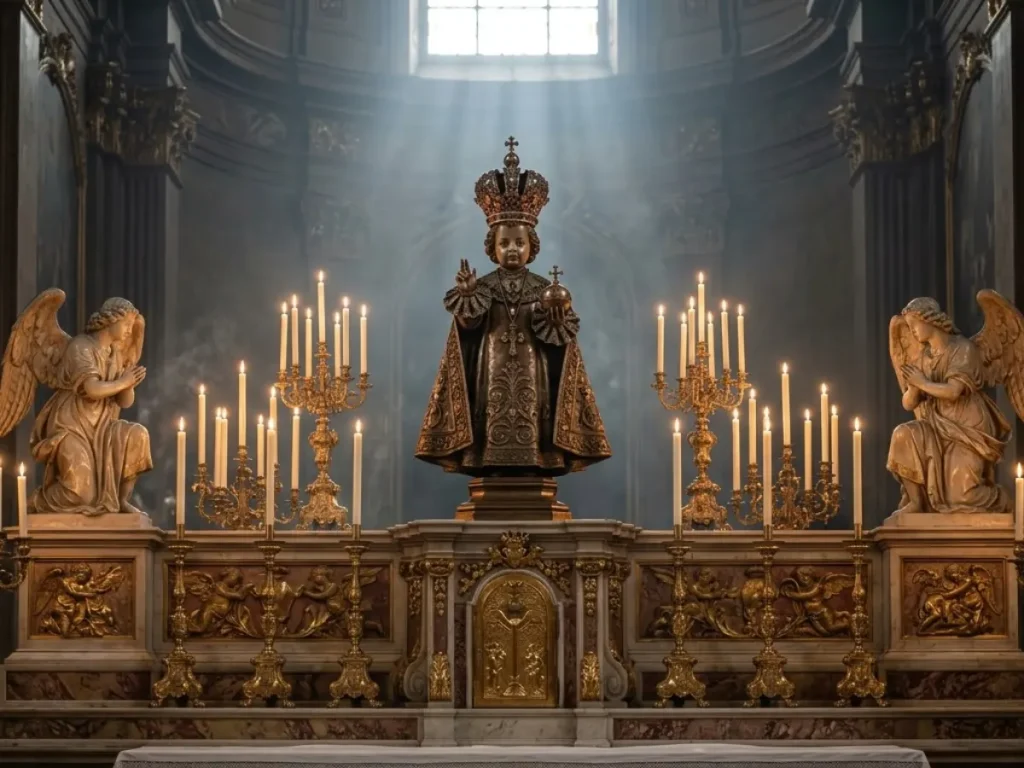
Every gesture of the Infant Jesus of Prague statue is deliberate, carrying layers of theological meaning. The right hand is raised in blessing, a form rooted in ancient Christian iconography. Two fingers extend upward, signifying the dual nature of Christ—fully divine and fully human.
The remaining three fingers are gently folded, representing the Holy Trinity: Father, Son, and Holy Spirit. In this small yet profound gesture, the child reveals the fullness of divine mystery. The blessing is not symbolic alone; it is an invitation into grace.
The Globus Cruciger
In the left hand, the Child holds the Globus Cruciger—a golden orb surmounted by a cross. This ancient emblem of sovereignty was traditionally held by emperors, yet here it rests in the hand of a child.
Its meaning is unmistakable. The orb represents the world, and the cross above it proclaims Christ’s dominion over all creation. In the Infant Jesus statue, kingship is not deferred to adulthood. It is present, immediate, and eternal.
For collectors and patrons seeking an Infant Jesus of Prague statue for sale, the presence and craftsmanship of the Globus Cruciger is essential. It is not an accessory, but a declaration: the Child reigns.
The Attire

The figure is not clothed in the simplicity of Bethlehem. Instead, the Child is adorned in elaborate Royal Vestments, richly decorated and flowing with ceremonial dignity. Upon His head rests a Golden Crown, affirming His identity as sovereign.
This departure from swaddling clothes is deeply intentional. The statue does not depict a moment in time, but a theological truth. The Child is already King.
For those commissioning a Custom Jesus statue, the vestments offer a field of artistic devotion. Every fold, every embroidered detail, becomes a language of reverence—honoring not only the beauty of the form, but the majesty it proclaims.
The Beauty of Liturgy: The Tradition of Changing the Royal Vestments
The Ritual
The life of the statue does not end in its creation. It continues through ritual. In Prague, the care of the statue is entrusted to the Carmelite Sisters, who preserve a centuries-old tradition of dressing the Child in layered garments.
The process is meticulous. First, the alb forms the foundational layer. Over it, a colored shirt is placed, followed by an ornate mantle that completes the royal appearance. Each garment is handled with devotion, reflecting both liturgical precision and spiritual intimacy.
Clients seeking an Infant Jesus of Prague statue for sale often wish to replicate this sacred practice. Likewise, those commissioning a Custom Jesus statue frequently request multiple vestments, allowing the figure to participate in the rhythm of the liturgical year.
The Liturgical colors
The vestments are not chosen at random. They follow the sacred calendar, each color carrying theological meaning:
- White: Worn during Christmas and Easter. It signifies purity, joy, and divine glory.
- Red: Used for Pentecost and Holy Week. It represents blood, fire, love, and martyrdom.
- Green: The color of Ordinary Time. It reflects hope, life, and spiritual growth.
- Purple: Reserved for Advent and Lent. It embodies penance, humility, and preparation.
A Global Guardian: Devotions Across Borders
The Infant Jesus of Prague statue is not confined to a single nation or tradition. Its quiet authority has crossed borders, embedding itself into the daily lives and rituals of the faithful across continents. In each place, devotion takes on a local expression, yet the essence remains unchanged: trust in the Child who reigns.
In Ireland, a tender and practical tradition endures. Before a wedding, families place the statue outside their home, entrusting the celebration to divine favor. It is believed that this act secures clear skies and gentle weather. In some households, a coin is discreetly taped to the statue’s back—a humble petition for financial blessing and stability in the life to come.
In the Philippines, devotion takes on a vibrant and deeply personal form. The Santo Niño, closely linked in spirit to the Infant Jesus statue, is dressed in garments that reflect the lives of the faithful. The Child may appear as a nurse, a police officer, or a laborer—each uniform a prayer, each costume an offering. Here, the divine presence enters the realities of daily work and human striving.
Across these traditions, the message is constant. The Child is not distant. He is present—protector, provider, and king.
Material and Craftsmanship: Why Commission a Custom Bronze or Stone Replica?
The Limits of Wood
Historically, many sacred figures were shaped through Hand-carved wood, a medium of warmth and intimate craftsmanship. Workshops such as those in Val Gardena have preserved this tradition with remarkable skill.
Yet wood, for all its beauty, remains vulnerable. Exposure to moisture, sunlight, and temperature shifts gradually erodes its form. For outdoor devotion or long-term installation, its fragility becomes a serious limitation.
Foundry Bronze & Bronze Casting

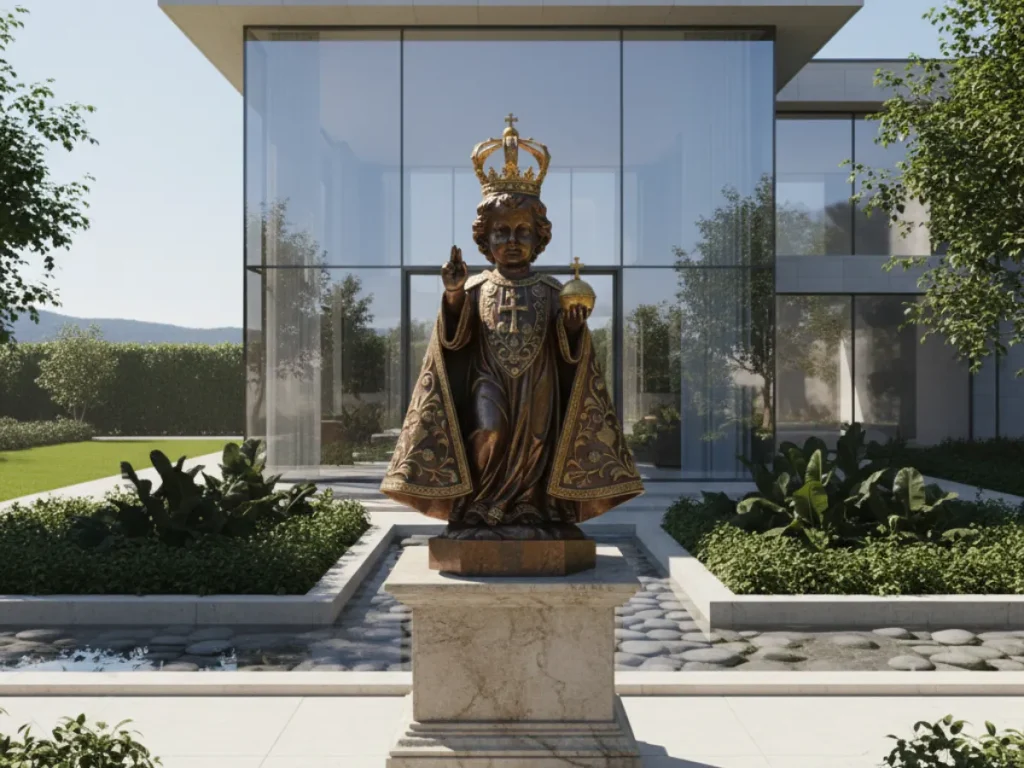
For permanence, the answer lies in Foundry Bronze. A Bronze Jesus statue, created through traditional Bronze casting, offers a union of strength and refinement that few materials can rival.
Using the lost-wax method, every contour of the original model is preserved with precision. This process ensures exceptional Anatomical accuracy, capturing the serene authority of the Child’s expression and the subtle grace of His gesture.
More importantly, bronze provides enduring Structural integrity. It resists corrosion, withstands harsh climates, and matures with time, developing a noble patina. For outdoor shrines, gardens, and sacred landscapes, it is the ultimate medium—unchanging, steadfast, eternal.
Stone & Marble
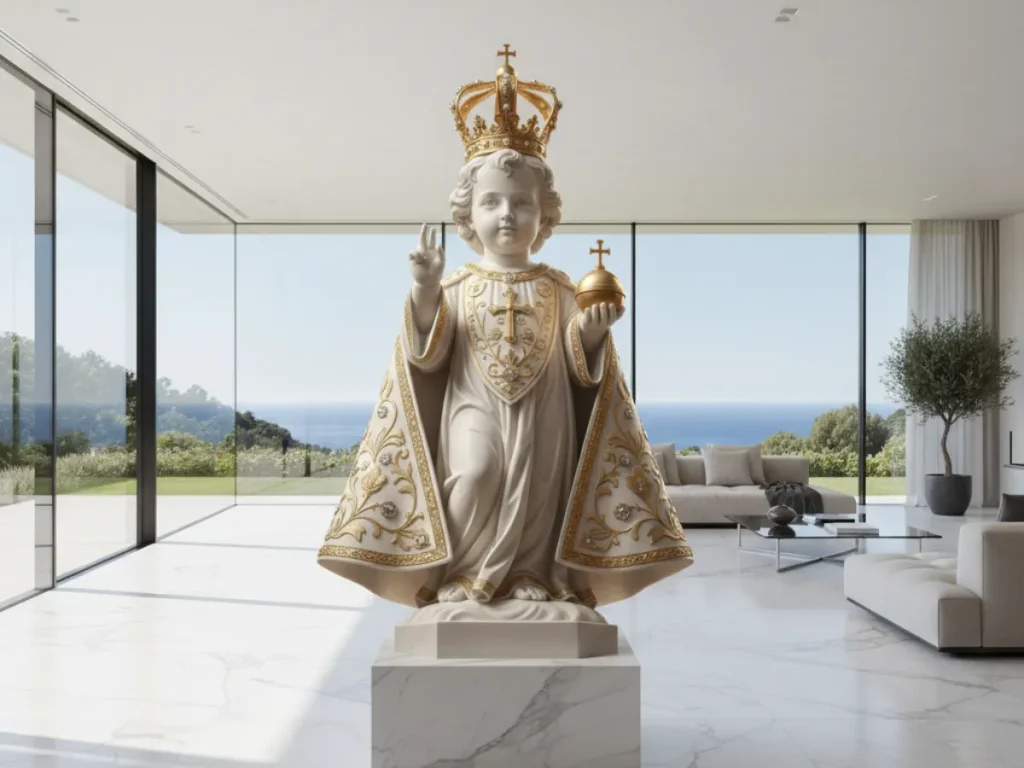
For interior sanctuaries, the presence of stone carries a different kind of gravity. A Marble Jesus statue, whether carved from solid block or formed through Marble dust composite, embodies weight, stillness, and reverence.
The cool surface, the soft diffusion of light across polished planes—these qualities invite contemplation. Such works are especially suited to church halls, chapels, and formal devotional spaces.
In every medium, our purpose remains the same: to create High-quality religious statues that honor both the sacred tradition and the expectations of those who commission them.
Sizing Guide for Different Sacred Spaces
The scale of the statue shapes its presence. Each size serves a distinct spiritual and architectural purpose.
A Small Jesus statue (8–12 inches) is ideal as a Jesus statue for home. Placed upon a private altar, it becomes a daily companion in prayer. It is also a meaningful gift for weddings or baptisms—an enduring symbol of blessing.
A life-proportioned replica (16–19 inches) reflects the traditional dimensions of the original Prague figure. This size is perfectly suited for a private prayer room, where intimacy and presence must remain balanced.
For larger settings, a Large Jesus statue (24–35+ inches) offers commanding visibility. In bronze or reinforced materials, it is recommended for public gardens, church sanctuaries, and institutional spaces—where the Child must be seen not only as an object of devotion, but as a guardian presence within the landscape.
10 Frequently Asked Questions About the Infant Jesus of Prague
Where did the Infant Jesus of Prague statue originally come from?
The Infant Jesus of Prague statue traces its origins to 16th-century Spain within the Habsburg Empire. According to tradition, a monk sculpted the figure after receiving a divine vision of the Child Christ. In 1556, Doña María Manrique de Lara brought the statue to Prague as a treasured family heirloom.
It was later entrusted to her daughter, Princess Polyxena, who would donate it to the Carmelite monks. Through this انتقال, the statue moved from private devotion into public veneration.
What is the theological meaning of the “orb with a cross” and the right hand?
The symbolism of the statue is a precise expression of Catholic doctrine. In the left hand rests the Globus Cruciger—a golden orb crowned with a cross—proclaiming Christ’s sovereignty over the world.
The right hand is raised in blessing. Two fingers extend upward, signifying the dual nature of Christ as both divine and human. The remaining three fingers are joined together, representing the unity of the Holy Trinity.
What tragedy and rebirth did the statue experience in history?
During the devastation of the Thirty Years’ War, invading forces pillaged Prague and desecrated the sacred image. The statue’s hands were broken, and it was cast aside into a heap of debris, where it remained hidden for seven years.
In 1637, Father Cyrillus rediscovered the damaged figure. Through his devotion, the statue was restored, marking a profound moment of spiritual renewal and the rebirth of its veneration.
What is the story of the Infant Jesus of Prague and the promise?
After its rediscovery, the statue revealed a message that would echo through centuries of devotion. To Father Cyrillus came the words: “The more you honor me, the more I will bless you.”
This promise established a living relationship between the faithful and the sacred image. It fostered a culture of care, where believers do not merely pray before the statue, but actively tend to it with reverence and trust.
Why is the Infant Jesus of Prague dressed as a king?
The royal attire of the Child is a theological declaration. Though depicted in infancy, He is revealed as Christ the King—sovereign over all creation.
The royal vestments and crown affirm that His authority is not bound by age or circumstance. In this image, vulnerability and omnipotence exist together, inviting the faithful to trust in divine protection.
How do the colors of the vestments change according to the season?
The vestments of the statue follow the rhythm of the Catholic liturgical calendar. Each color carries a distinct spiritual meaning and aligns the image with the life of the Church.
White is used for Christmas and Easter, symbolizing purity and glory. Red appears during Pentecost and in honor of martyrs, representing blood and divine love. Green marks Ordinary Time, reflecting hope and growth. Purple is reserved for Advent and Lent, expressing penance and preparation.
What is the “9-Hour Novena” and when is it used?
Devotion to the Child often centers on prayer, especially in times of urgent need. The 9-hour Novena is a profound act of trust, prayed continuously for nine consecutive hours in situations such as illness or financial distress.
This practice is closely linked to the Novena to the Infant Jesus of Prague and the Chaplet of the Holy Infant Jesus. Together, these prayers reflect a childlike surrender—placing one’s burdens into the hands of the Divine Child with unwavering faith.
What are some interesting global devotion customs outside of Prague?
Across cultures, devotion to the Child takes on deeply personal forms. In Ireland, families place the statue outdoors before weddings, entrusting the day to divine favor. A coin may also be attached discreetly, symbolizing a prayer for financial blessing.
In the Philippines, the Santo Niño tradition expresses devotion through clothing. The Child is dressed in uniforms—nurses, police officers, workers—transforming daily labor into a sacred offering.
Where is the original Infant Jesus of Prague located?
The original statue, a 19-inch wax-coated wooden figure, is enshrined in the Church of Our Lady Victorious. It remains one of the most revered devotional sites in Central Europe.
Pilgrims from around the world visit this sanctuary to encounter the presence of the Child and to participate in a centuries-old tradition of prayer and trust.
How do I maintain a custom bronze or stone Jesus statue?
A well-crafted statue deserves careful stewardship. For bronze, gentle washing with mild soap followed by an annual application of microcrystalline wax will preserve the patina and protect the surface.
For stone or marble dust compositions, avoid exposure to harsh acids. A soft brush is sufficient for regular cleaning. Painted resin or wooden pieces should be kept away from intense sunlight to prevent fading and deterioration.
Bringing Peace Home

The Infant Jesus of Prague statue endures because it speaks to something eternal. In the quiet form of a child, it reveals a kingship that does not dominate, but invites. It offers not grandeur alone, but intimacy—an assurance that the divine is near, attentive, and merciful.
To welcome this image into one’s space is to create a place of stillness. Whether through a finely cast bronze or a carefully finished stone, a high-quality replica becomes more than decoration. It becomes a presence.
In honoring the Divine Child, one enters into a tradition shaped by centuries of faith, restoration, and promise. And in that act, peace—quiet, enduring, and profound—finds its way home.
— Elena Zhang, Religious Art & Spatial Consultant, Yun Sculpture