Get in touch with Yun-Sculpture company
Vintage Golfer Statue: The Aesthetic of Classic Golf in Bronze for Home, Club & Estate

The golden age of golf had a particular look. Knickerbockers and flat caps. Hickory shafts. A swing built for wooden-headed clubs, slower and more deliberate than the modern game. The courses were wilder, the caddies carried bags on their shoulders, and the players looked like men who had come from something else — farming, medicine, law — and brought the seriousness of that other life onto the course with them. A vintage golfer statue is an attempt to capture that world, or at least its aesthetic, in permanent form. This guide explains what authentic vintage style actually means in bronze sculpture, how to distinguish it from generic “antique finish” products, and where the tradition of classic golf portraiture comes from.
Table of Contents
Table of Contents
Antique vs Vintage Style: An Important Distinction
Before anything else, a terminology clarification that matters for anyone searching in this space.
A genuinely antique golf statue is a piece cast or carved before approximately 1925 — the cutoff most serious collectors use for the pre-modern era of the game. These pieces exist, they appear occasionally at auction, and they command significant prices when they are authenticated. They are also rare, their condition varies enormously, and their provenance is often difficult to establish. If you are looking for a genuine 19th-century bronze of a Victorian golfer, you are in the world of fine art auction and specialist dealers, not foundry commissions.
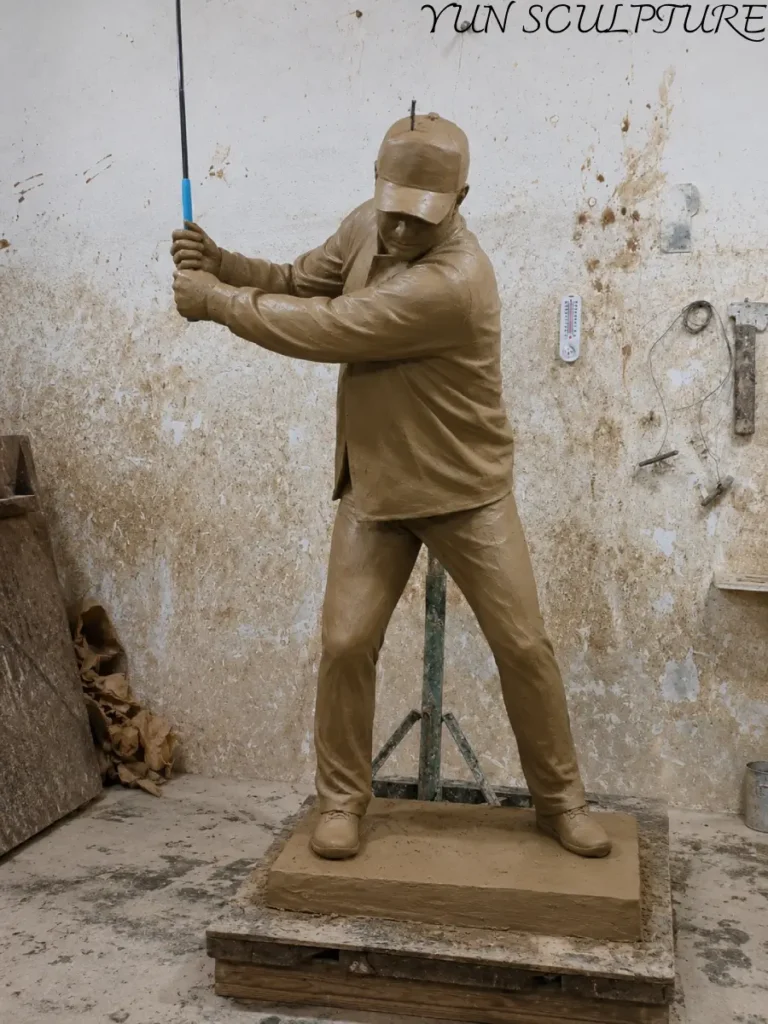
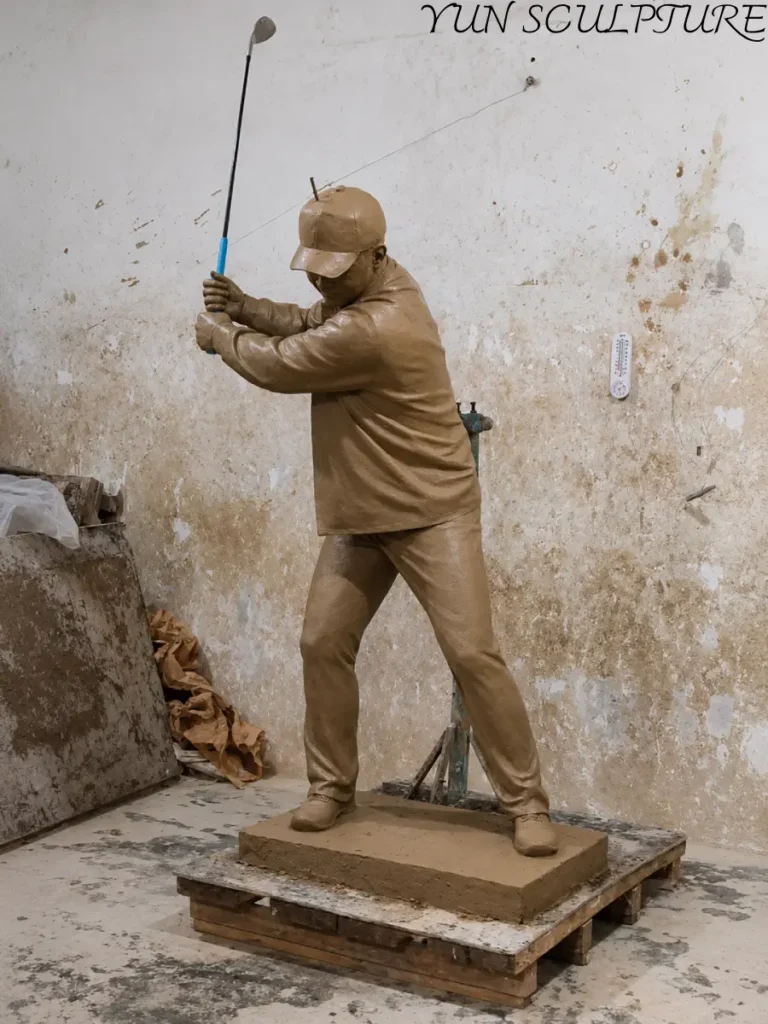
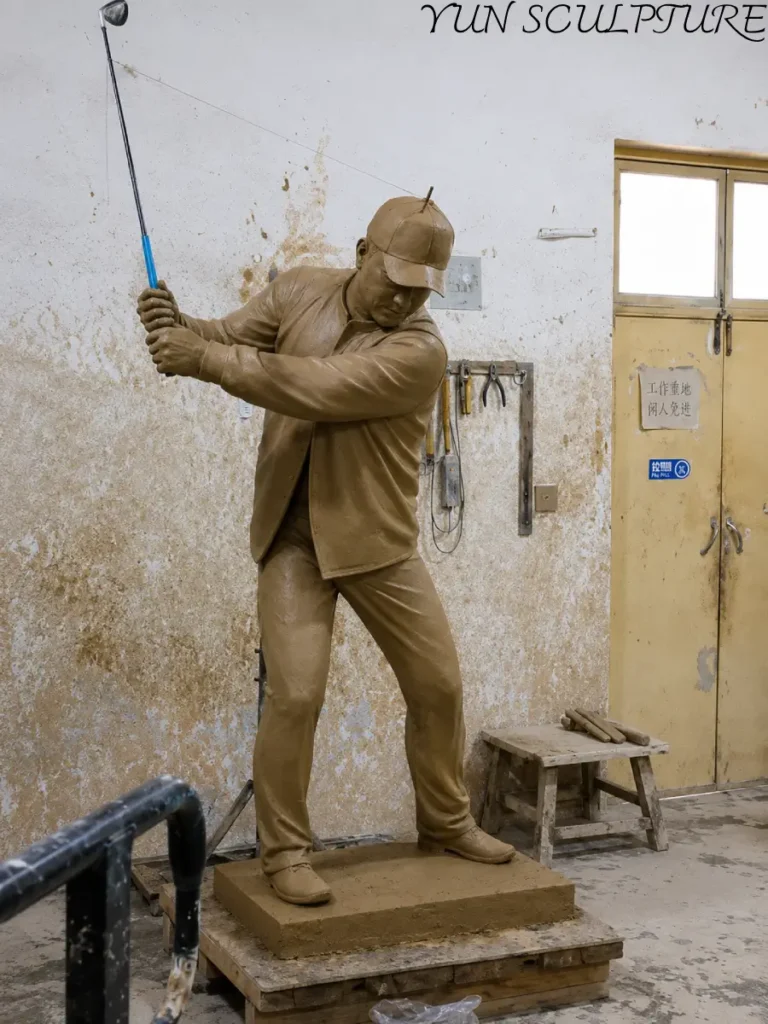
A vintage style golf statue is something different: a new piece, cast in the present day, that draws on the aesthetic vocabulary of the classic golf era. The golfer is dressed in period attire — the knickerbockers, the cloth cap, the long-sleeved shirt. The club is a hickory-shafted design, the bag is a canvas Sunday bag, the posture reflects the upright, classical swing of the pre-war period. The piece is not pretending to be old. It is deliberately evoking an aesthetic that belongs to a specific historical moment in the game’s history and that continues to carry enormous emotional resonance for serious golfers.
This distinction matters because the two categories require entirely different approaches. Hunting for genuine antiques requires expertise, patience, and access to specialist markets. Commissioning or purchasing a vintage-style piece requires understanding what makes the aesthetic authentic — which elements define the look, which are superficial, and what separates a piece that genuinely evokes the classic era from one that is simply painted brown.
Genuinely Antique
Pre-1925 Golf Bronze
- Cast or carved before approximately 1925
- Found at auction houses and specialist dealers
- Requires authentication and provenance documentation
- Significant price premium for verified pieces
- Condition highly variable — surface wear, repairs common
- Limited selection — rare to find specific poses or subjects
Vintage Style
New Bronze, Classic Aesthetic
- New casting that evokes the pre-war golf aesthetic
- Period attire, hickory-era equipment, classical swing
- Full customization — pose, scale, patina, base
- Foundry-direct pricing, consistent quality
- Perfect condition — no restoration required
- Any size from desktop to heroic scale
What Makes a Vintage Golf Statue Look Authentic
Authenticity in vintage golf sculpture comes from three things: the clothing, the equipment, and the posture. Get these right and the piece reads as genuinely period. Get them wrong and it reads as costume — a modern figure dressed up rather than a figure that belongs to its era.
The clothing is the most immediately visible element. Classic-era golf attire was specific: plus-fours or knickerbockers gathered below the knee, a soft-collared shirt, a waistcoat or pullover sweater, leather brogued shoes, and almost invariably a flat cloth cap or a soft wool hat. The silhouette of a figure in this dress is immediately recognizable and entirely distinct from a modern golfer in polo shirt and baseball cap. A sculptor who understands the period will carve the specific fall of the fabric, the way knickerbockers gather and bunch, the particular shape of a period flat cap. A sculptor who does not understand the period will produce generic folds and a hat that looks approximately right but belongs to no specific time.
The equipment is the second authenticating element. Hickory-shafted clubs have a specific geometry — thinner through the shaft, with a smaller head, and a grip that tapers differently from modern clubs. The bags of the classic era were canvas or leather Sunday bags, narrow and lightweight, carried on the shoulder without a stand. A period caddie bag on a stand immediately signals the wrong era. The club heads — brassies, mashies, niblicks — have shapes that any serious golfer will recognize as distinct from modern irons and woods. These details require research and sculptural knowledge to get right, and they separate an authentic vintage piece from a generic golfer figure wearing period clothes.
The posture is the most subtle authenticating element and the hardest to quantify. The classic golf swing was built around wooden-shafted clubs with whippy flex and small club faces. It was longer, more upright through the backswing, with a pronounced weight shift and a high follow-through. The address position was different — more upright, the arms hanging more naturally, less of the athletic crouch that characterizes the modern game. A sculptor who has studied period golf photography and film will build these differences into the figure. A sculptor working from generic references will produce a posture that looks approximately athletic but belongs to no particular era of the game.
1
Clothing — The Most Visible Authenticator
Plus-fours or knickerbockers below the knee, soft-collared shirt, waistcoat or pullover, leather brogued shoes, and a flat cloth cap. The specific silhouette of this dress is immediately distinguishable from any other era. A sculptor who understands the period will carve the exact fall of knickerbocker fabric, the particular weight of a wool cap, the way a period shirt sits at the collar.
2
Equipment — The Details That Place the Era
Hickory shafts with their thinner geometry, small-headed irons with names rather than numbers — brassies, mashies, niblicks — and a canvas or leather Sunday bag carried on the shoulder without a stand. The club heads and bag design place the figure precisely in time. A modern-style bag or contemporary iron head immediately breaks the period illusion regardless of how well the clothing is done.
3
Posture — The Subtlest and Most Important Element
The classic swing was longer, more upright, with a pronounced weight shift built around hickory flex. The address position was more erect than the modern athletic crouch. A sculptor working from period photography and film — not from generic athletic references — will build these differences into the figure. The posture is what separates a figure that belongs to its era from one that is simply dressed in period costume.
The Patina Question: What Authentic Vintage Bronze Actually Looks Like
Bronze develops its surface character over time. A freshly cast piece has the warm reddish-gold of the alloy itself. Over years outdoors, that surface shifts — first to a warm brown, then progressively toward the green-brown tones of copper oxide. The deep verde green of very old bronze, seen on ancient Roman and Greek statues, represents centuries of continuous weathering.
For a vintage-style bronze golf statue, the patina choice communicates the aesthetic immediately. The most authentic choices for a classic-era piece are a warm, medium brown — the color of 40 to 80 year old bronze in a temperate climate — or a slightly deeper antique brown that suggests age without overclaiming it. Both can be achieved through high-temperature chemical patination at the foundry, where heat-applied chemicals react with the copper in the alloy to produce stable, chemically bonded surface color.
What to avoid: spray-applied “antique bronze” finish, which sits on the surface rather than bonding to it and begins to look wrong within a few years; uniform verde green, which suggests very great age and reads as inauthentic on a piece with the crisp detail of a new casting; and high-polish finishes, which have no relationship to the aged aesthetic at all and communicate exactly the opposite of what a vintage piece should say.
The best vintage bronze patinas have variation — darker in the recessed areas, slightly lighter on the high points and edges where natural weathering would produce wear. This variation is the signature of genuine chemical patination at temperature and the primary visual difference between a quality vintage finish and a spray-applied coating.
Where Vintage Golfer Statues Belong: The Right Settings
The vintage golfer statue has a specific aesthetic affinity with certain settings, and understanding these affinities helps determine scale, pose, and patina before the selection or commission process begins.
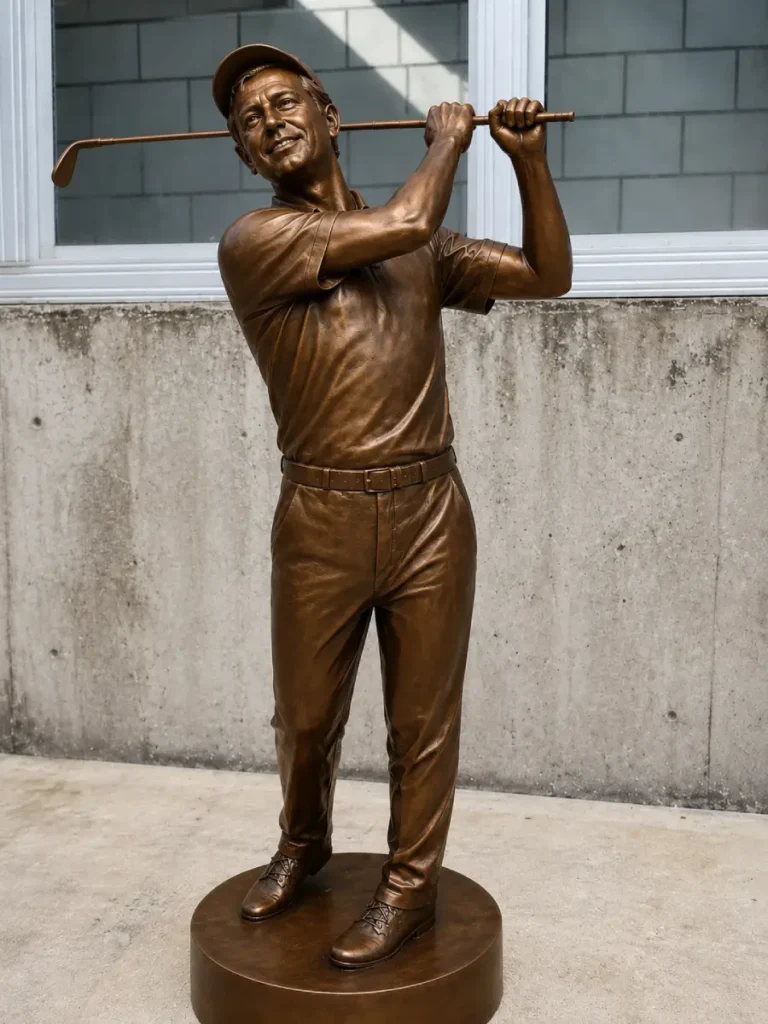
The classic country club is the natural home of this aesthetic. Older clubs — particularly those founded before the Second World War — often have an architectural character that belongs to the same period as classic golf: paneled libraries, trophy rooms, portraits in oil, leather furniture. A vintage bronze golfer in this environment is not a decorative choice; it is a continuity with the club’s own history and values. The correct scale for this setting is life-size or slightly over, positioned at the entrance or in a garden that shares the club’s architectural language.
The estate library or study of a serious golfer — particularly one who collects golf memorabilia, antique clubs, or period golf prints — is another natural setting. At this scale, a half life-size or smaller bronze on a period-appropriate base integrates with the collected objects around it. The piece does not need to announce itself; it belongs to a world where quality is assumed and the details are what matter.
The golf-themed corporate office or private club room is a third setting. Here the vintage aesthetic communicates a specific relationship to the game — not just enthusiasm for golf, but an identification with its history, its traditions, and its values. A vintage bronze golfer in a paneled office reads as more considered, more rooted, than a contemporary athletic figure.
Frequently Asked Questions
What is a vintage style bronze golf statue?
A vintage style bronze golf statue is a new casting that deliberately evokes the aesthetic of the classic golf era — roughly the 1880s through the 1940s. The figure is depicted in period attire: plus-fours or knickerbockers, a flat cloth cap, leather brogued shoes, and a long-sleeved shirt. The equipment is hickory-era: thin-shafted clubs with period head designs, a canvas or leather Sunday bag carried on the shoulder. It is not a genuinely antique piece — it is a new foundry bronze made to embody the aesthetic of that historical period in the game.
How can I tell if a bronze golf statue is genuinely antique?
Genuine antique bronze golf statues show consistent signs of age: natural patina variation with heavier accumulation in recessed areas, wear patterns at handling points, and the slight surface roughness of pre-industrial casting techniques. They will typically bear foundry marks or artist signatures of the period. For significant purchases, authentication through a specialist appraiser familiar with sporting bronzes is essential. Most pieces sold as vintage golf statues are not genuinely antique — they are new castings with period aesthetics, which is often a superior choice for display purposes.
What makes a vintage style golf statue look authentic?
Three elements determine authenticity: clothing (plus-fours, flat cap, leather brogues — not generic sportswear), equipment (hickory-era shafts and head designs, canvas Sunday bag — not a modern stand bag), and posture (the longer, more upright classic swing built around hickory flex — not a generic athletic pose in period costume). All three must be present and accurate for the piece to read as genuinely vintage rather than theatrical.
What patina colors are most authentic for vintage bronze?
The most authentic patina for a vintage-style piece is a warm medium brown or antique brown — the surface color genuine bronze develops over 40 to 80 years in a temperate climate. This should be achieved through high-temperature chemical patination, which produces natural variation: darker in recessed areas, lighter on high points. Avoid uniform spray-applied finishes, which look flat and deteriorate quickly, and heavy verde green, which suggests greater age than a vintage-style piece should claim.
Where can I buy a vintage style bronze golf statue?
Vintage style bronze golf statues are available from specialist bronze foundries that work in figurative sculpture. Factory-direct purchasing offers the best combination of quality, customization, and value — you can specify the period attire, equipment details, pose, scale, and patina color. For a piece that genuinely evokes the classic era, working with a foundry whose sculptors are familiar with period golf history and aesthetics is the most reliable approach.
Factory Direct · Quyang, China
Commission a Vintage Style Bronze Golfer
Period attire, hickory-era equipment, classical swing posture — specified to your setting and scale. Every detail resolved before casting begins.