Get in touch with Yun-Sculpture company
What Is Abstract Figurative Sculpture? Definition, Examples & How to Choose

Abstract figurative sculpture is a category of three-dimensional art that references the human form — or another recognizable subject — without reproducing it literally. The figure is present but simplified, distorted, or stylized: recognizable as a body, a gesture, or a presence, but not as a photographic record of one. It occupies the territory between classical realism and pure abstraction, and it is where most of the most significant sculpture of the twentieth century was made.
Table of Contents
Table of Contents
What Is a Figurative Sculpture?
A figurative sculpture is any three-dimensional work that depicts a recognizable subject from the observable world — most commonly the human body, but also animals, faces, or objects. The category spans the full range from hyper-realistic to highly stylized.
Classical Greek statues are figurative. Michelangelo’s David is figurative. Rodin’s Thinker is figurative. All three depict a human body in enough anatomical detail that the subject is unmistakable. Figurative sculpture in this sense has been the dominant tradition in Western art for over two thousand years.
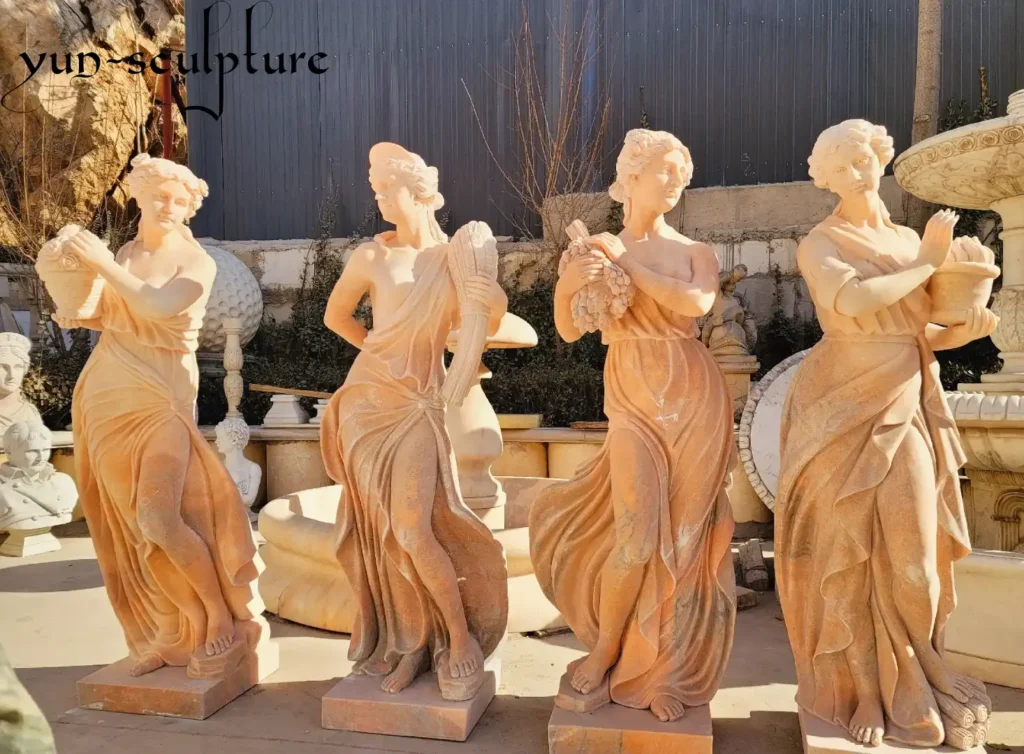
The term becomes more complex at the edges. A figure that is clearly human but simplified beyond naturalism — elongated limbs, compressed torso, face reduced to planes — is still figurative, but it is also moving toward abstraction. This is the territory of abstract figurative sculpture.
What Is an Abstract Sculpture?
A purely abstract sculpture makes no reference to the observable world. It is composed of form, volume, line, material, and spatial relationship without representing anything that exists outside itself. Constantin Brancusi’s Endless Column is abstract. Donald Judd’s stacked steel boxes are abstract. The work is not of anything — it simply is.
Abstract sculpture became a serious artistic category in the early twentieth century, driven by the conviction — held by artists from Brancusi to Mondrian — that form itself, freed from representational obligation, could carry meaning more directly than any image of the world could.
What Is Abstract Figurative Art?
Abstract figurative sculpture is the middle ground: work that retains a reference to the human figure or another recognizable subject, but handles that reference through simplification, distortion, exaggeration, or stylization rather than through literal reproduction.
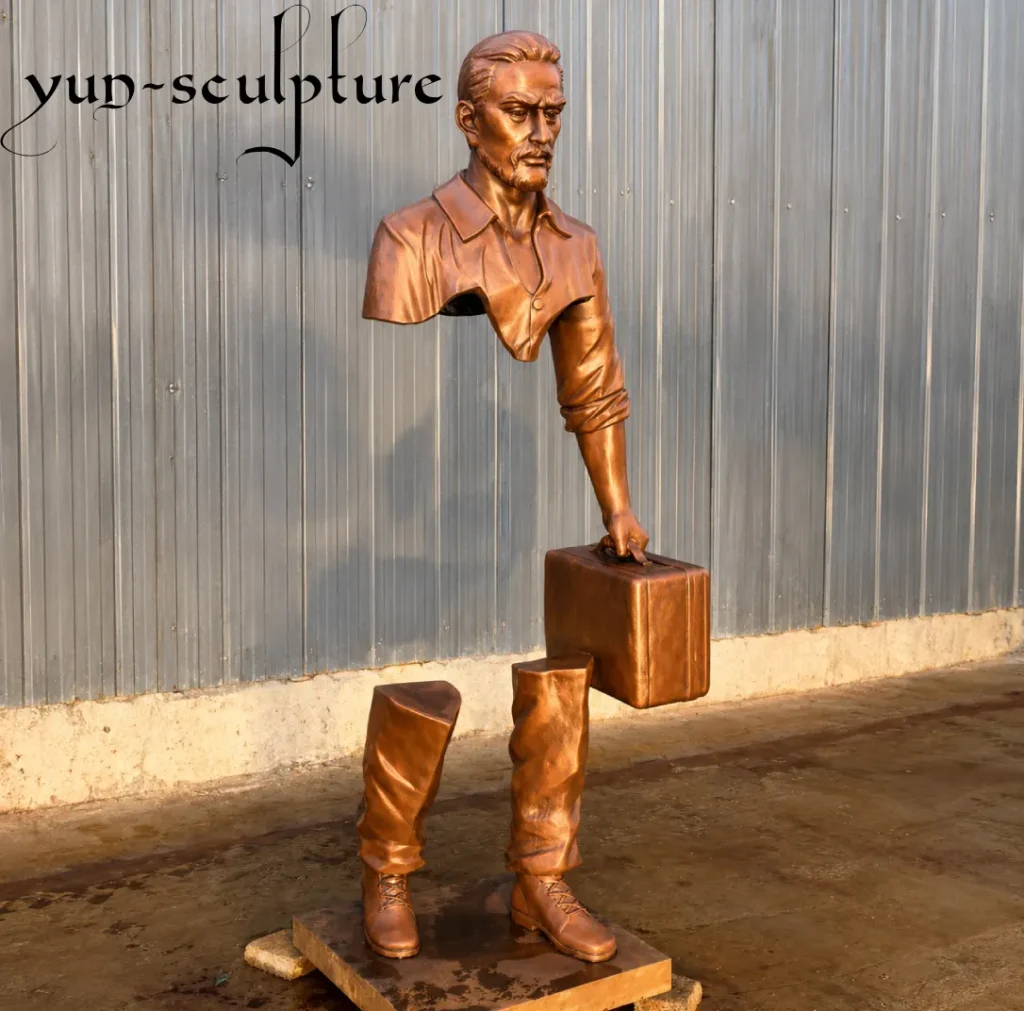
The figure is the starting point, not the destination. The sculptor is interested in what the human form can express — weight, movement, grief, power, tenderness — and uses abstraction as a tool to isolate and intensify those qualities, stripping away the detail that a realistic treatment would require and keeping only what carries meaning.
Alberto Giacometti’s elongated bronze figures are abstract figurative. Henry Moore’s reclining female forms — reduced to landscape-like volumes, hollowed by negative space — are abstract figurative. Louise Bourgeois’s spider figures are abstract figurative. All retain a human or animal reference; none could be mistaken for a realistic reproduction of one.
What Is the Difference Between Figurative and Abstract Sculpture?
The distinction is a spectrum, not a binary.
Realistic figurative sculpture reproduces the observable world with anatomical and surface accuracy. You recognize not just what it depicts but how it looks — the specific muscle definition, the texture of fabric, the individual face. Greek classical sculpture, Renaissance bronzes, and academic nineteenth-century statuary occupy this end of the spectrum.
Abstract figurative sculpture retains the reference — you know you are looking at a human body, or an animal, or a gesture — but the sculptor has made deliberate formal choices that depart from literal appearance. The figure is a vehicle for something the sculptor wants to express about weight, movement, grief, or power, not a record of how a specific body looks.
Pure abstract sculpture abandons the reference entirely. There is no figure, no animal, no object. The work is composed of formal elements — shape, mass, line, material — and invites responses to those elements directly.
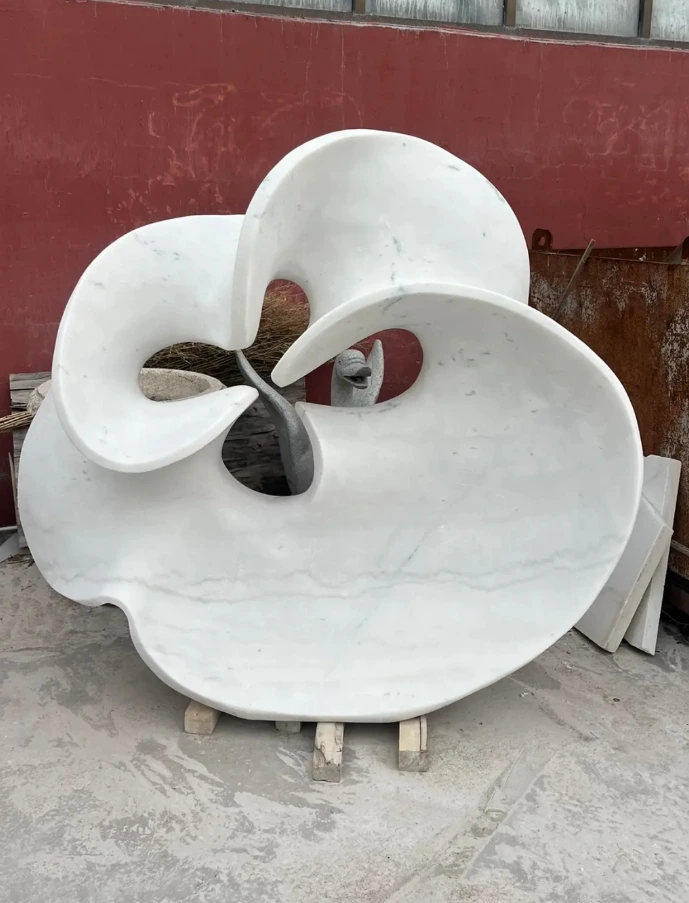
Most serious sculpture produced in the twentieth and twenty-first centuries sits somewhere on the spectrum between the second and third categories. The question for a buyer or collector is not which category a piece belongs to but what it does — what it expresses, how it holds space, what happens when you live with it.
Who Are the Famous Abstract Figurative Sculptors?
Several artists defined what abstract figurative sculpture is and what it can do:
Alberto Giacometti (1901–1966) — Swiss. His elongated bronze figures — thin, rough-surfaced, standing or walking — became the defining image of postwar existential anxiety. The isolation of the individual, reduced to a vertical line in space, has never been more formally precise. His Walking Man series remains among the most recognized abstract figurative works in the world.
Henry Moore (1898–1986) — British. Moore’s reclining figures translate the human body into landscape forms — organic volumes, hollowed cores, large-scale work that reads differently from every angle. His bronzes are in public collections and parks worldwide; they defined what public abstract figurative sculpture looked like for a generation.
Auguste Rodin (1840–1917) — French. Rodin sits at the boundary between realism and abstraction. His surfaces are deliberately rough, unfinished in places, with the mark of the sculptor’s hand visible in the bronze. Works like The Burghers of Calais and The Gates of Hell use realistic anatomy in the service of emotional expression that exceeds any realistic rendering.
Barbara Hepworth (1903–1975) — British. Where Moore hollowed the figure, Hepworth pierced it — her sculptures are defined by the holes through their centers, the relationship between solid material and the space it encloses. Marble and bronze, biomorphic forms that reference the body without depicting it.
Constantin Brancusi (1876–1957) — Romanian. Brancusi began with realistic figurative work and progressively simplified it toward the essential. His Sleeping Muse series reduces a human head to an egg shape; Bird in Space reduces a bird to a single upward line. He stands at the hinge between figurative and pure abstraction.
What Are Common Themes in Abstract Figurative Sculpture?
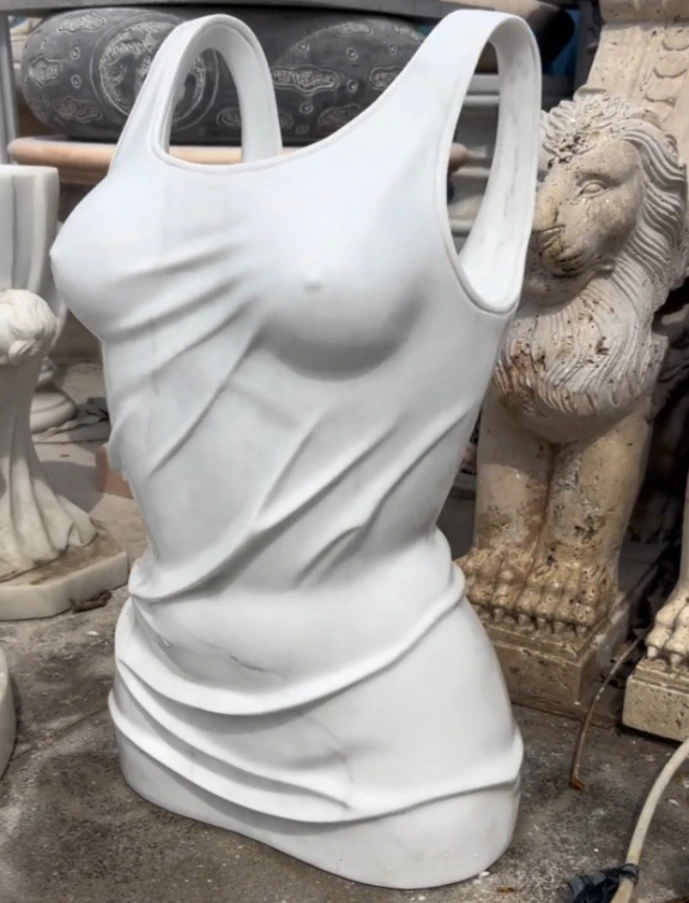
Certain subjects recur because the human form, abstracted, lends itself particularly well to expressing them:
Movement and arrested motion — A figure caught mid-stride, mid-turn, mid-gesture. Abstract treatment intensifies the sense of movement by removing the visual noise of anatomical detail and keeping only the directional energy.
Weight and gravity — How a body carries itself, how it rests, how it resists or yields to the pull of the earth. Rodin’s Burghers are defined by their weight. Moore’s reclining figures are about horizontal mass settling into the ground.
Isolation and presence — Giacometti’s figures stand alone in space, surrounded by it, defined by their relationship to it. The theme of the individual in an indifferent world is expressed formally by the thinness of the figure against the volume of space around it.
Motherhood and protection — Moore returned repeatedly to the mother-and-child group. The theme allows the sculptor to explore how one body encloses and protects another, using abstract formal relationships rather than realistic representation.
Transformation — The body becoming something else: Daphne becoming a tree, a figure dissolving into landscape, the boundary between human and material. Abstract treatment makes this legible in a way that realistic sculpture cannot.
What Are the Different Types of Abstract Sculpture?
Within the broader category of abstract sculpture, several distinct approaches have developed:
Abstract figurative — Retains a human or animal reference, abstracted from literal appearance. Giacometti, Moore, Hepworth.
Geometric abstraction — Composed of geometric forms (cube, sphere, cylinder, plane) arranged in spatial relationships. No figurative reference. Alexander Calder’s stabiles; Donald Judd’s stacks.
Biomorphic abstraction — Organic, curved, body-like forms that suggest living things without depicting specific ones. Joan Miró in painting; Jean Arp in sculpture. Overlaps significantly with abstract figurative at its most reduced.
Kinetic sculpture — Abstract form that moves, or incorporates movement as a formal element. Calder’s mobiles are the defining example.
Assemblage and found-object sculpture — Abstract work built from found or manufactured materials. Louise Nevelson’s wall assemblages; John Chamberlain’s crushed-car bronzes.
For collectors and buyers, the distinction between abstract figurative and pure abstraction matters primarily for placement and context. Abstract figurative work — work that retains a human reference — tends to function more easily in residential and public settings because it gives viewers a point of entry. Pure abstraction rewards a more focused engagement and works best in spaces designed to support it.
Does Abstract Sculpture Have to Be Large?
No. Abstract sculpture exists at every scale from desktop to monumental, and scale is a formal decision rather than a requirement of the category.
That said, scale affects how abstract figurative work reads. Henry Moore’s large bronzes function as they do because the human body can walk around them, relate its own scale to theirs, experience them as spatial objects rather than objects to be held. At smaller scales, the same formal ideas — hollowed volume, organic surface, the relationship between positive form and negative space — are still present, but the relationship between viewer and object changes.
For life-size figurative sculpture in bronze or marble, scale is often the single most consequential decision in a commission. At life-size, an abstract figurative figure occupies space the way a person does — it has presence, it requires you to move around it, it changes as you do. At 40 centimeters, it becomes an object you look at from above.
The right scale depends on the space, the viewing distance, and what you want the work to do.
How to Choose an Abstract Figurative Sculpture
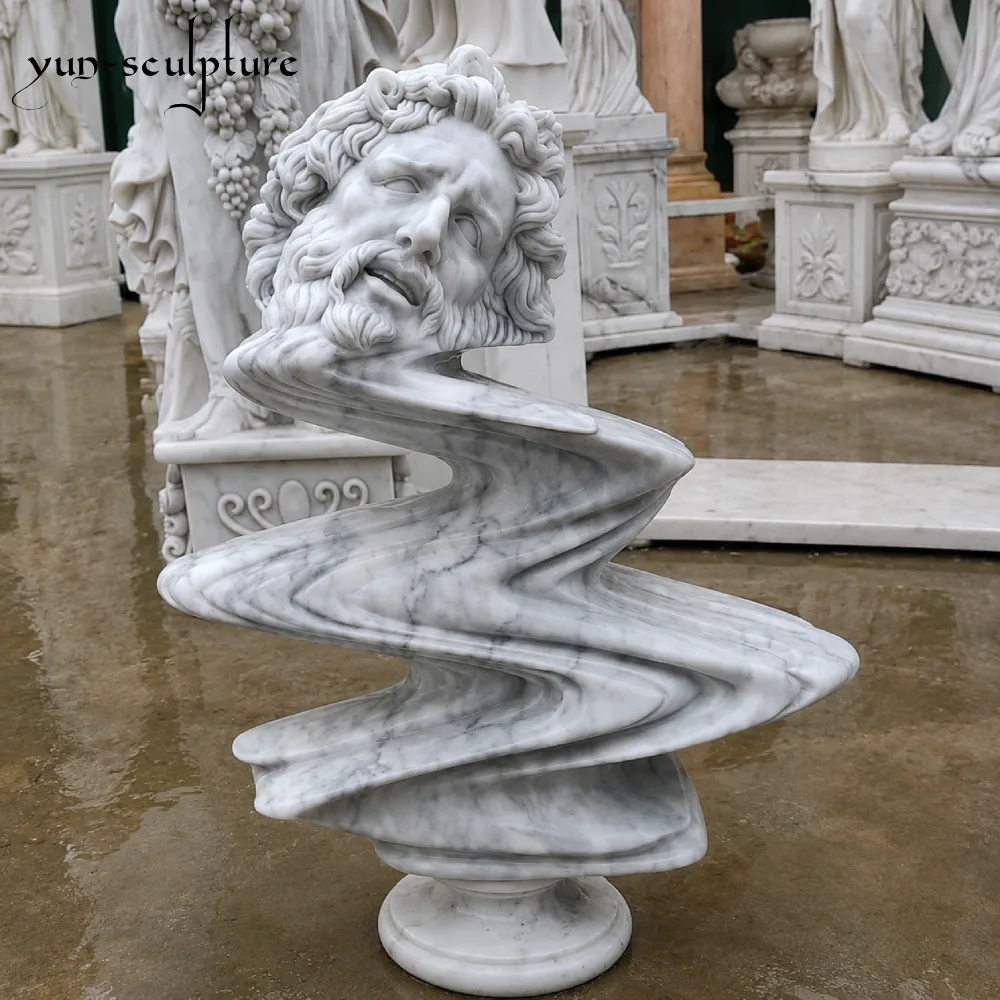
Three questions determine the right piece for a given context:
What does it express? Abstract figurative sculpture carries emotional and formal content — weight, movement, grief, energy, stillness. The piece you live with should express something you want present in your space, not simply something that looks appropriate.
What scale does the space require? Measure the primary viewing distance and multiply it by at least a third to get a minimum figure height that will read with presence. Undersized sculpture in a large space disappears; the reverse creates a different kind of problem.
What material suits the setting? Bronze is the standard for permanent outdoor installation and for work intended to last without maintenance. Marble is the better choice for sheltered indoor positions where surface quality and light interaction matter most. Both are available as custom commissions from Yun Sculpture in Quyang.
For guidance on classical sculpture replicas in bronze and marble — from Rodin to Moore to Giacometti — including material grades, scale decisions, and pricing, our buyer’s guide covers the full spectrum.
Frequently Asked Questions
What is an abstract sculpture?
An abstract sculpture is a three-dimensional work that makes no reference to the observable world. It is composed of form, volume, line, material, and spatial relationship without representing any recognizable subject. Constantin Brancusi’s Endless Column and Donald Judd’s stacked steel boxes are examples. Abstract sculpture became a serious artistic category in the early twentieth century, based on the conviction that form itself — freed from representational obligation — could carry meaning directly.What is a figurative sculpture?
A figurative sculpture is any three-dimensional work that depicts a recognizable subject from the observable world — most commonly the human body, but also animals, faces, or objects. The category spans from hyper-realistic to highly stylized. Classical Greek statues, Michelangelo’s David, and Rodin’s Thinker are all figurative sculptures. The term contrasts with abstract sculpture, which makes no reference to recognizable subjects.What is abstract figurative art?
Abstract figurative art retains a reference to the human figure or another recognizable subject but handles that reference through simplification, distortion, exaggeration, or stylization rather than literal reproduction. The figure is the starting point, not the destination — the artist uses abstraction to isolate and intensify qualities like weight, movement, grief, or power. Alberto Giacometti’s elongated bronze figures, Henry Moore’s reclining forms, and Louise Bourgeois’s spider figures are all abstract figurative works.What is the difference between figurative and abstract sculpture?
The difference is a spectrum rather than a binary. Realistic figurative sculpture reproduces the observable world with anatomical accuracy — you recognize the specific subject. Abstract figurative sculpture retains a recognizable reference (a human body, a gesture, an animal) but departs from literal appearance through simplification or distortion. Pure abstract sculpture abandons any recognizable reference entirely. Most significant twentieth-century sculpture sits between the second and third categories.Who is the famous abstract sculptor?
The most significant abstract figurative sculptors include Alberto Giacometti (elongated bronze figures exploring isolation and existential anxiety), Henry Moore (large-scale reclining forms derived from the human body and landscape), Barbara Hepworth (pierced organic forms in marble and bronze), Constantin Brancusi (progressive simplification of the figure toward essential form), and Auguste Rodin (realistic anatomy in the service of emotional expression beyond realism). Among pure abstract sculptors, Alexander Calder (mobiles and stabiles) and Donald Judd (geometric minimalism) are the most widely recognized.What are common themes in abstract sculpture?
Common themes in abstract figurative sculpture include movement and arrested motion (a figure caught mid-gesture), weight and gravity (how a body carries or yields to physical forces), isolation and presence (the individual defined by surrounding space, as in Giacometti), motherhood and protection (the relationship between enclosing and enclosed bodies, as in Moore’s mother-and-child series), and transformation (the boundary between human form and material or landscape). These themes recur because abstraction allows the sculptor to isolate and intensify them without the distraction of realistic surface detail.What are the different types of abstract sculpture?
The main types of abstract sculpture are: abstract figurative (retains a human or animal reference, abstracted from literal appearance — Giacometti, Moore, Hepworth); geometric abstraction (composed of geometric forms in spatial relationship, no figurative reference — Judd, early Calder); biomorphic abstraction (organic, curved forms suggesting living things without depicting specific ones — Arp, Miró); kinetic sculpture (form that moves or incorporates movement — Calder’s mobiles); and assemblage (built from found or manufactured materials — Nevelson, Chamberlain).Does abstract sculpture have to be large?
No. Abstract sculpture exists at every scale from desktop to monumental. Scale is a formal decision rather than a requirement of the category. That said, scale significantly affects how abstract figurative work reads: at life-size, a figure occupies space the way a person does and requires the viewer to move around it. At smaller scales, the same formal ideas are present but the viewer-object relationship changes fundamentally. The right scale depends on the space, the primary viewing distance, and what the work is intended to do in that environment.Commission an Abstract Figurative Sculpture in Bronze or Marble
Original compositions or interpretations of established works — bronze or marble, desktop to monumental scale. Factory direct from Quyang, 2-business-day quote turnaround.