Get in touch with Yun-Sculpture company
How to Clean and Maintain an Outdoor Bronze Statue: Complete Care Guide

A horse statue outdoor is not just decoration.
It is a long-term architectural investment, exposed to sun, rain, pollution, and time.
If you own an outdoor metal sculpture made of bronze, proper care decides whether it ages with dignity—or degrades silently.
This guide explains exactly how professionals maintain outdoor bronze horse sculptures, step by step, with factory-level insight from Yun Sculpture.
Table of Contents
Why Outdoor Bronze Horse Sculptures Are Hard to Maintain (And That’s Normal)
Let’s be honest.
Maintaining an antique bronze horse statue outdoors can feel intimidating.
Bronze changes.
It reacts with air, moisture, and minerals. This process—bronze oxidation—is natural, but unmanaged, it can go too far.
Common worries we hear from clients:
- “Will it turn green too fast?”
- “Am I damaging the patina when I clean it?”
- “Do I need a professional every year?”
You’re not overthinking it.
You’re protecting a serious asset.
First, Know What You’re Actually Caring For (Material Matters)
Not all “bronze” statues are equal.
Maintenance depends heavily on how the sculpture was made.
At Yun Sculpture, our outdoor bronze horse statues are engineered for decades outdoors.
Key structural facts you should know:
- Material: High-content Silicon Bronze (>95% copper)
- Thickness: 5mm – 8mm solid casting (market average is 2–3mm)
- Internal Structure: 304 stainless steel skeleton, fully rust-proof
- Process: Traditional Lost Wax Casting + hot chemical patina (not paint)
This matters because thin brass or resin-filled statues require very different care.
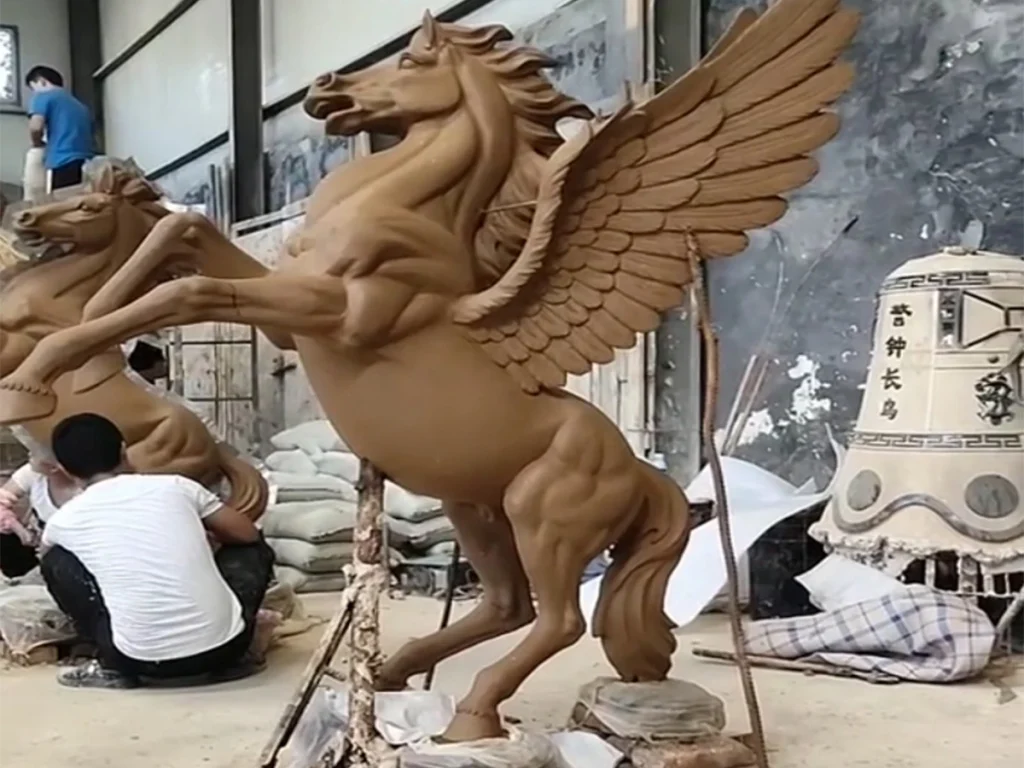
Caption: Close-up of a handcrafted winged horse clay model, the first stage of the traditional lost wax casting process that ensures accurate anatomy and artistic detail.
What “Patina” Really Is (And Why You Should Not Remove It)
Patina is not dirt.
It is a controlled chemical layer formed during hot chemical patination.
This layer:
- Protects the bronze surface
- Controls color and texture
- Slows uncontrolled oxidation
Trying to “polish bronze back to gold” is the fastest way to destroy value.
Key takeaway:
👉 You maintain patina. You do not erase it.
Step-by-Step: How to Clean a Horse Statue Outdoor (Safe Method)
Step 1: Gentle Rinse (No Pressure Washers)
Start simple.
Most outdoor dirt is surface-level.
What to do:
- Use clean water
- Low pressure only
- Soft sponge or microfiber cloth
Never use:
- Pressure washers
- Metal brushes
- Abrasive pads
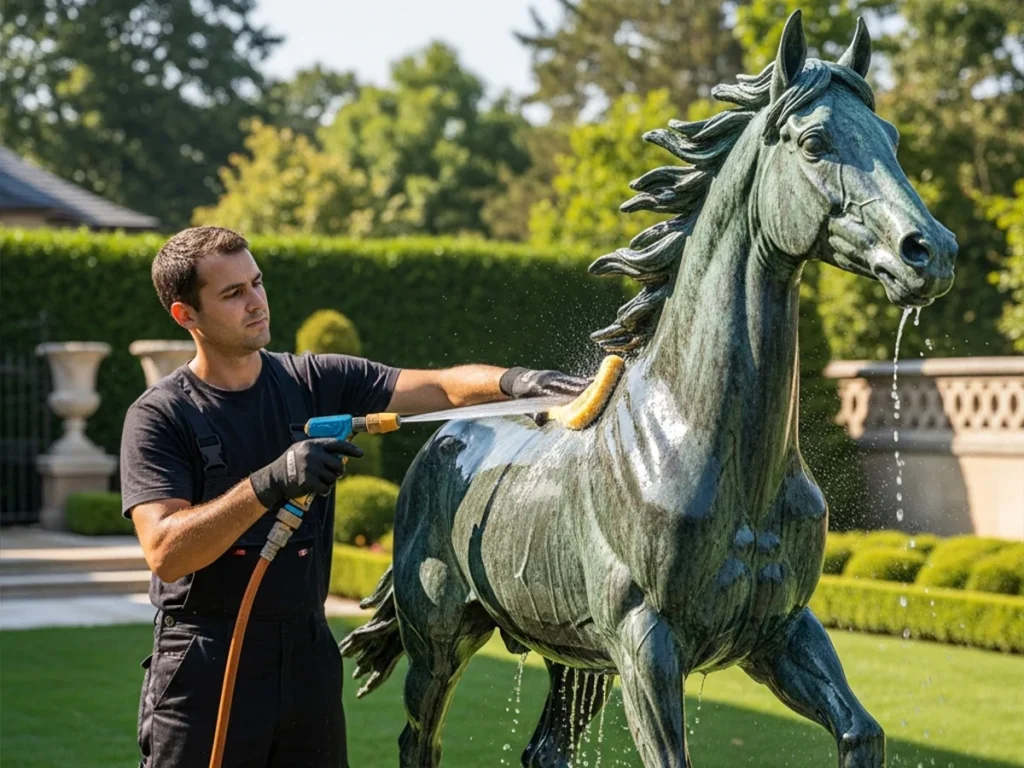
Caption: Low-pressure water cleaning removes dust without disturbing the chemical patina layer.
Step 2: Mild Cleaning (Only If Needed)
If pollution residue or bird droppings remain, escalate carefully.
Approved solution:
- Warm water
- pH-neutral soap (no detergents, no citrus)
Technique:
- Circular, light hand motion
- Rinse immediately after
This method is safe for garden statue maintenance and museum-grade bronze.
Step 3: Dry Completely (This Step Is Often Skipped)
Water left on bronze accelerates oxidation.
Best practice:
- Soft dry cloth
- Let sculpture air-dry in shade
- Avoid direct sun during drying
This single habit dramatically reduces spotting.
Waxing Bronze Statues: The Most Important Protection Step
If cleaning is hygiene, waxing bronze statues is armor.
Why Wax Works
Wax creates a sacrificial layer:
- Blocks moisture
- Reduces UV damage
- Slows bronze oxidation
What Wax to Use
- Microcrystalline wax (museum standard)
- Neutral color only
How Often?
- Once every 6–12 months, depending on climate
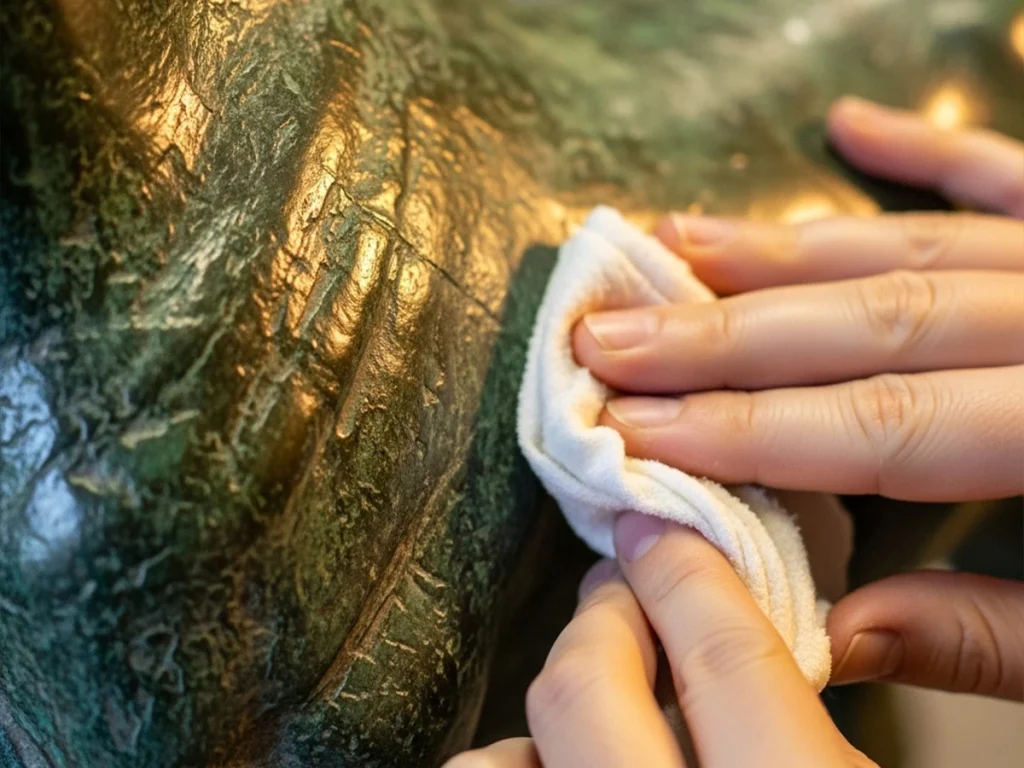
Caption: Microcrystalline wax seals the patina, reducing moisture penetration and oxidation.
Climate-Based Maintenance Schedule (Realistic, Not Idealistic)
Different environments attack bronze differently.
We recommend:
- Coastal areas: Wax every 6 months
- Urban pollution zones: Inspect quarterly
- Dry inland climates: Wax every 12 months
This applies to any horse statue outdoor, regardless of size.
Structural Safety: What You Don’t See Still Matters
Cleaning is only half the story.
Large bronze horse sculptures face:
- Wind load
- Thermal expansion
- Human interaction (yes, climbing happens)
At Yun Sculpture, every outdoor bronze horse includes:
- Internal 304 stainless steel skeleton
- Load-tested leg anchoring points
- Structural design to resist typhoons
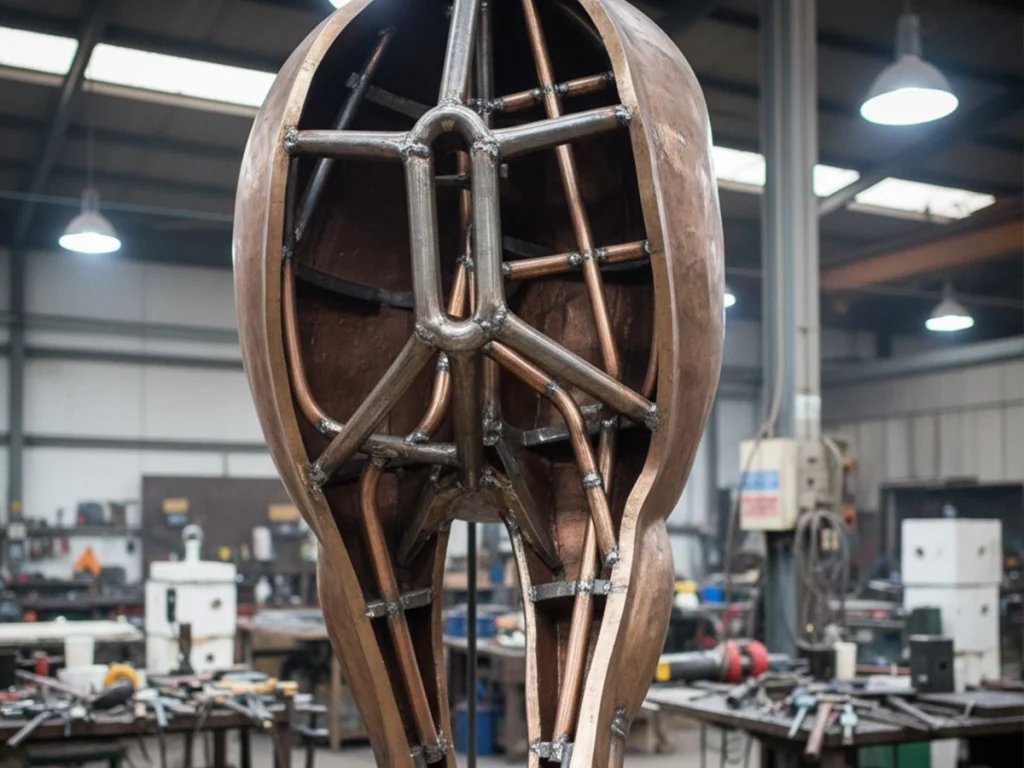
Caption: Hidden 304 stainless steel skeleton prevents internal rust and structural fatigue over decades.
Transportation Damage vs. Maintenance Damage (A Reality Check)
Many statues suffer more damage from improper cleaning than from shipping.
Our sculptures are shipped in:
- 3cm thick solid wood crates
- Custom foam bedding
- Zero metal-to-metal contact
If it survived intercontinental shipping, gentle maintenance won’t hurt it.
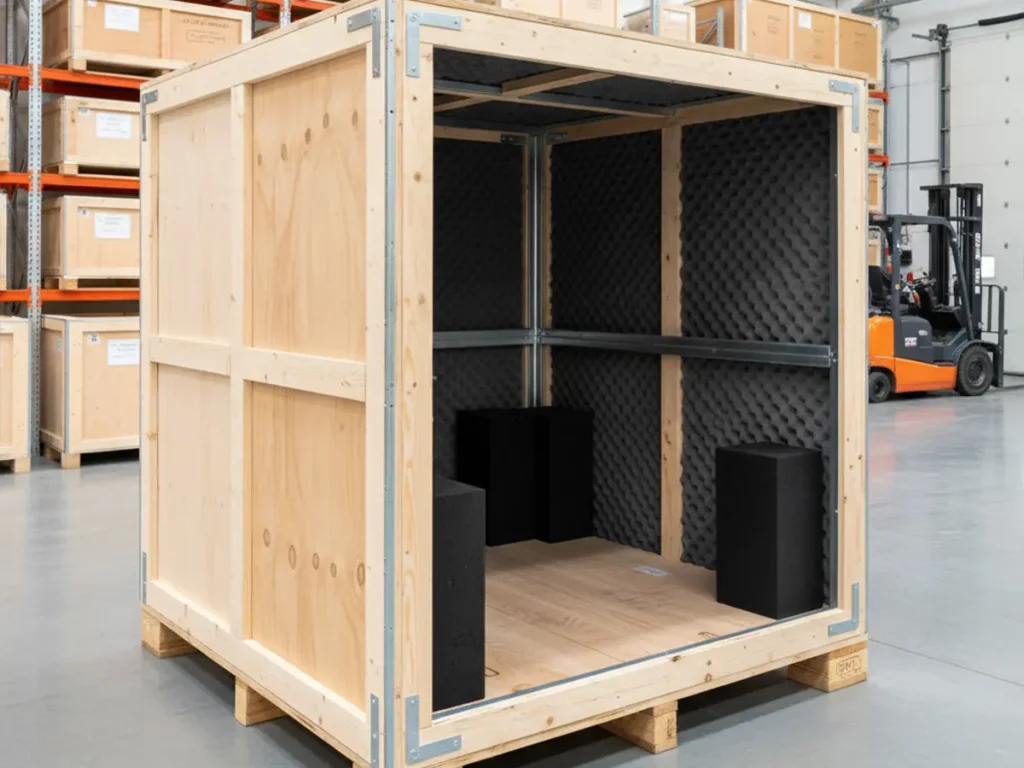
Caption: Export-grade solid wood crate ensures safe delivery and surface integrity.
When Maintenance Becomes a Burden (The Easy Button)
Some clients enjoy hands-on care.
Others prefer certainty.
If you want:
- Zero guesswork
- Correct patina preservation
- Long-term appearance planning
We can handle it for you.
From patina selection to maintenance guidance, Yun Sculpture treats bronze as an engineered system—not décor.
Thinking of a New Outdoor Bronze Horse?
We offer:
- Free Photoshop simulation in your actual garden or plaza
- Door-to-door quote, including crating and delivery
No pressure.
Just clarity.
👉 Get My Free Design / Quote
Frequently Asked Questions (FAQ)
Does an outdoor bronze horse statue rust?
No. Bronze does not rust like iron.
However, bronze oxidation causes color changes, which are normal and manageable.
Should I polish my antique bronze horse statue?
No. Polishing removes protective patina and reduces value.
Maintenance should focus on cleaning and waxing, not polishing.
How often should I wax a horse statue outdoor?
Typically every 6–12 months, depending on climate and exposure.
Can I use car wax on bronze statues?
No. Automotive wax often contains chemicals that interfere with patina.
Use microcrystalline wax only.
What if my bronze statue turns uneven green?
That usually indicates uneven moisture exposure.
A professional patina adjustment may be required.