Get in touch with Yun-Sculpture company
Western Horse Statue: Cowboy, Ranch & Native American Equestrian Sculpture Guide

The cowboy horse statue has never been just decoration.
It is a frozen moment of freedom, grit, and open horizons—captured in bronze and meant to last for generations.
For wealthy homeowners, architects, and designers, Western equestrian sculpture is not about nostalgia.
It is about identity, legacy, and atmosphere.
Table of Contents
The Eternal Fascination of the Western Horse
For centuries, the horse has symbolized power, motion, and partnership.
In the American West, that bond reached its most poetic form.
A cowboy on horse statue tells a story of balance—man and animal moving as one across untamed land.
An Indian on horse statue carries deeper meaning: spirituality, dignity, and harmony with nature.
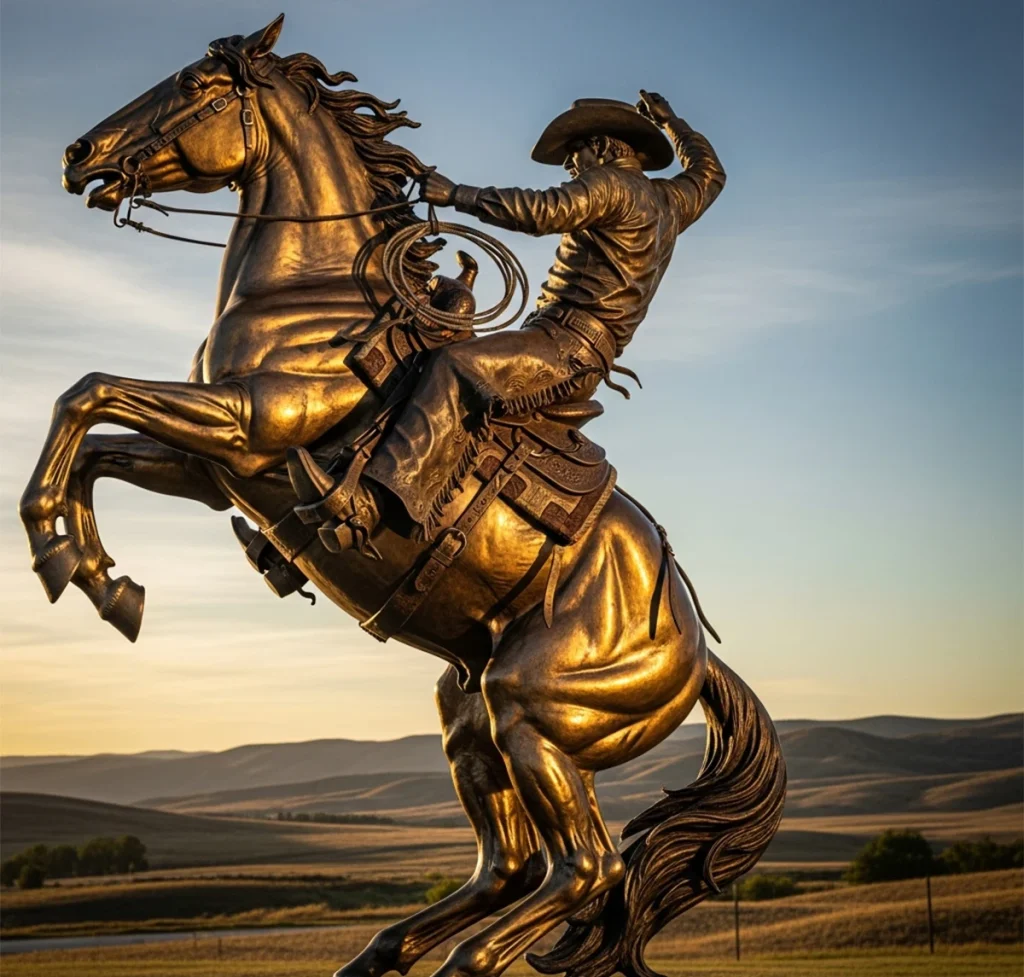
Caption: Dynamic posture inspired by Frederic Remington bronze works, emphasizing movement and balance.
These sculptures do not shout.
They command presence through silence.
Cowboy vs. Native American Horse Statues: Meaning Matters
Cowboy on Horse Statues: The Frontier Ideal
Cowboy sculptures celebrate action and independence.
They often depict moments of control within chaos.
Common themes include:
- Bucking horse statues showing raw energy and risk
- Trail riders symbolizing endurance and solitude
- Roping scenes frozen at peak tension
This style feels bold, masculine, and expansive.
Perfect for ranch entrances, private estates, and luxury lodges.
Native American Horse Statues: Spirit and Stillness
Native American equestrian statues focus on inner strength.
The posture is often calmer, more ceremonial.
Key symbolic elements include:
- Upright posture representing dignity
- Minimal movement emphasizing spirituality
- Detailed regalia reflecting tribal identity
A western horse statue in this style creates reverence, not noise.
Ideal for gardens, museums, and contemplative landscapes.
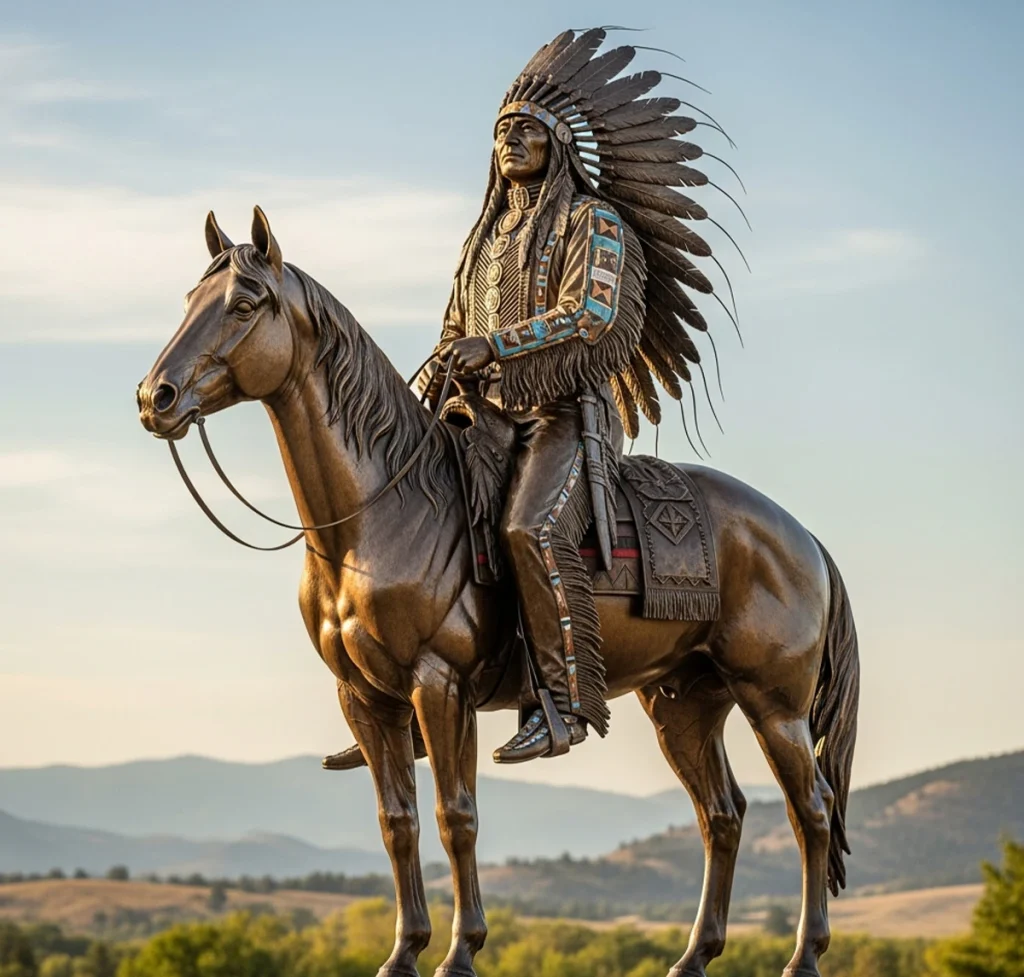
Caption: Fine surface detailing achieved through traditional lost wax casting, preserving cultural symbolism.
Frederic Remington Bronze: The Artistic Benchmark
No discussion of Western sculpture is complete without Frederic Remington.
His works defined the visual language of the American frontier.
Collectors admire Remington-inspired pieces for:
- Anatomically precise horses
- Authentic saddle and gear details
- Balanced compositions that feel alive
However, many replicas fail to honor his legacy.
The problem is not the pose—it is the material and structure.
Why Material Determines Legacy (Reality Check)
To capture Western spirit permanently, material choices matter more than design alone.
This is where many market pieces fall short.
At Yun Sculpture, we do not use resin, fiberglass, or thin brass.
Our Western statues are engineered for decades outdoors.
Our Bronze Is Not “Decorative Bronze”
We cast using high-content Silicon Bronze:
- >95% copper content for density and resonance
- Superior corrosion resistance compared to low-copper alloys
- Deep, warm tone that ages gracefully
This is the same material family used in museum-grade works.
Thickness You Can Feel
Most market statues are cast at 2–3mm thickness.
They look impressive—until time and weather intervene.
Our standard thickness is:
- 5mm – 8mm solid bronze walls
- Greater weight, stability, and impact resistance
- Reduced risk of deformation over decades
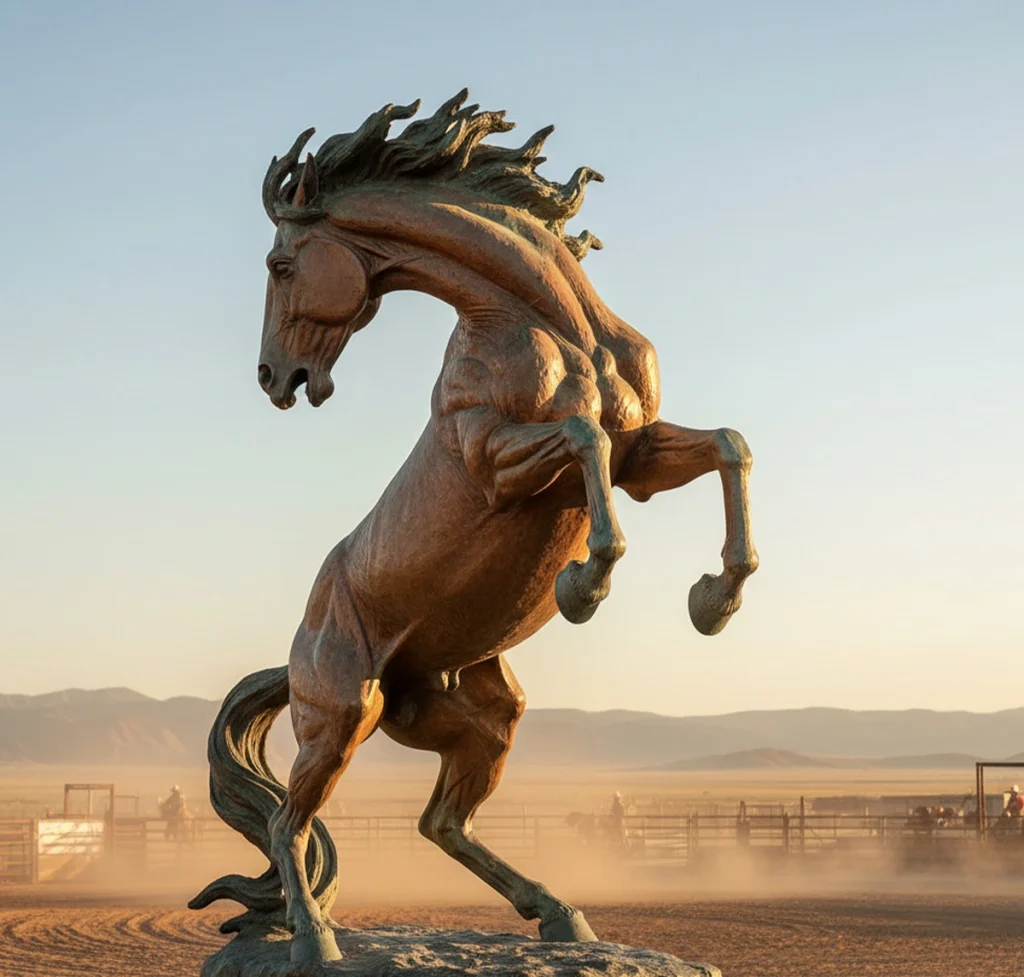
Caption: 5–8mm casting thickness provides structural permanence far beyond decorative-grade sculptures.
The Invisible Strength Inside the Statue
Large equestrian sculptures face real-world forces.
Wind, vibration, and even climbing must be considered.
That is why every large cowboy horse statue we produce includes:
- Internal 304 stainless steel skeleton
- Rust-proof structure bonded to bronze shell
- Engineered load distribution through legs and base
This internal system allows safe installation in:
- Coastal estates
- High-wind plains
- Public-access landscapes
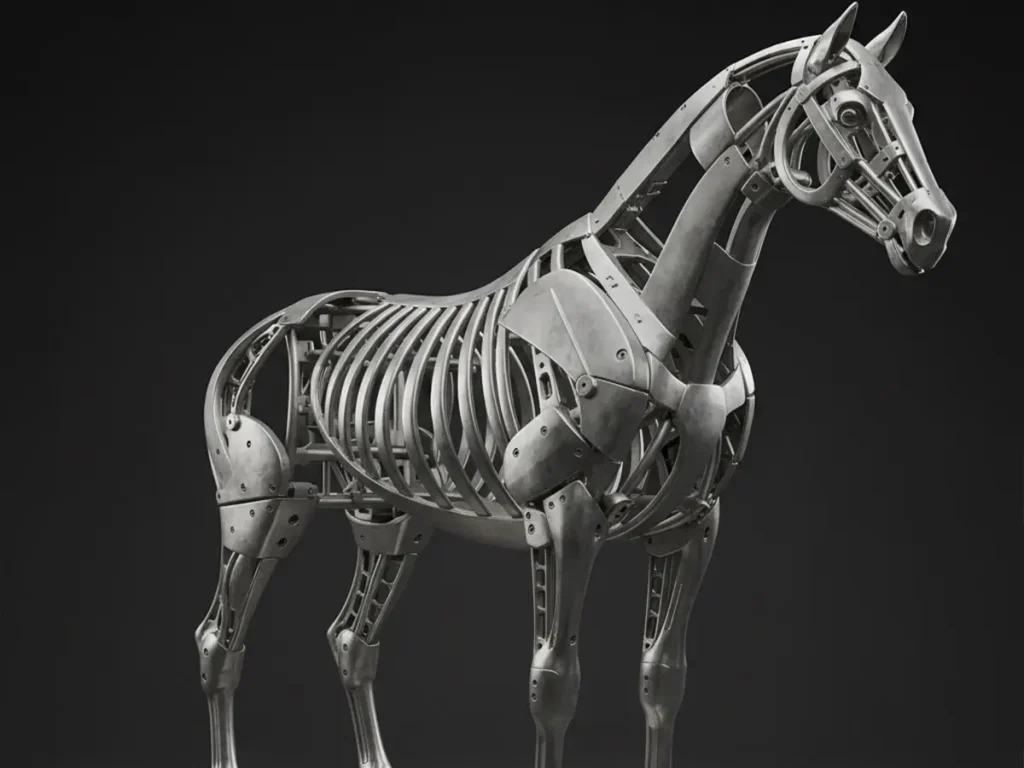
Caption: 304 stainless steel skeleton engineered to resist typhoons and long-term stress.
Craftsmanship That Preserves Emotion
Traditional Lost Wax Casting (Silica Sol)
We use lost wax casting with silica sol, not sand casting.
This process captures finer detail and smoother transitions.
Benefits include:
- Crisp muscle definition in horses
- Sharp textile textures in clothing and regalia
- Minimal surface distortion
Every vein, fold, and expression remains intentional.
Hot Chemical Patina, Not Paint
Color is not applied—it is grown.
Our patina process involves:
- Controlled chemical reactions at high temperature
- Penetration into the bronze surface
- Natural variation that enhances depth
Paint fades.
Patina evolves beautifully.
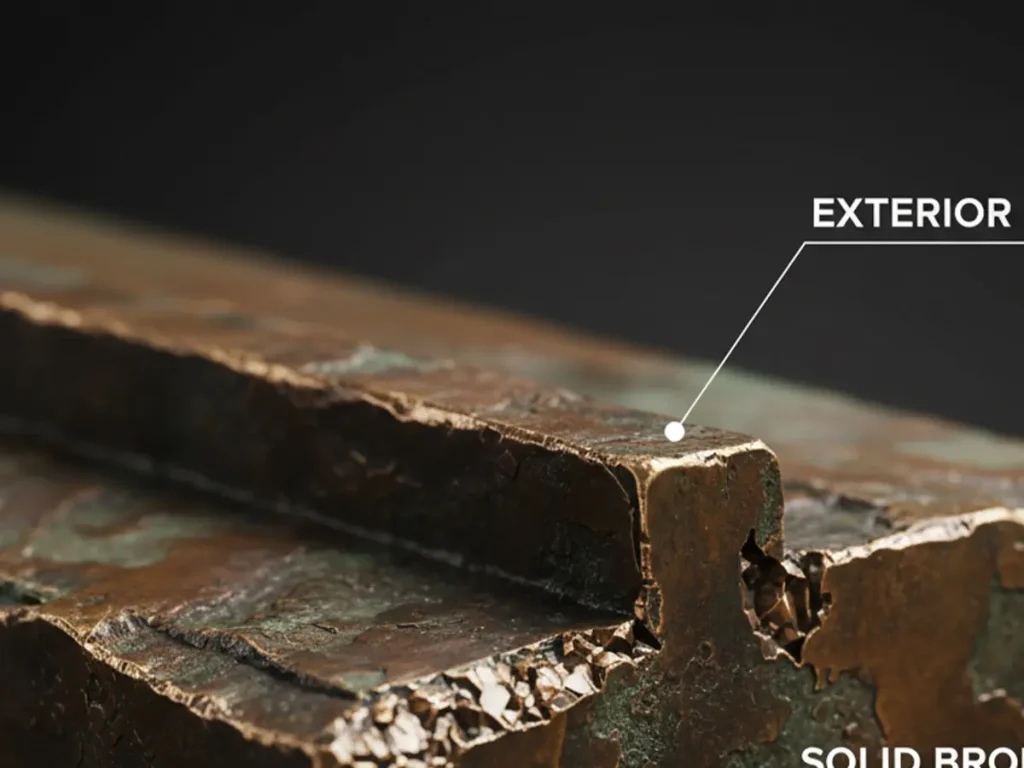
Caption: Hot chemical patina creates permanent color bonded to the bronze, not a surface coating.
Placement Ideas for Western Horse Statues
Whether for a ranch or a luxury villa, the spirit of the West brings ‘auspicious energy’ to a home, aligning perfectly with the principles of horse statue feng shui and placement.
Popular placements include:
- Ranch gates with forward-moving cowboy statues
- Garden clearings with contemplative Native American figures
- Hotel courtyards using Remington-inspired action poses
Scale matters.
A life-size horse commands space and respect.
How Your Statue Reaches You Safely
Logistics are part of craftsmanship.
A masterpiece damaged in transit is a tragedy.
We ship using:
- 3cm thick solid wood crates
- Custom internal supports
- Soft foam bedding at stress points
Each crate is built for a single sculpture.
No shortcuts. No stacking risks.
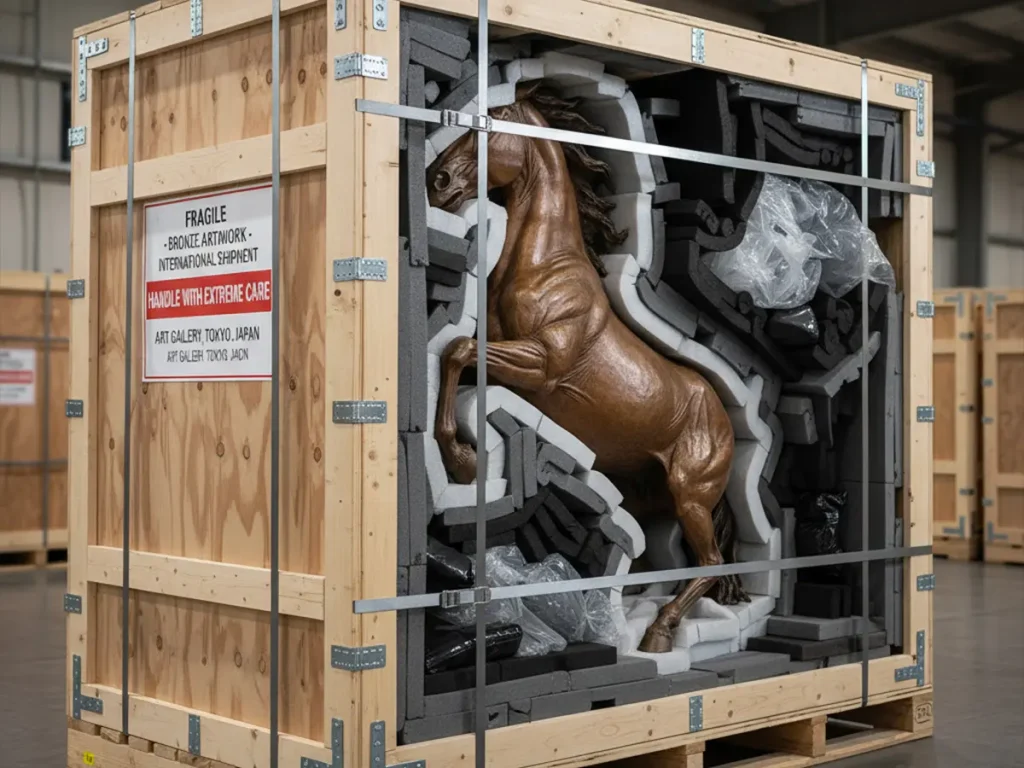
Caption: Export-grade wooden crate with 3cm panels ensures safe transatlantic delivery.
Why Collectors Choose Yun Sculpture
Our clients are not buying objects.
They are commissioning legacies.
What sets Yun Sculpture apart:
- Over 20 years of bronze casting experience
- Factory-direct control from mold to patina
- Deep understanding of Western art history
We speak the language of art, not catalogs.
Your Western Story, Preserved in Bronze
A great cowboy horse statue becomes part of the land it stands on.
It gathers stories, weather, and memory.
If you are considering a Western equestrian sculpture, we invite you to see it before it exists.
🎨 We offer a Free Photoshop Simulation showing the statue in your actual space.
🚚 Or request a Door-to-Door Quote with full technical specifications.
👉 [Get My Free Design / Quote]
Frequently Asked Questions (FAQ)
1. What is the difference between a cowboy horse statue and a bucking horse statue?
A bucking horse statue focuses on explosive motion and risk, while a cowboy horse statue may depict riding, roping, or calm travel scenes.
2. Are Frederic Remington bronze statues still under copyright?
Original Remington works are public domain, but quality varies greatly among reproductions depending on casting method and material.
3. Can these statues be installed outdoors year-round?
Yes. With >95% copper silicon bronze, 5–8mm thickness, and a 304 stainless steel skeleton, they are designed for permanent outdoor installation.
4. How long does production usually take?
Custom Western horse statues typically require 8–12 weeks, depending on size and patina complexity.
5. Do you offer custom poses or historical references?
Yes. We regularly work from historical photos, museum references, or client sketches to create unique Western compositions.