Get in touch with Yun-Sculpture company
The Spirit of the Forest: A Guide to Woodland Animal Sculptures for Mountain Lodges

There is a moment, often at dusk, when a mountain property reveals its true character. Pine shadows stretch across the driveway, the air carries the scent of cedar, and the architecture of the lodge seems to merge with the surrounding forest. In that moment, a sculpture can define the entire experience.
A well-placed Wolf statue, Bighorn sheep sculpture, or Fox garden statue does more than decorate a landscape. It introduces narrative. These animals carry centuries of myth, survival, and symbolism—qualities that resonate deeply with mountain living.
For designers working within Alpine aesthetics, sculpture becomes a natural extension of the terrain. Timber beams, stone facades, and winding forest paths invite artworks that feel rooted in wilderness. Wildlife forms appear almost inevitable, as though they emerged from the forest itself.
The same is true for Rustic lodge decor. Interiors often celebrate natural materials—aged wood, leather, stone fireplaces. When the exterior landscape echoes those themes with powerful animal figures, the entire property feels unified. Sculpture becomes the bridge between architecture and environment.
A Fox garden statue tucked beside a woodland path can create a quiet moment of discovery. A Bighorn sheep sculpture placed on a rock terrace can mirror the dramatic cliffs of alpine ranges. And a Wolf statue positioned at the approach to the lodge establishes something even stronger: a sense of guardianship.
These sculptures are not merely ornaments. They are spatial storytellers.
When chosen carefully—considering scale, material, and placement—they transform an ordinary driveway, garden, or lodge entrance into something cinematic. Guests arriving at dusk see silhouettes against the mountains. Snow gathers lightly on bronze forms in winter. Morning light reveals details carved with precision.
Over time, these pieces become landmarks of the property itself.

Among all woodland animals used in sculpture, one figure carries unmatched symbolic power: the wolf.
Table of Contents
Table of Contents
The Wolf: Symbol of Strength and Guardianship for the Lodge
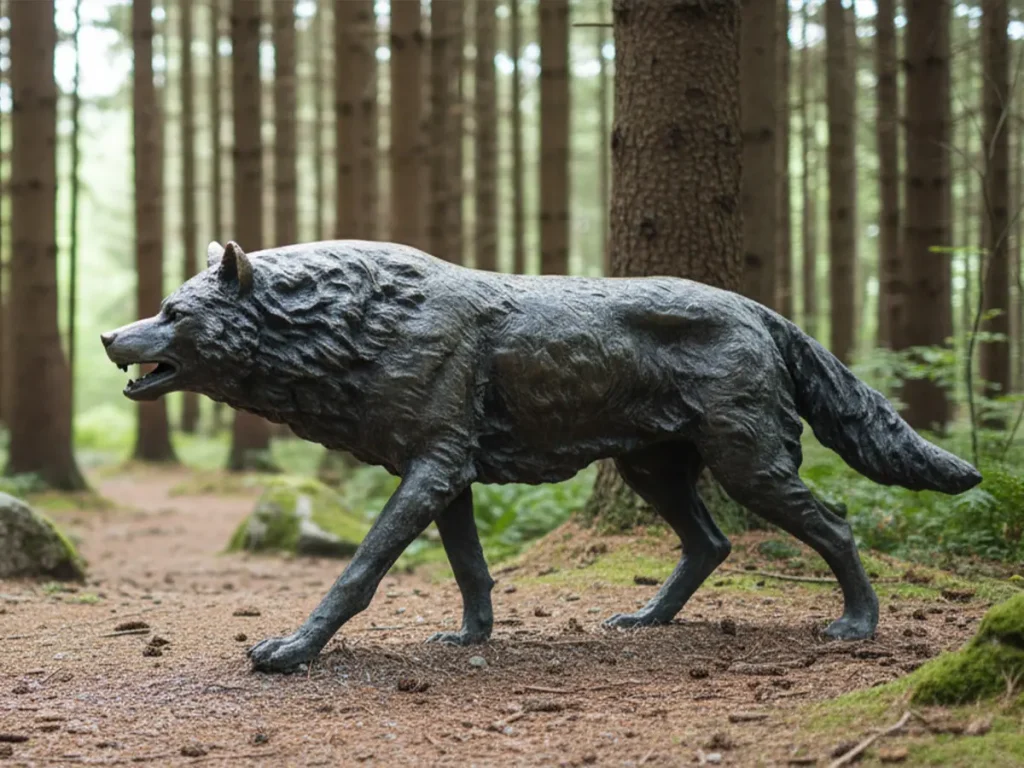
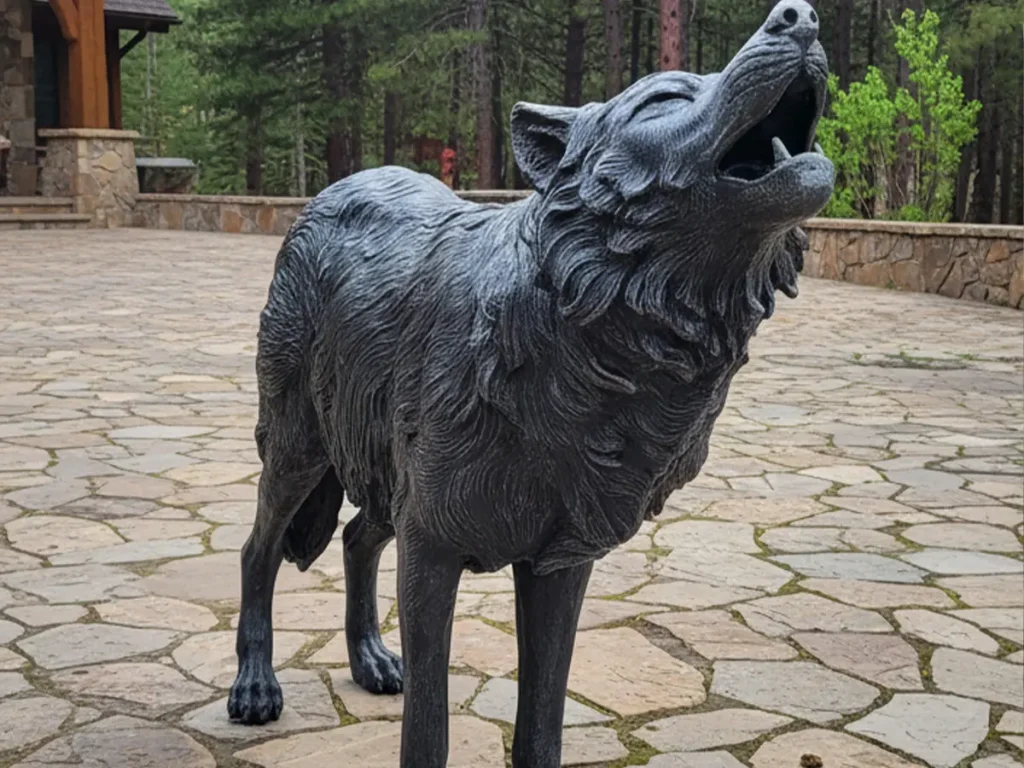
Few animals embody the spirit of the wild as completely as the wolf. Across continents and centuries, it has represented instinct, intelligence, and the deep order of nature. In landscape design, a Wolf statue becomes a visual declaration of wilderness identity.
The wolf has long stood as the ultimate Symbol of the wilderness. It thrives in remote forests and mountain ranges where human presence is minimal. Because of this, cultures around the world have viewed the wolf as both protector and ruler of untamed landscapes.

Ancient civilizations recognized this power. One of the most famous examples is the legendary bronze sculpture known as The Capitoline Wolf. This iconic figure depicts a she-wolf nursing the twin founders of Rome, Romulus and Remus. The image has endured for more than two millennia as a symbol of protection, origin, and strength.
The message remains remarkably relevant today.
A wolf standing at the entrance of a lodge carries a similar narrative. It signals vigilance. It suggests a watchful presence guarding the land and those who gather there. For large estates or mountain retreats, this symbolism resonates strongly with owners seeking both beauty and meaning in their landscapes.
Modern interpretations often highlight another essential aspect of wolves: the pack.
In contemporary culture—especially in sports and university architecture—wolf statues frequently represent teamwork and loyalty. The imagery of wolves moving together as a unified group reinforces ideas of family, community, and resilience.
For a private mountain lodge, this symbolism feels especially fitting. These properties are often designed as places where families gather, traditions form, and generations reconnect with nature.
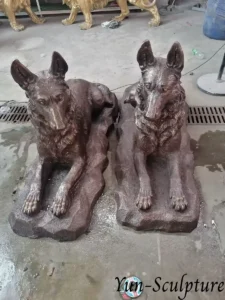
A carefully designed wolf sculpture captures that spirit. The animal’s posture—alert ears, focused gaze, steady stance—creates a sense of life within the landscape.
It feels less like an object and more like a silent guardian.
Why Choose a Life-Size Bronze Wolf Statue?
Scale is the first element that determines whether a sculpture feels decorative or monumental.
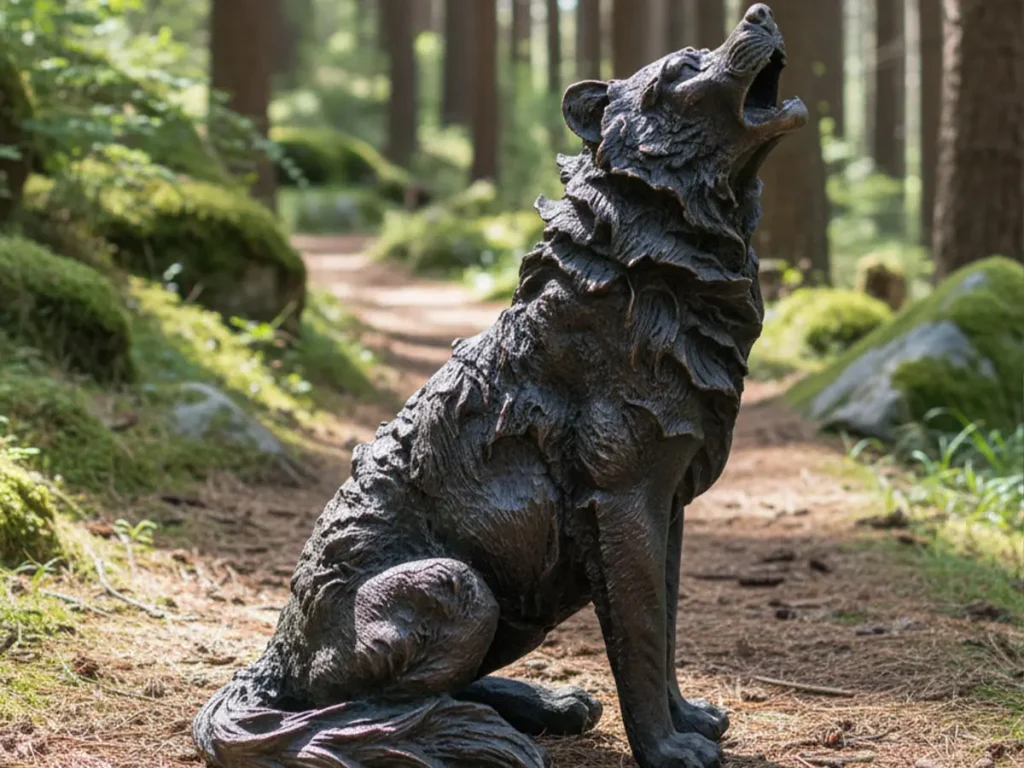
A Life size wolf statue immediately commands attention. Placed at the entrance of a forest driveway or beside the stone steps of a timber lodge, the figure appears almost alive within the environment. Guests approaching the property instinctively slow down, noticing the silhouette before they even reach the door.
This sense of presence is what landscape designers often call arrival drama.
At natural scale, the wolf becomes believable. Its proportions match the surrounding trees, rocks, and architecture. Snowfall settles across the shoulders of the sculpture in winter. In autumn, fallen leaves gather around its paws.
The result is a sculpture that feels integrated with the forest rather than placed upon it.
Material plays an equally important role.
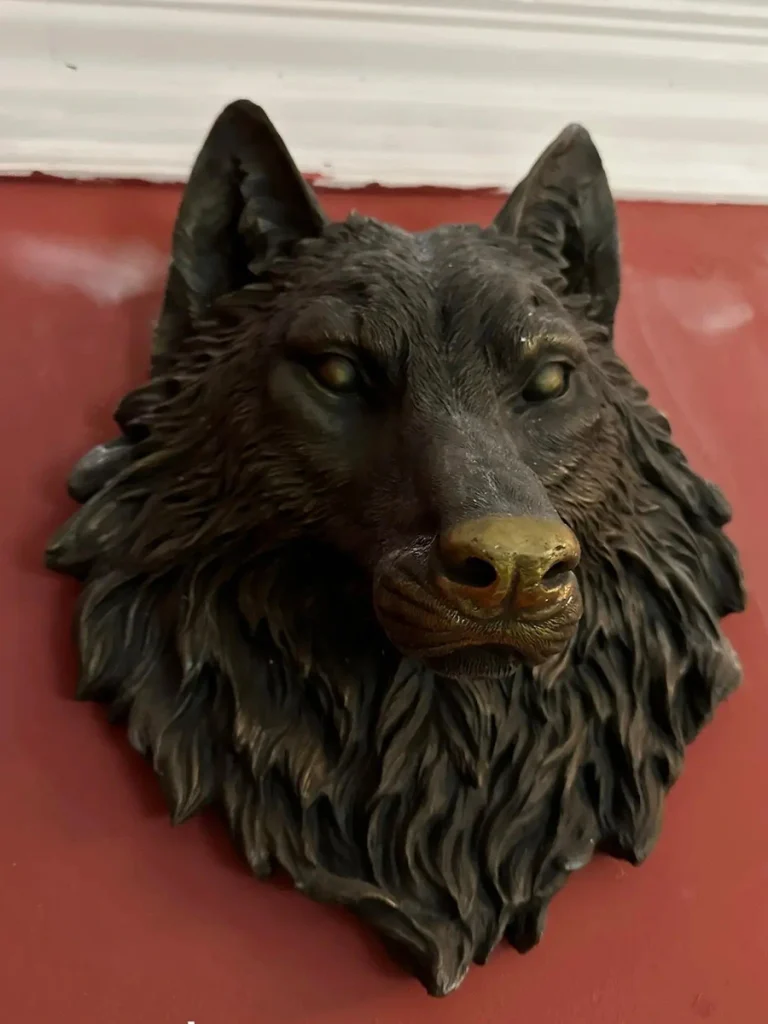
A Bronze wolf statue carries a sense of permanence that few materials can match. Bronze has been used for Bronze wildlife art for thousands of years because it captures fine anatomical detail while resisting harsh outdoor conditions. Rain, frost, and mountain sun slowly deepen its patina rather than degrade it.
Donghui Zhang often reminds clients of a simple truth from the foundry floor: bronze ages with dignity.
Mass-produced alternatives—thin cast resin, lightweight concrete, or painted metal—may initially resemble real sculpture. Yet within a few seasons they fade, crack, or lose structural integrity, especially in mountain climates where temperature swings are extreme.

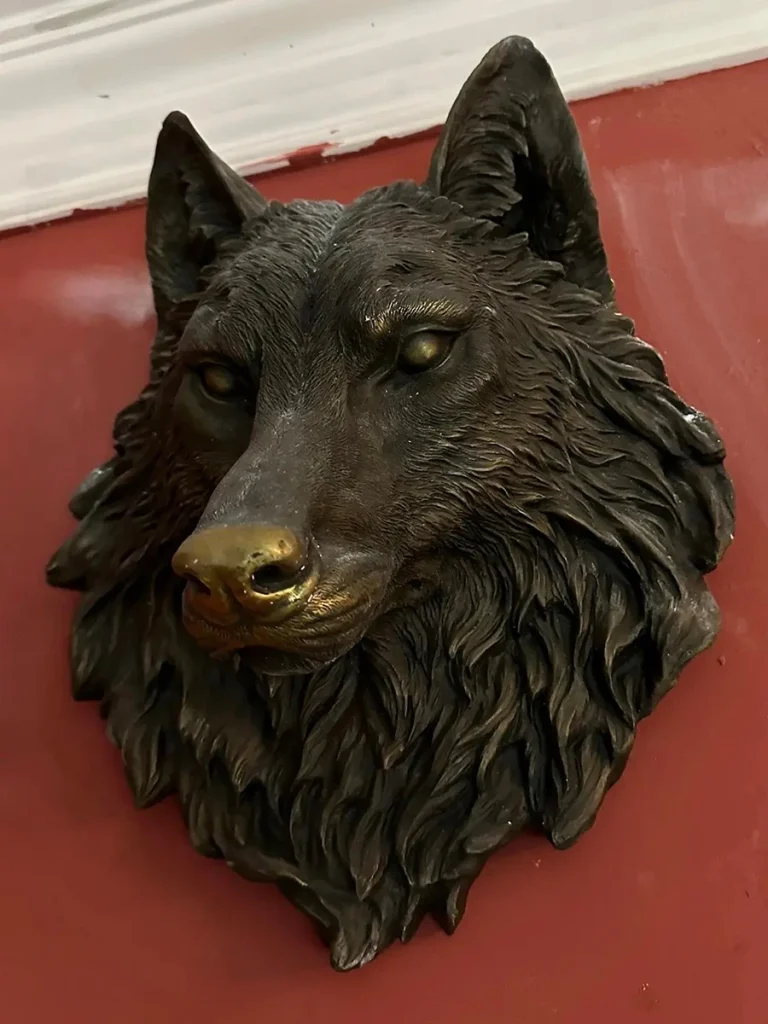
Bronze behaves differently.
Its weight anchors the sculpture to the landscape. Its surface develops character year after year. And its craftsmanship transforms the piece into something far beyond decoration.
For a mountain lodge designed to endure generations, that distinction matters.
The Fox: Adding a Touch of Cleverness to Your Woodland Garden
If the wolf represents strength and guardianship, the fox introduces something lighter and more mysterious to the woodland landscape.
Across folklore and literature, the fox symbolizes agility, intelligence, and quiet adaptability. It moves through forests with a kind of silent confidence, appearing briefly before disappearing into brush and shadow. In sculpture, this elusive character translates beautifully into garden design.
A well-placed Fox statue can soften the dramatic presence of larger wildlife sculptures. Where a wolf establishes authority, the fox invites curiosity. It encourages visitors to explore deeper into the garden.


This balance is particularly important in a Forest-themed landscape. Large sculptural anchors—wolves, bears, or mountain animals—define the main spatial structure. Smaller animals like foxes create narrative moments along paths, beneath trees, or beside natural stone formations.
The effect is subtle but powerful.
Guests walking through the garden begin to notice details: a rust-colored form near a fallen log, a slender tail curving through ornamental grasses, a fox watching quietly from beneath a cedar tree. These moments transform a landscape from decorative to immersive.
In mountain lodges and woodland estates, fox sculptures often become the pieces people remember most.
Not because they are the largest—but because they are discovered rather than announced.
Finding the Perfect Fox Statue for Sale
Designing with fox sculptures begins with placement.
Unlike monumental animals placed at entrances, fox figures thrive when they feel slightly hidden. A carefully positioned Fox statue should appear as though it naturally emerged from the forest itself.
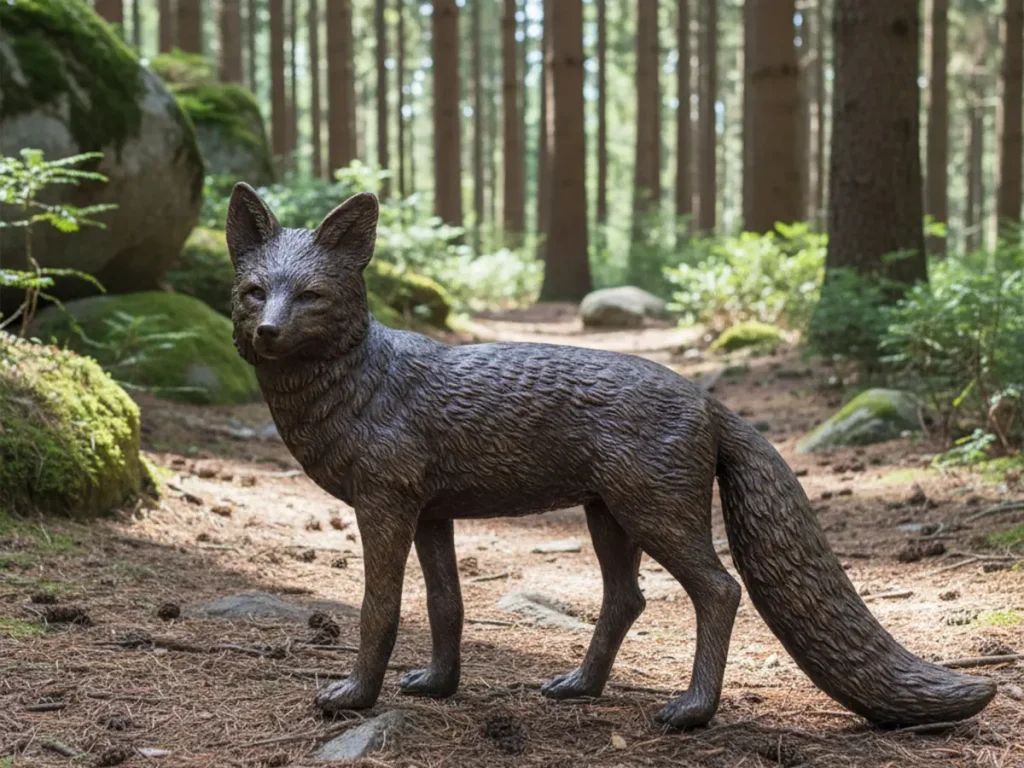

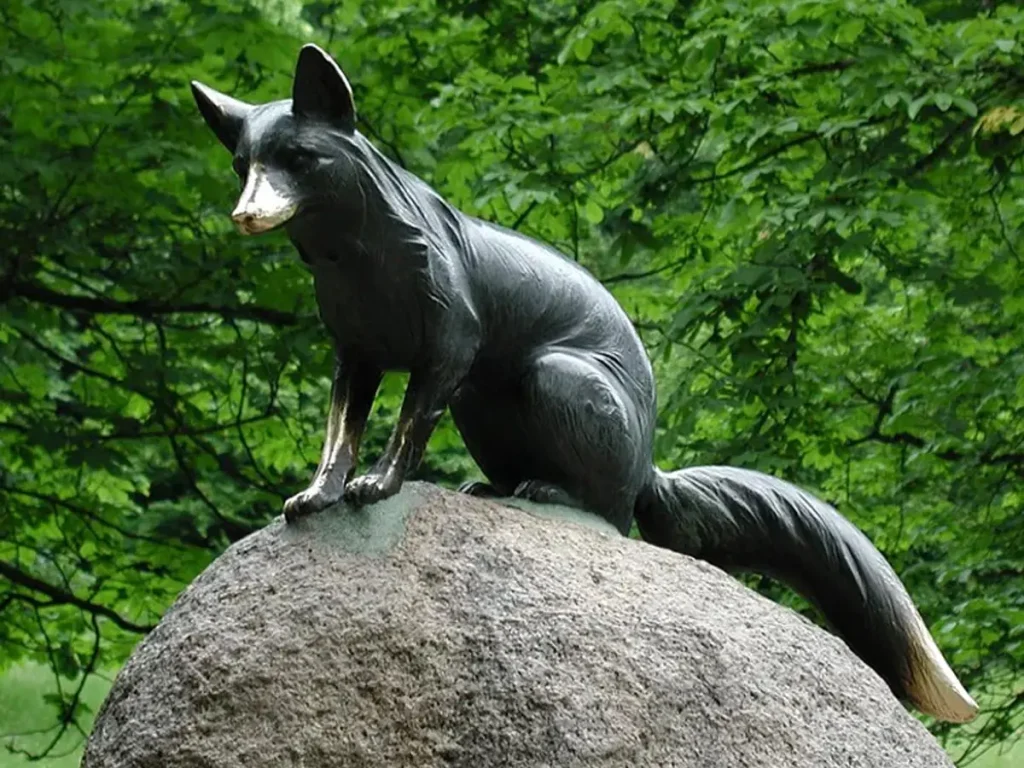
Many landscape designers recommend placing a Garden fox statue for sale partially concealed near shrubs, tree roots, or boulders. The sculpture becomes visible only when a visitor approaches from a particular angle, creating a quiet moment of surprise.
This strategy works especially well along curved garden paths.
As guests walk deeper into the property, the landscape gradually reveals new details. A fox may appear beside a patch of ferns, resting beneath a spruce tree, or stepping across a moss-covered stone.
These placements reinforce the feeling of a living woodland environment.
The fox becomes part of the ecosystem of the garden rather than a standalone object.
In a carefully designed Forest-themed landscape, these smaller sculptures guide movement and attention. They encourage guests to slow down, to look closer, to engage with the natural textures of bark, stone, and foliage surrounding them.
When sculpture and landscape work together in this way, the garden begins to feel alive.
Stylized vs. Realistic: From Gentleman Fox to Lifesize Noble Fox
Fox sculptures exist across a fascinating spectrum of artistic styles.
At one end are whimsical interpretations inspired by classic European storybooks and countryside folklore. A Gentleman fox garden statue, often depicted wearing a waistcoat or carrying a cane, brings playful charm to cottage-style gardens and relaxed woodland paths.
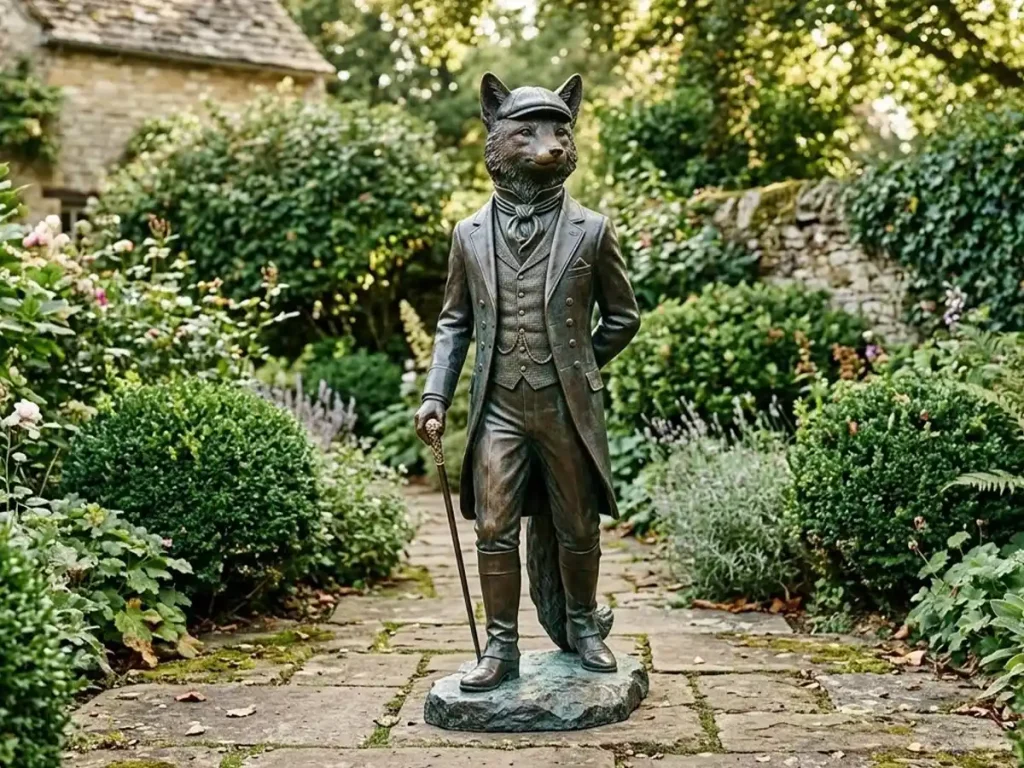
These pieces echo the narrative traditions of English countryside tales—foxes portrayed not only as animals but as clever characters.
Placed near garden benches, patios, or herb gardens, this style creates a warm and approachable atmosphere.
At the other end of the spectrum lies a more dramatic and naturalistic interpretation.
A Lifesize noble fox garden statue captures the animal in breathtaking realism. Sculptors carefully study anatomical movement—the arch of the back, the delicate tension of the paws, the alert lift of the ears. The result is a sculpture that appears ready to move at any moment.
In high-quality works, the surface reveals extraordinary Hand-carved detailing. Individual strands of fur catch the light. Muscles beneath the coat create subtle shadows. Even the fox’s gaze carries a sense of intelligence and awareness.
These realistic sculptures work beautifully in larger woodland properties where the goal is immersion rather than decoration.
Placed near forest trails or stone terraces, they blur the line between art and wildlife.
Guests sometimes pause for a moment, uncertain whether the fox might suddenly step forward and disappear into the trees.
Mountain Icons: Bighorn Sheep and Wild Boar Statues
While foxes and wolves represent forest intelligence and instinct, certain animals symbolize the rugged power of mountainous landscapes.
Among these, the bighorn sheep stands as one of the most iconic.
Its massive curling horns and powerful stance evoke the high cliffs and rocky ridges of alpine environments. In sculpture, this animal carries a dramatic sculptural presence—one that pairs beautifully with stone architecture and mountainous terrain.
Wild boars and beavers introduce a different layer of narrative.
They represent endurance, industry, and the long traditions of hunting culture across Europe and North America. Together, these animals enrich a woodland property with deeper cultural references tied to the wilderness.
The Majestic Presence of Bighorn Sheep Statues
Few animals embody alpine landscapes more perfectly than the bighorn sheep.
A Bighorn sheep statue captures a moment of incredible physical tension—the animal balanced effortlessly on rocky slopes, muscles engaged, horns spiraling in powerful curves. This natural posture translates beautifully into sculpture because it conveys movement even in stillness.
Wildlife sculptors have long been fascinated by this subject. Artists such as Daniel Parker have studied the anatomy and balance of mountain sheep in order to capture their unique physical presence.
Their sculptures often emphasize the contrast between massive horns and agile bodies.

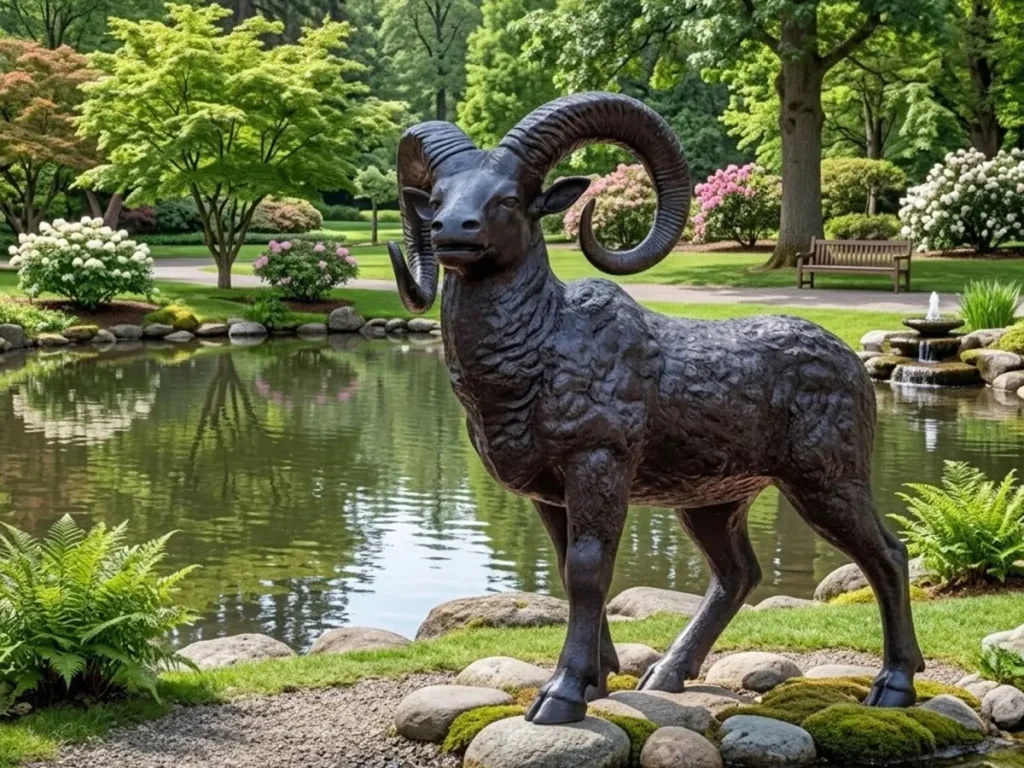
This balance makes a Bighorn sheep bronze sculpture particularly striking when placed within architectural stonework. Rock gardens, terraced retaining walls, and elevated viewpoints provide the perfect setting.
From a distance, the sculpture appears almost indistinguishable from a real animal standing watch over the terrain.
The horns catch sunlight at different angles throughout the day. Shadows deepen beneath the chest and legs, enhancing the sense of tension and strength.
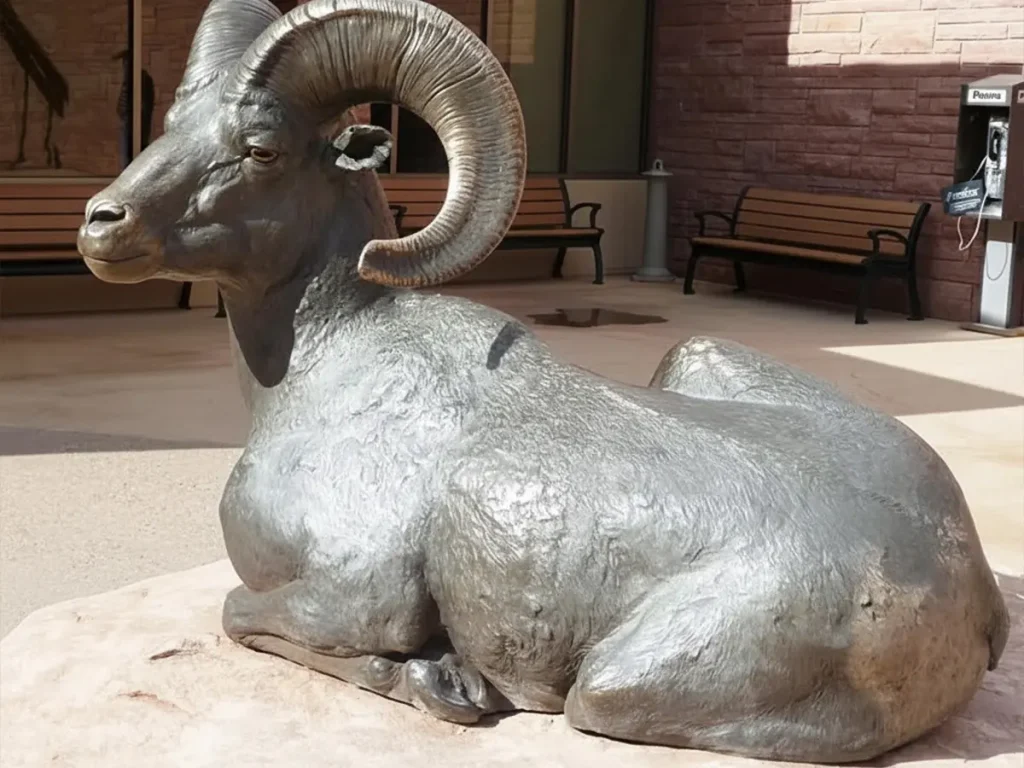
For mountain lodges designed around dramatic natural topography, the bighorn sheep becomes a powerful visual anchor.
It represents resilience in the harshest landscapes.
Rugged Appeal: Adding Wild Boar and Beaver Accents
Some sculptures carry cultural stories that stretch far beyond their physical form.
One of the most beloved examples in Europe is the bronze boar known as Porcellino in Florence, Italy. Visitors traditionally rub the boar’s nose for good luck, a ritual that has polished the bronze surface to a bright shine over centuries.
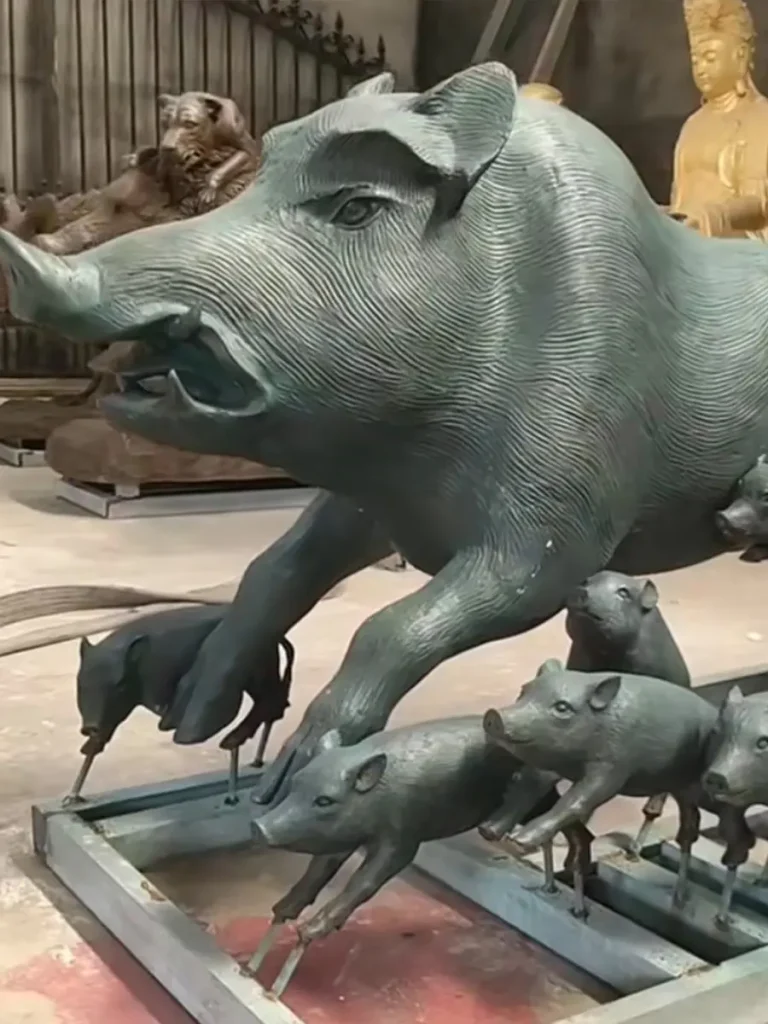
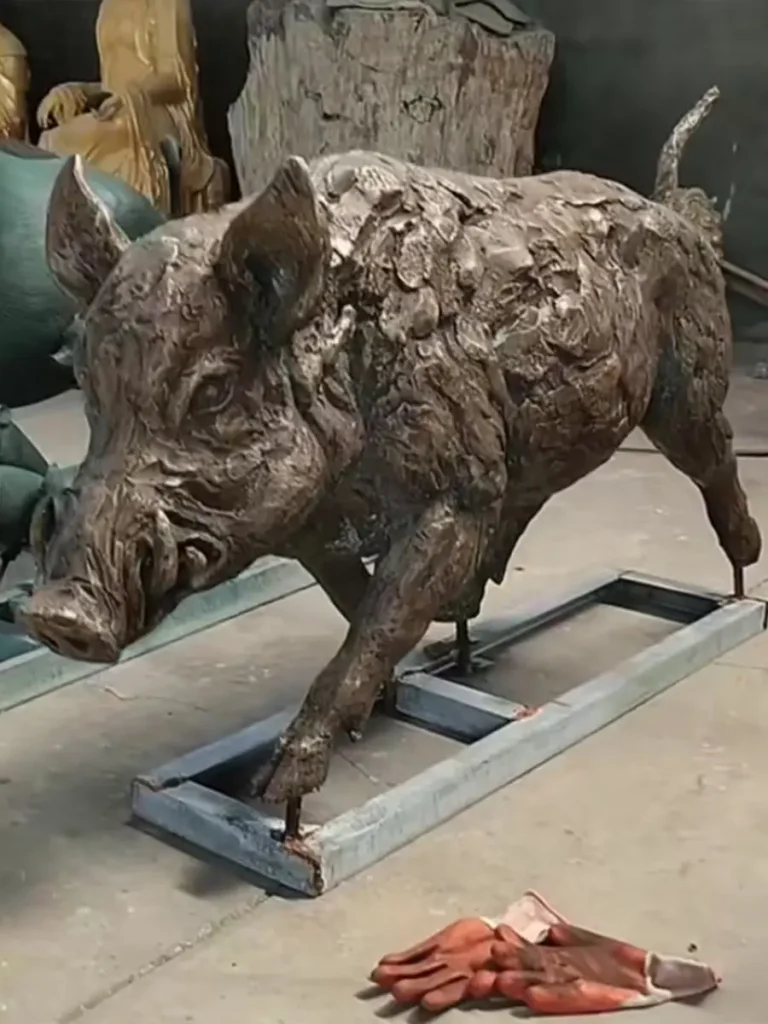
This sculpture reflects the deep relationship between European hunting traditions and wildlife imagery.
In garden design, wild boar statues introduce a similar rugged energy. Their muscular forms and lowered heads suggest determination and strength, making them ideal for woodland trails or rustic lodge entrances.
The boar represents the untamed vitality of the forest.
In contrast, the Beaver statue introduces a quieter story—one tied to water, engineering, and perseverance.
Beavers have left a remarkable cultural footprint across the world. In parts of Europe, especially Poland, public beaver sculptures celebrate the animal’s role in shaping river ecosystems. In North America, the beaver has become an unexpected pop-culture icon through brands such as Buc-ee’s.
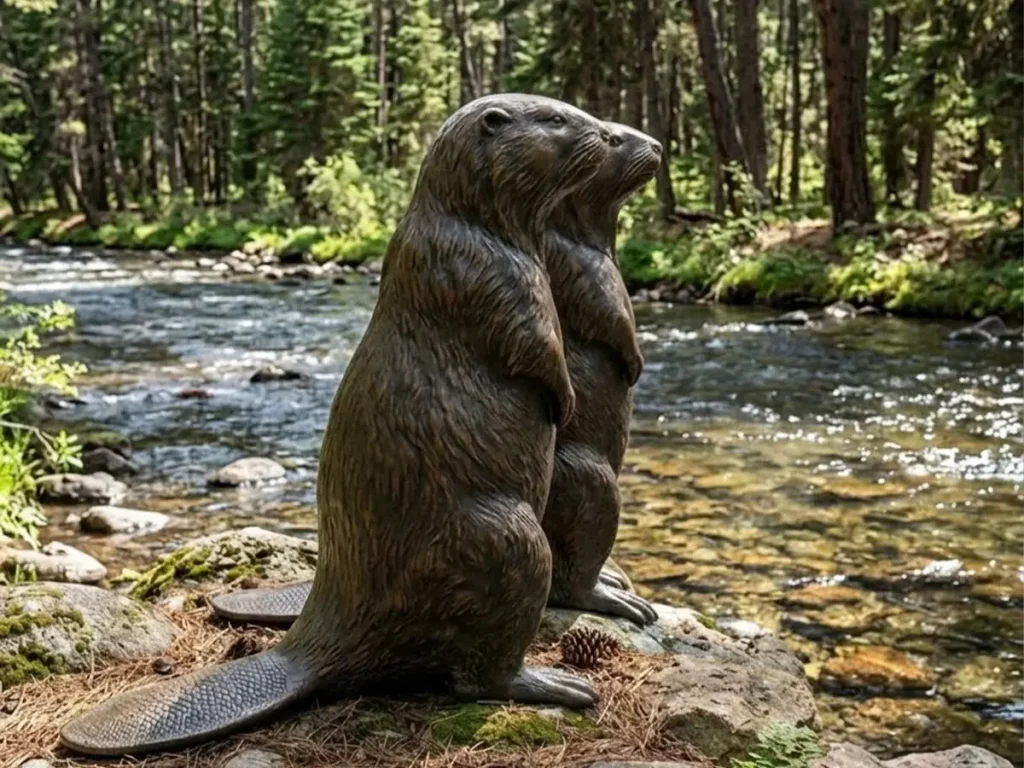

In landscape design, however, the beaver’s symbolism is far older.
A Beaver statue works beautifully beside ponds, streams, and garden waterfalls. Positioned near a water feature, it reinforces the natural narrative of the environment—as though the animal itself helped build the surrounding landscape.
Small sculptures like this bring personality to quiet corners of a property.
They remind visitors that wilderness is not only about dramatic predators and towering mountains. It is also about patient builders, hidden rivers, and the intricate life of the forest.
FAQ: Styling and Placing Woodland Statues
Where is the best place to put a she-wolf statue? (And where is the original located?)
Many collectors first encounter the she-wolf symbol through the legendary sculpture known as The Capitoline Wolf. The original artwork is preserved today inside the Capitoline Museums in Rome, where it remains one of the most powerful images from ancient Roman mythology.
The sculpture depicts the she-wolf nursing Romulus and Remus, the mythical founders of Rome. Because of this story, the wolf became a symbol of fierce maternal protection and the birth of a civilization.
For a private estate or mountain lodge, the symbolism translates beautifully into landscape design. A she-wolf statue is most effective when placed near the main gate, at the start of a long driveway, or at the center of a courtyard.
In these locations the figure acts as a guardian presence—protective yet welcoming. The posture of the animal, alert and watchful, reinforces the idea that the property is under the care of the wilderness itself.
How old is the famous “Capitoline Wolf” statue and who made it?
The famous The Capitoline Wolf is widely believed to date back to the 5th century BC, roughly around 500 BC. Traditionally, scholars have attributed the wolf figure to the ancient Etruscans, a sophisticated civilization that flourished in central Italy before the rise of Rome.
The bronze wolf itself is considered the original ancient work. The twin infants, Romulus and Remus, were added later during the Renaissance when artists and historians revived interest in classical mythology.
This layered history makes the sculpture especially fascinating. It represents both ancient craftsmanship and Renaissance storytelling combined in a single artwork.
For collectors of wildlife sculpture today, the piece also demonstrates how enduring bronze can be. After more than two thousand years, the wolf remains one of the most recognizable animal sculptures in the world.
Where can I buy high-quality outdoor wolf or fox statues?
Many homeowners begin their search online and quickly encounter dozens of inexpensive decorative statues. While these may appear convincing in photographs, they are often lightweight resin casts designed for short-term garden decoration.
If you are seeking heirloom-quality sculpture, the better path is to work with professional foundries and sculpture workshops. Specialized studios—such as Yun Sculpture—focus on durable materials designed specifically for outdoor environments.
These workshops typically offer several serious material options. Solid bronze remains the most respected choice for wildlife sculptures because it captures anatomical detail while enduring decades of exposure to rain, frost, and sunlight.
Natural carved stone is another excellent option, especially for rustic lodge settings where sculpture should feel integrated with rock and architecture. Heavy architectural cement can also work for large installations where weight and durability are essential.
This level of craftsmanship becomes particularly important for dynamic designs—such as a howling wolf or a fox in mid-stride—where balance, structure, and surface detail must all be engineered carefully.
What material are “A Wolf Original” sculptures made of?
Collectors occasionally encounter sculptures labeled “A Wolf Original.” These pieces were produced by a well-known vintage Canadian art brand that specialized in wildlife forms.
At first glance, the sculptures resemble carved soapstone. Their surfaces often display subtle textures and earthy tones that mimic natural stone remarkably well.
In reality, however, these artworks are made from a dense, hand-cast resin composite. The mixture was specifically engineered to simulate the visual weight and tactile quality of stone while allowing for more efficient production.
Because of this construction method, the sculptures are surprisingly heavy and durable compared to standard decorative resin figures.
For collectors today, they represent an interesting chapter in modern wildlife sculpture—bridging traditional stone carving aesthetics with mid-20th-century casting technology.
Where is the famous Wild Boar Statue (Porcellino) located?
One of Europe’s most beloved animal sculptures is the bronze wild boar known as Porcellino. The sculpture stands in Florence, Italy, near the historic market area called Mercato Nuovo.
Technically, the boar functions as a fountain. Water flows gently from the animal’s mouth into a basin below, creating a lively gathering point within the square.
Visitors have followed a charming tradition there for centuries: rubbing the boar’s snout. The repeated touch of millions of hands has polished the bronze nose to a bright shine.
Legend says that touching the snout ensures good luck and guarantees a future return to Florence.
Beyond the superstition, the sculpture reflects the deep heritage of European wildlife art. It connects public space, folklore, and craftsmanship in a way that continues to inspire designers and collectors around the world.
Where can I see “life-size” wolf or fox statues?
Life-size wildlife sculptures appear in many surprising places once you begin noticing them. University campuses often use wolves as powerful mascots and symbols of unity. A well-known example is the wolf pack sculptures at North Carolina State University, where the animals represent teamwork, resilience, and shared identity.
National park visitor centers also frequently display life-size wolves, foxes, or bears as educational exhibits. These sculptures help visitors understand the scale and presence of real wildlife before entering surrounding wilderness areas.
Luxury mountain resorts and private lodges have embraced the same idea. A life-size wolf standing beside a stone driveway or overlooking a forest path becomes a dramatic focal point—an immediate expression of place.
For homeowners designing a woodland estate, commissioning a true 1:1 scale sculpture offers something unforgettable. The animal appears real within the environment, anchoring the entire landscape with a sense of life and quiet authority.
Where is the World’s Largest Beaver Statue?
The title of the world’s largest beaver statue belongs to the small Canadian town of Beaverlodge, Alberta.
Standing prominently along the roadside, this enormous sculpture celebrates the beaver’s deep historical importance to the region. During the fur trade era, beavers were central to the economic development of much of northern North America. Entire trade routes, settlements, and industries grew around the demand for beaver pelts.
The statue in Beaverlodge reflects that legacy. Its monumental scale turns a familiar woodland animal into a civic landmark—something both humorous and historically meaningful.
Travelers passing through the town often stop for photographs beside the giant beaver. The sculpture has become a beloved roadside attraction and a symbol of local identity.
While most private landscapes will not require such monumental scale, the story illustrates an important design principle: wildlife sculptures resonate most strongly when they connect to cultural history and regional character.
Can I build a custom animal statue for my lodge? (DIY vs. Professional)
Many property owners eventually ask the same creative question: could I build a sculpture myself?
Technically, the answer is yes. Enthusiastic DIY artists often begin by researching how to make a wolf statue using traditional sculpting methods. The process usually starts with a metal or steel wire armature that establishes the basic skeleton of the animal.
Clay, plaster, or cement is then layered over this frame to shape the body and refine the anatomy. Artists gradually sculpt muscles, fur texture, and facial expression until the model looks complete.
From there, the next step involves learning how to make a mold for a wolf statue. Typically this means applying a flexible silicone mold around the finished sculpture, reinforced with a rigid outer shell. Once the mold cures, it can be used to cast copies in resin, plaster, or concrete.
Donghui Zhang often smiles when this topic comes up in the workshop.
He explains that while DIY methods can be rewarding, producing a truly durable outdoor sculpture is much more complex than it first appears. Outdoor installations must survive decades of rain, frost, heat, and structural stress.
Professional foundries therefore rely on advanced casting systems. These include bronze lost-wax casting, reinforced architectural cement, and specialized Weather-resistant resin/stone composites engineered for extreme environments.
Without these materials and techniques, homemade sculptures may crack, absorb water, or degrade during winter freezes.
For small decorative pieces, DIY sculpture can be a satisfying artistic project. But for a centerpiece statue meant to anchor a lodge landscape for generations, professional fabrication remains the most reliable path.
Maintenance for Outdoor Wolf Sculptures: How to clean and paint them?
Outdoor sculpture maintenance is surprisingly simple when done correctly.
Donghui Zhang recommends starting with the material itself. Concrete or carved stone statues should be cleaned gently with water and a soft brush to remove dirt, pollen, and moss buildup.
If repainting becomes necessary, breathable masonry paint should be used rather than heavy sealants. Completely sealing concrete traps moisture inside the material. When temperatures drop in winter, that trapped moisture expands and can cause cracking.
Wood sculptures require a different approach. Instead of paint, they benefit from UV-protective wood oils that penetrate the surface while allowing the material to breathe naturally.
Bronze sculptures follow an entirely separate tradition.
Authentic bronze should never be painted. Instead, the surface should simply be washed with mild soap and water once or twice a year. After cleaning, a thin layer of clear paste wax can be applied and gently buffed.
This wax layer protects the bronze patina while preserving its natural color and character. Over time, the sculpture develops the rich tones and subtle variations that collectors value most.
As Donghui Zhang likes to say in the foundry: the goal is not to freeze bronze in time, but to let it age gracefully.
Conclusion
Woodland animal sculptures possess a unique power within landscape design.
They connect architecture to nature, transforming gardens, driveways, and mountain lodges into places with story and atmosphere. A watchful wolf can guard an entrance. A clever fox can surprise visitors along a winding path. A powerful bighorn sheep can echo the rugged terrain of alpine cliffs.
Each sculpture becomes more than decoration—it becomes a presence within the landscape.
Over time, these figures gather meaning. Snow settles across their shoulders in winter. Autumn leaves collect at their feet. Guests remember them long after leaving the property.
Whether it is a majestic bighorn sheep overlooking a rock terrace or a loyal wolf pack greeting visitors at the gate, woodland sculptures bring the spirit of the forest directly to your doorstep.
– Elena Zhang & Donghui Zhang, Yun Sculpture