Get in touch with Yun-Sculpture company
Avian Elegance: The Ultimate Guide to Bird Sculptures for Home and Garden

There is a quiet transformation that happens when a landscape welcomes birds—real or sculpted. The eye lifts. The garden breathes upward. Where many outdoor ornaments remain grounded, avian-inspired art introduces motion, grace, and the suggestion of flight.
For estate gardens, lakeside villas, and even modern patios, Bird statues for yard design perform a subtle architectural function. They guide the viewer’s gaze vertically, breaking the horizontal plane of lawns, terraces, and water surfaces. The result is a composition that feels lighter, more alive.

In landscape design, I often describe bird sculptures as visual breath. Their silhouettes—arched necks, extended wings, slender legs—create fluid lines that soften stone pathways, reflect in water, and introduce a sense of quiet movement.
Placed thoughtfully beside ponds or pools, these sculptures become more than decoration. They become storytellers.
Table of Contents
Table of Contents
The Serene Beauty of Swan, Crane, and Heron Statues in Water Features
Water has always invited birds. In sculpture, this relationship becomes one of the most timeless pairings in garden design.
Across cultures—from European palace lakes to Japanese courtyard ponds—three birds appear again and again: the swan, the crane, and the heron. Each carries its own symbolism, yet all share a common quality: elegance expressed through line and posture.
When positioned beside a reflective surface, these forms gain another dimension. The sculpture above and the reflection below create a complete composition. This is why Pond-side decor built around bird sculptures feels so harmonious.
Among the many styles of avian sculpture, swans and cranes remain the most beloved.
Swan Statues: A Symbol of Grace and Lasting Love
Few birds carry symbolism as powerful as the swan.
For centuries, the Swan statue has represented love, devotion, and purity. In European traditions, two swans forming a heart shape symbolize lifelong partnership—one reason swans frequently appear in wedding imagery and ceremonial art.
Translating this symbolism into landscape design creates a romantic atmosphere. A White swan statue beside a quiet pond evokes tranquility, while a Golden swan statue introduces warmth and ceremonial elegance to formal gardens.
Many homeowners choose Swan garden statues in pairs, allowing the curved necks to mirror one another across the water’s edge. The result feels natural and emotionally resonant.
Material also plays a crucial role in capturing the swan’s beauty. Bronze swan statues remain one of the most refined choices. Bronze preserves the graceful anatomy of the bird—the sweeping neck, the layered wings, the delicate balance of body and water.

When sculpted well, the swan’s fluid lines seem almost alive. In morning light or at sunset, the bronze surface reflects warm tones that echo the quiet romance the swan represents.
For gardens designed around serenity and reflection, few sculptures feel more appropriate.
The Mirror Effect: Modern Stainless Steel Swans for Luxury Pools
While bronze evokes tradition, modern architecture often calls for a different language.
In contemporary landscapes—especially minimalist villas or luxury pool terraces—the Modern Stainless Steel Swan has become a striking design element.
Instead of emphasizing feathers and natural texture, these sculptures simplify the bird’s form into sleek curves and polished surfaces. The result is a Mirror-polished Bird Sculpture that interacts with its surroundings in a completely different way.

Water, sky, architecture, and light all appear on the sculpture’s surface simultaneously. Beside an infinity pool, this effect can be mesmerizing. The swan seems to dissolve into reflections, becoming part sculpture, part mirror.
Designers increasingly use these pieces as Contemporary Water Feature Decor. Their reflective quality enhances the feeling of openness and luxury that modern landscapes pursue.
From a technical perspective, material selection is essential. Our Donghui Zhang consistently recommends Marine-grade 316 stainless steel for outdoor sculptures near water. This alloy contains molybdenum, which dramatically improves corrosion resistance in humid or chlorinated environments.
The result is a sculpture that maintains its flawless mirror finish year after year, even beside saltwater pools or coastal terraces.
When paired with minimalist architecture, the stainless steel swan becomes less of an ornament and more of a sculptural statement.
Bronze Cranes and Herons: Bringing Zen to Oriental Gardens
If the swan represents romance, the crane represents time.

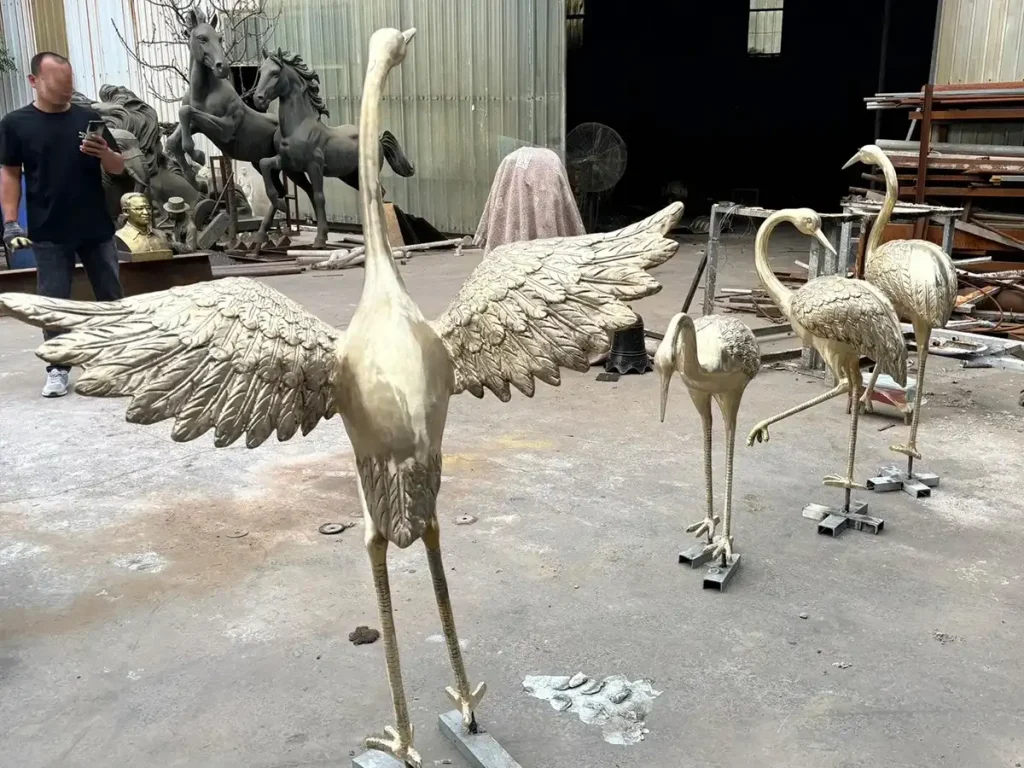
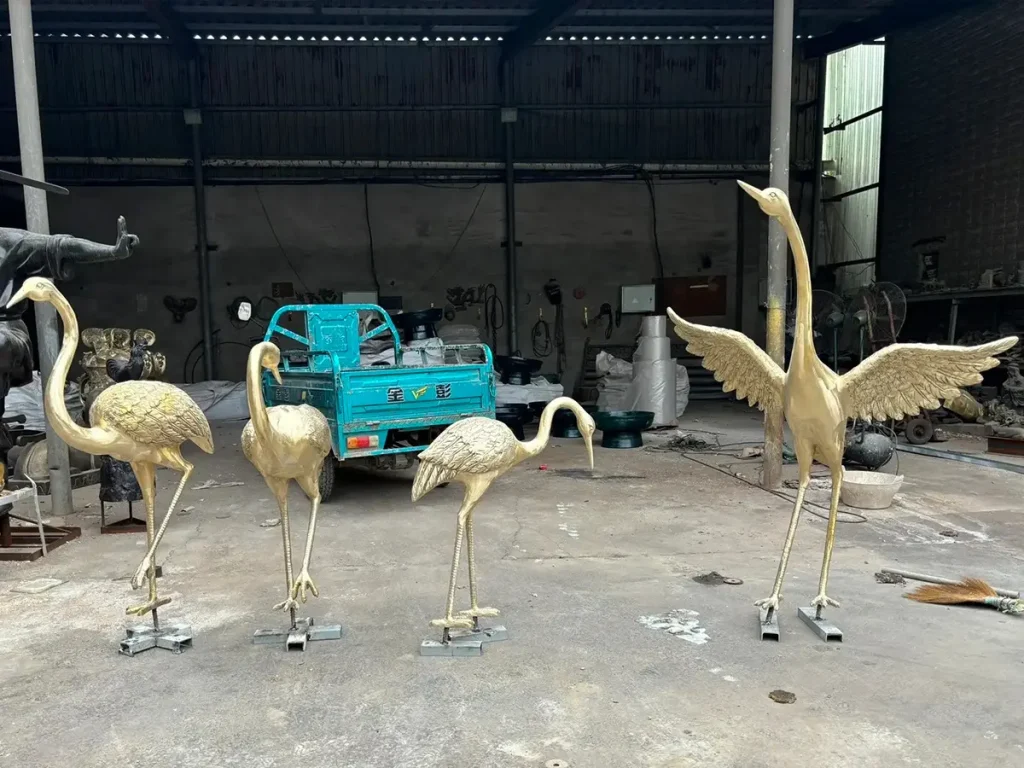
In East Asian culture, the Crane garden sculpture symbolizes longevity, wisdom, and peace. Traditional paintings often depict cranes standing in still water or walking slowly through reeds—images that express calm awareness and patience.
A Japanese crane sculpture carries this philosophy directly into landscape design.
Unlike swans, cranes possess a tall, slender form. Their elongated legs and upright posture introduce strong vertical interest to a garden space. This vertical element is particularly important in Zen-inspired landscapes, where balance between horizontal and vertical forms creates visual harmony.
Materials again shape the emotional tone. A Bronze crane sculpture offers timeless elegance, its warm patina blending beautifully with stone paths, moss gardens, and wooden bridges.
For more contemporary settings, a Metal crane statue in simplified form can create a dramatic silhouette against bamboo or ornamental grasses.
One of my favorite arrangements uses a Crane garden sculpture pair. Two cranes placed at slightly different heights suggest movement and companionship—one bird observing the water, the other stepping forward.
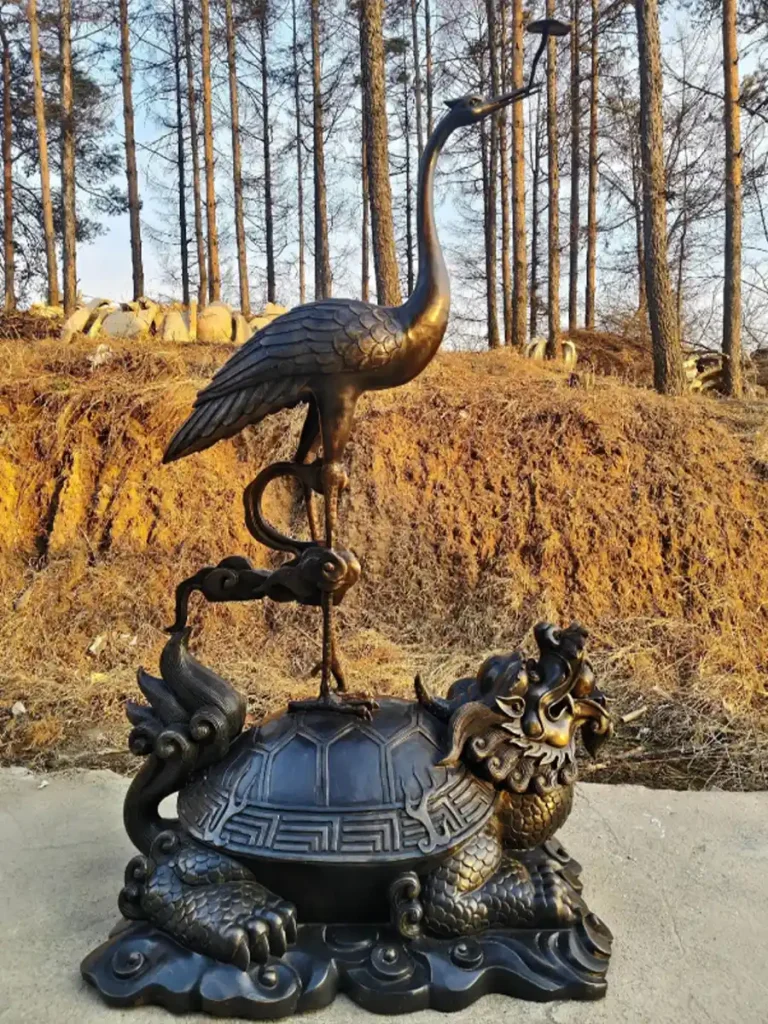
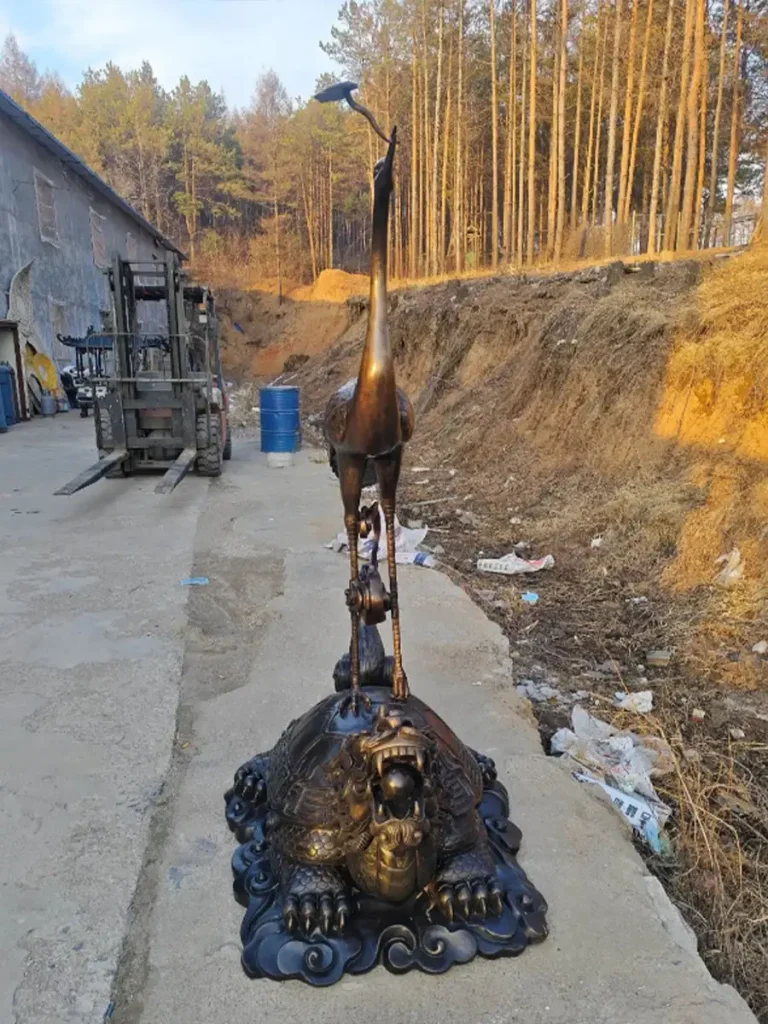

Within Zen garden elements, this pairing represents harmony between stillness and motion.
It is a quiet gesture, but one that gives a landscape depth, symbolism, and a sense of enduring calm.
Guardians of the Garden: The Dual Role of Owl and Eagle Statues
Some bird sculptures soothe a landscape. Others protect it.
Owls and eagles belong to this second category—figures that carry the presence of guardians. Their forms are alert, watchful, and commanding. When placed in a garden or courtyard, they introduce a subtle psychological effect: the feeling that the space is being observed.
This dual role—symbolic protector and practical solution—is why these sculptures appear so frequently in estate landscapes and agricultural gardens alike.
Beyond their symbolism, owl and raptor sculptures also answer one of the most common practical questions homeowners ask when designing outdoor spaces.
Can a sculpture actually help control unwanted birds?
Form and Function: Do Owl Statues Really Keep Birds Away?
Homeowners searching for practical garden solutions often ask two very specific questions: Do owl statues keep birds away, and Will an owl statue keep pigeons away?
The answer is yes—within reason.

An Owl statue can function as a mild Pest deterrent because many smaller birds instinctively avoid predators. Sparrows, pigeons, and starlings recognize the silhouette of an owl as a potential threat, especially when the sculpture appears realistic.
However, effectiveness depends on design and placement.
Cheap plastic decoys tend to fail quickly. Birds are intelligent. Once they realize the object never moves, they simply ignore it. A well-crafted sculpture works better because it mimics the proportions and posture of a real predator.
This is where artistry becomes important.
An Owl garden statue designed with Naturalistic poses—tilted head, forward-facing eyes, slightly hunched wings—creates a far more convincing presence in the landscape. The realism triggers instinctive caution in nearby birds.
Placement also matters. The sculpture should be positioned where birds typically gather: rooftops, garden walls, fence posts, or pergola beams. Just as importantly, it should be moved occasionally. Even a small change in position every few days helps maintain the illusion of a living guardian.

From a design perspective, I often recommend a substantial Stone Owl Statue instead of lightweight alternatives. Stone provides permanence and sculptural authority. The piece becomes both functional and artistic—an elegant object rather than a temporary tool.
When integrated thoughtfully into landscape design, the owl becomes more than a deterrent. It becomes a quiet sentinel within the garden.
Majestic Power: Eagle and Falcon Statues for Bold Statements
If the owl represents silent vigilance, the eagle represents power.
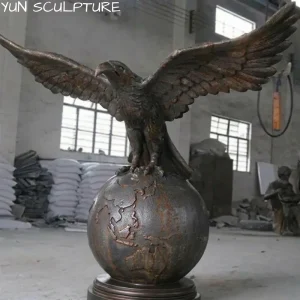
Few birds command attention like an Eagle statue. Across cultures, the eagle symbolizes strength, independence, and authority. In the United States, its imagery carries an additional layer of patriotic meaning, making eagle sculptures particularly popular for estate entrances and civic landscapes.
In sculptural design, eagles often appear in dramatic Naturalistic poses—wings partially spread, talons gripping rock, or head turned toward the horizon.
These compositions create a strong sense of movement and tension.


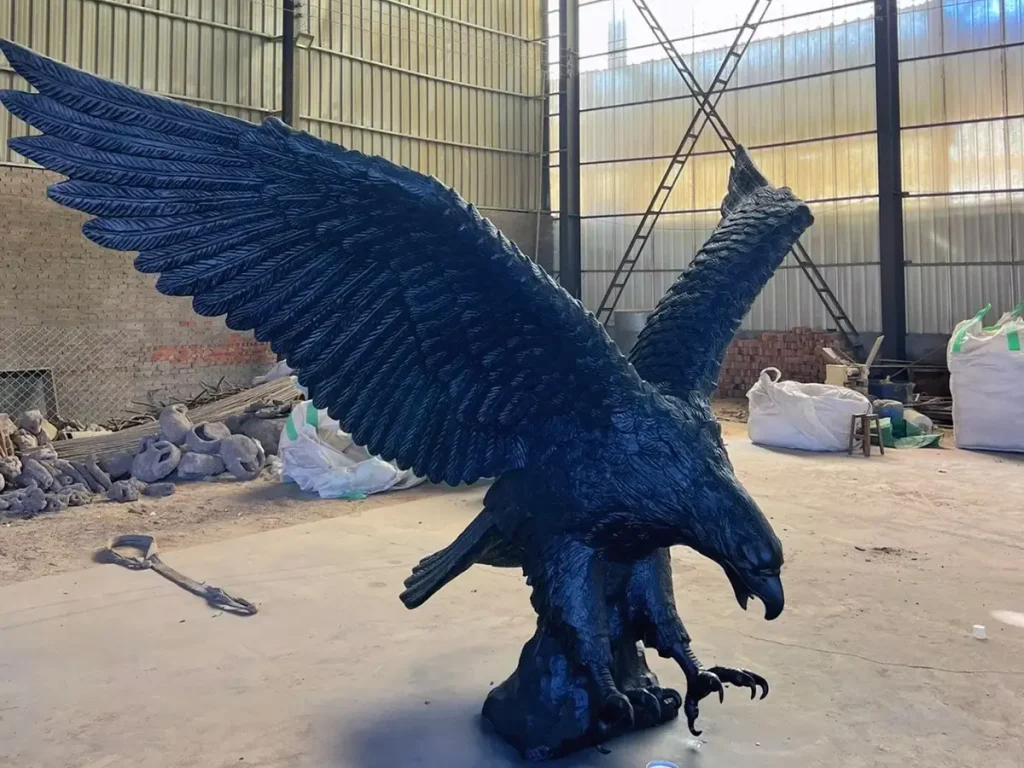


Material plays a decisive role in achieving this effect. A Bronze eagle statue remains the most traditional and powerful interpretation. Bronze possesses remarkable sculptural depth, capturing the layered structure of feathers and the sharp precision of the beak and talons.
Visually, bronze also carries immense Visual weight.
This weight anchors a landscape composition. Placed at the end of a stone pathway or atop a pedestal column, the sculpture becomes a commanding Focal point for patios, courtyards, or estate gates.
Designers often use eagle sculptures as symbolic guardians at entryways. When positioned symmetrically along a driveway or staircase, the birds create a ceremonial sense of arrival.
The message is unmistakable: strength, permanence, and presence.
The Rustic Guardian: Corten Steel Raptors for Architectural Statements
In modern architecture, bird sculptures often take on a more graphic form.
Instead of traditional sculptural modeling, contemporary designers increasingly explore silhouettes—clean outlines that interact dramatically with light and space.
This is where the Corten Steel Eagle Statue and the Rusty Metal Falcon Sculpture enter the conversation.

Both belong to a category known as Weathering Steel Bird Art, created from Corten steel, a specialized alloy designed to form a stable protective rust layer. Unlike ordinary steel corrosion, this patina protects the material beneath while producing a warm, earthy surface color.
The evolving rust tone allows these sculptures to blend naturally into rugged landscapes—mountain lodges, desert gardens, forest retreats, and modern ranch homes.
Technically, many of these works are produced through Precision laser cutting.
The process allows artists to carve intricate outlines directly into steel plates, transforming solid metal into elegant silhouettes of wings, feathers, and talons. When sunlight passes through the cut sections, the sculpture becomes both object and shadow.
The result is what I often call Kinetic silhouettes.
As the sun moves across the sky, the bird’s shadow stretches, shifts, and evolves across stone walls, patios, and pathways. The sculpture itself remains still, yet the composition around it is constantly changing.
Against the timber beams and stone textures of a mountain lodge, a rust-toned falcon or eagle silhouette can feel incredibly powerful—both primitive and modern at the same time.
In these moments, sculpture becomes architecture.
A guardian not only of the garden, but of the entire landscape narrative.
Material Comparison: Choosing Between Bronze, Stainless Steel, Stone, and Cement
Choosing the right material is as important as selecting the bird itself.
In sculpture, material determines not only durability but emotional tone—whether the piece feels classical, contemporary, rustic, or ceremonial.
Each material carries its own visual language and architectural presence.
Bronze remains the benchmark for heirloom sculpture. For centuries it has been the preferred medium for museums, monuments, and estate gardens. Its strength allows artists to sculpt delicate feathers and expressive anatomy while preserving structural stability outdoors.
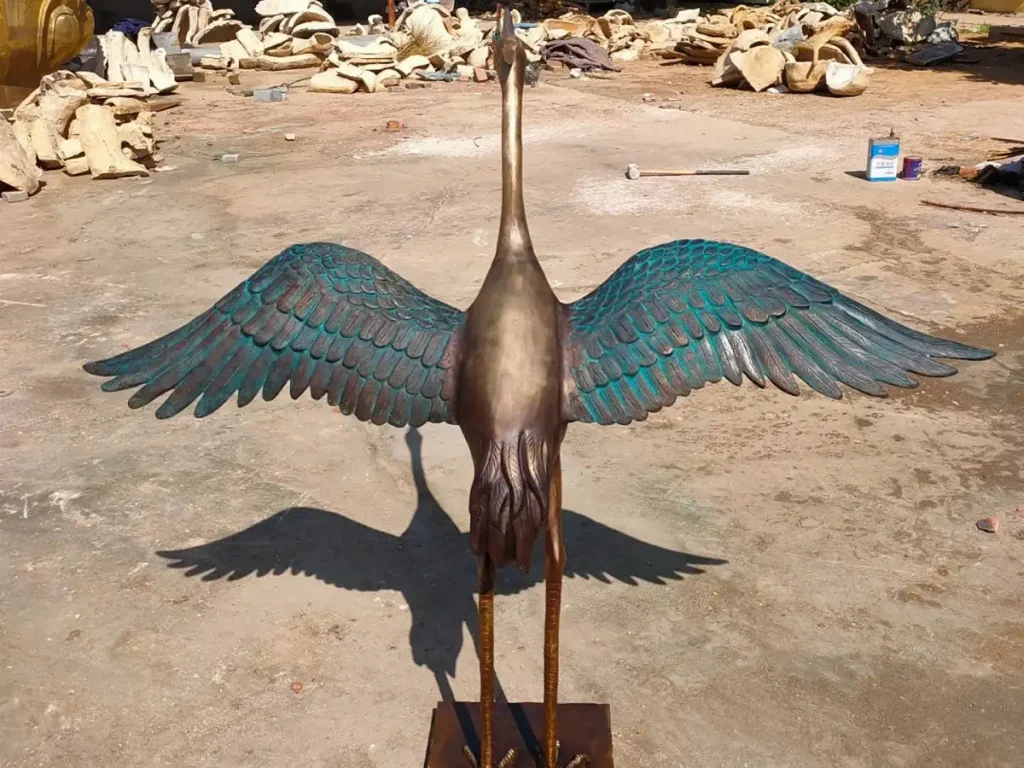
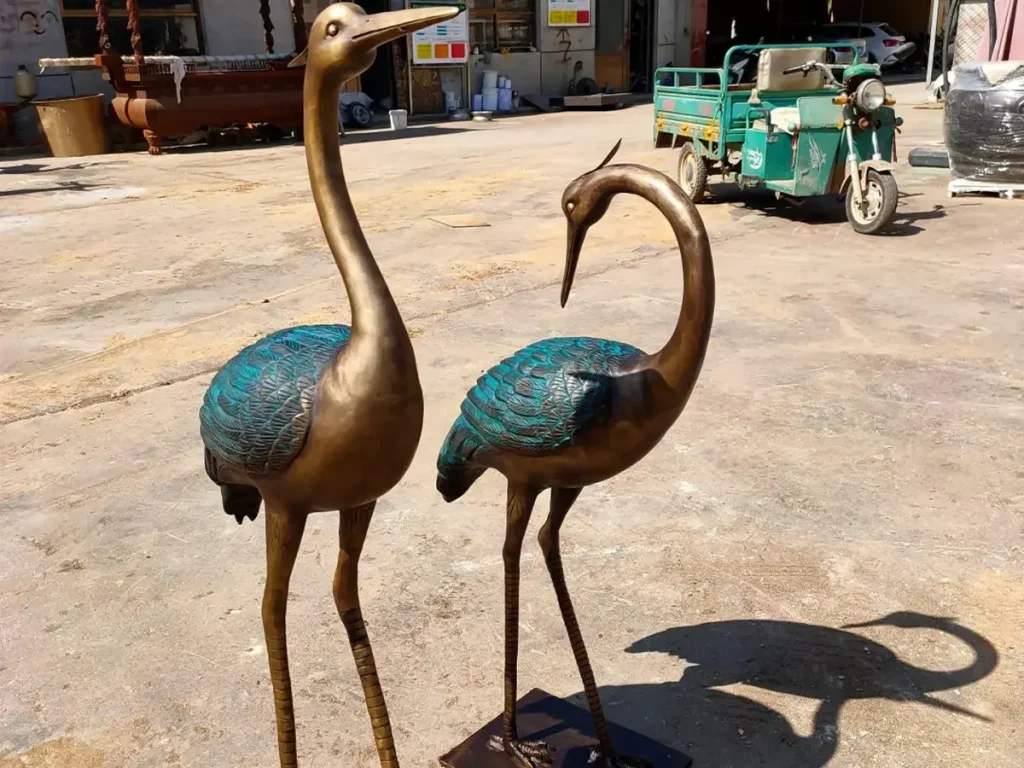

Over time, bronze develops a natural Patina finish. This subtle oxidation creates rich hues—deep brown, moss green, sometimes blue-gray—giving the sculpture a sense of age and permanence. Many collectors actually value this evolving surface, as it adds depth and character to the piece.
Because bronze casting is labor-intensive, works produced in limited runs often become collector items. A signed base marking an Artist-signed limited edition dramatically increases long-term value, transforming the sculpture from decorative object into collectible art.
Stone sculptures convey a very different emotional weight.


A Marble swan sculpture evokes classical European gardens and palace fountains. Marble’s luminous surface interacts beautifully with water and sunlight, creating a quiet elegance around ponds or terraces.
Stone also carries a sense of permanence. It anchors a landscape visually, giving the composition stability and gravitas.
Similarly, a Cement swan statue offers a robust, architectural feel. Cement sculptures are heavier and often simpler in form, making them ideal for large gardens, estate driveways, or traditional courtyards where durability matters more than delicate detail.
Designers often choose cement sculptures when they want a grounded aesthetic—something that feels carved from the earth itself.
Modern landscapes frequently move toward Metal sculptures made from stainless steel or aluminum alloys. These materials fall under the category of Corrosion-resistant metal, designed to withstand rain, humidity, and even coastal environments without degrading.
Polished stainless steel, in particular, has become a signature element of contemporary gardens and luxury pools. Its reflective surface interacts with light, architecture, and sky, transforming the sculpture into a dynamic visual element.
At the more accessible end of the spectrum, many decorative bird sculptures are made from Weather-resistant resin.
High-quality resin pieces can be surprisingly durable, especially when combined with detailed finishes. Artists often apply Hand-painted detailing to recreate the colors of real birds—barn owls, hawks, cranes, or swans.
These pieces are lighter and easier to reposition, making them popular for patios, balconies, and smaller gardens.
Ultimately, the choice depends on intention.
Collectors seeking longevity and artistic prestige often gravitate toward bronze or marble. Homeowners designing modern outdoor spaces may prefer stainless steel or corten steel silhouettes. Meanwhile, resin and cement sculptures provide practical solutions for casual garden decoration.
Material shapes not only how the sculpture survives outdoors—but how it speaks within the landscape.
Frequently Asked Questions (FAQ) About Bird Sculptures
Do owl statues deter squirrels, snakes, or rabbits?
Many homeowners wonder whether predator decoys can protect their gardens from animals. A common question is: do owl statues keep squirrels away?
Owls are natural predators of many small animals, so their presence can create a temporary sense of danger. However, a stationary statue has limited long-term effectiveness because squirrels and rabbits quickly learn the object does not move.
For better results, designers sometimes combine an owl sculpture with motion elements—such as rotating mounts or reflective surfaces—to create the illusion of activity. Without movement, the sculpture remains more decorative than functional.
What are the Vastu and Feng Shui rules for placing an Eagle statue at home?
Both Vastu Shastra and Feng Shui associate the eagle with power, ambition, and far-reaching vision.
An eagle sculpture should ideally face open space and be placed in the South or Southwest area of the property. These directions correspond with fame, reputation, and leadership energy.
Elevation is also important. Eagles should be positioned higher than surrounding objects—on pillars, walls, or tall pedestals—to symbolize clear vision and strategic oversight.
What is the history and value of the famous Maltese Falcon statue?
The Maltese falcon statue became one of the most recognizable objects in film history after appearing in the classic 1941 movie The Maltese Falcon, starring Humphrey Bogart.
In the story, the statue represents a priceless jewel-encrusted artifact pursued by multiple characters. Its mysterious reputation and symbolic value made it one of cinema’s most iconic fictional treasures.
Over time, original props used during filming became highly collectible. Several authentic film-used falcon statues have sold at auction for millions of dollars, cementing their place as legendary pieces of pop-culture memorabilia.
Because of this history, falcon sculptures today often carry an aura of intrigue and sophistication among collectors.
What does the giant owl statue at Bohemian Grove represent?
Hidden within the redwood forests of California stands one of the most unusual bird sculptures in the world—a towering 40-foot concrete owl.
This sculpture is located at the private retreat known as Bohemian Grove. The owl has been widely interpreted as representing Moloch, though others suggest it symbolizes wisdom or observation.
Each year, members gather at the site to perform a theatrical ceremony called the “Cremation of Care,” staged before the massive owl statue. While the ritual is symbolic rather than religious, the sculpture has become a subject of fascination due to the secrecy surrounding the organization.
Architecturally, the structure itself demonstrates how monumental bird imagery can create powerful atmosphere in landscape design.
Can we keep a swan statue at home according to Vastu/Feng Shui?
Yes—many traditions actually encourage it.
A common question is can we keep swan statue at home, and according to both Feng Shui and Vastu principles, the answer is positive, especially when the swans appear as a pair.
Swans symbolize loyalty, partnership, and lifelong love. When two swans face one another, their curved necks naturally form a heart shape—a powerful visual metaphor for marital harmony.
For best results, place the sculptures in the Southwest corner of the home, which represents relationships and marriage energy. Bedrooms, garden terraces, or quiet pond areas are ideal locations.
When positioned thoughtfully, swan sculptures can serve not only as decorative art—but also as symbolic guardians of love and companionship.
Do Heron statues in ponds act as a deterrent or an attraction?
Heron sculptures often appear beside koi ponds and water gardens, which naturally raises an interesting question: do they repel real birds or invite them?
The answer depends largely on timing and behavior. A heron statue can sometimes act as a territorial deterrent. Herons are solitary hunters and may avoid ponds where another heron appears to already be standing guard.
This effect is most noticeable outside the breeding season, when birds are actively searching for feeding territory.
However, during mating season the opposite may happen. A realistic heron sculpture can occasionally attract curious birds that interpret the statue as a potential mate or rival.
Because of this, pond designers sometimes reposition the statue periodically to maintain the illusion of a living bird. In landscape design terms, the sculpture serves a dual purpose—decorative realism and subtle behavioral influence.
Regardless of deterrent effectiveness, a heron statue remains one of the most elegant additions to water gardens. Its tall posture and slender form create graceful reflections across still water.
Where is the Chief Black Hawk Statue located and who does it honor?
One of the most monumental bird-themed sculptures in the United States is connected not to a bird itself, but to a powerful symbolic name.
The Eternal Indian, more commonly called the Black Hawk Statue, stands in Oregon, Illinois. Created by American sculptor Lorado Taft in 1911, the massive concrete figure rises approximately 48 feet tall, overlooking the Rock River valley.
Although popularly associated with the Sauk leader Black Hawk, the statue is not a literal portrait. Instead, Taft intended the work as a tribute to the Native American peoples of the region—particularly the Sauk and Meskwaki nations who once inhabited the land.
The sculpture’s quiet, contemplative posture conveys dignity and endurance rather than heroic drama. It is widely regarded as one of the largest concrete sculptures in the United States.
Its presence demonstrates how monumental sculpture can transform a landscape into a place of reflection and cultural memory.
What is special about the giant Falcon sculpture at Atlanta’s Mercedes-Benz Stadium?
Modern stadium architecture often includes bold public art, but few sculptures rival the dramatic scale of the falcon outside Mercedes-Benz Stadium in Atlanta.
The massive bird represents the Atlanta Falcons football team and is recognized as the largest freestanding bird sculpture in the world.
Constructed from stainless steel, the sculpture weighs approximately 73,000 pounds and features a staggering 70-foot wingspan. The bird appears to be landing atop a bronze football, its wings spread wide in a moment of kinetic tension.
The design perfectly captures the energy of contemporary architectural sculpture. Its polished metallic surfaces reflect sunlight and stadium lighting, giving the falcon a constantly changing visual presence throughout the day.
More than a team mascot, the sculpture has become a landmark in its own right—demonstrating how modern metal fabrication can transform wildlife imagery into monumental urban art.
What is the story behind Sadako and the Thousand Paper Cranes statue?
Among all bird symbols, the crane may be the most powerful representation of peace.
The story begins with Sadako Sasaki, a young girl from Hiroshima who was exposed to radiation from the atomic bomb during World War II. Years later she developed leukemia, a disease linked to the bombing.
While hospitalized, Sadako began folding origami cranes. According to Japanese tradition, anyone who folds one thousand paper cranes will be granted a wish. Sadako hoped that completing the cranes would help her recover.
Although she passed away at age twelve, her story moved people around the world.
In 1958, the Children’s Peace Monument was erected in Hiroshima Peace Memorial Park. At its center stands a statue of Sadako holding a golden crane high above her head. Similar memorial statues later appeared in cities such as Seattle.
Today, visitors from around the world place thousands of colorful paper cranes at these monuments each year. The crane has become an enduring global symbol of hope, remembrance, and the universal desire for peace.
What is the best material for outdoor bird sculptures, and how do I maintain them?
From an engineering perspective, durability is the most important factor in outdoor sculpture.
Donghui Zhang typically recommends bronze or 316 stainless steel as the best long-term materials for bird sculptures. Both metals offer excellent structural strength and resistance to environmental stress.
Bronze sculptures naturally develop a protective patina that shields the surface from corrosion. Maintenance is simple: wash the sculpture occasionally with mild soap and water, then apply a thin layer of paste wax once per year to protect the finish.
For 316 stainless steel, maintenance is even easier. Because the alloy is highly corrosion resistant, occasional cleaning with a soft cloth and gentle detergent is usually sufficient to maintain its reflective surface.
Stone and cement sculptures require slightly different care. These porous materials benefit from a breathable masonry sealer, which helps prevent water infiltration and freeze–thaw cracking during winter.
With proper maintenance, a well-crafted outdoor sculpture can endure for generations.
Conclusion
Bird sculptures have fascinated artists and landscape designers for centuries.
Perhaps it is because birds embody the qualities we most admire in nature—freedom, grace, vigilance, and power. When translated into sculpture, these qualities become permanent elements of the landscape.
A swan introduces romance beside a quiet pond.
An owl watches silently over a garden wall.
An eagle or falcon commands attention at the entrance to an estate.
Each bird carries its own story, symbolism, and architectural presence.
Whether you are drawn to the serene elegance of swans, the practical guardianship of owls, or the bold symbolism of falcons and eagles, avian sculptures offer something uniquely powerful: the ability to lift a garden’s atmosphere upward.
They do not simply decorate a space.
They crown it.
– Elena Zhang & Donghui Zhang, Yun Sculpture