Get in touch with Yun-Sculpture company
The Eternal Incarnation of Divine Love: Engineering and Art Guide to Custom Bronze and Stone Sacred Heart of Jesus Statues

The image of the sacred heart of jesus statue, known in its Latin invocation as Cor Jesu Sacratissimum, stands among the most enduring visual theologies in Christian civilization. It is not merely an object of devotion. It is a doctrinal statement rendered in form—an eternal convergence of suffering, mercy, and divine love made visible.
Its origins are rooted in the 17th-century mystical visions of St. Margaret Mary Alacoque. In her accounts, Christ revealed His heart as a burning symbol of love for humanity, wounded yet radiant. From these revelations emerged a global devotional movement that would shape ecclesiastical art for centuries.
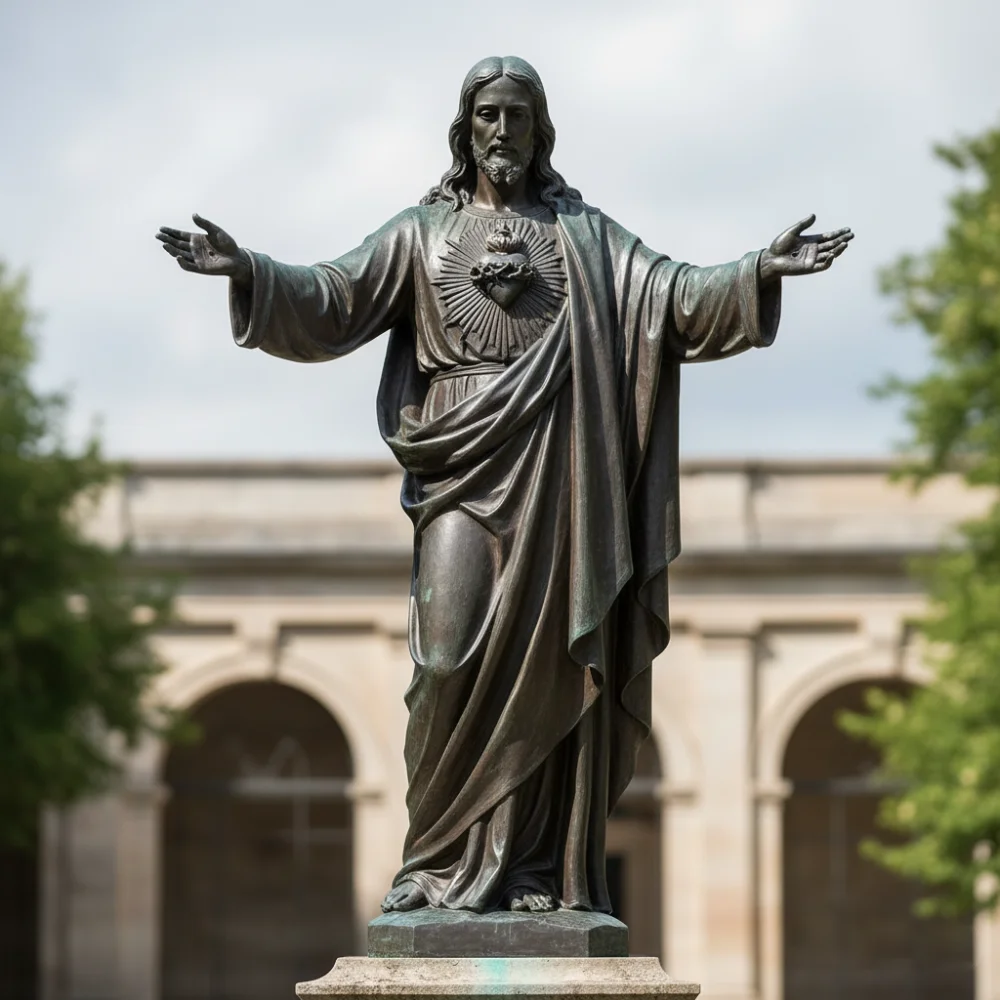
Today, the jesus sacred heart statue continues this lineage across continents. In the United States, the Philippines, and Brazil, there is a renewed demand for monumental and finely crafted works—objects that carry both liturgical authority and architectural presence. The resurgence of interest in the Vintage Sacred Heart of Jesus statue reflects a desire to return to authenticity: to forms governed by theology rather than abstraction.
At Yun Sculpture, we recognize that each commission is not simply fabrication. It is an act of translation—from doctrine into material, from devotion into enduring structure.
Table of Contents
Table of Contents
Theological Semiotics: Decoding the “Visual Theology” of the Sacred Heart
A true statue of the sacred heart of jesus is bound by strict Iconographic standards. These are not aesthetic preferences. They are theological necessities. Each element must be rendered with precision, for each carries a defined meaning within the visual language of the Church.

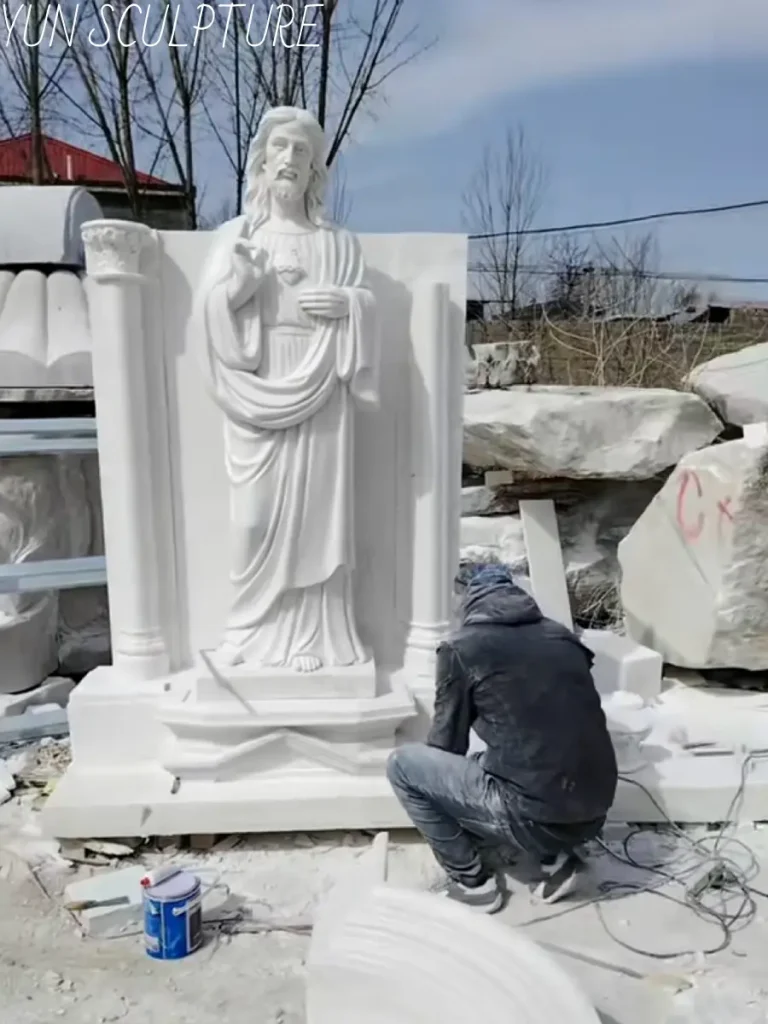
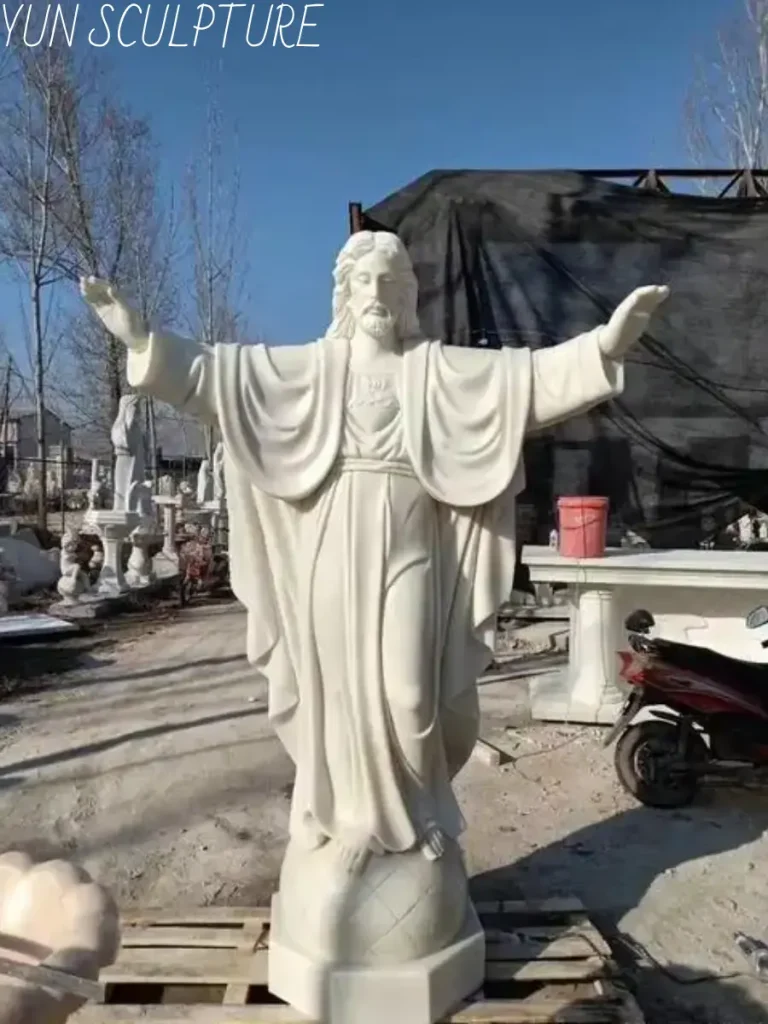
The 6 Core Elements
1. Flames
The heart must be crowned with visible flames. These are not decorative. They signify the intensity and perpetuity of divine love—unconsumed, unextinguished. In sculpture, the flame must rise with controlled dynamism, neither abstract nor chaotic.
2. Crown of thorns
Encircling the heart, the Crown of thorns must be sharply articulated. Each thorn represents the suffering borne by Christ. Blunt or softened carvings diminish the theological clarity. Precision here is essential, especially in bronze casting or stone chiseling.
3. The Wound
The Wound, opened by the spear of Longinus, is the focal point of mercy. It is the visible origin of sacrificial love. Its placement and depth must be anatomically and symbolically balanced—never exaggerated, never obscured.
4. The Latin cross
Rising from the flames, the Latin cross establishes the axis between sacrifice and redemption. It must be proportionally integrated with the heart, forming a vertical line that anchors the entire composition.
5. Rays
Radiating outward, the Rays transform the heart into a source of illumination. They signify Christ as the “Light of the World.” In high-level sculpture, these rays must interact with natural light, creating shifting highlights across the surface.
6. Posture & Stigmata
The full figure completes the theology. Open arms express invitation and acceptance. The Stigmata—visible wounds on the palms—affirm the reality of sacrifice. These details must be present, legible, and reverently executed.
Style
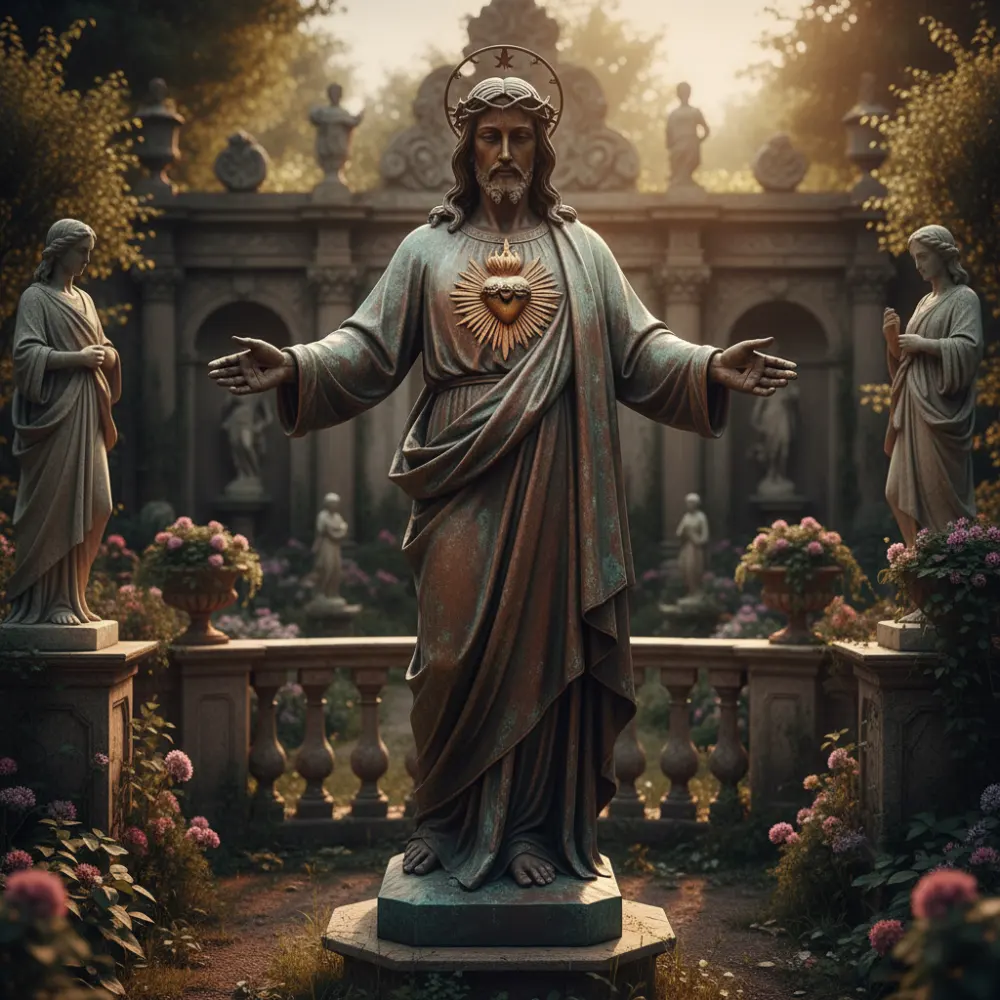
The question of style is not merely artistic. It is theological and psychological.
The Classical traditional style remains the authoritative standard. It emphasizes anatomical harmony, balanced drapery, and a Serene expression that communicates divine calm. This serenity is critical. It bridges the distance between the human viewer and the divine subject, allowing contemplation rather than confrontation.
Modern minimalism, while architecturally appealing, often risks stripping away essential iconographic meaning. A reduction of detail can lead to a reduction of theology. In sacred sculpture, absence is not neutrality—it is loss.
A properly executed sacred heart of jesus statue must therefore hold tension between precision and transcendence. The face must not display anguish alone, nor abstraction. It must rest in quiet authority—a stillness that invites prayer, reflection, and return.
In this balance, sculpture fulfills its highest calling: not as decoration, but as a vessel of presence.
Material Science: From Liturgical Nobility to Environmental Durability
In sacred sculpture, material is not a secondary decision. It defines longevity, theological presence, and environmental resilience. Each Outdoor Jesus statue must withstand time not only as structure, but as a vessel of devotion exposed to climate, light, and human contact.
At Yun Sculpture, engineering begins where theology meets physics. The choice between bronze, stone, and stainless steel determines how a jesus sacred heart statue will age, endure, and speak across generations.
Bronze
For a Bronze Jesus statue, we rely on Foundry Bronze—an alloy historically proven in monumental sculpture. Its strength, corrosion resistance, and capacity for fine detail make it the primary material for ecclesiastical commissions intended for centuries of outdoor exposure.
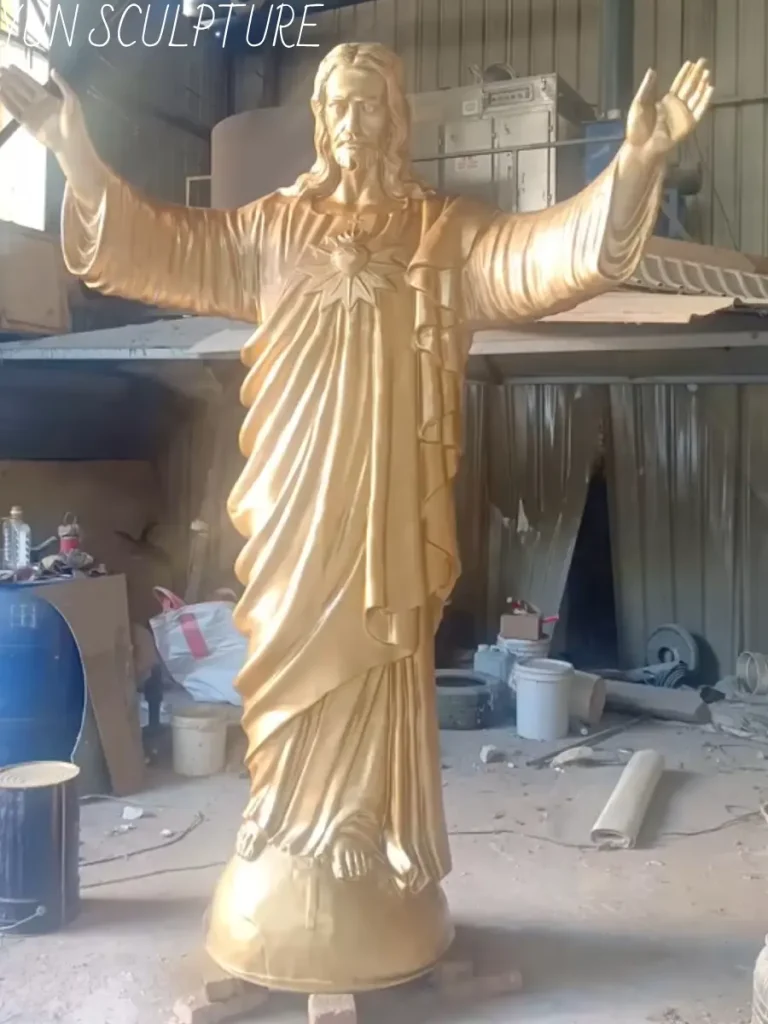

The fabrication follows the Lost-wax casting process, executed through 9 separate steps. Each stage is controlled, documented, and verified.
Core Process Overview:
- 1:1 Clay model validation
The full-scale clay model is reviewed for theological accuracy and anatomical precision. This stage is final—no correction is possible after casting. - Mold segmentation and silicone layering
Complex forms are divided into castable sections without compromising visual continuity. - Wax replication and gating system construction
Molten wax captures every detail of the original surface, forming the exact positive. - Ceramic shell building and burnout
Layers of refractory material create a heat-resistant mold. Wax is removed through firing. - Molten bronze pouring
Bronze is cast at controlled temperatures to ensure density and structural integrity. - Shell removal and raw casting extraction
Each section is revealed, carrying the full imprint of the original sculpture. - Welding and structural assembly
Sections are joined into a unified form, maintaining internal strength and external continuity. - Chasing and coloring
Surface refinement removes imperfections, restoring the sculptor’s intent with precision tools. - Chemical oxidation patina
Controlled chemical reactions produce finishes ranging from deep antique brown to luminous gold tones. This patina is not superficial—it becomes part of the metal surface.
The result is a sacred heart of jesus statue capable of developing a natural patina over decades. This aging process is not deterioration. It is a deepening of character, where time itself becomes a collaborator.
Stone
A Marble Jesus statue embodies stillness and purity. Stone does not record time in the same way as metal. It resists change, holding its form with quiet permanence.


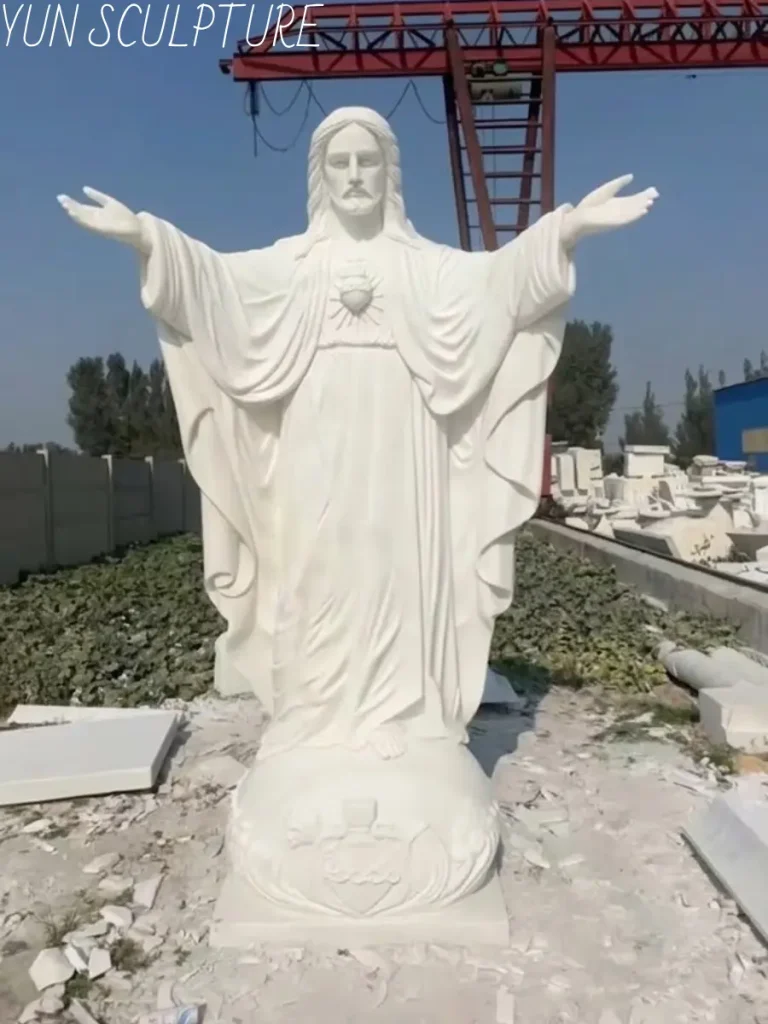

We select Carrara marble, prized for its fine grain and luminous quality. This material allows light to penetrate slightly beneath the surface, creating a softness that evokes living skin. For sacred subjects, this optical property is essential.
Each sculpture is Hand-carved by master sculptors. There is no automation in this process. Every fold of drapery, every contour of the face, is translated through direct human touch. This method preserves the subtle transitions required for a Serene expression and faithful iconography.
For garden and memorial contexts, a Jesus garden statue may also be executed in granite. While less translucent than marble, granite offers extreme durability. It withstands frost, rain, and pollution without structural compromise, making it suitable for cemetery installations and public devotional spaces.
Stone demands precision at the highest level. A single miscalculation cannot be reversed. For this reason, engineering coordination between digital modeling and manual carving is essential before the first chisel meets the surface.
Stainless Steel
For contemporary environments and coastal climates, 316 grade stainless steel provides unmatched resistance to corrosion. This material is especially critical in regions with high salinity, such as the Philippines, where salt-laden air accelerates metal degradation.
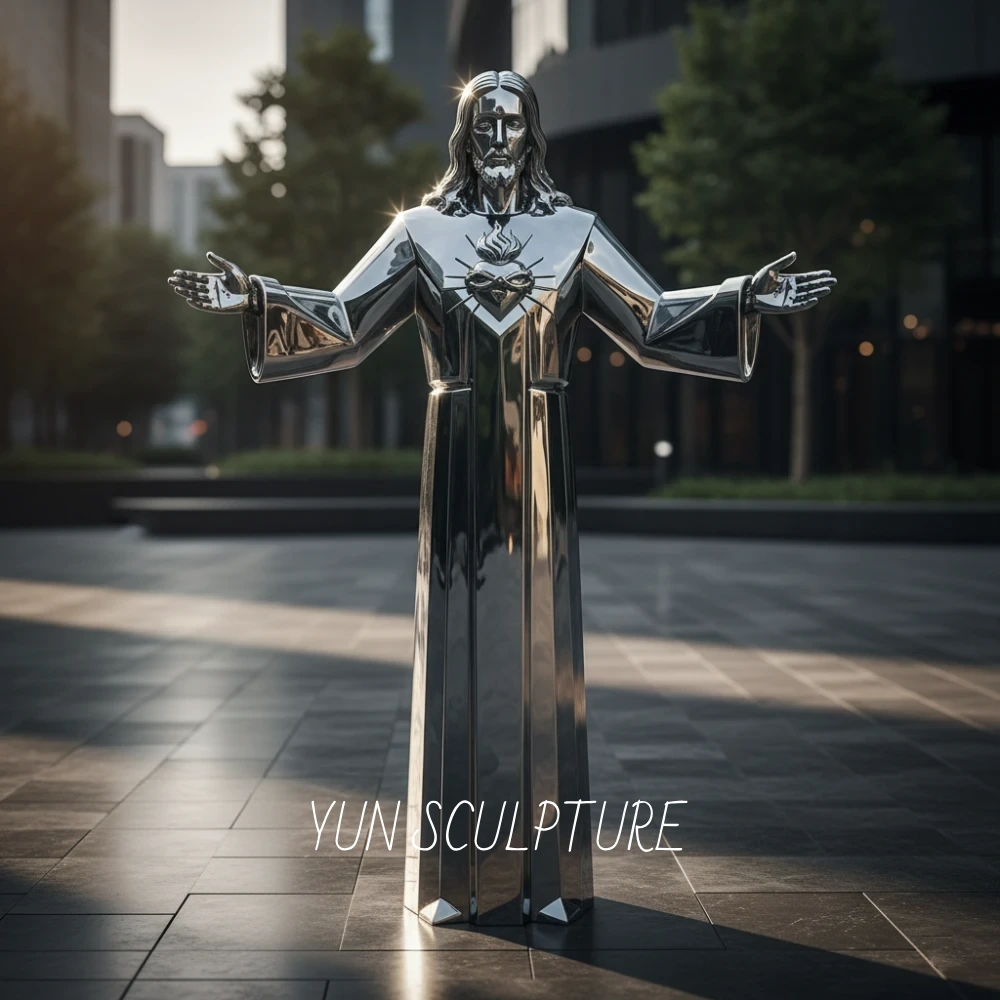
A stainless steel Outdoor Jesus statue requires a different engineering philosophy. Strength is derived not from mass, but from structural design and welding precision.
Fabrication Principles:
- Internal framework construction
Load-bearing structures are designed to resist wind, seismic activity, and long-term stress. - TIG welding
Tungsten Inert Gas welding ensures clean, high-strength joints. Each اتصال is executed with minimal thermal distortion, preserving surface integrity. - Panel shaping and assembly
Stainless steel sheets are formed to match the sculpture’s contours, then seamlessly integrated. - Progressive surface refinement
Grinding begins at 400# grit and advances to 3000# grit, eliminating all visible weld lines. - Mirror polishing
The final surface achieves a reflective finish, interacting dynamically with light and surroundings.
Unlike bronze or stone, stainless steel does not absorb light. It reflects it. The sculpture becomes responsive—changing with sky, architecture, and viewer movement. This creates a different kind of presence: not static, but alive within its environment.
For sacred art, this material must be used with restraint. Reflection should enhance, not distract. When executed correctly, a stainless steel jesus sacred heart statue stands as both a devotional object and a contemporary landmark—resilient, precise, and enduring.
Engineering Specifications and Church Guidelines
Canon Law Compliance
Erecting a Life size Jesus statue in a church, plaza, or garden is not a purely artistic endeavor. It is a canonical act, subject to ecclesiastical oversight. According to Canon Law 1216 & 1279, no sacred image may be publicly displayed without the consent of the diocesan bishop. Written episcopal permission ensures that the statue aligns with liturgical norms and parish mission.
The USCCB guidelines provide additional clarity for U.S. institutions, emphasizing alignment with parish statutes, liturgical propriety, and devotional suitability. Consultation with experts in sacred art and engineering is required to confirm that the piece fulfills both theological and structural standards. Documentation should include material specifications, iconographic compliance, and site plans.
This procedural diligence prevents future liturgical disputes and safeguards the devotional integrity of the sacred object. For collectors or institutions purchasing a Large Jesus statue, compliance documentation is as critical as the sculpture itself.
Heavy Installation Logic


The physical presence of a Jesus statue 180cm tall for sale introduces engineering challenges that demand meticulous planning. Stability and safety are paramount.
- Static load calculation
Every installation begins with a precise load analysis, accounting for the statue’s weight, wind pressure, and potential seismic forces. For bronze, marble, or stainless steel, calculations differ according to material density and center of gravity. - Reinforced concrete foundation
The foundation must exceed the structural footprint of the statue. Concrete reinforcement ensures weight distribution and mitigates the risk of tilting or settling. For large statues, foundations often extend below frost lines or unstable soil layers. - Stainless steel anchors
Embedded anchors connect the statue securely to its foundation. In outdoor environments, these anchors resist uplift from wind and potential seismic activity. The combination of foundation and anchor system guarantees structural integrity for decades.
Installation is not a single-day procedure. Surveying, leveling, and verification of anchor embedment must be performed by licensed engineers. Each step is documented to satisfy both civil safety codes and ecclesiastical standards.
Long-Term Maintenance
Sculpture longevity depends on climate-appropriate care.
- Tropical and coastal climates
High humidity and salt-laden air accelerate corrosion. Polymer coatings, such as Everbrite, protect metal surfaces better than wax in these environments. Stainless steel and bronze benefit from such coatings to prevent pitting and discoloration. - Freeze-thaw environments
Stone and bronze are susceptible to microfractures in winter. Breathable protective covers prevent water intrusion while allowing evaporation. This strategy reduces spalling, cracking, and patina loss. - Microcrystalline wax
For bronze works, periodic application of Microcrystalline wax preserves the original finish and protects the patina. Waxing is typically combined with gentle cleaning to maintain theological and aesthetic fidelity.
A maintenance schedule ensures that a Large Jesus statue remains a devotional centerpiece, resisting both environmental and human wear.
International Trade and Logistics Compliance
Tax-Free Entry
Religious institutions can optimize costs through Duty-free entry programs. In the United States, HTSUS 9810.00.25 allows churches to import sacred objects without customs duty, provided documentation confirms ecclesiastical use. Canada similarly recognizes Tariff 9986.00.00 for church imports. Compliance requires certification of religious purpose, invoicing with material specifications, and customs declarations that reference canonical approval when necessary.
This regulatory pathway significantly reduces financial burden while preserving legal and tax accountability.
Packaging & Insurance
High-value sacred sculptures demand professional shipping solutions. Slat crating is standard, providing rigid support while accommodating expansion and contraction of materials. Internal padding and bracing protect delicate elements such as Flames, Rays, or the Crown of thorns.
Replacement value insurance is mandatory for international shipments. Policies cover material, craftsmanship, and shipping-related risk, including handling damage or loss in transit. Insurance documentation should match customs declarations, ensuring consistency between ecclesiastical, engineering, and logistical records.
Proper packaging not only protects the physical integrity of the statue but also preserves its theological, artistic, and canonical significance throughout transit.
8 Core Questions Answered (FAQ)
What is the budget for a custom life-size Sacred Heart of Jesus statue?
A life-size (5-6 ft) marble or bronze statue typically ranges from $5,000 to $15,000. The final cost depends on the complexity of the design, the fidelity of iconographic details, and the quality of the material. Bronze statues with detailed Flames, Rays, and Crown of thorns naturally sit at the higher end of this range due to labor-intensive Lost-wax casting process steps. Marble statues demand extended carving hours by master sculptors, which also elevates the budget.
Will a bronze statue turn green outdoors? How can it be prevented?
Yes. Bronze naturally oxidizes when exposed to air and moisture, forming a characteristic green patina. To preserve the original hue, regular maintenance is essential:
Wash the surface with mild soap and water every 6-12 months.
Apply Microcrystalline wax or a high-quality polymer sealant such as Everbrite.
Ensure the wax or coating is evenly distributed and buffed to maintain the reflective quality and protect delicate details like the Rays and Crown of thorns.
With consistent care, a Bronze Jesus statue can retain its original aesthetic for decades, even in tropical climates.
Is a marble sculpture suitable for an outdoor garden in freezing climates?
Marble is naturally porous. In climates with freeze-thaw cycles, water can penetrate crevices, leading to microcracks and surface spalling. For outdoor installations in such regions:
Granite or Foundry Bronze is highly recommended for longevity.
If marble is chosen, it must be professionally sealed to reduce water absorption.
During winter, cover the statue with a breathable tarp to allow moisture evaporation while preventing ice formation.
This strategy ensures that a Jesus garden statue maintains both structural integrity and devotional presence through seasonal changes.
Can you replicate a “vintage style” Sacred Heart statue from an old photograph?
Yes. Our sculptors can interpret front and side photographs to create a full-scale 1:1 clay model. A dedicated clay model validation step allows clients to approve the facial expression, posture, and theological details before any casting occurs. This ensures that the final bronze or marble statue faithfully captures the desired Vintage Sacred Heart of Jesus statue aesthetics, including Serene expression, Flames, and Thorns.
Does stainless steel meet the requirement of “liturgical nobility” for religious spaces?
While 316 grade stainless steel is highly durable and suitable for outdoor environments, especially coastal areas, it does not fully convey the traditional gravitas associated with Catholic devotional art. Most parishes continue to favor Classical traditional styles in bronze or marble, which reflect warmth, permanence, and ecclesiastical legitimacy. Stainless steel may suit modern minimalist church architecture, but canonical and aesthetic standards often reserve it for contemporary interpretations rather than conventional devotion.
What are the hidden costs of importing large religious sculptures?
Beyond the factory price, several additional costs must be considered:
Professional slat crating for secure shipping.
Ocean freight and handling fees.
Replacement value insurance to protect against loss or damage during transit.
Customs duties, unless eligible for Duty-free entry under HTSUS 9810.00.25 (U.S.) or Tariff 9986.00.00 (Canada).
Local contractors to prepare and pour the Reinforced concrete foundation for installation, including Stainless steel anchors and site leveling.
Careful budgeting ensures the statue’s theological, artistic, and structural integrity is maintained from the foundry to final placement.
How can I ensure a new statue complies with parish statutes during a church renovation?
Commissioned statues must align with the church’s architecture, devotional program, and canonical requirements. Avoid mass-produced catalog pieces, which often lack theological precision. Steps for compliance include:
Consult the diocese and obtain written episcopal approval, as mandated by Canon Law 1279.
Verify adherence to parish statutes regarding iconography, scale, and placement.
Use expert guidance from sculptors and engineers to confirm structural integrity and liturgical propriety.
This ensures that a Large Jesus statue or Life size Jesus statue integrates seamlessly with the spiritual and architectural vision of the church.
Why must the statue of the Sacred Heart of Jesus emphasize the details of thorns and flames?
The Flames and Crown of thorns are central to the theology of the Sacred Heart. According to the visions of St. Margaret Mary Alacoque, the flames symbolize Christ’s infinite and consuming love for humanity. The thorns reflect the suffering endured due to human sin. Accurate depiction of these elements is not optional—it is a theological mandate. Every carefully cast Bronze Jesus statue or hand-carved marble piece communicates these truths visually, sustaining the devotional intent across generations.


A custom Sacred Heart of Jesus statue is far more than ornamentation. It is a permanent testament to divine love, theological fidelity, and architectural excellence. Each piece—from Vintage Sacred Heart of Jesus statue to contemporary Large Jesus statue—embodies centuries of iconographic tradition, meticulous engineering, and devotional intent. When commissioned, installed, and maintained with care, such a statue becomes a spiritual anchor, a physical manifestation of faith, and a durable work of art.
– Elena Zhang & Donghui Zhang, Yun Sculpture