Get in touch with Yun-Sculpture company
Stainless Steel Horse Statue: When to Choose Mirror Polished Over Bronze for Outdoor Commissions

Two materials dominate serious outdoor horse statue commissions today: silicon bronze and stainless steel. They are not interchangeable, and the choice between them is not a matter of preference but of context. A mirror polished stainless steel horse statue in front of a contemporary glass-and-steel building communicates confidence and architectural precision. The same figure in front of a traditional limestone estate house looks wrong — not because the craftsmanship is different but because the aesthetic register is different. This guide covers where each material is the correct choice, what determines that, and what each requires structurally to perform correctly in a permanent outdoor installation.
Table of Contents
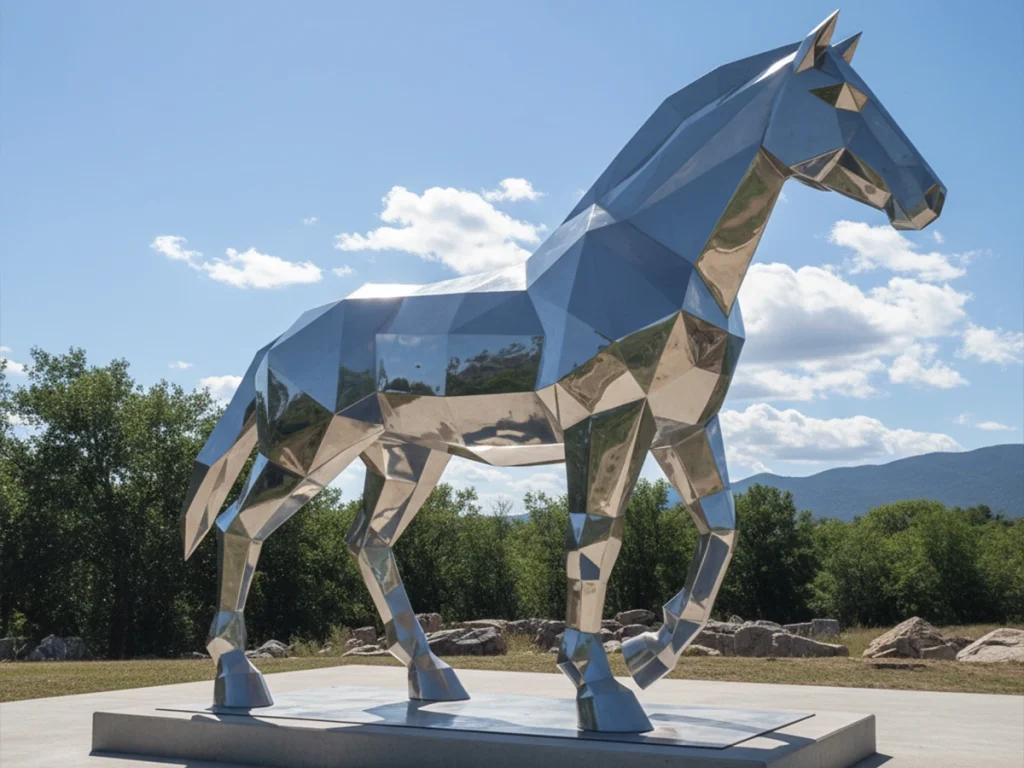
What Is a Mirror Polished Metal Horse Statue?
A mirror polished horse is typically made from 304 or 316 stainless steel, finished to a near-perfect reflective surface.
At Yun Sculpture, these are not thin shells.
- Material panels are formed and reinforced internally
- Structural support uses 304 stainless steel skeletons
- Surfaces are hand-polished through multiple abrasive stages
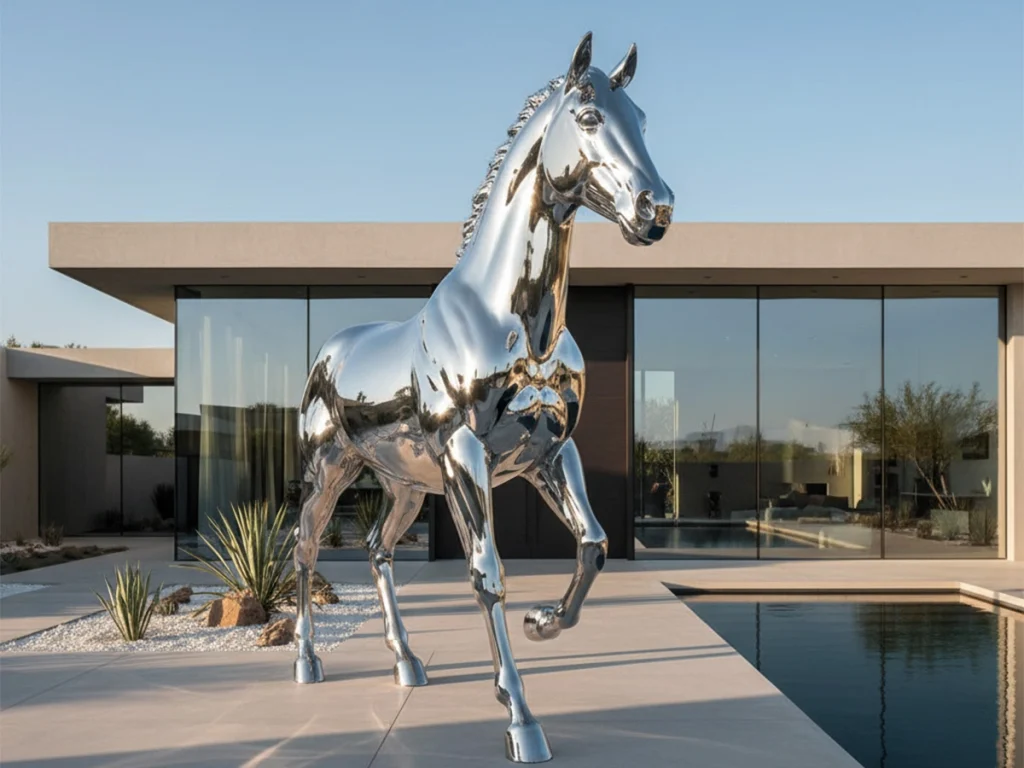
Caption: The reflective surface visually doubles the sculpture’s presence, amplifying scale without increasing footprint.
Why Architects Love Mirror Polished Horses
- They visually integrate with glass, water, and stone
- They photograph exceptionally well (important for portfolio projects)
- They age without color degradation
This makes them ideal as:
- Modern metal horse sculpture centerpieces
- Entrance statements for luxury hotels
- Geometric horse sculpture installations
The Risk Most Buyers Don’t See (Thin Metal Failure)
Many trading companies sell polished horses made from 1.5–2mm sheet metal.
That’s where problems begin.
Common failures include:
- Oil-can deformation under heat
- Internal weld cracks
- Surface waviness after 1–2 summers
At Yun Sculpture, internal framing is mandatory.
Our skeletons resist wind loads, climbing, and thermal movement.
What Defines a True Bronze Horse Statue?
A real bronze horse is not cast resin.
It is not brass.
It is not painted metal.
We use high-content Silicon Bronze (>95% copper).
Our technical standards:
- Casting thickness: 5mm – 8mm
- Market average: 2–3mm
- Process: Traditional Lost Wax Casting (silica sol)
- Finish: Hot chemical patina, never paint
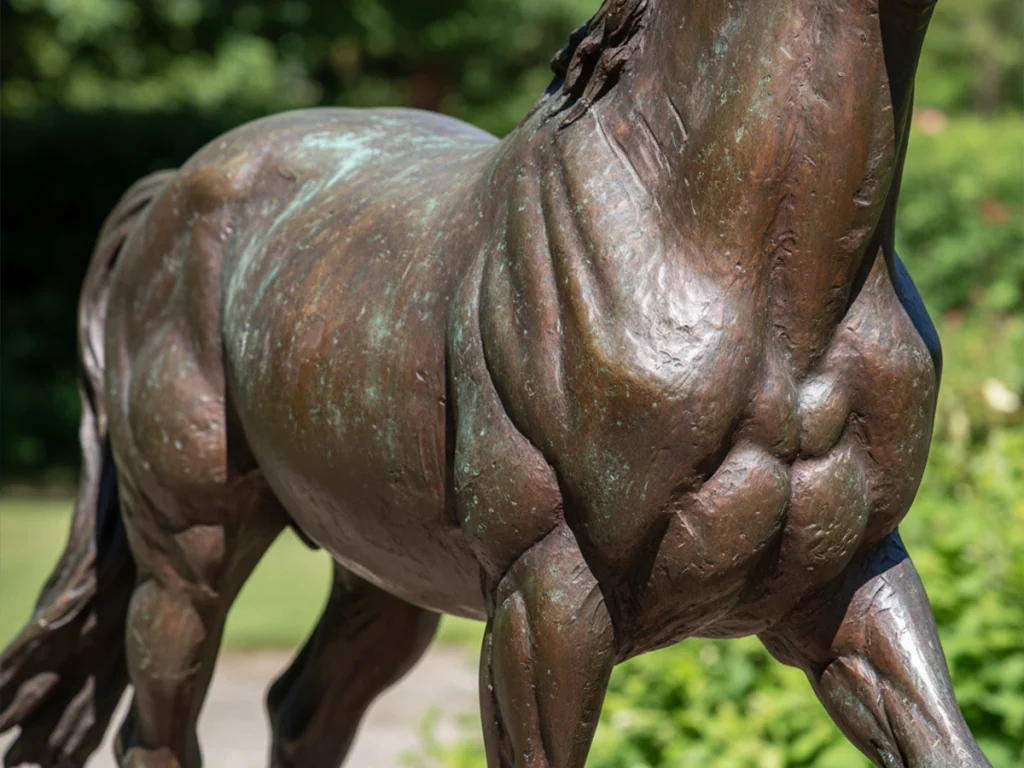
Caption: Chemical patina penetrates the bronze surface, creating depth that paint can never replicate.
Why Thickness Matters More Than Size
- Thicker bronze resists stress cracking
- Holds detail under freeze-thaw cycles
- Maintains value during restoration
This is why museums and cities specify minimum thickness.
Bronze as an Estate Asset
Bronze behaves differently than steel.
It ages, not degrades.
Over decades:
- Surface patina stabilizes
- Color deepens
- Material retains scrap and art value
This is why large horse statue outdoor projects in bronze are often insured as assets, not décor.
Modern vs. Classic: Visual Psychology Explained
Your guests react emotionally before logically.
Mirror Polished Horse Says:
- Power
- Modern wealth
- Architectural confidence
Bronze Horse Says:
- Legacy
- Cultural literacy
- Old-money restraint
Neither is “better.”
They speak to different identities.
Hidden Cost Trap: Cheap Bronze vs. Real Bronze
Here’s the uncomfortable truth.
Many “bronze” horses sold online are:
- Resin with bronze powder
- Thin brass shells
- Painted iron
They rust internally.
They crack at joints.
They collapse under their own weight.
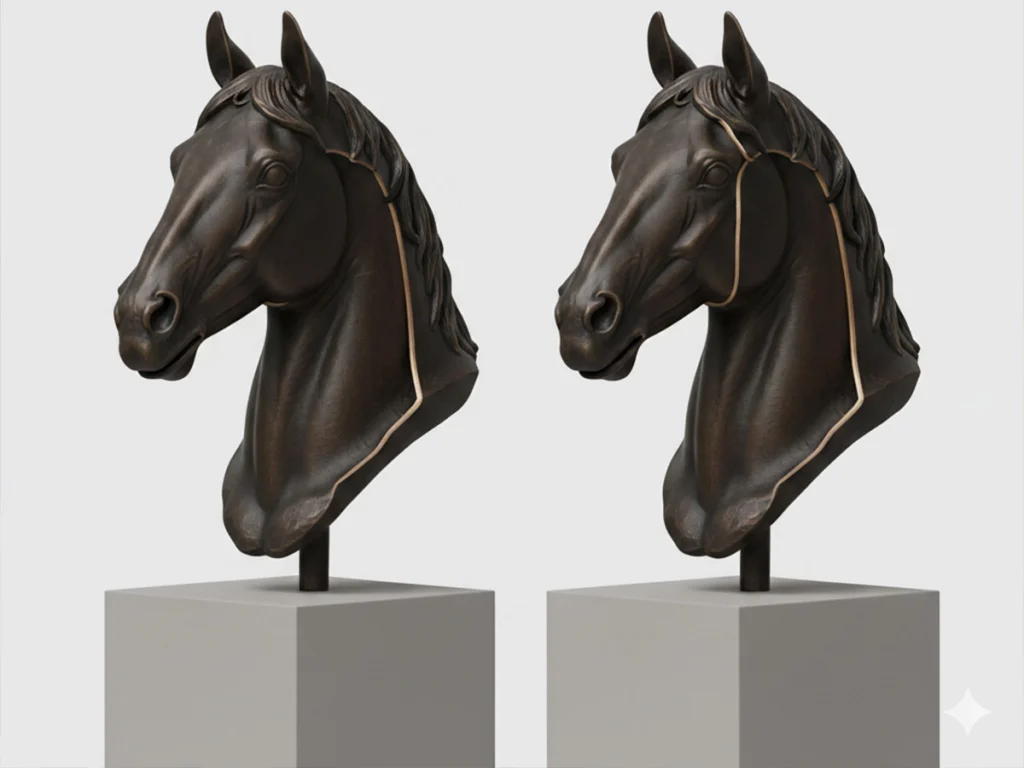
Caption: 5–8mm casting thickness dramatically increases structural lifespan and resale value.
Yun Sculpture installs:
- Internal 304 stainless steel skeletons
- Load-bearing anchor points
- Balanced weight distribution
This prevents tilting and long-term failure.
Logistics Matter More Than Buyers Expect
Damage happens during shipping—not fabrication.
Our export standard includes:
- 3cm thick solid wood crates
- Internal soft foam bedding
- Shock-absorbing base supports
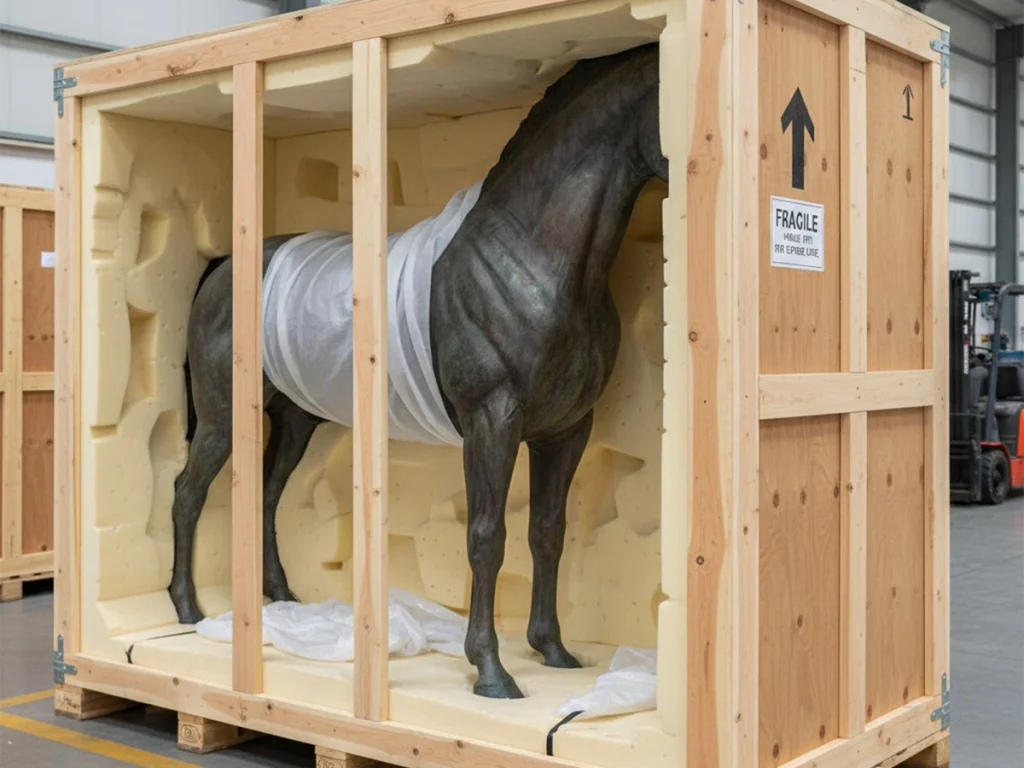
Caption: Proper crating protects thin extremities like legs, ears, and tails during transoceanic shipping.
This is why our breakage rate is near zero.
Choose Stainless Steel When
Mirror Polished or Satin Finish
- Architecture is contemporary: glass, steel, polished stone
- The reflective surface interaction with water and sky is part of the intended aesthetic
- Coastal environment — 316 stainless for salt air
- Modern landscape design with geometric elements
- The commission is for a commercial or hospitality brand with contemporary identity
- Minimal maintenance preference — no patina development to manage
Choose Bronze When
Traditional or Estate Setting
- Architecture is traditional: limestone, brick, classical detailing
- The warm organic quality of developed patina suits the setting
- The commission is for a formal garden, equestrian estate, or institution with historical associations
- Long-term material appreciation and proven 100+ year lifespan matter
- The figure will be viewed at close range where bronze surface quality is fully visible
- Commission involves complex surface detail — lost-wax bronze captures fine anatomy better than formed steel
Which Should You Choose? A Simple Decision Matrix
Choose Mirror Polished Stainless Steel if:
- Your architecture is modern or minimalist
- You want dramatic reflection
- Maintenance simplicity matters
Choose Bronze Horse Sculpture if:
- You want timeless prestige
- Long-term asset value matters
- Your estate emphasizes tradition
Still unsure?
That’s normal at this level.
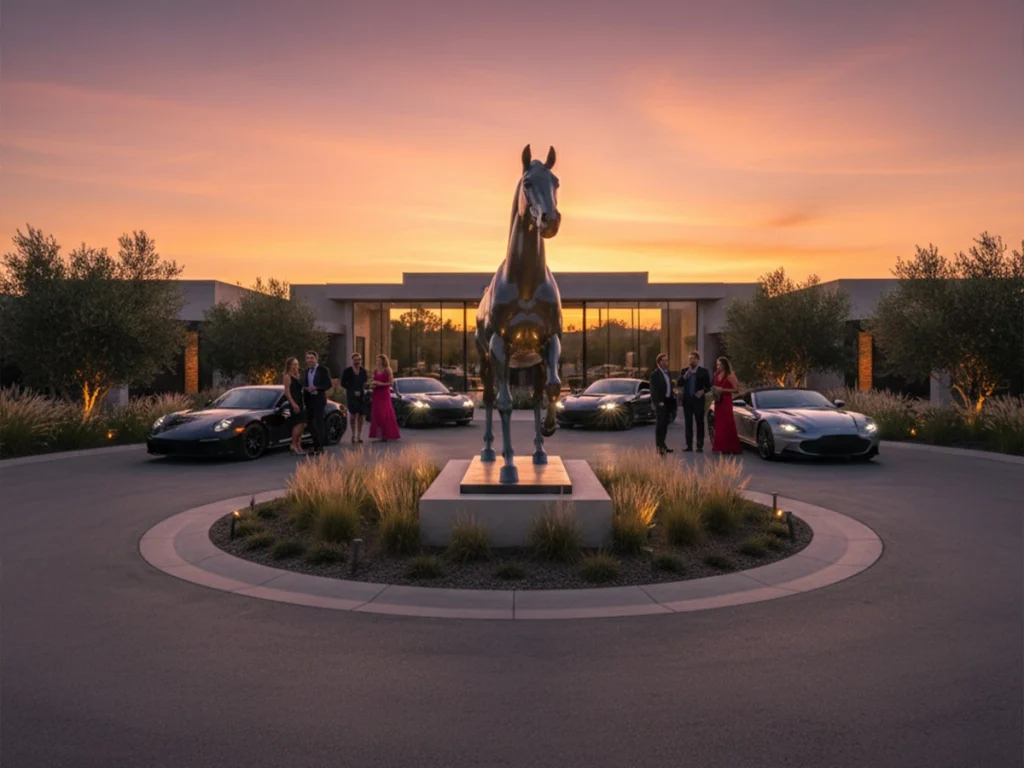
Our High-Value Offer (No Guesswork)
We don’t ask you to imagine.
We offer:
- Free Photoshop Simulation on your site
- Or a Door-to-Door Quote, factory-direct
This is how professionals decide.
Frequently Asked Questions (People Also Ask)
What is a mirror polished stainless steel horse statue?
A mirror polished stainless steel horse statue is fabricated from 304 or 316 stainless steel sheet and plate, finished to a near-perfect reflective surface. Unlike bronze (produced by casting), stainless steel horse statues are fabricated from formed panels over an internal structural frame. The mirror surface reflects surroundings — sky, water, architecture — making it particularly suited to contemporary architectural settings.
Which lasts longer outdoors: stainless steel or bronze?
Both last decades to indefinitely when correctly specified. Silicon bronze has a proven record of centuries outdoors. 304 stainless steel is highly durable in most environments; 316 grade is recommended for coastal salt air. The difference is aesthetic: bronze develops a patina that deepens over time, while stainless steel maintains its surface character indefinitely. Both are appropriate permanent outdoor materials when correctly specified.
How much does a stainless steel horse statue cost?
A life-size mirror polished stainless steel horse (approximately 200 cm at the withers) typically ranges from $10,000 to $35,000 factory-direct, depending on pose complexity and finish specification. Mirror polish is more labor-intensive than satin or matte finishes. Stainless steel commissions typically run slightly less than equivalent bronze at the same scale.
Will a stainless steel horse statue rust outdoors?
No, when correctly specified. 304 stainless steel forms a passive chromium oxide layer that prevents oxidation in standard outdoor environments. For coastal settings with direct salt air, specify 316 stainless steel for superior chloride corrosion resistance. Internal structural frames are also stainless steel, eliminating internal rust risk.