Get in touch with Yun-Sculpture company
Custom Bronze Horse Statue: From Photos to Permanent Bronze — Step by Step

Ordering a custom bronze horse statue starts with a single question: how accurately can the final piece represent the specific horse you have in mind?
If you’re a homeowner, architect, or designer, the real fear isn’t design.
It’s accuracy, durability, and risk.
At Yun Sculpture, we’ve cast hundreds of horses for private estates, ranch entrances, and public landscapes across the USA and Europe. Below is the exact, factory-floor process we use—no mystery, no fluff.
Table of Contents
Step 1: Turning Photos Into a Sculptable Plan
(The hardest part, done right first)
Creating a horse statue from photos is deceptively complex.
A horse’s anatomy changes dramatically with angle, muscle tension, and gait.
We start by asking for 3–8 reference photos, ideally including:
- Side view (standing or moving)
- Front and rear angles
- Close-ups of head, mane, and legs
- Optional: videos for movement reference

Caption: Accurate proportions start with multi-angle photo analysis, not guesswork.
What We Do Differently
- We do not rely on AI mesh or 3D scans alone
- A senior sculptor manually interprets muscle structure
- Breed traits (Arabian, Thoroughbred, Quarter Horse) are locked in early
This avoids the #1 failure we see in the market:
👉 horses that “look right” in photos but feel wrong in real space.
Step 2: Full-Scale Clay Model (Where Art Meets Engineering)
Once proportions are approved, we move to a 1:1 clay model.
This is not a miniature.
It is the exact size of your future bronze horse.

Caption: A full-scale clay model allows anatomical correction before casting begins.
Foundry Note: The Anatomy of a Soul
“A client once sent us a photo of her late champion horse, ‘King.’ She said other factories’ models looked like ‘just a horse,’ but not her horse. Master Li, our head sculptor, spent 12 days just on the muscle rhythm around the eyes and nostrils. He sent 14 sets of progress photos to the client, adjusting the clay by millimeters based on her memories. When we finally hit the perfect ‘look,’ she cried over the video call. That’s why we never skip the hand-sculpted clay stage—3D scans can’t capture the memory of a horse.”
Why Clay Still Matters
Modern shortcuts exist—but we don’t use them.
A traditional clay model allows:
- Millimeter-level correction of muscle flow
- Natural tension in legs and neck
- Realistic mane movement shaped by hand
At this stage, we send you:
- Front / side / 45° photos
- Optional Photoshop simulation in landscape context (Free)
Capturing anatomy is one thing; capturing a specific cultural spirit is another. We recently applied this photo-to-clay method to a custom cowboy horse statue, where we had to spend an extra week perfecting the tension in the rider’s reins. This level of detail is what separates a true Western masterpiece from a generic factory mold.
You approve before any irreversible step.
Step 3: Internal Engineering — Built for Wind, Weight & Time
A bronze horse is heavy.
A life size horse statue typically weighs 400–700 kg.
Wind load, climbing, and ground stress are real issues.
Before casting, we install an internal structure:
- 304 Stainless Steel skeleton (rust-proof)
- Load-bearing legs connected to base plates
- Pre-engineered anchor points
This structure:
- Resists typhoons and strong winds
- Prevents long-term sagging
- Makes installation safer and simpler
Step 4: Lost Wax Casting — Where Bronze Is Born
We use traditional lost wax casting with silica sol, not cheap sand molds.
Why this matters:
- Finer surface detail
- Sharper muscle definition
- Fewer internal casting defects
Our Bronze Formula (No Substitutes)
- Silicon Bronze with >95% copper
- Not resin
- Not thin brass
- Not electroplated shells
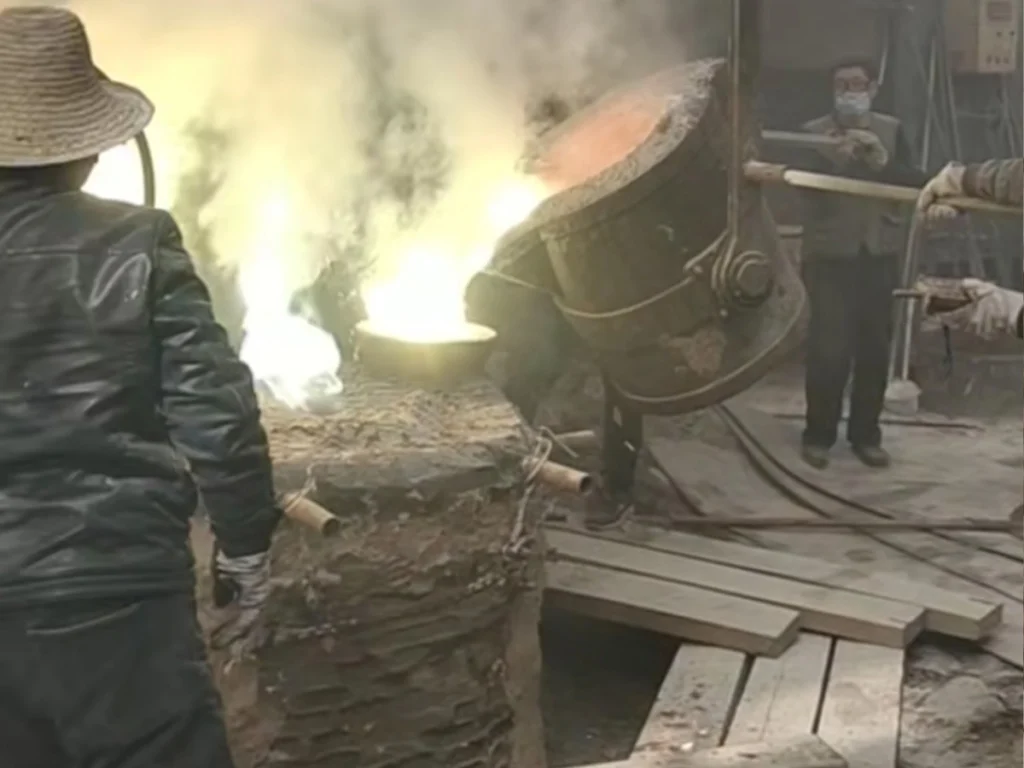
Caption: High-copper silicon bronze ensures structural integrity and longevity.
Thickness You Can Measure
- 5mm – 8mm casting thickness
- Market standard: 2–3mm
That extra thickness:
- Absorbs impact
- Slows corrosion
- Extends lifespan by decades
Step 5: Welding, Chasing & Surface Perfection
After casting, the horse exists in sections.
This stage is where cheap factories cut corners.
We don’t.
Our process includes:
- Precision welding of all sections
- Manual chasing to erase weld lines
- Re-sculpting transitions by hand
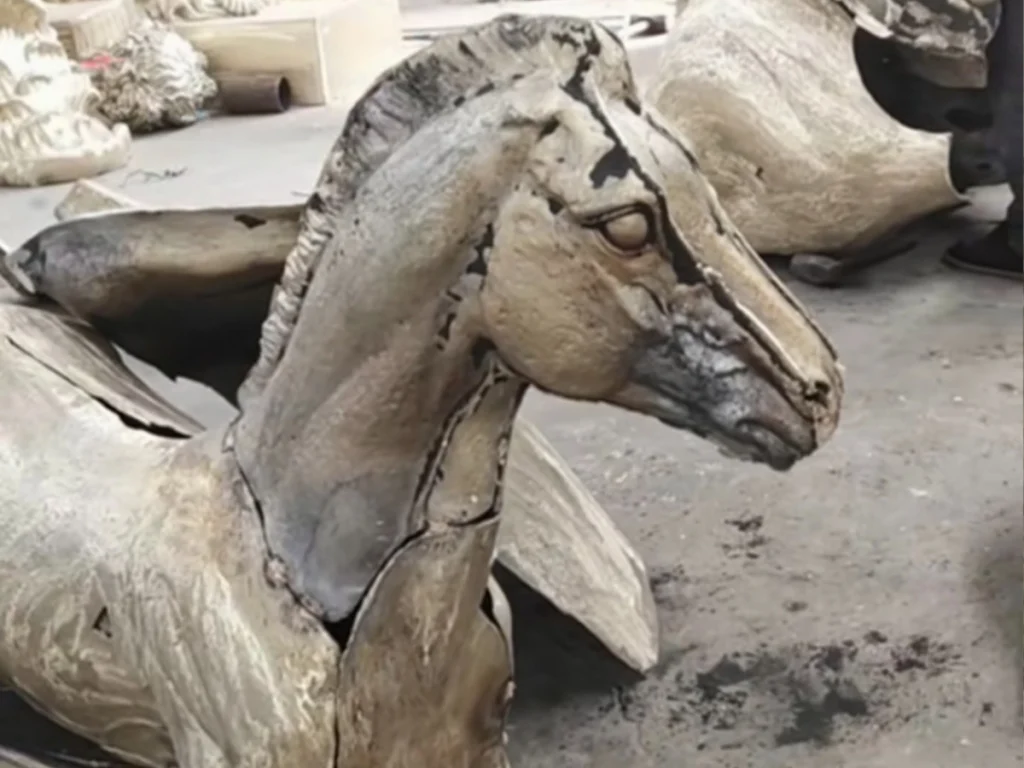
Caption: Hand chasing removes weld seams and restores natural muscle flow.
You should never see:
- Obvious seams
- “Patchy” bronze texture
- Machine-ground flat areas
If you do—it wasn’t done right.
Step 6: Hot Chemical Patina (Not Paint)
Color on bronze should be chemical, not cosmetic.
We use hot chemical patina, applied with heat and acids.
Options include:
- Classic dark brown
- Antique green
- Natural bronze
- Custom museum tones
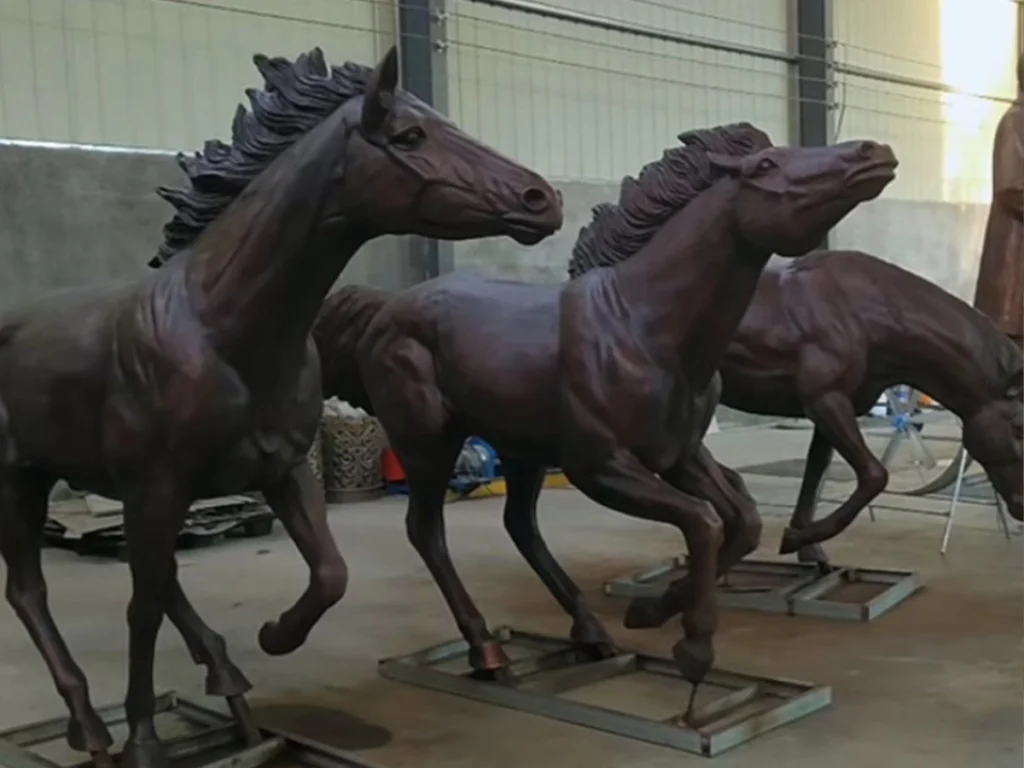
Caption: Chemical patina bonds with bronze; paint only sits on top.
Why this matters:
- Patina penetrates the metal surface
- Paint peels; patina ages gracefully
- Color can be locally repaired years later
Step 7: Packing & Shipping — Yes, a 500kg Horse Can Travel Safely
Shipping a 500kg sculpture sounds scary.
We get it.
But with the right crate, it’s safer than shipping a vase.
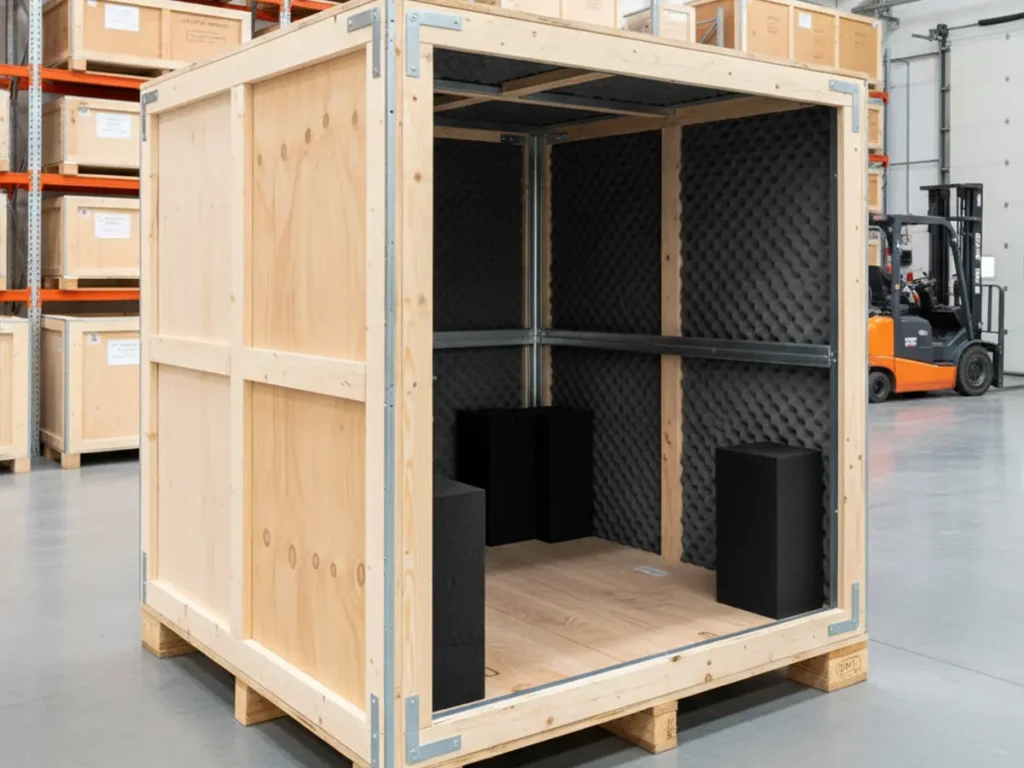
Caption: 3cm thick solid wood crate with full foam bedding prevents movement.
Our Export Packing Standard
- 3cm thick solid wood crates
- Internal steel fixation
- Soft foam bedding at all stress points
- Fumigated & export-compliant
We ship door-to-door, including:
- Customs documents
- Insurance options
- Arrival coordination
Or—you can use your own forwarder. We support both.
Step 8: Installation — Done or Guided
Once the sculpture is approved, we transition to the critical phase of shipping and installing large horse statues, ensuring the internal 304 skeleton is perfectly anchored to your foundation.
We provide:
- Anchor bolt layout drawings
- Base plate specifications
- Remote installation guidance
Or, the easy button:
We coordinate installation for you.
Peace of mind matters.
Why Clients Choose Yun Sculpture
This is not about decoration.
It’s about permanence.
Yun Sculpture delivers:
- >95% copper silicon bronze
- 5–8mm real casting thickness
- 304 stainless steel internal structure
- Traditional lost wax casting
- Chemical patina, not paint
- Export-grade crating & logistics
That’s why architects come back.
The Easy Button 🎯
You can manage every step yourself.
Or—
Let us handle it, from photo to installed bronze.
👉 Free Photoshop Simulation or Door-to-Door Quote
[ Get My Free Design / Quote ]
Frequently Asked Questions (FAQ)
1. Can you really make a horse statue from photos only?
Yes. With enough angles and a full-scale clay model, we accurately translate photos into three-dimensional anatomy.
2. How long does a custom bronze horse take?
Typically 8–12 weeks, depending on size, pose complexity, and patina choice.
3. Is a life size bronze horse suitable for outdoor use?
Absolutely. With 5–8mm thickness, silicon bronze, and stainless steel structure, it’s designed for permanent outdoor installation.
4. What’s the difference between lost wax casting and cheap casting?
Lost wax with silica sol captures fine detail and reduces internal defects. Cheap methods sacrifice longevity.
5. Can you match an existing horse statue style?
Yes. We regularly match proportions, posture, and patina for estates and public projects.