Get in touch with Yun-Sculpture company
The Skin of the Landscape: The Ultimate Design and Engineering Guide to Custom Corten Steel Art Panels and Garden Screens

The contemporary landscape no longer accepts walls as mute boundaries. It demands permeability, rhythm, and atmosphere. What was once a rigid divider has evolved into a dimensional skin—an architectural membrane that filters light, frames views, and allows space to breathe.
In this transformation, corten steel art panels and corten steel garden screen art have emerged as one of the most compelling material languages. Their surface is not static. It matures, oxidizes, and deepens in tone, recording time as part of the design. This living quality places them in close dialogue with weathering steel sculptures and corten steel garden art, where material and environment co-author the final expression.
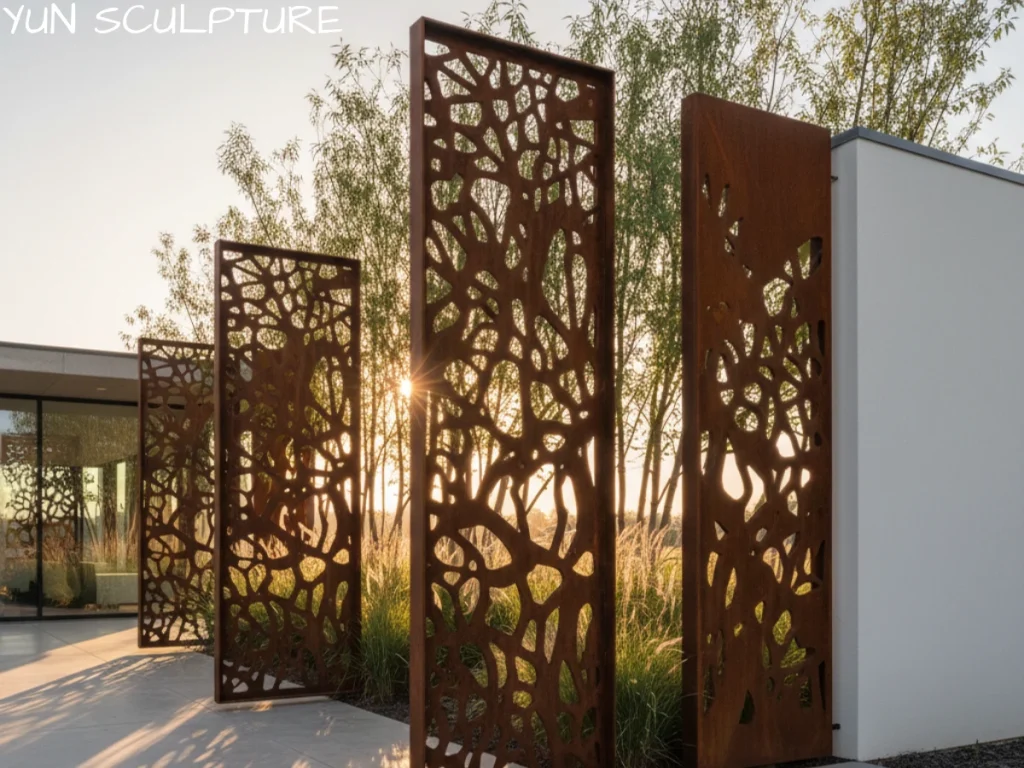
From a distance, these panels read as sculptural planes. Up close, they dissolve into layers of light, shadow, and void. They are not simply partitions. They are weathered steel sculpture outdoor elements—quiet, structural presences that redefine how space is experienced.
Table of Contents
Table of Contents
Artistic Morphology: The Infinite Possibilities of Custom Cut Panels
Geometric Minimalism
At its most disciplined, the language of corten steel wall art is rooted in geometry. Repetition of square perforations, linear slits, or modular grids introduces a sense of industrial order. The panel becomes an exercise in proportion and alignment, where every void is measured and intentional.

This approach aligns naturally with the ethos of the modern corten steel sculpture. The emphasis is not on ornament, but on clarity. Light passing through evenly spaced apertures creates a calibrated rhythm, shifting subtly as the sun moves. The result is a façade or screen that feels both rational and alive.
From an engineering standpoint, geometric cuts also provide predictability. Load distribution remains consistent, and structural integrity is easier to calculate. This balance between visual restraint and technical reliability makes geometric panels a foundational strategy in architectural applications.
Natural Bionics
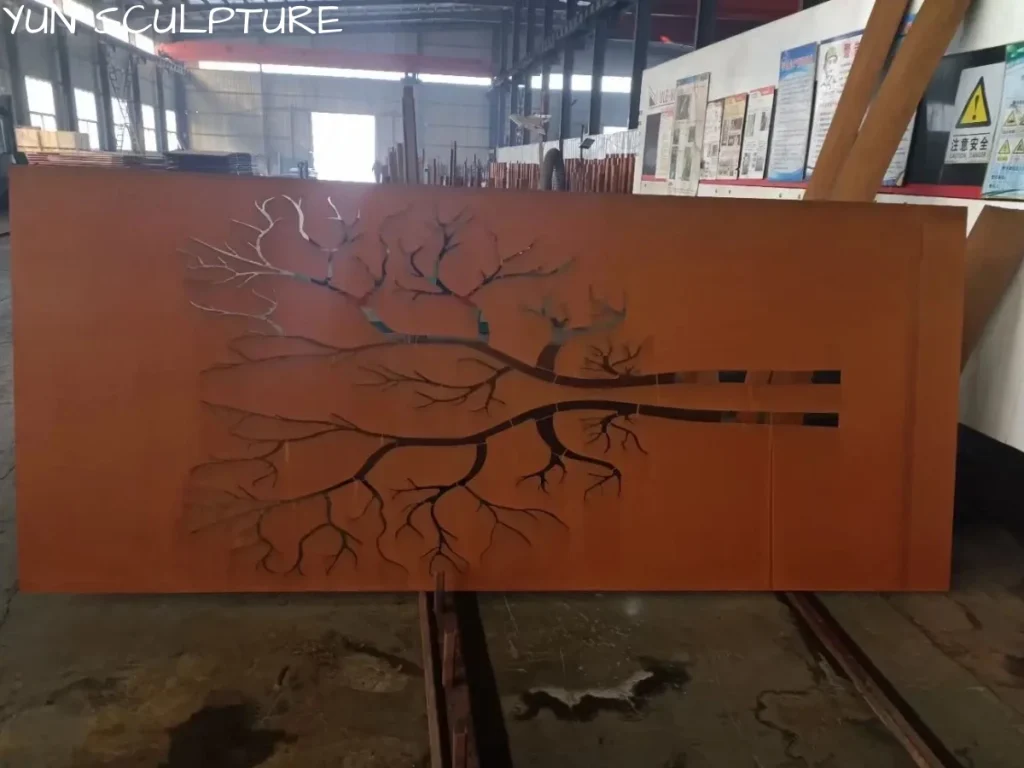
In contrast to geometric control, bionic design seeks to replicate the irregular intelligence of nature. Through precision laser cutting, corten steel can be shaped into patterns that echo leaf veins, flowing water, or the fractured light of a forest canopy.
These intricate designs transform a flat panel into a living filter. Sunlight passing through organic perforations produces constantly shifting shadows, dissolving the boundary between object and environment. In this way, a weathered steel sculpture outdoor installation becomes immersive rather than observational.
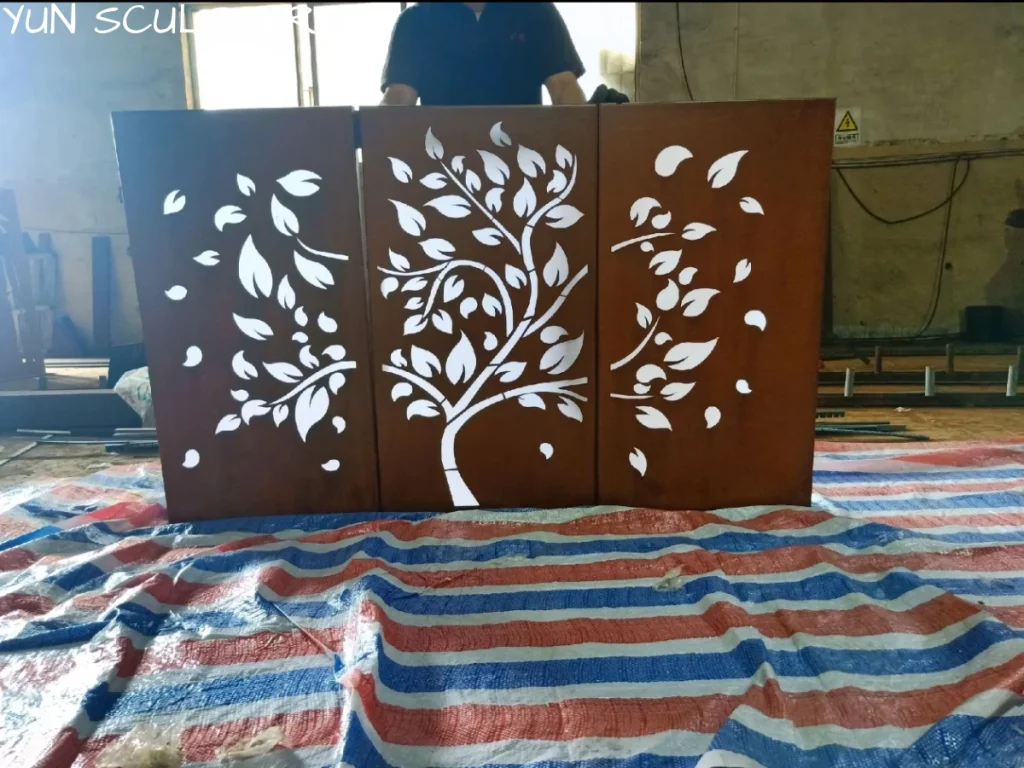
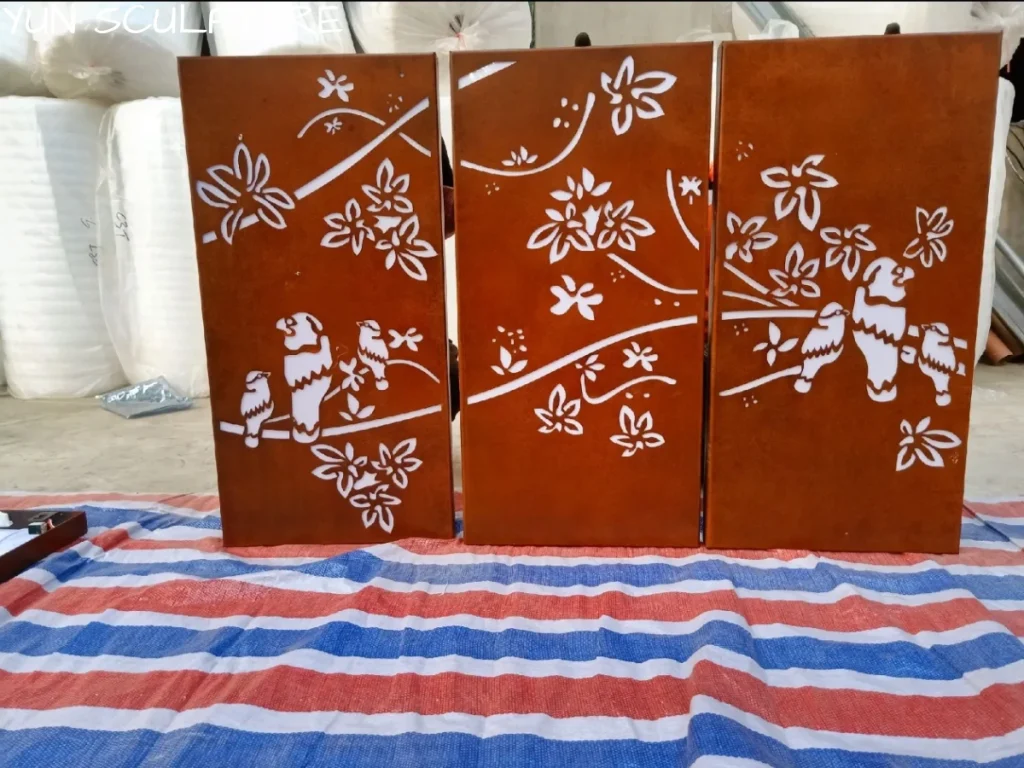
For garden applications, this approach is especially powerful. A weathered steel garden sculpture no longer stands apart from planting—it participates in it. The panel frames vegetation, interacts with wind movement, and changes character across seasons.
Technically, bionic patterns require careful calibration. Irregular voids introduce variable stress zones, demanding precise control over cut density and spacing. When executed correctly, however, the result is a seamless fusion of artistry and structural logic.
Perforated Art
Perforation, when treated as an artistic medium, moves beyond pattern into image. A perforated corten sculpture can function almost like a drawing—where density, scale, and distribution of holes create gradients of light and shadow.
By varying hole diameters, designers achieve tonal depth. Dense clusters read as shadow; sparse areas dissolve into brightness. From a distance, the panel can appear solid or pictorial. Up close, it reveals itself as a field of carefully orchestrated voids.

This technique is central to corten abstract sculpture and many sculptures made of weathering steel that seek to balance mass with transparency. It allows for visual complexity without adding physical weight.
From an engineering perspective, perforation is also a method of weight reduction. Large panels can maintain their visual presence while minimizing material load. The challenge lies in ensuring that the remaining material maintains sufficient continuity to resist deformation and environmental stress.
The success of perforated art depends on precision. Each opening must be placed with intent, not only for visual composition but for structural coherence. When these two align, the panel achieves both elegance and resilience.
Brand Customization
Beyond artistic expression, corten panels serve as powerful identity markers. Corporate logos, typographic elements, and symbolic motifs can be integrated directly into the surface, transforming a screen into a statement of presence.
In this context, corten cladding sculpture becomes both architecture and branding. The weathering surface adds gravitas, while the cut design communicates clarity. This dual function is particularly effective in commercial landscapes, where identity must be both visible and enduring.
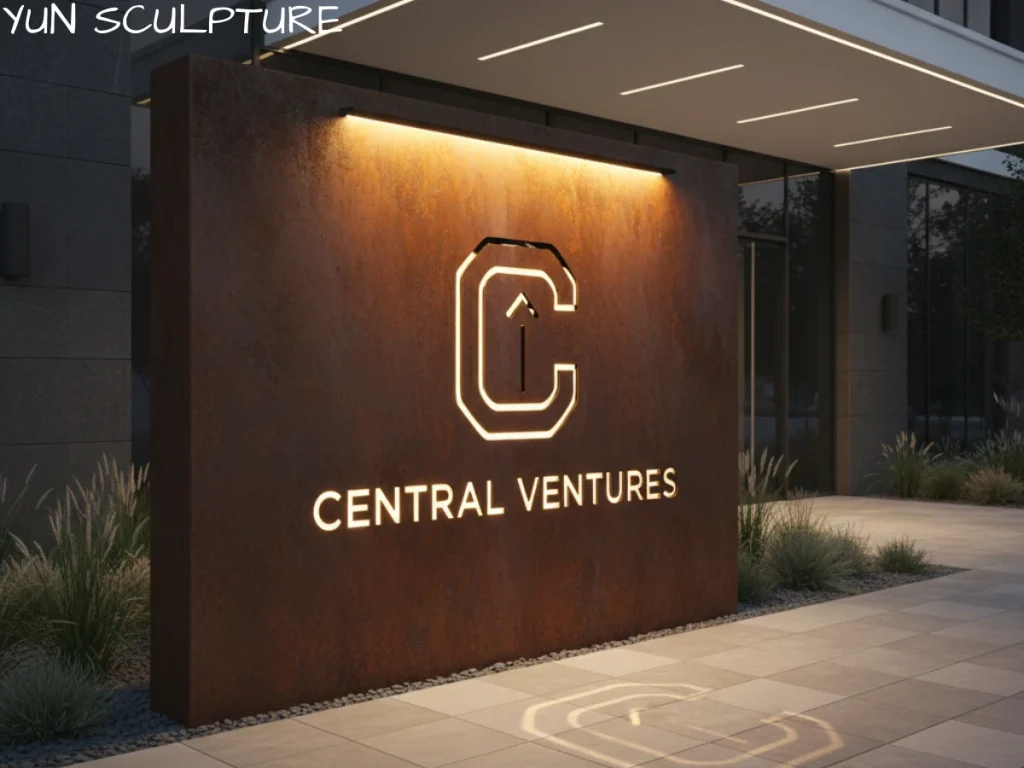
Rusty metal garden sculptures adapted for branding retain the authenticity of material while introducing a layer of narrative. The patina suggests longevity and stability—qualities often aligned with institutional values.
For clients seeking corten sculpture for sale, customization is not an afterthought. It is central to the design process. The challenge lies in translating graphic elements into cut geometry without compromising structural integrity or visual balance.
This requires close collaboration between design and engineering. Line thickness, spacing, and scale must all be adjusted to suit the behavior of weathering steel. When executed with precision, the result is a panel that communicates identity with quiet authority—etched not onto the surface, but through it.
Donghui Zhang’s Hardcore Logic: Screen Stability and Wind Pressure Calculation
Perforation Rate & Wind Load
Perforation is not only an artistic decision. It is a structural strategy. Every void introduced into a panel reduces wind resistance, allowing air to pass through rather than accumulate pressure on the surface.
For large weathering steel sculptures used as vertical screens, this becomes critical. A fully solid plate behaves like a sail under wind load. By contrast, a controlled perforation rate—typically 20% to 50% open area—can significantly reduce lateral force.
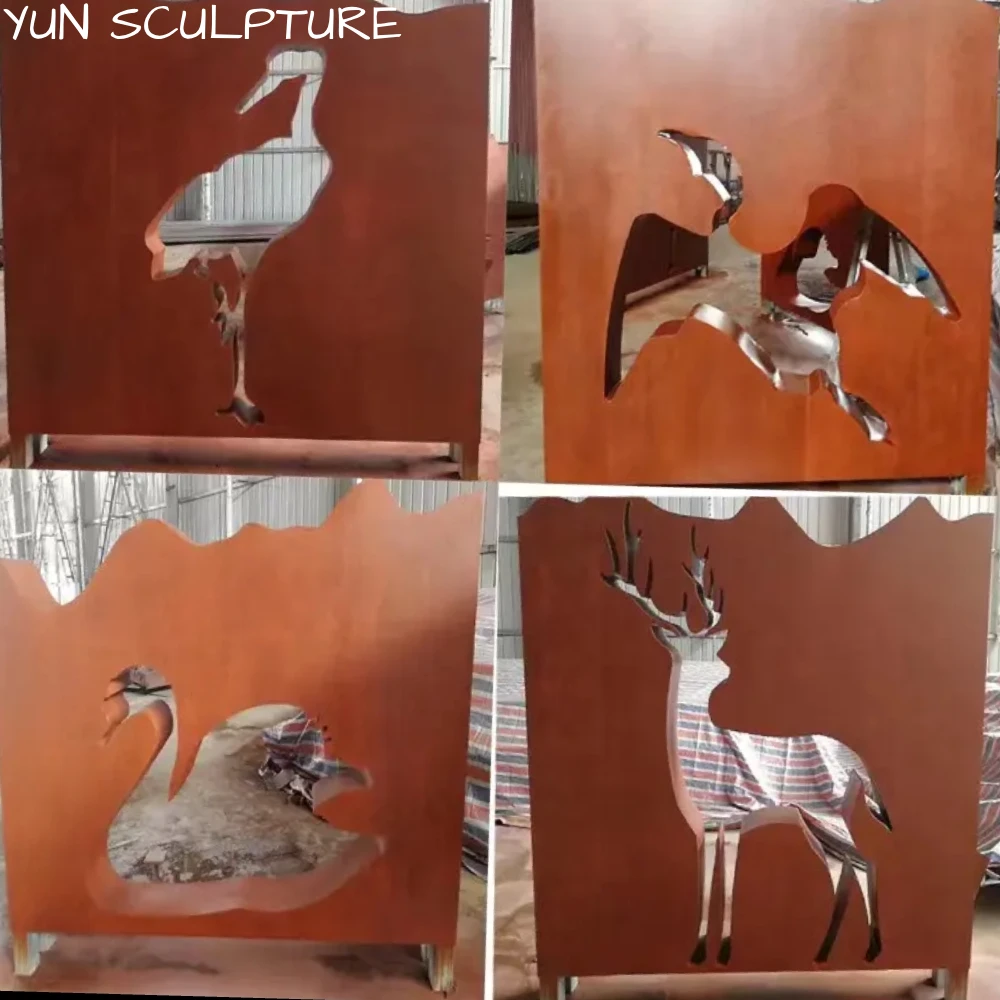
This principle applies equally when heavy duty corten steel planters are used as anchoring bases for screens. The system must be understood as a whole: panel, support, and foundation working together under dynamic conditions.
From an engineering standpoint, the relationship is direct:
- Higher perforation rate → lower wind pressure
- Lower wind pressure → reduced structural stress on fixings and base
- Balanced perforation → optimal combination of visual density and safety
However, excessive perforation weakens continuity. The design must maintain sufficient material bridges to transfer loads across the panel. This balance between openness and resistance defines whether a screen performs as architecture or fails as ornament.
Plate Thickness Standards
Material thickness determines how a panel behaves under both environmental stress and thermal expansion. For exterior corten screens, especially those functioning as privacy elements, a thickness range of 3mm to 6mm is the practical standard.
Below this threshold, panels risk deformation. Under prolonged sun exposure, thin steel expands unevenly. Without sufficient mass, this leads to visible warping, compromising both alignment and structural integrity.
The comparison between corten steel vs mild steel for planters offers a useful parallel. Mild steel lacks the self-protecting oxide layer, requiring coatings that degrade over time. In outdoor conditions, this leads to corrosion that reduces section thickness and weakens the structure.
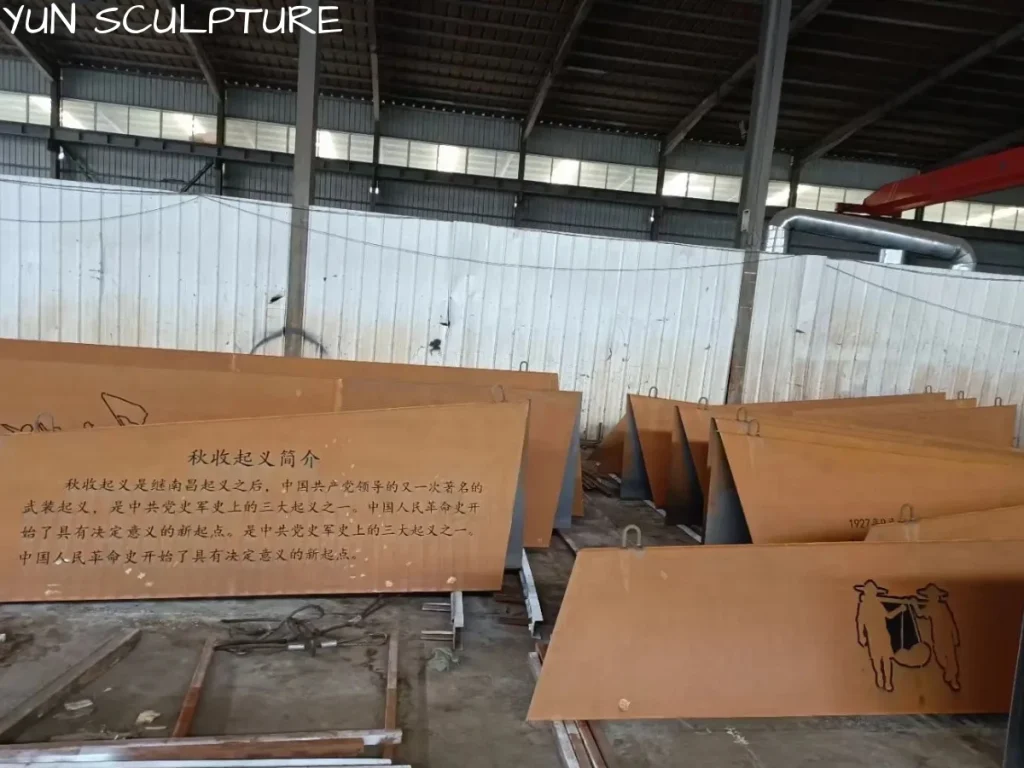


Corten steel, by contrast, stabilizes through oxidation. Its surface forms a dense patina that protects the core material. This directly answers a common question: how long do corten steel planters last? With correct detailing and drainage, a lifespan of 30 to 50 years—or more—is standard.
For screens, this longevity translates into consistent performance. Thickness is not only about immediate strength, but about retaining that strength across decades of exposure.
Recommended engineering baseline:
- 3mm: Suitable for smaller panels or low-wind environments
- 4–5mm: Standard for most residential and commercial screens
- 6mm+: Required for large-format panels or high-wind zones
This specification ensures that the panel remains visually flat while resisting both mechanical and thermal deformation.
Internal Skeleton & Borders
A large panel, no matter how thick, cannot rely solely on its surface plane to remain stable. Without reinforcement, even heavy steel will gradually distort under its own weight and environmental forces.
The solution lies in concealed structure.
Hidden U-channels or L-shaped borders are integrated along the edges or rear face of the panel. These elements act as a rigid frame, distributing loads and preventing torsion. Visually, the panel remains minimal. Structurally, it behaves as a composite system.


Key engineering functions include:
- Maintaining flatness across large spans
- Preventing edge curling due to thermal gradients
- Providing secure fixing points for installation
- Enhancing overall structural integrity without visual intrusion
For oversized installations, intermediate stiffeners may also be introduced. These are carefully aligned with the design pattern to remain invisible while reinforcing critical مناطق of the panel.
The principle is simple: the more minimal the appearance, the more deliberate the hidden structure must be.
The Soul of Light and Shadow: Integrated Design of Illuminated Sculpture Screens
Backlit Art
When light is introduced, corten steel art panels transition from static objects into temporal experiences. By integrating LED systems behind the panel, the surface becomes a luminous filter rather than a solid boundary.
Backlit art panels operate through contrast. The opaque steel absorbs light, while the cut areas release it. This inversion transforms daytime shadow patterns into nighttime illumination.
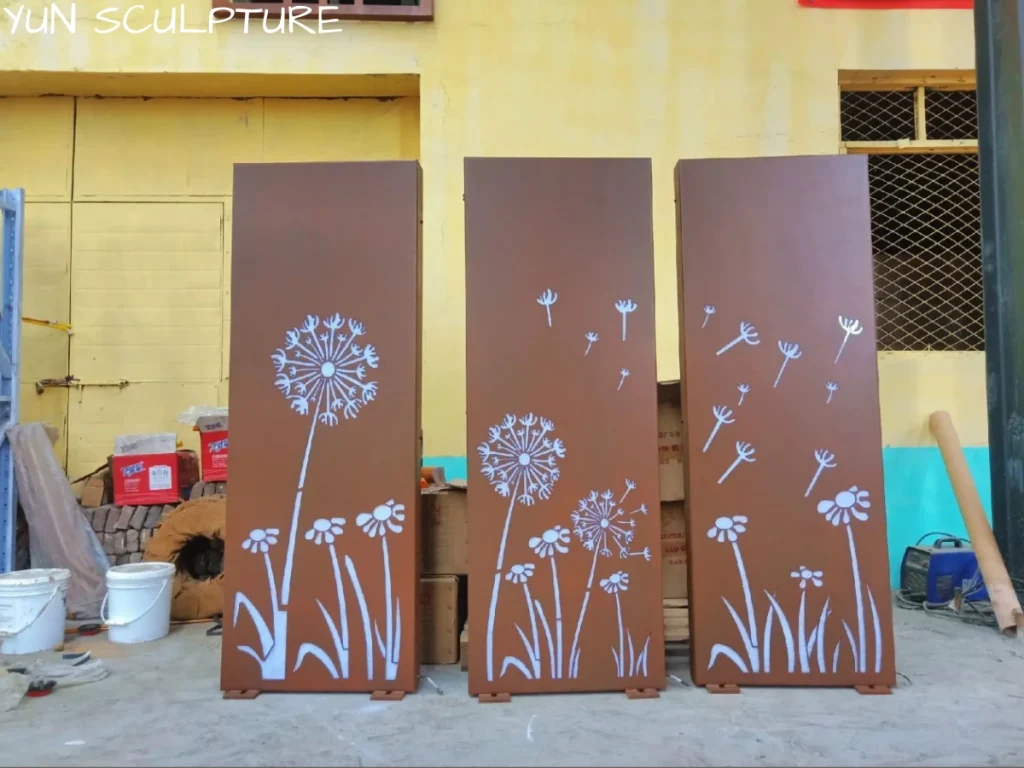
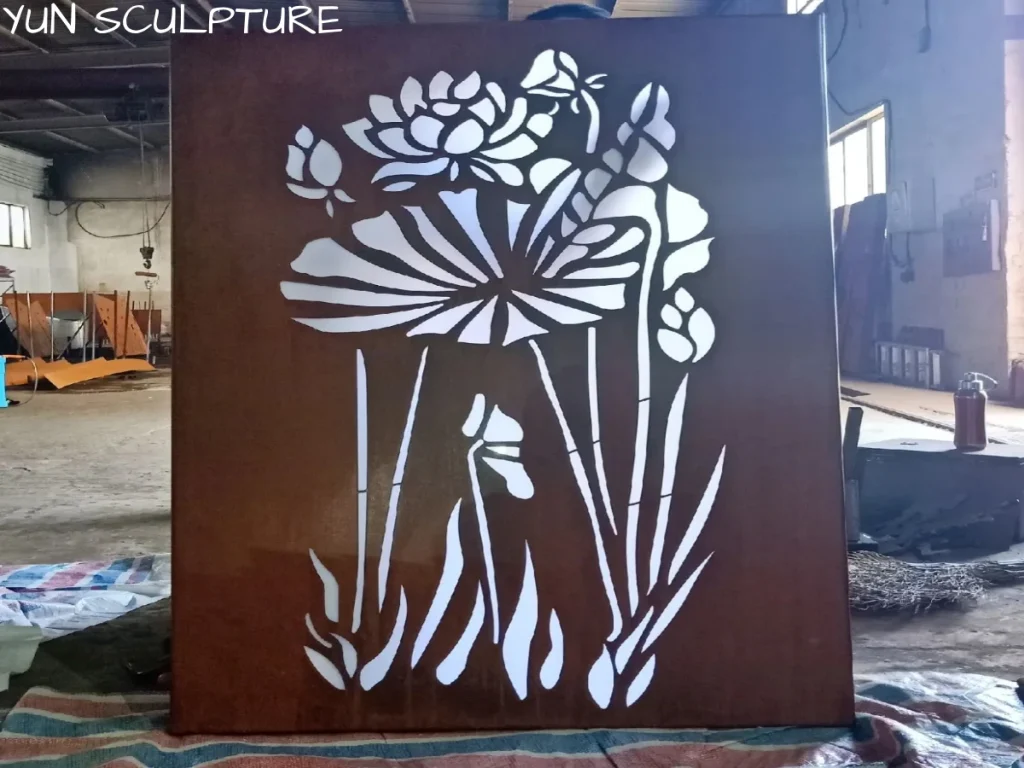
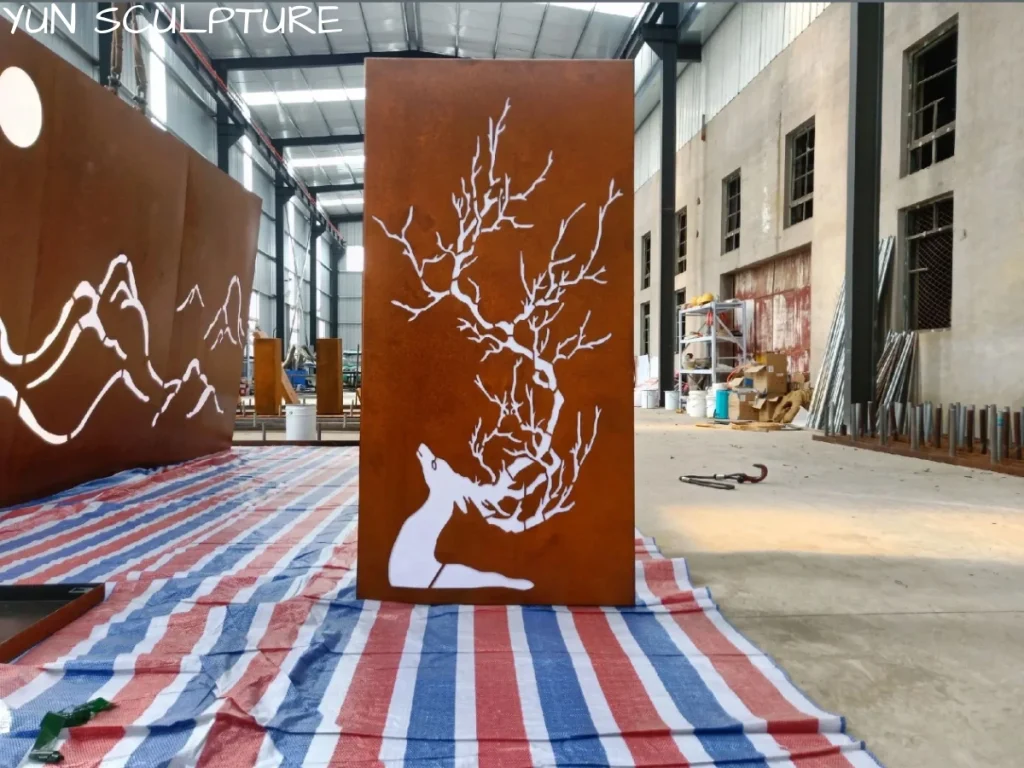
The effect is precise and controlled:
- Light intensity is defined by perforation density
- Glow gradients emerge from pattern variation
- The panel reads as a “luminous sculpture” embedded in space
From a technical perspective, LED strips are typically mounted within a rear cavity, protected from moisture and direct exposure. Proper spacing between light source and panel ensures even diffusion, avoiding hotspots.
The result is not decoration. It is a calibrated extension of the panel’s morphology into the night.
Projection Narrative
Light does not stop at the panel surface. It travels. It projects. It creates a secondary layer of space.
Drawing from the logic of weathering steel lighting sculptures, perforated screens can cast their patterns onto adjacent walls, ground planes, and vegetation. This shadow play transforms the environment into an extension of the artwork.
A corten steel yard art installation, when illuminated correctly, occupies far more space than its physical footprint. A corten circle garden sculpture, for example, can project concentric patterns that shift as viewing angles change.

This creates a narrative condition:
- The panel is the source
- The environment becomes the canvas
- Light defines the connection between the two
The design challenge lies in predicting projection behavior. Distance, angle, and surface texture all influence the clarity and distortion of the pattern. Engineering and artistic intent must align to control this outcome.
When successful, the screen produces two simultaneous artworks: one in steel, one in light.
Color Temperature
Light color determines how the corten surface is perceived. The oxidized patina carries deep orange-red tones that respond strongly to warm illumination.
A color temperature of 2700K is the recommended standard. This warm spectrum enhances the richness of the material, deepening contrast and reinforcing the perception of depth within the cut patterns.
Cooler light, by contrast, flattens the surface. It diminishes the warmth of the patina and disrupts the intended atmosphere.
Integration with other landscape elements further amplifies this effect. When paired with corten steel garden water features or outdoor metal wall fountains, warm lighting reflects off moving water, introducing subtle motion into the visual field.
This combination—steel, light, and water—creates a layered sensory experience. The panel is no longer a single object. It becomes part of a coordinated system where material, illumination, and environment operate as one.
Installation Engineering and Long-Term Maintenance Solutions
Hanging & Fixing Systems
Installation defines whether a panel remains precise or begins to fail over time. The fixing system must match the lifespan of the corten itself. This means abandoning standard hardware in favor of corrosion-compatible solutions.
For wall-mounted systems, wall hanging brackets for corten steel sculptures must meet three criteria: material compatibility, load capacity, and environmental resistance. Stainless steel (grade 304 or 316) is the preferred choice to avoid galvanic corrosion between dissimilar metals.
Key engineering considerations:
- Isolated contact points to prevent moisture trapping between steel and wall
- Stand-off distance (20–50mm) to allow airflow and drainage
- Over-specified load ratings to account for wind uplift and dynamic stress
- Concealed anchoring systems to preserve visual purity
Improper brackets are the most common failure point in installations. The panel itself endures, but the connection degrades. Precision here is not optional—it is structural insurance.
Rust Runoff Management
During the early oxidation phases, corten steel releases rust-colored runoff. This is a natural and temporary process, but if unmanaged, it can stain adjacent materials—especially light stone, concrete, or painted walls.
The solution is not to stop the process, but to control its path.
Effective drainage strategies include:
- Drip edges integrated at the bottom of panels to direct runoff away from vertical surfaces
- Hidden channels behind the panel to guide water downward in a controlled line
- Gravel beds or drainage strips at the base to absorb and diffuse runoff
- Intentional gap spacing between panel and wall to prevent capillary staining
For wall installations, elevating the panel slightly above the ground plane prevents pooling and splash-back. For freestanding screens, base detailing must ensure water exits cleanly without contacting surrounding paving.
This phase typically stabilizes within months, after which the self-protective patina forms and runoff significantly reduces.
Environmental Adaptation
Corten steel does not weather uniformly across all climates. Its oxidation phases are directly influenced by humidity, rainfall frequency, and airflow.
In dry environments, the patina forms slowly and remains lighter in tone. In humid or coastal regions, oxidation accelerates, producing deeper, richer coloration. However, excessive moisture without drying cycles can delay stabilization, extending the active runoff period.
The goal is a stable self-protective patina—a dense oxide layer that seals the surface and halts further corrosion. Achieving this requires alternating wet and dry conditions. Constant saturation is the only true adversary.

This is where expertise becomes critical. At a professional corten steel sculpture factory, environmental conditions are studied before fabrication begins. Panel detailing, drainage design, and even pattern density are adjusted accordingly.
Likewise, an experienced corten steel sculpture artist understands that the final appearance is not fixed at installation. It is a trajectory. Color, texture, and depth evolve over time, shaped by the site itself.
Design, engineering, and environment must align. Only then does corten steel reach its intended permanence.
10 Core Questions Answered (FAQ)
Will Corten steel screens thin out or rot away over time?
No. Corten steel protects its structural core by forming a dense, stable oxide layer. This self-protective patina dramatically slows further corrosion. In architectural applications, the material loss is minimal, and the lifespan of a screen typically exceeds 30–50 years under normal conditions.
Do the laser-cut edges need extra rust-proofing?
No additional treatment is required. Once exposed to the environment, laser-cut edges enter the same oxidation phases as the surface. They develop a uniform self-protective patina, ensuring consistent performance and appearance across the entire panel.
How do I prevent rust water behind the screen from staining my white walls?
Control separation and drainage. Use wall hanging brackets for corten steel sculptures to create a clear physical gap between panel and wall. Combine this with drip edges or concealed drainage paths so runoff is directed away from sensitive surfaces.
What is the maximum single-piece size for custom Corten steel art panels?
The size is typically limited by the steel mill’s coil width, usually between 1500mm and 2000mm. For larger installations, panels are engineered using seamless splicing or modular systems, ensuring visual continuity without compromising structural performance.
What perforation rate is needed to ensure privacy?
Privacy depends on occlusion, not just pattern. We recommend maintaining a non-perforated area of at least 60%. When combined with backlit strategies, this allows light to pass while preserving visual privacy, achieving both functional screening and atmospheric depth.
Can Corten steel screens be installed near the ocean?
High-salt coastal environments interfere with the normal formation of the patina. Salt deposits disrupt the stable oxidation cycle, preventing the surface from forming a dense protective layer. In such conditions, untreated corten may continue to corrode rather than stabilize.
We recommend pre-treatment before installation. This includes artificial rust acceleration in a controlled environment to initiate stable oxidation phases, followed by the application of a protective sealant. For coastal projects, our anti-salt spray strategies for Corten garden art are essential to ensure long-term performance and visual consistency.
Does installing Corten steel art panels require specialized welding techniques?
Yes. Standard welding materials are not suitable for weathering steel. To ensure both structural performance and visual continuity, matching weathering steel welding rods—such as E7018-W—must be used.
This is not only a technical requirement but an aesthetic one. The weld seam must oxidize at the same rate and tone as the surrounding material. Without proper welding materials, seams will appear darker or inconsistent over time, disrupting the integrity of the panel as a unified surface.
Precision in welding ensures that the final piece reads as a single, coherent work—both structurally and visually.
How long does it take for the screen to turn that beautiful orange-purple after installation?
In natural outdoor conditions, the transformation typically occurs over 6 to 18 months. During this period, the steel progresses through visible oxidation phases, gradually deepening from raw metallic tones to warm orange and eventually into richer, darker hues.
This timeline depends on environmental exposure—moisture, air circulation, and climate all influence the speed of development. The process is not instantaneous, but it is integral to the material’s character.
For projects requiring immediate visual maturity, factory pre-oxidation treatments are available. These allow the panel to arrive with an already stabilized patina, achieving the desired aesthetic from day one.
Are weathering steel lighting sculptures safe?
Yes, provided that all electrical components meet strict outdoor standards. Integrated lighting systems must achieve at least IP65 rating for dust and water resistance, ensuring safe operation in exposed environments.
Equally important is internal design. Adequate space must be allocated for heat dissipation, preventing thermal buildup within enclosed sections of the panel or structure. Poor ventilation can compromise both lighting performance and material stability.
When properly engineered, weathering steel lighting sculptures combine durability with safety, allowing light and structure to coexist without risk.
Is the price of custom screens much higher than regular steel plates?
The initial material cost of corten steel is slightly higher than standard mild steel. However, this comparison is incomplete without considering lifecycle value.
Corten requires no painting, no ongoing corrosion treatment, and minimal maintenance. Its surface protects itself, reducing long-term operational costs to near zero. At the same time, it carries a strong sculptural presence, elevating it beyond simple construction material into corten steel yard art or architectural identity.
When viewed as an investment, not an expense, custom corten screens offer exceptional value. They combine permanence, performance, and artistic impact—qualities that standard steel cannot sustain over time.
Conclusion
Corten steel art panels are not decorative additions. They are the evolving skin of contemporary landscapes—structures that breathe, filter, and transform space through time.
They unify engineering precision with artistic intent. Their strength lies not only in their مقاومت, but in their ability to age with dignity, forming a surface that records environment, climate, and duration. This fusion of industrial resilience and organic evolution defines their unique authority in modern design.
As dimensional skin, they dissolve the boundary between architecture and sculpture. Light passes through them. Shadow extends from them. Time settles into them.
This is not static design. It is a living system—measured, engineered, and allowed to evolve.
– Elena Zhang & Donghui Zhang, Yun Sculpture