Get in touch with Yun-Sculpture company
Why Pope Pius XII Created the Feast of St. Joseph the Worker on May Day

The feast of St. Joseph the Worker was established on May 1, 1955, by Pope Pius XII — deliberately placed on the same date as communist International Workers’ Day. The message was unmistakable: the true model of labor is not the revolutionary worker with a raised fist, but the silent craftsman of Nazareth who built the home where Christ grew up. That single calendrical decision transformed a quiet carpenter into one of the most theologically contested figures of the Cold War.
Table of Contents
Table of Contents
What Is the Feast Day of Saint Joseph the Worker?
The Feast of St. Joseph the Worker is celebrated on May 1 each year. It is a liturgical memorial in the Roman Catholic calendar, instituted by Pope Pius XII on May 1, 1955, during an address to the Catholic Association of Italian Workers in St. Peter’s Square.
The feast honors Joseph not in his role as spouse of Mary or foster father of Jesus, but specifically as a working man — a craftsman who provided for the Holy Family through daily manual labor. The theological focus is the sanctification of work itself: the idea that honest labor, performed with discipline and faithfulness, participates in God’s creative activity.
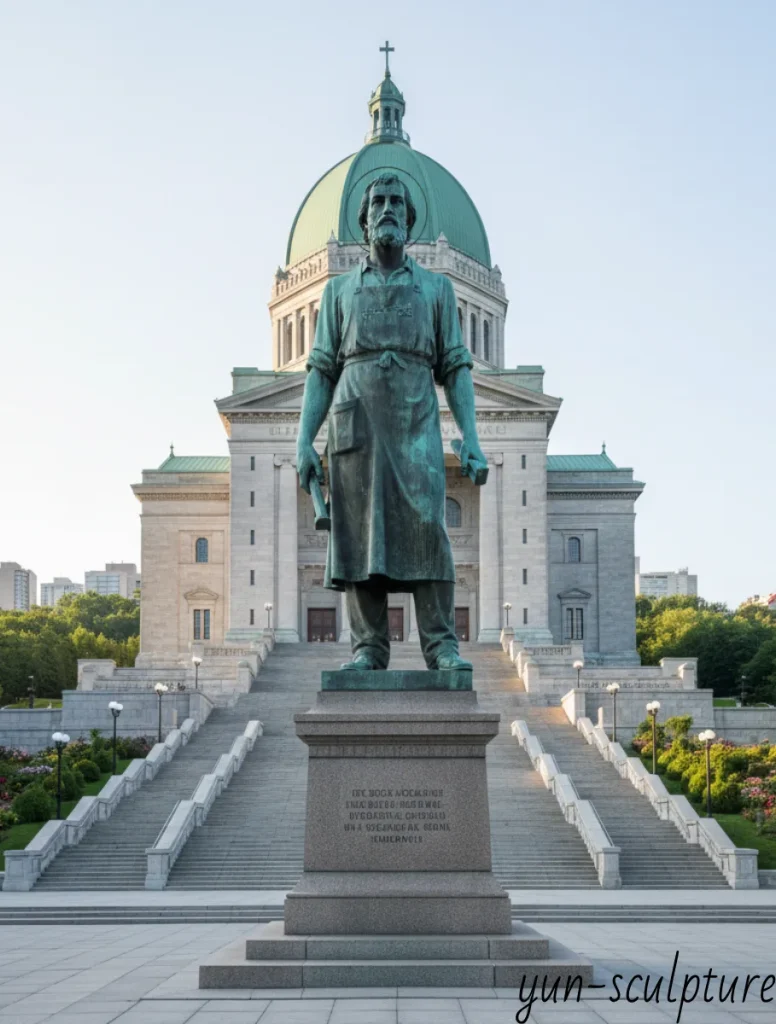
It is worth noting that in the 1969 calendar reform under Pope Paul VI, the feast was reduced from a higher liturgical rank to an optional memorial — the lowest category for a saint’s day. The original feast had been placed at the highest rank. This reduction remains a point of discussion among Catholic liturgists, though the devotion to St. Joseph the Worker has continued to grow independently of the feast’s technical rank.
Why Are There Two Feast Days for St. Joseph?
St. Joseph is one of only three figures in the Catholic liturgical calendar with more than one feast day — the others being the Virgin Mary and St. John the Baptist.
His primary feast, on March 19, dates back to at least the 10th century. It honors Joseph as spouse of Mary, patron of the universal Church, and protector of the Holy Family. The image associated with this feast is the traditional guardian Joseph — holding a lily, composed, watching over Mary and the Child Jesus.
The May 1 feast is an addition, not a replacement. It honors a different aspect of the same man: his identity as a working craftsman, a provider, a man whose holiness was expressed through daily labor rather than public ministry.
The distinction matters practically. Institutions choosing between the two devotional traditions are making a theological statement about what they wish to emphasize. A parish honoring Joseph on March 19 places family and Church at the center. A vocational school, labor organization, or construction company honoring Joseph on May 1 places the dignity of work at the center. The statues chosen for each context reflect this difference — the worker image places tools at the foreground; the guardian image places the lily.
Choosing between the worker image and the traditional guardian image for your institution? Tell us your setting and devotional focus — we can recommend the right composition.
Why Did Pope Pius XII Place the Feast on May 1st?
The choice of date was not incidental. It was a deliberate act of theological counter-programming.
The roots go back further than 1955. In 1891, Pope Leo XIII issued Rerum Novarum — the foundational Catholic document on labor — asserting that workers possess inherent dignity, that labor is not merely an economic transaction, and that both employers and states carry moral responsibilities toward those who work. The Church had been engaging the labor question for decades before communism made it a Cold War flashpoint.
By the mid-20th century, the Soviet Union had institutionalized May 1 as International Workers’ Day — a showcase for communist ideology, complete with military parades and proclamations about the state as the defender of the working class. For Catholic workers across Europe, particularly in Italy and Poland, the day had become saturated with political meaning they were being asked to embrace.
Pius XII’s response was precise. On May 1, 1955, speaking directly to Italian workers gathered in St. Peter’s Square, he announced the institution of the new feast. His words were direct: the humble craftsman of Nazareth “not only personifies before God and the Holy Church the dignity of the laborer, but is always the provident guardian of you and your families.”
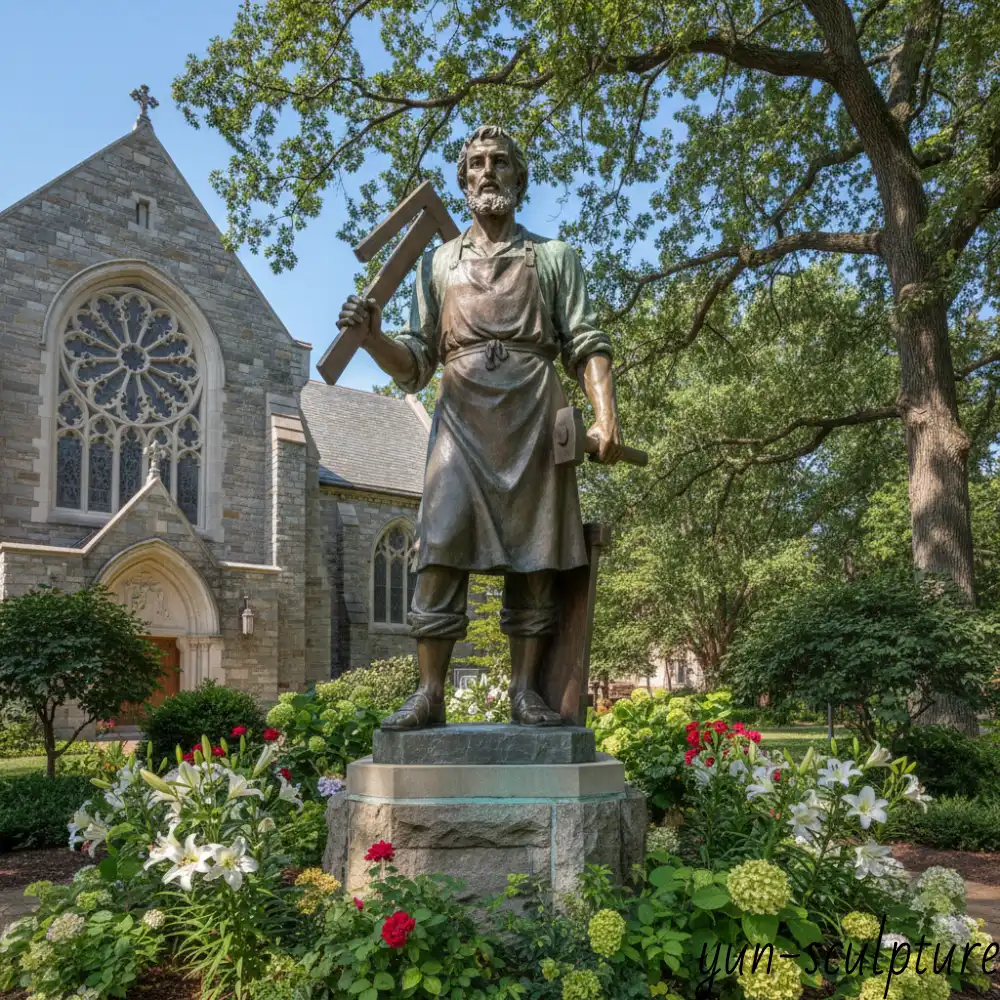
The contrast he was drawing was unmistakable.
Communist May Day elevated the collective worker as an ideological figure — a class identity defined by opposition to capital. The Feast of St. Joseph the Worker elevated the individual craftsman as a spiritual figure — a man defined by responsibility to family, faithfulness to God, and dignity in daily work.
One vision of labor is political and abstract. The other is personal and concrete.
Joseph does not lead a movement. He builds furniture. He measures twice. He protects the people under his roof. His holiness is not demonstrated in speeches — it is demonstrated in the quality of his work and the steadiness of his presence.
I think of a commission we completed three years ago for a Catholic vocational training center in the American Midwest — a school teaching carpentry, electrical work, and plumbing to young men from working-class families. The director wanted a life-size St. Joseph the Worker in bronze for the entrance courtyard. He told us he wanted students to walk past Joseph every morning before entering the workshop. “Not a reminder to pray,” he said. “A reminder that what they are learning to do with their hands has always been holy.”
The statue we made for him holds a chisel, not a saw — a deliberate choice based on the tekton history. The expression is focused, calm, looking slightly downward toward the work in front of him. It has been standing in that courtyard through three winters now. The director sent us a photograph last May 1st of the entire student body gathered around it for the feast day blessing.
That photograph is what Pius XII’s decision looks like in practice. The feast gave Joseph a date. The statue gave him a presence.
This is the theology embedded in every St. Joseph the Worker statue placed in a union hall, school courtyard, or labor organization headquarters. The sculpture is not decoration. It is the feast made permanent — theology expressed in bronze or marble that continues to speak long after any ceremony ends. If you are considering commissioning a statue to mark this devotion, our St. Joseph the Worker statue marble and bronze guide covers material selection, scale, and institutional commissioning in detail.
Why Is St. Joseph the Patron Saint of Workers?
There is a word in the original Greek Gospel that changes everything about how Joseph looks in stone or bronze.
Matthew 13:55 describes Joseph as a τέκτων — tekton. Most English Bibles translate this as “carpenter,” and most Western statues follow that translation faithfully: the workbench, the saw, the wood shavings. But tekton means something closer to builder or craftsman — a worker skilled in whatever material the job requires. In first-century Palestine, that material was usually stone. Wood was scarce. Houses were cut from limestone. The town of Sepphoris, a major construction site, stood a short walk from Nazareth.
When I think about what this means for a commission, it changes the tool selection entirely. A Joseph holding a chisel and a stone-cutting hammer is historically closer to the man who actually lived in Nazareth than a Joseph holding a woodworking plane. And a figure shaping stone carries a different visual weight — heavier, more grounded, more permanent — than a figure bent over a wooden workbench.
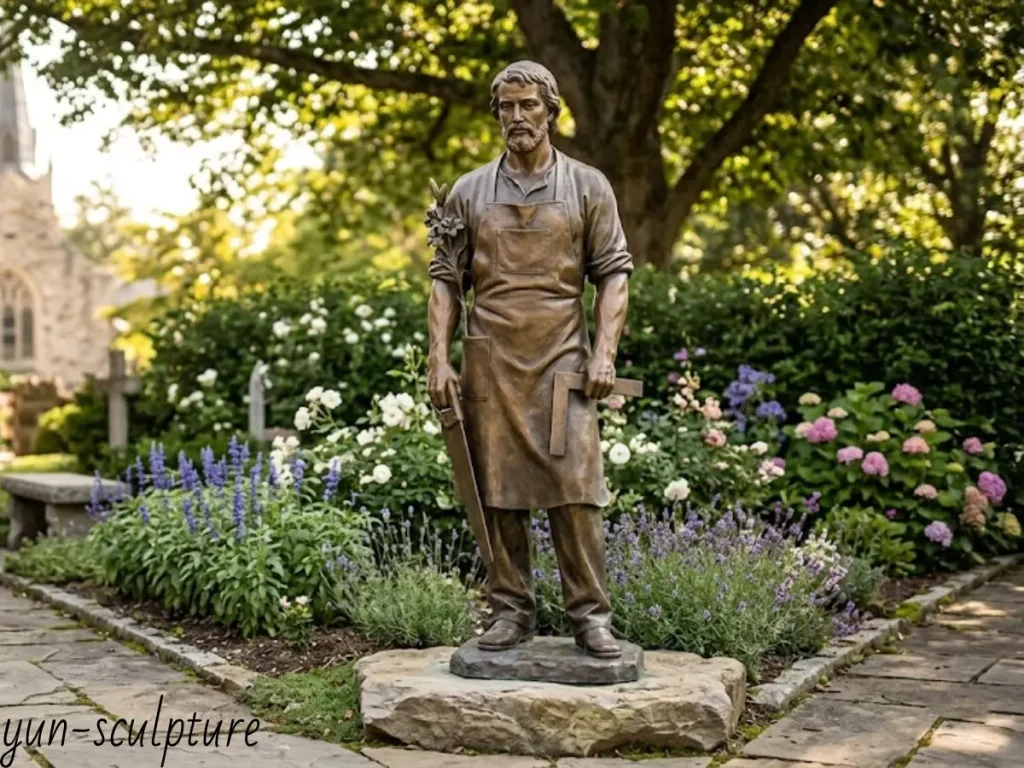
This is why Joseph’s patronage extends so naturally beyond carpentry to all skilled manual labor. He was not a specialist in one trade. He was a craftsman who worked with whatever the land provided — which is precisely what makes him the right patron for construction workers, engineers, stonemasons, and builders of every kind.
For institutions that commission the father-son Nazareth workshop scene in marble or bronze, this theological foundation is often the reason — the sculpture makes visible the relationship between human work and divine presence.
FAQ
Is May 1st the Feast of St. Joseph the Worker?
Yes. The Feast of St. Joseph the Worker is celebrated on May 1 each year. We explain the full history of why Pius XII chose this date — and the Cold War context that made it a deliberate theological counterstatement — in the section above.
Why do we celebrate St. Joseph the Worker?
The feast celebrates the dignity of human labor as embodied by Joseph of Nazareth — a craftsman who provided for the Holy Family through daily work and whose workshop was shared by Jesus Christ for nearly two decades. The full theological and historical reasoning is covered in detail above.
Why is St. Joseph the patron saint of carpenters?
Joseph is the patron of carpenters because the Gospel of Matthew describes him using the Greek word tekton — commonly translated as carpenter, though the term more accurately means craftsman or builder. The tradition of carpenters claiming Joseph as their patron reflects the Western interpretation of this word through medieval European woodworking culture. In broader Catholic understanding, Joseph’s patronage extends well beyond carpentry to all forms of skilled manual labor, construction, and craftsmanship — precisely because the word tekton in his historical context likely included stonework and structural building, not only woodworking.
How to celebrate St. Joseph the Worker’s feast day?
Many parishes and institutions mark May 1 with a worker blessing ceremony — gathering near a statue of St. Joseph the Worker to offer prayers for those who labor. The sculpture becomes the natural focal point: workers gather around the figure of Joseph as patron and protector, and clergy bless tools, work vehicles, or the workspace itself. For institutions with a permanent outdoor bronze or marble statue, the feast day often becomes the occasion for an annual community gathering that reinforces the organization’s identity around the dignity of work. Some communities also process with a portable statue through the workplace or neighborhood. The feast is observed on May 1; preparation typically begins in late April for institutions planning formal ceremonies.
What are 5 interesting facts about St. Joseph?
First, Joseph speaks no recorded words anywhere in the New Testament — every action he takes is described, but no speech is attributed to him. Second, the Greek word used to describe his profession — tekton — means craftsman or builder, not strictly carpenter; Joseph likely worked with stone as well as wood in first-century Palestine. Third, Joseph is one of only three figures in the Catholic calendar with more than one feast day, alongside Mary and John the Baptist. Fourth, his May 1 feast was originally given the highest possible liturgical rank when instituted in 1955, then reduced to an optional memorial in the 1969 calendar reform. Fifth, Pope Francis has expressed particular personal devotion to Joseph, keeping a statue of the sleeping St. Joseph on his desk and issuing the apostolic letter Patris Corde in 2020 — the most significant papal document on Joseph in decades — which prompted a global Year of St. Joseph.
The Feast Made Permanent
A feast day lasts twenty-four hours. A bronze or marble statue lasts generations.
The institutions that commission a St. Joseph the Worker statue for their courtyard, campus, or headquarters are doing something the feast itself cannot do alone — they are making the theology permanent. Joseph stands in that space every day, not only on May 1. He watches over workers who pass by at seven in the morning and at six in the evening. He remains after the ceremony ends, after the homily is forgotten, after the banners come down.
The feast gave St. Joseph the Worker a date on the calendar. The statue gives him a place in the landscape.
Browse our St. Joseph the Worker statue collection →
Commission a permanent memorial to the dignity of labor — receive a free quote within 24 hours →