Get in touch with Yun-Sculpture company
Greek God Garden Statues: Bronze & Marble for Outdoor Spaces

A garden with a Greek god statue is not simply decorated — it is anchored. Whether Zeus commands a stone terrace or Poseidon presides over a fountain pool, these figures bring a weight and mythology that no planter or trellis can replicate.
At Yun Sculpture, we cast and carve Greek god garden statues in genuine bronze and natural marble, made to order from our foundry in Quyang, Hebei. Every piece is built for the outdoors: the scale, the patina, the material — all chosen to hold up for decades in sun, rain, and frost.
Table of Contents
Table of Contents
Which Greek Gods Work Best in a Garden?
Not every deity translates equally to outdoor space. Some figures carry an energy that feels native to open air.
Zeus — King of Olympus belongs on an elevated terrace or at the end of a long garden path. A Zeus statue commands sightlines. Our Zeus statue in aged bronze or white marble reads with authority at any scale.
Poseidon — The god of the sea is the natural choice near water features. A Poseidon garden statue beside a pool or fountain creates an intentional relationship between figure and element that stops visitors in their tracks.
Apollo — God of light and the sun belongs in open, sunlit garden beds. An Apollo statue in polished marble reflects afternoon light in a way bronze simply cannot.
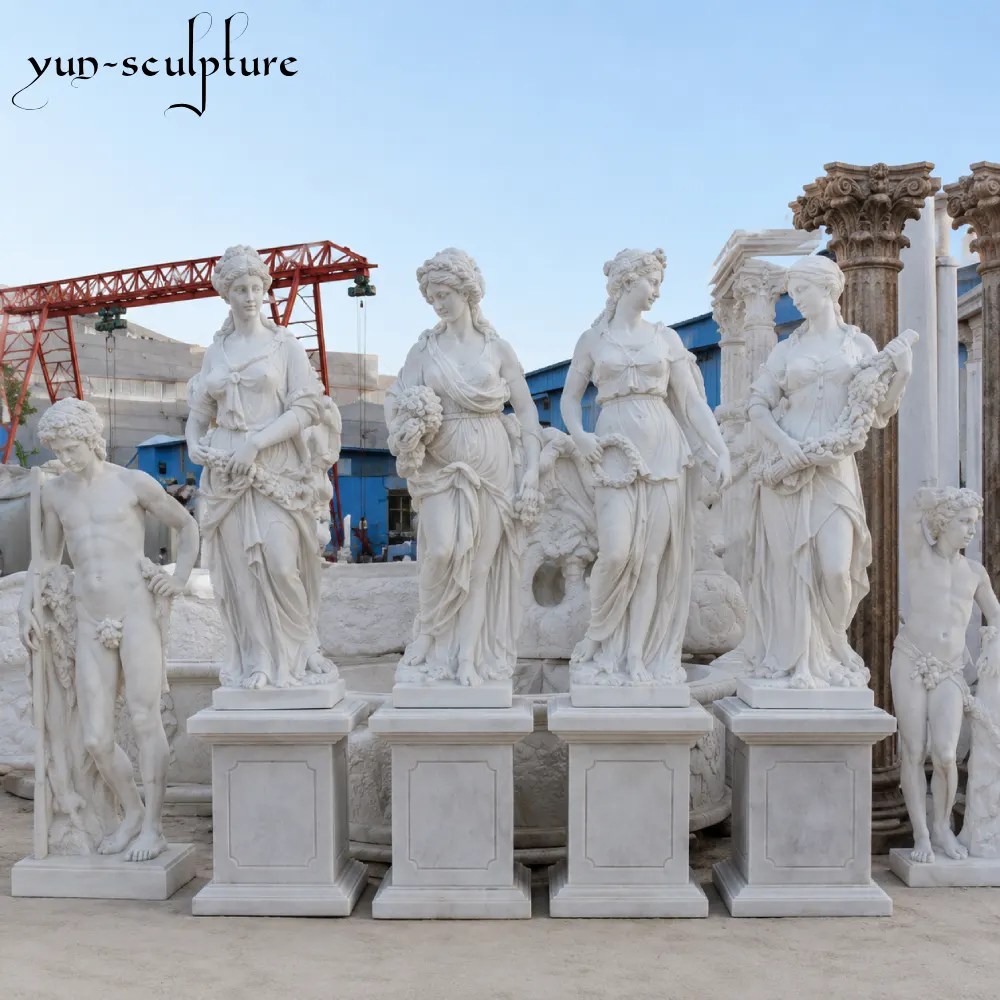
Artemis — Goddess of the hunt and the wilderness feels at home on garden edges, near hedgerows, or in wooded corners of larger properties.
Hermes — His association with thresholds and travel makes him a natural guardian at garden entrances or along pathways.
Dionysus — For walled gardens, courtyards, and vineyard terraces, Dionysus holds a more intimate, celebratory energy.
Browse our full Greek gods collection for the complete pantheon.
Bronze or Marble: Which Material Suits Your Garden?
This is the question most buyers wrestle with, and the honest answer is: both are exceptional — they simply behave differently outdoors.
Bronze develops a natural patina over time. The surface shifts from bright copper-gold to warm brown, then gradually to the characteristic verde green of aged bronze. For clients who want that classic, museum-quality look — the kind you see in European public gardens — bronze is the traditional choice. Our bronze is minimum 85% copper content, cast using the lost-wax method, which captures fine surface detail that sand-cast bronze cannot.
Marble is pure permanence. White marble garden statues hold their form for centuries — there is a reason the ancient Greeks used it. For a clean, bright presence in the garden, particularly in formal or Mediterranean-style landscapes, marble is unmatched. Our sculptors work from solid blocks of natural marble; there is no resin, no reconstituted stone, no shortcuts.
The practical difference outdoors: bronze handles freeze-thaw cycles exceptionally well. Marble is equally durable but benefits from a sheltered position in climates with severe winters. Both materials, properly made, will outlast any resin or concrete alternative by generations.
What Size Greek God Statue Is Right for a Garden?
Scale is where most buyers make their first mistake — they underestimate how much space a garden has and order something too small.
As a general guide:
- Under 3 feet — suitable for intimate courtyard corners, raised planters, or tabletop features on covered terraces
- 3–5 feet — the most common residential garden scale; substantial enough to read from 20–30 feet away
- 5–7 feet (life-size range) — appropriate for large gardens, estate grounds, hotel courtyards, or as a centerpiece at the end of a garden axis
- Over 7 feet — monumental scale for public spaces, resort properties, or statement installations
All Yun Sculpture pieces are made to order. If you have a specific height requirement, our foundry works to your dimension. See our life-size garden statues guide for more on scale planning.
How to Place a Greek God Statue in a Garden
Placement determines whether a statue reads as intentional or accidental.
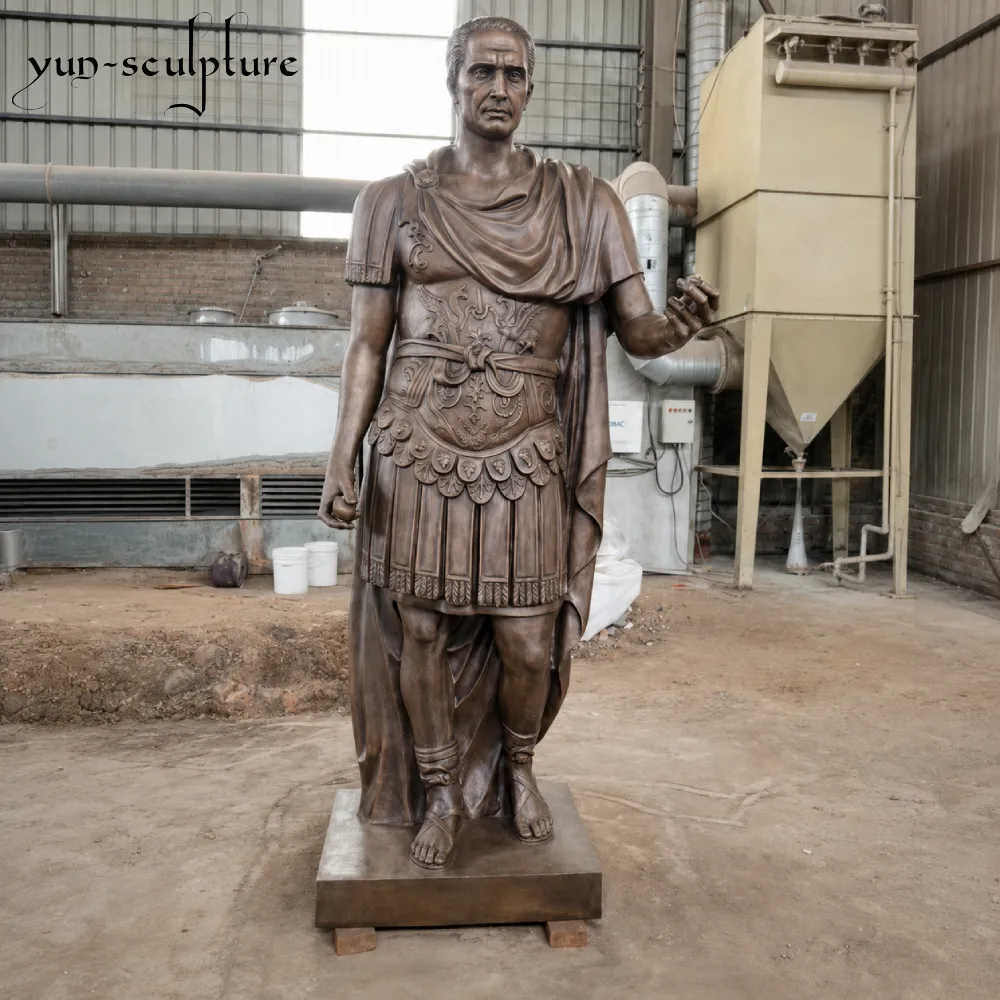
Use the axis principle. A statue placed at the terminus of a garden path, hedge row, or sight line draws the eye and creates a destination. This is how formal European gardens have used sculpture for centuries.
Elevate when possible. Even a 12-inch plinth changes how a figure reads. A Zeus or Poseidon placed at grade level loses gravitas. On a pedestal, the same statue becomes a focal point.
Consider the back. Every garden statue has a front face, but visitors will often approach from multiple angles. Make sure the figure’s secondary views — profile and back — are visible in positions where they will be seen.
Pair with water or planting. A Poseidon in front of a still pool. An Apollo flanked by white flowering shrubs. The statue and its surroundings should converse.
How to Weatherproof an Outdoor Bronze or Marble Statue
Both bronze and marble are naturally weather-resistant when properly made. Resin and concrete statues require coatings and regular maintenance; genuine bronze and marble do not need to be waterproofed.
For bronze: Apply a microcrystalline wax (such as Renaissance Wax) once or twice a year to slow patina development and protect the surface. If you prefer the aged verde patina, simply leave the bronze to develop naturally.
For marble: Rinse periodically with clean water. Avoid acidic cleaners — they etch the surface. In climates with hard frost, position marble statues where water cannot pool in carved recesses and freeze.
Neither material needs to be brought indoors seasonally. Both are built for permanent outdoor installation.
Frequently Asked Questions
Who is the Greek god of gardens?
There is no single Greek god exclusively dedicated to gardens, but several deities are closely associated with garden spaces. Priapus was a minor god of garden fertility and protection, traditionally placed in gardens as a guardian figure. Demeter governed agriculture and the earth’s abundance, while Dionysus presided over vineyards and cultivated land. For decorative garden statues, Zeus, Poseidon, Apollo, and Artemis remain the most popular choices.Is there a goddess of gardening?
Demeter, goddess of the harvest and agriculture, is the closest Greek equivalent to a goddess of gardening. Chloris (Flora in Roman mythology) was the goddess of flowers and spring vegetation. Persephone, Demeter’s daughter, is associated with the seasonal cycle of growth and dormancy. Any of these figures make meaningful choices for garden statuary, particularly in planting-focused or naturalistic garden designs.What is the best material for a garden statue?
Bronze and natural marble are the two best materials for outdoor garden statues intended to last. Bronze develops a protective patina over time and handles freeze-thaw cycles extremely well. Marble offers a clean, permanent presence and has been used in outdoor sculpture for thousands of years. Both significantly outlast resin, concrete, or reconstituted stone alternatives. For a garden piece meant to remain in place for decades, either genuine bronze or solid marble is the correct choice.How do you weatherproof an outdoor statue?
Genuine bronze and marble statues do not require waterproofing coatings. For bronze, an annual application of microcrystalline wax helps regulate patina development. For marble, periodic rinsing with clean water and avoiding acidic cleaners is sufficient. Resin and concrete statues require sealants that need reapplication every one to two years. Choosing a quality material from the start eliminates most weatherproofing concerns.How long will bronze statues last outdoors?
A properly cast bronze statue will last centuries outdoors. Ancient bronze sculptures recovered from the sea after two thousand years remain structurally intact. For a residential or commercial garden installation, a high-quality bronze statue — cast with minimum 85% copper content using the lost-wax method — should require no structural maintenance within any normal human lifetime.How much does a bronze Greek god garden statue cost?
Price varies significantly by size, detail complexity, and material quality. Small bronze Greek god statues (under 3 feet) typically start from $800–$2,000. Life-size figures (5–6 feet) generally range from $3,500–$8,000 depending on the subject and casting complexity. Monumental pieces above 7 feet are priced by commission. Marble statues follow a similar range. Factory-direct pricing from Yun Sculpture eliminates gallery and middleman markups.How long do concrete garden statues last?
Concrete garden statues typically last 10–20 years outdoors before showing significant surface erosion, cracking, or frost damage. They require sealant reapplication every 1–2 years to slow deterioration. Compared to bronze or marble, concrete is a lower upfront cost but a higher long-term maintenance material. For a permanent garden installation, bronze or marble delivers better value over time.How to place statues in a garden?
Place garden statues at the terminus of a sight line or path to create a visual destination. Elevate the figure on a plinth or pedestal — even 12 inches of height significantly changes how a statue reads in open space. Consider the statue’s relationship to surrounding elements: water features, planting beds, or architectural structures. Ensure the figure’s primary face is oriented toward the main approach angle, and that secondary views remain visible from other positions in the garden.Commission Your Greek God Garden Statue
Commission a Greek God Garden Statue from Quyang
Bronze or marble, any deity, any scale — from courtyard accent to monumental centerpiece. Share your garden dimensions and preferred figure and we’ll respond within 2 business days with a factory-direct quote.