Get in touch with Yun-Sculpture company
How to Choose a St. Francis Statue for Your Garden: Size, Material & Style

Choosing a St. Francis statue for your garden comes down to three decisions: size that fits your space, material that survives your climate, and a style that reflects the message you want in your landscape. Get these three right, and the statue will feel like it has always belonged there. Get any one wrong, and you will find yourself replacing it — or regretting the choice — within a few years.
Table of Contents
Table of Contents
What Size St. Francis Statue Fits Your Garden?
The most common mistake I see is choosing a statue that is too small. Outdoor space absorbs scale in ways people rarely expect — trees tower above, lawns stretch wide, and sunlight flattens depth. A statue that looks perfect in a showroom feels half the size once placed in an open garden.
Use viewing distance as your guide:
| Statue Height | Best For | Ideal Viewing Distance |
|---|---|---|
| 12–24 inches | Pet memorials, balconies, small garden corners | 1–3 meters |
| 24–36 inches | Private garden centerpieces, patios, pathways | 3–8 meters |
| 3–5 feet | Church courtyards, estate lawns, large gardens | 8–15 meters |
| Life-size (5–6 ft) | Monasteries, public parks, memorial shrines | 15+ meters |
Last year, a church in Texas ordered a 24-inch St. Francis for their courtyard garden. Two weeks after installation, the pastor called and asked us to replace it with a 6-foot version — the original simply disappeared against the building’s stone facade. We hear stories like this often. Clients who go one size larger than their first instinct are almost always happier with the result.
If your garden has mature trees or sits against a tall wall, lean toward the larger option. The statue needs to hold its own against those vertical elements.
What Is the Best Material for an Outdoor St. Francis Statue?
Two materials last generations outdoors: natural stone and cast bronze. Resin and terra cotta typically survive about five years before they need replacing.
Natural stone — marble, granite, or limestone — ages beautifully in the open air. Rain and sunlight create a soft patina that enhances the sculpture over the years rather than degrading it. Our workshop carves from solid stone blocks, not cast stone powder. Our master sculptor Donghui often shows visiting clients the difference: tap a solid marble statue and it rings clearly; tap cast stone and you get a flat thud. Solid stone holds its integrity through decades of freeze-thaw cycles, while cast stone mixtures often develop surface cracks after just a few winters.
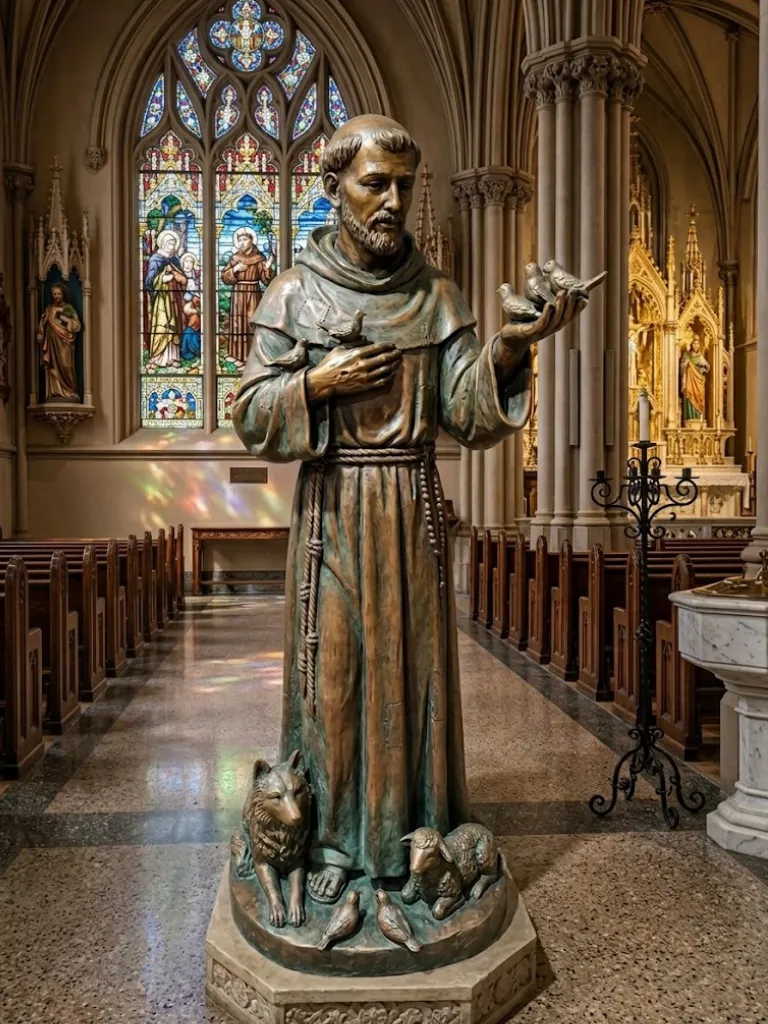
Cast bronze is the most durable option available. Donghui has cast hundreds of bronze figures over his 20-year career, and he trusts only the lost-wax method for fine detail — individual feathers on a bird, the three knots in the Franciscan rope belt, the gentle expression on the saint’s face. Bronze resists corrosion, handles extreme temperatures, and develops a protective patina that actually strengthens the surface over time. We have bronze statues installed in the early 2000s that still look as sharp as the day they shipped. For churches, public gardens, and estates where the statue must stand for 50 to 100 years, bronze remains the standard.
Resin and terra cotta are widely sold online because they are lightweight and inexpensive. But resin fades and becomes brittle under UV exposure. Terra cotta cracks when moisture trapped inside freezes and expands in winter. After three to five years outdoors, surfaces peel, colors wash out, and joints weaken. These materials work for sheltered indoor display, but they are not designed for permanent garden life.
A resin statue at $150 is genuinely cheaper than a $3,000 stone carving — there is no pretending otherwise. But resin will never develop the aged beauty of natural stone, never feel solid under your hand, and never become something your grandchildren inherit. The real question is whether you want a decoration or a landmark.
Not sure which material suits your climate? Tell us your location and garden setup — we will recommend the right option for your environment.
Which St. Francis Statue Style Should You Choose?
Each style creates a different relationship between the sculpture and its surroundings. Choose based on what you want the statue to do in the space:
St. Francis with birds — the most recognized version. A bird resting on his shoulder or hand represents the famous sermon to the birds. Place this near real bird activity in your garden, and something lovely happens — a quiet visual conversation between art and life. Works beautifully in flower gardens and near water features.
St. Francis bird bath — the statue holds a shallow basin where real birds drink and bathe. Instead of sitting quietly, this version brings daily movement and sound into the garden. Engineering matters here: Donghui reinforces every basin to at least 15mm wall thickness for clients in northern climates, with drainage holes to prevent freeze damage. If you enjoy watching birds from your kitchen window, this is likely the version that will bring you the most daily pleasure.
St. Francis with animals — deer, rabbits, dogs, and birds gathered around the saint. This composition creates a strong focal point and anchors wide landscapes. Structurally, every animal must be integrated into the base as a single piece — not attached separately, which creates weak joints that crack within a few years outdoors. Best for large lawns and estate gardens where you need a visual anchor.
St. Francis in prayer — hands folded, standing quietly. There is something about this version that changes the atmosphere around it — visitors instinctively lower their voices. Often chosen for memorial corners, cemeteries, and monastery gardens where stillness is the purpose.
If you are considering a St. Francis to pair with an existing garden designed around feng shui principles, the prayer or bird bath version integrates most naturally with the balanced energy of those layouts.
Where Should You Place a St. Francis Statue in Your Garden?
Placement determines whether the statue feels intentional or random. Four positions consistently work well:
Entry path — facing visitors as they arrive. St. Francis becomes the first calm presence guests encounter, setting a peaceful tone. Elevate the statue slightly on a stone base for visibility and to protect the bottom from soil moisture.
Garden center — surrounded by flowers, shrubs, and natural stone. The traditional placement, with the statue as the heart of the landscape. Allow at least 1.5 meters of open space around it — crowding the statue with plants is tempting but reduces its impact.
Quiet corner under a tree — ideal for pet memorials or private reflection. Semi-shade protects the sculpture and creates an intimate atmosphere. Use a small concrete foundation to prevent settling in soft ground over the seasons.
Church courtyard — align the statue with pathways, building entrances, or architectural axes. A pedestal of 12 to 24 inches keeps it visible across open space while maintaining a human-scale connection.
We cover detailed placement strategies — including sightlines, sunlight direction, and companion planting — in our full St. Francis garden placement guide.
How Much Does a St. Francis Garden Statue Cost?
Price depends almost entirely on material and size:
Mass-produced resin (online retailers, Amazon, Wayfair): $50–$300. Lightweight, limited outdoor lifespan, no customization.
Cast stone / concrete (USA-made garden statuary): $200–$1,500. Heavier and more weather-resistant than resin, but artistic detail is limited and there is no customization of pose or iconography.
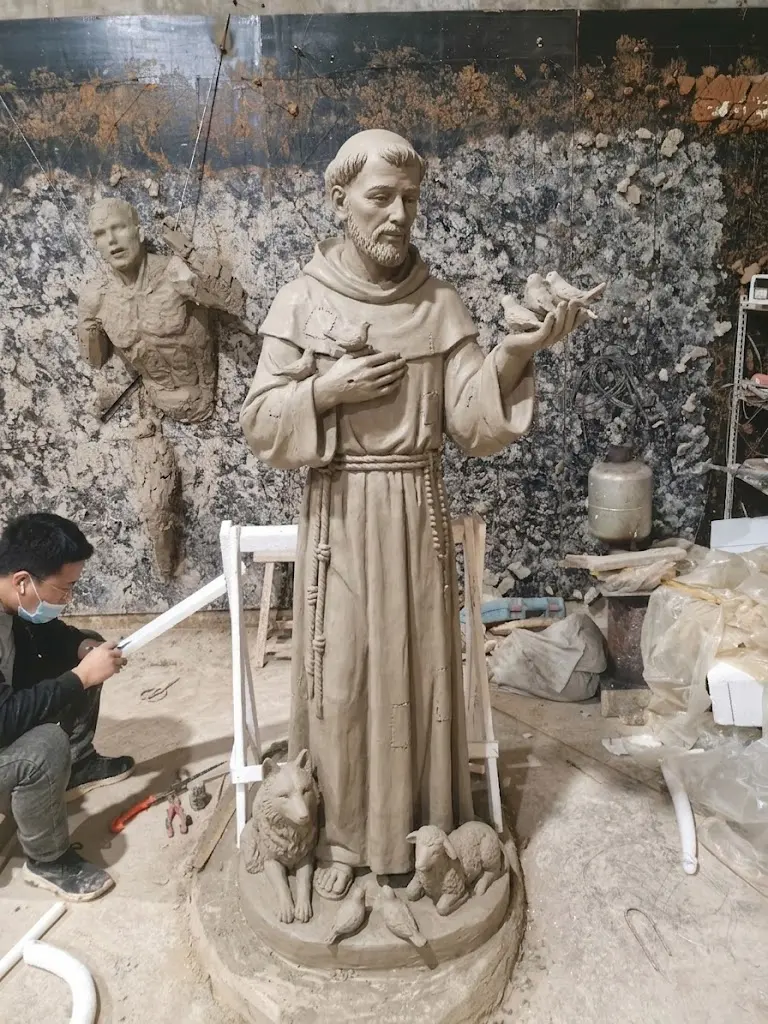
Custom stone carving or cast bronze (professional foundry): $3,000–$30,000+, depending on size, complexity, and material. Our process includes a full-scale clay model for your approval before any stone is carved or bronze is cast, custom iconography — your choice of animals, hand positions, and facial expression — and structural engineering for permanent outdoor installation. A 36-inch marble St. Francis typically takes our team about 30 working days from clay model to crated shipment, weighing approximately 200 kg when finished.
The gap between retail and custom reflects the difference between a product manufactured in minutes and a sculpture built by hand over weeks. For those comparing materials side by side, our bronze vs. marble guide breaks down cost, durability, and aging characteristics in detail.
Frequently Asked Questions
What saint do you put in your garden?
St. Francis of Assisi is by far the most popular saint for garden placement. As the patron saint of animals and the environment, his image — often shown with birds, deer, or in quiet prayer — feels naturally at home among trees, flowers, and wildlife. Other saints sometimes placed in gardens include St. Fiacre (patron of gardeners) and the Virgin Mary, but St. Francis remains the most widely chosen because his symbolism is rooted in the natural world itself.
Is there a Catholic saint for gardening?
Yes — St. Fiacre is the official patron saint of gardeners. However, St. Francis of Assisi is far more commonly placed in gardens because his spiritual connection to nature, animals, and ecological harmony resonates more broadly. Many homeowners who are not Catholic also choose St. Francis simply for the peaceful atmosphere his image creates in an outdoor setting.
Is it okay to have statues of saints in your garden?
Absolutely. Placing saint statues in gardens is a long-standing tradition in Catholic and Christian practice. St. Francis of Assisi statues in particular are designed for outdoor settings — his entire spiritual legacy is connected to nature, animals, and the outdoors. Beyond religious tradition, many non-religious homeowners also display garden statues as symbols of peace and harmony. There is no restriction or concern with placing a saint statue in your landscape.
Which statues are good for home?
For outdoor gardens and entryways, St. Francis of Assisi, the Virgin Mary, and guardian angel statues are the most popular choices. St. Francis works especially well because his calm, nature-connected imagery blends into almost any garden style — from formal estate landscapes to informal cottage gardens. For indoor devotional spaces, smaller statues of patron saints connected to your personal faith or family heritage are common.
Which statue is lucky for home?
In many traditions, St. Francis of Assisi is considered a blessing for the home rather than a “lucky charm.” His presence in a garden symbolizes peace, protection of nature, and spiritual harmony. In feng shui tradition, certain animal sculptures — horses, elephants, and foo dogs — are specifically chosen for their symbolic energy. If you are looking for a statue that combines spiritual meaning with a welcoming presence, St. Francis with a bird bath is a popular choice because it actively attracts wildlife and creates a living, balanced garden environment.
Do garden statues increase property value?
Well-chosen garden statues can enhance curb appeal and create a memorable impression on potential buyers, though they are unlikely to directly increase an appraised value. A quality stone or bronze St. Francis statue signals that the homeowner has invested in the landscape thoughtfully, which can make the property feel more polished during showings. The key is proportion and placement — a statue that fits the garden’s scale and style adds charm, while one that looks out of place does the opposite.
How do you display statues at home indoors?
For indoor display, place a St. Francis statue in a prayer niche, entryway shelf, or mantelpiece where it becomes a quiet devotional focal point. Use a stable, level surface, and consider soft lighting from above or behind to highlight the sculpture’s details. Stone and bronze statues do well indoors without any special care. If you have a resin or painted statue, keep it away from direct sunlight through windows, which can fade the finish over time. For larger indoor installations, a low pedestal or stone base elevates the statue and gives it visual weight in the room.
Ready to Find Your St. Francis?
Browse our St. Francis statue collection to see available styles in stone and bronze, or request a free consultation to discuss a custom design matched to your garden layout and budget.
— Elena Zhang, Yun Sculpture