Get in touch with Yun-Sculpture company
Wild Elegance: The Ultimate Guide to Tiger, Panther, and Giraffe Sculptures for Elite Estates

A powerful animal sculpture changes the emotional gravity of a landscape.
The moment a Tiger Statue stands beside a stone path, or a towering Giraffe Statue rises above ornamental grasses, the garden no longer feels decorative. It becomes cinematic. The space begins to resemble a private safari reserve—curated, dramatic, and unforgettable.
For estate architecture, sculpture functions as more than ornament. It creates narrative. A poised Black Panther Statue beside a reflecting pool introduces mystery and tension, while a tiger emerging from dense planting evokes movement and authority.
Material is what determines whether that narrative feels luxurious or temporary.
At Yun Sculpture, we work exclusively with materials that age with dignity: hand-cast bronze, natural stone, stainless steel, and corten steel. These are architectural materials. They weather storms, sunlight, and decades of outdoor exposure without losing their authority.
Luxury estates demand permanence.
A sculpture placed at the end of a garden axis or beside an infinity pool must look as impressive twenty years later as it did on the installation day. Bronze develops a rich patina. Stone gathers character. Stainless steel reflects light in subtle ways as the landscape evolves.
These materials belong in grand outdoor environments.
Safari animals are particularly powerful in landscape design because they combine elegance with primal energy. The long vertical rhythm of giraffes complements tall trees and modern architecture. Tigers create horizontal tension in pathways and lawn edges. Panthers introduce shadow and mystery.
Among these three animals, however, one has quietly become a favorite in contemporary estates.
The panther.
A Black Panther Sculpture possesses a unique design language. It is less aggressive than a tiger, less monumental than a giraffe, yet far more enigmatic than either. When positioned correctly, it feels like a living presence moving through the space.
That quiet power is exactly what today’s modern estates seek.
Table of Contents
Table of Contents
Decoding the Modern Appeal of Panther and Leopard Sculptures
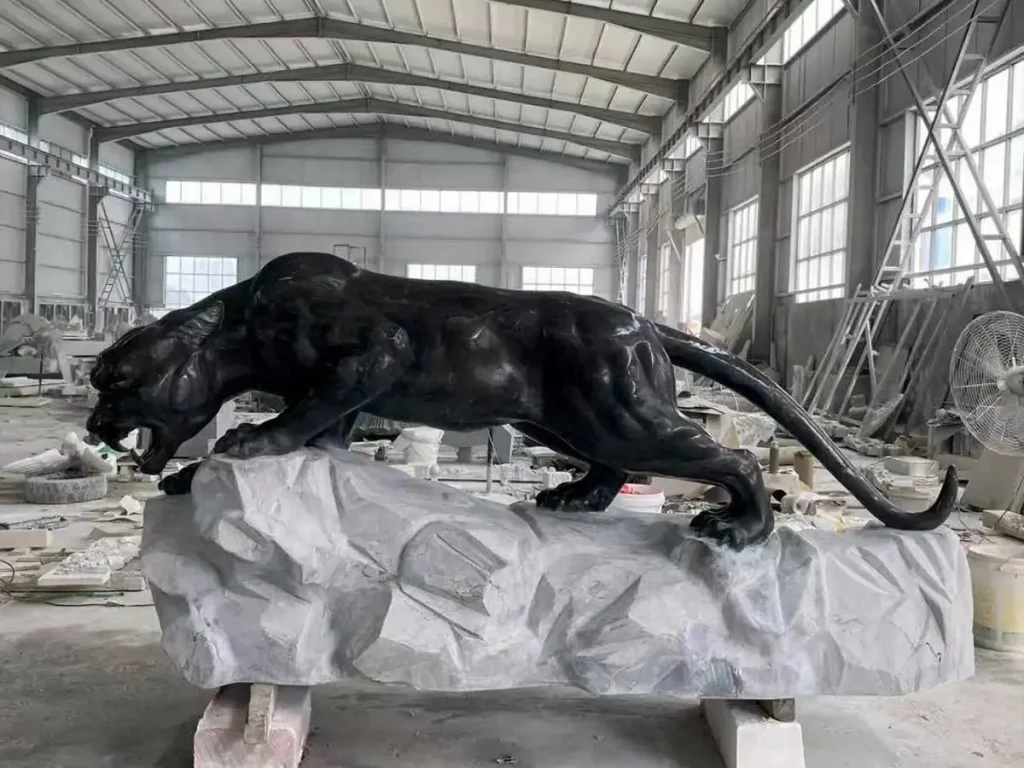
The beauty of a Black Panther Sculpture lies in its movement.
Unlike many traditional animal statues that stand upright, the panther is almost always captured in a low, stealthy walk. The spine curves slightly. The shoulders rise and fall. The head tilts forward with quiet focus.
This stealthy posture gives the sculpture a sense of motion even when completely still.
Designers often place a Black Panther Statue along a pool edge, beside a long reflecting pond, or emerging from ornamental grasses. In these settings, the sculpture appears to be stalking through the landscape.
The result feels cinematic rather than decorative.
This is why panther sculptures have become so popular in modern interior design and contemporary outdoor architecture. Clean architectural lines benefit from a focal object that introduces tension and organic movement.
The panther does this effortlessly.
Its elongated body complements horizontal architectural forms—pool decks, terraces, and minimalist patios. Meanwhile, the animal’s dark silhouette contrasts beautifully with pale stone, polished concrete, or limestone paving.
In estates designed around minimalist aesthetics, restraint is essential.
Instead of multiple small ornaments scattered through the garden, a single powerful sculpture becomes the focal anchor. A life-size Black Panther Sculpture walking along a pathway creates a moment of discovery as guests move through the landscape.
They don’t simply see it.
They encounter it.

Surface finish plays a crucial role in achieving this effect.
Many luxury projects choose a matte black finish, which absorbs light rather than reflecting it. This creates a shadow-like presence that changes character throughout the day. In bright sun the sculpture appears sharply defined; at dusk it almost disappears into the garden.
The panther becomes part of the atmosphere.
Interestingly, online searches reveal a different trend among casual buyers.
Many people look for a Large Ceramic Black Panther Statue, usually intended for indoor decoration. Ceramic pieces are inexpensive and visually appealing in photographs, which explains their popularity in mass-market décor.
However, ceramic is not appropriate for serious landscape design.
It is fragile. Temperature changes cause cracking. Outdoor exposure quickly degrades the glaze and structure. In high-end estates—where sculptures must withstand decades of weather—ceramic simply cannot perform.
This is why professional designers choose architectural materials instead.
A bronze Black Panther Statue offers extraordinary durability while capturing fine anatomical detail. Muscles, claws, and subtle fur textures remain crisp for generations. Bronze also develops a natural patina that deepens the sculpture’s visual richness over time.
Stainless steel provides another compelling option.
When fabricated in stainless steel and finished with a custom matte black finish, the sculpture achieves the same sleek aesthetic that attracts buyers to ceramic versions—but with vastly superior strength and longevity. It becomes both sculpture and architectural element.
For estates seeking an even more dramatic presence, corten steel introduces a powerful contrast.
Its deep rusted tones transform the panther into a living silhouette against green lawns or pale stone terraces. The material evolves naturally with the environment, reinforcing the sense that the animal belongs to the landscape.
The key principle remains simple.
A panther sculpture should feel timeless.
When crafted in bronze, stone, stainless steel, or corten steel, the piece becomes part of the estate’s identity. It is not seasonal décor. It is a permanent artistic statement that anchors the design of the entire space.
Life-Size Wilderness: Transforming Gardens into Architectural Landmarks
Scale changes everything in landscape design.


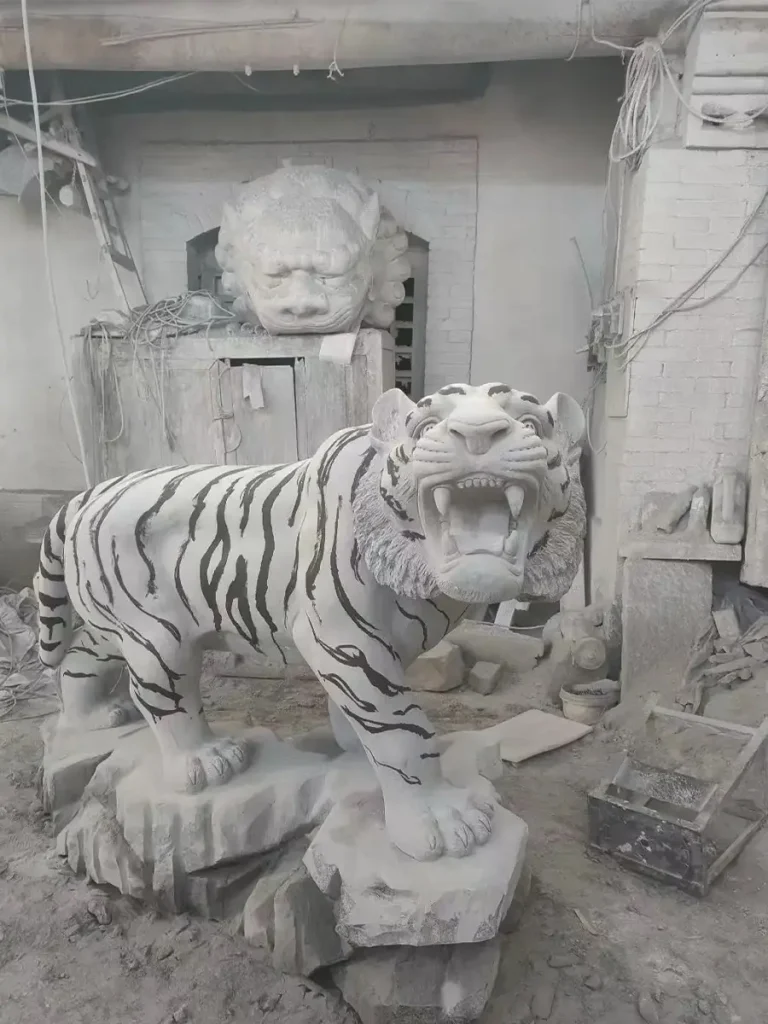
A small sculpture decorates a garden. A Life Size Tiger Statue transforms it. When a tiger is captured mid-roar on a natural rock base, muscles coiled and head lifted toward the sky, the sculpture becomes an immediate garden focal point that commands attention from every angle.
Visitors do not casually pass such a piece.
They stop. They circle it. The sculpture becomes a moment within the landscape—a scene that feels almost cinematic, as if the animal has just emerged from the forest edge. Properly positioned near natural stone pathways or beside dense planting, the tiger appears to inhabit the garden rather than simply sit within it.
The same principle becomes even more dramatic with vertical animals.
A towering Giraffe Statue introduces a completely different spatial experience. At five meters tall, the sculpture rises above shrubs, pergolas, and garden walls, creating a vertical landmark visible from across the property.
The effect is astonishing when designed correctly.
One of my favorite compositions is a giraffe positioned beside a mature tree, its neck angled upward as if gently “eating” leaves from the branches. The illusion is playful, elegant, and surprisingly natural. Guests often look twice before realizing the animal is sculpture rather than life.
This is the power of life-size realism.
The sculpture does not feel decorative. It feels alive within the landscape architecture. Long garden axes, reflecting pools, and large lawns benefit particularly from these monumental pieces because they introduce scale and narrative into otherwise open spaces.
Tigers and giraffes achieve this in very different ways.
The tiger represents strength and tension. A roaring Life Size Tiger Statue positioned on a rock plinth creates horizontal energy and drama. It anchors pathways, terraces, and entrance gardens with a sense of power.
The giraffe represents elegance and vertical rhythm.
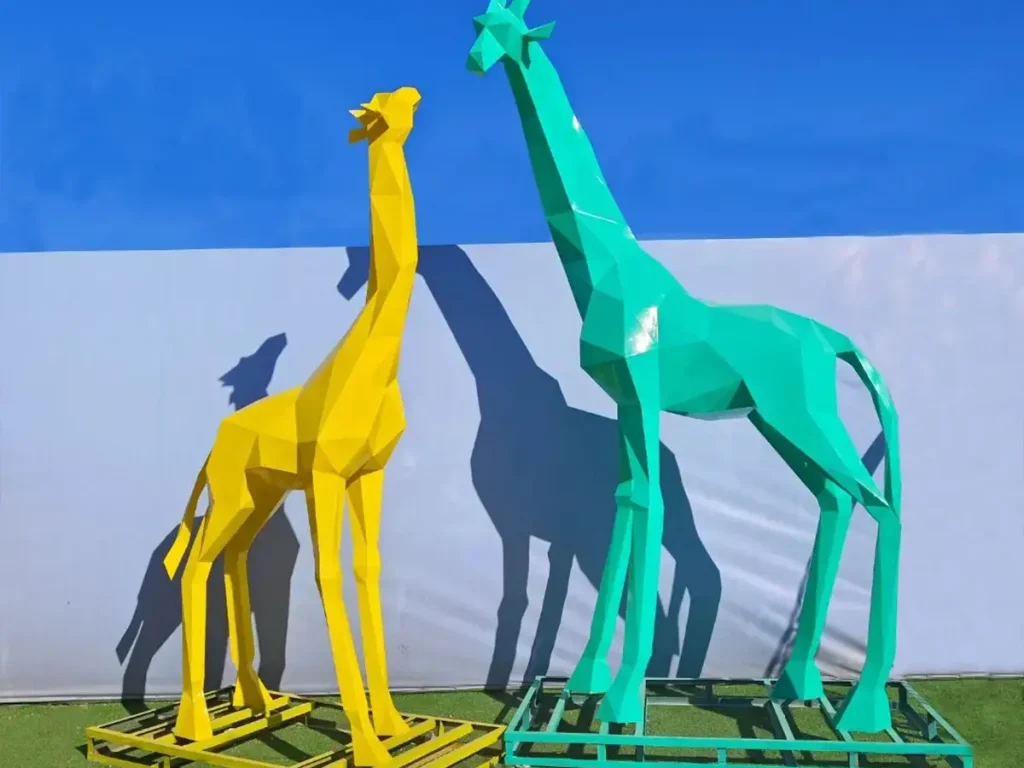
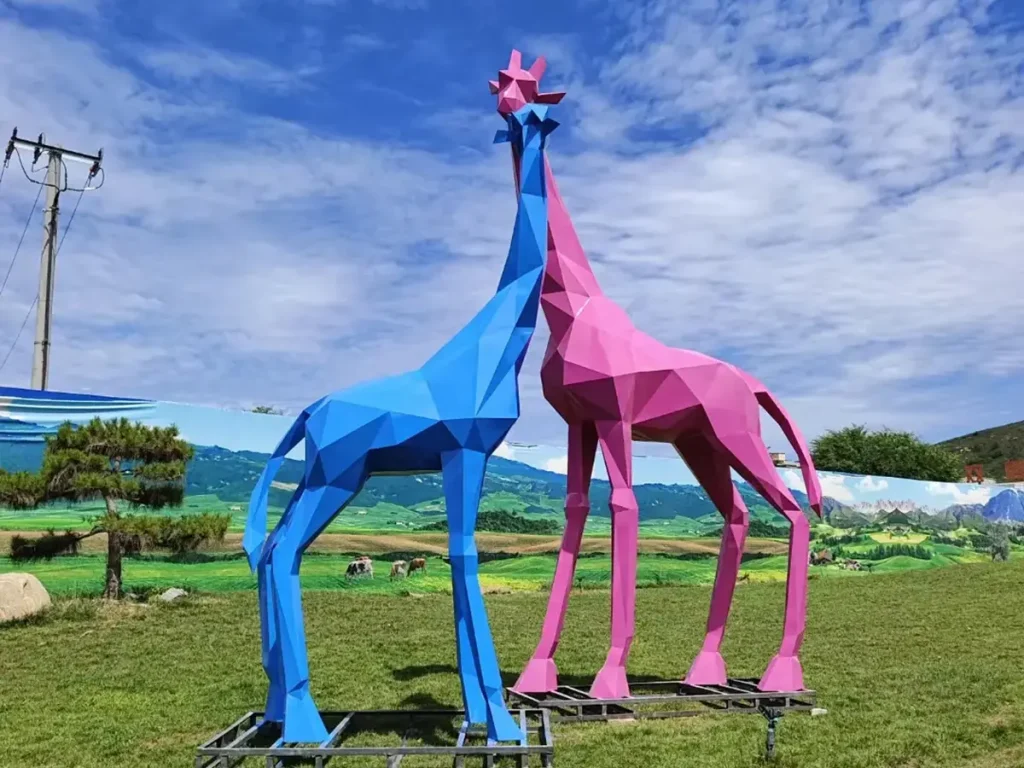
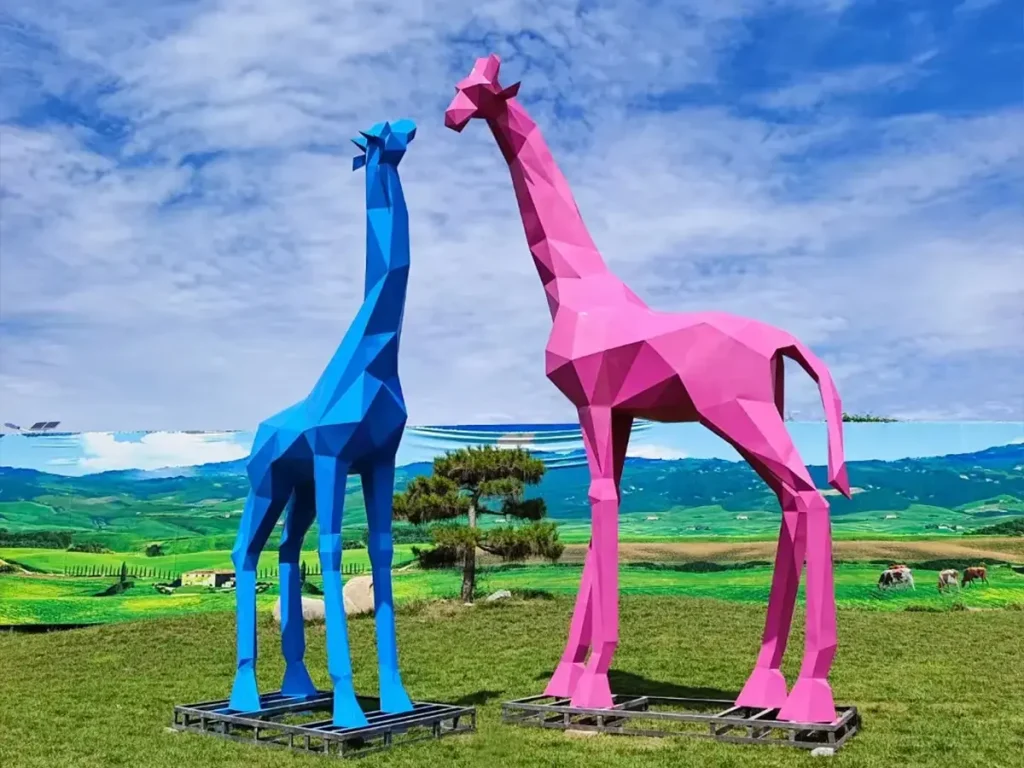
A tall Giraffe Statue extends the visual height of the landscape, connecting ground-level design with the tree canopy above. In expansive estates, this vertical presence becomes a landmark visible from balconies, windows, and distant garden paths.
However, creating sculptures of this scale is not simply an artistic decision.
It is an engineering challenge.
At Yun Sculpture, our Donghui Zhang, often reminds clients that large animal sculptures must be treated as architectural structures rather than decorative objects. The taller the sculpture, the greater the forces acting upon it—especially wind.
A five-meter giraffe behaves very differently from a small garden statue.
Donghui Zhang explains it clearly:
“A tall sculpture is essentially a vertical structure. The longer the neck, the greater the wind leverage. Without proper internal reinforcement, the piece could fail over time.”
This is why monumental sculptures require a carefully engineered internal structure.
Inside every large giraffe sculpture is a concealed steel armature designed to distribute weight and resist environmental forces. The armature connects the body, legs, and neck into a single structural system that anchors securely to the foundation.
From the outside, the sculpture appears effortless.
Inside, it is an engineered framework designed to withstand decades of exposure.
Key structural considerations include:
- Internal steel armature: Reinforces long necks and extended limbs in tall sculptures like giraffes.
- Deep anchor systems: Secure the sculpture base to concrete foundations for wind resistance.
- Balanced weight distribution: Prevents stress concentrations in legs or narrow structural points.
- Wind-load engineering: Ensures tall sculptures remain stable even during severe storms.
This structural integrity becomes even more important when selecting materials for outdoor environments.


For a powerful Outdoor Tiger Statue, material choice determines not only appearance but also longevity. Luxury landscapes demand materials capable of surviving decades of sun, rain, snow, and seasonal temperature shifts.
Bronze remains one of the most respected materials for monumental sculpture.
High-quality weather-resistant bronze allows artists to capture extraordinary anatomical detail—every muscle, claw, and facial expression remains crisp even after years outdoors. Over time, bronze develops a natural patina that enhances the sculpture’s visual depth rather than degrading it.
Corten steel offers a different but equally compelling aesthetic.
Its naturally oxidized surface forms a protective layer that prevents deeper corrosion. In modern estates, a corten tiger sculpture can create a striking contrast against lush greenery or pale limestone paving.
Natural stone provides another timeless option.
Granite and marble sculptures possess exceptional mass and strength, which naturally resist environmental stress. Their density also contributes to long-term freeze-thaw stability, an essential factor in climates where temperatures fluctuate dramatically between seasons.
Freeze-thaw cycles are one of the most destructive forces for poorly made outdoor sculptures.
When water penetrates weak materials and freezes, it expands, causing cracks that worsen each winter. This is why inferior materials—such as ceramics or lightweight composites—often deteriorate rapidly outdoors.
Architectural materials behave very differently.
Bronze, stainless steel, corten steel, and dense natural stone maintain their structural integrity despite extreme temperature changes. Their surfaces age gracefully while preserving the sculpture’s form and detail.
The result is permanence.
A well-crafted Outdoor Tiger Statue made from these materials retains its life-size realism for generations. Muscles remain defined. Surfaces mature beautifully. The sculpture continues to anchor the garden as a powerful focal point long after installation.
This is the philosophy behind monumental wildlife sculptures.
They are not temporary décor.
They are enduring architectural elements that transform landscapes into unforgettable environments.
Cultural Significance: Feng Shui Rules and Symbolism for Animal Statues
Animal sculptures are not only visual statements.
In many cultures—especially in classical Chinese design—they carry symbolic energy that influences how a space feels and functions.
Among all guardian animals, the Chinese Tiger Statue holds a particularly powerful position in Feng Shui philosophy.


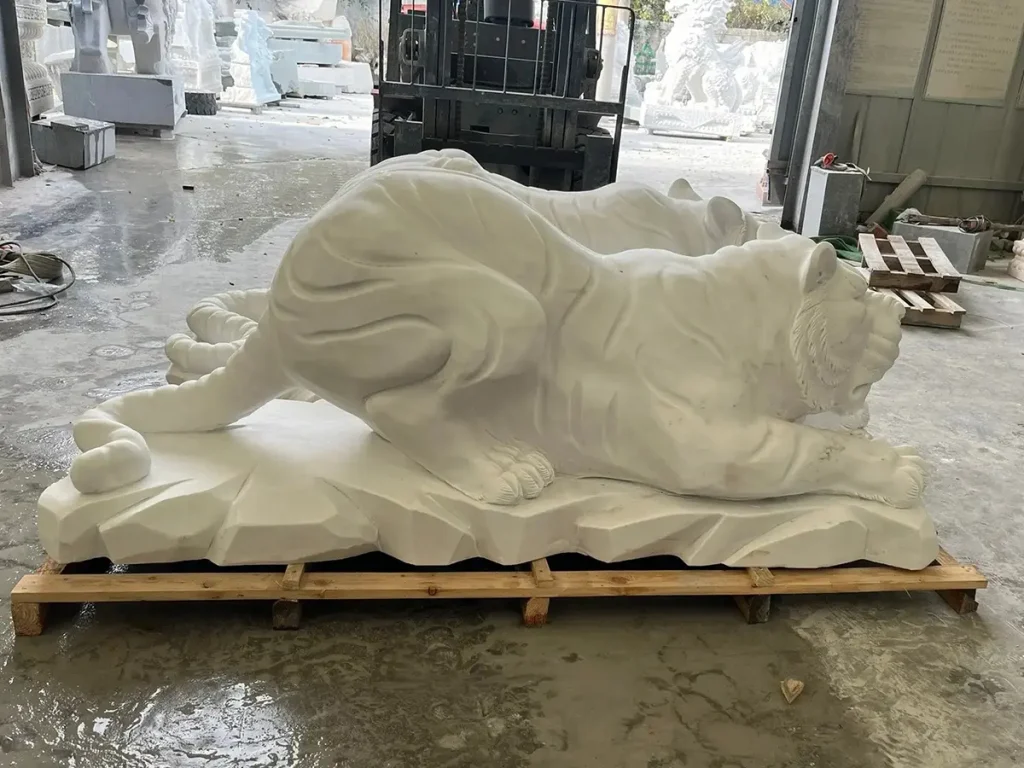
The tiger represents courage, authority, and protection. In ancient Chinese cosmology, it is associated with the White Tiger of the West, one of the four celestial guardians that protect the natural order. Because of this symbolism, tiger imagery has historically been placed at entrances, gates, and strategic points within estates.
The intention is clear.
The tiger protects the boundary of the property.
Many homeowners ask a very common question: Can we keep tiger statue at home?
The answer is yes—but placement matters greatly. Feng Shui is not simply about decoration. It is about directing energy flow within a space. When positioned correctly, a tiger sculpture strengthens protective energy around the property.
However, there are strict home placement guidelines to follow.
A tiger statue should never be placed in intimate spaces such as bedrooms. These areas require calm and restorative energy, while the tiger represents alertness and vigilance.
Instead, the sculpture belongs in transitional spaces.
Ideal placements include:
- Estate entrances or driveway gates
- Garden pathways leading toward the home
- Courtyards or front lawn focal points
- Terraces facing outward toward open landscape
The direction of the tiger is equally important.
In Feng Shui practice, the tiger should typically face outward—toward approaching paths, gates, or the outer perimeter of the property. This positioning symbolically guards the home and prevents negative influences from entering.
In other words, the tiger is watching the horizon.
When placed this way, the sculpture acts as a spiritual sentinel that strengthens the flow of Positive Chi within the estate.
The expression of the tiger also carries meaning.
A very common search question asks: What does open mouth tiger mean?
An open-mouthed tiger represents active defense. In traditional symbolism, the tiger is not merely watching; it is prepared to confront harmful forces.
The open mouth symbolizes the animal devouring harmful influences.
This is why roaring tiger sculptures are often positioned at temple entrances, historic gates, and large estates. The fierce expression channels strong protective energy, symbolizing the power to confront danger directly.
More specifically, the roaring posture represents:
- Warding off negativity approaching the property
- Devouring harmful spiritual influences
- Maintaining balance and Positive Chi within the home environment
The visual language reinforces the symbolism.
A roaring tiger sculpture often shows bared teeth, raised shoulders, and a lifted head. This posture communicates alert strength. The sculpture appears ready to act at any moment.
For estates designed around Feng Shui principles, this type of sculpture can become both a symbolic guardian and a striking landscape centerpiece.
While the tiger represents protection and power, the giraffe embodies a very different energy.
In contemporary symbolism, the giraffe represents grace, perspective, and elevated awareness. Its long neck allows it to see far beyond the immediate environment, which is why designers often associate giraffes with wisdom and foresight.
A Bronze Giraffe Statue placed in an open garden expresses calm elegance rather than aggression.
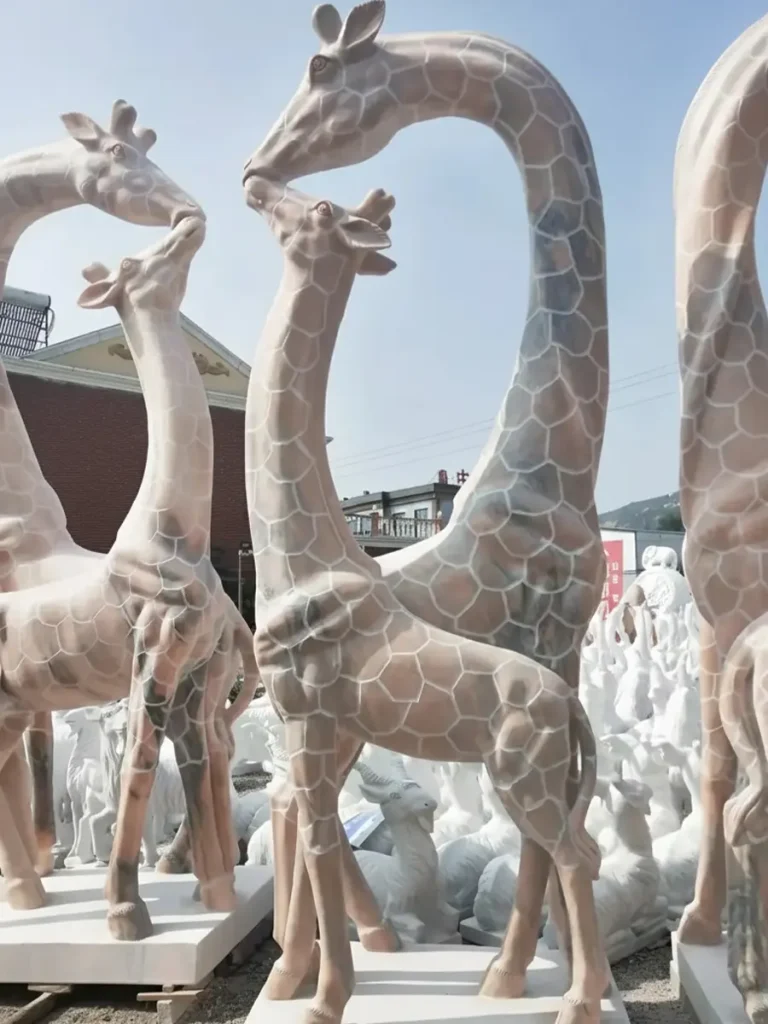


The vertical posture feels uplifting rather than defensive. In Feng Shui-inspired landscapes, giraffes can represent growth, vision, and longevity—qualities that resonate particularly well in expansive estates or botanical gardens.
Together, these animals create balance.
The tiger guards the ground with strength and vigilance.
The giraffe rises above the landscape with grace and perspective.
When used thoughtfully, these sculptures become more than artistic objects. They become symbolic anchors that shape the emotional character of the entire property.
Investing in Art: Why Quality Statues Are More Than Just Decor
In luxury estates, sculpture should never be viewed as temporary decoration.
A masterfully crafted animal sculpture becomes part of the architectural identity of the property. It anchors the landscape visually and, over time, often increases in artistic and material value.
This is why collectors frequently search for pieces such as an Antique Bronze Tiger Statue.
Antique bronze sculptures carry historical craftsmanship that cannot be replicated by modern mass production. The casting techniques, hand finishing, and natural patina development create depth and character that grow richer with time.
These pieces are not simply garden ornaments.
They are collectible artworks.
The same principle applies to large contemporary pieces such as a monumental Bronze Giraffe Statue. When produced by experienced foundries using traditional methods, these sculptures become long-term artistic assets rather than disposable décor.
The key factor is craftsmanship.
True bronze sculpture is created through a centuries-old technique known as lost-wax casting. This method has been used since ancient civilizations and remains the gold standard for fine sculpture production.
The process is meticulous and labor-intensive:
- A detailed clay model is sculpted by an artist.
- A wax replica is created from the mold.
- The wax form is encased in a heat-resistant ceramic shell.
- Molten bronze is poured into the cavity after the wax melts away.
- The cooled bronze is finished, welded, and hand-patinated.
This technique allows artists to capture extraordinary detail.
Muscle tension, skin folds, and subtle anatomical textures become permanently embedded in the bronze surface. Each sculpture emerges as a unique artwork rather than a factory product.
Material quality also determines long-term value.
Bronze and architectural steel possess inherent durability and timeless aesthetic appeal. Unlike mass-produced resin or plastic statues—which fade, crack, and deteriorate—metal sculptures mature beautifully as the surface develops character.
Over decades, this transformation can enhance artistic value.
Collectors understand that well-made bronze sculptures often demonstrate steady asset appreciation. As estates change ownership and landscapes mature, these sculptures frequently become defining elements of the property.
They are passed down rather than replaced.
This is why serious landscape designers and collectors approach sculpture with the same mindset used when acquiring paintings or architectural antiques.
The right piece does more than decorate a garden.
It becomes a lasting artistic investment—one that enriches the landscape, the architecture, and the legacy of the estate itself.
Frequently Asked Questions About Wild Animal Sculptures
1. Are bronze statues really worth the investment?
Yes—authentic bronze sculptures are widely considered one of the most reliable long-term materials in the art world. Their value is supported by the intrinsic commodity value of copper, the primary component of bronze, which gives the material a permanent baseline worth.
More importantly, bronze is extraordinarily durable. Properly cast bronze sculptures have survived for thousands of years in archaeological sites and historic cities. When created through the traditional lost-wax casting process, the artistic craftsmanship adds an additional premium that collectors and estates recognize as true sculptural value.
2. How much does it cost to buy or commission a statue?
Pricing depends primarily on size, material weight, and casting complexity. Smaller bronze sculptures typically range between $400 and $1,000, making them accessible decorative pieces for collectors.
Once sculptures approach life-size scale, costs increase significantly because of material volume and engineering requirements. A life-size bronze statue generally ranges from $30,000 to $150,000, while monumental architectural pieces can exceed $200,000. At Yun Sculpture, we focus exclusively on durable materials and artistic casting—we do not produce cheap resin or disposable decorative statues.
3. What are the Feng Shui rules and taboos for tiger statues?
Tiger statues are powerful Feng Shui guardians, but they must be placed correctly. The most favorable directions are the Northeast, North, or Northwest, where the tiger’s protective symbolism strengthens the surrounding environment.
There are two important taboos. First, a tiger statue should never be placed in a bedroom, because its strong Yang energy can disturb rest and harmony. Second, the tiger’s head should always face outward, toward open space or entrances, symbolizing protection of the home rather than aggression toward the interior.
4. Why is the Cartier Panther such a classic luxury symbol?
The panther became one of the most iconic luxury symbols after Cartier introduced the motif in 1914. Over time, the design evolved from delicate decorative imagery into a powerful emblem of strength and elegance.
In luxury culture, the Cartier panther represents a transformation—from fragility to independence. It symbolizes confidence, power, and refined femininity, which is why the panther remains one of the most enduring animal motifs in high-end jewelry and design.
5. How do you maintain outdoor bronze or metal sculptures?
Proper maintenance ensures outdoor sculptures remain beautiful for decades. Bronze and metal statues should be gently washed approximately every 12 weeks to remove dust, pollution, and organic debris that can accumulate on the surface.
Twice a year, apply a thin layer of paste wax to protect the patina from acid rain, humidity, and ultraviolet exposure. Equally important is proper installation—sculptures should always be placed on a raised stone or concrete base, never directly on soil, which can trap moisture and damage the surface over time.
6. What are the advantages of giraffe statues in interior/exterior decor?
Giraffe sculptures are uniquely suited to spaces with vertical scale. Their height naturally balances large living rooms, atriums, and high-ceiling hotel lobbies, where shorter decorative elements often feel visually lost.
A growing design trend is the “Nordic Giraffe Family Set,” typically consisting of four giraffes of different heights. The arrangement symbolizes family harmony and generational connection, making it a meaningful centerpiece in both modern interiors and landscaped gardens.
7. How can you tell a high-quality art statue from a low-end mass-produced one?
There are three reliable indicators: weight, patina, and craftsmanship.
Authentic bronze sculptures are extremely heavy because they contain a high percentage of metal. The patina should appear rich and layered, created through chemical heat reactions rather than cheap painted coatings that often have a strong chemical smell. Finally, examine the surface closely—high-quality sculptures show subtle hand-carved tool marks, while mass-produced pieces reveal smooth machine-molded repetition.
8. How should I choose between Bronze, Marble, Wood, and Resin?
Each material has distinct advantages and limitations. Bronze is the best choice for outdoor environments and long-term investment because of its durability and timeless aesthetic.
Marble offers classical elegance but can be vulnerable to acid rain and environmental staining. Wood sculptures possess warmth but tend to crack or warp under humidity and temperature changes. Resin is inexpensive but fades and deteriorates quickly outdoors. At Yun Sculpture, we specialize in bronze, natural stone, and architectural steel, which provide the strength and longevity required for serious landscape design.
9. What are the sculpture decor trends for 2025–2026?
Several exciting trends are shaping contemporary sculpture design. One of the most popular directions is geometric, faceted animal sculptures, which translate beautifully into stainless steel because the reflective surfaces emphasize sharp angles and modern forms.
Another growing movement is functional art, where sculptures also serve architectural roles such as fountains, lighting structures, or seating elements. Finally, more estate owners are commissioning highly personalized custom sculptures, adjusting proportions and scale so the artwork perfectly complements the specific architecture and spatial layout of their property.