Get in touch with Yun-Sculpture company
The Ultimate Guide to Bear Statues: From Global Landmarks to Garden Masterpieces

Large outdoor bear statues have long fascinated civilizations, standing at the intersection of myth, power, and artistry. Across continents and centuries, the bear has symbolized guardianship, healing, and quiet authority—qualities that make these sculptures enduring focal points in public plazas, wilderness parks, and private estates alike. Today, bear statues continue this lineage, transforming landscapes into spaces of storytelling and cultural memory.
In ancient northern cultures, the bear was far more than an animal—it was a spiritual intermediary. Indigenous traditions across Eurasia and North America revered the creature as a healer capable of guiding human souls through cycles of renewal. Early carved figures, often placed at village thresholds or sacred groves, were believed to embody protective spirits that safeguarded the community.
A Bronze bear statue captures this ancient symbolism with remarkable clarity. The metal’s warmth and patina echo the timeless authority associated with the animal, while the sculpture’s mass conveys grounded confidence. In modern landscape design, such statues bridge mythology and contemporary aesthetics, expressing both primal strength and sculptural elegance.
Table of Contents
Table of Contents
Why Bear Statues Are the World’s Most Iconic Landmarks
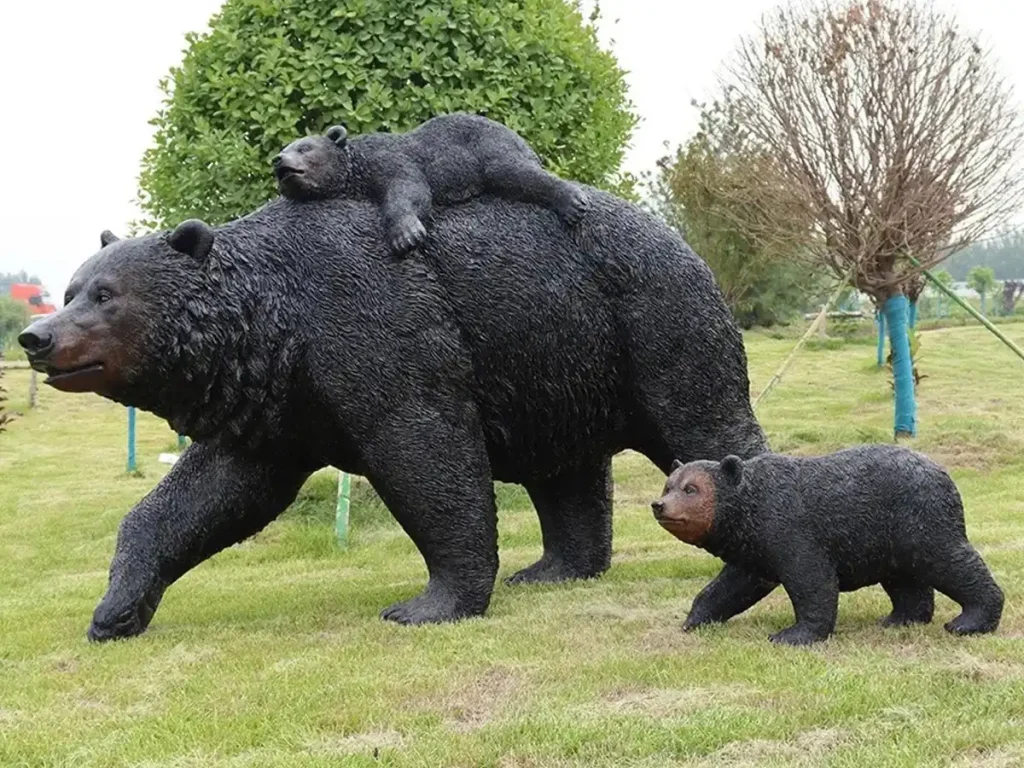
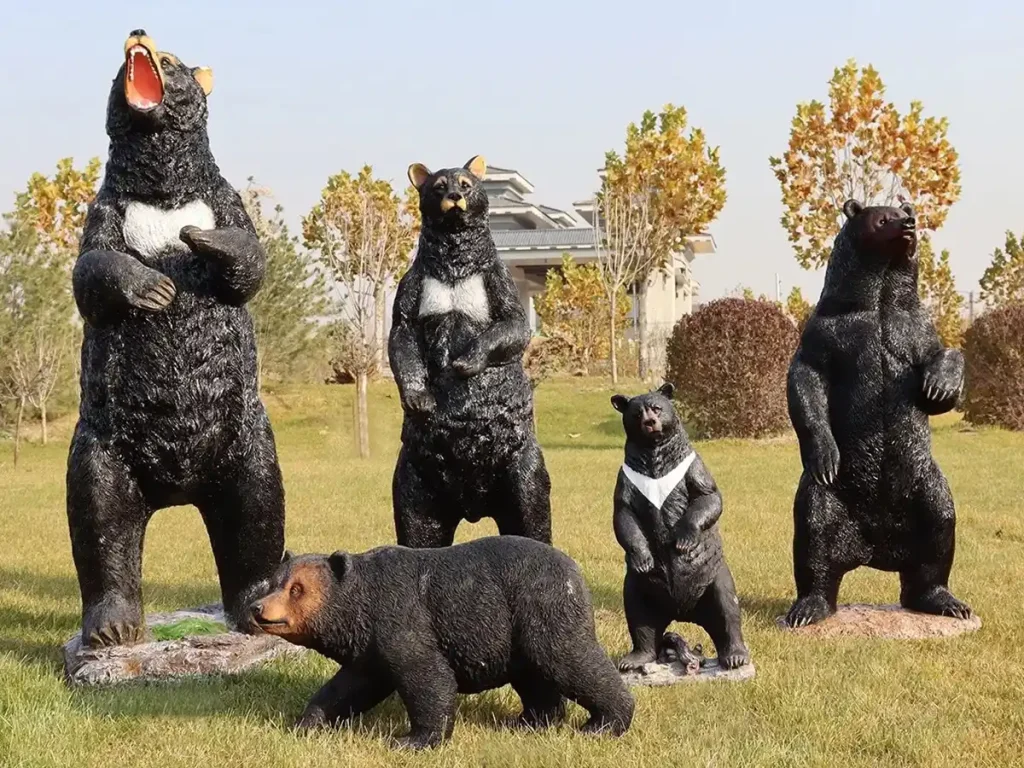

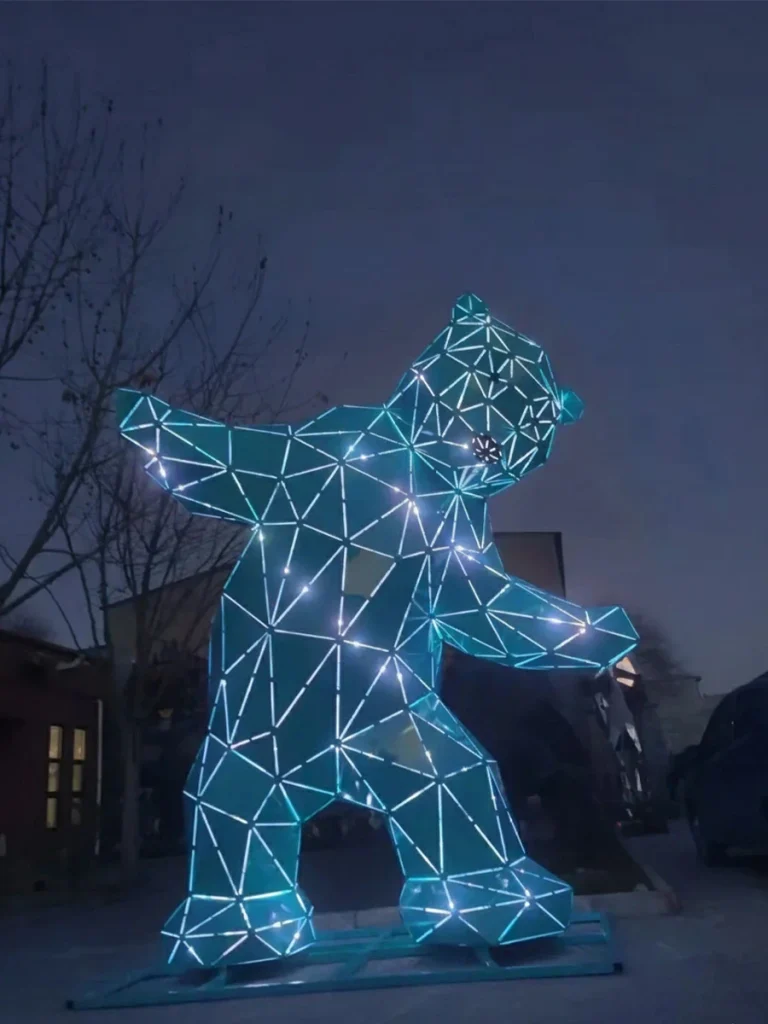
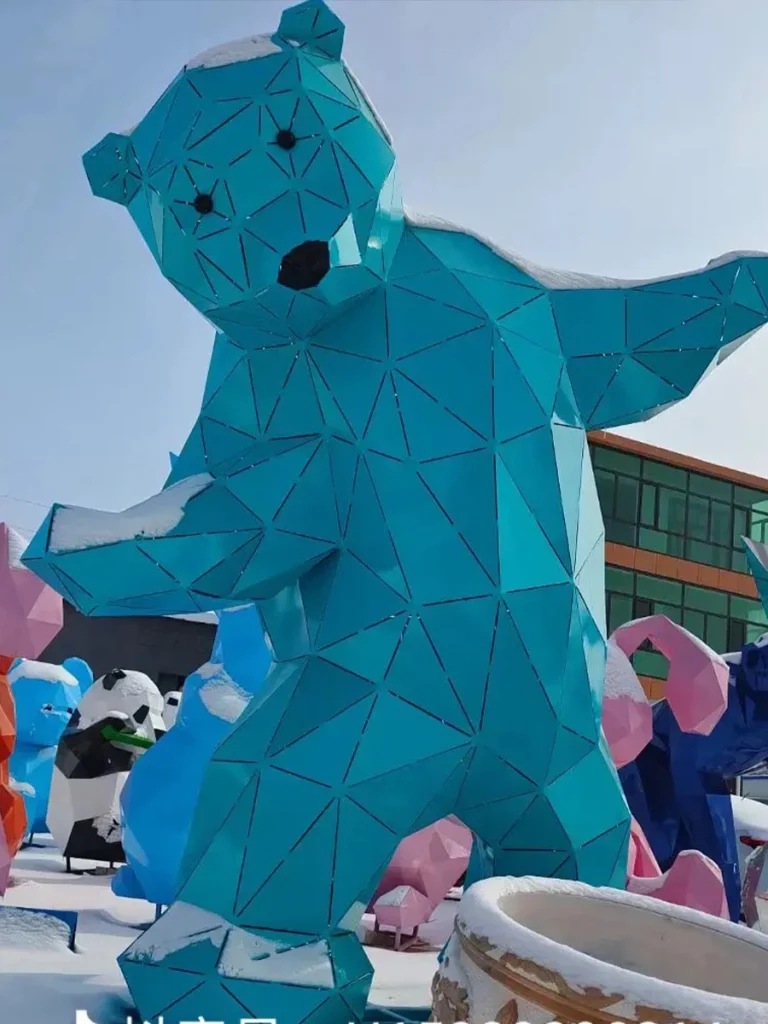

Few animals translate so seamlessly into monumental sculpture as the bear. Across cultures, it represents resilience and strength, a quiet yet formidable force that resonates with human psychology. This universal symbolism allows bear monuments to transcend regional identity and become globally recognizable icons.
In cities, a carefully positioned bear statue often becomes a cultural heritage landmark, anchoring the identity of a district or institution. Its presence suggests endurance—an assurance that traditions, values, and collective memory remain intact even as the surrounding architecture evolves.
The appeal also lies in the bear’s physical language. Unlike aggressive predators depicted mid-attack, bears in sculpture are frequently shown standing upright, seated thoughtfully, or walking with deliberate calm. These poses communicate balance and wisdom rather than raw dominance, making them especially suitable for civic spaces, museum gardens, and university courtyards.
In private estates, the symbolism becomes more personal. Estate owners often select bear statues to represent guardianship of family legacy, echoing the ancient belief that the animal protects territory and lineage. When integrated into landscape design—perhaps near a woodland path, reflective pond, or stone terrace—the sculpture feels less like decoration and more like an ancestral presence within the garden.
The Legend of the Paddington Bear Statue
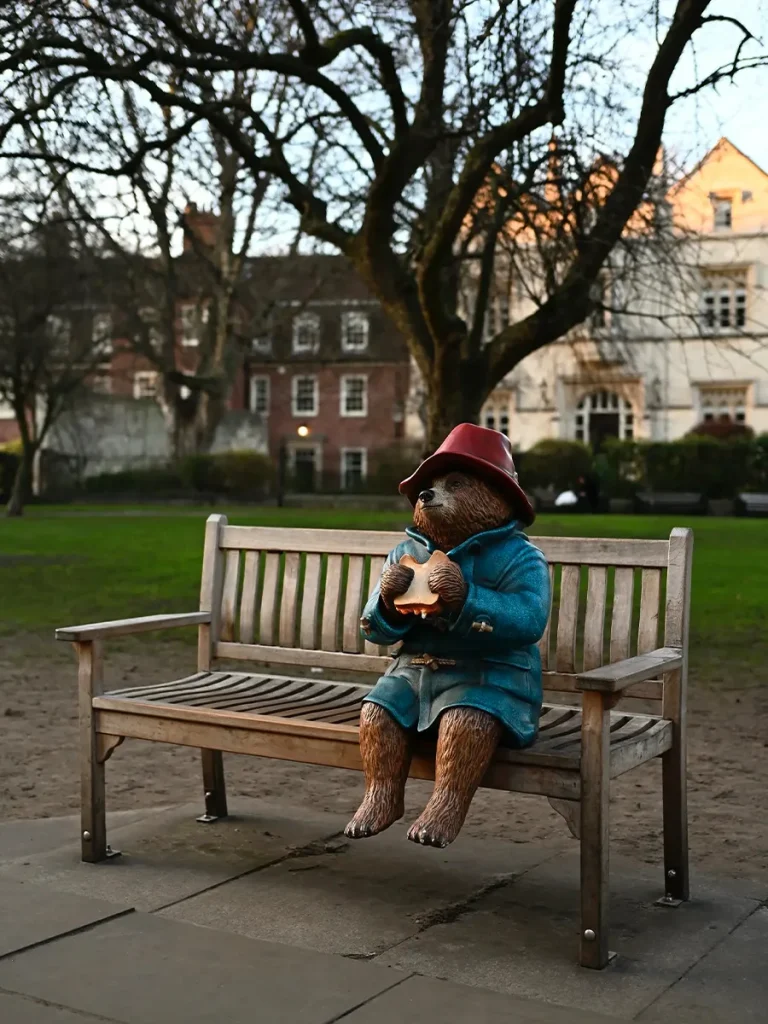
Among the most beloved examples of bear sculpture in the modern world is the charming Paddington bear sculpture in London. Generations of travelers encounter this gentle bronze figure as they pass through the historic railway terminal, a small yet deeply meaningful landmark.
For those wondering where is the Paddington bear statue, the answer is simple: it resides inside Paddington Station in London, the very place where the fictional bear first arrived from “Darkest Peru” with a suitcase and hopeful heart. Sculpted with childlike warmth, the statue captures the character sitting politely while holding his iconic marmalade sandwich.
Despite its modest scale, the sculpture embodies a powerful emotional narrative. Paddington represents optimism, kindness, and the welcoming spirit of a great city. Visitors often pause to photograph the statue, creating a ritual that transforms a busy transport hub into a place of shared nostalgia.
In many ways, this sculpture demonstrates the remarkable versatility of bear imagery. While ancient bear statues expressed sacred authority, the Paddington figure reflects warmth and hospitality. Yet both forms share the same symbolic core: the bear as a guardian presence guiding people safely through uncertain journeys.
The Symbolism of the Wall Street Bull and Bear Statue
While some bear statues evoke warmth and folklore, others speak directly to the forces that shape the global economy. In financial culture, the bear carries a distinct meaning tied to the rhythm of markets and the psychology of investment.
The origins of this symbolism trace back to 18th-century London traders known as “bearskin jobbers.” These speculators sold bearskins before they actually possessed them, betting that prices would fall. Over time, the bear became shorthand for a declining market, representing caution, defense, and downward momentum.
The physical metaphor is remarkably intuitive. A bear strikes with its paws in a downward motion, echoing the trajectory of falling prices. By contrast, a bull thrusts its horns upward, symbolizing growth and optimism. Together, the bull bear statue pairing forms one of the most recognizable visual expressions of financial market symbolism.

One of the most striking sculptural interpretations of this dynamic stands outside the Frankfurt Stock Exchange, where artist Reinhard Dachlauer created monumental bronze figures of both animals locked in symbolic tension. The composition visually communicates the perpetual contest between expansion and contraction—the heartbeat of global finance.
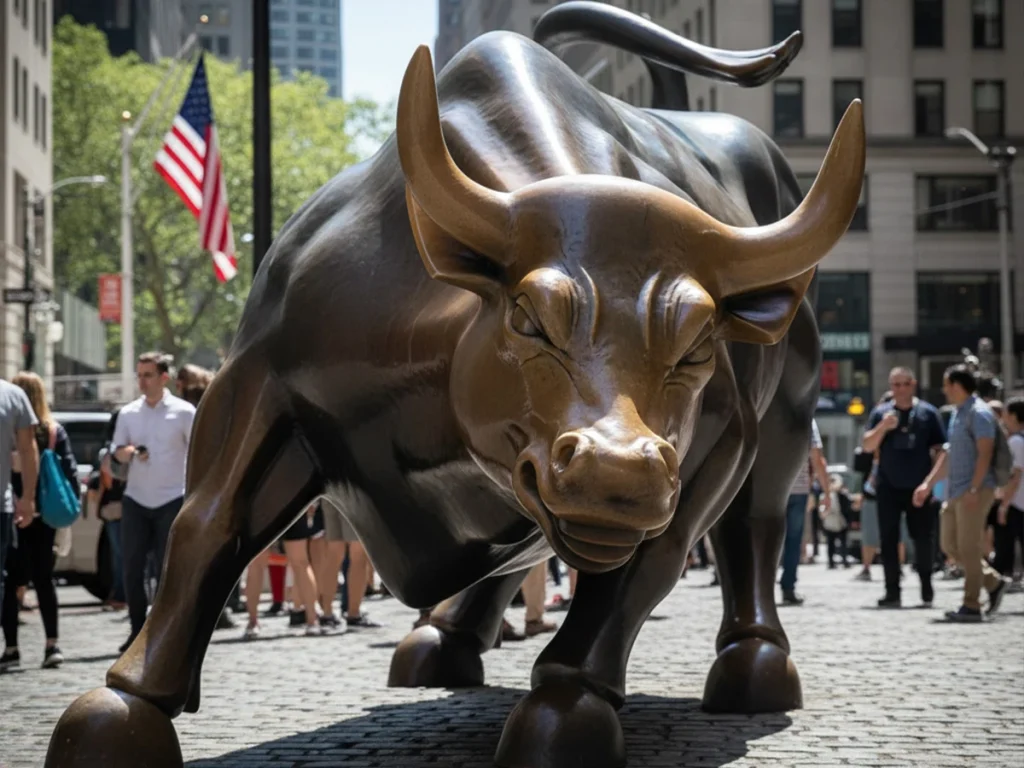
In New York, the story takes on a slightly different character. Visitors frequently search for the Wall Street bear statue location, expecting to find a permanent counterpart to Arturo Di Modica’s famous Charging Bull. Yet intriguingly, no fixed bear sculpture stands beside it. The bull charges forward alone, while the invisible presence of the “bear” exists only as a conceptual force—an unseen market pressure always waiting to emerge.
This absence may be the most poetic expression of all. In the financial world, prosperity and decline are never static monuments; they are shifting energies that define the rhythm of modern economies. The bull may dominate the plaza, but every investor knows the bear is never far away.
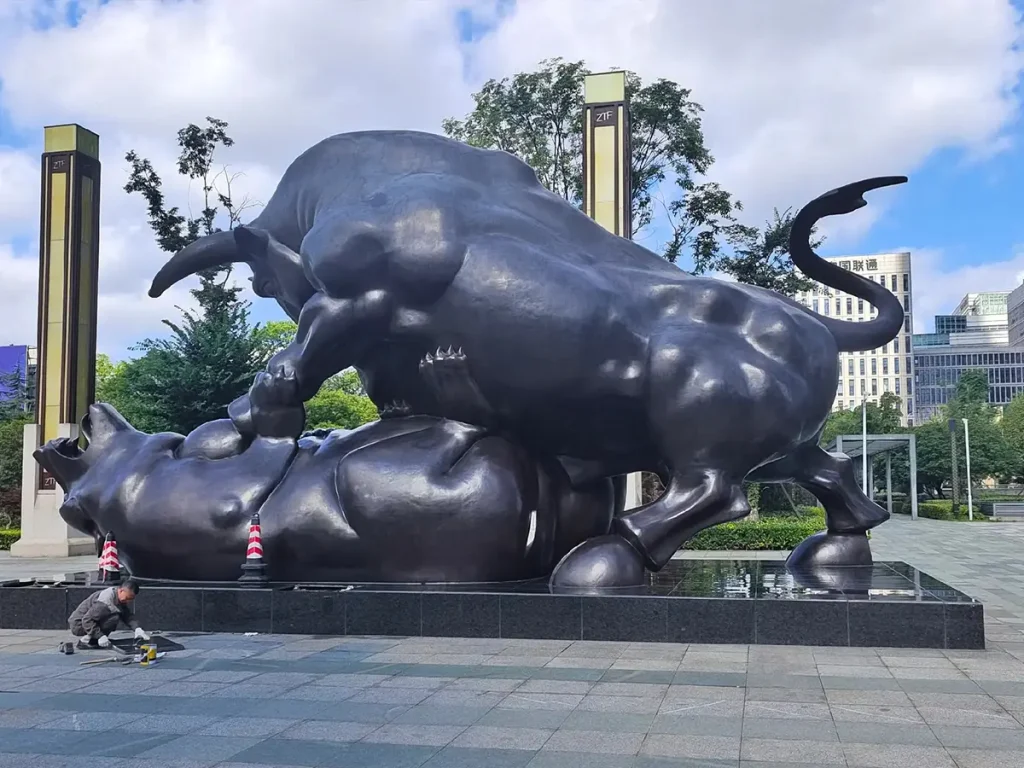
Around the world, other interpretations of the bull and bear dynamic exist. For example, in China, the “Bull Stepping on Bear” sculpture in Guizhou’s ZTF park creatively merges the two animals in a single composition, reflecting both cultural aesthetics and financial symbolism.
Choosing the Perfect Bear Sculpture for Your Landscape
Public monuments often inspire a deeper appreciation for sculptural wildlife, yet the true magic of bear statues emerges when they are thoughtfully integrated into private landscapes. In the context of an estate garden, an Outdoor bear statue becomes far more than decoration. It functions as an architectural sculpture, shaping the visual rhythm of pathways, terraces, and natural sightlines.
Unlike smaller garden ornaments, a bear sculpture carries an immediate sense of presence. Its mass and posture influence how visitors experience the surrounding space, guiding the eye through the landscape much like a classical statue in a European courtyard. When positioned near a reflecting pool, woodland edge, or stone stairway, the sculpture becomes a quiet yet commanding anchor for the entire environment.
For many estate owners, the decision to install a bear sculpture reflects a desire to introduce narrative into the landscape. The bear’s symbolism—wisdom, endurance, and guardianship—creates emotional depth within the garden. Guests may first notice the sculpture from a distance, then gradually approach it, discovering subtle sculptural details that reveal the artistry behind the piece.
Because of this powerful visual role, selecting the right sculpture requires careful consideration of both material and scale. These choices determine whether the statue simply occupies space or truly transforms it.
Material Matters: Why Bronze Bear Statues Reign Supreme
Among all sculptural materials, bronze remains the undisputed master of outdoor wildlife sculpture. A Life size bronze bear statue carries a weight, depth, and permanence that few other materials can replicate. It embodies the tradition of classical sculpture while delivering the durability required for modern landscapes.
The enduring reputation of bronze begins with its extraordinary casting process. Most high-quality sculptures are created through the ancient Lost-wax casting technique, a method refined over thousands of years. This process allows artisans to preserve even the smallest textures—fur patterns, muscle tension, and facial expression—resulting in breathtaking Hand-crafted bronze detailing.
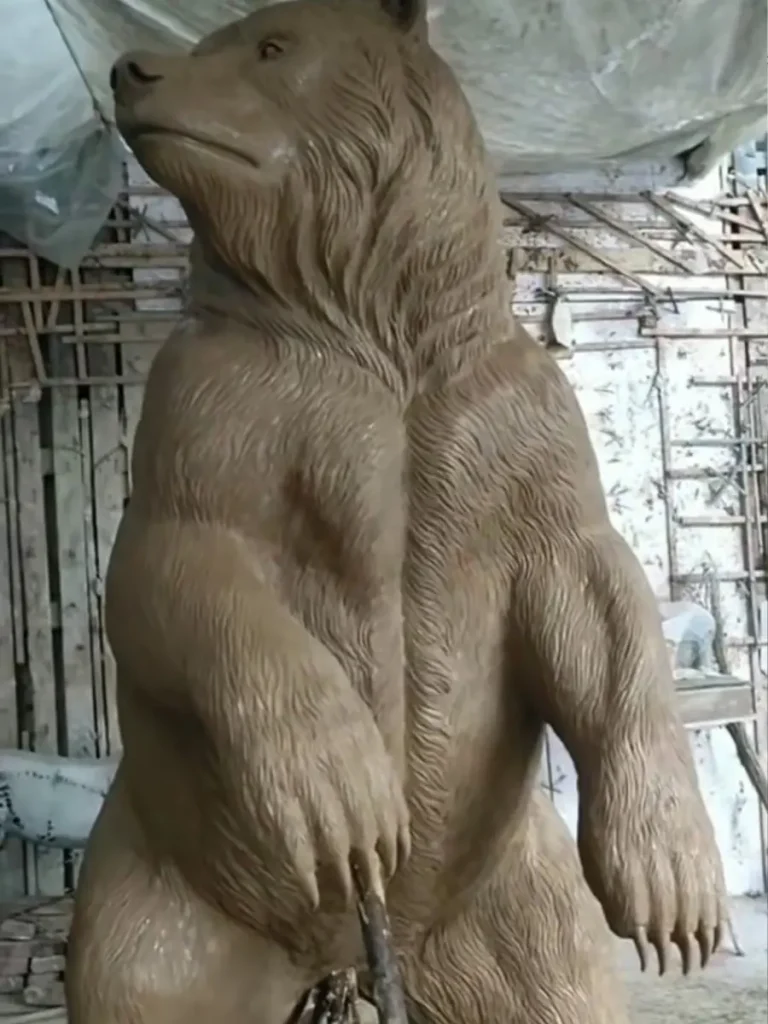
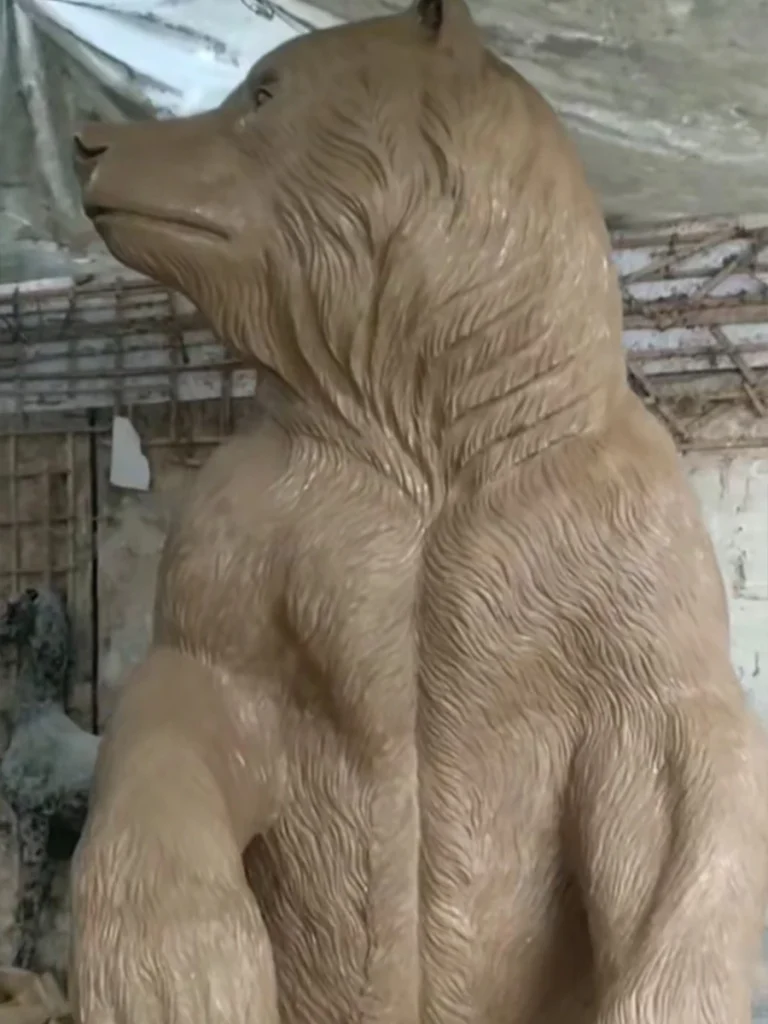
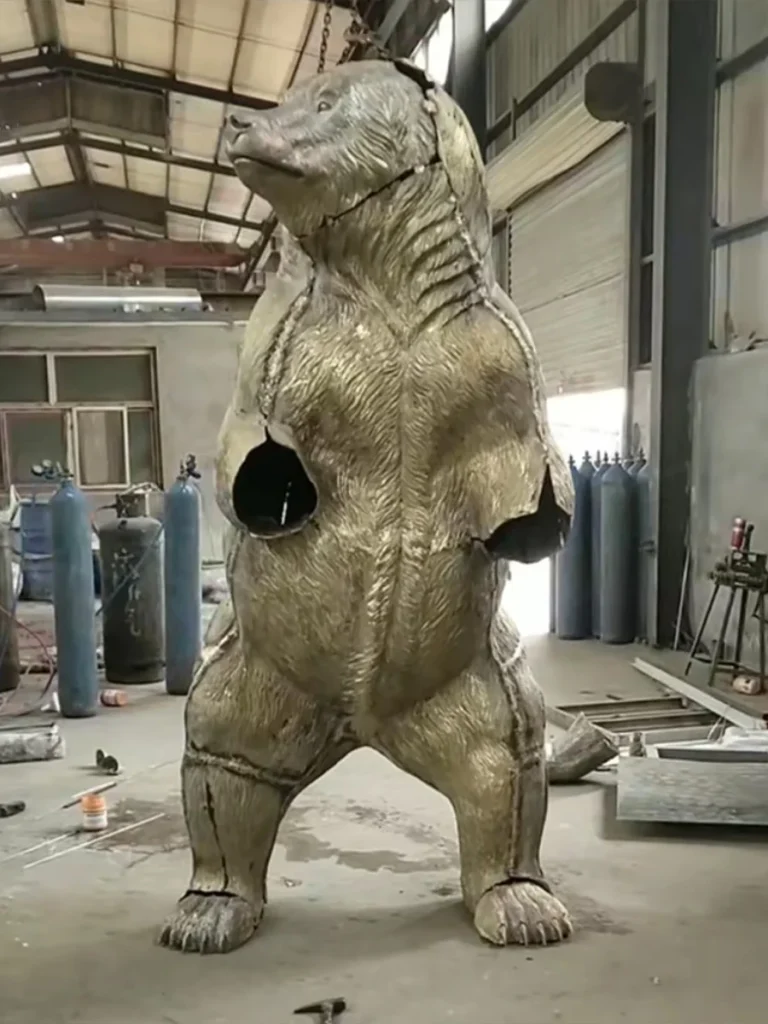
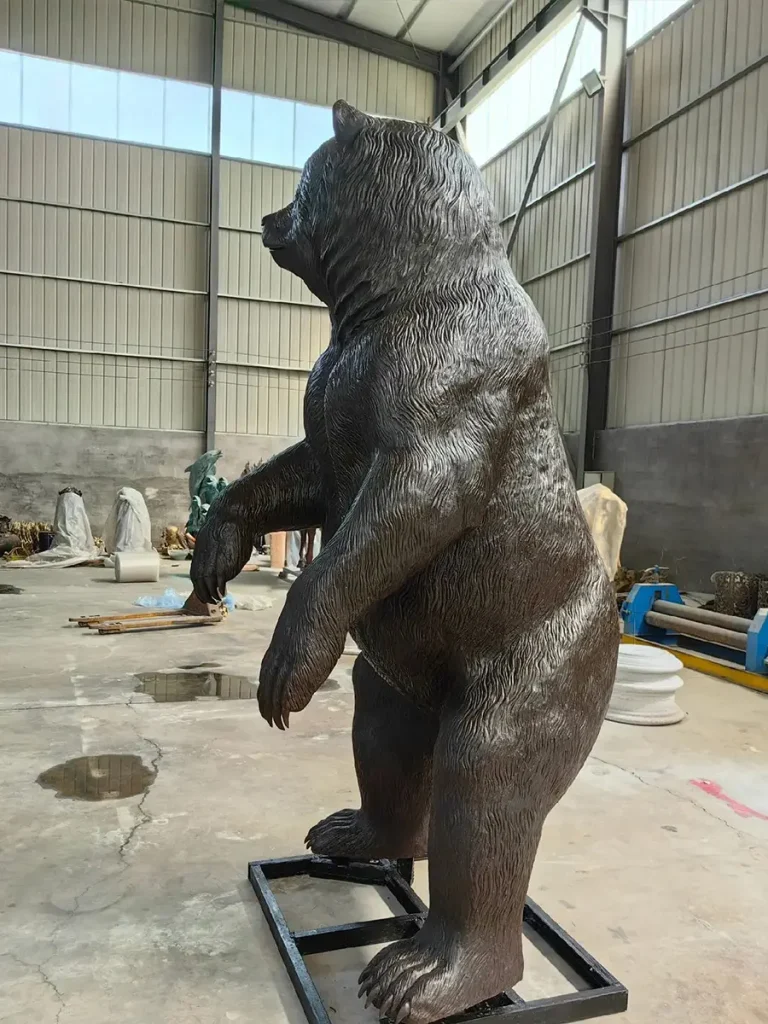
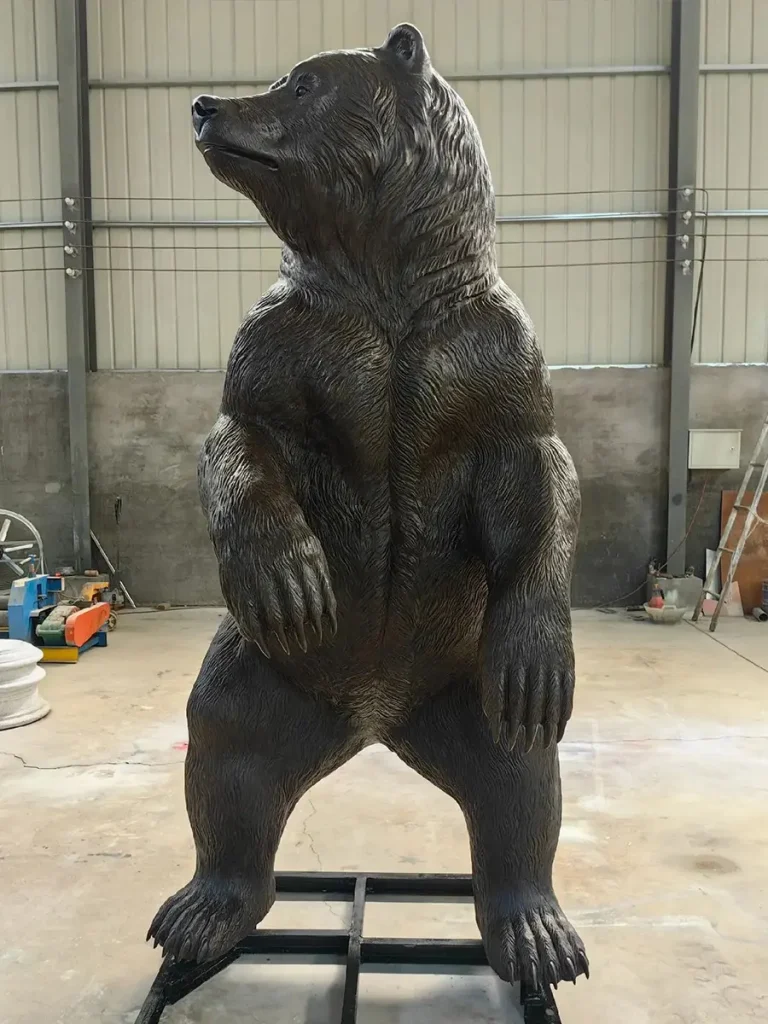
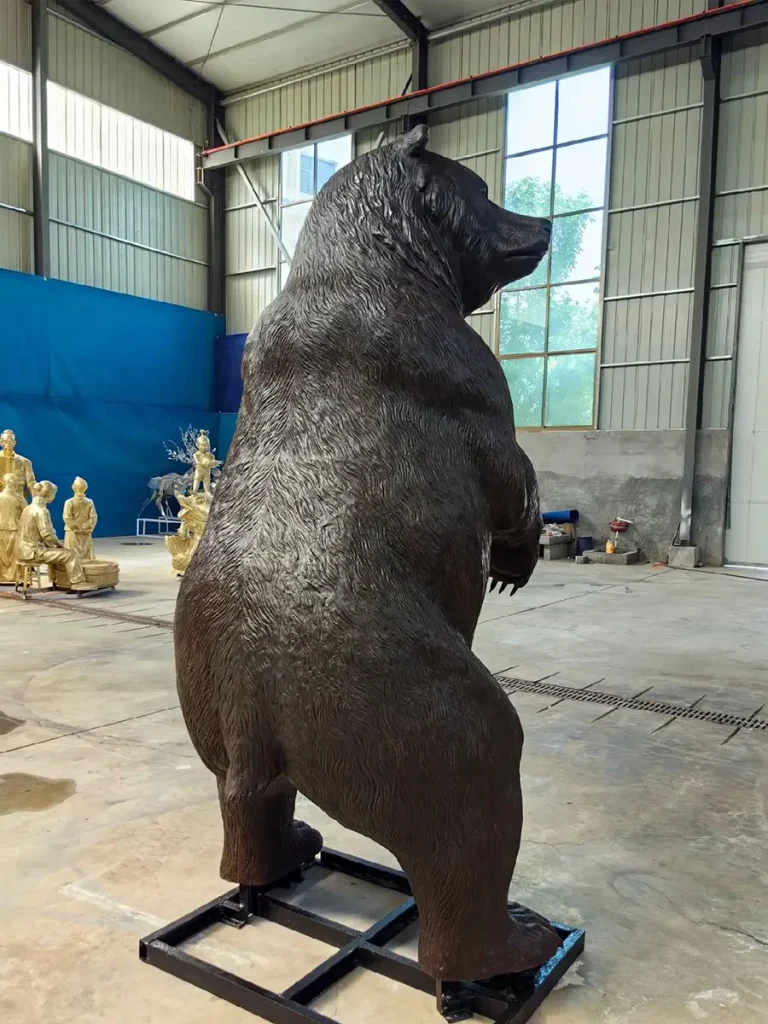
The advantages of bronze become even clearer when compared with common alternatives:
- Bronze
- Created through traditional Lost-wax casting
- Exceptional structural strength and longevity
- Allows intricate Hand-crafted bronze detailing
- Develops a natural protective surface over time
- Fiberglass or Resin
- Lightweight but structurally fragile
- Surface paint often fades or cracks under ultraviolet exposure
- Limited ability to capture fine sculptural textures
- Wood Carvings
- Beautiful initially but vulnerable to moisture and insects
- Prone to splitting, checking, and long-term structural instability
What truly distinguishes bronze, however, is its remarkable surface evolution. Through careful chemical treatment and environmental interaction, the sculpture develops a Patina finish—a thin protective layer that deepens the color of the metal while shielding it from corrosion.
This patina serves both aesthetic and functional purposes. Rich browns, warm ambers, and deep forest greens gradually emerge across the surface, giving the sculpture the appearance of timeless maturity. At the same time, the patina acts as a natural armor against oxidation, making bronze one of the most reliable forms of weather-resistant outdoor art.
For estate landscapes exposed to seasonal extremes—intense sunlight, winter frost, or coastal humidity—bronze offers peace of mind. While other materials deteriorate or require constant maintenance, a bronze sculpture ages gracefully, gaining character with every passing year.
Selecting the Right Size: Life-Size vs. Garden-Scale
Material determines durability, but scale determines presence. When choosing a bear sculpture, size is not merely a practical concern—it directly influences how the piece interacts with its environment and with the people who experience it.
A Large bear statue measuring between 48 and 72 inches often serves as the ultimate Focal point of landscape design. Positioned along a driveway approach, beside a grand staircase, or near a woodland clearing, such sculptures immediately capture attention. Their commanding scale establishes a visual hierarchy that defines the surrounding space.
Life-size bears, in particular, create a powerful emotional effect. Standing beside one evokes the quiet awe humans feel when encountering wildlife in nature. This scale transforms the sculpture from an object into an encounter, a moment where art briefly blurs the line between the natural and the sculptural world.
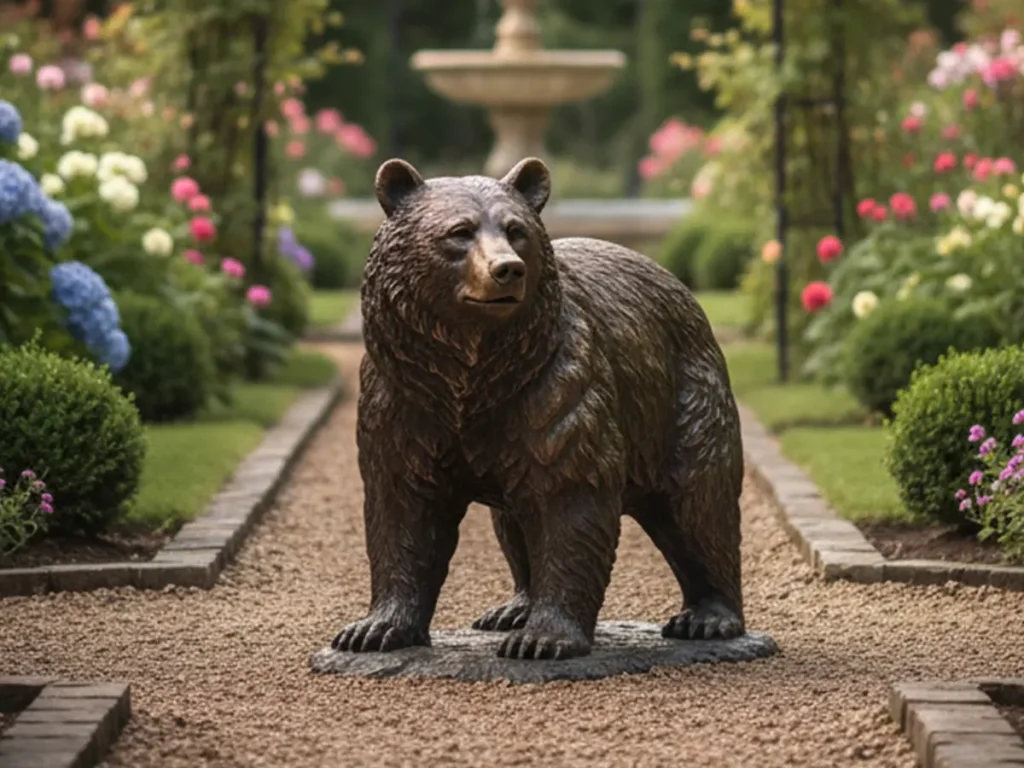
However, thoughtful sizing requires more than simply choosing the largest possible statue. The way viewers physically experience the sculpture—what designers call viewing ergonomics—plays a crucial role in its success.
A useful reference point is the average human eye level, roughly 62 inches from the ground. Sculptures positioned near this height allow viewers to naturally connect with the subject, maintaining comfortable visual engagement.
Designers often apply the following principles:
- Garden-scale statues
- Height: 24–40 inches
- Ideal for intimate spaces such as courtyards or garden paths
- Typically placed on a 42-inch base to bring the sculpture closer to eye level
- Life-size sculptures
- Height: 48–60 inches
- Suitable for lawns, terrace edges, or natural landscape transitions
- Often mounted on lower bases to maintain natural proportion
- Monumental estate sculptures
- Height: 60–72 inches or more
- Designed for large open spaces, driveways, or formal entrances
- Bases are intentionally kept lower so viewers look slightly upward
This subtle upward viewing angle dramatically enhances the sculpture’s psychological impact. When visitors lift their gaze toward the bear, the statue acquires a quiet sense of authority—an almost mythic presence that reinforces the animal’s symbolism of strength and guardianship.
Ultimately, selecting the right size ensures that the sculpture feels organically integrated with the landscape. Rather than appearing imposed upon the garden, the bear becomes a natural sentinel within it, quietly shaping how people move, pause, and experience the space around them.
Frequently Asked Questions (FAQ) – Expert Insights
Is there a bear statue on Wall Street?
While the Charging Bull by Arturo Di Modica is an iconic landmark, there is no permanent bear statue directly beside it on Wall Street. The bull embodies relentless optimism and forward momentum in financial markets. For those seeking a traditional Bull and Bear pairing, the most famous example stands at the Frankfurt Stock Exchange in Germany, where both animals confront each other in dynamic bronze, symbolizing the perpetual tension between market ascent and decline.
This distinction highlights an important nuance: the Wall Street bull dominates the plaza visually, but the conceptual “bear” is always present as a metaphor for market caution. Investors and visitors alike are reminded that upward growth and downward pressure coexist, shaping every financial decision.
How to clean and maintain my large bronze bear statue?
Many owners mistake the bronze patina for rust. In reality, it is a protective layer that shields the metal from corrosion. Proper maintenance ensures longevity and preserves aesthetic richness.
Wash the sculpture once a year using low-pressure water and mild, non-acidic soap.
Apply a professional microcrystalline paste wax twice annually to protect against acid rain and environmental pollutants.
Avoid pressure washers, abrasive scrubbing, or harsh chemical cleaners, as they can damage the hand-crafted bronze detailing.
Following this regimen allows the patina to deepen gracefully over time, turning the sculpture into a living artwork that enhances the landscape with subtle variations of color and texture.
Why are there so many bear statues in New Bern and Grants Pass?
Certain cities embrace the bear as a symbol of identity, heritage, and community pride. New Bern, North Carolina, and Grants Pass, Oregon, are prime examples, installing bear statues in public spaces as both cultural mascots and art installations.
These statues serve multiple purposes:
Celebrating local wildlife and conservation efforts
Strengthening community recognition through distinctive public art
Providing interactive landmarks that enrich parks, squares, and civic corridors
Visitors quickly recognize these cities’ commitment to cultural storytelling. Each bear sculpture conveys resilience, strength, and a sense of belonging, resonating with both residents and tourists.
Does placing a bear statue in front of a financial institution bring bad luck?
Despite popular myths, installing a bear statue outside a bank or financial office is not an omen of misfortune. On the contrary, it symbolizes balance, rationality, and endurance, reminding investors and employees alike to remain composed during market fluctuations.
A well-placed bear sculpture can convey a psychological message of prudence and foresight. In combination with architectural elements, it frames the institution as both stable and forward-thinking, harmonizing the energy of the building with the cultural symbolism of the bear.
What size bear statue is best for an outdoor garden?
Choosing the right scale ensures the bear sculpture enhances rather than overwhelms the landscape. For a garden spanning 50-100 square meters, a medium-sized bear statue of 36–48 inches is ideal.
Position it at the end of a pathway or near a natural focal point to serve as a visual anchor.
Ensure surrounding elements, such as hedges, benches, or flower beds, complement rather than obscure the sculpture.
This approach maintains balance in the garden, allowing the bear to convey strength and presence without overpowering the natural or architectural context.
How do I fix cracks in a wooden bear sculpture?
Wooden sculptures are organic and responsive to environmental changes, so small cracks are normal. For minor fissures, they often add character, echoing the bear’s natural resilience. For larger cracks:
Apply a suitable wood filler, smoothing the surface carefully.
Sand lightly to restore an even texture.
Finish with a UV-protective wood oil to safeguard against moisture, sunlight, and insect damage.
Avoid sealing with rigid paints or coatings, as wood must breathe to prevent further splitting. Proper attention ensures the sculpture remains both structurally sound and visually harmonious in an outdoor setting.
How do I choose the right bear statue material for my interior design style?
Material selection is as much about aesthetic harmony as durability. The right bear statue can enhance your interior narrative, supporting the design concept from floor to ceiling.
Nordic/Modern: Matte black resin or geometric fiberglass complements clean lines and minimalist color palettes.
Industrial/Loft: Cast iron or distressed stainless steel adds weight and textural contrast against exposed brick or concrete.
Rustic/Cabin: Traditional bronze or chainsaw-carved wood reinforces a cozy, natural atmosphere, echoing forest landscapes.
Understanding the dialogue between the statue and surrounding materials ensures the piece feels intentional rather than decorative, integrating seamlessly into your spatial storytelling.
Can fiberglass bear statues survive freezing northern winters?
Standard fiberglass is not inherently frost-resistant. Temperatures below -20°C can make indoor-grade fiberglass brittle and prone to cracking.
To protect against northern climates, choose weather-resistant resin reinforced with toughening agents and finished with automotive-grade paint for UV and moisture protection. In extreme conditions, always cover or shelter the sculpture to prevent ice expansion from seeping into small crevices, preserving structural integrity over time.
With proper specification and care, fiberglass statues can withstand seasonal extremes while maintaining color fidelity and surface smoothness, making them viable options for semi-outdoor or covered locations.
What safety precautions should I take if I have kids and pets around a large bear statue?
Safety is paramount when placing large sculptures in accessible areas. The most important factor is center of gravity—a tall, top-heavy bear statue can tip if not stabilized.
Choose sculptures with wide, heavy bases or anchor them securely to a concrete pad using expansion bolts.
Ensure all paints, finishes, and coatings are lead-free and non-toxic, reducing the risk of accidental ingestion.
Maintain regular inspections for loose components, especially in resin or multi-part installations.
These precautions allow the sculpture to remain a visually commanding feature without compromising household safety, offering peace of mind for families and pets alike.
What core parameters should I provide when commissioning a custom bear statue?
Custom commissions require clear specifications to ensure both artistic and structural success. Essential parameters include:
Maximum dimensions (Height × Width × Depth) to fit the intended space.
Posture and expression, such as roaring, sitting, walking, or fishing, to convey the desired narrative.
Surface texture and finish, whether polished, matte, or fur-textured, to complement lighting and surrounding materials.
Installation environment, indoors on a polished floor or outdoors on concrete or soil, to guide engineering choices for weight distribution and anchoring.
Providing these details early allows sculptors to anticipate engineering requirements, material selection, andaesthetic outcomes, ensuring the final work aligns with both vision and practical demands.
Is the green layer on a bronze bear statue rust? Should I remove it?
That green layer is not rust, but the natural patina.
Chemical nature: It forms when copper in the bronze reacts with carbon dioxide and moisture in the air, producing compounds such as copper carbonate. This layer is extremely dense and acts as a protective shield, preventing further oxidation of the metal.
Maintenance advice: A natural, evenly developed patina usually enhances the aesthetic and collectible value of the sculpture. Unless you observe powdery corrosion (commonly called “bronze disease”), there is no need to remove it. For routine care, simply wipe off surface dust with a soft cloth slightly dampened with water.
This approach preserves both the sculpture’s integrity and the subtle, time-earned character of a hand-crafted bronze bear statue.
Who created the famous Wall Street Bull and Bear sculptures, and why is the bear rarely seen?
The most renowned Bull and Bear pairing stands outside the Frankfurt Stock Exchange, created by Reinhard Dachlauer. Here, the bull and bear are positioned together, representing the dynamic tension of financial markets.
On New York’s Wall Street, however, only the Charging Bull, created by Arturo Di Modica, stands prominently. No permanent bear statue accompanies it. This reflects New York’s cultural psychology as a global financial hub, emphasizing unceasing bullish energy and the pursuit of prosperity.
In other cities, replicas and interpretations sometimes place a bear opposite the bull for visual and symbolic balance, but the Wall Street bull itself embodies the market’s upward momentum while the “bear” remains an invisible conceptual force rather than a physical sculpture.
Conclusion
Bear statues are more than ornamental objects—they are cultural touchstones, emotional symbols, and architectural anchors. Whether standing guard over a private estate, marking a civic plaza, or embodying market resilience in financial districts, a high-quality bear sculpture merges artistry with permanence. Materials, scale, and placement all converge to transform a sculpture from static art into a focal point of landscape design or interior storytelling.
Investing in a bronze, fiberglass, or custom bear statue is not merely a transaction; it is the acquisition of a timeless presence that conveys strength, wisdom, and endurance for generations. By choosing thoughtfully—considering material, size, style, and symbolism—you ensure the bear’s legacy lives on in harmony with your environment, commanding attention and admiration while enriching the cultural and emotional resonance of the space it inhabits.
– Elena Zhang, Art & Spatial Consultant, Yun Sculpture