Get in touch with Yun-Sculpture company
Zeus Bust Statue: Bronze & Marble for Home Office & Corporate Spaces

From the lost wonder of Olympia to the contemporary boardroom — a guide to Zeus bust statues, their historical prototypes, and the meaning they carry into spaces built around authority, decision-making, and leadership.
Table of Contents
Table of Contents
Zeus and the Architecture of Authority
There is a reason that Zeus — not Ares, not Hercules, not any of the other gods associated with power in the Greek pantheon — became the archetype of authority in Western sculptural tradition. It is not simply that he is king of the gods. It is that his authority is cosmic rather than personal — not the authority of the strongest individual but the authority of the force that holds the ordered world together. The Greek word for this is kosmos: order, arrangement, the opposite of chaos. Zeus does not rule by virtue of being the most powerful being in existence. He rules because without his governance, nothing holds.
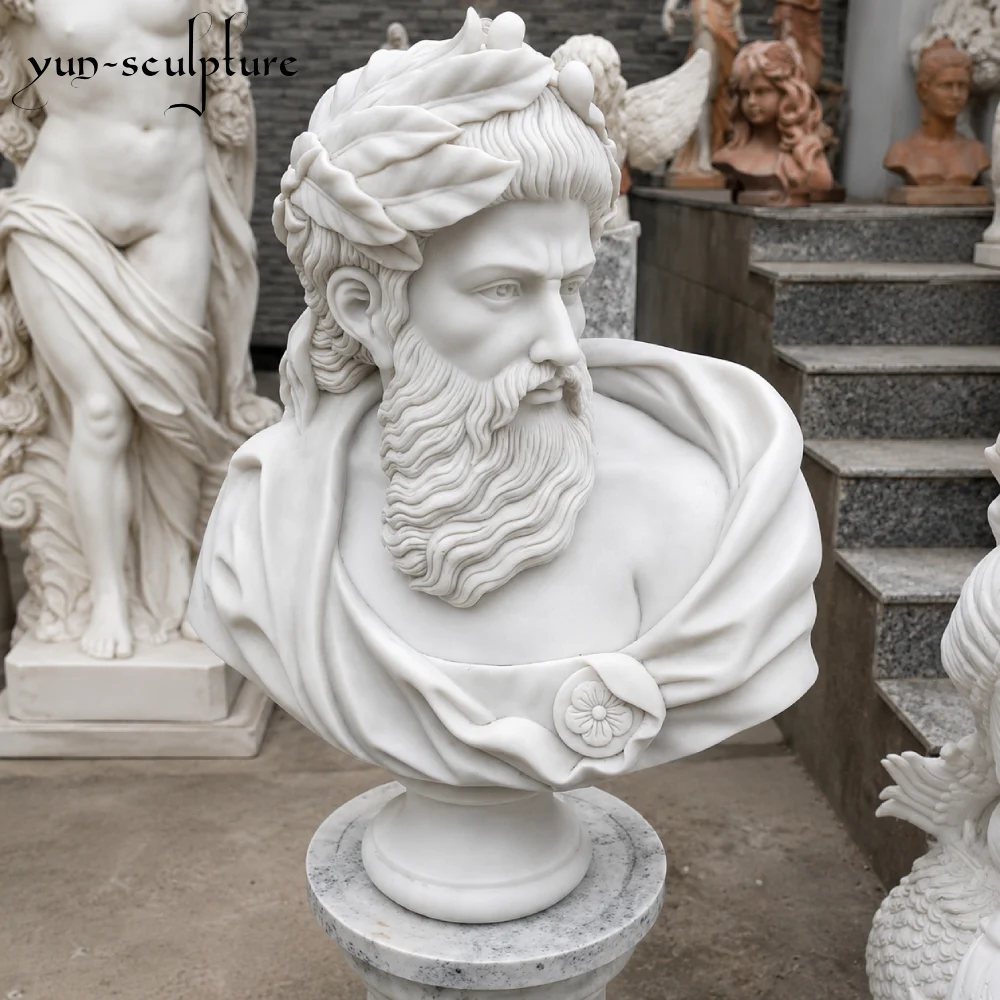
This distinction matters for understanding why a Zeus bust statue has persisted as the appropriate sculptural choice for spaces dedicated to leadership, judgment, and consequential decision-making — boardrooms, executive offices, law chambers, home studies where serious work happens. The image being invoked is not dominance but ordered authority: the power that comes from responsibility for a larger whole.
The sculptural tradition of Zeus busts draws on one of the most intensely studied divine portraits in the history of art. From the lost chryselephantine colossus of Olympia through the Roman marble portrait busts that survive in collections from the Vatican to the Hermitage, the image of Zeus as the bearded, mature, commanding figure of cosmic authority has been continuously refined and transmitted across twenty-five centuries. What we commission and install today participates in that tradition — whether we are conscious of it or not.
The Principal Zeus Bust Prototypes
Most Zeus bust statues in the contemporary market derive from one of three ancient prototypes. Knowing which prototype a piece references — and what visual and historical associations each carries — is the first step toward making an informed commission or purchase decision.
The Zeus of Otricoli
The Zeus of Otricoli is a Roman marble bust discovered at Otricoli, Umbria, in the eighteenth century and now in the Pio-Clementino Museum of the Vatican. Dating to approximately the 4th century BCE in its Greek original (the Roman copy is 2nd century CE), it is the single most widely reproduced Zeus bust in the Western tradition and the reference point for most contemporary Zeus bust commissions.
The Otricoli Zeus presents the god at the height of his authority: a full, elaborately rendered beard of deep-carved curls, heavy brow ridges over deep-set eyes of formal severity, and hair arranged in a crown of waves that carries an almost architectural regularity. The expression is neither angry nor benevolent — it is the face of cosmic governance, a face that is beyond the emotions of individual gods and certainly beyond those of mortals. This is Zeus in his function as the force that maintains order rather than Zeus in any particular mythological narrative.
For contemporary corporate and executive installations, the Otricoli type is the most formally authoritative choice. Its visual severity and historical prestige make it immediately legible as a serious sculptural object rather than a decorative accessory.
The Zeus Ammon Type
Zeus Ammon is a syncretic deity — the result of the Greek identification of Zeus with the Egyptian god Amun, formalized during Alexander the Great’s conquest of Egypt and his consultation of the oracle of Amun at Siwa. The Zeus Ammon bust type depicts Zeus with his standard mature, bearded features supplemented by the ram’s horns of Ammon curling beside his temples — a visual declaration of cross-cultural divine authority.
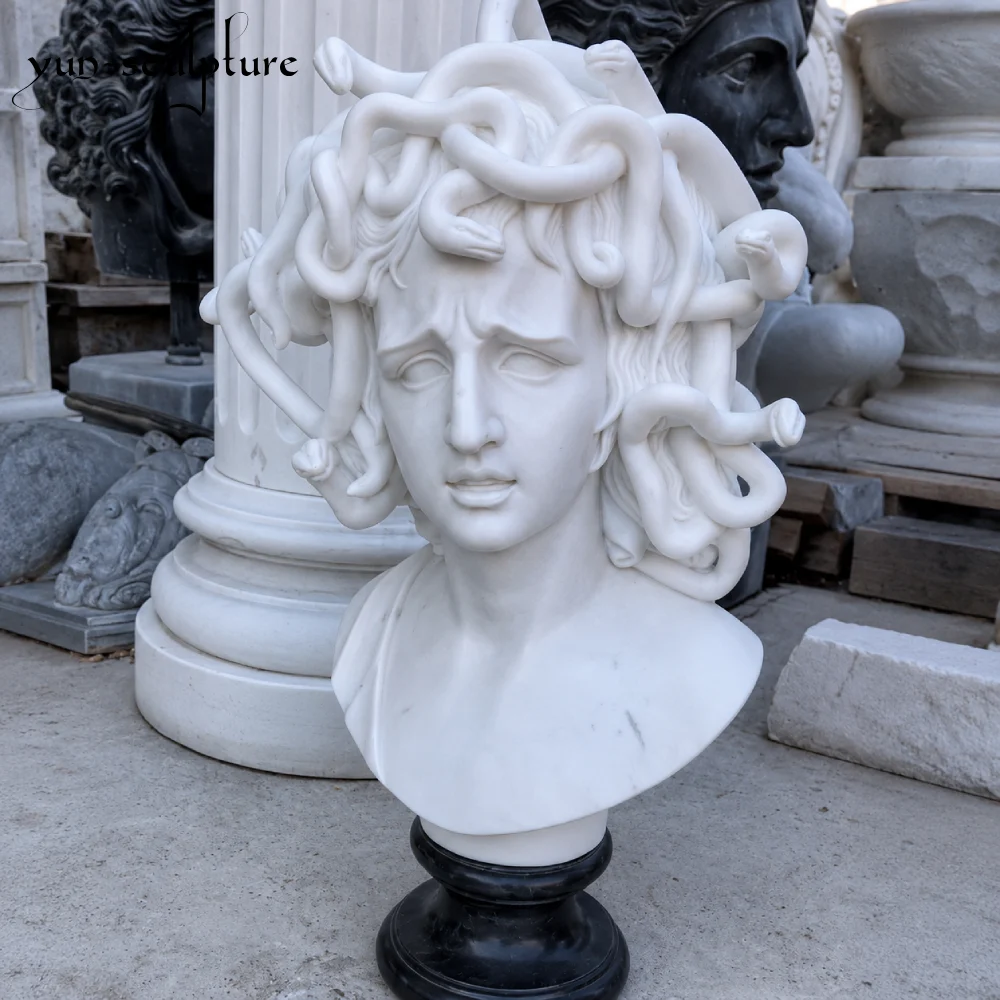
This type was particularly popular in the Hellenistic and Roman periods as an expression of universal divine sovereignty — a god who transcended any single culture’s pantheon. For contemporary spaces that want to signal cross-cultural reach, international authority, or a specifically Hellenistic rather than purely Classical Greek aesthetic, the Zeus Ammon type is the most historically grounded choice. It is less commonly seen than the Otricoli type, which gives it distinction in spaces where the standard portrait is too familiar.
The Hellenistic Zeus Type
Where the Otricoli Zeus presents authority in repose, Hellenistic Zeus figures — derived from the dynamic sculptural tradition of the 3rd–1st centuries BCE — show the god in active engagement with his power: brow furrowed, expression more charged with emotion, the formal severity of the Classical type relaxed in favor of psychological intensity. The fragmentary Hellenistic Zeus busts in the National Archaeological Museum in Athens give a sense of this direction — a god who feels the weight of his authority rather than simply embodying it as a given.
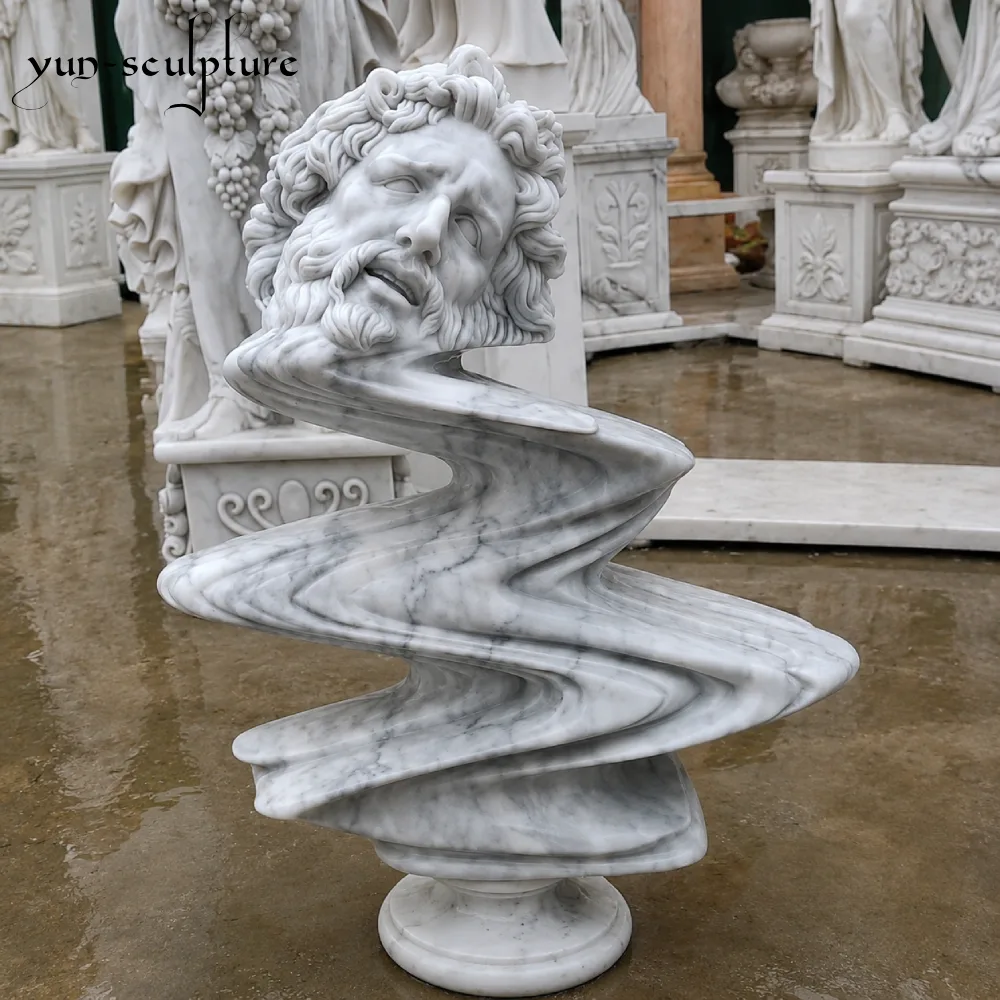
For home offices and private study installations where the goal is a more personal and psychologically complex image of authority — leadership as burden as much as privilege — the Hellenistic type offers a more intimate register than the formal grandeur of the Otricoli. It is also, frankly, a more interesting sculptural object at close range, where the emotional complexity of the face rewards sustained attention in a way that the more austere Classical type does not.
Iconographic Attributes: Reading a Zeus Bust
A Zeus bust statue is identified by a consistent set of visual attributes that distinguish him from the other bearded male deities of the Greek pantheon — most importantly from Poseidon, whose physical type is nearly identical and who is differentiated almost entirely by a single attribute.
| Attribute | What It Signifies | Presence in Bust Format |
|---|---|---|
| Full, elaborately curled beard | Mature divine authority; cosmic governance | Always present in all Zeus types |
| Heavy, low brow ridge | The weight of sovereignty and judgment | Characteristic of Otricoli and Hellenistic types |
| Thunderbolt | Divine power; the force that maintains cosmic order | Rarely shown in bust format; implied rather than depicted |
| Eagle | Sacred animal; messenger between Zeus and mortals; sovereignty | Sometimes shown on pedestal base |
| Crown of waving hair | Royal and divine authority; the ordered cosmos made visible | Present in all types; degree of elaboration varies |
| Ram’s horns | Specifically Zeus Ammon type; cross-cultural divine authority | Present only in the Ammon type |
| Oak leaves | Sacred tree of Zeus; sometimes incorporated in wreath or base decoration | Occasional decorative attribute |
The single most important practical point for buyers: if a bearded male bust does not have a clearly identifiable distinguishing attribute — thunderbolt, eagle, or ram’s horns for Zeus; trident or dolphin for Poseidon — the two gods are visually indistinguishable to the uninformed viewer. For a corporate or institutional installation where the specific identity of the deity matters for the intended message, ensuring that the commission includes at least one unambiguous identifying attribute is essential. Our Zeus statue full guide covers pose and attribute options across the complete Zeus iconographic tradition.
Home Office vs. Corporate: Two Different Conversations
A Zeus bust statue installed in a private home office and one installed in a corporate boardroom are having two different conversations, even if the object itself is identical. Understanding the distinction helps buyers calibrate the right prototype, scale, and material for their specific context.
The Home Office Zeus
A Zeus bust in a private home office or study is a personal declaration — a statement about how the owner understands their own relationship to authority, judgment, and the serious work that happens in that space. It is seen primarily by the person who works there, with occasional visibility to visitors and colleagues on video calls. This changes the calculus significantly.
For the home office, the Hellenistic Zeus type — more psychologically complex, more emotionally present — often serves better than the formal severity of the Otricoli. A half-life-size or desk-size bust in white marble or warm bronze on a simple pedestal or directly on the desk surface reads as a considered personal choice rather than an institutional gesture. The goal is presence and resonance at close range, not the projection of authority across a large room.
Scale should be modest: a 10–16 inch bust on a desk or bookshelf, or a 16–22 inch piece on a dedicated console or column pedestal beside the desk. The piece should invite contemplation rather than dominate the space — Zeus as the god of cosmic order and thoughtful governance rather than Zeus as the thunderbolt-wielding lord of Olympus.
The Corporate Zeus
A Zeus bust in a corporate reception area, boardroom, executive suite, or headquarters lobby is a public statement — seen by clients, partners, employees, and visitors who bring their own cultural associations to the image. Here the Otricoli type’s formal severity and historical prestige are almost always the correct choice. The image needs to be immediately legible as an object of serious cultural weight, not a decorative accessory.
Scale for corporate installations should be generous: a life-size bust (20–26 inches) on a column pedestal in the 36–48 inch range for reception areas and lobby installations; a half-life-size piece for boardroom credenzas and executive office alcoves. The pedestal material matters considerably in corporate contexts — black granite or dark verde antique marble pedestal under a bronze Zeus creates a visual anchor appropriate for spaces where the impression on visitors is part of the intended effect.
Bronze is the more common choice for corporate Zeus installations — its weight, warmth, and association with the Roman portrait tradition of institutional authority tend to read more appropriately in commercial interiors than white marble, which carries stronger associations with academic and domestic settings. However, in law firm libraries, financial institution reception areas, and corporate headquarters with a classical architectural program, white marble Zeus busts are entirely appropriate and historically well-grounded.
Bronze vs. Marble for a Zeus Bust
| Silicon Bronze | White Sichuan Marble | White Carrara Marble | |
|---|---|---|---|
| Tonal character | Warm brown or black patina; weighty, authoritative | Cool, luminous; classical restraint | Premium luminosity; historical European institutional standard |
| Surface detail | Extremely high — lost-wax captures beard curl and brow detail at sub-millimeter level | High — hand-carving achieves excellent facial and beard detail | High — same carving standard; premium material |
| Best corporate setting | Boardrooms, executive offices, law firms, financial institutions | Law firm libraries, classical architectural interiors | Premium headquarters, donor spaces, banking institutions |
| Best home office setting | Dark-paneled studies, leather-and-wood interiors, traditional home offices | Light-filled libraries, contemporary interiors, minimalist studies | Premium residential libraries |
| Pedestal pairing | Black granite, dark marble, dark wood | Black granite, dark verde antique, white marble | White marble, pale stone, dark granite for contrast |
| Starting price (desk size) | From $1,200 | From $1,500 | From $2,600 |
| Starting price (life-size bust) | From $3,600 | From $4,000 | From $7,200 |
For most corporate installations, bronze is the default recommendation — not because marble is inferior but because the Roman portrait tradition of bronze busts aligns more directly with the institutional authority that corporate spaces typically want to project. The great Roman bronze portraits — of emperors, senators, military commanders — are the visual precedent for corporate portrait sculpture, and a Zeus bust in silicon bronze with a brown or black patina participates in that tradition directly.
For home offices, the choice between bronze and marble is more genuinely a matter of personal aesthetic alignment. A dark, warm-toned study with leather furniture and wood paneling calls for bronze; a light-filled, contemporary space with white walls and minimal furniture calls for marble. The god is the same; the material is the room’s answer to which aspect of his authority it wants to emphasize.
Size and Placement Guide
| Context | Recommended Size | Pedestal Height | Total Installation Height | Material |
|---|---|---|---|---|
| Personal desk (home office) | 8–12 in bust | None or 4–6 in base | 12–18 in | Bronze or marble |
| Bookshelf or console (home office) | 10–16 in bust | 6–10 in base | 16–26 in | Bronze or marble |
| Dedicated column pedestal (home office) | 16–22 in bust | 32–40 in pedestal | 48–62 in | Marble preferred |
| Boardroom credenza | 14–20 in bust | 6–10 in base | 20–30 in | Bronze preferred |
| Reception area column pedestal | 20–26 in bust | 36–48 in pedestal | 56–74 in | Bronze preferred |
| Executive suite alcove | 18–24 in bust | 30–40 in pedestal | 48–64 in | Bronze or marble |
| Headquarters lobby | 26 in+ bust | 48 in+ pedestal | 74 in+ | Bronze preferred |
The most consistent error in Zeus bust commissions is selecting a piece sized for close personal viewing and installing it in a space that requires presence at distance. A 10-inch desk bust on a 48-inch pedestal in a corporate reception area is visually incoherent — the scale of the bust does not match the scale of the installation. For any pedestal installation, the bust height should be at least one-third of the pedestal height, and preferably closer to one-half, to achieve the correct visual proportion.
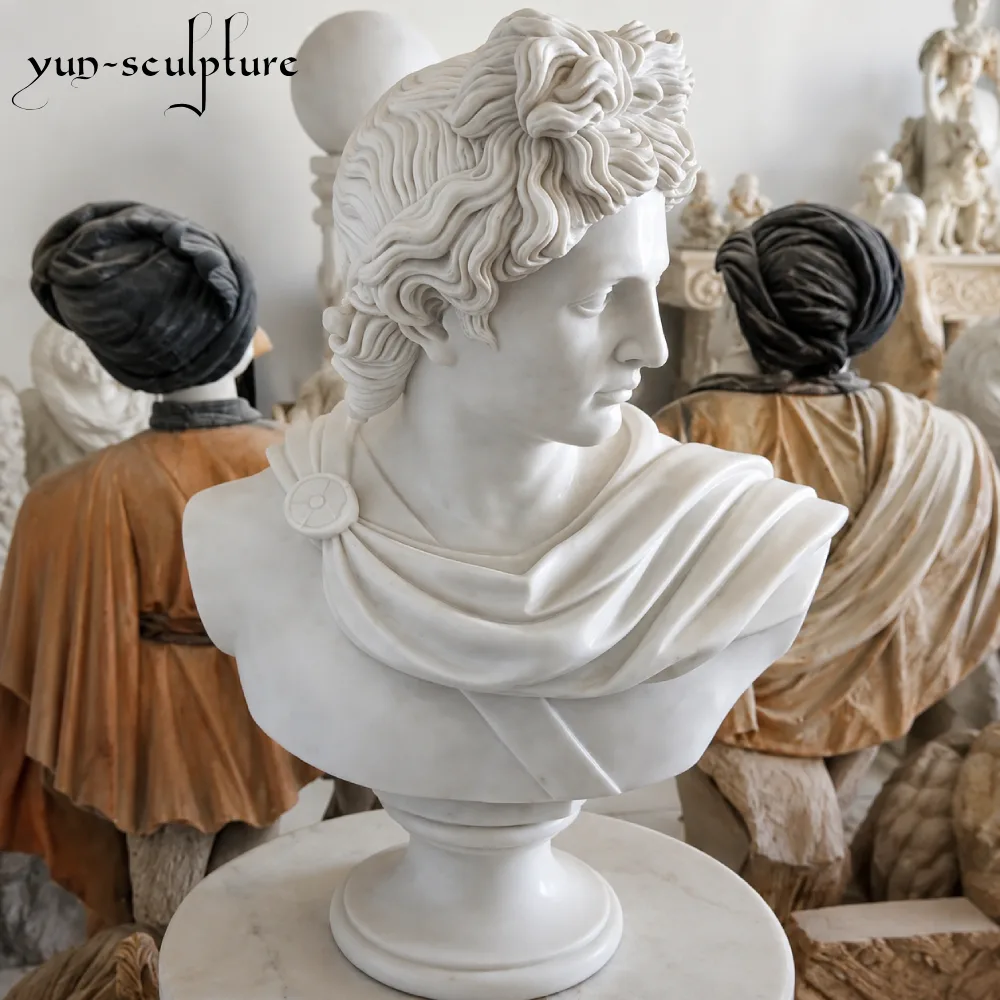
For spaces where a Zeus bust will be paired with an Athena bust statue — a pairing that has significant precedent in Western institutional design, representing the complementary principles of authority and wisdom — the two pieces should be matched in scale and material for visual coherence. A bronze Zeus and a marble Athena in the same reception area creates a deliberate material contrast that can work beautifully if the pedestal treatment unifies them; the same material for both reads as a more traditional and formally coherent choice.
Our complete male Greek god statues guide covers Zeus alongside Apollo, Poseidon, and Hercules for buyers considering a broader Greek mythology installation program. The full Greek mythology statues collection overview covers all twelve Olympians for institutional programs requiring multiple deity representations.
Frequently Asked Questions
Why was the Zeus statue so famous? +
The Statue of Zeus at Olympia — a forty-foot chryselephantine figure created by Pheidias around 435 BCE — was considered one of the Seven Wonders of the Ancient World because it represented the absolute pinnacle of what Greek sculptural tradition could achieve in scale, material, and expressive power. Ancient visitors reported that the god appeared so large that if he stood up he would break through the temple roof. The Roman general Aemilius Paullus reportedly wept when he saw it, saying that Pheidias alone had sculpted the gods as Homer had described them. Its fame rested not only on its size but on Pheidias’s ability to make divine authority visible in material form.
Why did the statue of Zeus get destroyed? +
The Statue of Zeus at Olympia was not deliberately destroyed but was lost through the combination of Christian suppression of pagan worship and physical disaster. The Olympic Games were banned by the Christian emperor Theodosius I in 393 CE, and the sanctuary at Olympia was closed. The statue was likely transported to Constantinople, where ancient sources report it was destroyed in a fire — possibly the great fire of the Lauseion palace in 475 CE. The temple at Olympia itself was subsequently damaged by earthquakes and floods, burying the site until modern archaeological excavation.
Is the statue of Zeus still existing? +
No — the original Statue of Zeus at Olympia no longer exists and is one of the Seven Wonders of the Ancient World that has been entirely lost. It is known only through ancient descriptions, coin images from Elis, and small-scale terracotta copies. The workshop of Pheidias at Olympia has been excavated and the tools and clay molds used in its construction have been found — providing indirect evidence of the process by which the masterwork was made. The Zeus of Otricoli in the Vatican Museums is the finest surviving ancient Zeus portrait bust and serves as the primary reference for contemporary Zeus bust commissions.
Who is the most famous Greek sculpture? +
The most famous surviving ancient Greek sculptures are the Venus de Milo (c. 150–125 BCE, Louvre), the Winged Victory of Samothrace (c. 200–190 BCE, Louvre), and the Laocoön Group (c. 200–100 BCE, Vatican Museums). Among lost works, the Statue of Zeus at Olympia and the Athena Parthenos by Pheidias are the most celebrated. The Zeus of Otricoli is the most famous surviving Zeus portrait bust. Michelangelo’s David, while Renaissance rather than ancient Greek, is the most globally recognized sculpture in the Western tradition and draws directly on the Greek kouros tradition in its conception of the idealized male figure.
What is Zeus’s sacred bird? +
The eagle is Zeus’s sacred bird — the king of birds mirrors the king of gods, and in Greek mythology the eagle serves as Zeus’s messenger and the instrument of his will on earth. The eagle appears in Zeus bust sculpture most commonly as an attribute figure at the base of the pedestal or, in full-figure Zeus statues, perched on the god’s extended hand or scepter. In ancient Roman imperial iconography, the eagle was adopted as the symbol of Jupiter and, by extension, of Roman imperial power — which is why the eagle appears on Roman legionary standards and eventually in the heraldic traditions of European monarchies and the American republic.
What does a Zeus bust statue symbolize in a home office or corporate setting? +
A Zeus bust statue in a home office or corporate setting symbolizes ordered authority — not the authority of personal dominance but the authority that comes from responsibility for a larger whole. Zeus in Greek religion is the force that maintains the kosmos, the ordered arrangement of the world against the constant pressure of chaos. In a leadership or decision-making space, this translates as a statement about governance rather than power, the weight of consequential judgment rather than the exercise of personal will. In corporate contexts specifically, a Zeus bust draws on the Roman tradition of placing divine and heroic busts in spaces where serious institutional decisions were made — a tradition running from Roman Senate chambers through Renaissance banking halls to contemporary boardrooms.
Commission a Zeus Bust Statue from Quyang
Otricoli, Zeus Ammon, or Hellenistic type — bronze or marble, desk size to monumental. Tell us your space and intended placement and we’ll respond within 2 business days with a factory-direct quote.
Commission a Zeus Bust Statue from Quyang
Otricoli, Zeus Ammon, or Hellenistic type — bronze or marble, desk size to monumental. Tell us your space and intended placement and we’ll respond within 2 business days with a factory-direct quote.