Get in touch with Yun-Sculpture company
Orangery vs Conservatory vs Greenhouse: The Ultimate Guide to Luxury Glass Structures

You are not alone.
The terms orangery, conservatory, and greenhouse are used interchangeably online — yet architecturally, they are entirely different.
Is it a room?
Is it a garden structure?
Is it a status symbol?
As an Architectural Historian and Luxury Garden Consultant at Yun Sculpture, I will clarify the terminology — so you can make a prestigious, informed decision.
Table of Contents
Table of Contents
The Core Rule (The “Roof and Pillar” Test)
Here is the simplest expert definition:
If the roof is all glass, it’s a conservatory.
If it has a solid perimeter roof with a central lantern, it’s an orangery.
Everything else flows from this principle.
Chapter 1: What Is an Orangery?
Definition: What Is an Orangery?
An orangery is a masonry-based garden room with large windows and a solid roof perimeter featuring a central Lantern Roof.
It originated as a winter shelter for citrus trees.
But it quickly became something far more important:
A symbol of aristocratic wealth.
The Royal Origins of the Orangery
The golden age of the orangery began in 17th-century Europe.
At the Palace of Versailles, vast orangeries stored exotic orange trees through harsh winters.
In England, the Orangery at Kensington Palace became a symbol of refined royal lifestyle.
Owning citrus trees in cold climates was not practical.
It was status.
Buying a Victorian orangery today carries that same heritage hierarchy.
Architectural Anatomy of an Orangery
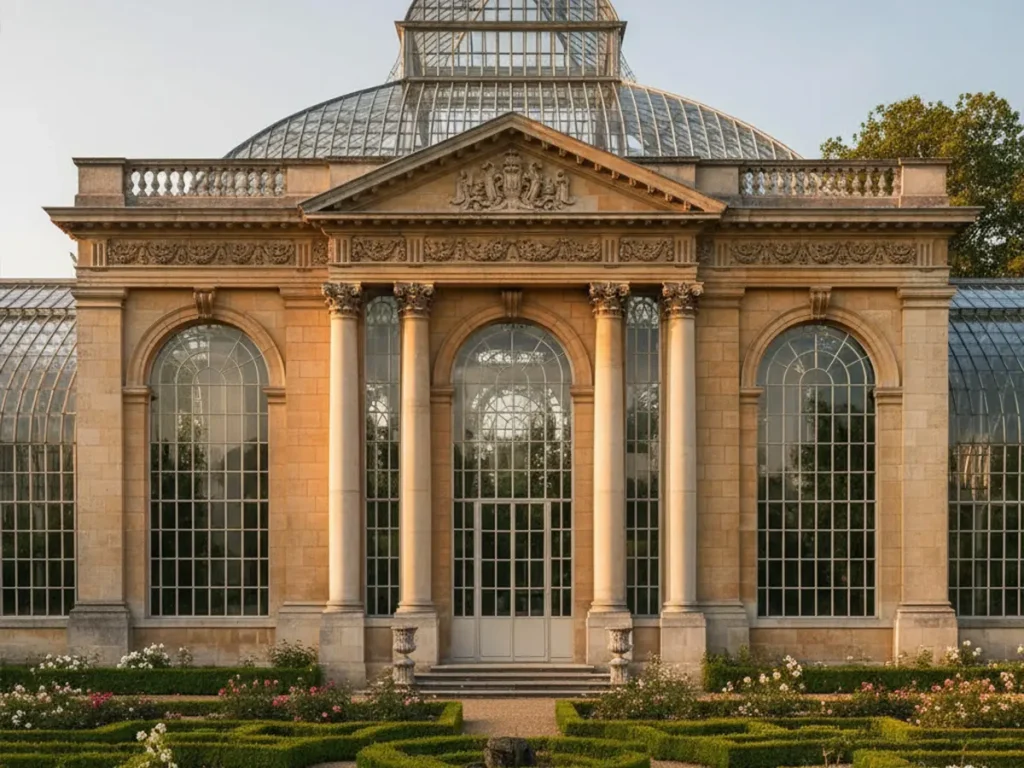
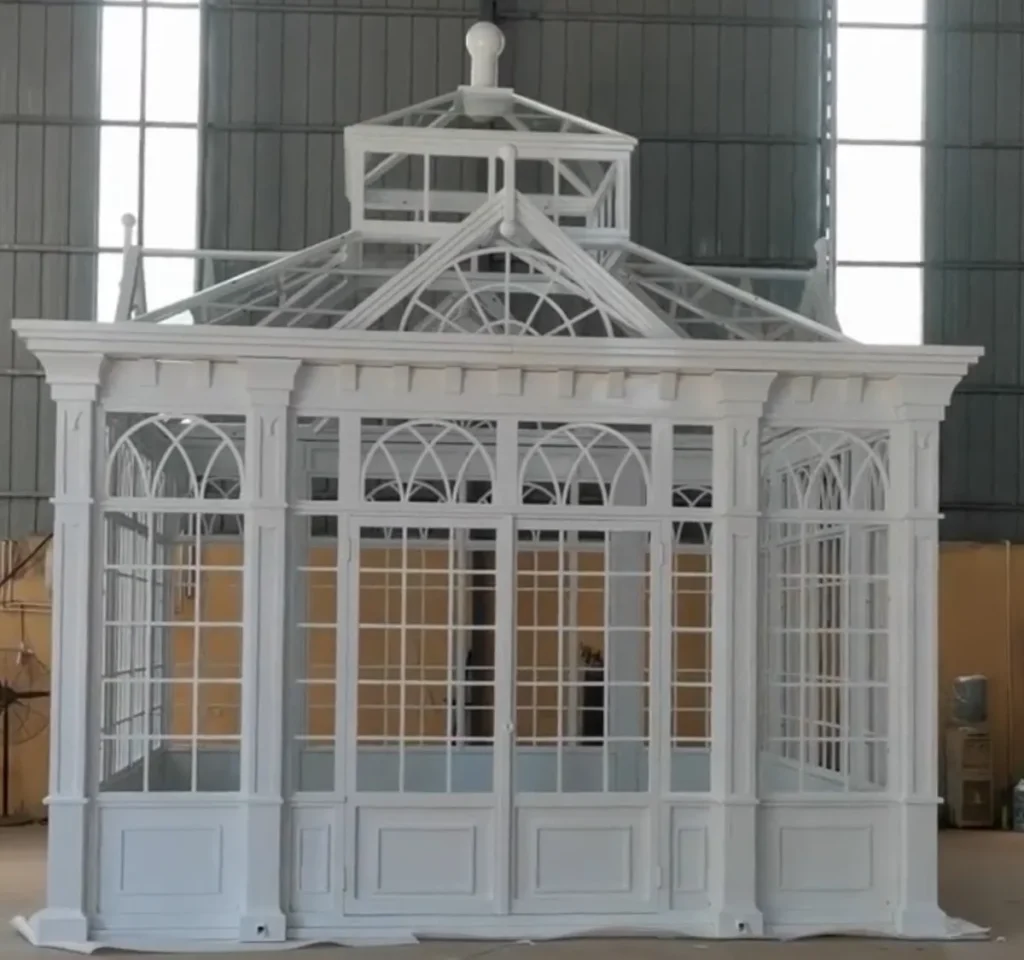
Caption: Classic orangery design featuring masonry pillars, tall glazing panels, and a central lantern roof.
Key features:
- Partial solid brick or stone walls
- Structural pillars
- Deep cornice detailing
- Flat perimeter roof
- Raised glass Lantern Roof centerpiece
The masonry provides Thermal Mass, storing heat during the day and releasing it slowly at night.
This makes an orangery feel like a true extension of your home.
Lifestyle: How an Orangery Is Used
An orangery is not a plant shed.
It is a room.
Typical uses:
- High Tea Room
- Reading Room
- Formal Dining Pavilion
- Winter Garden
- Art Display Gallery
It feels architectural. Permanent. Prestigious.
Chapter 2: What Is a Conservatory?
Definition
A conservatory is a structure where walls and roof are primarily glass.
It typically connects directly to a house.
Unlike an orangery, there is no heavy masonry perimeter roof.
The structure is lighter — visually and physically.
Visual Characteristics
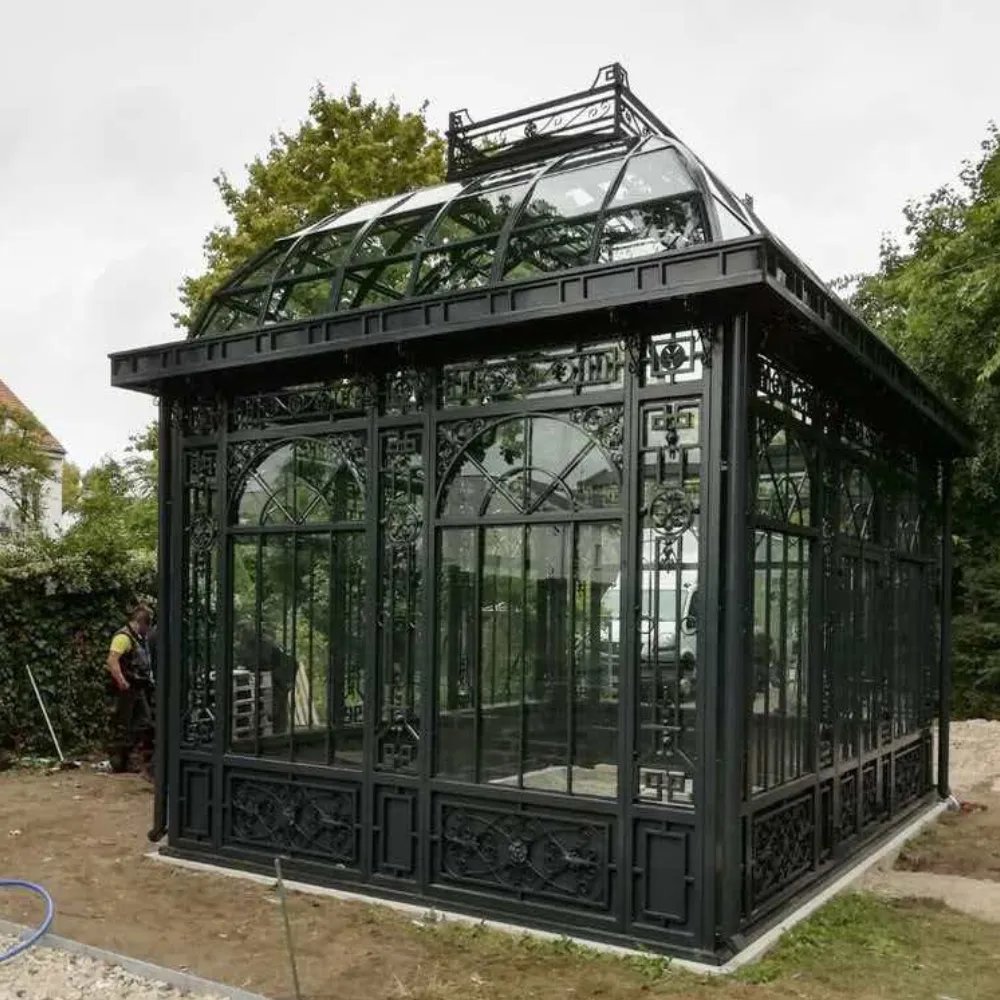
Key features:
- Glass walls
- Glass roof
- Slim framing
- Attached to home
By our expert rule:
All-glass roof = Conservatory
The Victorian Explosion
During the 19th century, advances in iron and glass production made conservatories affordable.
The most iconic example is Crystal Palace.
This monumental glass building demonstrated what industrial iron framing could achieve.
The Victorian aesthetic was born here — elegant, slender, transparent.
Iron made it possible.
Wood could never achieve such narrow sightlines.
How Conservatories Are Used Today
Modern conservatories are often:
- Casual sitting rooms
- Breakfast nooks
- Garden-view lounges
However, poor material choices often create problems:
- Summer overheating
- Winter heat loss
- Yellowing frames
- Structural warping
This brings us to the most important chapter.
Chapter 3: What Is a Greenhouse?
Definition
A greenhouse is a functional plant-growing structure.
Its purpose is horticulture — not lifestyle.
Structural Characteristics
Features:
- Fully glazed structure
- Lightweight frame
- Maximum sunlight exposure
- Minimal decorative detailing
- Often standalone
A greenhouse is practical.
It is about soil, humidity, irrigation.
Not High Tea.
The Key Difference in Purpose
| Structure | Primary Purpose | Emotional Value |
|---|---|---|
| Orangery | Luxury living space | Status & heritage |
| Conservatory | Light-filled extension | Comfort & view |
| Greenhouse | Plant cultivation | Function only |
If you plan to host guests — you do not need a greenhouse.
You need architecture.
Chapter 4: Material Matters — Why Iron Wins
This is where most buyers make costly mistakes.
The structure may look beautiful in photos.
But materials determine longevity.
The Problem With Timber
Traditional wooden orangeries:
- Rot over time
- Require annual painting
- Expand and contract
- Suffer from moisture damage
Wood is charming.
But it is maintenance-heavy.
The Problem With UPVC
Modern budget conservatories often use UPVC.
Issues include:
- Yellowing over time
- Thick, bulky frames
- Cheap aesthetic
- Reduced property value
UPVC cannot replicate Victorian elegance.

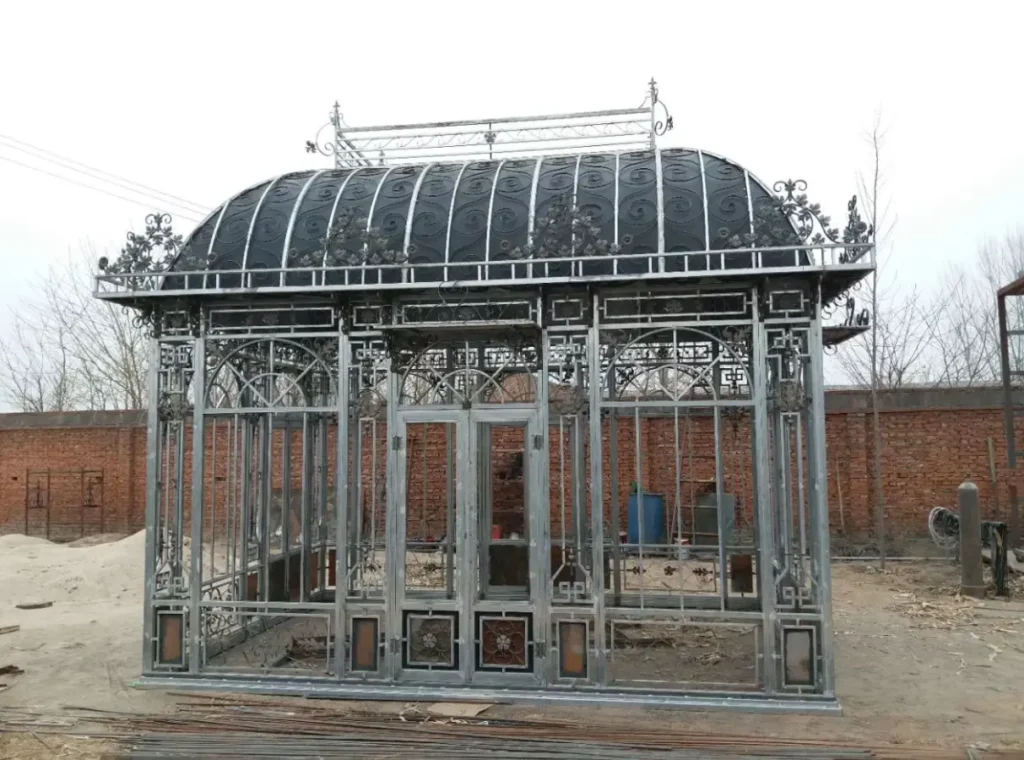
Why Wrought Iron & Steel Are Superior
At Yun Sculpture, we specialize in iron structures for a reason.
Wrought Iron and Steel provide:
- Ultra-narrow sightlines
- Architectural strength
- Permanent structural integrity
- Elegant proportions
- True Victorian aesthetic
Iron allows more glass and less bulk.
That is sophistication.
Technical Specifications That Matter
Our structures use:
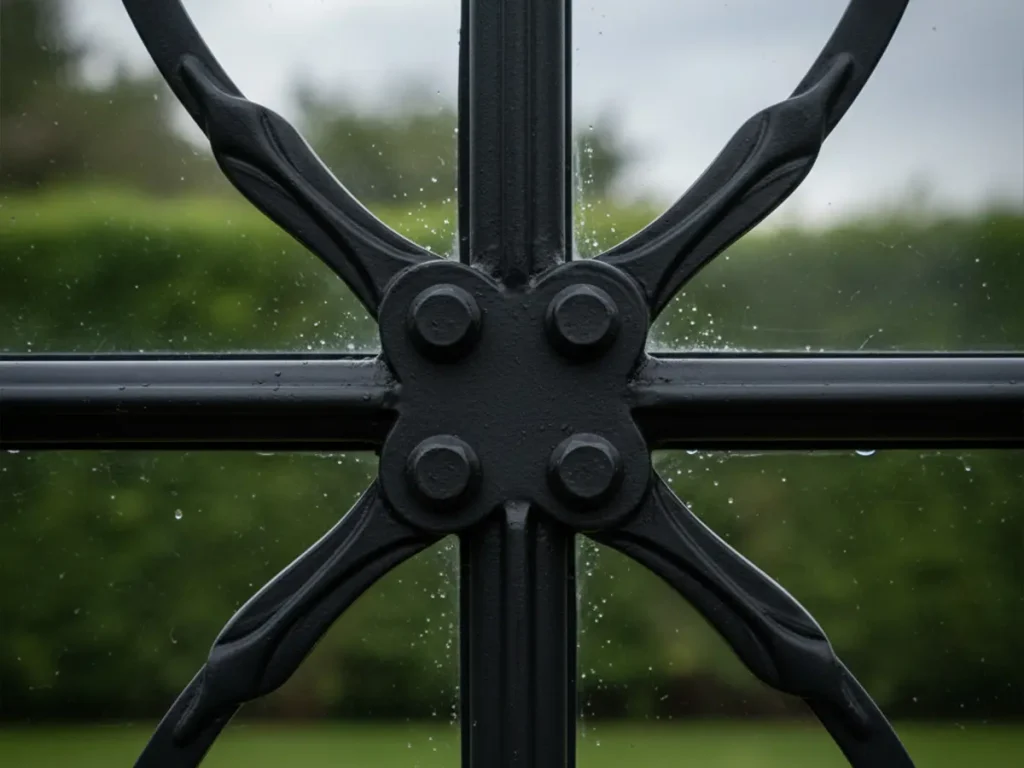
- Hot-dip Galvanizing (complete rust-proof immersion coating)
- Powder coating finish
- Double-pane Tempered Glass (for insulation and safety)
This combination ensures:
- Long-term durability
- Superior thermal performance
- Minimal maintenance
Iron does not warp.
It does not yellow.
It does not rot.
The “Iron Orangery” — The Perfect Hybrid
This is our specialty niche.
An Iron Orangery combines:
- The beauty of a greenhouse
- The prestige of an orangery
- The structure of Victorian ironwork
It is a Glass Garden House with architectural presence.
Elegant.
Timeless.
Permanent.
To understand the metal quality required for these structures, read our [Iron Gazebo Buying Guide].
Orangery vs Conservatory: Direct Comparison
| Feature | Orangery | Conservatory |
|---|---|---|
| Roof | Solid perimeter + Lantern | Fully glazed |
| Walls | Partial masonry | Mostly glass |
| Feel | Room-like | Sunroom-like |
| Status | Historic aristocratic | Victorian middle-class |
| Thermal Mass | Yes | Minimal |
| Use | Formal living | Casual sitting |
Chapter 5: Which One Do You Need?
Let’s simplify the decision.
Choose an Orangery If:
- You want architectural permanence
- You value heritage and status
- You host formal gatherings
- You want better insulation
- You prefer masonry elements
Choose a Conservatory If:
- You want maximum light
- You want a seamless house extension
- You prefer openness over solidity
Choose a Greenhouse If:
- You grow plants professionally
- You prioritize humidity control
- You do not intend to entertain guests
Choose an Iron Structure If:
- You want narrow sightlines
- You want Victorian authenticity
- You want longevity
- You dislike maintenance
Iron captures the Victorian Aesthetic better than bulky wood ever could.
A Design Vision: Elevating the Estate
Imagine this:
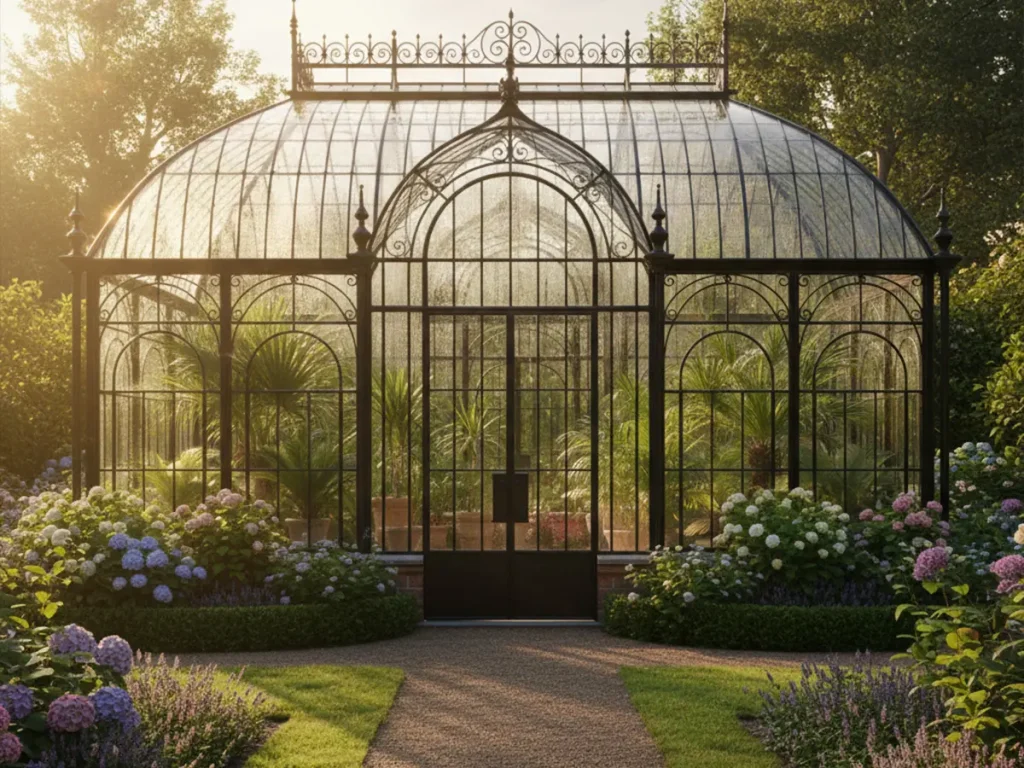
A black iron Victorian orangery framed against a manicured lawn.
Inside:
- Marble flooring
- Classical seating
- A central citrus tree
- A chandelier suspended beneath the lantern
Outside:
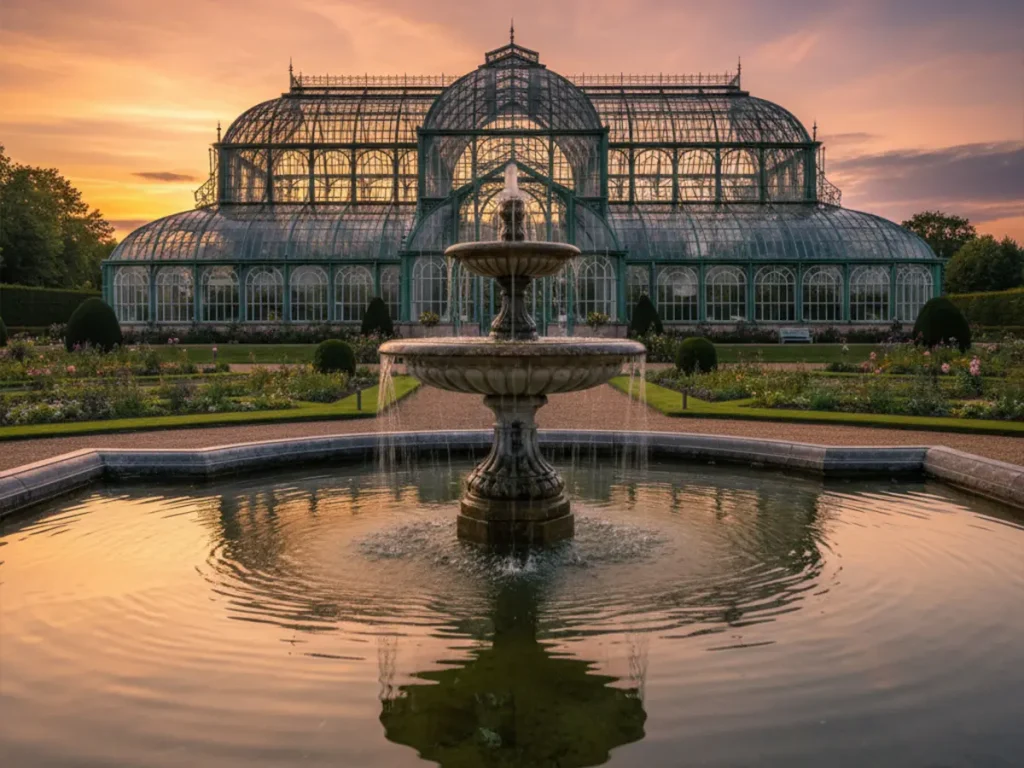
A contrasting Marble Fountain reflecting in the glass.
Architecture meets landscape.
This is estate planning — not just gardening.
The Psychological Difference
A greenhouse says:
“I grow plants.”
A conservatory says:
“I enjoy light.”
An orangery says:
“I understand architecture.”
The difference is subtle.
But powerful.
Dreaming of a Winter Garden?
Whether you envision:
- A formal Victorian orangery
- A refined iron conservatory
- A custom wrought iron greenhouse
We offer:
✔ Free Design Sketch
✔ Shipping Estimate
✔ Structural Consultation
Planning your budget? We break down the costs in our [Custom Garden Architecture Price Guide].
What is the difference between a conservatory and a greenhouse?
A conservatory is a glass-enclosed living space designed for human comfort — it has finished flooring, furniture, heating, and connects directly to your home. A greenhouse is a horticultural structure built for growing plants, with humidity control, ventilation, and maximum sunlight as priorities. The simplest test: if you would serve dinner in it, it is a conservatory. If it has potting soil on the floor, it is a greenhouse. We build both types in hand-forged wrought iron — browse our Iron Greenhouses & Conservatories collection to see the difference in person.
Are conservatories cold in winter?
With single-pane glass, yes — a conservatory loses heat rapidly and becomes unusable from November to March. The solution is double-layer insulated glass (two panes with an argon gas gap) combined with Low-E coating, which reflects infrared heat back into the interior. Our wrought iron conservatories can be fitted with 5+9A+5mm insulated tempered glass, keeping the space comfortable year-round even in USDA zones 4–5. The iron frame itself also matters: unlike UPVC, iron does not expand or contract with temperature swings, so the glass seals remain airtight for decades.
Is it cheaper to build a conservatory or an extension?
A conservatory is significantly cheaper. A brick-and-mortar home extension in the US typically costs $200–$400 per square foot including permits, foundation, roofing, and finishing. A custom wrought iron conservatory with insulated glass starts around $80–$150 per square foot (factory-direct, before shipping and installation). You also avoid much of the permitting complexity, since conservatories are often classified as accessory structures rather than permanent additions. The trade-off is less thermal mass than a solid extension — but with proper insulated glazing, the comfort gap is minimal.
Final Clarification
The confusion between orangery vs conservatory disappears once you apply the Roof and Pillar Rule.
Remember:
- Solid perimeter roof + Lantern = Orangery
- All-glass roof = Conservatory
- Purely functional plant house = Greenhouse
And if you want longevity, elegance, and Victorian authenticity —
Choose iron.