Get in touch with Yun-Sculpture company
Marble Gazebo Buyer’s Guide: Why Architects Prefer Natural Stone Over Concrete (2026)

Introduction: Stop Building Temporary Gardens
Most luxury gardens look expensive.
But they feel generic.
A prefabricated pavilion from a catalog does not create legacy. It creates a maintenance schedule.
Within five winters, the paint peels. The wood warps. The cast stone cracks.
If you are designing a legacy estate, boutique resort, or 5-star courtyard — you need architecture, not decoration.
The solution is a Natural Stone marble gazebo.
At Yun Sculpture, we build structures meant to stand for 100 years. Not five.

Caption: Sunset view of a hand-carved marble gazebo with Corinthian columns, radiating natural stone depth and permanence.
Table of Contents
Chapter 1: What Defines a True Marble Gazebo?
Why Architects Specify Natural Stone
Architects do not choose materials randomly.
They specify Natural Stone because it carries history, permanence, and measurable structural performance.
From ancient Rome to Versailles, garden architecture was carved — not molded.
- The Roman villas used marble.
- The gardens of Palace of Versailles used stone colonnades.
- Renaissance estates embraced carved columns and domes.
This is not nostalgia.
It is architectural continuity.
The Critical Difference: Carved vs. Cast
Let’s be direct.
There are two types of “marble gazebos” on the market:
- 100% Natural Marble (Quarried Stone)
- Cast Stone (Concrete + Stone Dust + Mold)
They are not the same category.
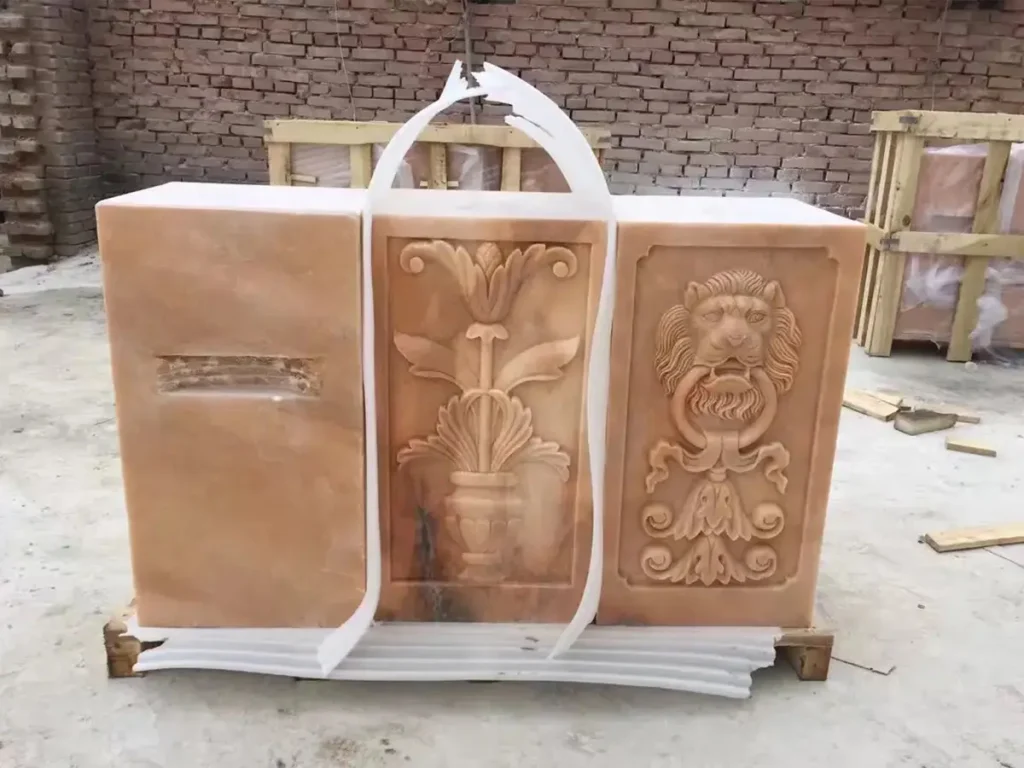
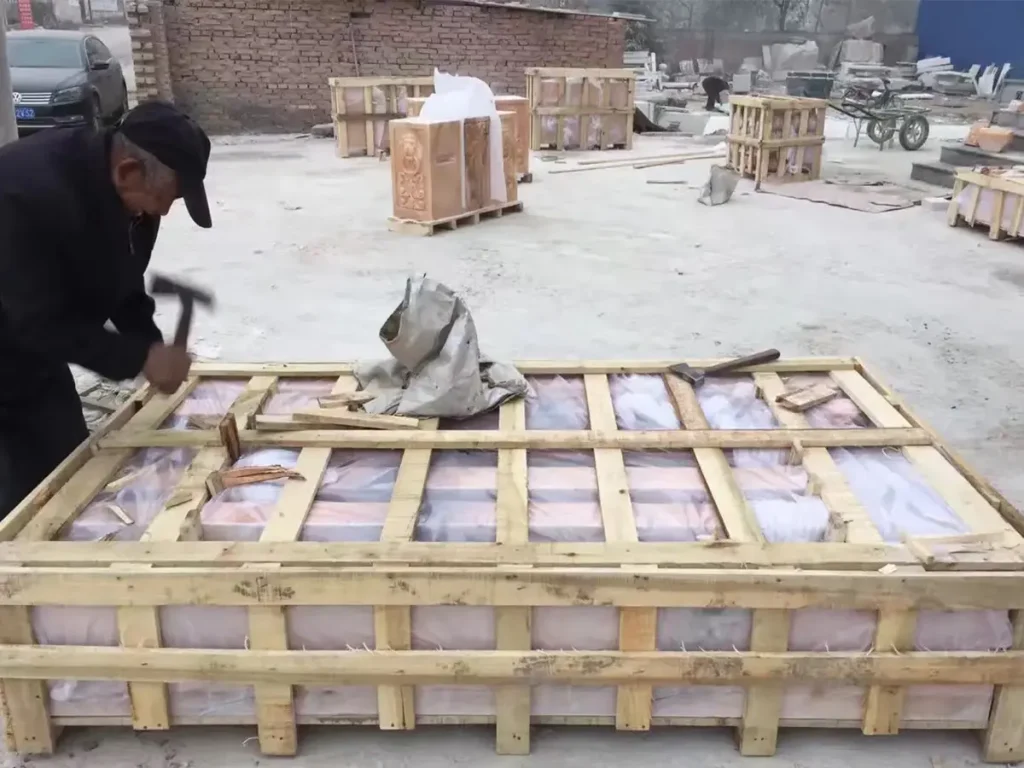


Natural Marble (What We Use)
- Solid quarried blocks
- Hand-carved by master artisans
- Crystallizes and reflects light
- Load-bearing structural columns
- Ages gracefully
Cast Stone (What We Reject)
- Poured into rubber molds
- Visible mold seams
- Air bubbles inside
- Hairline cracks after freeze-thaw cycles
- Looks chalky and flat
Concrete absorbs light.
Marble refracts it.
One glows. One dies.
Visual Comparison Table
| Feature | Natural Marble | Cast Stone (Concrete) | Wood |
|---|---|---|---|
| Material | Solid quarried stone | Cement + dust mix | Timber |
| Lifespan | 80–150+ years | 5–15 years | 5–20 years |
| Light Reflection | Crystalline glow | Dull, flat | Depends on paint |
| Freeze Resistance | Excellent | Cracks after winters | Warps/rots |
| Structural Strength | Load-bearing columns | Hollow sections | Limited span |
| Property Value Impact | Increases | Neutral | Maintenance liability |
Warning: If a “marble gazebo for sale” is priced suspiciously low, it is almost always cast stone.

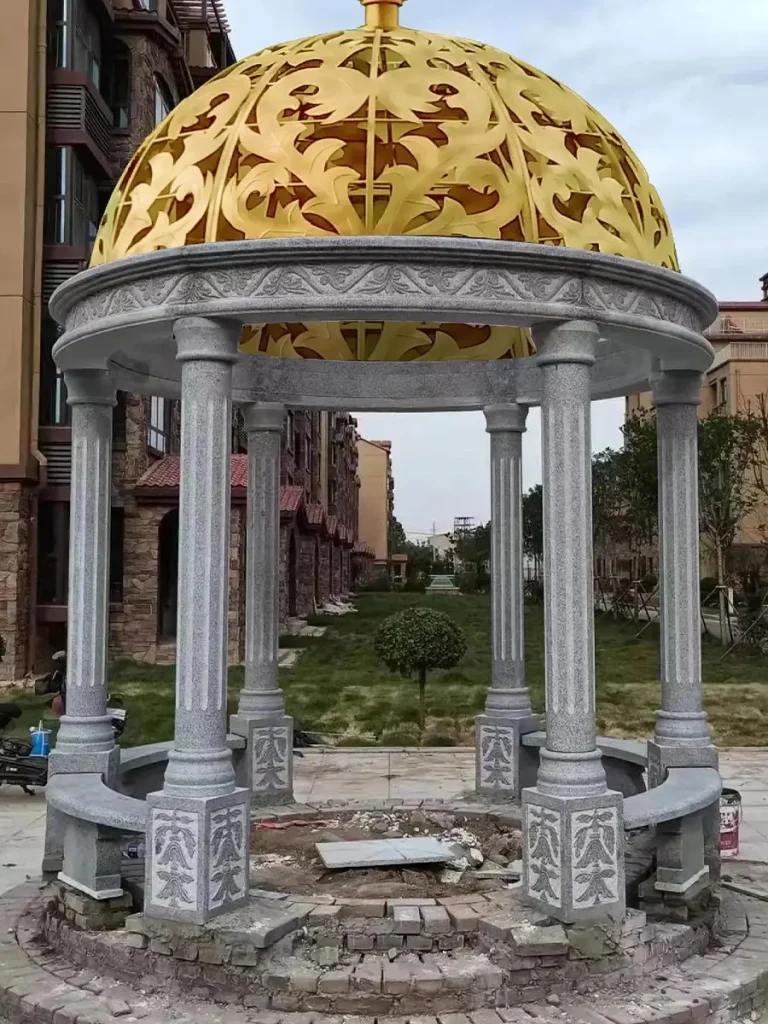

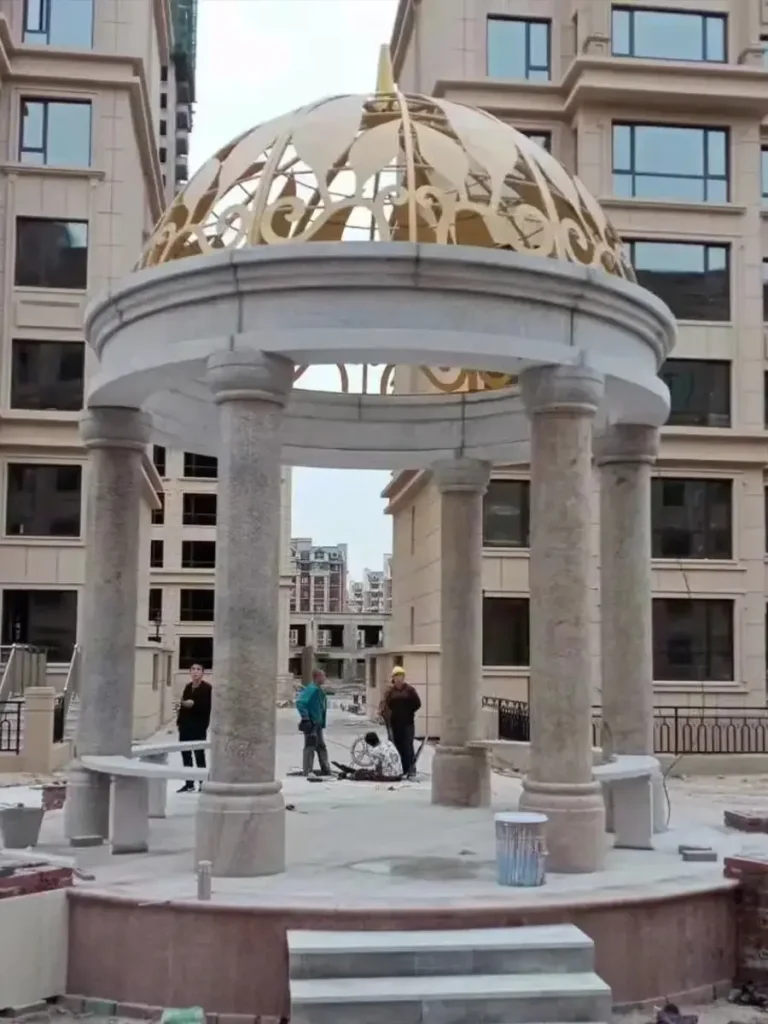
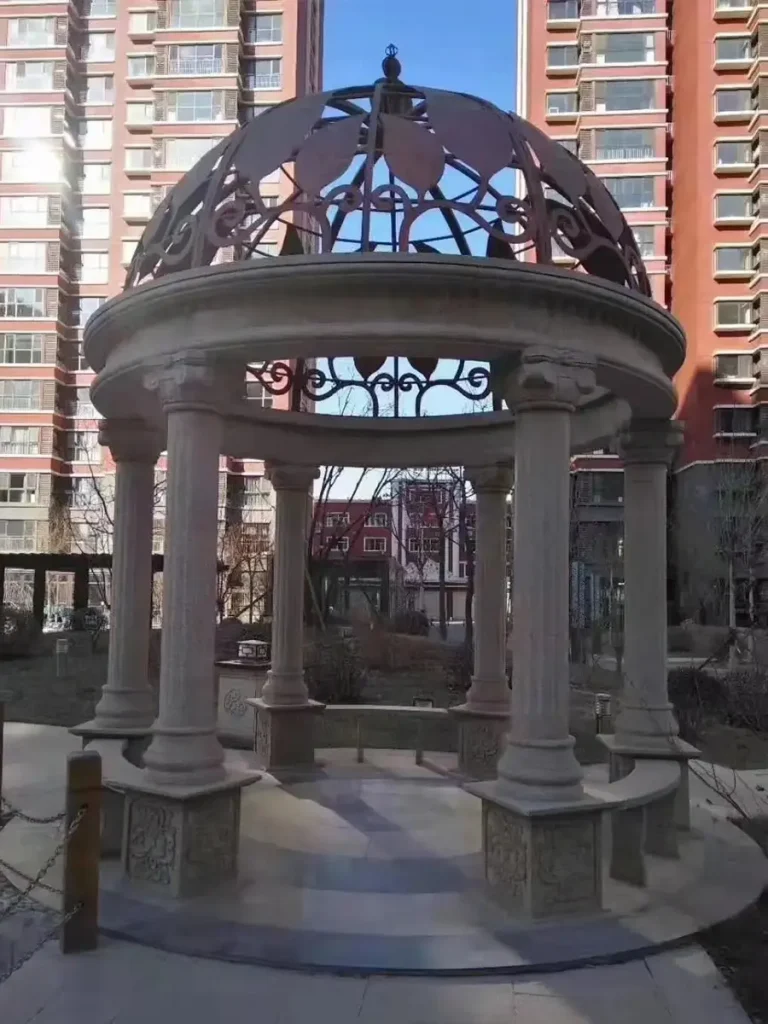

The Garden Architecture Handbook Principle
In classical garden theory, structures must anchor the landscape.
A large garden gazebo is not an accessory.
It is a focal axis.
Roman and Renaissance estates used stone because permanence defines prestige.
Temporary materials communicate temporary ambition.
Chapter 2: Styles Architects Specify in 2026
Luxury is not about size.
It is about proportion and detail.
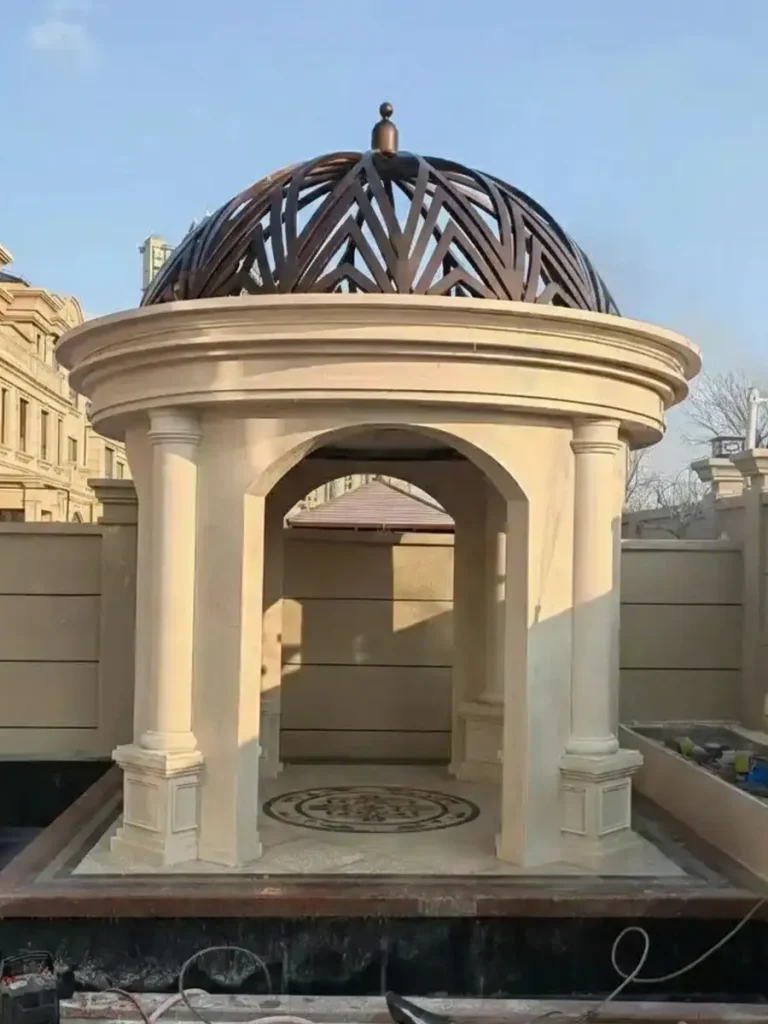
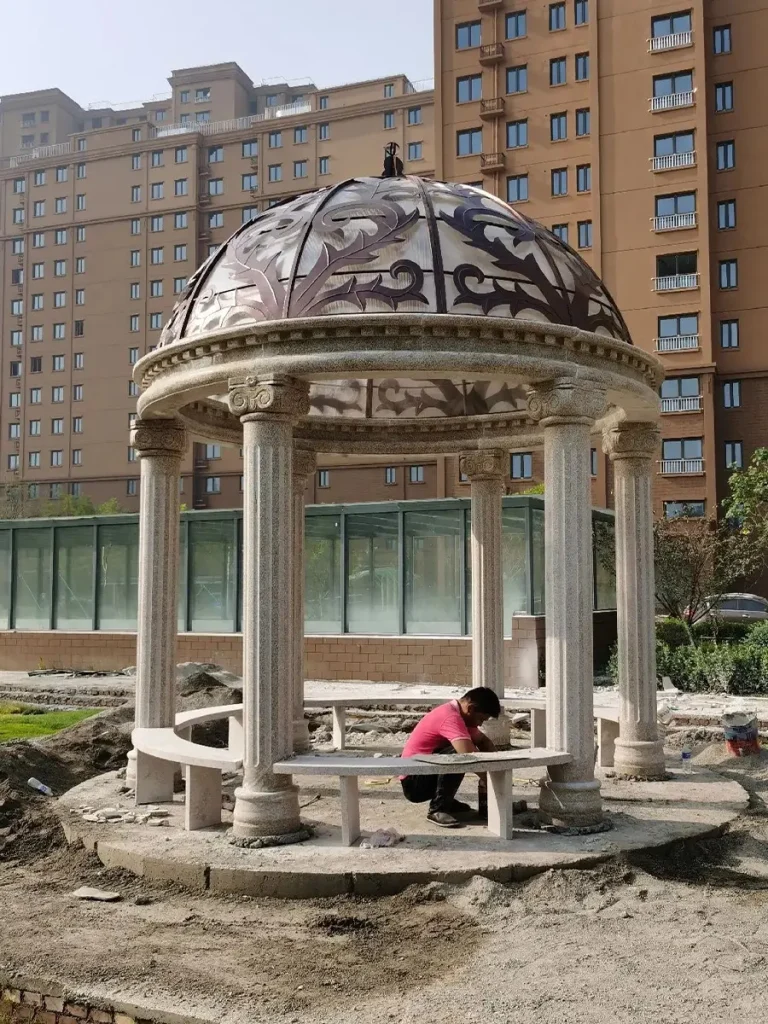
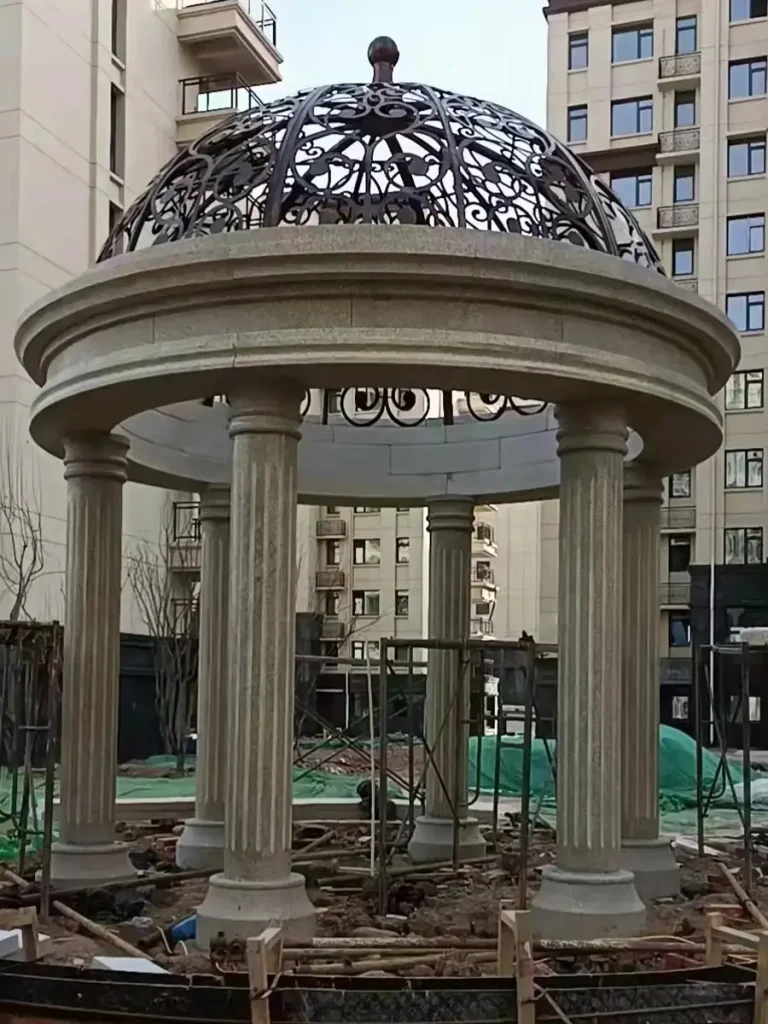
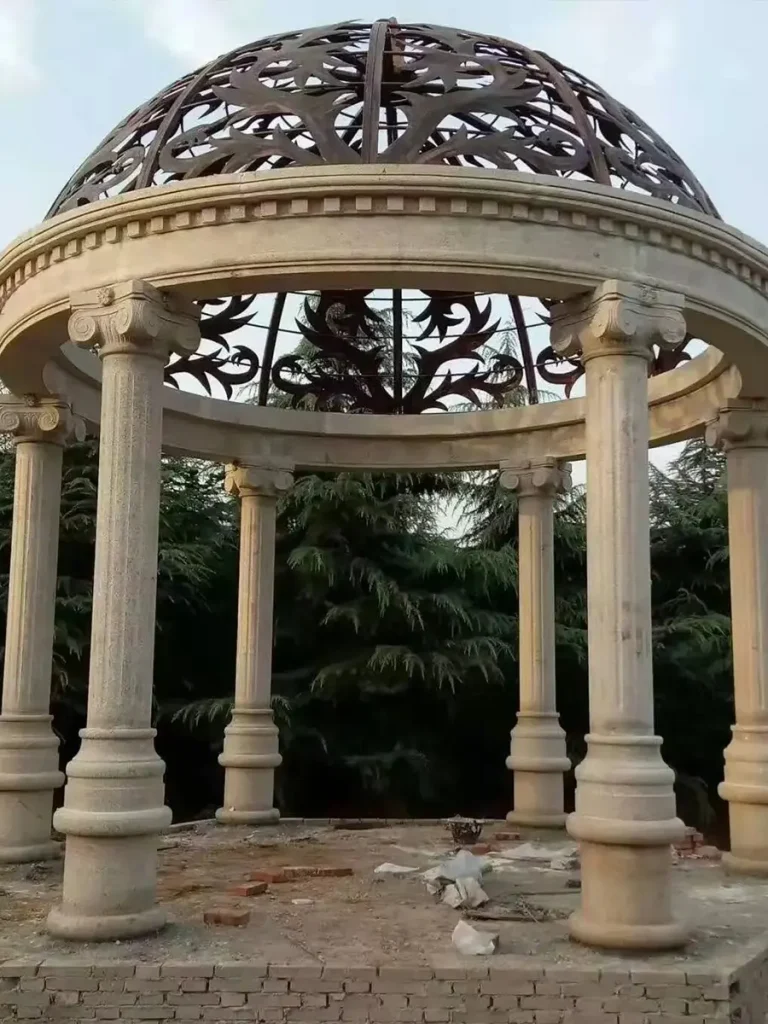
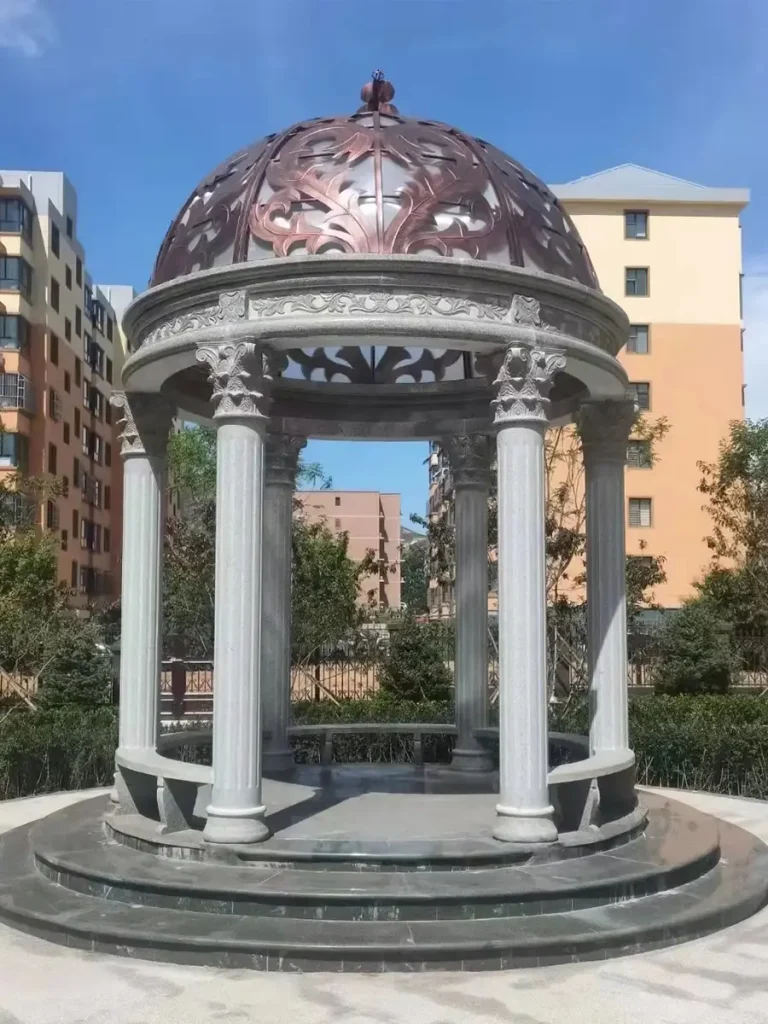
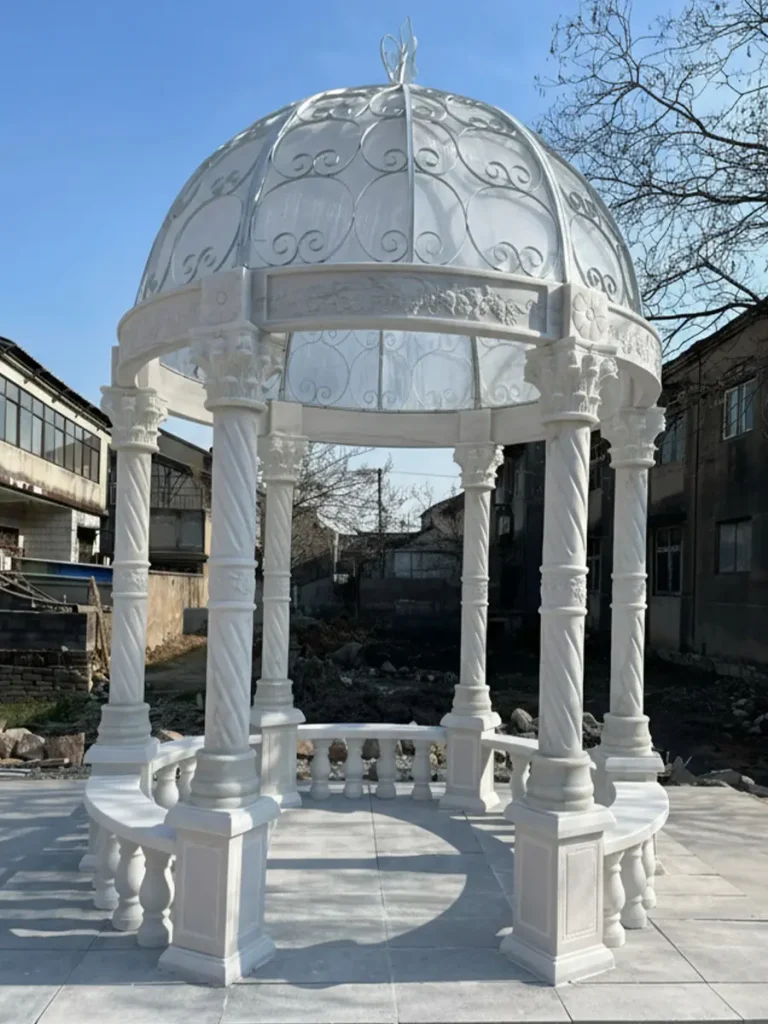
1. Roman / Corinthian Marble Column Gazebo
For estates that demand classical authority.
Features:
- Corinthian capitals
- Deep carved acanthus leaves
- Fluted marble columns
- Domed or open roof structure
Our masters carve in Deep Relief (3–5 cm depth).
Cheap factories scratch patterns 5 mm deep.
That difference determines shadow quality.
And shadow defines luxury.


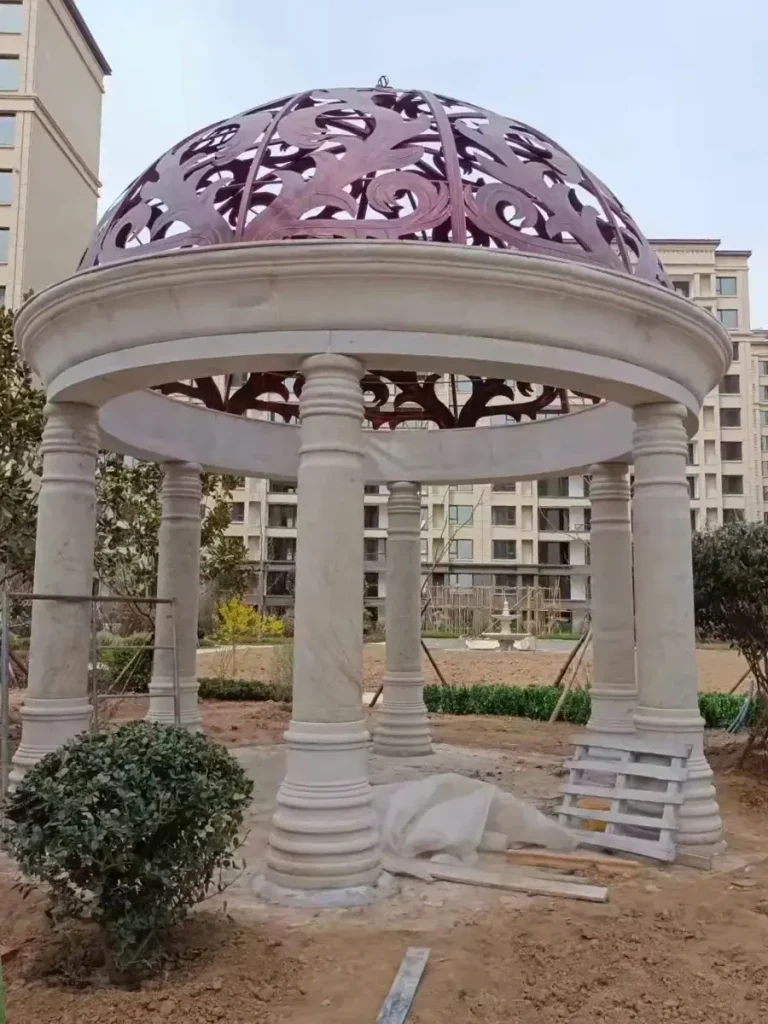

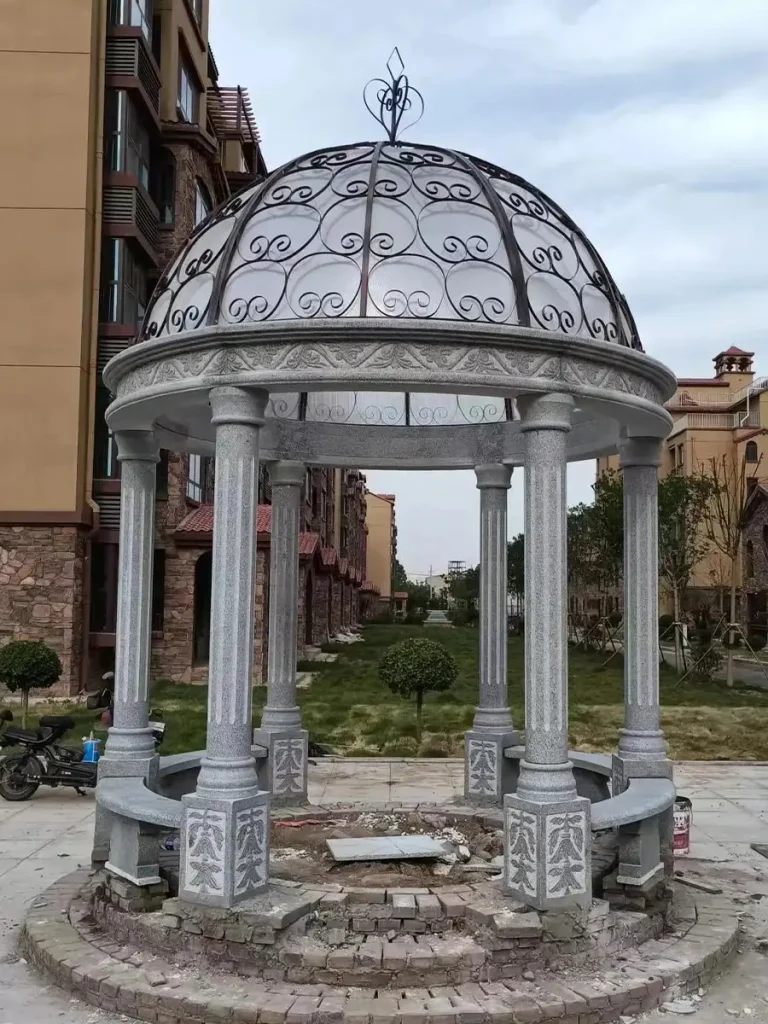
2. The “Birdcage” Dome – Wrought Iron Elegance
This is where engineering meets romance.
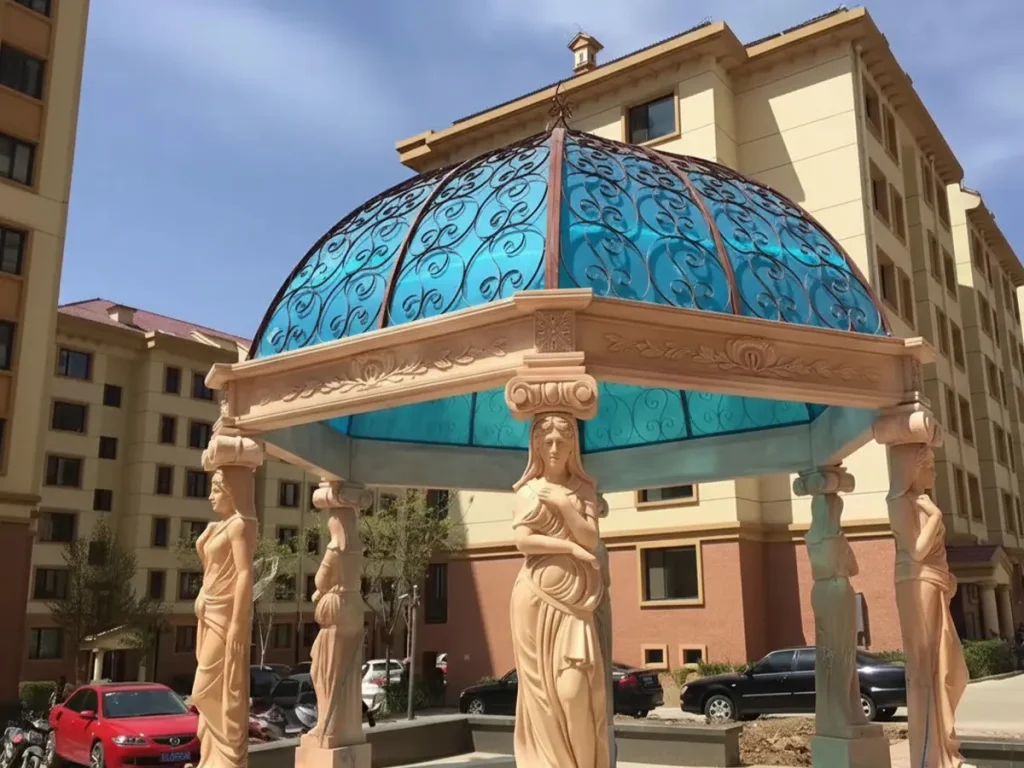
We design Wrought Iron Domes — also known as the “Birdcage” style — mounted over solid marble columns.
The result:
- European wedding aesthetic
- Light passes through the iron lattice
- Marble base provides permanence
- Iron dome creates openness
It is ideal for:
- Luxury hotels
- Vineyard wedding venues
- Coastal estates
- Formal courtyards
This hybrid approach blends stone mass with iron lightness.
It feels Parisian without copying.
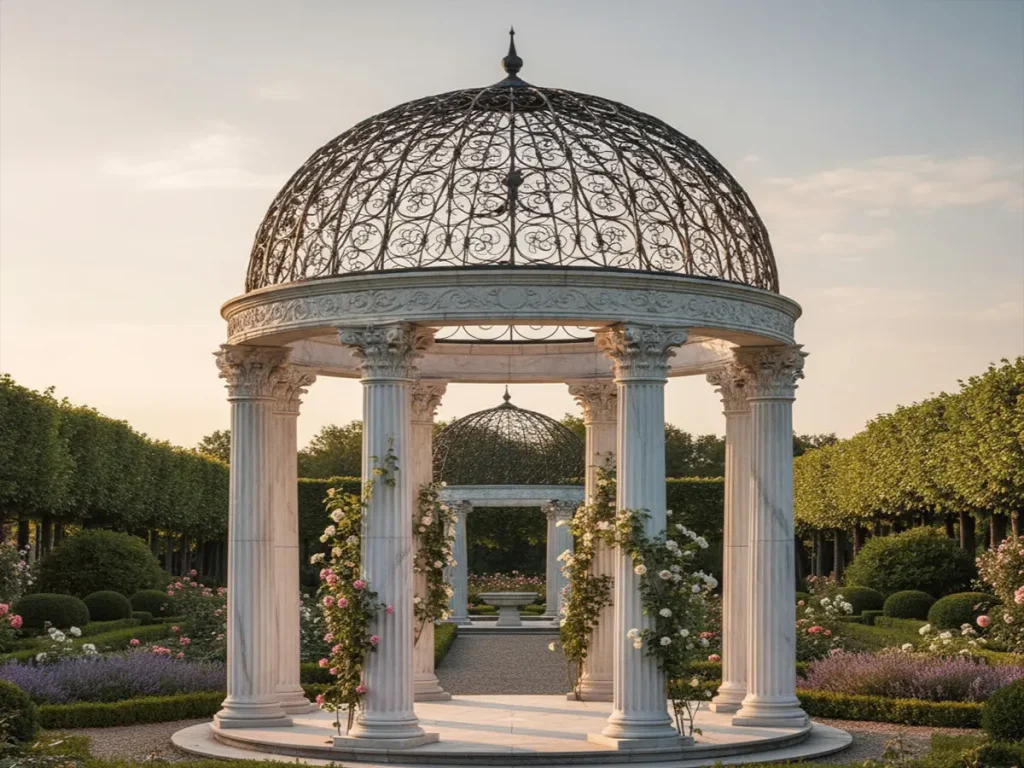
Caption: Marble column gazebo crowned with a hand-forged wrought iron dome — romantic European “Birdcage” style ideal for wedding venues.
Looking for a Victorian glasshouse instead?
Check our guide on [Cast Iron vs. Wrought Iron Gazebos].
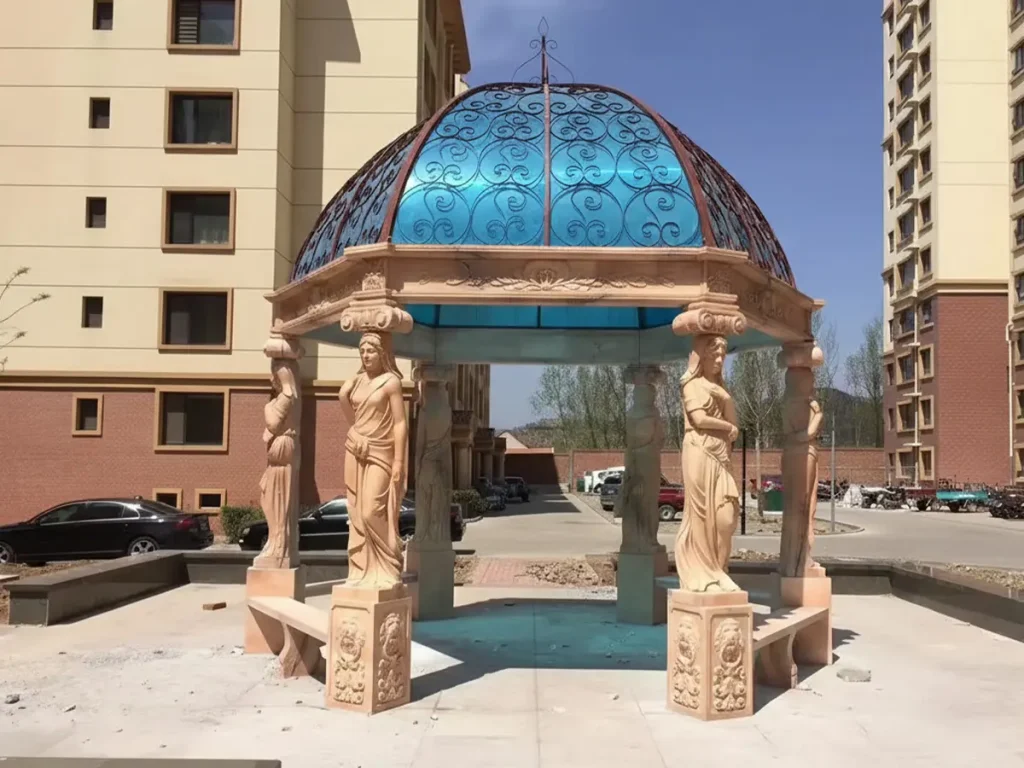
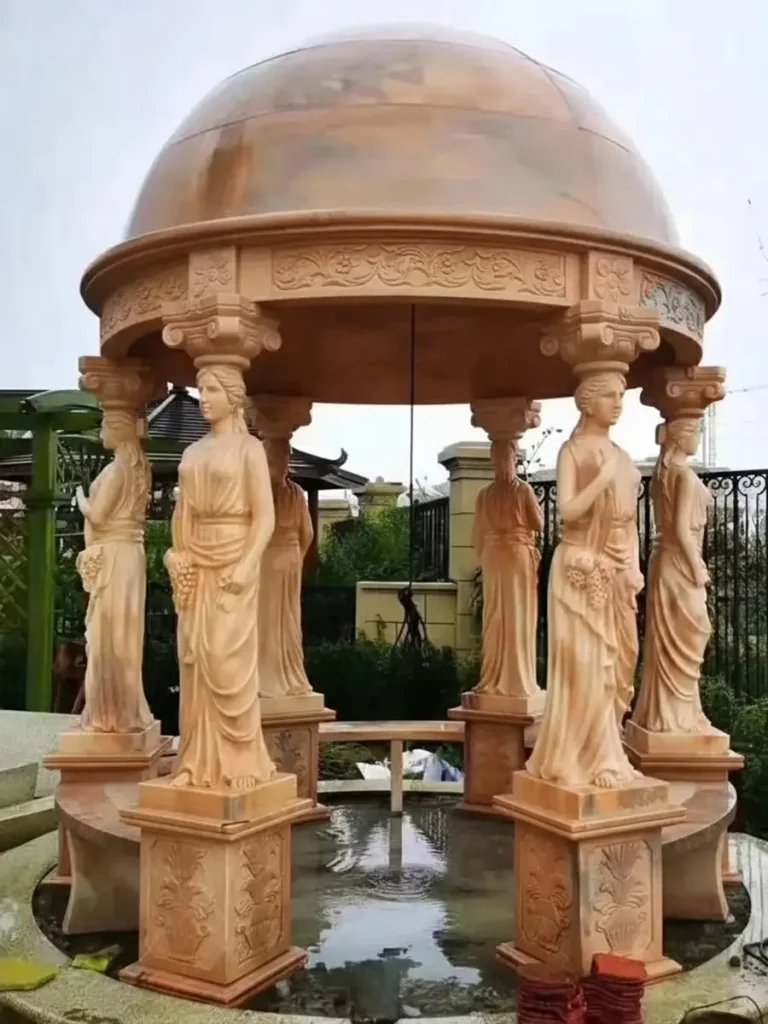
3. Caryatid Gazebo (Carved Ladies as Columns)
For collectors who want artistic statement.
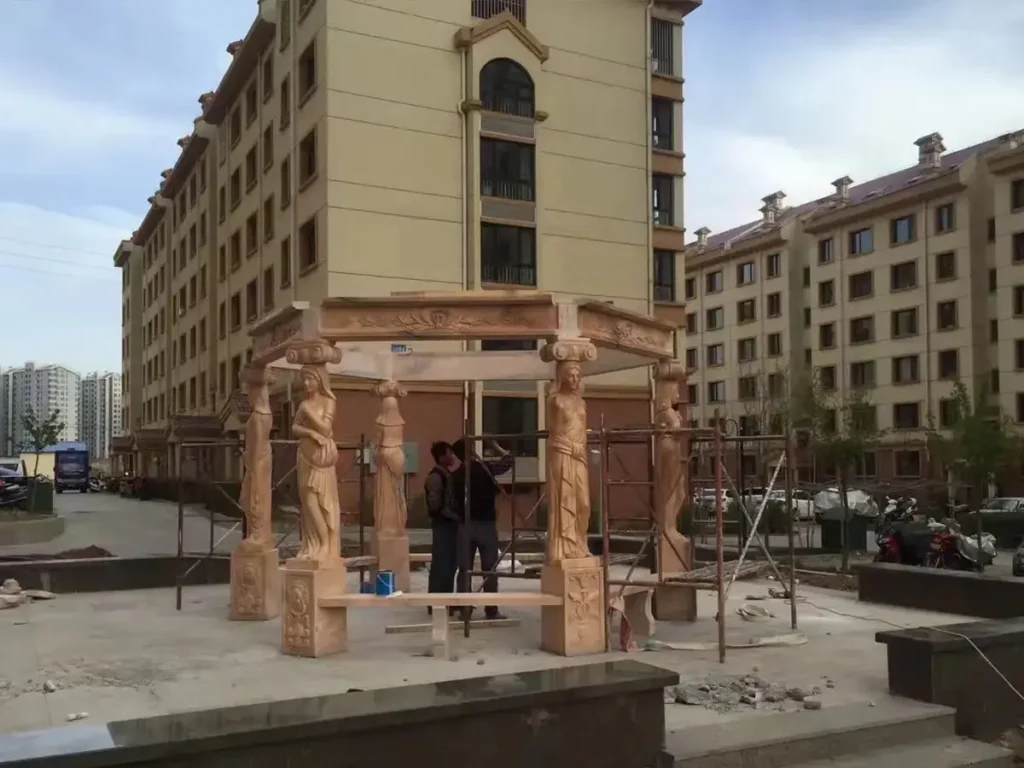
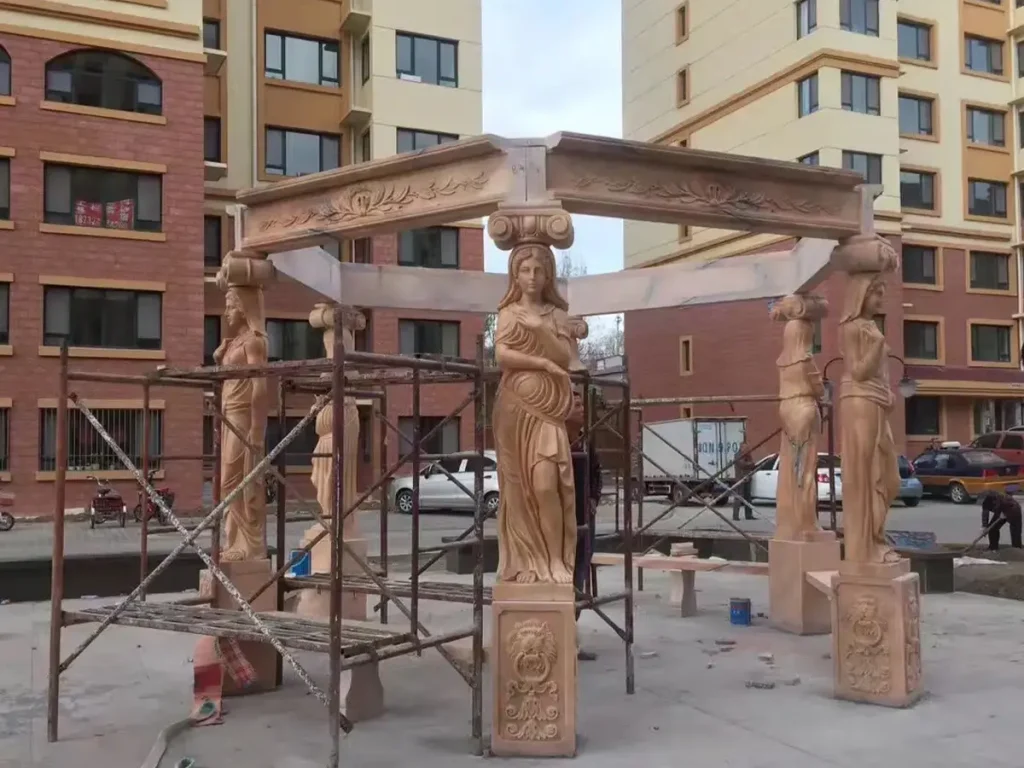
Instead of standard columns, we carve Caryatids — sculpted female figures supporting the roof.
Inspired by ancient Greek forms.
But reinterpreted with modern carving precision.
This style is not subtle.
It is for estates that understand art history.

Caption: Hand-carved marble Caryatids supporting a domed structure — sculptural architecture blending art and engineering.
4. Antique Garden Gazebo Aesthetic
Some clients want aged romance.
We can distress finishes naturally.
But remember:
We carve new marble.
We do not sell fragile antique salvage.
An authentic antique garden gazebo style must still meet modern structural standards.
Chapter 3: Engineering & Installation — Where Most Projects Fail
Luxury buyers focus on design.
Architects focus on structure.
We focus on both.
Foundation: The Non-Negotiable Rule
Every stone gazebo requires a reinforced concrete foundation.
Minimum thickness: 30–50 cm depending on span.
Marble is heavy.
That weight is an advantage — but only if engineered properly.
Solid Columns (Not Hollow Tubes)
Our columns are solid stone.
They are load-bearing.
Many cheap gazebos use hollow cores filled with concrete later.
That is not craftsmanship.
That is compromise.
Factory Trial Assembly — Our Quality Control Secret
Before shipping any marble gazebo:
We assemble the entire structure in our yard.
Completely.
Then we:
- Number every stone
- Check alignment
- Verify dome geometry
- Video call the client
- Confirm approval
Only then do we crate and ship.
This eliminates installation guesswork.
Most factories skip this step.
That is why their installers panic onsite.

Caption: Factory trial assembly: Entire marble gazebo constructed and inspected before shipping to ensure perfect alignment and fit.
Deep Relief Carving (3–5cm)
Depth creates shadow.
Shadow creates drama.
Our floral and acanthus patterns are carved 3–5 cm deep.
Concrete molds cannot replicate this.
Shallow carving looks flat in sunlight.
Deep carving looks alive.
Chapter 4: Cost, Value & Real Estate Psychology
Let’s address cost directly.
A true marble gazebo costs:
$10,000 – $50,000+
Depending on:
- Size (3m to 8m diameter)
- Dome type
- Carving complexity
- Shipping distance
Yes.
It is not cheap.
It is not meant to be.
Price Anchoring Reality
A wooden gazebo costs $3,000 – $8,000.
Then you repaint it every few years.
Then replace it after a decade.
A cast stone gazebo costs $5,000 – $15,000.
Then cracks after freeze-thaw cycles.
Then you repair or replace.
A marble gazebo?
You buy it once.
For 100 years.
Property Value & Estate Positioning
High-end real estate buyers respond to permanent architecture.
A marble pavilion becomes:
- Wedding photography location
- Outdoor dining pavilion
- Estate focal point
- Luxury marketing asset
It increases Property Value.
Temporary structures increase maintenance liability.
Identity & Heritage
When guests walk through your garden and see a carved marble structure, they subconsciously associate:
- Roman authority
- Renaissance refinement
- European lineage
This is psychological positioning.
You are not decorating.
You are establishing heritage.

Caption: Luxury garden event beneath a hand-carved marble gazebo — architectural permanence elevating social gatherings.
How to Choose the Right Marble Gazebo for Sale
Before you request quotes, ask:
- Is it 100% natural marble?
- Are columns solid?
- What is carving depth?
- Is trial assembly included?
- What marble type is used?
At Yun Sculpture, we use:
- Hunan White Marble
- Fangshan White Marble
- Sunset Red Marble
Each block is selected for density and grain consistency.
Material Truth (The Hard Warning)
If a supplier cannot tell you the quarry origin — walk away.
If you see mold seams — it is cast.
If price seems too low — it is concrete.
Do not confuse decoration with architecture.
Maintenance & Longevity
Marble requires minimal maintenance.
Occasional washing.
Optional sealing in high-pollution areas.
No repainting.
No sanding.
No structural decay.
Wood rots.
Concrete cracks.
Natural stone endures.
Is a Large Garden Gazebo Right for You?
Ideal for:
- Estates over 1 acre
- Luxury villas
- 5-star hotels
- Winery venues
- High-end wedding destinations
Not ideal for:
- Temporary rental properties
- Short-term landscaping flips
- Budget DIY gardens
Remember:
You are building a legacy estate, not a campsite.
Why Choose Yun Sculpture
Because we are not resellers.
We are factory-direct.
We carve.
We assemble.
We engineer.
We document.
Curious about the investment? See our transparent [2026 Gazebo & Orangery Price Guide].
Final Word: Legacy or Liability?
A gazebo is either:
- A temporary shade structure
Or
- A permanent architectural statement
Do not buy disposable structure.
Invest in legacy.
CTA