Get in touch with Yun-Sculpture company
What type of dog was Hachiko? The true story behind the world’s most loyal dog statue

Few sculptures in the world hold as much emotional gravity as the bronze figure of Hachiko standing outside Shibuya Station. Visitors photograph it daily. Commuters brush past it without thinking. Yet behind that statue is not a legend born from cinema, but a documented life—weathered by rain, hunger, and unwavering devotion.
People often ask, what kinda dog is hachi? The answer is simple in breed, but profound in meaning. He was an Akita Inu, a powerful northern Japanese dog breed known for dignity and loyalty. But Hachiko was not merely an example of canine genetics. He became a symbol. A national memory cast in metal.
To understand him, we must step away from the polished romance of film and return to the hard pavements of 1920s Tokyo.
Table of Contents
Table of Contents
Is Hachi a true story? Separating facts from the movie legends
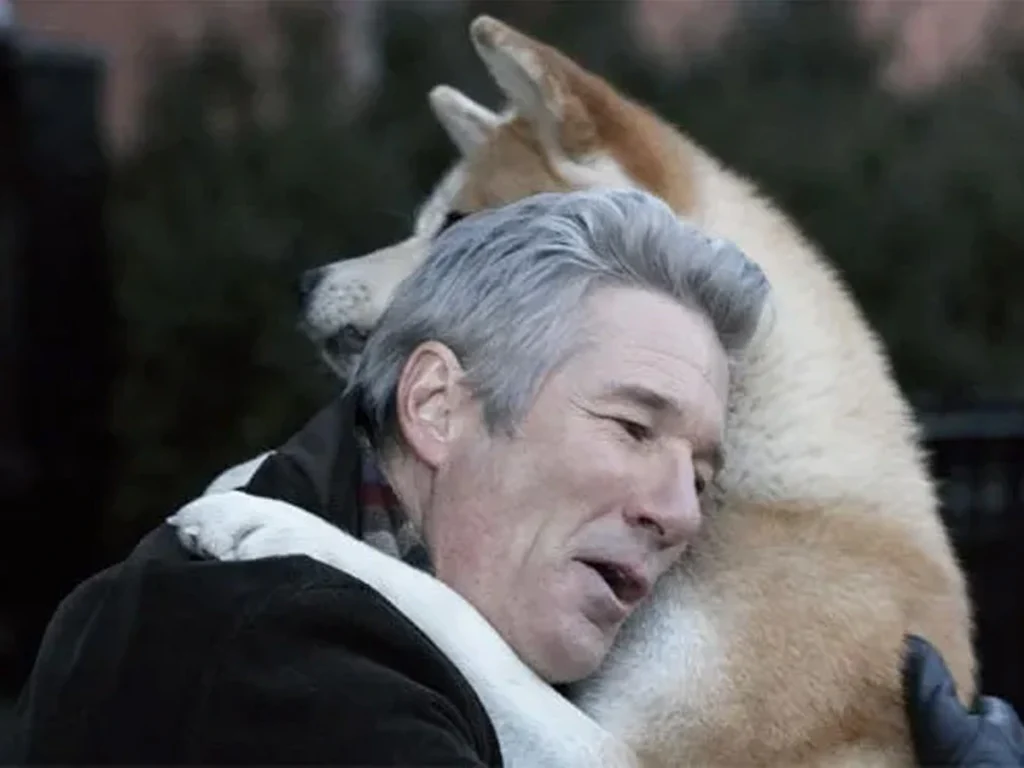
Many discover Hachiko through the 2009 Hollywood adaptation starring Richard Gere. The film is tender, beautifully lit, and emotionally devastating. But viewers still ask: is hachiko a true story?
Yes. It is.
The real events began in 1924 when Professor Hidesaburo Ueno of the University of Tokyo adopted a young Akita puppy. Ueno was a respected agricultural engineer, a widower, and a man of quiet habits. He named the dog Hachi. Their bond formed quickly. Historical accounts record that Ueno loved him so much he allowed the dog to sleep beneath his bed at night—a small but intimate detail that reveals the depth of affection between man and animal.
The cinematic version suggests a daily ritual at Shibuya Station. The reality was slightly different. Academic research clarifies that Professor Ueno usually walked to the Komaba campus, where Hachi waited faithfully at the university gate. Shibuya Station was not a daily commute destination. Ueno only departed from Shibuya when traveling out of town for official duties.
Then, on May 21, 1925, Ueno collapsed from a cerebral hemorrhage during a faculty meeting and never returned home.
Hachi was at the university gate that day. Waiting.
After Ueno’s death, the dog was passed between households. He resisted confinement. He escaped repeatedly. For a time, he went missing entirely—three days unaccounted for. When he was finally discovered, he had hidden himself inside a closet in Ueno’s former home, fasting beside the Professor’s clothes. He refused food. He refused comfort.
This was not staged sentiment. It was documented behavior.
Eventually, Hachi settled into a daily routine at Shibuya Station, the place associated with his master’s departures. For nearly ten years, he returned there every afternoon, waiting for a man who would never disembark from a train again.
This was not myth.
It was a loyalty story witnessed by station staff, commuters, and journalists who chronicled his vigil.
What breed of dog was Hachiko?

So, what breed was hachiko?
Hachiko was an Akita Inu, born in mid-November 1923 on a farm near Odate in Akita Prefecture, northern Japan. The region is cold, mountainous, and historically associated with robust hunting dogs capable of confronting wild boar and even bears.
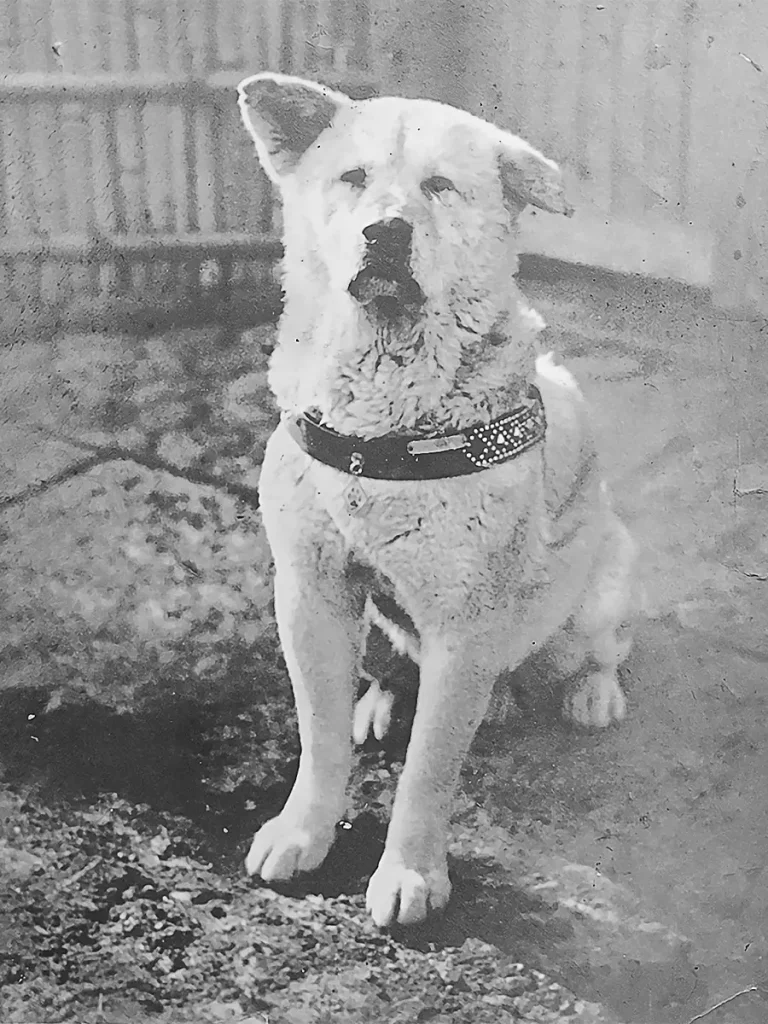
At maturity, Hachiko stood approximately 64.5 centimeters tall at the shoulder and weighed around 41 kilograms. He possessed the characteristic Sturdy build of the breed—broad chest, powerful limbs, and thick musculature beneath a dense double coat.
His Golden-brown coat shimmered with reddish undertones in archival photographs. His Curled tail, carried tightly over his back, signaled classic Akita lineage. His Erect ears gave him an alert, triangular silhouette typical of a Spitz type dog—a northern working group defined by pointed ears, wedge-shaped heads, and heavy fur.
But Hachiko’s appearance held one notable irregularity. One ear drooped.
While living as a stray after Ueno’s death, Hachi was involved in a dog fight that permanently damaged his left ear. It never stood upright again. That subtle asymmetry appears in early photographs and is preserved in the famous bronze statue. It gives his face an unexpected vulnerability. Strength, marked by hardship.
The Akita Inu is revered in Japan for traits of loyalty, reserve, and independence. Hachiko did not invent those qualities. He embodied them in public view.
What does Hachi mean in Japanese? The significance of the number 8.

Names matter in Japanese culture. So what does hachi mean in japanese?
“Hachi” means the number eight.
Two primary theories explain why Professor Ueno chose this name. One suggests that when Hachi stood upright, the positioning of his front legs resembled the kanji character for eight (八), which spreads outward at the base. Another theory claims he was the eighth puppy in his litter.
Both interpretations connect to symbolism. The number eight in Japanese tradition is associated with expansion and good fortune because the character widens at the bottom, suggesting growth and prosperity.
The “ko” in Hachiko is often misunderstood. It was not originally given by Professor Ueno. The suffix was added later by the public after a 1932 newspaper article brought national attention to the dog waiting at Shibuya Station. “Ko” implies nobility—sometimes interpreted as “duke” or “honored one.” It was a title of respect.
The stray who waited became Hachiko.
And the number eight became eternal.
The legacy of loyalty: How long did Hachiko wait for his master?
On May 21, 1925, Professor Hidesaburo Ueno collapsed during a faculty meeting. A cerebral hemorrhage. Sudden. Irreversible. He was fifty-three years old.
Hachi never saw him again.
The question people whisper at the statue is simple: how long did hachiko wait?
The answer is exact.
Nine years, nine months, and fifteen days.
From the afternoon of Ueno’s death until March 8, 1935, Hachiko returned to Shibuya Station. Not occasionally. Not symbolically. Daily.
The early years were not noble. They were cruel.
Between 1925 and 1932, Hachi was not yet a national treasure. He was a stray. Station workers viewed him as a nuisance. Some bullied him to keep platforms clear. Passersby poured water over his head. Children painted his face with chalk and ink. He was struck, chased, and driven away.
He kept coming back.
Rain soaked his Golden-brown coat. Summer heat baked the pavement beneath his paws. Winters in Tokyo bit through fur and bone. Yet each afternoon he positioned himself near the ticket gate—alert, scanning faces, listening for footsteps that would never approach.
It is easy to romanticize waiting. It is harder to survive it.
Public opinion shifted slowly. One incident became part of local memory. A police officer, struggling to identify a pickpocket in a crowded platform, noticed Hachi reacting sharply to a man attempting to slip away. The dog pressed forward, nose lowered, tracking the scent through the crowd. His intervention helped authorities detain the suspect. It was not obedience training. It was instinct—a working dog’s nose and a Loyal temperament still intact despite neglect.
The story circulated. People began to ask: what is the most loyal dog? The answer was no longer theoretical.
By 1932, Hachiko had become a quiet fixture of Shibuya’s growing Public square. His presence transformed the station entrance into something more than infrastructure. It became a Focal point—a place where strangers paused, where commuters softened, where children were taught the meaning of devotion.
He was no longer just a dog waiting.
He was what is hachi—a living embodiment of fidelity.
How did Hachiko die? The final days of the faithful companion.

In his later years, Hachiko was taken in by Kikuzaburo Kobayashi, Professor Ueno’s former gardener. Kobayashi provided shelter and food, but Hachi maintained his ritual. Even as age stiffened his joints and clouded his eyes, he limped back to Shibuya.
His body was failing long before the public understood.
A persistent rumor claims he died from eating discarded yakitori skewers—chicken bones that ruptured his stomach. It is a dramatic image. It is also incorrect.
In 2011, researchers at the University of Tokyo conducted a detailed re-examination of preserved remains using modern imaging and autopsy analysis. Their findings were conclusive. Hachiko suffered from terminal cancer affecting his lungs and heart. He was also severely infected with filariasis caused by Dirofilaria Immitis, a parasitic heartworm common in that era before preventive medicine.
Yes, four skewers were found in his stomach. But they had not punctured his organs. They were incidental. Not fatal.
He died from disease, not gluttony.
On March 8, 1935, Hachiko was found lying near the station he had guarded for nearly a decade. The final photograph taken that day is devastating in its stillness. His body rests on the pavement, frail and curled. Surrounding him are station employees who had once shooed him away—and Professor Ueno’s partner, Yaeko. Faces solemn. Hats removed.
Tokyo paused.
Hachiko’s body was preserved. His pelt carefully mounted. His internal organs studied and archived. His remains treated with scientific respect and public reverence.
History added one more quiet chapter decades later. In 2016, Yaeko’s ashes were finally reunited with Professor Ueno and buried beside him and Hachiko. After lifetimes of separation, they rest together.
Why is the Hachiko statue so famous in Tokyo?
Hachiko’s fame did not arise organically from sentiment alone. It was ignited by journalism.
In October 1932, the newspaper Asahi Shimbun published an article written by one of Professor Ueno’s former students. The story detailed the dog who waited every day at Shibuya Station for a master who would never return. The piece spread rapidly across Japan.
Public perception transformed overnight.
The stray became a national hero. Donations poured in. Children wrote letters. Artists sketched his likeness. Within a year, plans were made to commemorate him in bronze at the station entrance.
The statue’s placement was deliberate. Not hidden in a garden. Not confined to a shrine. It stood in the open flow of commuters—an everyday reminder that loyalty could exist amid modernity’s rush.
His story crossed oceans as well.
When Helen Keller visited Japan in 1937, she was deeply moved by Hachiko’s story. She declared the Akita an extraordinary example of devotion. In response, the Japanese government gifted her two Akita dogs—making her the first person to bring the breed to the United States.
Through her, the Akita Inu entered American consciousness.
Through Hachiko, it entered legend.
And the statue at Shibuya became more than bronze.
It became memory made visible.
Where is the Hachiko statue located today?
For many travelers, the first question is simple: where is hachiko statue?
The answer is both geographical and symbolic.
Physically, it stands outside Shibuya Station in Tokyo. Spiritually, it stands wherever loyalty is remembered.
The story of Hachiko did not end with his passing in 1935. It transformed into bronze, stone, and public space. Monuments became anchors for collective memory. They ensured that this loyalty story would not fade into footnotes or film adaptations. Instead, it would live in metal and shadow, touched by millions of hands.
A statue does something history books cannot. It occupies space. It casts a silhouette at sunset. It becomes a meeting point for the living.
And in Shibuya, that meeting point has become one of the most recognized dog monuments in the world.
Visiting the Hachiko statue at Shibuya Station.
The first hachiko dog statue was unveiled in April 1934. It was sculpted by Teru Ando, a respected Japanese artist of the era. In an extraordinary and almost surreal detail of history, Hachiko himself attended the ceremony. He stood quietly beside the finished bronze likeness—an old dog facing his own monument.
One year later, he was gone.
Then came war.
In 1944, during World War II, Japan enacted the Metal Collection Act. Public metal objects were requisitioned to support the war effort. The original statue was dismantled and melted down—not for bullets, as is often claimed—but for train parts and industrial components deemed essential for transportation.
The pedestal remained empty.
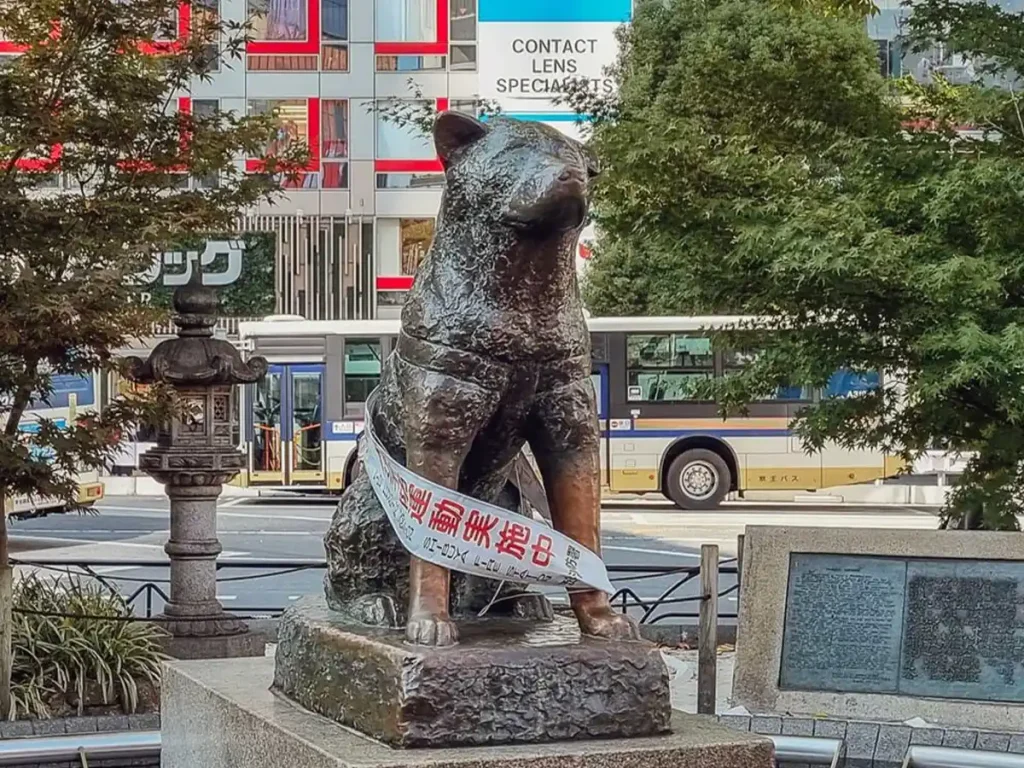
In 1948, a new statue was commissioned. This time, it was created by Takeshi Ando, the son of the original sculptor. The second monument is the one visitors see today.
It is a masterwork of Solid bronze construction, produced through Solid casting rather than hollow sheet fabrication. That structural choice matters. Solid bronze offers superior Durability, structural integrity, and long-term resilience against stress fractures. The surface carries a naturally evolving Patina, deepening in tone with time and exposure.
Bronze is inherently Weather-resistant. It withstands rain, humidity, urban pollution, and the constant touch of human hands. The statue’s proportions reflect careful study of archival photographs, preserving Hachiko’s slightly drooping ear and attentive posture through meticulous Detailed craftsmanship.
The figure stands close to a 1:1 scale, creating a near Life size dog statue experience. This is not an exaggerated heroic monument. It is intimate. Visitors do not look up at him. They stand beside him.
That realism is intentional. Realistic proportions invite emotional connection.
The statue functions today as more than a landmark. It is a social ritual. Couples meet there. Friends reunite there. It is Shibuya’s emotional compass.
Beyond Shibuya: Other dog statues inspired by Hachiko’s story.

Hachiko’s memory does not belong to Shibuya alone.
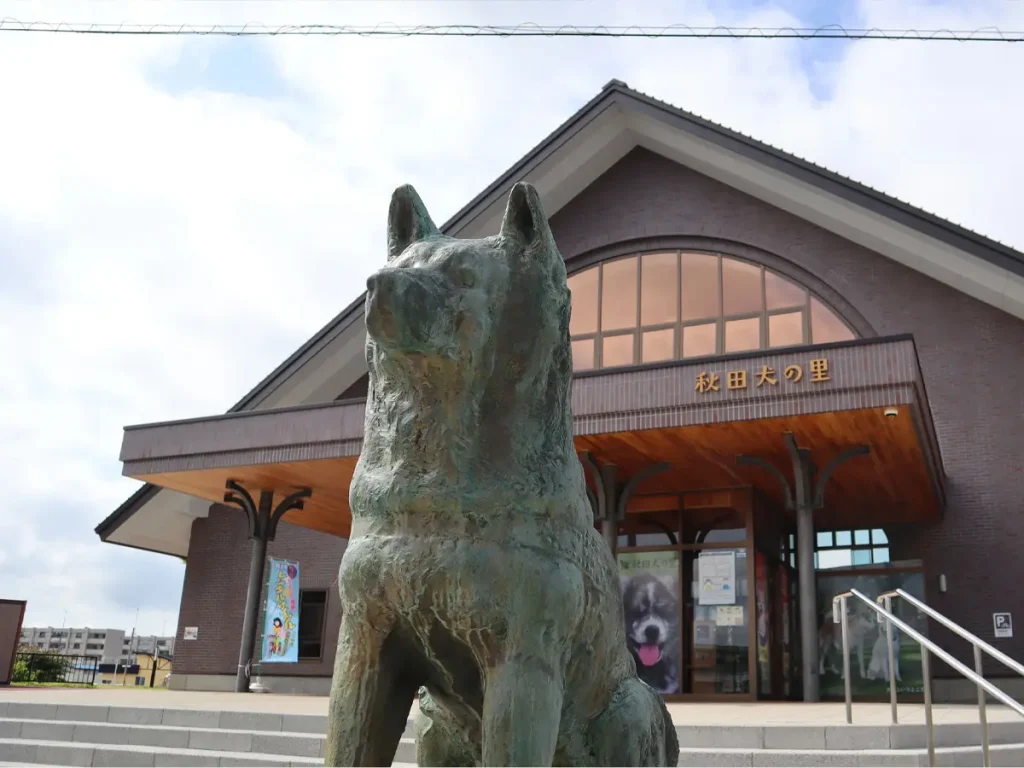
In Odate, his birthplace in Akita Prefecture, another statue stands near Odate Station. In Woonsocket, Rhode Island, a monument honors him in the United States—evidence of how far the story traveled. And in 2015, the University of Tokyo unveiled a deeply moving sculpture depicting Hachiko leaping up to greet Professor Ueno in joyful reunion. It is the moment history never allowed—finally realized in bronze.
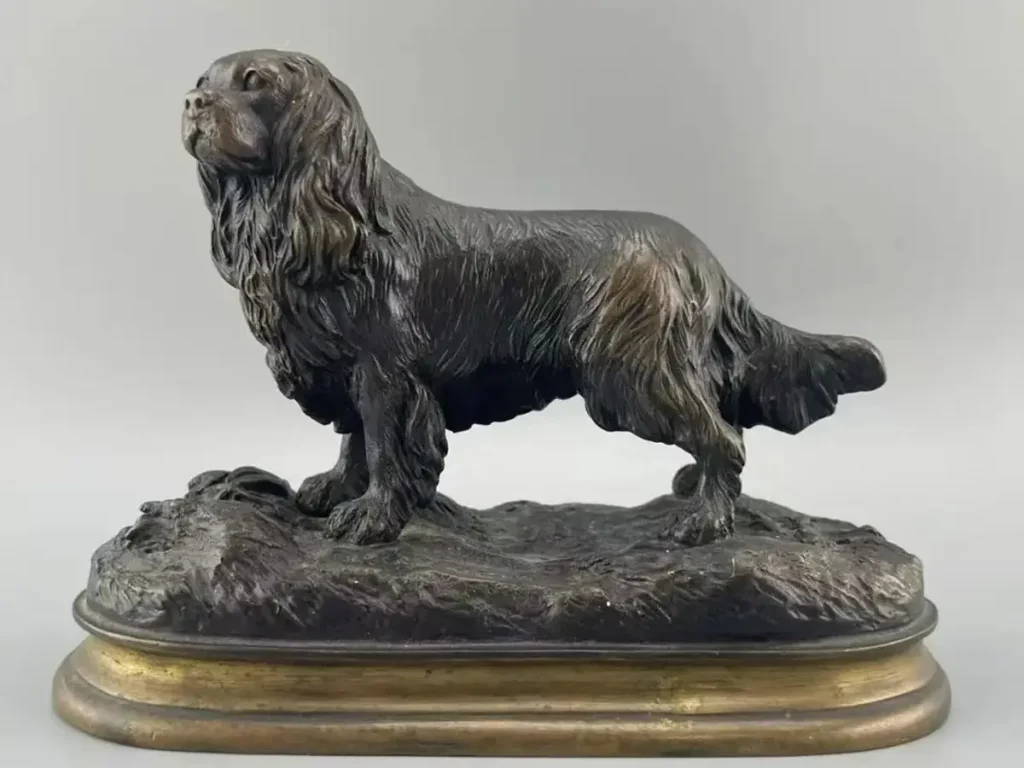
Each of these works demonstrates something profound. A Bronze dog statue is not merely decorative. It is narrative frozen in time.
Beyond bronze, some memorials take form as Stone dog statues, Hand-carved from granite or marble. Stone offers a different emotional language—permanence, gravity, quiet reverence. Bronze offers warmth, evolving color, and sculptural fluidity.
Both endure.
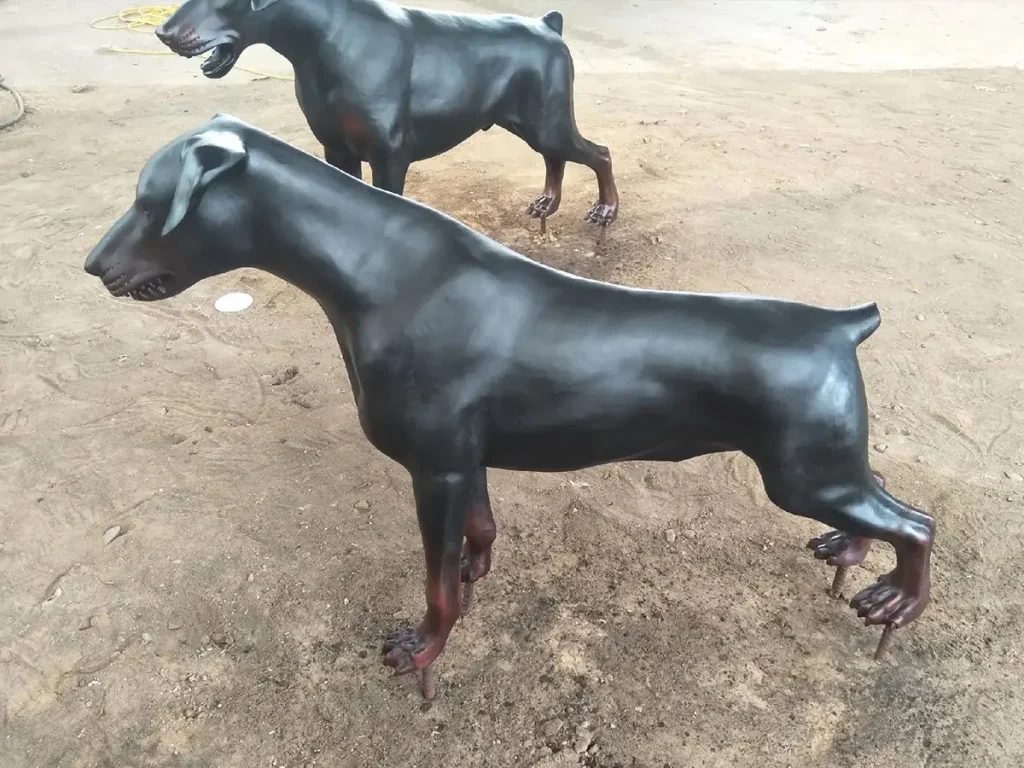
In contemporary landscape design, a Large outdoor statue of a beloved companion can serve as an Entrance guard, a contemplative centerpiece within Landscaping, or a serene Garden dog statue beneath a maple tree. An Outdoor dog sculpture does not simply decorate space—it defines it.
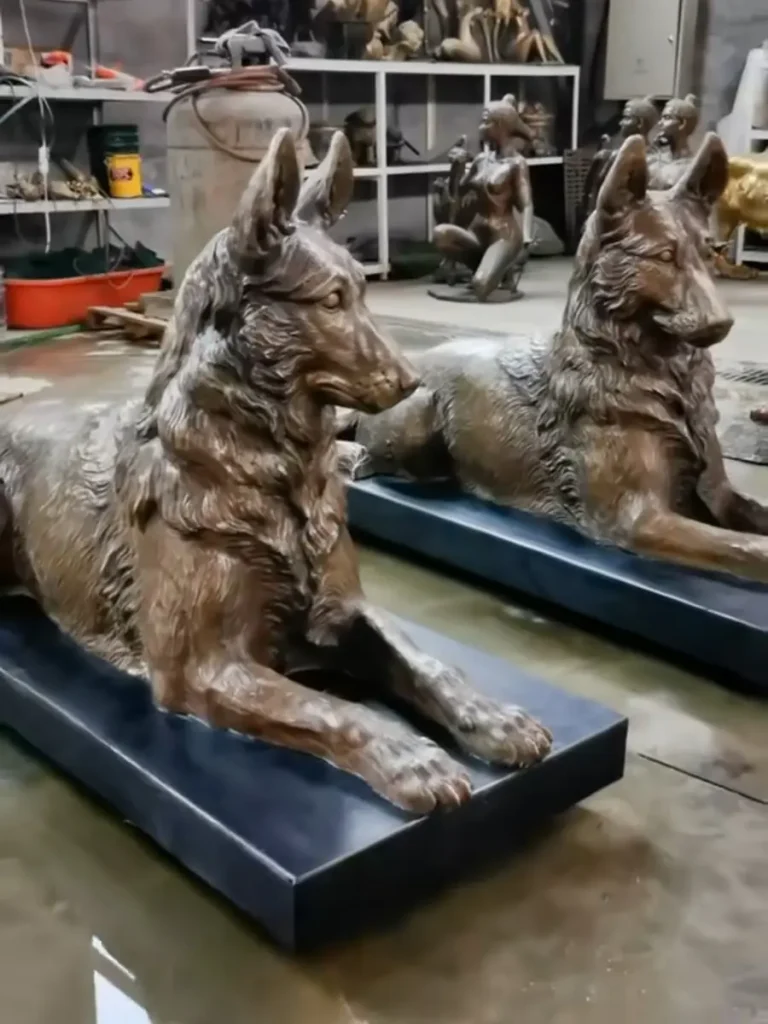
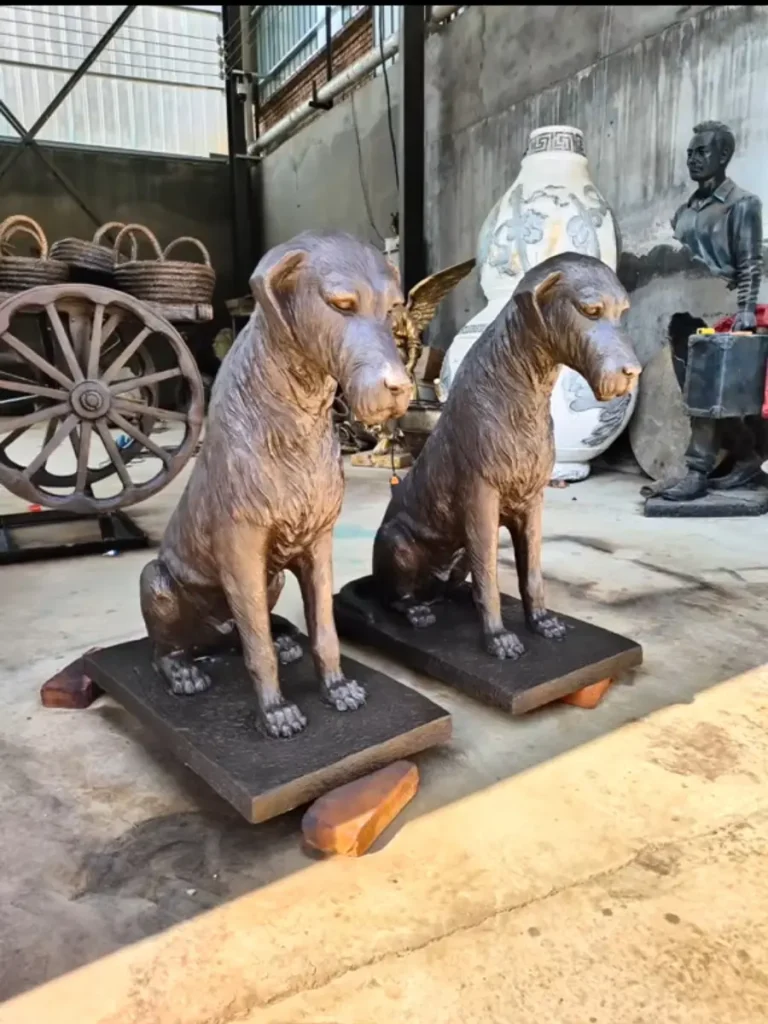
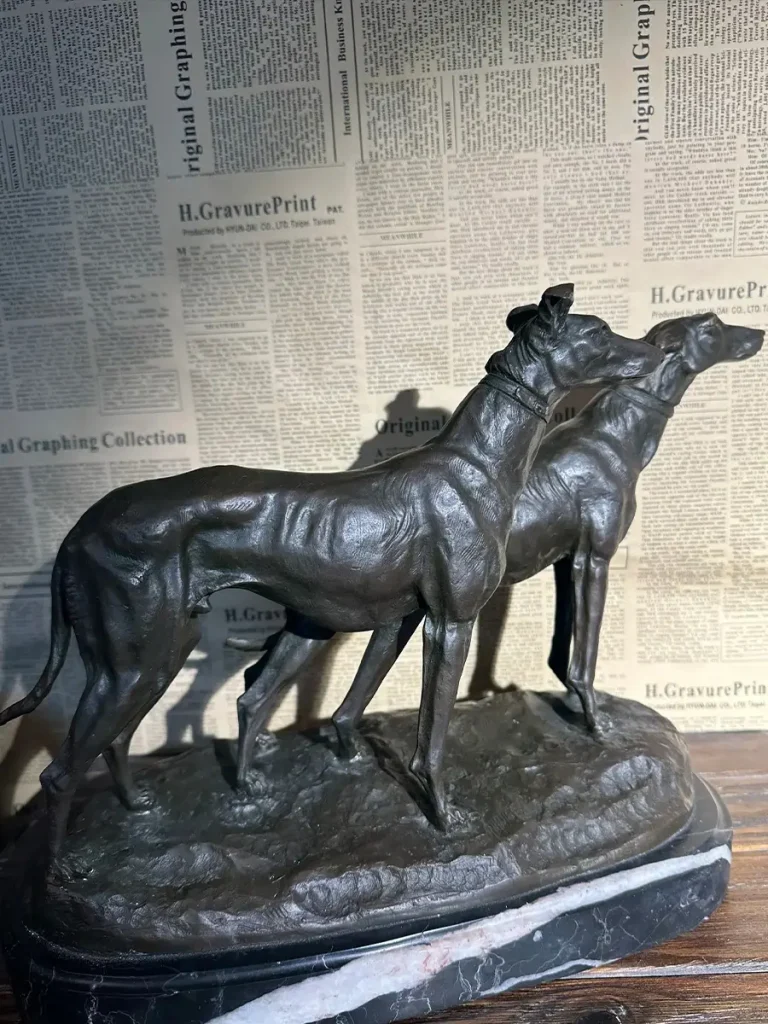
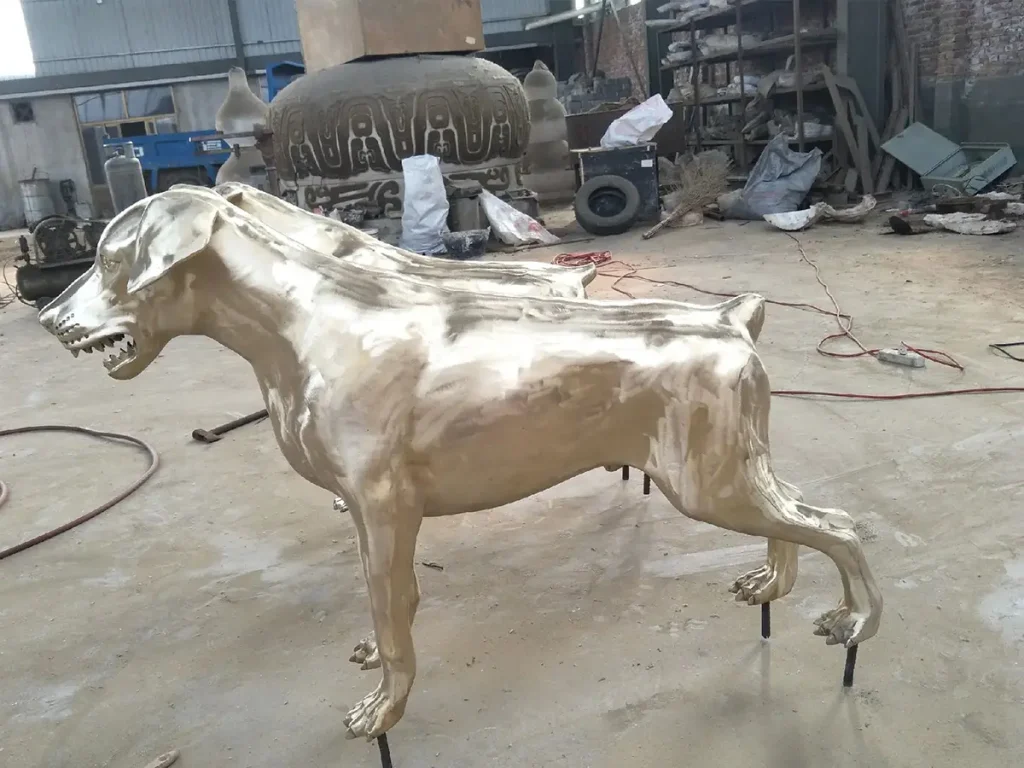
At Yun Sculpture, we understand this intimately. We work in Solid bronze, natural stone, and museum-grade alloys to create bespoke memorials that honor real bonds. A Pet memorial statue is not a product. It is a Lasting tribute.
We offer fully customized solutions—whether a faithful Custom pet sculpture modeled from photographs, or a formally composed garden installation with architectural integration. Every piece is built with structural precision, refined Patina control, and anatomical accuracy that respects Realistic proportions.
Some clients request a quiet 1:1 scale memorial placed beneath trees. Others commission a slightly enlarged presence to serve as a symbolic guardian near an estate entrance. Each design is approached with sculptural discipline and emotional responsibility.
Because loyalty deserves permanence.
A Personalized memorial in bronze or stone ensures that devotion does not disappear with time. It stands through seasons. Through rain. Through decades.
Just as Hachiko does.
Frequently Asked Questions About Hachiko
1. Was Hachiko a real dog?
Yes. Hachiko was a real, purebred Akita Inu born in mid-November 1923 near Odate, Akita Prefecture. He was adopted in 1924 by Professor Hidesaburo Ueno of the University of Tokyo. His life, vigil, and death are documented in newspapers, university archives, and veterinary studies.
2. How long did Hachiko wait?
Hachiko waited exactly 9 years, 9 months, and 15 days. From May 21, 1925—the day Professor Ueno died—until March 8, 1935, he returned daily to Shibuya Station. His vigil became a national symbol of devotion.
3. Did Hachiko die of starvation?
No. Modern medical analysis conducted in 2011 by the University of Tokyo confirmed he died from terminal cancer affecting his lungs and heart, along with severe filariasis caused by Dirofilaria Immitis. He was not a victim of starvation.
4. What about the yakitori skewers in his stomach?
Hachiko was known to eat chicken skewers (yakitori) given by sympathetic vendors and passersby. Four skewers were found in his stomach during examination. However, they did not puncture his organs and were not the cause of death.
5. Did Hachiko ever see his own statue?
Yes. The first bronze statue was unveiled in April 1934, and Hachiko was present at the ceremony. He stood beside the monument modeled in his likeness less than a year before his death.
6. Is the current Shibuya statue the original?
No. The original 1934 statue was melted down in 1944 under Japan’s Metal Collection Act during World War II. The current statue is a 1948 reconstruction created by Takeshi Ando, the son of the original sculptor.
7. Where is Hachiko buried?
Hachiko’s ashes are buried beside Professor Ueno at Aoyama Cemetery in Tokyo. In 2016, the ashes of Yaeko—Ueno’s partner—were also reunited and interred there, symbolically restoring the trio.
8. Where can I see Hachiko’s taxidermy mount?
His preserved fur and mounted form are displayed at the National Museum of Nature and Science in Tokyo. It remains one of the museum’s most emotionally powerful exhibits.
9. Why was one of Hachiko’s ears floppy?
While living as a stray after Professor Ueno’s death, Hachiko was bitten during a dog fight. The injury permanently damaged his left ear, leaving it drooping for the rest of his life.
10. How did Helen Keller connect to Hachiko?
Helen Keller was deeply moved by Hachiko’s story during her 1937 visit to Japan. She was gifted two Akita dogs, becoming the first person to bring the breed to the United States and introducing the Akita to American audiences.