Get in touch with Yun-Sculpture company
Elegant Wildlife: The Ultimate Guide to Deer & Stag Statues for Your Garden

Across cultures and centuries, the deer has always carried a quiet nobility. From medieval European hunting parks to classical Asian gardens, the stag symbolized longevity, grace, and a refined relationship with nature. Its posture—alert yet peaceful—captures the elegance of the wilderness without the violence of the hunt.
Today, thoughtfully placed Deer statues for garden settings allow homeowners to recreate that same poetic atmosphere. A pair of Deer garden statues standing beneath trees or near water transforms an ordinary lawn into something that feels curated, almost estate-like. The effect is subtle yet powerful: a quiet presence that invites the viewer to pause.
Among all sculptural materials, one form stands above the rest. The Bronze deer statue has long been considered the ultimate expression of wildlife sculpture—durable, timeless, and capable of capturing the delicate anatomy of the animal with extraordinary realism. When properly crafted, it does more than decorate a landscape. It becomes part of it.
Table of Contents
Table of Contents
Enhancing Your Landscape with Deer & Stag Sculptures
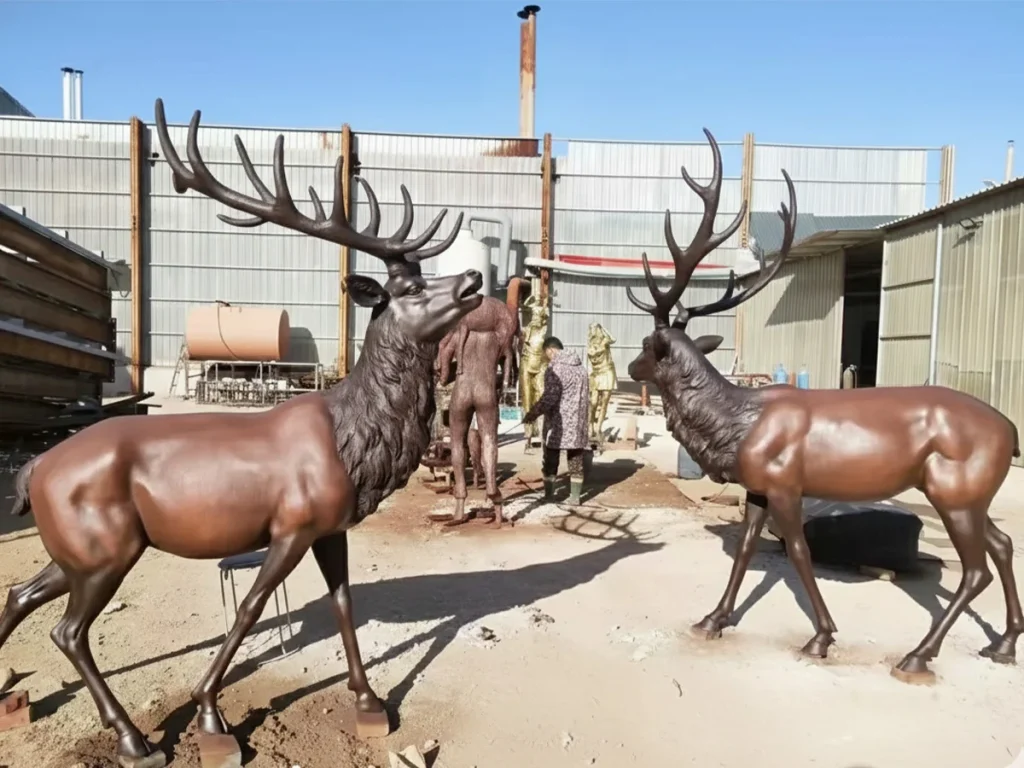
A well-designed garden relies on rhythm and contrast. Trees provide vertical structure, pathways guide movement, and water introduces reflection and sound. Sculptures serve another role entirely—they introduce narrative.
Deer sculptures are particularly effective because they feel naturally at home outdoors. Unlike abstract objects, they appear as if they belong to the landscape itself. A standing stag emerging from a grove or a grazing doe near a pond creates the illusion that the garden has quietly attracted wildlife.
When homeowners select Deer statues for the yard, they are not merely choosing decoration. They are shaping the emotional character of the space.
Choosing the Right Material: Bronze, Metal, or Concrete?
Material determines both the longevity of a sculpture and the atmosphere it creates in a landscape.
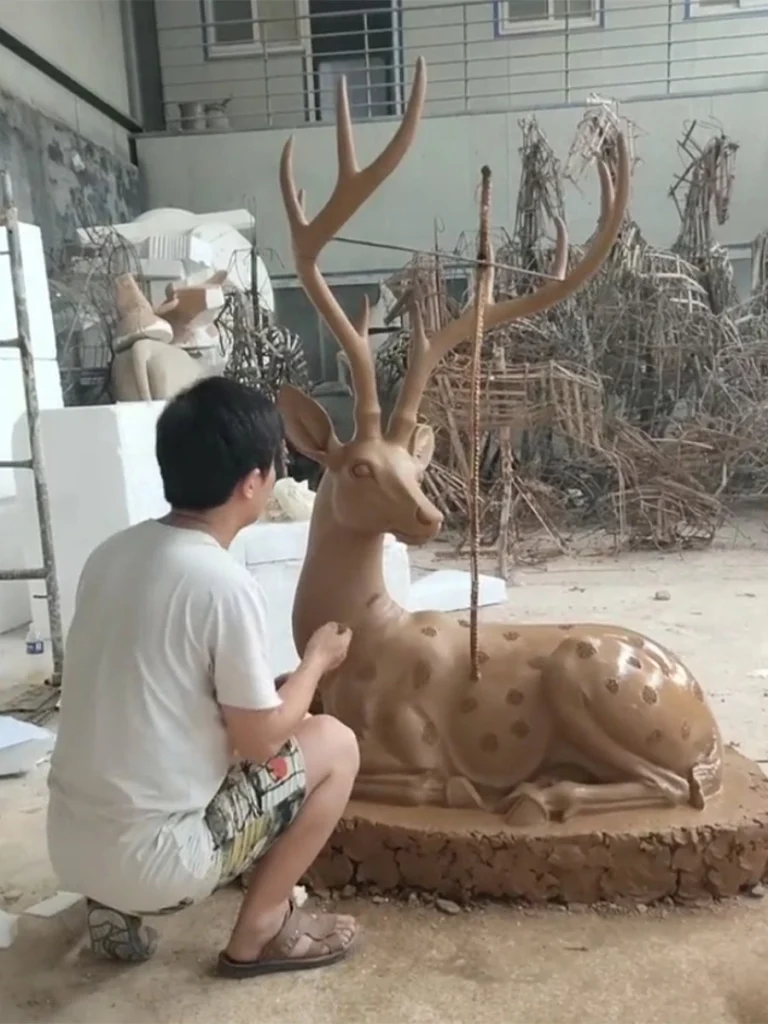
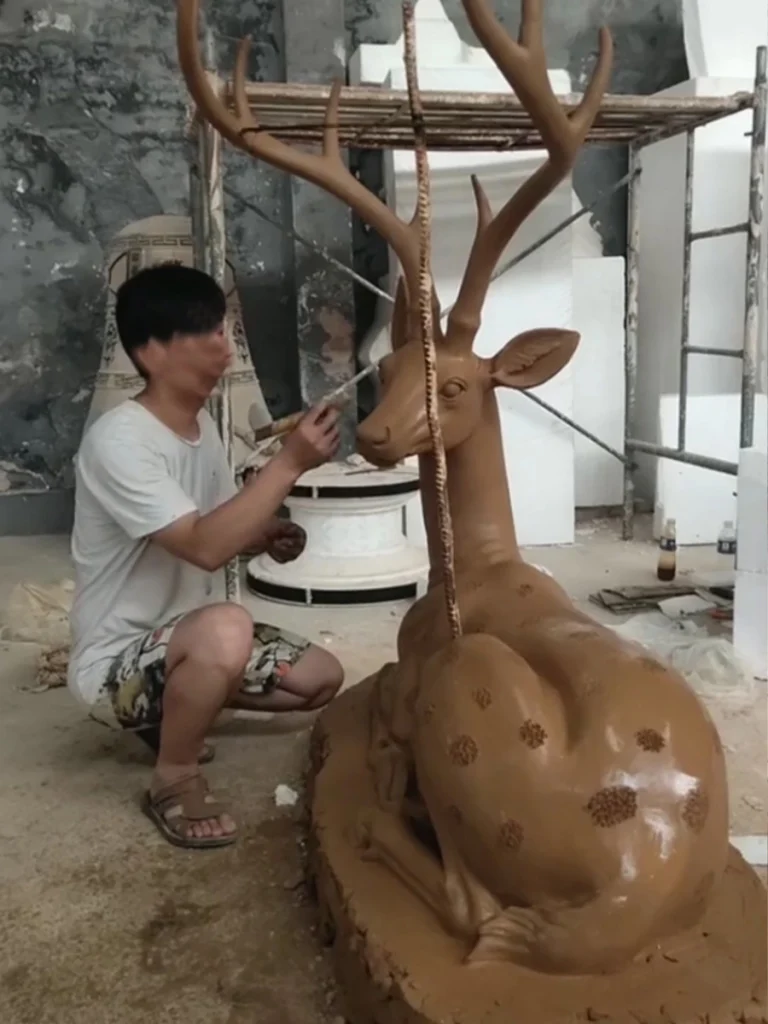
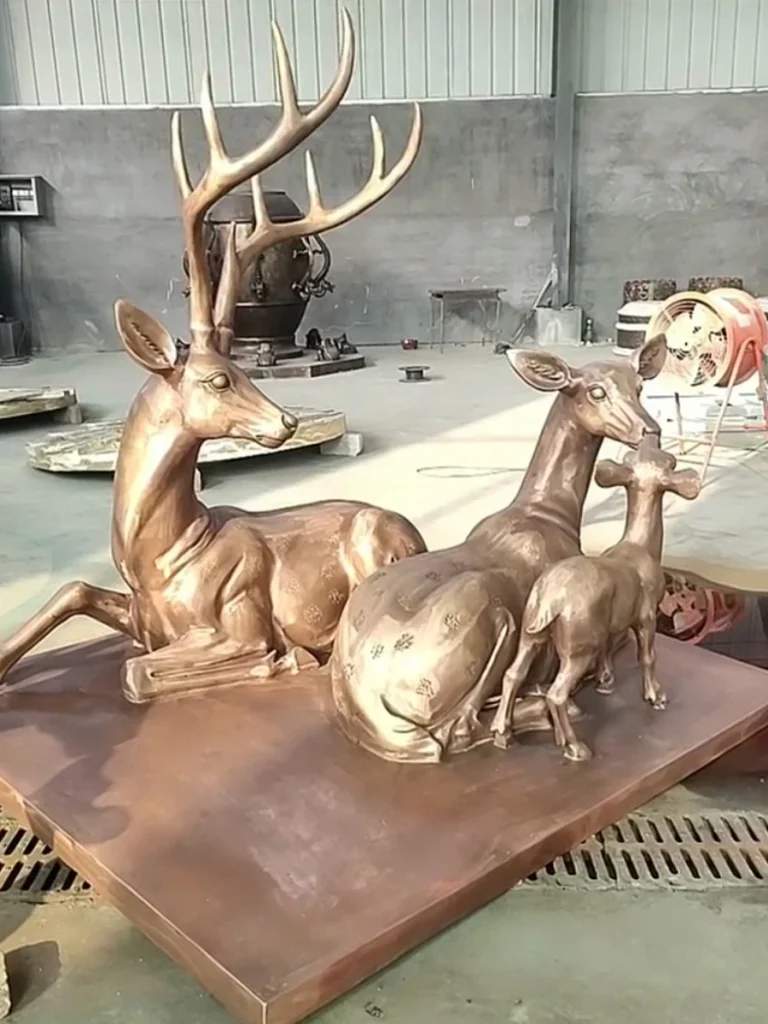
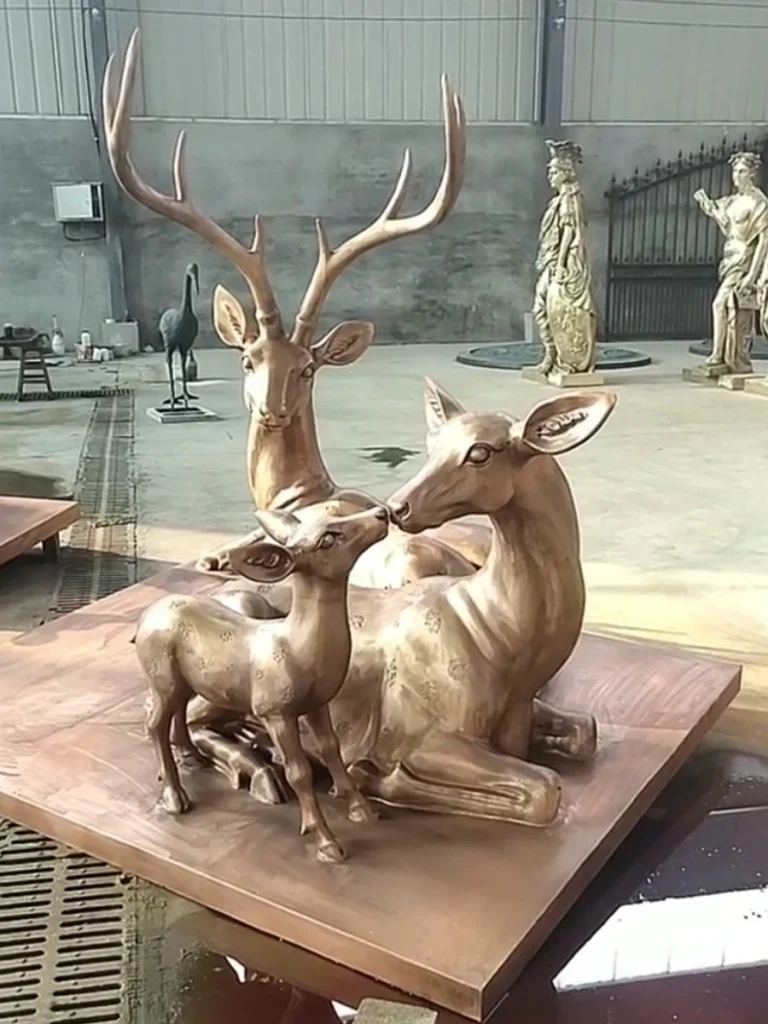
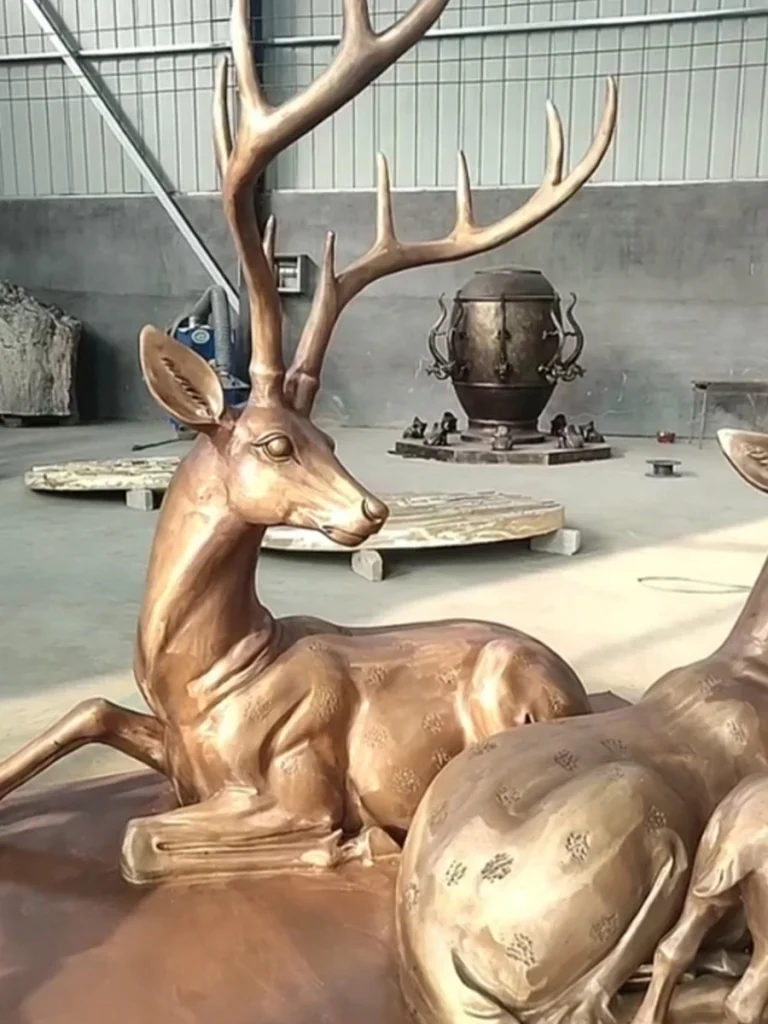
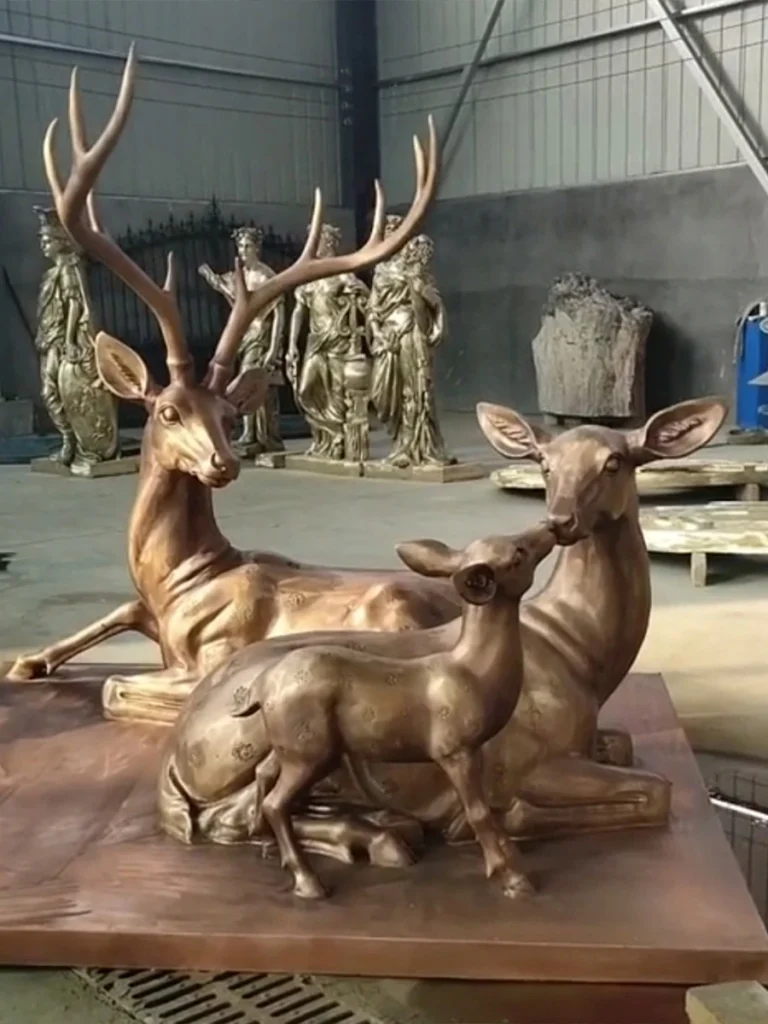
Bronze remains the gold standard. A carefully modeled Bronze whitetail deer sculpture captures anatomical subtleties—the tension of muscles, the angle of the neck, the elegant branching of antlers. This level of detail is possible because of the ancient Lost-wax casting process.
In this technique, artists first sculpt the deer in clay or wax. A mold is created around the wax model, which is then melted away and replaced with molten bronze. The result is a hollow yet incredibly durable sculpture capable of preserving the artist’s smallest details.
Over time, the surface develops a Polished bronze patina that deepens in color, shifting from warm gold to rich brown and green tones. This transformation is not deterioration; it is the metal aging gracefully. Properly finished bronze provides the ultimate Weather-resistant finish, allowing a sculpture to remain outdoors for decades, even generations.
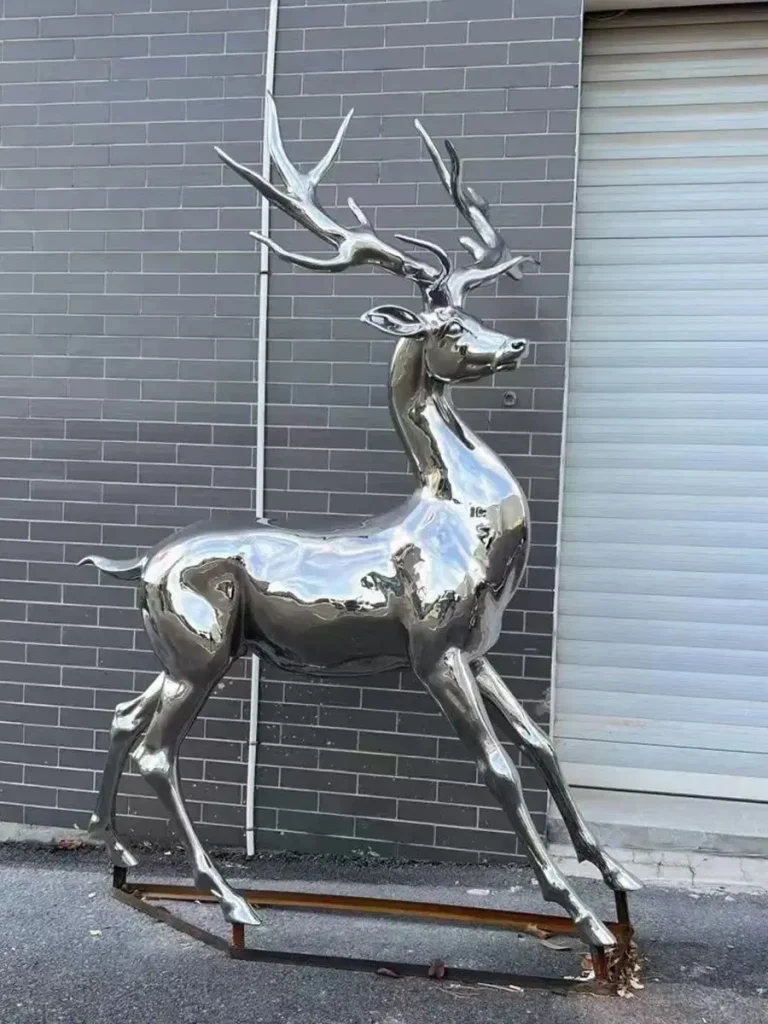
Modern landscapes sometimes call for a different aesthetic. In contemporary gardens, a Metal deer sculpture made from stainless steel or recycled aluminum can create a striking visual contrast. These materials emphasize clean lines and reflective surfaces, allowing the sculpture to interact with light in dynamic ways. Minimalist architecture and modern patios often benefit from this sharper, more geometric interpretation of the deer form.
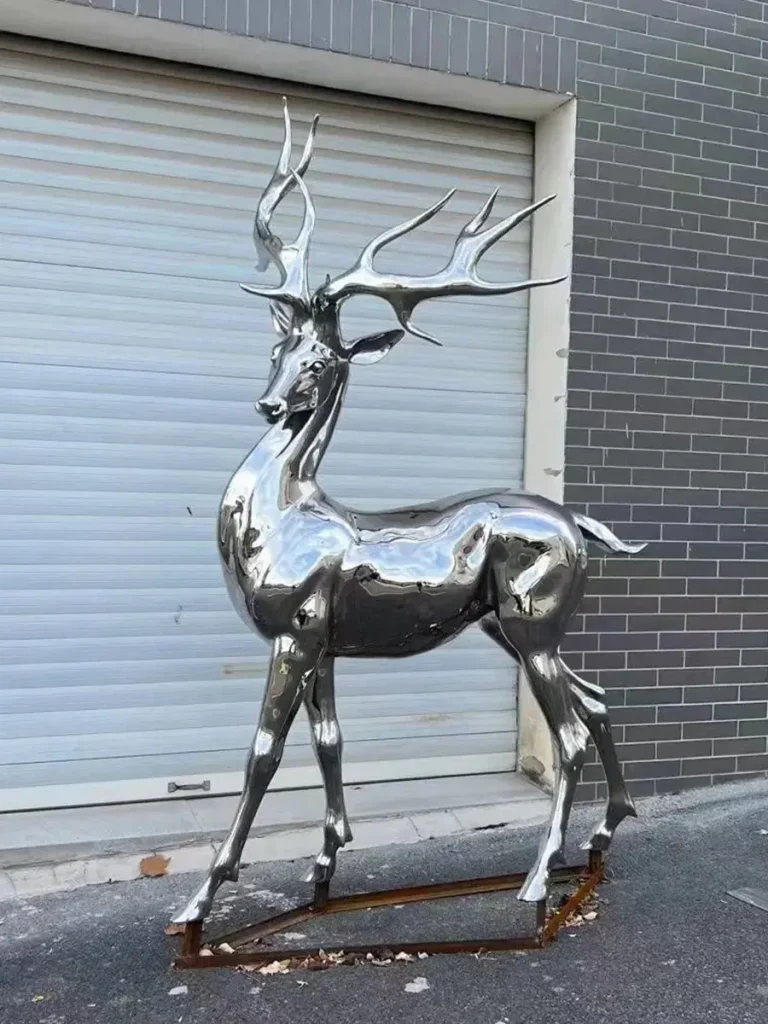
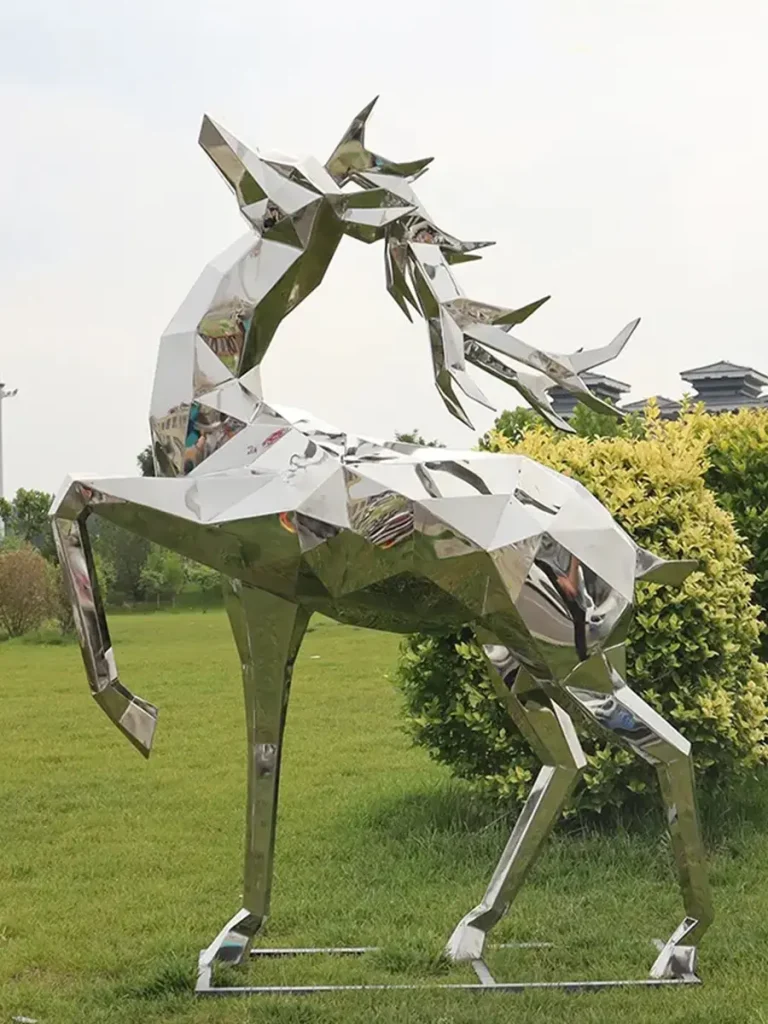
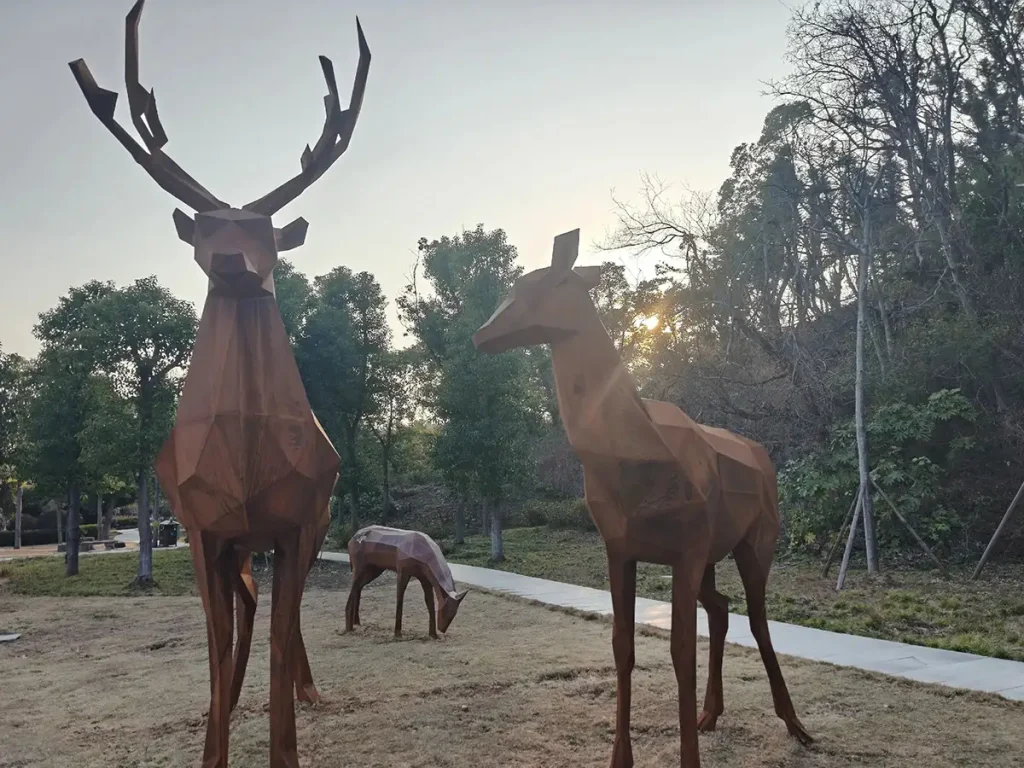
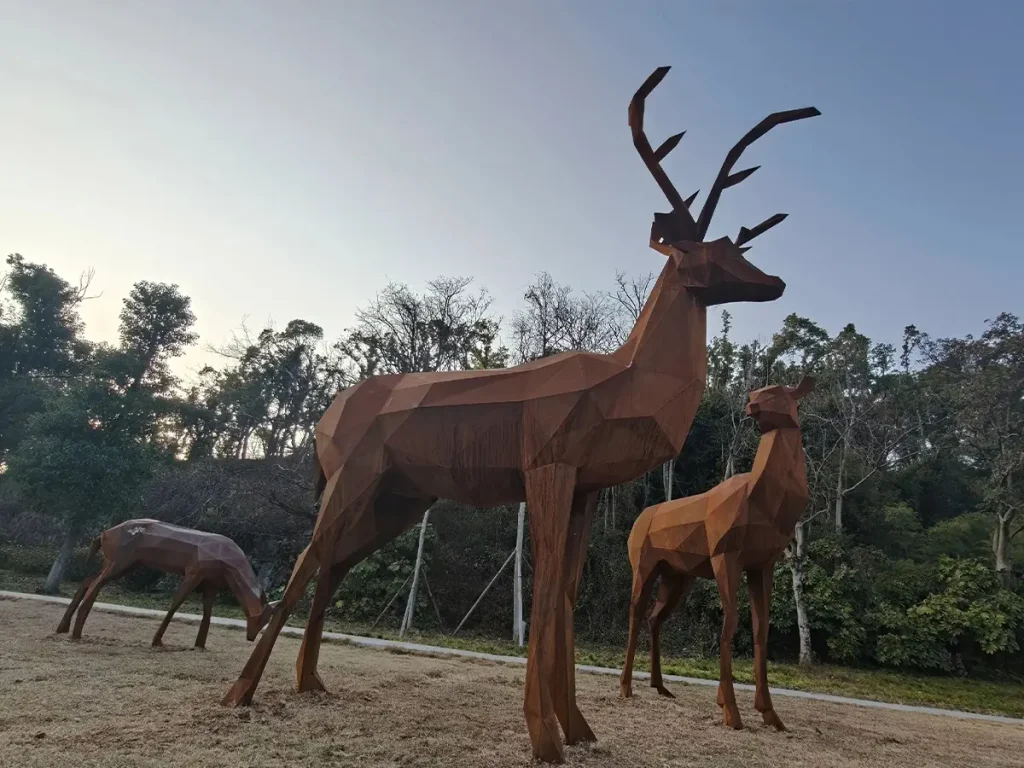
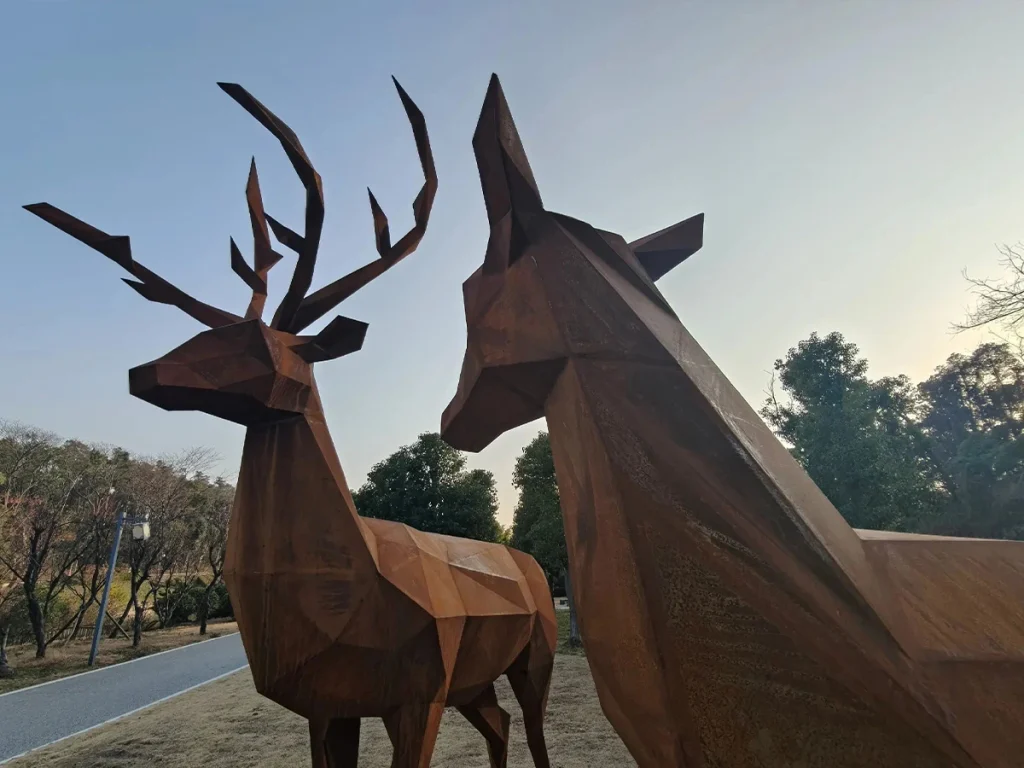
Then there are Concrete deer statues, which evoke a rustic and traditional charm. Their slightly textured surfaces and muted tones blend comfortably into cottage gardens, woodland paths, and older properties.
Donghui Zhang often reminds clients of an important technical reality:
“Concrete offers a classic, rustic look, but beware of the freeze-thaw cycle in harsh winters. It requires proper sealing to prevent cracking.”
Without that protection, water can enter microscopic pores in the material. When temperatures drop, the expansion of freezing water may eventually damage the sculpture. Proper sealing dramatically extends the lifespan of concrete pieces.
Each material carries its own personality. Bronze conveys prestige and permanence, metal introduces modern artistry, and concrete offers a relaxed countryside character.
The Art of Placement: Where to Put Your Deer Statue
Placement determines whether a sculpture feels magical or misplaced.
A common mistake is dropping Lawn deer statues directly into the center of open grass. This approach treats sculpture like furniture—visible immediately and from every angle. Yet great landscapes rarely reveal everything at once.
Landscape designers use a concept known as progressive discovery. A visitor should encounter the garden gradually, with visual moments unfolding as they move through the space.
Deer sculptures are particularly suited to this strategy. Their forms suggest movement, curiosity, and quiet observation.
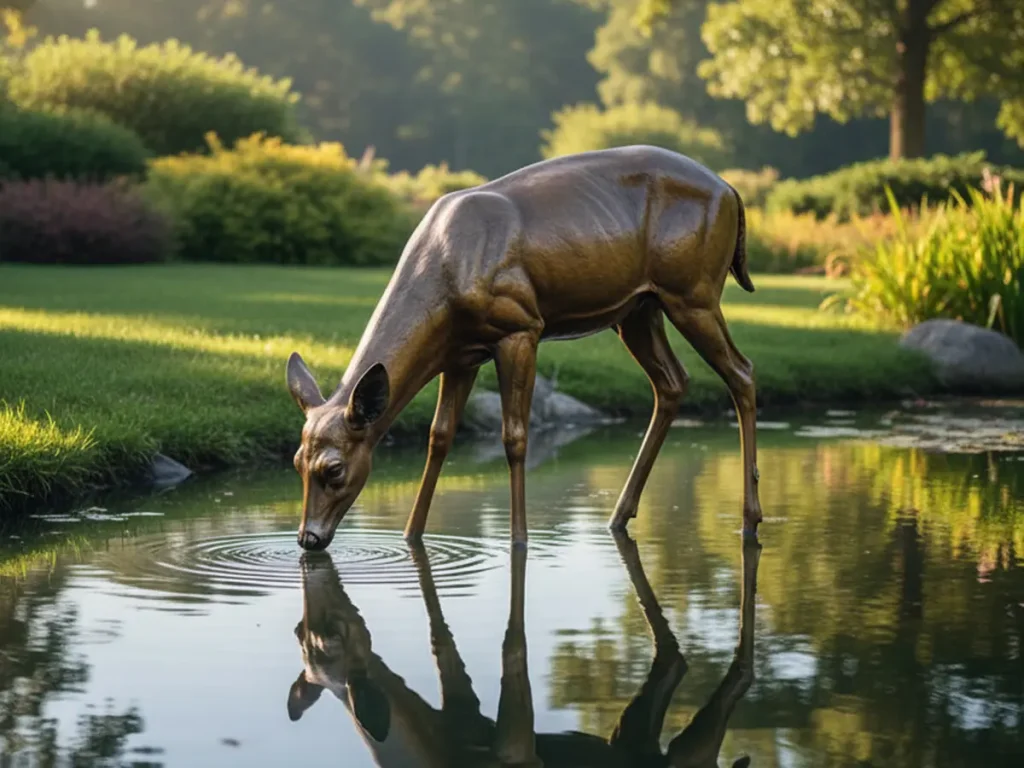
One elegant placement idea is positioning Deer statues for the yard near a pond or small water feature. A drinking stag beside the water feels instinctively believable. The reflection doubles the sculpture visually, amplifying its presence while maintaining a natural atmosphere.
Another approach is placing Deer statues for outside at the edge of a treeline or behind ornamental grasses. Partially obscured forms create intrigue. Visitors notice the antlers first, then the full silhouette appears as they approach.
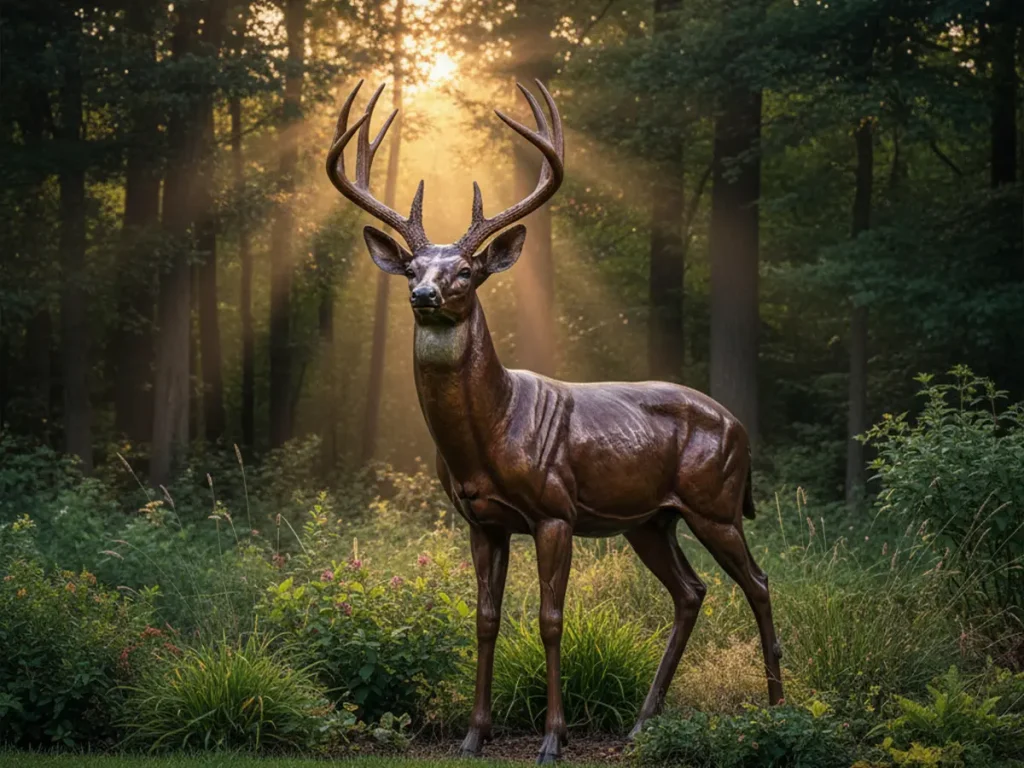
This technique transforms the sculpture into a subtle Garden focal point rather than a loud centerpiece.
The goal is always harmony with the environment. When properly placed, the gentle posture and elongated lines of the Whitetail deer express extraordinary Sculptural grace. The statue appears less like an object and more like a living presence that has quietly stepped into the garden and decided to stay.
In successful landscapes, that illusion is everything.
Life-Size vs. Decorative: Finding Your Perfect Fit
Scale is one of the most overlooked aspects of sculpture selection. Homeowners often focus on style or material, yet the size of a sculpture quietly determines how a person experiences the entire landscape.
In garden design, sculpture sizes generally fall into five psychological categories.
Miniature pieces—often under 12 inches—function almost like hidden treasures. They invite close inspection and are best placed along pathways, inside flower beds, or near benches where visitors naturally pause.
Decorative small sculptures, usually between 1 and 2 feet tall, are common Deer garden statues used among shrubs or low plantings. At this scale, the deer feels playful and intimate rather than majestic.
The next category is mid-scale sculpture, ranging from roughly 2 to 4 feet. These pieces start to carry visual weight. They are large enough to serve as accents beside patios, garden walls, or water features without dominating the space.
Then comes life-size sculpture, where the emotional dynamic changes completely. A deer rendered at its natural height—around 3 to 4 feet at the shoulder—creates a moment of realism. Visitors instinctively slow down, sometimes even stepping quietly, as if they might startle the animal.
Finally, there is the monumental scale. These pieces exceed natural size and are often used in public landscapes, grand estates, or architectural entrances. At this level, viewers must physically tilt their heads upward. That simple gesture creates a subtle psychological shift—from admiration to awe.
Scale determines posture.
Small sculptures invite closeness. Large sculptures command distance. A well-chosen size ensures the statue communicates exactly the emotional tone the landscape designer intends.
For many estate landscapes, Life size deer statues strike the ideal balance. They feel authentic without overwhelming the garden, allowing the sculpture to blend into the natural environment while still drawing the eye.
Making a Statement with Life-Size Bronze Stag Statues
If the deer represents elegance, the Stag represents authority.
Across European art history, the stag has been a symbol of nobility and endurance. Heraldic crests throughout Britain, Germany, and Austria frequently display antlered stags standing in proud profile. The animal embodies power that is calm rather than aggressive—a quiet confidence associated with aristocratic lineage and continuity.
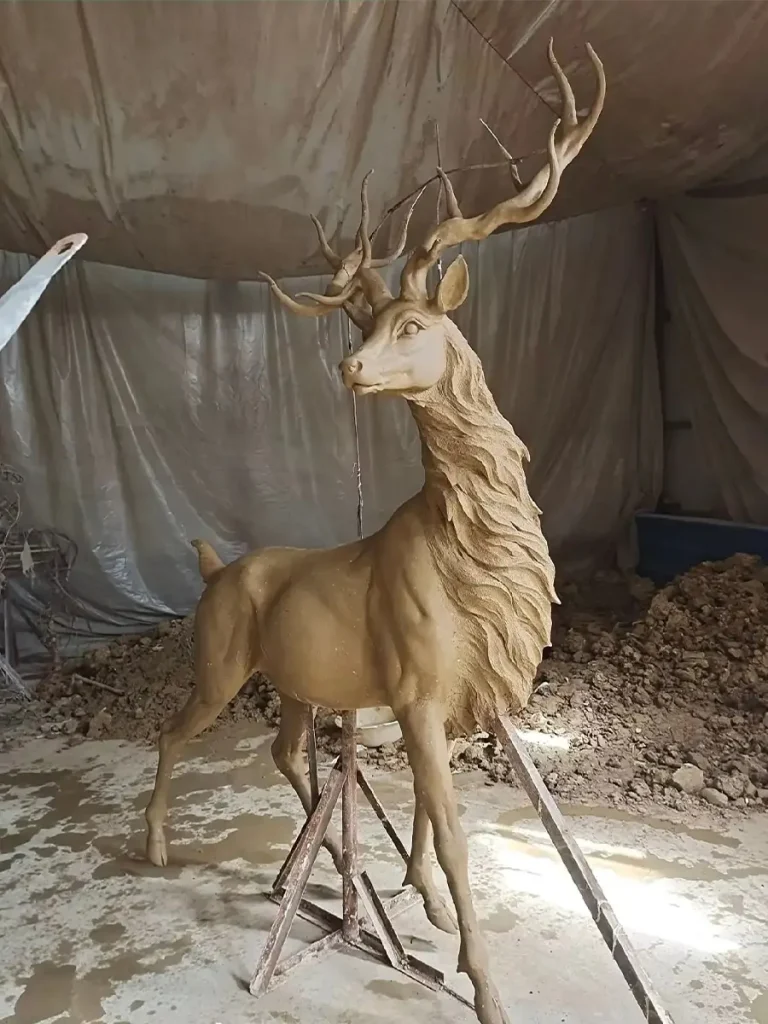
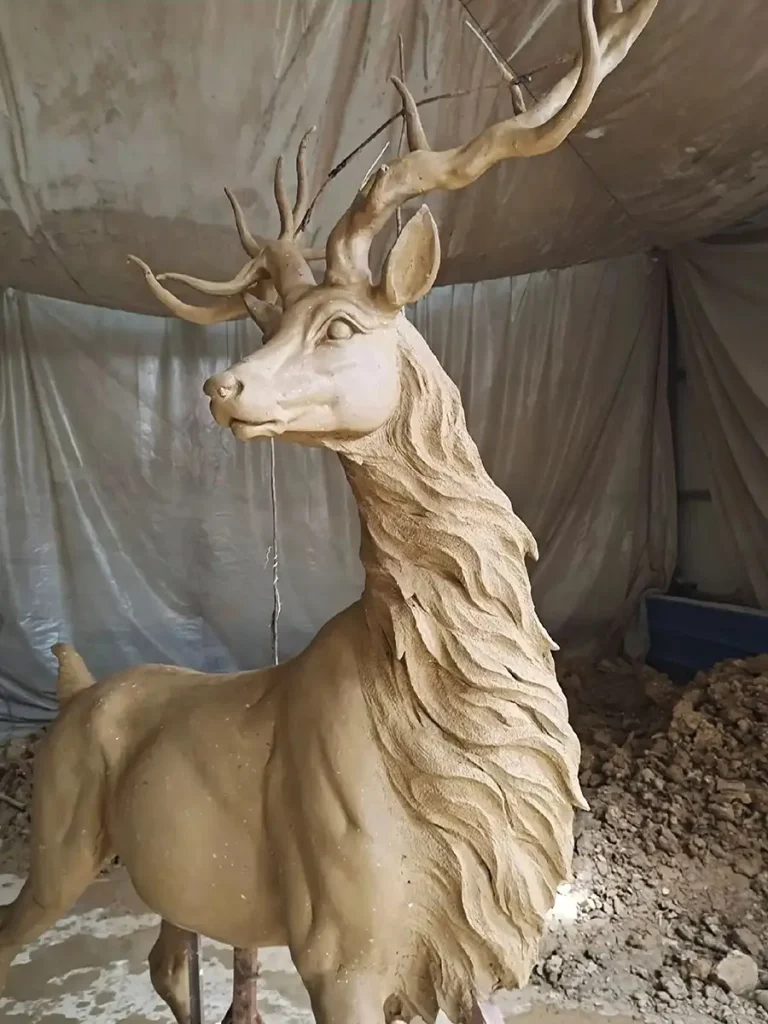
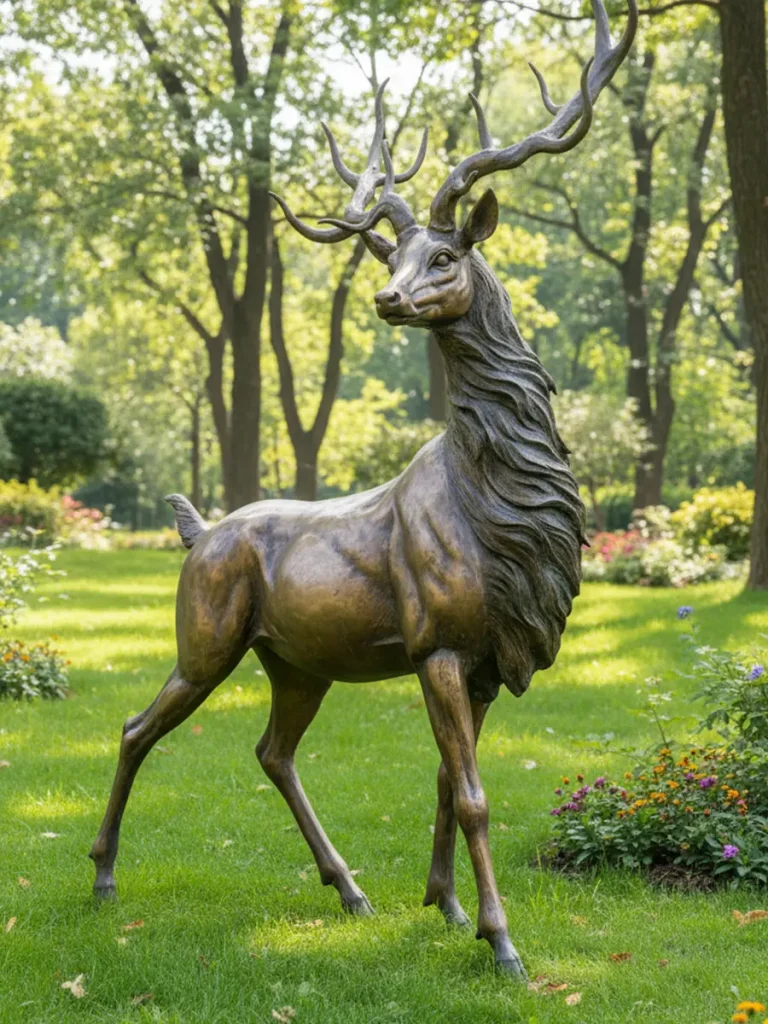
Landscape designers often refer to this archetype as the Monarch of the Glen. A solitary stag standing at the edge of woodland has long been one of the most recognizable images in classical European landscape painting.
When translated into sculpture, the effect is extraordinary.
A Life size bronze stag statue introduces an unmistakable sense of prestige to a property. The elevated neck, the muscular chest, and the dramatic sweep of the antlers give the sculpture an unmistakable silhouette, visible even from a distance.
Because of this presence, Life size deer statues are frequently used as Architectural statuary. Placing a stag sculpture along a long driveway or near a gated entrance establishes a visual anchor for the entire approach to the home.
Visitors experience the sculpture before they even reach the architecture.
This technique is common in classical estates. A pair of life-size stags positioned near the entrance creates symmetry and balance while reinforcing the identity of the property. Rather than appearing decorative, the sculptures feel structural—almost as if they were part of the original architectural plan.
Yet the most extraordinary element of a stag sculpture is always the antlers.
The branching antlers are not merely decorative forms; they are complex sculptural structures that require both artistic sensitivity and engineering discipline. Every curve must appear organic while remaining structurally sound for decades outdoors.
Donghui Zhang often explains the challenge this way:
“Antlers are the soul of the stag. In life-size outdoor pieces, the massive surface area of the antlers creates severe wind load. We engineer internal stainless steel armatures inside the bronze antlers to ensure they never snap in a storm.”
This hidden engineering allows artists to pursue extremely refined Antlers detailing without compromising durability.
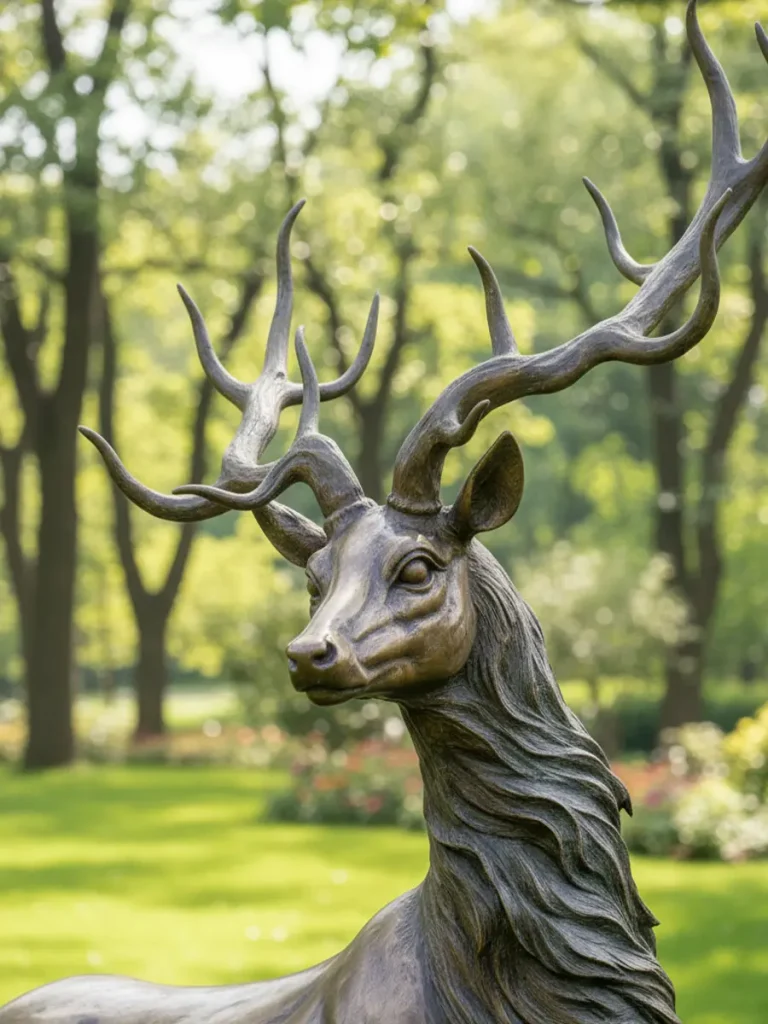
The result is a sculpture that balances elegance and strength. From a distance, the branching silhouette commands attention. Up close, viewers notice the subtle textures—the ridges, curves, and natural irregularities that make the stag feel alive.
A masterfully crafted Life size bronze stag statue achieves something rare in garden art. It does not merely decorate the landscape.
It becomes its guardian.
Frequently Asked Questions (FAQ)
What is the difference between a stag statue and a deer statue? (Also covering Elk and Moose)
The word “deer” is a general category that includes many species. In garden sculpture, it most often refers to animals such as the Whitetail deer, which are relatively slender and graceful in proportion. Statues labeled simply as deer typically represent this elegant, familiar woodland animal.
A stag, however, is something more specific. The term traditionally refers to a mature adult male red deer with large upward-branching antlers. In European symbolism, the stag represents dignity, sovereignty, and aristocratic lineage, which is why stag sculptures are frequently used at grand estate entrances.
Elk and moose belong to the same broader deer family but appear dramatically different. North American elk are significantly larger than whitetail deer and are known for their long antlers that sweep backward in powerful arcs. A moose is the largest of all, instantly recognizable by its enormous palmate antlers—broad, flat structures that resemble open hands or paddles.
These distinctions matter when selecting sculpture. A delicate deer statue conveys serenity, while a monumental moose or elk statue communicates raw wilderness power.
How can I tell if a bronze deer statue is real or fake resin?
There is a simple three-step method professionals use to distinguish genuine bronze from resin imitations.
First is the sound test. Lightly tap the sculpture with a coin or metal object. Real bronze produces a clear ringing sound, almost like a bell. Resin statues produce a dull thud because the material absorbs vibration.
Second is weight. Bronze is extraordinarily dense. Even medium-sized sculptures are surprisingly heavy, often requiring multiple people to move them. Resin copies are dramatically lighter and can usually be lifted easily by one person.
Third is temperature. Metal naturally feels cool when first touched, even on a warm day. Resin quickly matches room temperature and rarely feels cold to the hand.
Together, these three signals—sound, weight, and temperature—reveal the truth immediately.
Do deer statues need to be placed in pairs for Feng Shui?
In traditional Feng Shui thinking, pairs are associated with harmony and relational balance. A pair of deer statues—such as a doe and fawn or two adult deer—symbolizes family unity, emotional warmth, and the complementary forces of Yin and Yang.
This arrangement is particularly appropriate in residential gardens. It suggests peaceful domestic energy and reinforces the idea of protection and nurturing within the home environment.
However, a single stag statue has its own meaning. In commercial settings such as offices, hotels, or corporate entrances, a solitary stag represents leadership, ambition, and authority. The proud stance of the animal communicates confidence and strategic vision.
Both approaches are correct—the difference lies in the intention of the space.
Can I place a bronze deer statue in a coastal area with salt air?
Yes. Bronze is naturally resistant to corrosion and has been used for centuries in harsh outdoor environments, including coastal regions and maritime climates.
Salt air will accelerate the formation of verdigris, the natural green patina that develops as bronze oxidizes. Many collectors actually welcome this transformation because it creates the classic aged appearance seen on historic monuments.
If the goal is to preserve the original warm brown tone of the bronze surface, the solution is simple maintenance. Applying a thin layer of protective wax twice per year slows the patina process and helps maintain the original coloration.
Either approach—allowing natural aging or preserving the initial finish—is perfectly valid.
Can broken antlers on a statue be repaired?
Yes, although the method depends entirely on the material of the sculpture.
For resin statues, repairs are relatively simple. Broken pieces can usually be glued back into place with strong adhesives, then filled, sanded, and repainted to conceal the repair. The process is similar to restoring decorative ceramics.
Bronze statues require a much more specialized approach. A professional foundry must perform a TIG weld at the fracture point. After welding, the metal surface is carefully ground smooth and then chemically re-patinated so the color matches the surrounding bronze.
When performed correctly, the repair becomes nearly invisible. The sculpture regains both its structural strength and its original visual continuity.
Why is there a 10x price difference between statues of the same size?
The difference almost always comes down to casting method and artistic value.
Low-cost sculptures are often made using simplified sand-casting techniques or thin molded materials. While these methods produce acceptable shapes, they lack the fine anatomical detail found in museum-quality work.
High-end sculptures are typically produced through lost-wax casting, a far more complex process that preserves every subtle texture created by the sculptor. The result is sharper musculature, realistic fur texture, and far more expressive antler structures.
Exclusivity also affects price dramatically. Sculptures produced as limited editions by signed artists carry a significant art asset premium. Buyers are not simply purchasing decoration—they are acquiring collectible artwork.
Craftsmanship, detail, and artistic provenance explain the large price differences.
How high should a deer head bust be mounted?
Proper mounting height ensures the sculpture feels natural and visually balanced.
For most interiors, the bottom edge of the deer head bust should sit between 1.8 and 2.2 meters from the floor. This places the animal’s eyes slightly above average human eye level, which subtly enhances the sense of presence and realism.
Room proportions are equally important. Large deer, elk, or stag antlers require sufficient ceiling height so they do not feel compressed by the architecture.
When properly mounted, the sculpture feels intentional rather than decorative—almost as though it has always belonged to the room.
Where is the best Feng Shui placement in an office?
Within Feng Shui spatial planning, deer sculptures are often associated with prosperity and career advancement.
The Southeast sector of an office corresponds to wealth energy, making it an excellent location for a deer statue intended to symbolize financial growth. The East sector, linked to career development and vitality, is another favorable placement.
Orientation also matters. The deer should face inward toward the office or workspace, symbolically drawing opportunities and resources into the environment.
One important caution concerns the antlers. Sharp antler points should never aim directly toward a desk chair or seating area, as this creates a form of visual pressure. Proper orientation ensures the sculpture enhances the space rather than disrupting it.
What is a “velvet” antler sculpture, and is it worth collecting?
A “velvet” antler sculpture represents a specific biological stage in a stag’s life. During early antler growth, the bone structure is covered by a soft, living membrane known as velvet. This tissue supplies blood and nutrients that allow the antlers to grow rapidly each spring.
In sculpture, this stage produces a dramatically different visual character. Instead of the sharp, hardened antlers typically seen in mature stags, velvet antlers appear softer, rounded, and almost organic in texture.
Symbolically, velvet antlers represent renewal and quiet growth. They evoke the idea of rebirth, patience, and nurturing energy rather than dominance. Because most sculptures depict fully developed antlers, velvet-stage stag statues are considered highly distinctive.
For collectors, this rarity makes them especially appealing. A velvet antler sculpture offers both biological authenticity and emotional nuance, making it one of the more poetic interpretations of the deer form.
What is the biggest engineering challenge for monumental deer statues?
The greatest technical challenge is wind load.
At monumental scale, the antlers of a deer or stag become enormous structural elements. Their branching shapes create a large surface area that interacts with wind much like a sail on a ship. Strong gusts can exert significant lateral force on the sculpture.
To prevent structural failure, engineers design internal steel armatures that extend from the body into the antlers themselves. These internal frameworks distribute stress throughout the sculpture rather than concentrating it at a single point.
Equally important is the foundation. Monumental outdoor deer statues require deep anti-overturning concrete bases that anchor the sculpture securely into the ground. When properly engineered, these foundations ensure stability even during extreme storms.
Without this engineering discipline, even a beautifully sculpted monument could become vulnerable to structural damage.
Is it good to keep a deer statue at home? What does it symbolize?
Yes, a deer statue is widely considered a positive and auspicious symbol in many cultures.
Across Europe and Asia, deer have long represented longevity, elegance, and harmony with nature. Their calm posture and gentle presence create a peaceful atmosphere in gardens and interior spaces alike.
In Chinese cultural symbolism, the meaning becomes even more specific. The word for deer, lù, sounds similar to the word associated with prosperity and official salary, linking the animal with wealth and career success.
For homeowners, this symbolism translates into a sense of graceful abundance. A well-placed deer sculpture introduces a quiet energy that feels refined rather than ostentatious—an atmosphere of calm prosperity woven naturally into the landscape.
Where can I buy life-size garden deer statues?
For true life-size garden deer statues, the most reliable source is a professional sculpture foundry rather than a general retail store.
Large retailers typically sell mass-produced decorative items made from resin, fiberglass, or lightweight concrete. While these pieces may resemble deer sculptures, they rarely achieve accurate anatomical proportions or long-term durability.
Investment-grade sculptures—especially bronze—are usually produced through specialized foundries that practice traditional lost-wax casting. These workshops work directly with artists and engineers to produce statues that meet museum-quality standards.
Commissioning a sculpture directly from a professional studio also ensures proper logistics. Life-size statues often require specialized crating, freight handling, and installation planning.
Studios such as Yun Sculpture, which specialize in architectural statuary and large outdoor works, provide this level of expertise from design through final delivery.
What happened to the famous Portland Elk Statue?
The Portland Elk statue was one of the most recognizable public sculptures in the city of Portland, Oregon.
Dedicated in 1900, the bronze statue depicted a majestic elk standing atop a stone pedestal with a drinking fountain at its base. For over a century, it served as a beloved gathering point and civic landmark.
In 2020, during periods of civil unrest, the monument was severely damaged by fire and repeated impacts. The structural integrity of the sculpture and its base became compromised, forcing city officials to remove the statue for safety reasons.
Its removal demonstrated an important truth about public art: animal sculptures often become deeply embedded in a city’s cultural identity. When they disappear, residents feel the loss immediately.
The Portland Elk remains a powerful example of how wildlife sculpture can transcend decoration and become part of collective memory.
How do I DIY refurbish or paint a concrete or wood deer statue?
Restoration methods depend entirely on the material.
For wood sculptures, flexibility is essential. Small cracks should be filled with a flexible wood filler rather than rigid compounds. Once repaired, the surface should be protected using a breathable UV-resistant wood oil. Oils penetrate the wood while allowing it to expand and contract naturally with humidity.
Rigid exterior paint is generally not recommended for wood statues. Paint can trap moisture inside the grain, eventually causing peeling or structural damage.
For concrete sculptures, begin with gentle cleaning using mild soap and water. After cleaning, any cracks should be patched with a durable epoxy or masonry repair compound.
Finally, apply a breathable masonry paint or sealer designed specifically for outdoor stone and concrete surfaces. Breathability is critical because it allows internal moisture to escape without damaging the surface.
With careful preparation, even older statues can regain their original appearance.
How to clean and maintain my concrete or metal deer statue?
Routine maintenance ensures that outdoor sculptures remain beautiful for decades.
For concrete deer statues, the most important step is applying a breathable penetrating sealer once a year. This protective layer prevents water from entering the material, dramatically reducing the risk of freeze–thaw cracking during winter months.
Cleaning should be gentle. A soft brush and mild soap solution are sufficient to remove dirt, algae, or pollen buildup.
Metal and bronze statues require a slightly different approach. Begin by washing the sculpture with a non-ionic soap solution and soft cloths. High-pressure washers should never be used, as they can damage the patina layer.
Once the sculpture is clean and dry, apply a thin layer of microcrystalline wax on a warm day. The wax protects the patina from environmental exposure while preserving the depth and richness of the bronze surface.
With minimal care, both concrete and bronze sculptures can endure beautifully through generations of outdoor exposure.
A deer or stag sculpture does something rare in landscape design. It bridges the boundary between wilderness and architecture. The animal form introduces movement and life into the garden, while the craftsmanship of sculpture grounds that presence in permanence.
Whether a delicate garden deer tucked among flowers or a commanding life-size stag guarding the entrance to an estate, these sculptures carry centuries of symbolism. They represent grace, endurance, and the quiet dignity of the natural world.
Investing in a well-crafted deer statue is therefore more than a decorative decision. It is an act of landscape storytelling—one that transforms a garden into a place where art and nature stand side by side.
– Elena Zhang, Art & Spatial Consultant, Yun Sculpture