Get in touch with Yun-Sculpture company
Breathing Life into Landscapes: The Ultimate Guide to Custom Metal Animal Sculptures

Landscape architecture is not only about plants, stone, and water. It is about emotion. The moment visitors step into a space, something must capture their attention and quietly shape their experience. This is where metal animal sculptures reveal their true power.
A carefully designed animal sculpture metal piece can anchor an entire landscape composition. A deer standing at the edge of a forest path, a crane poised beside still water, or a dolphin arching above a pool instantly creates narrative. These sculptures transform open space into a story people can feel.


In contemporary landscape architecture, metal sculptures also act as visual punctuation. They guide the eye, slow movement, and establish focal points that connect architecture with nature. Without them, many gardens and plazas feel visually incomplete.
Material plays a defining role in this transformation. A modern stainless steel sculpture introduces a striking phenomenon designers often call the “Liquid Silver” effect. Light flows across the surface as if it were water. Reflections shift throughout the day, making the sculpture appear alive.

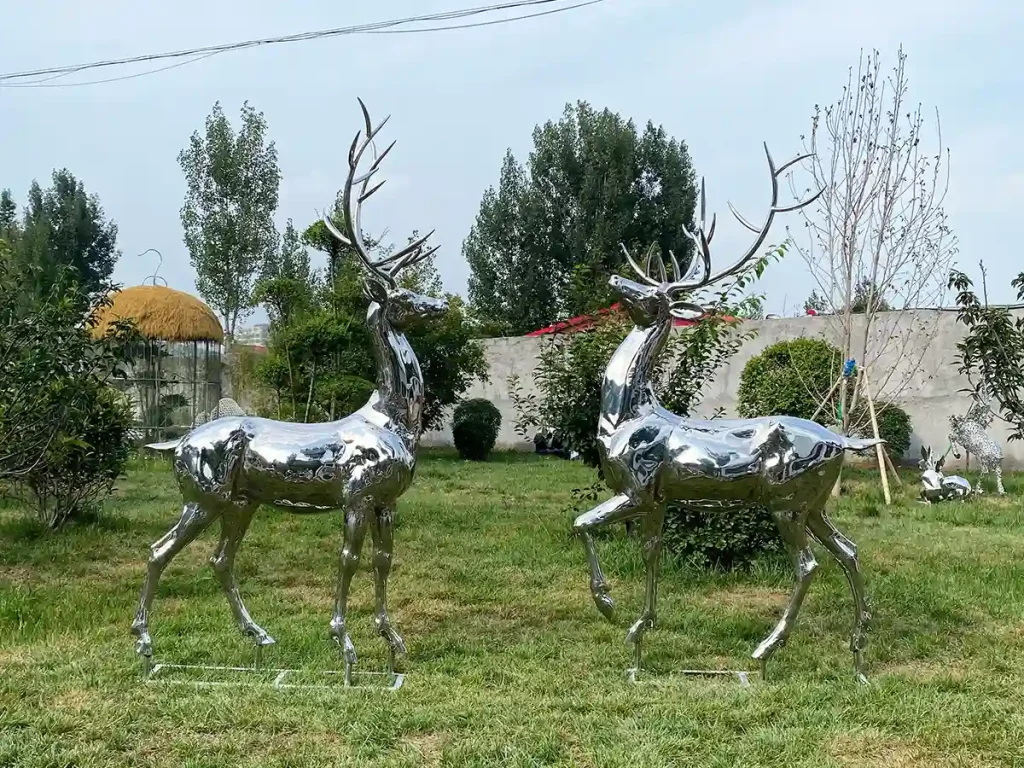
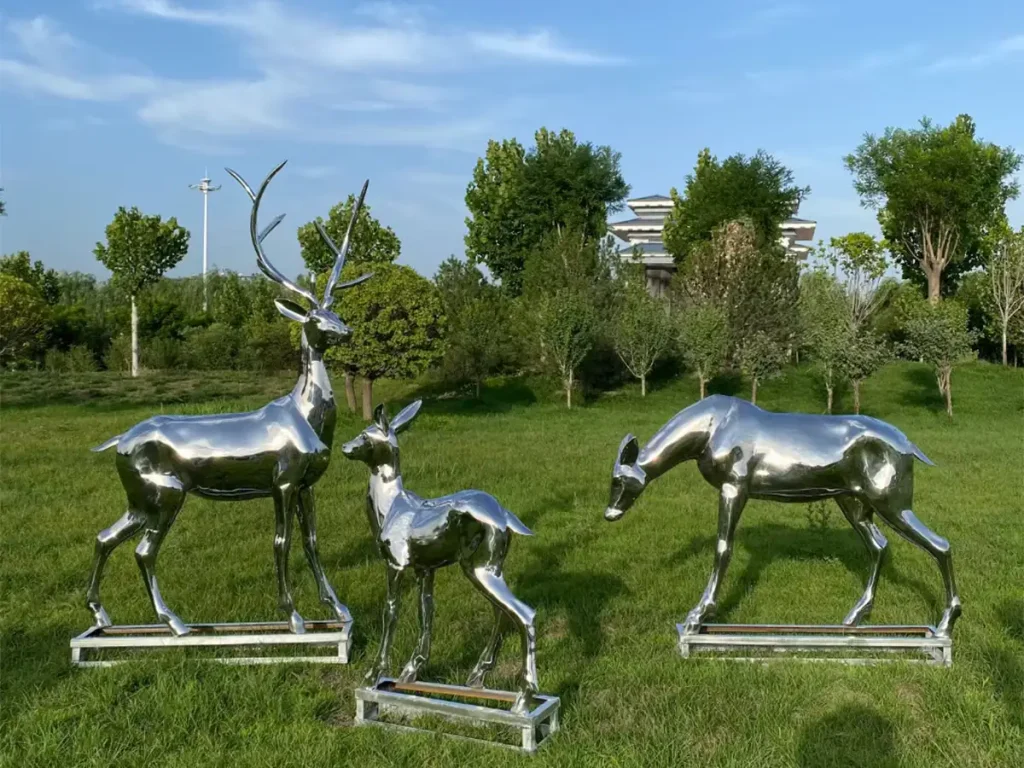
This dynamic quality explains why stainless steel animal sculpture works so well in contemporary outdoor spaces. The sculpture does not merely occupy space—it interacts with sunlight, water, and movement.
A well-placed piece of animal sculpture metal becomes an emotional landmark. People remember where they first saw it. They photograph it. They return to it.
That is the quiet power of sculpture in landscape design.
Table of Contents
Table of Contents
Material Intelligence: The Artistic Duel Between Copper and Stainless Steel
Copper
Copper carries warmth that stainless steel cannot replicate. When newly finished, copper radiates a deep reddish glow that feels almost organic, as if the sculpture were grown rather than forged.
Over time, the metal undergoes a remarkable transformation. Exposure to air and moisture slowly develops the iconic patina copper surface—a soft blue-green layer that many historic sculptures proudly wear. This natural aging process gives copper sculptures a sense of time and cultural continuity.
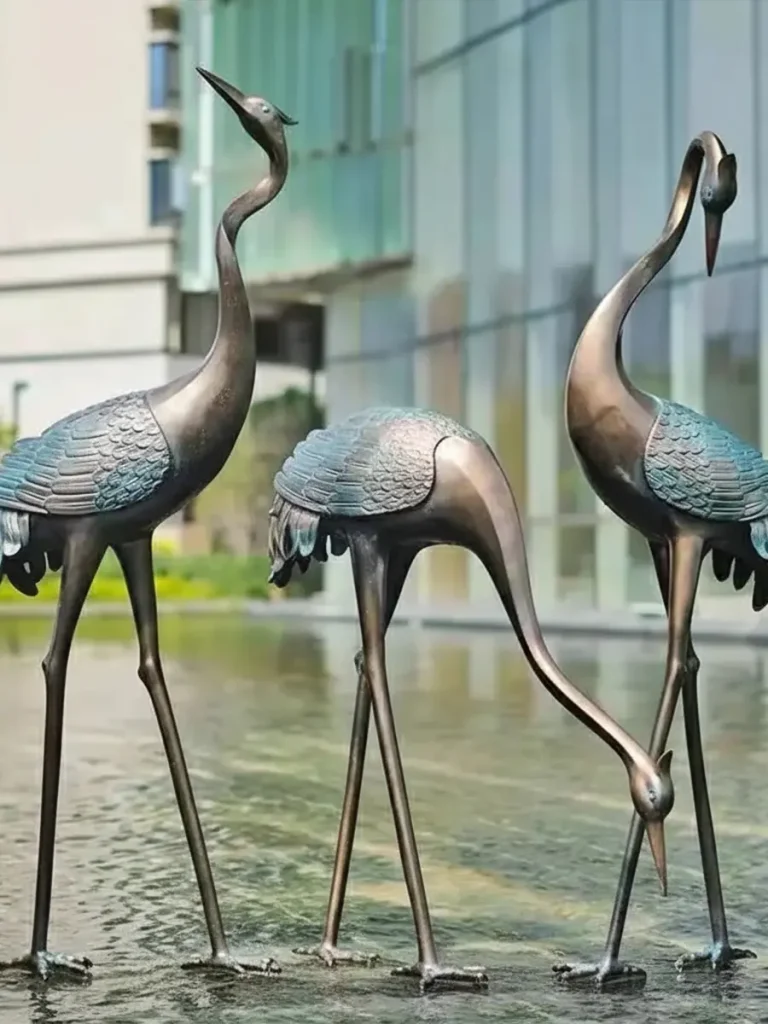

In classical gardens, courtyards, and European-inspired estates, copper works beautifully. A metal bird sculpture perched among ivy or a metal crane sculpture beside a reflective pond feels completely at home within these environments.
Many clients often ask about stainless steel vs. bronze sculptures. Bronze has been the traditional material for centuries, prized for its weight and noble character. Yet copper alloys like bronze inevitably oxidize and darken, sometimes unevenly.
Copper’s patina can be stunning when intentionally embraced. However, it also means the sculpture will visually change year after year. For designers seeking a timeless yet evolving aesthetic, that unpredictability becomes part of the artwork itself.
For projects rooted in heritage landscapes, copper remains a deeply poetic choice.
Stainless Steel
From an engineering perspective, stainless steel offers a different kind of intelligence.
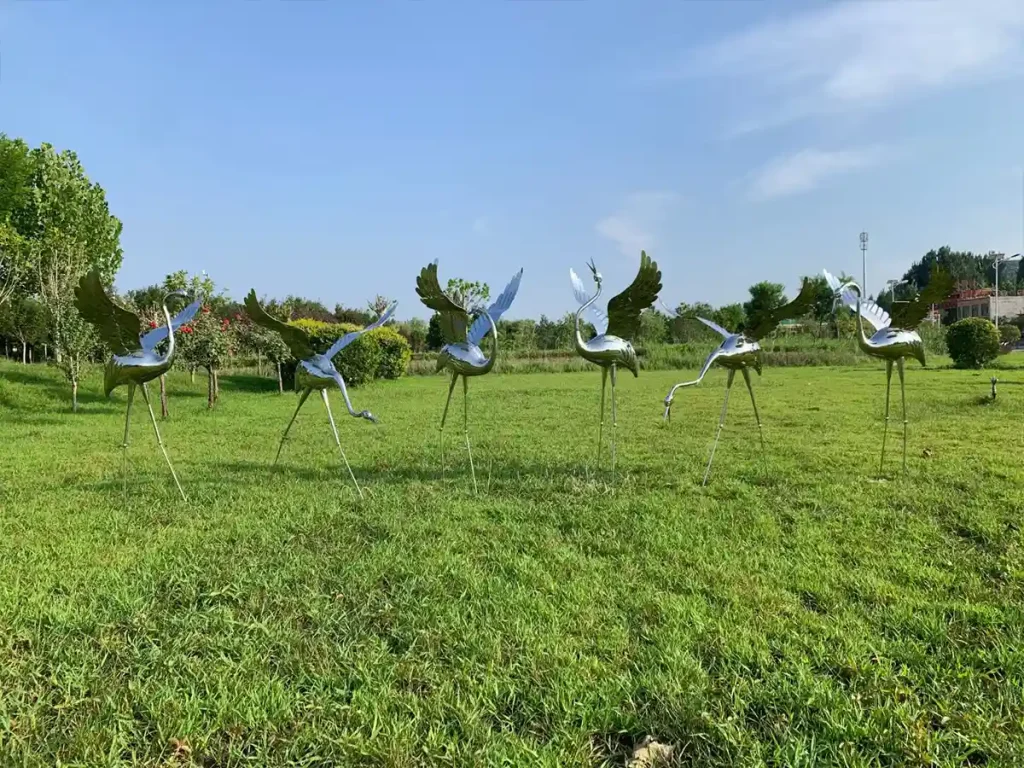
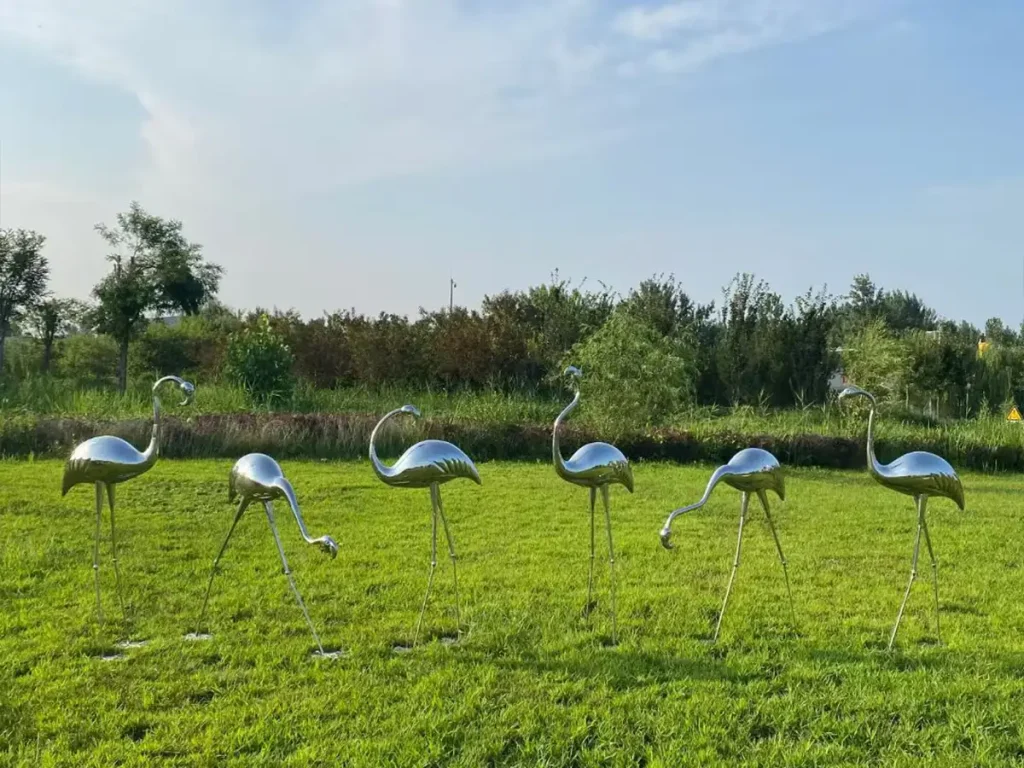
For outdoor metal animal sculptures, especially in coastal environments, material selection cannot be negotiable. Salt, humidity, and temperature fluctuations attack metal continuously. Ordinary stainless steel will eventually show corrosion.
This is why 316L Marine Grade stainless steel is the industry standard for high-end exterior sculpture. The added molybdenum dramatically increases corrosion resistance, making it suitable for seaside resorts, waterfront parks, and luxury residential landscapes.
When properly fabricated, a stainless steel metal sculpture can survive decades outdoors with minimal structural degradation.
The surface finish further defines its visual identity. A mirror polished stainless steel sculpture reflects its surroundings with remarkable clarity. At the highest level, the finish reaches an 8K mirror polish, producing near-perfect reflections that capture sky, trees, and water.

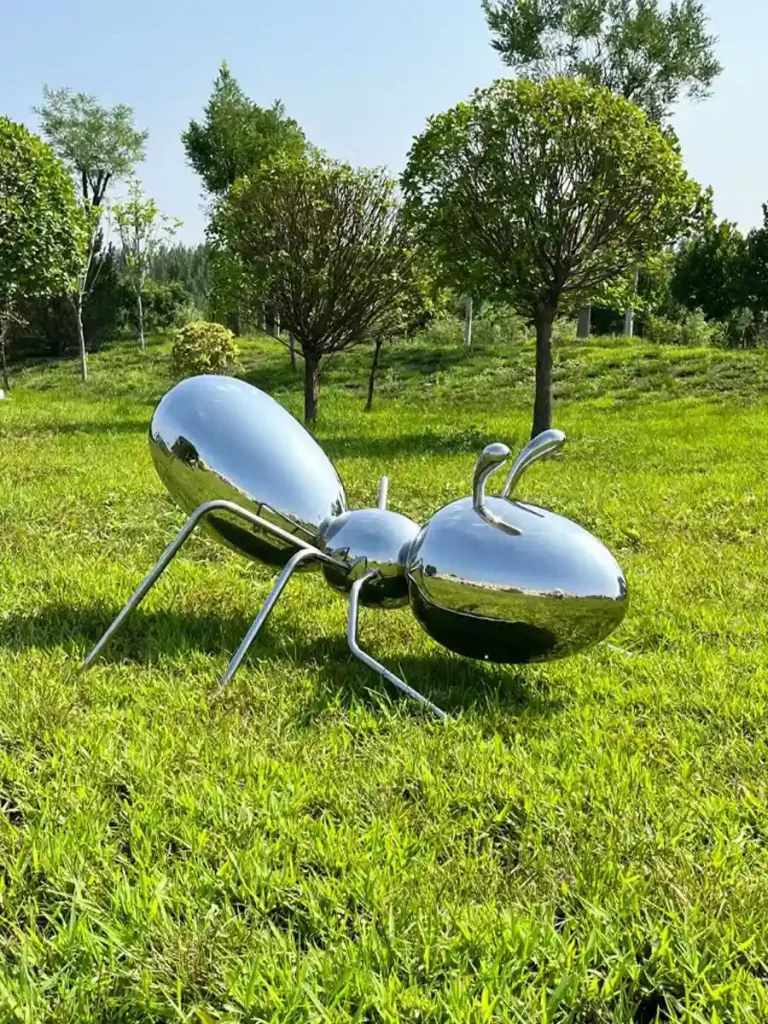
This effect transforms the sculpture into part mirror, part object. The surrounding environment becomes embedded within the artwork.
A modern stainless steel sculpture therefore achieves two things simultaneously: structural resilience and visual dynamism. In contemporary architecture, few materials match this combination.
Popular Themes
The Dynamic Ocean: Fish and Dolphin Sculptures
Water features naturally invite movement, which makes aquatic animals perfect sculptural subjects.
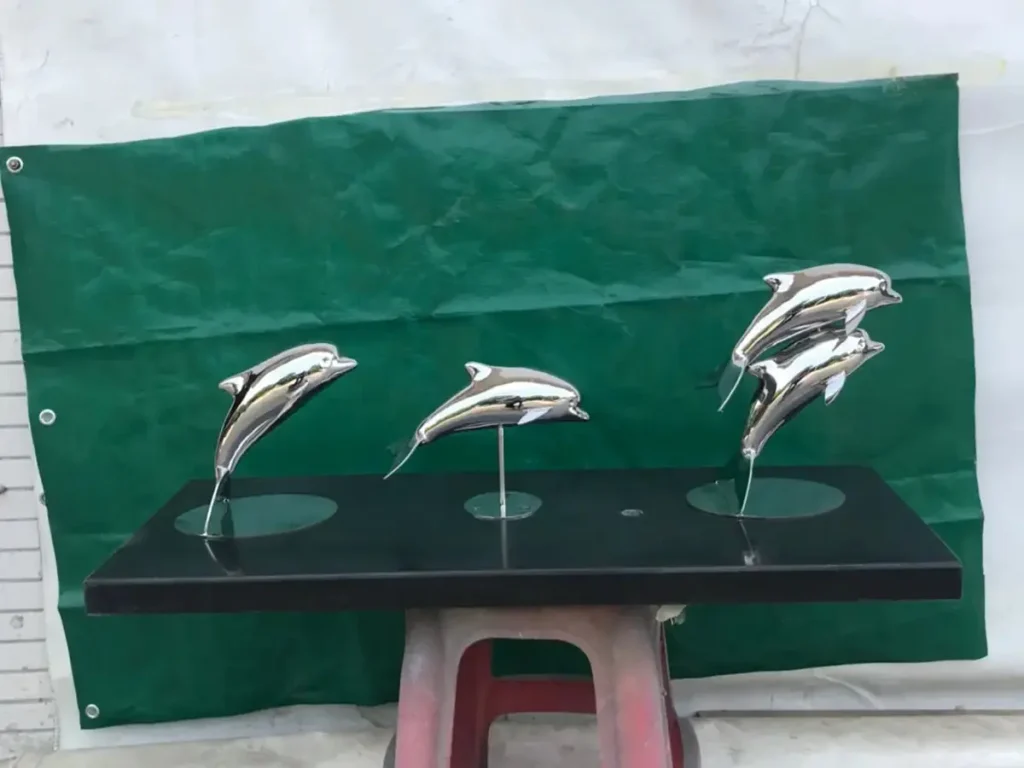
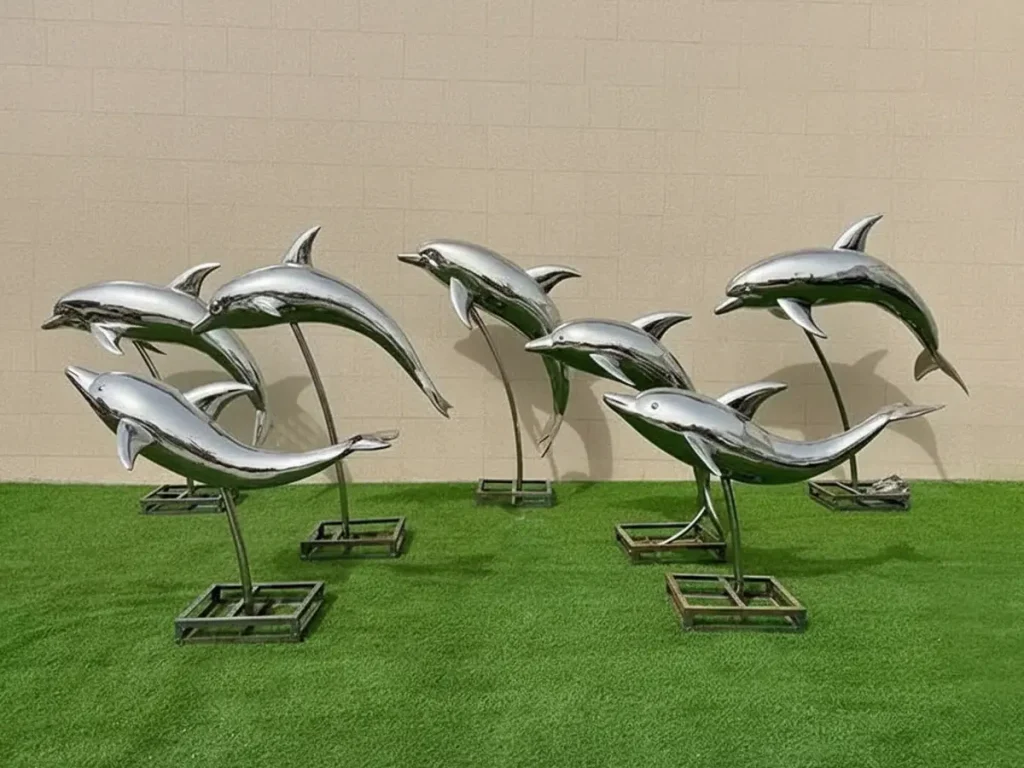
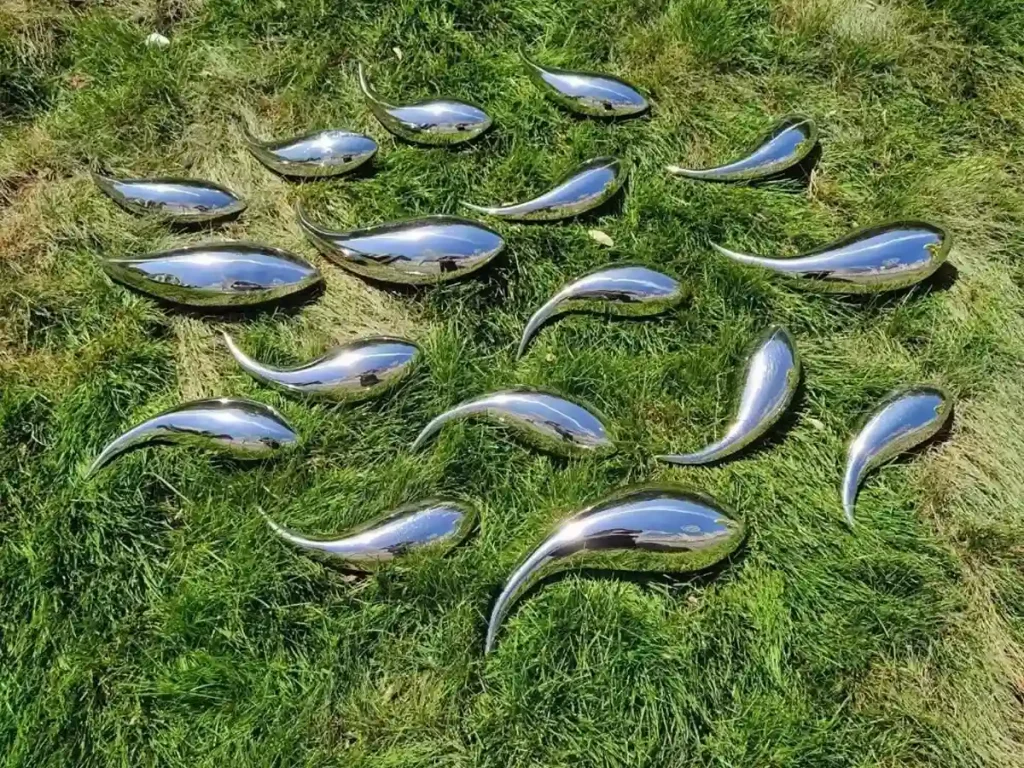
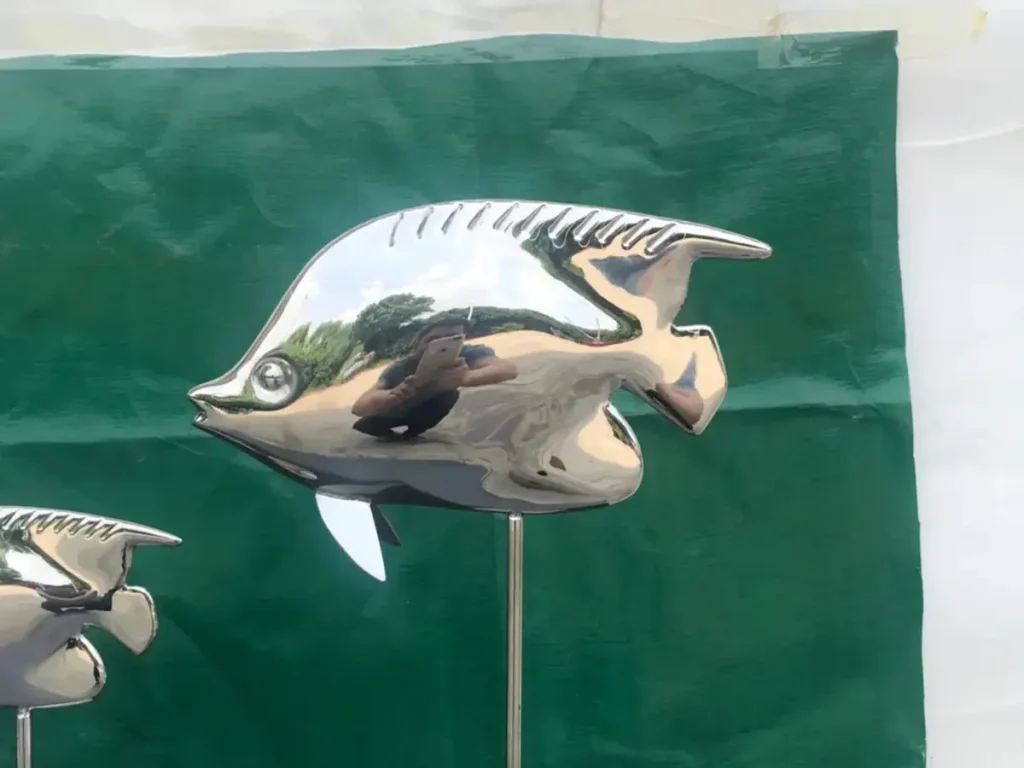
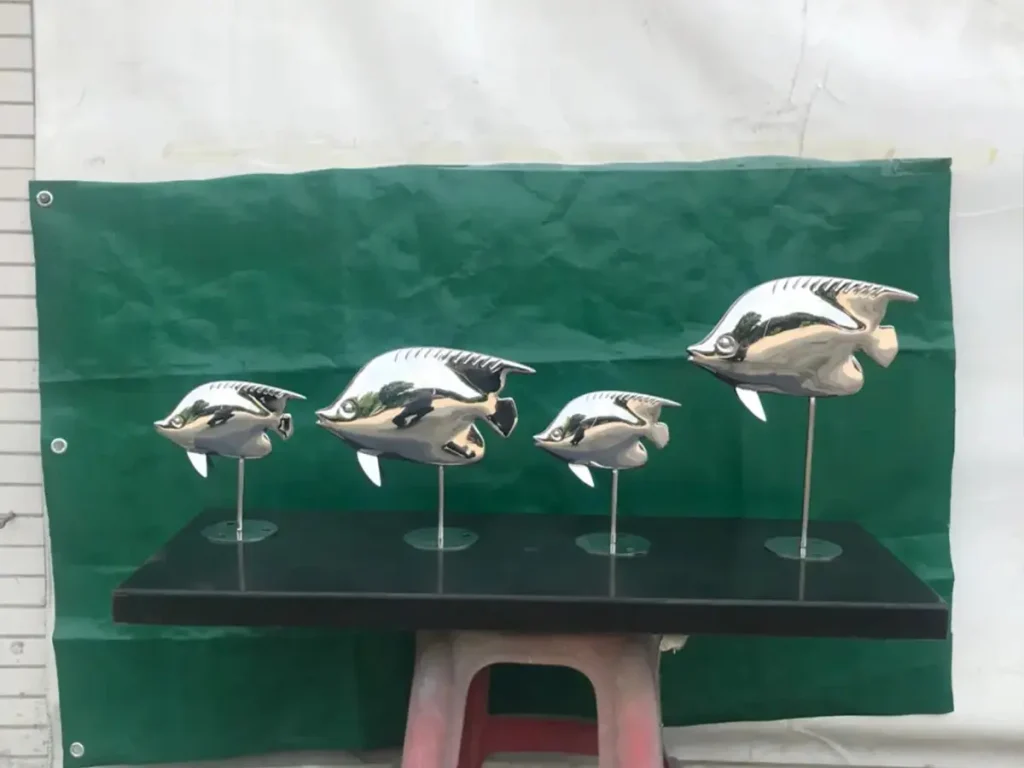
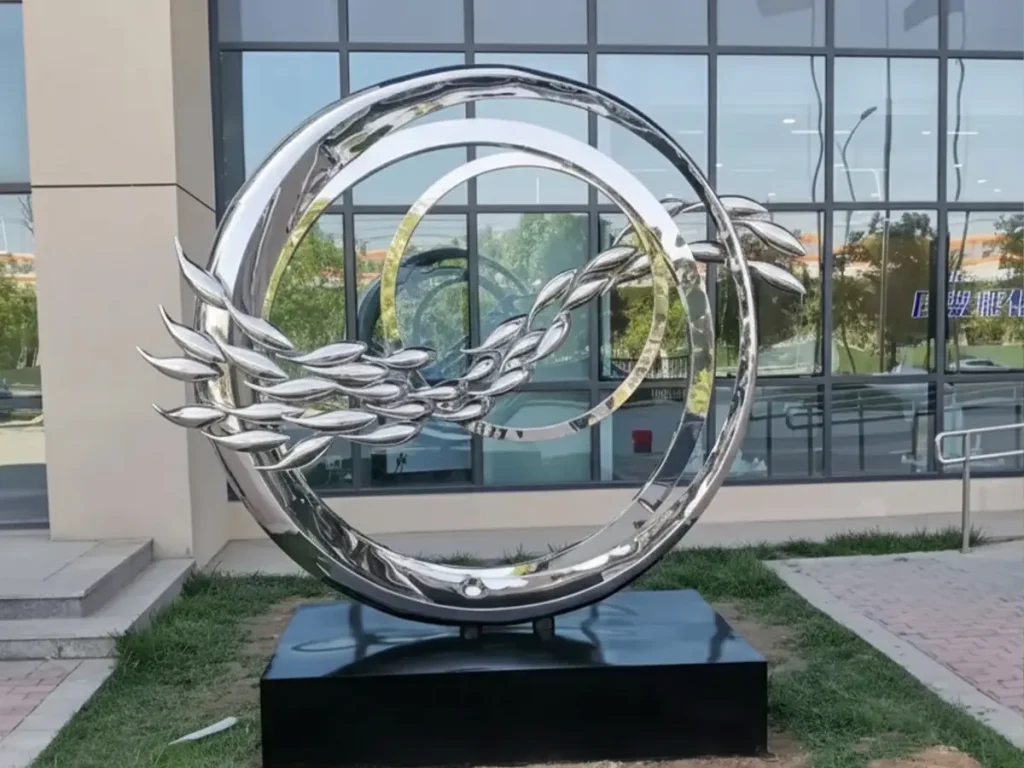
Designers frequently install metal fish sculptures along shallow reflecting pools or garden streams. A single metal fish sculpture placed among stone and water plants introduces playful motion into an otherwise still environment.
In luxury villas and resort pools, the most dramatic installations often feature a stainless steel dolphin sculpture. Positioned at the edge of an infinity pool, the reflective body arcs toward the horizon, visually merging sculpture with ocean or sky.
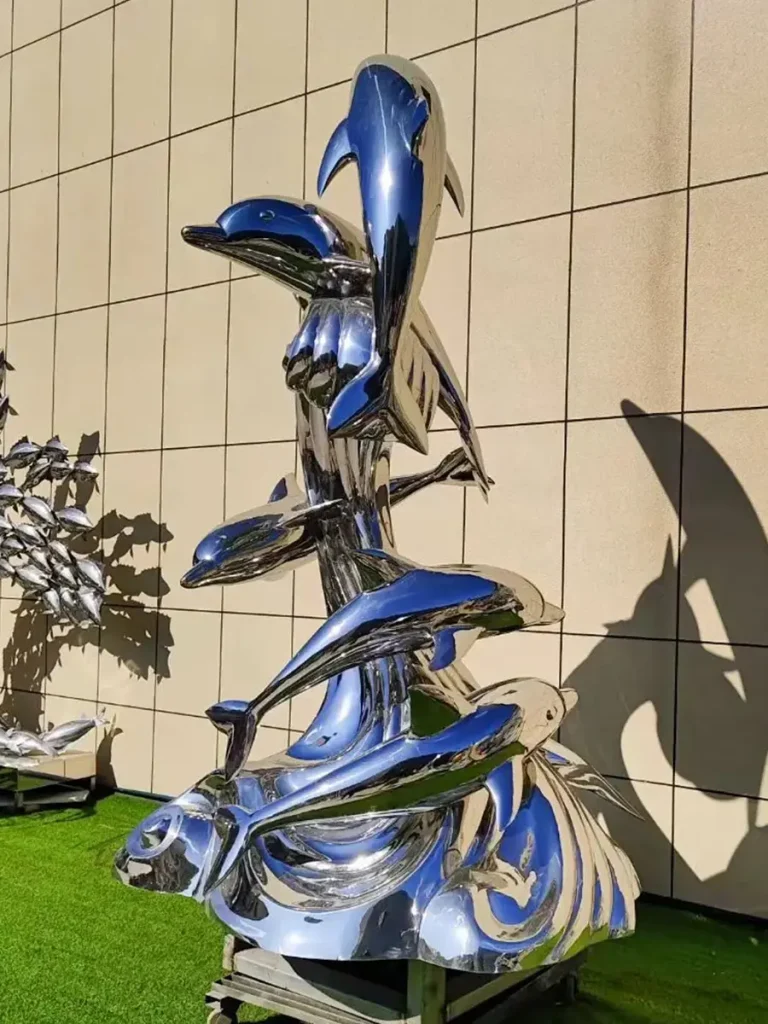

The reflective surface of stainless steel amplifies this illusion. Sunlight flickers across the body of the dolphin as if it were emerging from the water itself.
Few sculptural themes integrate as naturally with aquatic landscapes.
Guardians of the Forest: Deer, Horse, and Giraffe
Landscapes with open lawns or wooded pathways often call for animals associated with strength and elegance.
A metal deer sculpture positioned at the edge of a woodland garden creates a moment of quiet surprise. The form echoes the real wildlife that might pass through the landscape, blurring the boundary between art and nature.
Equestrian estates and countryside residences often choose a metal horse sculpture as their centerpiece. The horse represents motion, nobility, and freedom. Sculptures capturing a horse mid-stride bring kinetic energy to large lawns or driveways.
For truly expansive properties, designers sometimes install large metal giraffe sculptures. Their height allows them to rise above hedges and plantings, becoming visible landmarks within the property.
In landscape design, vertical elements help organize spatial perception. Giraffe sculptures achieve that effect with elegance and personality.
Avian, Insect, and Fantasy Art
Some sculptures work less as monuments and more as poetic accents.
A metal bird sculpture perched on a garden wall or an outdoor metal bird sculpture placed near a pond can introduce gentle movement into quiet spaces. Species like the metal eagle sculpture, metal peacock sculpture, and metal crane sculpture are especially popular because each carries symbolic meaning.
The eagle suggests power and vigilance. The crane evokes longevity and grace. The peacock celebrates beauty and pride.
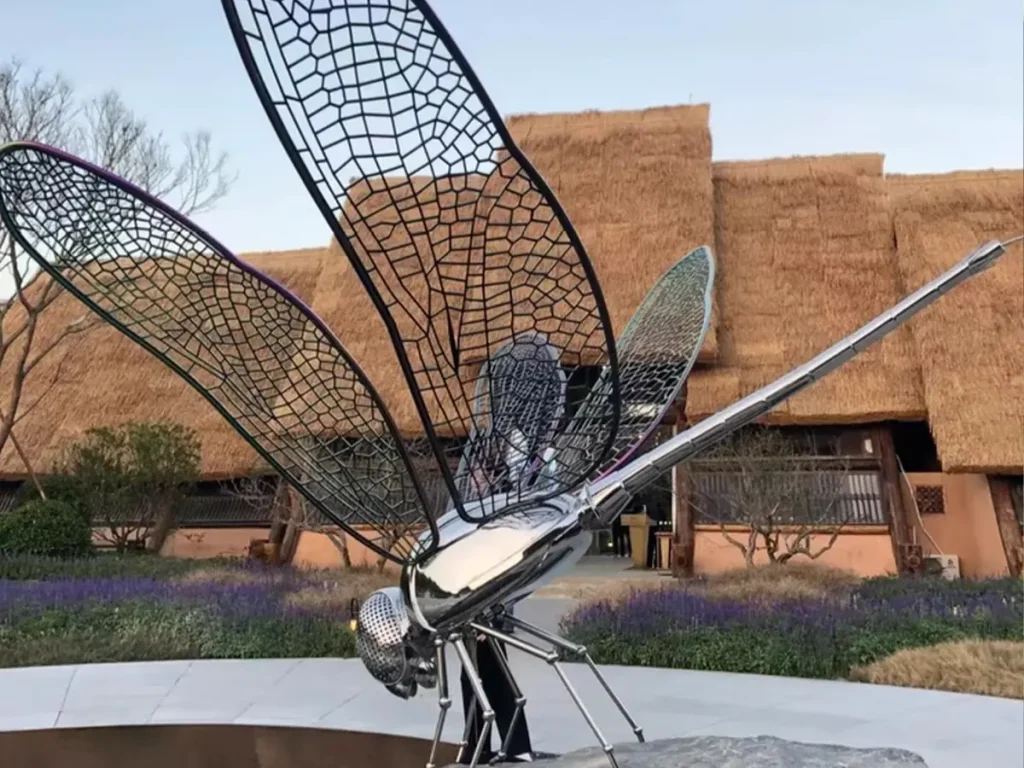

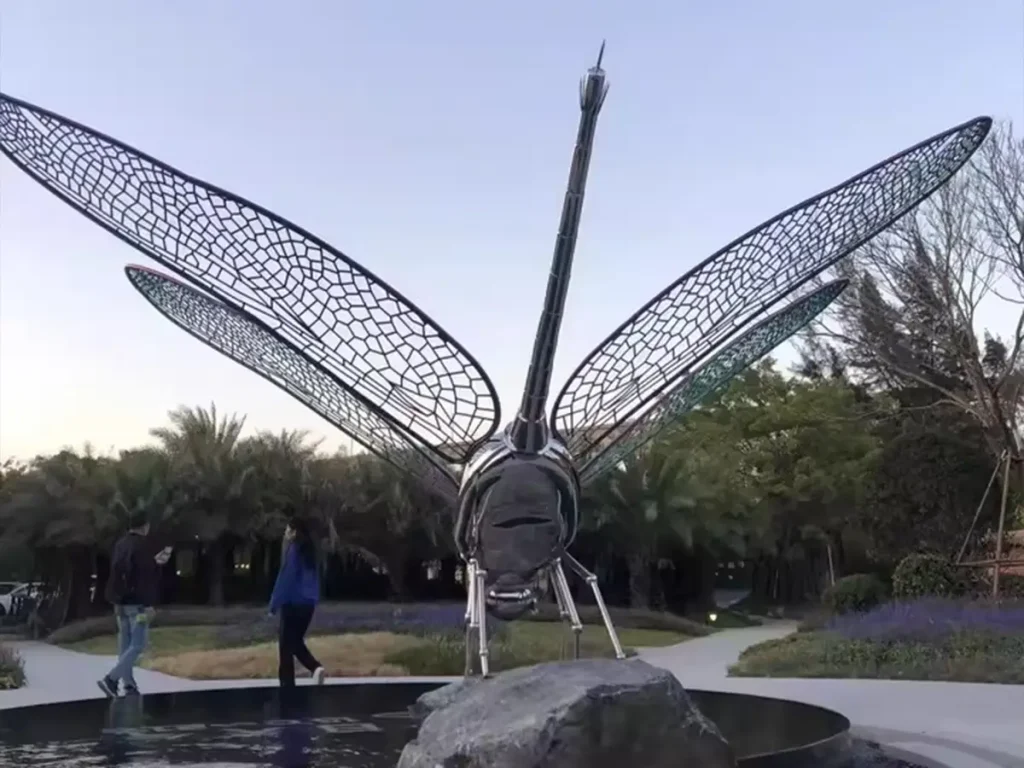
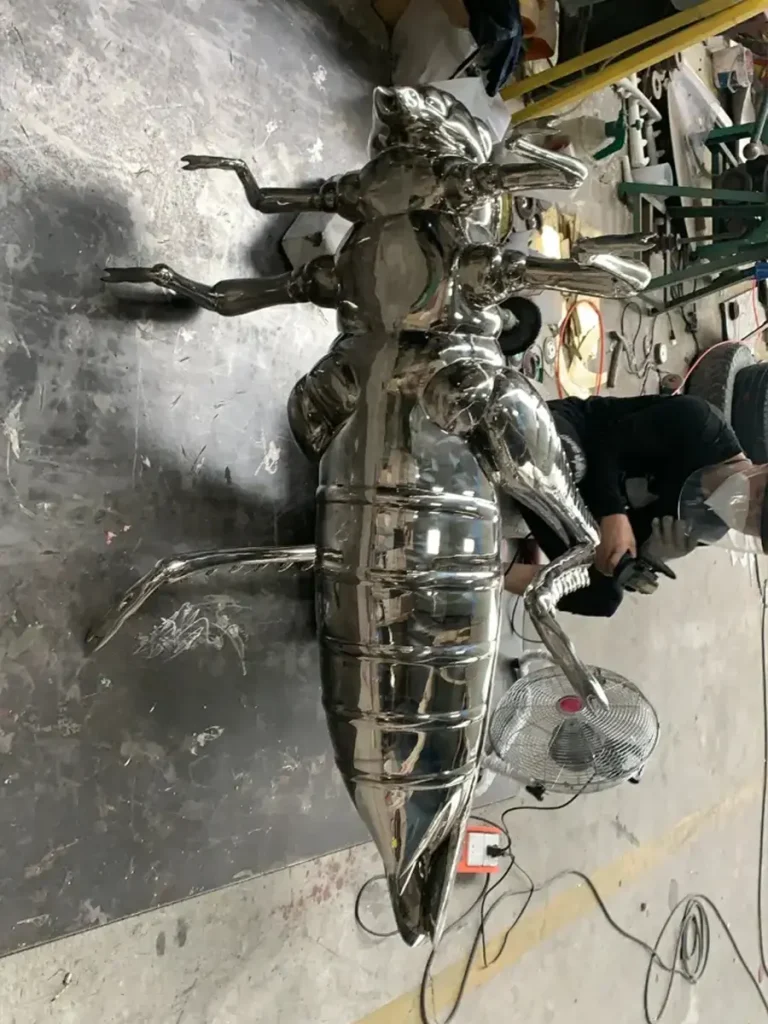
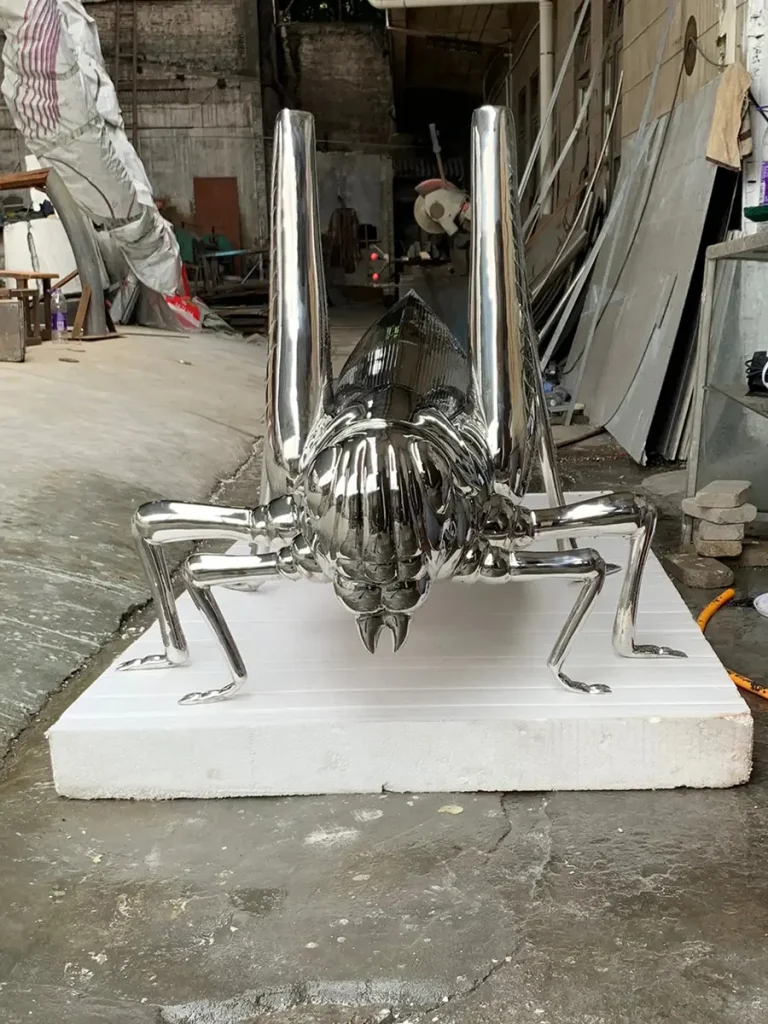
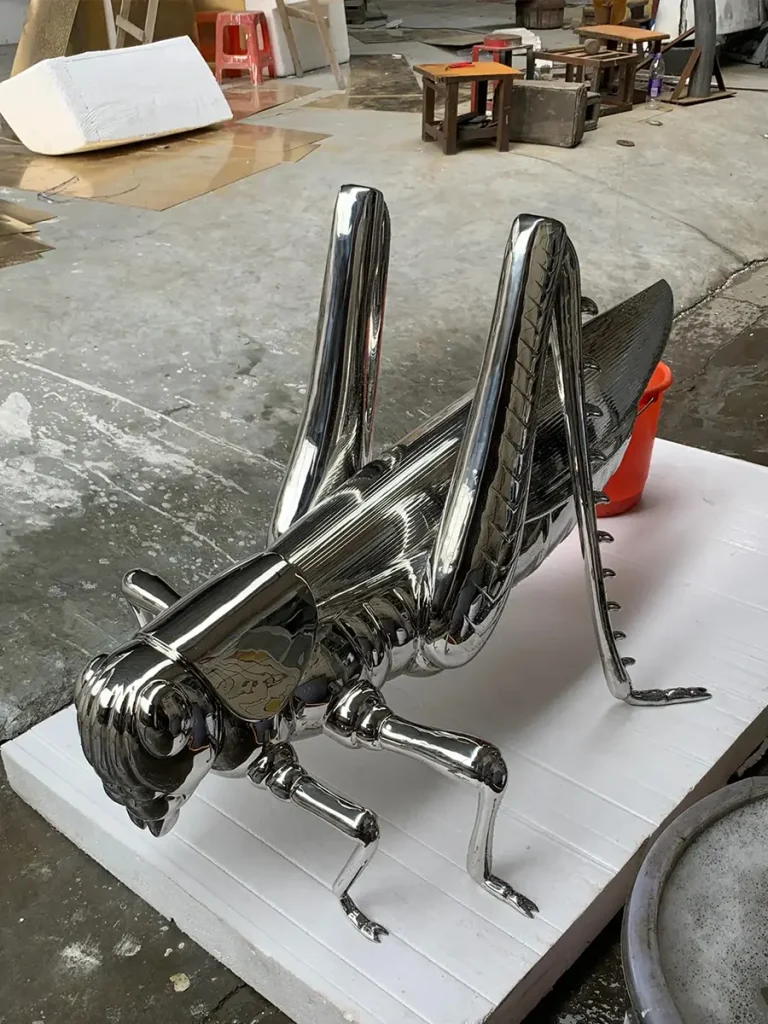
Smaller artistic accents also play a crucial role. A metal butterfly sculpture or metal dragonfly sculpture can animate flower gardens, where their delicate wings echo the insects that naturally inhabit the space.
Fantasy elements bring an additional layer of imagination. Installations featuring a metal dragon sculpture, a stainless steel bunny sculpture, or whimsical stainless steel fairy sculptures transform gardens into storybook environments.
These pieces often fall into the category of small metal animal sculptures, yet their visual impact can be surprisingly strong. Within the broader field of modern metal sculpture, these works act as charming narrative details that invite visitors to explore.
Emotional Customization
Not every sculpture is designed for a public plaza or estate landscape. Some are deeply personal.
In recent years, demand for pet memorial sculpture has grown dramatically. Families want a lasting tribute to companions that shaped their daily lives.
A stainless steel dog sculpture can capture the posture and spirit of a beloved pet with remarkable clarity. For more traditional aesthetics, clients often choose a metal dog sculpture with softer surface textures.


Cat owners frequently commission a metal cat sculpture for garden placement or indoor display. The quiet elegance of feline forms translates beautifully into sculptural metal.
Unlike decorative garden pieces, these sculptures carry emotional weight. Every detail—from ear position to tail curve—must feel authentic.
When crafted carefully, these works become more than sculpture. They become memory cast in metal.
Handcrafted Craftsmanship: The Life Texture of the “Direct Metal” Process
Rejecting Molds
Many clients begin with a simple question: how are metal sculptures made?
In traditional sculpture production, especially bronze, the process usually begins with casting. A mold is created, molten metal is poured inside, and the sculpture emerges as a replica of that mold. While this method is efficient for editions, it inevitably introduces limitations. The mold becomes the authority, not the artist.
Inside a modern stainless steel sculpture factory, a different philosophy often guides the work.
Our team relies on the direct metal sculpture technique, a process where metal sheets are shaped, forged, and welded directly into form without relying on a casting mold. Each curve, plane, and surface is built piece by piece. The sculpture grows organically, almost like architecture.
This approach defines true custom metal sculpture fabrication.
Rather than reproducing a fixed object, artisans interpret a design through hand shaping, welding, and surface finishing. Slight variations in hammer marks, weld seams, and polished surfaces become the sculpture’s fingerprint.
The same philosophy extends to handcrafted metal wall art, where surface textures carry visible evidence of human touch. Unlike machine-stamped panels, these works possess subtle irregularities that give the metal warmth and character.
Direct fabrication also expands artistic possibilities. Many contemporary artists now pursue abstract metal sculpture or geometric animal sculpture, where form is built through angular planes rather than traditional modeling.
For example, a geometric deer may be constructed from dozens of stainless steel facets. Each plane captures light differently, creating a shifting visual rhythm throughout the day.
In the broader field of contemporary metal sculpture, this architectural method allows designers to create highly expressive works. Complex forms—once impossible through casting—can now be fabricated through layered welding and precision metal forming.
This technique also supports the growing demand for 3d metal art sculpture used in public plazas, luxury residences, and corporate landscapes. These pieces often combine sculptural volume with spatial openness, allowing air and light to move through the structure.
What emerges is not merely an object, but a structure that interacts with its surroundings.
Direct metal fabrication therefore represents more than a technical process. It is a philosophy of sculptural creation.
Conquering the Details
Metal may seem rigid, yet skilled artisans can make it appear astonishingly organic.
One of the most demanding tasks in sculpture fabrication is representing animal textures. Fur, feathers, and flowing hair require subtle surface transitions that cannot be achieved through flat metal alone.
Artisans achieve this through controlled hammering and surface chasing.
Each strike of a forging hammer creates microscopic indentations that mimic the natural rhythm of fur. When light passes across these textures, the surface appears soft and layered—even though it is made of steel.
Hair and mane details, such as those seen on horses or lions, often require additional techniques:
- Directional hammer texturing to simulate flowing strands
- Fine grinding patterns to soften edges between planes
- Selective polishing to highlight light-catching ridges
Bird sculptures present a different challenge. Wings must appear light and aerodynamic, yet remain structurally stable.
This effect is achieved through precision welding of thin stainless steel sheets. Artisans construct feather layers that taper toward the edges, allowing light to pass between them.
The result is an illusion engineers call “depth without weight.”
The sculpture appears massive, but internally it remains hollow.
This hollow forging approach is essential for large artworks. By reducing solid mass, the sculpture maintains visual scale without becoming structurally unmanageable.
In effect, the metal behaves more like a shell than a block.
This balance between strength and lightness defines high-level metal sculpture fabrication.
Engineering and Installation: Grounding the Behemoths
Safe Anchoring Logic for Walls and Lawns
Once a sculpture leaves the workshop, engineering becomes the dominant concern.
Clients frequently ask how to hang a metal sculpture or how to attach metal sculpture to siding of house safely. The answer depends on both the sculpture’s weight and the structural material behind the wall.
For architectural installations, proper anchoring systems are essential.
Typical mounting systems include:
• Stainless steel expansion bolts embedded into concrete or masonry foundations
• Reinforced anchor plates welded to the sculpture base
• Waterproof gaskets placed between metal and wall surfaces to prevent moisture penetration
Expansion bolts are particularly important. When tightened, they expand within the drilled hole, locking the bolt firmly into the structural substrate. This creates an anchor capable of supporting hundreds—or sometimes thousands—of kilograms.
Exterior wall installations introduce additional complexity.
When designers ask how to install metal sculpture to a metal frame walls, the safest solution is usually a hidden back-frame system. In this design, a steel subframe is mounted to the building’s structural members. The sculpture then attaches invisibly to that frame.
This approach distributes weight across multiple points while preserving a clean visual appearance. From the outside, the sculpture appears to float against the surface.
Proper installation is never merely decorative.
It is structural engineering disguised as art placement.
Internal Reinforcement Systems
For large metal animal sculptures or monumental installations, the most important engineering feature is invisible.
Inside every large sculpture lies an internal structural skeleton.
This framework acts like the steel structure inside a building. It supports outer metal panels while distributing loads across the sculpture’s entire body.
Without this hidden skeleton, large sculptures would eventually warp or collapse under their own weight.
Environmental forces add another layer of complexity. Outdoor sculptures must endure continuous wind loads, especially in open plazas, coastal resorts, and high-altitude landscapes.
Engineering calculations therefore determine several critical factors:
- Thickness of stainless steel outer panels
- Diameter and spacing of internal structural ribs
- Base plate dimensions and anchor depth
- Maximum allowable wind pressure
For large outdoor metal sculptures, the internal frame is often fabricated from heavy steel tubing welded into a rigid lattice. This lattice connects directly to the sculpture’s foundation anchors.
During strong winds, the structure distributes forces evenly across the skeleton rather than concentrating stress in one area.
The result is stability even during extreme weather conditions.
Visitors see a graceful animal standing in a landscape.
Engineers see a carefully calculated structure resisting gravity, wind, and time.
Maintenance Encyclopedia: Keeping the Spirit Alive
A sculpture placed outdoors becomes part of the living environment. Sunlight shifts across its surfaces, rain leaves delicate traces, and wind carries dust that slowly settles into the smallest textures. Proper care ensures that the sculpture continues to look intentional rather than weathered.
Maintenance is far simpler than many collectors assume.
Daily Cleaning
The most common question clients ask is how to clean metal sculpture without damaging the surface.
The answer is reassuringly simple. For most stainless steel and copper sculptures, routine cleaning requires nothing more than mild soapy water and a soft cloth or sponge. This removes airborne dust, pollen, and mineral residue from rainwater.
Harsh chemical cleaners should be avoided entirely.
Acidic cleaning agents, chlorine-based solutions, or abrasive pads can damage polished finishes—especially on mirror stainless steel. These products can leave microscopic scratches that dull the reflective surface.
A basic cleaning routine works best:
- Rinse the sculpture with clean water
- Wash gently with mild soap solution
- Wipe with a microfiber cloth
- Rinse again and allow to air dry
This simple process preserves the reflective clarity of stainless steel and maintains the soft glow of copper surfaces.
Most outdoor sculptures only require this cleaning once every few months, depending on the surrounding environment.
Professional Protection
Beyond routine cleaning, long-term preservation requires thoughtful protection from environmental stress.
Designers and collectors often ask how to weatherproof metal sculpture when it will remain outdoors year-round. High-quality metals already provide strong resistance, but an additional protective layer can significantly extend surface longevity.
One of the most widely used conservation methods is microcrystalline wax protection.
Applied once per year, this specialized wax forms an invisible protective barrier across the sculpture’s surface. It shields the metal from:
- Acid rain
- UV radiation
- Airborne pollutants
- Moisture accumulation
The wax layer also enhances surface depth, giving stainless steel and copper a richer visual presence.
Rust prevention is another common concern. Clients occasionally ask how to remove rust from metal sculpture if corrosion appears on certain materials.
For stainless steel sculptures fabricated from 316L marine-grade metal, rust formation is extremely rare. If minor surface contamination occurs—often caused by airborne iron particles—it can usually be removed with gentle polishing and stainless-safe cleaning compounds.
For Corten or weathering steel sculptures, the situation is different. These works intentionally develop a controlled rust layer that protects the underlying metal. This oxidized surface acts as a natural shield, preventing deeper corrosion.
In other words, the rust is not damage—it is part of the design.
With periodic cleaning and annual protective treatment, outdoor sculptures can maintain their original beauty for decades.
10 Core Questions Answered (FAQ)
How to make metal animal sculptures?
Donghui Zhang explains that how to make metal animal sculptures begins with structural planning rather than decoration.
Our process starts with a detailed 3D design model that defines both the exterior form and the internal support structure. From this digital blueprint, engineers calculate the geometry of the internal steel framework that will support the sculpture.
We then use the traditional Repoussé hand-forging process. Stainless steel sheets are carefully hammered and shaped to match the three-dimensional contours of the animal. Each formed panel is welded seamlessly onto the internal structure.
Once assembly is complete, artisans refine the surface through grinding, polishing, and finishing until the sculpture achieves its final texture and reflective quality.
The result is a sculpture that combines traditional craftsmanship with modern engineering precision.
How to make a metal fish sculpture?
Designing aquatic subjects requires special attention to surface detail.
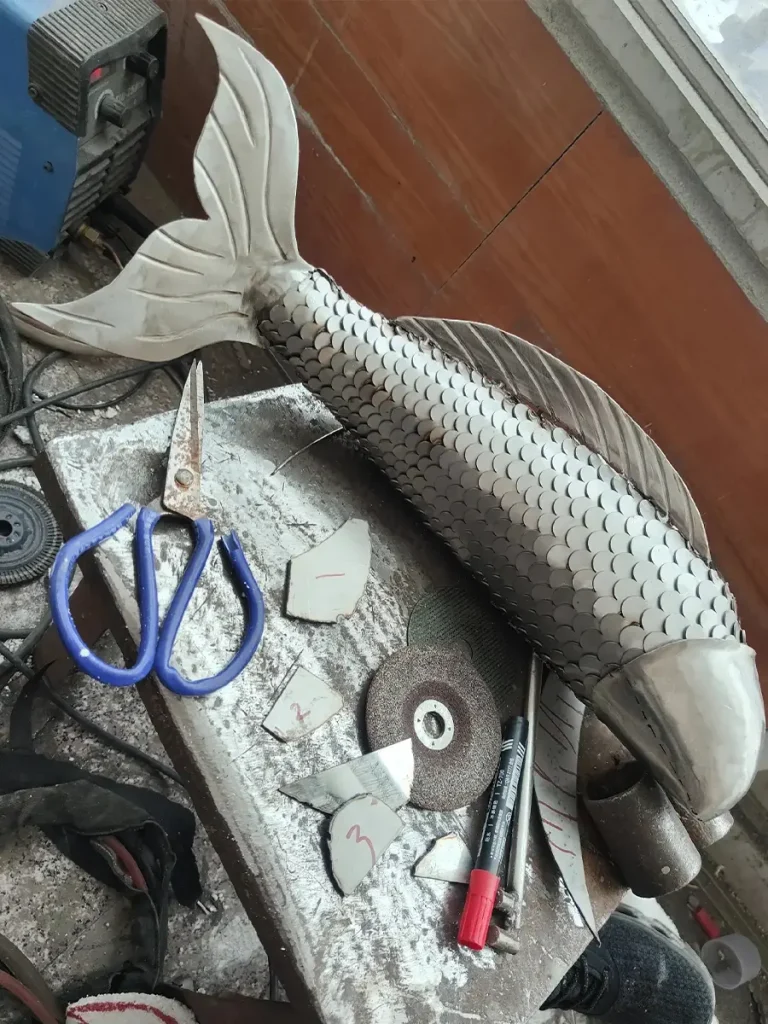
When clients ask how to make a metal fish sculpture, the key challenge lies in capturing the natural rhythm of fish scales and fluid movement. Stainless steel is often the preferred material because it reflects water and light beautifully.
Artisans construct the body using layered metal plates that slightly overlap, creating the illusion of scales. These plates are welded with careful spacing so the surface retains subtle depth rather than appearing flat.
After welding, sections of the body receive mirror polishing while other areas remain softly textured. This contrast allows reflections to shimmer across the surface, imitating the way sunlight dances across a living fish in water.
Placed near pools or fountains, the sculpture visually merges with its aquatic surroundings.
How to build large metal animal sculptures? Are they heavy and how are they installed?
Many clients assume monumental sculptures must be extremely heavy.
In reality, when discussing how to build large metal animal sculptures, modern fabrication techniques rely on hollow construction. This hollow forging approach dramatically reduces weight while maintaining structural strength.
Large sculptures are built around an engineered internal frame. Stainless steel plates are then welded to this skeleton, forming the outer skin of the animal.
For installation, engineers prepare embedded anchor points within the concrete foundation before the sculpture arrives. Hidden bolts connect the sculpture base to these anchors, locking the structure firmly into place.
This system ensures stability against strong wind forces while keeping the anchoring hardware invisible to viewers.
Can I custom a metal dog sculpture of my pet?
Yes—this is one of the most meaningful types of commissions.
When clients ask, Can I custom a metal dog sculpture, the answer is absolutely. The process begins with photographs of the pet from several angles, capturing posture, personality, and distinctive features.
Our design team then develops a 3D digital model based on these references. This model allows the client to review the sculpture’s proportions and expression before fabrication begins.
Once approved, artisans translate that digital model into forged metal form. Subtle details—such as ear position, tail curve, or the tilt of the head—are carefully recreated so the sculpture reflects the pet’s unique spirit.
The final piece becomes more than decoration. It becomes a permanent tribute.
How to weatherproof metal sculpture? Will it rust outdoors?
Collectors frequently ask how to weatherproof metal sculpture, especially for outdoor installations.
The first and most important factor is material selection. Sculptures fabricated from 316L marine-grade stainless steel possess extremely high resistance to oxidation and corrosion. In most environments, this metal will not rust even after many years outdoors.
For sculptures made from weathering steel, the approach is different. Corten steel intentionally forms a stable rust layer that protects the interior metal while creating a distinctive aged appearance.
Additional protection can be achieved through annual wax treatments and routine cleaning.
When designed and fabricated correctly, outdoor metal sculptures are built to endure decades of exposure while maintaining their structural and visual integrity.
How to clean metal sculpture?
Cleaning outdoor sculptures is much simpler than most people expect. For routine care, gently rinse the surface with clean water to remove dust, pollen, and airborne particles. This simple step already preserves most sculptures in excellent condition.
If additional cleaning is needed, use mild soapy water and a soft cloth or sponge. This approach works particularly well for stainless steel and copper surfaces without affecting their natural finish.
For highly reflective surfaces, especially mirror-polished stainless steel, wiping with a microfiber cloth will quickly restore clarity and shine. The reflective quality of polished metal returns immediately once dust and mineral residue are removed.
One rule is essential: strictly avoid corrosive chemical cleaners. Acidic solutions, chlorine-based detergents, and abrasive pads can permanently damage polished surfaces. Gentle cleaning always produces the best long-term results.
How to metal sculpture dragonfly or butterfly? Can you make fine details?
Many collectors wonder How to metal sculpture dragonfly or butterfly forms while maintaining delicate details.
These insects are among the most technically demanding subjects in metal sculpture because their wings must appear extremely thin while remaining structurally stable. Achieving this balance requires both precision forging and careful welding.
Our artisans use fine stainless steel wire welding combined with thin sheet metal shaping. Wings are forged and tapered until they become visually light—sometimes appearing almost transparent in sunlight.
Small hammer textures are added to mimic the natural veins within insect wings. Once polished, these surfaces capture light beautifully, creating shimmering reflections similar to real butterfly or dragonfly wings.
The result is sculpture that feels surprisingly delicate. Visitors often remark that the metal wings look “as thin as cicada wings,” even though they are engineered to remain durable outdoors.
This combination of artistic finesse and engineering strength defines high-level metal insect sculpture.
How to make metal sculptures move with wind?
Static sculpture captures a moment. Moving sculpture captures time.
When clients ask how to make metal sculptures move with wind, the solution lies in integrating kinetic engineering into the design. By introducing rotating elements and balanced structures, the sculpture becomes responsive to the natural environment.
These works are known as kinetic metal sculpture.
Donghui Zhang explains that the motion system usually relies on precision bearings concealed within the sculpture’s structure. Balanced metal components—such as wings, leaves, or rotating elements—respond to even gentle breezes.
Bird sculptures are particularly suited for this approach. A pair of metal wings mounted on a bearing system can pivot gracefully as wind flows across them, creating slow, natural movement.
The challenge lies in balancing motion with durability. Bearings must be weather-resistant, and the rotating components must remain stable during strong winds.
When properly engineered, kinetic sculptures transform outdoor spaces into dynamic environments. The artwork changes subtly throughout the day, guided by the invisible choreography of air currents.
How to make a metal horse sculpture and how long does it take?
The horse is one of the most complex animals to sculpt in metal.
When discussing how to make a metal horse sculpture, the greatest challenge lies in accurately capturing musculature and movement. Horses possess powerful anatomical structure, and even small proportional errors can make the sculpture appear unnatural.
The process begins with a detailed 3D model that defines the horse’s posture—standing, walking, or galloping. Engineers simultaneously design the internal framework that supports the sculpture’s weight and balance.
After the structure is prepared, artisans forge stainless steel plates that replicate the contours of the horse’s muscles and body lines. These plates are welded onto the internal frame and refined through grinding and polishing.
The mane and tail require additional texturing to simulate flowing hair.
For a large sculpture, the entire process—from digital modeling to final mirror polishing—typically takes six to ten weeks. Complex poses or highly detailed surfaces may extend the timeline slightly.
The finished sculpture combines anatomical realism with structural precision.
Do you offer 3D design previews before manufacturing?
Yes. Every custom sculpture begins with visualization.
Clients often ask, Do you offer 3D design previews before fabrication starts. The answer is absolutely. Before metal work begins, our design team prepares detailed 3D rendering images based on your sculpture concept.
These renderings allow you to see the sculpture from multiple angles and evaluate scale, posture, and proportions. Even more importantly, we can place the digital sculpture directly into photos of your garden, courtyard, or architectural space.
This process ensures that the artwork fits naturally within its surroundings before fabrication begins.
Adjustments to posture, size, or surface finish can easily be made at this stage. Once the design is approved, the engineering team translates the digital model into structural drawings and fabrication plans.
Visualization eliminates uncertainty and ensures the final sculpture matches the client’s vision precisely.
Metal animal sculptures occupy a rare intersection of art, engineering, and landscape design. They can anchor entire gardens, transform architecture, and create emotional connection between people and place.
From delicate butterflies to monumental giraffes, each sculpture carries its own story—shaped through metal, light, and craftsmanship.
At Yun Sculpture, our philosophy is simple:
Less mass. More reflection. More atmosphere.
We believe sculpture should not dominate a space but elevate it.
If you are considering a custom artwork, our team would be honored to assist. We invite you to contact us for your personalized 3D rendering preview and to request Free 316L samples, so you can experience the material quality before production begins.
The right sculpture does more than decorate a landscape.
It gives the space a living presence.
— Elena Zhang & Donghui Zhang, Yun Sculpture