Get in touch with Yun-Sculpture company
Reshaping the Classics: The Eternal Aesthetics and Engineering Guide to Custom Iron Wall Sculptures and Cast Iron Garden Statues

In an age defined by pixels and impermanence, there is a quiet but undeniable return to material permanence. Clients are no longer satisfied with surfaces that exist only on screens. They seek weight, texture, and objects that hold time within them. Iron, in its raw honesty, answers that desire.
What appears heavy in substance becomes unexpectedly light in experience. Iron wall sculptures rise from flat architectural planes and create a sense of dimensional extension—shadow, depth, and movement without occupying floor space. In the garden, cast iron garden statues stand with a different presence: grounded, steady, almost human in their endurance. Together, they form a dialogue between structure and landscape.


This is where timeless elegance emerges—not from ornament alone, but from the inherent logic of the material. Iron carries a memory of fire, force, and transformation. Whether shaped into delicate wall compositions or solid outdoor figures, it retains a timeless appeal that transcends trend.
The question is not simply aesthetic. It is metallurgical, structural, and deeply intentional. To understand why iron behaves the way it does—and why certain forms belong to certain processes—we begin at its core.
Table of Contents
Table of Contents
The Metallurgical Foundation: Distinguishing Cast Iron, Wrought Iron, and Modern Alloys
Cast Iron
At the foundation of cast iron garden statues lies the metallurgy of iron itself. Cast iron is defined by a high carbon content (2%-4%), a composition that fundamentally alters how the material behaves under heat and force.

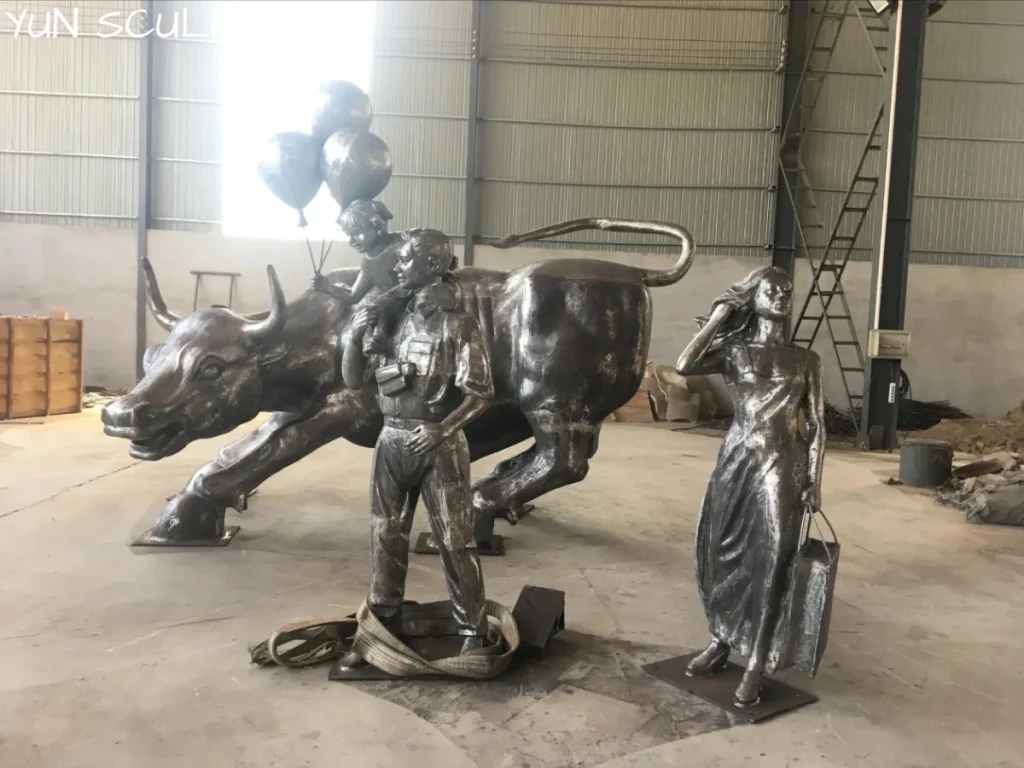
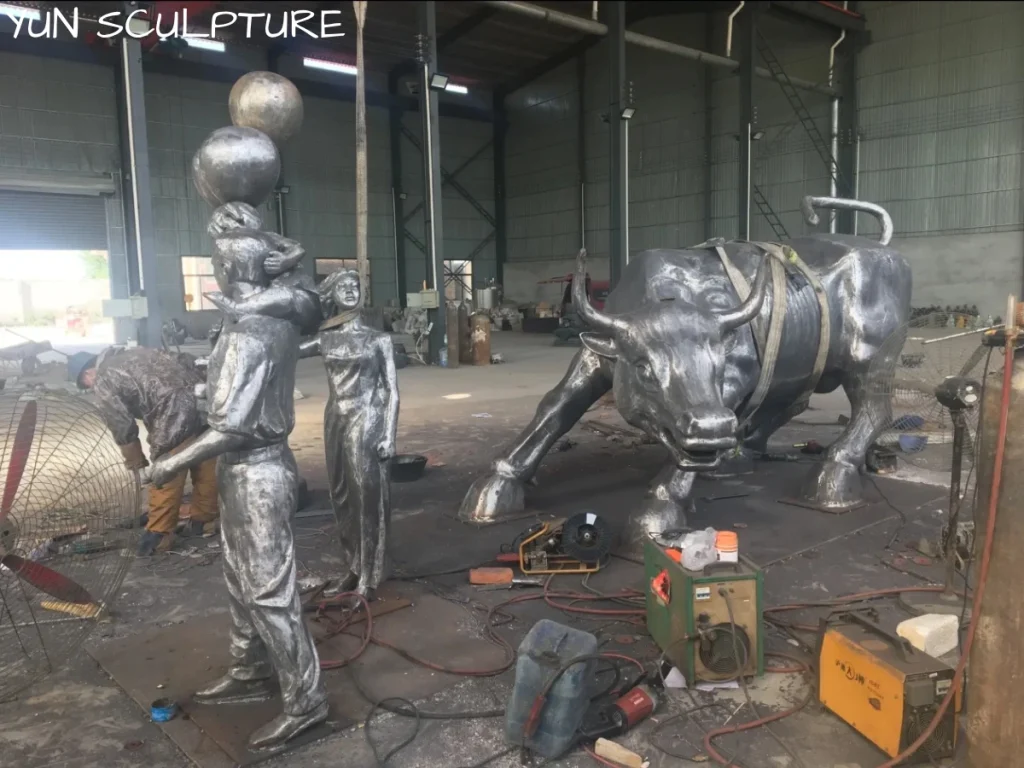
When heated, cast iron transitions into molten iron with remarkable fluidity. This allows it to be poured into intricate mold casting systems, capturing extraordinary detail—feathers, fur, botanical textures—that would be impossible through manual shaping alone. This is why classical animal sculptures and ornate garden figures rely on casting rather than forging.
From an engineering perspective, cast iron excels in compressive strength. It resists crushing forces exceptionally well, making it stable and durable in static outdoor environments. However, this same composition introduces a critical limitation: it is brittle. Unlike more ductile metals, cast iron does not bend under stress—it fractures.
This duality defines its use. Cast iron is ideal where detail, mass, and stability are required, but it must be respected as a material that does not tolerate dynamic loads or impact.
Wrought Iron
In contrast, wrought iron operates under an entirely different metallurgical logic. With a low-carbon alloy (<0.08%), its structure is soft, fibrous, and highly responsive to mechanical manipulation.
This low carbon content gives wrought iron its defining qualities: ductility and malleability. It can be heated, stretched, bent, and twisted without breaking. This is the domain of the blacksmith, where hand-forged iron art emerges through controlled force rather than casting.
Scrollwork, lattice structures, and expressive linear forms are all products of this process. Unlike cast iron, which captures detail through molds, wrought iron expresses movement through shaping. Every curve reflects the direction of force applied by hand.
A key internal feature distinguishes wrought iron further—slag fibers. These microscopic inclusions run through the material like grain in wood, enhancing tensile strength and improving resistance to corrosion. The result is a material that performs exceptionally well under tension and environmental exposure.
It is important to note that true wrought iron production largely ceased in the 1970s. What is commonly referred to today as “wrought iron” is often a modern substitute, designed to replicate its appearance but not always its internal structure.
Modern Alloys
Contemporary iron wall sculptures frequently rely on modern alloys, most commonly mild steel. While not technically iron in the historical sense, mild steel offers a controlled, consistent material suited to precision fabrication.
Its balanced composition allows for accurate laser cutting, enabling designers to achieve sharp edges, complex geometries, and repeatable patterns. This is particularly important for wall-mounted works, where weight, alignment, and installation tolerances must be carefully managed.

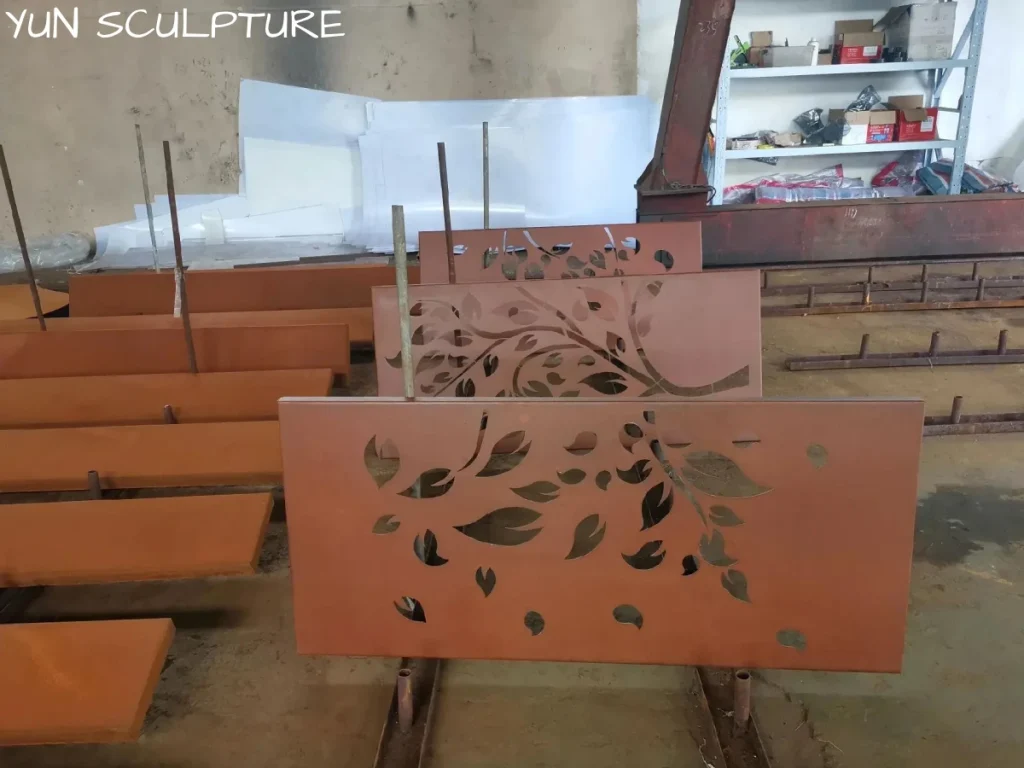

Mild steel bridges tradition and technology. It does not carry the same internal character as wrought iron, nor the casting capability of high-carbon iron. Instead, it offers predictability—an essential quality in architectural applications where precision defines success.
In this evolution from molten iron to hand-forged iron art to digitally cut mild steel, the material has not lost its identity. It has expanded its language.
The Animalier Niche: Cultural Narratives of Cast Iron Animal Sculptures
In the gardens of stately homes, the cast iron dog statue has long served as more than decoration—it is a sentinel, a timeless focal point that anchors the landscape. These figures, whether guarding a sprawling lawn or flanking a wrought-iron gate, embody loyalty, vigilance, and the human-animal bond. Breeds such as the Greyhound, Dachshund (Sausage dog), Staffordshire Bull Terrier (Staffy), and Pointer are favored not only for their distinctive forms but for the narratives they carry. Each silhouette signals intention: speed, cunning, guardianship.

Iron animal sculptures achieve a unique realism through casting. Molten iron, poured into intricate molds, captures every muscle contour, fur ripple, and sinew tension. The Animalier sculptures of the 19th century serve as a reference point: the tension of a running Greyhound or the poised alertness of a Staffy is preserved in cold metal yet conveys warmth and vitality. Classic garden statuary benefits from this dimensional fidelity, making the pieces both sculptural and symbolic. Shadows accentuate musculature and stance, giving the illusion of movement even in stillness.
This attention to detail extends beyond pets. Birds, deer, and wildlife motifs translate equally well into cast iron, connecting estates to a narrative of nature and guardianship. The iron medium allows for permanence, a tactile resonance that wood or stone alone cannot achieve. These statues are not ephemeral; they mature with their environment, patina deepening the story over decades.
Dimensional Extension: The Spatial Magic of Iron Wall Sculptures
From Heavy to Light
Wall-mounted iron sculptures challenge perception. Heavy in material, yet light in presence, they exploit negative space—what I call “The Void”—to extend dimensions beyond their physical boundaries. Minimalist line art, often used in 3D metal wall decor, creates forms that seem to float, their silhouettes morphing with the viewer’s perspective. This approach bridges the Industrial-Organic aesthetic with Victorian style or Modern Farmhouse decor, proving iron’s versatility in both contemporary and traditional interiors.
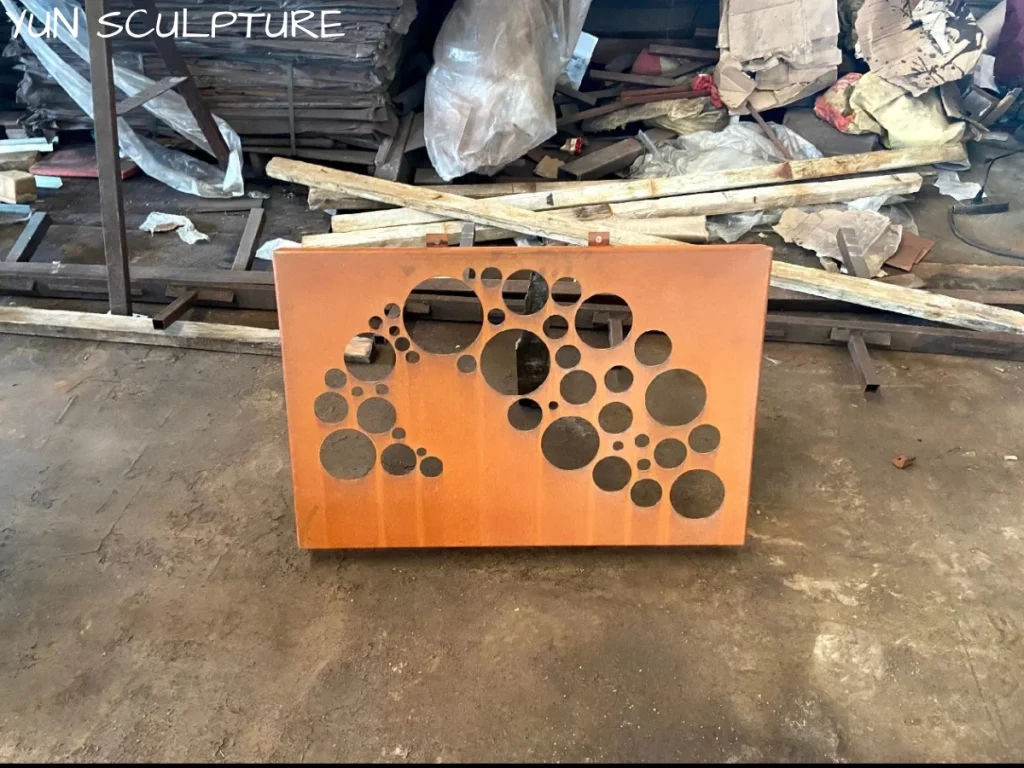
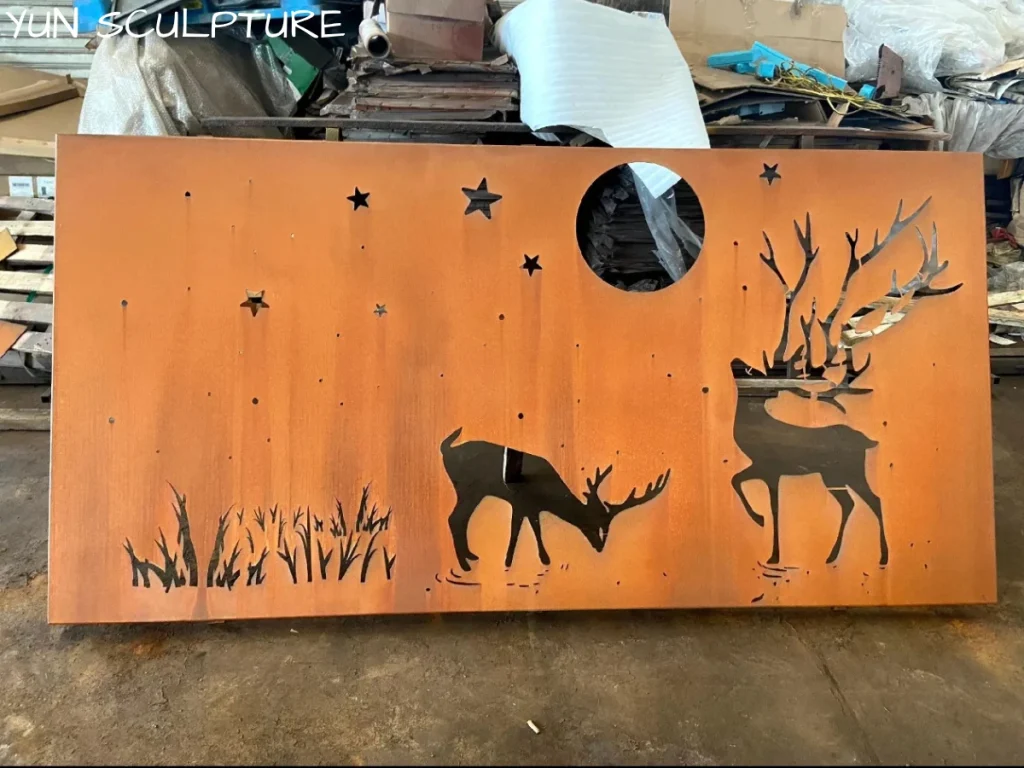
Motifs such as the Tree of Life exemplify this principle. Branches stretch across the wall, interacting with the surrounding environment, while the metal’s presence grounds the composition. In living room art, this tension between weight and airiness invites engagement, encouraging the eye to follow lines and curves across the spatial canvas.
The Art of Shadows
Shadow play is a critical dimension of iron wall sculpture art. The sculpture itself becomes the first layer, while the shadow it casts becomes a secondary artwork, adding depth, drama, and subtle narrative. Grazing light, accent lighting, and daylight shifts transform minimalist line art into a dynamic composition, rendering static metal into a kinetic experience.
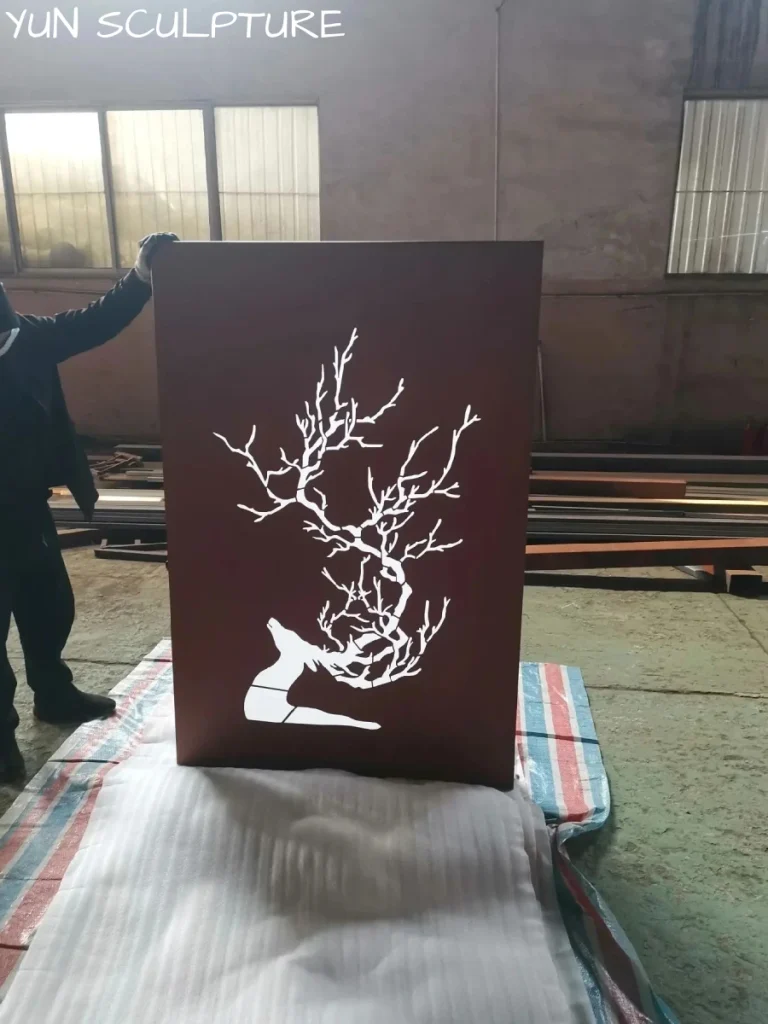
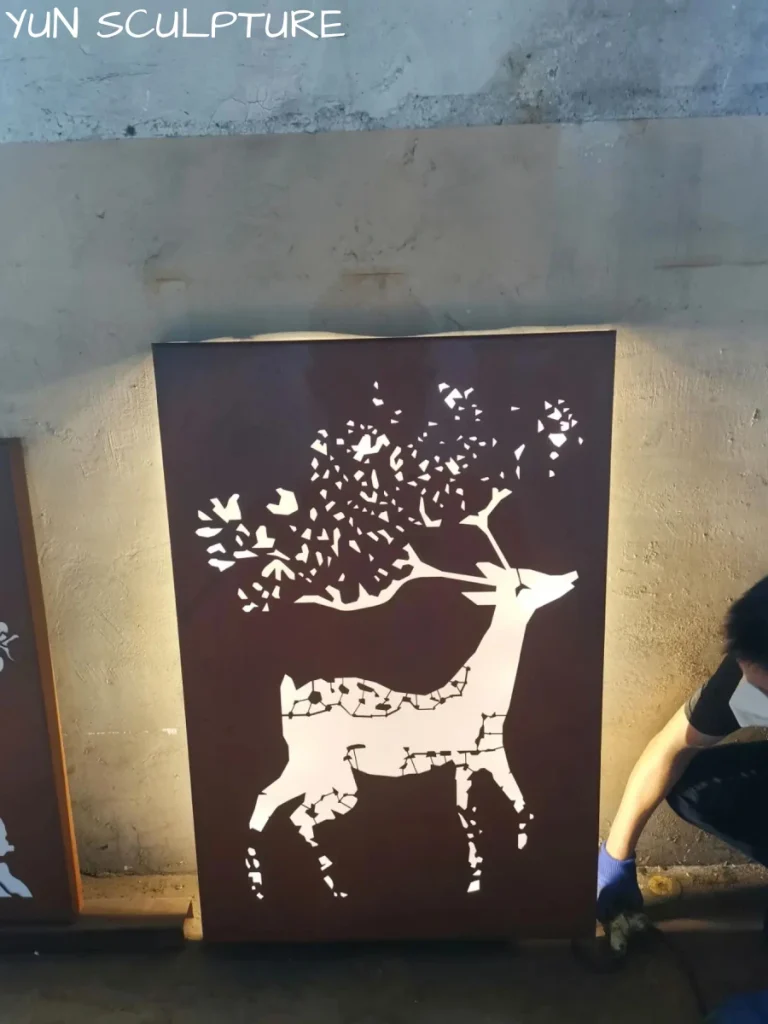
In 3D metal wall art, these shadows extend the sculpture into the room, turning walls into immersive environments. Iron, in its density, provides crisp, defined shadows, while openwork designs amplify movement and change across the day. Shadow play in art enriches the interaction between observer and object, allowing a single piece to occupy multiple visual planes simultaneously.
Interior Integration and Proportional Harmony
The 2/3 Rule
Successful interior styling with iron requires more than choosing the right motif—it demands proportional harmony in decor. A guiding principle is the 2/3 rule: the width of the wall sculpture should range between 4/7 and 3/4 the width of the furniture below it. This ensures that iron wall sculpture art complements the room rather than overpowering it. For example, a sizeable minimalist Tree of Life above a velvet sofa maintains visual equilibrium while asserting presence.
Material Dialogue
Iron’s rigidity and density invite contrast. When paired with soft textures—velvet cushions, wool throws, or polished wood surfaces—it creates textural tension that enhances the room’s sensory complexity. Stone, leather, or natural fibers provide additional counterpoints, emphasizing the material permanence of iron without creating visual heaviness.
Interior styling with iron is not merely about placement; it is about dialogue. Each piece interacts with its surroundings, engaging furniture, lighting, and architectural lines. When balanced thoughtfully, iron wall sculptures and cast iron garden statues act as both anchor and accent, turning everyday interiors and estate landscapes into curated, dimensional environments.
By considering shadow, proportion, and material interplay, iron achieves what it has always promised: a timeless focal point that commands attention while harmonizing with the human-scaled environment.
Donghui Zhang’s Hardcore Specifications: Safe Installation of Heavy Metal Art
Siding & Substrate Assessment
Proper installation begins with a meticulous evaluation of the substrate. How to hang iron wall decor safely depends on knowing what supports the weight of the sculpture. Exterior siding installation varies widely: wood, brick, stucco, and modern composites all have different load capacities and anchoring requirements.
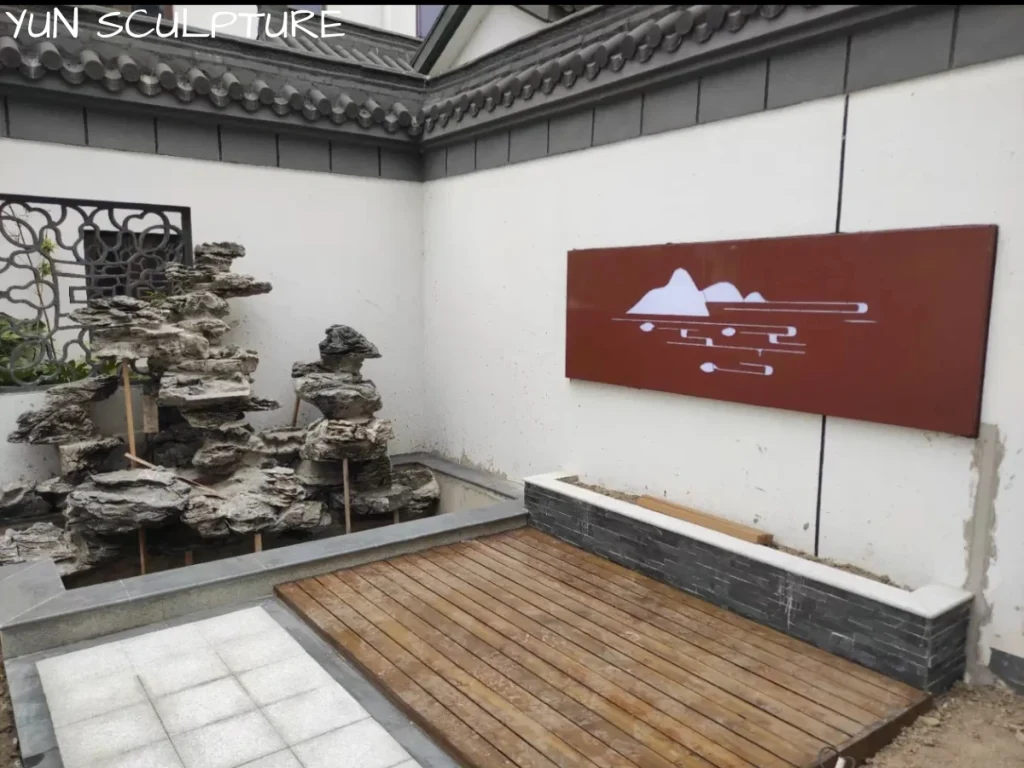

Key engineering rules:
- Art over 10 lbs (4.5 kg) must always use stud-mounting or high-strength lag bolts.
- Drywall without studs requires toggle bolts rated for the specific weight.
- Masonry walls (brick, concrete) require drilled anchors with expansion sleeves or epoxy-set bolts.
- Stucco siding demands careful penetration and sealing to prevent water ingress, which can compromise both the wall and sculpture.
Assessment of the substrate is critical not only for safety but for longevity. Every iron installation carries concentrated load points; if the wall cannot support these, failure is imminent. Entryway security, staircase railings, and exterior art installations all benefit from the same principle: verify load-bearing capacity before committing to fasteners.
French Cleats & Weight Distribution
For large iron wall sculpture art, French cleats are the gold standard for even weight distribution and level alignment. By creating a continuous line of support across the width of the artwork, cleats transfer weight directly to structural studs, minimizing stress on any single anchor point.
- Anchoring techniques: French cleats allow for both temporary and permanent installations while maintaining precise leveling.
- Structural support: Cleats prevent sagging or rotation over time, which is especially important for heavy 3D metal wall decor.
- Weight distribution: Load is shared evenly across the cleat and studs, reducing the risk of wall failure.
Even with cleats, engineers must account for the sculpture’s geometry. Asymmetrical or multi-panel designs require additional horizontal and vertical support to prevent twisting or uneven settling.
Thermal Expansion
Metal reacts predictably to temperature changes. Outdoor iron wall sculptures expand and contract with daily and seasonal thermal cycles. Compensating for thermal expansion is essential:
- Leave small gaps between mounting hardware and sculpture where possible.
- Avoid rigid anchoring that restrains metal movement, which can cause warping or cracking.
- For larger panels, consider segmented mounts to allow each section to move independently while maintaining alignment.
Even minor attention to thermal displacement ensures the sculpture remains visually perfect and structurally sound over decades.
Maintenance Encyclopedia: From Oxidation Prevention to Refurbishment Protocols
Chemical Defense
Unlike Corten steel, standard iron does not self-heal. Outdoor exposure without protective measures leads to rust, pitting, and structural weakening. Modern industry standards demand proactive protection:
- Powder coating is the benchmark for corrosion resistance, providing a durable, UV-stable layer that prevents rust on metal art.
- Powder coating for outdoor sculpture ensures color retention, surface smoothness, and longevity against moisture, temperature swings, and environmental pollutants.
Without coating, even small scratches or exposed edges can quickly become failure points.
Tiered Maintenance
Maintenance is dictated by environment and exposure:
Indoors:
- Weekly microfiber dusting suffices for iron art maintenance, removing particulates that can attract moisture.
Outdoors:
- Annual inspection is mandatory. Check for micro-rust and coating defects.
- Apply rust converters where necessary.
- Reapply a UV-protective sealant clear coat to maintain corrosion resistance.
Proper care optimizes Life Cycle Cost (LCC). Powder-coated, well-maintained iron wall sculptures and cast iron garden statues are a long-term investment, with decades of near zero maintenance.
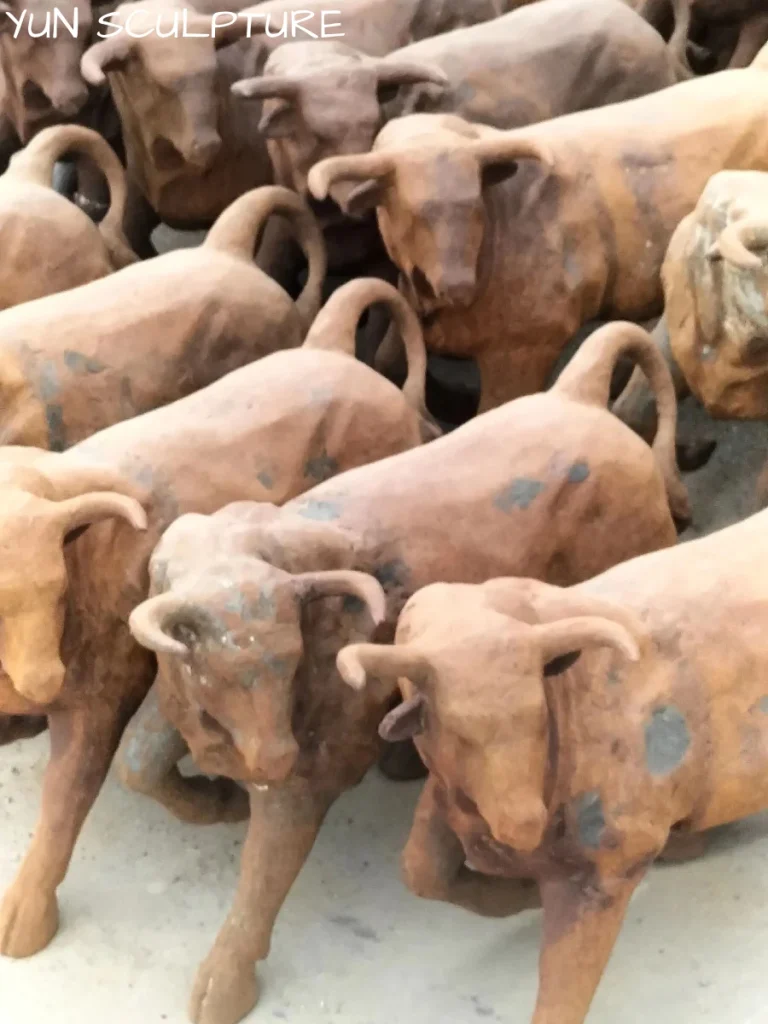
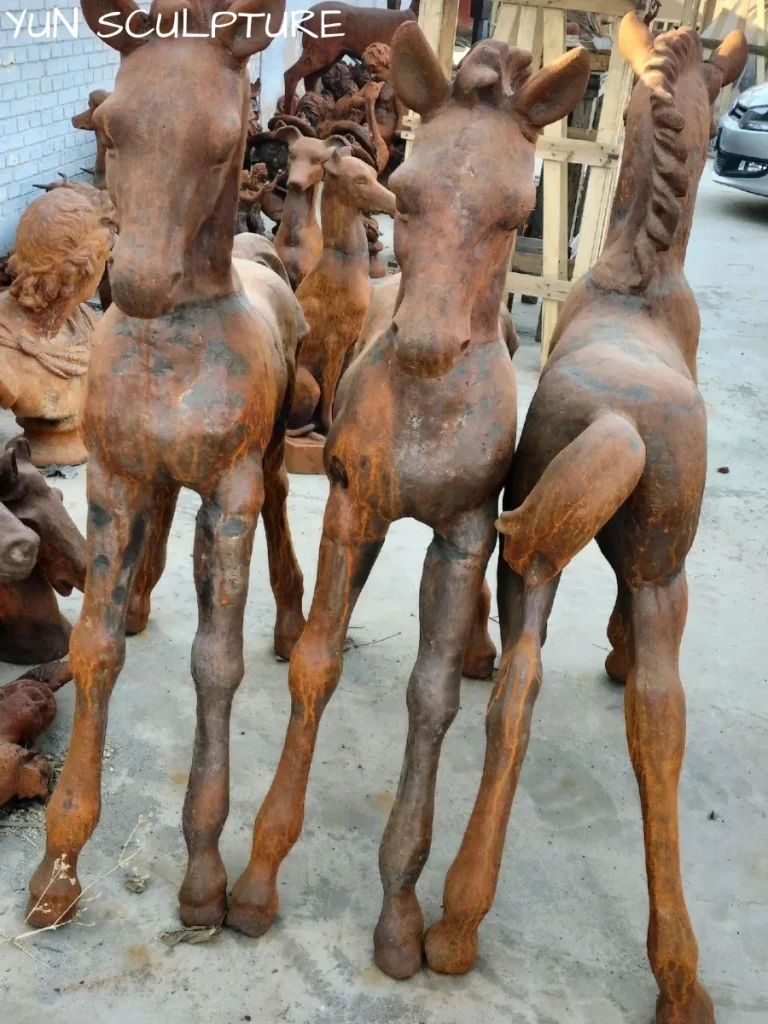
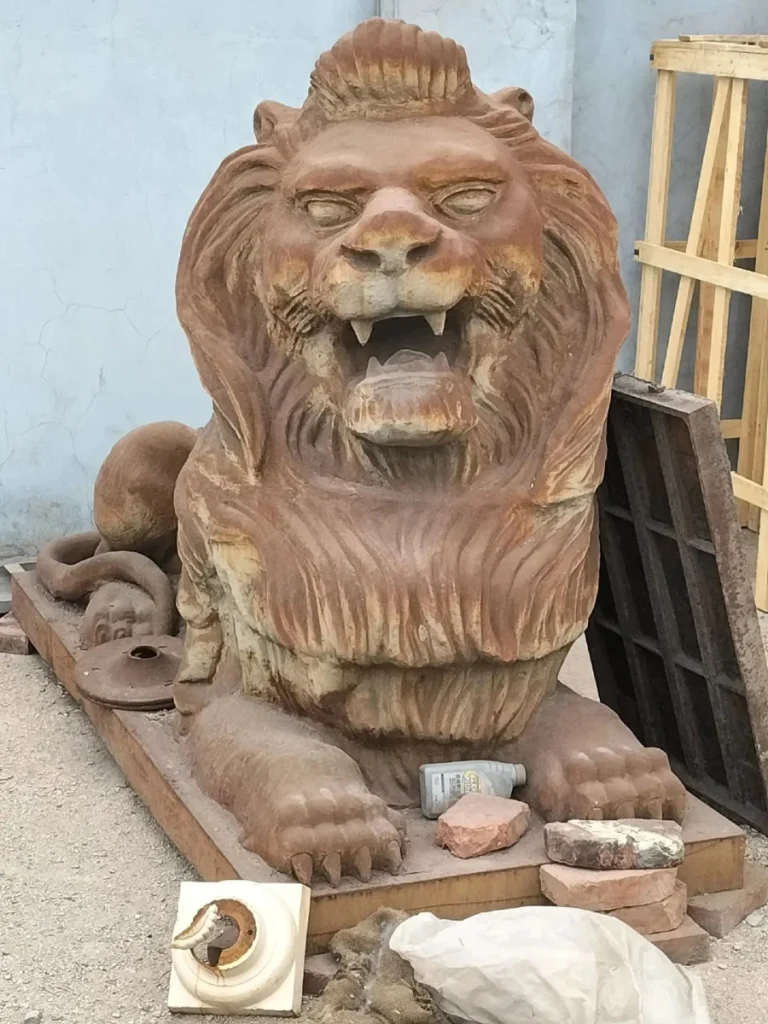
Even heavy estate guardians or 3D wall panels can remain pristine if these engineering and maintenance protocols are followed precisely. With correct substrate assessment, anchoring, and protective treatment, the permanence of iron becomes not just aesthetic, but structural, functional, and enduring.
16 Core Questions Answered (FAQ)
Is iron wall art suitable for outdoor use and how do I prevent it from rusting?
Yes. Iron wall art is suitable for exterior installation if treated with powder coating or a UV-protective polyurethane finish. Apply a clear coat annually and treat any scratches immediately with a rust-inhibiting sealant to maintain corrosion resistance.
What is the difference between wrought iron and cast iron in metal decor?
Wrought iron is a low-carbon, hand-forged material. It is malleable, with a fibrous grain that provides tensile strength and corrosion resistance. Cast iron is high-carbon, poured into molds for intricate detail but is brittle and cannot flex without breaking.
How do I safely hang a heavy metal wall sculpture on drywall?
Always locate and anchor into a wall stud. If that is not possible, use toggle bolts rated for at least twice the weight of the piece. For very large sculptures, a French cleat system distributes weight evenly and ensures level alignment.
What are the popular trends for iron animal sculptures and dog statues in 2025?
Hyper-realistic heritage breeds such as Pointers and Staffordshire Bull Terriers dominate, alongside minimalist continuous-line silhouettes. Polished stainless steel balloon dogs are also trending for modern interiors.
Why is the “Tree of Life” a top-selling theme in iron wall art?
The Tree of Life symbolizes growth, family roots, and connection, making it particularly popular for 11th “Steel” anniversaries. Laser-cutting enables intricate, delicate designs that appeal to both traditional and contemporary spaces.
How can I use lighting to make my metal wall art look more three-dimensional?
Use accent lighting at 30-45° angles to create depth and core shadows. Shadow mounts or standoffs produce a gap between the wall and sculpture, turning the shadow itself into a secondary artwork, enhancing the three-dimensional effect.
Can I place a cast iron sculpture directly on the grass?
No. Capillary action draws moisture from the ground, accelerating corrosion. Always install on a stone base or other hardscape with adequate drainage to prolong lifespan.
Will iron wall art stain my light-colored exterior walls?
Not if properly powder-coated or sealed. During installation, we use waterproof gaskets to prevent rust runoff from contacting the wall surface.
Why do cast iron sculptures look more “grounded” than stainless steel?
Cast iron absorbs light through its micro-pitted texture, creating a solemn, historical weight. Polished steel, by contrast, reflects sharply and appears visually lighter and more modern.
How can I tell if my wall art is real iron or cheap plastic?
Perform the magnet test and a tap test. Real iron is cold, heavy, magnetic, and produces a distinct metallic resonance, unlike plastic, which is lighter and hollow-sounding.
How long will a cast iron sculpture last in a coastal environment?
Salt spray is highly corrosive. Without marine-grade coatings, such as zinc-rich primers, cast iron will rust within 3-5 years. Regular fresh-water rinsing significantly extends longevity.
Will hanging a giant iron wall sculpture crack my drywall?
Yes, if it is not anchored correctly. Use toggle bolts or span a mounting plate across multiple studs to safely support the load.
Is “Wrought Iron” extinct in modern times?
True commercial wrought iron production ceased in the 1970s. Modern pieces often use mild steel, though hand-forging techniques replicate the original texture and character.
Do I need to bring my iron sculptures indoors during winter?
High-quality powder coating withstands temperatures as low as -40°C. The primary concern is water freezing and expanding in hollow bases, so ensure proper drainage holes outdoors.
Can I commission a custom cast iron statue of my own pet?
Yes. Using 3D scanning or photo modeling, combined with precision Investment Casting, we can produce a 1:1 realistic tribute of your pet in cast iron.
How do I clean dust off iron wall art without damaging the finish?
Avoid acids or strong alkalis. Clean gently with diluted mild soapy water and a soft brush, then dry completely to prevent moisture-induced corrosion.
Iron wall sculptures and cast iron garden statues bridge centuries of craftsmanship, from hand-forged artistry to modern precision fabrication. They unite structural engineering, spatial elegance, and timeless appeal, creating objects that endure in both private estates and contemporary interiors. Proper installation, protective finishing, and attentive maintenance transform each piece into a long-term investment, blending industrial heritage with modern sanctuary.
– Elena Zhang & Donghui Zhang, Yun Sculpture