Get in touch with Yun-Sculpture company
The Circular Narrative: Design and Engineering Guide to Custom Stainless and Corten Steel Metal Moon Gates

A metal moon gate is not an entrance. It is a spatial instrument.
In classical Chinese gardens, the moon gate was a threshold between worlds. In contemporary landscapes, a moon gate metal structure becomes something more precise—a calibrated intervention that reorganizes how space is perceived, framed, and remembered.
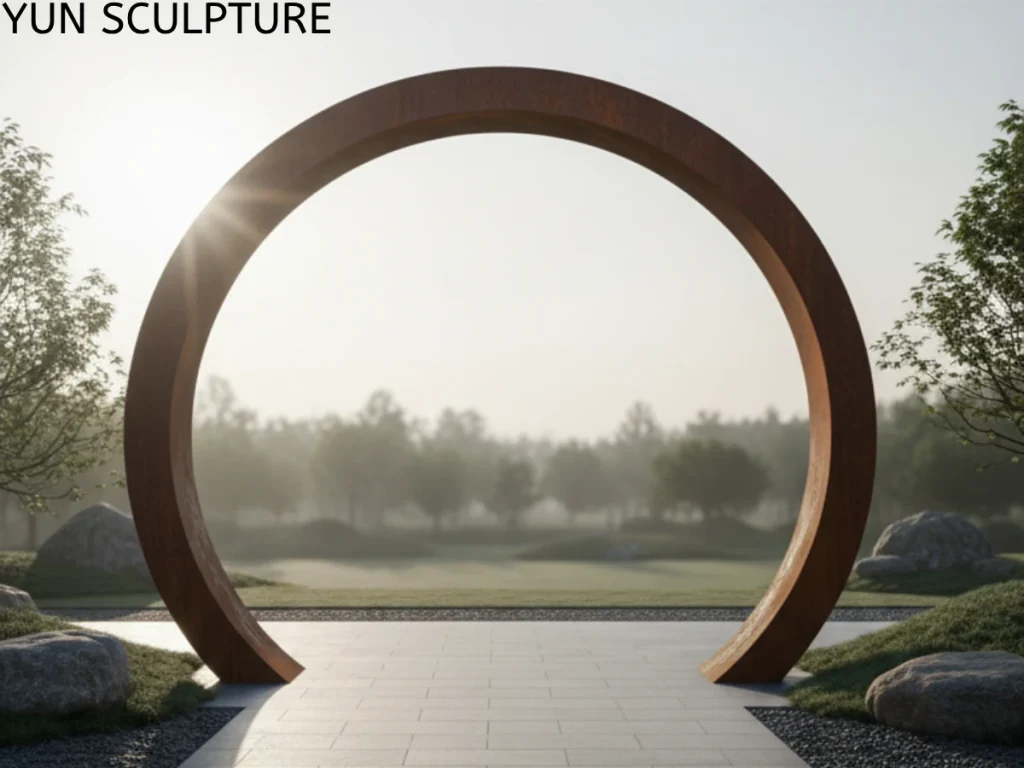
As an art and spatial device, it operates with geometric clarity. A perfect circle placed within an organic environment introduces tension, and from that tension, meaning emerges. The landscape is no longer continuous. It is edited.
For residential and commercial projects alike, a metal moon gate for garden use transforms circulation into choreography. One does not simply walk through it. One approaches, aligns, pauses, and passes. The body becomes aware of proportion, light, and axis.
This is why we define it as a “spatial transformer.”
It does not decorate a site. It rewrites it.
Table of Contents
Table of Contents
Aesthetic Philosophy: The Modern Landscape Narrative of the Moon Gate
Spatial Transition
At architectural scale, a large metal ring sculpture establishes order within complexity.
Landscapes are inherently irregular—trees grow asymmetrically, terrain shifts subtly, and light is never static. The insertion of a perfect circle creates a counterpoint. It anchors the eye while allowing the surroundings to remain fluid.
This balance between control and freedom is what gives the Corten circle garden sculpture its narrative strength. The circle does not compete with nature. It frames it.
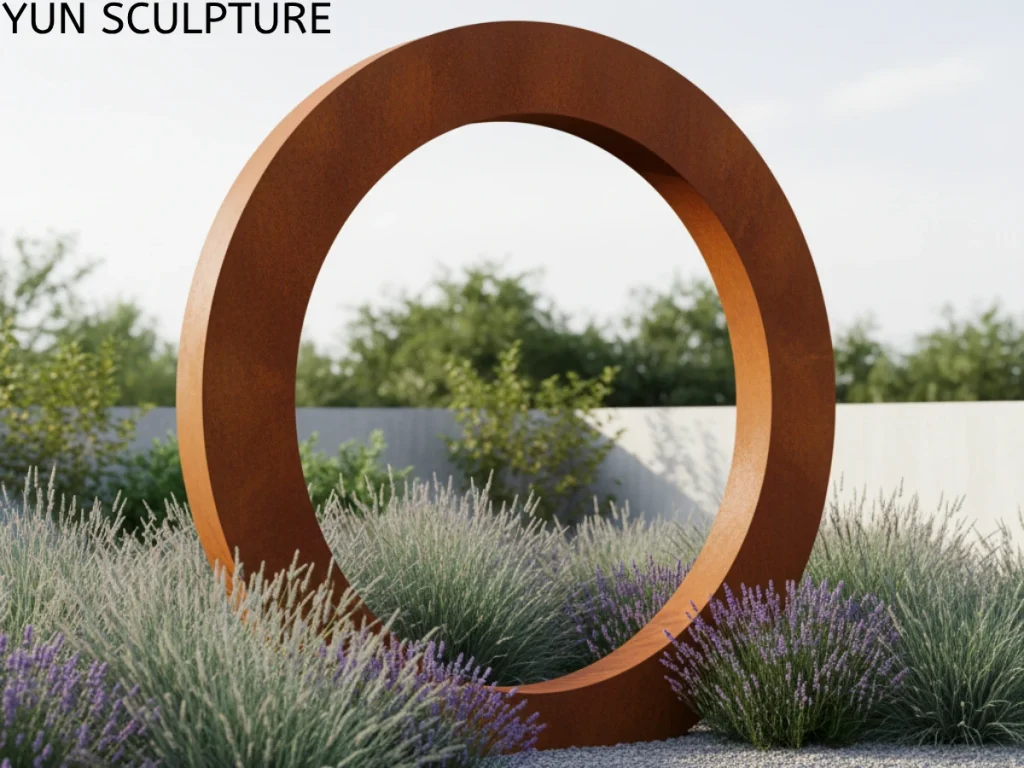
This principle is rooted in the concept of “framing views,” often described as borrowed scenery. The moon gate isolates a portion of the landscape and elevates it into a composed image. A distant tree, a water feature, or even open sky becomes a curated focal point.
The effect changes continuously.
Morning light produces a sharp, defined shadow that cuts across paving surfaces. By afternoon, that shadow softens and elongates. At sunset, the circle becomes a glowing outline, capturing warm tones within its inner edge.
Time becomes visible.
This is where the moon gate transcends objecthood. It is no longer just a metal moon gate arch. It becomes a device that records the movement of light, seasons, and human passage.
The void is the true material.
The steel simply defines it.
Material Science: Marine Grade 316L Stainless Steel vs. Corten Steel
The Comparison
From an engineering perspective, material selection determines not only durability, but also the emotional tone of the installation. The difference between stainless steel and Corten steel is not cosmetic—it is structural, chemical, and experiential.
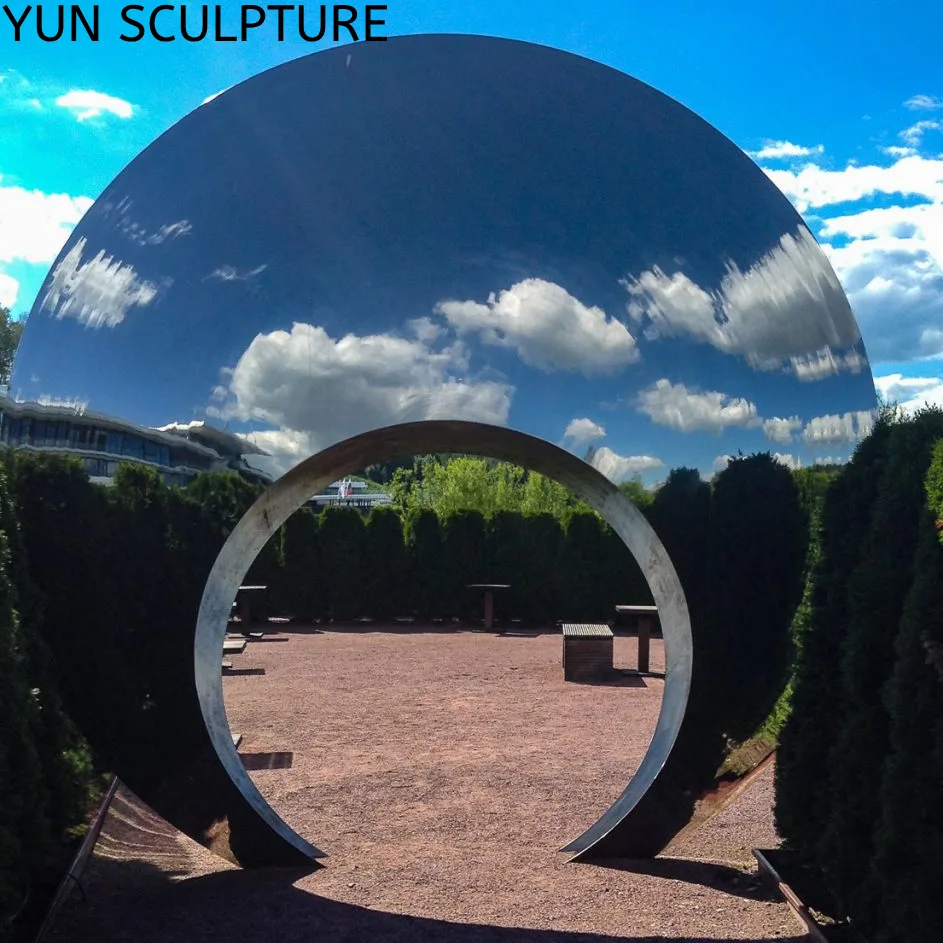
316L Stainless Steel
- Composition: High nickel content (10–14%) combined with molybdenum (2–3%).
- Surface Character: Capable of mirror polish or fine brushed finishes. The result is a cold, controlled, and highly contemporary aesthetic.
- Corrosion Resistance: The chromium-rich passive oxide film is chemically stable and self-repairing, providing strong resistance to chloride environments.
- Performance: Particularly suited for coastal or humid regions where corrosion risk is elevated.
- Lifespan: Exceeds 50 years with minimal maintenance.
In application, a stainless steel metal moon gate arch reflects its surroundings. It dissolves into the landscape, capturing sky, vegetation, and movement. The object becomes transient, almost immaterial.
Corten Steel (ASTM A588)
- Composition: Alloyed with copper, chromium, and nickel.
- Protective Mechanism: Forms a dense FeOOH (iron oxyhydroxide) patina layer that acts as a barrier against further corrosion.
- Color Evolution: Transitions from bright orange-yellow to a deep, stable brown over a period of 6–18 months.
- Self-Healing: The patina regenerates when scratched or exposed, maintaining long-term protection.
- Lifespan: Typically 40–60 years in appropriate environments.
A corten steel moon gate expresses time as a material.
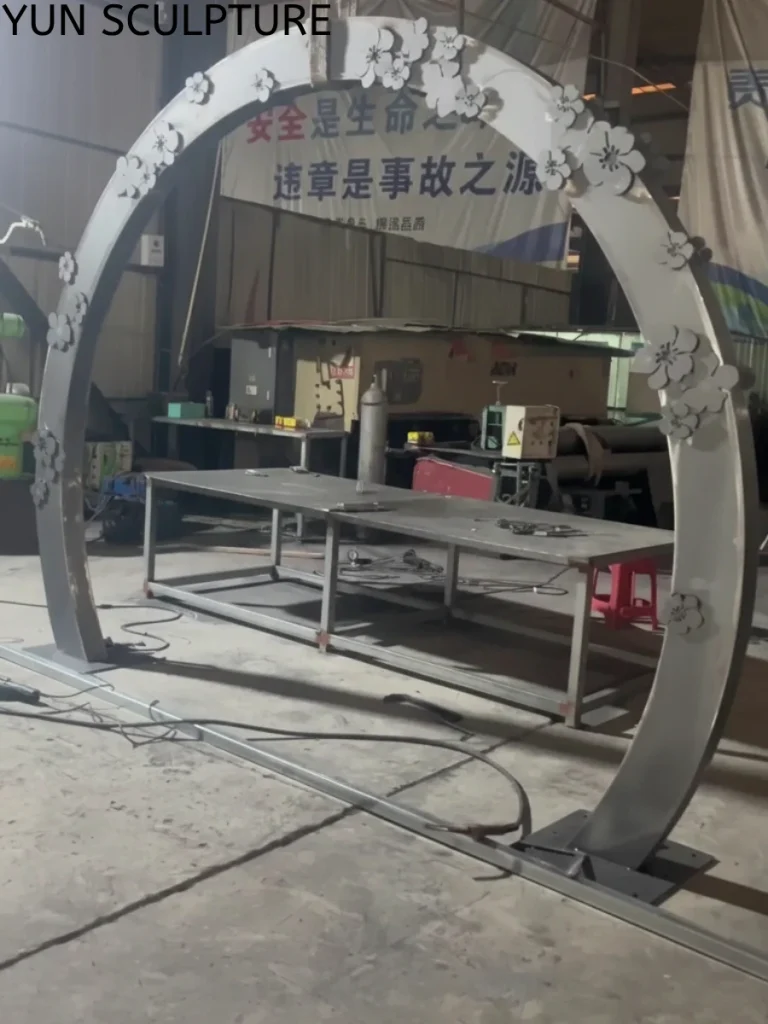
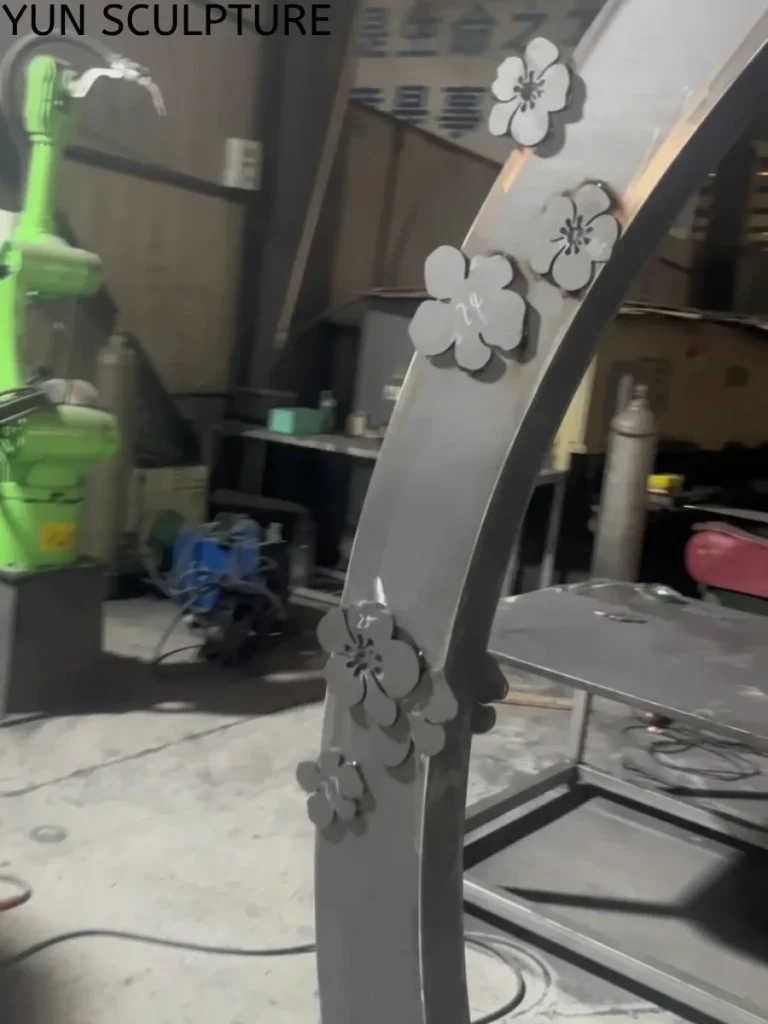
Unlike stainless steel, it does not resist change. It embraces it. This makes it central to the language of weathering steel sculptures and rusted metal garden sculptures, where aging is not deterioration but design intent.
The surface of a rusted metal moon gate carries depth. Subtle tonal variations emerge across the ring, responding to rainfall, orientation, and microclimate. Each installation becomes site-specific.
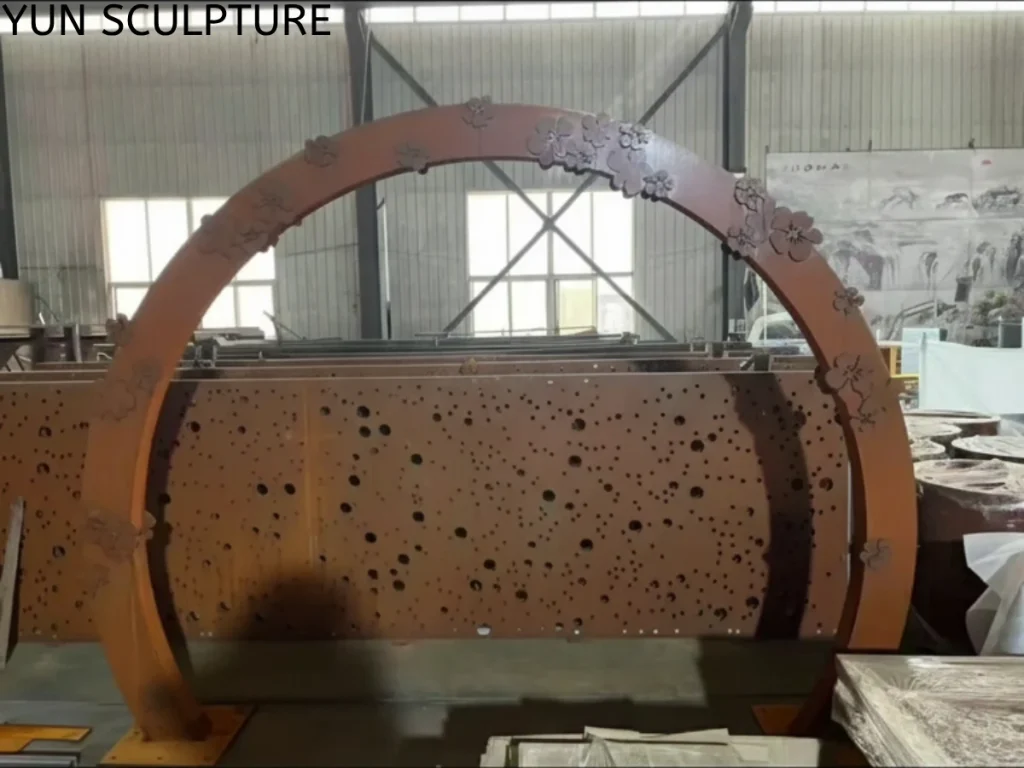
Within landscape compositions, a weathered steel garden sculpture provides warmth and grounding. It contrasts sharply with greenery while harmonizing with soil, stone, and timber.
This is why the moon gate metal choice defines narrative direction:
- Stainless steel creates reflection and abstraction.
- Corten steel creates presence and memory.
Both are structurally robust. Both are architecturally valid.
But they speak entirely different spatial languages.
Hardcore Engineering: The Structural Logic of Large Diameter Rings
The Challenge
A large metal ring sculpture exceeding 2.5 meters in diameter appears deceptively simple. In reality, it behaves more like a vertical bridge element than a decorative object.
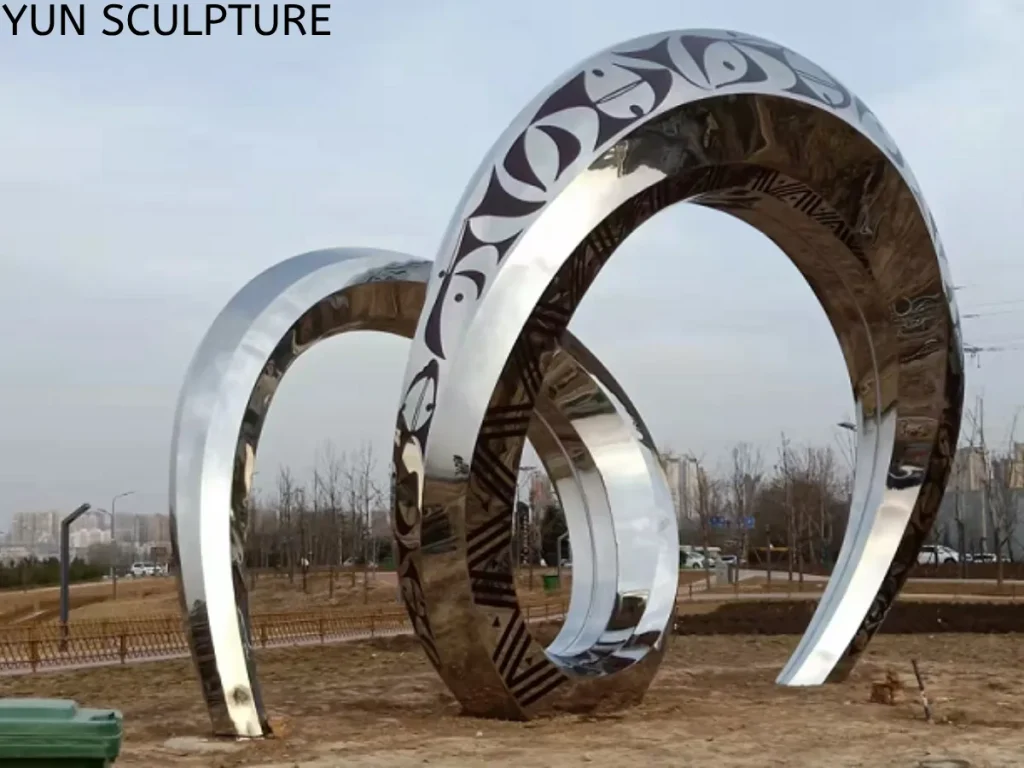
The primary challenge is not strength. It is stability over time.
Steel, even at high thickness, is susceptible to micro-deformation under its own weight, thermal expansion, and wind-induced vibration. Without proper internal structuring, a ring will gradually lose its perfect geometry. What begins as a circle becomes subtly elliptical.
This “out-of-roundness” is unacceptable in a form defined entirely by geometric purity.
Moment of Inertia and Internal Reinforcement
To preserve the integrity of the circle, the internal structure must increase the section’s moment of inertia.
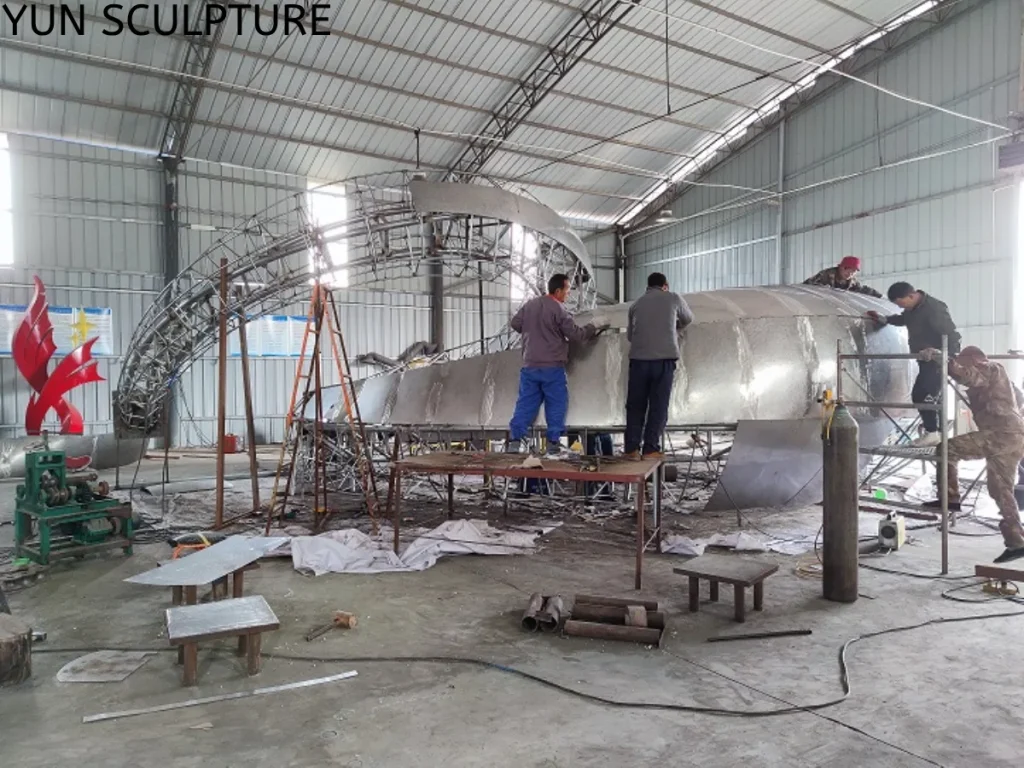
This is achieved through concealed reinforcement systems:
- Radial stiffeners: Plates extending from the inner to outer curvature at calculated intervals
- Longitudinal ribs: Continuous internal bands following the ring’s circumference
- Box-section construction: Creating a hollow structural ring rather than a flat plate
These elements are not visible externally. They are embedded within the ring profile, ensuring that the metal moon gate arch maintains rigidity without compromising visual minimalism.
The goal is simple: resist deformation while preserving elegance.
Drag Coefficient and Wind Load
Wind is the dominant external force acting on a vertical ring.
Unlike flat surfaces, a circular form produces complex airflow patterns. Pressure differentials occur along the curvature, especially in open plazas or coastal environments where wind tunnels may form.
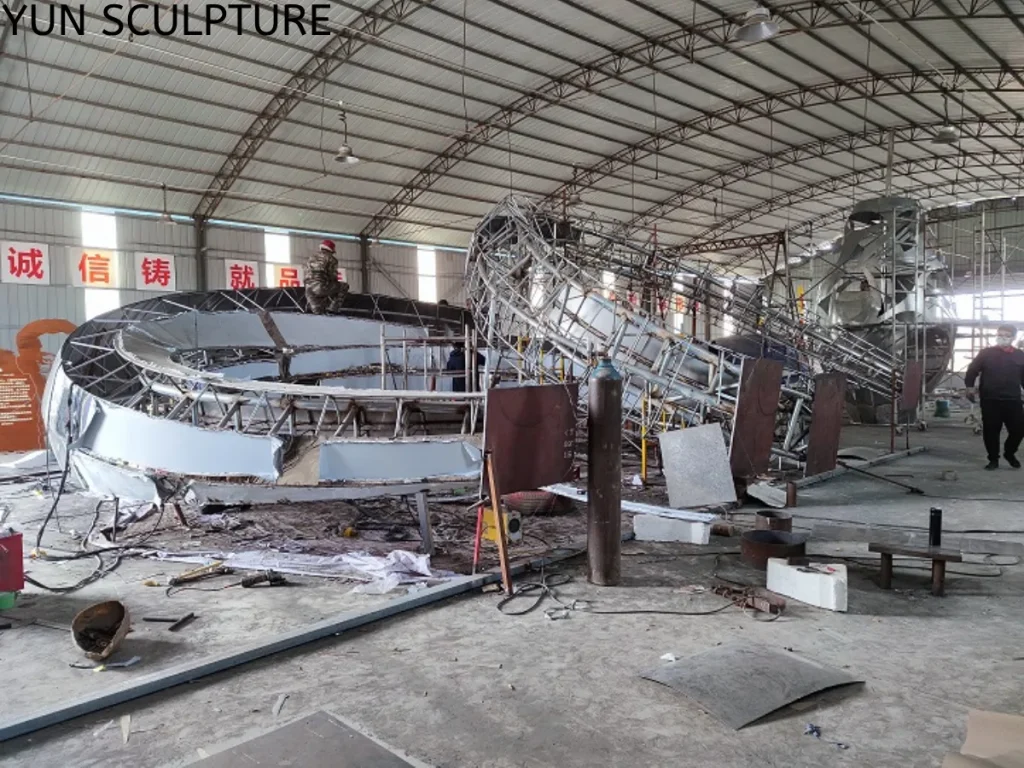
Engineering calculations must account for:
- Drag coefficient of circular hollow sections
- Local wind speed data and exposure category
- Vortex shedding and oscillation risk
To counter these forces, material thickness is not arbitrary. It is engineered.
- Minimum wall thickness: 6 mm for smaller installations
- Recommended range: 8–10 mm for large-scale outdoor structures
- Increased thickness for high-wind or coastal zones
This ensures that the ring does not vibrate, flex, or fatigue over decades of exposure.
Full Penetration Welding
The structural continuity of the ring depends entirely on weld integrity.
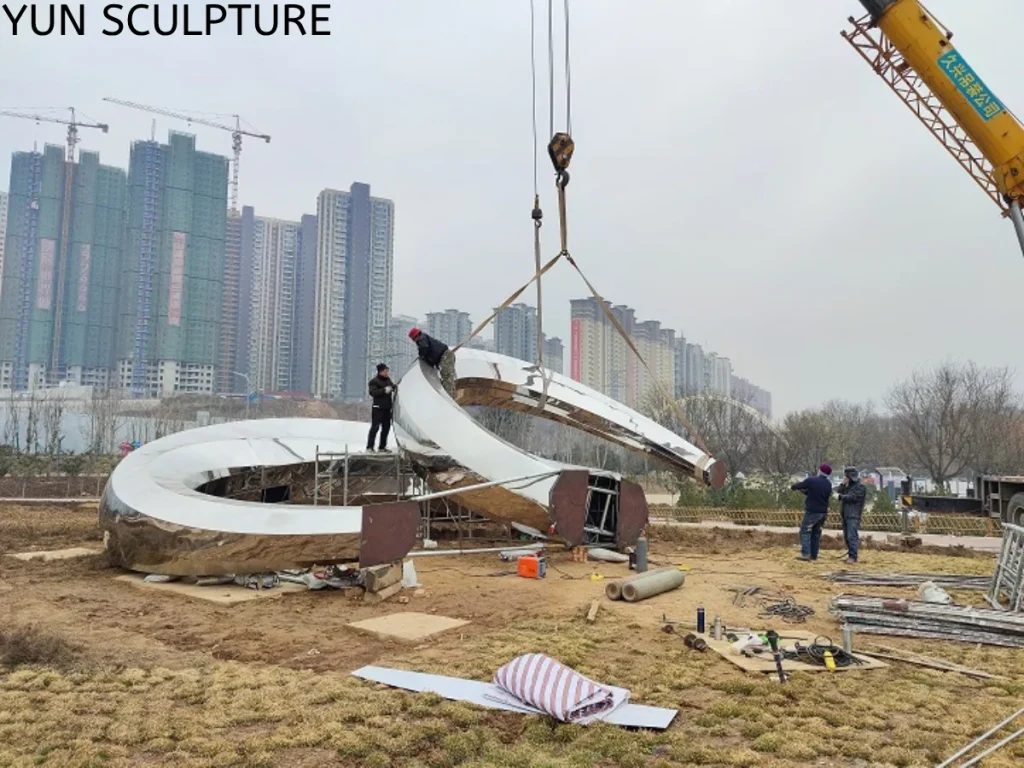
All joints within the large metal ring sculpture must use:
- Full penetration welding (FPW)
- No spot welding or partial welds permitted
This method fuses the entire cross-section of adjoining steel components, creating a joint that is as strong as the base material itself.
In a circular structure, even minor ضعف in a joint can propagate stress unevenly. Over time, this leads to distortion.
Full penetration welding eliminates that risk.
Precision Grinding and Surface Continuity
After welding, the surface must be restored to a seamless state.
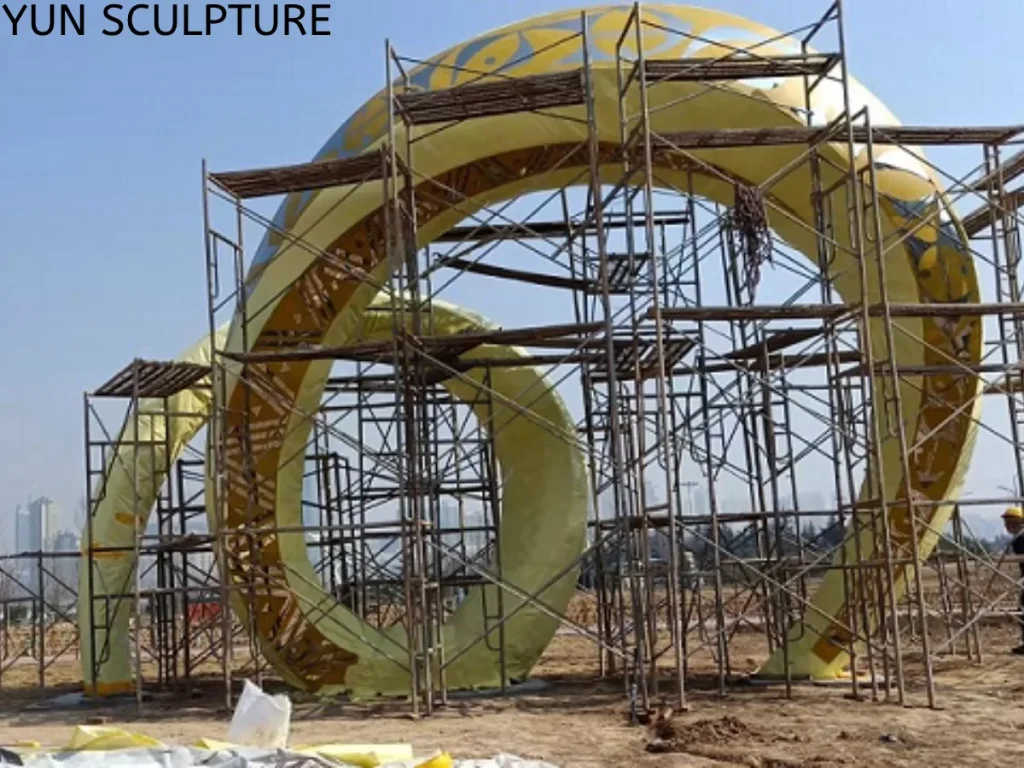
This involves a multi-stage finishing process:
- TIG welding for controlled, high-quality seams
- Multi-pass grinding to remove weld buildup
- Progressive polishing (for stainless steel) to achieve mirror or satin finishes
- Abrasive blasting (for Corten steel) to unify surface texture
The critical objective is the elimination of the Heat Affected Zone (HAZ)—the visible discoloration and microstructural change caused by welding heat.
For stainless steel, this ensures uninterrupted reflectivity.
For Corten, it guarantees uniform patina development.
The final result is a continuous, unbroken ring.
No joints. No visual interruptions. Only form.
Landscape Integration and Light Art
Integration
A metal moon gate arch achieves its full effect only when it is embedded within the logic of the landscape.
Placement is not arbitrary. It must align with circulation paths, sightlines, and natural focal points. The ring should feel inevitable, as if the site was always waiting for it.
The transition between object and ground is particularly critical.
Path Connection
The base condition defines how the sculpture meets the earth.
A refined installation avoids abrupt junctions. Instead, the ring should transition seamlessly into the paving plane.
Effective strategies include:
- Recessed base detailing to visually “anchor” the ring
- Continuous paving cuts that echo the circular geometry
- Material contrast beneath the ring, such as:
- Dark basalt stone
- Fine gravel beds
- Charcoal-toned concrete
This contrast enhances the perception of the circle while subtly guiding movement through it.
The viewer is not instructed to pass through.
They are drawn through.
Planting Color Theory
Material and vegetation must be calibrated together.
A weathering steel garden sculpture introduces warm, oxidized tones—ranging from orange to deep umber. Without balance, these hues can dominate the composition.
Planting design provides the counterweight.
Effective pairings include:
- Cool-toned grasses such as blue fescue
- Silver-leaved species that reflect light softly
- Lavender and muted greens to neutralize the rust spectrum
This creates chromatic equilibrium. The steel remains expressive, but not overwhelming.
The landscape does not compete with the sculpture.
It completes it.
Night Lighting
At night, the moon gate transforms from structure to light instrument.
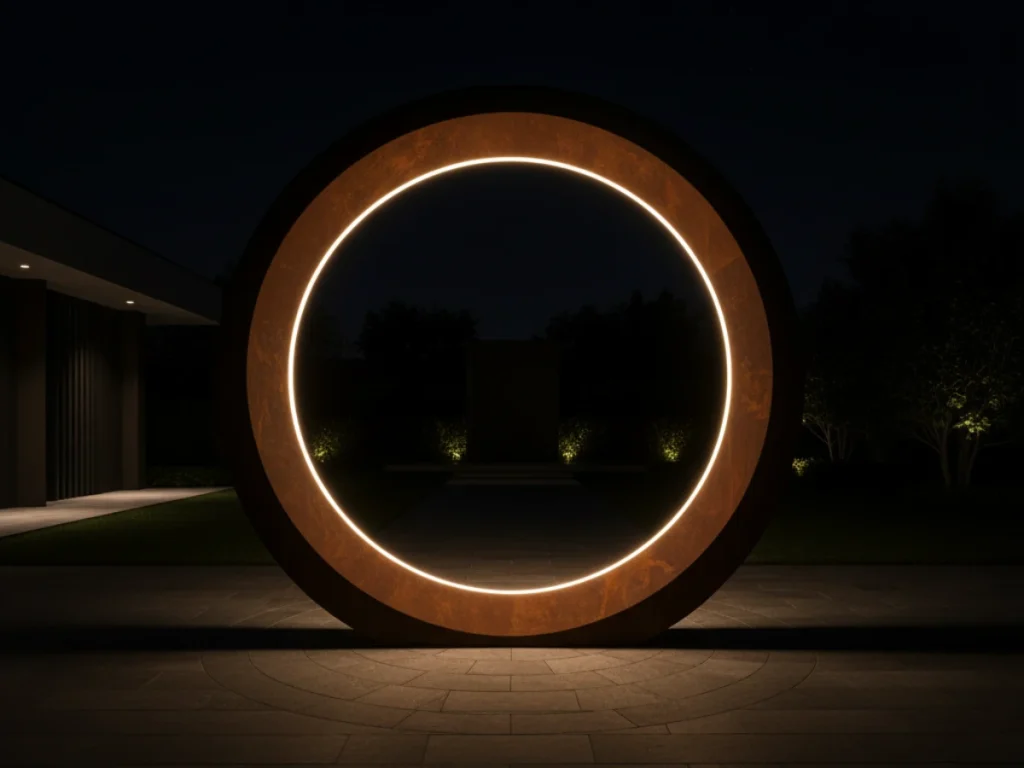
The most effective approach is concealed illumination integrated within the inner circumference of the ring:
- Ingress protection: Minimum IP67 rating for outdoor durability
- Fixture type: Linear LED strips, fully recessed
- Glare control: Indirect lighting, no exposed light source
Color temperature must correspond to material:
- 2700K–3000K (warm white) for Corten steel
- 4000K (neutral white) for stainless steel
This calibration enhances material character rather than distorting it.
The result is precise.
The ring emits a controlled halo of light, defining its geometry against darkness while softly illuminating the ground plane. Reflections, shadows, and silhouettes emerge with clarity.
The metal moon gate arch no longer reads as a solid object.
It becomes a floating landmark—pure geometry suspended in space.
Installation, Anchoring, and Foundation Engineering
The Foundation
A moon gate stands lightly above ground.
Its true structure exists below it.
For any metal moon gate arch, long-term stability is determined not by visible steel thickness, but by the integrity of its foundation system. Wind load, dead weight, and soil conditions all converge at this hidden interface.
Without precise foundation engineering, even the most refined ring will eventually tilt, settle, or misalign.
Phase 1: Preparation
The process begins with a reinforced concrete foundation designed from structural calculations.
- Concrete grade: Minimum C30+ for sufficient compressive strength
- Foundation sizing: Determined by ring diameter, weight, and local wind load conditions
- Rebar configuration: Engineered to prevent cracking and distribute stress evenly
Accuracy at this stage is critical.
Custom positioning templates are used to fix high-strength anchor bolts in exact locations during the concrete pour. These bolts define the future alignment of the ring. Even a deviation of a few millimeters can compromise installation precision.
Once poured, the foundation must fully cure before proceeding.
Phase 2: Hoisting and Grouting
The base of the ring is typically fabricated with a flange plate—a thick steel interface that connects the sculpture to the anchor bolts.
Installation proceeds in controlled steps:
- Hoisting: The ring is lifted into position using cranes, with protective rigging to avoid surface damage
- Pre-alignment: The flange is placed onto anchor bolts
- Vertical calibration: Adjustable nuts are used to fine-tune plumb alignment to exact tolerances
At this stage, the ring is stable but not yet structurally unified with the foundation.
To complete the load transfer:
- The gap between flange plate and concrete base is filled with high-strength non-shrink grout
- This material ensures full surface contact, eliminating point loads
- It prevents long-term settlement or micro-movement under dynamic forces
The result is a continuous structural path—from steel ring to concrete mass to earth.
Concealment
Engineering must disappear.
Once structural integration is complete, all visible hardware is concealed:
- Anchor bolts and flange plates are covered through backfilling and paving integration
- Surrounding materials—stone, gravel, or concrete—are precisely cut to meet the base geometry
When executed correctly, the metal moon gate arch appears to emerge directly from the ground.
There is no visible connection.
No mechanical interruption.
Only a pure circular form rising from the landscape.
Frequently Asked Questions (FAQ)
Will the rust runoff from a Corten weathering steel garden sculpture stain expensive stone floors?
This is a valid and often misunderstood concern with any weathering steel garden sculpture.
During the early oxidation phase, Corten steel releases excess iron particles. When combined with rainwater, this can create temporary runoff capable of staining adjacent light-colored stone or concrete surfaces.
The key is control, not avoidance.
We address this through a combination of pre-treatment and site design:
Pre-activation service: The patina is partially stabilized in the factory before delivery, significantly reducing active runoff on site
Drainage strategy: Hidden interception trenches can be integrated beneath the gate to capture and redirect water flow
Material buffering: Dark, acid-resistant gravel beds placed directly below the ring absorb and visually neutralize runoff
Surface protection: Adjacent paving can be treated with sealers to reduce absorption during the initial months
Over time, as the FeOOH layer stabilizes, runoff diminishes naturally.
The sculpture transitions from reactive to stable.
What are the standard dimensions for a custom metal moon gate arch?
Proportion determines presence.
For a metal moon gate arch, the industry benchmark has evolved around both human ergonomics and visual balance:
Overall height: Approximately 2.3 meters
Clear inner diameter: Minimum 2.1 meters to allow comfortable passage
Total outer width: Typically between 2.4 and 3.0 meters
These dimensions are not arbitrary.
A 2.1-meter opening ensures that two people can pass through side-by-side without compression. At the same time, the surrounding ring thickness provides enough visual weight to maintain architectural authority within the landscape.
Larger installations are possible, but proportion must always be preserved.
The circle must feel neither oversized nor diminished within its environment.
When correctly scaled, the moon gate does not dominate the space.
It defines it.
How do you handle the thermal expansion and contraction of metal in extreme climates?
Circular geometry is inherently efficient at managing stress.
Unlike linear structures, a ring distributes thermal movement evenly along its circumference. There are no fixed endpoints where stress can accumulate. This makes a large metal ring sculpture naturally resistant to cracking or distortion caused by temperature fluctuation.
From an engineering standpoint, we reinforce this advantage:
Internal ribs are distributed symmetrically to prevent localized stress concentration
Structural steel is selected for ductility and fatigue resistance
Welding strategies ensure uniform expansion behavior across all joints
With this approach, a properly engineered moon gate can withstand temperature cycles from -30°C to +50°C without weld fatigue, surface cracking, or geometric deformation.
The circle absorbs change. It does not resist it.
Do I need a foundation for installation?
Yes. Without exception.
For any large metal ring sculpture, a properly engineered concrete foundation is mandatory. The apparent simplicity of the form often leads to underestimation of the forces involved—particularly wind load.
Even moderate wind conditions can generate significant lateral pressure on a vertical ring. Without anchoring, this creates a tipping risk.
A compliant installation includes:
Reinforced concrete foundation (C30+)
Precisely positioned anchor bolts
Structural integration through flange connection and non-shrink grout
This is not optional detailing.
It is the basis of safety, longevity, and liability control.
Can the moon gate be used as a garden arch to support climbing plants?
Yes, with careful consideration.
A moon gate can function as a living structure, supporting climbing vegetation and softening its geometric precision. However, metal behaves differently from traditional timber or masonry arches.
In direct sunlight, the surface temperature of steel—especially darker finishes—can rise significantly. This affects plant selection and attachment methods.
We typically recommend:
Thermal-break trellis systems: Secondary frames that create a buffer between plant and steel surface
Heat-tolerant species: Climbing plants that thrive in warm, sun-exposed conditions
Non-invasive fixing methods: Avoid direct drilling or attachment that could compromise the protective surface layer
When integrated correctly, vegetation does not obscure the form.
It traces it.
How does a Corten moon gate perform in a coastal environment?
Corten steel relies on controlled oxidation.
Its protective FeOOH patina forms through alternating wet-dry cycles. In coastal environments, however, high concentrations of airborne salt disrupt this process.
Salt accelerates corrosion but prevents the formation of a stable, protective layer. The result is continuous surface degradation rather than controlled weathering.
For this reason:
Corten steel is not recommended in high-salinity coastal zones
Long-term durability cannot be guaranteed under constant salt exposure
In such conditions, the correct material choice is 316L marine-grade stainless steel. Its molybdenum-enhanced composition provides strong resistance to chloride-induced corrosion, ensuring structural and visual integrity over decades.
Material selection must follow environment.
Not preference.
What is the process for ordering a custom metal moon gate for sale?
A metal moon gate for sale is not a standard product. It is a coordinated design and engineering process.
Each project follows a structured workflow:
Concept and 3D Modeling
We translate client intent into precise digital geometry, including proportion studies and spatial previews within the actual site context.
Engineering and Load Calculation
Structural analysis is performed based on diameter, wind exposure, and installation conditions. Internal reinforcement and wall thickness are defined at this stage.
Precision Fabrication
Materials—whether ASTM A588 Corten or 316L stainless steel—are processed using controlled rolling, full penetration welding, and surface finishing systems.
Trial Assembly and Quality Control
The ring is pre-assembled to verify geometry, weld integrity, and surface continuity before shipment.
Packaging and Global Logistics
Custom crating systems protect the surface finish during international transport, ensuring arrival in installation-ready condition.
This process ensures that each moon gate is not only visually precise, but structurally accountable.
Investing in a Lasting Landscape Landmark
A moon gate is not a temporary installation.
It is a generational structure.
Through the disciplined use of ASTM A588 Corten steel or 316L stainless steel, combined with rigorous engineering—full penetration welding, internal reinforcement, and foundation integration—we create forms that endure both physically and visually.
Over time, these structures do not fade.
They evolve.
Light changes. Surfaces mature. Landscapes grow around them. The circle remains constant, quietly redefining space with every passing year.
To invest in a custom moon gate is to invest in spatial depth, architectural clarity, and long-term value.
A single circle. Precisely made. Permanently transformative.
— Elena Zhang & Chief Donghui Zhang, Yun Sculpture