Get in touch with Yun-Sculpture company
Roman God Statues: Jupiter, Neptune, Mars & More for Garden & Estate

From the Capitoline Triad to the garden fountain — a guide to the mythology, iconography, and sculptural tradition of the Roman pantheon, with practical placement advice for estates, gardens, and formal interiors.
Table of Contents
Table of Contents
Rome and Its Gods: A Different Relationship with the Divine
The Romans approached their gods differently from the Greeks. Where Greek religion was suffused with narrative — myths of divine passion, conflict, transformation, and tragedy — Roman religion was fundamentally transactional. The relationship between a Roman citizen and the divine was governed by the concept of do ut des: I give so that you may give. Sacrifice, ritual, and prayer were not expressions of devotion so much as contractual obligations, maintained with the same careful attention to procedure that Romans applied to law, engineering, and military logistics.
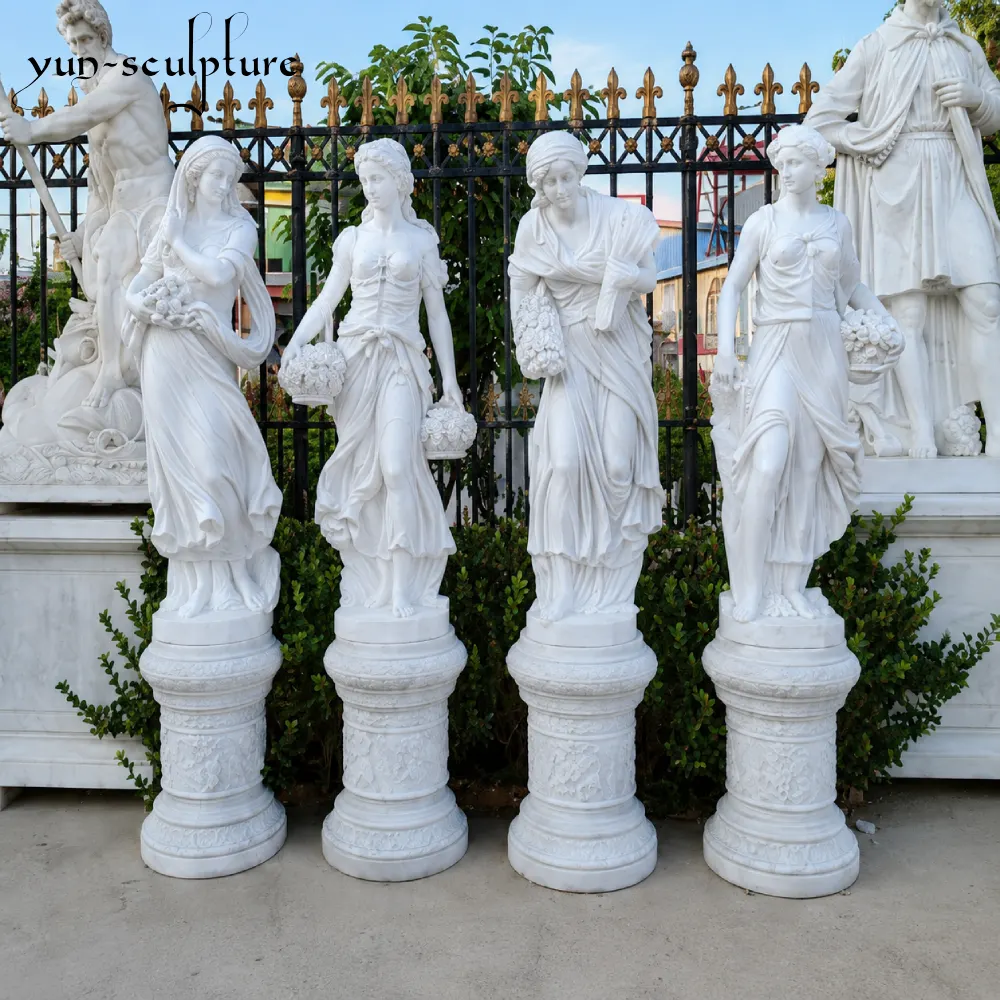
This does not mean Roman religion was cold or superficial. It means it was Roman — practical, ordered, institutionally embedded, and profoundly concerned with the maintenance of the pax deorum, the peace of the gods whose continued goodwill underwrote the prosperity and military success of the state. When things went wrong — when Rome suffered military defeat or natural disaster — the question asked was not theological but procedural: which ritual had been performed incorrectly, which god had been insufficiently honored, which obligation had been allowed to lapse.
The statues Romans built for their gods reflect this character. Roman divine sculpture is formal, authoritative, and politically weighted in ways that Greek divine sculpture is not. A Jupiter enthroned in a Roman temple is not simply a representation of divine power; he is the patron of Rome itself, the guarantor of Roman imperium, the divine presence behind every military victory and every piece of legislation. Understanding this distinction changes how we read Roman god statues — and how we deploy them in contemporary spaces.
Roman Gods and Their Greek Counterparts: What Changed and What Didn’t
When Rome encountered Greek culture in southern Italy and Sicily in the third century BCE, it did not simply adopt the Greek pantheon wholesale. It practiced what scholars call interpretatio romana — the identification of Roman deities with their Greek functional equivalents, a process that absorbed Greek mythology and iconography while maintaining the Roman gods’ distinct identities and the Roman religious institutions built around them.
The result is a pantheon that looks superficially identical to the Greek one — Jupiter is Zeus, Neptune is Poseidon, Mars is Ares — but carries meaningful differences in emphasis, mythology, and cultural significance. Mars, for instance, was a far more central and respected figure in Roman religion than Ares was in Greek religion. Where the Iliad’s Zeus expresses contempt for Ares as the least likable of the Olympians, Mars was second only to Jupiter in Roman devotion, the father of Romulus (founder of Rome), and the patron deity of the Roman army — the institution that built and maintained the empire.
These differences matter for a collector or buyer working with Roman-themed statuary. A Roman Mars is not simply a renamed Greek Ares — he carries different mythological weight, different iconographic traditions, and different resonances in the spaces where he is placed. The table below outlines the primary Roman-Greek correspondences and the key distinctions worth knowing:
| Roman God | Greek Equivalent | Roman Distinction |
|---|---|---|
| Jupiter | Zeus | Patron of Rome itself; more explicitly political than Zeus |
| Juno | Hera | Patron of Roman matrons; saved Rome from the Gauls via sacred geese |
| Neptune | Poseidon | Also god of horses; central to Roman naval identity |
| Minerva | Athena | Patron of craft guilds and trade as well as wisdom and war |
| Mars | Ares | Father of Romulus; far more revered than Greek Ares; patron of the army |
| Venus | Aphrodite | Ancestor of Julius Caesar’s family; politically significant in Rome |
| Apollo | Apollo | Unchanged name and function; adopted directly without Roman equivalent |
| Diana | Artemis | Patron of slaves and lower classes as well as the hunt |
| Vulcan | Hephaestus | God of destructive fire; feared rather than honored with temples inside the city |
| Mercury | Hermes | More explicitly commercial; patron of merchants and profit |
| Ceres | Demeter | Associated with plebeian political rights as well as agriculture |
| Bacchus | Dionysus | Subject of Roman suspicion; the Bacchanalia suppressed in 186 BCE |
The Capitoline Triad: Jupiter, Juno, and Minerva
Jupiter — King of the Gods, Patron of Rome
Jupiter Optimus Maximus — Jupiter the Best and Greatest — occupied the summit of the Capitoline Hill in Rome’s most important temple, flanked by Juno and Minerva. He was the patron deity of the Roman state, the divine guarantor of Roman law, and the god in whose name Roman generals conducted triumphs after military victory. The eagle was his sacred animal; the thunderbolt his weapon; the oak his sacred tree.
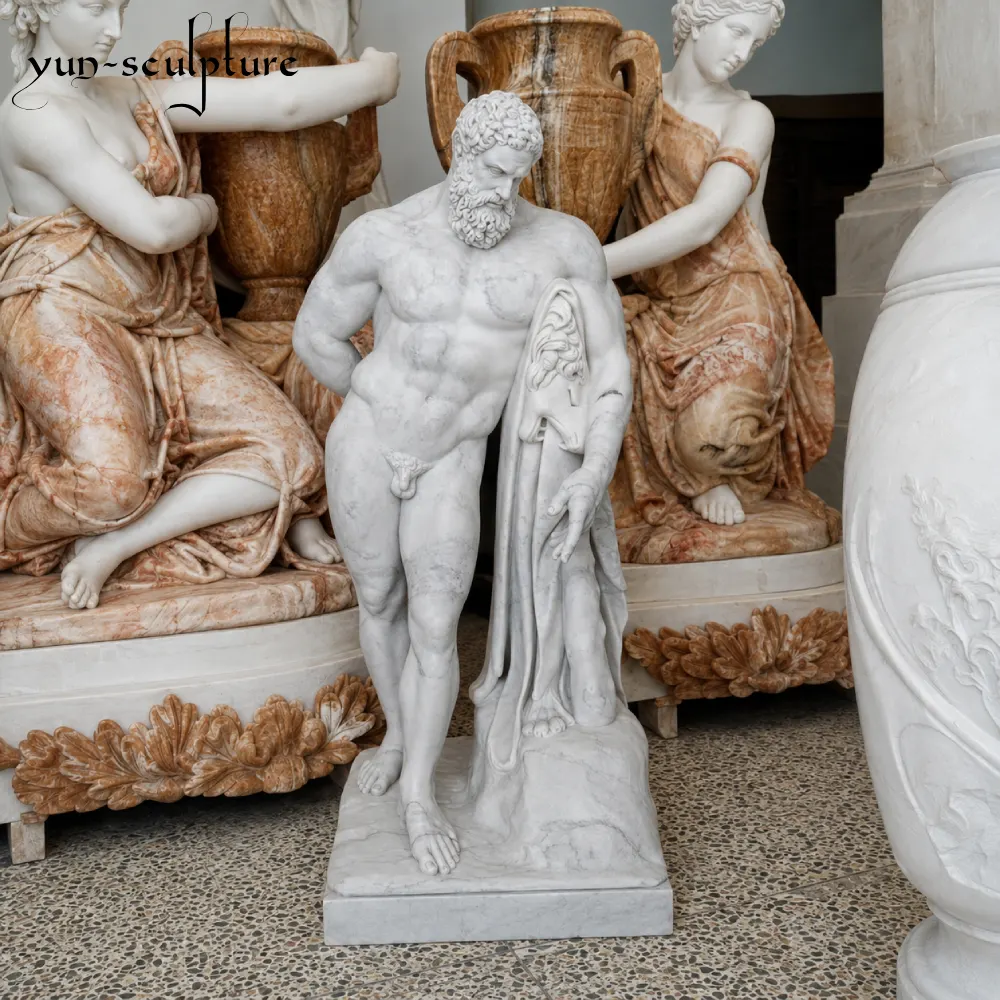
In sculpture, Jupiter inherits the Greek Zeus’s iconographic tradition — the mature, bearded figure of commanding physical authority, seated or standing, thunderbolt in hand — but carries additional Roman weight. The colossal Statue of Jupiter in the Hermitage Museum (1st century AD, 347 cm, 16,000 kg) gives a sense of the scale Romans deployed for their highest god. For garden and estate installations, a Jupiter statue enthroned at the end of a formal allée or at the center of a parterre brings the full authority of the Roman state tradition to the landscape.
Juno — Queen of the Gods, Protector of Roman Women
Juno Regina — Juno the Queen — was Jupiter’s wife and sister, the patron of Roman women in their full institutional role: as wives, mothers, and participants in the civic life that Roman marriage enabled. Her temple on the Capitoline housed the Roman mint, and her sacred geese famously warned the city of a Gaulish night attack in 390 BCE, saving the Capitol when the human sentries had fallen asleep.
In sculpture, Juno is depicted with the regal formality appropriate to the queen of the gods — crowned with a diadem, draped in flowing robes, her posture one of formal authority rather than dynamic action. Her attributes include the peacock (whose iridescent tail feathers represent the eyes of Argus, her servant in Greek mythology) and the pomegranate. For formal interior settings — entrance halls, reception rooms, spaces dedicated to institutional dignity — a Juno figure in white marble brings centuries of accumulated associations with civic order and feminine authority.
Minerva — Goddess of Wisdom, Craft, and Commerce
Minerva occupied a unique position in Roman religion that her Greek counterpart Athena did not fully share: she was the patron not only of wisdom and strategic warfare but of craft guilds, trade, and the practical arts that underpinned Roman economic life. The Quinquatria — her five-day festival in March — was celebrated not only by soldiers but by weavers, shoemakers, teachers, poets, and physicians. In Rome, wisdom was inseparable from productive skill.
In sculpture, Minerva shares Athena’s iconographic tradition — helmet, aegis, owl, and spear — but Roman versions often emphasize her civic and commercial associations alongside her martial ones. Our dedicated Minerva statue guide covers her iconographic variations in detail. For libraries, universities, commercial buildings, and spaces where intellectual authority and practical capability are the intended resonances, Minerva is the most appropriate deity in the Roman pantheon.
The Sea, War, and Love: Neptune, Mars, and Venus
Neptune — God of the Sea, Freshwater, and Horses
Neptune governed three domains in Roman religion: the sea, freshwater sources, and horses — a combination that reflects Rome’s dependence on all three for trade, agriculture, and military power. His festival, the Neptunalia, was held in mid-summer near bodies of water, a celebration of the sea’s abundance and a propitiation of its dangers.
In sculpture, Neptune inherits Poseidon’s commanding physical presence and his defining attribute — the trident — while adding the horse as a specifically Roman iconographic element. Renaissance and Baroque garden designers understood Neptune’s significance immediately: the great fountain sculptures of Rome, Florence, and Versailles deploy Neptune as the presiding deity of water in designed landscapes, a tradition with direct relevance for contemporary estate gardens. A Neptune statue at the center of a reflecting pool, at the head of a cascade, or as the focal point of a formal fountain establishes a visual and mythological logic that has been operating in European garden design for five centuries.
Mars — God of War, Father of Rome
Mars was not simply Rome’s god of war — he was the father of Romulus and Remus, the divine ancestor of the Roman people themselves, and the patron deity of the Roman army that built and defended the empire. His sacred month of March (Martius) opened the military year; his festivals bookended the campaigning season in spring and autumn. No Roman general went to war without honoring Mars; no triumph was complete without acknowledging his patronage of victory.
Unlike the Greek Ares — feared and distrusted even by the other Olympians — Mars was one of Rome’s most beloved gods, second only to Jupiter in popular devotion. This difference in cultural status produces a difference in sculptural character: Roman Mars figures carry authority and gravity that Greek Ares figures rarely achieve. In full military armor — helmet, breastplate, greaves, and shield — Mars is among the most visually commanding figures in the Roman pantheon.
For military institutions, security companies, sports facilities, and estates where strength, protection, and martial virtue are the intended values, a Mars figure in bronze is the single most appropriate Roman deity.
Venus — Goddess of Love, Beauty, and the Julian Line
Venus carried unique political weight in Rome that Aphrodite did not carry in Greece: she was the divine ancestor of the Julian family — Julius Caesar and, by adoption, Augustus — which made her not merely the goddess of love and beauty but the divine mother of Rome’s ruling dynasty. The Temple of Venus Genetrix in Caesar’s forum made this political claim explicit in stone and bronze.
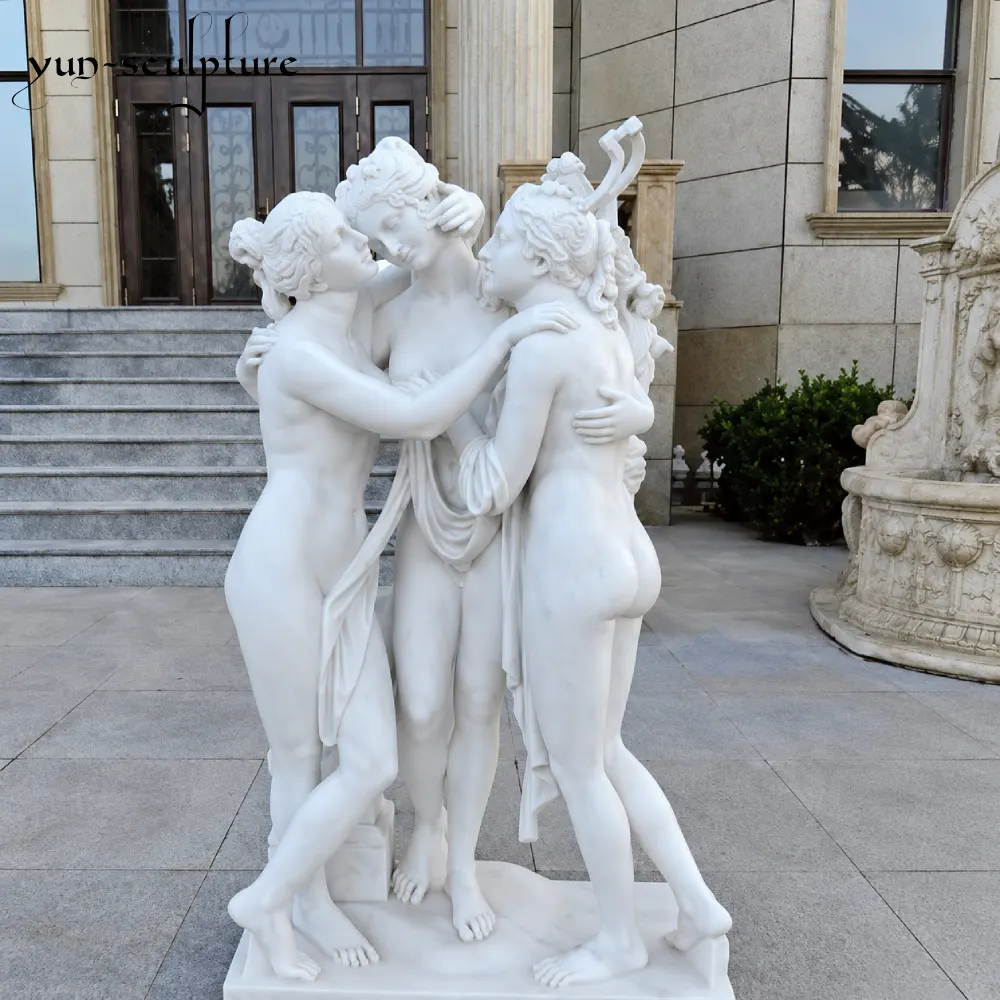
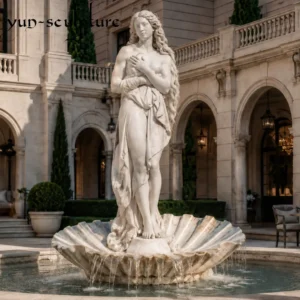
In sculpture, Venus inherits Aphrodite’s iconographic tradition as the primary female nude of the Western sculptural canon, while Roman versions often add attributes of political and dynastic significance. For residential gardens, private estates, and spaces where beauty, abundance, and the pleasures of cultivated life are the intended atmosphere, a Venus figure in white marble or warm bronze brings a tradition of more than two millennia of continuous artistic engagement — and, in the Roman tradition, the added resonance of divine patronage over the well-ordered household.
The Remaining Dii Consentes: Apollo, Diana, Vulcan, Mercury, Ceres, and Bacchus
The twelve Dii Consentes — the Roman council of principal gods whose gilded statues stood in the Forum — are completed by six deities beyond the Capitoline Triad and the great triad of Neptune, Mars, and Venus. Each carries specific iconographic traditions and placement logic for contemporary use.
| God | Domain | Iconographic Attributes | Best Placement |
|---|---|---|---|
| Apollo | Sun, music, prophecy, healing | Lyre, laurel wreath, bow, sun rays | Music rooms, creative spaces, spas, formal gardens |
| Diana | Hunt, moon, wilderness, childbirth | Bow and arrows, crescent moon, deer | Woodland gardens, hunting estates, natural landscapes |
| Vulcan | Fire, forge, craft | Hammer, tongs, anvil | Studios, workshops, forge settings, industrial spaces |
| Mercury | Commerce, travel, communication | Winged sandals, caduceus, petasos | Commercial buildings, entryways, trade centers |
| Ceres | Harvest, agriculture, grain | Wheat sheaves, cornucopia, torch | Gardens, agricultural estates, family properties |
| Bacchus | Wine, theater, ecstasy, fertility | Grapevine, thyrsus, ivy wreath | Wine cellars, dining rooms, garden pergolas, vineyards |
Of these six, Apollo requires no Roman adaptation — he was adopted directly from Greek religion without a Latin name change, the only Olympian to pass into Roman worship unchanged. Diana, his twin sister, acquired additional associations in Rome as a patron of slaves and the lower classes, worshipped at her great sanctuary at Aricia outside Rome in a cult that had no Greek equivalent.
Bacchus deserves special mention for garden settings. The Roman Senate suppressed the Bacchanalia in 186 BCE — a measure of how seriously they took the god’s capacity to disorder the social fabric — but Bacchus remained one of the most popular subjects in Roman decorative sculpture, appearing in garden settings, private dining rooms, and on sarcophagi as a symbol of the pleasures of this life and the hope of rebirth in the next. A Bacchus figure among grapevines, near a wine cellar, or at the center of a garden designed for pleasure and hospitality carries a tradition stretching directly from Roman villa culture to the present.
Beyond the Twelve: Janus, Saturn, and Pluto
Three significant Roman deities fall outside the Dii Consentes but appear frequently in sculptural commissions and deserve attention from collectors working with Roman themes.
Janus — God of Beginnings, Transitions, and Doorways
Janus is one of Rome’s most distinctly Roman deities — he has no Greek equivalent whatsoever. He is the god of beginnings, transitions, doorways, and the passage of time, depicted with two faces looking simultaneously forward and backward — into the future and into the past. January takes its name from him; so does the architectural element of the janus, the freestanding arch through which Roman armies passed on the way to war and back in triumph.
For entryways, gatehouses, archways, and the thresholds of significant buildings, a Janus figure is the most specifically appropriate Roman deity. His two-faced iconography is visually distinctive and immediately legible, and his domain of transitions and new beginnings makes him appropriate for corporate headquarters, institutional entrances, and private estates where the threshold carries symbolic weight.
Saturn — God of Agriculture, Time, and the Golden Age
Saturn ruled in the Golden Age before Jupiter’s time — a mythological era of abundance, equality, and freedom from labor — and his festival, the Saturnalia (held in late December), was Rome’s most popular holiday: a week of gift-giving, role reversals between masters and slaves, and general suspension of the social order in memory of that original abundance. He is the god of agriculture, of the passage of time (his identification with the Greek Kronos introduced the association with time), and of the winter solstice.
In sculpture, Saturn is depicted as an aged, bearded figure — carrying a scythe (his agricultural attribute and later a symbol of time’s harvest of the living) and often shown with his foot resting on a globe. For formal gardens, autumn installations, and spaces where the cycle of the seasons and the passage of time are appropriate themes, Saturn carries a mythological depth that few other deities can match.
Pluto — Lord of the Underworld, God of Hidden Wealth
Pluto governed the underworld and all the wealth hidden beneath the earth — metals, minerals, and the seeds of future harvests stored underground through winter. His name, from the Greek Ploutos, means wealth; the connection between underground darkness and subterranean riches was explicit in both Greek and Roman religion. He is depicted as a mature, bearded figure of solemn authority — darker in register than the Olympians above ground — often shown with Cerberus, his three-headed guard dog, and the bident or scepter of his realm.
For memorial installations, mausolea, cemetery sculptures, and spaces where the themes of mortality, the underworld, and hidden abundance are appropriate, Pluto carries a mythological gravity that no Olympian can fully replicate. His combination of authority and darkness makes him particularly effective in formal garden settings designed around contemplation, memorial, and the cycles of life and death.
Roman God Statues for Garden and Estate: Placement Guide
The Roman tradition of garden sculpture is one of the oldest and most developed in Western history. Roman villa gardens — from the great estates of the Republic through the imperial pleasure grounds of Hadrian’s Villa at Tivoli — deployed divine statuary as a systematic visual and philosophical program, placing specific gods at specific points in the landscape to articulate the garden’s meaning and organize the visitor’s experience.
Contemporary estate gardens and formal landscapes can draw directly on this tradition. The placement logic that Romans developed over centuries remains entirely valid: water deities at fountains and pools, deities of the hunt at garden margins and woodland edges, agricultural deities in kitchen gardens and orchards, gods of transition at gates and entrances.
| Garden Zone | Recommended Deity | Logic |
|---|---|---|
| Formal entrance / gatehouse | Janus | God of thresholds and beginnings |
| Central fountain or reflecting pool | Neptune | Presiding deity of water in designed landscapes |
| Woodland edge or hunting ground | Diana | Goddess of the hunt and the wild |
| Formal parterre or allée terminus | Jupiter or Minerva | Authority and civic order at the garden’s formal heart |
| Kitchen garden or orchard | Ceres or Saturn | Agricultural deities of harvest and seasonal abundance |
| Wine cellar, pergola, or dining terrace | Bacchus | Patron of wine, hospitality, and the pleasures of the garden |
| Memorial garden or contemplative space | Pluto or Saturn | Deities of the underworld and the passage of time |
| Estate boundary or protective installation | Mars | God of protection, strength, and the defense of property |
| Spa, pool terrace, or pleasure garden | Venus | Goddess of beauty, sensory pleasure, and cultivated life |
For material selection in garden installations, bronze is the standard for all outdoor Roman god statues intended for permanent placement — silicon bronze with a brown or antique green patina weathers predictably and requires only annual wax maintenance. White marble is appropriate for sheltered garden features: niches, loggias, covered terraces, and conservatories where freeze-thaw risk is managed. Our collection of Greek mythology statues covers the Greek equivalents of all the Roman deities discussed here, for buyers working with either tradition or combining both in a single landscape program.
Frequently Asked Questions
What are the 12 Roman gods? +
The 12 principal Roman gods are the Dii Consentes — Jupiter (king of the gods, sky and thunder), Juno (marriage and queenship), Neptune (the sea, freshwater, and horses), Minerva (wisdom, craft, and commerce), Mars (war and the patron of Rome), Venus (love and beauty), Apollo (light, music, and prophecy), Diana (the hunt and the moon), Vulcan (fire and the forge), Mercury (commerce and travel), Ceres (harvest and agriculture), and Bacchus (wine and theater). Their gilded statues stood in Rome’s central Forum. The list occasionally substitutes Vesta (the hearth) for Bacchus depending on the ancient source.
Who are the big 3 Roman gods? +
The three most important Roman gods are the Capitoline Triad: Jupiter, Juno, and Minerva, whose great temple on the Capitoline Hill was Rome’s most sacred religious site and the terminus of every Roman triumph. An earlier Archaic Triad of Jupiter, Mars, and Quirinus preceded the Capitoline Triad in Rome’s religious history. In terms of popular devotion and political significance, Jupiter and Mars were consistently the most important male deities in Roman religion — Jupiter as patron of the state, Mars as father of Romulus and patron of the army.
What is the difference between Roman and Greek statues? +
Roman and Greek statues differ in several important respects. Greek sculpture, particularly in the Classical period, pursues idealized beauty — the human form perfected beyond individual specificity, expressing universal qualities of divinity and athletic excellence. Roman sculpture, especially in the Republican and early Imperial periods, pursues verism in portraiture — individual likeness with all its imperfections, because in Rome the aged, experienced face carried authority. Roman divine sculpture inherits Greek iconographic conventions but adds political weight: a Jupiter or Mars in Roman sculpture is explicitly tied to Roman imperial ideology in ways that Zeus or Ares in Greek sculpture are not. Roman sculpture also shows greater interest in historical narrative relief — the columns of Trajan and Marcus Aurelius being the supreme examples.
What is the most impressive Roman statue? +
Among surviving Roman statues, the Augustus of Prima Porta (early 1st century AD, Vatican Museums) is most frequently cited for its combination of political sophistication and sculptural quality — a masterwork of Imperial propaganda in which Augustus is depicted in a pose derived from Greek Classical models while his breastplate narrates specific historical events. The colossal Marcus Aurelius equestrian statue on the Capitoline (only surviving ancient bronze equestrian) is considered the greatest surviving Roman bronze. The Laocoön Group and the Farnese Hercules are among the most admired large-scale Roman marbles. The Statue of Jupiter in the Hermitage (347 cm, 16,000 kg) is the most impressive in terms of sheer scale.
What are the four types of Roman sculptures? +
Roman sculpture is typically categorized into four primary types: portraiture (bust and full-figure portraits of emperors, senators, and private individuals — the most distinctly Roman contribution to the sculptural tradition); historical relief (narrative carved panels recording specific events, most famously on Trajan’s Column and the Arch of Titus); ideal sculpture (divine figures and mythological scenes inherited from Greek tradition, produced in large numbers as copies and adaptations); and sarcophagus relief (elaborate carved marble coffins depicting mythological scenes, the deceased’s life, or battle narratives). Garden sculpture — decorative figures, herms, fountain statues, and decorative reliefs — forms a fifth practical category that spans all periods of Roman production.
Which Roman god statue is best for a garden or estate? +
The best Roman god statue for a garden or estate depends on the specific zone and intended meaning. Neptune is the traditional choice for fountains, reflecting pools, and water features — a placement logic that has governed European garden design since the Renaissance. Diana suits woodland edges, hunting estates, and natural garden margins. Bacchus is appropriate for wine cellars, dining terraces, and pleasure gardens. Ceres and Saturn work well in kitchen gardens and orchards. Jupiter or Minerva suit the formal heart of a parterre or the terminus of a formal allée. For estate entrances and gatehouses, Janus — Rome’s two-faced god of thresholds — is the most specifically appropriate deity. For material selection, bronze is recommended for all permanent outdoor installations; white marble for sheltered niches, loggias, and covered garden features.
Commission a Roman God Statue from Quyang
Jupiter to Janus, Neptune to Pluto — our foundry produces Roman god statues in bronze and marble for private estates, garden installations, and institutional commissions. Factory-direct pricing, structured approval process, and 35–65 working day lead times.
Commission a Roman God Statue from Quyang
Jupiter to Janus, Neptune to Pluto — our foundry produces Roman god statues in bronze and marble for private estates, garden installations, and institutional commissions. Factory-direct pricing, structured approval process, and 35–65 working day lead times.