Get in touch with Yun-Sculpture company
Marble vs Bronze Fountain: Bronze vs. Marble vs. Concrete Fountains — Which Material Lasts Forever? (2026)

You are not buying a decoration.
You are deciding what will still be standing when your grandchildren walk past it.
At Yun Sculpture, every fountain in our [outdoor fountain collection →] is built with exactly this standard in mind.
I am Boss Zhang, founder of Yun Sculpture. I have replaced more cracked concrete fountains than I care to admit. I have also installed bronze pieces that are aging better than the day they were cast.
Let’s speak plainly.
🔥 At a Glance: Material Comparison
Best for Legacy: 🥇 Bronze
Best for Classical Elegance: 🥈 Natural Marble
Best for Short-Term Budget: 🥉 Concrete
Never Buy: ❌ Resin
- Longest Lifespan: Bronze (50–100+ years)
- Most Timeless Look: Marble
- Most Problems Over Time: Concrete
- Worst Investment: Resin
If you want a “forever home” fountain — your real choices are bronze or natural marble.
Everything else is compromise.
Table of Contents
Table of Contents
The Real Question: What Survives Time?
Outdoor water fountain materials live in punishment.
Rain. Sun. Freeze-thaw cycles. UV radiation. Minerals in water. Soil movement.
A large garden fountain is not indoor art. It is architecture.
And architecture must survive physics.
Lifespan Comparison Table
| Material | Typical Lifespan | What Happens Over Time |
|---|---|---|
| Bronze | 50–100+ years | Develops protective Patina, strengthens visually |
| Natural Marble | 30–80+ years | Soft surface aging, elegant weathering |
| Concrete | 5–15 years | Spiderweb Cracking, peeling, staining |
| Resin | 3–5 years | UV Damage, brittleness, fractures |
Buying concrete saves you $1,000 now.
Replacing it costs you $5,000 later.
That is not savings. That is delayed regret.
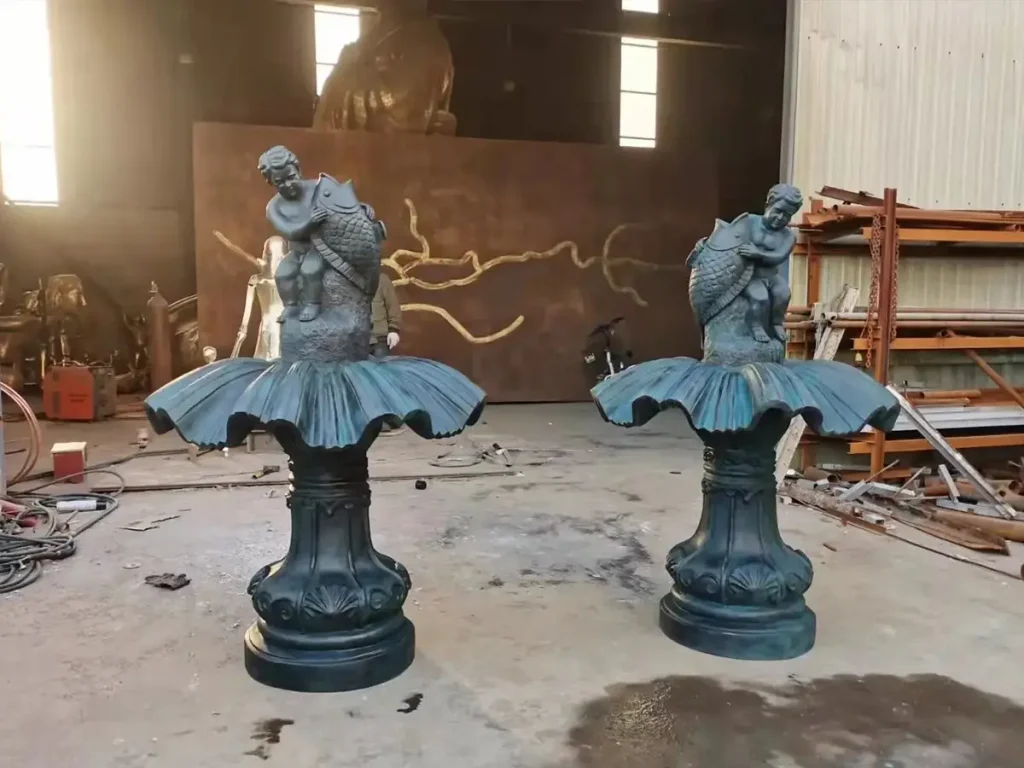
Bronze (The Survivor)
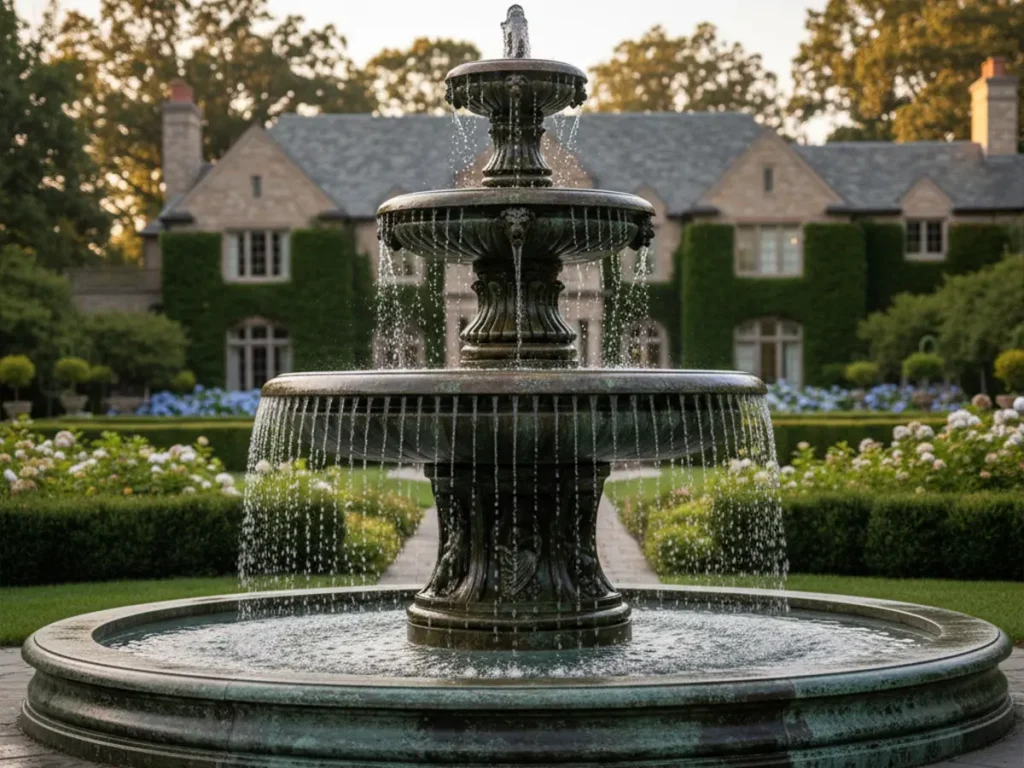
Caption: Bronze surface aging gracefully — the patina deepens, the structure strengthens.
We use Silicon Bronze (>95% Copper).
Not decorative brass. Not plated steel.
Real bronze does not rust.
Instead, it forms a Living Patina — a natural oxidation layer that protects the metal underneath.
That green or brown surface?
It is armor.
Why Bronze Outlasts Everything
- No internal water absorption
- No freeze expansion damage
- Handles -20°C to +40°C without structural change
- Self-protecting surface chemistry
This is why fountains in Rome still flow after centuries.
This is why statues in Florence stand in open squares without fear.
Bronze is not fragile.
It evolves.
The Psychology of Bronze
Bronze is for heirs.
Concrete is for tenants.
Bronze says: “This estate will still matter in 100 years.”
Concrete says: “Let’s get through the next few winters.”
See our durable [Bronze Fountain Collection]
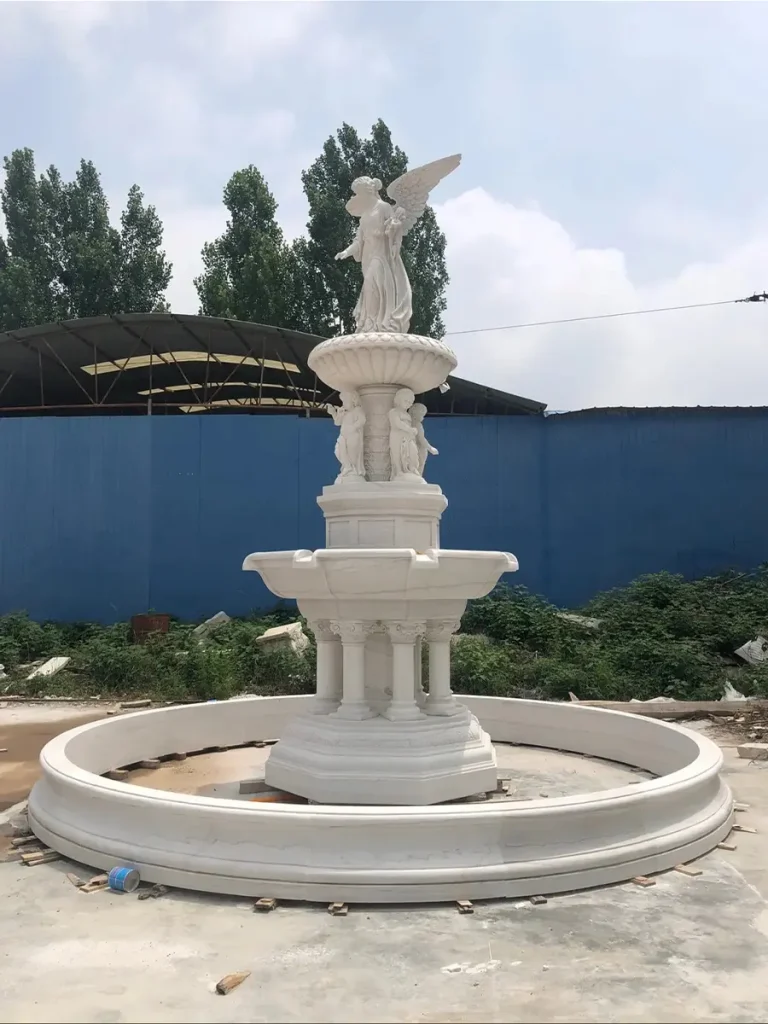
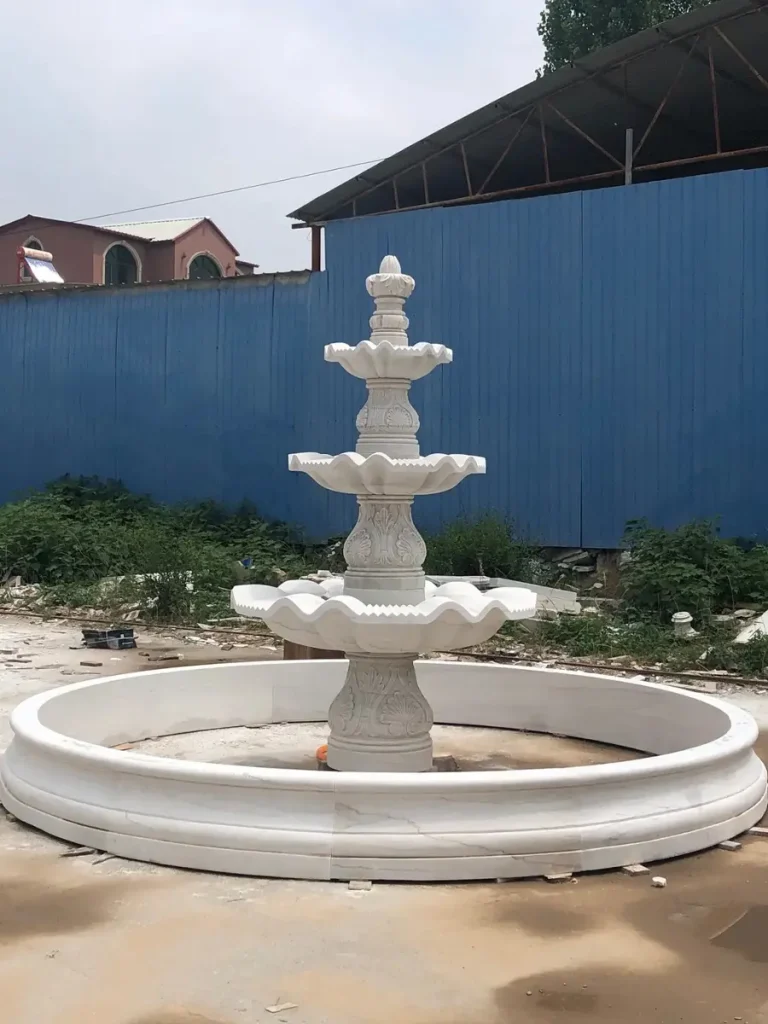
Marble (The Classic)

Caption: Natural marble softens and glows over time — it does not peel.
Marble is different.
It does not develop patina like bronze.
It ages through surface softening and mineral exposure.
But here is the truth most sellers hide:
We Use Natural Quarried Stone — Not Bonded Marble
Bonded marble = stone dust + glue.
It looks milky. Slightly plastic. Dead.
Natural marble crystallizes light.
It feels cold.
Heavy.
Alive.
Cast Stone vs Natural Stone
This is where many buyers are misled.
“Cast stone” is decorative concrete.
It absorbs water.
Natural marble is geologically formed limestone recrystallized under heat and pressure.
It does not behave like cement.
Can Marble Survive Winter?
Yes — if properly drained.
Water sitting inside basins causes damage.
Good design matters more than material here.
At Yun Sculpture, we engineer internal drainage channels.
Stone fails because of design mistakes — not because marble is weak.
Browse hand-carved [Marble Fountains]
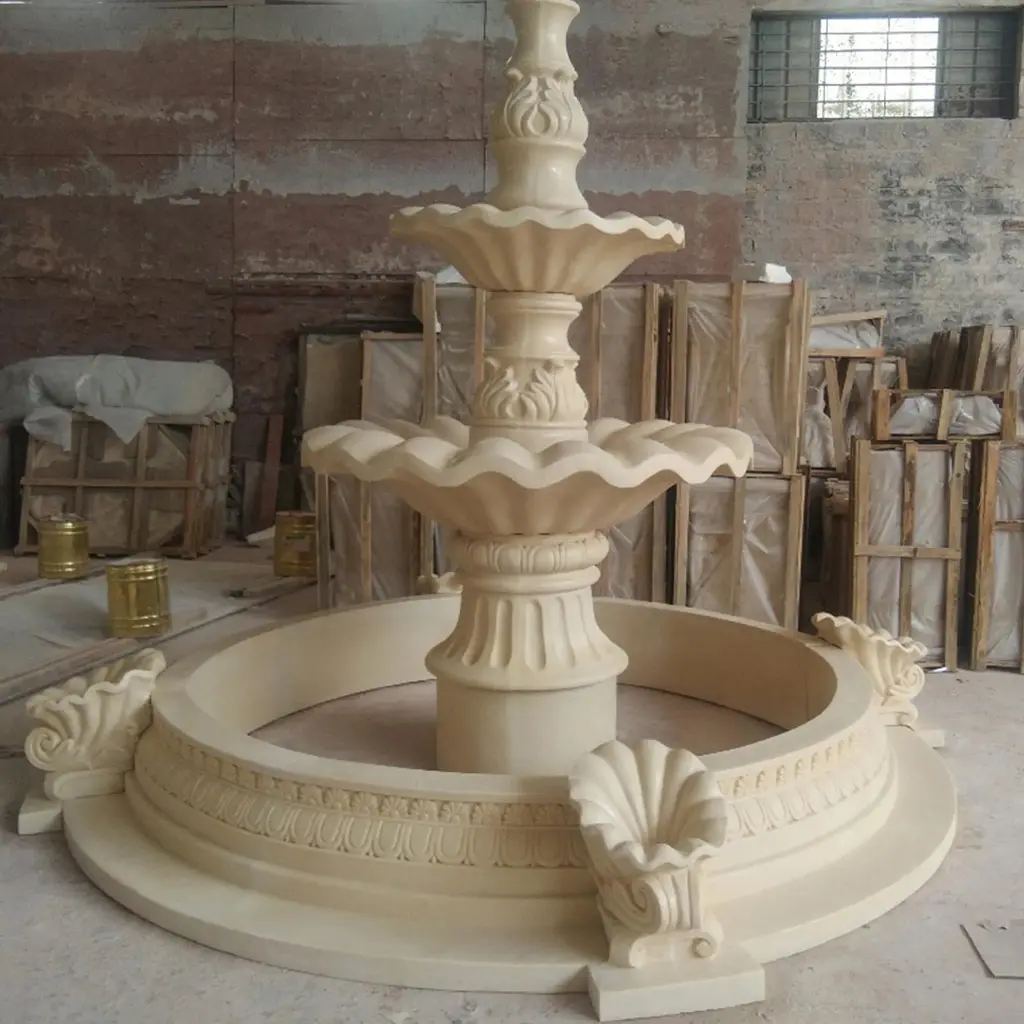
Concrete (The Hidden Cost)
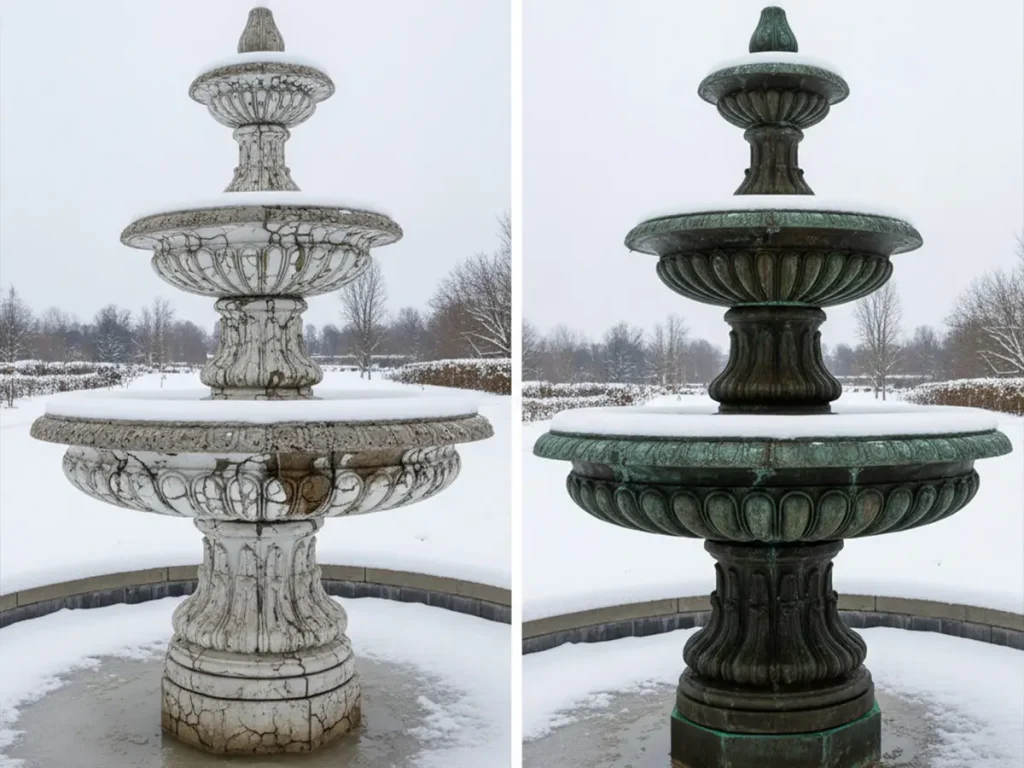
Caption: Left: Concrete cracking after 3 years. Right: Bronze improving with age.
Let me be blunt.
Concrete absorbs water.
It is porous.
In winter, water freezes and expands.
This is called Freeze-thaw stress.
The result?
Spiderweb Cracking.
Small cracks at first.
Then peeling paint.
Then structural fractures.
Then removal.
The Concrete / Cast Stone Trap
- Water penetration
- Freeze expansion
- Surface spalling
- Paint peeling from UV Damage
- Mineral staining
Concrete fountains are a “rental property” solution.
They are not a “forever home” solution.
If you plan to sell in three years — fine.
If you plan to build legacy — do not buy concrete.
Resin (Do Not Buy)
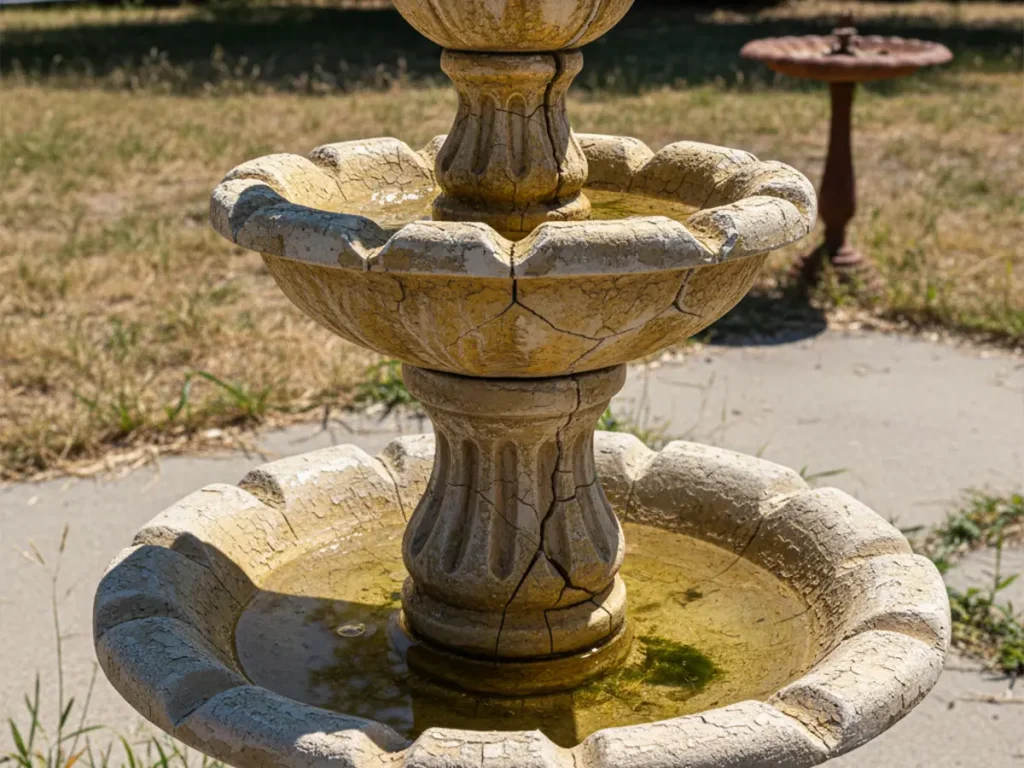
I refuse to sell resin fountains.
They are plastic.
Lightweight.
They feel warm to the touch.
After 3–5 years of sun exposure?
They become brittle.
They shatter.
You cannot repair UV-degraded polymer.
You replace it.
Don’t Buy resin for outdoor estates.
It is landscaping theater.
Not architecture.
The “Touch Test” (How to Detect Quality in 10 Seconds)
When you visit a showroom, do this:
- Touch the material.
- Close your eyes.
Real stone feels cold.
Real bronze feels dense and grounded.
Resin feels warm.
Hollow concrete feels slightly chalky.
Your hand knows before your eyes do.
Trust physics. Not marketing.
Climate Reality Check
Where are you building?
- Northern states with heavy winter? Bronze wins.
- Coastal humidity? Bronze or dense marble.
- Desert sun? Bronze handles UV best.
- Mild Mediterranean climate like San Diego? Marble thrives.
For compact spaces, a [stone wall fountain →] is an elegant low-maintenance option in any climate.
Material choice is not about taste.
It is about environment.
Large Garden Fountain Considerations
A large garden fountain is structural.
Weight matters.
Foundation matters.
Drainage matters.
Concrete is heavy but weak internally.
Bronze is strong relative to weight.
Marble is heavy and stable — but must be carved from solid block.
We never use hollow marble shells.
That is cost-cutting.
That is future cracking.
Manufacturing Truth (From the Factory Floor)
I have walked through factories that:
- Use thin bronze plating over steel
- Spray paint concrete to mimic stone
- Mix marble dust with resin and call it “premium”
That is deception.
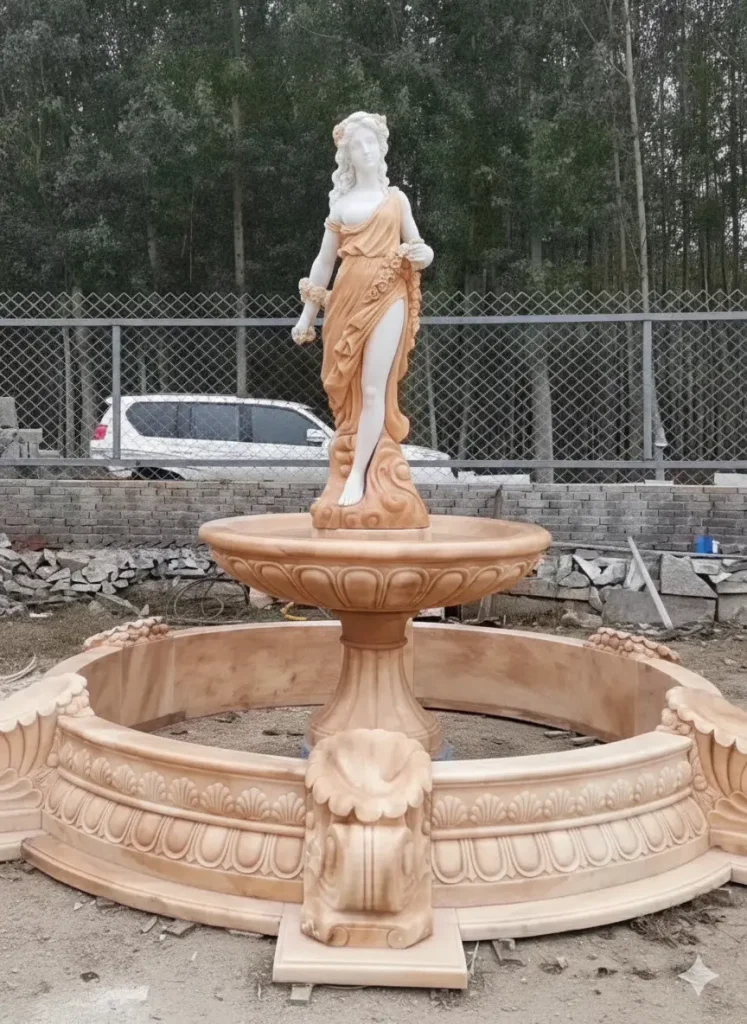

HomeAt Yun Sculpture, we:
- Cast solid silicon bronze
- Use natural quarried marble blocks
- Avoid bonded composites
- Engineer internal drainage
- Stress-test large basin joints
I would rather lose a sale than install garbage in your estate.
Loss Aversion: The Real Math
Let’s calculate.
Concrete fountain: $4,000
Removal + replacement after cracking: $5,000
New fountain: $6,000
Total after 10 years: $15,000+
Bronze fountain: $9,000
Maintenance over 20 years: minimal
Total: $9,000
Cheap is expensive.
Durable is economical.
Want exact factory pricing? Our [2026 Fountain Price Guide →] shows real bronze and marble costs with zero middleman markup.

Identity Matters
Ask yourself:
Are you building for heirs?
Or for tenants?
Bronze belongs in generational estates.
Marble belongs in classical gardens.
Concrete belongs in temporary developments.
Resin belongs nowhere near a legacy property.
Planning a large entrance statement?
Read our [Driveway Fountain Design Guide].
A driveway fountain is not décor.
It is arrival psychology.
Frequently Asked Questions
1. Does bronze turn green?
Yes.
That green surface is Patina — a protective oxidation layer.
It protects the metal underneath.
You can maintain brown tones if desired.
2. Can I leave marble out in winter?
Yes — with proper drainage.
Standing water causes damage, not temperature alone.
Design is critical.
3. Is concrete heavy?
Yes.
But weight does not equal durability.
It is porous and vulnerable to Freeze-thaw damage.
4. What are common concrete fountain problems?
Cracking.
Peeling coatings.
Mineral stains.
Structural weakening after repeated winters.
These are predictable — not accidents.
5. What is the durability of bronze fountains?
50–100+ years.
Some European examples exceed 200 years.
Proper casting and wall thickness matter.
Interested in the energy principles behind fountain placement? Read our [Feng Shui Water Placement Guide →] for direction, shape, and elemental balance.
Final Advice From Boss Zhang
If you plan to live in your estate for decades:
Choose bronze.
If you want classical stone elegance:
Choose natural marble.
If your contractor suggests resin:
Walk away.
If someone tells you cast stone is “the same as marble”:
They are lying.
I refuse to sell you something that will embarrass you in five years.
Not Sure Which Material Fits Your Climate?
We offer Free Material Samples.
Real marble.
Real silicon bronze.
Touch them.
Test them in your environment.
Then decide.